The Moscow treasure, 1916 – 2024
Where is Romania's gold?
In December 1916 seventeen wagons of Romanian gold left Iași for Moscow; in July 1917 twenty-four more followed with the country's memory. The gold never came home. Two trains, three returns, one receipt still open.
The treasure in four chapters
Representative route
From Iași to Moscow, and crumbs back
On 12 December 1916 the Council of Ministers approved the unthinkable: the country's gold would travel east, to Moscow, for safekeeping. Two trains went – seventeen wagons in December, twenty-four the next July. Three returns came back, in 1935, 1956 and 2008, and none of them carried gold.
Below, the treasure in four chapters – the two trains, the confiscation, and what stayed. The routes on the map are representative, drawn through the verified places of the story.
Chapter I
The first train
1916 – 1917 · 1916–1917, the decision
- Chapter
- 1916 – 1917
- The decision
- 12 December 1916
- Loading
- 12–14 December, Iași
- Arrival
- 21 December, Moscow
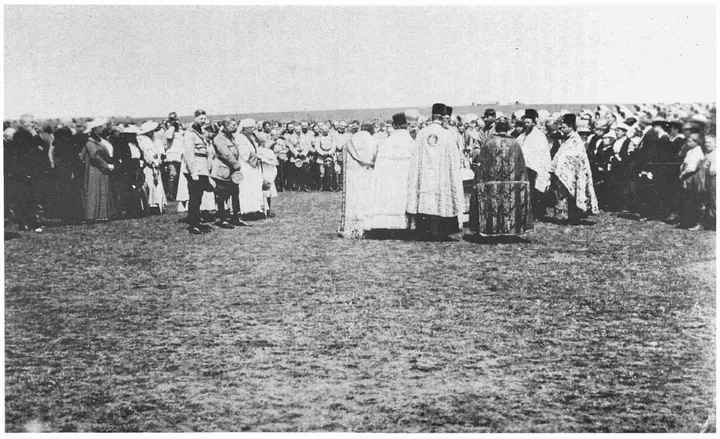
In the autumn of 1916 the Central Powers overran Muntenia and Dobruja; the government, the court and the National Bank – then an entirely private bank – withdrew to Iași. The Bank's metal stock stood in the vaults: 93.4 tons of gold, 91 in historic coin belonging to banks, firms and private holders, 2.4 in ingots belonging to the Bank itself.
London was discussed and dropped: German submarines made the sea route too dangerous, and Prime Minister Ion I. C. Brătianu – against the advice of the banker Mauriciu Blank – answered that Russia would feel offended if the gold went to England. Moscow, beside the Tsar's own treasure in the Kremlin, became the plan; on 11 December the Russian minister in Iași, General Mossoloff, pledged the imperial government's guarantee.
.png)

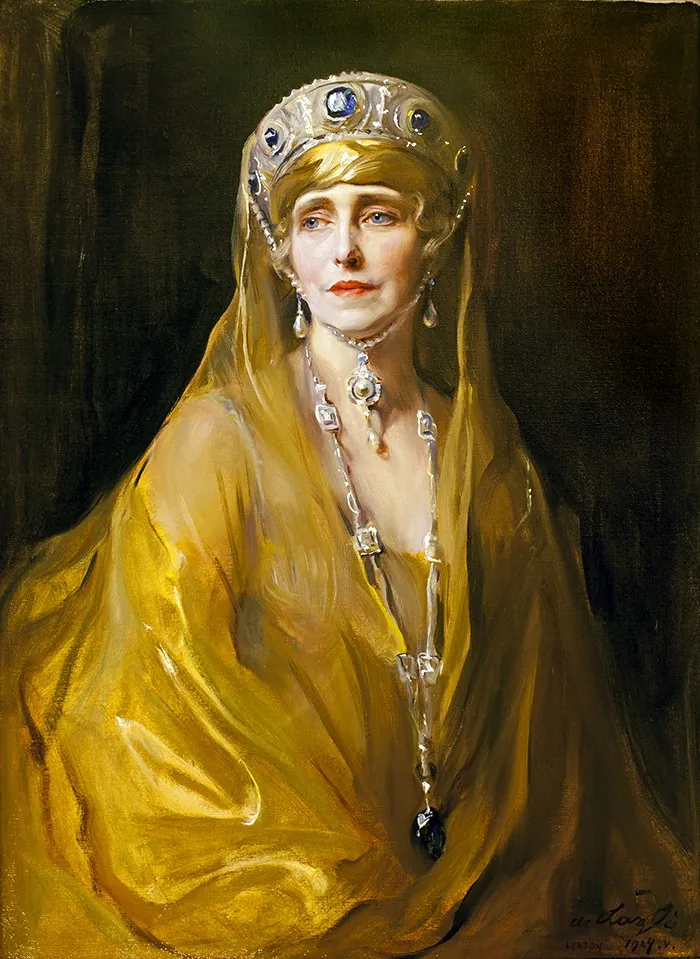
Between 12 and 14 December, 1,738 boxes went into 17 wagons at Iași station: gold coin and ingots worth 314,580,456.84 lei, mostly German marks and Austrian crowns – plus two boxes of Queen Marie's jewels, worth 7 million. The train left at once and reached Moscow on 21 December; the inventory of January–February 1917 ended in the final protocol of 16 February, the boxes sealed, the Bank keeping a right of inspection.
Russia would feel offended if we sent it to England.
Ion I. C. Brătianu, December 1916 (reported)
Meanwhile In the Second World War the Bank's valuables stayed home – hidden in a cave near Tismana, and recovered safely.
Chapter II
The second train
1917 · 1917, everything
- Chapter
- 1917
- The decision
- 18 July 1917, Titulescu
- Loading
- 23–27 July, Iași
- Arrival
- 3 August, Moscow
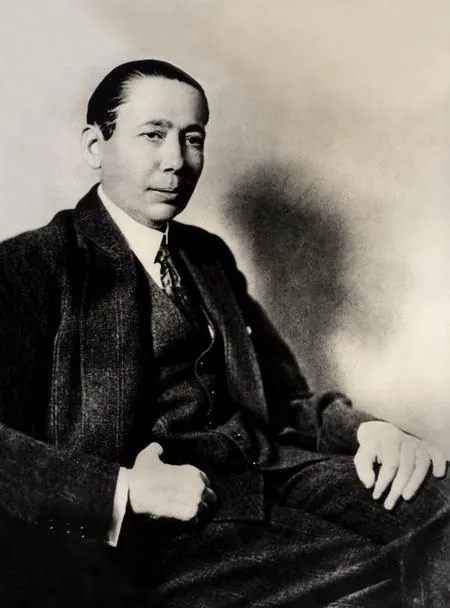
By the summer of 1917 the Tsar had fallen but the Moldavian front still held – barely. On 18 July, on the proposal of Finance Minister Nicolae Titulescu, the Council of Ministers ordered a second evacuation: not just the Bank's remainder but the country's memory – the Romanian Academy's archives, Dacian jewels, the voivodes' jewels, thousands of paintings, fourteenth-century icons, monastery manuscripts.
Loading ran from 23 to 27 July at Iași; the train left on the evening of the 27th with 24 wagons – three for the National Bank, declared at 1,594,836,721.09 lei, twenty-one for the CEC savings bank, 1,661 boxes holding some 7.5 billion. It reached Moscow on 3 August, the Bank's share into the Kremlin beside the first transport, the CEC's into the Loan and Deposits House.


With that, the whole of the country's movable wealth sat in Moscow: two trains, 41 wagons, the gold, the jewels, the archives, the paintings. The receipts were protocols between allies; within months there would be no allied government left to honor them.
Meanwhile Twenty gendarmes in civilian clothes left Iași for Moscow that November to guard the gold; the Bolsheviks never let them near it.
Chapter III
The confiscation
1918 – 2008 · 1918–2008, the returns
- Chapter
- 1918 – 2008
- The breach
- 26 January 1918
- Obor 1935
- 1,443 crates, no gold
- The 1956 show
- 39,320 pieces
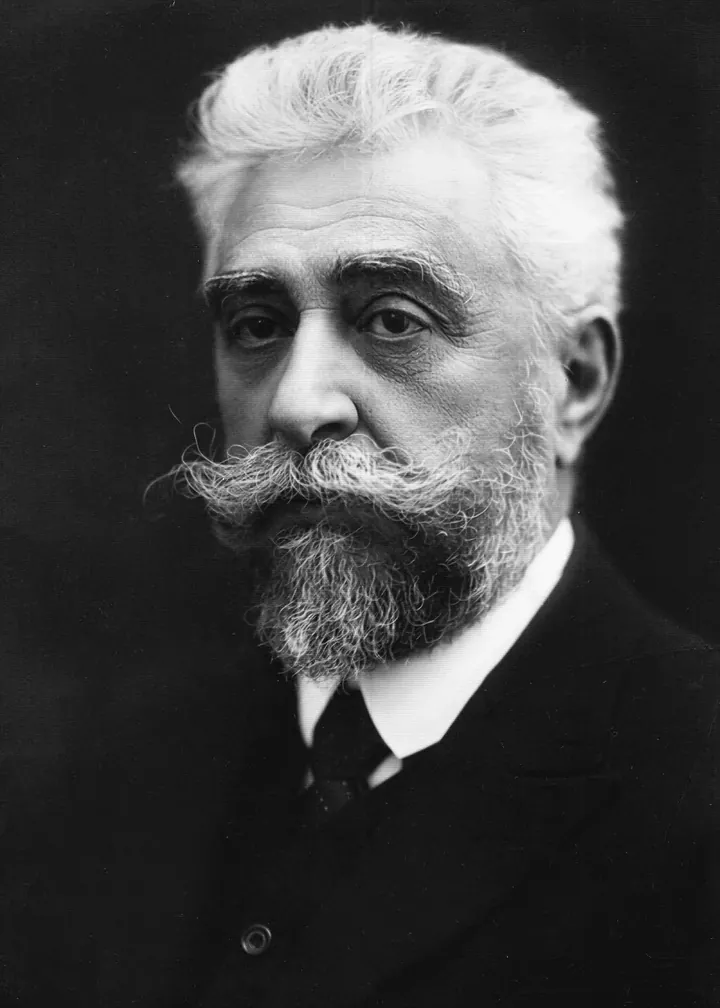
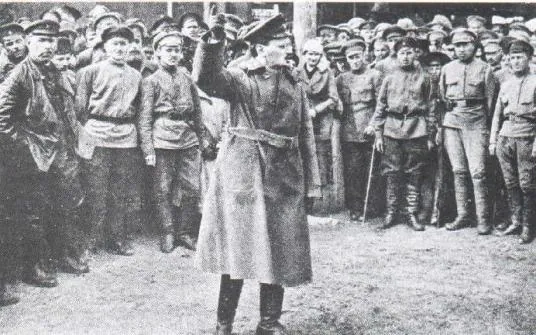
On 20 January 1918 Romanian troops crossed the Prut at the request of the Sfatul Țării; six days later Leon Trotsky severed diplomatic relations and declared the Moscow funds untouchable for the Romanian oligarchy – the Soviet state would keep them for the Romanian people. The keys to the vaults passed from the French consul to Denmark, then Norway; by September 1918 the last Romanians had left Moscow.
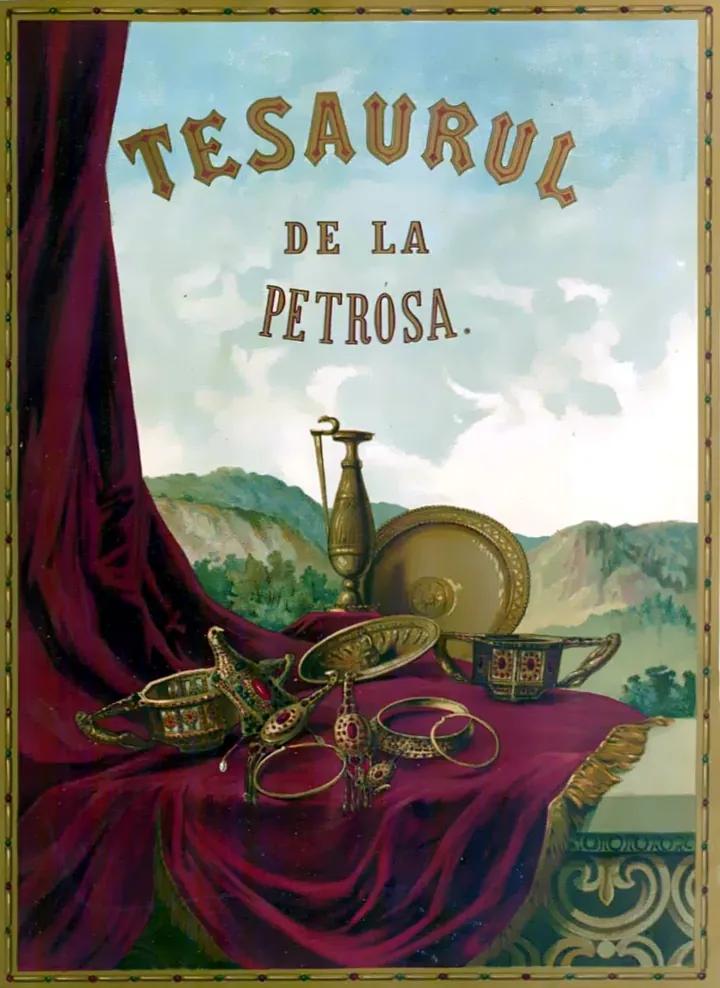
What came back came in crumbs. On the evening of 16 June 1935, seventeen wagons with 1,443 crates reached Obor station in Bucharest – archives, paintings, church objects – and the receipt of 28 June stated plainly that no gold, jewelry or valuables were among them. In June 1956 Moscow announced another return: the Pietroasele treasure, 120 Grigorescus, icons and tapestries, 39,320 pieces shown that August – but never the 93.4 tons, which communist papers pretended had come home too.


The strangest return was the smallest. In 1994, asked for proof of good faith, Moscow sent Bucharest twelve gold coins from the first crate of the first train – France and Belgium, 1854 to 1909, 77.09 grams in all. Nobody would accept them for fourteen years; on 6 March 2008 the numismatist Ernest Oberländer-Târnoveanu certified them authentic and signed. Twelve coins out of 93.4 tons.
The Romanian funds deposited in Moscow are untouchable for the Romanian oligarchy. The Soviet government takes responsibility for keeping these funds and delivering them into the hands of the Romanian people.
Leon Trotsky, 26 January 1918
Meanwhile Dimitrie Cantemir's remains came home in 1936 with a few minor archives – the only return of that decade.
Chapter IV
The trace
2003 – 2024 · 2003–2024, what stayed
- Chapter
- 2003 – 2024
- The commission
- 5 meetings through 2019
- The 2023 value
- about €15 billion
- The EP resolution
- 14 March 2024
The 2003 friendship treaty refused to touch the treasure; instead the two presidents set up a historians' commission, co-chaired by Ioan Scurtu and Alexandr Ciubarian. It met five times through 2019 – fifteen years, five sittings – and returned small archive lots; the gold, the art and the valuables stayed in Russia, worth about €15 billion in 2023 money, history aside.
On 14 March 2024 the European Parliament – procedure 2024/2605(RSP) – urged Russia to return the remainder in full: 91.5 tons of fine gold by its count, plus everything else the protocols itemized. Moscow's 1994 answer still stands on the record: for Russia, the issue no longer exists.


So where is Romania's gold? What can be visited sits in Bucharest – the Pietroasele treasure, the Grigorescus, the icons, the twelve coins of 2008. The 93.4 tons – 91 in coin, 2.4 in ingots – sit in Russia, sealed by a century of refusals. The protocols promised return, and their receipts are still open.
Meanwhile Brezhnev's 1965 answer: the gold went to Perm, Omsk, Saratov and Kazan in 1918 – and the file was closed.
The treasure quiz
Four questions about the trains, the gold, the returns and today. Choose, then check against the sources.
-
1
The train
The first train, December 1916, carried to Moscow:
What happened
The boxes: 314,580,456.84 lei in coin and ingots, plus the queen's jewels. The billions rode the second train, in July 1917.
-
2
The gold
The inventoried metal stock was:
What happened
93.4 tons: 91 in historic coin, 2.4 in ingots. The round 120 circulates in summaries; the protocols itemize 93.4.
-
3
The return
In June 1935 seventeen wagons reached Obor with:
What happened
Archives: the receipt of 28 June 1935 states plainly that no gold, jewelry or valuables were handed over.
-
4
Today
The 93.4 tons of gold:
What happened
Never returned. What came back – archives, icons, the Pietroasele treasure, twelve coins – never included an ingot.
Answer a card to begin.
Seven plates of the treasure
Seven images, in the order of the story: the wartime capital, the Kremlin vaults, the queen, the rupture, the returns.
Plate 1917The wartime capital
The wartime capital Unknown photographer, 1917 · Wikimedia Commons - The royal family and the government at Iași, 10 May 1917.
- The capital since the autumn of 1916; both trains left from here.
- First train: 12–14 December 1916. Second: 23–27 July 1917.
Plate 1910The Kremlin vaults
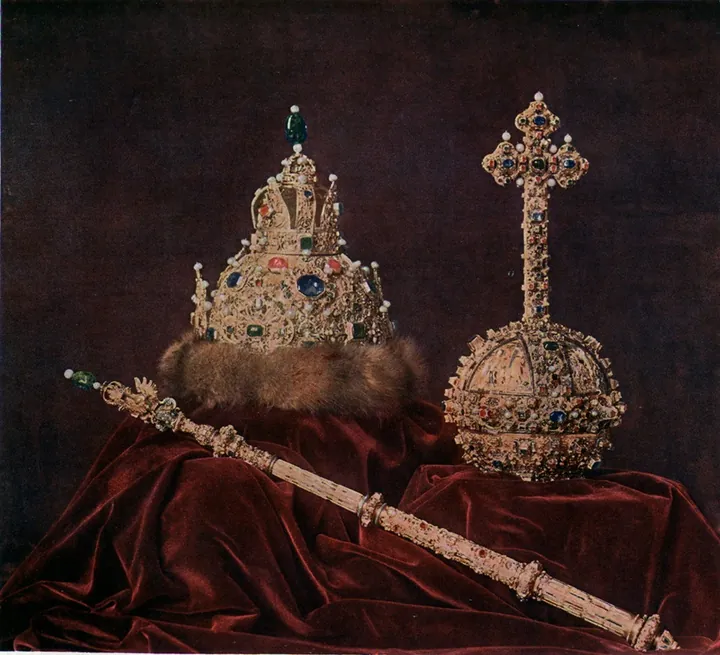
The Kremlin vaults Prokudin-Gorsky, 1910s · Wikimedia Commons - Tsar Michael's regalia – Russian, not Romanian – photographed in color by Prokudin-Gorsky in the 1910s.
- The Kremlin Armoury, the same vault complex that received the Romanian boxes.
- Sealed boxes, BNR inspection rights: the February 1917 protocol.
Plate 1924The queen's jewels
The queen's jewels Philip de László, 1924 · Wikimedia Commons - Queen Marie, painted by Philip de László in 1924.
- Two boxes of her jewels, worth 7 million lei, rode the first train.
- Sealed in Moscow; never returned.
Plate 1918The rupture
The rupture Unknown photographer, 1918 · Wikimedia Commons - Leon Trotsky in 1918, the year he severed relations.
- 26 January: the funds are untouchable for the Romanian oligarchy.
- The keys passed to France, then Denmark, then Norway.
Plate 1917New masters
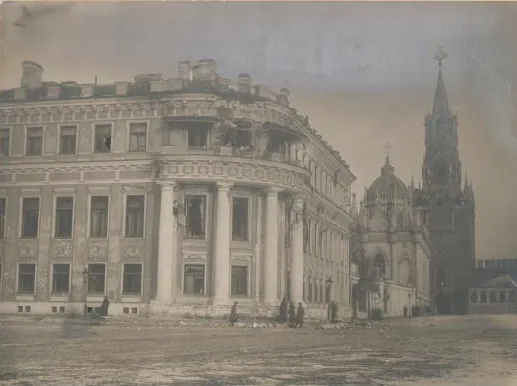
New masters Unknown photographer, 1917 · Wikimedia Commons - The Nikolaevsky Palace in the Kremlin, damaged in October 1917.
- The Cossack guard had sided with the revolution.
- Twenty Romanian gendarmes came too late – and were turned away.
Plate c.1890What came back
What came back Henric Trenk, c.1890 · Wikimedia Commons - The Pietroasele treasure, drawn by Henric Trenk around 1890.
- Sent east in 1917; home in the 1956 return.
- 39,320 pieces were shown in Bucharest that August.
Plate 1899The painter's share
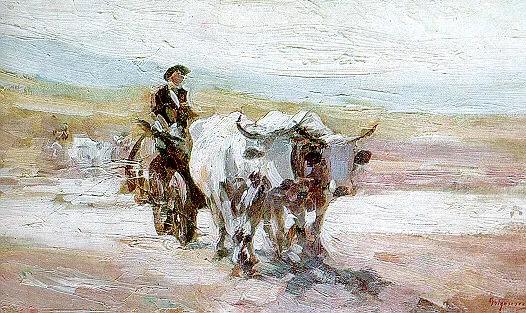
The painter's share Nicolae Grigorescu, 1899 · Wikimedia Commons - Nicolae Grigorescu's Ox cart, painted in 1899.
- 120 of his works were among the 1956 returns.
- 1,350 paintings, engravings and drawings in all.
.jpg)
Photographs and prints via Wikimedia Commons (all public domain). Dates are plate references.
The treasure in six numbers
Every figure below comes from the cited histories and the two protocols. The gold's tons are given as inventoried – 93.4.
- 1,916
- the first train leaves Iași
- 1,738
- boxes of gold in the first train
- 1,917
- the second train leaves Iași
- 1,918
- Trotsky severs relations
- 1,935
- crates back at Obor, no gold
- 1,956
- pieces shown in August, no gold
Three things people get wrong
The treasure was 120 tons of gold
False as usually stated: the inventoried metal stock is 93.4 tons – 91 in historic coin, 2.4 in ingots. The round 120 circulates in summaries; the European Parliament's 2024 resolution counts 91.5 tons of fine gold.
Everything came back in 1956
False: archives, icons, the Pietroasele treasure and 120 Grigorescus came back – 39,320 pieces in the August show. None of the 93.4 tons of gold has ever been returned.
The treasure was only gold
False: the gold rode with the Academy's archives, Dacian jewels, thousands of paintings, fourteenth-century icons and monastery manuscripts – a country's memory in 41 wagons.
Sources and methods
The story follows the Romanian Treasure histories and the two protocols (Iași 14/27 December 1916, Moscow 16 February 1917); the 2024 resolution is quoted from the European Parliament's adopted text. The photographs are all public domain, via Wikimedia Commons.
Day-dates are New Style; the one Old Style date on the page – the Iași protocol, 14/27 December – gives both. Gold tons are metric; lei are gold lei of the time.
The exact contents of unopened crates, the 1918 movements inside Russia and any Kremlin holdings inventory are unverified here – so none is claimed. Returned objects are described only where the returns are documented.
The first train
- Wikipedia, Romanian Treasure: the BNR a private bank, 93.4 tons of gold (91 coin, 2.4 ingots), London refused
- Brătianu: 'Russia would feel offended if we sent it to England'; Mossoloff 11 December, the Iași protocol of 14/27 December 1916
- The first transport: 12–14 December 1916, 17 wagons, 1,738 boxes (314,580,456.84 lei) + 2 boxes of Queen Marie's jewels; arrival 21 December
- The 9 January – 4 February 1917 inventory, the final Moscow protocol of 16 February; sealed boxes, BNR inspection right
The second train
The confiscation
- Trotsky, 26 January 1918: relations severed, the funds 'untouchable for the Romanian oligarchy'; the keys to Labonne, then Denmark and Norway
- 1935: the evening of 16 June, Obor station, 17 wagons, 1,443 crates; 28 June: no gold, jewelry or valuables
- 1956: Pietroasele, 120 Grigorescus, 39,320 pieces in the August show; the 93.4 tons never came back
- 2008: the 12 coins Talpeș asked for in 1994 (1854–1909, 77.09 g), handed over 6 March 2008, authenticated by Oberländer-Târnoveanu
The trace
The seven plates
Images
- Unknown photographer, 1917 · Wikimedia Commons
- Unknown photographer · Wikimedia Commons
- Unknown photographer, c.1930 · Wikimedia Commons
- Philip de László, 1924 · Wikimedia Commons
- Unknown photographer, 1917 · Wikimedia Commons
- Unknown photographer, 1918 · Wikimedia Commons
- Prokudin-Gorsky, 1910s · Wikimedia Commons
- Henric Trenk, c.1890 · Wikimedia Commons
- Nicolae Grigorescu, 1899 · Wikimedia Commons