The glass
The glass
From material to the wall of a vessel
At Colonia Fabricii near Tomești, a settlement’s history is tied to glass production. The commune documents the factory site and the materials available nearby. [1] [2]
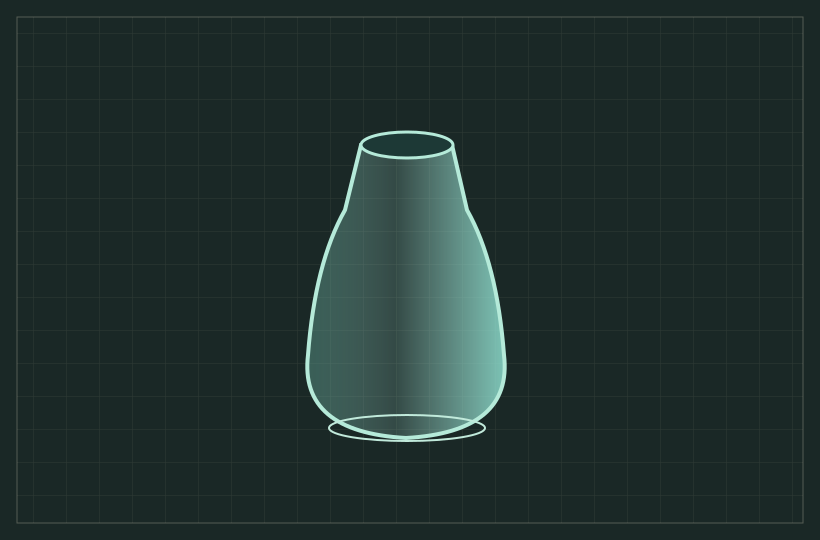
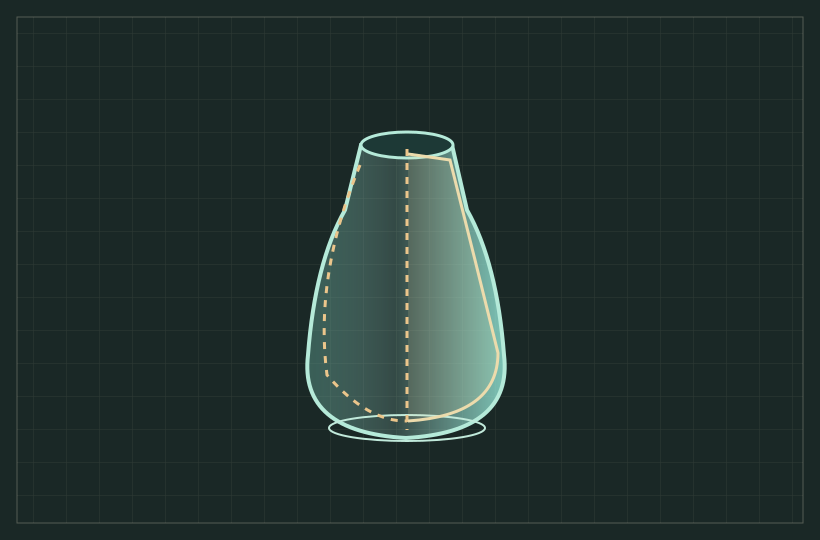
Open the vessel section. This illustrative example lets you examine the wall of glass before following the story down to the furnace and valley. [2]
Colonia Fabricii
The factory settled beside the river
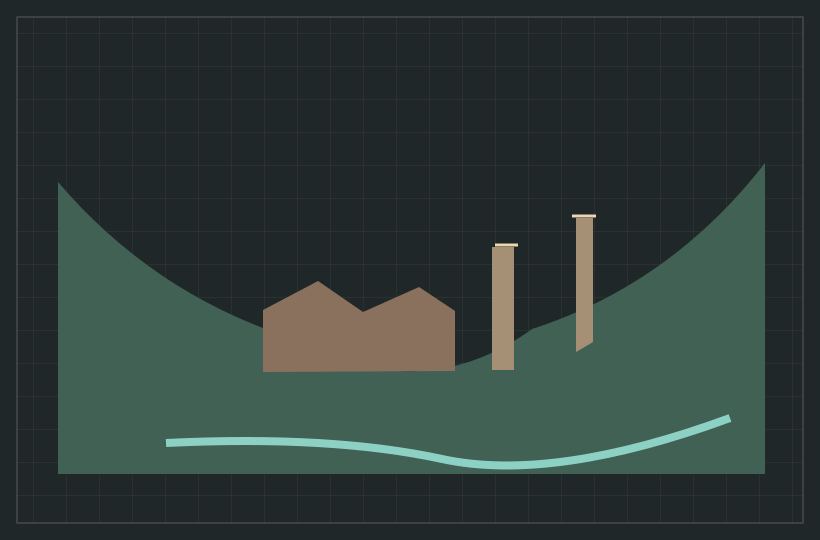
The commune’s account places the works upstream from Tomești in Colonia Fabricii. A photograph in the study of the settlement shows the buildings and chimneys at the foot of the hillside. [1] [3]
Open the photograph and compare it with the section. The valley setting explains why factory, river and houses belong to the same story. [2] [3]
The resources
What was available around the valley
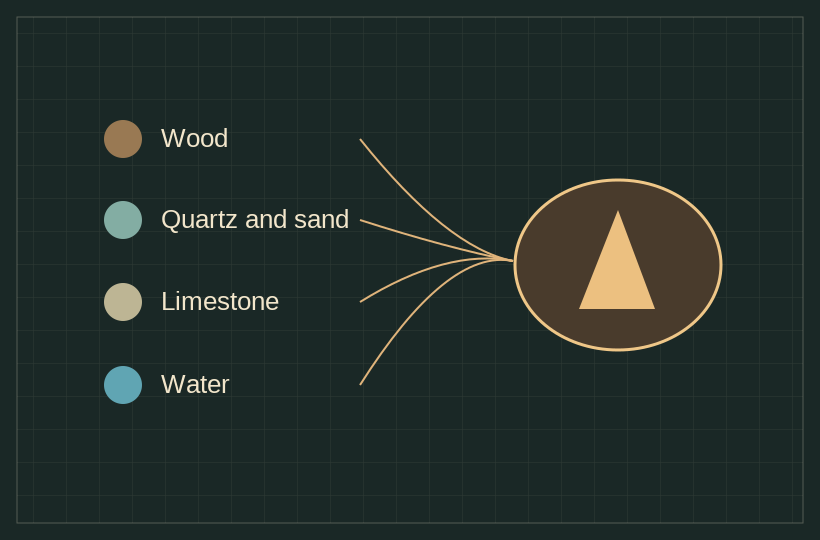
The commune lists wood, quartz, quartz sand, limestone and water. Wood was also important as a source of heat. Bringing the resources together mattered to the choice of site. [2]
Follow each line towards the furnace. The figure is about location and supply. The composition of a batch or the types of glass made in particular years would require separate technical records. [2]
Early years
When did the factory actually begin?
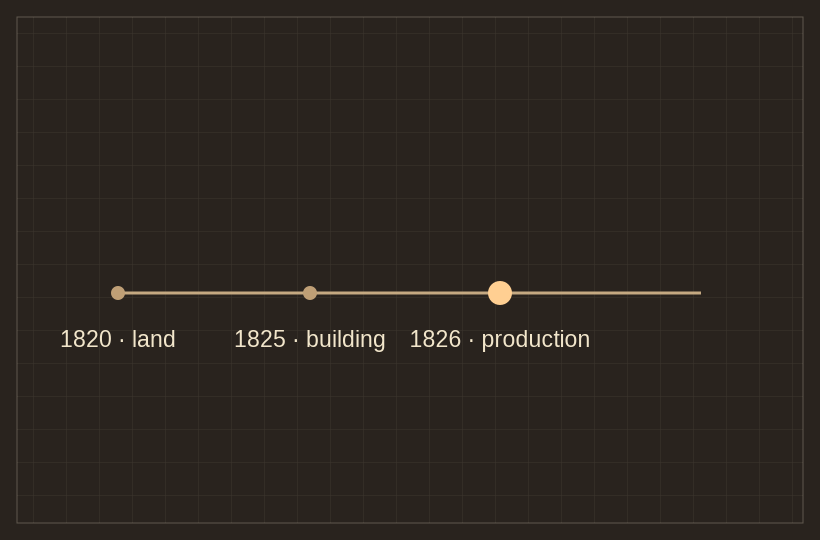
The commune’s history starts in 1820, when Anton Pfantzels bought the land. Construction began in 1825 and production in 1826, according to the same source. [1]
Three dates can belong to one account of the factory’s start. The year depends on whether you mean the site, the building or work at the furnace. [1]
After the shift
A play with people from the factory
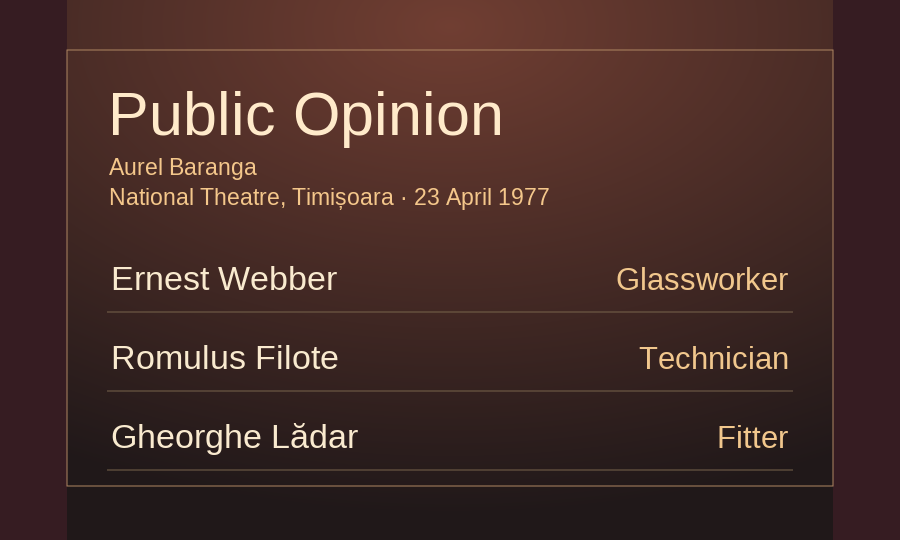
The commune’s cultural history records Aurel Baranga’s play “Public Opinion”, prepared in 1976–1977, with factory employees and schoolteachers among the cast. The municipal account records their names and occupations. [4]
Their production opened on 23 April 1977 at the National Theatre in Timișoara. The cast included glassworker Ernest Webber, technician Romulus Filote and fitter Gheorghe Lădar. [4]