A library clerk, around 1724
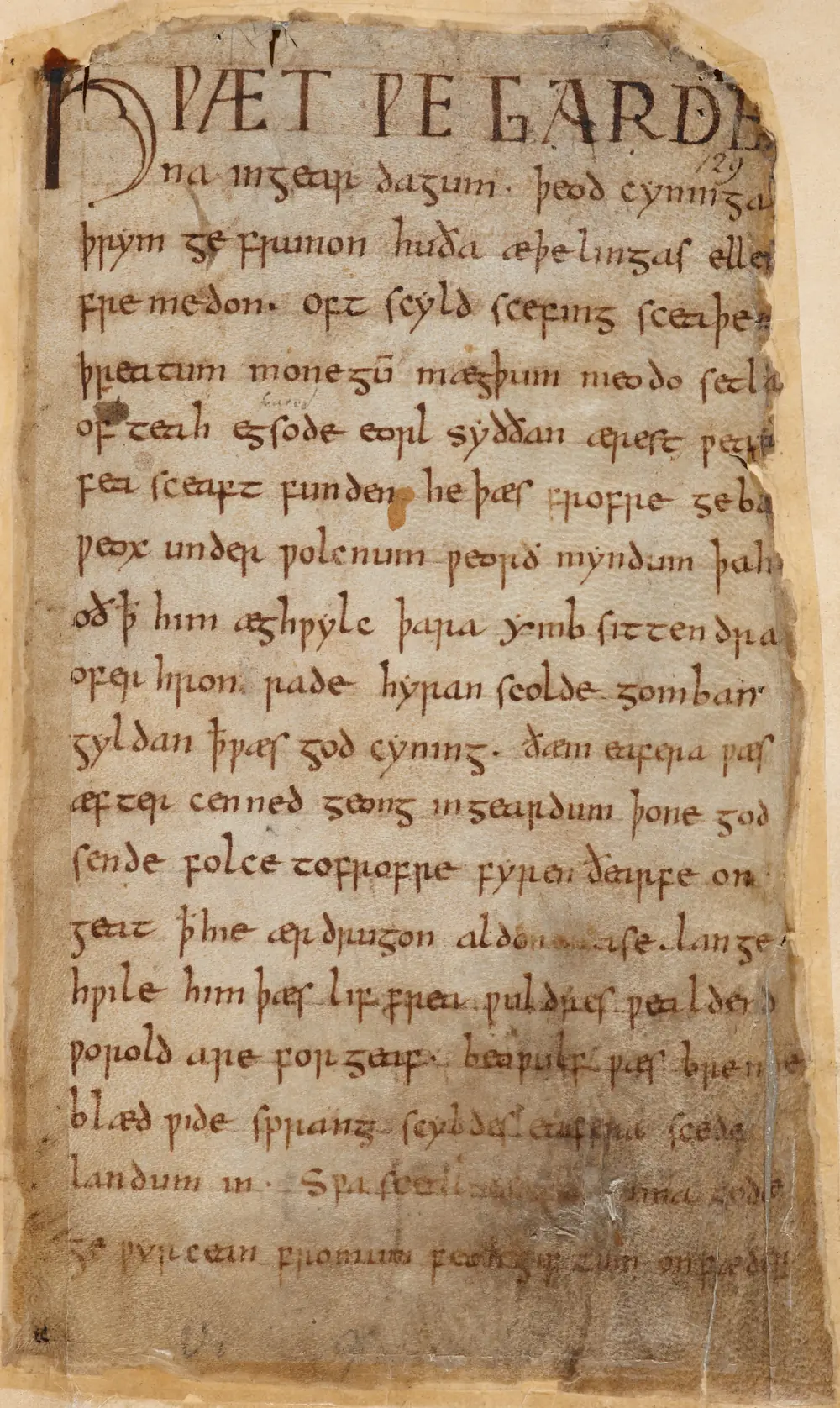
On the night of 23 October 1731, Ashburnham House in Westminster caught fire. Robert Cotton's library was stored there. Thirteen manuscripts burned completely and more than two hundred came out damaged. The Beowulf volume survived, charred at the edges. The manuscript of the poem “The Battle of Maldon” did not.
The poem is still read today. Some seven years before the fire, around 1724, somebody had copied it out by hand. Who that was remains unsettled: some scholars favour John Elphinstone, others David Casley. The transcript went missing in its turn, then surfaced in the Bodleian in the 1930s.
Three hundred and twenty-five lines about men who stayed on the battlefield after their commander fell exist because one person, on an ordinary day, sat down to copy an old text.
What can be counted
How often does everything hang on that? The question looks unanswerable, because you cannot count what no longer exists. In 2022 a team led by Mike Kestemont and Folgert Karsdorp got around it with a tool borrowed from ecology.
When a biologist wants to know how many species live in a forest, they cannot catch them all. They count instead the species seen exactly once. If a great many species turn up only once in the sample, many more must be out there unseen. The calculation is called Chao1.
The researchers put literary works in place of species and manuscripts in place of individuals, then applied the method to medieval chivalric and heroic narrative in six languages: Dutch, English, French, German, Icelandic and Irish. Of the roughly 1,170 works that once existed, 799 reached us. Of the roughly 40,614 manuscripts, 3,648. Nine per cent.
The figure that matters here comes straight from their table. Of the 799 works that still exist, 326 are attested by a single manuscript. Another 143 by exactly two. More than half of everything left rests on at most two known manuscripts.
These figures describe that corpus, not culture at large. The method gives a lower bound on the original population, so the survival rates are upper bounds: more was probably lost than this. The authors' estimate for works that vanished entirely is 371.
The hand that copied
A text survives by being copied again. Parchment abrades, paper turns acid, wax wears down with every playing, magnetic tape sticks to itself, and a digital format outlives the machine that reads it. Most of what reached us did so because somebody made a new copy before the old one gave out. The rest was lucky in its material: fired clay, or a sheet forgotten in a file.
It happens in four ways, and each of them has a name and a date.
Somebody copied it
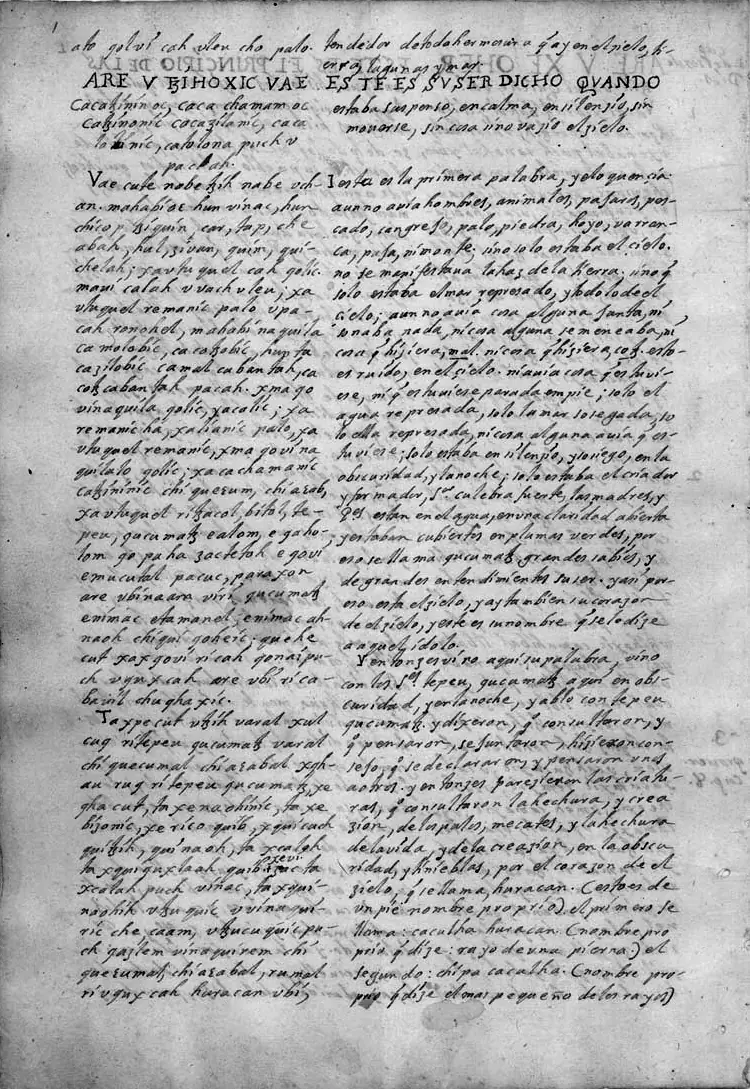
The Dominican friar Francisco Ximénez arrived at Chichicastenango in Guatemala in 1701 and wrote the K'iche' text of the Popol Vuh in one column with a Spanish translation beside it. The manuscript he copied from was never found. His copy is the only source. Bach's cello suites are in the same position: his own score no longer exists, and the principal source is the copy made by his second wife, Anna Magdalena.
Somebody recorded it
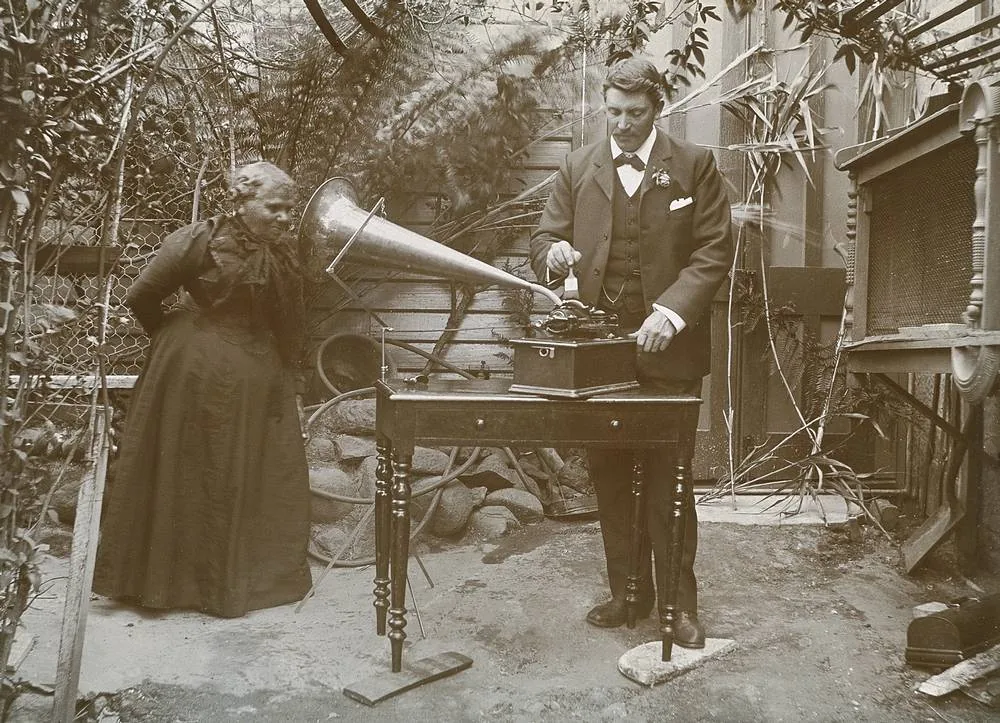
In 1903 the ethnographer Horace Watson recorded the songs of Fanny Cochrane Smith on seven wax cylinders. Together with the four cylinders of 1899, they remain the only known recordings of a fluent speaker of an Aboriginal Tasmanian language. Palawa kani, the language the Tasmanian Aboriginal community is rebuilding today, draws on them.
Somebody refused to burn it
Kafka asked Max Brod to destroy his unpublished manuscripts. Brod told him to his face that he refused, and that if Kafka meant it he should appoint another executor. Kafka appointed nobody else, and The Trial, The Castle and Amerika appeared in 1925, 1926 and 1927. Emily Dickinson had asked her sister Lavinia to burn her papers. Lavinia burned the correspondence and kept the nearly 1,800 poems in the chest.
Somebody found it
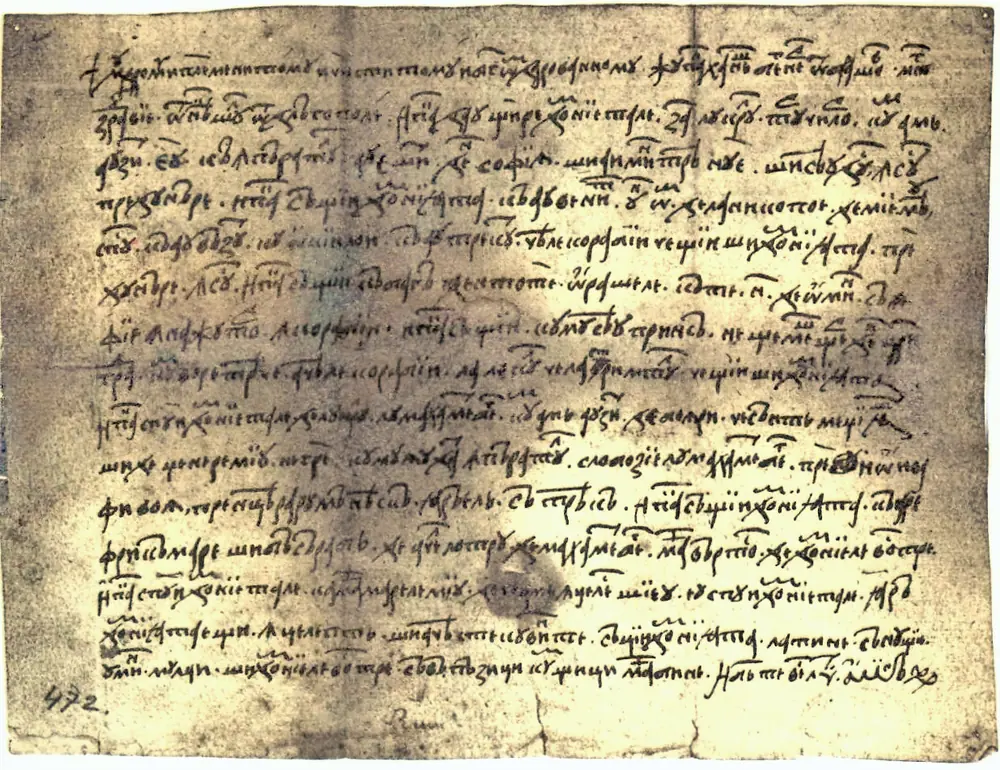
In 1894, in a file of commercial correspondence in the Brașov town archive, Friedrich Stenner came across a sheet sent to the town's mayor in June 1521. It is the oldest dated document written in Romanian. In 1871, at Voroneț monastery, Grigore Crețu had found an eighty-five-leaf manuscript of the Acts of the Apostles in Romanian. Both are unique.
Copies are not enough
Lucretius's poem about atoms had already survived. It was copied at least three times in the ninth century, and two of those manuscripts are in Leiden today. Nobody was reading them. When Poggio Bracciolini walked into a German monastery in January 1417 and had a copy made for himself, the text was in no danger of falling apart. It was in danger of staying unread. His copy was the source of the roughly fifty Italian manuscripts that put the poem back into circulation.
A copy nobody opens is worth as much as no copy at all, right up to the day somebody opens it.
The game
Twelve real works sit on the table: books, poems, a score, a letter. Each starts with one copy. Eight rounds pass. In each round you can make three copies, anywhere you like; then every existing copy has a 74% chance of getting through. Anything left with no copies does not come back.
The rule of the game, in brief
Twelve real works each start with a single copy. In each of eight rounds three new copies are added, after which every copy has a 74% chance of getting through. One extra copy lifts the odds from 9% to 17%; five copies give 38%; twenty give 85%. All twelve did get through in reality, and the ledger below says how.
The 74% is not invented. The manuscript survival rate measured in the Science study is 9%. Spread evenly over eight steps, that gives 0.09 to the power of 1/8, which is 0.74. It is the game's only parameter and it applies identically to all twelve. The events at the head of each round are real and come from the ledger below: they show the ways things get lost, without changing the odds of anything in the game.
The arithmetic of a copy
The rule behind the game is one line long. A copy with a chance s of getting through one century gets through t centuries with chance st. If n independent copies exist, the chance that at least one reaches the end is:
P = 1 − (1 − st)n
At 74% a century over eight centuries, a single copy has a 9% chance. Two have 17%. Five have 38%. Twenty have 85%. The second copy adds 8 percentage points; the twentieth adds one and a half. This explains a good deal of what survives: the first few copies settle almost everything, and a work copied once has little chance of holding on.
38%
Six traditions, six outcomes
The gaps between languages are wide. 81% of Irish chivalric works survive, and 77% of Icelandic ones. Of the English, 39%. For manuscripts the distance is wider still: 19% in Irish, 5% in English.
The authors put the difference down to the shape of the collection. Medieval French literature was large but uneven: a few works copied in dozens of manuscripts and a long tail of works copied once or twice. The long tail is exactly what disappears. In Icelandic and Irish the manuscripts were spread more evenly across works, so fewer works depended on a single copy.

The ledger
Thirty-two cases, each with the person who wrote, recorded or saved it, and with the source.
Aeschylus
He wrote an estimated 70 to 90 plays. Seven survive complete.
Somebody in the second and third centuries picked a small set of plays for school use. What made that list kept being copied. What did not stopped.
We do not even have complete titles for the lost ones.
7 plays out of 70–90
Tacitus, the Annals
The basic account of Tiberius, Claudius and Nero, written by a senator who lived under the last of them.
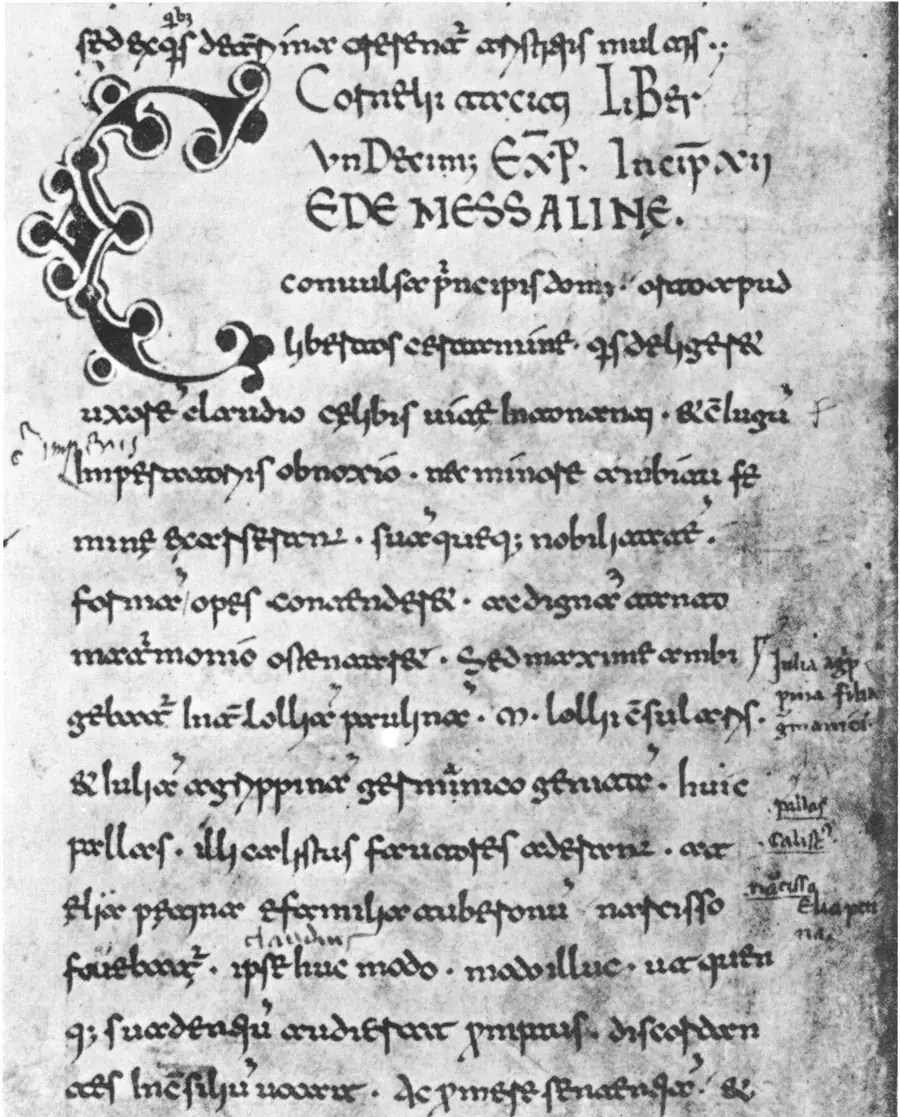
The first half of the Annals reached us through a single manuscript from Corvey Abbey in Germany. The second half, through a single manuscript from Monte Cassino.
Books VII to X are missing from both. Caligula's reign is in neither.
one manuscript for each half
Euripides, the volume from Ε to Κ
The Suda credits him with at most 92 plays. Nineteen survive more or less whole.
Ten are the school plays, chosen in antiquity and copied by generations of pupils. The other nine come from a single volume of a complete edition arranged alphabetically, which happened to cover titles from Ε to Κ.
Helen, Electra, Ion, the two Iphigenia plays, the Cyclops and Heracles are on our shelf because their titles start with the right letter.
9 plays from one volume
Catullus
Almost all of Catullus's poetry comes from a single manuscript that surfaced in Verona around 1305. Poem 62 is the exception: it also survives in a Carolingian anthology.
Two copies were made from it. One is now in the Bodleian in Oxford. The other, probably Petrarch's, was copied in turn and then disappeared.
The Verona original was lost a second time, for good.
one manuscript, lost again
Lucretius, On the Nature of Things
The poem describing a world made of atoms that fall and swerve, with no gods intervening. It sat for a thousand years in the libraries that had copied it, unopened.
Poggio Bracciolini, a papal secretary left without a pope, walked into a German monastery in January 1417, probably Fulda, and had the manuscript copied for him.
The poem had already survived in a few Carolingian copies, two of them now in Leiden. Nobody was reading them. The manuscript Poggio found is lost, but from his copy descend the roughly fifty Italian manuscripts that put the poem back into circulation.
three unopened copies, then fifty
Codex Regius, the Poetic Edda
The Norse mythological and heroic poems: Völuspá, Hávamál, Sigurd and the dragon. For most of them this volume is the only source.
The manuscript came to light in 1643, when it reached Brynjólfur Sveinsson, Bishop of Skálholt. For most of the poems it is the only source.
Eight leaves are missing from the middle. The gap is called the Great Lacuna.
one manuscript, eight leaves missing
Popol Vuh
The K'iche' people's book of creation from Guatemala: the mud people who fall apart, the wooden people with no memory, the maize people.
The Dominican friar Francisco Ximénez arrived at Chichicastenango in 1701, transcribed the K'iche' text and translated it alongside, in two columns.
The manuscript he copied from was never found. His copy is the only source.
one copy, the original gone
The Battle of Maldon
The poem about an English defeat by the Vikings in 991, and about the men who stayed on the field after their commander fell.
Somebody transcribed the poem around 1724, seven years before the manuscript burned. Who it was remains unsettled: some scholars favour John Elphinstone, others David Casley.
The manuscript burned in 1731. The transcript went missing too, then turned up in the Bodleian in the 1930s.
no manuscript, one transcript
Bach's Cello Suites
Six suites for solo cello, played today by every cellist who gets that far.
Bach's own score no longer exists. The principal source is the copy made by his second wife, Anna Magdalena Bach.
With no autograph, every edition rests on copies that differ from one another on slurs, ornaments and bowings. The performer chooses.
his wife's copy, no autograph
Beowulf
The longest heroic poem in Old English, 3,182 lines, bound in a volume with other texts.
One manuscript, Cotton Vitellius A.xv. On the night of 23 October 1731 Ashburnham House, where the Cotton library was stored, caught fire. The volume survived, charred at the edges.
The charred edges kept crumbling for decades, taking letters off the ends of lines.
one manuscript, burnt at the edges
Miorița
The ballad of the shepherd who learns of his death from a sheep and asks her to tell it as a wedding.
Alecu Russo collected the version in the Soveja mountains between February and April 1846. Vasile Alecsandri published it on 18 February 1850 in the Cernăuți paper Bucovina, under the title Mieoara.
After it was printed, 930 documents were collected: 702 variants, 123 fragments and 105 reports, gathered by Adrian Fochi in 1964. The collecting started from a single transcription.
one transcription, then 702 variants
The Voroneț Codex
A fragment of the Acts of the Apostles and the epistles of James and Peter, in rhotacising Romanian, copied between 1563 and 1583.
Grigore Crețu found it at Voroneț monastery in 1871. It has eighty-five whole leaves and a corner of an eighty-sixth.
The dating rests on the paper's watermarks, examined by Alexandru Mareș.
one manuscript, 85 pages
Codicele Voronețean, Romanian Wikipedia; Library of the Romanian Academy, ms. rom. 448
The Epic of Gilgamesh
The oldest long poem that survives, buried in clay tablets in Ashurbanipal's library at Nineveh.
George Smith, a banknote engraver turned Assyriologist at the British Museum, read the flood tablet and announced it in 1872 to the Society of Biblical Archaeology.
The tablets lay under rubble for 2,500 years and reached London as jumbled fragments; the text is still being reassembled piece by piece.
about 15,000 fragments, one library
Epic of Gilgamesh, Wikipedia (compilation citing Layard, Rassam and Smith)
Sappho
The Alexandrian edition ran to at least eight books. Sappho probably wrote around 10,000 lines. About 650 survive.
One poem survives whole, the Ode to Aphrodite, because other ancient authors quoted it. The rest is assembled from quotations and from strips of papyrus, most of them dug out of the rubbish heaps at Oxyrhynchus in Egypt.
Many fragments carry a single word.
one whole poem out of eight books
Emily Dickinson's poems
Nearly 1,800 poems. Ten appeared in her lifetime.
Her sister Lavinia found them after the poet's death in 1886, in forty hand-sewn notebooks and loose sheets, in a locked chest.
Emily had asked Lavinia to burn her papers. Lavinia burned the correspondence and kept the poems.
one chest, one decision
The letter of Neacșu of Câmpulung
A sheet of paper sent on 29 or 30 June 1521 to Hans Benkner, the mayor of Brașov, warning him about Turkish movements on the Danube. The oldest dated document written in Romanian.
It sat for three hundred and seventy years in a file of commercial correspondence. Friedrich Stenner found it in 1894 in the Brașov town archive, where it remains.
Neacșu was writing an urgent military warning. The sheet survived because it entered the business correspondence of the town of Brașov.
a single sheet
Scrisoarea lui Neacșu, Romanian Wikipedia; National Archives, Brașov County Service
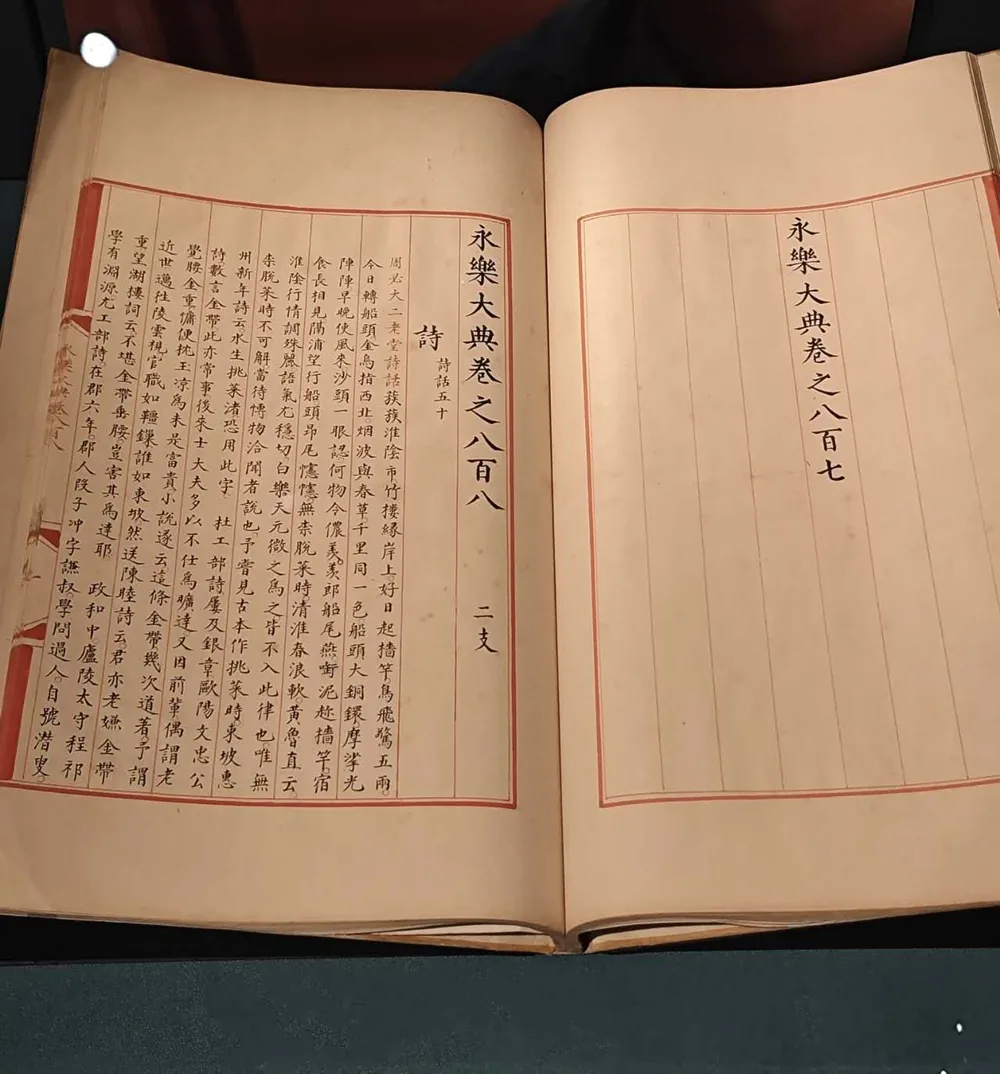
The Yongle Encyclopedia
The largest handwritten encyclopedia in history: 22,937 rolls bound in 11,095 volumes, worked on by 2,169 scholars.
It was never printed. It existed in a single manuscript set, to which a complete duplicate, copied between 1562 and 1567, was added.
Fewer than 400 volumes survive today, about 3.5% of the work, scattered across libraries on several continents.
3.5% of 11,095 volumes
Eminescu's notebooks
Mihai Eminescu's manuscripts: drafts, translations, notes on economics and physics, unpublished verse. Around 14,000 pages.
Titu Maiorescu kept the chest of papers and gave it to the Romanian Academy at the session of 25 January 1902, so that it should serve those who would later study the poet's life and work.
Thirteen years passed between Eminescu's death in 1889 and the donation, years in which the papers sat in a private house.
one chest, about 14,000 pages
Library of the Romanian Academy, page on the Eminescu manuscripts The figure of about 14,000 pages and the 25 January 1902 session date appear consistently in the cultural press and in Academy materials; the institutional page could not be opened directly on the date of consultation.
Fanny Cochrane Smith's songs
The only known recordings of a fluent speaker of an Aboriginal Tasmanian language.
Four wax cylinders in 1899 for the Royal Society of Tasmania, and seven more in 1903, recorded by the ethnographer Horace Watson.
The third 1899 cylinder was damaged. Palawa kani, the language the Tasmanian Aboriginal community is rebuilding today, draws on these recordings.
11 wax cylinders
The Hurmuzaki Psalter
The 150 psalms in Romanian, copied somewhere between 1491 and 1504. The oldest surviving text in the Romanian language.
Eudoxiu Hurmuzaki gave it to the Library of the Romanian Academy in 1904. The manuscript carries his name.
The dating comes from the paper's watermarks. It carries no written date.
one manuscript, 134 leaves
Psaltirea Hurmuzaki, Romanian Wikipedia; Library of the Romanian Academy, ms. rom. 3077
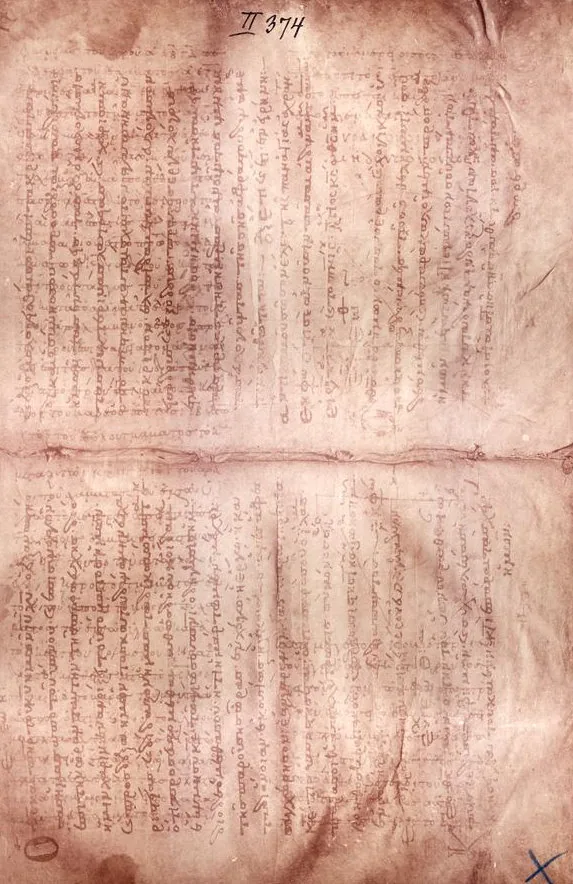
Archimedes, The Method
The text in which Archimedes shows how he reached his results, by weighing geometrical figures against one another. It comes close to integral calculus eighteen centuries before Newton.
In 1229 somebody scraped the parchment and wrote a prayer book over it. Johan Ludvig Heiberg recognised the erased script in Constantinople in 1906.
The Method, the Greek text of the Stomachion and the Greek text of On Floating Bodies exist nowhere else.
one manuscript, scraped and overwritten
The oldest voice in the Romanian folklore archive
The first phonograph recording made in Romania was done by Pompiliu Pârvescu in Dobrogea, in 1907.
The oldest cylinder the folklore archive still holds is the tune Cine hăuie pe luncă, collected by Dumitru Georgescu Kiriac in 1912.
Wax cylinders wear down with every playing.
one cylinder, one tune
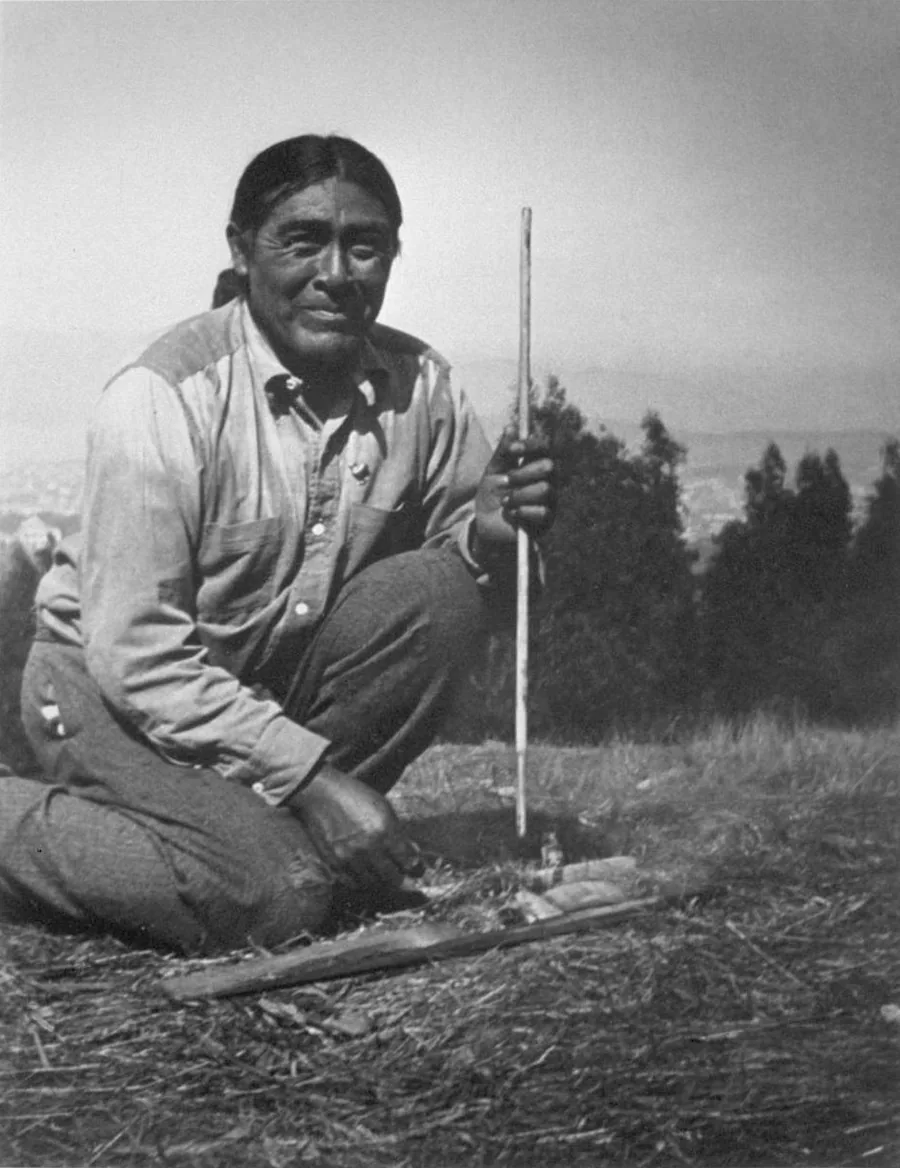
Ishi's voice
The last known member of the Yahi people of California spent his final years in a museum in San Francisco.
Between September 1911 and April 1914, Alfred Kroeber and T. T. Waterman recorded 148 wax cylinders of him speaking, singing and telling stories: five hours and forty-one minutes. The story of Wood Duck alone fills 51 cylinders.
He died in March 1916. The Library of Congress added the recordings to the National Recording Registry in 2010.
148 cylinders, 5 hours 41 minutes
Library of Congress, National Recording Preservation Board, “Cylinder Recordings of Ishi (1911–1914)”, added to the registry in 2010 The institutional file returned 403 on direct access; the dates, cylinder count and running time come from the Library of Congress title and description, confirmed by the University of California Berkeley announcement of 6 April 2011.
Kafka's novels
The Trial, The Castle and Amerika, none finished, none published in the author's lifetime.
Kafka asked Max Brod to burn all his unpublished manuscripts. Brod told him to his face that he refused, and that if Kafka meant it he should appoint another executor. Kafka appointed nobody else.
Brod published the three novels in 1925, 1926 and 1927. In 1939 he left Prague with a suitcase of Kafka's papers.
one suitcase, one friend who refused
Brăiloiu's folklore archive
In 1928 Constantin Brăiloiu founded and ran the Folklore Archive of the Romanian Composers' Society, to gather folk music from across the Romanian-speaking area.
His teams went into the field with a phonograph, alongside Dimitrie Gusti's researchers. On 6 April 1949 his archive and George Breazul's Phonogram Archive were merged by decree into the Folklore Institute.
The archive now holds 26 types of carrier in six depots, from wax cylinders to DAT tapes. Every old format has to be moved to a new one before no machine is left that can read it.
26 carrier types, 6 depots
The Book of Margery Kempe
The first autobiography in English, dictated by a woman who could not write and who had fourteen children.
The original manuscript is lost. What remains is a copy made by a scribe named Salthows, found in a house in Derbyshire and identified by Hope Emily Allen in 1934.
For five hundred years the book was known only from a printed digest of a few pages.
one copy of a dictation
The Book of Margery Kempe, Wikipedia; British Library, Add MS 61823
Anne Frank's diary
The notebooks written in the hiding place at Prinsengracht 263, between 1942 and 1944.
On 4 August 1944, after the arrest and before the hiding place was emptied, Miep Gies and Bep Voskuijl gathered the papers and put them in a desk drawer.
Miep Gies did not read them. She said later that if she had, she would have had to destroy them: they contained the names of everyone who had helped.
one drawer, one year of waiting
Ubykh
A Caucasian language with around eighty consonants, among the most in the world, and only three vowels.
Georges Dumézil, Hans Vogt, Georges Charachidzé, George Hewitt and A. Sumru Özsoy gathered thousands of pages and recordings, much of it from Tevfik Esenç, a former village mayor in Turkey.
Ubykh died on 7 October 1992, when Tevfik Esenç died. Whatever he had not yet said cannot now be asked of anyone.
one speaker, thousands of pages
Eyak
The language of a community in Alaska, distantly related to the Athabaskan languages and to Tlingit.
Michael E. Krauss documented it for decades, starting with a preliminary report in 1965. The last native speaker, Marie Smith Jones, died on 21 January 2008.
From Krauss's documentation a French student, Guillaume Leduey, taught himself the language and now teaches it.
one speaker, one grammar
Aka-Bo
One of the Great Andamanese languages, from the Andaman Islands.
Anvita Abbi, professor of linguistics at Jawaharlal Nehru University in Delhi, worked with Boa Sr from 2005 and recorded her language and songs.
Boa Sr died on 26 January 2010. The other members of the community no longer understood the songs she knew.
one speaker, one researcher
The Exeter Book
A late tenth-century volume holding about a sixth of all surviving Old English poetry, including over ninety riddles.
Bishop Leofric left it to Exeter Cathedral, where it still is. Nearly all surviving Old English poetry fits in four manuscripts: this one, the Vercelli Book, the Junius manuscript and the Beowulf codex.
Whole gatherings are missing. The original first eight leaves are lost.
one of the four manuscripts that hold it all
Exeter Book, Wikipedia; inscribed on the UNESCO Memory of the World register in 2016
Istro-Romanian
One of the four Eastern Romance languages, spoken in a few villages of the Istrian peninsula in Croatia: Žejane north of Mount Učka and Šušnjevica to the south.
August Kovačec published an Istro-Romanian–Croatian dictionary with a grammar and texts in 1998. Before him, Sextil Pușcariu and Pavao Tekavčić described it.
UNESCO classes it as severely endangered. A 1998 study in Istria found 170 active speakers.
170 active speakers in 1998
Istro-Romanian language, Wikipedia, citing the UNESCO Atlas of the World's Languages in Danger
No case matches that search.
Who remembers
Every row in the ledger has a name and a date. Friedrich Stenner, 1894, a file of commercial correspondence in Brașov. Grigore Crețu, 1871, Voroneț monastery. Titu Maiorescu, 25 January 1902, a chest holding fourteen thousand pages. Miep Gies, 4 August 1944, a desk drawer at Prinsengracht 263. Anvita Abbi, 2005, an island in the Andamans.
Each of them was doing a small thing for a reason of their own: a file to sort, a friend to honour, a curiosity to satisfy. The sum of those small things is everything we still know.
Copying is now free and instant, which settles the first half of the problem. The second half is unchanged: somebody still has to want to make the next copy, on the next medium, while a machine that reads the old one still exists.
Method and sources
The central figures come from Kestemont et al., “Forgotten books: The application of unseen species models to the survival of culture”, Science 375, 6582 (18 February 2022), 765–769, Table 1. The column sums of that table reproduce its printed totals exactly (326 works attested by one manuscript, 143 by two, 799 works in all, 3,648 manuscripts), and both ratios recompute from the published counts: 3,648 of 40,614 is 8.98%, 799 of 1,170 is 68.29%.
Every case in the ledger carries its own source, marked there. Where an official source could not be opened directly, the entry says so. Images are public domain or Creative Commons Attribution, with full attribution under each.
The game uses one parameter, 0.74 per round, derived from the 9% rate spread over eight steps. Every run has its own number, written into the page address, so the same address replays exactly the same run.
The images
| Image | Author and collection |
|---|---|
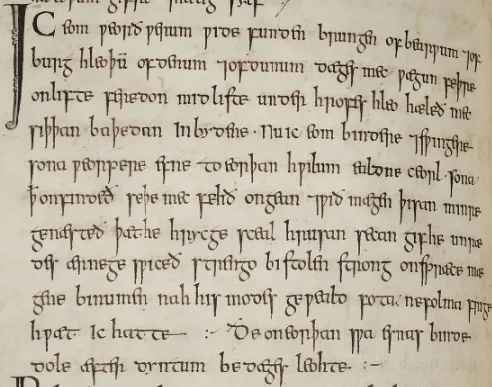
| The first leaf of Beowulf, in Cotton MS Vitellius A | British Library, Cotton MS Vitellius A.xv, f. 132r. Public domain, via Wikimedia Commons. |
| The letter of Neacșu of Câmpulung, 29 or 30 June 1521 | Original document: Neacșu Lupu. Photograph: unknown author. Public domain, via Wikimedia Commons. |
| Horace Watson recording the songs of Fanny Cochrane Smith on an Edison phonograph, 1903 | Unknown author, 1903. Public domain, via Wikimedia Commons. |
| The first page of Francisco Ximénez's manuscript, around 1701: the K'iche' text in one column, the Spanish translation in the other | Francisco Ximénez, around 1701. Newberry Library, Chicago. Public domain, via Wikimedia Commons. |
| A leaf of the Archimedes palimpsest | The Walters Art Museum, via archimedespalimpsest.net. Creative Commons Attribution 3.0. |
| A strip of folio 41 recto of the Codex Regius, the Icelandic manuscript of around 1270 that is the only source for most of the Eddic poems | Árni Magnússon Institute for Icelandic Studies, GKS 2365 4to. Public domain, via Wikimedia Commons. |
| The end of Book XI and the start of Book XII of Tacitus's Annals, in the Monte Cassino manuscript that reached Florence | Biblioteca Medicea Laurenziana, Plut. 68,2, f. 6v. Public domain, via Wikimedia Commons. |
| Ishi in 1914 | Photograph: Saxton T. Pope. Public domain, via Wikimedia Commons. |
| A volume of the Yongle Encyclopedia on display at the Bodleian Library in Oxford | Photograph: Cie tsy-yin. Creative Commons Attribution 4.0, via Wikimedia Commons. |
| A riddle from the Exeter Book, written towards the end of the tenth century | Exeter Cathedral Library, MS 3501, f. 107v. Public domain, via Wikimedia Commons. |