The crossing
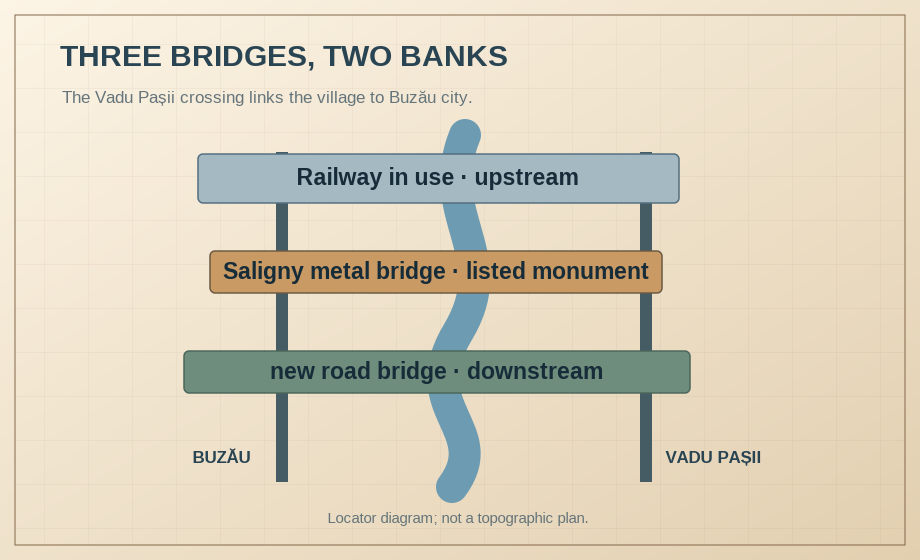
The crossing
A railway bridge, then the village crossing
The old metal bridge at Vadu Pașii carried trains over the Buzău and later took local road DC15. The 2005 floods put an end to motor traffic there. Since 2021, cars have used a new road bridge downstream. [1] [3] [6]
There are two separate crossings near the old truss today. One serves trains on the Buzău–Mărășești line. The other carries the local road. The 2017 project separately specifies a viewing deck for the Saligny bridge. [1]
The railway
The railway crossed first
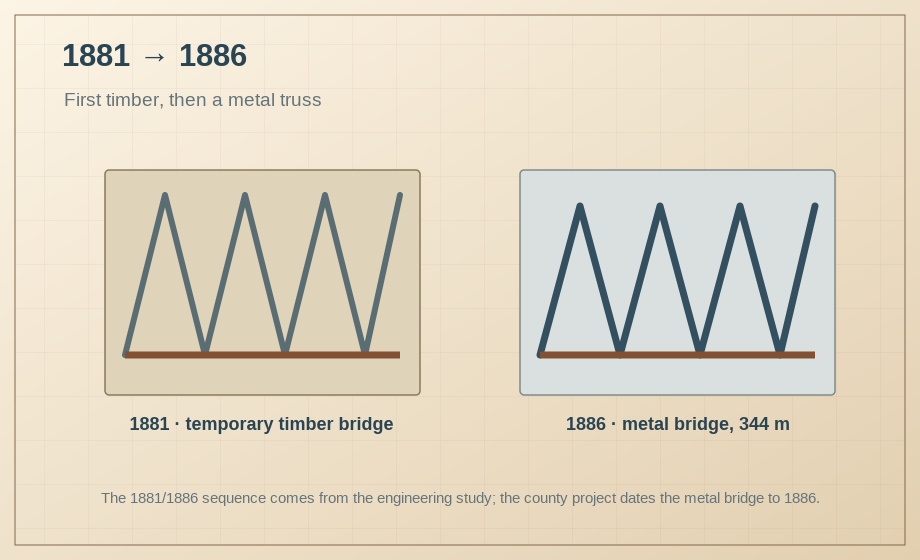
The Buzău–Mărășești line first crossed here on a temporary timber structure in 1881. The engineering study says it was replaced by the metal bridge built in 1886 to Anghel Saligny’s design. The National Library and the county’s technical file also give 1886 for the metal bridge. [2] [3] [1]
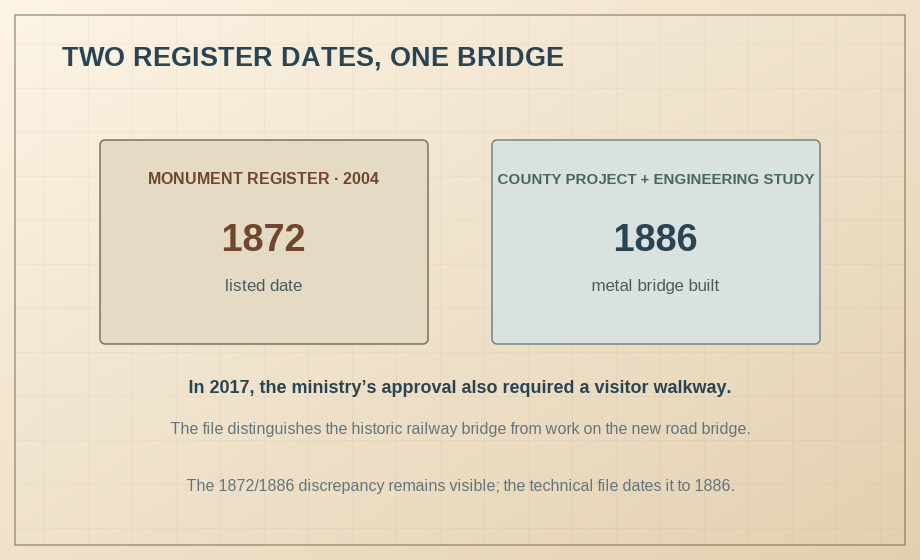
The 2004 historic-monuments register gives a different date: 1872. The technical file and engineering study describe a six-span structure in greater detail, while the National Library volume places the metal bridge in 1886. The sources consulted do not explain the register’s date; we keep it visible beside the date supported by the technical documentation. [4] [2] [3]

The structure
A 344-metre metal bridge
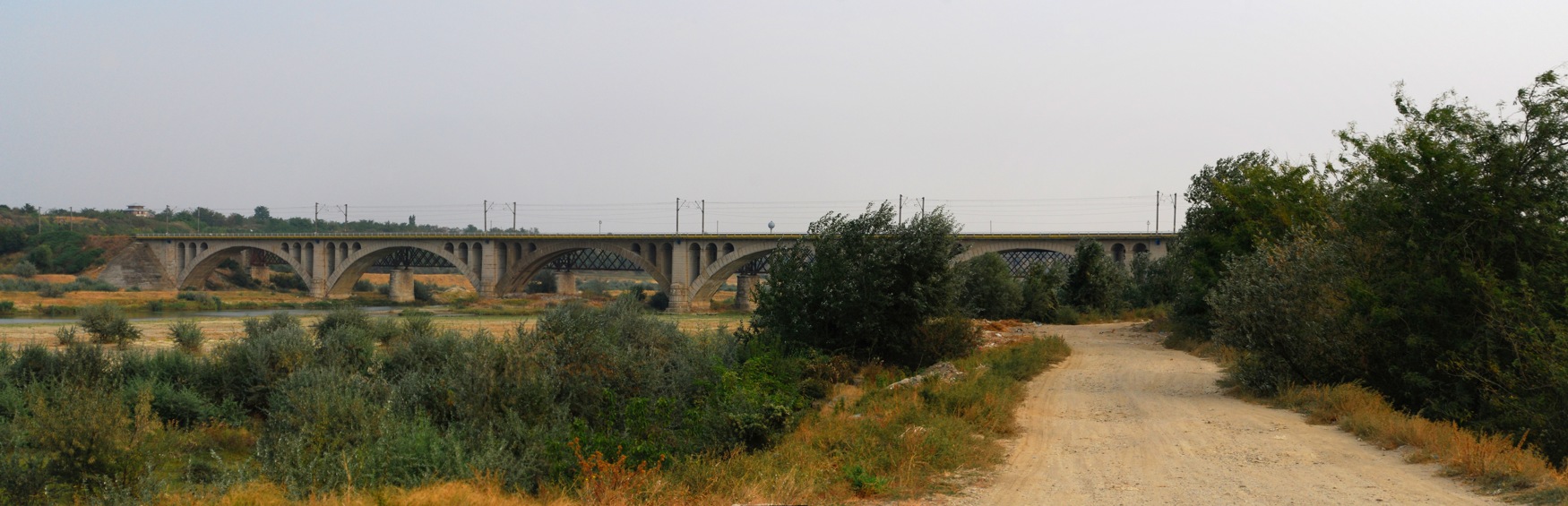
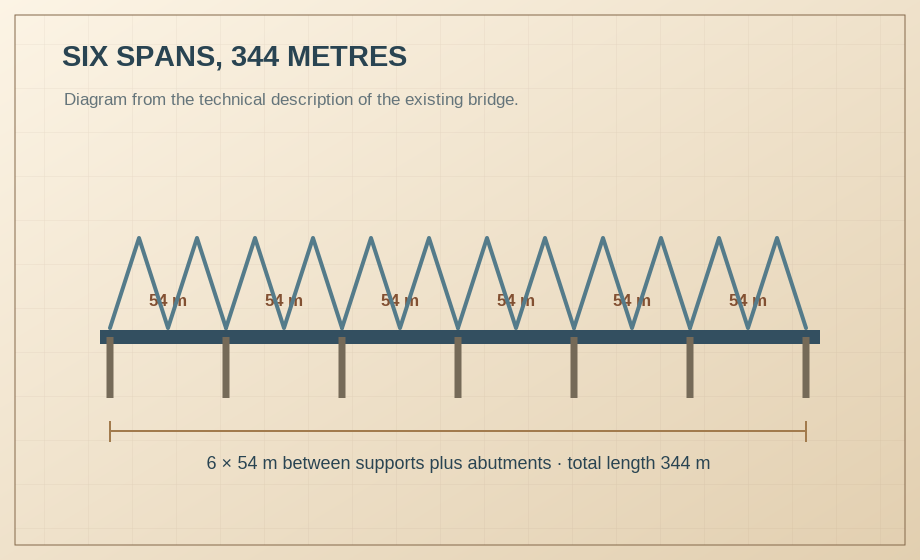
The 2017 technical file describes six spans of 54 metres each and a total length of 344 metres, including the abutments. Five stone piers rise from the riverbed; the metal decks rest on them in two continuous groups of three spans. [1]
The bridge was not a single beam from bank to bank. Two continuous decks each carried three spans, supported by stone piers and abutments. The technical plan gives dimensions that make the structure legible, but a simplified diagram does not replace a survey or show every truss detail. [1] [2]
A new role
The railway moved; the bridge stayed
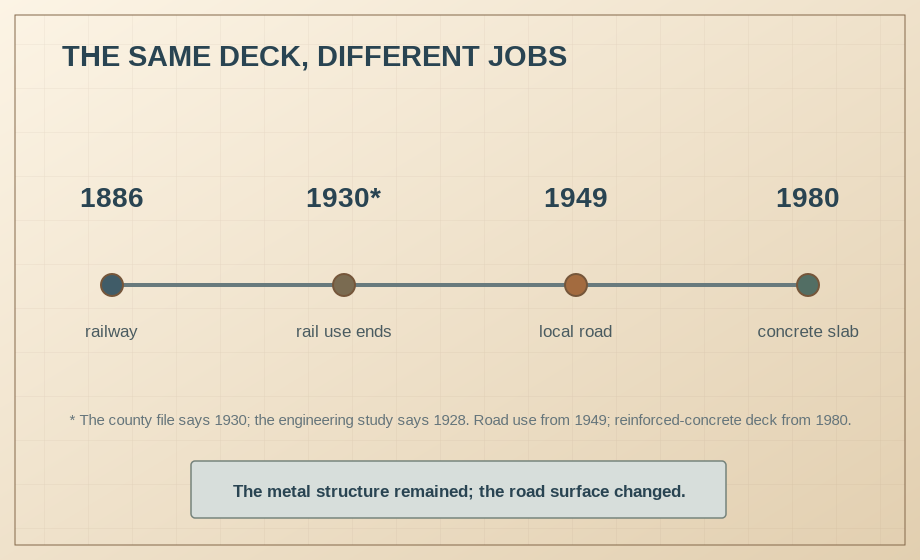
By the end of the 1920s, trains used a new reinforced-concrete bridge upstream. The engineering study dates the diversion to 1928; the county project says the new bridge entered service in 1930. The sources differ on the exact year but describe the same change: the metal truss stopped carrying trains. [2] [1]
In 1949, the old bridge received a timber deck and asphalt for local road traffic; in 1980, the timber was replaced with a prefabricated reinforced-concrete slab. Each intervention changed how people crossed without replacing the metal trusses. [1] [2]
The floods
In 2005, cars stopped crossing
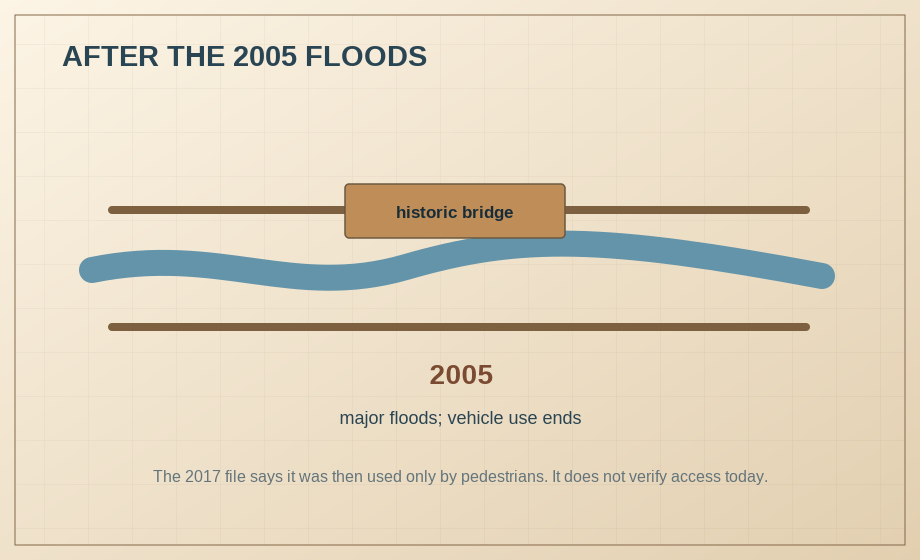
After the major floods of 2005, the bridge’s substructure and superstructure were no longer considered safe for road traffic, according to the county technical file. The engineering study describes vehicles being taken off the bridge and local pedestrians using it at that time. [1] [2]
The source’s date matters: this is how documents from 2017 describe the bridge. They do not establish today’s access rules and should not be read as crossing advice. The records show why future planning had to separate traffic safety from the integrity of the historic structure. [1]
Two bridges
A new road bridge, the old monument preserved
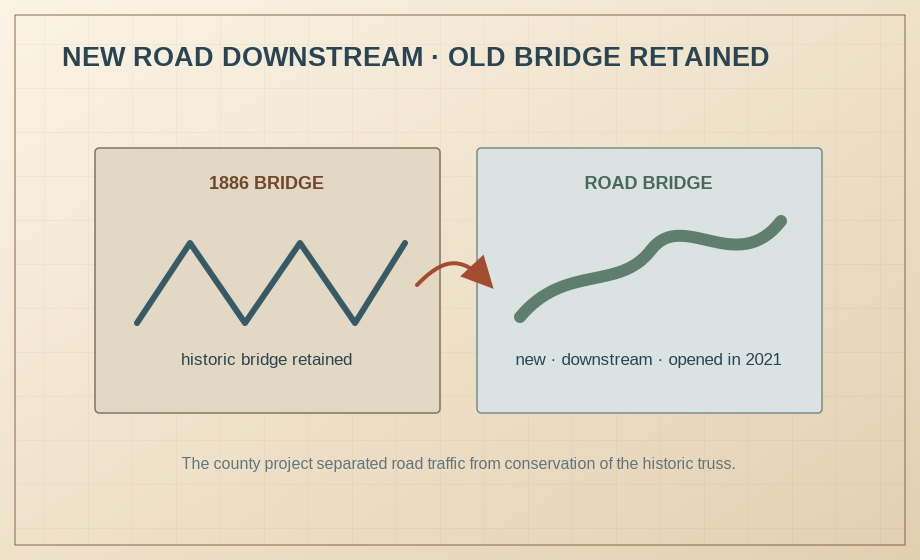
The 2017 file proposed a new road bridge downstream, allowing DC15 to reconnect Buzău and Vadu Pașii while keeping Saligny’s bridge as a monument. The road bridge opened in 2021 near the historic structure. [1] [6]
Two projects are easy to confuse: the new road crossing and work to conserve the historic bridge. The county file budgets them separately and includes protection for the railway piers and a visitor walkway on the Saligny bridge. The new road did not replace the old metal trusses. [1] [6]
The project file
A visitor walkway appears in a separate note
In the 2017 decision, protection of the existing railway bridge and the “Anghel Saligny bridge visitor walkway” appear as uncontracted works added to the budget after institutional approvals. The project excerpt preserves the technical wording and shows that visiting the bridge belonged to a conservation discussion separate from the new road crossing. [1]
The 2004 monuments register lists 1872. The 2017 technical file and the engineering study date the construction of the metal bridge to 1886. The register gives no source for 1872. The difference remains unexplained. [4] [1] [2]