A name on the map

A name on the map
Hășdate appears. Valea Ierii does not.
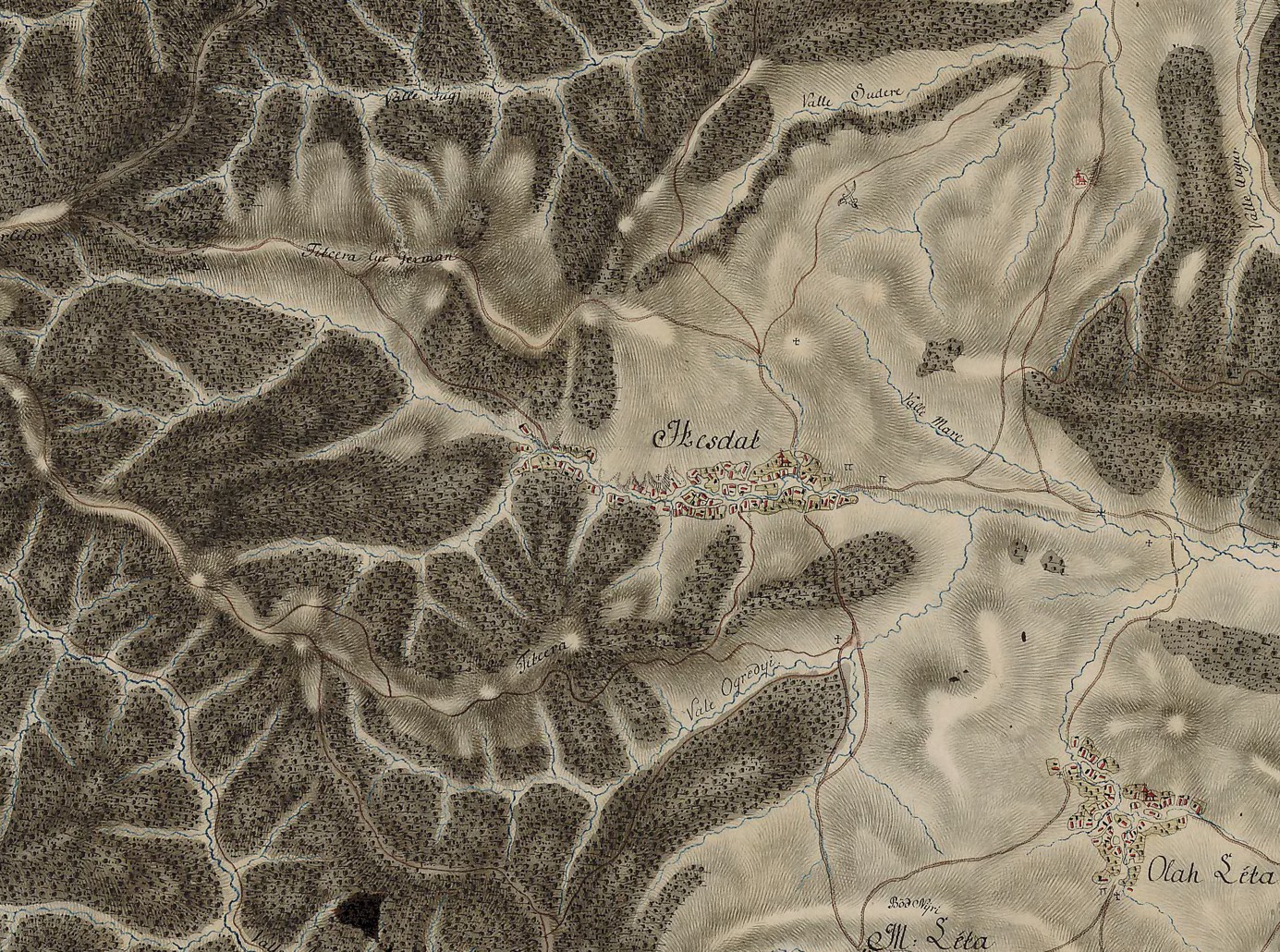
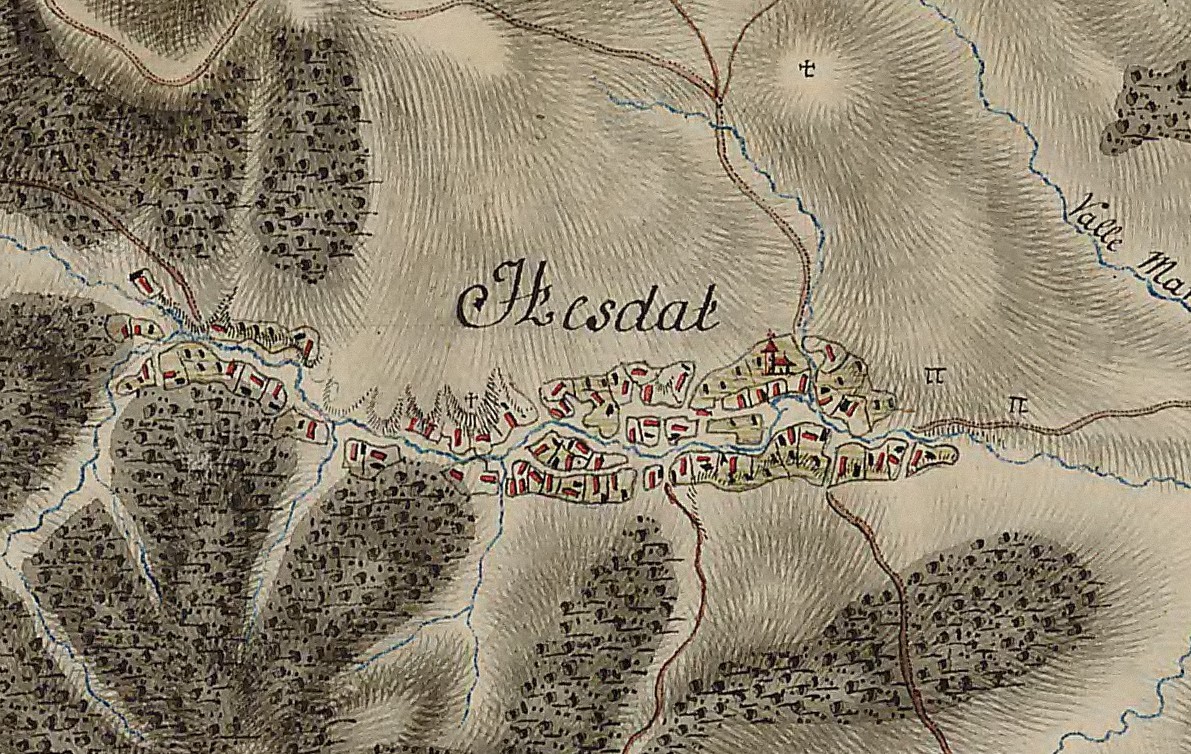
On sheet 94 of the Josephine Survey of Transylvania, made between 1769 and 1773, the name “Hesdat” is visible—the historic form of Hășdate. The map also shows streams, roads, woods and ridges. The local information centre says Valea Ierii does not appear as a separate settlement on this sheet. [1] [2]
The surveyors marked selected settlements and landmarks on the sheet. Nineteenth-century reports also describe houses in the valley attached to Hășdate. The name Jára vize appears in those reports. [1] [5]
The revolt
From abuses to the pursuit of rebels
In Habsburg Transylvania, dependent peasants rose against nobles and feudal obligations in 1784. The revolt became known by the names of three leaders, Horea, Cloșca and Crișan. [3]
After suppressing the fighting, imperial authorities continued searching for the leaders. Reports describe patrols, informers and local forest wardens who knew the routes. In Cerc, now part of Valea Ierii commune, local tradition connects some families to the search. [3] [4]
The capture
What happened between 27 December and 5 January
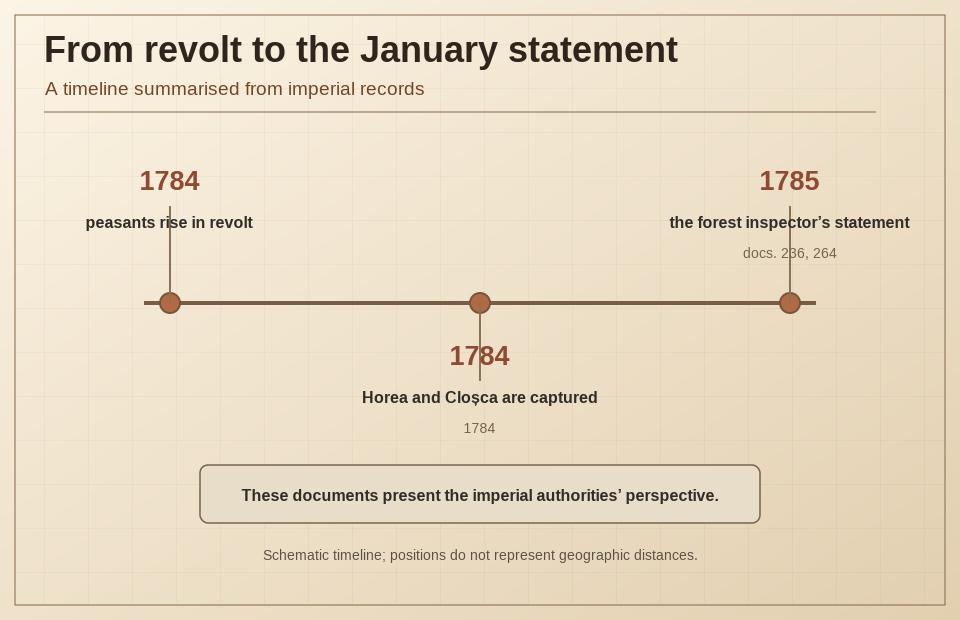
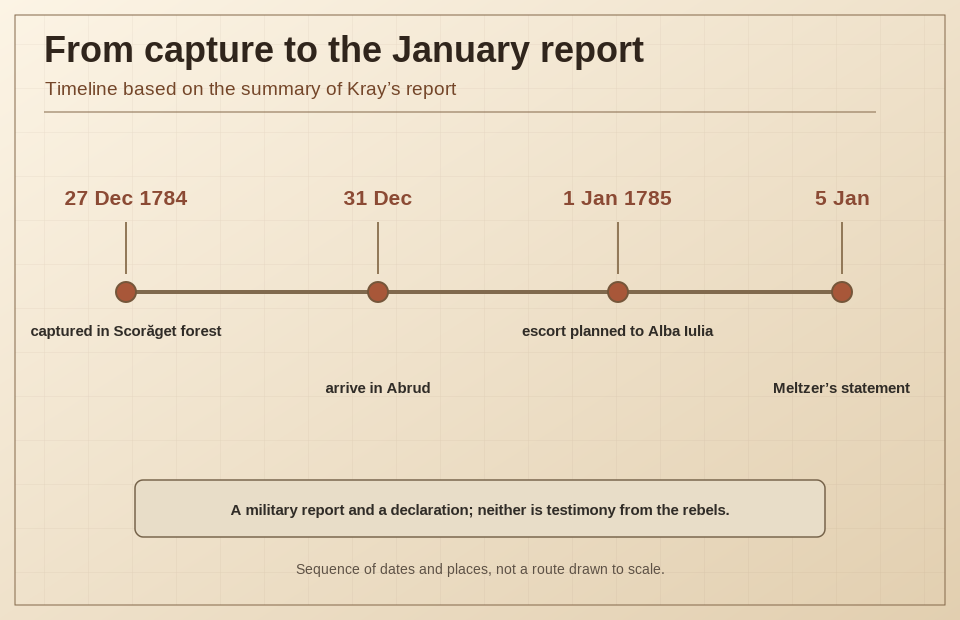
The summary of Lieutenant Colonel Kray’s report says Horea and Cloșca were captured in Scorăget forest on 27 December 1784. They reached Abrud on 31 December and were to be sent under escort to Alba Iulia the next day. [3]
On 5 January 1785, forest inspector Anton Meltzer gave a declaration about people involved in the capture. This information comes from imperial authorities’ files and is presented in the volume through editorial summaries. This is not an account by the captives or a precise map of the site. [3]
Names in memory
Two names recur; family connections remain unproved
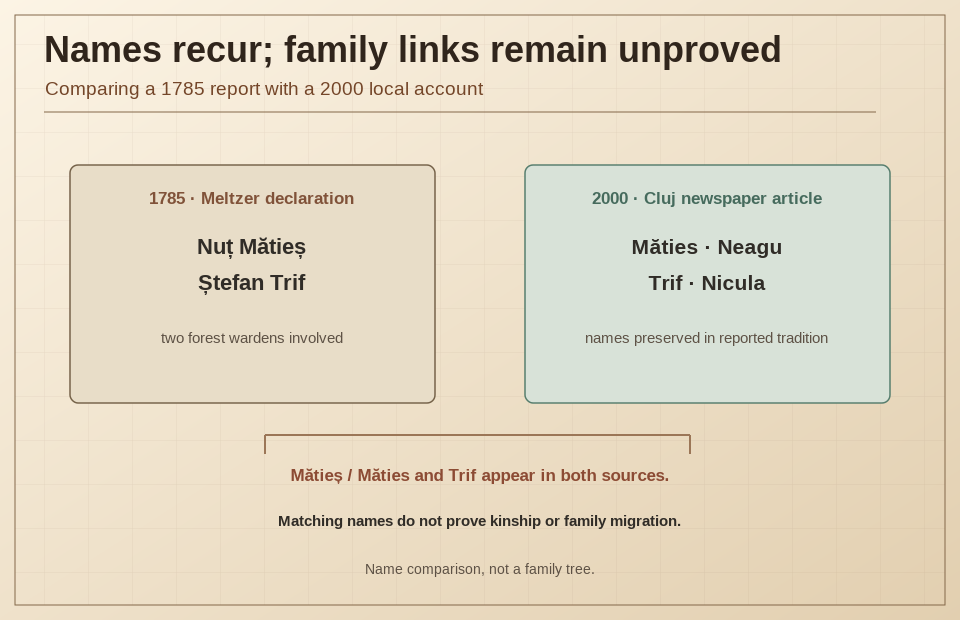
Meltzer’s declaration summary names Nuț Mătieș and Ștefan Trif as two forest wardens involved in the capture. A 2000 article in Adevărul de Cluj reports a tradition from Cerc linking the Măties, Neagu, Trif and Nicula families to those events. [3] [4]
Mătieș and Trif in the report resemble Măties and Trif in the Cerc account. It is unclear where the men settled after 1784 and whether the families in Cerc were related to them. [3] [4]
The parish and village
What does the year 1840 actually date?
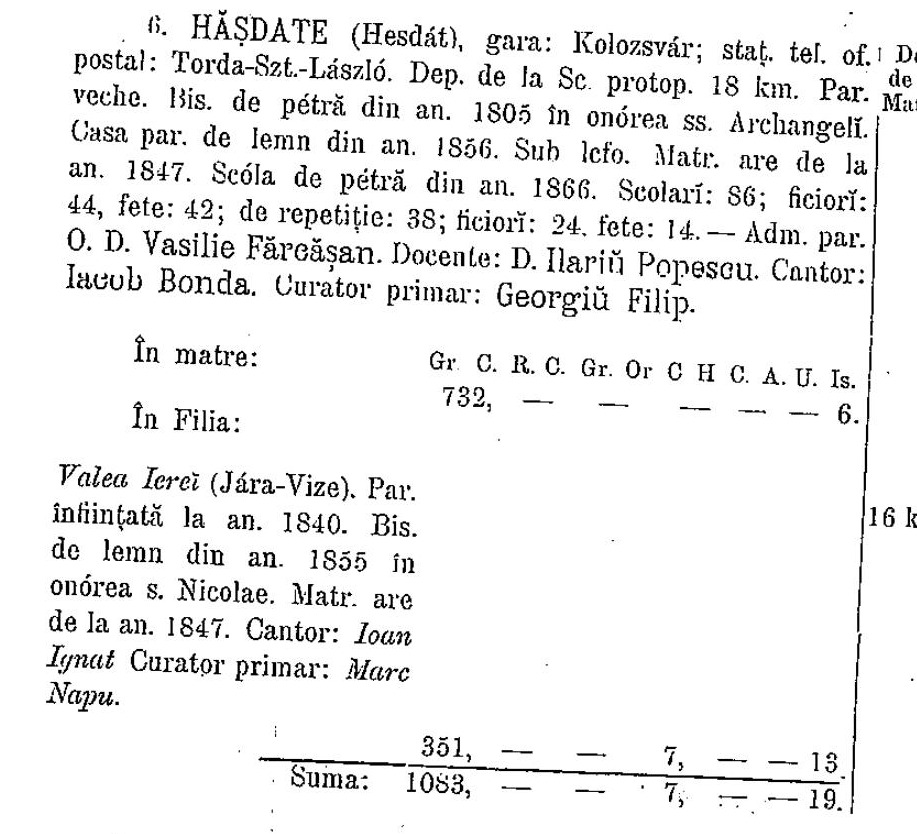
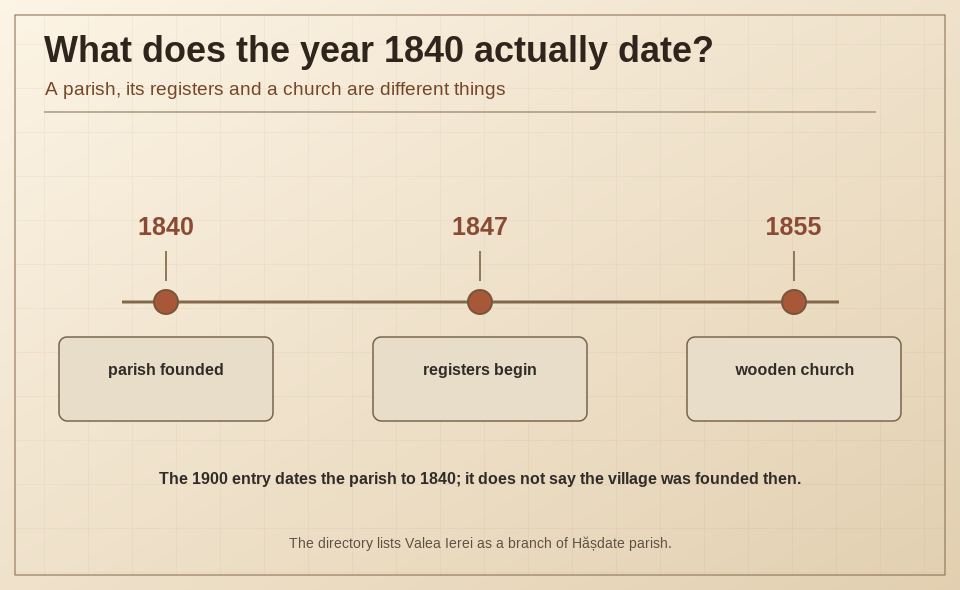
The 1900 church directory lists Valea Ierei (Jára-Vize) as a branch of the Hășdate parish. It says the parish was founded in 1840, registers began in 1847 and the wooden church was built in 1855. In this document, 1840 dates the parish, not the founding of the village. [6]
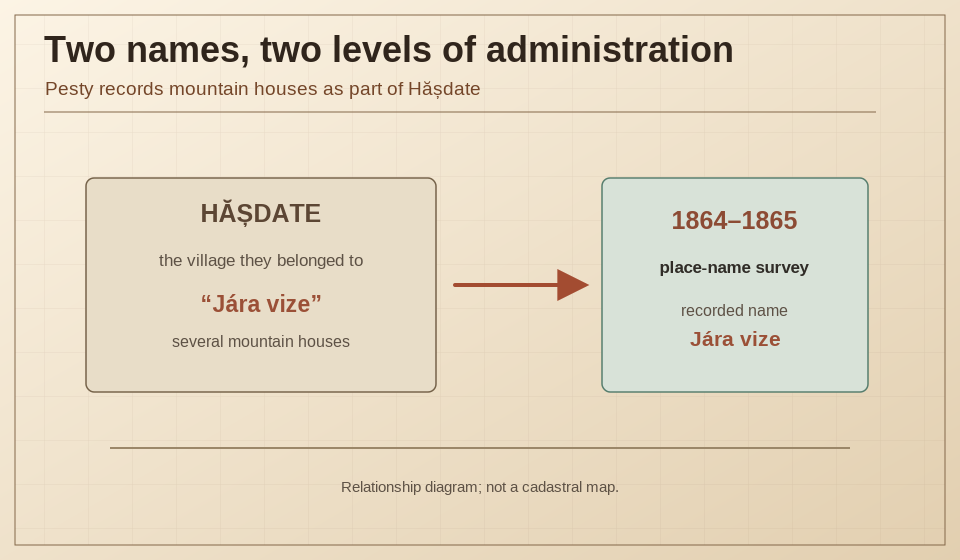
The tourism centre’s published history calls 1840 the village’s first documentary attestation, but also points to this directory, where that year refers to the parish. Pesty offers a separate trace: his 1864–1865 survey records several mountain houses called Jára vize that belonged to Hășdate. [2] [6] [5]
Forest and sawmill
The mountain sawmill at Járavize
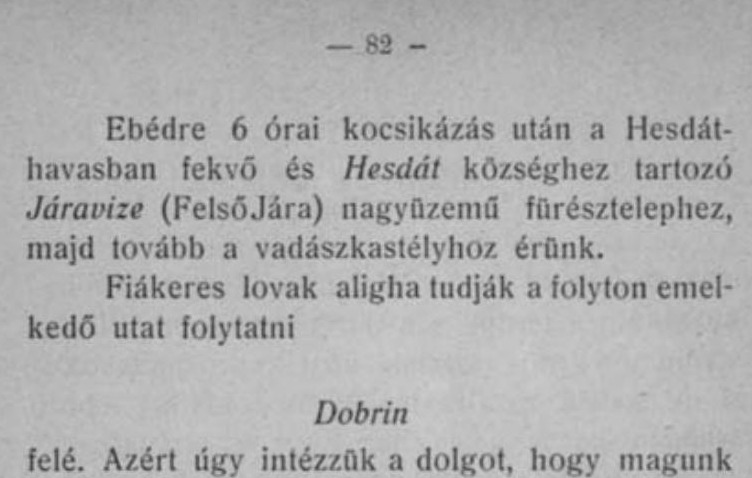
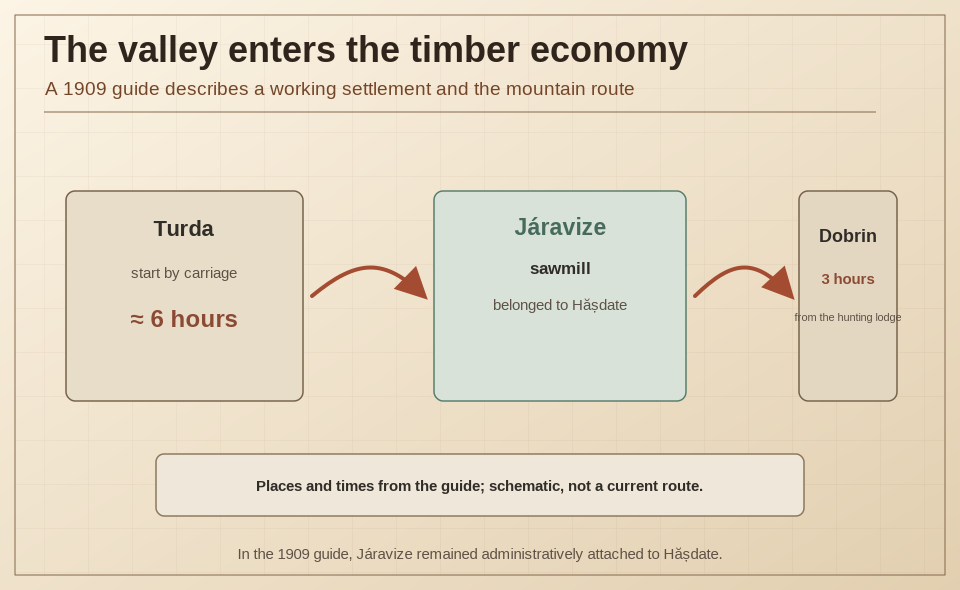
In his 1864–1865 place-name survey, Pesty notes several houses high in the mountains that were administratively attached to Hășdate. A 1909 travel guide calls Járavize (Felső-Jára) a large sawmill belonging to Hășdate. Here, the name may refer to the work settlement and valley, not a separate commune. [5] [7]
The guide allowed six hours by carriage from Turda to the sawmill, then continued to a hunting lodge and the Dobrin plateau. Its description shows why the valley mattered to local households and businesses: the forest brought work, while the road connected the settlement with the town and mountain estates. These are the guide’s 1909 travel times, not a modern route. [7]
The commune today
Three villages, an administration
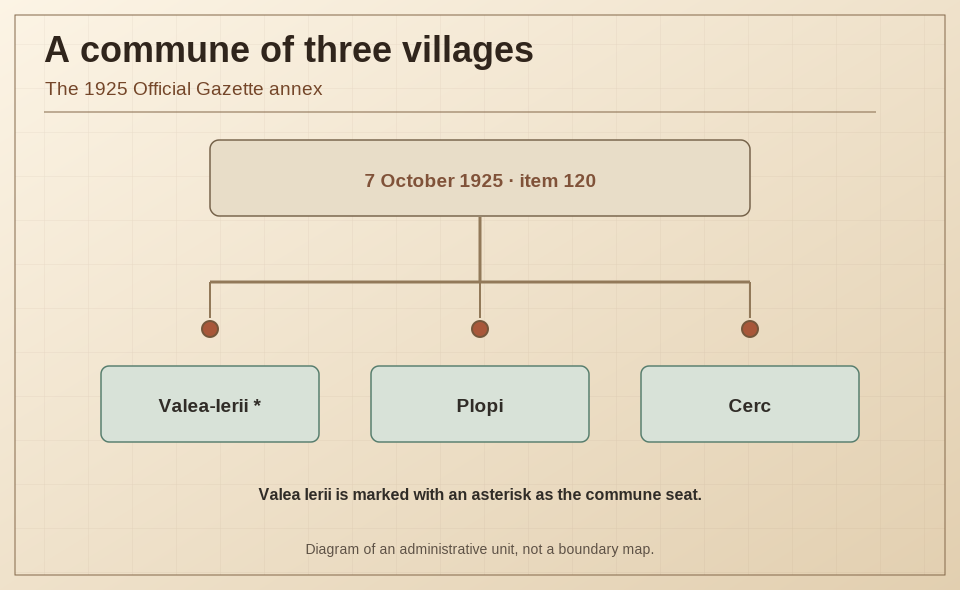
The 7 October 1925 Official Gazette table lists Valea-Ierii commune and the villages Cerc, Plopi and Valea-Ierii. An asterisk marks Valea Ierii as the commune seat. The list shows the administrative arrangement at that time; it does not date the first houses. [9]
Valea Ierii remains the main village in the commune that includes Cerc and Plopi. Before those villages appear in the same commune, the records trace the mountain houses, parish and sawmill tied to Hășdate. [9] [2] [10]