Marius ComperVișeu de Sus · Maramureș
Română

Vișeu de Sus CFF station

How timber moves down the Vaser Valley

In the Vaser valley, the engine pulled empty wagons uphill towards the forest. They came back down loaded with timber. Follow both journeys and see why the main line and the wider logging network had different lengths.

Start at the depot ↓
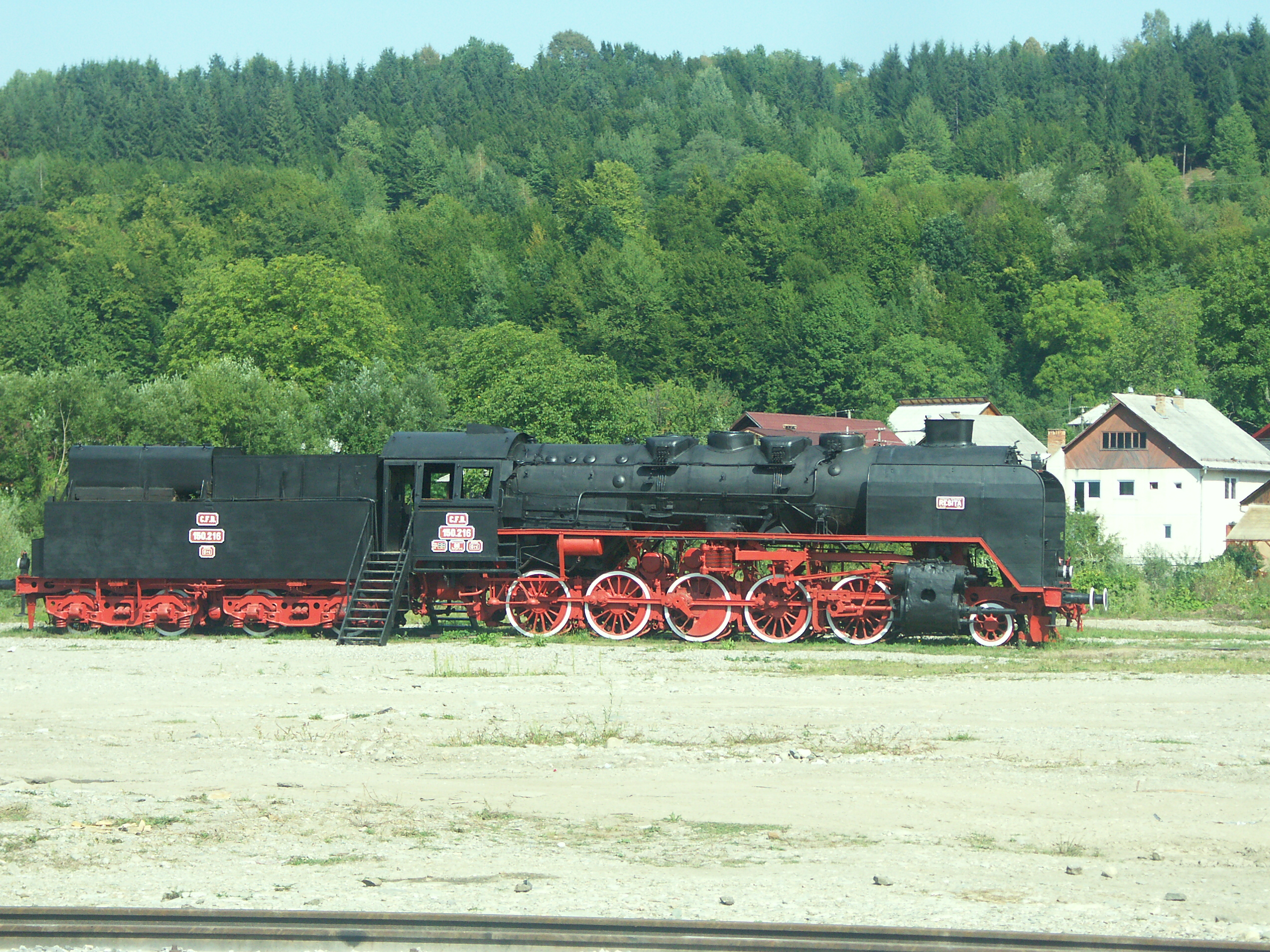
Black and red steam locomotive standing on track beside houses and forest.
Photograph from 21 August 2012: the locomotive is parked by buildings, with no train in motion. (Source · Diether · 21 August 2012 · CC BY-SA 3.0)

At the depot

Black and red steam locomotive standing on track beside houses and forest.
Photograph from 21 August 2012: the locomotive is parked by buildings, with no train in motion. (Source · Diether · 21 August 2012 · CC BY-SA 3.0)

At the depot

A locomotive stands still; the question is how timber moved

In the 2012 photograph, locomotive 150.216 stands beside the depot buildings at Vișeu de Sus. It is not hauling a train in the image. From here, we can follow a question less visible than steam: how did people move timber out of a steep valley, first on water and then by rail? [4] [2]

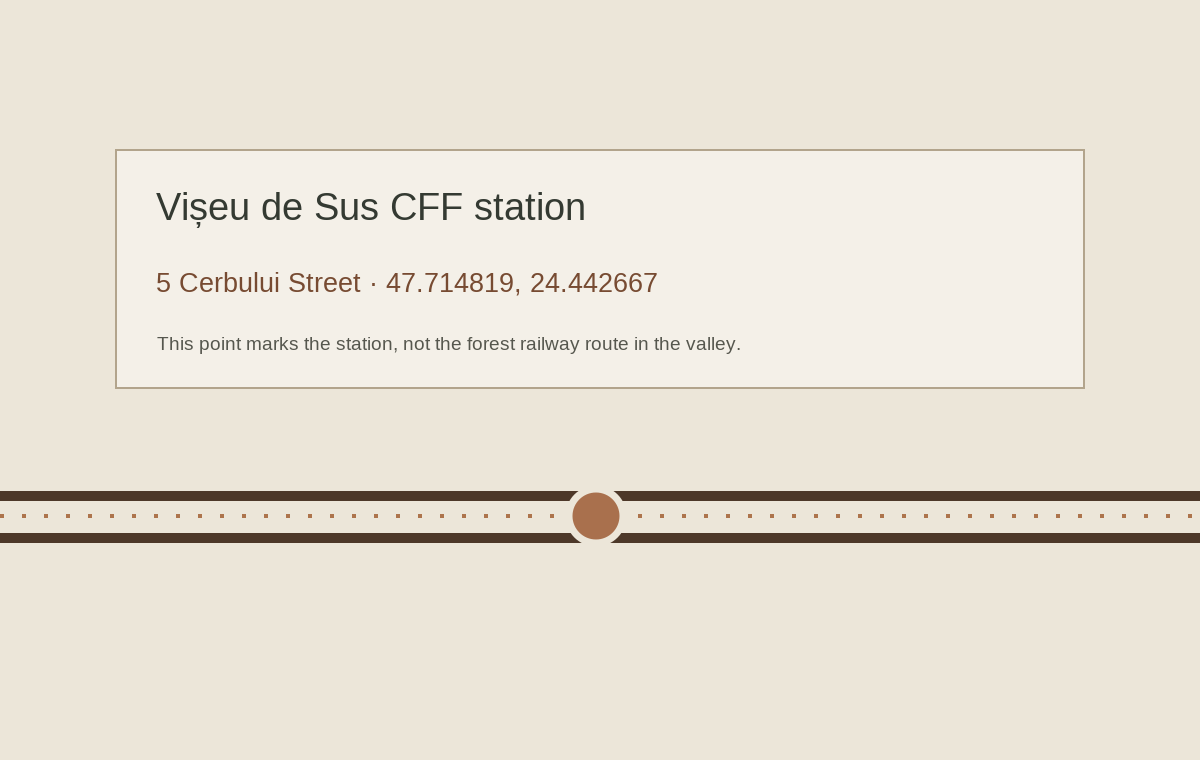
The forest railway was built to move logs towards the town’s sawmills. Sources describe a system adapted to the valley and its work; the story will move back through time to explain what the locomotive did and what the wagons’ weight did. The pin marks the CFF station on Cerbului Street, not a loading point in the mountains. [3]
Black and red steam locomotive standing on track beside houses and forest.
Photograph from 21 August 2012: the locomotive is parked by buildings, with no train in motion. (Source · Diether · 21 August 2012 · CC BY-SA 3.0)
Schematic card naming the CFF station, 5 Cerbului Street and coordinates 47.714819, 24.442667.
Locator card shows the published address and coordinates for the CFF station, not the full route. (Source · Locator card after the published coordinates)

A system under pressure

The 1929 flood changed how logs were moved

Before the railway, the main way to move timber down the Vaser Valley was rafting. Dams, barriers and embankments had been built to control the water and carry logs towards the sawmills. Historia reports that floods in 1929 damaged these structures, leading the managers to seek another way to keep timber extraction going. [2]

The first section to the Făina forest lodge was completed in 1933 and measured about 32 km, according to the same account. Mihai Hotea gives a wider period, 1924–1932, for the Vișeu de Sus–Comanu line and links it to an earlier forest road. The sources may cover different phases and endpoints; we keep both accounts instead of compressing them into one simple start date. [2] [1]
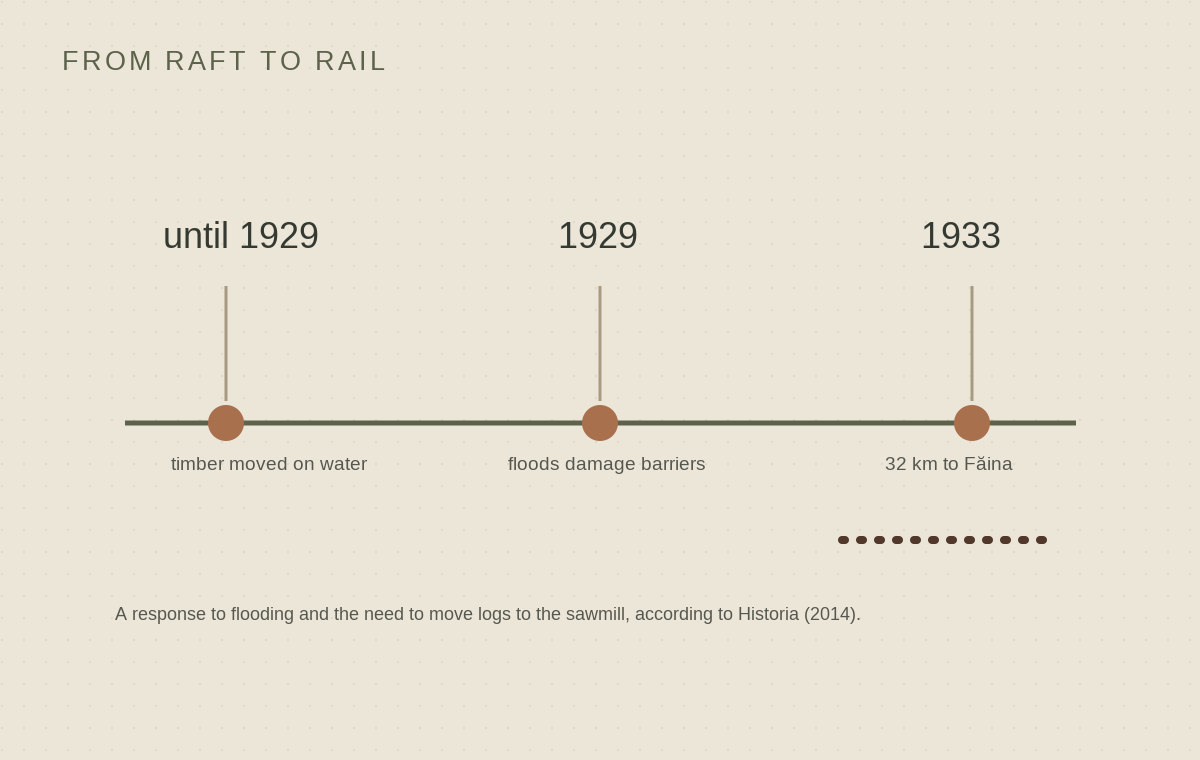
Timeline showing timber rafting before 1929, damaged water barriers in 1929 and a 32 km first section to Făina completed in 1933.
Timeline follows two sources with different date ranges; it does not assign one opening date to the whole line. (Source · New timeline after Historia (2014) and Hotea (2019))

The shape of the valley

Narrow gauge followed a winding route

Hotea records a 760 mm gauge for the forest railway and describes the Comanu section on an earlier forest road built during the First World War. The operator says the railway followed the river and needed narrow gauge for tight curves. Together, these details show a track designed for a valley with little room and frequent changes of direction. [1] [3]

This section is an explanatory drawing, not a map of the Vaser or a topographic profile. It has no measured gradients, curve radii or elevations. The 760 mm figure is the gauge reported by the sources: the distance between the rails, not the width of the train. [1] [3]
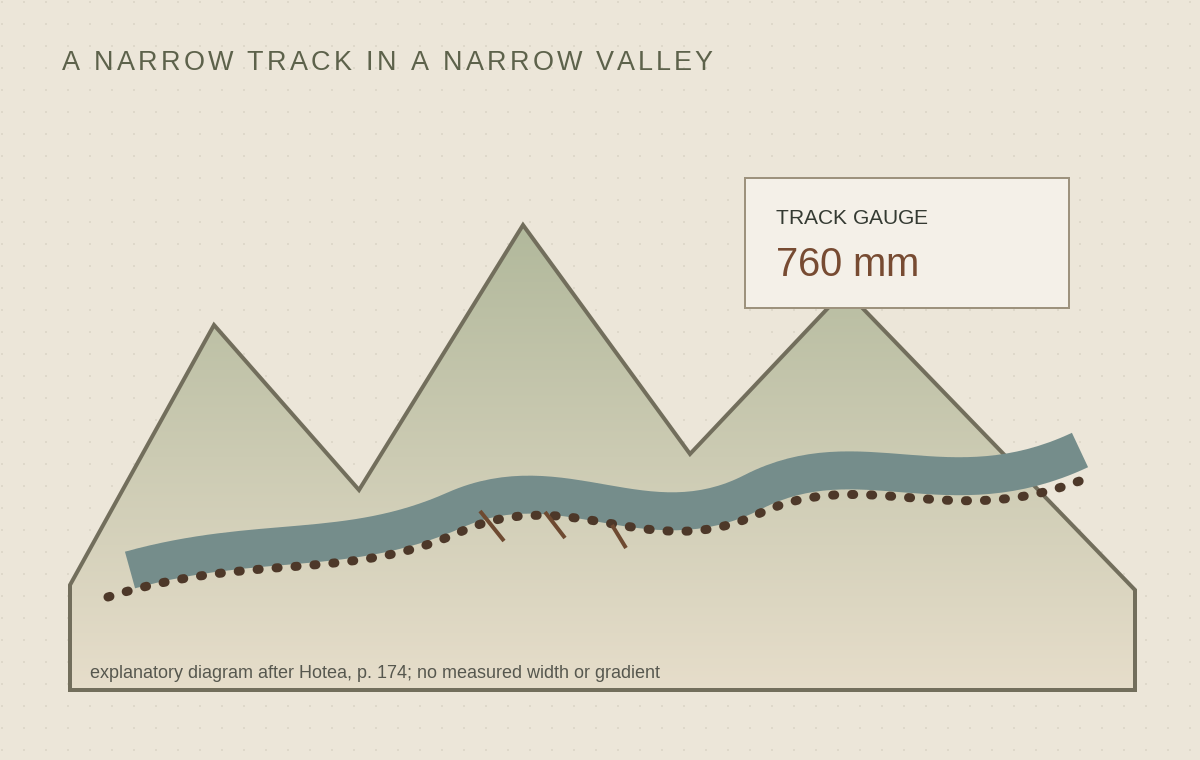
Schematic railway line through a valley and a label showing 760 millimetres gauge.
Hotea, p. 174, and the operator’s page give 760 mm. Valley section is schematic. (Source · New explanatory drawing after cited sources)

Two directions

Wagons went up empty and came down loaded

The engine hauled empty wagons uphill and took workers towards the forest. Once loaded, the train could roll downhill under its own weight towards the sawmill. On the descent, the crew had to control its movement and brake. [5] [2]

In the interactive drawing you can change the direction and position of the train. Watch the load. The ascent and descent used the same valley, but called for different work from the engine and crew. [5]
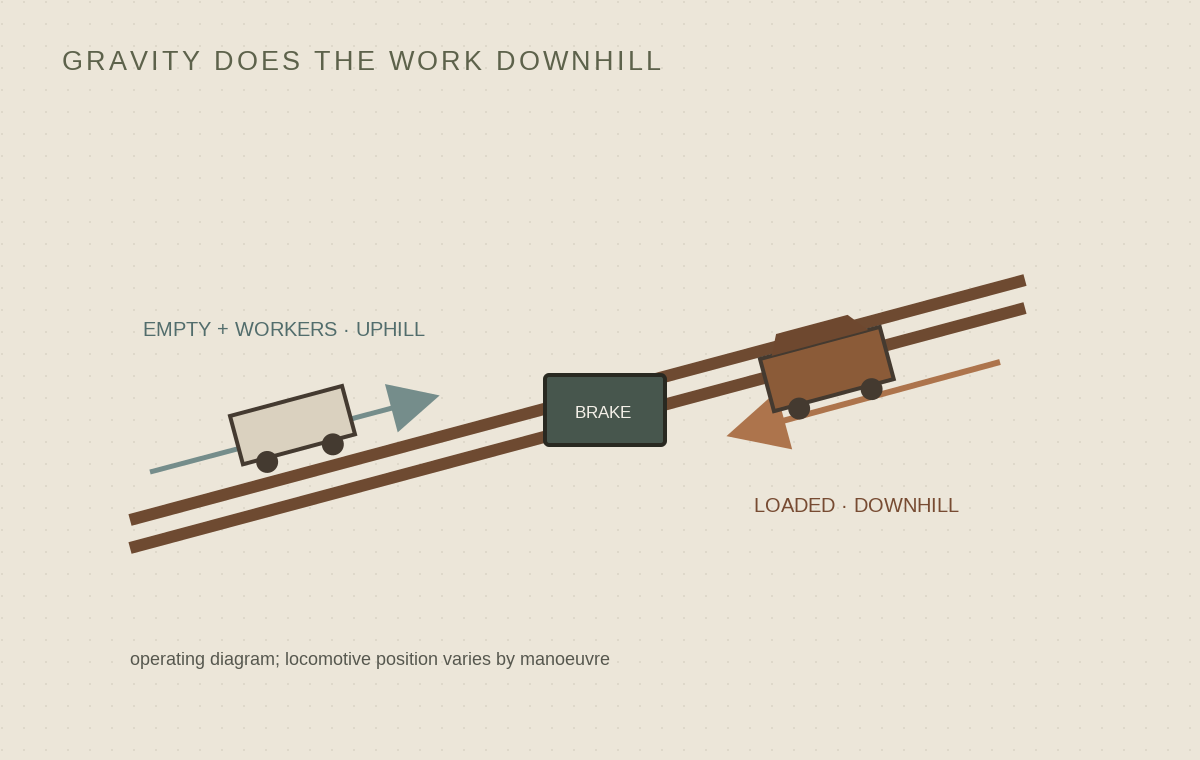
Two rails on a slope, empty wagons ascend towards the forest, a loaded wagon descends and the locomotive brakes.
Compare empty wagons climbing with the return journey once loaded. The gradient and vehicles are illustrative. (Source)

A line that expands

After the war, branches make the network larger

The operator describes a total 46 km line, with a first section of about 32 km to Făina and another 14 km, along with branches, built between 1950 and 1954. A Historia article says that by 1961 the network measured roughly 80 km, including branches, sidings and depots. These numbers need not conflict: one describes a line, the other a broader rail system at a different date. [3] [2]

Hotea lists branches towards the Stevioara, Novăț, Boului and Greabăn valleys. This helps explain why maps and texts may give different lengths: the railway was more than a single pair of rails. The chart compares the definitions each author reports instead of presenting them as one measurement. [1]
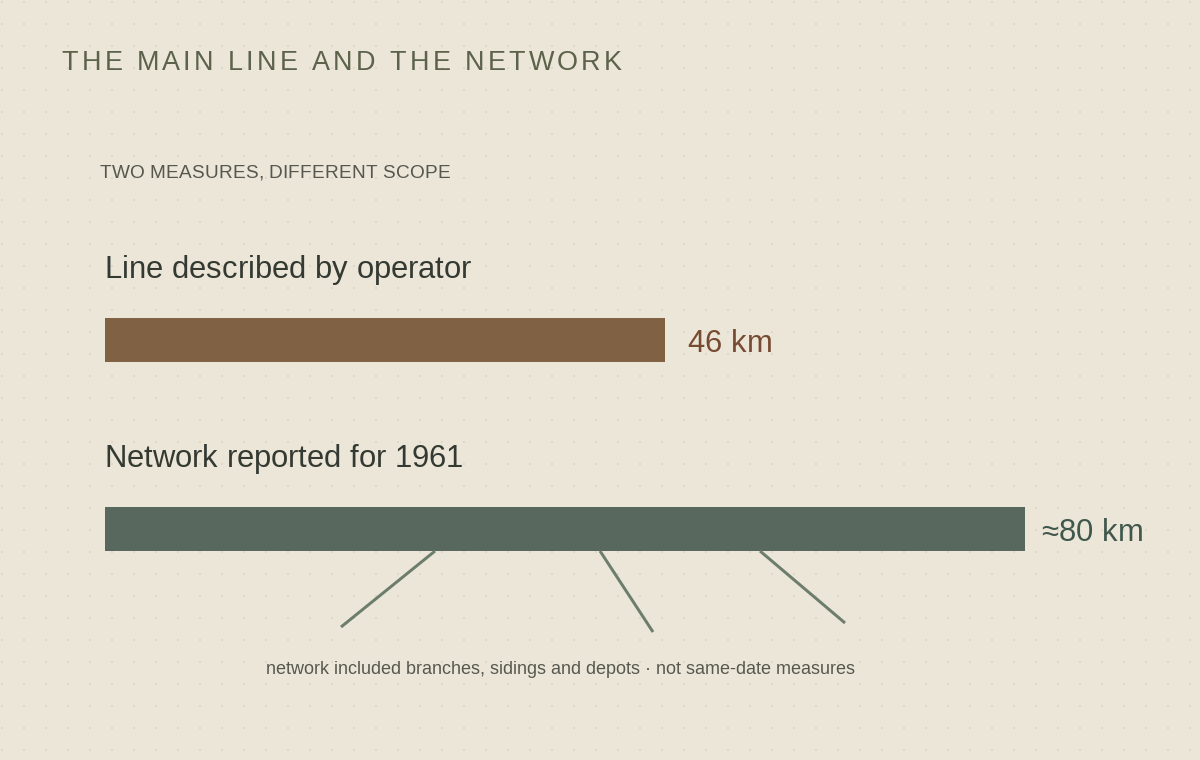
Two bars compare a 46 km line with a roughly 80 km network, with branches drawn schematically.
46 km follows the operator’s description; roughly 80 km follows the article’s 1961 network figure, including branches and sidings. (Source · New comparison after operator and Historia)

Use today

Timber transport and tourist trips share the railway

The operator says production trains mainly use diesel locomotives to keep steam engines available for tourist service. The tourist route to Paltin is 43.2 km return, according to the same page. The railway therefore continues to serve timber extraction, while steam offers a journey for visitors. [3]

The opening photograph now carries a different meaning: locomotive 150.216 is parked at the depot and does not document a work run or a log train. Its story is visible through two separate operations — industrial transport and tourist service — and through the fact that the steam engine in the image is preserved for one of them. [4] [3]
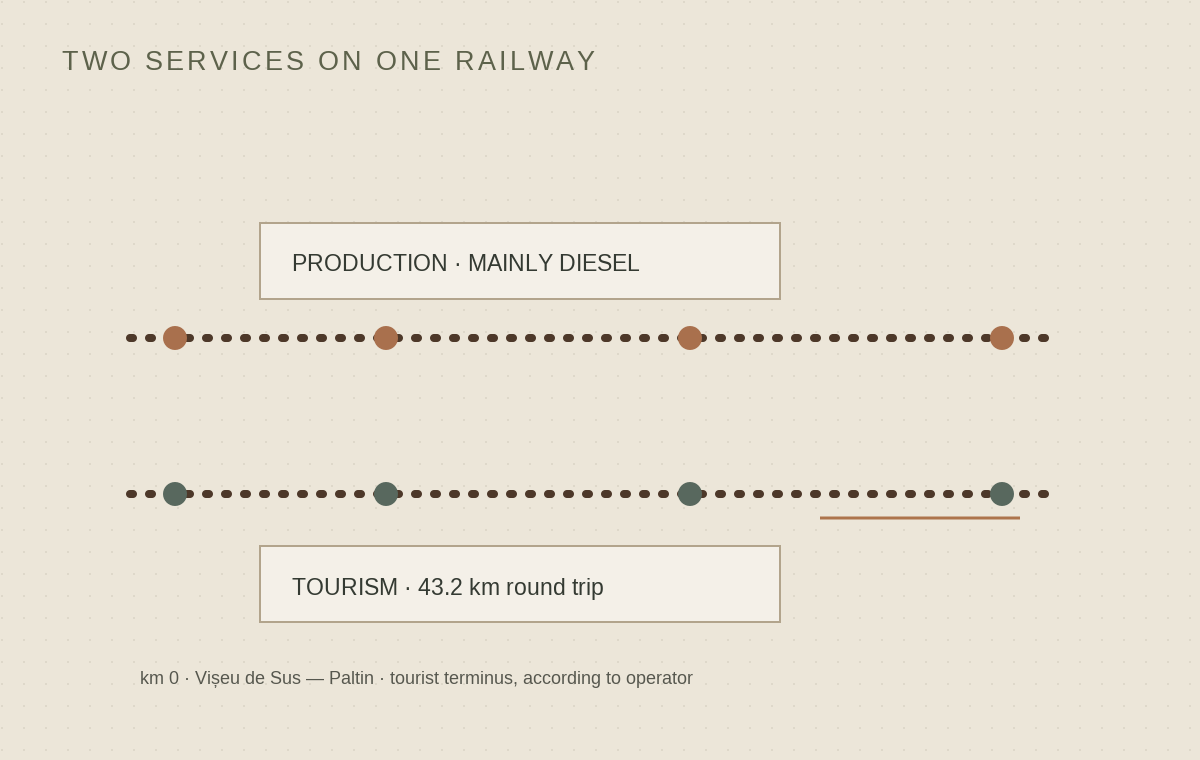
Two symbolic lines distinguish diesel production service from the 43.2 km tourist trip.
The operator describes production trains as mainly diesel and the tourist trip to Paltin as 43.2 km return. (Source · New diagram after the operator’s page)

Sources

The main sources are Mihai Hotea’s geographical study, the historical account published by Historia and the operator’s route page, which provides coordinates and current practice. Construction dates vary with the period or section described; we keep the 1924–1932 interval, the 1933 first section and the 1950s extension separate. Diagrams are interpretive and do not show measured geometry.

  1. Mihai Hotea, Munții Maramureșului: A Human Geography Study, Presa Universitară Clujeană, 2019, pp. 174–175Describes the 760 mm narrow gauge, the Vișeu de Sus–Comanu line built in 1924–1932 on an earlier forest road, and its branches; p. 175 also notes that some forest railways carried people and other goods, without assigning that use specifically to the Vaser line.
  2. “Mocănița – the train of memories”, Historia, 2014, “Setting up the forest railway” sectionConnects the 1929 floods and damaged barriers to the railway decision; records a 32 km first section to Făina in 1933 and explains empty wagons going uphill and loaded wagons downhill, with the locomotive braking.
  3. Carpathian Cultural Route / Mocănița Maramureș operator, history and route descriptionThe page provides the station address and coordinates (47.714819, 24.442667), 1932 construction start, 46 km line, 1933 and 1950–1954 sections, 760 mm gauge, production train practice and 43.2 km tourist round trip. Promotional “last in the world” claims are not used.
  4. Diether, locomotive 150.216 at the depot, Vișeu de Sus, 21 August 2012Photograph shows the locomotive stationary beside buildings, not running and without loaded wagons. CC BY-SA 3.0.
  5. CFF Vișeu de Sus, exhibition on the forest railwayThe CFF partners’ exhibition describes empty wagons going uphill and laden trains rolling downhill under their own weight.