Marius ComperVladimir · Gorj
Română

Tudor Vladimirescu Memorial House, Vladimir

How Tudor Vladimirescu’s house was restored

In the 1930s architect Iuliu Dopplereiter used a photograph to restore the house in Vladimir. Decades earlier, Theodor Aman sketched Tudor’s likeness, possibly drawing on eyewitness accounts. Look at what each kind of evidence can preserve.

Compare the two photographs ↓
Early photograph of a wooden house on a raised porch beneath a shingled roof, with one person standing beside it.
The photograph published in the early 20th century, reproduced in the study of the memorial house. The timber porch sits beneath a deep overhang. (Source · Fotograf necunoscut / colecția Walter Stahli, reprodusă de Anca Ceaușescu · Public Domain Mark)

The house in Vladimir
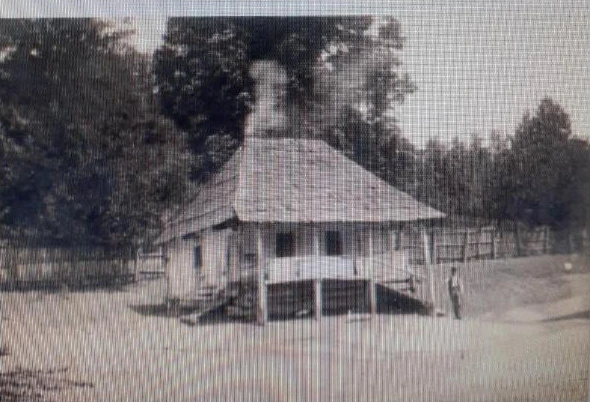
Early photograph of a wooden house on a raised porch beneath a shingled roof, with one person standing beside it.
The photograph published in the early 20th century, reproduced in the study of the memorial house. The timber porch sits beneath a deep overhang. (Source · Fotograf necunoscut / colecția Walter Stahli, reprodusă de Anca Ceaușescu · Public Domain Mark)

The house in Vladimir

Someone photographed the house before its restoration

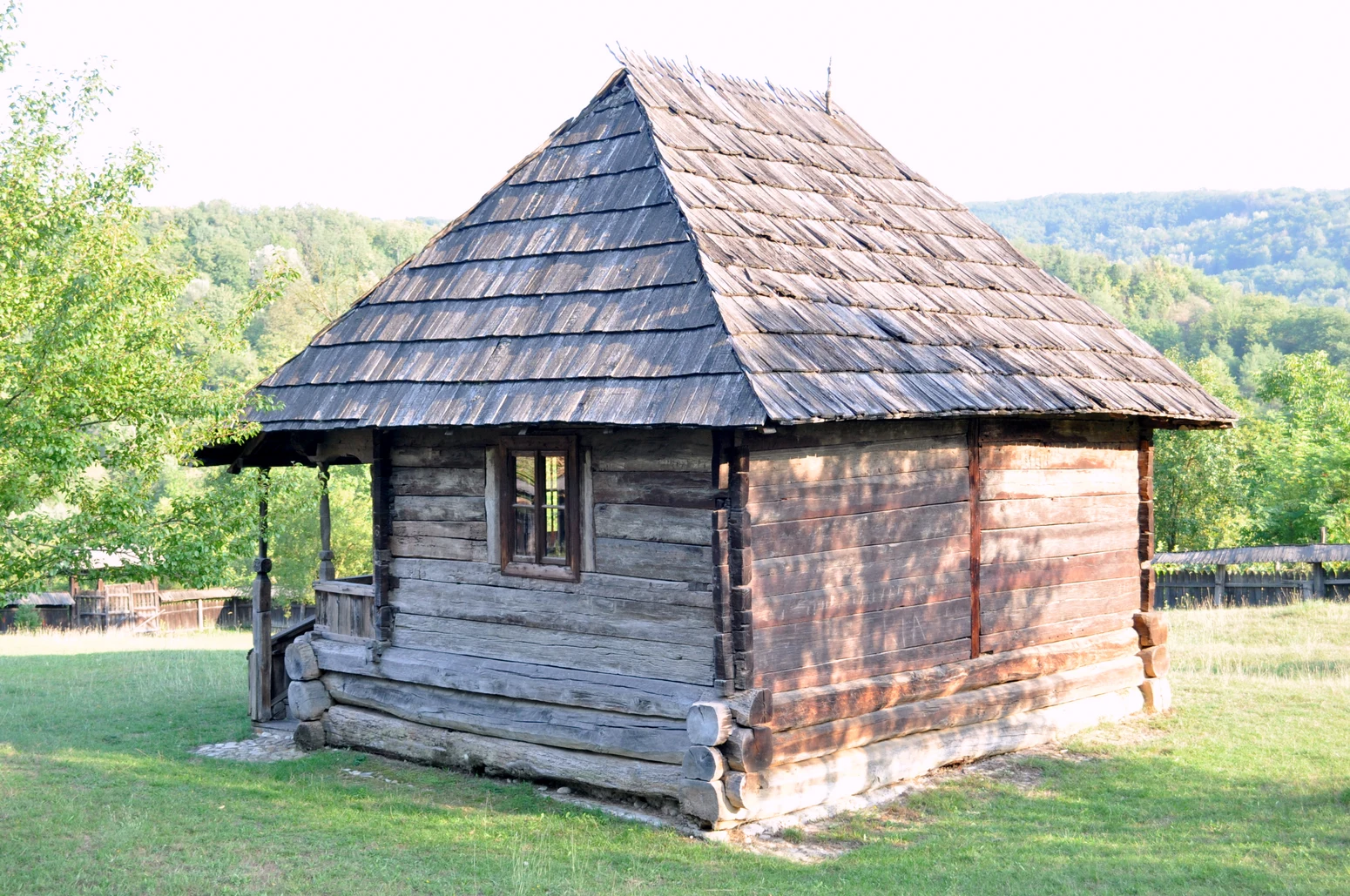
In Vladimir, in the Gilort valley, Tudor Vladimirescu’s memorial house has a timber porch, a shingled roof and two rooms. Look at it from the yard. The relationship between porch and façade is easy to see. The museum’s account explains how the form of the house was preserved. [4] [1] [3]

The museum dates the restoration to 1932. Architect Iuliu Dopplereiter worked from an earlier photograph of the house. Open the postcard and look for the row of posts under the eaves. Switch back to the present-day photograph to find the same kind of porch. The bicentenary study identifies the earlier photograph as the architect’s model. [1] [2]
Early photograph of a wooden house on a raised porch beneath a shingled roof, with one person standing beside it.
The photograph published in the early 20th century, reproduced in the study of the memorial house. The timber porch sits beneath a deep overhang. (Source · Fotograf necunoscut / colecția Walter Stahli, reprodusă de Anca Ceaușescu · Public Domain Mark)
White house with a wooden porch and shingled roof, seen at an angle from the yard.
The porch and roof can be compared with the museum’s description. The photograph dates from after the restoration. (Source · Țetcu Mircea Rareș / Wikimedia Commons · CC BY-SA 4.0)

The restoration

A dwelling becomes a two-room museum

In 1932 the National League of Romanian Women in Gorj, led by Aretia Tătărescu, supported the opening of the museum. The bicentenary study dates the opening to 1932 and records further building work in 1936 and restorations in 1971 and 1991. [2] The museum’s two rooms display documents, clothing and household objects. [1]

After the work in 1971 and 1991, Anca Ceaușescu identifies just one post and one beam from the original house. The study gives no photograph pointing them out. [2] To establish who used a particular bowl, consult its object record. The museum’s account describes the types of objects on display and does not assign all of them to Tudor personally. [1]
An archival photograph represented by a frame leads through the 1932 restoration to the memorial building.
The museum says Dopplereiter used a photograph of the house. The silhouettes show the photograph’s role. (Source)

The sketch

Theodor Aman works on a likeness decades after 1821

Tudor Vladimirescu led the uprising of 1821 in Wallachia and died that year. Theodor Aman was born in 1831. The two men could never have met for a sitting. The Aman Museum’s sketch is catalogued as circa 1874. [1] [6]

The Bucharest Municipality Museum’s study discusses the possibility that Aman used accounts from Petrache Poenaru and others who had seen Tudor. Open the sketch and look for the features that emerge from the background. The sketch shows how Aman builds the face with patches of colour and a few dark lines. [5] [6]
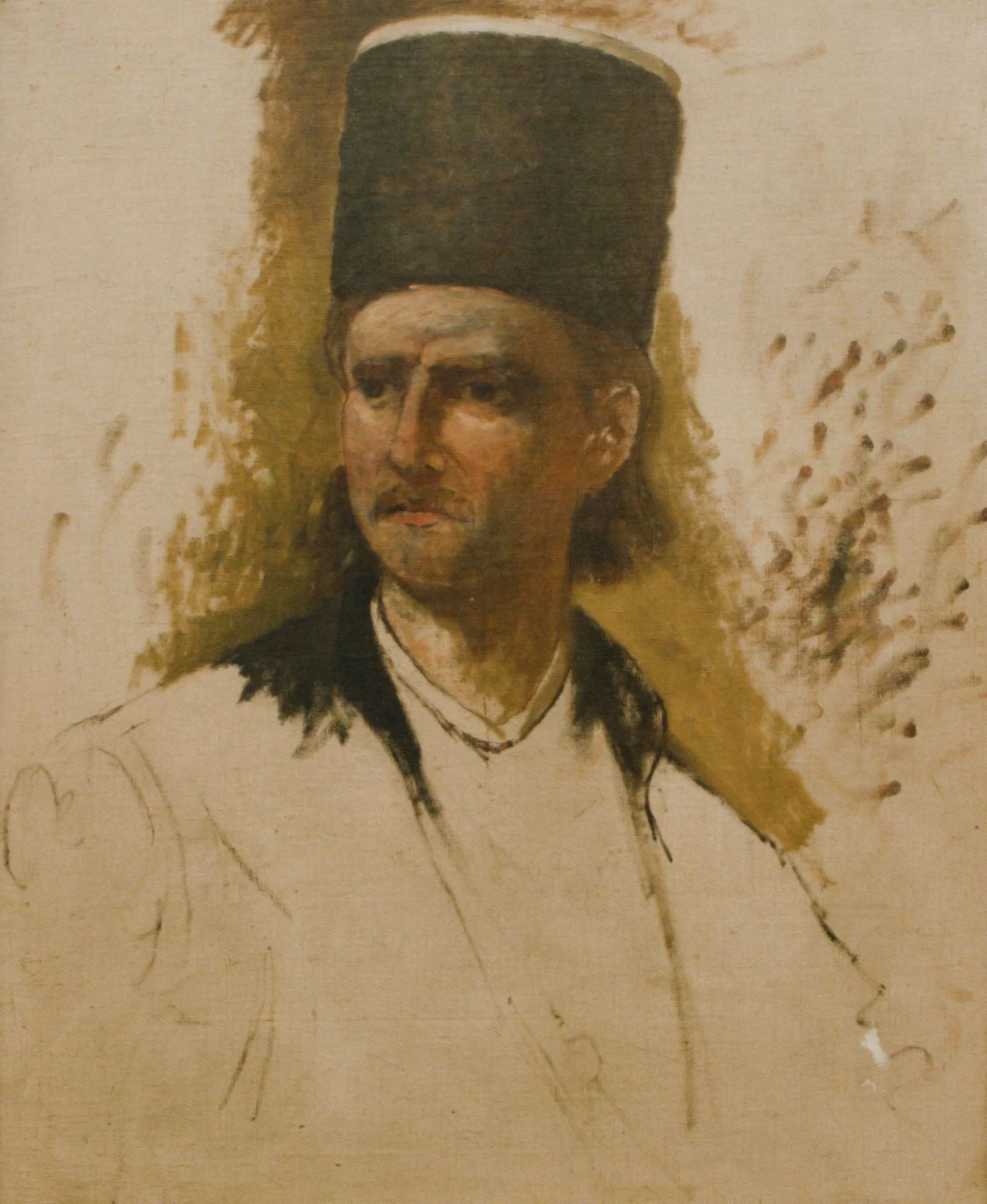
Sketch in oils on a brown background, showing Tudor Vladimirescu in a tall hat.
Inventory no. 93 in the Aman collection, catalogued as circa 1874, more than half a century after 1821. (Source · Theodor Aman / Muzeul Theodor Aman, foto Cristian Oprea · Public Domain Mark)

Portrait in print

In 1911 a magazine prints another image

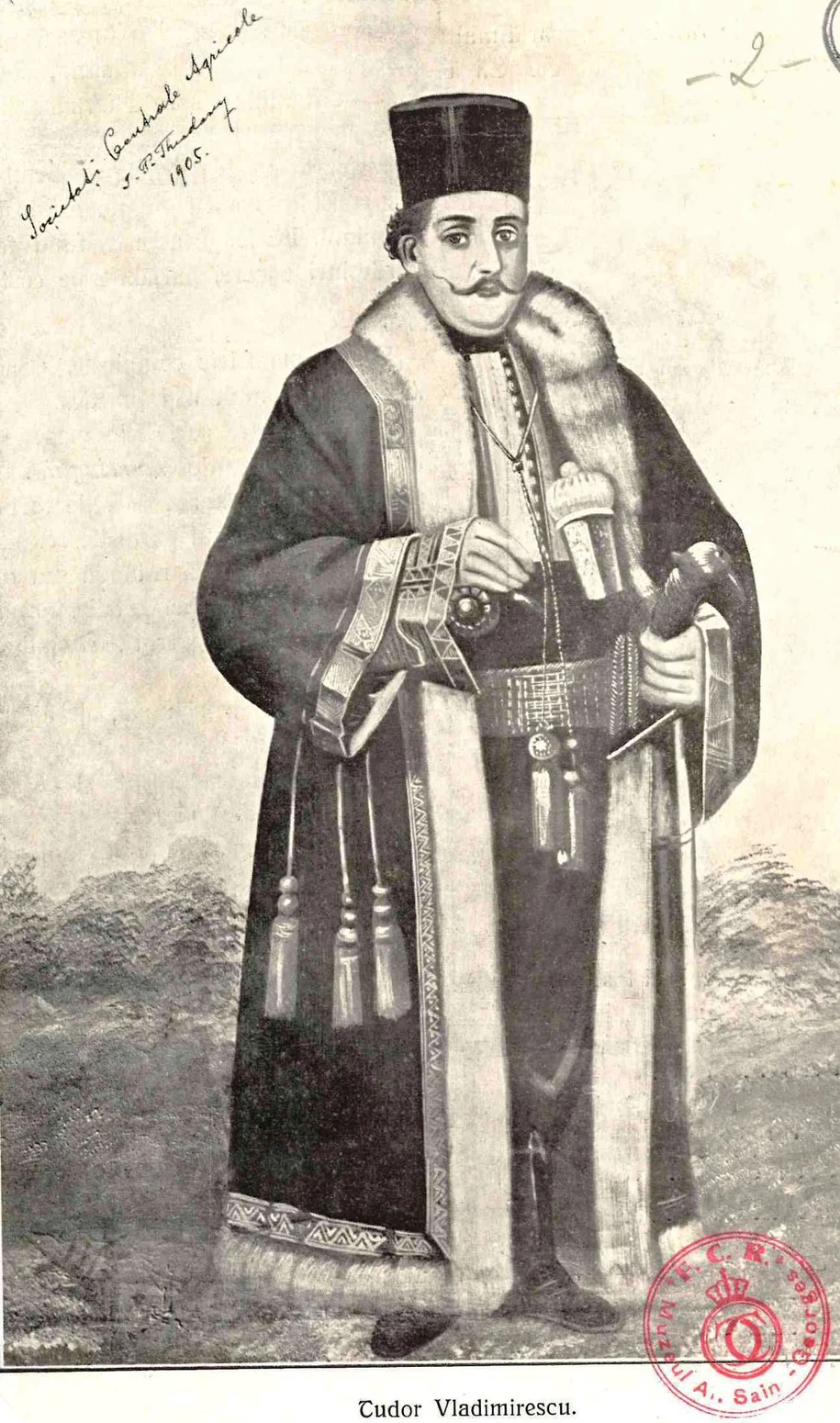
Put Aman’s sketch beside the portrait in Ilustrațiunea română. The latter was reproduced in a magazine on 11 October 1911 and is held by the National Archives. Its date establishes when this page was published. It does not fix the date or artist of the original drawing. [6] [7]

Compare the position of the head and the surfaces around the face. A canvas and a printed page can carry different detail. Both images are evidence for the ways Tudor was remembered; as records of what he looked like in 1821, each still needs a chain back to its source. [5] [7]
Sketch in oils on a brown background, showing Tudor Vladimirescu in a tall hat.
Inventory no. 93 in the Aman collection, catalogued as circa 1874, more than half a century after 1821. (Source · Theodor Aman / Muzeul Theodor Aman, foto Cristian Oprea · Public Domain Mark)
Monochrome portrait of Tudor Vladimirescu reproduced on a magazine page.
The National Archives record dates the printed page to 11 October 1911. The artist is unknown. (Source · Ilustrațiunea română / SANIC, fond Muzeul Saint Georges · Public Domain Mark)

What you see today

Two ways of preserving a memory

The house in Vladimir was restored from a photograph. The sketch in Aman’s museum was made long after the death of the person it portrays. Follow the dates separately on the timeline. In between were people making choices about what could be recovered. [1] [6] [5]

When you return to the porch or the sketch, you can ask the right question of each. In the house, what can the earlier record establish and what did the architect restore? In the portrait, what may come from people who knew Tudor and what did the painter decide? The records give those answers different degrees of certainty. [1] [5]
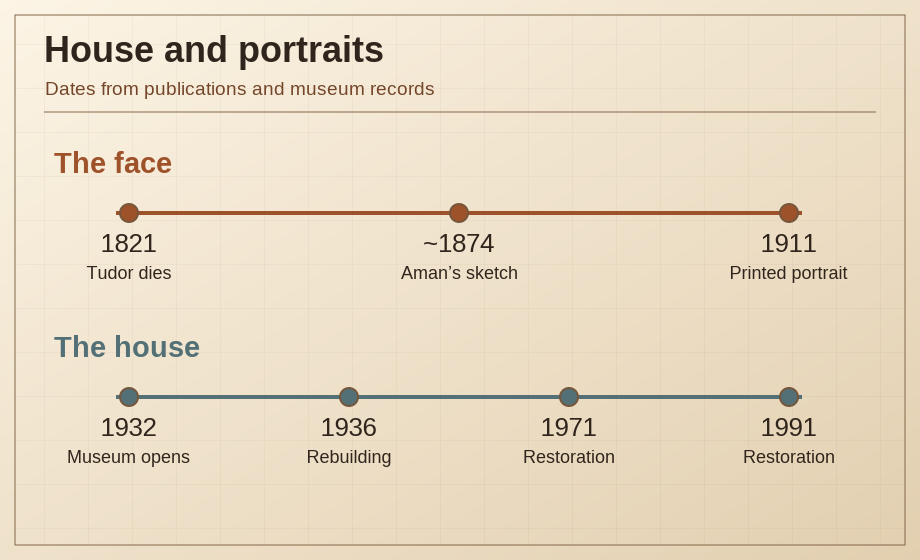
Two timelines, with 1821, circa 1874 and 1911 above, and 1932, 1936, 1971 and 1991 below.
The portraits and the rebuilding of the house come from separate records. Read them on two rows. (Source)

Sources

The links open Aman’s sketch, the 1911 print and the house photographs in their source records.

  1. Gorj County Museum, memorial houseAccount of the 1932 restoration, the local committee and objects displayed in the two rooms.
  2. Anca Ceaușescu, the house at Vladimir, fig. 1The early 20th-century postcard is reproduced on p. 264, credited to Walter Stahli. Pages 262–263 discuss the opening, rebuilding and restorations in 1971 and 1991.
  3. Litua, Three memorial houses in Gorj County, 1982The study records the village, the house with its porch and documents concerning Tudor’s family.
  4. Țetcu Mircea Rareș, house photographsExterior of the memorial house after restoration. CC BY-SA 4.0.
  5. Bucharest Municipality Museum, study of the portraitsExamines the attribution and eyewitness accounts behind Aman’s painted image.
  6. Aman’s sketch, inventory no. 93Oil on canvas, undated and unsigned, catalogued as circa 1874.
  7. Ilustrațiunea română, 11 October 1911National Archives, Muzeul Saint Georges fonds, file III/12, leaf 2. A portrait by an unknown artist.