ONE BIRD. ONE FLOWER. THE AIR BETWEEN THEM.
How does a hummingbird hover?
Its wings move too quickly for your eyes to follow. Slow down one beat and see what holds it above the flower.
Slow the wing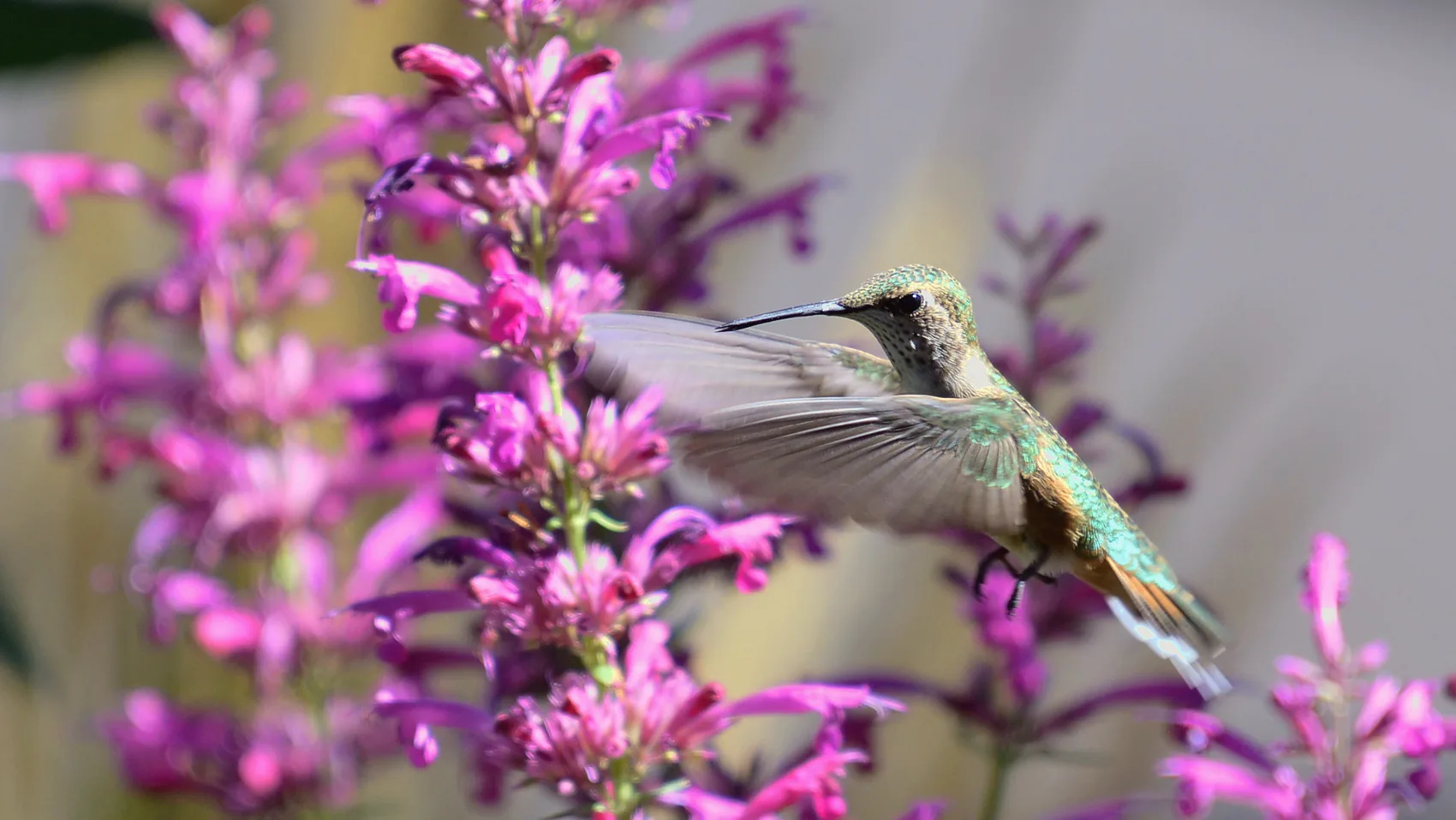
THE SHORT ANSWER
The wing pushes air down on both halves of the beat.
On the return, the hummingbird rotates its wing so it can produce upward force again. Both halves help support the bird, though the downstroke produces more force.
SLOW DOWN ONE BEAT
One wing, two useful movements
Drag the marker or play the motion. Follow the wings through one complete beat.
The wing presses air down. This is the stronger half of the beat.
Simplified top-view diagram: it shows the wings sweeping, without their three-dimensional twist. Its shape and angles are not measured anatomy.
Which half produces more upward force?
THE WING
The wing twists as it comes back
A hummingbird keeps its wings extended as it sweeps them back and forth. It rotates them when they change direction. Both halves of the movement can therefore support the body. Wing speed, angle and airflow help explain why the downstroke produces more force than the upstroke.
Song et al., 2014 ↗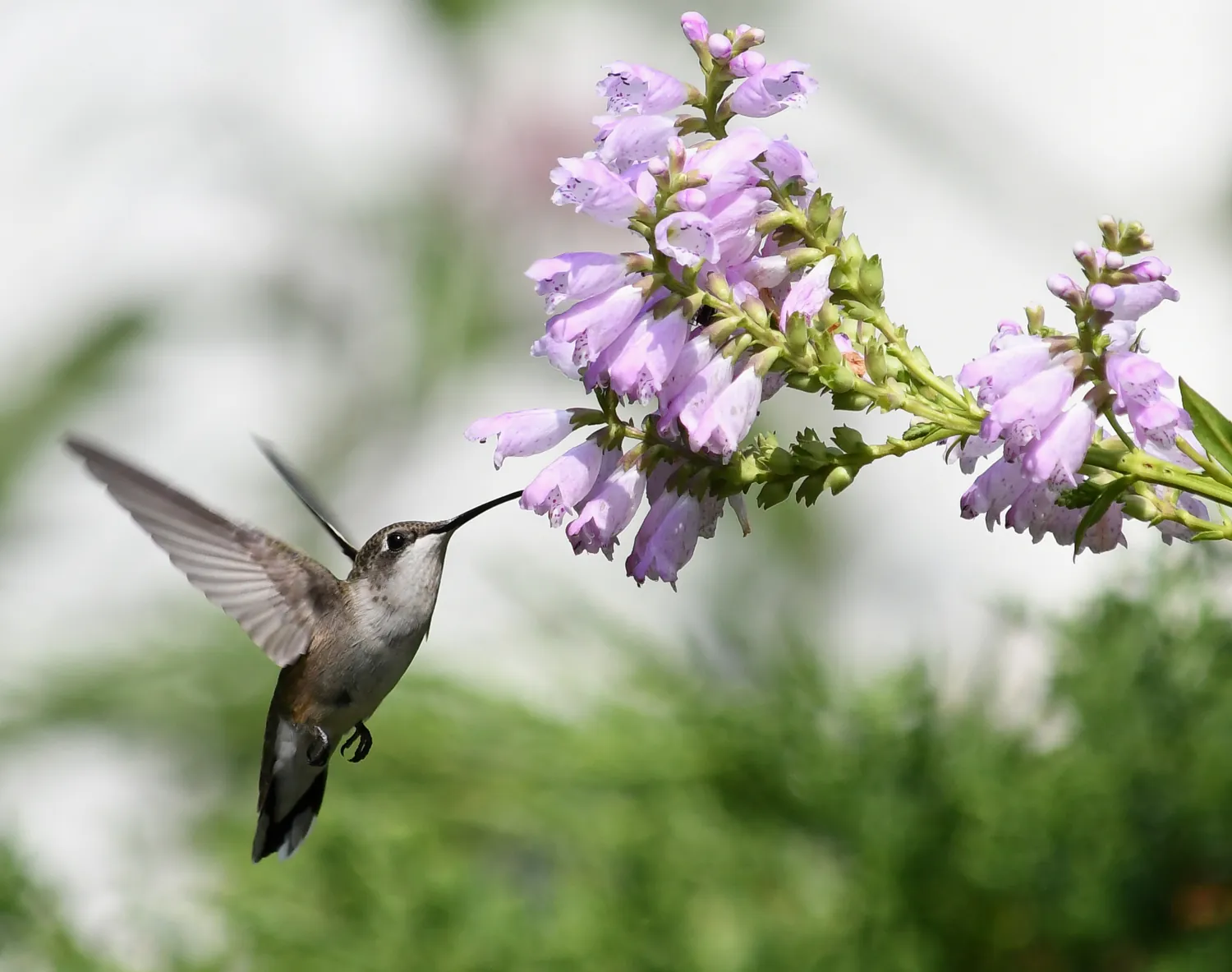
THE TARGET
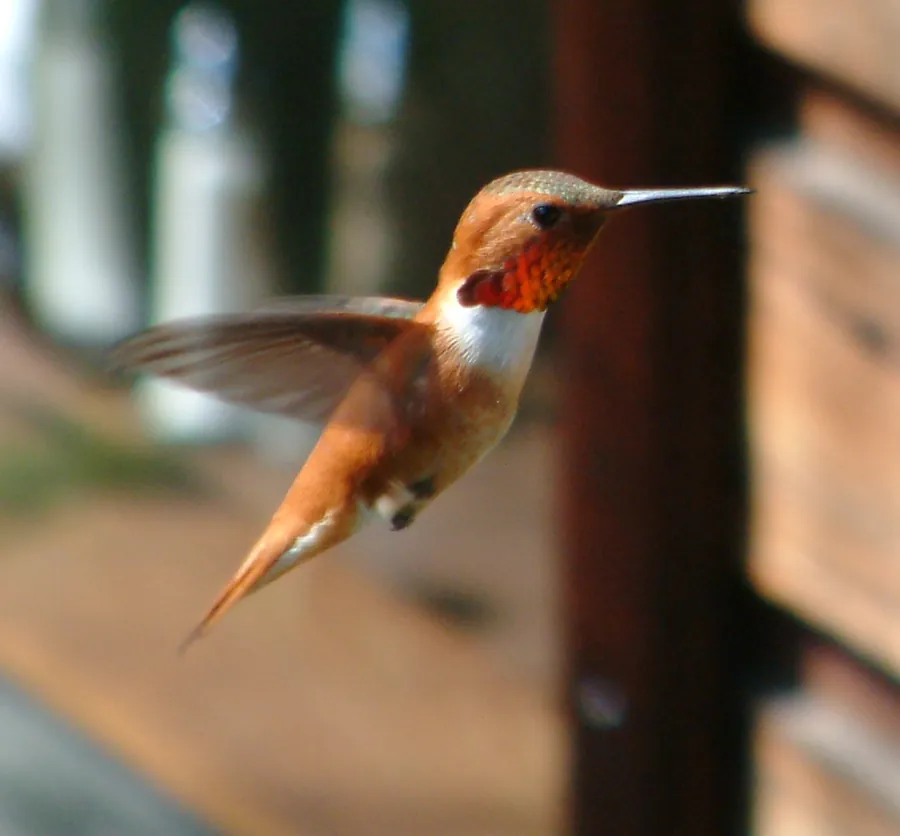
How does it stay beside the same flower?
The wings keep it airborne; its eyes help it avoid drifting. In an experiment, hummingbirds hovered steadily before a still background. When researchers moved projected patterns behind them, the birds shifted position. Motion across their field of view helps them control their flight.
Goller & Altshuler, 2014 ↗Hummingbirds are native to the Americas. The photographs on this page show different species; the force study followed a ruby-throated hummingbird.
THE EVIDENCE
Where this explanation comes from
The force comparison is a result of the 2014 model. The diagram above explains it through a simplified motion; it does not reproduce the filmed wing's exact path.
- Song and colleagues (2014), a model of ruby-throated hummingbird flight: force during each half of the beat.
- Kruyt and colleagues (2014), rotation of the extended wing and force on both sweeps.
- Goller and Altshuler (2014), moving-background experiment and hover stabilization.
- Smithsonian National Zoo, hummingbird distribution and flight.
- Photographs and their licences
USFWS Mountain Prairie · CC BY 2.0; U.S. Fish and Wildlife Service Midwest Region · public domain; Jonathan Rodgers · CC BY-SA 3.0. Cropped and converted to WebP.
.jpg)
.jpg)
