WORDS THAT PRAY
What prayer do you say when you say goodbye?
When you say goodbye, you speak a worn-down prayer: I commend you to God. Five words wore down from that prayer — adio, addio, adiós, goodbye, tschüss — and Romanian and French keep theirs for partings that may be forever.
- 0
- times adieu occurs in the 4,002 verses of the Bédier text
- 2
- etymologies DEX gives for adio: Italian and French
- 5
- words worn down from one prayer

How the prayer shortens:
ADIO
“I commend you to God” — the Old French formula, from Latin ad Deum.
One prayer, five words:
- adio Romanian
- addio Italian
- adiós Spanish
- goodbye English
- tschüss German
Adio is the formula by which the one leaving was commended to God: a Dieu vos comant, from Old French, from Latin ad Deum. DEX gives it two sources — Italian addio and French adieu — and the sense stayed that of the parting that may be forever.
What the dictionaries say
Two etymologies, one prayer
Open the dictionary at adio and you find two things at once: the sense of the parting that may be forever, and a double etymology, Italian and French.
DEX: the definition
“Rămas bun (pentru totdeauna), rămâi cu bine” — “Farewell (forever), stay well.”
The etymology, in the dictionary's words: “Din it. addio, fr. adieu” — from Italian and French.
FOREVER
DN: the Italian taken apart
DN takes the Italian word apart: ad, “to”, and Dio, “God”.
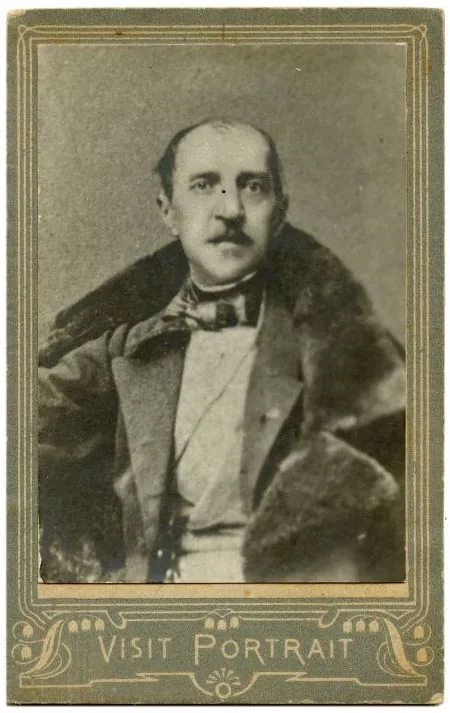
MDA2: an attestation in Negruzzi
MDA2 points to NEGRUZZI, S. I, 43. The line itself was never checked in the edition, so it stands quoted after the dictionary.
QUOTED AFTER MDA2

Three literary witnesses
DLRLC illustrates the sense with verses. Two were checked in the edition; the third stays quoted after the dictionary.
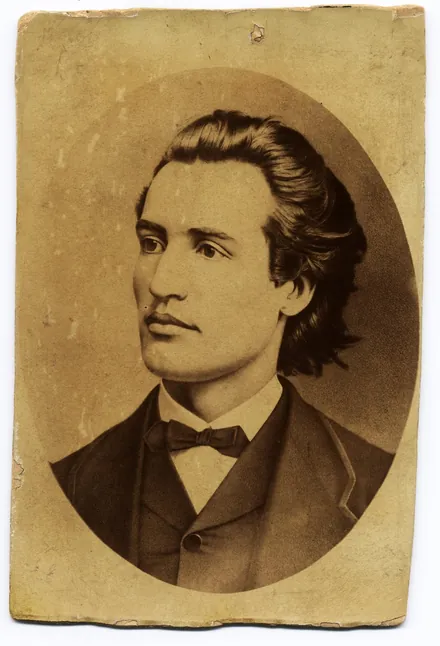

Deci cânturilor mele zic
Adio tuturora.
Mihai Eminescu, “S-a dus amorul”, Convorbiri literare, 1883
TEXT CHECKED IN THE EDITION the poem on Wikisource
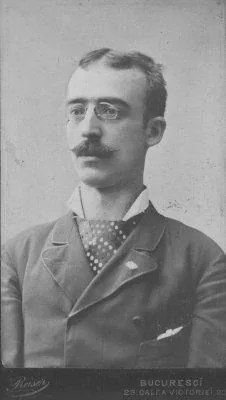

Și soarele o rază de-adio îmi trimise
Alexandru Macedonski, “Noaptea de noiembrie”, Excelsior, 1895
TEXT CHECKED IN THE EDITION the poem on Wikisource
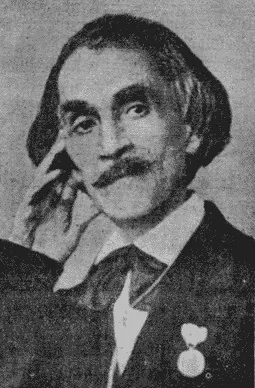

Întorc acum asupra-ți privirea-mi dureroasă,
Ca cel din urmă-adio, la tot ce am pierdut.
Grigore Alexandrescu, quoted after DLRLC
QUOTED AFTER DLRLC the dictionary on dexonline
2 etymologies — Italian and French — and one prayer inside: ad Deum.
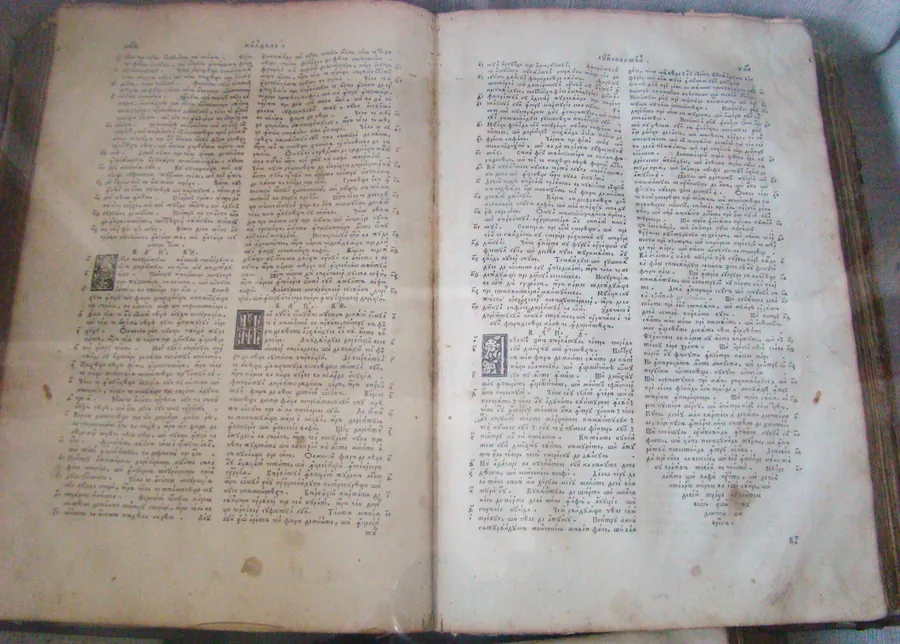

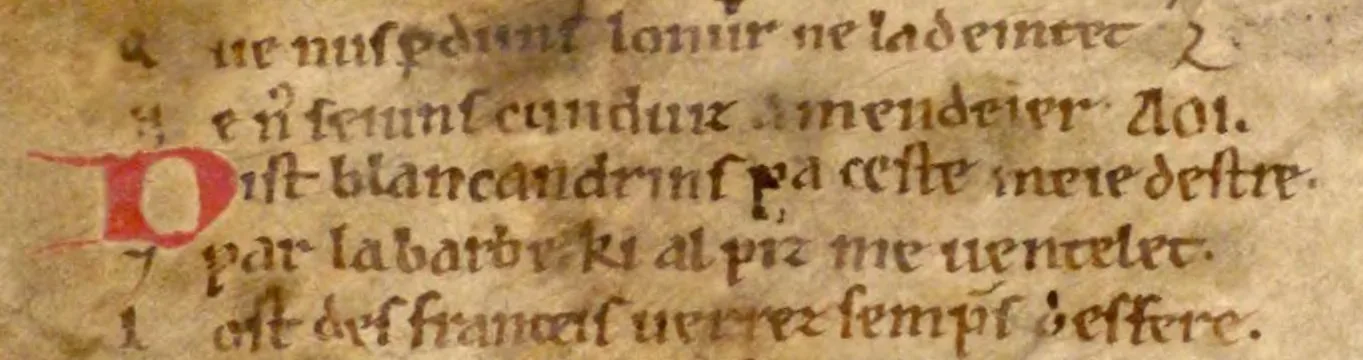
The Song of Roland
Roland never says adieu
The poem you would expect the word from never speaks it. Instead it speaks the whole prayer, in verses like these.
0 times adieu occurs in the 4,002 verses of the Bédier text.
The Bédier edition, the Wikisource transcription; counted from the saved text.
v. 2389
Sun destre guant a Deu en puroffrit.
He held out his right glove to God.
The dying Roland, the gesture of self-commendation.
v. 3694
Francs les cumandent a Deu e a ses nuns.
The Franks commit them to God and his Names.
The three lords, in white coffins, at Blaye.
v. 2253
Hoi te cumant al Glorius celeste.
I commend you now to the Glorious One of heaven.
Roland, over the dying archbishop.
The renderings follow Bédier's modern version; the English rendering: Marius Comper.
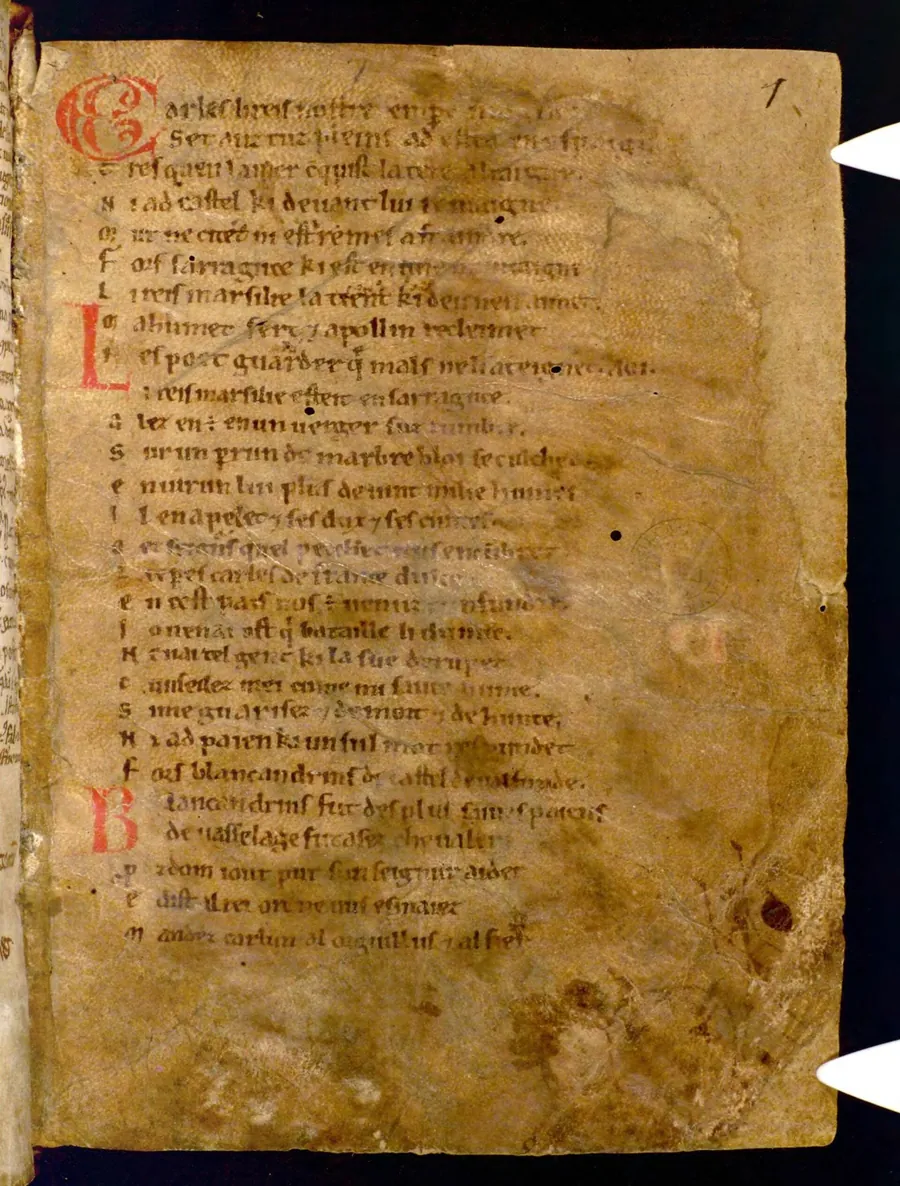
The formula the word wore down from
a Dieu vos comant
“I commend you to God” — Old French, from Latin ad Deum.
The German etymologist Pfeifer gives the same chain on his own account: a dieu, a deu, from ad Deum.
The whole formula wore down to adieu. That is all the prayer that is left.

The family of prayers
Five prayers, three goodbyes
Five words keep the prayer inside. Three other ways of parting promise a reunion or shorten everything to one syllable.
adio
“I commend you to God”
From Italian addio and French adieu; adieu from the formula a Dieu vos comant.
DEX, DN
addio
“To God”
From ad, “to”, and Dio, “God”.
DN
adiós
“To God”
From a and Dios, from Medieval Latin ad Deum.
WIKTIONARY
goodbye
“God be with you”
Shortened through forms like Godbwye; God turned into good after good morning.
WIKTIONARY
tschüss
“I commend you to God”
French adieu, borrowed in the 17th century, through forms like atschüs. The link with Spanish adiós stays a hypothesis.
PFEIFER MAYBE (VIELLEICHT)
Another theology: the promised reunion
la revedere
A parting formula; a calque on French (au) revoir. Scriban spells it out: the wish to see someone again.
do svidaniya
“Until next time” — of the same family as au revoir.
pa
For children and among close friends; the dictionary compares it with German pa and Hungarian pá. As a joke: pa și pu, pa și pusi.
“Așadar, la revedere luni” — “So, goodbye until Monday.”
Caragiale, Correspondence (quoted after DLRLC)
QUOTED AFTER DLRLC

None of them commends anyone: they promise a reunion or shorten everything.
When French was pouring in
The bonjuriști and the mockery
No dictionary says who brought adio into Romanian, or in which year. What the dictionaries do say is what the times were like when French came in through the front door: after 1830, the young men back from Paris were laughed at for the way they greeted.
DEX
“Nume dat după 1830-1840 tinerilor români progresiști care studiaseră în Franța” — the name given after 1830–1840 to young progressives back from France.
CADE
“Nume de batjocură...” — a mocking name for those who greeted with “bonjur” instead of “bună ziua”; also called “duelgii” and “pantalonari”.
DLRLC
“Epitet dat, pe la jumătatea secolului al XIX-lea...” — an epithet for the young men back from abroad, bringing the cosmopolitan habit of greeting with “bonjur”.
The mockery, in three quotes
„Decît un bonjurist c'o mînă de învățătură, mai bine un țăran cu un car de minte.”
Ion Creangă, Scrierile I–II (quoted after CADE)
QUOTED AFTER CADE
„...dădeau și ei tinerilor cîte un ibrișin pe la nas, numindu-i: bonjuriști, duelgii, pantalonari.”
Ion Creangă, after DLRLC
QUOTED AFTER DLRLC
„Junimistul Alecsandri, ridiculizînd... pe «bonjuriști»...”
Ibrăileanu on Alecsandri, after DLRLC
QUOTED AFTER DLRLC
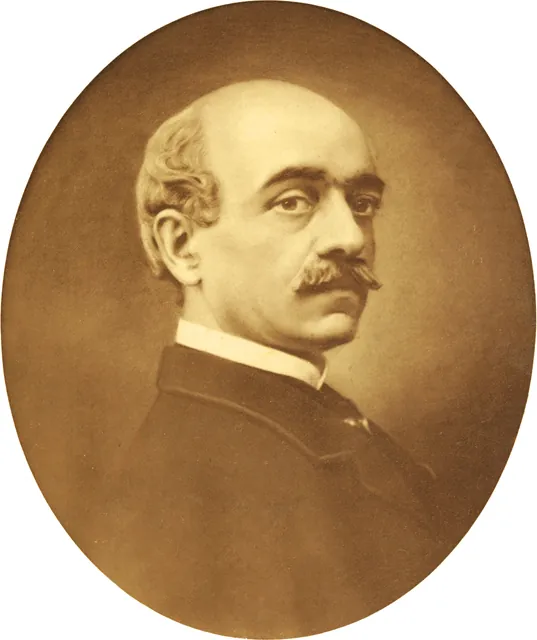


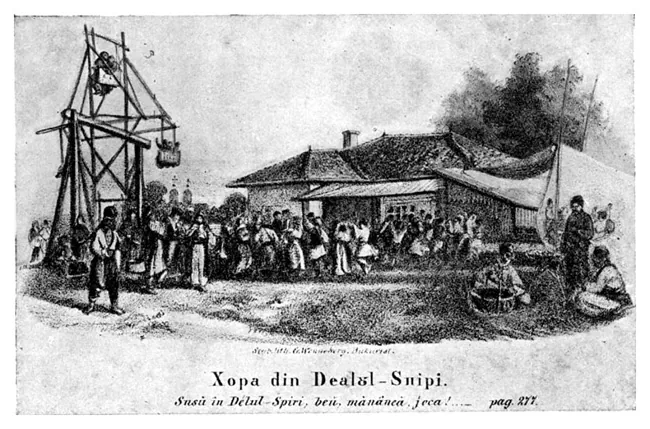

Deci cânturilor mele zic
Adio tuturora.
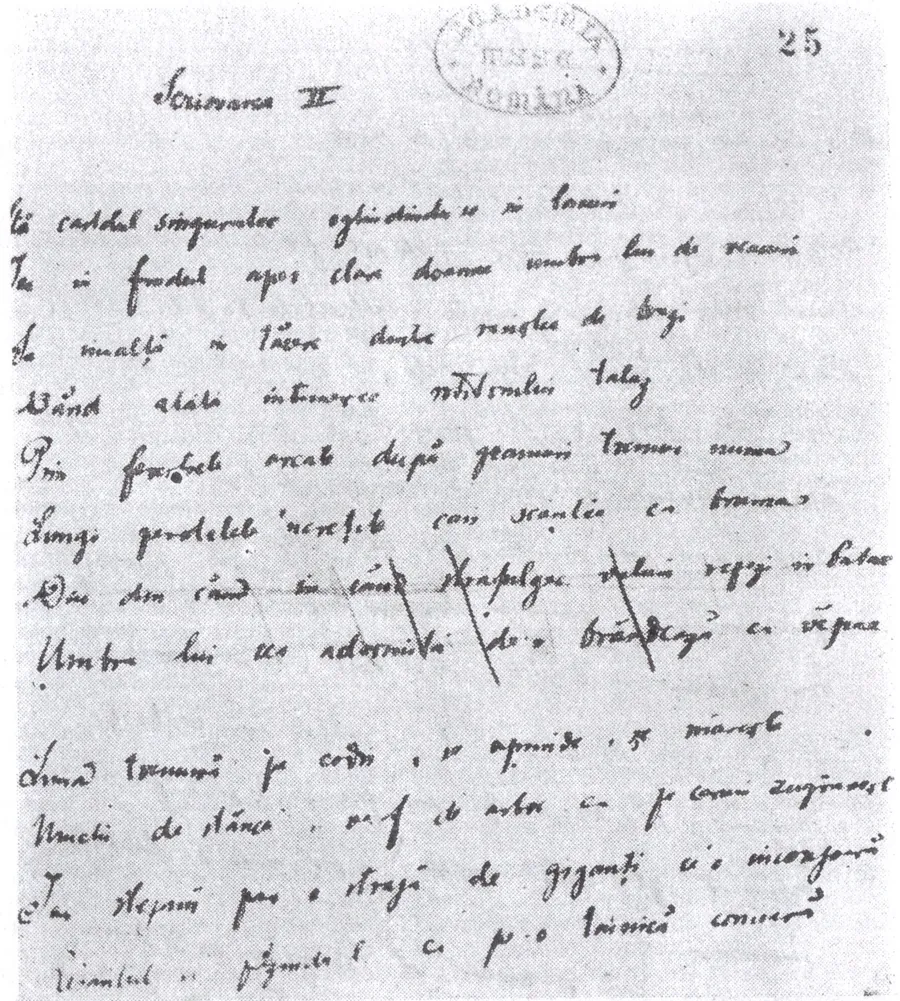

That was the greeting that kisses — sărut-mâna. This is the farewell that prays. sărut-mâna
From prayer to word
How a prayer wears down
Pick a chain and play it. The letters that fit no later form go out first; what is left at the end is the word you say today.
WIKTIONNAIRE + PFEIFER
Step 1 of 3
| Adio | A DIEU VOS COMANT (“I commend you to God” — the whole formula, Old French) ADIEU (the shortened formula) ADIO (the forever farewell; DEX gives it Italian and French) |
|---|---|
| Goodbye | GOD BE WITH YOU (the whole wish) GODBWYE (a middle form) GOODBYE (God turned into good after good morning) |
| Adiós | AD DEUM (“to God” — Medieval Latin) A DIOS (“to God”) ADIÓS (the Spanish word) |
| Addio | AD DIO (“to God”) ADDIO (the Italian word) |
| Tschüss | ADIEU (a French loan of the 17th century) ATSCHÜS (-s forms of the 18th century) TSCHÜSS (spread through the north German ports) |
The farewell game
What kind of goodbye?
Six partings, three answers each. Every round teaches one dictionary row.
Round 1 of 6
When do you say “adio”?
Round 2 of 6
When do you say “adieu”?
Round 3 of 6
When do you write “la revedere”?
Round 4 of 6
When do you say “pa”?
Round 5 of 6
When do you say “do svidaniya”?
Round 6 of 6
When do you say “tschüss”?
When do you say “adio”?
At a parting that may be forever — the right answer
When do you say “adieu”?
To someone you will not see again soon — the right answer
When do you write “la revedere”?
On Monday — as in a letter by Caragiale — the right answer
When do you say “pa”?
To a child or among close friends — the right answer
When do you say “do svidaniya”?
Until next time — the right answer
When do you say “tschüss”?
At any ordinary parting, in German — the right answer
Two numbers
0
times adieu occurs in the 4,002 verses of the Bédier text.
2
etymologies DEX gives for adio: Italian and French. Either alone would tell half the story.
Three common mistakes
Myths
“Adio is French.”
Half true: DEX gives Italian alongside French — from addio and from adieu.
“Roland says adieu.”
The word never occurs in the poem: in the 4,002 verses of the Bédier text, adieu has zero mentions. Roland speaks the whole prayer.
“Goodbye has nothing to do with God.”
It does: goodbye shortens God be with you, through forms like Godbwye; God turned into good after good morning.
Sources
Dictionaries first, then texts and studies. Every risky claim points at its source.
| C01 | Adio: the forever farewell; Italian and French etymology. | DEX '09/'98 |
|---|---|---|
| C02 | Addio: ad, “to”, and Dio, “God”. | DN |
| C03 | Attested in Negruzzi, S. I, 43 (quoted after the dictionary). | MDA2 |
| C04 | The long-parting sense; witnesses: Eminescu, Macedonski, Alexandrescu. | DLRLC |
| C05 | Adieu from a Dieu vos comant, from ad Deum. | Wiktionnaire |
| C06 | Adieu borrowed in the 17th century; atschüs, tschüss through the northern ports. | Pfeifer, DWDS |
| C07 | Goodbye from God be with you, through Godbwye; God turned into good. | Wiktionary |
| C08 | Adiós: a and Dios, “to God”, from ad Deum. | Wiktionary |
| C09 | Adieu is not said to people seen again soon. | Littré |
| C10 | La revedere, a calque on (au) revoir; “Așadar, la revedere luni”. | DLRLC, DN, Scriban |
| C11 | Pa: for children and close friends; pa și pu, pa și pusi. | DEX, MDA2 |
| C12 | Bonjurist: a mocking name after 1830–1840; duelgii, pantalonari. | DEX, CADE, DLRLC |
| C13 | Adieu zero times in 4,002 Bédier verses; the formula at vv. 2389, 3694, 2253. | Wikisource |
| C14 | Do svidaniya: “until next time”. | Wiktionary |
| C15 | Negruzzi, 1808–1868 (biographical markers). | the encyclopaedia |
What stays open
- Negruzzi's line (S. I, 43) was never checked in the edition.
- Creangă's bonjurist line is quoted after CADE, with no work or page.
- The year of the first goodbye is missing: the source is a snippet, not an edition.
The Romanian dictionaries are read in dexonline's transcriptions of the printed editions, with the edition and year on every row. French comes from Littré and the Bédier text; German from Pfeifer; the English, Spanish and Russian glosses from Wiktionary, each backed by a stronger source or cut down to what all of them say alike. Verse and formula renderings: Marius Comper.
Type: Fraunces, Newsreader and Atkinson Hyperlegible, under the SIL Open Font Licence.