
DEX: the definition
“A sum of money given, beyond the due payment, for a personal service.”
The etymology, in the dictionary's words: “Din tc. bahșiș” — from Turkish bahșiș.
BEYOND DUE PAYMENT
WORDS FROM THE BAZAAR
Romanian “bacșiș” — a tip — comes from Turkish bahșiș, which the Turks took from the Persians: bakhshish, gift. Turkish also calls it coffee money. The Persian verb means both to give and to forgive. And MDA2 attests the word at Miron Costin — once the brave soldiers' prize.
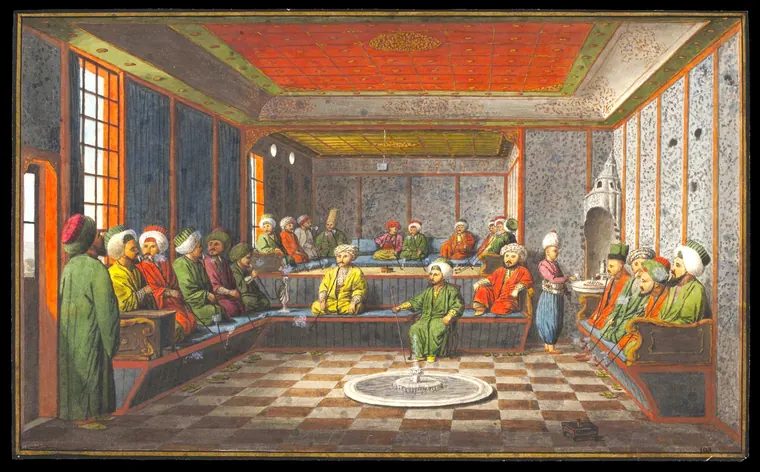
How the gift becomes a tip:
BACȘIȘ
bakhshish, “gift” — through Turkish bahșiș, “coffee money” — down to bacșiș.
One gift, four languages:
“Bacșiș” comes from Turkish bahșiș (DEX), taken by the Turks from Persian bakhshish — gift (TDK, Etymonline). The Persian verb bakhshidan means both to give and to forgive. MDA2 attests it at Miron Costin, with the old sense of a prize for brave soldiers.
What the dictionaries say
Open the dictionary at bacșiș and you find a gift that travelled: from Persian to Turkish, from Turkish to Romanian — and from prize to bribe.
“A sum of money given, beyond the due payment, for a personal service.”
The etymology, in the dictionary's words: “Din tc. bahșiș” — from Turkish bahșiș.
BEYOND DUE PAYMENT
MDA2 gives it attested at M. COSTIN, with five senses: prize, soldiers' prize, the waiter's coin — and the officials' bribe.
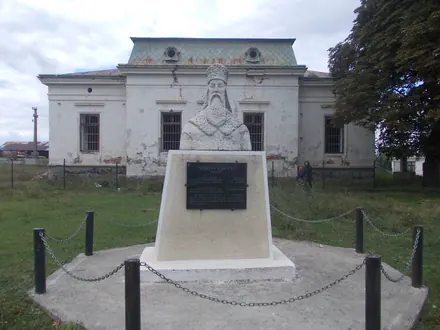
“(turc. [d. pers.] bahšiš, pop. bakšiš). Money given to an inferior… as a sign of thanks. See plocon, mită, șpagă…”
From Turkish bahșiș come Greek μπαξίσι, Albanian baksis, Bulgarian baksis too. And from bacșiș: a bacșișui (to bribe) and bacșișar (easy to bribe).
Șăineanu gives it as a gift to subordinates, “especially a gift made on New Year's”.
The dictionaries illustrate the sense with writers. Both quotes stay after the dictionary.
Noi, surugiii, judecăm omul după bacșiș.
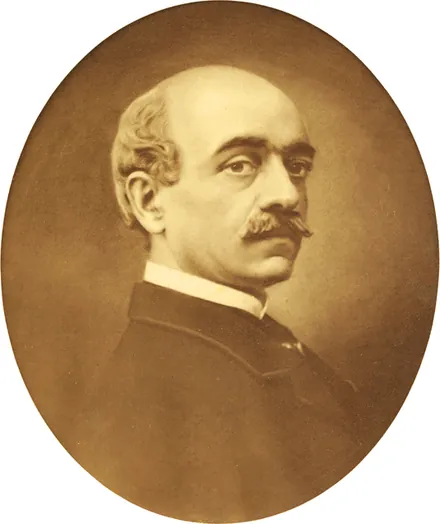
Vasile Alecsandri, quoted after CADE
QUOTED AFTER CADE
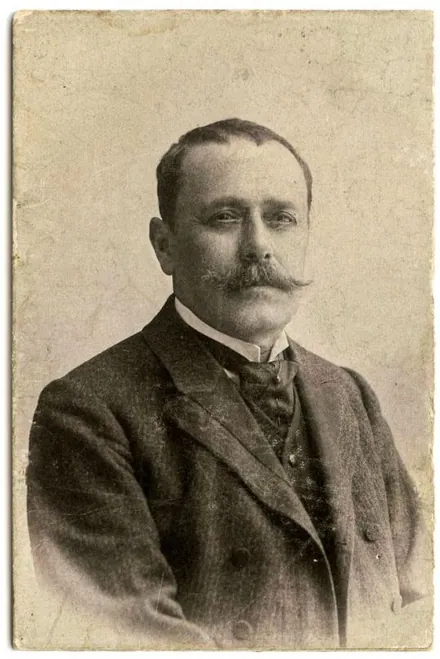
Ți-am da un bacșiș bun să ne spui încotro a apucat.
I.L. Caragiale, quoted after DLRLC
QUOTED AFTER DLRLC
3 stops: the Persian gift, the coffee money, the waiter's coin — and one fall: the bribe.
The map of the coin
The tip's coin passed through five hands. Drag the coin along the road:
Persia · ETYMONLINE
THE GIFT
bakhshish, “gift” — from bakhshidan, to give and to forgive.
Ottoman Turkish · TDK
THE COFFEE MONEY
bahşiş, from Persian; TDK: “kahve parası”.
the old army · MDA2
THE PRIZE
A prize for brave soldiers; MDA2 attests it at Miron Costin.
today's Romanian · DEX
THE WAITER'S COIN
Beyond the due payment, for a personal service.
the fall · MDA2 · DER
THE BRIBE
A reward for an illegal service (MDA2); a bacșișui, to bribe (DER).
The coin, in your hand
THE BRIBE
A reward for an illegal service (MDA2); a bacșișui, to bribe (DER).
From gift to bribe in one movement.
The stops sum up dictionary senses; they are not dated by year.
The fall
The dictionaries do not flinch: bacșiș also means bribe. Another anatomy starts here.
“A money reward given to officials for an illegal service. See: ciubuc, șpagă.” And: “A sum of money given to win someone's goodwill or protection.”
“♦ Mită.” — that, right after the clean tip's definition.
“a bacșișui, verb (to tip; to bribe); bacșișar, noun (a person easy to bribe).”
The full anatomy of the bribe — peșcheș, rușfet, ciubuc, parandărăt — lives at its sibling piece spaga.
The coin's game
Six cards. Sort them: clean tip, bribe, or both.
The coin left for the waiter
The hundred for the clerk, to move the file
The brave soldier's prize
The New Year gift for the servant
“A tip if you get me the part in two hours”
The customs man's ciubuc
Three common mistakes
“Bacșiș is Turkish through and through.”
The Turks took it from the Persians: TDK — Farsça baḫşiş; Scriban — turc. [d. pers.].
“Bacșiș means bribe.”
It means bribe too — but also the soldier's prize and the New Year gift. The word slid.
“It is a new word.”
MDA2 attests it at M. Costin.
Dictionaries first, then the road. Every risky claim points at its source.
| C01 | Bacșiș: beyond due payment, for a personal service; from Turkish bahșiș. | DEX '09/'98 | DEX |
|---|---|---|---|
| C02 | Five senses: prize, military prize, waiter's coin, bribe, protection; att. M. Costin. | MDA2 | MDA2 |
| C03 | Turkish [from Persian] bahšiš; money as thanks; see plocon, mită, șpagă. | Scriban | Scriban |
| C04 | The Balkan ones from Turkish; derivatives: a bacșișui (to bribe), bacșișar. | DER | DER |
| C05 | A gift to subordinates, especially at New Year. | Șăineanu | Șăineanu |
| C06 | bahşiş ← Persian baḫşiş; “kahve parası”. | TDK | TDK |
| C07 | bakhshish “gift” ← bakhshidan “to give/forgive” ← PIE *bhag-. | Etymonline | Etymonline |
| C08 | Coachmen judge a man by his tip (Alecsandri). | CADE | CADE |
| C09 | A good tip (Caragiale); tips to the farmhand (Pas); bribe. | DLRLC | DLRLC |
| C10 | “Mită” as a sense; from Turkish bahșiș; the military prize. | DLRM, DEXI | DLRM |
The Romanian dictionaries are read in dexonline's transcriptions of the printed editions, with the edition and year on every row. Turkish comes from TDK; Persian from Etymonline. The literary quotes stay after CADE and DLRLC. Renderings: Marius Comper.
The coin travelled from Persia to your palm — and its road goes on at spaga


