FROM AN EMPEROR, TO A PLATE
Your plate was once an emperor of China
A Chinese imperial title, calqued into Old Persian, became the Persian name for China's emperors — then the name of their porcelain. The Ottomans inherited it, the Romanians shrank it to a plate. This is the word's journey, in five forms.
- 5 forms
- from bagapuθra to farfurie
- p. 934
- the faghfur entry in Steingass's dictionary
- ~10–12k
- Chinese pieces at Topkapi, per the sources
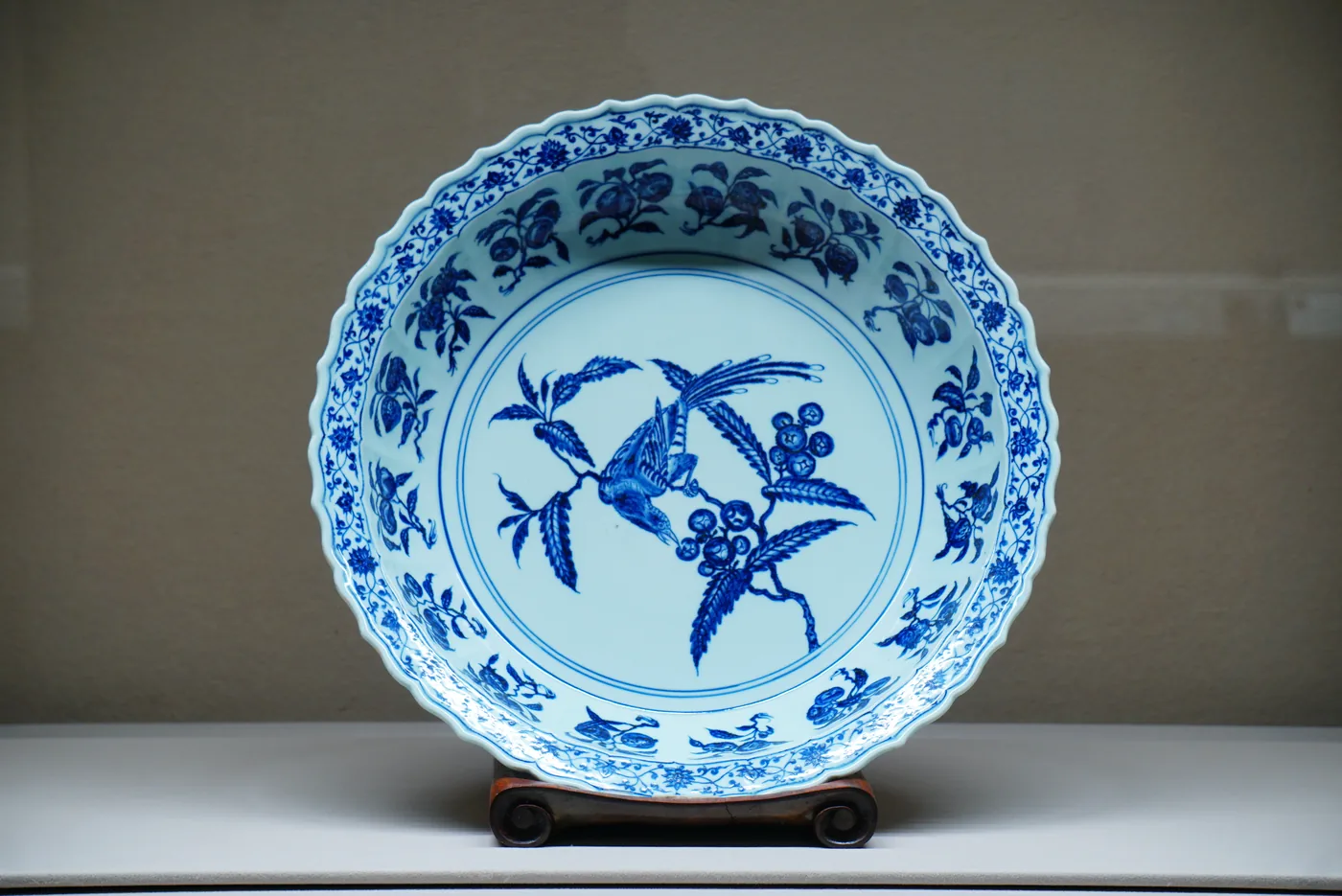

The word changes shape along the road:
- bagapuθra Son of Heaven
- faghfūr China's emperors
- fağfuri Chinese porcelain
- farfuri the Ottoman form
- farfurie on your table
The Son of Heaven
Before it was an object, faghfur was a title. China's rulers were called the Son of Heaven (tianzi), holding authority from heaven (tian) through the mandate (tianming) inherited from the Zhou dynasty.
Old Persian calqued the title: bagapuθra-, whence, via Sanskrit bhagaputra, came baghfur — and, voiced, faghfur. Two independent dictionaries agree: the headword note at Steingass's faghfur entry and Vasmer's Russian etymology, which derives it from baɣapuϑra-, a calque of Chinese tien-tse, “son of heaven”.
So the first sense of faghfur is a man — the emperor of China. The object comes much later, on another continent, through a three-step metonymy.
“The general name of the emperors of China; … a place in China celebrated for its porcelain; the porcelain of China.”

The Name-Ware
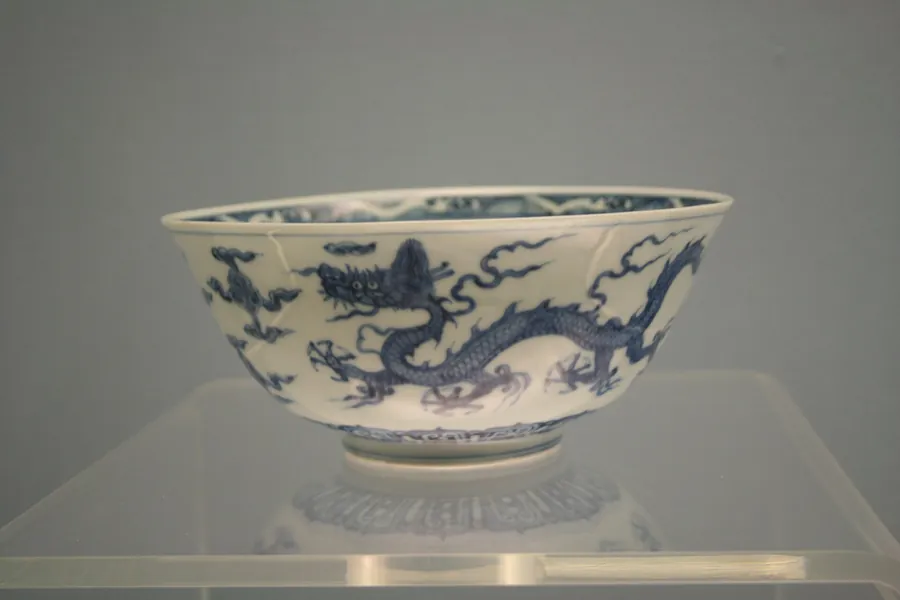
How does an emperor's name end up on a vessel? By metonymy: the title names the region, the region names the ware. Vasmer gives the receipt in three steps: the Chinese emperor's title, a region's name in China, the porcelain from that region.
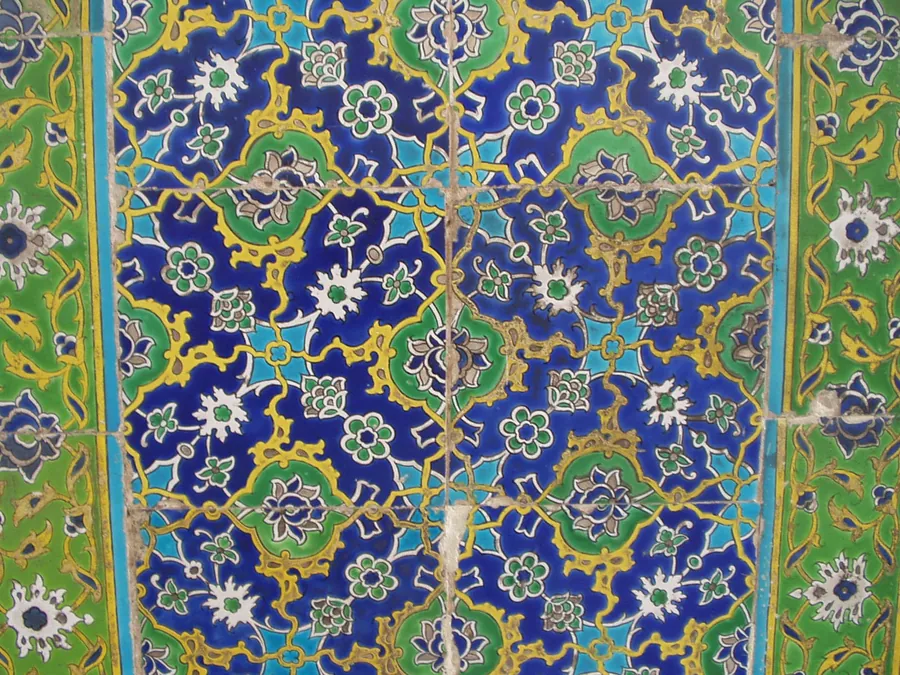
Persian already had the habit: chini, “Chinese”, was the everyday name of the ware in India and the East, and chīnī faghfūrī, on Teece's reading, likely meant imperial, top-quality Chinese vessels. The sense is alive today: Turkish çini means “Chinese ware”, and rooms lined with glazed tiles are called chini-khana, the “chini house”.
The clearest proof that one word covered both senses sits in Steingass too: faghfūri chīnī means both “an emperor of China” and “a porcelain vessel”. The -i adjective spans the man and the object without choosing.
the Chinese emperor's title → a region's name in China → the porcelain from that region


The Porcelain Road
From the imperial kilns at Jingdezhen to the Topkapi kitchens, the ware travelled overland and by sea for centuries. Follow the stops: the map keeps pace with the story, and the story with the map.
- Place
- Jingdezhen
- Marker
- the imperial kilns
- Takeaway
- Here the emperor's porcelain was fired, under the Ming. The ware left westward along the Silk Road and by sea — the…
1 / 5
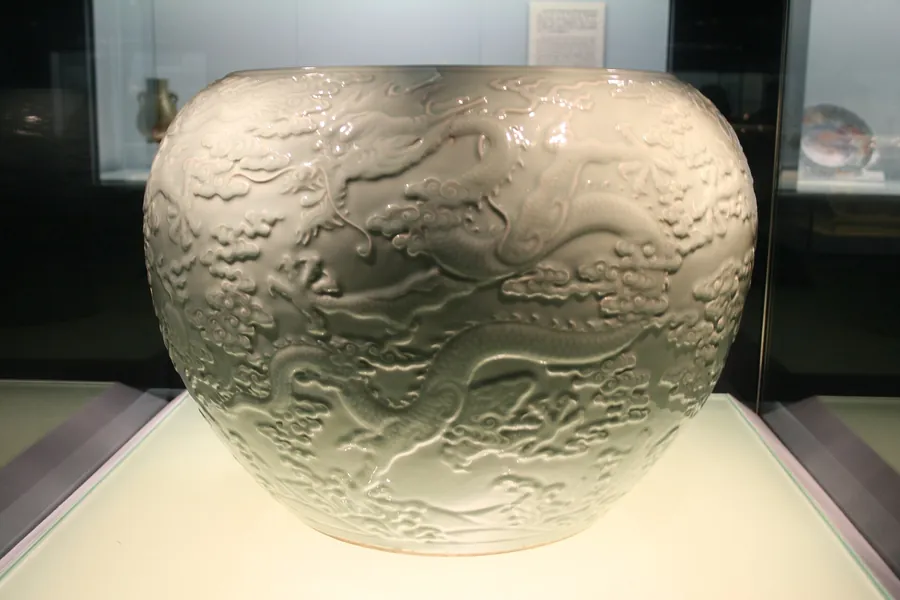
Jingdezhen
the imperial kilns
Here the emperor's porcelain was fired, under the Ming. The ware left westward along the Silk Road and by sea — the name faghfur travelling with it.

2 / 5
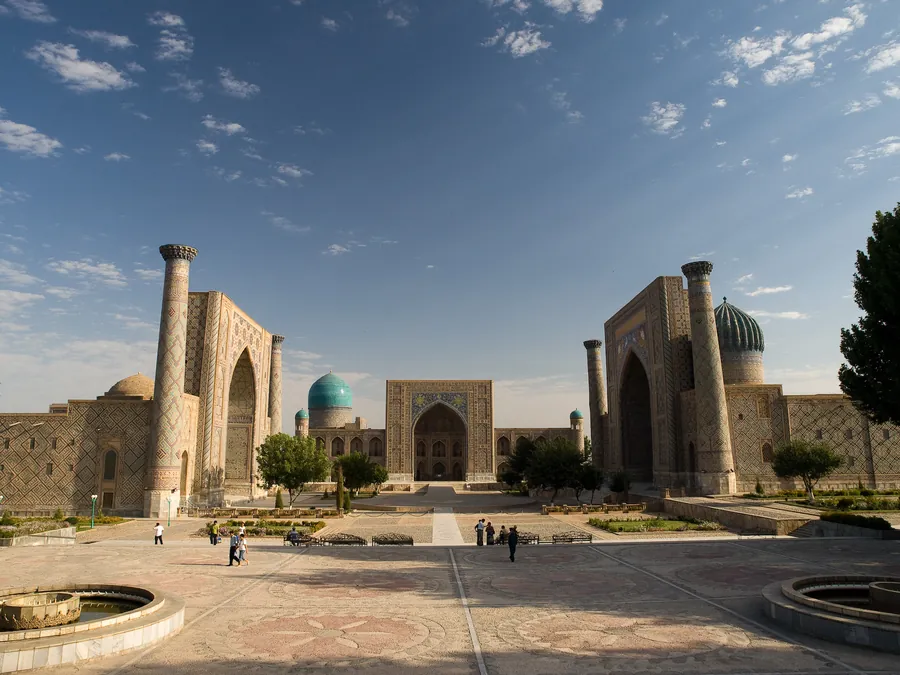
Samarkand
the crossroads
On the Silk Road, caravans bound China to the Persian and Ottoman worlds. At Samarkand the Persian word faghfur was at home: here the emperor and the vessel shared one name.

3 / 5
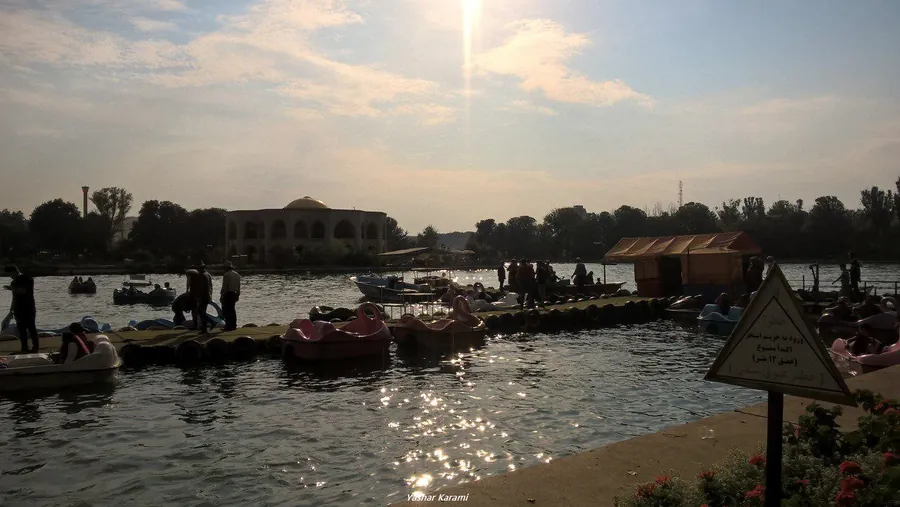
Tabriz
1514, with caution
After Chaldiran (1514), Selim I looted the Tabriz palace: carpets, books, artisans, the throne. Tabriz's Chinese porcelain belongs to the story — but its figures are read with caution (see the box).

4 / 5
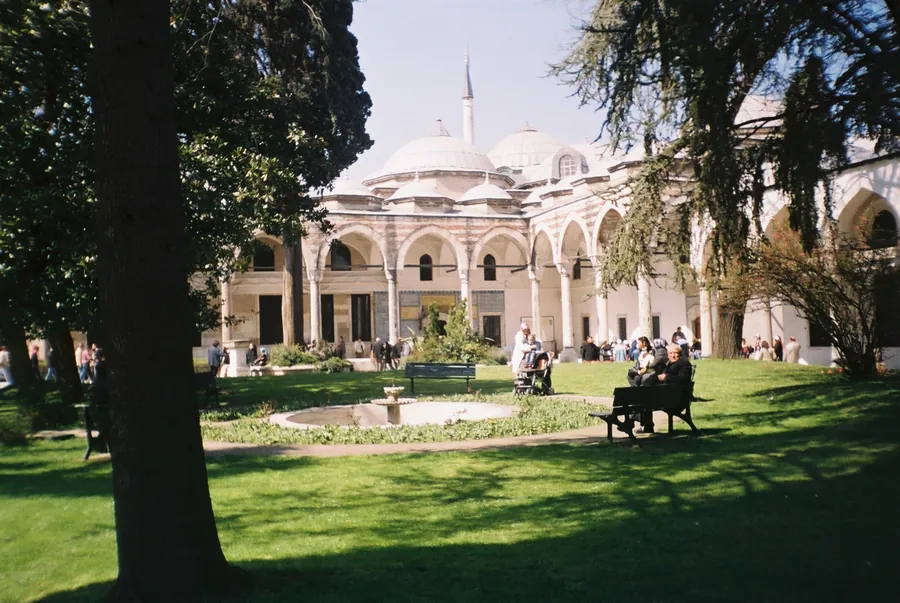
Istanbul · Topkapi
the sultan's kitchens
At Topkapi the Ottomans called Chinese porcelain fağfuri — which also meant “the Emperor of China”. The collection grew through trade, tribute and diplomatic gifts, century after century.

5 / 5
Bucharest
on the Romanian table
From Turkish farfuri (lit. fağfuri), Romanian made farfurie — narrowing the sense to “plate” and keeping “porcelain” only as an archaic sense. The 4,000 km journey ends in the kitchen.
The Sultan's Treasure
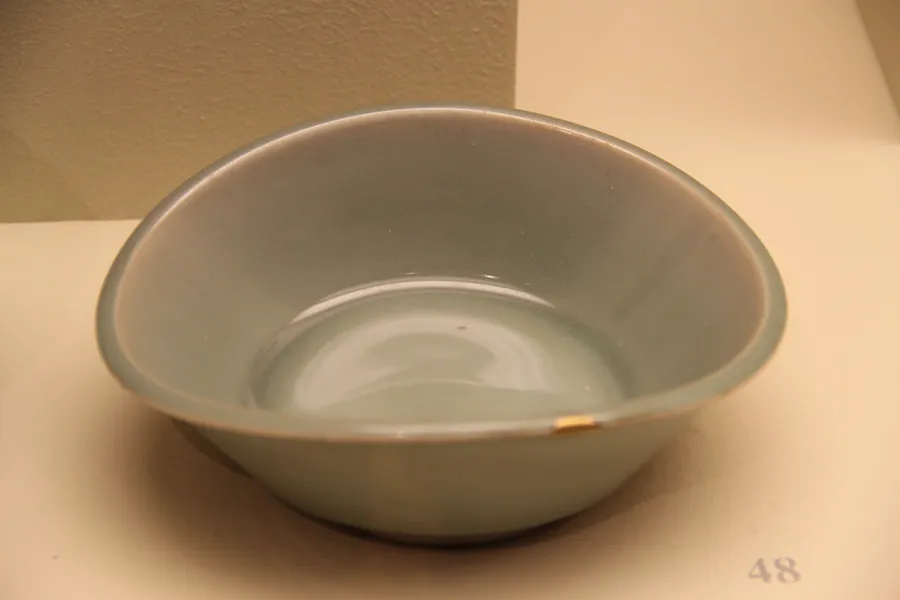
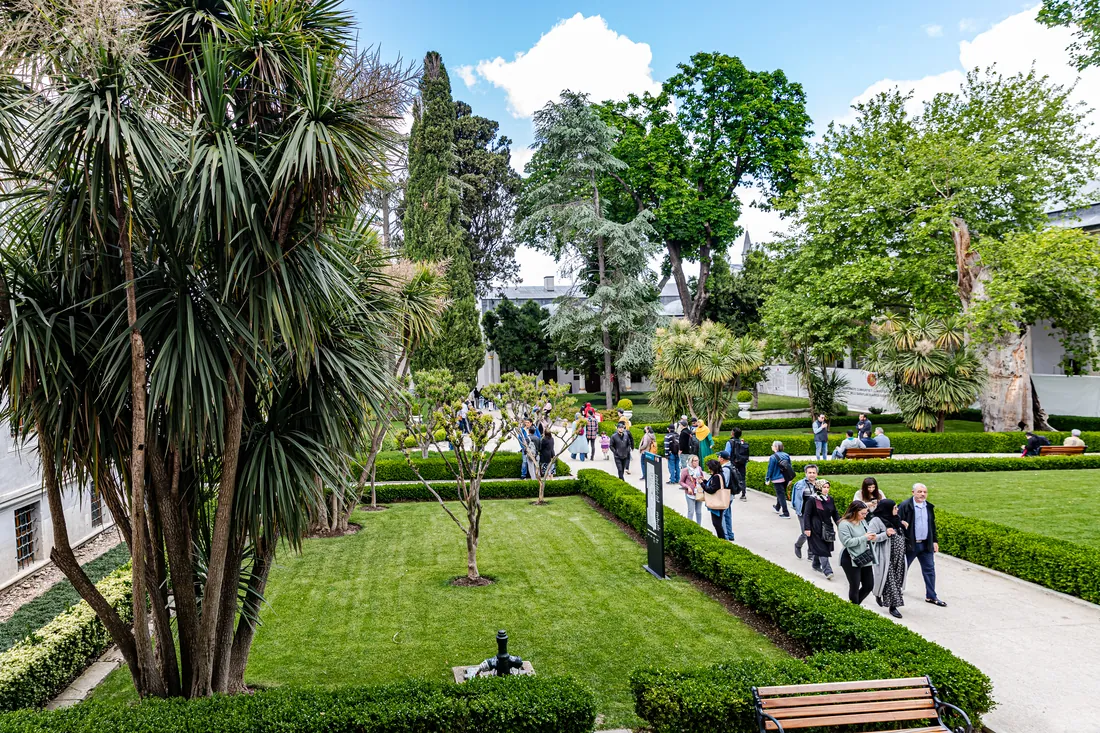
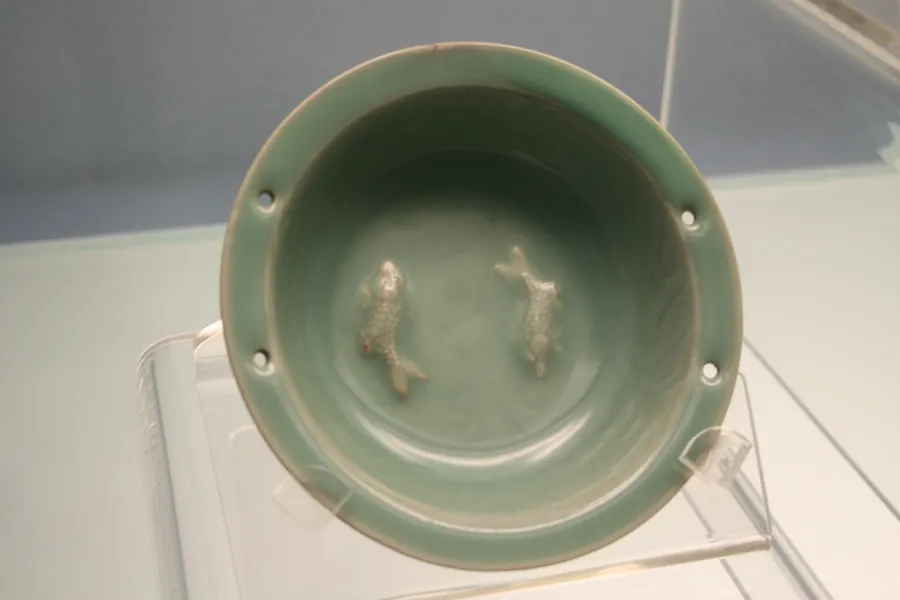
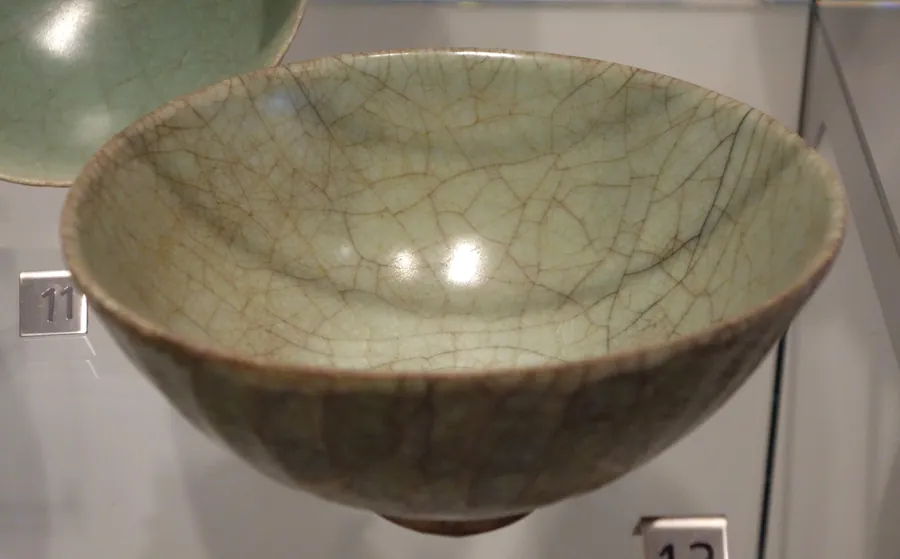
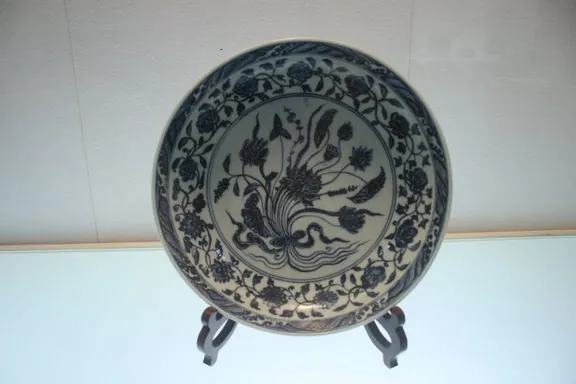
Topkapi keeps one of the richest holdings of Chinese porcelain outside China — “the largest porcelain collection outside of China”, say the guides. Exact counts differ from inventory to inventory; hence ranges only, each with its source.
- ~10–12k
- Chinese pieces (of ~20–22k total)
- 1,350+
- celadons, per the specialist literature
- 3 vols.
- the complete Krahl catalogue, Sotheby's 1986
Sources disagree on the exact count; the ranges above take the minimum and maximum across inventories.
The catalogue that proved it: in 1986 Regina Krahl published the complete inventory with Sotheby's in three volumes — I: Yuan and Ming celadons; II: Yuan and Ming porcelain; III: Qing — some 4,500 Yuan and Ming pieces plus some 5,500 Qing. The historical-studies volumes carry Raby's and the Topkapi specialists' names.
How did it gather? Many pieces arrived via diplomatic exchanges and trade; porcelain was the diplomatic gift of the 15th–16th centuries; it arrived first via the Silk Road and later by sea. War booty — carpets, books, artisans from Tabriz — is documented, but it is a tributary, not the river.




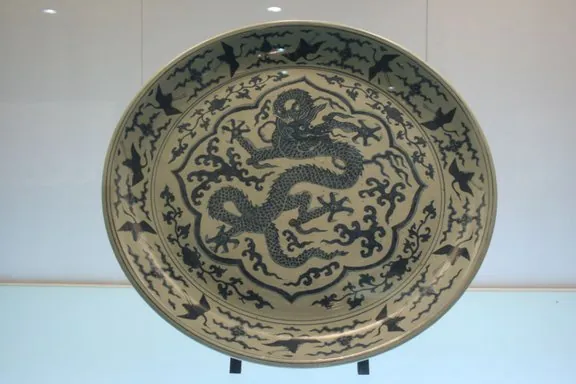

Three Names, One Object
Three civilizations, three logics, one plate. The comparison is the moral of the story.
FARFURIE
the title's logic
From Turk. farfuri (lit. fağfuri): the name of China's emperor become the name of porcelain, narrowed in Romanian to “plate”. The eastern cognates walk the same road: Russian farfor comes likewise via Turkish from Perso-Arabic faɣfur, attested since 1724 in the Naval Statute.
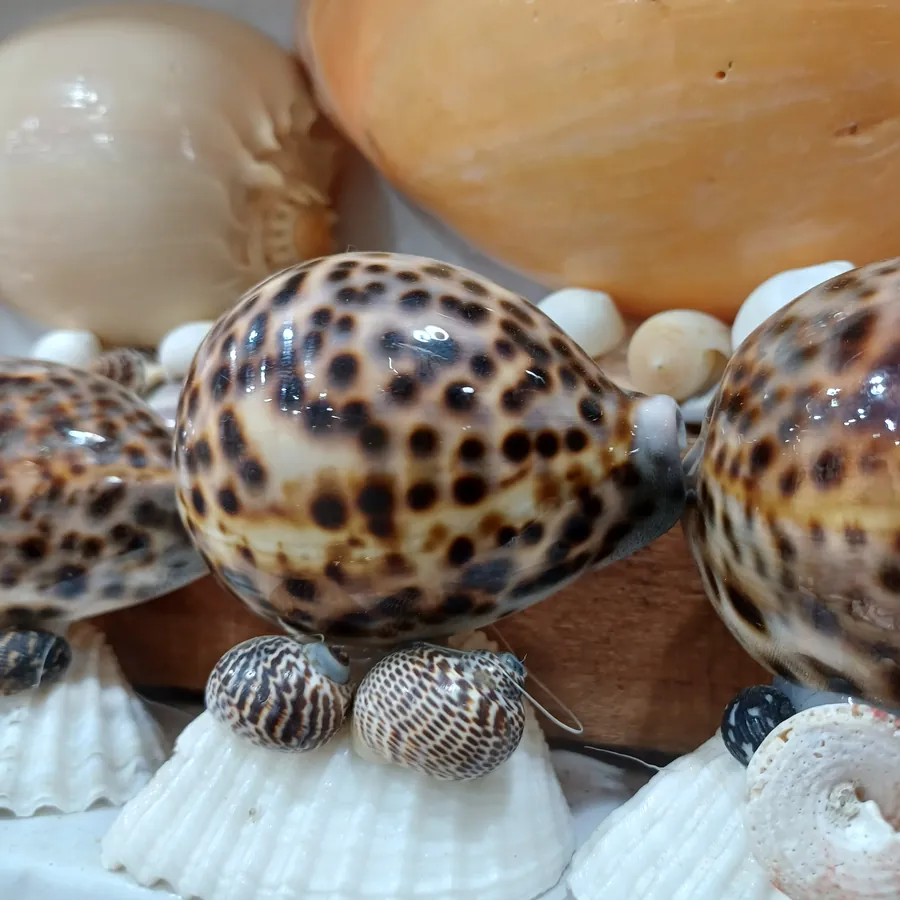
PORCELAIN
the shell's logic
From Fr. porcelaine, from It. porcellana, the “cowrie shell”: the ware has been so called since the 1530s for the resemblance of its lustrous transparency to the shells' shiny surface. The comparison belongs to Marco Polo, who saw porcelain in 13th-century China.
CHINA
the country's logic
Short for China-ware: the vessels were China dishes from the 1570s, China-ware from the 1630s, and plain china from the 1650s — after the country of origin. The laziest of the three names, and the most widespread.

On the Romanian Table
The last stop is in the dictionary. DEX gives the etymology without hedging, and the first known attestation sits in a Moldavian chronicle of the early 18th century.
Din tc. farfuri (lit. fağfuri), ngr. farfuri — 2. (Înv.) Porțelan. [From Turk. farfuri (lit. fağfuri), Mod. Gk. farfuri — 2. (Arch.) Porcelain.]
First known attestation: Ion Neculce's chronicle (LET. II, 198/8, per MDA2). The word was already so domesticated it would fly: farfurie zburătoare, the “flying saucer” — proof that faghfur, the Son of Heaven's title, ended up, literally, flying.
Test yourself: five questions
True or false? Every answer comes with its receipt.
1 / 5
Farfurie comes from French.
False. It comes from Turkish farfuri (lit. fağfuri), with a parallel form in Greek — says DEX. French had nothing to do with it.
2 / 5
Porcelain is named after a shell.
True. Italian porcellana means “cowrie shell”; the ware took its name from the shell's lustre, via Marco Polo's comparison.
3 / 5
Faghfur first meant a man, then a vessel.
True. First China's emperors (Steingass, p. 934), then, by metonymy, porcelain — and Ottoman fağfuri repeated the same crossing.
4 / 5
The whole Topkapi collection is war booty.
False. It was built mostly by trade, tribute and diplomatic gifts across the centuries; booty is one documented trickle, not the story.
5 / 5
China, as a name for porcelain, comes from the country's name.
True. Short for China-ware, attested as such since the 1650s, after China dishes (1570s).
Score: 0 / 5
Sources
Dictionaries first, then history, then the objects. The sources below document every numerical claim and every quotation.
Dictionaries
- Steingass, s.v. faghfur (p. 934)
- dexonline: farfurie
- Vasmer, s.v. фарфор
- Etymonline: porcelain
- Etymonline: china
History
- Britannica: Tian
- UNESCO Silk Roads: Chinese influences in Turkish art
- Teece, Ars Orientalis (chīnī faghfūrī)
- 1911 Britannica: China (Porcelain)
Topkapi and porcelain
- The Topkapi director on the collection (2025)
- Warwick/Stroeber on the celadons
- Porcelain as diplomatic gift
- The Gotheborg review of the Krahl catalogue
Type: Fraunces, Newsreader and Atkinson Hyperlegible, under the SIL Open Font Licence.