Did Marco Polo go to China?His book, set beside the Chinese records
An administrative entry of 1290, preserved in a Chinese encyclopaedia, names three envoys sent by way of southern India to Arghun, the Mongol khan of Persia. The same three names are in Marco Polo's book. The entry does not mention Marco. Below, nine passages of the book stand beside Chinese texts about the same things: paper money, couriers with bells, a bridge, a siege. Most agree, at least in part; one is contradicted.
Marius Comper · 17 September 2026, updated 4 October 2026
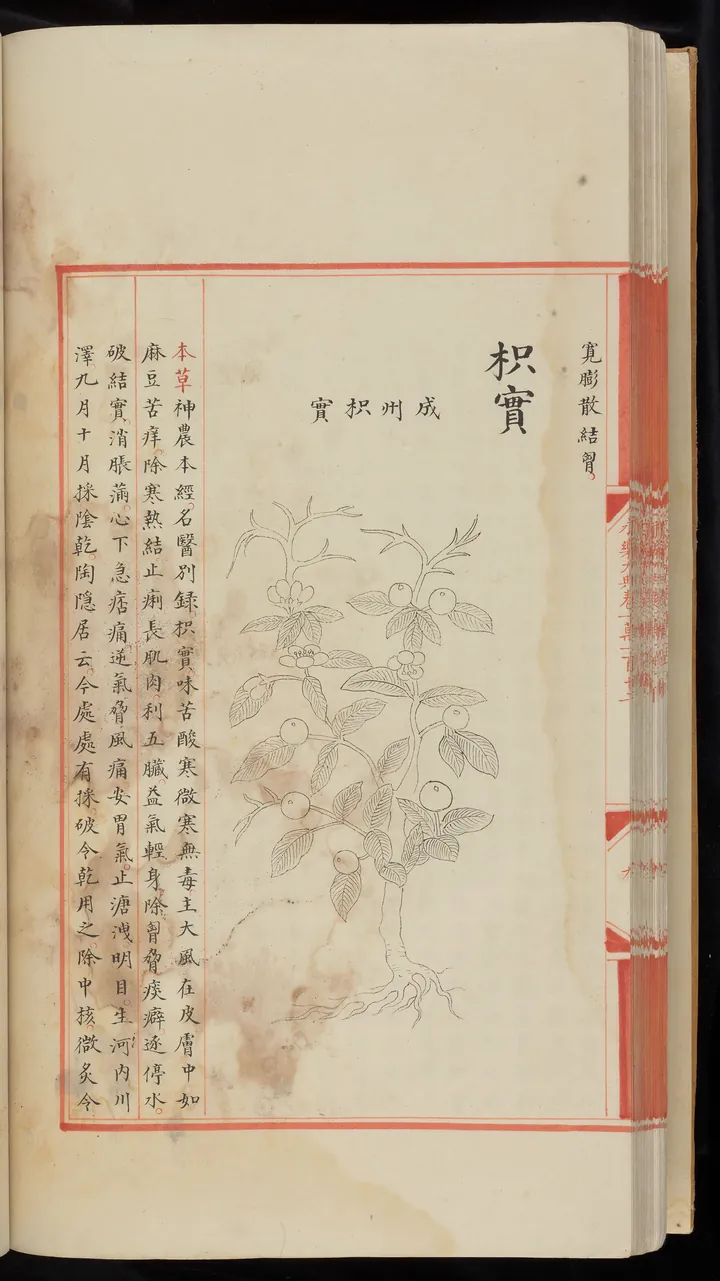
The leaf of the Yongle dadian with the entry of 1290. It reads top to bottom, right to left. Boxed: Wuludai, Abishihe and Huozhe, the three envoys sent to Arghun. Facsimile, public domain · Wikimedia Commons
Three envoys, the same names
In Marco Polo's book the three Venetians leave China by sea, travelling with three envoys of Arghun, the Mongol khan of Persia, and a princess sent to be his wife. The book gives the envoys' names: Oulatay, Apusca and Coja.
In 1941 the young historian Yang Zhijiu came upon the same names in a Yuan-period register of post stations, copied into the Yongle dadian encyclopaedia. The entry records a request about provisions: of the 160 people travelling with the envoys, 90 had drawn their allowances; the remaining 70, said to have been given by officials or bought, were refused allowances and grain rations.
The Persian historian Rashid al-Din names Khwaja among the envoys who brought the princess Kökechin from China but gives no three-name sequence; Ghazan, Arghun's son, married her at Abhar.
Neither text names Marco Polo. The Chinese entry records that the three envoys were sent to Arghun by way of Ma'bar; the Persian one, that the princess reached Persia and was married there.
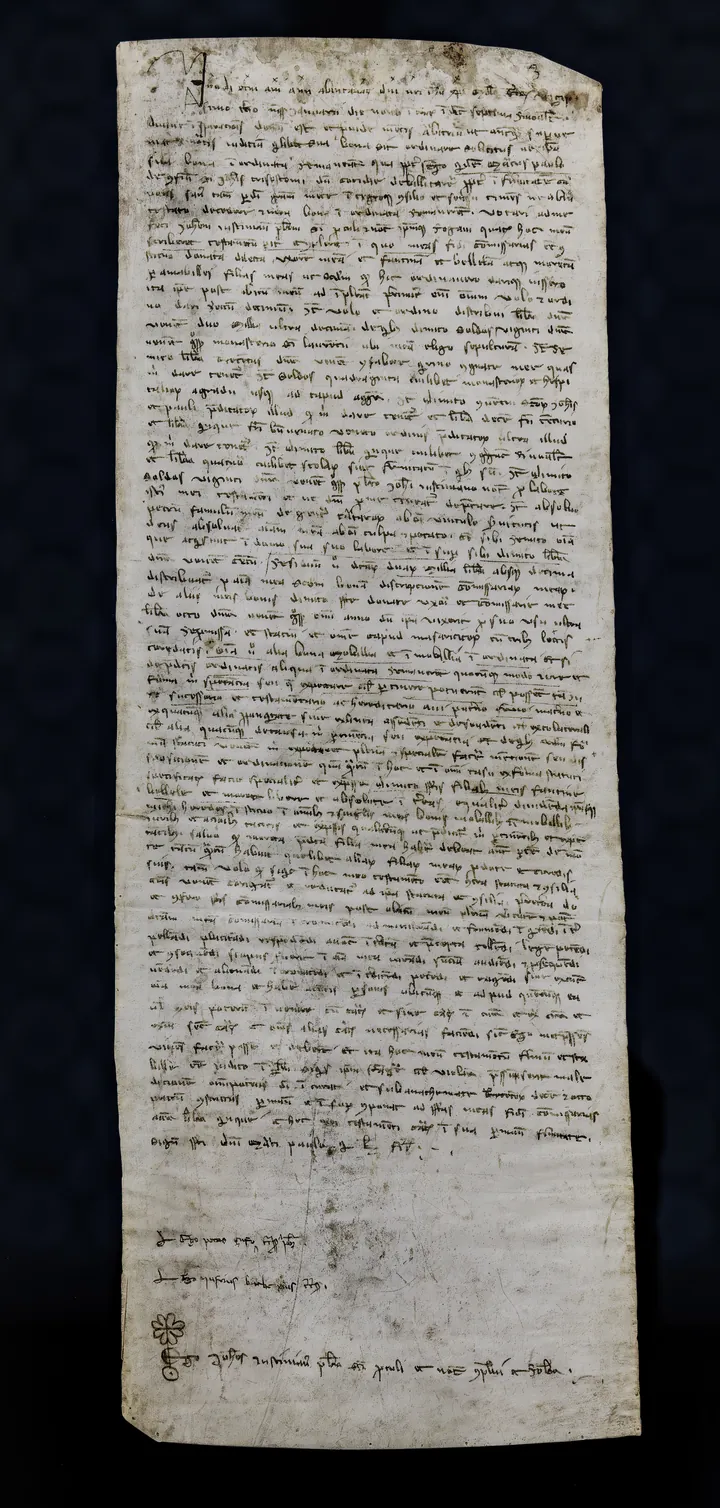
A leaf of the Yongle dadian in the copy made between 1562 and 1567: handwritten text between red rules. The volume with the register of post stations looked the same. Chester Beatty, Dublin (C 1757); public domain · Wikimedia Commons
The whole route1271 – 1295
road described in the bookroute assumed
The road in the book, from Venice to Beijing and home by sea
Marco Polo's book is not a travel diary. A short prologue tells of the journey out and the return, and the rest describes the world region by region, in the order a traveller would meet them. The map follows that order as you read.
A solid line runs through places the book lists along one road, with the days of travel between them. A dashed line marks a stretch the book does not describe, so the route there is a guess. Distances are measured along the line joining those places.
In the chapters on China, the pairs stand under each place: the sentence from the book and the sentence from a Chinese text about the same thing.
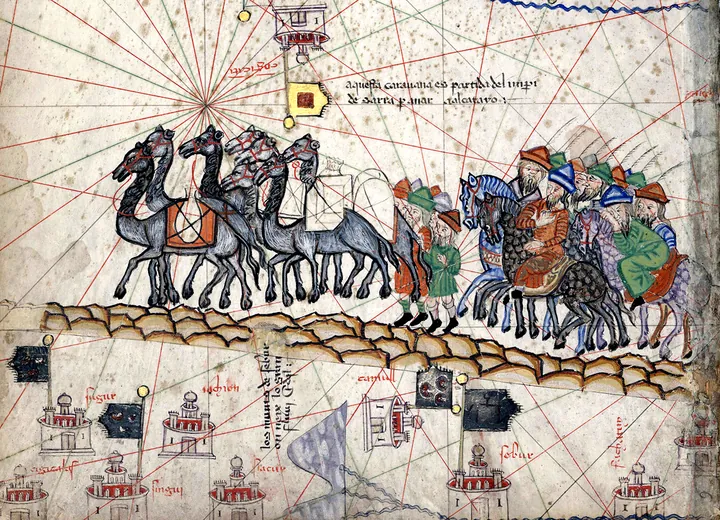
A caravan on the road to Cathay, northern China, in the Catalan Atlas of 1375, drawn half a century after Marco Polo's death. Abraham Cresques (attributed), Catalan Atlas, 1375, Bibliothèque nationale de France; public domain · Wikimedia Commons
Stage I
Venice, Acre, Layas
1271 · carrying the pope's letters to Kublai Khan
In the book
Prologue, ch. IX–XIII
On the map
3,000 kmmeasured through the places named
One detail
oil from the lamp at the Holy Sepulchre, which Kublai had asked for
Marco was 15 when his father, Niccolò, and his uncle, Maffeo, came home to Venice in 1269 after nine years' travelling in Asia. They carried a letter from Kublai, Great Khan of the Mongols, to the pope: the khan asked for a hundred learned Christians and for oil from the lamp that burns at the tomb of Christ in Jerusalem.
The pope had died and the cardinals could not agree on a successor. After two years of waiting the brothers set out again, this time with Marco. They collected the oil in Jerusalem and had reached Layas, the port of Lesser Armenia, when they heard that the new pope, elected on 1 September 1271, was the legate they had spoken to at Acre. They went back to him.
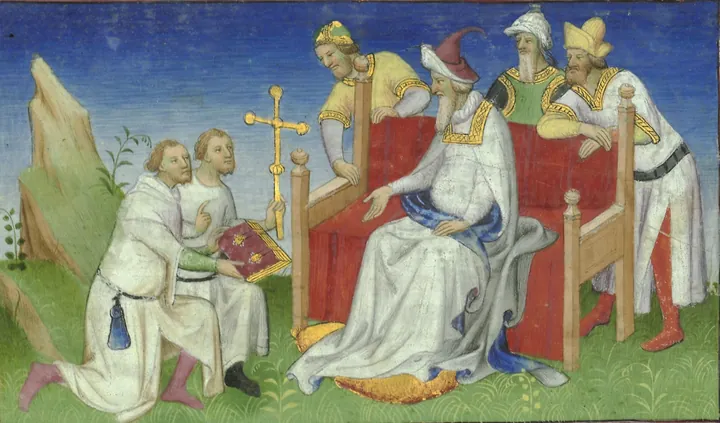
The Polo brothers kneel before Kublai with a book and a cross. Miniature from a French manuscript of the book, the Livre des merveilles, Paris, early 15th century. Bibliothèque nationale de France, MS fr. 2810, f. 5r; public domain · Wikimedia Commons
Gregory X gave them two Dominican friars instead of a hundred scholars. The friars took fright at news that the Mamluk sultan was attacking Armenia and turned back. The three Polos went on alone.
The year of departure is not in the book. Historians work it out from the papal election and from the date the pope left Acre, in November or December 1271.
What the book says
“Finally he charged his Envoys to bring back to him some Oil of the Lamp which burns on the Sepulchre of our Lord at Jerusalem.”
Stage II
Through Persia to Hormuz
1271 – 1275, the road to China · a detour the book does not explain
In the book
Book I, ch. III–XXVII
On the map
4,400 kmmeasured through the places named
One detail
ships stitched with twine, without a single nail
The book does not say which way they crossed Persia. It describes in turn Greater Armenia, where a spring gives oil that is “good to burn”, then Tabriz, Yazd and the kingdom of Kerman, without saying the Polos went to each. The dashed line joins these places in the book's order.
From Kerman the description goes down to Hormuz, the port where merchants from India bring spices, pearls, silk and ivory. The ships there have no iron nails: the planks are stitched with twine made from coconut husk, and at sea “many of them are lost”.
Then the book returns to Kerman “by another road” and heads north-east, through the desert, to Balkh. Henry Yule, the book's English translator, supposed the Polos meant to go on by sea from Hormuz and gave up the idea. The book does not say why.
What the book says
“Their ships are wretched affairs, and many of them get lost; for they have no iron fastenings, and are only stitched together with twine made from the husk of the Indian nut.”
Stage III
Over the Pamirs
1271 – 1275, the road to China · “the highest place in the world”
In the book
Book I, ch. XXIX–XXXIX
On the map
2,100 kmmeasured through the places named
One detail
at altitude, fire does not cook food properly
In Badakhshan the book describes a mountain that yields rubies. Only the king may dig there, and he takes out few stones to keep their price high. The same country has lapis lazuli, “the finest in the world”.
Up the Wakhan valley you reach a plateau of which the book reports: “’tis said to be the highest place in the world”. It is twelve days' ride with no houses and no grass, so cold that no birds fly, where fire does not “cook food so effectually”. For boiling, the observation is correct: at altitude, water boils at a lower temperature.
Wild sheep live on the plateau, with horns six palms long that shepherds make into bowls. Zoologists later named them after Marco Polo; Yule already calls them Ovis poli.
From Kashgar the road runs along the southern edge of the Taklamakan, through Yarkand and Khotan, to the town of Lop. There travellers rest for a week and load up a month's supplies.
What the book says
“Because of this great cold, fire does not burn so brightly, nor give out so much heat as usual, nor does it cook food so effectually.”
Stage IV
The Lop desert and Kublai's court
1271 – 1275, the road to China · three and a half years from Acre to the khan
In the book
Prologue, ch. XIII–XIV; Book I, ch. XXXIX–LXI
On the map
2,600 kmmeasured through the places named
One detail
the khan sent men 40 days' journey to meet them
The desert beyond Lop takes a month to cross. Water is found at 28 places, about a day's ride apart. The book says that anyone who falls behind the caravan at night hears spirits calling his name and leading him astray, and that sometimes, even by day, drums can be heard.
In the city of Campichu, now Zhangye, Maffeo and Marco “dwelt a whole year” on a mission. The book does not say when.
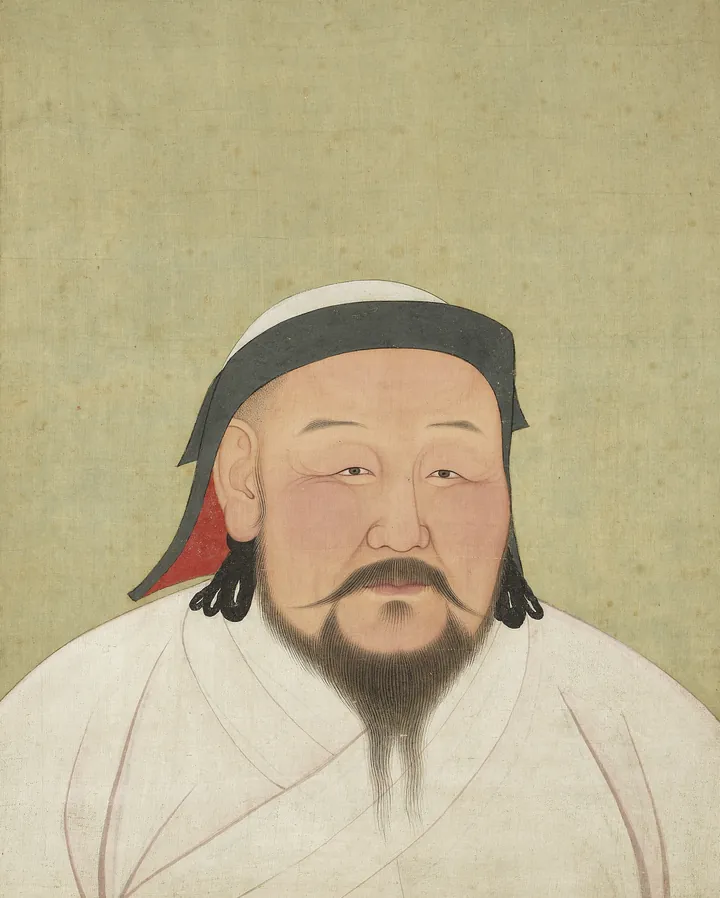
Kublai in the album of portraits of the Yuan emperors, painted around 1294, after his death. National Palace Museum, Taipei. Public domain · Wikimedia Commons
The journey from Acre to the khan took “a good three years and a half”, because of bad weather and severe cold. Kublai was at his summer residence, Shangdu. Hearing they were coming, he sent people 40 days' journey to meet them. At court the khan noticed young Marco and asked who he was. “Sire, ’tis my son and your liegeman,” Niccolò answered.
If the three and a half years are right, Yule reckoned, they arrived around May 1275. That year is not in the book either.
What the book says
“Sometimes the spirits will call him by name; and thus shall a traveller ofttimes be led astray so that he never finds his party.”
Stage V
Cambaluc: paper money and burning stones
1275 – 1291, in Kublai's China · Kublai's capital, now Beijing
In the book
Book II, ch. XXIV–XXX
On the map
200 kmmeasured through the places named
One detail
a post station with horses every 25 or 30 miles on every main road
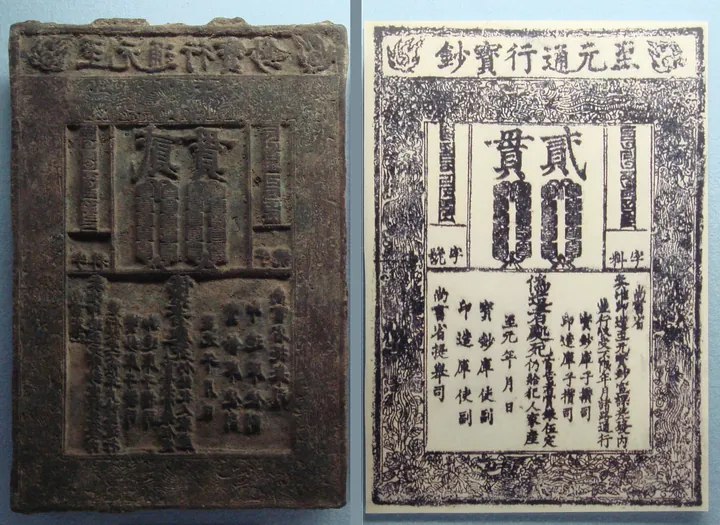
Here the book describes three things Polo presents as marvels. The first is money. At the mint in Cambaluc they take the inner bark of the mulberry tree, make it into “something resembling sheets of paper, but black”, and cut it into pieces of different sizes by value. Nobody may refuse it, and anyone with a worn note can exchange it for a new one by paying three per cent. The Franco-Italian text of the book says the notes bear the Great Lord's seal, describes an official smearing the seal with cinnabar and impressing it on the paper, and threatens forgers with death.
The second is the “black stones” dug from the mountains, which burn like wood and stay alight until morning. Nothing else is burnt throughout Cathay, Polo writes, although there is wood: the stones burn better and cost less. It was coal.
A 2-guan banknote issued under Kublai, from the series introduced in 1287, with the plate used to print it. The text at the bottom threatens forgers with death, as in the book. Currency Museum, Tokyo. Photo: PHGCOM, CC BY-SA 3.0 · Wikimedia Commons
The third is the post. On the main roads there is a station with horses every 25 or 30 miles, and between them, every three miles, runners wearing belts hung with bells so they can be heard from far off. That is how news from a hundred days' journey away reaches the khan in ten days and nights.
The prologue says Marco learned “several languages, and four sundry written characters”. Yule believed Chinese was not one of them.
Ramusio also adds a whole chapter on the murder of the minister Ahmad in 1282. Ramusio's text says Marco was on the spot.
What the book says
“It is a fact that all over the country of Cathay there is a kind of black stones existing in beds in the mountains, which they dig out and burn like firewood.”
The book and the Chinese texts
A worn note is exchanged for a fee of three per cent
Agrees in part
The book
“The owner carries them to the Mint, and by paying three per cent. on the value he gets new pieces in exchange.”
Translation: “For worn and damaged notes, in Zhiyuan 2 officials were appointed to exchange them for new notes at the note treasury, deducting 30 wen for labour and ink. In the third year the deduction fell to 20 wen, and in the 22nd year it returned to 30 wen.”
Yuanshi (the History of the Yuan, compiled in 1370), ch. 93, “The rules for paper money”. The years are 1265, 1266 and 1285. Ch. 13 says under 1285 that the charge rose “from two to three fen per guan”, that is from 2% to 3%.
What it shows
Worn notes were exchanged for a fee, and from 1285 the fee was three per cent, the figure in the book. By the book's account Polo was in China in those years.
What it does not show
The Chinese text names a treasury, not the mint. The Yuanshi records 30 wen in 1265, 20 wen in 1266 and 30 wen again in 1285; a document of 1351 cites a 1282 deduction of three fen per accounting liang. A written rule does not say how it was applied in each city.
The foot couriers wear bells on their belts
Agrees in part
The book
“Every one of those runners wears a great wide belt, set all over with bells, so that as they run the three miles from post to post their bells are heard jingling a long way off.”
Translation: “All post runners wear a leather belt at the waist with bells hanging from it, hold a spear, carry a rain cape and bear the documents. At night they hold torches. Where the road is narrow, people with carts, horses or loads hear the bells and move aside, and at night the sound frightens off tigers and wolves.”
Yuanshi, ch. 101, “Soldiers of the express relay posts”. The same chapter says a post was set up “every ten, fifteen or twenty-five li” and that the relay had to cover 400 li in a day and a night.
What it shows
Both texts put bells on the runners' belts; the Yuanshi says they cleared traffic and frightened tigers and wolves, while the book says they could be heard from far off.
What it does not show
The distances cannot be compared exactly: the book says three miles, the Chinese text gives three different intervals. One accurate detail does not by itself prove that Polo saw the runners himself.
The murder of the minister Ahmad
Only in a late version
The book
“There was a certain Cathayan named Chenchu, a commander of a thousand, whose mother, daughter, and wife had all been dishonoured by Achmath.”
Book II, ch. XXIII, in Ramusio's version only
The Chinese text
有益都千户王著者,素志疾恶,因人心愤怨,密铸大铜锤,自誓愿击阿合马首。
Translation: “There was a commander of a thousand from Yidu, Wang Zhu, a man who had always hated evil. Taking advantage of the general resentment, he secretly cast a great bronze hammer and swore that he would strike Ahmad on the head with it.”
Yuanshi, ch. 205, the biography of Ahmad, under the third month of Zhiyuan 19 (1282). Ch. 12 records the same killing in brief.
What it shows
Both texts tell of the murder of Ahmad in 1282, carried out while Kublai was away from the capital. The Chinese history names as the leader Wang Zhu, a commander of a thousand from Yidu.
What it does not show
The passage is missing from the early manuscripts and first appears in the edition printed in 1559. In the book the plot starts with Chenchu, a commander of a thousand, who brings in Vanchu, a commander of ten thousand. Yule took Vanchu for Wang Zhu, but the rank the Chinese history gives Wang Zhu is the one the book gives Chenchu. The monk Gao is not in the book.
Stage VI
South-west, as far as Yunnan
1275 – 1291, in Kublai's China · a mission four months' journey away
In the book
Book II, ch. XXXV–XLIX
On the map
2,500 kmmeasured through the places named
One detail
cakes of salt used as small change
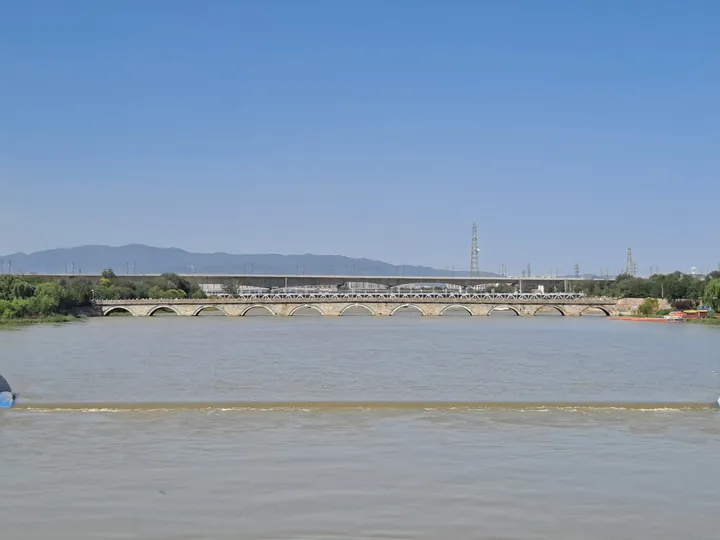
The khan sent Marco on a mission to the western provinces, “a good four months’ journey” from the capital. Ten miles out of Cambaluc the book describes a marble bridge with 24 arches and columns carved with lions. The bridge exists, is now called the Marco Polo Bridge, and has 11 openings.
Further on, in the province of Caindu, people have no coins. Gold is weighed, and for small change they use salt boiled and set in moulds of about half a pound: 80 pieces are worth one saggio of gold. In the province of Carajan, at Yachi, now Kunming, they pay with white shells from the sea: 80 shells pass for a single weight of silver in Yule's translation and for one liang of silver in Feng Chengjun's; both give its value as two Venetian groats.
The Lugou bridge, south-west of Beijing, in 2025. It has 11 openings. Photo: H2v5o68z, CC0 · Wikimedia Commons
Details like these look minor, but they have weighed heavily in the argument about his journey. In 2013 the sinologist Hans Ulrich Vogel compared what Polo says about money in Yunnan with the Chinese sources: cowries brought from India, salt used as currency, salt drawn from wells. He found them correct.
What the book says
“They use for the purpose certain white porcelain shells that are found in the sea, such as are sometimes put on dogs’ collars; and 80 of these porcelain shells pass for a single weight of silver.”
The book and the Chinese texts
The bridge with lions over the Lugou
Differs
The book
“It has 24 arches and as many water-mills, and ’tis all of very fine marble, well built and firmly founded.”
Book II, ch. XXXV
The Chinese text
上有狮子阑楯。
Translation: “On it are balustrades with lions.”
Xiong Mengxiang, Xijin zhi, a Yuan-period description of the capital, lost and reassembled from quotations. The Jinshi (History of the Jin), ch. 27, says a stone bridge was ordered in 1188, ordered again in 1189 after the emperor's death, finished in the third month of 1192 and named Guangli.
What it shows
The stone bridge had stood for more than eighty years when Polo would have crossed it, and the lions on its balustrades are in the Chinese description of the period too.
What it does not show
The number of arches does not agree: the bridge, repaired in 1444 and in 1698, has 11 openings today, and the manuscripts of the book give 24, 34 or 23. The Chinese description does not count them; a verse quoted in it speaks of “twelve flying rainbows”.
In Yunnan people pay in cowries
Agrees
The book
“They use for the purpose certain white porcelain shells that are found in the sea … and 80 of these porcelain shells pass for a single weight of silver.”
Book II, ch. XLVIII
The Chinese text
定云南税赋用金为则,以贝子折纳,每金一钱直贝子二十索。
Translation: “It was settled that taxes in Yunnan are reckoned in gold and paid in cowries: one qian of gold is worth twenty strings of cowries.”
Yuanshi, ch. 12, under the ninth month of Zhiyuan 19 (1282). Li Jing, an official in Yunnan around 1300, writes in his Yunnan zhilüe that markets trade in cowries and that a string (suo) holds 80; in one transcription of the text the character for “cowrie” is an editors' correction.
What it shows
The state itself took Yunnan's taxes in cowries in the years when Polo says he was there. One string holds exactly the book's 80 shells; Paul Pelliot showed that the string is what Polo means.
What it does not show
The book's rate against silver cannot be checked from these two texts. Nor do they say whether paper money circulated in Yunnan.
Stage VII
Manzi: Yangzhou, Hangzhou, Zayton
1275 – 1291, in Kublai's China · the former Song empire, conquered by Kublai
In the book
Book II, ch. LX–LXXXII
On the map
1,900 kmmeasured through the places named
One detail
“twelve thousand bridges of stone” in Hangzhou
On the road south, at Changlu, the book explains how salt is made: salty earth is soaked with water, and the water is boiled in iron cauldrons until it leaves a fine white salt. Vogel found the same method in Chinese documents of the Yuan period.
Of the city of Yangzhou the book says Marco “did govern this city for three full years”. Other manuscripts say only that he “sojourned” there three years, and a few do not mention him in this chapter at all. Paul Pelliot reports that the Yangzhou gazetteer's lists of officials contain no name or nationality that suggests Marco Polo, and allows that he may have held a post in the salt administration.
At Zhenjiang, on the Yangtze, the book mentions two Nestorian churches and the man who built them. At Xiangyang, far to the west, it credits the three Polos with the siege engines that forced the city to surrender.
Hangzhou, which Polo calls Kinsay, “The City of Heaven”, gets one of the longest descriptions in the book: a lake lined with palaces, stone towers where valuables are kept safe from fire, 12,000 bridges. The name comes, according to Pelliot, from xingzai, the “temporary residence” of the Song emperors. The book credits the biggest numbers to a document the Song queen sent to the general Bayan; Marco says he later saw for himself that what it said was true.
What the book says
“And there are in it twelve thousand bridges of stone, for the most part so lofty that a great fleet could pass beneath them.”
The book and the Chinese texts
The Christian official at Zhenjiang
Agrees in part
The book
“The Great Kaan sent a Baron of his whose name was Mar Sarghis, a Nestorian Christian, to be governor of this city for three years.”
Book II, ch. LXXIII
The Chinese text
大兴国寺在夹道巷。至元十八年,本路副达鲁花赤薛里吉思建。
Translation: “The Daxingguo monastery is in Jiadao Lane. It was built in Zhiyuan 18 by Xuelijisi, deputy darughachi (the overseer appointed by the court) of this circuit.”
Zhishun Zhenjiang zhi, the gazetteer of Zhenjiang compiled around 1332, ch. 9. The same gazetteer preserves Liang Xiang's inscription, which calls him Ma Xuelijisi, describes him as a Christian (yelikewen) and credits him with seven foundations. Zhiyuan 18 is 1281. The link with Polo was made by the Russian archimandrite Palladius in the 1870s.
What it shows
A man of the same name, a Christian, held high office at Zhenjiang in the years the book gives and built churches there. In A. C. Moule and Lionel Giles's translation, the list of officials in the same gazetteer has him arrive at Zhenjiang in February 1278, the book's year, as darughachi, and serve as deputy darughachi from August.
What it does not show
The details differ. The gazetteer dates the Daxingguo monastery to 1281. Liang Xiang's inscription dates his appointment to 1277, records five years in office and names seven foundations, six in the Zhenjiang area and one at Hangzhou; the book gives two churches, built in 1278, and three years as governor.
Who built the siege engines at Xiangyang
Contradicted
The book
“We have with us among our followers men who are able to construct mangonels which shall cast such great stones that the garrison will never be able to stand them.”
Translation: “In the tenth year he went with the imperial army against Xiangyang, which did not fall. Yisimayin studied the lie of the land and set an engine at the south-east corner of the city. [The shot] weighed 150 jin. When the mechanism was released the noise shook heaven and earth; whatever it struck was smashed, and [the shot] went seven chi into the ground. Lü Wenhuan, the Song pacification commissioner, took fright and surrendered the city.”
Yuanshi, ch. 203, the biographies of the engineers Alaowading (Ala al-Din) and Yisimayin (Ismail), Muslims from the Western Regions, sent in 1271 by a prince whom Kublai had asked for engine-makers. The tenth year of Zhiyuan is 1273.
What it shows
The Chinese history names the two engineers, says where they came from and dates the siege. The city surrendered in 1273; by Yule's reckoning the Polos reached the court in 1275.
What it does not show
Who put the credit for the engines on the Polos cannot be known. Igor de Rachewiltz suspects an addition by Rustichello, who wrote the book down from Marco's account, or by a later editor, because the claim is absent from one group of manuscripts.
The fire watch of Hangzhou
Agrees in part
The book
“Whenever fire or any other alarm breaks out in the city a man who stands there with a mallet in his hand beats upon the slab.”
Translation: “At the ward boundaries official fire-defence posts were set up and garrisoned with soldiers, and watchtowers were raised in numbers, where soldiers detailed in rotation keep a lookout morning and evening. Where there is smoke or flame they point a flag in its direction as the signal; at night a lantern replaces the flag.”
Wu Zimu, Mengliang lu, ch. 10, “Fire precautions and patrols”. Wu Zimu's memoir describes the Song capital, Lin'an, as it was before the conquest of 1276; its preface bears a cyclical date, read as 1274 or 1334.
What it shows
A city of timber, its houses built wall to wall, kept men in towers to raise the alarm for fire. The book and the local record describe the same concern.
What it does not show
The signal differs: the book has a wooden slab struck with a mallet, the record has flags and lanterns. The record describes the city before the conquest; Polo would have seen it after.
Stage VIII
Home by sea
c. 1291 – 1295 · escorting a bride for the khan of Persia
In the book
Prologue, ch. XVII–XVIII; Book III
On the map
15,400 kmmeasured through the places named
One detail
of some 600 people who embarked, Yule's text says eight survived
Kublai did not want to let them go. The chance came when Arghun, the Mongol khan of Persia, asked for a bride from his dead wife's family. Kublai chose Kökechin, a girl of 17, and Arghun's three envoys, Oulatay, Apusca and Coja, asked for the Venetians to come with them by sea.
Kublai had thirteen ships fitted out, each with four masts. Yule inferred that the fleet sailed from Zayton, now Quanzhou; the Prologue does not name a departure port. After three months they reached Sumatra, where contrary winds held Marco for five months. There he describes “unicorns” that wallow in the mud, “not in the least like” those of European stories: they were rhinoceroses.
They sailed another 18 months across the Indian Ocean. In Yule's text the book says that of some 600 people who embarked, not counting the sailors, eight survived; the Moule–Pelliot edition, built from many manuscripts, gives eighteen. Ramusio's version and one other add that of the three envoys only Coja lived. The Chinese and Persian accounts give no passenger or survivor totals.
Arghun had died in the meantime. Kökechin was given to his son Ghazan. The Polos set off for Trebizond, then by sea through Constantinople and Negropont, and reached Venice in 1295.
What the book says
“’Tis a passing ugly beast to look upon, and is not in the least like that which our stories tell of as being caught in the lap of a virgin.”
The book and the Chinese texts
Three envoys for Arghun
Agrees
The book
“Argon therefore despatched three of his Barons, by name respectively Oulatay, Apusca, and Coja, as ambassadors to the Great Kaan.”
Translation: “On the 17th day the minister Ananda, the administrative officer (dushi) Bie Buhua and others reported that Shabuding, chief councillor of the province, states: ‘In the third month of this year, by imperial order, Wuludai, Abishihe and Huozhe were sent by way of Ma'bar to the household of Prince Arghun. 160 people travel with them. Ninety have drawn their regulation allowances. The other 70 are said to be people given by officials or bought; I ask that they be issued no allowances or grain rations.’ The imperial order: do not give them any.”
Jingshi dadian, the chapter on post stations (Zhanchi), copied into the Yongle dadian encyclopaedia, chapter (juan) 19418. The entry is dated the 17th day of the eighth month of Zhiyuan 27, which is 21 September 1290. Yang Zhijiu set it beside Polo's book in 1941.
What it shows
The same three names in the same order, bound for the same prince. The register sends the three envoys to Arghun by way of Ma'bar; Polo's account says their returning party travelled by sea. Ma'bar is the south-east coast of India, which the book's route also passes.
What it does not show
The entry names neither the Polos nor the princess. That the Venetians sailed with this embassy is stated only by the book.
What the comparison shows
The nine pairs above are different kinds of evidence and cannot be added up: a detail about couriers, a list of names, a siege wrongly told.
The embassy weighs most: three names in the same order, in a Chinese entry that nobody set beside the book until 1941, with a third witness, a Persian one, for the princess's arrival.
The fee on worn notes, the couriers' bells, the cowries of Yunnan and the Christian official at Zhenjiang show that exact knowledge of Kublai's China went into the book. Any one of them could have been learned from others.
Xiangyang shows the other side: even if Marco Polo was in China, not everything in the book is true.
The objectionHis name appears in no Chinese source.
The answerNor do the names of other Europeans in Mongol China: Giovanni da Montecorvino, the first Catholic archbishop of Beijing, Odoric of Pordenone or Giovanni de' Marignolli. Yang's broader point was that the absence of western missionaries, envoys and merchants from Chinese records does not prove they never came.
The objectionHe uses Persian and Turkic names, not Chinese ones.
The answerCambaluc comes from Turkic Han-balïq, “the khan's city”, and Pulisanghin, the book's name for the Lugou bridge, is Persian. They are the names used by foreigners in Mongol service. Paul Pelliot thought Persian was the only eastern language Polo ever really mastered.
The objectionHe says he governed Yangzhou.
The answerSome manuscripts say only that he “sojourned” there for three years, and others do not mention him in this chapter at all. Pelliot reports that the Yangzhou gazetteer's lists of officials contain no name or nationality that suggests Polo, and allows that Polo may have held a post in the salt administration. The historian Peng Hai has proposed, as a hypothesis, a post in fiscal auditing. What post he held at Yangzhou, if any, cannot be established.
The objectionHe does not mention the Great Wall, tea or Chinese writing.
The answerTrue, and the explanations offered are below. Yule, who drew up such a list, concluded that in China Polo lived mostly among foreigners.
Two further arguments
Money, salt and revenue
In Marco Polo Was in China (2013), Hans Ulrich Vogel compared eight versions of the book with eight other medieval authors from outside China on 23 features of paper money: how it was made, its denominations, where it circulated, how it was exchanged. By Vogel's count Polo gives the fullest description of all. He also shows that salt at Changlu was made by boiling brine, as the book says, and that the revenues Polo reports fit Yuan taxation.
The golden tablets
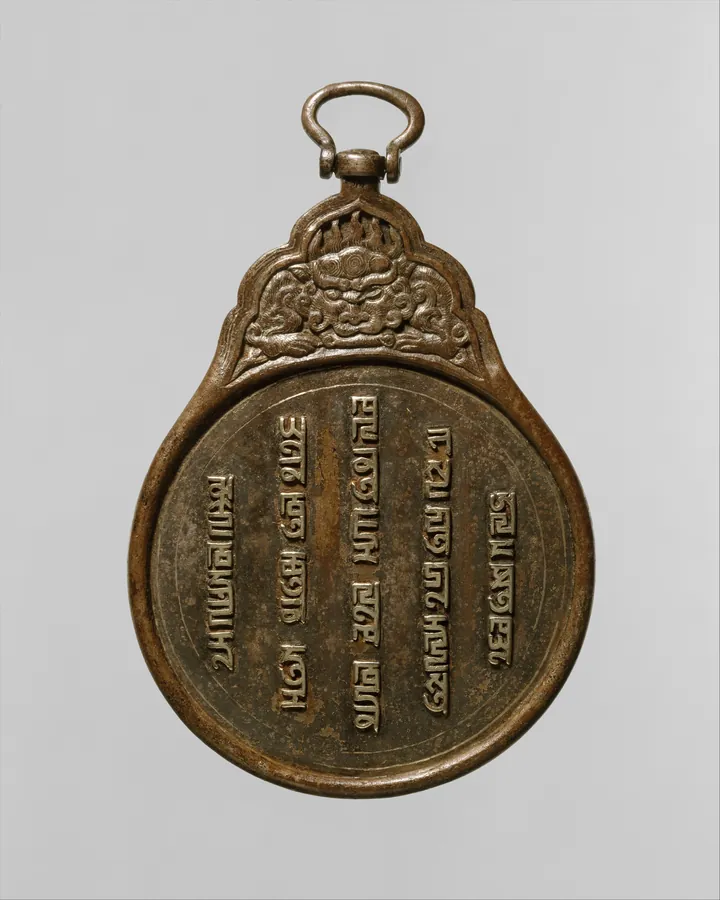
The book says Kublai gave the Venetians golden tablets that entitled them to horses and escorts on the road. Maffeo Polo's will of 1310 mentions “three tablets of gold” from the Great Khan, and the inventory of Marco's goods made after his death lists “a large gold tablet of command”.
A Yuan safe-conduct pass, iron with silver inlay in ’Phags-pa script, late 13th century. The tablets in Maffeo's will were of gold and have not survived. Metropolitan Museum of Art, New York (1993.256); CC0 · Wikimedia Commons
Igor de Rachewiltz, Yang Zhijiu and Hans Ulrich Vogel, who worked on the sources of Mongol China, reach the same conclusion: Marco Polo was in China. De Rachewiltz calls the Xiangyang claim false and the Yangzhou governorship an exaggeration; Vogel argues that Polo's revenue figures fit Yuan fiscal conditions. Frances Wood said in 2017 that she had not changed her view.
What the book leaves out
A list of the Chinese things Polo never mentions is in Henry Yule, his translator and greatest defender in the 19th century: the Great Wall, tea, women's bound feet, fishing with cormorants, the printing of books and Chinese writing.
In 1995 Frances Wood, head of the Chinese section at the British Library, used the same absences in her book Did Marco Polo Go to China? and argued that Polo “probably never travelled much further than the family's trading posts on the Black Sea and in Constantinople”.
In 1988, in an article in Shilin, Wang Yumin questioned how far the record of the three envoys proves that Polo was in China.
The Great Wall
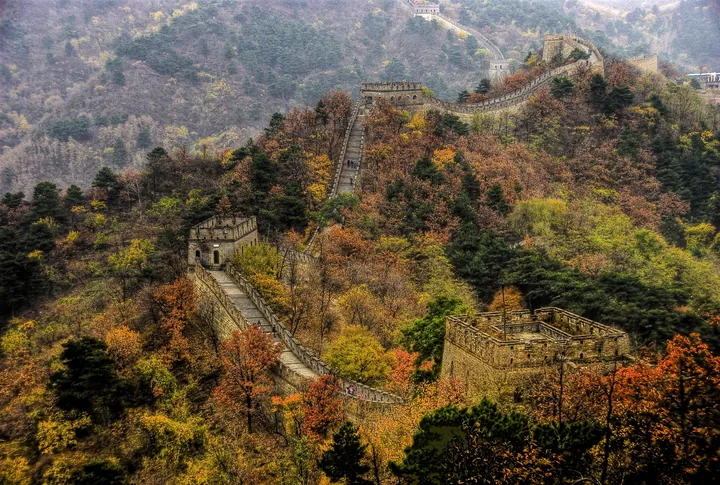
The stone and brick sections near Beijing that tourists visit today, at Badaling and Mutianyu, are mostly of the Ming period, after Polo; at Mutianyu the Ming wall stands on the line of an older one. The historians Huang Shijian and Gong Yingyan argued in 1998 that by the Yuan period the Qin and Han walls were for the most part abandoned ruins. How much the book's silence weighs depends on where Polo passed and what was still standing there.
Tea
In Kublai's China tea was a taxed commodity: the dynasty's official history has a section on the tea levy. The book, attentive to salt and revenue, says nothing about it. Yang Zhijiu suggested that Polo may have kept the habits of his own country, not drunk tea and lived mostly among Mongols and people from the west. Neither Odoric of Pordenone nor Ibn Battuta mentions tea either.
Bound feet
The book does not mention them. Odoric of Pordenone, a Franciscan friar in China in the 1320s, describes them; Ibn Battuta does not.
Chopsticks
Polo, Odoric and Ibn Battuta all fail to mention them.
Writing and printed books
Polo does not describe Chinese characters or the printing of books. Yang Zhijiu thought he could not read Chinese; Stephen Haw thinks he spoke it, if imperfectly. The Franco-Italian text says the notes bear the Great Lord's mark and seal, and Igor de Rachewiltz points out that the seal was a printing block.
Fishing with cormorants
Odoric describes it, Ibn Battuta does not. Yule puts it on the same list of things that could have struck a Venetian.
The Great Wall at Mutianyu, near Beijing, a section of the Ming period. Photo: Francisco Diez, CC BY 2.0 · Wikimedia Commons
In the book or not?
Ten things a stranger could have met on the way to Kublai's China and back. Guess which are in Polo's book.
1
Paper money
The answer
In the book: made from the inner bark of the mulberry, compulsory to accept, with a 3% charge to exchange worn notes. Book II, ch. XXIV.
2
The Great Wall
The answer
Not in it. The sections near Beijing that visitors climb today, at Badaling and Mutianyu, are mostly of the Ming period, after Polo.
3
Black stones that burn better than wood
The answer
In the book: coal, the only fuel burnt in Cathay, Polo writes. Book II, ch. XXX.
4
Tea
The answer
Not in it, although the book describes Fujian, a tea-growing province. Cordier calls it a strange absence.
5
A unicorn that wallows in the mud
The answer
In the book, in Sumatra: “not in the least like” the unicorn of European stories. It was the rhinoceros. Book III, ch. IX.
6
Chopsticks
The answer
Not in it. Neither Odoric of Pordenone nor Ibn Battuta mentions them either.
7
A marble bridge with 24 arches and carved lions
The answer
In the book, near Beijing. The bridge exists and has 11 openings today; the manuscripts of the book give 24, 34 or 23. Book II, ch. XXXV.
8
Women's bound feet
The answer
Not in it. Odoric of Pordenone mentions them a few decades later.
9
Ships divided into watertight compartments
The answer
In the book, but only in Ramusio's Italian version, printed in 1559. The old manuscripts lack the passage. Book III, ch. I.
10
Salt set in moulds and used as money
The answer
In the book, in the province of Caindu: 80 cakes of salt are worth one saggio of gold. Book II, ch. XLVII.
Your score appears here after your first answer.
A book dictated in prison
In 1298 Marco was a prisoner in Genoa, in the war between Genoa and Venice. In prison he met a writer of chivalric romances, Rustichello of Pisa, who wrote down his story in French. Exactly which battle he was captured in is not known.
The book spread in handwritten copies and translations, many with additions or cuts. Yule counted some eighty manuscripts and built his translation from several versions, putting in square brackets the passages found only in the Italian version of Giovanni Battista Ramusio, prepared for printing in Venice in the 1550s.
Only Ramusio has, for example, Marco's year-long illness in Badakhshan, the watertight compartments of Chinese ships and the army suffocated by the hot wind near Hormuz. They may be true memories of Marco's kept in Venice, or copyists' additions.
Marco Polo dictated his will on 9 January 1324, ill, naming his wife, Donata, and their three daughters as his executors. Documents from June 1325 show that he had died some time before.
Marco Polo's will of January 1324, held at the Biblioteca Nazionale Marciana in Venice. Photo: Didier Descouens; the document is in the public domain · Wikimedia Commons
How far he went
Kilometres are measured on the map along the line joining the places the book names. The missions inside China are measured one way only.
The chapters rest on Henry Yule's English translation, in the third edition revised by Henri Cordier (1903), which is in the public domain. The quotations are in Yule's wording. The quiz answers rest on the full text of the book, without the editors' notes.
The route is drawn through the places the book lists along one road, on a Natural Earth map. Old names are identified from Yule's notes. Intermediate points at sea or in passes keep the line on water or along a valley and say nothing about where the Venetians passed. Distances are measured over the Earth's surface and rounded down to the nearest hundred kilometres.
The Chinese texts are quoted in simplified characters with modern punctuation. The Yuanshi, Jinshi and Mengliang lu were read in the Wikisource transcriptions; the entry of 1290 on the facsimile of the leaf; the Zhenjiang gazetteer and the Xijin zhi in online transcriptions of modern editions. The English translations of these texts were made for this page.