Nicolae Milescu in Beijing, 1676
A Moldavian carried a dead tsar’s letter to Beijing. He came home without the emperor’s reply
In May 1676 Nicolae Milescu, a boyar (nobleman) who had fled Moldavia and become a translator in Moscow, rode into Beijing with Tsar Alexei’s letter to the Kangxi Emperor of China. The tsar had died in January; nothing in the embassy’s report suggests Milescu knew. He stayed three and a half months, came within about 17 metres of the throne and left with no written answer. By his own report, the court told him why: he had not knelt to receive the emperor’s gifts for the tsar, and Russia had not handed back a fugitive, Gantimur. On 30 August an official described how a letter would read in the court’s form; the next day he refused it. The embassy’s report runs to more than a hundred pages; the court’s official record gives it four entries.

The summer of 1676, in two archives
The envoy was Nicolae Milescu; the Russians called him Spafary, from spătar, sword-bearer, the court rank he had held at home. Home was Moldavia, a principality east of the Carpathians under Ottoman suzerainty; its historical territory now lies in Romania, the Republic of Moldova and Ukraine. He had left it a fugitive, passed through Constantinople, Berlin and Stockholm, and since 1671 had lived in Moscow, working as a translator. The tsar sent him to open trade with China and to settle in what language and with what titles the two courts would write to each other.
Two texts describe his months in Beijing. One is the embassy’s report, kept day by day for Moscow: more than a hundred pages in the 1969 edition. In it the Russians call the emperor “khan” or bogdykhan, after the Mongols. The other is the official record of the Kangxi reign, the Veritable Records (實錄) of the Qing, the dynasty then ruling China, compiled after the emperor’s death from the court’s papers. There the embassy takes up four entries among the war dispatches. The two differ in what they keep and in what they call the embassy.
The image that accompanies the story is a scroll painted for Kangxi between 1691 and 1698. It shows the emperor’s return to Beijing from his southern tour of 1689, along the city’s central axis. The part used here runs from the Zhengyang Gate to the Hall of Supreme Harmony, the hall where, by the record, the emperor held court before the Russian envoys’ rites; the record does not say where the rites took place. The envoy’s report describes gates, courts and stairs without giving their Chinese names, so the matches with the scroll are approximations.


- street before the gate
- Zhengyang Gate
- Great Qing Gate
- Tiananmen
- Duan Gate
- the court with elephants
- Meridian Gate
- Gate of Supreme Harmony
- Hall of Supreme Harmony
Wikimedia Commons · Wang Hui and workshop, “The Kangxi Emperor’s Southern Inspection Tour”, scroll 12 (1691–1698), Palace Museum, Beijing · public domain

-
15 May 1676 Julian (Moscow) · Gregorian: 25 May 1676 · Qing: 康熙十五年四月十三 (Kangxi 15, month 4, day 13)
He enters Beijing and will not hand over the letter
The envoy’s report
The officials ask for the tsar’s letter first, to read it before any audience. Milescu answers that he will give it to the emperor alone. The tsar, he says, had heard from an earlier envoy of the court’s “proud customs” and of how it receives envoys without due honour, “against the law of all nations”. The bargaining lasts three weeks. The embassy’s house is guarded, half the men are sick from the heat and the bad water, and the guards sell them food at three times the price.
For Latin, the court’s interpreter is a Flemish Jesuit, Ferdinand Verbiest, the emperor’s astronomer. Verbiest tells him that gifts from other rulers are called tribute here, and that replies are written “as a master to his servant”. Then he makes him swear before an icon to tell no one, and write to no one, of these things until he is out of China.
The Qing record
The record does not note the arrival.
On the scroll: the Zhengyang Gate, the southern entrance to the Inner City. By the report, the embassy came in through the northern gates, which it does not name.
-
5 June 1676 Julian (Moscow) · Gregorian: 15 June 1676 · Qing: 康熙十五年五月丙戌 (Kangxi 15, month 5, day 5)
The tsar’s letter is laid on a table covered in yellow
The envoy’s report
The embassy’s clerks carry the letters; the emperor’s men carry the gifts on tables. The envoy dismounts at the pillar bearing the khan’s name and walks through many gates. In a hall stands a square table covered in yellow, “a colour no one else dares to have”. Milescu takes the letters from his clerks; an official takes them from his hands and lays them on the table. The envoy leaves without a word.
The same day the court sends to ask how the gyrfalcons he has brought are caught. Ten days later the report describes the square where the letters had been left: seven elephants stood there, three on the left and four on the right, some with gilded towers on their backs.
The Qing record
鄂羅斯察漢汗遣其臣尼果賴……入貢方物
“The White Khan of the Russians sent his subject Nikolai to present the products of his country as tribute.” The tsar’s gifts enter the record as tribute the same day.
On the scroll: the court before the Meridian Gate, which the painter filled with officials and the court elephants. The report speaks of a square with elephants and gives it no name.
-
15 June 1676 Julian (Moscow) · Gregorian: 25 June 1676 · Qing: 康熙十五年五月丙申 (Kangxi 15, month 5, day 15)
He bows “quickly and not to the ground”
The envoy’s report
He is fetched an hour before dawn, by the light of paper lanterns, and led through three gates and three walls. Some fifty mandarins, the court’s officials, stepping out from those seated above him, and others from the far side of the courtyard, show how it is done: three times they fall to their knees, nine times they touch the ground with their heads, for a quarter of an hour. Then whips crack, music plays, a bell and a drum sound, and a crier calls out. The embassy stands in four rows.
Milescu “began to bow quickly and not to the ground”. Through the Jesuit he is told to bow slowly and all the way down, as the mandarins did. He answers that those men are the bogdykhan’s slaves and know how to bow, “and we are not the bogdykhan’s slaves, and we bow as we know how”. The bowing place was some 40 Russian sazhen, about 85 metres, from the emperor’s seat. Neither the emperor nor the throne could be seen from it.
The Qing record
次鄂羅斯察漢汗進貢使臣等行禮
“Next the tribute envoys of the White Khan of the Russians performed the rites.” How they performed them, the record does not say.
On the scroll: the Gate of Supreme Harmony. The courtyard beyond it is hidden in cloud; that the bows were made there is an inference, since the report does not name the place.
-
15 June 1676 Julian (Moscow) · Gregorian: 25 June 1676 · Qing: 康熙十五年五月丙申 (Kangxi 15, month 5, day 15)
Eight sazhen from the throne
The envoy’s report
He is called up and told to run, because that is how they come when the khan summons. He answers that running is not his custom and climbs slowly, up a marble staircase of some twenty steps. He is asked for one bow to the ground. “He bowed once and sat down on the cushion”, legs folded under him, Turkish fashion.
To the throne it was “about eight sazhen”, roughly 17 metres, “and the khan could be seen very well”: a young man, his face pitted by smallpox, said to be 23. By European reckoning he was 22. Tea boiled with butter and milk was handed round in large yellow wooden bowls. Then the emperor rose and went out to his rooms behind.
The Qing record
次鄂羅斯察漢汗進貢使臣等行禮
The same entry. Of the cushion, the tea and the eight sazhen, nothing.
On the scroll: the marble terraces and the roof of the Hall of Supreme Harmony, half in cloud.
-
probably 19 July 1676 Julian (Moscow) · Gregorian: probably 29 July 1676 · Qing: 康熙十五年六月 (Kangxi 15, month 6)
The emperor asks whether he has studied trigonometry
The envoy’s report
The second reception is in the palace where the emperor lives; the opening of the passage is missing from the manuscript, and 19 July is the likeliest date. This time, by the report, the embassy bowed “as before”: three times on their knees, nine times with heads bowed. After the cushion is laid, Milescu is told to bow once more before sitting. Some three hundred officials with peacock feathers in their hats sit in the hall.
A great minister and two Jesuits listen on their knees to the emperor’s questions, then come to the envoy and tell him quietly to kneel as well. Is the tsar well? How old is he, and how long has he reigned? How old is the envoy? Has he studied philosophy, mathematics and trigonometry? Milescu answers that he left the tsar “in good health”. Alexei had been dead for more than five months. The Russians are poured grape wine, made each year by the Jesuits for the emperor.
The Qing record
The record has no entry on the Russians in the sixth month.
On the scroll: the end of the painting. The palace where the emperor lived lies beyond the clouds; the painter stopped here.
-
30 July 1676 Julian (Moscow) · Gregorian: 9 August 1676 · Qing: 康熙十五年七月辛巳 (Kangxi 15, month 7, day 1)
The council decides without him
The envoy’s report
The report does not record the decision taken this day. Milescu had learned, though, what would be asked of him: on 28 June Verbiest had read to him in secret, behind a closed door, the emperor’s latest letter to the tsar, of 1670, written in Manchu, which nobody in Moscow had been able to read. The letter demanded a man: Gantimur, a chief of a people the Russians called Tungus, who had gone over to the Russian side in 1667. If it were known what he had done, the Jesuit said, he would lose his head.
The Qing record
其使臣尼果賴不嫻典禮,不便給與敕書
“His envoy Nikolai is not versed in the rites; it is not fitting to give him an imperial letter.” The Russians are to send back Gantimur and choose another envoy.
On the scroll: the Meridian Gate. The record does not say where the council sat.
-
13–16 August 1676 Julian (Moscow) · Gregorian: 23–26 August 1676 · Qing: 康熙十五年七月十五至十八 (Kangxi 15, month 7, days 15–18)
The emperor’s gifts, in the mud
The envoy’s report
On 13 August he is called before dawn to the “Red City”. It is raining. Before the gates where he had handed over the letters, he is told to fall on his knees to receive the emperor’s gifts for the tsar; the report notes that “in that place there was mud as well”. He refuses: that is how subjects receive from their lords, and equals receive “as is done in all the world”. The gifts, already entered on his list, are taken back.
Three days later he receives them after all, standing.
The Qing record
賜鄂羅斯察漢汗使臣等鞍馬袍服等物
“Saddled horses, robes and other things were bestowed on the envoys of the White Khan of the Russians.” The record enters the gifts under 30 July, the day of the decision. By the report, the envoy received his own share on 16 August: a small horse with saddle and bridle, a robe, boots, a cap. The quarrel of the days before had been over the gifts sent to the tsar.
On the scroll: the court before the Meridian Gate again.
-
29–31 August 1676 Julian (Moscow) · Gregorian: 8–10 September 1676 · Qing: 康熙十五年八月初一至初三 (Kangxi 15, month 8, days 1–3)
Two hours on their knees in the rain
The envoy’s report
On 29 August the court’s answer is given to him through interpreters, outdoors, on the stones. His own men urge him to kneel, and he kneels too, on a cushion. The emperor will not write to the tsar, for two reasons: the envoy was disobedient and did not receive on his knees the emperor’s gifts for the tsar, and a letter would have nothing to say beyond the demand, already made, to send Gantimur. The tsar has not sent him, so the emperor writes no more. The court will neither write nor receive Russian envoys or merchants until three things are done: Gantimur is brought by an envoy, that envoy does “all that we order, by our custom”, and the tsar’s people on the frontier keep the peace. “Some could hardly get up, because they had been more than two hours on their knees, in the rain, on the stones.”
The next day a great minister calls on him at his lodging, with much courtesy, and tells him how a letter would read if the envoy would take one by the court’s custom: the emperor writes to every ruler “from the most high throne to the lower place”, the tsar’s gifts are called “tribute or yasak”, the Russians’ word for the fur tribute they took from the peoples of Siberia, and the emperor’s gifts “favour and reward”. On 31 August Milescu answers that he cannot take such a letter: it would give his sovereign, his sovereign’s realm and the embassy itself into subjection.
The Qing record
No entry. The refusal of a letter had been in the record for a month, on a different ground: the envoy “is not versed in the rites”. Gantimur appears there as a condition for trade.
On the scroll: the ranks of officials before the Meridian Gate. The report does not say in which courtyard the embassy knelt.
-
1 September 1676 Julian (Moscow) · Gregorian: 11 September 1676 · Qing: 康熙十五年八月初四 (Kangxi 15, month 8, day 4)
He leaves without a letter
The envoy’s report
He rides out of Beijing four hours before evening. On the road, in the city and beyond it, many of the carts carrying the tsar’s goods break down. He reaches Moscow a year and four months later.
The Qing record
The record does not note the departure.
Ten years later
曾諭鄂羅斯察罕汗來使尼果來等撤回其衆,自後竟不復奏
In an edict of 1686, preserved in the “Strategy for Pacifying the Russians”: the envoy Nikolai “was told that the Russians must withdraw their men, and since then no answer has come”.
On the scroll: the Zhengyang Gate again. The report does not say by which gate the embassy left.
The embassy in the Veritable Records: four entries
In the Veritable Records of the Kangxi reign the embassy appears four times, in chapters 60 and 61. Together the entries run to 227 characters, not counting punctuation. Classical Chinese reads top to bottom, in columns from right to left.
鄂羅斯察漢汗遣其臣尼果賴罕伯理爾鄂維策入貢方物。奏稱:鄂羅斯僻處遠方,從古未通中國,不識中國文義,不諳奏疏儀式,今特向化輸誠,願通貢使。得旨:鄂羅斯國所處甚遠,誠心向化,特遣其臣貢獻方物,甚屬可嘉。所奏之處,議政王大臣等議奏。
上御太和殿視朝。文武升轉各官謝恩。次鄂羅斯察漢汗進貢使臣等行禮。
議政王大臣等遵諭議覆:鄂羅斯察漢汗向化入貢,應行賞賚。其使臣尼果賴不嫻典禮,不便給與敕書。應令理藩院諭來使云:爾主欲通和好,應將本朝逋逃根忒木爾遣還,另簡使臣,遵中國禮行,方許照常貿易。從之。
賜鄂羅斯察漢汗使臣等鞍馬袍服等物。
- Day 丙戌, fifth month · 5 June
- The White Khan of the Russians sent his subject Nikolai Gavrilovich to present the products of his country as tribute. His memorial says that the Russians live in a remote place and have had no dealings with China since antiquity; they do not understand Chinese writing and are not familiar with the forms of a memorial. Now they submit to the emperor’s civilising influence, offer their allegiance and wish to send tribute missions. The emperor’s rescript: the country of the Russians lies very far away. That it submits in all sincerity and sends its subject with the products of its country is most commendable. Let the princes and ministers of the council consider what he asks and report.
- Day 丙申, fifth month · 15 June
- The emperor held court in the Hall of Supreme Harmony. The civil and military officials promoted or transferred gave thanks for the favour. Next the tribute envoys of the White Khan of the Russians performed the rites.
- Day 辛巳, seventh month · 30 July
- The princes and ministers of the council, as ordered, reported: the White Khan of the Russians has submitted to the emperor’s civilising influence and sent tribute; rewards should be given. His envoy Nikolai is not versed in the rites; it is not fitting to give him an imperial letter. Let the Lifanyuan, the office that handled the peoples to the empire’s north and west, tell the envoy: if your lord wishes for friendly relations, he should send back Gantimur, a fugitive from this dynasty, and choose another envoy, who will act according to the rites of China; only then will trade be allowed as usual. Approved.
- The same day
- Saddled horses, robes and other things were bestowed on the envoys of the White Khan of the Russians.
The “White Khan” is the tsar: 察漢汗 renders the Mongolian čaγan qaγan. The Russian report uses the same formula from the other side: the emperor asks after the health of the “white tsar”, and the Russians call the emperor bogdykhan, also after the Mongols. The language of submission is the court’s own: this was how any foreign embassy was entered in its papers. The envoy’s long name, 尼果賴罕伯理爾鄂維策, is “Nikolai Gavrilovich”, first name and patronymic.
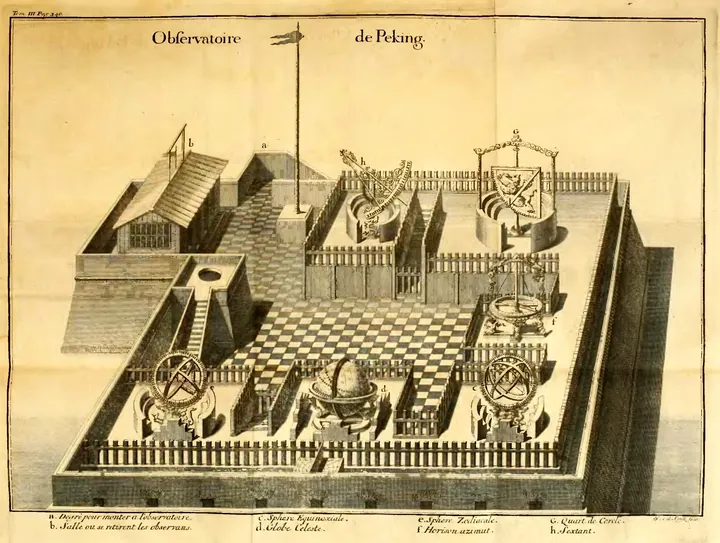
Among the entries for the same month is a memorial by Verbiest, under his Chinese name, 南懷仁: he reports on the solar eclipse of the first day of the fifth month, measured by the court astronomers from the observatory terrace. Most of the remaining pages are taken up by the war in the south, the Revolt of the Three Feudatories, under way since 1673.
The second entry agrees to the day with the Russian report. Day 丙申 is the fifteenth of the fifth month, 25 June 1676 in the Gregorian calendar, which is 15 June in the Julian calendar used in Moscow. A date of 16 July for the first audience, found in older biographies, comes from a Russian dictionary of 1909; in the report, on 16 July, the court only asks whether the envoy has men who can swim and dive.
The two archives are not two impartial diaries. In the report an envoy accounts to his master; Milescu had his conduct to explain and defend. The Veritable Records were compiled under Kangxi’s successor from the court’s papers: the work began in 1723 and was finished early in 1732. They keep what mattered to the court.
The same day in three calendars
| Julian (Moscow) | Gregorian | Qing | |
|---|---|---|---|
| The tsar’s letter is laid on a table covered in yellow | 5 June 1676 | 15 June 1676 | 康熙十五年五月丙戌 (Kangxi 15, month 5, day 5) |
| He bows “quickly and not to the ground” | 15 June 1676 | 25 June 1676 | 康熙十五年五月丙申 (Kangxi 15, month 5, day 15) |
| The council decides without him | 30 July 1676 | 9 August 1676 | 康熙十五年七月辛巳 (Kangxi 15, month 7, day 1) |
Moscow counted by the Julian calendar, ten days behind the Gregorian. Beijing counted lunar months and named days by a cycle of sixty. The days in the record were converted one by one.
The man between them
Many of the exchanges between the envoy and the court passed, in Latin, through Ferdinand Verbiest, a Jesuit born in Flanders who had run the imperial observatory for some years; others, the answer of 29 August among them, went through interpreters of Chinese and Mongolian. Milescu dictated to him in Latin a copy of the tsar’s letter, and Verbiest told the officials that the envoy spoke well a language that “no one can speak without schooling”.
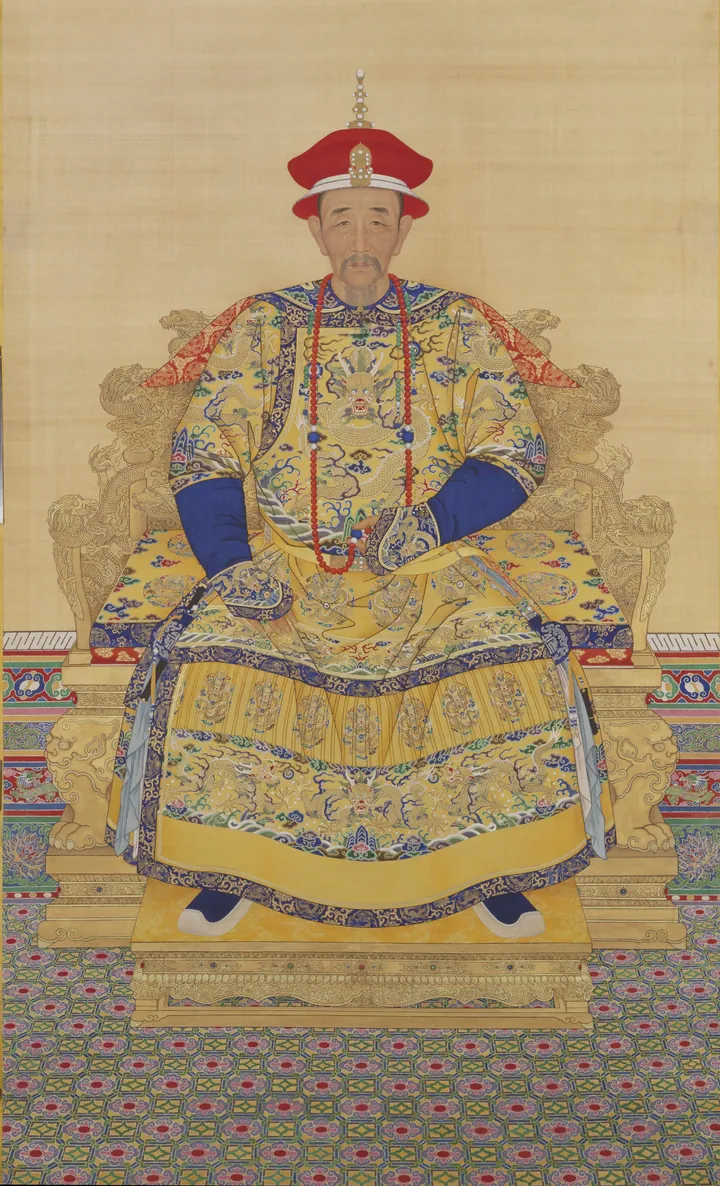

According to the report, the Jesuit also helped him in private. The embassy had brought four old Chinese letters that Moscow had never managed to read: two from Ming emperors, of 1618 and probably 1641–1642, and two from Qing emperors, the second of 1670. At Tobolsk a man who knew Chinese had translated two of them; of the other two he could read only the emperor’s name and the year. On 23 June Verbiest brought Latin translations of the two older letters, and on 28 June he read the latest one to Milescu in secret. On 9 August, under oath, he said the emperor might go to war to get Gantimur back and attack Albazin and Nerchinsk, the Russian forts in the Amur basin. Milescu gave the Jesuit church an icon of the Archangel Michael, cased in silver.
Historians read these pages differently. Liu Ruomei sees help kept hidden from the court. Gregory Afinogenov writes that the sources give no reason to think Verbiest actually passed on any secret information. Noël Golvers points to what the Jesuit was after: an overland route through Siberia, shorter and safer for missionaries than the sea voyage. The report itself says Verbiest was preparing a letter to the tsar that not even his fellow Jesuits were to know about.

How he got there
The places on the map, in order: Vaslui, Iași, Constantinople, Berlin, Stettin, Stockholm, Adrianople, Warsaw, Minsk, Smolensk, Moscow, Verkhoturye, Tobolsk, Samarovo, Surgut, Narym, Makovsky, Yeniseisk, Irkutsk, Lake Baikal, Selenga mouth, Selenginsk, Nerchinsk, Argun river, Nen river (Naun), Beijing.
On the map, the solid line runs through the places named in his diary and reports. The dotted line joins places where he is known to have been, along roads he did not describe. Dates are those of the documents, in the Julian calendar. Measured on the map through the places named, the road from Moscow to Beijing comes to almost 8,000 kilometres.
Moldavia, to 1664
Nicolae Milescu was born around 1636 near Vaslui, into a Moldavian boyar family, and studied in Constantinople. According to the Russian biographical dictionary of 1909 he knew ancient and modern Greek, Latin, Arabic, Turkish, Slavonic, Russian and Italian.
By about 1660 he was secretary to Ștefăniță Lupu, prince of Moldavia. The chronicler Ion Neculce, writing more than half a century later, says Milescu wrote secretly to a former prince urging him to come with an army, and hid the letters in a hollowed-out stick. The stick came back to Ștefăniță, who had the executioner cut off Milescu’s nose with the prince’s own dagger. The Frenchman La Neuville, who met him in Moscow in 1689, also mentions the cut nose, with a different cause: Milescu is said to have betrayed to the sultan a secret agreement between the prince of Wallachia and Poland.
In Constantinople, between 1661 and 1664, he translated the Old Testament from Greek into Romanian. According to the French historian Émile Picot, his translation underlies the Bible printed in Bucharest in 1688, which does not name him. In 1664 he had to leave the Ottoman Empire.
Exile, 1664–1675
He passed through Berlin, where doctors repaired his nose as far as they could, then Stettin and Stockholm. There the French ambassador, Simon Arnauld de Pomponne, was surprised to find “a man so close to Tartary so learned in languages”.
In 1671 Dositheos, Patriarch of Jerusalem, recommended him to the tsar as a man “like a chronograph, containing all the affairs of the world”: a chronicle of universal history. He entered Moscow on 3 June with three servants. By December 1672 he was a translator at the Ambassadorial Office, from Greek, Latin and “Wallachian”, as Romanian was then called, on 100 roubles a year.
Siberia, March–July 1675
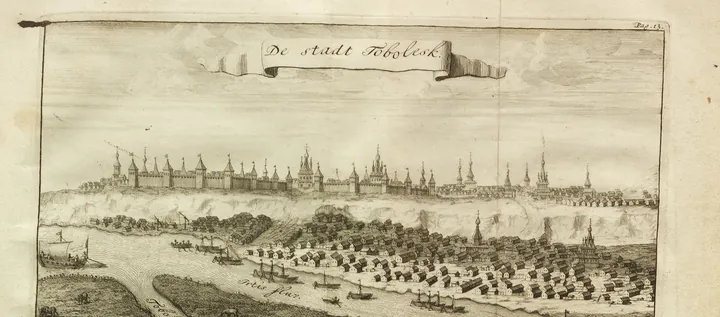
The embassy left Moscow at the start of March 1675; its report says 3 March. At Tobolsk he stayed five weeks. At the start of May he set off down the Irtysh in three flat-bottomed boats, with Cossacks, a priest and six gyrfalcons for the emperor.
From Samarovo he wrote to the tsar that the night lasted “barely five hours, and even that light”, and in his diary he called the Irtysh “a river as great and famous as the Danube”, of which the geographers say nothing. On the Ob he was caught by “ice floes as big as mountains”, and the boats sheltered against the bank behind logs.

Baikal, July–December 1675
On 11 September he reached Lake Baikal, which, he writes, “neither the old geographers nor those of today” mention. It may be called a lake, since its water is fresh, but also a sea, “even by an envious geographer”, since a sailing ship takes ten or twelve days to cross its length.
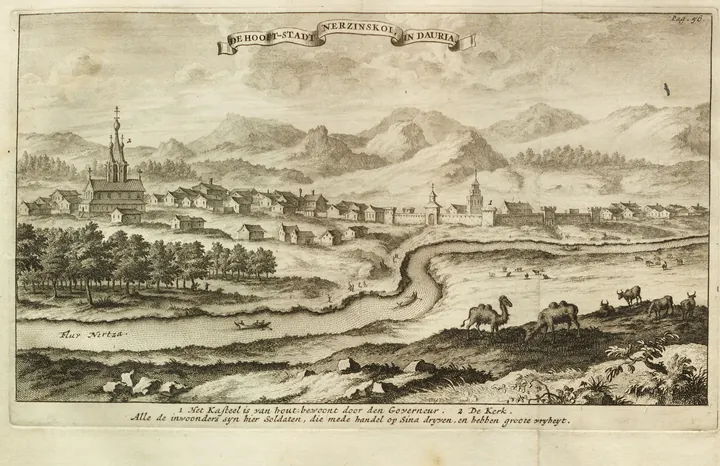
On 4 December he entered Nerchinsk. The Tungus, as the report calls them, were waiting there, among them Gantimur, the man Beijing had been demanding back for years.

From Nerchinsk to the Great Wall, December 1675 – May 1676
On 29 December he stopped for a whole day at the Argun river because, from cold and poor grazing, “many horses and camels went lame, and they sewed them shoes”. On 26 January he reached a Qing guard post on the Nen river.
On 26 February a high official arrived from Beijing, whom the report’s editors and the historian Alateng Aoqier identify as Mala. The quarrel began before they met: for seven days they argued over where to meet and who should enter first. On 3 March Milescu went first into his own yurt, and the official was carried in after him. On 10 May he reached the Great Wall.
At the end of January, about when the embassy reached the Nen, Tsar Alexei died in Moscow, aged 46.
From the road diary
“And I, your slave, now leaving Europe on my left, to the west, sail into Asia on my right, to the east, up the Ob against the current.”
Report to the tsar, Samarovo, 10 May 1675
“And whoever wrote anything about them wrote only fables, having heard only rumours, for no one skilled had ever been there.”
Diary, 1675, on the lands between the Volga and China
What remained
He returned to Moscow on 5 January 1678, after two years and ten months. His protector, the boyar Matveev, had fallen from favour, and his baggage was inventoried on the way. He was investigated for exceeding his orders over Gantimur, for trading in furs and for taking bribes. He answered each charge; the Russian biographical dictionary of 1909 says he apparently cleared himself. In 1683 he was rewarded “for the mission to China”.
He wrote a description of China in 59 chapters, finished in November 1678. The English writer John Baddeley charged him with taking much of it from the atlas of the Jesuit Martino Martini; the preface to the Romanian edition of 1975 rejects the charge, as the Chinese translators’ note records. According to Liu Ruomei, almost everything in it beyond his own journey comes from the Jesuit missionaries. The Chinese translation, published in Beijing in 1990 as 《中国漫记》, was made from that Romanian edition.
The Qing court did not forget him. Ten years on, in 1686, an edict of Kangxi recalled that the envoy “Nikolai” had been told the Russians must withdraw their men, and that no answer had come since. The same year a letter from the tsars, as rendered in Chinese, said that the envoy on his return had reported only that the ministers complained about Gantimur and the trouble on the border.
Historians judge the embassy differently: Zhou Fangyin stresses the Qing court’s practical accommodations, while Su Quanyou argues that the quarrel over ceremony cannot be blamed on China alone and is severe on the envoy’s conduct. In 1676 Milescu had asked for a Latin translation of the emperor’s letter; according to a Qing archival passage quoted by Chen Baoliang and Liu Guomin, he also proposed that future imperial letters be written in Manchu and Latin. In 1689 the two empires signed their first treaty, at Nerchinsk. It was negotiated in Latin, and two Jesuits, Tomás Pereira and Jean-François Gerbillon, interpreted for the Qing side.
Milescu died in Moscow around 1708.
What the legend says, what the papers say
Neculce collected several stories about Milescu, which he himself presents as heard “from one man to another”. On four of them the papers say something else, or less.
A German doctor made his nose grow back.
What the papers say
Neculce says the doctor kept letting blood from his cheek until the nose “grew”. The Russian biographical dictionary of 1909 notes only that doctors in Brandenburg repaired it.
He taught Peter the Great to read.
What the papers say
When Milescu left for China, Peter was not yet three. The papers show him teaching the son of the boyar Matveev and say nothing of lessons for Peter.
The emperor gave him a diamond “the size of a pigeon’s egg”.
What the papers say
The papers speak of a large red stone bought in Beijing for the tsar’s treasury, for about 2,672 roubles. The report adds that the court interpreters, who had brokered the sale of a nobleman’s stone, begged him to keep quiet: they would be put to death if the emperor learned that so costly a thing had been sold out of the country.
On his return he was exiled to Siberia until Peter called him back.
What the papers say
The papers show an investigation in Moscow in 1678, after which he stayed in service, and a reward in 1683.
Sources and method
The Beijing episode follows the embassy’s report (stateinyi spisok), published in 1969 in the collection “Russo-Chinese Relations in the Seventeenth Century”, vol. I, document 183; the passage on the delivery of the letter survives only in an extract made in Moscow in 1685. The report differs on four points from the summary by the historian Sergei Solovyov and from the Russian biographical dictionary of 1909, on which many biographies rest: the first audience took place on 15 June, the gifts were received standing on 16 August, an official laid the letter on the table, and the court’s man reached the Nen on 26 February.
The Chinese side comes from the Veritable Records of the Kangxi reign, chapters 60 and 61, read in the Wikisource transcription, with modern punctuation; the character 嫻 in “not versed in the rites” is broken in the transcription and has been restored from the sense. The edict of 1686 is quoted from the “Strategy for Pacifying the Russians” (平定羅刹方略). The court archives published in Beijing in 1981 could not be read directly.
The road through Siberia follows Milescu’s diary, published by Yuri Arseniev in 1882. Distances are conversions: a Russian sazhen is 2.13 metres. All quotations were translated for this page from Russian, Romanian, French and Chinese. The matches between places in the report and gates on the scroll are made here; the report names only the “Red City”, and the record only the Hall of Supreme Harmony.
The embassy’s report
- Report of N. G. Spafary’s embassy (stateinyi spisok), in Русско-китайские отношения в XVII веке, vol. I, Moscow, 1969, doc. 183, pp. 346–458
- Same volume, doc. 209: the dispatch from the Nen river (the official’s arrival, the seven-day dispute)
- Same volume, docs 186, 24, 51 and 136: the four old letters and their translation
- S. M. Solovyov, История России с древнейших времён, vol. XII, ch. V (summary and quotations of the report)
The Chinese side
- 聖祖仁皇帝實錄 (Veritable Records of the Kangxi reign), chapter 60: fifth month, days 丙戌 and 丙申
- Same record, chapter 61: seventh month, day 辛巳 (the decision and the gifts)
- 平定羅刹方略 (“Strategy for Pacifying the Russians”), book 3: the edict and the letter of 1686 that name the envoy
- 清史稿 (Draft History of Qing), book 153, relations with Russia
The road diary
Life and legend
Historians
- Alateng Aoqier (阿拉腾奥其尔), “From ‘Luocha’ to ‘Eluosi’: the earliest contacts between China and Russia in the early Qing” (the envoy’s name, Mala)
- Liu Ruomei (柳若梅), on Verbiest and the Jesuit sources of the description of China
- Chen Baoliang and Liu Guomin, on missionary interpreters under the Qing, Palace Museum Journal, 2023, no. 2 (Verbiest as translator; the Latin proposal)
- Zhou Fangyin (周方银), on what drove change in Qing diplomacy
- Su Quanyou (苏全有), “The Sino-Russian disputes over diplomatic ceremony in the 17th and 18th centuries”, Qingshi yanjiu, 1999, no. 4
- Gregory Afinogenov, The Eye of the Tsar (Harvard dissertation), p. 51
- Noël Golvers, “Verbiest, Ferdinand”, Conimbricenses Encyclopedia
- N. Sp. Milescu, 《中国漫记》 (the description of China), tr. Jiang Benliang and Liu Fengyun, Zhonghua shuju, Beijing, 1990