The Great Clock of Westminster · Elizabeth Tower, London
Big Ben’s clock is adjusted with old pennies: the Great Clock of Westminster, and what one coin does to its day
Parliament says one old penny on the pendulum makes the clock gain 0.4 seconds a day. Drag the coin along the rod to see where that works.
In London it is --:--:--. The Great Clock is next due to strike the hour, --:00, in --.
Swing exaggerated · coin not to scale
+0.4 s
ahead each day: the clock gains
The swing centre is the point 3.98 m below the pivot: the length a weight on a string would need to keep the same beat as the whole pendulum. A coin gains most halfway to it, at 1.99 m.
Where on the pendulum should the penny go?
A coin on a pendulum does two things at once. Its mass makes the pendulum harder to turn round, and that slows it. Its weight pulls on the rod and makes the pendulum swing back harder, and that speeds it. Which of the two wins depends on where the coin sits.
Close to the pivot the coin hardly moves, so it changes next to nothing. At the swing centre the two effects cancel exactly. That point is 3.98 metres (13 feet) down the rod: the length a bare weight on a string would need to beat every two seconds, as the Great Clock’s pendulum does. In between, the speeding wins, and it wins most halfway to the swing centre. Below the swing centre the mass wins, and the same coin makes the clock lose time.
“The place where a given weight is most effective is at the middle of the length, but it does practically as well to put it somewhat higher.”Edmund Beckett Denison, who designed the Great Clock (later Lord Grimthorpe), on regulating clock pendulums with small weights, in A Rudimentary Treatise on Clocks, Watches and Bells, 8th edition, 1903
One of the clockmakers who look after the Great Clock described the same arrangement in 2024: weights “in the form of old currency, on a small platform partway down the length of the pendulum rod” (an Antiquarian Horological Society post by one of the clockmakers). Parliament’s Commons Information Office describes “a shelf on the pendulum rod” holding weights “including pre-decimal pennies” (factsheet, 2012). In 2009 the Royal Mint reported that a new £5 coin had replaced some of the pennies, and quoted the Keeper of the Great Clock: adding or subtracting the coins “effects the pendulum’s centre of mass and the rate at which it swings” (Royal Mint news release, 12 November 2009, as published by CoinNews).
What the model says
The shape of the curve follows from physics alone for a small coin on any pendulum that beats every two seconds. A coin d metres below the pivot changes the day in proportion to d × (L − d), where L = 3.98 m.
seconds a day ∝ d × (3.98 − d)
That gives zero at the pivot, zero at 3.98 m, the largest gain at 1.99 m and a loss below 3.98 m.
The size is an estimate, because Parliament does not publish the coin’s weight, the height of the tray or how the pendulum’s 310 kilograms are spread along the rod. A model built from Parliament’s masses (310 kg in all, 203 kg of it in the bob) and a bronze penny of 9.45 g (the standard weight in the Coinage Act 1870 is 9.44984 g; first schedule; the model assumes the tray holds coins of that kind) gives 0.37 seconds a day at the best height. Other ways of spreading the remaining 107 kg give anything from 0.33 (all of it with the bob) to 0.50 (all of it at the pivot). Parliament says 0.4 for its tray, whose height it does not state. The curve on this page is scaled so that one penny at the best height gives exactly that.
One more check on the size. The same January 2024 post says a penny speeds the clock by about two-fifths of a second a day, a halfpenny (half a penny) by about a quarter and a farthing (a quarter of a penny) by about a tenth. By weight (5.67 g and 2.83 g against 9.45 g) the scaled curve gives 0.24 and 0.12 for the same tray height.
What does one penny do to the Tower’s time?
Set the tray above, then let the days run. On day 0 the clock is exactly right. The gauge is stretched so that one second and several minutes both fit; the bright band is Airy’s one second and the pale band is the 2 seconds Parliament calls normal. You can also start from the six-second error of August 2015, in either of the two versions told under “Has Big Ben ever stopped?”, and look for a tray that brings the Tower back.
Left alone, one penny at the best height would put the Tower 2 min 26 s ahead after a year. The keepers do not leave it. In 2015 Parliament said the routine checks had gone from three a week to every day, weekends included. A clockmaker on the team wrote in 2024 that heavy wind on the evening of 30 December 2023 threw the clock out by 0.2 seconds by the next morning, and that he corrected it by the evening. He reports that a recording of the strike at midnight on New Year’s Eve, timed against a GPS clock by a third party, puts it at 23:59:59.981, “within less than a fiftieth of a second of midnight” (same post).
| Days | How far out | The Tower strikes |
|---|---|---|
| 1 | 0.4 s | early |
| 7 | 2.8 s | early |
| 30 | 12 s | early |
| 90 | 36 s | early |
| 365 | 2 min 26 s | early |
How accurate is the Great Clock meant to be?
In 1846 a competition was held to decide who should build the clock, with the Astronomer Royal, Sir George Airy, as referee. His conditions, as Denison printed them in 1850 (Rudimentary Treatise), included:
“The escapement is to be dead-beat, or something equally accurate, the recoil escapement being expressly excluded. … The pendulum is to be compensated. … The striking machinery is to be so arranged that the first blow for each hour shall be accurate to a second of time.”George Airy’s conditions, 1846, printed by E. B. Denison in 1850
Parliament says the stipulations for accuracy meant it took seven years before the designs were finalised (Parliament, key dates). Parliament says Airy appointed Edmund Beckett Denison to support him in his decision, and describes Denison as a barrister and a gifted amateur clockmaker. In February 1852 Dent was appointed to build the clock to Denison’s own design; Dent died in 1853, and his stepson Frederick completed it in 1854 at a cost of £2,500 (Parliament, building the clock). Denison’s “Double Three-legged Gravity Escapement” was meant to keep the push of wind on the hands from reaching the pendulum: Parliament says it “compensates for the effects of outside pressure on the mechanism” (Parliament, facts and figures). The clock started ticking in the tower on 31 May 1859.
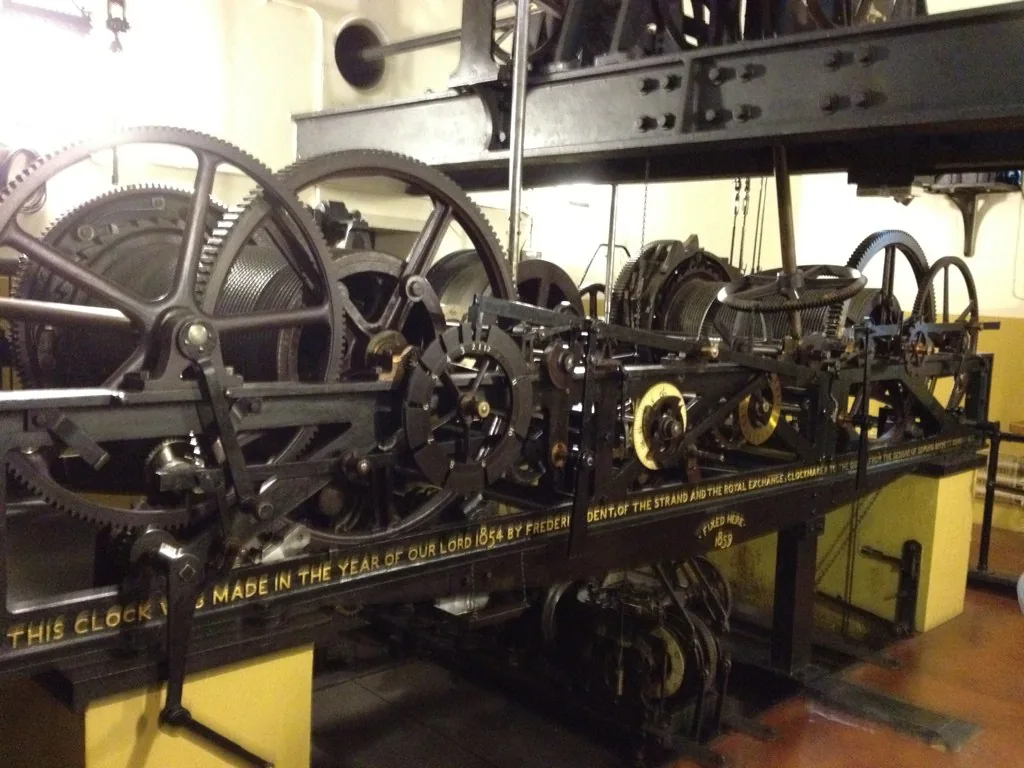
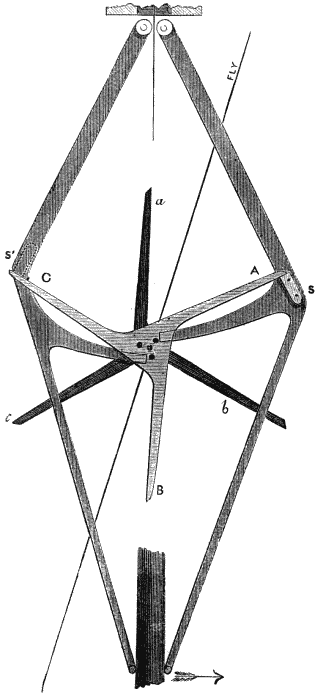
What counts as accurate has been put in several ways. Parliament’s 2015 note called “normal” a clock “striking within less than 2 seconds of the correct time”, and said that after the pennies were adjusted the clock was “accurate to less than one second” (Parliament, 25 August 2015). A clockmaker on the team wrote in 2024 that, with accurate timekeepers to compare the clock against, the team can “comfortably exceed the original target for accuracy” (AHS post). In 1903 Denison noted that “the Westminster clock reports itself to Greenwich daily” (8th edition). For Greenwich and the meridian, see our page on the zero meridian.
Has Big Ben ever stopped?
Yes. Parliament’s own list says the clock “has been stopped accidentally on several occasions - by weather, workmen, breakages or birds” (stoppages page). Each entry below carries a tag: recorded where an official text gives it, reported where only the press does, and disputed where sources disagree.
17 October 1857 Recorded
The first Big Ben bell cracks in testing, a crack 1.2 metres long. Its maker, Warners, blamed Denison for raising the hammer’s weight from 355 to 660 kilograms (Parliament, the Great Bell).
1858–1863 Recorded
A second bell is cast at the Whitechapel Foundry in East London on 10 April 1858, 2.5 tonnes lighter (Great Bell page). The clock starts on 31 May 1859 and the bell is first heard on 11 July. Later that year the bell cracks again, and the largest quarter bell strikes the hours until 1863, when, at Airy’s suggestion, Big Ben is turned 90 degrees and given a lighter hammer (Parliament, key dates). More on the foundry and the bells: London’s church bells.
1934 Recorded
The hour and quarter bells are stopped for two months (Parliament, stoppages).
1949 Reported
A flock of starlings perches on the minute hand and slows it by 4½ minutes, according to a BBC report of 2001 (BBC News). Parliament’s pages do not give this.
1956 Recorded
The hour and quarter bells are stopped for six months (Parliament, stoppages).
New Year’s Eve 1962 Disputed
Snow and ice slow the clock. The Guardian dates it to New Year’s Eve 1962 and says nine minutes slow; the BBC says the clock rang in the new year 10 minutes late in 1962 (Guardian, BBC).
August 1976 Disputed
Parliament, key dates: “On the 5 August, a mechanical failure causes serious damage… The pendulum weights spiral out of control down the weight shaft”; Big Ben “is silent for nearly nine months”.Parliament, stoppages: “during the night of 10 August 1976 when part of the chiming mechanism disintegrated through metal fatigue”; the clock “was shut down for a total of 26 days over nine months”.Two Parliament pages, two dates and two descriptions.
2005 and 2007 Recorded
The mechanism is stopped for two days in October 2005; in 2007 Big Ben and the quarter bells are silenced from 11 August to 1 October for maintenance (Parliament, stoppages; key dates).
August 2015 Disputed
The clock is found to be about six seconds out. Parliament says its clock mechanics noticed a delay on the weekend of 15 August, that the clock was “late by approximately 6 seconds”, and that they brought it back within normal limits; it adds that the clock is kept accurate to less than a second by regular checks and by adjusting the old pennies. The Guardian says Radio 4’s PM spotted the mismatch and reported the chimes running “six seconds fast” (Parliament; Guardian).
2017–2022 Recorded
Parliament’s key dates say that “the largest and most extensive conservation of the Elizabeth Tower” begins in 2017 (key dates). On 15 November 2022 Parliament reports that “after 5 years” the bells have returned to regular service, after tests before Remembrance Sunday, 13 November 2022 (Parliament, “Big Ben returns to regular service”).
What does Big Ben do when the clocks go back?
The Great Clock is not wound back. The clocks in Britain go back one hour at 2 am on the last Sunday in October, which in 2026 is 25 October (GOV.UK). Parliament’s published schedule for the weekend, a general guide “subject to change” (the copy read here was archived on 21 May 2019), runs like this (Parliament, time change weekend):
21:05 BST
The hour strike is locked off Big Ben; it stays silent until 02:00 GMT.
21:46 BST
The quarter chimes are locked off too, so they do not sound while the clock is inspected.
21:50 BST
The clock hands are advanced to 12 midnight by releasing the double three-legged gravity escapement. It takes two minutes, and the clockmakers must take care that the hands do not overrun 12.
21:52 to 23:00 BST
The going train is stopped, and the clockmakers inspect the mechanism.
00:00 GMT (01:00 BST)
At the new midnight the going train is started. For two hours the clock runs without the strike or the chimes while the clockmakers monitor it and adjust it to within one second of the new time.
01:46 GMT
The hour strike and the quarter chimes are unlocked.
02:00 GMT
The quarter bells sound the Westminster Chimes, the Great Bell strikes the hour, and the procedure is complete.
BST is British Summer Time and GMT is Greenwich Mean Time. The same page says the clockmakers also adjust 2,000 other clocks in the Palace of Westminster and the parliamentary buildings that weekend.
Is Big Ben the clock, the tower or the bell?
The bell. Parliament’s pages say the Elizabeth Tower’s bell is officially the Great Bell, “though it is better known by the name ‘Big Ben’”, and that the name is “often associated with the Elizabeth Tower and the Great Clock as well” (Parliament, the Great Bell). The tower was called the Clock Tower until 2012, when it was renamed to honour Queen Elizabeth II’s Diamond Jubilee (key dates).
Two theories explain the name: that the bell was named after Sir Benjamin Hall, First Commissioner for Works 1855–1858, or after Ben Caunt, a champion heavyweight boxer of the 1850s. Parliament says the first is thought the most likely. The bell was originally to be called “Royal Victoria”.
How big is the Great Clock?
Parliament’s figures for the Great Clock: four dials, each 7 metres across; minute hands of copper sheet, 4.2 metres long and 100 kilograms each; hour hands of gun metal, 2.7 metres long and about 300 kilograms (the hands’ weights include counterweights, says the Commons factsheet of 2012); a pendulum 4.4 metres long weighing 310 kilograms, whose bob weighs 203 kilograms. The mechanism is 4.7 metres long and 1.4 metres wide. The minute hands travel the equivalent of 190 kilometres a year, Parliament says, “the distance from London to Weymouth” (Parliament, facts and figures).
The hands are drawn at the lengths Parliament gives. A 4.2 metre minute hand is longer than the dial’s 3.5 metre radius; Parliament does not say how the length is measured.
The Elizabeth Tower is 96 metres high; Parliament’s comparison is “21 London buses sitting on top of each other”. It is 281 steps to the clock faces and 334 to the belfry where Big Ben hangs.
Hear the beat and the hour
The pendulum beats once every two seconds. Press the first button for a synthesised tick in time with the swing; the strike buttons play a recording of the real bell, with as many strikes as London’s hour calls for.
Recording: “Westminster - Big Ben” by Kalou, Freesound, CC BY 4.0. A recording of twelve o’clock, trimmed to the hour chime and the strikes, loudness adjusted; shorter hours stop after their last strike.
Make a card of your tray
Sources
- UK Parliament, Living Heritage: facts and figures; key dates; the Great Bell; stoppages; building the Great Clock; “Big Ben returns to regular service”; and the news note Great Clock adjustments (25 August 2015). Read from archived copies of these pages, dated between 2015 and 2026; the pages named here are the live addresses.
- Edmund Beckett Denison (Lord Grimthorpe): A Rudimentary Treatise on Clock and Watch Making (1850, Airy’s conditions) and A Rudimentary Treatise on Clocks, Watches and Bells (8th edition, 1903). Public domain.
- Andrew Strangeway, “Ringing in the New Year”, Antiquarian Horological Society blog, 23 January 2024: ahsoc.org.
- Press: BBC News (2001); the Guardian, “Bell tolls for Big Ben” (2016) and “Clockwatchers ticked off” (2015).
- House of Commons Information Office factsheet on Big Ben (2012); Royal Mint news release on the £5 Big Ben Crown (12 November 2009); the Coinage Act 1870 (first schedule, bronze coins); GOV.UK, when the clocks change; Parliament, time change weekend.
- The shape of the curve and the figures under “What the model says” are our own calculation from Parliament’s published masses and the two-second beat; its size is scaled to Parliament’s 0.4 seconds a day.