FROM THE SHEEPFOLD, TO FIVE COUNTRIES
Our cheese made it onto Slovakia's national plate
Related forms appear in records from Dubrovnik to the Slovak counties and Podhale, alongside the spread of pastoral settlement through the Carpathians. The deeper origin of brânză remains unknown; dictionaries separately trace Romanian forms into neighbouring languages.
- Origin unknown
- three times over: brânză, baci, urdă
- 1370
- first record: brençe, in Dubrovnik
- 479
- settlements with a Vlach trace in the Polish Carpathians

How the word changes shape at the border:
- brânză Romania
- bryndza Slovakia
- brynza Czechia
- бринза Ukraine
The cheese's passport
Three stamps the word has in the archives, from before the dictionaries knew it. The shepherds' road below is older than all of them.
Dubrovnik
1370
brençe
“Wallachian cheese” in a Ragusan deed — the word's first time in writing. Șăineanu dates the deed 1356; we pick no year, we show both.
stamp 1 of 3
Slovak counties
1470
bryndza
The word enters the county deeds — the shepherds had been there a century.
stamp 2 of 3
Podhale, Poland
1527
bryndza
In the mountains below the Tatras, among the Górale. A century on, Western-Carpathian bryndza is commonplace.
stamp 3 of 3
The shepherds' road
mid-14th c.
Pogórze
15th c.
The Tatras
16th–17th c.
Kysuce and Moravia
So say the Polish and Czech histories of the colonization. For Orava and Liptov the exact years are unknown — which is why we don't write them.
Three words with no origin
In Romanian, brânză simply means cheese — any cheese. In some neighbouring languages the related forms name one cheese in particular: sheep's, soft, the shepherds'. All three words travelled; none would say where from.
brânză n.
cheese of any kind
DEX gives no etymology; MDA2 cites brânză in Neculce. Earlier Romanian attestations have not been checked.
Hypotheses, no winner: Hasdeu's Dacian; Latin *brandeum*, the straining sack (Cioranescu); Albanian brëndës, entrails (Orel); a pre-Roman relic word. Listed, not picked.
From Romanian, into:
- Slovak bryndza
- Polish bryndza
- Czech brynza
- Hungarian brenza
- Ukrainian бринза
- Greek préntza
- Serbian brenca
- Romani brinsa
- Transylvanian Saxon pränts
- German Brinse
baci n.
the shepherd who runs the sheepfold
DEX: origin unknown. As a personal name, since the 13th century.
An eastern origin predating contact with Turkic peoples has been proposed, perhaps Iranian, but neither is proved.
The road, step by step:
- Romanian baci
- Slovak bača
- Polish baca — from *bacza*, by mazurzenie
- Czech bača, 19th c.
- Hungarian bacsa, dialectal
The same form has two histories: baci, the head shepherd, and the Transylvanian address term baci, borrowed from Hungarian bácsi.
urdă n.
sweet whey cheese
DEX: origin unknown. First record: Anonymus Caransebesiensis.
Candidates, no winner: Turkic *hurde*, ‘dregs’ (DER’s own tentative pick); Hasdeu’s Dacian; the Thracian ‘whey’ word; Albanian *udhós*, ‘cheese’; Scriban’s Latin. All live, none proven.
From Romanian, into:
- Hungarian orda and urda
- Slovak, Czech and Ruthenian urda
- Hutsul вурда
- Polish horda — dead: today it only means a horde
A 1549 letter from Anna Nádasdy provides a dated attestation of the Hungarian form orda.
Pastoralism and the spread of the words
The Wallachian colonization: 13th–16th centuries, the Carpathian chain, from south of the Danube to Moravia. But mind the word “Vlach” — the further west you go, the less it means kin and the more it means trade.
The mix
The Western-Carpathian colonization was Vlach-Ruthenian, then ever more Slavic; in eastern Slovakia the ethnic Romanian share was minimal. “Wołoski” describes the pastoral economy, not ethnicity.
The scale
The study identifies 479 settlements based on Vlach law or with documented Vlach presence — 28% of all settlements in the physical-geographical region of the Polish Carpathians; a first phase (to about 1500, military), a second (16th–17th centuries, economic, above 500 m).
The law
Vlach law: free travel and arms, no forced labour, dues in kind, their own courts. From an ethnic privilege it became a colonization tool for anyone.
The calendar
The redyk: the spring departure (23 April, St Adalbert) and the autumn return (29 September, St Michael). Today, folkloric redyk festivals are held in Poland, Czechia, Slovakia and Romania.
The luggage
Koliba and redyk entered straight from Romanian (colibă, ridica); szałas and juhas came via Hungarian (szállás, juhász). Each told with its own road.
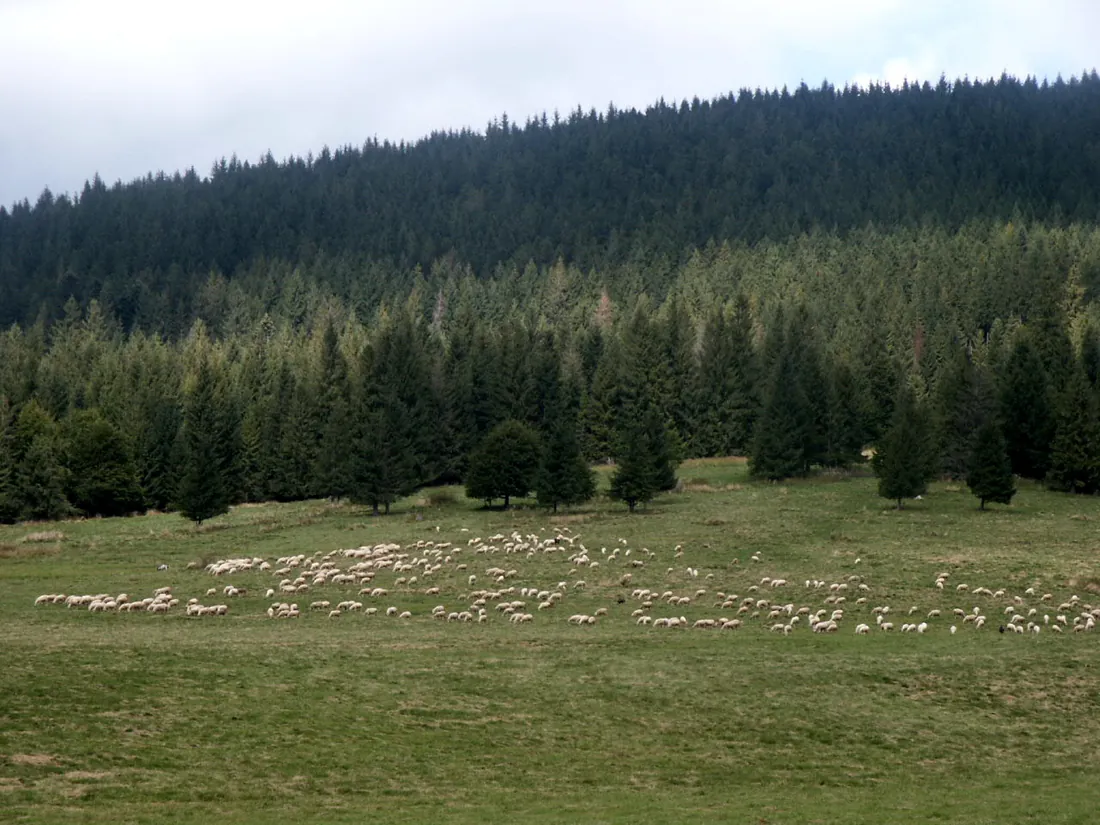

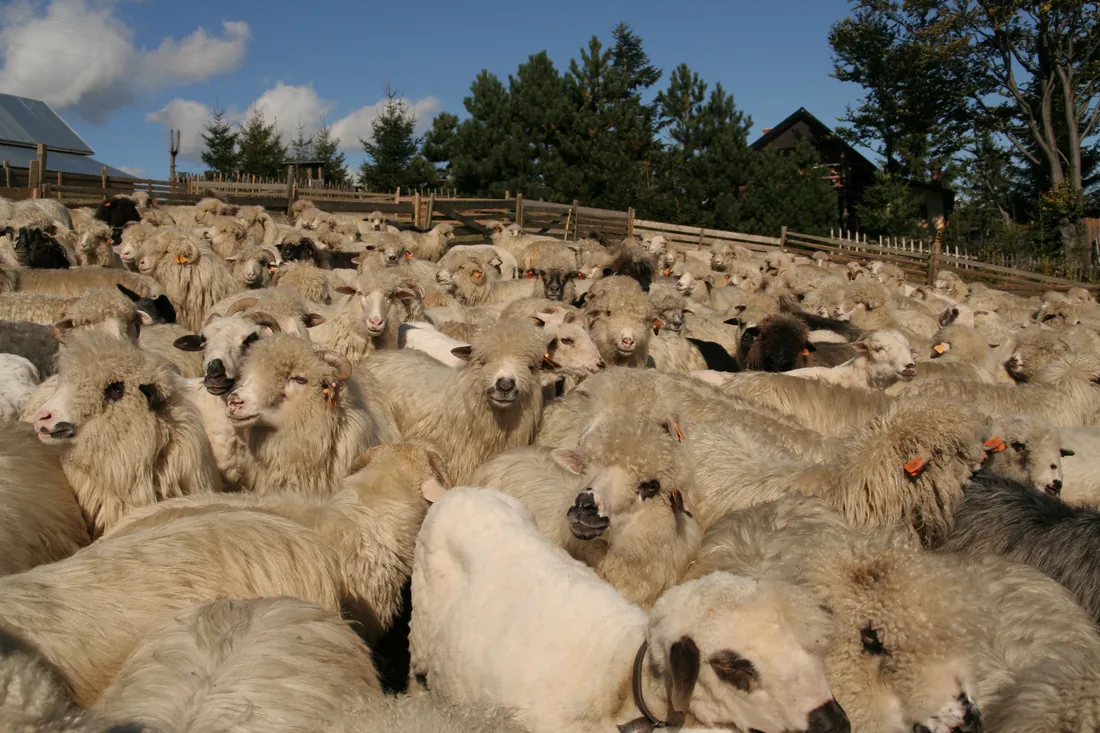

Six cheese traditions, five countries
These dishes and cheeses show the place of sheep’s-milk products in Carpathian food cultures.
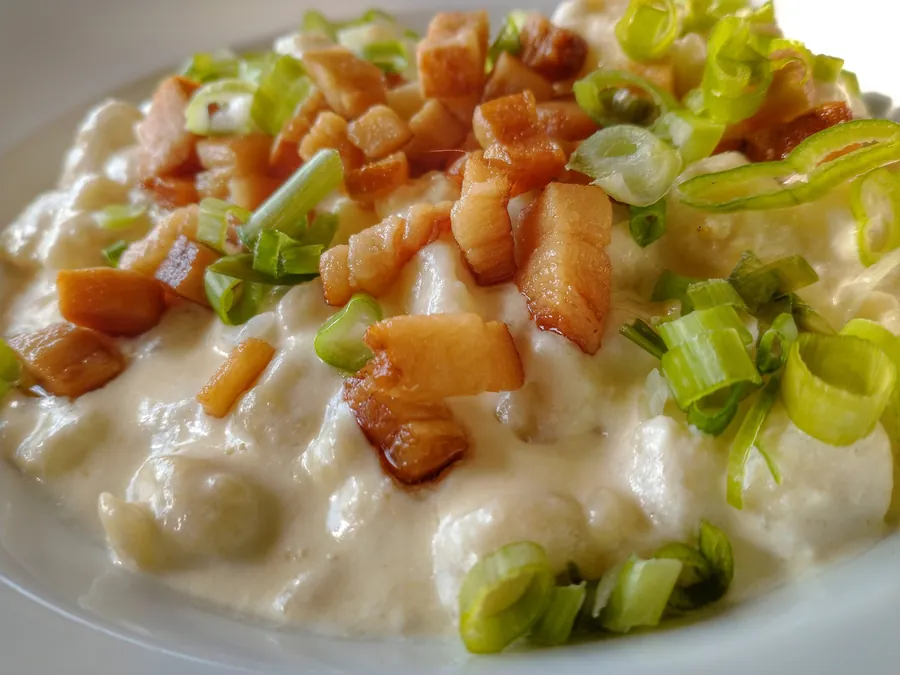

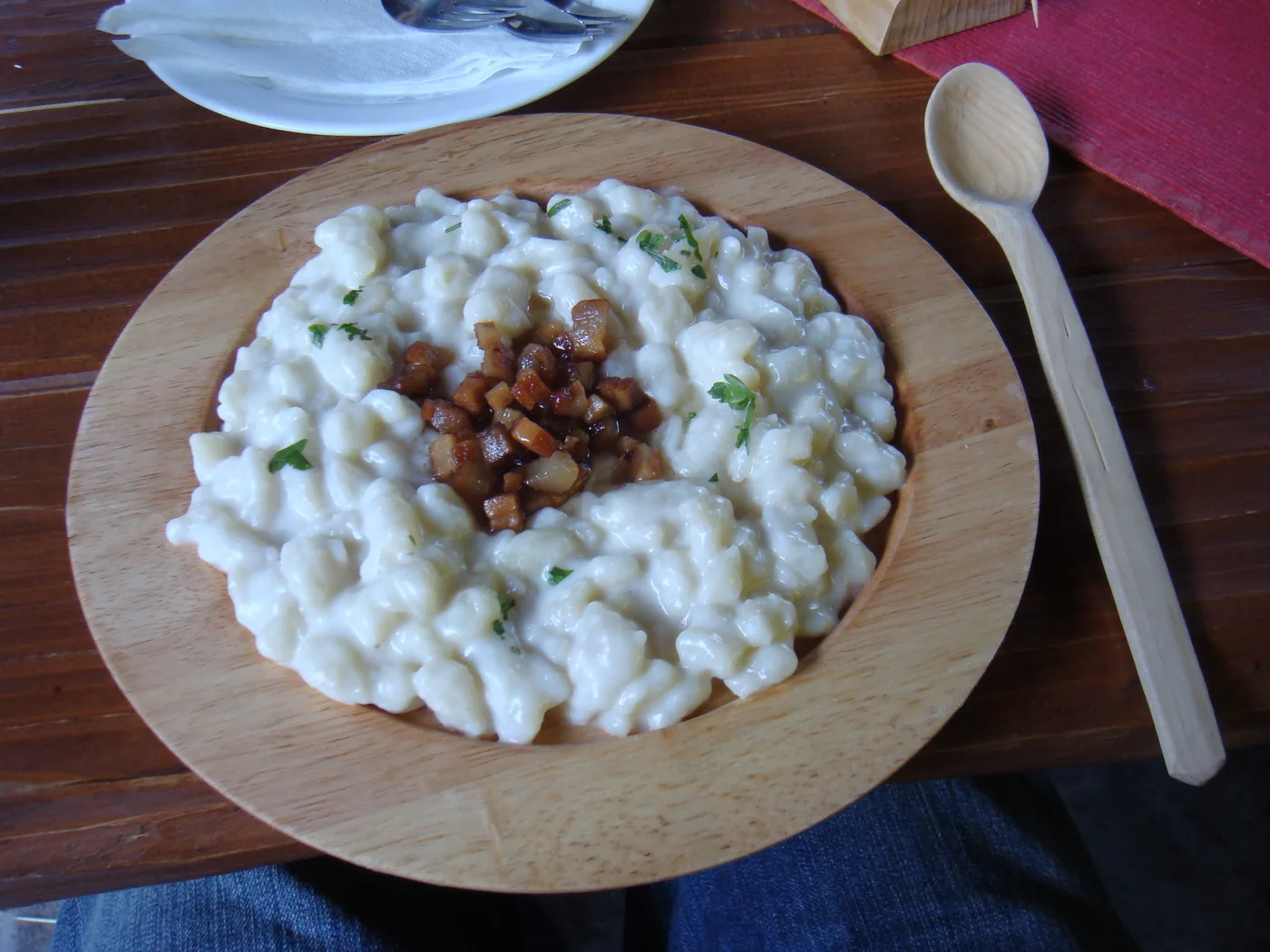
Bryndzové halušky
Slovakia
Potato dumplings with bryndza, sometimes bacon and chives. One of Slovakia's national dishes — say the Slovaks, and the Czechs too.
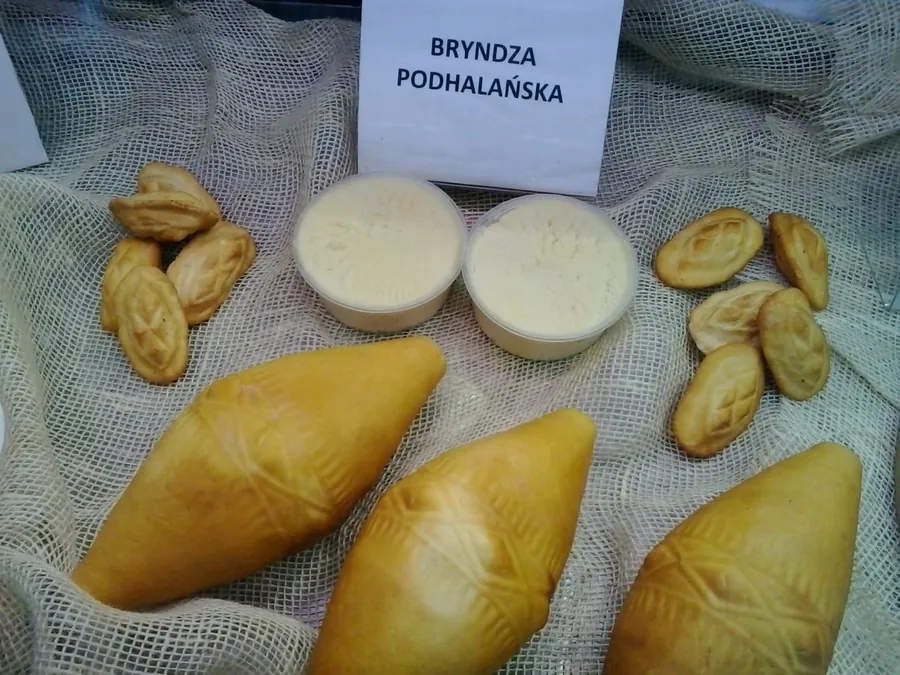

Bryndza Podhalańska
Poland
Soft bryndza from Podhale, from sheep's milk, with a protected name in the European Union.
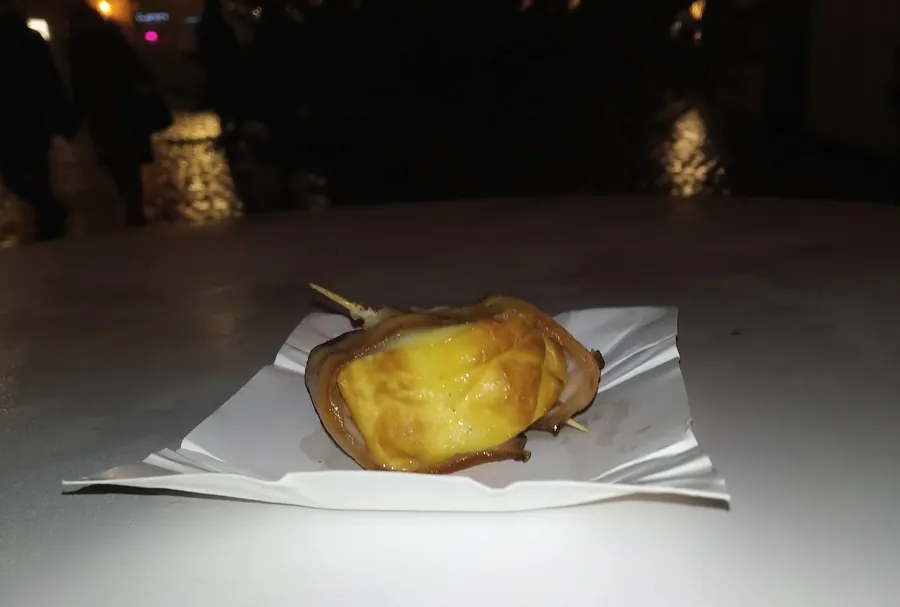

Oscypek
Poland
Careful: not the same as bryndza. Smoked cheese, made by the baca, often fried and eaten with cranberry; EU-protected and bound to hold at least 60% sheep's milk. Its “little sister” is called redykołka.
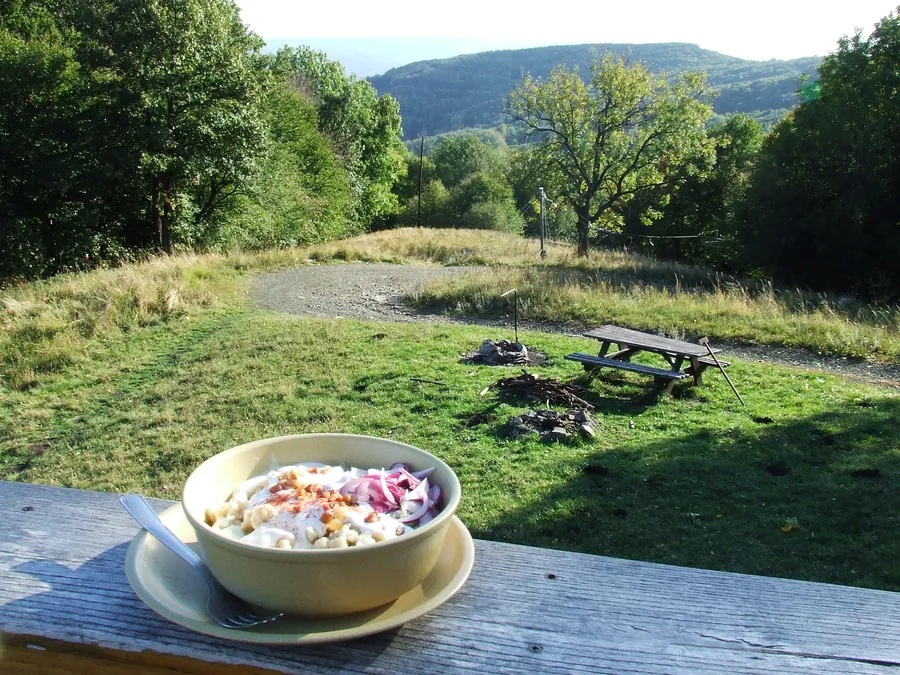

Sztrapacska
Hungary
Dumplings again — but with juhtúró, the local sheep's cheese: juh ('sheep') + túró ('curd cheese'). At Vanyarc the Slovaks hold the Strapačky festival every September.
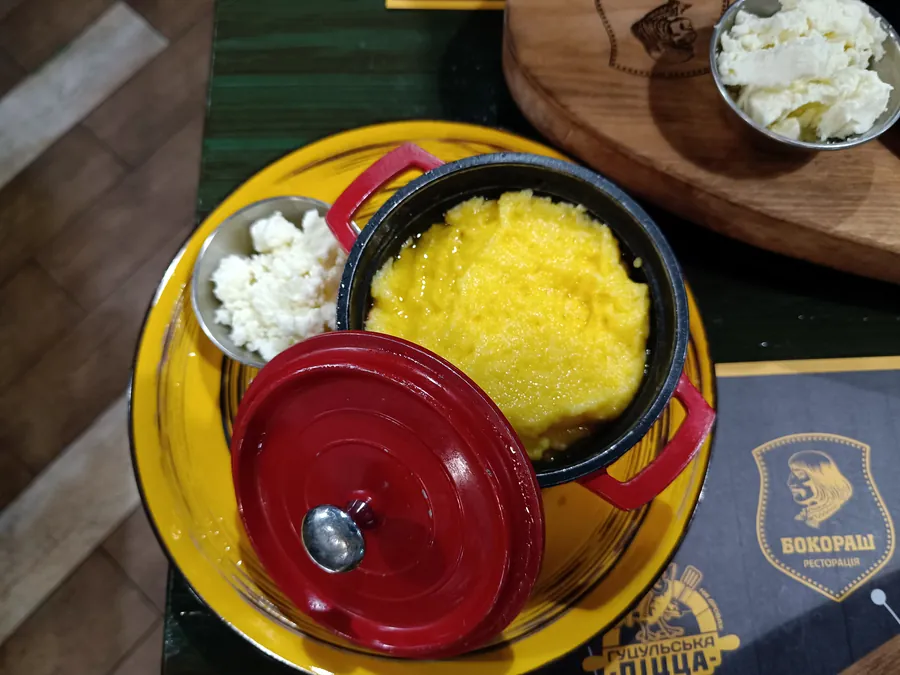

Banosh
Ukraine
Hutsul cornmeal with sour cream, cracklings, mushrooms and bryndza. In Hutsul country, whey boiled with cheese is called вурда — from our urda.
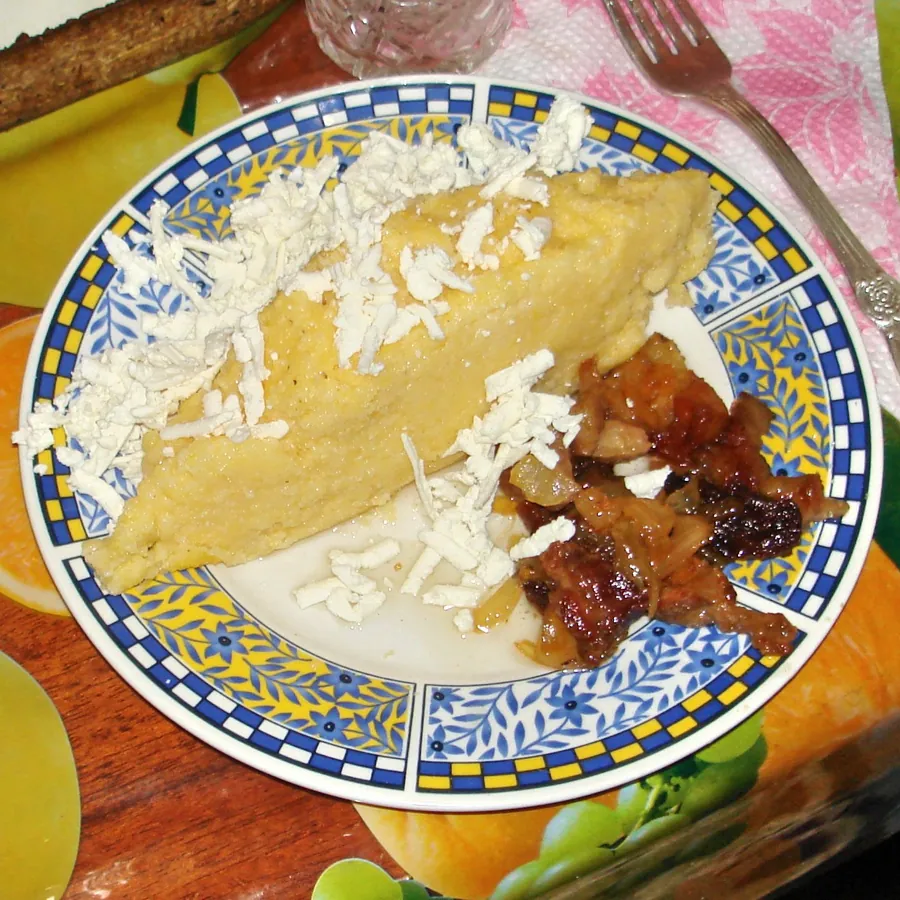

Mămăligă with cheese
Romania
At home: cornmeal with cheese and sour cream (“O străchinoaie de brînză cu smîntînă și mămăliguță” — Creangă) and bulz, attested in Dosoftei. At Rucăr, kneaded sheep cheese ages in fir bark, which gives it a resinous aroma. Separately, in the Bucegi, shepherds take their flocks up to sheepfolds as high as 2,000 m.
What we don't know (said aloud)
- Where brânză, baci and urdă come from. Three unknowns in DEX; the Dacian, Latin, Turkic, Albanian and Iranian hypotheses all live, none proven.
- The first Hungarian and Czech attestations. Unverified — which is why the page dates none.
- The Ukrainian dictionaries could not be consulted.
- The exact years for Orava and Liptov. Hence the road stops at century-wide wording.
- The year of the Dubrovnik deed: 1356 or 1370? Two sources give different years; the page shows both.
“Brânză bună în burduf de câine”
Sources
Dictionaries first, then history, then the plates. The sources below document the attestations and figures.
Dictionaries
History
- Transhumance and the redyk (EN-wiki)
- Kolonizacja wołoska (PL-wiki)
- The Wallachian-settlements study (JU, PDF)
- Votruba: a history of bryndza (archive)
- Vlach law (EN-wiki)
Dishes
- Bryndzové halušky (EN-wiki)
- Bryndza Podhalańska (EN-wiki)
- Oscypek (EN-wiki)
- Banosh (EN-wiki)
- Orda (HU-wiki)
- Brânză de burduf, Bucegi (Slow Food)
Type: Fraunces, Newsreader and Atkinson Hyperlegible, under the SIL Open Font Licence.