A WORD-JOURNEY
Why is your horse named after a nag?
Latin caballus meant “nag”. Soldiers carried it across the empire, and today cal, cavallo, cheval and caballo all descend from it — while the noble word, equus, survived only in books.
- CABALLUS → CAL
- DEX: “– Lat. caballus”
- 1 → 7
- one stable word, in seven languages
- 1765
- the year English buys the noble word back
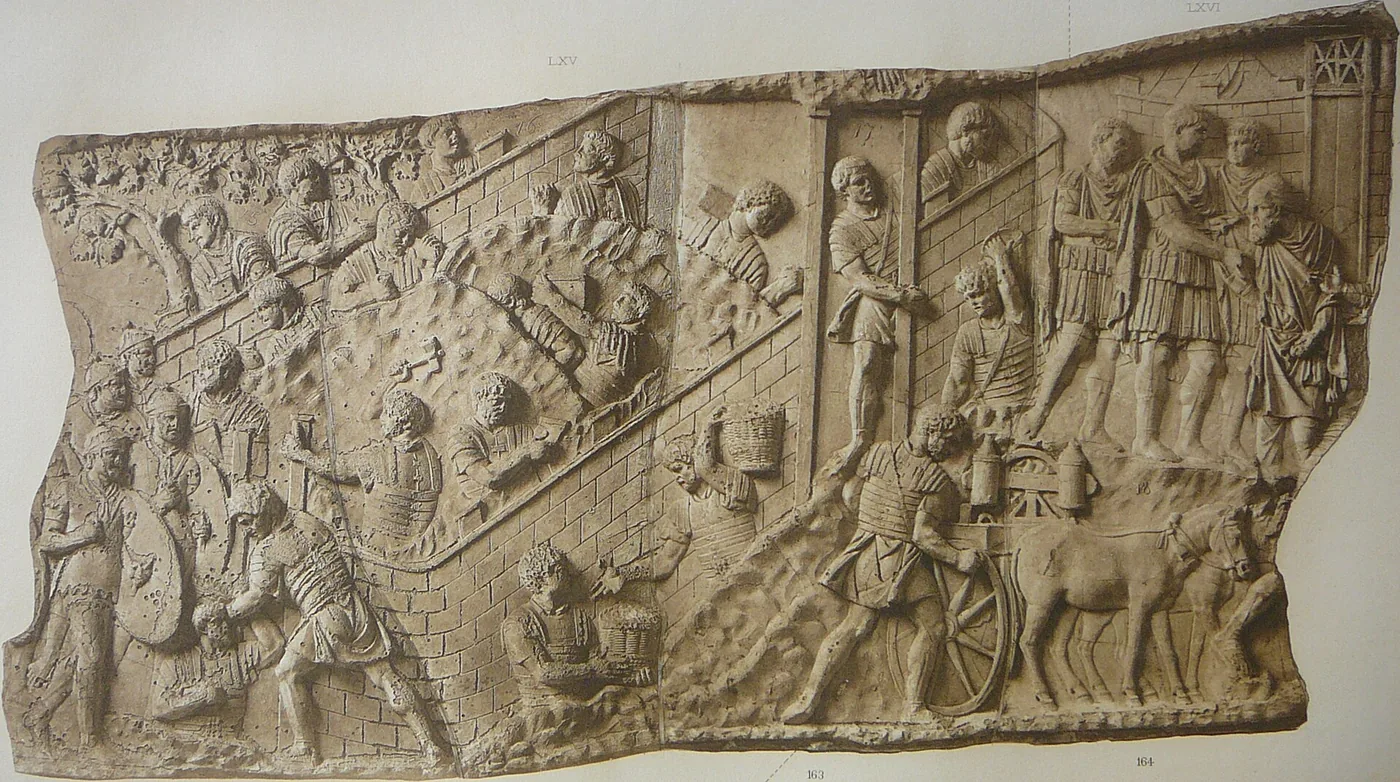

The word changes shape on the road:
- EQUUS THE POET · a noble steed
- CABALLUS THE SOLDIER · a nag
- CAL YOU · your horse
The short answer
Your horse descends from a nag
DEX defines cal and points, at the end of the entry, to Latin caballus. Lewis & Short renders caballus as “an inferior riding- or pack-horse, a nag” and marks the register: poetry and post-Augustan prose.
The replacement is general. Ohio State's Literary Latin page says that in all Romance languages the word for horse comes from caballus, while equus, the classical word, appears only in literary or technical English: “your everyday Roman called a horse a caballus, not an equus”.
The exception proves the rule. Iapă, the mare, comes from equa, the feminine of the noble word. And English borrowed equine late, first recorded in 1765, from equinus, derived from equus.
“CAL, cai s.m. … – Lat. caballus.”
“an inferior riding- or pack-horse, a nag (poet. and in post-Aug. prose)”
“In all Romance Languages the word for ‘horse’ is derived from … caballus …”
Chapter 1 · the low word
The nag
Before it conquered a world, caballus was the word poets put in the stable's mouth — and the word prose admitted after Augustus.
Optat ephippia bos piger, optat arare caballus
Lewis & Short also cites Epistles 1.7.88 and Satires 1.6.59, 1.6.103.
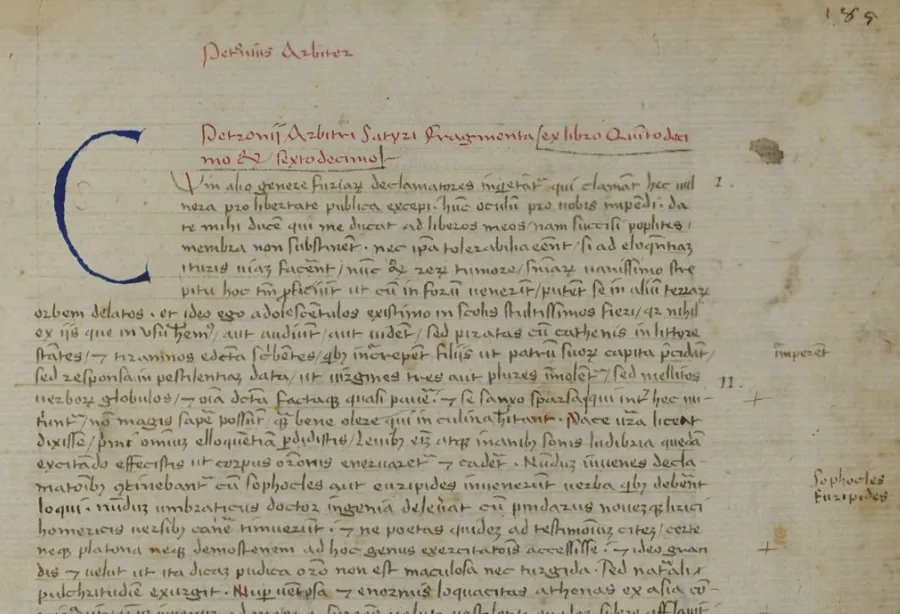
…mollis, debilis, lassus, tanquam caballus in clivo…
An old priestess says it to Encolpius — spoken Latin, 1st century AD.
poet. and in post-Aug. prose — The Lewis & Short register label. Poetry, then late prose.



Chapter 2 · the takeover
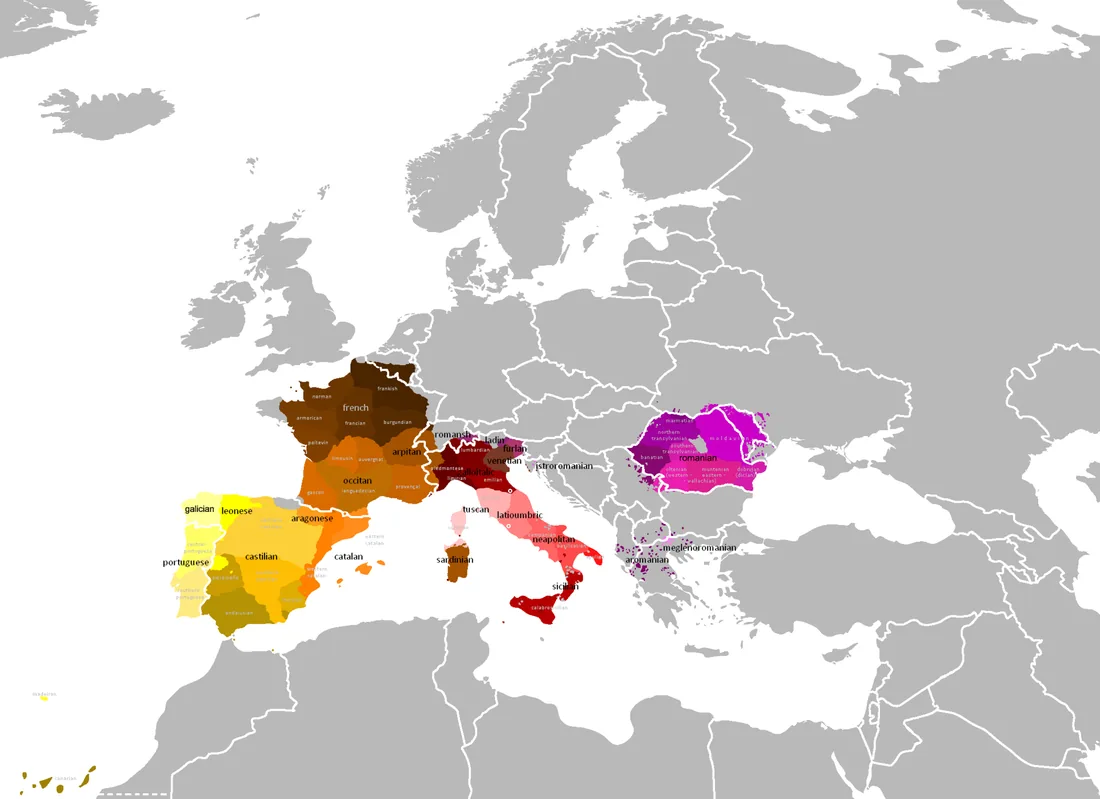
All of Romania
A stable word beat the language of Cicero.
The Ohio State sentence leaves no room for hedging: in all Romance languages the word for horse comes from caballus, “relatively rare in Classical Latin”, while equus survives “only in Literary or Technical English”. Below, the cloud of witnesses, from DER (REW 1440).
The witnesses, from DER
- Romanian cal
- Italian cavallo
- Provençal cavahl
- French cheval
- Catalan cavall
- Spanish caballo
- Portuguese cavallo
Every row is quoted from the dictionary. The count follows the rows, not the reverse.
In the dictionaries consulted, equus has no inherited descendant. Until a Romance handbook is checked, that is all that can be said.

Chapter 3 · the road to Dacia
The word came on horseback
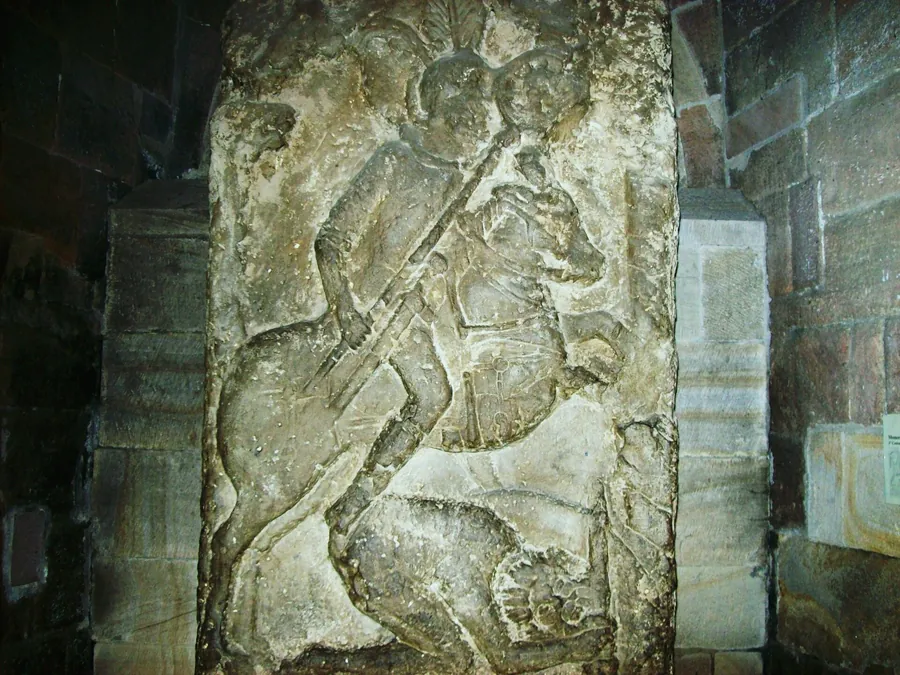
The army's Latin reached Dacia with its soldiers. Military documents record at least 58 auxiliary units, most transferred into Dacia from the neighbouring provinces — among them numeri, cohortes and alae.
Not all at once: the article notes that not all were stationed in Dacia at the same time.
At home, in the dictionary
“CĂLARE adv. … – Lat. caballaris, -em.”
“CĂLĂRAȘ … Corp militar de slujitori auxiliari ai domniei … – Călare + suf. -aș.”
At: COD. VOR. 53/12. And cal is on record in the same place: COD. VOR. 122/13.
The Voroneț Codex is a 16th-century manuscript.
A town named after horsemen
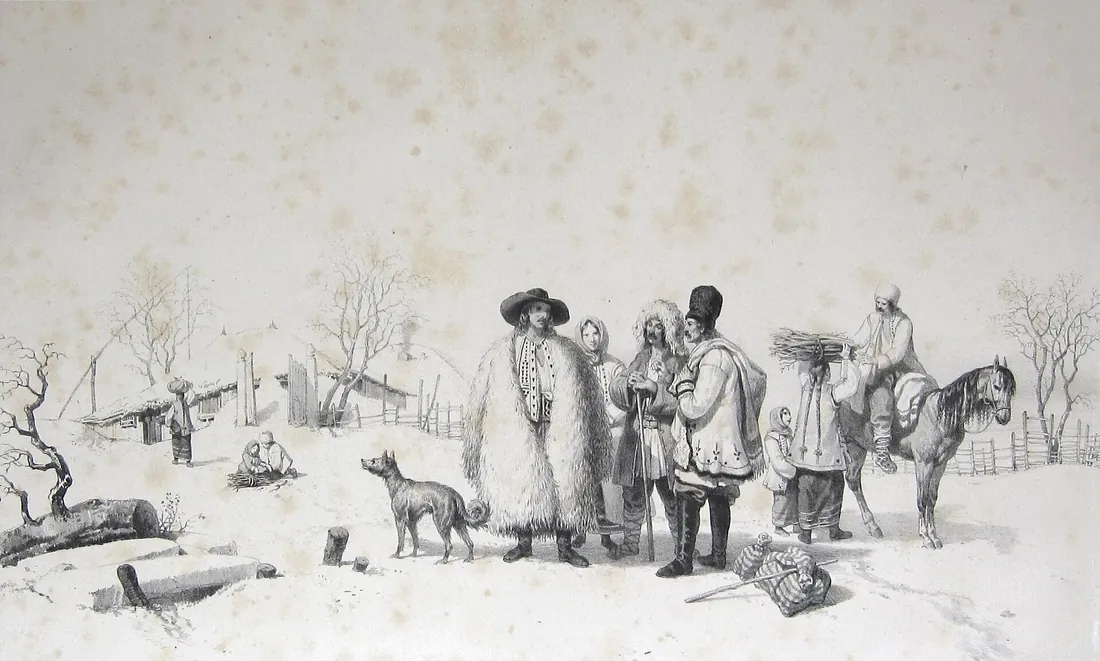
On stolnic Cantacuzino's map, printed at Padua in 1700, Lichirești appears. A class apart: the călărași ștafetari, mounted couriers on the Bucharest–Constantinople route.
From their name, the village of Lichirești became “the horsemen's village” — Călărași. In 1833 the move of the Ialomița county capital from Urziceni to Călărași was ordered.


Chapter 4 · the reckoning
Two words, one horse
The title is a deliberate trap. Its release sits in three dictionary lines: today's nag, the noble word bought back from books, and the binomial that reunites them.
Today's nag
“MÂRȚOAGĂ … Cal slab, rău îngrijit; gloabă. – Cf. mărțână.”
Regional variants: mărțoagă, mărțioagă, smărțog, smârțog and others. At: PANN, P. V. III, 21/22.
Șăineanu proposes: derived from marț with the pejorative suffix -og (cf. bijoagă). One dictionary's proposal.
The book-word
“equine (adj.) … 1765, from Latin equinus … from equus ‘horse’”
English borrowed the noble word late, from books — long after the languages split.
The rivals, reunited
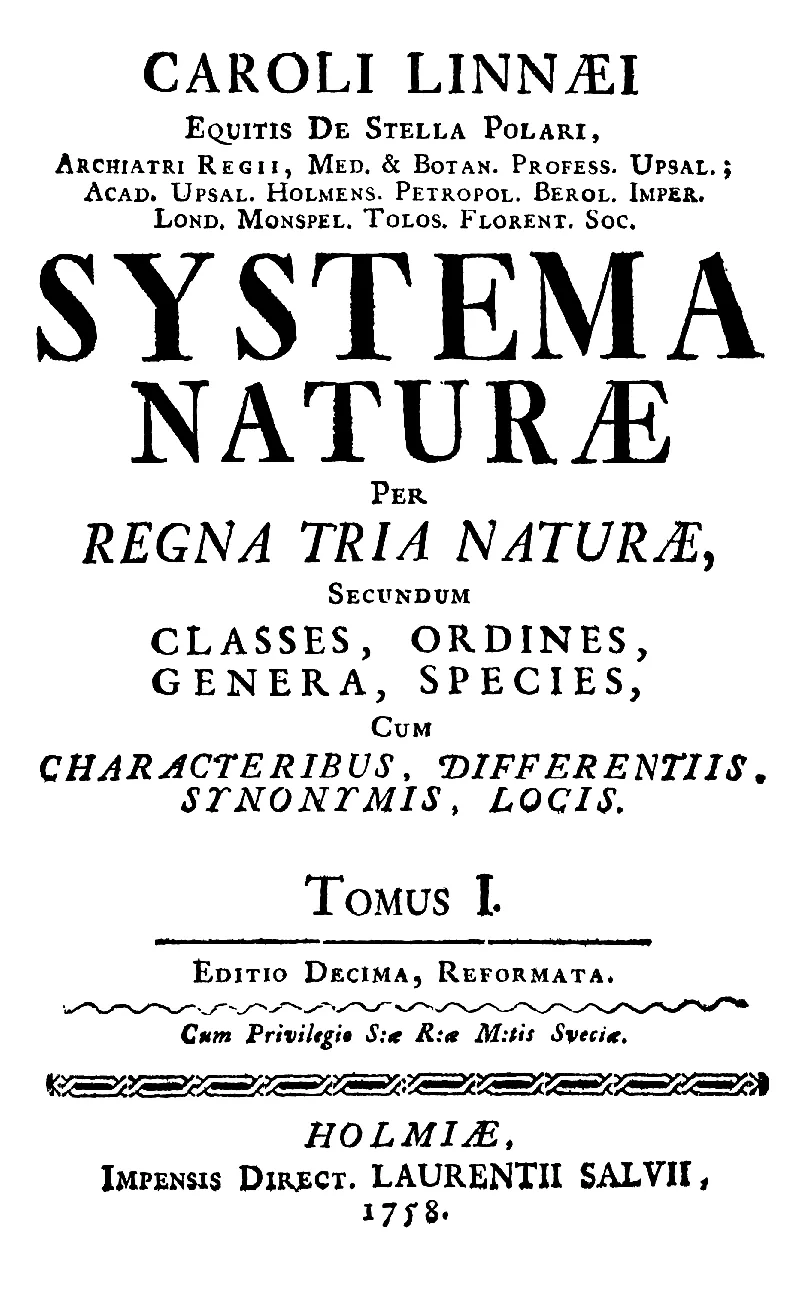
DEX shows, inside the definition of cal, the binomial Equus caballus.
The authority of the name: Linnaeus, 10th edition of Systema Naturae, 1758.
THE NAG
caballus → cal
the low word took everything.
THE MARE
equa → iapă
the noble feminine stayed.
THE BOOK
equus → equine
the noble word returned through books.


The engine · one word, four registers
The road
Four stops, one road. At each stop, the word changes shape.
TODAY · the dictionaries CAL
ROME · post-Augustan prose
CABALLVS
“…tanquam caballus in clivo…” — like a nag on a hill. Satyricon 134.
DACIA · the garrison
CABALLVS
At least 58 auxiliary units, most transferred into Dacia — among them alae.
THE ROMANIAN LANDS · the middle ages
CĂLĂRAȘ
“CĂLĂRAȘ … Corp militar de slujitori auxiliari …” At: COD. VOR. 53/12, 16th c.
TODAY · the dictionaries
CAL
“CAL … – Lat. caballus.” One stable word in seven languages.
The game · six rounds
Who said it?
Two rounds ask who speaks — verse or prose. Four ask which language the word speaks. Every round shows the dictionary row behind it.
Round 1
“Optat ephippia bos piger, optat arare caballus” — verse or prose?
The answer
Horace, Epistles 1.14.43. The poet's hexameter: the nag covets the plough.
Round 2
“…tanquam caballus in clivo…” — verse or prose?
The answer
Petronius, Satyricon 134. Petronius's prose: like a nag on a hill.
Round 3
cal — which language?
The answer
DER, REW 1440. Romanian: cal.
Round 4
cavallo — which language?
The answer
DER, REW 1440. Italian: cavallo.
Round 5
cheval — which language?
The answer
DER, REW 1440. French: cheval.
Round 6
caballo — which language?
The answer
DER, REW 1440. Spanish: caballo.
Score: 0 of 6
The numbers
1 → 7
One stable word gave the word for horse in seven Romance languages: Romanian, Italian, Provençal, French, Catalan, Spanish, Portuguese.
The count follows the DER rows quoted above.
1765
The year equine enters English — the noble word, borrowed from books.
etymonline: “from Latin equinus … from equus”.
Three things that are not so
Every myth gets the dictionary row that unties it.
Myth 1
“Cal comes from equus.”
The dictionary
DEX derives cal from caballus. Equus reached English equine through books, in 1765.
Myth 2
“Soldiers spoke Cicero's Latin.”
The dictionary
Day to day, the ordinary Roman said caballus, not equus. So Ohio State writes.
Myth 3
“The nag-word is the mother of cal.”
The dictionary
Mârțoagă is today's nag-word; DEX points it at mărțână. The title says what cal once meant, not what it descends from.
Sources
Dictionaries first, then the Latin texts and studies. Every risky claim points at its source.
| Claim | The dictionary line | Source |
|---|---|---|
| cal ← caballus | “CAL … – Lat. caballus.” + REW 1440 | DEX ’09 + DER |
| caballus = “nag” | “an inferior riding- or pack-horse, a nag (poet. and in post-Aug. prose)” | Lewis & Short |
| all Romance languages ← caballus | “In all Romance Languages the word for ‘horse’ is derived from … caballus …” | Ohio State |
| seven witnesses + kalj | “cf. alb. kalj, it. cavallo, prov. cavahl, fr. cheval, cat. cavall, sp. caballo, port. cavallo.” | DER |
| iapă ← equa | “IAPĂ … Femela calului. … – Lat. equa.” | DEX ’09 |
| equine, 1765 ← equinus ← equus | “1765, from Latin equinus … from equus ‘horse’” | etymonline |
| Horace uses caballus | “Optat ephippia bos piger, optat arare caballus” (Ep. 1.14.43) | The Latin Library |
| Petronius 134 | “…tanquam caballus in clivo…” | The Latin Library |
| the origin of caballus | “perh. Celtic” vs “d. vgr. kabálles” — the dictionaries disagree | L&S + Șăineanu |
| călare ← caballaris | “CĂLARE adv. … – Lat. caballaris, -em.” | DEX ’09 |
| călăraș ← călare + -aș | “Corp militar de slujitori auxiliari ai domniei …” At: COD. VOR. 53/12 | DEX ’09 + MDA2 |
| cal: COD. VOR. 122/13 | “[At: COD. VOR. 122/13 …]” — a 16th-century manuscript | MDA2 |
| 58 auxiliary units in Dacia | “Military documents report at least 58 auxiliary units … including … alae.” | Roman Dacia |
| Călărași: the 1700 map + couriers | Lichirești on the Cantacuzino map, 1700; “the horsemen's village”; the capital in 1833 | ro.wiki Călărași |
| mârțoagă = nag | “MÂRȚOAGĂ … Cal slab, rău îngrijit; gloabă. – Cf. mărțână.” | DEX ’09 |
| Equus caballus + 1758 | The binomial inside the definition of cal; authority: Linnaeus, Systema Naturae 10th ed. | DEX ’09 |
Every word-chain is quoted from the dictionary that states it — DEX, DER, Lewis & Short, etymonline — with the exact line beside the claim. Counts start from the displayed rows: only languages with a quoted dictionary row are counted. Where the sources disagree or fall silent, the page says so next to the affected claim.
Type: Fraunces, Newsreader and Atkinson Hyperlegible, under the SIL Open Font Licence.