CALENDAE → KOLENDA → COLINDĂ
Every December, we sing a Roman date
ROME · 1 JAN → DECEMBER · TODAY
Colindă comes from Latin calendae — the first of the month, called out loud — via Slavic kolenda. The Church spent centuries trying to strike it from the calendar; the song outlived every ban.
Start the two thousand Decembers
- calare
- “to call out, proclaim” — the root of the Roman date
- 62
- the Trullo canon that tried to erase it
- ≈1650
- first attested: ANON. CAR., Banat–Hunedoara

How the word changes clothes at the border:
- CALENDAE Rome
- KOLENDA the Slavs
- COLINDĂ Romania
Chapter 1 · Rome
A Roman date
Before it was a carol, the word was a calendar date: the first of the month, proclaimed out loud.
The proclaimed day
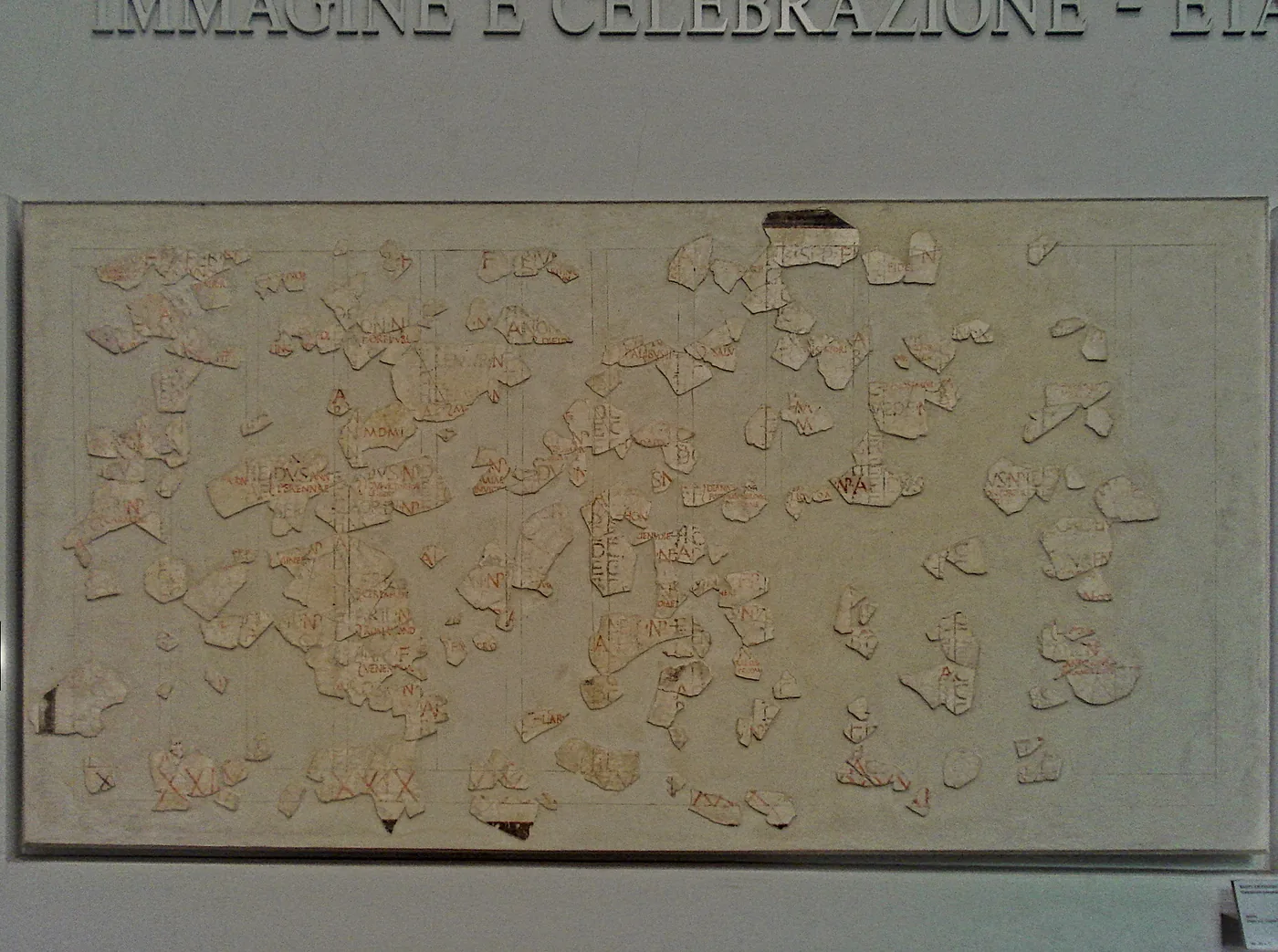
Calendae simply means the 1st of each Roman month. The name comes from calare — “to call out, proclaim”: the pontiffs announced the new moon and the days ahead. Of all the kalends, 1 January was the loudest: Rome opened its political year with wishes, gifts and fortune-telling.
Gifts of good omen
On 1 January, Romans gave one another strenae — luck-bearing gifts: branches of bay and palm, honey sweetmeats, figs and dates, later coins. Ovid stages Rome's New Year in Book 1 of the Fasti; the custom lasted into the fifth century, though abolished several times by edict.
An encomium of the Kalends
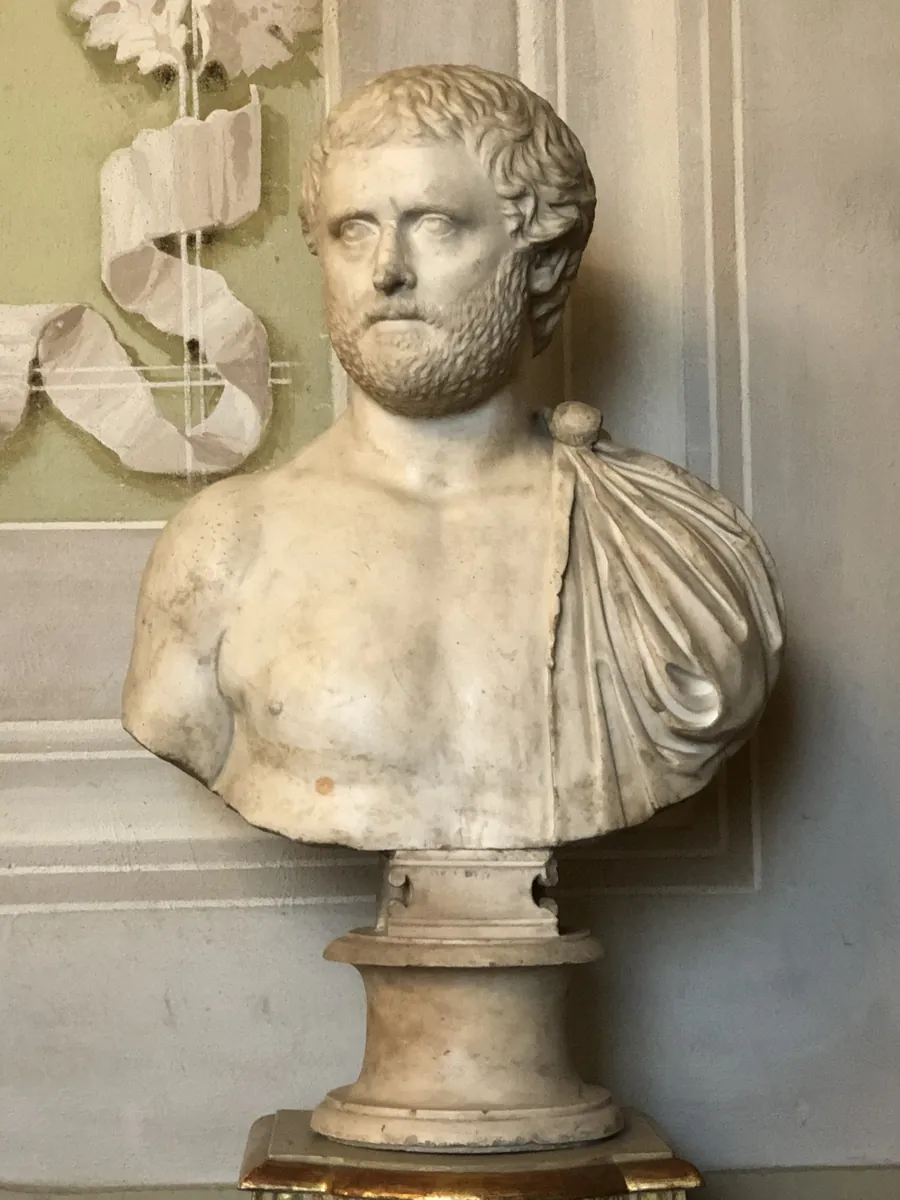
Around 392 or 393 — the exact date is uncertain — the rhetor Libanius of Antioch delivered an encomium of the Kalends: a night of revelry on the eve, gifts flowing down the social ladder, like a school of generosity. The pagan praises what the bishops, in the same century, labour to extinguish.
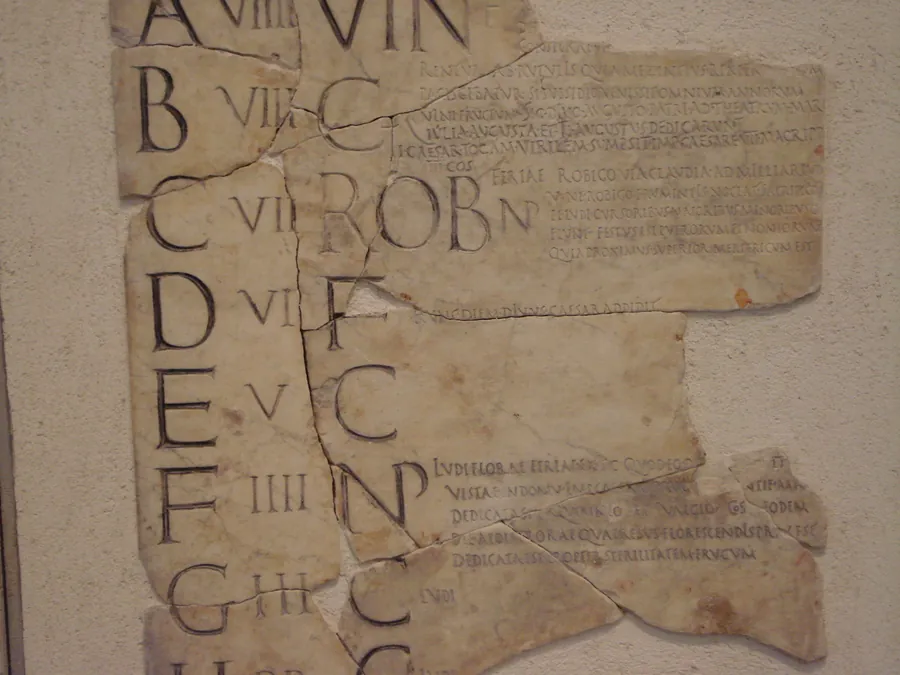

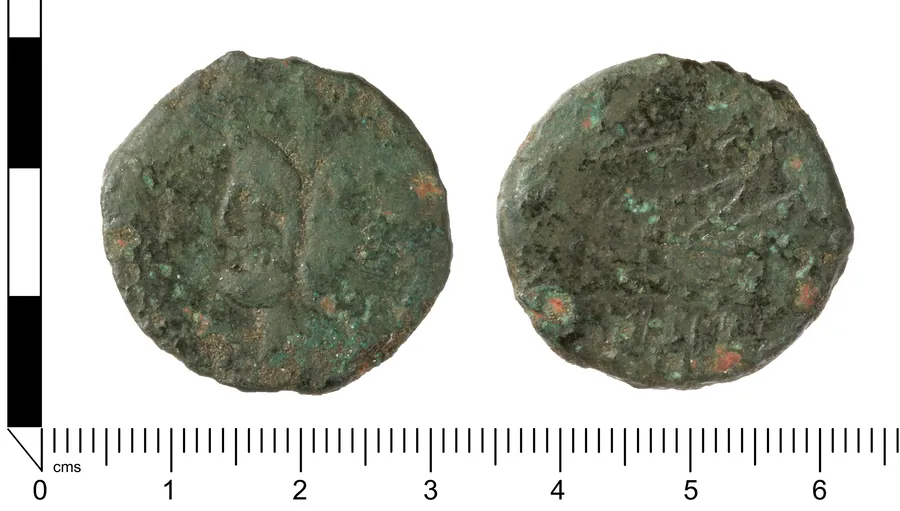


The same mechanism, in French: étrennes, the New Year presents, also come from strenae.
Chapter 2 · The ban that failed
The Church tries to erase it
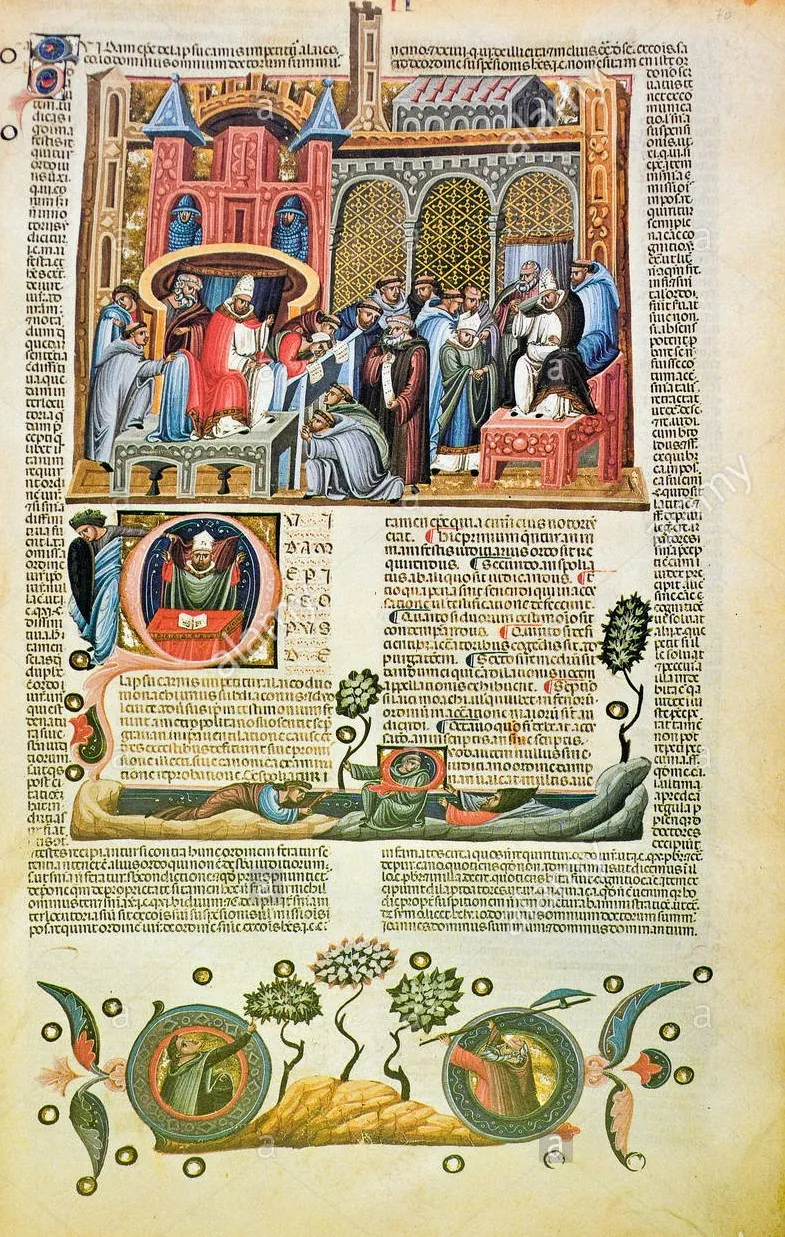
For three centuries and more, bishops and synods ordered, preached and threatened against the pagan New Year. Below, the roll of bans — and the centrepiece: Canon 62 of Trullo, in full.
sermon
Asterius of Amasea · c. 400
The bishop in Pontus preaches against the Kalends festival — the earliest surviving New Year sermon (in the 1904 edition: “Sermon 4”). The tone is open protest: the festival is pagan and must be abandoned.
sermon
Augustine · 404, Carthage
On New Year's Day 404, Augustine holds his congregation in church with a marathon sermon, to keep them from the Kalends revelling. No sermon number is given here: it is not securely known.
synod
The Gallic synods · c. 578–585
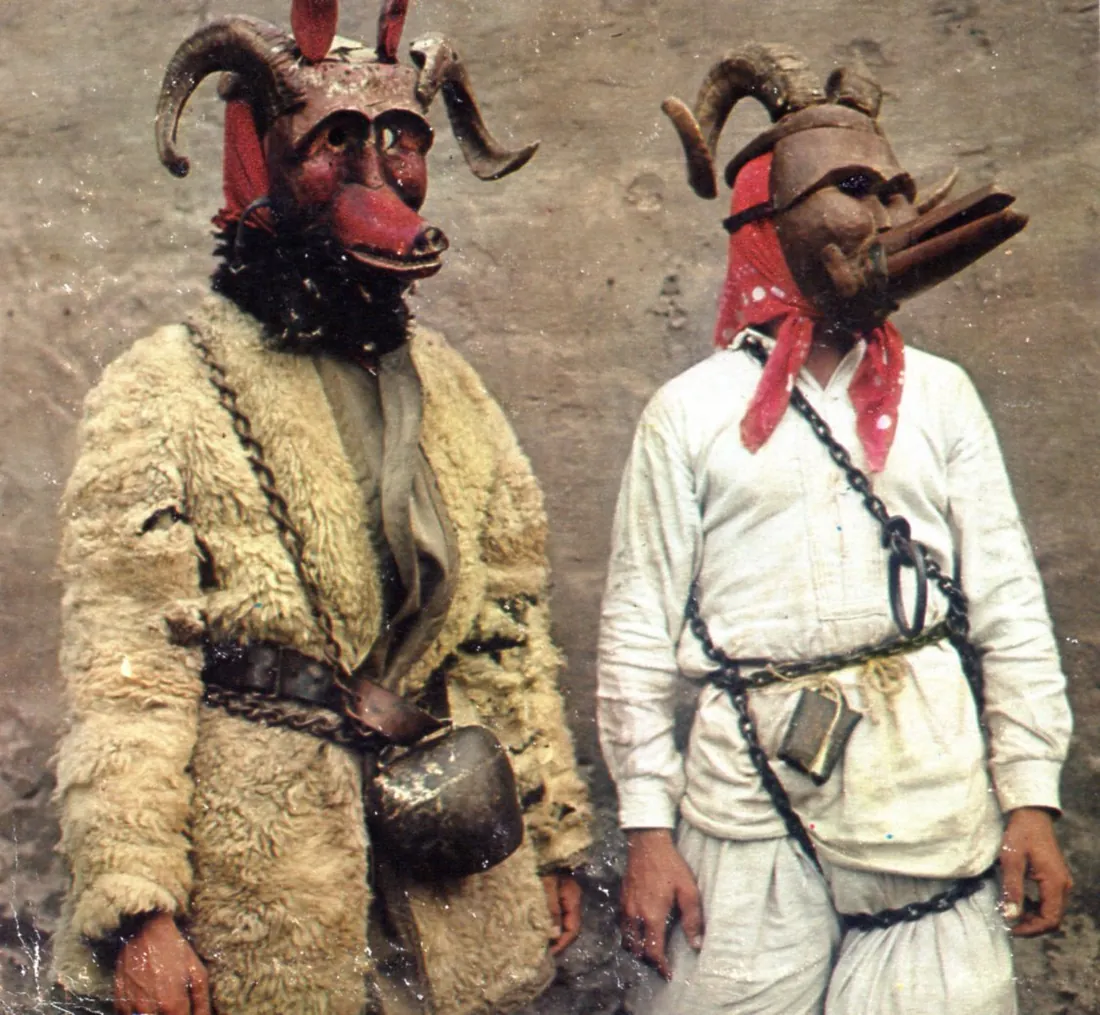
In Gaul, the synods forbid dressing as a stag or a cow on 1 January, and the “devilish New Year gifts”. Which synod and which canon — Mâcon or Auxerre — is unresolved, so this page does not choose: it says “the Gallic synods”.
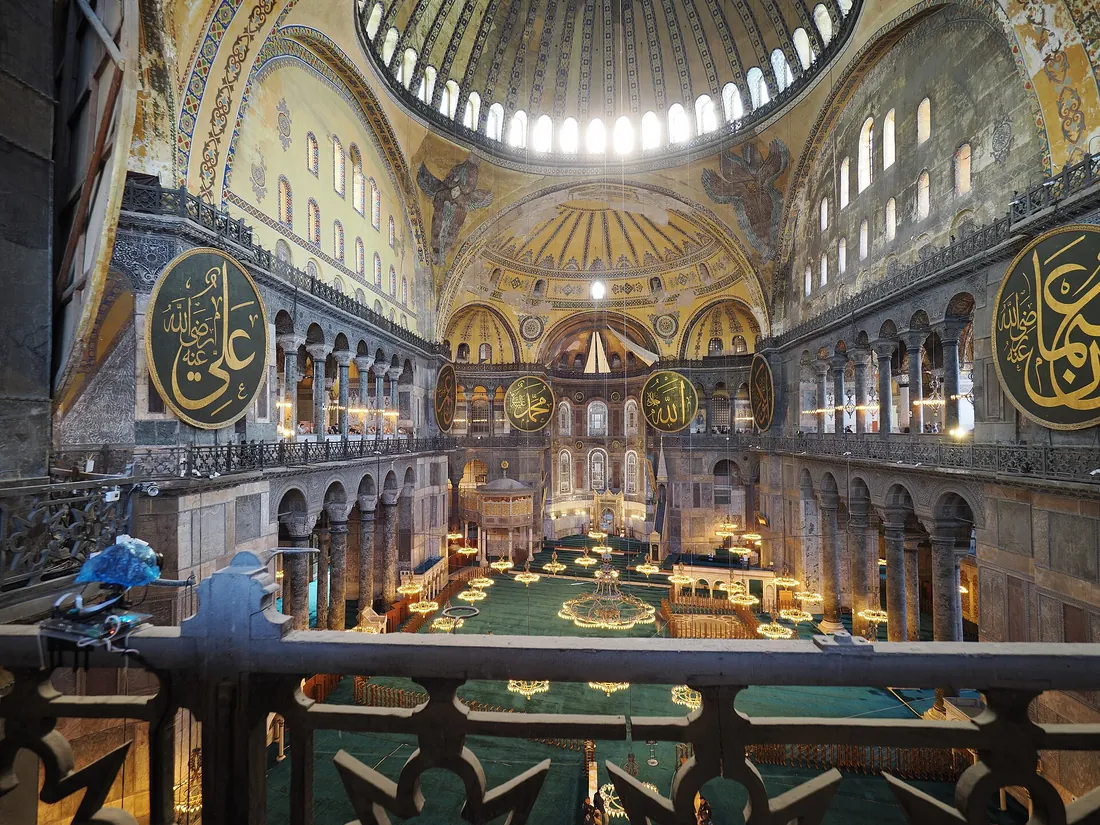
Trullo, 691/692 · Canon 62
The Quinisext Council, held in the domed hall (trullus) of the imperial palace at Constantinople. Below, the whole canon in the NPNF English translation.
Canon 62, in full (NPNF):
“The so-called Calends, and what are called Bota and Brumalia, and the full assembly which takes place on the first of March, we wish to be abolished from the life of the faithful. And also the public dances of women, which may do much harm and mischief. Moreover we drive away from the life of Christians the dances given in the names of those falsely called gods by the Greeks whether of men or women, and which are performed after an ancient and un-Christian fashion; decreeing that no man from this time forth shall be dressed as a woman, nor any woman in the garb suitable to men. Nor shall he assume comic, satyric, or tragic masks; nor may men invoke the name of the execrable Bacchus when they squeeze out the wine in the presses; nor when pouring out wine into jars [to cause a laugh], practising in ignorance and vanity the things which proceed from the deceit of insanity. Therefore those who in the future attempt any of these things which are written, having obtained a knowledge of them, if they be clerics we order them to be deposed, and if laymen to be cut off.”
The ban that failed.


Chapter 3 · Rome → the Slavs → Romania
The word travels north
Between Rome and the first Romanian attestation, the word takes a detour through Slavic. The dictionaries say plainly how: calendae → kolenda → colindă.
The chain, after the dictionaries:
- CALENDAE
- KOLENDA
- COLINDĂ
DEX ’09: “Din sl. kolenda.” — the Slavic step, plain and short.
MDA2: “vsl. KOLENDA, lat. calendae” — Old Slavonic, from Latin; the noun colind was formed later, from the verb.
DER: “Sl. kolęda ‘the first day of the year', and Slavic from Lat. călendae” — with eight scholarly references (Miklosich, Cihac, Meyer, Byhan, Romanski, Vasmer, Berneker, DAR).
Six cousins in six languages
This is how kolenda sounds at the neighbours' — every pairing after the Etymological Dictionary:
- bg koleda “the Christmas feast”
- sb kole(n)da “carol”
- rus koljadá “carol”
- cz koleda “collection, whip-round”
- hu koleda “collection, whip-round”
- gr kalanda · καλανδα “greeting song for the first day of the New Year”
A small map, as much as a word earns
Chapter 4 · Today
Every December
After almost two millennia of wishes, bans and detours through foreign tongues, the word does what it always did: it goes from door to door.
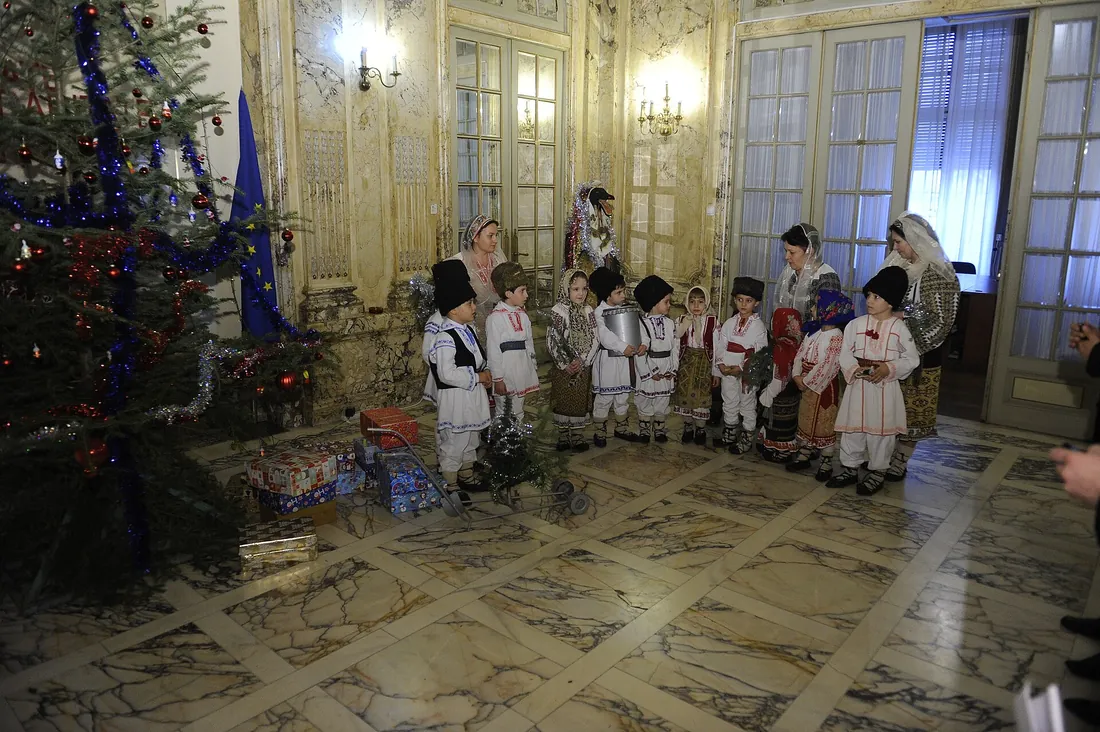
Colindă is, after DEX, the traditional song of bands of children, youths and adults at Christmas and New Year. And to colinda is to go on Christmas or New Year eve from house to house, singing colinde. That is all the dictionaries say — and it is enough.
Below, the word at work: four lines from a carol printed in the 19th century, as an attestation of the word, not as a ballad variant. For ballads, the sibling page is the one to read.
The word at work
Că vă vin colindători
Florile dalbe
Noaptea pe la cântători
Florile dalbe
“Florile dalbe”, after the Alecsandri collection (1866) — public domain, Wikisource transcription.
“Carolers are coming to you — white flowers — at night, by cockcrow — white flowers.” (Editors' translation.)


Sibling pages
- Miorița in variants — the ballad and its variants — whole texts are collated there.
- The folk calendar — the folk year as a tool — feasts and peasant reckonings.
The engine · a cinematic timeline
Two thousand Decembers
Ten stops, two tracks: the bans (red) and the song (gold). Start the timeline, or walk it with a finger, a keyboard or the buttons.
Rome · long before the common era
Calendae: the proclaimed day
song
stop 1 / 10
Rome · long before the common era
Calendae: the proclaimed day
On the first of each month, the pontiffs proclaim the new moon — from calare, “to call out, proclaim”. On 1 January, Rome wishes, gives and tells fortunes: strenae, gifts of good omen.
song
stop 2 / 10
Ovid · the first years of the common era
Fasti: the New Year staged
In Book 1 of the Fasti, Ovid stages Rome's New Year: branches of bay and palm, honey sweetmeats, figs and dates — gifts that carry luck.
song
stop 3 / 10
Libanius · 392 or 393
An encomium of the Kalends
The rhetor of Antioch praises the Kalends: a night of revelry on the eve, gifts flowing down, like a school of generosity. The exact date — 392 or 393 — is uncertain.
song
stop 4 / 10
Asterius of Amasea · c. 400
The earliest surviving sermon
The bishop in Pontus preaches against the Kalends festival: the earliest surviving New Year sermon (in the 1904 edition: “Sermon 4”).
ban
stop 5 / 10
Augustine · 404, Carthage
The marathon sermon
On New Year's Day 404, Augustine holds his congregation in church with a marathon sermon, to keep them from the Kalends.
ban
stop 6 / 10
The Gallic synods · c. 578–585
No stag, no gifts
The synods in Gaul forbid dressing as a stag or a cow on 1 January, and the “devilish New Year gifts”. Which synod and which canon is unresolved.
ban
stop 7 / 10
Trullo · 691/692
Canon 62
The Calends, Bota, Brumalia and the 1 March assembly “to be abolished from the life of the faithful” — on pain of deposition or excommunication.
ban
stop 8 / 10
First millennium · no exact date
The word passes through Slavic
Between Rome and the first Romanian attestation, the word travels through Slavic: calendae → kolenda. Nobody knows the borrowing's date — so it is not written.
song
stop 9 / 10
ANON. CAR. · mid-17th century
First attestation: colindă
The anonymous dictionary of Caransebeș, written in Banat–Hunedoara around 1650, attests colind / colindă.
song
stop 10 / 10
December · this year
Almost two millennia on, still sung
Every December, bands of children, youths and adults go from house to house singing colinde. The bans are dead; the song lives.
song
The game · match the cousin to the language
Whose New Year is it?
Six rounds: every cousin of colindă looks for its language. Choose the answer, read the point, collect score. The scoreboard stays on your device.
Score: 0 / 6 · 0 rounds played
Round 1 · koleda
Right! Bg. koleda — “the Christmas feast”, after the Etymological Dictionary.
Round 2 · kole(n)da
Right! Sb. kole(n)da — “carol”, after the Etymological Dictionary.
Round 3 · koljadá
Right! Rus. koljadá — “carol”, after the Etymological Dictionary.
Round 4 · kalanda · καλανδα
Right! Gr. kalanda — “greeting song for the first day of the New Year”, after the Etymological Dictionary.
Round 5 · koleda
Right! Hu. koleda — “collection, whip-round”, after the Etymological Dictionary. Czech sounds the same: koleda.
Round 6 · colindă
Right! Home: Rom. colindă — “from Sl. kolenda” (DEX ’09), “Old Slav. kolenda, Lat. calendae” (MDA2).
Two numbers
The whole story, squeezed into two figures:
62
the Trullo canon that ordered the Kalends abolished — and failed.
3 → 6
three links in the chain (calendae → kolenda → colindă), six cousins in six languages.
Three wrong sayings
You hear them every December. They do not hold:
“Colindă descends in a straight line from Latin.”
No: it comes via Slavic — kolenda — with a crossed variant (corindă, in Transylvania). A direct heir, *cărinde, is only the Etymological Dictionary's hypothesis.
“The Church banned the Christmas carols.”
No: it banned the pagan January Kalends — the revelling, the disguises, the gifts. The Christmas carol is the survivor, not the target.
“Trullo killed the festival.”
No: Canon 62 ordered its abolition, on heavy penalty. But the word is sung every December, almost two millennia after Rome.
What we don't know (said aloud)
U1. Which Gallic synod and which canon banned the stag and the gifts — Mâcon or Auxerre, and with what Latin text. Hence this page says “the Gallic synods, c. 578–585”.
U2. The number of Augustine's 404 sermon and its exact words. Hence this page gives no number and no quote.
U5 · closed. The ANON. CAR. dating — closed at build time: Chivu 2021, “Banat–Hunedoara, mid-17th century, around 1650”.
U6. The exact date of Libanius' encomium — 392 or 393 — and its closing words. Hence this page gives the range and does not quote the close.
U7. Whether *cărinde ever existed. It is the Etymological Dictionary's hypothesis; this page says so.
U8 · closed. The carol fragment — closed at build time: four lines from “Florile dalbe”, after the Alecsandri collection (1866), public domain; NOT from Marienescu 1859, which the sibling page carries.
U9. The exact “two thousand years” arithmetic — unanchored. Hence this page says “almost two millennia”, and “two thousand Decembers” as an engine title, not arithmetic.
U10. The Trullo dating — 691 or 692 — and a printed Romanian translation of Canon 62. Hence this page gives the range, and the editors translate.
Sources
Every claim on this page has a row in the table. Method: verify or hedge — what could not be verified carries a U-number with cautious wording, or is left out entirely.
| ID | Claim | Source |
|---|---|---|
| C01 | colindă ← Sl. kolenda | DEX ’09, via dexonline |
| C02 | colindă ← Old Sl. KOLENDA ← Lat. calendae; att. ANON. CAR.; verb in BARAC | MDA2, via dexonline |
| C03 | the full chain + 8 scholarly references | DER (Cioranescu), via dexonline |
| C04 | 6 cognates: bg/sb/rus/cz/hu/gr | DER, via dexonline |
| C05 | lost *cărinde → corindă (hypothesis) | DER, via dexonline |
| C06 | ANON. CAR.: Banat–Hunedoara, ≈1650 | Chivu 2021, Diacronia 14 |
| C07 | calendae = the 1st < calare “to proclaim” | Collins / Oxford Ref. / Packer |
| C08 | strenae + Ovid, Fasti 1 (1.185–190) | Harpers, via Perseus |
| C09 | Trullo, Canon 62 — full text + penalty | NPNF, via New Advent |
| C10 | Libanius, encomium of the Kalends, 392/393 | MDPI 16/7/873 + Cambridge ch.6 |
| C11 | Asterius of Amasea vs. the Kalends | Asterius, Sermons (1904), Sermon 4 |
| C12 | Augustine, marathon sermon, 404, Carthage | Cambridge, Kalends ch.6 |
| C13 | the Gallic synods vs. stag + gifts | Mâcon (Fr.) vs. Auxerre (En.) — conflict |
| C14 | Fr. étrennes ← strenae | Harpers, via Perseus |
| C15 | colinda = going house to house | DEX ’09 / MDA2, via dexonline |
| C16 | 4 lines of “Florile dalbe” (Alecsandri 1866) | ro.wikisource, public domain |
| C17 | 10 timeline stops | composed from C06–C13 |
| C18 | “almost two millennia”, no arithmetic | derived, with U9 |
Dictionaries
Rome and the New Year
The bans
- Trullo, the canons (NPNF, New Advent)
- Canon 62 (St-Takla mirror)
- Asterius vs. the Kalends; Libanius and the New Year sermon (MDPI)
- Cambridge: the Kalends of January, ch. 6
- Miles, Christmas in Ritual and Tradition
Romanian attestations
Type: Fraunces, Newsreader and Atkinson Hyperlegible, under the SIL Open Font Licence.