Romanian emigration to America, 1880–1930
29 questions at America's gate
Between 1899 and 1924, 148,249 ethnic Romanians were admitted to the United States – most of them Transylvanians on Hungarian papers. This is the journey they made: the counties, the ships, the 29 questions, and the one in three who came back.
Documented sailingRepresentative route
From Târnava Mare to Cleveland
Between 1899 and 1924, 148,249 ethnic Romanians were admitted to the United States. Most of them were Transylvanians travelling on Hungarian papers: on the ship's list they appear as Hungarians, and only the “race or people” column says Roumanian.
Follow the journey in five chapters, from the counties that emptied to the quotas that closed the door. The routes on the map are representative – rail to the ports, sea to New York, rail again to the colonies – drawn from the lines and ports the sources confirm, not from individual manifests.
Chapter I
The counties that emptied
1899 – 1913 · leaving
- Chapter
- 1899 – 1913
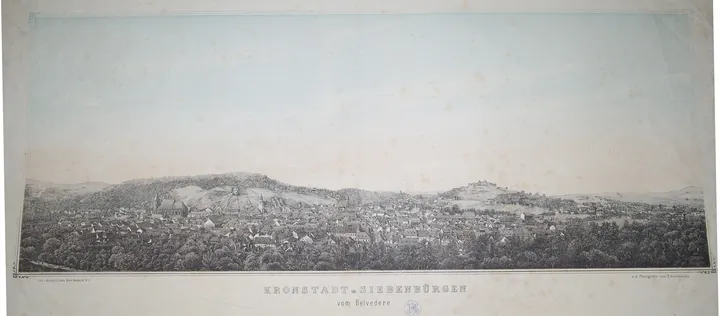
- Emigration rate, Nagy-Küküllő
- 93.1 per 10,000
- Romanians from Hungary, 1900–1913
- 98,175
- Share of natural increase, Nagy-Küküllő
- 109.6%
Before the First World War, most Romanian emigrants travelled as Hungarians or Austrians: Transylvania belonged to Hungary, Bukovina to Austria. America counted them separately only by “race or people” – and under that heading 82,704 Roumanians were admitted between 1899 and 1910, the 23rd immigrant race in the tables.
They came from a handful of counties. The Hungarian statistics for 1899–1913 put Nagy-Küküllő (Târnava Mare) first at 93.1 emigrants per 10,000 inhabitants – more people than the county's natural increase – followed by Kis-Küküllő at 72.3, Temes at 69.5, Fogaras at 64.5 and Szeben at 55.3. Hunyad, for all its industry, sent almost no one: 7.9 per 10,000.
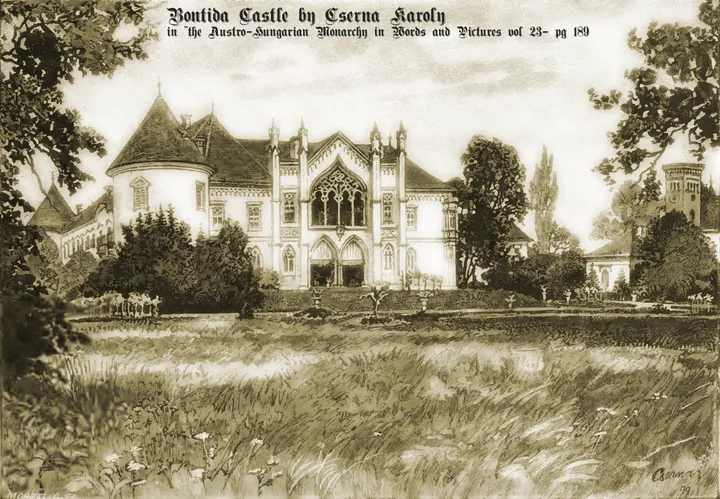

Land pressure, recruiters' promises and the letters of those who had gone before did the pushing. From Hungary alone, 98,175 ethnic Romanians reached the United States between 1900 and 1913 – and each sailing carried the addresses of uncles and cousins who had sailed earlier.
Meanwhile In 1911 the Dillingham Commission's Dictionary of Races gave ROUMANIAN its own entry, on page 107.
Chapter II
Fiume to New York
1904 – 1914 · the crossing
- Chapter
- 1904 – 1914
- Cunard's guaranteed traffic
- 30,000 a year
- Austro-Americana ships in the manifests
- 28
- Cabin-class share of all arrivals
- 12–20%
In 1904 Hungary signed Cunard to a direct emigrant line from Fiume to New York, guaranteeing 30,000 passengers a year – and the great majority of Hungary's emigrants, Transylvanians among them, did sail Cunard via Fiume. The three ships in our manifest sample all made that run.
Others went north by rail: emigrants from Austria-Hungary reached Bremen and Hamburg as easily as the Adriatic ports, sailing Norddeutscher Lloyd and HAPAG. From Trieste the Austro-Americana line ran its own emigrant service from June 1904, and Holland-America carried Jewish fugitives from Romania via Rotterdam.
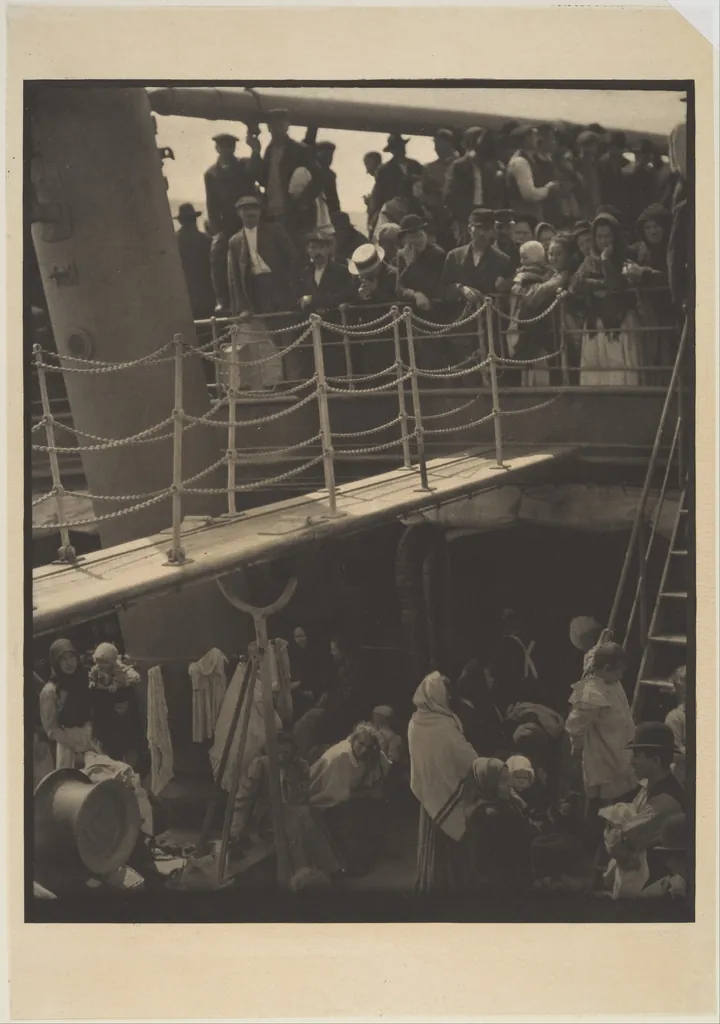

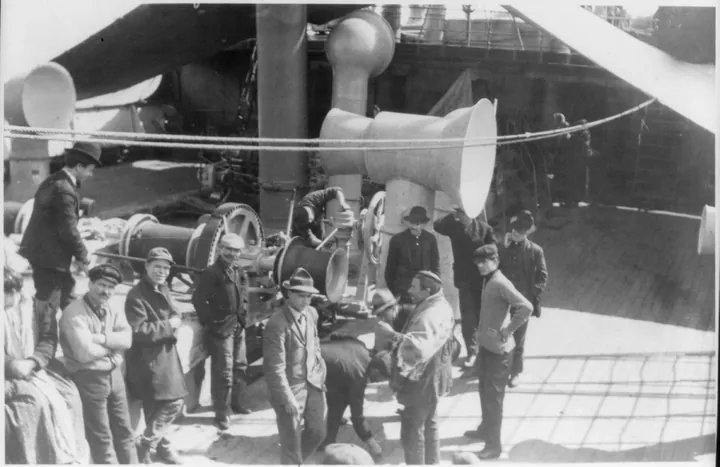

Almost all Romanian emigrants travelled steerage, in the dormitory decks below the waterline. Only cabin passengers were inspected aboard ship in the harbour; everyone else was ferried to Ellis Island. Across all arrivals, 12–20% travelled cabin class – the Romanian-specific share was never tabulated.
Meanwhile The Ultonia's October 1904 sailing reached New York with Banat villagers bound for Cincinnati, Catasauqua and New York.
Chapter III
The 29 questions
1892 – 1924 · the inspection
- Chapter
- 1892 – 1924
- Manifest columns after 1907
- 29
- Processed on 17 April 1907
- 11,747
- Ultimately excluded
- about 2%
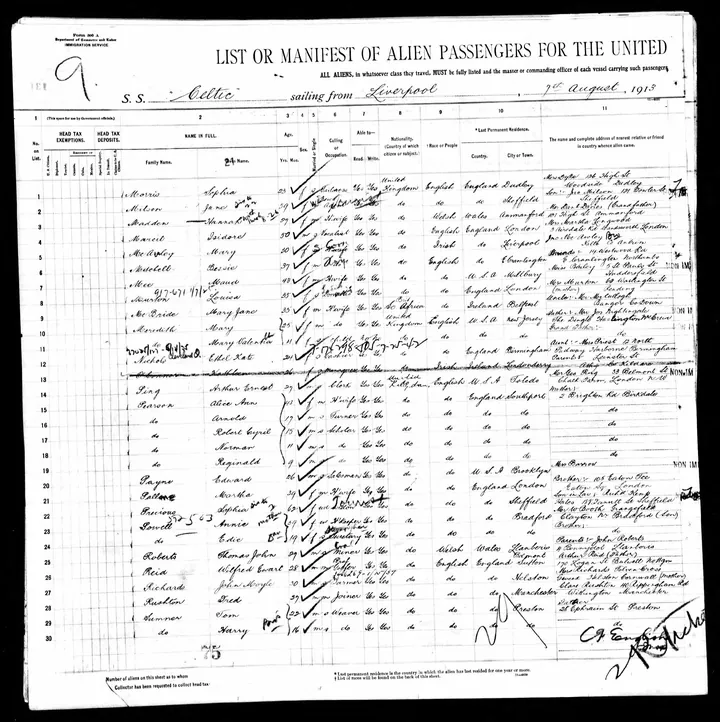
The manifest was written before the ship sailed, by the shipping line's clerks: name, age, village, destination, and – after 1903 – “race or people”, plus whether the passenger was a polygamist or an anarchist. The Act of 20 February 1907 stretched the form to 29 columns on a two-sided sheet, adding the nearest relative back home and a physical description.
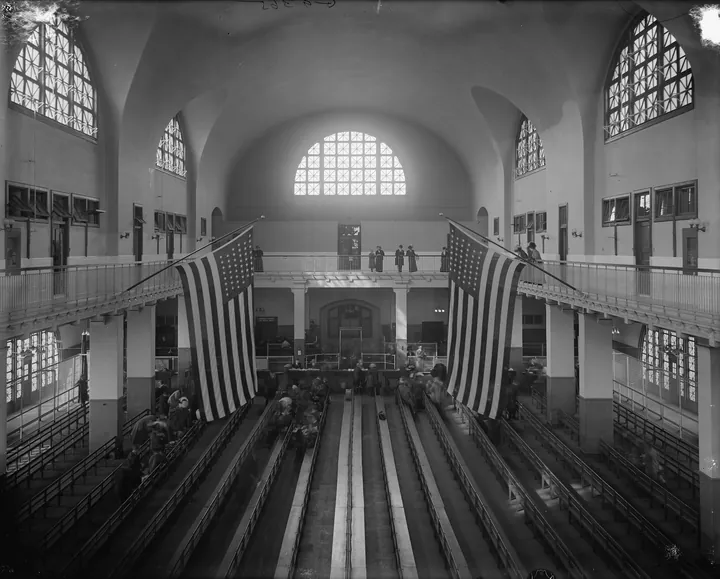
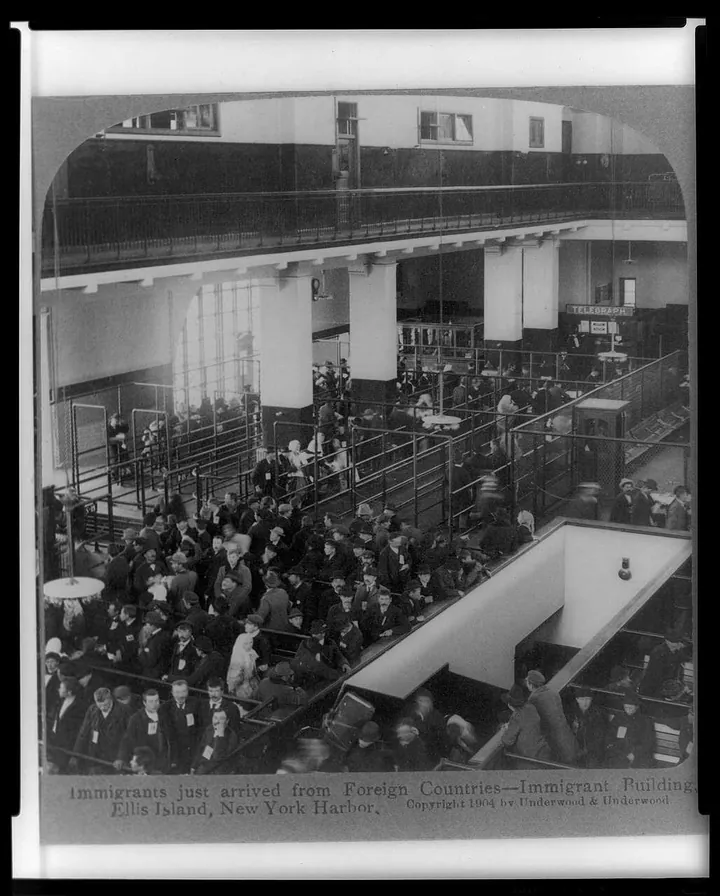
At Ellis Island the steerage passengers filed past Public Health Service doctors in the line inspection. A glance, an eyelid everted in search of trachoma, and a chalk mark on the coat – a letter for the suspected defect – sent about 20% of arrivals aside for a closer look. The legal inspectors then cross-checked each traveller's answers against the manifest.
_(LOC).jpg)

Almost everyone passed: about 2% were ultimately excluded and sent back. The busiest day of the whole Ellis Island era fell in the decade when 82,704 Romanians were admitted – 11,747 people processed on 17 April 1907, out of 1,004,756 that year.
The chalk letters, from the Public Health Service account of 1917. Tap a card in the game below to meet two of them in action.
| B | back |
|---|---|
| C | conjunctivitis |
| CT | trachoma |
| E | eyes |
| F | face |
| Ft | feet |
| G | goiter |
| H | heart |
| K | hernia |
| L | lameness |
| N | neck |
| P | physical and lungs |
| Pg | pregnancy |
| Sc | scalp |
| S | senility |
| X | suspected mental defect – further examination |
| X, circled | definite signs of mental disease |
| written out in full | hand, measles, nails, skin, temperature, vision, voice |
The 29 columns of the post-1907 manifest, in the form's own order. The inspector's questions followed this list.
- Number on the list
- Full name
- Age
- Sex
- Married or single
- Occupation
- Able to read and write
- Nationality (country)
- Race or people
- Last permanent residence (country and town)
- Nearest relative or friend at home (name and address)
- Final destination (state and town)
- Ticket to the destination?
- Who paid the passage?
- 50 dollars or more in possession – if less, how much?
- Ever in the US before – when and where?
- Joining a relative or friend (name and address)?
- Ever in prison, an almshouse, an asylum, or on charity?
- Polygamist?
- Anarchist?
- Coming on a labour offer or agreement?
- Mental and physical health
- Deformed or crippled (nature, duration, cause)?
- Height
- Complexion
- Colour of hair and eyes
- Marks of identification
- Place of birth (country)
- Place of birth (town)
Meanwhile The record day of the whole Ellis Island era – 11,747 people on 17 April 1907 – fell in the decade when 82,704 Romanians were admitted.
Chapter IV
Little Romanias
1904 – 1916 · the colonies
- Chapter
- 1904 – 1916
- First parish, St Mary, Cleveland
- Aug 1904
- Romanian weekly America, Cleveland
- 1 Sept 1906
- Could neither read nor write
- 35%
Cleveland became the capital of Romanian America. Its St Mary parish, founded in August 1904, was the first Romanian Orthodox parish in the United States; the weekly America followed on 1 September 1906. The colony was chiefly Transylvanian, built in the years 1900–1915.
Youngstown's Holy Trinity parish held its first liturgy on 4 February 1906; Canton's St George was established on 12 October 1912; in Farrell, Pennsylvania, Romanians – mostly Transylvanian – had been arriving since about 1890 and founded the “Transylvania” society in 1905; Detroit's parish followed in 1916.
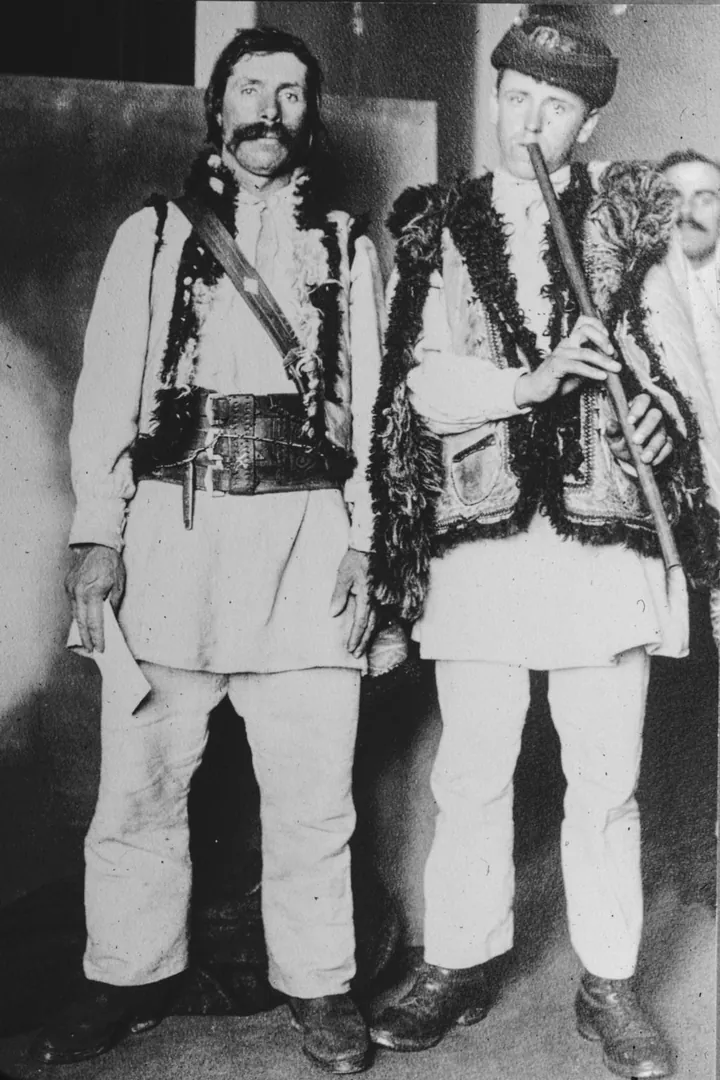

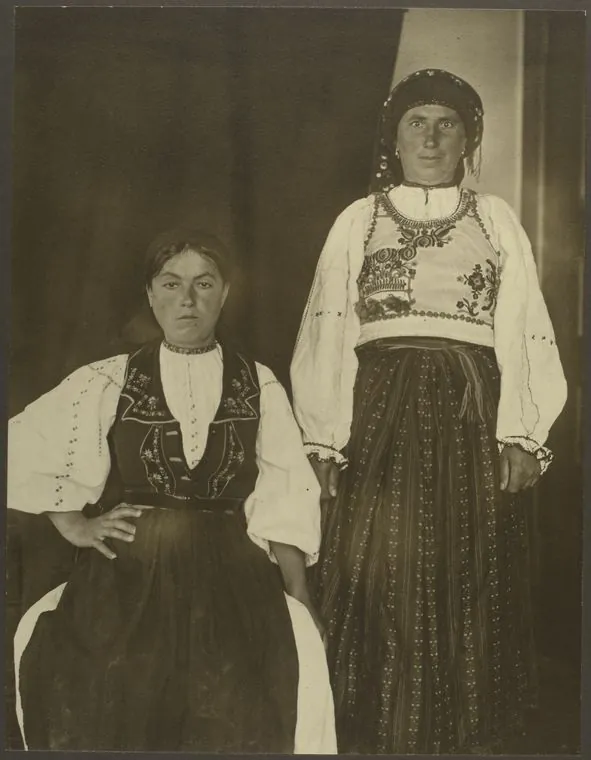

The manifests say who waited for them: an uncle in Cincinnati, a cousin in Steelton, an uncle in Bozeman, Montana. Of the Romanians admitted between 1899 and 1910, 28,266 of 80,839 aged fourteen and over – 35% – could neither read nor write; which also means 65% could.
Meanwhile Cleveland's America weekly was founded on 1 September 1906, the year Youngstown heard its first Romanian liturgy.
Chapter V
One in three came back
1921 – 1924 · quotas and return
- Chapter
- 1921 – 1924
- Romania's quota, 1921 Act
- 7,419 a year
- Romania's quota, 1924 Act
- 603 a year
- Arrivals of 1850–1913 who returned
- one in three
In 1921 Congress capped immigration by nationality: Romania got 7,419 places a year. Three years later the Johnson-Reed Act cut the formula to 2% of each nationality's 1890 population – and Romania's annual quota fell to 603, published in President Coolidge's Proclamation 1703 of 30 June 1924.
The flow had already thinned: 10,569 ethnic Romanians were admitted in 1921–1924, against 54,976 in 1911–1920 and 82,704 in 1899–1910. Added together, the official race tables give 148,249 admissions for 1899–1924 – our own sum, not a published total.

And many did not stay. One in three of all arrivals between 1850 and 1913 eventually returned to Europe. Romanian-specific return tables did not survive in the sources we could verify, so this page claims no exact Romanian share – only that going home was common, not exceptional.
Meanwhile The last full year before the war, 1914, brought 24,070 Romanian admissions – more than thirty-nine years of the 1924 quota.
Would you have passed?
Four moments from the inspection line. Choose, then learn what the chalk and the columns really meant.
-
1
Off the ship
Your ship docks in New York harbour. First- and second-class passengers are inspected aboard. You travelled steerage. Where do you go?
What happened
The ferry. Only cabin passengers were inspected aboard ship; steerage passengers were landed at Ellis Island. Almost every Romanian emigrant took that ferry.
-
2
A chalk mark
In the line, a doctor glances at you and chalks an X on your coat. What happens now?
What happened
Further examination. The X meant suspected mental defect – a closer look, not a verdict. About 20% of arrivals were held this way; about 2% were ultimately excluded.
-
3
The eyelid test
The doctor everts your upper eyelid, looking for trachoma. The test is positive. What does it mean?
What happened
Likely exclusion. Trachoma, the contagious eye disease the eyelid test looked for, was among the conditions that barred entry – chalk mark CT.
-
4
The name on the list
The inspector reads your name from the manifest and it sounds wrong. Who wrote it that way?
What happened
The clerk. Manifests were written by the shipping line's clerks at embarkation; the inspector only cross-checked. Your family name was not changed at Ellis Island.
Answer a card to begin.
Nine names from the lists
Three Cunard sailings from Fiume, nine real passengers, transcribed from the National Archives ship records. Search by name, village, ship, or destination – then follow the guide to find your own family in the full database.

Showing 9 of nine passengers
No passenger matches. Try a village, a ship, or a shorter fragment.
| Name | Age | From | To | Ship | Arrived |
|---|---|---|---|---|---|
| GEHREITHOFFER Maria | 23 | Temeswar | St Louis, MO | Carpathia | 25.02.1904 |
| GURBAN Simon | 39 | Temeswar | New York, NY | Carpathia | 25.02.1904 |
| LAUB Elisabeth | 19 | Tschakowa | Philadelphia, PA | Carpathia | 25.02.1904 |
| ARNOLD Maria | 23 | Perjamosch | Cincinnati, OH | Ultonia | 13.10.1904 |
| BOHM Daniel | 34 | Mollydorf | Catasauqua, PA | Ultonia | 13.10.1904 |
| BURGER Stefan | 37 | Gier | New York, NY | Ultonia | 13.10.1904 |
| FELDENCSER Josef | 35 | Gr Betschkerek | Steelton, PA | Pannonia | 23.07.1905 |
| FERLING Reza | 20 | Gr Kikinda | New York, NY | Pannonia | 23.07.1905 |
| GIMPEL Fulip | 33 | Detta | Bozeman, MT | Pannonia | 23.07.1905 |
Spellings as in David Dreyer's extraction of the NARA records (2000–2007); letter-level spelling against the manifest images was not re-checked. Arrival dates and destinations are the extraction's own.
Find your own surname
- Search the Foundation's arrivals database by surname, ship, or village – the link is in the sources. Spelling varies: try every variant you can think of.
- Expect Hungarian spellings. Your village appears as the clerk heard it – Temeswar, not Timișoara; Perjamosch, not Periam.
- Note the ship and the arrival date, then read the manifest image line by line: the second page, from 1907 on, holds the physical description and the birthplace.
- Follow the “joining” column: the relative or friend named there is often the key to the next document.
The wave in six numbers
Every figure below comes from the official American or Hungarian tables. The arithmetic is shown in the methods note under the sources.
- 148,249
- ethnic Romanians admitted, 1899–1924
- 29
- columns on the manifest after 1907
- 24,070
- Romanian admissions in 1914, the peak year
- 11,747
- people processed on 17 April 1907
- 35%
- of admitted Romanians aged fourteen and over could neither read nor write, 1899–1910
- 603
- Romania's annual quota under the 1924 Act

Three things people get wrong
Ellis Island changed our name.
No. Inspectors checked each traveller against the manifest; they did not write names down. The names were written by shipping clerks in Europe – and families themselves changed them later, or clerks misheard them at embarkation.
They all stayed in America.
No. One in three of all arrivals between 1850 and 1913 eventually returned to Europe. A Romanian-specific share is not in the tables we could verify.
They left as Romanians.
On paper, most left as Hungarians or Austrians: Transylvania and Bukovina belonged to Austria-Hungary. America counted them separately only by “race or people” – 82,704 Roumanians in 1899–1910.
_(3109330941).jpg)
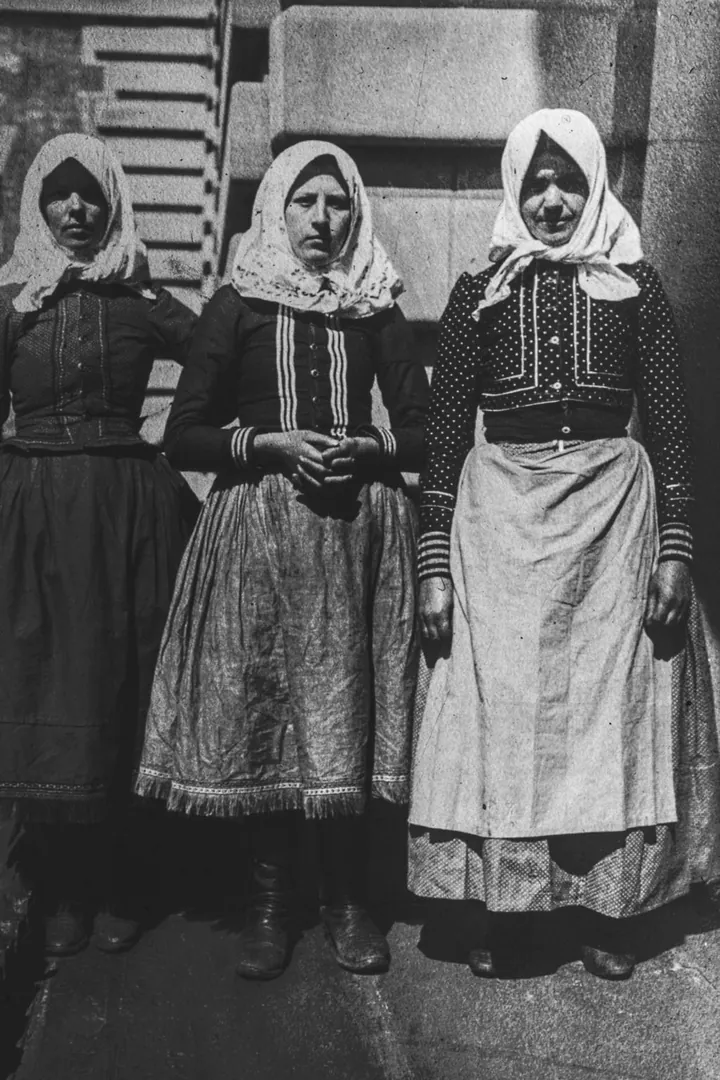

Sources and methods
The headline total is our own sum from the official American race tables: 82,704 admissions in 1899–1910, 54,976 in 1911–1920 and 10,569 in 1921–1924, giving 148,249 for 1899–1924. No single published total covers 1880–1930, so the years outside that span stay out of the arithmetic.
Passenger spellings come from David Dreyer's volunteer extraction of the National Archives ship records, re-checked against the extraction itself but not letter by letter against the manifest images. Every passenger links to the extraction page and to the Ellis Island database holding the original.
Map routes are representative paths through verified ports and lines, drawn dashed throughout; the one solid line on the map marks the documented Fiume–New York sailings. Distances are not stated because the paths are illustrative.
The counties that emptied
- Hungarian Central Statistical Office, Kivándorlás és visszavándorlása 1899–1913 (1918), vol. 67: county rates, p. 53 (Nagy-Küküllő 93.1 per 10,000), ethnic table, p. 56 (98,175 Romanians from Hungary, 1900–1913)
- Dillingham Commission, Dictionary of Races or Peoples (1911), ROUMANIAN entry, p. 107: Romanians as a separate “race” in US statistics
- Dillingham Commission, Statistical Review, vol. 3, table 10, p. 45: 82,704 Romanian immigrants admitted, 1899–1910
- W. Willcox (ed.), International Migrations, vol. I (NBER, 1929), table X: annual series by race, 1899–1924
Fiume to New York
- Foreign Relations of the United States, 1904: the Hungarian government's contract with Cunard for the direct Fiume–New York line (30,000 passengers a year guaranteed)
- National Archives of Hungary: the great majority of Hungary's emigrants sailed Cunard via Fiume
- Botstiber–Biaas, Emigration routes: Austro-Hungarian emigrants reached Bremen/Hamburg by rail as easily as Fiume/Trieste
- Austrian Embassy, Washington, Austro-Americana: 28 of the line's ships in the Ellis Island manifests
The 29 questions
- NARA, form NA 14132c: the 29-column manifest under the Act of 20 Feb 1907
- NARA, form NA 14132a: the 22-column manifest, 1903–1907 (introduces “race or people”)
- E. H. Mullan (Surgeon, Public Health Service), “Mental Examination of Immigrants”, Public Health Reports 32/20 (18 May 1917), pp. 733–736: line inspection and the chalk codes
- NPS, “The Doctors of Ellis Island”: the Ellis Island medical procedure
- LOC, HABS NY-6086-O: the record 11,747 people processed on 17 Apr 1907
- Scientific American, “Challenging the Immigrant”: about 20% held for further inspection, about 2% ultimately excluded
Little Romanias
- Cleveland Historical: St Mary parish (Aug 1904, first Romanian Orthodox parish in the US) and the weekly America (1 Sept 1906)
- Cleveland State University, Romanian-Americans and Their Communities of Cleveland: Romanian-American organizations and institutions
- OCA, Holy Trinity parish, Youngstown (1906), and St George parish, Canton (12 Oct 1912)
- Holy Cross parish, Farrell, Pennsylvania: Romanians (mostly Transylvanian) from c.1890, the “Transylvania” society (1905)
- Dillingham Commission, Abstracts of Reports, vol. I, p. 99: 35% of admitted Romanians (14 and over) could neither read nor write, 1899–1910
One in three came back
- Statistical Abstract of the United States, 1924, table 79, p. 83: Romania's quota, 7,419 a year, in 1922–1924
- President Coolidge's Proclamation 1703 (30 June 1924): Romania's quota, 603 a year, under the 1924 Act
- Abramitzky–Boustan–Eriksson, ILR Review 70/5 (2017): one in three arrivals between 1850 and 1913 returned to Europe
The inspection game
- Alicia Ault, “Did Ellis Island Officials Really Change the Names of Immigrants?”, Smithsonian Magazine (28 Dec 2016): inspectors checked manifests written at embarkation; they did not write names
- J. Sutton, “Why Your Family Name Was Not Changed at Ellis Island”, NYPL (2 July 2013): the name list came from the ship's manifest, filled in by the ship's officers in Europe
- A.-E. Birn, “Six Seconds Per Eyelid”, Dynamis 17 (1997), p. 295: 12–20% of arrivals travelled cabin class (the rest, in steerage, went through Ellis Island)
The nine passengers
Images
- Augustus Frederick Sherman, c.1906–1914 · Wikimedia Commons
- Augustus Frederick Sherman · Wikimedia Commons
- Augustus Frederick Sherman · Wikimedia Commons
- Augustus Frederick Sherman (a Ruthenian sitter, not Romanian) · Wikimedia Commons
- Augustus Frederick Sherman · Wikimedia Commons
- Augustus Frederick Sherman (Slovak sitters, not Romanian) · Wikimedia Commons
- Detroit Publishing Co., c.1900, Library of Congress · Wikimedia Commons
- Underwood & Underwood stereograph, 1904 · Wikimedia Commons
- Alfred Stieglitz, 1907 (Met Museum, CC0) · Wikimedia Commons
- Bain News Service, Library of Congress · Wikimedia Commons
- US Department of Labor, 1913 · Wikimedia Commons
- Cserna Károly, in Die österreichisch-ungarische Monarchie in Wort und Bild, 1902 · Wikimedia Commons
- H. Engel & Sohn lithograph, 19th century · Wikimedia Commons
