How long a string has to be before it knots#
The box was an acrylic plastic cube 30 centimetres wide, turned by a motor at one revolution per second for ten seconds. The string, braided and 3.2 millimetres thick, was held vertically above the box and dropped in. After ten seconds the two physicists opened the box, lifted both ends straight up and joined them, so the knot could not escape, and photographed what had come out.
Below 46 centimetres no knot came out. Between 46 centimetres and a metre and a half the chance rose quickly, then levelled off near 50% all the way to 6 metres. The authors blamed the plateau on the short tumbling time: with thirty seconds of tumbling instead of ten, a 3 metre string knotted in 74% of trials in the 15 centimetre box and 63% in the 30 centimetre one.
Of the 1,127 knots, 1,007 were recognised as known prime knots with 3 to 11 crossings. Every prime knot with up to 7 crossings turned up.
Why the knot forms at the end#
A whole string cannot pass through itself. For a knot to appear, the end has to find its own way over and under other pieces of string. On film, the stiff string settled into coils as wide as the box, and the free end slipped between them. Raymer and Smith boiled it down to this: a few parallel pieces of string lie next to the end, and the end crosses at random over or under its neighbour above or below, with even odds. That is what the toy above does.
The threshold comes from the same picture. For a knot to form, the string must make more than one coil, or there is nothing beside the end to pass under. The authors compare the measured threshold with one lap of their 15 centimetre box, about half a metre of string, and find them similar.
With this model the same string was "shaken" a thousand times per setting. The more moves the end makes, the more often knots appear and the more complex they get: 7% with 2 moves, 51% with 10, 91% with 30. The number of coils matters less than you might expect: after the first two, the chance stays around 50% (49–52%). In the version here the end starts outside and crosses one coil per move, so in ten moves it rarely reaches the inner coils. In the paper, the authors' model shows a rise with the number of coils too, only in a graph, with no numbers in the text. The model's percentages are not the ones measured in the box: the model needs a number of moves, and the box had ten seconds.
The model has the flaw the paper reports: it makes too few figure-eight knots. At 10 moves it gave 26 figure-eights in 1,000, against 299 trefoils. In the box, too, the figure-eight was rarer than the trefoil, but the paper says the model makes it far rarer than the experiment did.
How the page knows which knot you made#
A true knot exists only on a closed loop: leave the ends free and any tangle can be undone. So the page does what the physicists did: it lifts both ends straight up and joins them above the box.
Then it looks at the string from above and notes every place where one piece passes over another, and which one is on top. From that list of crossings it computes two polynomials that do not change however you move the string without cutting it: the Alexander polynomial, from 1928, and the Jones polynomial, from 1984 (published 1985). Names like 3₁ come from the classic knot tables: the large number is how many crossings the knot has, the small one its place in the table. For the trefoil the first polynomial is 1 − t + t². For the figure-eight knot it is 1 − 3t + t². The pair is looked up in the KnotInfo table, which holds every prime knot of up to 13 crossings.
The method was checked on all 801 knots of up to 11 crossings: each was drawn as a curve in space, had its crossings counted in a flat projection and gave the right polynomials. No two knots of up to 9 crossings share both polynomials, but a few share them with a larger knot, for example 5₁ and 10₁₃₂, and among knots of 10 and 11 crossings there are several dozen such groups. Then the page shows the simplest knot and names the other.
A herbarium of the knots with up to seven crossings#
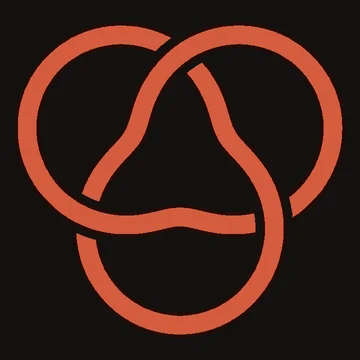
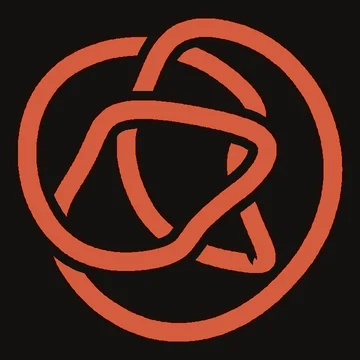
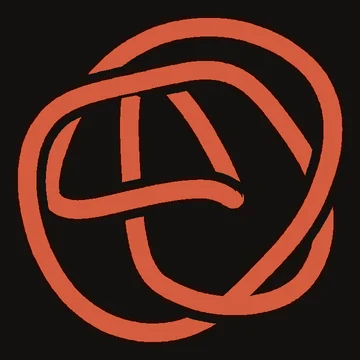
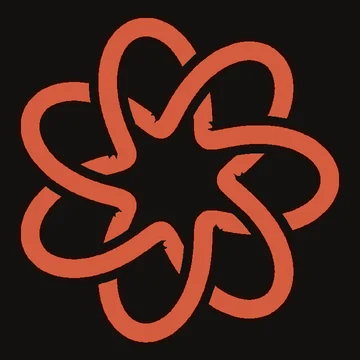
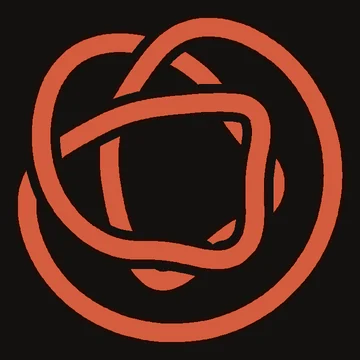
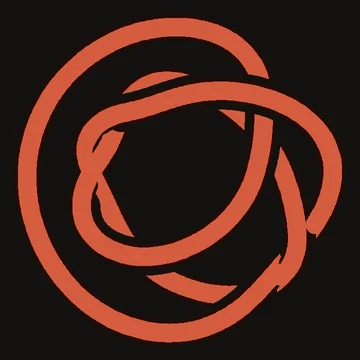
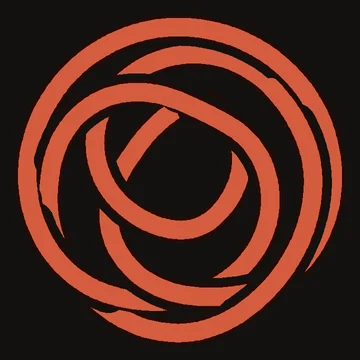
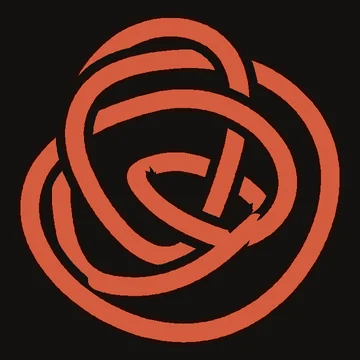
These are all the prime knots with at most seven crossings. Each one came out of Raymer and Smith's box at least once. Each is drawn relaxed, with its strands held as far apart as possible, so you can follow the string. The ones you have made in the toy light up.
 found
3₁ the trefoil
3 crossings
The simplest real knot: no drawing of it has fewer than three crossings.

 found
4₁ the figure-eight knot
4 crossings
Four crossings. It is the same as its own mirror image, which the trefoil is not.

 found
5₁ the cinquefoil
5 crossings
A five-pointed star, a cousin of the trefoil: both wind around a torus.
 found
5₂ the three-twist knot
5 crossings
Five crossings, with three twists on one side.

 found
6₁ the stevedore knot
6 crossings
Named after a stopper knot used by dock workers.

 found
6₂ the 6₂ knot
6 crossings
 found
6₃ the 6₃ knot
6 crossings
 found
7₁ the septafoil
7 crossings
The seven-pointed star of the trefoil family.

 found
7₂ the 7₂ knot
7 crossings
 found
7₃ the 7₃ knot
7 crossings

 found
7₄ the endless knot
7 crossings
It looks like the endless knot drawn in Tibetan art.
 found
7₅ the 7₅ knot
7 crossings
 found
7₆ the 7₆ knot
7 crossings
 found
7₇ the 7₇ knot
7 crossings
Two knots in a row on the same string can never merge into one. The granny knot and the square knot are both two trefoils. The only difference: in the square knot, one trefoil is mirrored.

 found
the granny knot
6 crossings
Two matching trefoils, one after the other. On one piece of string they can never merge into a single knot.

 found
the square knot
6 crossings
A trefoil and its mirror image, one after the other: the same pattern as the knot used to tie a parcel.
What makes a string tangle less#
For a 3 metre string, the authors changed one thing at a time and repeated each setting 200 times.
| What changed | 10 cm box | 15 cm box | 30 cm box |
|---|---|---|---|
| 3 m string, one turn per second, 10 s | 26% | 50% | 55% |
| Slower spin (one turn in 3 s) | 29% | 52% | 57% |
| Faster spin (3 turns per second) | 8% | 17% | 20% |
| Longer spin (30 s) | 30% | 74% | 63% |
| Softer string, 3 m | — | 65% | — |
| Softer string, 4.6 m | — | 85% | — |
| Stiffer rubber tubing, 3 m | — | 20% | — |
The small 10 centimetre box halved the knotting rate. Spinning three times faster brought the chance down to 8–20%: centrifugal force flung the string against the walls and it tumbled much less. In the 15 centimetre box, a stiffer rubber tube knotted 20 times in 100, a softer string 65 times. Thirty seconds instead of ten raised the chance to 74% in the 15 centimetre box. The experiment used string; cables were not tested.
How this page was made#
The figures about the box come from Raymer and Smith's paper (PNAS, 2007): the text, Table 1 and the parameters of the curve in Figure 2. The curve is redrawn from the three published parameters. It matches the paper's text only if length is read in feet, the unit the Figure 4 curve is given in. The coil model is the one the authors describe. Its drawing in space (flat coils, one coil crossed per move, ends lifted and joined above) was chosen for this page, and its percentages come from 1,000 trials per setting. The equivalence between coils and metres, one lap of a 15 cm box at about 0.47 m, follows the authors' argument and is approximate. Knots are recognised by their Alexander and Jones polynomials, compared with the KnotInfo table for knots of up to 11 crossings. The herbarium shapes come from relaxing each knot, with a final check that it is still the same knot; of several relaxations, the one with the strands furthest apart was kept.
Sources#
- Raymer, D. M. & Smith, D. E. (2007). Spontaneous knotting of an agitated string. PNAS 104 (42): 16432–16437. doi.org
- Raymer, D. M. & Smith, D. E. (2007), full text in PubMed Central. pmc.ncbi.nlm.nih.gov
- Livingston, C. & Moore, A. H. KnotInfo: Table of Knot Invariants (database_knotinfo, October 2026). knotinfo.math.indiana.edu
- Alexander, J. W. (1928). Topological invariants of knots and links. Transactions of the AMS 30: 275–306. doi.org
- Jones, V. F. R. (1985). A polynomial invariant for knots via von Neumann algebras. Bulletin of the AMS 12: 103–111. doi.org