Three different questions, three dates#
"Has the country opened its files?" mixes three things that happened at different dates, and sometimes not at all. Your own file: from what year an ordinary person could read what the secret police wrote about them. Names: whether the state published who was an informer or officer, and how, from the whole registry to decisions about one official at a time. Lustration: whether a law removed people from posts for their secret-police past.
The three dates for every state
- closed
- only files of the convicted
- you can read your file
- approximate start date
- names case by case
- registry published
- lustration: removal from posts
- public screening, no removal
Order: by the year the first file could be read. Tap a row for the country's dossier.
The three dates for every state
| State | Your own file | Names published by the state | Lustration |
|---|---|---|---|
| Germany (former GDR) | since 1992 | case by case: findings on MPs, from 1998; otherwise only to the person watched | removal from posts, 1991–2030 |
| Poland | since 2001 (for victims; for everyone since 2007) | case by case, since 1999 | removal from posts, 1999–today |
| Czechia | since 1997 (approx.) | whole registry, since 2003 | removal from posts, 1991–today |
| Slovakia | since 2003 | whole registry, since 2004 | removal from posts, 1991–1992 |
| Hungary | since 1997 | case by case since 1994; whole registry scheduled for 4 November 2026 | public screening without removal, since 1994 |
| Romania | since 2001 (approx.) | case by case, since 2000 | public screening without removal, since 2000 |
| Bulgaria | since 2007 (approx.) | case by case, since 1997 | removal from academic posts, 1992–1995; public screening without removal since 2007 |
| Albania | since 2017 (approx.) | not published: told only to the person watched | removal from posts, 1995–2001 |
| Slovenia | since 1998 (year of the archive transfer; first reading undated) | not published: told only to the person watched | no |
| Croatia | since 1993 (year of the first transfer, with consent; first reading undated) | not published: told only to the person watched | no |
| Serbia | allowed in 2001, then withdrawn (approx.) | no | law adopted, never applied (2003) |
| Bosnia and Herzegovina | no | no | no |
| Montenegro | allowed in 2001, then withdrawn (approx.) | no | no |
| North Macedonia | since 2000 | case by case, since 2012 | removal from posts, 2009–2015 |
| Kosovo | no | no | no |
| Moldova | by law, only files of the convicted or what remains, since 2010 (approx.) | no | no |
| Ukraine | since 2009 (at the latest; fully open by law since 2015) | open by law in the files, no list published, since 2015 | removal from posts, 2014–today |
| Belarus | only relatives of the repressed, under supervision; no documented date | no | no |
| Russia | by law, only files of the convicted or what remains, since 1991 | no | no |
| Estonia | by law, only files of the convicted or what remains, since 1993 (year the National Archives took over; agent files went to Russia) | only staff who did not confess, since 1997 | removal from posts, 1992–2000 |
| Latvia | by law, only files of the convicted or what remains, since 1994 (a general right, but the files are in Russia) | whole registry, since 2018 | removal from posts, 1994–today |
| Lithuania | only what remains in the Special Archives; no documented date | only those who did not confess collaboration, since 2001; 1,669 agents' records online 2012–2020, withdrawn | removal from posts, 1999–2009 |
| Georgia | allowed in 2006, then withdrawn (approx.) | no | removal from posts, 2011–today |
| Armenia | by law, only files of the convicted or what remains, since 1997 (approx.) | no | no |
| Azerbaijan | by law, only files of the convicted or what remains, since 1996 (approx.) | no | no |
| Kazakhstan | by law, only files of the convicted or what remains, since 1993 (approx.) | no | no |
| Kyrgyzstan | no | no | no |
| Uzbekistan | no | no | no |
| Tajikistan | no | no | no |
| Turkmenistan | no | no | no |
| Mongolia | by law, only files of the convicted or what remains, since 1998 | no | no |
How many people wanted to see their file#
No earlier side-by-side comparison of these numbers was found, because every archive counts something different: Germany counts applications, including repeats and relatives; Romania counted requests, then persons, and published nothing for 2013–2017. Even with those differences, the gap is too large to be a matter of units.
Germany has over 30 times more requests per person than any of the four other countries shown. Its archive has been open since 1992, and the press kept the subject alive for three decades. Another reason shows in Poland: the Wildstein list appeared online in January 2005, and the 18 months from July 2004 to December 2005 brought 31,589 requests, against about 2,000 a year before. People wanted to know whether their name was there, and why.
Germany: citizen applications (BStU, then the Federal Archives). Poland: requests to the IPN; 2004–2005 covers 18 months; 2020 not published.
Romania: who ends up in court#
Since 2008 the CNSAS can no longer declare anyone a collaborator or political-police officer on its own: it has to take them to court. The public register of these cases, from April 2008 to 31 December 2025, has 3,809 rows. Each small square below is one case; no names appear here.
- won for good by the CNSAS · 2,859
- lost for good by the CNSAS · 516
- pending · 285
- closed on the person's death · 139
- withdrawn · 10
The register shows how the Romanian system works. The 1,898 cases that began after a victim read their file are all against officers: informers' names are given to the victim in writing and do not go to court. Informers reach court only if they seek or hold a public office or one of the positions listed in the law (1,381 cases, most of them local councillors, mayors and candidates) or hold the state title of "revolutionary" of December 1989 (390 cases; in 286 the court found collaboration). Of the cases decided, the CNSAS won 84.7%.
How large the network was#
Comparisons of informers per head of population between countries have circulated for decades, and most are wrong. The archives counted different things: the network active in one year or everyone recruited over four decades, with or without candidates, with or without foreign intelligence. Where registers were destroyed, the count drops without the network having been smaller. Figures from the archives and from historians for the network active at the end of the regime:
| Germany (GDR) | 189,000 informers in 1989, one per 89 inhabitants; about 620,000 over 1950–1989 | Federal Archives |
|---|---|---|
| Romania | 144,289 in the network in 1989 (Lavinia Stan); 486,000–507,003 are totals over the whole period; the CNSAS estimates at least 650,000 recruited in 1948–1989 | CNSAS, Stan |
| Poland | about 98,000 secret collaborators at the end of 1988 (IPN estimate) | IPN |
| Czechoslovakia | 29,192 in mid-1989 | Žáček 2006 |
| Hungary | 8,478 in 1989; about 160,000 over 1945–1989 | ÁBTL |
| Latvia | 4,141 active agents in August 1991 | National Archives of Latvia |
The line "one East German in 6.5 was an informer" comes from a 1999 book and gives a figure about 14 times the archive's. And "Romania had the densest network" does not hold up: on active-network figures, the GDR and Romania sit in the same band, from about one informer per 90 people to one per 160; Bulgaria's last available count (1986) is similar only if "trusted persons" are added.
Every country's dossier#
Choose a country from the list or tap it on the map. Each dossier says what was lost, where the archives are, how many asked to see their file, what came out, and how to ask today for your own file or a relative's.
Germany (former GDR)
Stasi, the Ministry for State Security (1950–1990) · 18 March 1990, first free elections in the GDR
- Your own file
- since 1992
- Names published by the state
- case by case: findings on MPs, from 1998; otherwise only to the person watched
- Lustration
- removal from posts, 1991–2030
The three dates
Files have been read since 2 January 1992. Informers' names are not published: each person learns from their own file who reported on them, and can ask separately for the real names behind code names. Findings on members of parliament are published as Bundestag papers (the first documented, on Gregor Gysi, in 1998). Public employees have been vetted since 1991, and vetting is allowed until 31 December 2030.
What was lost
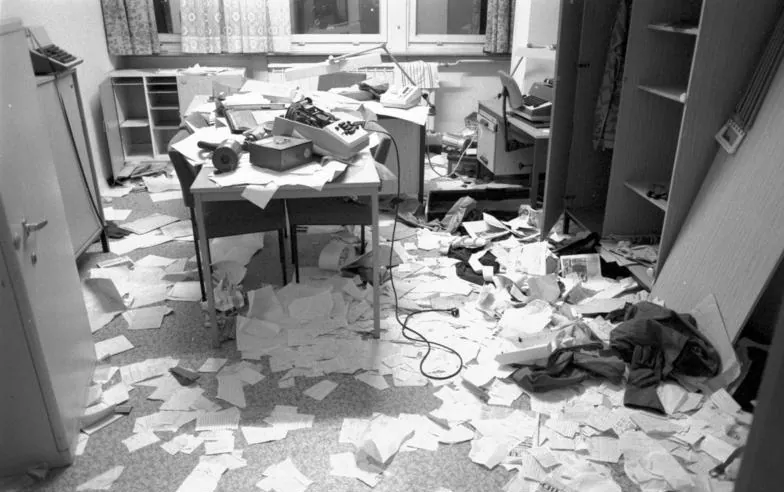
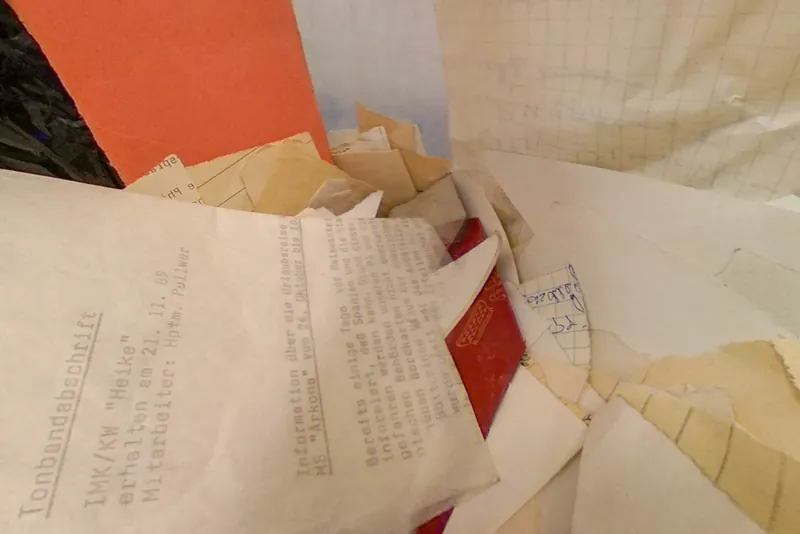
Erich Mielke gave the first order to destroy files in November 1989. On 4 December 1989 citizens occupied the Stasi office in Erfurt, then Leipzig and other towns; on 15 January 1990, the Berlin headquarters. The foreign intelligence arm (HV A) was allowed to destroy its own archive. About 15,400 containers of hand-torn paper remain; some 1.7 million sheets have been pieced together by hand from about 600 sacks.
Where the files are
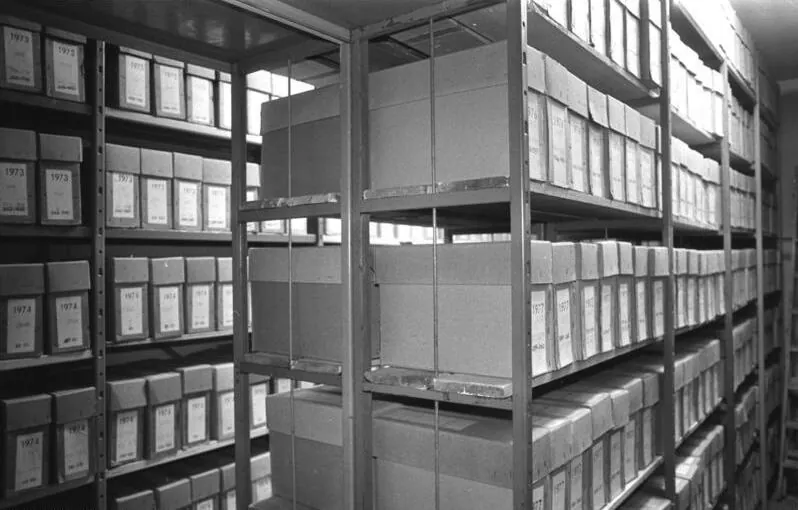
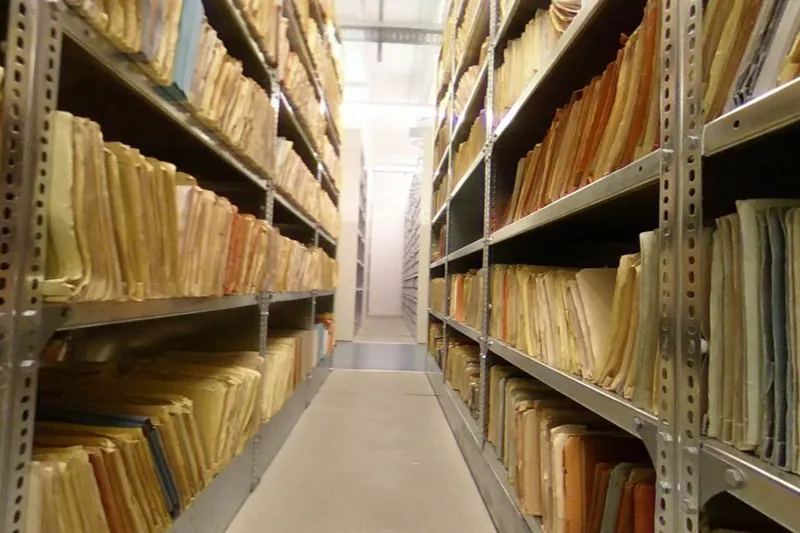
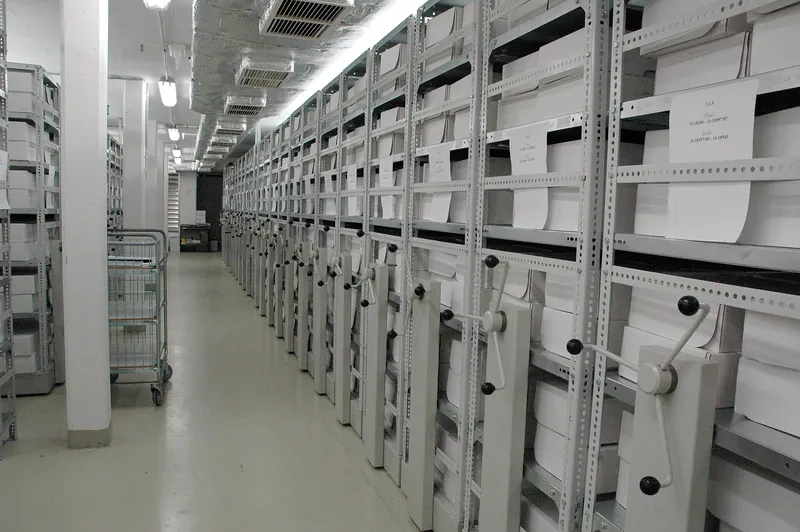
The Stasi Records Archive of the Federal Archives (since 17 June 2021; before that the BStU, from 1991): about 112.5 km of files at 13 sites and 46.7 million index cards.
How many asked
3,499,663 citizen applications to 31 December 2025; 521,725 in 1992 alone. In 2025: 31,120, of which 21,103 were first applications.
What came out
Wolfgang Schnur, leader of Democratic Awakening, resigned on 14 March 1990, four days before the election, after first denying his Stasi collaboration. Ibrahim Böhme, chairman of the East German SPD, gave up his offices in April 1990 over the same accusation, saying he would step aside until he had cleared his name; the files later reconstructed his work for the Stasi in detail.
How to ask
Anyone, of any nationality, for their own file; close relatives for a person who has died. Apply online with a German electronic ID or on paper with confirmed identity. Free; the first answer takes months, sometimes over a year.
In 2026
Applications are falling slowly but have not stopped: a quarter of first applications now come from relatives of the dead.
Sources
Poland
UB, then the SB (Security Service), 1944–1990 · 4 June 1989, the partly free election won by Solidarity
- Your own file
- since 2001 (for victims; for everyone since 2007)
- Names published by the state
- case by case, since 1999
- Lustration
- removal from posts, 1999–today
The three dates
Applications were accepted from 7 February 2001, and the first people read their files in September 2001; since March 2007 anyone may ask for the documents about them. Since 1999 a lustration court has checked officials' declarations; a false one costs the post. Since 25 September 2007 the IPN has published online catalogues of officers, regime leaders, and what the archive holds on people in public office. A catalogue of informers was struck down by the Constitutional Tribunal.
What was lost
In 1989–1990 an estimated 50–60% of informers' personal files were destroyed, up to 90% in Gdańsk. A 1990 internal ministry inquiry found, in two voivodeships, that even the records of destruction had been destroyed.
Where the files are
The archive of the Institute of National Remembrance (IPN): 94.6 km of records at the end of 2025.
How many asked
The Wildstein list (an index of about 240,000 names taken from the IPN) went online in January 2005. In the 18 months from July 2004 to December 2005, which take in the leak, 31,589 requests came in, against about 2,000 a year before; in 2006, another 18,234. In 2025: 7,892, mostly from people tracing ancestors.
What came out
Lech Wałęsa: a lustration court ruled on 11 August 2000 that his declaration of non-collaboration was true. In 2016 the IPN seized the "Bolek" file from General Kiszczak's widow; in 2017 handwriting experts from the Institute of Forensic Research in Kraków, commissioned by IPN prosecutors, concluded that the 1970 pledge and the receipts were in his hand. Wałęsa denies collaborating. In January 2007 Archbishop Stanisław Wielgus gave up the see of Warsaw on the day of his installation, after a Church commission found documents of his collaboration, which he had admitted two days earlier.
How to ask
Anyone, for documents about themselves; since 2016 also for a close relative who has died. The form is filed at IPN headquarters or any branch; documents are seen in the reading room, more and more often as electronic copies.
In 2026
The IPN has no confirmed president: its head from 2021, Karol Nawrocki, became President of Poland in 2025.
Sources
- Biuletyn IPN nr 4 (39), kwiecień 2004
- IPN, Informacja o działalności IPN 2025, t. 1
- S. Cenckiewicz, P. Gontarczyk, SB a Lech Wałęsa. Przyczynek do biografii, IPN 2008 (pp. ~184–185)
- Tadeusz Ruzikowski (oprac.), Instrukcje pracy operacyjnej aparatu bezpieczeństwa (1945–1989), IPN, Materiały pomocnicze BEP
Czechia
StB, State Security (1945–1990) · 17 November 1989, the start of the Velvet Revolution
- Your own file
- since 1997 (approx.)
- Names published by the state
- whole registry, since 2003
- Lustration
- removal from posts, 1991–today
The three dates
The 1991 lustration law is still in force: senior posts in the state, army, police, courts and public broadcasting require a certificate. Your own file can be read under a law in force from December 1996, in practice from 1997, at a single centre in Pardubice. On 20 March 2003 the Interior Ministry published the list of some 75,000 collaborators in the StB registers; its website crashed for two days. The 1992 Cibulka list was a leak, not an official publication.
What was lost
From 1 to 8 December 1989 the StB "sorted" its agent files on General Lorenc's order (the Lorenc shredding). No national total exists; in three counter-intelligence departments 9.5%, 27% and 21.4% of files were wholly destroyed.
Where the files are
The Security Services Archive (ABS), since 2008: 20.4 km at the end of 2025, of which only 11.7% is processed.
How many asked
By mid-2001 about 2,000 people had read their file in Pardubice and ten times as many had been told none existed. The ABS does not count own-file requests separately: in 2025 it answered 2,666 searches covering 10,018 people.
What came out
Milan Kundera: in 2008 the weekly Respekt published a 1950 police report naming him as the person who reported a Western courier, later sentenced to 22 years. The archive said the document was genuine; Kundera denied it. No court ruled. Andrej Babiš: see Slovakia.
How to ask
Any adult, foreigners included, for their own file; relatives for someone who has died; anyone may ask whether a named person was registered as a collaborator. Apply by e-mail, post or at the desk; digitised files can be viewed remotely.
In 2026
The lustration law has not covered ministers since 2014; a bill to restore that lapsed in 2025.
Sources
- Archiv bezpečnostních složek – Výroční zpráva (annual report) 2019
- Archiv bezpečnostních složek – Výroční zpráva (annual report) 2025
- Zákon č. 140/1996 Sb., o zpřístupnění svazků vzniklých činností bývalé Státní bezpečnosti (current text)
- Archiv bezpečnostních složek – Výroční zpráva (annual report) 2008
Slovakia
StB, State Security (1945–1990) · 17 November 1989, the start of the Velvet Revolution
- Your own file
- since 2003
- Names published by the state
- whole registry, since 2004
- Lustration
- removal from posts, 1991–1992
The three dates
The Czechoslovak lustration law applied until the split and was not applied in independent Slovakia. The Nation's Memory Institute (ÚPN) opened files to the public in December 2003, and from 16 November 2004 put the StB registers online: 76,000–81,000 entries, including 15,000–16,300 secret collaborators. An entry is not proof of collaboration.
What was lost
Shredding went on after Lorenc officially stopped it, in places until February 1990. On 6 December 1989 the file of dissident Ján Langoš, who would later head the ÚPN, was shredded. In 1990 files stolen from the Trenčín archive reached Vladimír Mečiar's circle.
Where the files are
The Nation's Memory Institute (ÚPN), since 2003. Some original files on Slovaks stayed in Czech archives after the 1999 settlement.
How many asked
Over 1,900 requests in 2004 and nearly 8,000 dealt with from 2003 to 2005, per the ÚPN. No later yearly series was found.
What came out
Andrej Babiš, Czech prime minister again: the register published by the ÚPN lists him as agent "Bureš". He denies it. Courts ruled for him in 2014 and 2015, but the rulings were annulled in 2017 because he had sued the wrong institution; in February 2024 the Constitutional Court upheld the dismissal of his suit. In October 2024, in a court-approved settlement, the Slovak Interior Ministry acknowledged that he had been registered without justification and had not knowingly collaborated; the ÚPN rejects the settlement and keeps him in the register. No court has ruled on the merits.
How to ask
Any adult for their own file; relatives for someone who has died; anyone may ask whether a person was a registered collaborator. Forms online; 90-day legal deadline.
In 2026
Slovakia still has no lustration law; the online registers are its main tool.
Sources
- Patrik Dubovský, Ján Langoš. Od samizdatov a VPN k dokumentom ŠtB a ÚPN (Ústav pamäti národa, Bratislava 2021)
- Zákon č. 553/2002 Z. z. o sprístupnení dokumentov o činnosti bezpečnostných zložiek štátu 1939 – 1989 a o založení Ústavu pamäti národa (zákon o pamäti národa), znenie účinné od 28. 9. 2002 (Slov-Lex)
- ÚPN, Registračné protokoly agentúrnych a operatívnych zväzkov ŠtB
- Zákon č. 553/2002 Z. z., znenie účinné od 22. 3. 2022 (Slov-Lex)
Hungary
ÁVH, then the Interior Ministry's Directorate III (1945–1990) · 23 October 1989, the proclamation of the Republic of Hungary
- Your own file
- since 1997
- Names published by the state
- case by case since 1994; whole registry scheduled for 4 November 2026
- Lustration
- public screening without removal, since 1994
The three dates
Hungarians have read their files since 1 September 1997, at the Historical Office, which became the Historical Archives of the State Security (ÁBTL) in 2003. The 1994 law screened officials: anyone found to have a political-police past was asked to resign, otherwise the finding was published; it barred no one from office. Law LI of 2026, passed on 15 September by 149 votes to none, with 35 abstentions, sets free online publication of the registers for 4 November 2026.
What was lost
From autumn 1989 to January 1990, an estimated 1,400 dossiers were destroyed at Directorate III/III, which watched the opposition; when military prosecutors began seizing files, four "live" dossiers were left. From 22 December 1989, on the deputy minister's order, no destruction records were kept. The scandal was called "Dunagate".
Where the files are
ÁBTL, Budapest: 4.6 km of records at the end of 2023. Some classified pre-1990 records are still with today's services.
How many asked
69,220 personal requests from 1997 to the end of 2024; 3,410 in 2024. Two thirds now come from children and grandchildren of the people in the files; in 2024, 96 applicants were informers themselves.
What came out
Péter Medgyessy, prime minister 2002–2004: in 2002 the press reported that he had been a counter-intelligence officer, not a recruited informer; in a 2014 interview he confirmed the cooperation. In 2006 the weekly Élet és Irodalom published archive documents showing that film director István Szabó wrote reports from 1957 to 1963 under the cover name "Képesi Endre", mostly on fellow film students.
How to ask
The person watched; after their death, relatives. Online form or letter. Free; the archive advises applying again after two or three years because its holdings grow.
In 2026
On 1 November nyitottaktak.hu showed only "coming soon". What the law publishes: every network registration card (about 36,000 survive, failed recruitments included), the 1957–1962 recruitment registers, the data on magnetic tapes saved in January 1990 (58,708 records) and, by 25 February 2027, the recruitment files. Informers' reports stay offline. A person named may attach their own statement.
Sources
Romania
the Securitate, the State Security Department (1948–1989) · 22 December 1989, Nicolae Ceaușescu's flight
- Your own file
- since 2001 (approx.)
- Names published by the state
- case by case, since 2000
- Lustration
- public screening without removal, since 2000
The three dates
Law 187/1999, initiated by former political prisoner Ticu Dumitrescu, created the CNSAS, which began work on 13 March 2000. The first files were read in early 2001, provisionally on the premises of the SRI, the post-1990 intelligence service; the CNSAS reading room opened in March 2001. Each person learns informers' names, in writing, from their own file. Only decisions are public: from 2000 to 2008, CNSAS rulings published in the Official Gazette; since 2008, only final court judgments. Lustration was never applied: laws passed in 2010 and 2012 were struck down as unconstitutional.
What was lost
About 130,000 files were lost between December 1989 and March 1990, by an estimate quoted by historian Romulus Rusan, including about 40,000 in fighting in Sibiu. In June 1990 an SRI team burned and buried a truckload of documents in a forest pit at Berevoiești; in May 1991 eleven journalists from România liberă dug up 23 sacks. No one was charged.
Where the files are
The CNSAS: 27,985 linear metres at the end of 2024, after 1.3 million files were transferred from the SRI in 2005–2006. Files deemed to concern national security stayed with the SRI and the foreign intelligence service; the defence ministry's are only partly transferred.
How many asked
From 2000 to 2005, 13,504 requests for one's own file, per the CNSAS. The yearly series changes unit (requests, then persons) and is missing for 2013–2017; in 2024, 1,786 people.
What came out
Traian Băsescu: the Bucharest Court of Appeal found in 2019 that he had collaborated with the Securitate, and the High Court rejected his appeal for good on 23 March 2022; he denied knowing he had a code name. Dan Voiculescu: the CNSAS found in 2006 that he had collaborated as "Felix", and the High Court confirmed it for good on 10 March 2011; he was also the man whose objection led the Constitutional Court to strike down the CNSAS law in 2008. Mona Muscă: the CNSAS found collaboration in 2006; she said she had signed a pledge but never informed, and resigned from parliament in 2007. Mugur Isărescu, governor of the central bank: in 2020 the CNSAS asked the courts to declare him a collaborator, and the courts rejected the claim for good.
How to ask
Any Romanian citizen, any former Romanian citizen and any EU or NATO citizen, for their own file; spouses and relatives up to the fourth degree for someone who has died. The "Acces la propriul dosar" form on cnsas.ro, with a copy of ID; it can be sent by post or e-mail, including from abroad.
In 2026
The last parts of the SRI archive (the electronic database and microfilm) reached the CNSAS only in 2022–2023. The institution reports staff shortages.
Sources
Bulgaria
Darzhavna Sigurnost (DS), State Security · 10 November 1989, the fall of Todor Zhivkov
- Your own file
- since 2007 (approx.)
- Names published by the state
- case by case, since 1997
- Lustration
- removal from academic posts, 1992–1995; public screening without removal since 2007
The three dates
Under a 1997 law, a parliamentary commission (the Bonev commission) announced the first names of office-holders. The files commission (COMDOS), created by a law of December 2006, has worked since April 2007; by 30 November 2007, 160 people had read their files. COMDOS checks people in public office or public life and publishes their affiliation on the day of the decision. Every attempt at lustration (1992, 1998, 2009–2011) was struck down by the Constitutional Court, except a 1992 law on academic posts, upheld in 1993 and repealed in 1995.
What was lost
In January–February 1990, under a proposal approved on the day it was made, on the order of interior minister General Atanas Semerdzhiev, 134,102 of 331,995 DS files were destroyed, according to the ministry's 1994 inventory (the 1992 indictment gives 144,235). In 2002 Semerdzhiev received a final sentence of four and a half years in prison.
Where the files are
COMDOS brought together the archives of the DS and military intelligence; over 14,430 linear metres by mid-2019, according to its reports.
How many asked
16,612 applications for one's own file or a dead relative's from 2007 to 2018; 26,448 applications of all kinds to mid-2019, per COMDOS's own review.
What came out
By mid-2019 COMDOS had checked over 351,948 people, established the affiliation of 17,958 and publicly named 13,921: a president, constitutional judges, over 150 MPs, over 100 ministers. On 19 July 2007 it named President Georgi Parvanov as a secret collaborator, code name "Gotse", recruited on 4 October 1989; a second decision, on 1 August 2007, found evidence of his work only in editing part of a history book. In January 2012 it checked 18 members of the Church leadership and named 11 metropolitans.
How to ask
Anyone, with no citizenship condition, for their own file or that of a deceased spouse, parent or grandparent. Written application on COMDOS forms, in Sofia, in person or through a representative; answer within 30 days.
In 2026
The 2026 budget law told the government to propose closing COMDOS and moving its work to the State Archives Agency; a draft is under consultation, and on 27 October 2026 COMDOS formally objected.
Sources
- ECtHR, Anchev v. Bulgaria, nos. 38334/08 and 68242/16, decision of 5 Dec 2017 (notified 11 Jan 2018), copy hosted on comdos.bg
- COMDOS, 'Равносметка по пътя / Stocktaking 2007–2019' (bilingual brochure, 2019), pp. 25–26 (PDF pp. 27–28)
- Закон за достъп и разкриване на документите и за обявяване на принадлежност на български граждани към ДС и РС на БНА — consolidated text on comdos.bg (Ciela), amendments to ДВ бр. 88/2023
- COMDOS website, 'Историческа справка' (historical note), accessed 1 Nov 2026
Albania
the Sigurimi, the Directorate of State Security (1944–1991) · 31 March 1991, the first multi-party election
- Your own file
- since 2017 (approx.)
- Names published by the state
- not published: told only to the person watched
- Lustration
- removal from posts, 1995–2001
The three dates
Laws of 1995 excluded people from office, until the end of 2001, for their role in the Sigurimi and political trials. A 2008 lustration law was suspended and then struck down in 2010. Law 45/2015 created the Authority for the Sigurimi files (AIDSSH), which has taken requests since 2017. Informers' and officers' names are told only to the person watched; published decisions carry initials only.
What was lost
Unverified estimates speak of about 39,500 files destroyed between 1980 and 1992 and a wave of about 50,000 in 1991; the Authority itself says the figures need checking in the archive. Collaborators' work and personal files are largely gone.
Where the files are
AIDSSH, Tirana: 7,339,347 registered sheets (September 2026 study), 69% of them from today's intelligence service (SHISH), handed over physically only in March 2022.
How many asked
4,209 individual requests from 2017 to the end of 2025; 508 in 2025.
What came out
In 2022 the Authority told parliament that a senior politician, identified only by the initials I.M., appeared in the documents as a collaborator, noting a conflicting 1990s clearance. Media linked the initials to former president Ilir Meta; the Authority named no one. Meta said he had never collaborated, cited his 1996 vetting and filed a criminal complaint against the Authority's members. No court has ruled on the substance.
How to ask
Anyone, Albanian or foreign: the person watched, relatives of the dead or disappeared, researchers. Form on aidssh.al, filed in person, by post or by e-mail.
In 2026
In 2025 only six election candidates asked to be checked, though the Authority wrote to 53 parties. The House of Leaves museum in Tirana, a former Sigurimi building, is open to the public.
Sources
Slovenia
the SDV, State Security Service (the Slovene branch of the UDBA) · 17 May 1990, the first freely elected Assembly
- Your own file
- since 1998 (year of the archive transfer; first reading undated)
- Names published by the state
- not published: told only to the person watched
- Lustration
- no
The three dates
The SDV part of the interior ministry archive reached the Archives of the Republic in 1998; people asked to see their files before that, but no date of a first reading was found. Since 2006, SDV records from before 17 May 1990 are open to anyone. A restrictive amendment was rejected in a 2011 referendum (70.88% against); the 2014 version keeps them open with sensitive data blacked out. The state never published a list; in 2003 the website udba.net put an index of file cards online, later banned by the data protection inspector. There is no lustration law.
What was lost
Of about 17,000 files on watched people and collaborators, about 4,000 survive. The culture minister said about four-fifths of open surveillance files were destroyed at the end of 1989 and in early 1990. No one was held responsible.
Where the files are
The Archives of the Republic of Slovenia, Ljubljana. The federal UDBA archive is in Belgrade.
How many asked
40,000 requests to the Archives of the Republic from 1992 to August 2003 (not only for SDV files); 10–15 people a day asked to see their file after the udba.net affair.
What came out
Marta Kos, EU Commissioner since 2024: the Archives of the Republic hold an index entry with a file number under her name; the magazine Reporter says such numbers were used for registered sources. The file itself has not been found. The intelligence agency SOVA says it holds nothing on her. She denies any collaboration, and no official body has ruled.
How to ask
Anyone, Slovene or foreign, at the reading room of the Archives of the Republic in Ljubljana; finding aids can be searched online.
In 2026
On 28 October 2026 Janez Janša said Slovenia will block Serbia's path to the EU until Belgrade hands over the federal UDBA archive. Serbia says it was destroyed in the 1999 NATO bombing.
Sources
- Arhiv Republike Slovenije: Letno poročilo 2025
- Uradni list RS 30/2006: Zakon o varstvu dokumentarnega in arhivskega gradiva ter arhivih (ZVDAGA)
- Državni zbor RS, Raziskovalno-dokumentacijski sektor (M. Križaj, J. Blažič, A. Lekše): Dostop do arhivskega gradiva v državah EU, primerjalni pregled, 21 Feb 2014 (copy hosted by RTV SLO)
- EHRI Portal: SI AS 1931 Republiški sekretariat za notranje zadeve SRS (fonds description supplied by Arhiv RS)
Croatia
the SDS, State Security Service (the Croatian branch of the UDBA) · 30 May 1990, the first freely elected parliament
- Your own file
- since 1993 (year of the first transfer, with consent; first reading undated)
- Names published by the state
- not published: told only to the person watched
- Lustration
- no
The three dates
The first SDS personal files reached the State Archives in 1993, and since then they could be consulted with the consent of the person concerned. The 2018 Archives Act opens everything created up to 30 May 1990, including officers' and collaborators' service data, but no list is published. There is no lustration law.
What was lost
Before the 1990 election, a three-member interior ministry commission destroyed "certain parts" of the archive; it was headed by Josip Perković himself, according to the judge who sent the files to Munich. What was destroyed is unknown.
Where the files are
The Croatian State Archives, Zagreb: about 68,800 files on watched people; the last tranche came from the intelligence service in 2015.
How many asked
800 requests and 269 files found by 2001; about 15 readings a year around 2007. The archive no longer publishes request counts.
What came out
On 3 August 2016 the Higher Regional Court in Munich sentenced Zdravko Mustač, head of the SDS, and Josip Perković to life for the 1983 murder of émigré Stjepan Đureković in Bavaria. In 2013 Croatia had passed a law that would have shielded Perković from extradition ("lex Perković"); it repealed it under threat of European Commission sanctions.
How to ask
Anyone, citizen or foreign, at the State Archives in Zagreb; a refusal can be appealed to the Information Commissioner.
In 2026
Anyone named in the documents may attach their own statement.
Sources
- Josip Mihaljević, 'Researching the Yugoslav Secret Police in Croatia and Bosnia and Herzegovina: Sources, Historiography, Publicist Writing', Aparat Represji w Polsce Ludowej 1944–1989, no. 21 (2023), DOI 10.48261/arprl232111
- Hrvatski državni arhiv, Izvješće o radu HDA-a u 2017. godini
- OLG München, Pressemitteilung 35/2016, 'Strafverfahren gegen Josip P. und Zdravko M. wegen Mordes', 03.08.2016
- Nenad Bukvić, '68 000 Intelligence Files of the State Security Service for Croatia', COURAGE Registry (2018, last edited 2020-02-18), DOI 10.24389/41145
Serbia
the UDBA/SDB, Yugoslav State Security (Serbian and federal branches) · 5 October 2000, the fall of Slobodan Milošević
- Your own file
- allowed in 2001, then withdrawn (approx.)
- Names published by the state
- no
- Lustration
- law adopted, never applied (2003)
The three dates
In 2001 a decree of the Đinđić government let some citizens see their files under supervision, with informers' and officers' names covered in yellow tape; the decree was later revoked. The 2003 law on accountability for human rights violations was never applied and lapsed in 2013. The 2020 archives law leaves security-service files to a "separate law" that does not exist.
What was lost
Serbia says the federal service archive in Belgrade was destroyed or badly damaged in the 1999 NATO bombing. No independent verification.
Where the files are
BIA, today's intelligence agency, holds the files.
How many asked
No statistics. Vuk Drašković said in 2007 it would take him "15 days and 15 nights" just to leaf through his file.
What came out
The 1999 murder of journalist Slavko Ćuruvija: four former state security officers were convicted in 2019 and 2021, then acquitted on appeal in a ruling published on 2 February 2024.
How to ask
There is no procedure to see one's own file.
In 2026
Slovenia demands the federal archive as a condition for Serbia's path to the EU.
Sources
- Bezbednosno-informativna agencija (BIA), official site: Museum / History
- Josip Mihaljević, 'Researching the Yugoslav Secret Police in Croatia and Bosnia and Herzegovina: Sources, Historiography, Publicist Writing', Aparat Represji w Polsce Ludowej 1944–1989, no. 21 (2023), DOI 10.48261/arprl232111
- Zakon o arhivskoj građi i arhivskoj delatnosti, "Sl. glasnik RS", br. 6/2020 (text as reproduced by Paragraf Lex)
Bosnia and Herzegovina
the SDB, State Security (the Bosnian branch of the UDBA) · 18 November 1990, the first multi-party election
- Your own file
- no
- Names published by the state
- no
- Lustration
- no
The three dates
There is no files law, no files institution and no lustration law; attempts have failed several times. In 2000 about 70,000 files on the Informbiro period and the 1950 Cazin uprising became public. Everything else depends on the intelligence director's decision.
What was lost
In 1992 the archive split: part went to Republika Srpska, part to Herceg-Bosna; where they are now is unknown.
Where the files are
The OSA intelligence agency, Sarajevo, which by law has controlled its predecessors' archives since 2004.
How many asked
No statistics.
What came out
A four-volume book in 2003 published lists of alleged collaborators; many of those named protested, and there is no official verification.
How to ask
Only a general request to the OSA asking whether it holds data on you; no communist-era file is known to have been opened this way.
In 2026
No known change.
Sources
- Josip Mihaljević, 'Researching the Yugoslav Secret Police in Croatia and Bosnia and Herzegovina: Sources, Historiography, Publicist Writing', Aparat Represji w Polsce Ludowej 1944–1989, no. 21 (2023), DOI 10.48261/arprl232111
- Zakon o Obavještajno-sigurnosnoj agenciji Bosne i Hercegovine (Službeni glasnik BiH 12/04, as published on the OSA-OBA website)
- OSA-OBA BiH, Vodič za pristup informacijama (under ZOSPI, Sl. glasnik BiH 61/23)
- UN Security Council, Report of the Secretary-General on the United Nations Mission in Bosnia and Herzegovina, S/2002/1314, 2 Dec 2002
Montenegro
the SDB, State Security (the Montenegrin branch of the UDBA) · 9 December 1990, the first multi-party election
- Your own file
- allowed in 2001, then withdrawn (approx.)
- Names published by the state
- no
- Lustration
- no
The three dates
A 2001 government decree allowed people to consult their files for a year, with officers' identities hidden; the implementing instruction lapsed around 2005. A 2007 draft law and four opposition bills were not adopted.
What was lost
A politician who asked for his file in 2001 says he received a pile of burned and damaged papers. No official confirmation.
Where the files are
The National Security Agency (ANB), today's service, since 2005; the State Archives hold no security-service fonds.
How many asked
No statistics.
What came out
No officially documented revelation.
How to ask
No procedure in force.
In 2026
No data were found for 2023–2026.
Sources
- Josip Mihaljević, 'Researching the Yugoslav Secret Police in Croatia and Bosnia and Herzegovina: Sources, Historiography, Publicist Writing', Aparat Represji w Polsce Ludowej 1944–1989, no. 21 (2023), DOI 10.48261/arprl232111
- Bezbednosno-informativna agencija (BIA, Serbia), official site: Museum / History
- Državni arhiv Crne Gore: Arhivski fondovi i zbirke
North Macedonia
the UDBA/SDB, Yugoslav State Security (republic branch) · 11 November 1990, the first multi-party election
- Your own file
- since 2000
- Names published by the state
- case by case, since 2012
- Lustration
- removal from posts, 2009–2015
The three dates
The files law came into force on 13 July 2000; by 22 August, 17 people had seen their file. The 2008 lustration law required collaborators' names to be published in the Official Gazette, but the Constitutional Court struck that down in 2010, before anything was published. From July 2012 the verification commission put each decision online, with the name, date of birth and documents. Lustration was repealed from 1 September 2015, and the register vanished from the internet.
What was lost
A former interior minister said collaborators' files were destroyed in waves: after 1965, in 1989–1990, before the 1998 election and in 2001. The former minister he named denied it. Historians say some files are in Belgrade; no inventory confirms it.
Where the files are
The State Archives took over 14,572 political files; collaborators' files stayed with the security services or in Belgrade.
How many asked
748 requests in the first three months, in 2000. No yearly series was found after that.
What came out
Trendafil Ivanovski, president of the Constitutional Court: in 2010 the commission ruled his declaration false, on a file showing him registered as collaborator "Lambe" in 1964–1965; parliament dismissed him in 2011. He said the documents were forged. In 2016 the European Court of Human Rights found the procedure unfair, without ruling on whether he collaborated.
How to ask
Political files are requested from the State Archives, for one's own person.
In 2026
A 2019 bill to annul the commission's decisions stalled in parliament. The 2022 protocol with Bulgaria calls for a law fully opening the 1945–1991 archives; no evidence of its adoption was found.
Sources
- ECtHR, Ivanovski v. the former Yugoslav Republic of Macedonia, no. 29908/11, judgment 21 Jan 2016
- Фондација Отворено општество – Македонија, 'Македонската лустрација (1999–2012 година): настани, изјави, наслови; Примена на лустрациските прописи', Скопје, ноември 2012 (Wayback copy of fosm.mk PDF)
- Комисија за верификација на фактите, Извештај за работата за периодот 15.07.2013–15.01.2014 (last report of the first composition, to the Assembly; Wayback copy of kvf.org.mk)
- Агенција за национална безбедност, 'За АНБ' – Историска рамка пред основањето на АНБ
Kosovo
the SDB, Yugoslav State Security (provincial branch) · 10 June 1999, UN administration (Resolution 1244)
- Your own file
- no
- Names published by the state
- no
- Lustration
- no
The three dates
Kosovo has no access regime for state-security files and, as far as can be established, does not hold them.
What was lost
It is often said that the province's files were taken to Serbia in June 1999, along with civil and land registers; no source consulted documents this directly.
Where the files are
The federal UDBA archive is in Belgrade.
How many asked
No statistics.
How to ask
There is no procedure.
In 2026
The 2023 normalisation agreement mentions missing persons, not archives.
Sources
- Josip Mihaljević, 'Researching the Yugoslav Secret Police in Croatia and Bosnia and Herzegovina: Sources, Historiography, Publicist Writing', Aparat Represji w Polsce Ludowej 1944–1989, no. 21 (2023), DOI 10.48261/arprl232111
- UNMIK (United Nations Interim Administration Mission in Kosovo), official site: Mandate
- Bezbednosno-informativna agencija (BIA, Serbia), official site: Museum / History
- EEAS: Belgrade-Pristina Dialogue: EU Proposal – Agreement on the path to normalisation between Kosovo and Serbia (27 Feb 2023)
Moldova
the KGB of the Moldavian SSR · 27 August 1991, the declaration of independence
- Your own file
- by law, only files of the convicted or what remains, since 2010 (approx.)
- Names published by the state
- no
- Lustration
- no
The three dates
Since 2010 the National Archives have received, through agreements between institutions, the files of victims of repression from the SIS and the interior ministry; the last batch, 19,875 files, came on 11 June 2025, bringing the total to about 48,000 files with about 100,000 names. There is no right to read one's own surveillance file, and no lustration. Of 101 MPs asked whether they had collaborated with the KGB or the SIS, 40 replied.
What was lost
When the 2010 presidential commission asked for access, the SIS told historians the Soviets had "burned everything" in 1989–1991. The historians said Moldovan officials also burned files, including in 1996 during an election campaign. That the archive was moved to Tiraspol is an unverified claim.
Where the files are
The National Archives Agency, Chișinău (repression files); the SIS Special Repository.
How many asked
No statistics for own-file requests, because that right does not exist.
How to ask
Victims of repression, their relatives and researchers: the doc.arhiva.gov.md database and an appointment at the Chișinău reading room.
In 2026
In June 2026 Moldovan specialists took part in the CNSAS conference in Bucharest on secret-police archives.
Sources
- Igor Cașu, 'The Activity of the Presidential Commission … and the opening of KGB and MVD Archives in Moldova', IDFI conference slides, Tbilisi 2019
- Guvernul Republicii Moldova, comunicat de presă, 11 June 2025
- EHRI portal entry (undated)
- SIS (Serviciul de Informații și Securitate), announcement of SIS–ANA cooperation agreement, 5 May 2023
Ukraine
the KGB of the Ukrainian SSR · 24 August 1991, the declaration of independence
- Your own file
- since 2009 (at the latest; fully open by law since 2015)
- Names published by the state
- open by law in the files, no list published, since 2015
- Lustration
- removal from posts, 2014–today
The three dates
The SBU archive admitted readers from at least the 2000s. Law 316 of April 2015 opened all records from 1917–1991: information on KGB officers and informers "cannot be restricted on any grounds", and access and copying are free. Still, no list was published. The 2014 lustration law removed former KGB staff and agents among others; the European Court found in 2019 (Polyakh v. Ukraine) that its application breached the applicants' rights.
What was lost
A 1954 KGB order called for purging the archives; a 1990 order cut the retention of the KGB's reviews of literary works to ten years. In August 1989 officers wrote on the cover of film director Oleksandr Dovzhenko's surveillance file that it should be destroyed; it survived.
Where the files are
The SBU State Archive, Kyiv, still inside the service. The law required all files to move within two years to the Archive of National Memory, which expects about 4 million files; in 2024–2025 it received a few thousand units, none listed as coming from the SBU.
How many asked
No yearly series. The archive's director said in 2024 that it had sent "almost 5 terabytes" of copies in the previous year.
What came out
KGB documents on Chornobyl are on UNESCO's Memory of the World register; the criminal files of Vasyl Stus and Viacheslav Chornovil are open.
How to ask
Anyone; a written request by e-mail or post, free. The reading room is closed under martial law.
In 2026
The description "most open KGB archive" is the SBU archive's own, not an independent assessment.
Sources
- Галузевий державний архів СБУ: Путівник (ed. V. Danylenko et al.), Kharkiv: Prava liudyny, 2009 — posted on ssu.gov.ua
- ECtHR, Polyakh and Others v. Ukraine, nos. 58812/15 and 4 others, judgment 17 October 2019
- СБУ: Галузевий державний архів СБУ (official page; web.archive.org copy of 8 Aug 2026)
- Закон України «Про доступ до архівів репресивних органів комуністичного тоталітарного режиму 1917–1991 років» № 316-VIII від 09.04.2015 (редакція від 30.08.2025; read via web.archive.org copy, 13 Sep 2025)
Belarus
the KGB of the Byelorussian SSR (still called the KGB) · 25 August 1991, the declaration of independence
- Your own file
- only relatives of the repressed, under supervision; no documented date
- Names published by the state
- no
- Lustration
- no
The three dates
The service is still called the KGB and keeps its Soviet archive. Only close relatives of people repressed in the 1920s–1950s may read a relative's case file, under supervision, and the executioner's name and the burial place stay in sealed envelopes they may not open. The 75-year closure counts from rehabilitation, so files stay shut until 2035–2065.
What was lost
Estimates for Kurapaty, the execution site near Minsk, range from 7,000 to 250,000 victims.
Where the files are
The KGB Central Archive, Minsk; transfer to the state archives is put off until 2081 (KGB) and 2084 (interior ministry).
How many asked
In 2009 the KGB central archive received 229 requests from citizens; 52 people were shown files. No later data were found.
How to ask
Only close relatives of a repressed person, with proof of kinship, by written application to the KGB.
In 2026
Since 2021 the archive has been opened selectively for the official investigation of the Nazi-era "genocide of the Belarusian people"; Stalin-era files stay closed.
Sources
- Open access to the KGB archives in Eastern Partnership. Analytical report (Center for Research on the Liberation Movement, Kyiv, 2017), Belarus chapter by Dmitriy Drozd, pp. 17-18
- ЭТАЛОН-ONLINE (National Centre of Legislation and Legal Information): header of Resolution No. 1212-XII of 1 November 1991 citing the 21 December 1990 Regulation
- Archives of Belarus portal (Department of Archives, Ministry of Justice), news item, 30 June 2022
Russia
the KGB of the USSR (today the FSB and SVR) · 25 December 1991, the dissolution of the USSR
- Your own file
- by law, only files of the convicted or what remains, since 1991
- Names published by the state
- no
- Lustration
- no
The three dates
The rehabilitation law of 18 October 1991 gives rehabilitated people and their relatives the right to read the criminal or administrative case file. There is no right to see one's surveillance file or informer files, and no informer or officer has ever been officially named. Galina Starovoitova's 1992 lustration bill was never passed. In March 2014 the government commission on state secrets extended secrecy on 1917–1991 records about sources, methods and agents by 30 years, to 2044.
What was lost
No data were found on destruction in Russia in 1989–1991. Researchers say documents seen in the 1990s were reclassified in the 2000s.
Where the files are
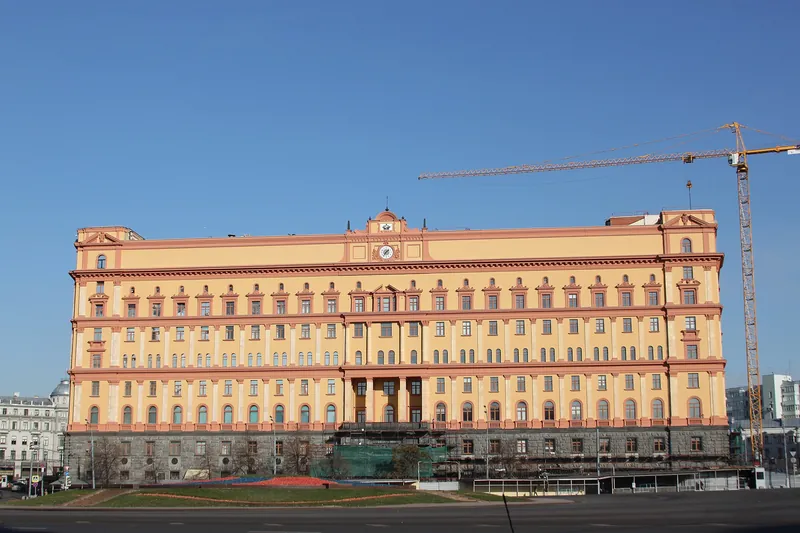
The FSB Central Archive, Lubyanka, Moscow. IDFI's 2019 assessment: 43.78% for openness, 0% for online access.
How many asked
The interior ministry issued about 2.8 million rehabilitation certificates in 1992–2018; about a million people were refused, and their files are routinely closed even to relatives.
How to ask
Only rehabilitated people and their relatives, by written application to the FSB archive or regional offices. Relatives of the non-rehabilitated are routinely refused.
In 2026
Memorial, the organisation that documented the repression, was liquidated in December 2021; on 9 April 2026 the Supreme Court declared the "Memorial movement" extremist.
Sources
- IDFI, Assessment of the Openness of State Archives — Russian Federation, Central Archive of the FSB (2019, evaluator anonymous)
- FSB of Russia, 'Центральный архив ФСБ России'
- Закон РФ от 18.10.1991 № 1761-I «О реабилитации жертв политических репрессий» (text as amended to 25.12.2023 № 635-ФЗ, Wikisource transcription of official text)
- Memorial, 'Экспертное заключение к заседанию Конституционного суда РФ 26 мая 1992 г.' (expert report in the CPSU case; archived copy, memo.ru unreachable in 2026)
Estonia
the KGB of the Estonian SSR · 20 August 1991, the restoration of independence
- Your own file
- by law, only files of the convicted or what remains, since 1993 (year the National Archives took over; agent files went to Russia)
- Names published by the state
- only staff who did not confess, since 1997
- Lustration
- removal from posts, 1992–2000
The three dates
From 1992 to 2000, candidates and appointees to high office swore an "oath of conscience" that they had not served the occupier's security services; refusal or a false oath barred them. The 1995 law opened a confession window: 1,153 people came forward by 1 April 1996, and their confessions are a state secret. From 1997 to 2009, the names of 647 former staff who did not come forward were published in the State Gazette, 42 of them drivers; not one informer. What remains in the archive can be read by the person concerned.
What was lost
About 13,500 agent files were reportedly shipped out of Estonia to Russia as early as November 1989, in one night, in a ship container; another 2,000 operational files on 31 January 1990. Department 5 (the political police) left no dossiers.
Where the files are
The National Archives of Estonia: criminal case files of the convicted and foreign-travel files, taken over in 1993 from the former KGB building.
How many asked
The archives count requests across all holdings, not the KGB alone: 10,869 access applications resolved in 2025.
What came out
Herman Simm, a senior defence ministry official described by the security police as a former KGB confidant, was convicted in 2009 of treason for Russia (12 years 6 months).
How to ask
The person concerned, heirs and relatives of someone who has died; requests go through the National Archives' virtual reading room.
In 2026
In 2015 the European Court of Human Rights found (Sõro v. Estonia) that publishing a former driver's name breached his private life; the law was not changed.
Sources
- ECtHR, Sõro v. Estonia, no. 22588/08, judgment of 3 September 2015, § 6
- Jüri Saar, 'Kaastöötajad ja koostöötajad', Tuna 1/2015, p. 8 (citing H. Mägi, ENSV KGB tegevuse lõpetamine, Varrak 2012, p. 18)
- Õiguskantsler (Chancellor of Justice) Allar Jõks, Ettekanne nr 1 Riigikogule, July 2005, para 53
- Estonian Internal Security Service, Annual Review 2016, p. 40-41
Latvia
the KGB of the Latvian SSR · 21 August 1991, full independence
- Your own file
- by law, only files of the convicted or what remains, since 1994 (a general right, but the files are in Russia)
- Names published by the state
- whole registry, since 2018
- Lustration
- removal from posts, 1994–today
The three dates
Since June 1994 anyone may ask in writing whether the state holds KGB documents about them and read them; but the actual files are in Russia. Former KGB officers may not stand for the Saeima or local councils; informers may, but must declare. Only a court can establish collaboration. On 20 December 2018 the National Archives put the alphabetical agent card index (7,998 cards) and the statistical index (4,141 cards) online. The law says a card alone has no legal consequences.
What was lost
Agents' personal and work files and nearly all surveillance files were taken to Russia. In 1990, two orders from KGB chief Vladimir Kryuchkov called for the destruction of political counter-intelligence files. After the destruction, 1,379 blank dividers were put in the card box "so the cards would not fall over".
Where the files are
The National Archives of Latvia, Riga: a reading room for KGB documents since May 2019, and the kgb.arhivi.lv portal.
How many asked
191,200 visits to the portal in its first 12 days, in December 2018; 74,978 users in 2019 and about 11,000–18,000 a year since 2020. From 1994 to 2024 prosecutors checked 401 people; courts established collaboration or KGB service in 15 cases, and another 74 checks, most after an admission, were closed by prosecutors with the same legal effect.
What came out
Jānis Ādamsons, former interior minister: a court ruled in 2000 that he had served in the KGB border troops; in 2002 he was struck off the ballot, and in 2008 the European Court of Human Rights found the ban breached his right to stand.
How to ask
A written request to the Constitution Protection Bureau (answer within a month), or directly at the National Archives' KGB reading room; the cards are online.
In 2026
From 2019 to 2024, 18 people whose names were on cards asked a court to rule; per the archive, none was found to have collaborated.
Sources
- Latvijas Nacionālais arhīvs, LPSR VDK kartotēku raksturojums
- Likumi.lv (official publisher Latvijas Vēstnesis), law no. 57277
- Latvijas Nacionālais arhīvs, Nolēmumi lietās par sadarbību ar VDK (updated 6 Jan 2025)
- ECtHR Grand Chamber, Ždanoka v. Latvia, no. 58278/00, judgment of 16 March 2006, §§18, 27-28
Lithuania
the KGB of the Lithuanian SSR · 11 March 1990, the re-establishment of the Lithuanian state
- Your own file
- only what remains in the Special Archives; no documented date
- Names published by the state
- only those who did not confess collaboration, since 2001; 1,669 agents' records online 2012–2020, withdrawn
- Lustration
- removal from posts, 1999–2009
The three dates
The KGB Act (in force from 1 January 1999) declared the KGB a criminal organisation and barred former staff, for ten years, from many public and private jobs. The 1999 confession law opened a six-month window in 2000: the government told the European Court that 1,500 people came forward; their confessions are a state secret. Those who did not come forward and were found to be collaborators are announced in the Official Gazette. From late 2012 to 2018 the Genocide and Resistance Research Centre, a state body, published online a register of the records of 1,669 people recruited by the KGB; its new management withdrew it in September 2020, saying it had led to "unfounded judgements". The centre estimates that about 118,000 people secretly collaborated in 1940–1991. No date of a first reading of one's own file was found.
What was lost
No verified data for 1990–1991 were found in this research.
Where the files are
The Lithuanian Special Archives, Vilnius: 1,354,023 files and 17,557.8 linear metres at the end of 2018 (KGB, Communist Party and interior ministry together).
How many asked
The archive does not count own-file requests separately: 614 readers in 2016, 339 in 2021; about 2,500–3,000 certificate requests a year.
What came out
Egidijus Žičkus, a sports journalist decorated for 13 January 1991: the commission found in 2000 that he had been a secret collaborator, and the Supreme Administrative Court confirmed it for good in 2002. The European Court ruled that the private-sector job ban breached his rights.
How to ask
Requests to the Special Archives, at the desk or in writing; current details could not be verified.
In 2026
Lithuania did not amend the act after the European Court rulings of 2004, 2005 and 2009; it simply expired on 1 January 2009.
Sources
- ECtHR, Sidabras and Džiautas v. Lithuania, nos. 55480/00 & 59330/00, judgment 27 July 2004
- ECtHR, Žičkus v. Lithuania, no. 26652/02, judgment 7 April 2009
- Lietuvos ypatingasis archyvas, 2018 metų veiklos ataskaita (Lithuanian Special Archives, activity report for 2018; archived copy, web.archive.org)
- ECtHR, Sidabras and Others v. Lithuania, nos. 50421/08 & 56213/08, judgment 23 June 2015
Georgia
the KGB of the Georgian SSR · 28 October 1990, the first multi-party election
- Your own file
- allowed in 2006, then withdrawn (approx.)
- Names published by the state
- no
- Lustration
- removal from posts, 2011–today
The three dates
After 2005–2007 the interior ministry archive opened its surviving holdings to all comers, but blacks out informers' names in the copies it hands out. The 2011 Freedom Charter bars former KGB staff and agents from top posts, but its first commission met only once, in 2014, and no record of its successor's work was found. The archive has been closed since autumn 2023 for "reorganisation", and no sign of reopening was found.
What was lost
In the 1991–1992 civil war, officially 210,000 of the KGB archive's 230,000 items burned. The claim that agent files were taken to Smolensk is unproven.
Where the files are
The interior ministry archive, Tbilisi (KGB and Party holdings).
How many asked
No statistics were found.
How to ask
Until 2023, anyone, as a researcher, at the interior ministry archive; it is now closed.
In 2026
Georgia, cited for years alongside the Baltic states as an example of an open KGB archive, has closed it.
Sources
- Anton Vacharadze (IDFI), 'Regime Archives', in Memory of Nations: Democratic Transition Guide – The Georgian Experience (CEVRO Institute, 2018), pp. 12–18
- Open Access to the KGB Archives in the Eastern Partnership: Analytical Report (ed. A. Oliinyk, Kyiv 2017), Georgia chapter by Irakli Khvadagiani (SovLab), pp. 27–33
- Giorgi Kldiashvili (IDFI), 'Lustration', in Memory of Nations: Democratic Transition Guide – The Georgian Experience (CEVRO Institute, 2018), pp. 19–27
- Law of Georgia 'Freedom Charter' No. 4717-Iს, Legislative Herald of Georgia (Matsne), consolidated version 28/10/2015–22/03/2017 and amendment list
Armenia
the KGB of the Armenian SSR · 21 September 1991, the independence referendum
- Your own file
- by law, only files of the convicted or what remains, since 1997 (approx.)
- Names published by the state
- no
- Lustration
- no
The three dates
Lustration bills failed in 1992, 2011 and 2016 (the last by 30 votes to 70). Victims' case files went to the National Archives under a 1997 law. The security service archive has no reading room and no public inventory; IDFI scored it 28.47% for openness.
What was lost
No data were found.
Where the files are
The National Security Service; the National Archives (victims' files).
How many asked
No statistics were found.
How to ask
Victims' files, at the National Archives.
In 2026
No change was found after 2018.
Sources
- Open Access to the KGB Archives in the Eastern Partnership: Analytical Report (ed. A. Oliinyk, Kyiv 2017), Armenia chapter by Samvel Martirosyan, pp. 12–17
- IDFI, Assessment of the Openness of State Archives – Armenia, Archive of the National Security Service (evaluator Hranush Kharatyan, 'Hazarashen'), 2019
- National Security Service of the Republic of Armenia, official site, 'History'
- IDFI open-archives.org, country result page: Armenia
Azerbaijan
the KGB of the Azerbaijani SSR · 18 October 1991, the act of independence
- Your own file
- by law, only files of the convicted or what remains, since 1996 (approx.)
- Names published by the state
- no
- Lustration
- no
The three dates
There is no access or lustration law, and post-1953 records are state secrets. Only rehabilitated people and their heirs have a right to some documents from the file, under a 1996 law. In 2018 the security service archive refused even to be assessed by IDFI.
What was lost
No data were found.
Where the files are
The State Security Service.
How many asked
No statistics were found.
How to ask
Only rehabilitated people and their heirs.
In 2026
No change was found.
Sources
- Open Access to the KGB Archives in the Eastern Partnership: Analytical Report (ed. A. Oliinyk, Kyiv 2017), Azerbaijan chapter by Eldar Zeynalov (Human Rights Center of Azerbaijan), pp. 6–11
- Ministry of National Security of the Republic of Azerbaijan, official site, 'History' (Wayback Machine capture of 30 Aug 2009)
- IDFI, Final narrative report 'Enhancing Openness of State Archives in Former Soviet Republics' (1 Nov 2017 – 31 Oct 2018)
- IDFI press release, 'Openness of State Archives in Former Soviet Countries', Tbilisi, 24 October 2018
Kazakhstan
the KGB of the Kazakh SSR (today the KNB) · 16 December 1991, the declaration of independence
- Your own file
- by law, only files of the convicted or what remains, since 1993 (approx.)
- Names published by the state
- no
- Lustration
- no
The three dates
The 1993 rehabilitation law lets rehabilitated people and their relatives read the case file. The state commission created by President Tokayev on 24 November 2020 worked until December 2023: over 2.6 million documents declassified and over 311,000 people rehabilitated. Informer files are not opened; there is no lustration.
What was lost
No data were found.
Where the files are
The Special Archive of the KNB (today's service) and regional police archives.
How many asked
555 requests to the interior ministry archive in 2015, of all kinds.
What came out
Of the roughly 2.6 million documents declassified, the KNB itself declassified only about 1,500 (May 2022 figures); most came from the Prosecutor General.
How to ask
Rehabilitated people and their relatives, at regional police archives or the Presidential Archive.
In 2026
The work continues at the Presidential Archive in Almaty.
Sources
- Akorda.kz: Выступление Главы государства К.-Ж. Токаева на мероприятии, посвященном памяти жертв политических репрессий и голода (ALZhIR, 31 May 2025)
- КНБ РК (gov.kz): Специальный государственный архив КНБ РК
- Закон РК от 14 апреля 1993 года № 2143-XII «О реабилитации жертв массовых политических репрессий» (adilet.zan.kz; current text read via mirror zakon.uchet.kz/rus/docs/Z930002200_, edition of 08.06.2024)
- Постановление Верховного Совета РК от 14 апреля 1993 г. «О введении в действие Закона Республики Казахстан „О реабилитации жертв массовых политических репрессий“» (mirror of adilet B930002400_)
Kyrgyzstan
the KGB of the Kirghiz SSR · 31 August 1991, the declaration of independence
- Your own file
- no
- Names published by the state
- no
- Lustration
- no
The three dates
IDFI called the security service archive "completely closed". A rehabilitation law for 1917–1953 was vetoed in September 2024, passed again on 20 November 2024 and reported signed on 31 December 2024. The Ata-Beyit memorial holds 137 people shot in November 1938.
What was lost
No data were found.
Where the files are
Today's security service.
How many asked
No statistics were found.
How to ask
No public procedure was found.
In 2026
No change was found.
Sources
Uzbekistan
the KGB of the Uzbek SSR · 31 August 1991, the declaration of independence
- Your own file
- no
- Names published by the state
- no
- Lustration
- no
The three dates
The security service archive refused IDFI's assessors entry and scored lowest of the 20 archives assessed (18.85%). By late 2023 about 500 people had been rehabilitated case by case.
What was lost
No data were found.
Where the files are
Today's security service.
How many asked
No statistics were found.
How to ask
No public procedure was found.
In 2026
No change was found.
Sources
Tajikistan
the KGB of the Tajik SSR · 9 September 1991, the declaration of independence
- Your own file
- no
- Names published by the state
- no
- Lustration
- no
The three dates
Potential local partners refused to take part in IDFI's 2017–2018 study. No access or lustration law is known.
What was lost
No data were found.
Where the files are
Today's security service.
How many asked
No statistics were found.
How to ask
No public procedure was found.
In 2026
No change was found.
Sources
Turkmenistan
the KGB of the Turkmen SSR · 27 October 1991, the declaration of independence
- Your own file
- no
- Names published by the state
- no
- Lustration
- no
The three dates
Potential local partners refused to take part in IDFI's 2017–2018 study. No access or lustration law is known.
What was lost
No data were found.
Where the files are
Today's security service.
How many asked
No statistics were found.
How to ask
No public procedure was found.
In 2026
No change was found.
Sources
Mongolia
the State Security of the Mongolian People's Republic · 29 July 1990, the first multi-party election
- Your own file
- by law, only files of the convicted or what remains, since 1998
- Names published by the state
- no
- Lustration
- no
The three dates
The rehabilitation law of 2 January 1998 lets only rehabilitated people and their relatives read the file. State media publish victims' names, never those of perpetrators or informers. The files are with the General Intelligence Agency, today's service.
What was lost
No data were found for 1989–1992.
Where the files are
The General Intelligence Agency: 6,900 files on victims of 1937–1939 (2013).
How many asked
No request statistics; 31,595 people had been rehabilitated by September 2023, per the state agency MONTSAME.
What came out
In June 2003 a mass grave in Ulaanbaatar held 348 skulls, many of executed Buddhist monks.
How to ask
Only rehabilitated people and their relatives.
In 2026
There is no lustration.
Sources
How to ask for your file, or a relative's#
Many families in Britain come from these countries. In the countries below, a person or the relatives of someone who has died can ask for the file from abroad. The links go to each institution's own page.
| Country | Who can ask, and how | Page |
|---|---|---|
| Germany (former GDR) | Anyone, of any nationality, for their own file; close relatives for a person who has died. Apply online with a German electronic ID or on paper with confirmed identity. Free; the first answer takes months, sometimes over a year. | bundesarchiv.de |
| Poland | Anyone, for documents about themselves; since 2016 also for a close relative who has died. The form is filed at IPN headquarters or any branch; documents are seen in the reading room, more and more often as electronic copies. | ipn.gov.pl |
| Czechia | Any adult, foreigners included, for their own file; relatives for someone who has died; anyone may ask whether a named person was registered as a collaborator. Apply by e-mail, post or at the desk; digitised files can be viewed remotely. | abscr.cz |
| Slovakia | Any adult for their own file; relatives for someone who has died; anyone may ask whether a person was a registered collaborator. Forms online; 90-day legal deadline. | static.slov-lex.sk |
| Hungary | The person watched; after their death, relatives. Online form or letter. Free; the archive advises applying again after two or three years because its holdings grow. | njt.jog.gov.hu |
| Romania | Any Romanian citizen, any former Romanian citizen and any EU or NATO citizen, for their own file; spouses and relatives up to the fourth degree for someone who has died. The "Acces la propriul dosar" form on cnsas.ro, with a copy of ID; it can be sent by post or e-mail, including from abroad. | cnsas.ro |
| Bulgaria | Anyone, with no citizenship condition, for their own file or that of a deceased spouse, parent or grandparent. Written application on COMDOS forms, in Sofia, in person or through a representative; answer within 30 days. | comdos.bg |
| Albania | Anyone, Albanian or foreign: the person watched, relatives of the dead or disappeared, researchers. Form on aidssh.al, filed in person, by post or by e-mail. | aidssh.al |
| Slovenia | Anyone, Slovene or foreign, at the reading room of the Archives of the Republic in Ljubljana; finding aids can be searched online. | gov.si |
| Croatia | Anyone, citizen or foreign, at the State Archives in Zagreb; a refusal can be appealed to the Information Commissioner. | arhiv.hr |
| North Macedonia | Political files are requested from the State Archives, for one's own person. | slobodnaevropa.mk |
| Moldova | Victims of repression, their relatives and researchers: the doc.arhiva.gov.md database and an appointment at the Chișinău reading room. | arhiva.gov.md |
| Ukraine | Anyone; a written request by e-mail or post, free. The reading room is closed under martial law. | ssu.gov.ua |
| Belarus | Only close relatives of a repressed person, with proof of kinship, by written application to the KGB. | cdvr.org.ua |
| Russia | Only rehabilitated people and their relatives, by written application to the FSB archive or regional offices. Relatives of the non-rehabilitated are routinely refused. | fsb.ru |
| Estonia | The person concerned, heirs and relatives of someone who has died; requests go through the National Archives' virtual reading room. | ra.ee |
| Latvia | A written request to the Constitution Protection Bureau (answer within a month), or directly at the National Archives' KGB reading room; the cards are online. | likumi.lv |
| Lithuania | Requests to the Special Archives, at the desk or in writing; current details could not be verified. | archyvai.lt |
| Armenia | Victims' files, at the National Archives. | open-archives.org |
| Azerbaijan | Only rehabilitated people and their heirs. | cdvr.org.ua |
| Kazakhstan | Rehabilitated people and their relatives, at regional police archives or the Presidential Archive. | zakon.kz |
| Mongolia | Only rehabilitated people and their relatives. | parliament.mn |
Method and limits#
What was counted. 31 states and territories: the former states of the Soviet bloc, the USSR and Yugoslavia, plus Kosovo and Mongolia. For Germany only the former GDR counts. For Czechoslovakia, Yugoslavia and the USSR the services were federal; today's states inherited their archives, whole or in pieces.
The three dates. Your own file: the first year an ordinary person could actually read the file kept on them, not the year of the law. Where only the case files of the convicted or rehabilitated could be read, the map shows that separately and the year is that of the law; for Slovenia and Croatia it is the year of the archive transfer. Where no date was found, no year is given. Names: the whole registry published by a state body; names of officials or public figures, by formal decision or court ruling; staff only, or only those who did not confess; names told only to the person watched. Leaked lists (Cibulka in 1992, udba.net in 2003, Wildstein in 2005) are not official publications. Lustration: a law that removed people from posts for their past; screening that only publishes the result is shown separately.
How it was checked. Eight research passes by groups of countries gathered the laws, the archives' annual reports and the court rulings. Every quote was searched for automatically on its source page, and every number in the yearly series for Germany, Poland and Hungary was found in the archives' own documents. The coding of the three dates was redone separately, without sight of ours, by a second reader; the differences were settled on the source, and three of them changed the page (the year of the first reading in Romania, the publication of findings on members of parliament in Germany, Bulgaria's first names, in 1997).
Where the data are thin. Armenia, Azerbaijan, Central Asia, Serbia, Montenegro and Kosovo have few accessible primary sources; their dossiers say what is missing. For Hungary, everything about 4 November 2026 is described from the law, not from the website, which on 1 November was not yet public.
People's names. The page names a person only where a court or an official institution decided, where the person confirmed it, or where an archive document was published and authenticated; it says each time which applies, with the denial, acquittal or settlement where there is one. An entry in a registry does not prove collaboration. The page has no name search.