One word, two thousand years
How the dragon became the devil
In Latin, draco meant a serpent, a dragon. In Romanian, drac means the devil. Between the two senses stand early Christianity, which dressed the devil as a serpent, and a chivalric order that gave a Wallachian prince the nickname Dracul. His son passed into history as Drăculea.
Five steps from dragon to Dracula
Pick a step. Each shows the word's form, its sense, and the dictionary or archive evidence.
- dragon
- devil
- personal name
-
Classical Latin
dracō
dragon, giant serpent
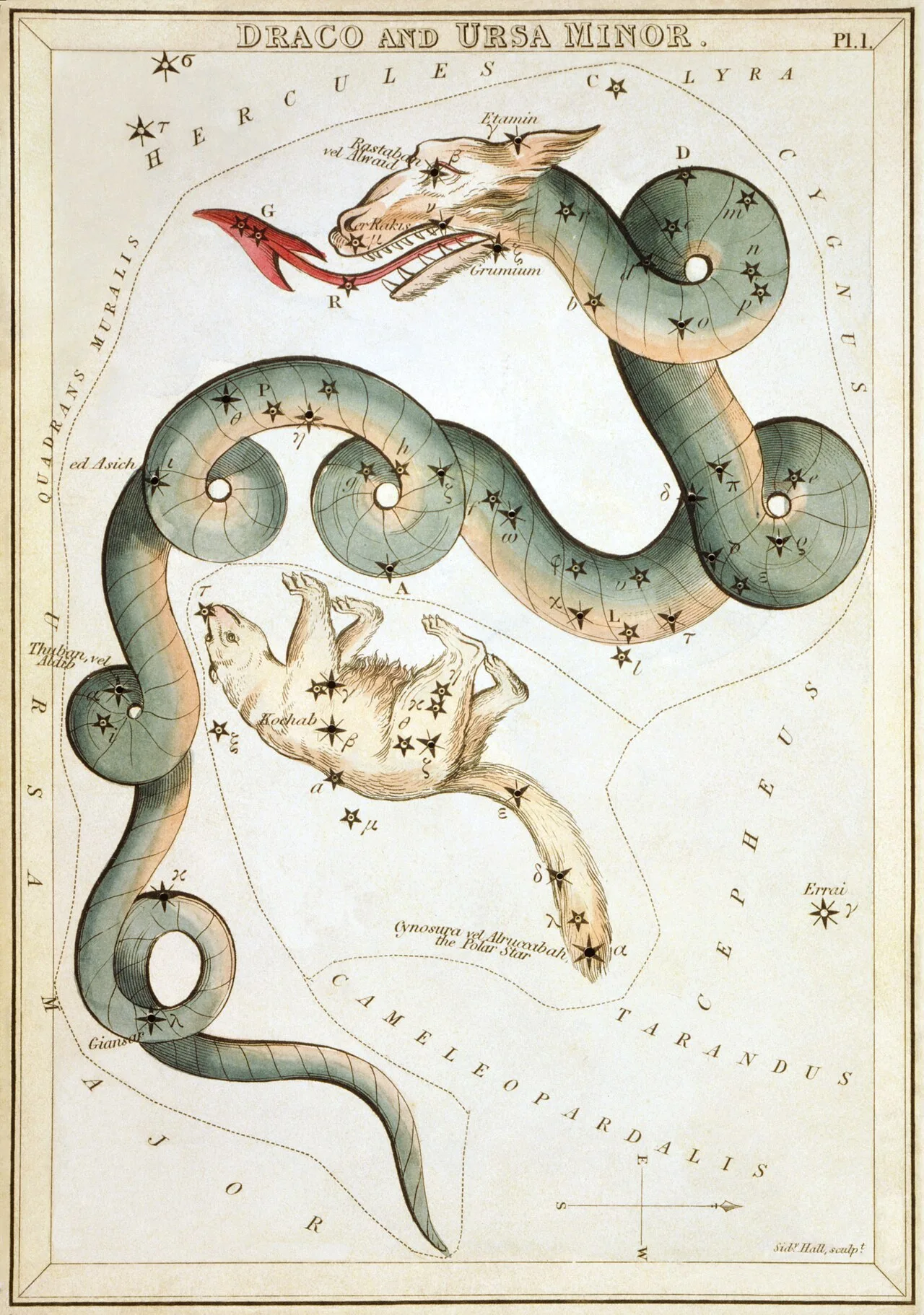
From Greek drákōn, serpent. The Latin dictionary records the sense of a large serpent, a dragon — sometimes a guardian, sometimes a monster, never the devil. The Draco constellation still carries the name across the sky.
Source: Lewis, An Elementary Latin Dictionary, entry draco. perseus.tufts.edu
-
Christian Latin, then Romanian
drac
devil
The Romanian defining dictionary gives the etymology in short: Latin draco, serpent, dragon. The devil sense was born in Christian Latin: the Church Fathers call the devil draco, and Du Cange records the sense in medieval Latin. The biblical serpent took the devil's shape, and the word followed.
Sources: dexonline.ro/definitie/drac (DEX, DER); Fagiolo, The Meaning of the Name Dracula. wuj.pl
-
Romanian, with the definite article
dracul
the devil — and in 1431, the Dragon
The definite form of drac: drac plus -ul, the. Vlad II received it as a nickname from the dragon badge of the Order of the Dragon at Nuremberg. For his subjects the nickname cut both ways: the Dragon's knight and the Devil's man.
Source: Wikipedia, “Vlad II Dracul”. en.wikipedia.org/wiki/Vlad_II_Dracul
-
Wallachia, fifteenth century
Drăculea
son of Dracul
The name under which Vlad III, the son of Vlad II, passed into history. The sons took their father's nickname as a patronymic, in the form Dracula, that is Drăculea: the son of Dracul.
Source: Wikipedia, “Vlad II Dracul” (after Florescu and McNally). en.wikipedia.org/wiki/Vlad_II_Dracul
-
London, 1897
Dracula
the name of Stoker's vampire
Bram Stoker borrowed the prince's name for the character of the novel Dracula, published in 1897. A word that started as dragon, passed through devil, and became a prince's name thus became a vampire's name.
Source: Live Science, “Vlad the Impaler: The real Dracula”. livescience.com
The odd one in the family
Latin draco left descendants across Romania. Everywhere it means dragon. Except in Romanian.
| Language | Word | Sense today |
|---|---|---|
| Latin | draco | dragon, serpent |
| Italian | drago | dragon |
| French | dragon | dragon |
| Catalan | drac | dragon |
| Romanian | drac | devil |
The table needs two shades of precision. French has its own drac, borrowed from Occitan: a water spirit, recorded by the Trésor de la langue française — a dangerous relative, still far from the Devil. And Albanian dreq, also devil, shows the sense shift touched the neighbours of Balkan Latin too.
An onomastics study puts the conclusion bluntly: Romanian looks like the only Romance language in which draco produced a word for the devil, while the dragon sense was lost. The three dialects south of the Danube keep the same sense: Aromanian and Megleno-Romanian also have drac for devil.
Who took the dragon's place
Once drac came to mean devil, the language needed another word for dragon. It found balaur: DEX compares it with Albanian bollë, serpent, and Serbo-Croatian blavor, and its origin stays debated. In fairy tales the balaur is the giant many-headed serpent, often winged.
Later Romanian also borrowed dragon from French: the learned doublet of inherited drac. The same Latin root thus entered Romanian twice — once through the people's mouth, as devil, and once through books, as dragon.
- Balaur
- DEX: cf. Alb. bollë “serpent”, SCr. blavor. dexonline.ro/definitie/balaur
- Dragon
- Borrowed from French, doublet of inherited drac. en.wiktionary.org/wiki/dragon
The order that christened a prince
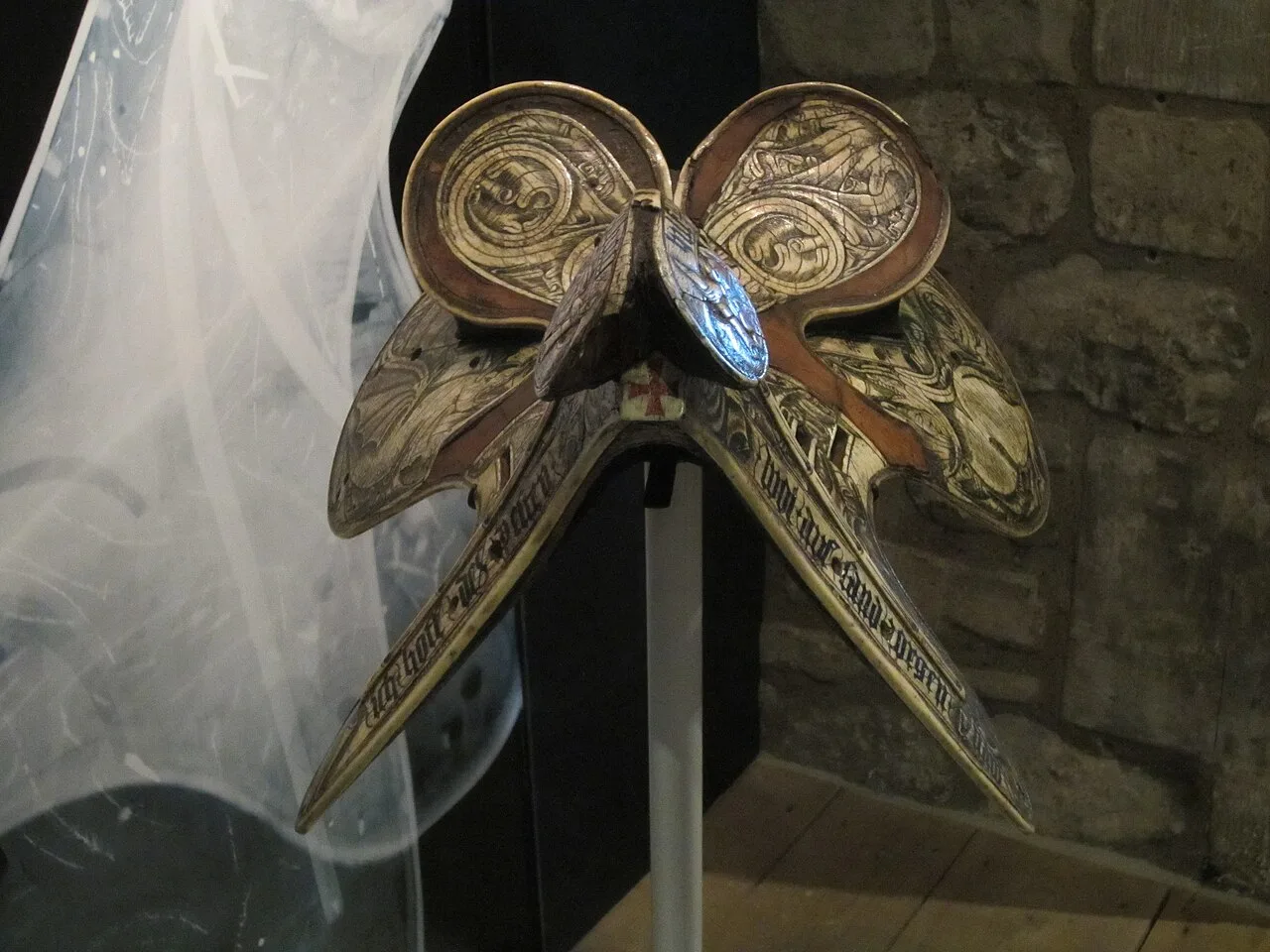
Societas Draconistarum, the Order of the Dragon, was founded in 1408 by Sigismund of Luxembourg, then King of Hungary: a chivalric order meant to defend the royal house and the Church. Its badge was a coiled dragon.
On 8 February 1431, at Nuremberg, Sigismund received Vlad II, claimant to the Wallachian throne, as a first-class member. The dragon badge brought the nickname Dracul, the Dragon, and his sons became known as Dracula, son of Dracul.

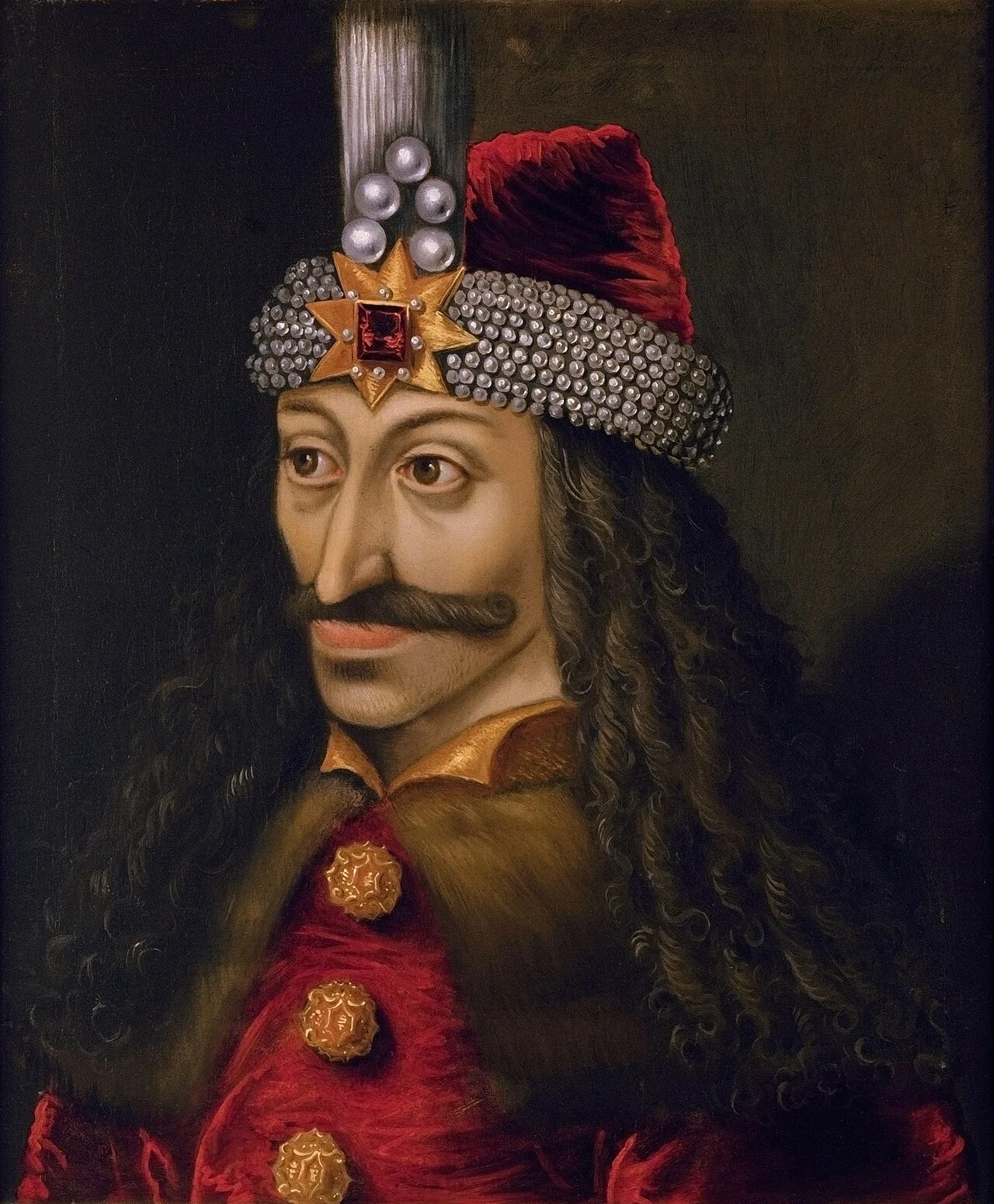

In 1897 Bram Stoker published the novel Dracula, whose character borrows the prince's name. Philology stops here; what followed belongs to cinema.
Sources
Etymologies come from dictionaries, historical facts from surveys with references to primary sources. Passages from Romanian sources appear in the English rendering of Marius Comper.
- dexonline: DEX and DER (Ciorănescu) for drac. dexonline.ro/definitie/drac
- dexonline: DEX for balaur. dexonline.ro/definitie/balaur
- Fagiolo, “The Meaning of the Name Dracula (and Dracul) and Its Reconstruction”, in Onomastics in Interaction with Other Branches of Science, vol. 3. wuj.pl
- Lewis, An Elementary Latin Dictionary, entry draco. perseus.tufts.edu
- Wiktionary: drac (Romanian, Catalan, French, Aromanian, Megleno-Romanian). en.wiktionary.org/wiki/drac
- Wiktionary: dragon (French, Romanian). en.wiktionary.org/wiki/dragon
- Wikipedia: “Vlad II Dracul” (after Florescu and McNally; Jefferson). en.wikipedia.org/wiki/Vlad_II_Dracul
- Wikipedia: “Order of the Dragon”. en.wikipedia.org/wiki/Order_of_the_Dragon
- Wikipedia: “Dialects of Latin” (the draco isogloss with Albanian). en.wikipedia.org/wiki/Dialects_of_Latin
- Live Science: “Vlad the Impaler: The real Dracula”. livescience.com