

1,487 embroidery patterns · ASTRA Museum, Sibiu, Romania
Grandmother's blouse, copied onto linen
From the winter of 1954, women and girls in the villages around Sibiu, Făgăraș and Hunedoara, in Transylvania, copied the patterns of the blouses and shirts in their homes onto small pieces of linen for the museum in Sibiu. Many of the record cards say who sewed, how old she was, whose blouse she copied and how old the pattern was. The ASTRA Museum has published 1,487 patterns with photographs, under an open licence; 363 of them come from two older albums, of 1904 and 1905. All of them are here, on one wall.
A square of linen, at 13#
Minodora Cismaș was 13 when she sewed this pattern in Porumbacu de Sus, a village near Sibiu. She copied it from a piece made by Cismaș Ana. The museum's card says the pattern was 105 years old at the time.
On a piece of unhemmed linen, the girl worked a single part of the blouse: the pattern that runs over the shoulder, in blue thread. The museum kept the linen and wrote on the card her name, her age, and who had made the piece she copied. See the full card →
What the cards say#
961 of the patterns come from this survey: almost all their cards point to an "identification questionnaire for embroidery", a form of the folk-art section of the Brukenthal Museum in Sibiu. Most dated cards are from December 1954; a few are from 1955–1958, and some, from Hunedoara, mention original pieces sewn in the 1960s.
Depending on the card, it records who sewed and at what age, the village, whose shirt the pattern was copied from, how old the pattern was, where on the shirt it sat, and whether it was common or rare in the area. Who organised the survey and how the patterns were gathered is not described in any published work found so far.
From 11 to 82#
532 cards give the age of the person who sewed. The youngest girls were 11; the oldest woman was 70. Of the roughly 200 people whose age is given, more than half were under 30.
42 patterns were sewn by girls under 16, 18 of them in Porumbacu de Sus; others by pupils at the seven-year school in Slimnic. Apart from them are the sheepskin furriers of Săliște, who gave the museum the patterns of their leather waistcoats and coats. The master furrier Achim Tănase was 82. The flowers are made "depending on the bargain", says one of his cards; another: "if it costs more, the finer they are". See the full card →
Patterns a century old#
799 cards say how old the pattern was. 103 were at least 100 years old; 66 of these are the leather waistcoat and coat patterns of the two Săliște furriers, whose cards give "100 years" on almost every one.
The greatest age written in years: 147 years, for a pattern sewn by Voineag Monodora from a piece by Voineag Aurelia. In Ucea de Sus, Ana Vlad, born in 1891, copied a piece by Paraschiva Vlad, born in 1797. And a 14-year-old girl from Berivoi copied a piece that, the card says, Eva Maga had made in 1800. See the full card →
A life in shirts#
Some cards also say who the shirt was for. There are girls' blouses and young women's blouses, bridal blouses, one of them also worn on the day after the wedding, and "old" shirts, about which a card from Pricaz says:
"When a woman passes 40 she begins to make herself an old woman's shirt."Stîrc Aurelia, Pricaz (translated from Romanian)
In Vlădeni, a bridal blouse was "kept as a burial blouse, by an old custom, together with the wedding ring". See the full card →
Black on white#
Black thread appears on 87% of the patterns. In the villages of the 1954 survey the share rises to 94%; red appears on only 11%.
The album Minerva Cosma put together in Sibiu in 1905 looks different: black is on 37% of its patterns, red on 80%. It is not known which villages the album's patterns come from, so the difference does not show fashion changing. Maria Șpan writes that around 1900 members of ASTRA, the Romanian cultural association in Transylvania, proposed a black-and-white "national costume", adopted by several villages, particularly in the Sibiu area.
76 villages#
The patterns on the map come from 76 villages. Most are from Poiana Sibiului (307), Săliște (205) and Rășinari (103), in the Mărginimea Sibiului ("the margin of Sibiu") at the foot of the mountains south-west of Sibiu, and then from the villages of Țara Făgărașului, below the Făgăraș ridge.
Tap a village on the map to see its patterns in the list below.
Two older albums#
The same wall holds 195 patterns from the embroidery album gathered in 1904 by Dimitrie Comșa, a teacher in Sibiu, and 168 from the album put together in 1905 by Minerva Cosma, representative of the Romanian Women's Association of Sibiu, shown at the opening of the ASTRA Association's museum on 19 August 1905.
For these, the cards rarely give a name or a village. The Association's museum was closed in 1950 and its collection passed to the Brukenthal Museum. Today every pattern on this wall is at the ASTRA Museum.
Search for a name or a village#
Type a family name, a village or the name of a motif ("ciocănelul", the little hammer; "calea ocolită", the winding road). Each result opens the full card, with the large photograph and the museum's text.
All 1,487 patterns, those with the name of the one who sewed first
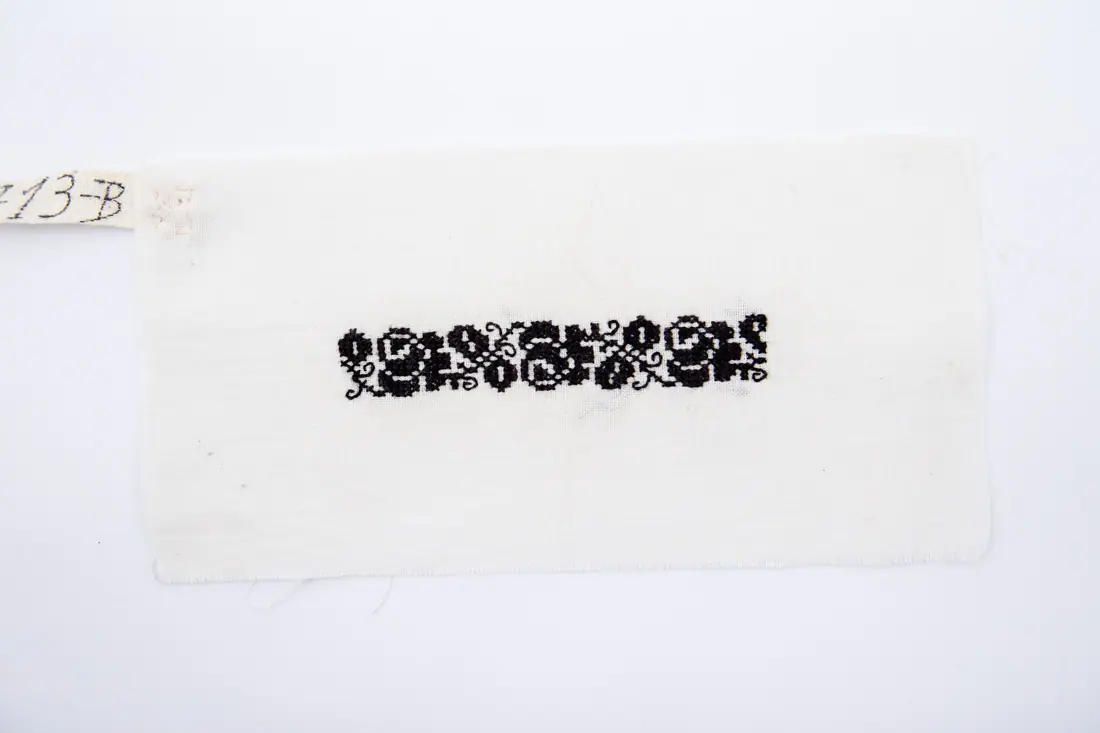 Sewn by Voineag MonodoraPorumbacu de Sus · pattern 147 years old
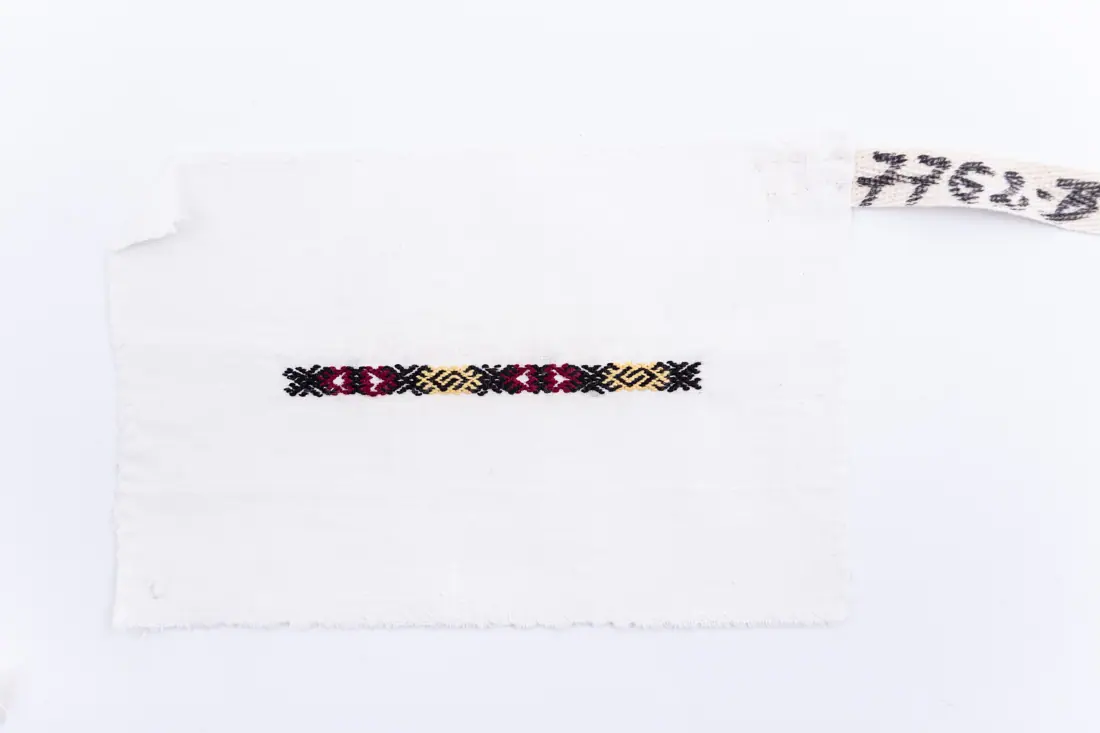 Sewn by Filip Maria, 58Bobâlna · pattern 120 years old
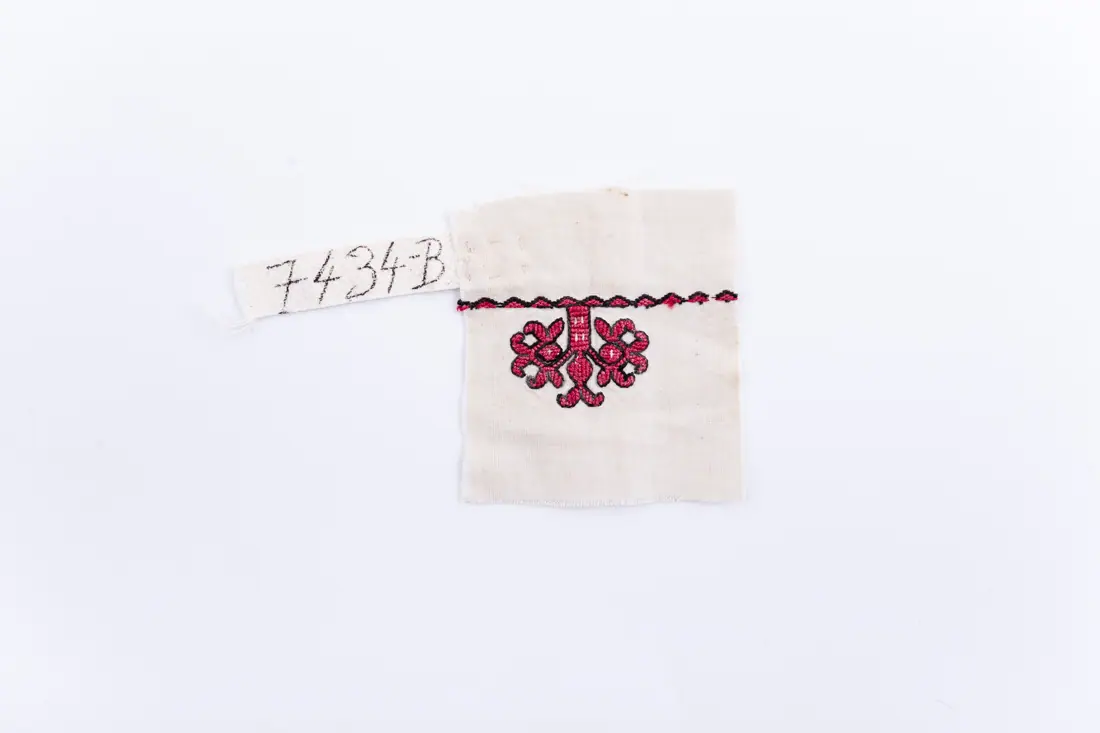 Sewn by Vlad AnaUcea de Sus · pattern 120 years old
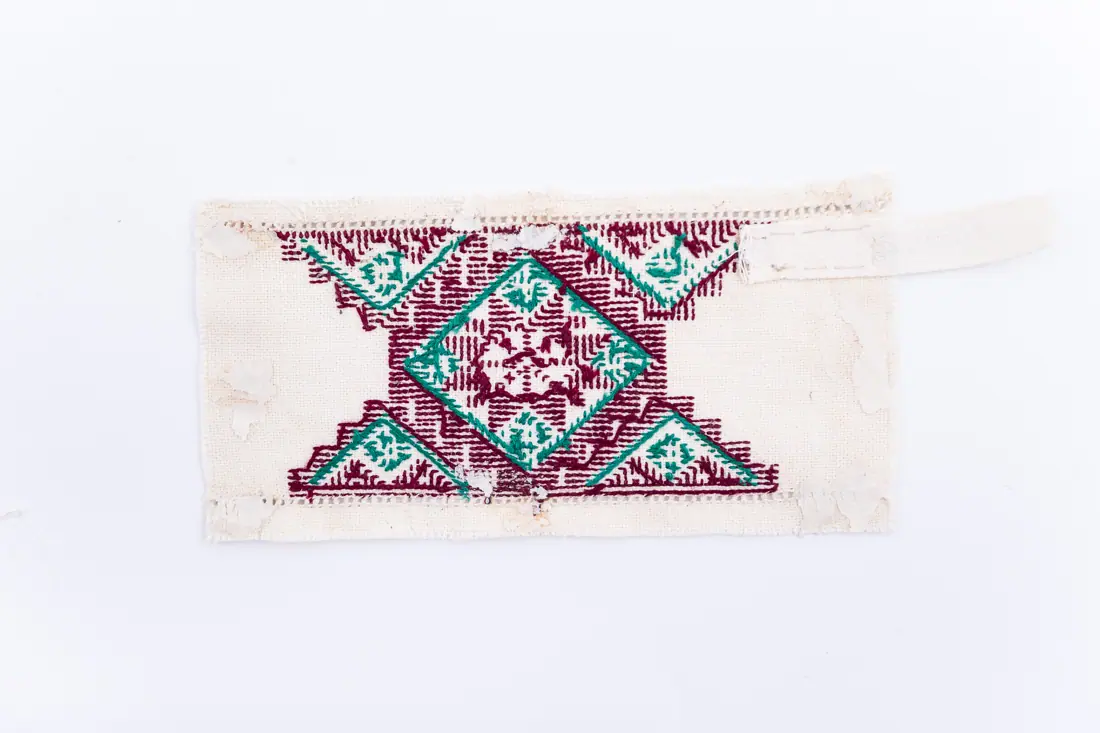 Sewn by David Katharina, 32Noistat · pattern 120 years old
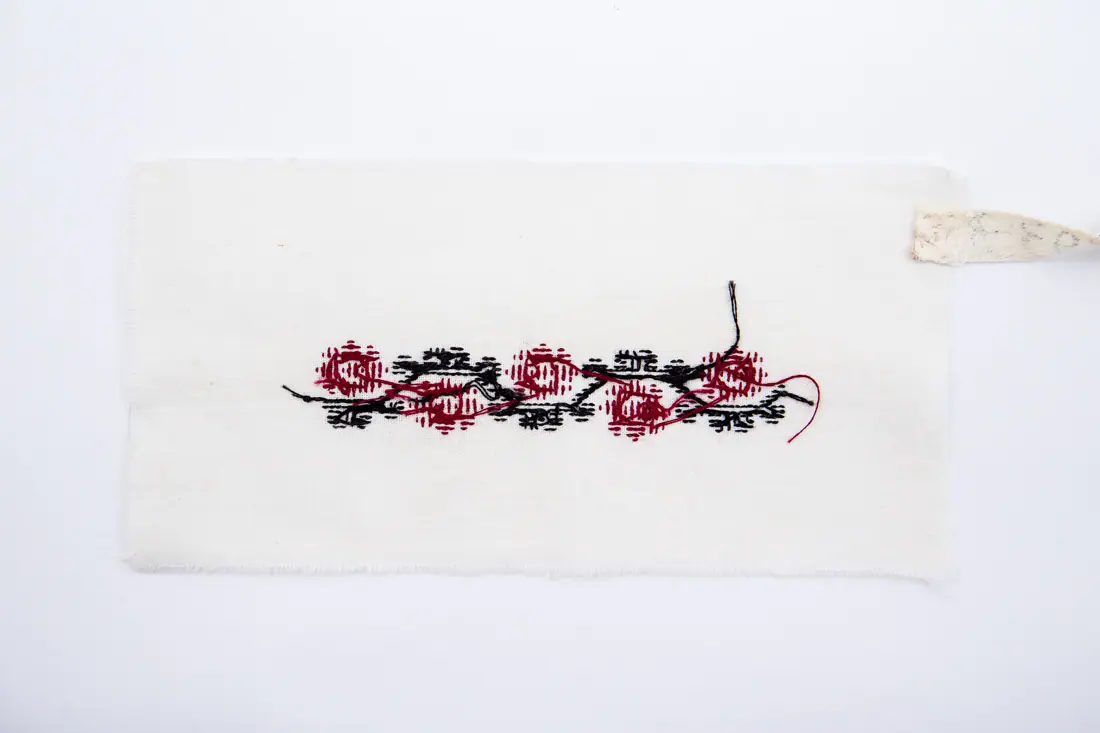 Sewn by Bădilă Zâna, 12Porumbacu de Sus · pattern 115 years old
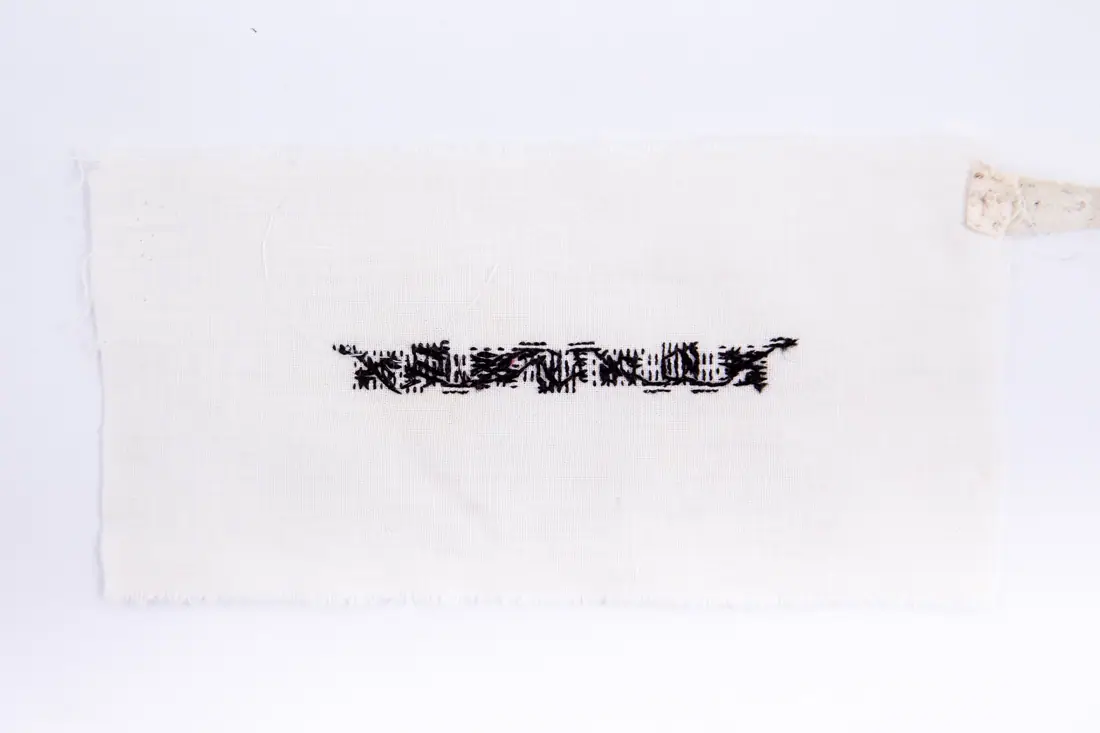 Sewn by Marcu MariaPorumbacu de Sus · pattern 115 years old
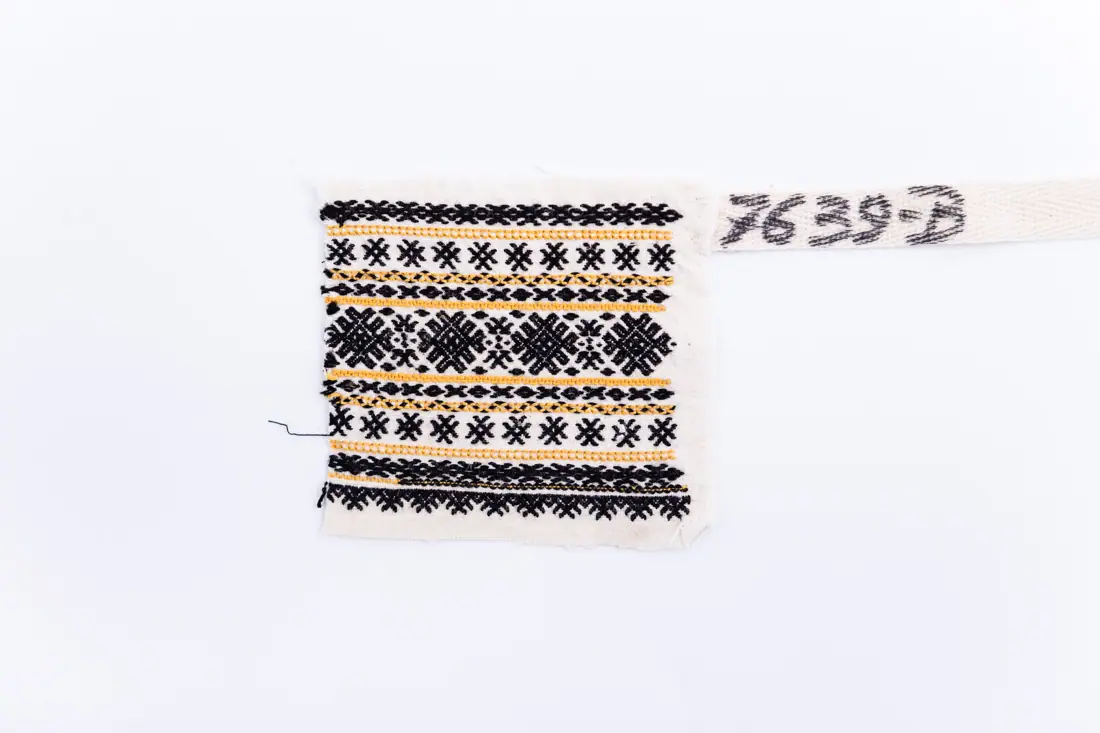 Sewn by Stan Foarea, 49Augustin · pattern 110 years old
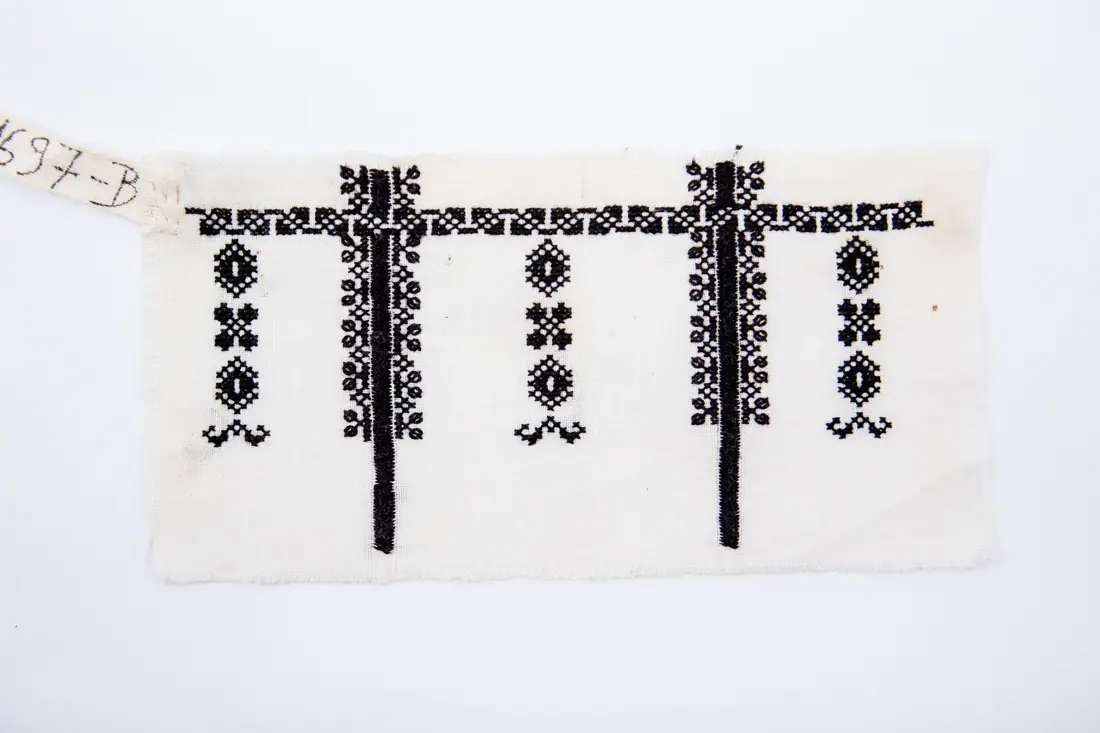 Sewn by Lupu Maria, 13Porumbacu de Sus · pattern 105 years old
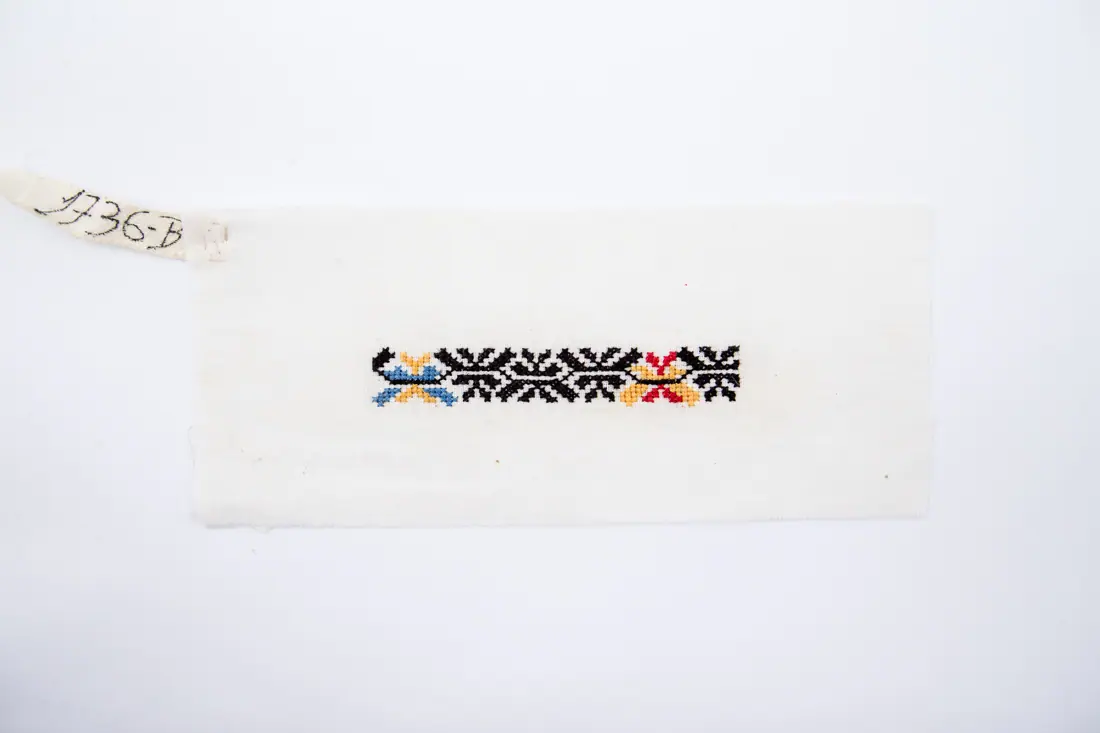 Sewn by Cismaș Victoria, 11Porumbacu de Sus · pattern 105 years old
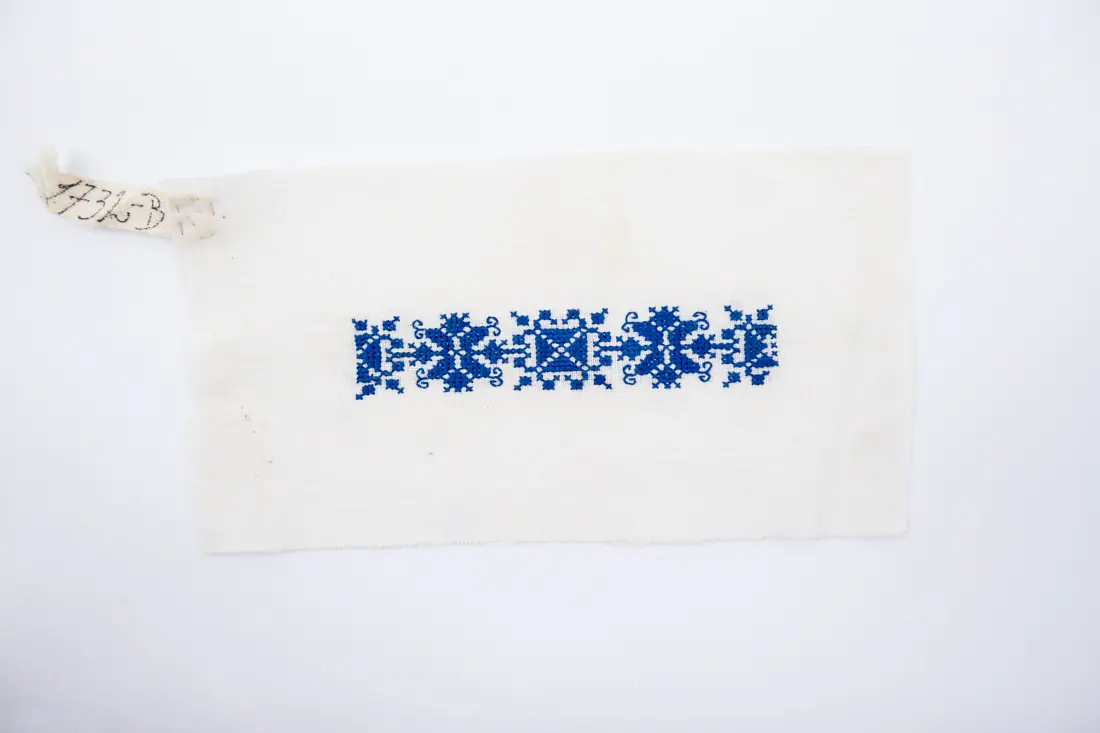 Sewn by Minodora Cismaș, 13Porumbacu de Sus · pattern 105 years old
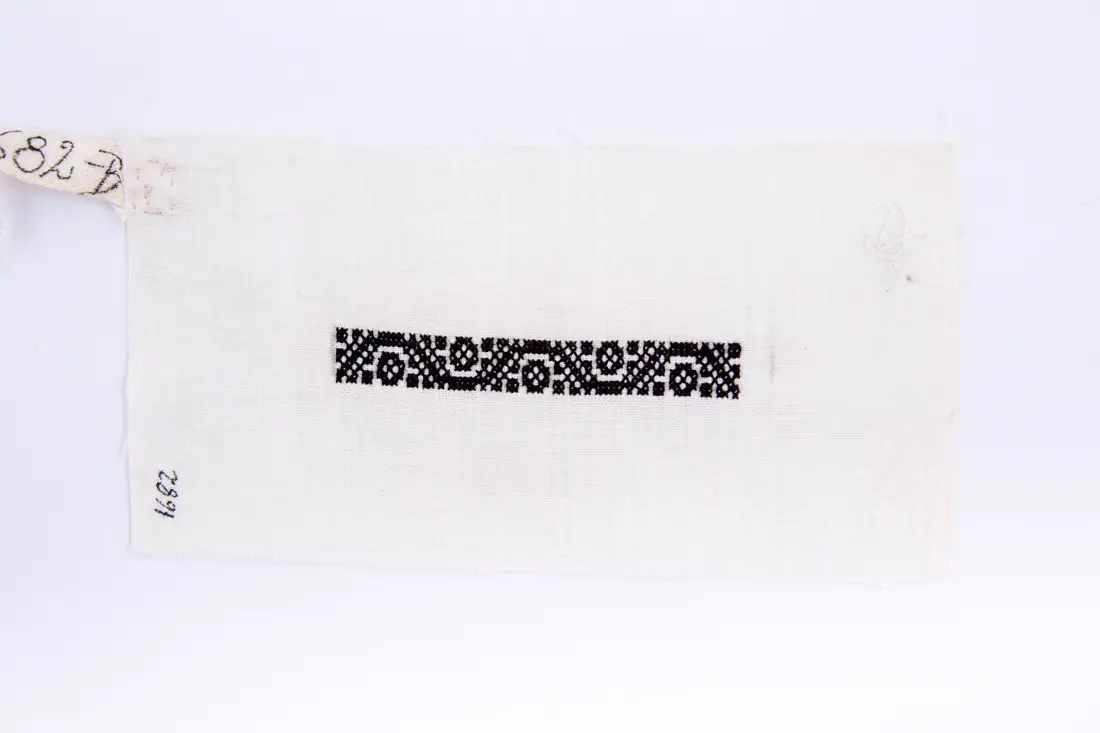 Sewn by Cismaș MariaPorumbacu de Sus · pattern 105 years old
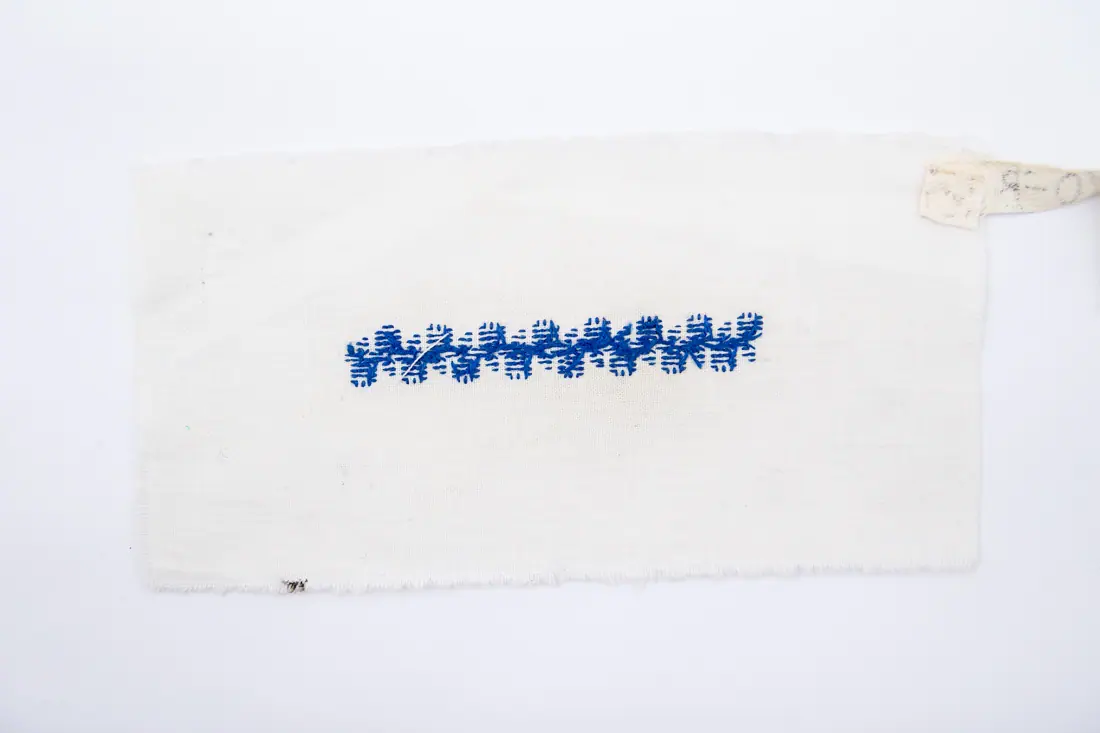 Sewn by Bârdaș MariaPorumbacu de Sus · pattern 105 years old
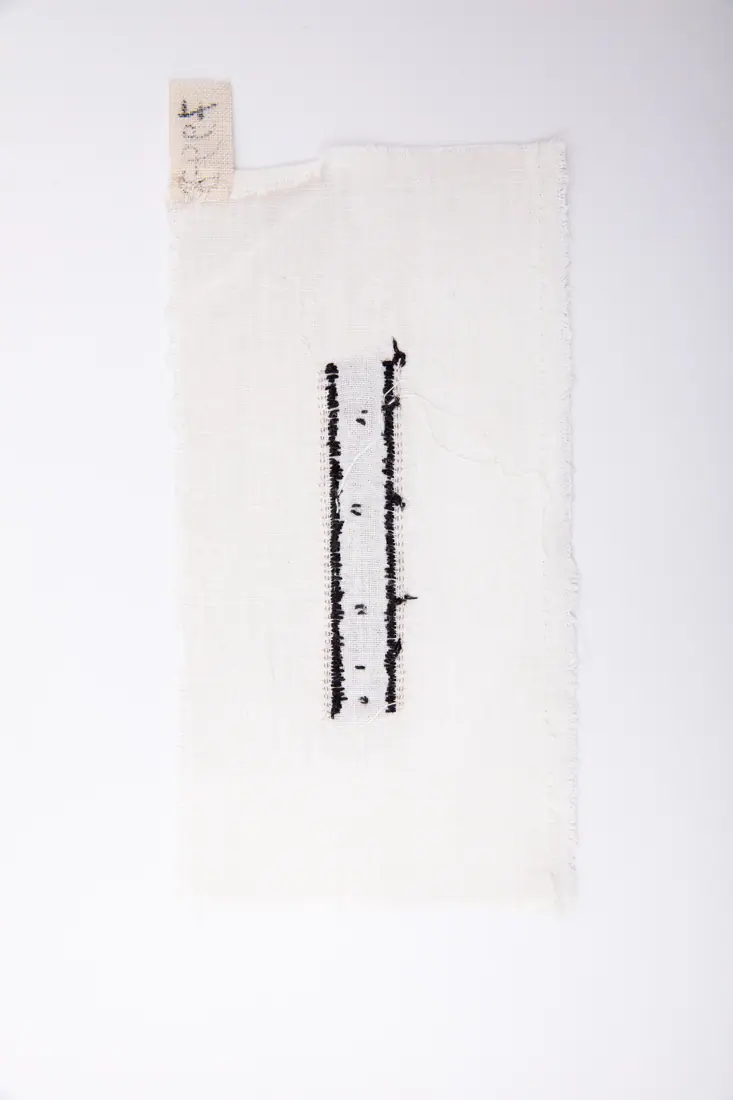 Sewn by Ana Cotoară, 48Rășinari · pattern 100 years old
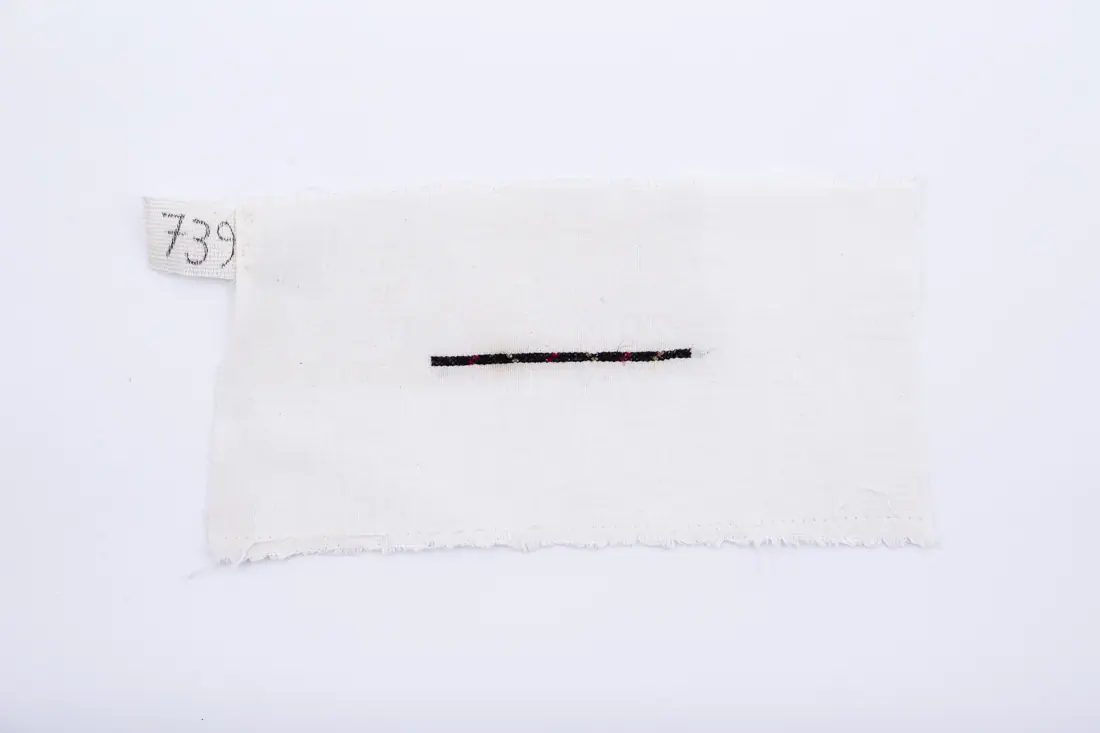 Sewn by Soră Mitrea Ciutană, 70Rășinari · pattern 100 years old
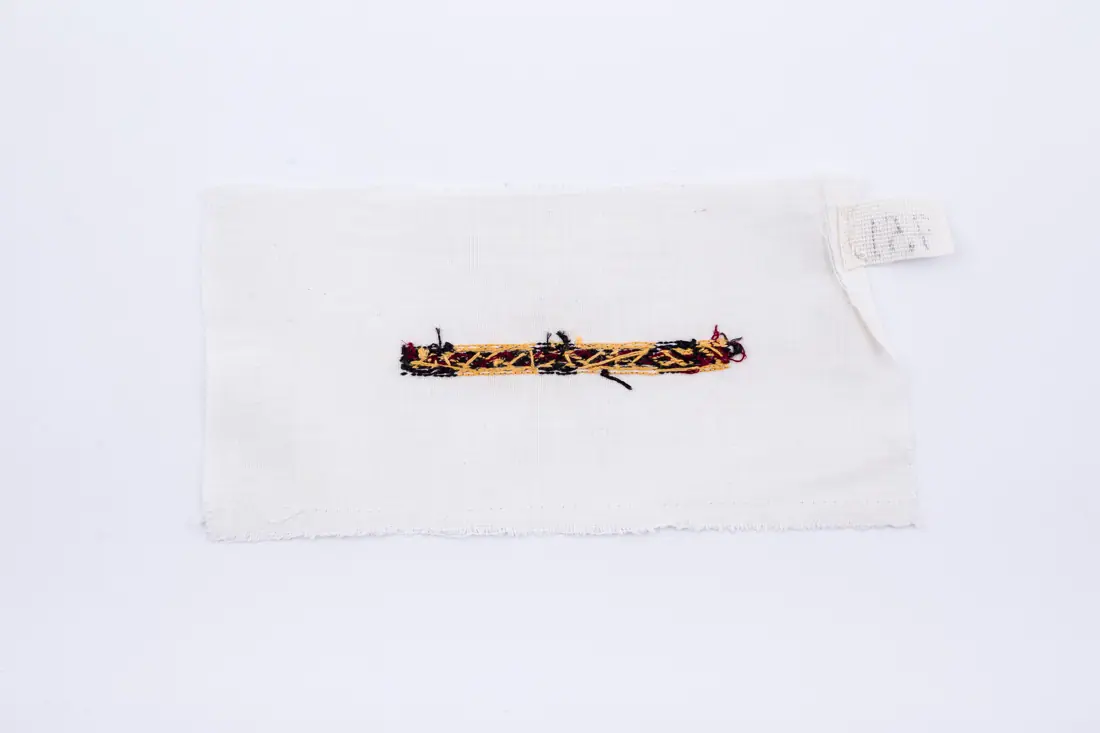 Sewn by Ana CotoarăRășinari · pattern 100 years old
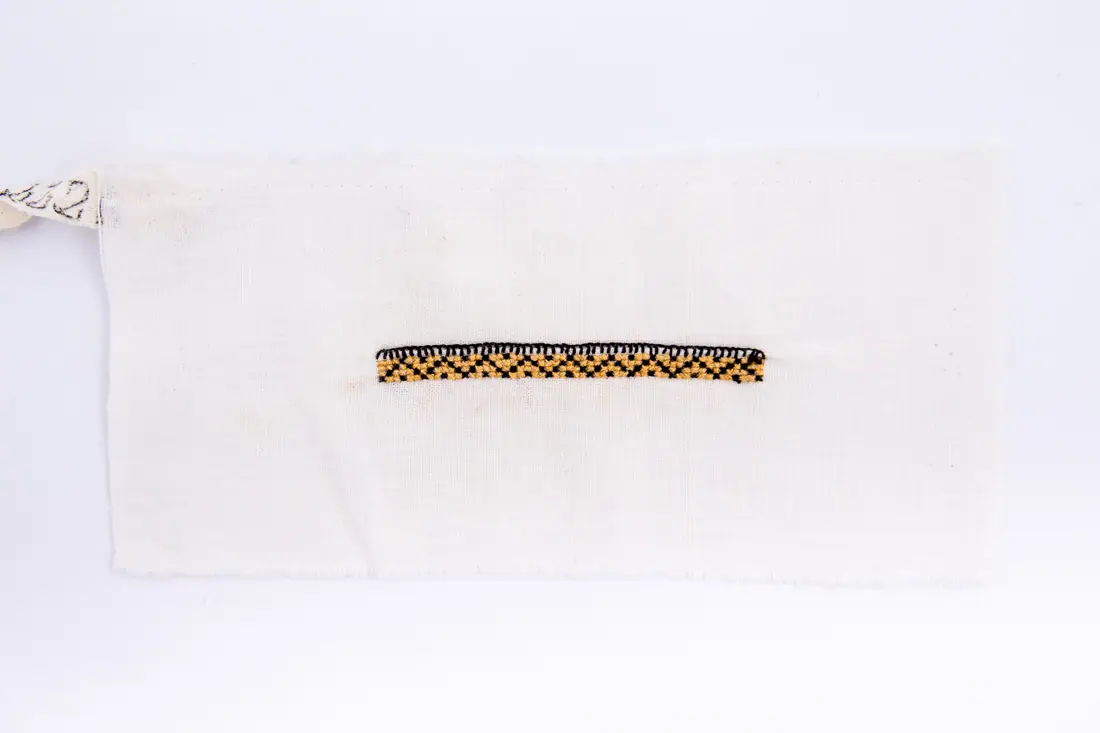 Sewn by Stroia IoanaPoplaca · pattern 100 years old
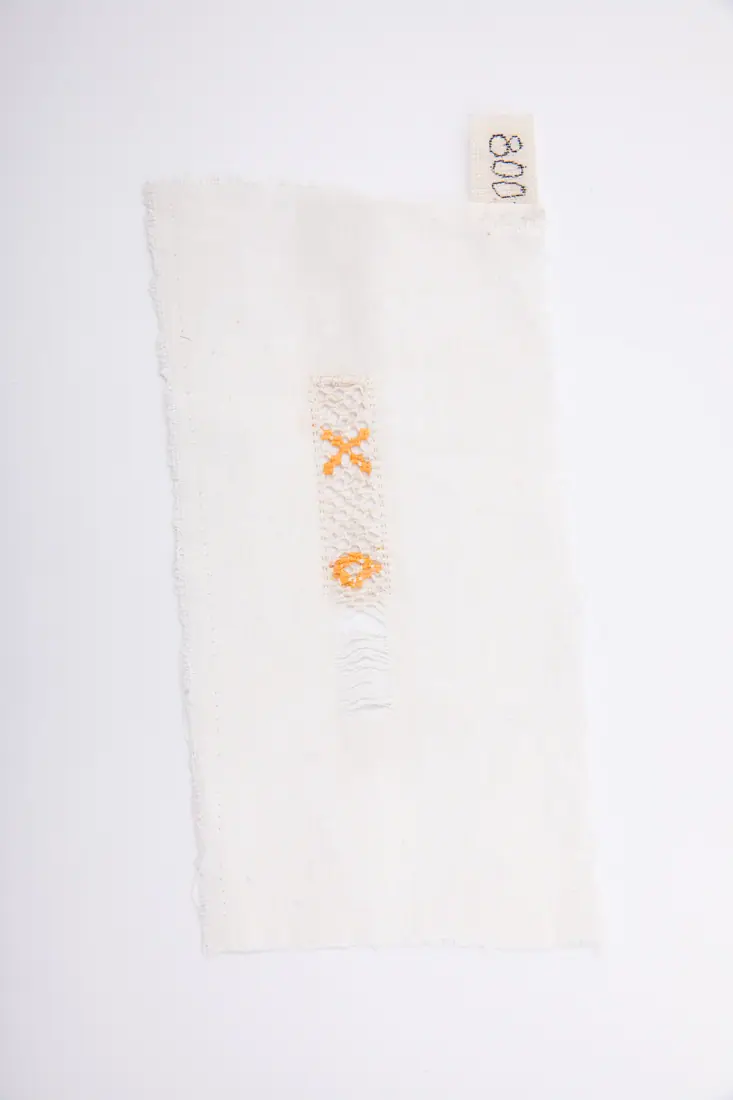 Sewn by Ana Cotoară, 48Rășinari · pattern 100 years old
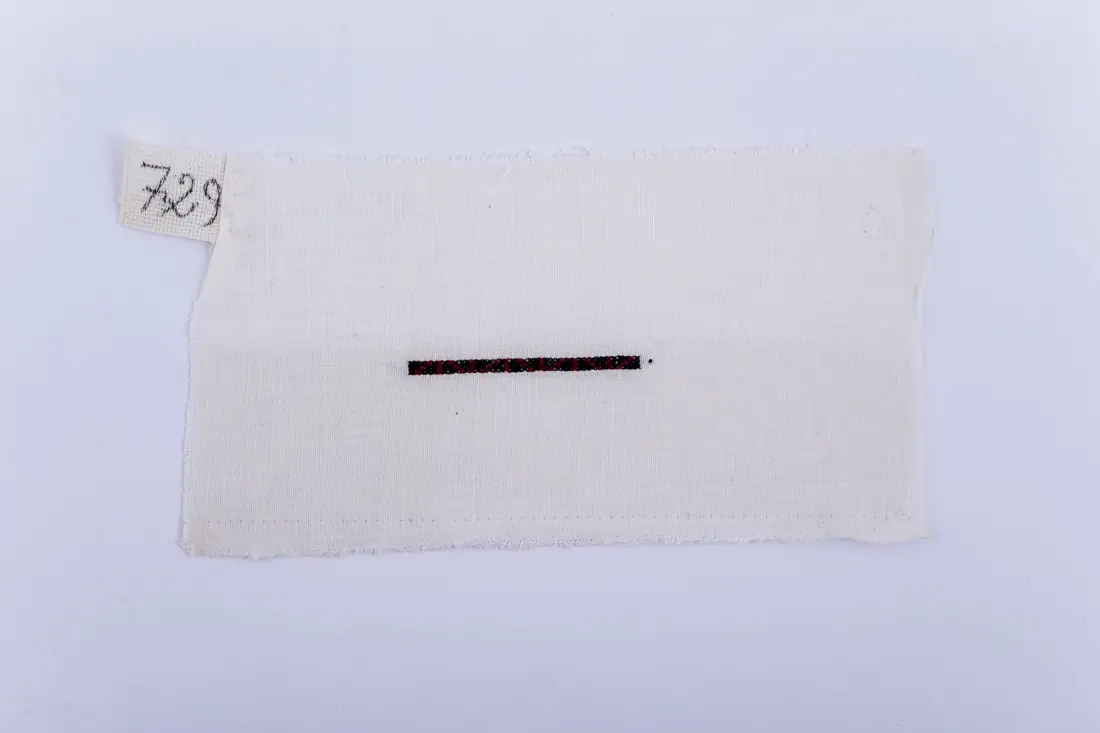 Sewn by Soră Mitrea Ciutană, 70Rășinari · pattern 100 years old
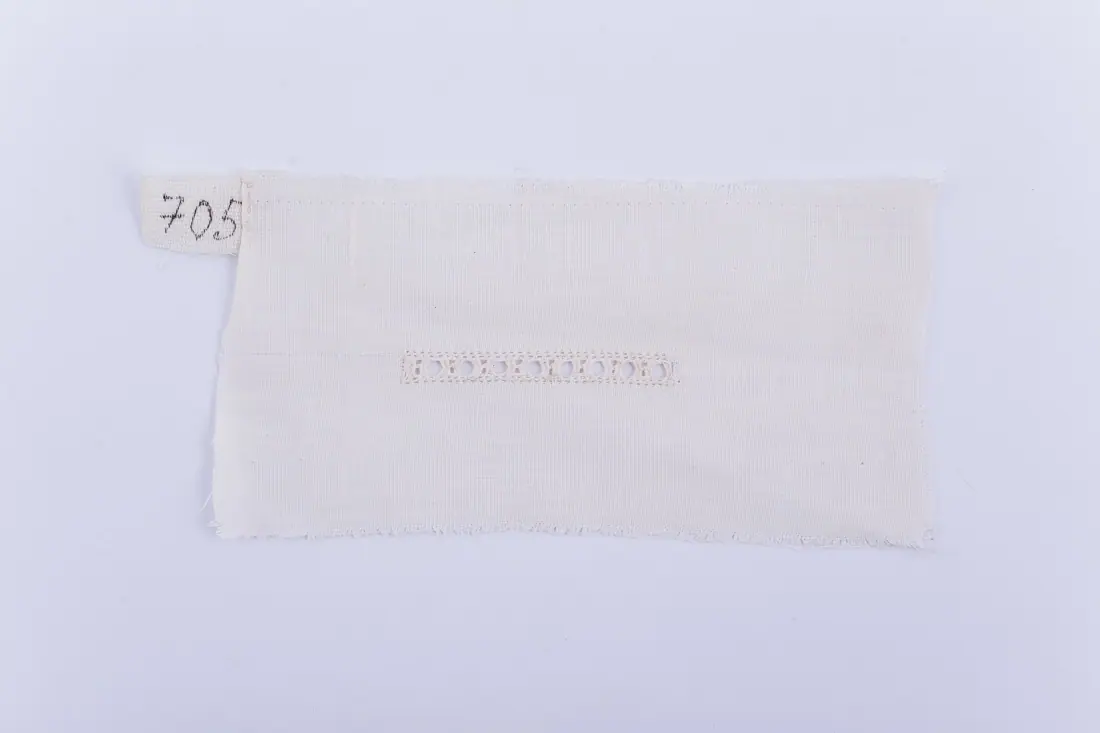 Sewn by Soră Mitrea Ciutană, 70Rășinari · pattern 100 years old
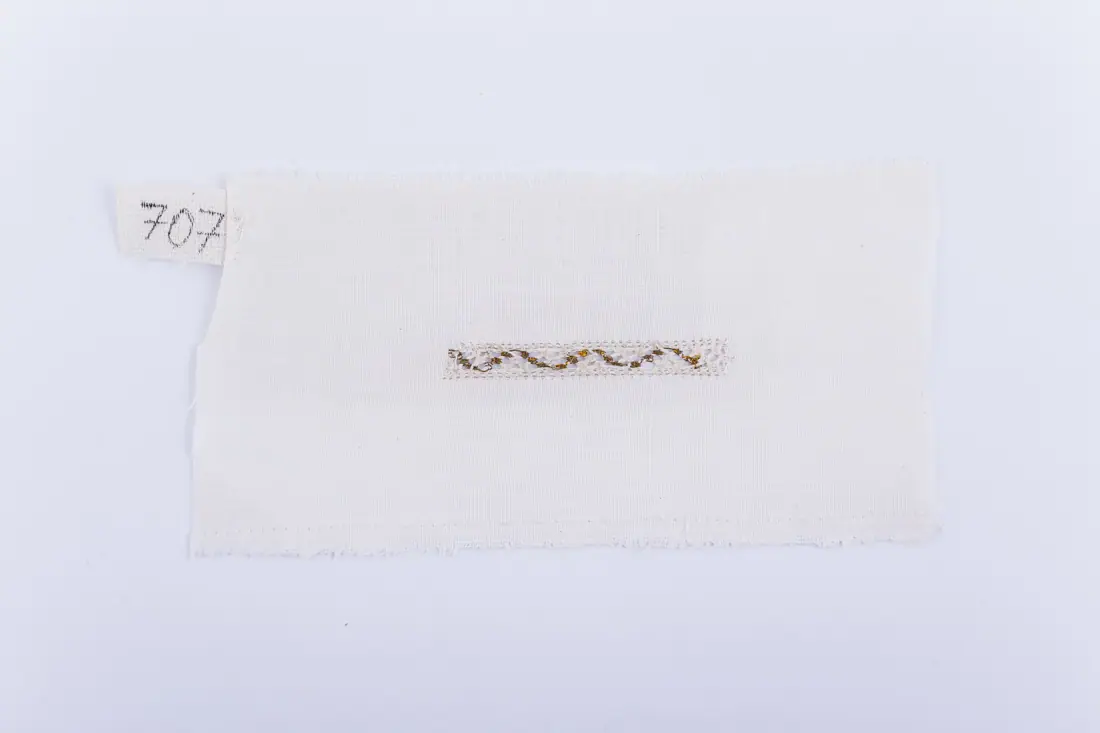 Sewn by Soră Mitrea Ciutană, 70Rășinari · pattern 100 years old
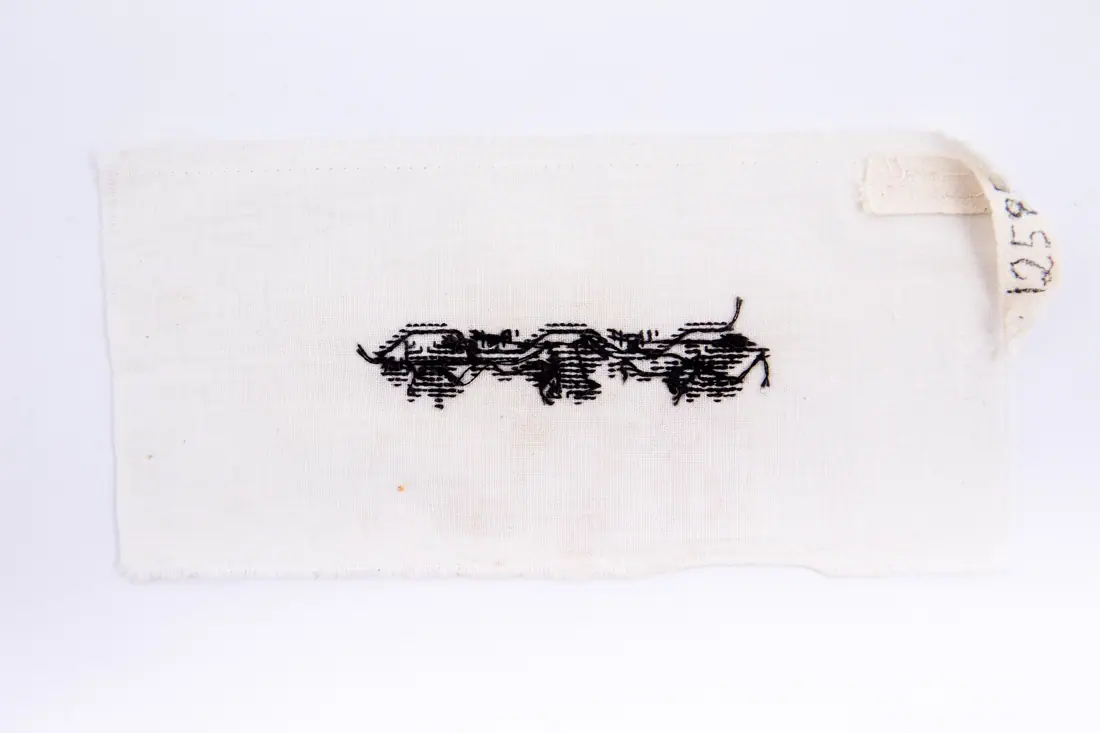 Sewn by Stroia IoanaPoplaca · pattern 100 years old
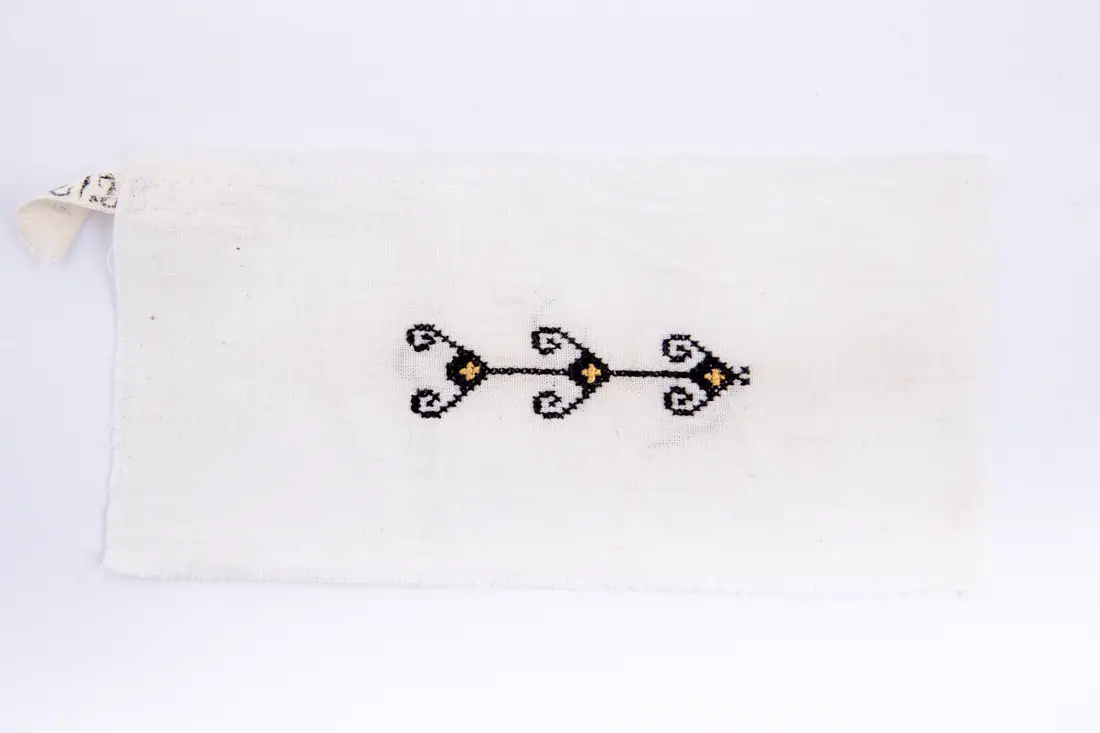 Sewn by Opriș MariaPoplaca · pattern 100 years old
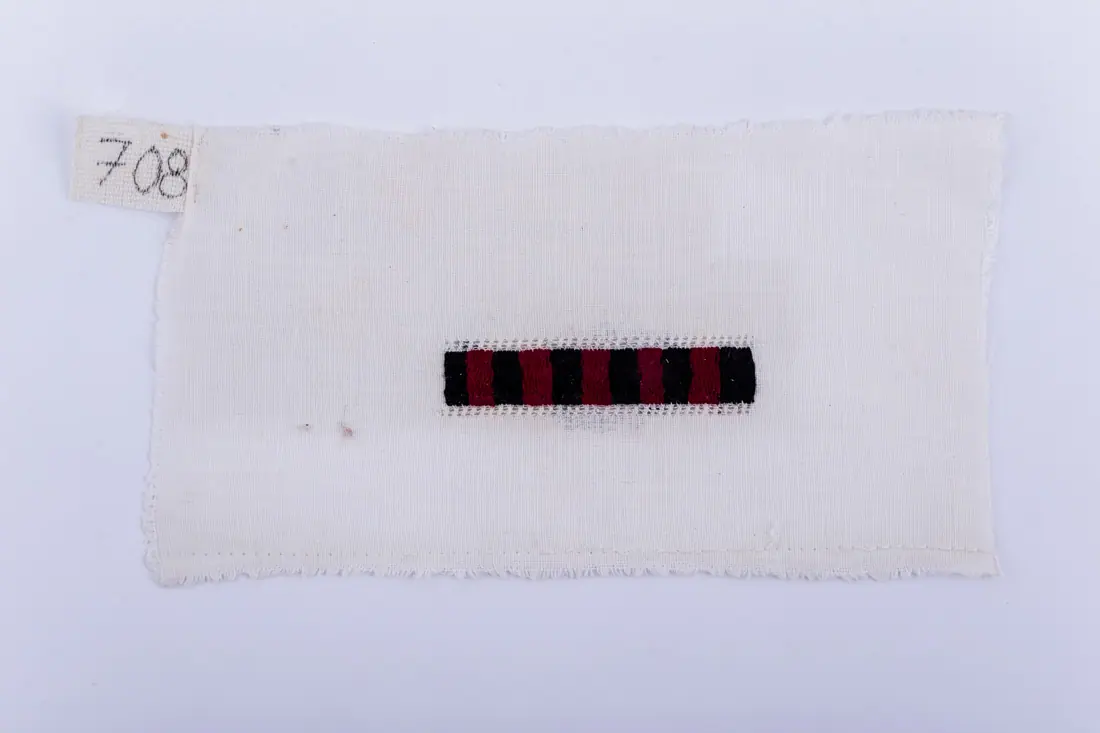 Sewn by Soră Mitrea Ciutană, 70Rășinari · pattern 100 years old
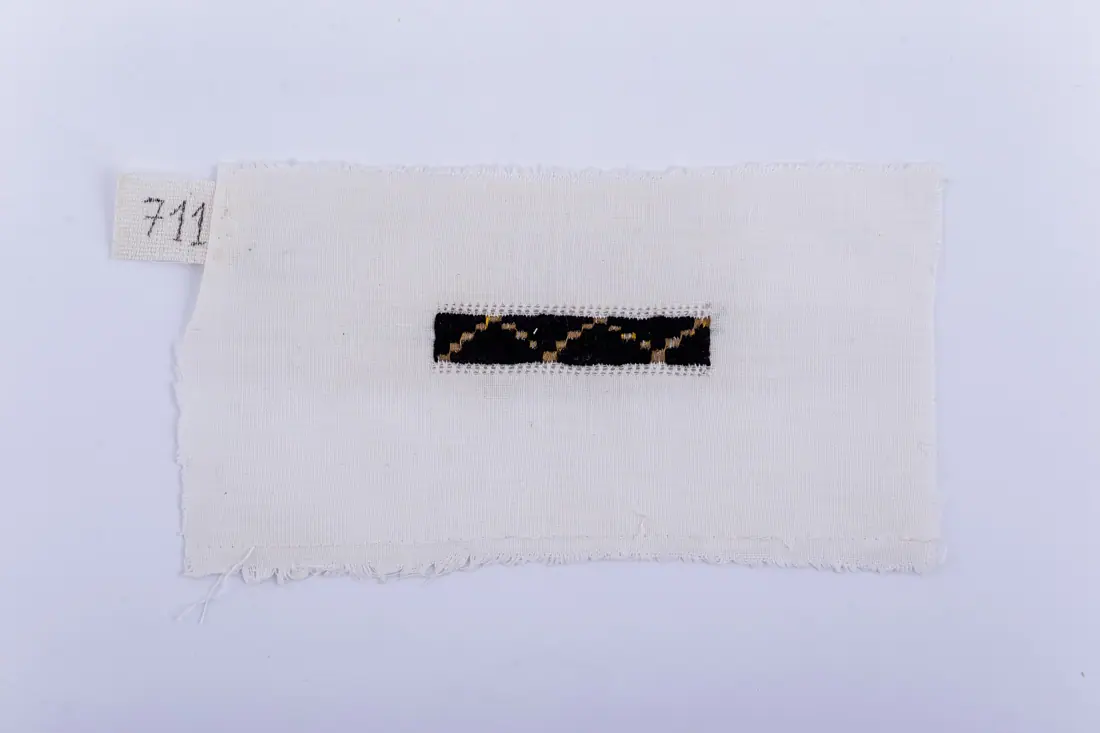 Sewn by Soră Mitrea Ciutană, 70Rășinari · pattern 100 years old
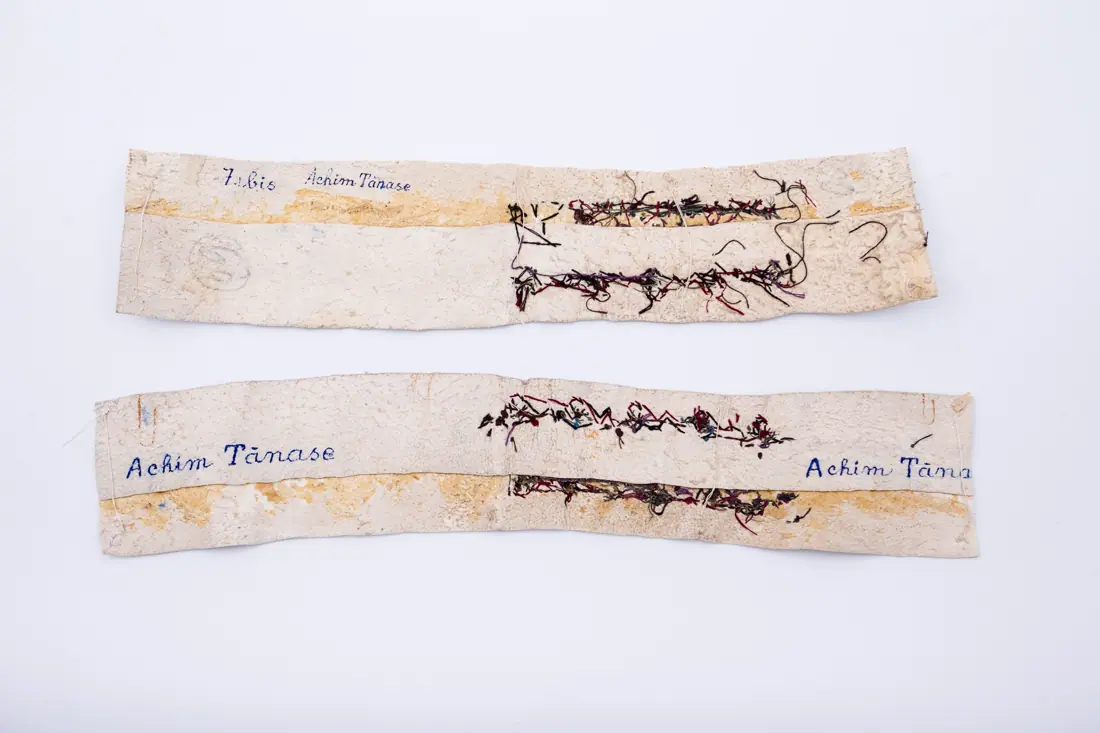 Sewn by Achim Tănase, 82Săliște · pattern 100 years old
Lines from the cards#
A few lines from the cards, as the museum wrote them down, with an English translation.
ia cu altiță o cinstește soacra la norăthe mother-in-law honours her new daughter-in-law with the altiță blouse
la mireasă le face mari, incărcate, frumoase tare, să se deosebeascăfor the bride she makes them big, heavy with work, very beautiful, to stand out
am luat modelu de pe o petecăI took the pattern from a scrap of cloth
ia de nevastă tânără, ce se purta a doua zi după nuntăthe young wife's blouse, worn on the day after the wedding
modelul fiind din cele mai vechi, abia s-a putut descifra după vechea iethe pattern being one of the oldest, it could barely be made out from the old blouse
învățat de la meșterul Nicolae Șoima - Săliște și l-am mai prefăcut, l-am mai modificatlearnt from the master Nicolae Șoima of Săliște, and I reworked it, changed it a little
nu se mai folosește în anul 1958no longer in use in the year 1958
What the cards do not say#
The cards record what the museum was told. The age of a pattern is, as a rule, the one declared by the person who sewed it, not a date the museum worked out. When a card says "after the blouse of…", the name may belong to the woman who made the blouse or to the one who wore it; this page repeats the card's wording. Where the card does not say who sewed but the catalogue gives a name, the page writes "catalogued under" before it.
Many patterns come from a few villages, Poiana Sibiului, Săliște and Rășinari, so the wall shows what was collected, not the whole Romanian blouse. Some squares are not exact copies: a few cards say the original was sewn in gold thread and the sample in yellow, or in black and the sample in brown.
Words on the cards#
- ie (plural ii)
- the traditional Romanian woman's blouse.
- altiță
- the embroidered band on the shoulder of the blouse. UNESCO inscribed "the art of the traditional blouse with embroidery on the shoulder (altiță)" on its list of intangible heritage in 2022, for Romania and the Republic of Moldova.
- încreț
- the band below the altiță, where the linen is gathered.
- râuri
- the rows of embroidery running down the sleeve.
- pumnași
- the embroidered cuffs at the wrist.
- regiunea Stalin
- the name of the Brașov region from 1950 to 1960; the districts around Sibiu and Făgăraș belonged to it from 1952.
How this page was made#
All 1,487 patterns are the "Model de broderie" (embroidery pattern) records of the ASTRA National Museum Complex, published on Europeana through Romania's National Heritage Institute under CC BY-SA 4.0, downloaded on 25 October 2026. Names, ages, villages, pattern ages, the place on the shirt and the colours were extracted from the text of each card; an independent checker then compared 47 random cards with the museum's text, and the rules were corrected where the extraction went wrong. Every card on the page can be read in full, in the museum's words.
For the wall, each photograph was cropped automatically around the embroidery and brought to the same linen tone. The large photographs in the cards are the museum's own, reduced in size. Villages were placed by the name on the card or in the catalogue's place field (GeoNames); for the album patterns, the place in the catalogue is where the album was compiled, so they are not on the map. The relief is drawn from the Terrarium elevation data (Mapzen, on AWS).
Sources
- ASTRA National Museum Complex, "Model de broderie" records on Europeana (CC BY-SA 4.0)
- ASTRA Museum of Transylvanian Civilisation, history (Romanian)
- Catalogue of the exhibition opening the Association's museum, Analele Asociațiunii no. VI, 1905 (Romanian)
- UNESCO, decision 17.COM 7.B.23 (2022): the art of the traditional blouse with embroidery on the shoulder (altiță)
- Maria Șpan, "Visual communication through the special costumes of the ritual year in a Transylvanian village", Synergies in Communication, 2022
- Republic of Moldova intangible heritage inventory: the art of the blouse with altiță (the parts of the blouse) (Romanian)
- Ovidiu Gheorghe-Czinka on Law 5/1950 and the Stalin region, Journal of Romanian Literary Studies 16/2019 (Romanian)
- GeoNames, places in Romania (CC BY 4.0)
If your grandmother or great-grandmother came from these villages, search for her family name. Perhaps one of them sat one winter with a piece of linen in her lap and copied, for a museum, the shoulder of the blouse she had worn at her wedding.