Summer 1917 · Mărăști – Mărășești – Oituz
“Pe aici nu se trece”: Mărășești, 1917
Mărăști, Mărășești, Oituz: the summer Romania's rebuilt army stopped Mackensen's offensive. No miracles: trenches, firing tables, and Russian allies who stayed in the line.
Three battles on one map
Drag the slider from 24 July to 4 September 1917. Sectors light up on the days the sources have them fighting, and the markers tell what happened. Days without a marker have no day-level verified events: we did not invent any.
·
„Pe aici nu se trece!”
- 24.07.1917 The Mărăști offensive
Averescu's 2nd Army, with Russian troops, attacks at Mărăști to encircle the German 9th Army. English sources date the opening to 22 July. - 01.08.1917 Mărăști: victory, then pause
The offensive reaches its goal and stops on 1 August. The parallel Nămoloasa operation is abandoned: the Russians can no longer be counted reliable partners. - 06.08.1917 Mackensen strikes at Mărășești
The German field marshal attacks on the Muncelu–Mărășești line, aiming at Adjud. Grigorescu gives the order of the summer: “Pe aici nu se trece!” (variant: “Nici pe aici nu se trece!”). - 08.08.1917 Oituz opens
About 200 guns, 30 of them heavy, pound the Romanian IV Corps. Two battles now burn in parallel: Mărășești and Oituz. - 22.08.1917 Oituz: the line holds
After 15 days the Third Battle of Oituz ends in a Romanian defensive victory. The Adjud junction never happens. - 03.09.1917 Mackensen halts the attack
After 29 days the German offensive is officially halted, and the troops leave for the Italian Front. The Moldavian front stabilises until the end of the war. - 04.09.1917 Ecaterina Teodoroiu falls
At Dealul Secului, west of Fitionești, the sublocotenent of the 43/59th, falls at the head of her platoon: 22 August Old Style, 4 September New Style.
Without JavaScript, the summer's markers appear below, all seven, in order.
Three battles, one summer
Between 24 July and 4 September 1917, on a front a few dozen kilometres wide in Vrancea and Bacău, the Romanian army moved from attack to defence to counterattack, and stayed on its feet.
The map below is an avowed schematic: three sectors, the Siret river, the days one after another. Grigorescu's order holds it all together.
Chapter I
Mărăști
24 July – 1 August 1917
Romanian 2nd Army plus Russian troops, on attack
- Chapter
- 24 July – 1 August
- Duration
- 9 days
- Commander
- General Averescu
- Result
- Romanian–Russian victory
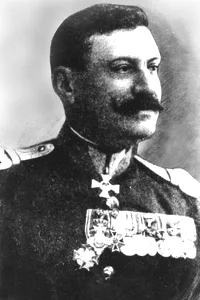
On 24 July New Style, General Alexandru Averescu's 2nd Army, shoulder to shoulder with Russian troops, attacks at Mărăști to encircle and destroy the German 9th Army. It is the first Romanian offensive after the winter of rebuilding, and the man leading it answers to the chief of the Marele Cartier General, Constantin Prezan.
By 1 August the offensive has reached its tactical goal and stops: Mărăști remains the summer's only offensive, because the parallel operation at Nămoloasa is abandoned in the meantime. The Russian army, shaken by revolution, can no longer be counted a reliable partner.

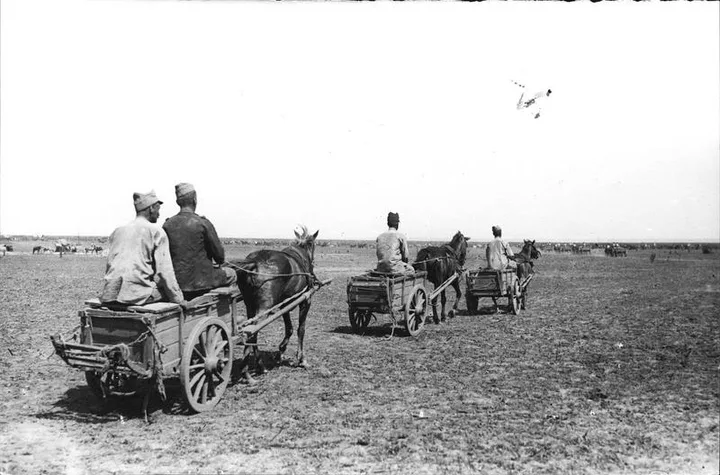
Mărăști gives the Romanians something besides kilometres: proof that the army rebuilt over the winter of 1916–1917, with General Berthelot's French Mission, can beat the Central Powers. Within days the same army will have to prove it can also hold.
Eu am contrasemnat decretul pentru înaintarea dumneavoastră la gradul de general… (I countersigned the decree promoting you to general…)
Constantin Prezan to Alexandru Averescu, staff chief to 2nd Army commander (RO Wikipedia).
Meanwhile: days earlier the Kerensky offensive (1–19 July), Russia's last offensive of the war, had died out: its collapse buried the Nămoloasa plan too.
Chapter II
Mărășești
6 August – 3 September 1917
Romanian 1st Army plus Russian troops, on defence
- Chapter
- 6 August – 3 September
- Duration
- 29 days
- Romanian losses
- 27,410
- Enemy losses
- 60,000–65,000
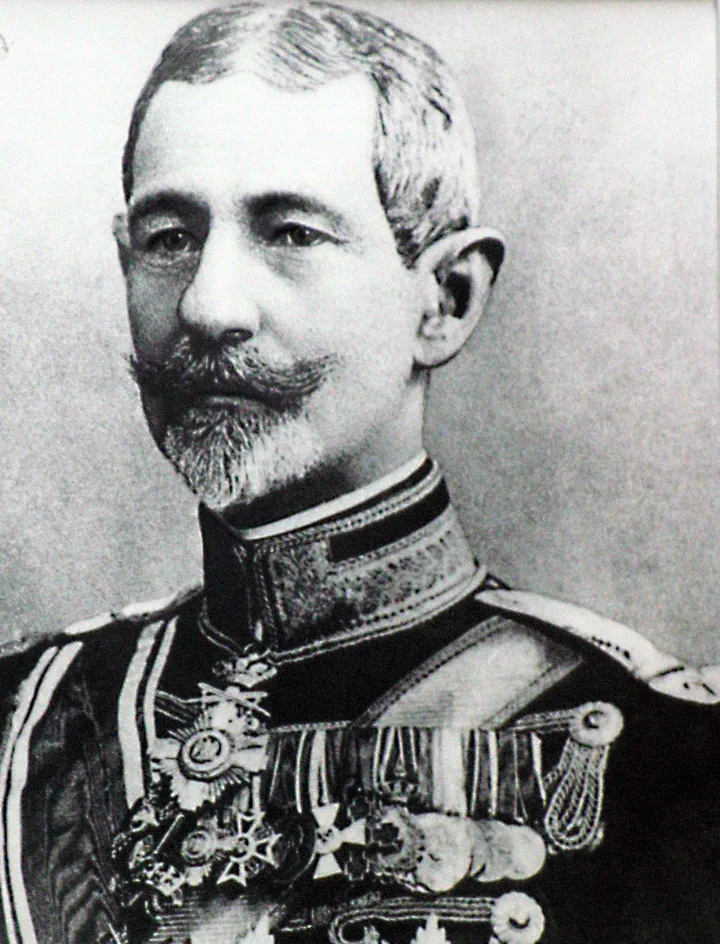
On 6 August, Field Marshal Mackensen strikes at Mărășești, meaning to break the front, push up the Siret valley toward Adjud and join the Austro-Hungarian 1st Army coming from Oituz. In his way stands General Eremia Grigorescu's Romanian 1st Army, with Russian troops beside it.
There follow 29 days of attack and counterattack between the Siret and the Putna, on the Muncelu–Mărășești line. The Romanians lose 27,410 men: 5,125 killed, 9,818 missing, 12,467 wounded; the Russians, on the same tables, 25,650. The enemy leaves between 60,000 and 65,000 men on the field.

On 3 September Mackensen halts the attack to move troops to the Italian Front. The offensive had failed, and the local front stabilises until the end of the war. The greatest battle of the Romanian front ends without miracles: with trenches, with artillery, and with Russian divisions that had stayed in the line.
Mărășeștii au fost mormântul iluziilor germane. (Mărășești was the grave of German illusions.)
General Grigorescu's order of the day, as quoted in secondary sources (Boghean, Bacău CCD).
Meanwhile: in Flanders the Allies were locked in the Third Battle of Ypres, Passchendaele (July–November 1917): the summer of 1917 bled on every front.
Chapter III
Oituz
8–22 August 1917
holding the valleys toward Trotuș and Adjud
- Chapter
- 8–22 August
- Duration
- 15 days
- Opening
- about 200 guns
- Result
- defensive victory
On the morning of 8 August, about 200 guns, 30 of them heavy, open on the Romanian IV Corps in the Oituz valley. The Central Powers' plan is plain: the Trotuș valley to Onești, then to Adjud, where the Oituz troops must join hands with those at Mărășești.
For 15 days the Romanians, backed by Russian troops, hold the Slănic, Oituz and Cașin valleys. The enemy gains a few kilometres here and there, but the junction never happens: the strategic success stays with the defence.

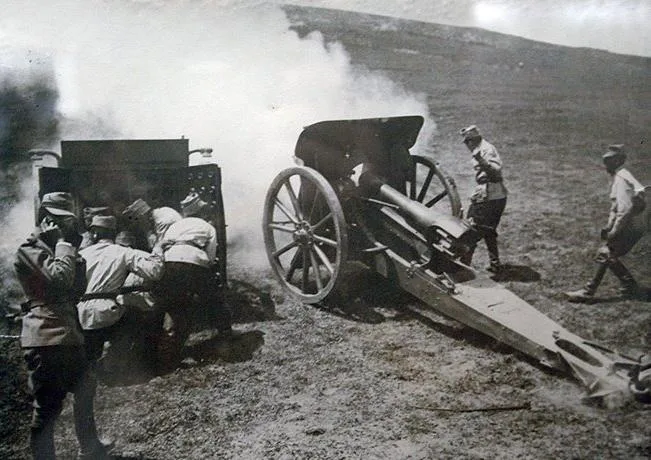
On 22 August the Third Battle of Oituz ends in a Romanian defensive victory. The Gerok Group, the same unit beaten at Mărăști, and the Austro-Hungarian 8th Corps stay stuck in the mountains, and the Adjud pincers never close.
Pătrunderea în valea Trotușului spre Onești și apoi spre Adjud, pentru joncțiunea cu armatele de la Mărășești. (The push up the Trotuș valley to Onești and then Adjud, for the junction with the Mărășești armies.)
The Central Powers' strategic aim at Oituz, after RO Wikipedia.
Meanwhile: a few dozen kilometres to the south-east, the Mărășești cauldron was deciding the same junction: the two battles overlap day by day from 8 to 22 August.
Chapter IV
Ecaterina
22 August (Old Style) – 4 September (New Style) 1917
Dealul Secului, west of Fitionești
- Chapter
- 22 August / 4 September
- Unit
- 43/59th Regiment, 7th Company
- Mission
- junction of companies 5–6
- Attack hour
- around 21:15
On 20 August Old Style, the 43/59th Infantry Regiment climbs toward Dealul Secului, west of Fitionești, to relieve the 35th in the front line. The march runs through torrential rain, and Sublocotenent Teodoroiu carries her own rifle, pack, 160-cartridge pouch and five grenades.
The 7th Company spends two days in reserve. On 22 August her platoon is ordered to hold the junction of the 5th and 6th companies. Around 21:15 the German artillery preparation begins; the attack is repelled, the Romanians counterattack, and the platoon, advancing faster than the neighbouring company, is left with its left flank exposed, exactly where the enemy concentrates its fire.
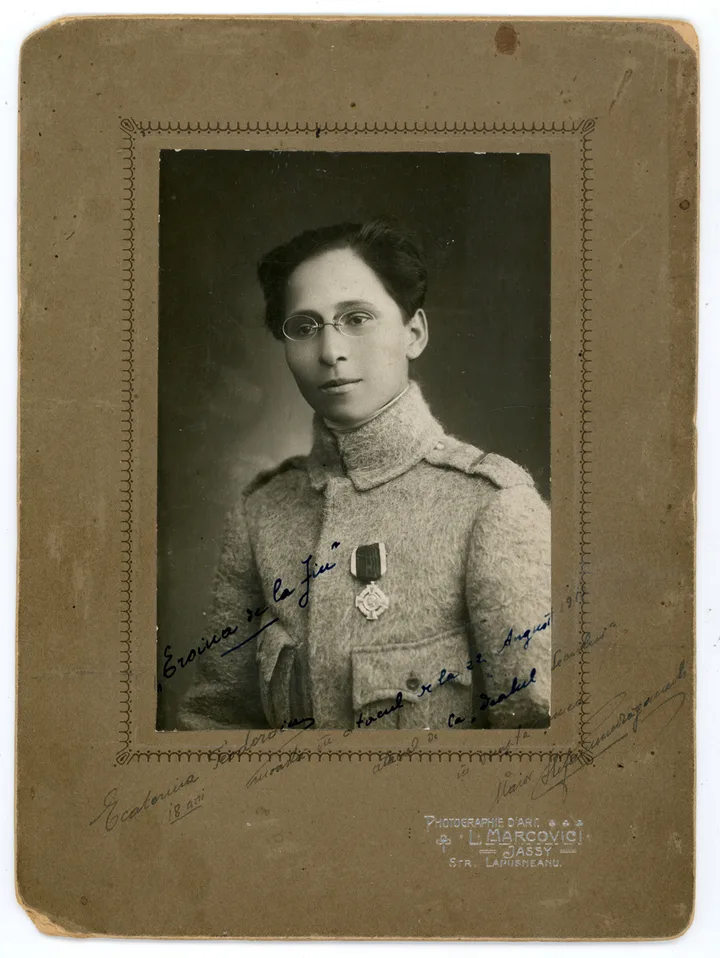

Ecaterina Teodoroiu falls to machine-gun fire while urging her soldiers on. The date of her death is 22 August Old Style, 4 September New Style: one day after the official end of the Battle of Mărășești, in its last fighting. She is buried at “Poienele”, beside Captain Dumitru Morojan, fallen a day earlier; her remains reach Târgu Jiu in June 1921.
Înainte, băieți, nu vă lăsați, sunteți cu mine! (Forward, boys, hold on, you are with me!)
Words attributed to Ecaterina Teodoroiu at the moment of death, said to have “entered collective memory” (RO Wikipedia).
Meanwhile: a day earlier, Mackensen had halted the Mărășești attack to move troops to the Italian Front: the Moldavian front had stabilised.
Hold the line
You are at the Marele Cartier General on the morning of 6 August 1917. You have 9 reserve battalions and three sectors to cover. Mackensen will strike where it suits him, not where it suits you. An illustrative scenario, not a simulation: the weights are the historical ones, rounded for play.
Deal out the 9 battalions, then sound the attack.
The historical answer
Mărășești 5, Oituz 3, Mărăști (quiet) 1: In 1917 the main blow fell at Mărășești, the secondary one at Oituz, and the Mărăști sector stayed quiet after 1 August. Whoever weighted Mărășești and covered Oituz thought like the Marele Cartier General.
How it went in 1917
In 1917 the main blow fell at Mărășești, the secondary one at Oituz, and the Mărăști sector stayed quiet after 1 August. Whoever weighted Mărășești and covered Oituz thought like the Marele Cartier General.
The summer in figures
Every figure below comes from the cited sources and is automatically re-verified at each page build.
- 29
- days the Battle of Mărășești lasts, 6 August to 3 September
- 27,410
- Romanian losses at Mărășești: 5,125 killed, 9,818 missing, 12,467 wounded
- 25,650
- Russian losses on the same tables: 7,083 killed, 8,167 missing, 10,400 wounded
- 53,060
- allied losses added together, Romanians and Russians side by side
- 60,000
- at least that many enemy losses: the tables give between 60,000 and 65,000 men
- 5,073
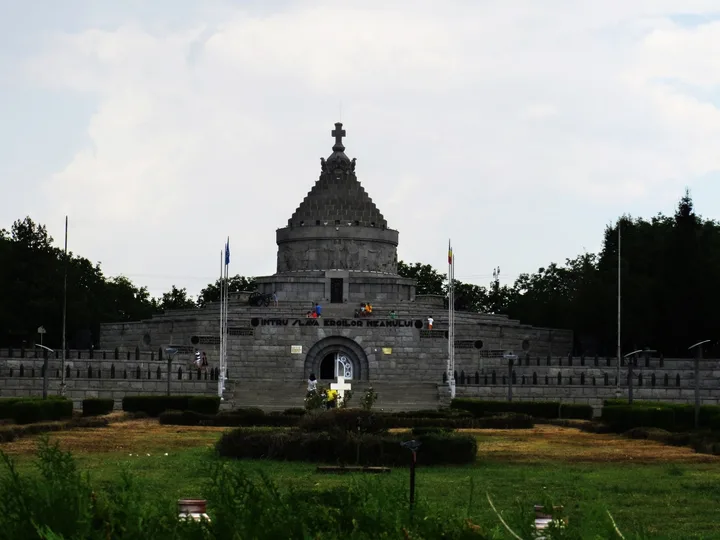
- soldiers and officers rest in the Mărășești Mausoleum
- 1,938
- the year the Mausoleum was unveiled, on 18 September, by Carol II
- 200
- square kilometres of net gain for the 1917 campaign

Four sayings to check
“The miracle of Mărășești”
There was no miracle. There was an army rebuilt over a whole winter with the Berthelot Mission, trenches dug in time, artillery that knew its firing tables, plus Russian divisions that stayed in the line. The simplest proof sits in the tables: 25,650 Russian losses beside the 27,410 Romanian ones. The dead work no miracles; they hold positions.
“The Russians all ran”
Some ran, true: Mackensen himself exploited the collapse of Russian units. But the Russian 4th Army fought under Grigorescu's command, and on 29 August Romanian (9th, 13th) and Russian (15th) divisions went into battle together at Muncelu. “All” is unfair to 7,083 Russian dead.
“The order goes exactly like this”
The meaning is undisputed, the form varies: English sources give “Pe aici nu se trece!”, the Romanian historical press gives “Nici pe aici nu se trece!”. Grigorescu himself is cited with the remark as spoken, not as a printed text. We kept the short form in the title and both forms here.
“Her last words”
“Înainte, băieți, nu vă lăsați, sunteți cu mine!” (Forward, boys, hold on, you are with me!): so Ecaterina Teodoroiu's words entered collective memory. The sources give them as attributed, not as transcript. What is documented beyond doubt: the machine gun, the platoon at whose head she fell, the grave at “Poienele” and Captain Morojan beside her.
Sources and method
All dates are New Style; the Old Style pair appears at first mention, because Romania was on Old Style in 1917. The calendar details belong to the sibling page about the 1919 calendar.
The end of the Battle of Mărășești varies between sources: the main phase ends on 19 August, and Mackensen officially halts the attack on 3 September. The page uses 6 August – 3 September (29 days), with both landmarks on the map.
The loss figures come from the tables cited by the battle's English article; the additions are re-verified automatically at every page build.
Short quotations are fragments cited in public sources, with attribution; what is attributed (the last words, the order's exact form) is marked as such, never presented as transcript.
Mărăști
Mărășești
- Mărășești 6 August – 3 September 1917; Romanians 27,410 (5,125 killed, 9,818 missing, 12,467 wounded), Russians 25,650, allied total 53,060, enemy 60,000–65,000; Mackensen halts the attack on 3 September for the Italian Front
- 29 days (24 July/6 August – 21 August/3 September); the “Romanian Verdun”; on 16/29 August the Romanian 9th and 13th and the Russian 15th divisions enter at Muncelu
- The motto “Pe aici nu se trece” / Grigorescu's natural remark; the variant “Nici pe aici nu se trece!”; Grigorescu commanding the Romanian 1st and Russian 4th Armies
- “Mărășeștii au fost mormântul iluziilor germane” (order of the day, as quoted second-hand)
Oituz
The “Hold the line” game
Images
- Alexandru Averescu, period photograph (public domain). · Wikimedia Commons
- The Cașin valley, 1917, unknown author (public domain). · Wikimedia Commons
- Romanian Army photographic service, 1917 (CC BY-SA 4.0, via the Médiathèque de l'architecture et du patrimoine). · Wikimedia Commons
- Eremia Grigorescu, c.1917 (public domain). · Wikimedia Commons
- The Mărășești Mausoleum, photo Alexnica (CC BY-SA 3.0 ro). · Wikimedia Commons
- Ecaterina Teodoroiu, unknown author (public domain). · Wikimedia Commons
