London, June 1858
The Great Stink
June 1858: the Thames sinks, the heat bakes the banks, and Parliament's curtains soak in chloride of lime. Stand at Crossness at high water and open the sluice gates: a tide's worth of London sets off downriver on the ebb.
Sound starts as you scroll; you can stop it any time.
The summer that baked the river
Westminster Bridge, June 1858
Stand on Westminster Bridge in June 1858 and the first thing that reaches you is not the view. June that year was the fourth-hottest between 1800 and 1858 — 16.8 °C on the Met Office mean — and on 16 June the shade itself stood at about 94.5 °F. The London Museum puts the spike at 30 degrees: the city had never smelled anything like what came next.
The river sank lower than normal, leaving sewage stranded on the banks, and the filth baked in the heat. Over two and a half million people lived in London then, the largest city in the world — and London had been drinking its river for decades.
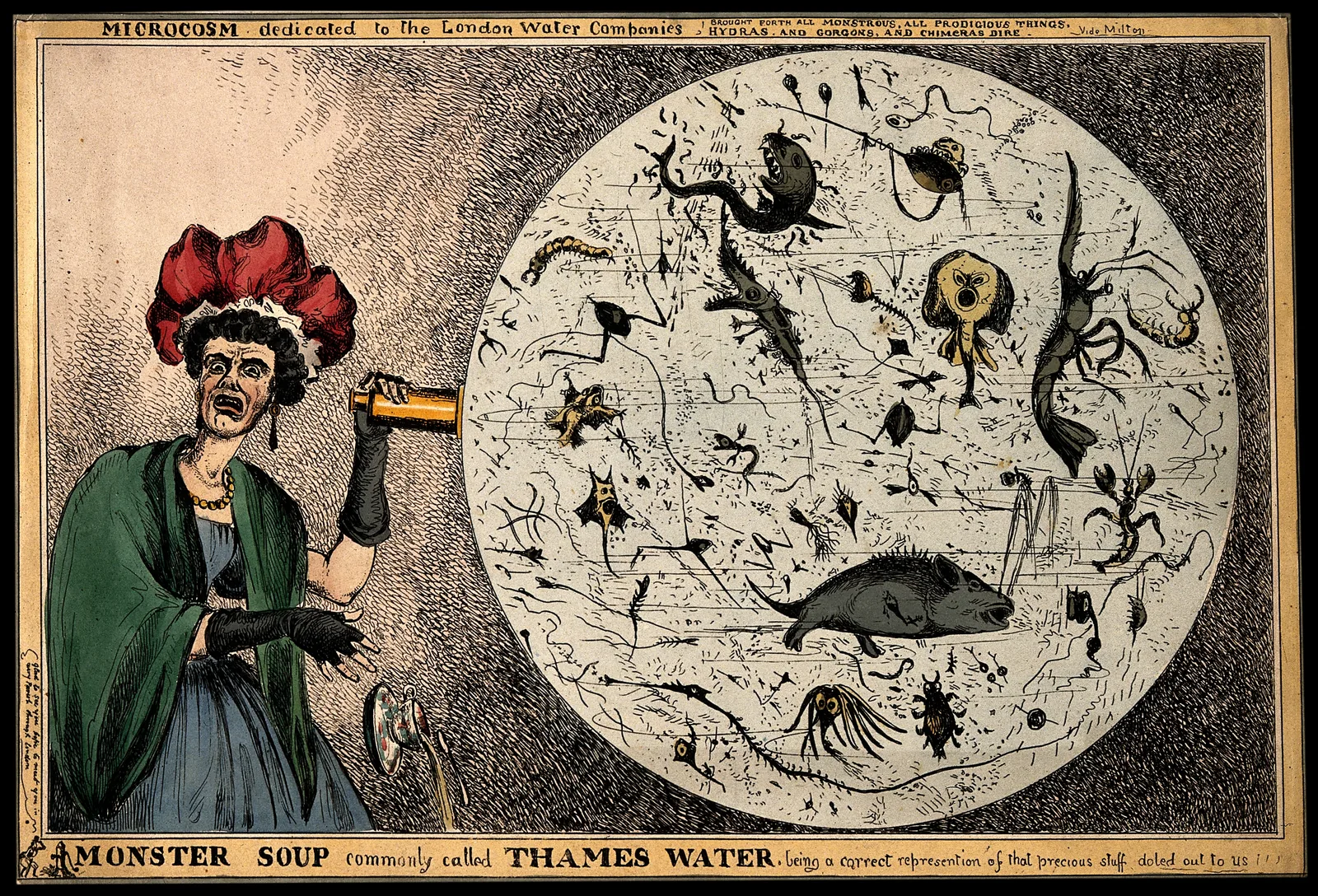

At Westminster, curtains and blinds were soaked in chloride of lime to block the smell — and still it came through the windows, off a riverbed of baking waste. The Crossness timeline puts it bluntly: Parliament, driven from its chambers by the stench of sewage.
One thing had made it worse: the increasingly popular flushing toilet, letting wealthy families send everything straight to the river. Dickens had already named it in Little Dorrit — as the London Museum quotes the line: “Through the heart of the town a deadly sewer ebbed and flowed, in the place of a fine fresh river.”
The warning
7 July 1855
Three years before the stink, Michael Faraday took the steamboat between London and Hungerford bridges, at low water, and wrote to The Times. “The whole of the river was an opaque pale brown fluid,” he began — and then he proved it.
He tore up white cards, moistened them, and dropped them overboard at every pier: “Before they had sunk an inch below the surface they were undistinguishable, though the sun shone brightly at the time.” Near the bridges the filth “rolled up in clouds so dense that they were visible at the surface.” His verdict: “The whole river was for the time a real sewer.”
“There is nothing figurative in the words I have employed, or any approach to exaggeration. They are the simple truth.” And the warning, three years early: if the river is neglected, “we cannot expect to do so with impunity; nor ought we to be surprised if, ere many years are over, a season give us sad proof of the folly of our carelessness.” The season came in 1858.
The eighteen days
15 July 1858
On 15 July 1858 Disraeli rose in the Commons to ask leave for a Bill. “That noble river, so long the pride and joy of Englishmen,” he said, “has really become a Stygian pool, reeking with ineffable and intolerable horrors.” Almost all living things in the Thames, he went on, had disappeared or been destroyed — and “a pervading apprehension of pestilence” hung over the city.
The price, Disraeli reckoned, could be no less than three million pounds — a floor, not a vote — paid by a rate of at most threepence in the pound for forty years, with a sinking fund to clear the debt. One member objected that no such sum could ever be enough. The House let the Bill be introduced anyway.
2 August 1858
Eighteen days after the speech, Parliament was prorogued, and the Queen “readily sanctioned the Act which you have passed for the Purification of that noble River.” The commission went to Joseph Bazalgette, Chief Engineer of the Metropolitan Board of Works.
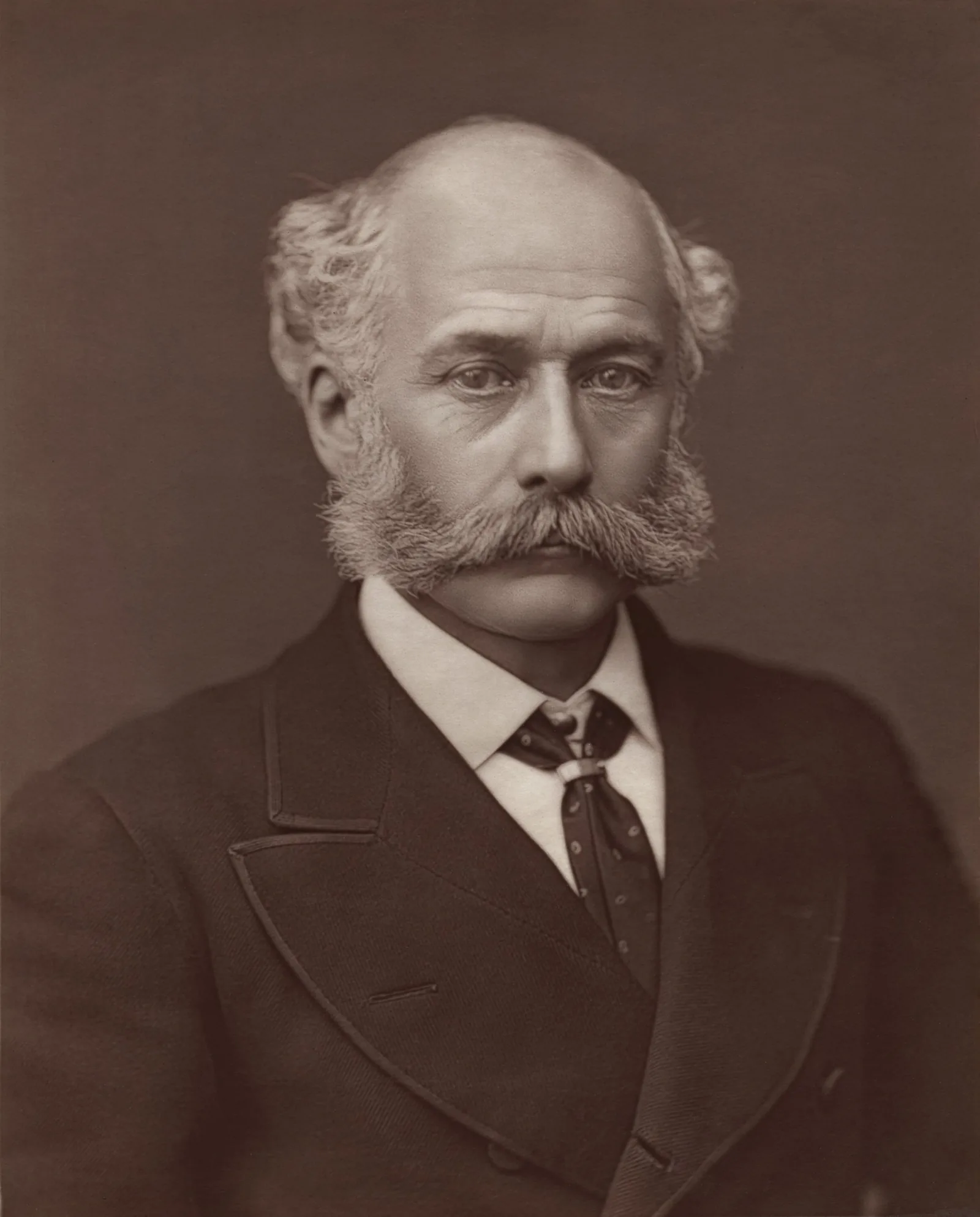

Work began in 1859: intercepting sewers to carry the waste east, away from the crowded centre, to outfalls and pumping stations on both sides of the river — Deptford, Abbey Mills, and, on the southern marshes, Crossness. Keep scrolling: the tunnels are going down.
The descent
Under the streets
Down you go, past the brick barrel of the outfall sewer running east under Woolwich toward the marshes. The tunnels are falling into place mile by mile — and they are being built for a smell.
People blamed the smell itself — what they called the “miasma.” Miasma theory, the belief that disease rose from foul air, dominated public thinking, and the early reformers blamed bad air rather than contaminated water — though the orthodoxy had already been challenged. The tunnels were built for a smell all the same.
That summer, water-borne diseases like cholera and typhoid fever swept through the population — the London Museum’s account of what the Thames carried — while Londoners still used the dirty Thames for drinking and washing. The contemporary record, in Hansard, notes no epidemic — Tite, in late June, called its absence a great blessing. Keep scrolling: the reservoir is filling, and the tide is about to turn.
The gates
Crossness, high water
You are standing at Crossness, the southern outfall, at high water. Behind the gates, the covered reservoir holds everything the sewers have been storing — because on this side of the river, Bazalgette wrote, sewage goes out at high water only. Press and hold, and let the tide take it.
Open the sluice gates
Press and hold the button: the gates swing open and the ebb carries it all downriver, toward the sea. A held space bar works too.
The gates stand closed · high water
The window is two hours after high water — the reservoir stores the sewage except for those two hours — and the ebb carries it 26 miles below London Bridge, with no return on the next flood. Before these gates, everything went out at low water and came back on the flood; the drift of many days toward the sea was almost imperceptible.
4 April 1865
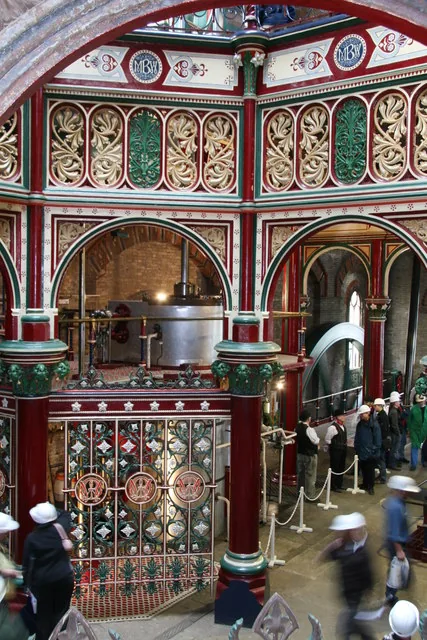
On 4 April 1865 the Prince of Wales turned the handle and the great beam heaved: the first pumpful rose into the reservoir. Above the engines, Driver had raised a palace for the people — ornamental cast iron over sewage, Suffolk white brick outside. Cricket was once played on the reservoir roof.

The figures
The scheme left two reckonings of its miles, and this page refuses to merge them: Bazalgette counted about 1,300 miles of sewers with 82 of main intercepting, while the London Museum counts 1,100 miles of drains into 82 miles of new brick sewers. Touch each figure: it answers with its source attached.
Touch a figure and read its whole hedge
Each note restates the figures, the source and the ambiguity, because you may open only one.
The bricks: 318,000,000, on Bazalgette's own 1865 account — for the whole project, not for the 82 miles alone. So no division is offered: no bricks-per-mile leaves this page. The same account demanded water-resistant Portland cement, and the London Museum adds that the works drove bricklayers' wages up by 20 per cent.
Officially opened in 1865, finished in 1875 — and much of it is still used today, because the tunnels were built far larger than needed, anticipating the growth of the city. The sewers outgrew their century.
Flush
The pipes were built to carry away a smell — and they ended cholera anyway, because the same pipes carried the poisoned water. When it came back in 1866, the Crossness timeline shows where it struck: where the sewers had not yet reached. Proof the system worked, where it was complete.
Flush. Somewhere below you, Bazalgette’s bricks are still carrying it all downriver on the ebb.
The mechanism, in brief
In June 1858 the Thames sank low and baked in exceptional heat — the fourth-hottest June between 1800 and 1858 — and the stench drove Parliament from its chambers, in the Crossness timeline's words. Curtains at Westminster soaked in chloride of lime could not keep it out. Three years earlier, Michael Faraday had dropped white cards into the river and watched them vanish an inch down; his warning of a season giving "sad proof" had come due.
On 15 July 1858 Disraeli told the Commons the Thames had become "a Stygian pool, reeking with ineffable and intolerable horrors," at a cost of no less than three million pounds, and eighteen days later the Queen sanctioned the Act for purifying the river. Joseph Bazalgette, Chief Engineer of the Metropolitan Board of Works, got the commission; work began in 1859.
The heart of the scheme beats at Crossness, the southern outfall: sewage raised into a vast covered reservoir and released on the ebb tide — at high water only, in a two-hour window after each high water — to be carried 26 miles below London Bridge. Open the sluice gates yourself and a tide's worth of London sets off downriver.
The pipes were built to carry away a smell: miasma theory held that disease rose from foul air. They ended cholera anyway, because the same pipes carried the poisoned water — the BBC's verdict is the end of significant cholera outbreaks in London. Opened in 1865, finished in 1875, still working: every flush still rides Bazalgette's bricks.
Sources and method
Every number carries its unit and its source, and the two reckonings of the miles are never merged: Bazalgette's own 1865 totals (about 1,300 miles of sewers, 82 of them main intercepting, 318 million bricks) stand beside the London Museum's cut (1,100 miles of drains into 82 miles of new brick sewers toward six interceptors). Money stays an estimate — no less than three million pounds, Disraeli's floor — and cholera stays qualitative: no death count appears anywhere on this page.
The river, the tunnels and the gates are drawn for illustration; the tide diagram above is schematic, with only its two-hour window factual. The three photographs are the real record: William Heath's Monster Soup of 1828 and the Lock & Whitfield portrait of Bazalgette are public domain; the Crossness octagon is Chris Allen's, cropped and converted, shared alike under CC BY-SA 2.0. Each is credited beside it.
All sound is recorded, licensed and transcribed: the English bed is a CC0 stream recording, the Romanian bed a CC0 trickle, both certified to hold no speech (Vosk and faster-whisper transcripts, both empty) and loudness-matched to 0.4 dB. The honest level is the file level; Boost adds about 12 dB. The gates' roar is derived live from the same bed through a lowpass stage — no separate recording. The sound control pauses the recording; it never merely mutes it. No human ear has checked the beds yet — the real-phone listen stays open.
The gates panel is illustrative, not a simulation: its readout states the tide phase — high water, the turned ebb, a tide's worth on its way — and never litres. The two hours, the high-water-only rule and the 26 miles below London Bridge are Bazalgette's own 1865 words; everything else about the gesture is drawn.
What was not read is never cited: the 1858 Act's own body (PDF-only), the Times pages, the July 1858 magazine cartoons, the Historic England pages (unreachable that day), the primaries behind the museum's figures, and the rainfall record. Every load-bearing number is carried by the sources above instead.
The same years from the engineer’s bench: Run it downhill — the Great Stink and Bazalgette’s sewers, 1858–1875 runs one drop of sewage through the 1858 city and the interceptors, and delivers its own verdict on what unblocked London.
- B. Disraeli's speech in the Commons, 15 July 1858 — the Thames as a "Stygian pool", the cost estimate and the rate mechanism (Hansard, full text) api.parliament.uk
- The Lords Commissioners' speech at prorogation, 2 August 1858 — the Queen sanctioned the Act for purifying the Thames (Hansard, full text) api.parliament.uk
- J. W. Bazalgette, "On the Main Drainage of London", paper No. 1,125, read 14 March 1865 — the discharge window, the ebb run, the reckonings (scan, full text) archive.org
- Met Office HadCET monthly means — June 1858: 16.8 °C, the fourth-hottest June between 1800 and 1858 (data series) metoffice.gov.uk
- M. Faraday's letter to The Times, 7 July 1855 — the white cards, the river-as-sewer (transcription) todayinsci.com
- The Crossness Engines Trust timeline — the 18 days, the curtains, the miasma, the 4 April 1865 opening (full text) crossness.org.uk
- London Museum, "The Great Stink of 1858" — the heat, the miasma, the 18 days (full text) londonmuseum.org.uk
- London Museum, "How Bazalgette built London's first super-sewer" — the miles, the bricks, the cement (full text) londonmuseum.org.uk
- BBC Bitesize, "Great Stink and public health reforms" — the public-health outcome, the chloride of lime (full text) bbc.co.uk
- Wikimedia Commons — "Monster Soup" (W. Heath, 1828, public domain); Bazalgette's portrait (Lock & Whitfield, public domain); the Crossness octagon (Chris Allen, CC BY-SA 2.0, cropped and converted, shared alike); the water beds (CC0) commons.wikimedia.org