ONE SEA, THREE NAMES
How did the northern sea come to be called black?
462 BC → TODAY · one sea, three compasses
Turkish kara means black and, archaically, north — so Kara Deniz is a compass point. Before the Turks, the Greeks turned Axeinos, “inhospitable”, into Euxeinos, “hospitable”.
- KARA
- one word, two senses: black and north
- 462 BC
- Pindar writes the first Axeinos: Pythian 4.263
- ~630 · 1484 · 1878
- three dates, three names, one sea
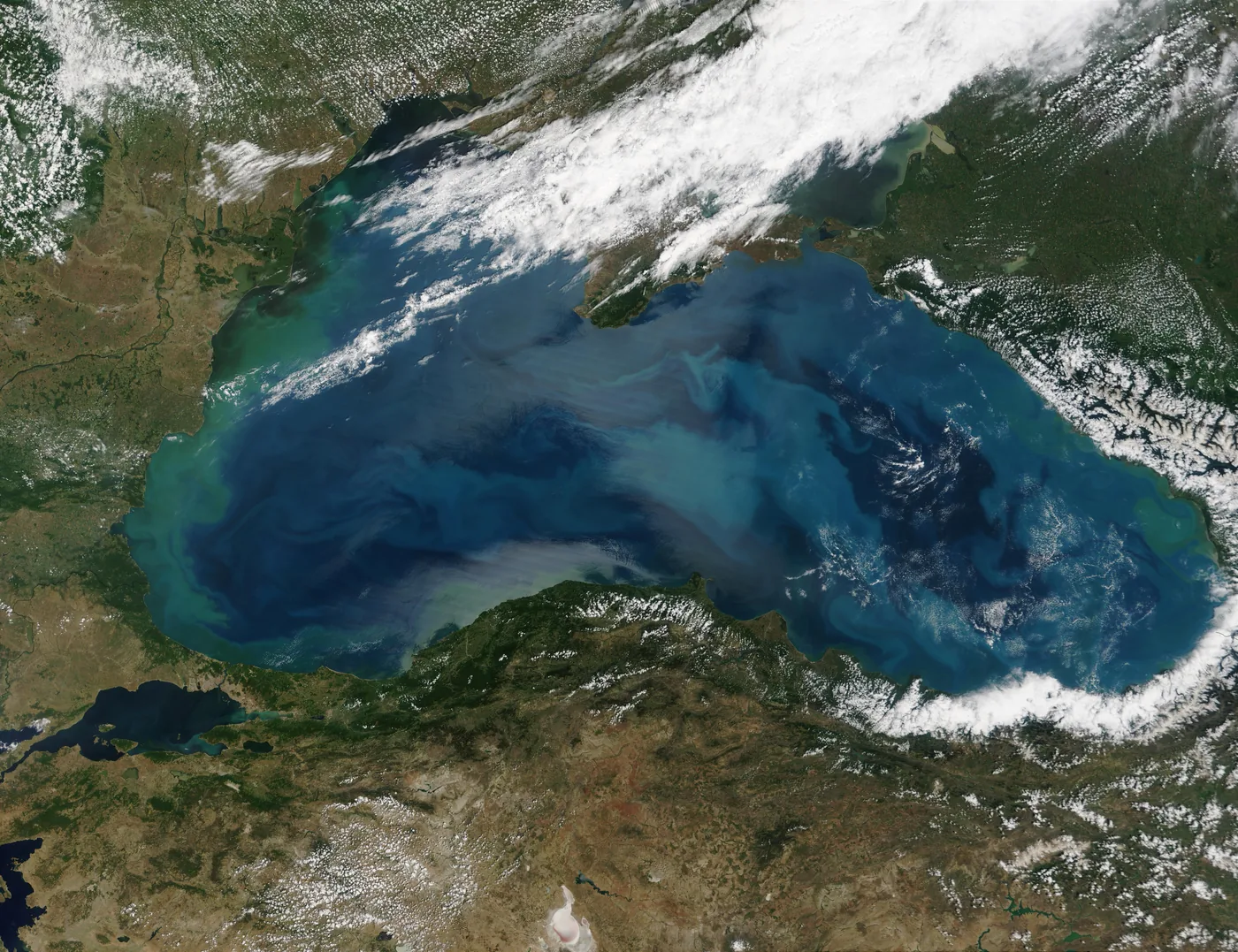

KARA
Four forms, in arrival order:
- AXEINOS inhospitable · Pindar, Pythian 4.263, 462 BC
- EUXEINOS hospitable · Pindar, Nemean 4.49
- KARA DENIZ the northern sea · since the 13th century
- BLACK SEA calqued on Kara Deniz · undated
The first name · Greek
The Unwelcoming
The sea's first written name comes from Persian and means “dark coloured”. Greek ears heard “inhospitable” in it — and remade it as “hospitable”.
*axšaina-
“dark coloured”
The Iranian root behind Axeinos, after Vasmer via Schmitt. Cognate with Avestan axšaēna- and Old Persian axšaina-.
RECONSTRUCTED
Póntos Áxeinos
“the inhospitable sea”
First attested: Pindar, Pythian 4.263, 462 BC. The “inhospitable” sense comes from popular etymology, “in all probability” in the north-shore cities.
ATTESTED
Eúxeinos
“hospitable”
The euphemism that replaces the ill-omened name. First attested: Pindar, Nemean 4.49; then into common use.
ATTESTED
Once, in Euripides (Iphigenia in Tauris, 107), the sea is Póntos Mélas — “may be” a poetic metaphor, not a foreign calque.
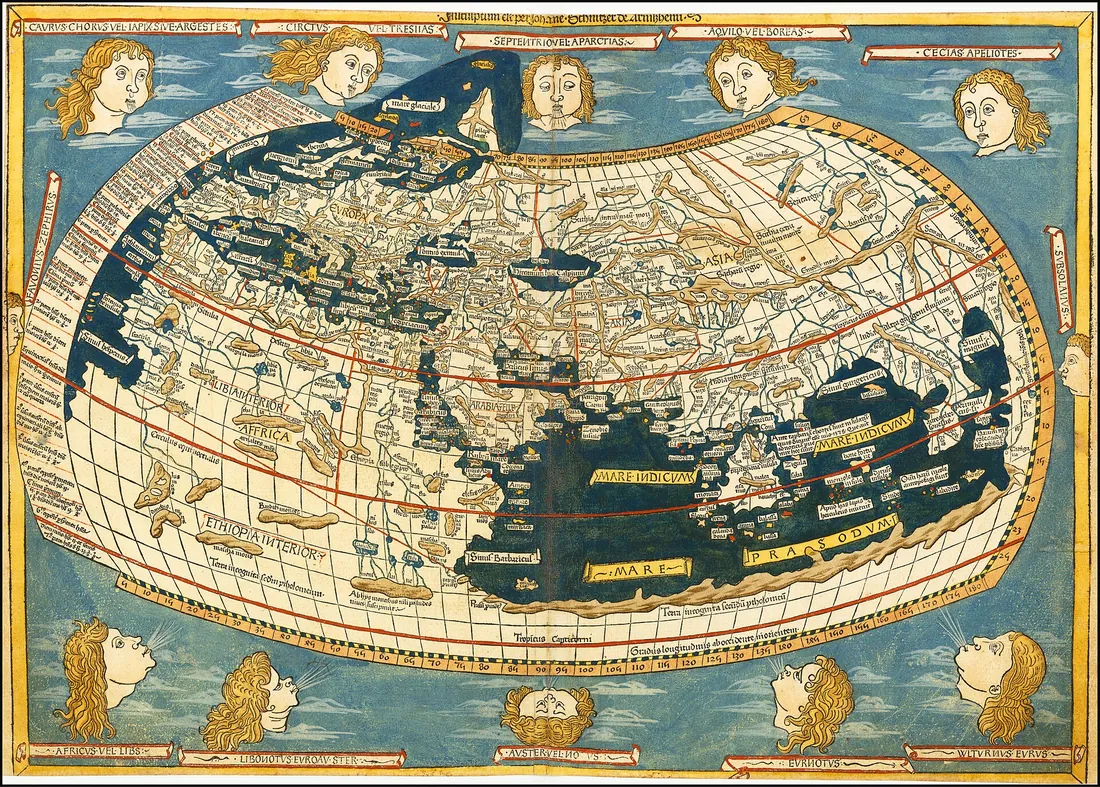

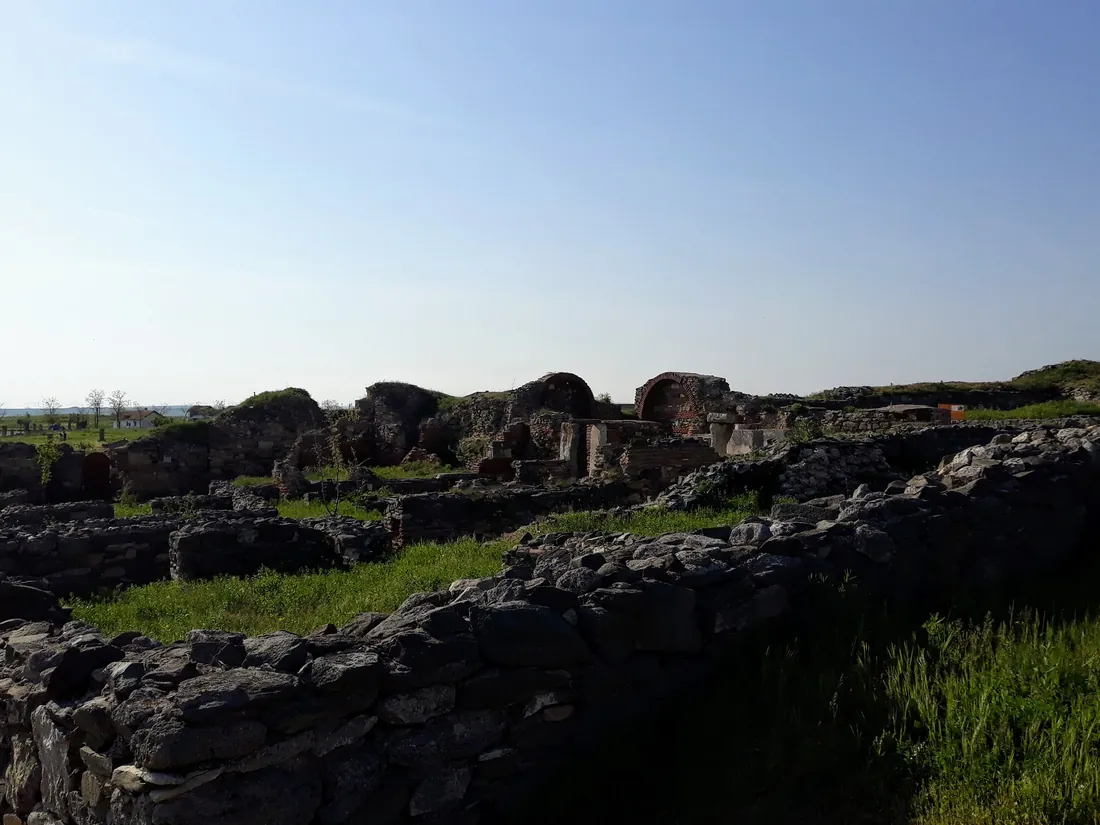

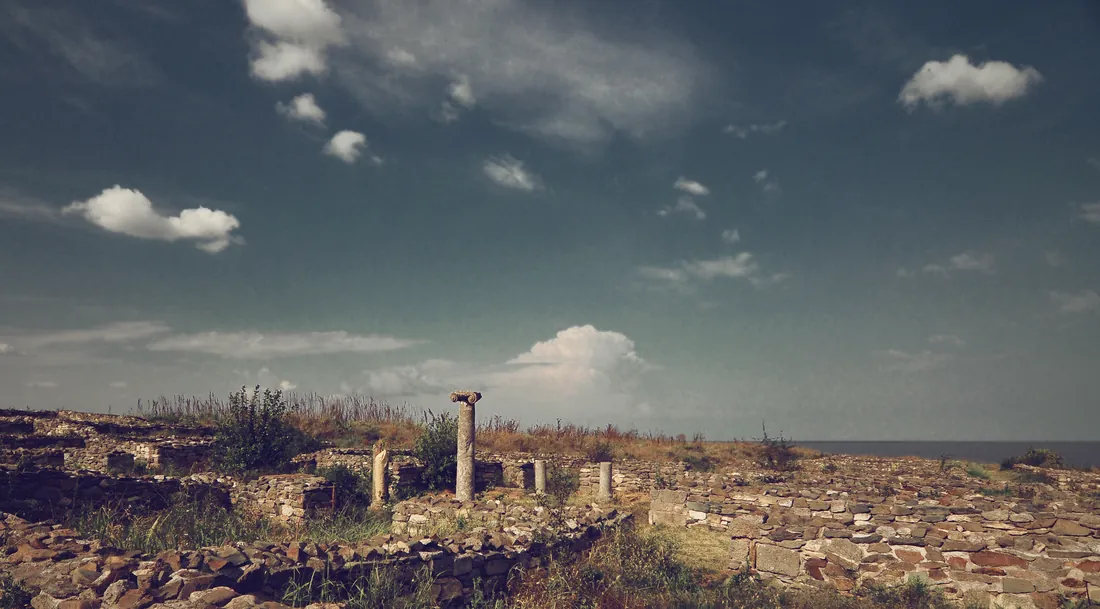

axeinos → euxeinos · one prefix swapped, one tamed sea
The second name · Turkish
The compass
Turkish kara keeps two senses: black and north. The second sense turns Kara Deniz into a sailing direction — and the proof that the north-sense sails is a wind.
What the dictionary says: kara
From Ottoman Turkish kara ← Old Anatolian Turkish qara ← Proto-Turkic *kara (“dark, black”).
- adjective: black, dark
- noun, archaic: north
The wind that proves it
karayel = kara + yel: “a wind blowing from the north-west, usually cold, sometimes of storm strength”. A compound built on kara points north at sea.
The second point: Akdeniz
Akdeniz = ak (“west”) + deniz (“sea”), from Ottoman Turkish Ak Deñiz. The Mediterranean is, in Turkish, the western sea.
The system: four colours, four points
After Schmitt, the steppe peoples paired colours with directions: black for north, red for south, white for west, green or light blue for east. “Black Sea” meant “Northern Sea”.
- Nblack · karanorthKaradeniz — the Black Sea
- Sred · kızılsouth, only inside the systemKızıldeniz — the Red Sea
- Wwhite · akwestAkdeniz — the Mediterranean
- Egreen or light blueeastno colour-sea carries this point
A note: an Anatolian variant (Calvet) reads ak as south. Noted; not adjudicated.
The compass reading is the leading account, though not uncontested.
Why not the Scythians: a people north of the sea cannot call its southern sea “northern” (Schmitt).
Three seas, four points, zero colours.
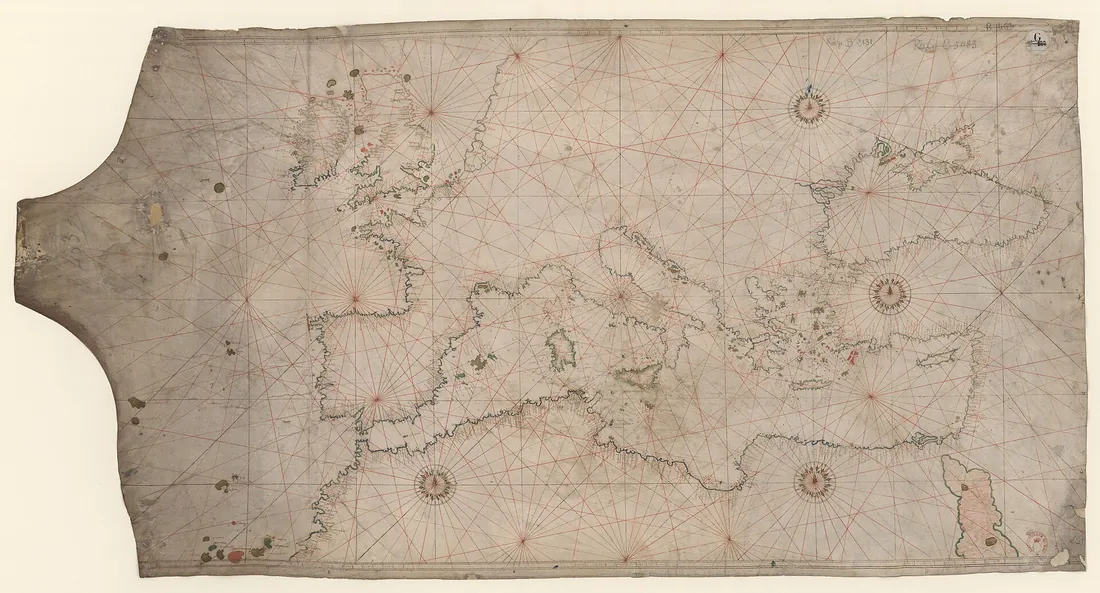

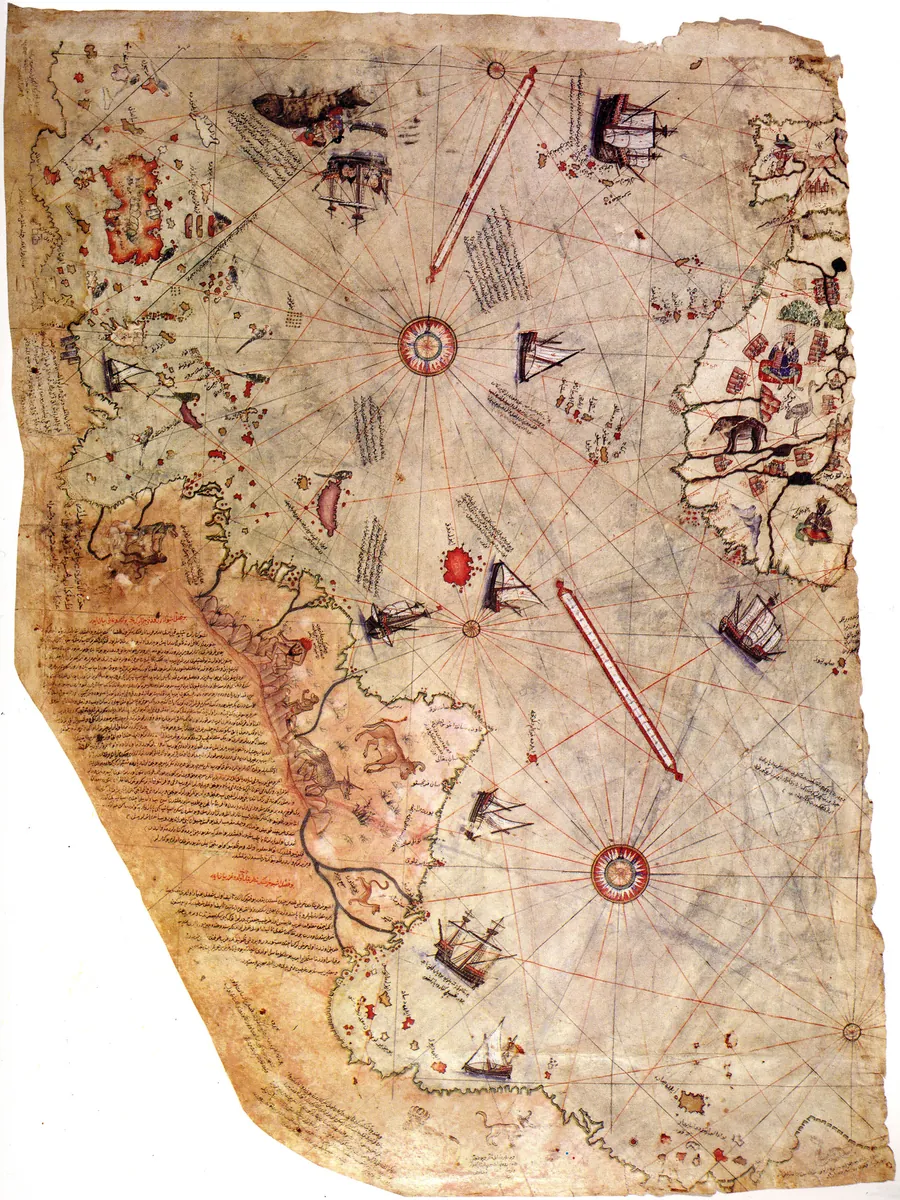

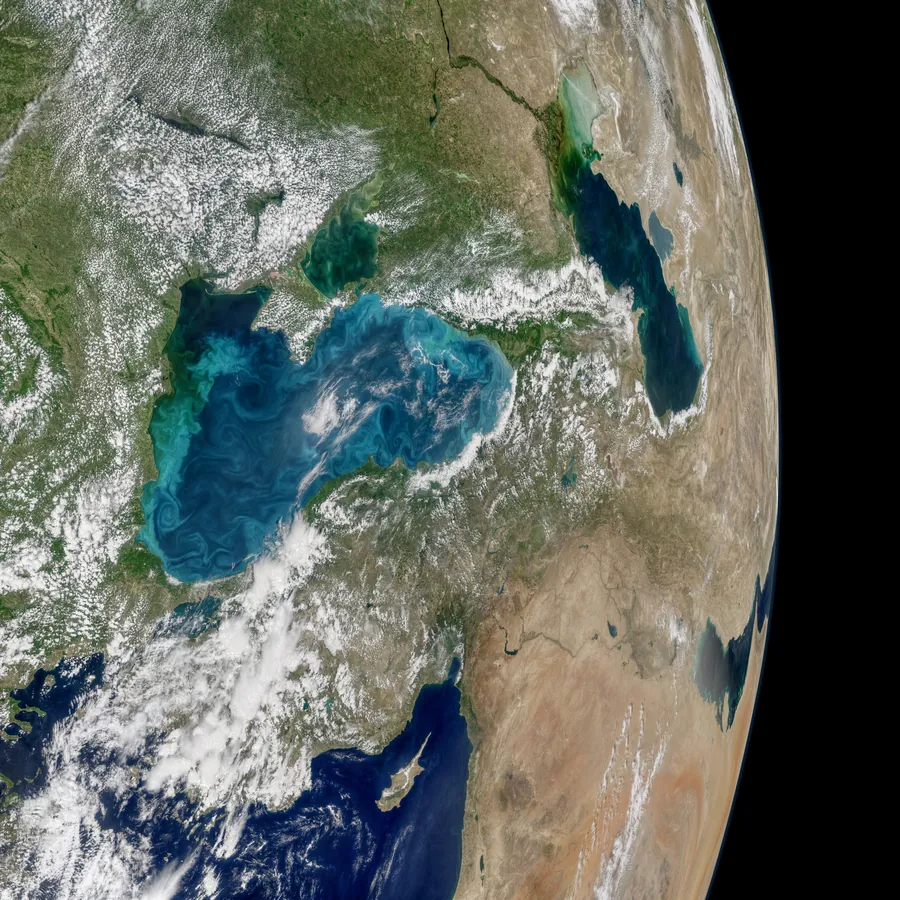

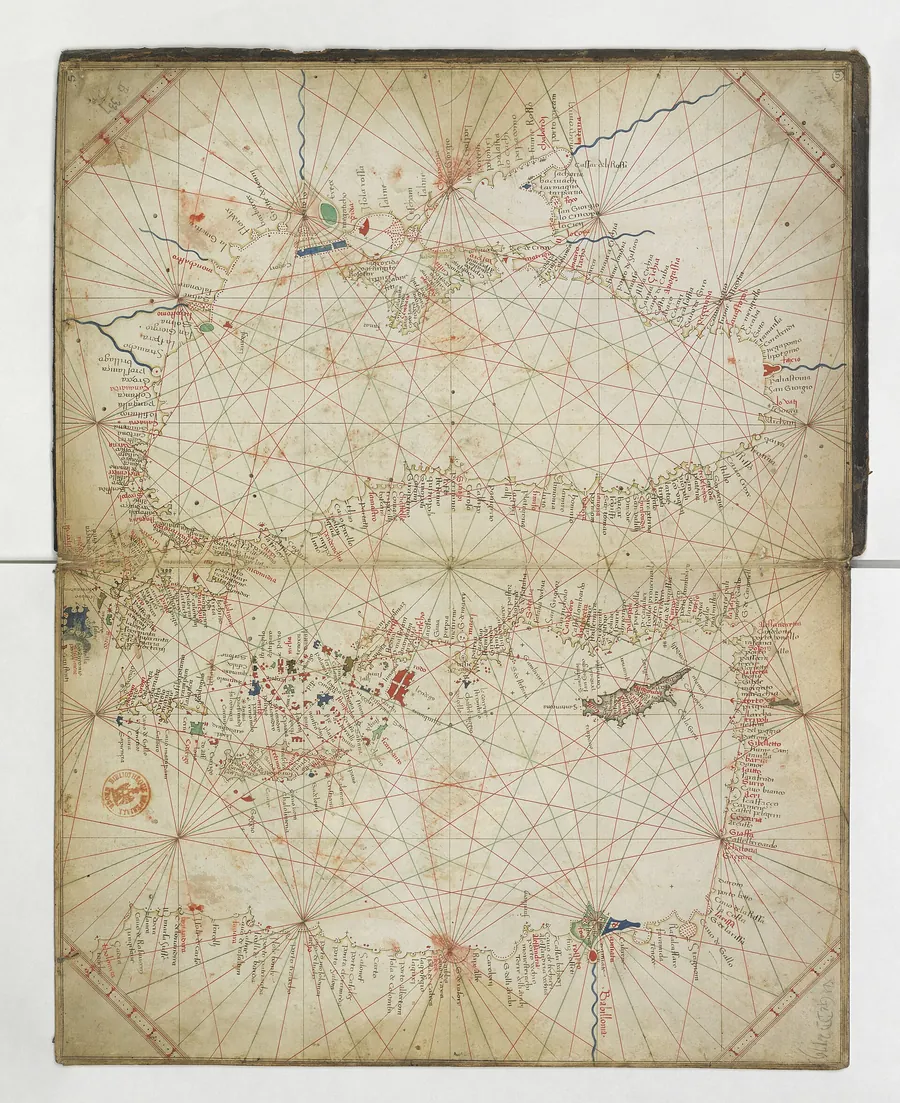
The third name · the calques
The calques
The modern forms — Kara Deniz, Marea Neagră, Chyornoye more, Black Sea — all descend from a single horizon: the 13th century. Who translated first, and exactly when, stays open.
After Schmitt, the modern names reach back no further than the 13th century. No single document is named here: the horizon stays “13th century (Schmitt)”.
Schmitt again: the old name “seems to have” survived in the Near East until the Turks borrowed and propagated it anew. An attributed continuity, still unproven.
The calque row
- Karadeniz
- Marea Neagră
- Chyornoye more
- Black Sea
undated.
- 1484: Cetatea Albă and Kiliia, the last ports taken by the Ottomans on the Black Sea.
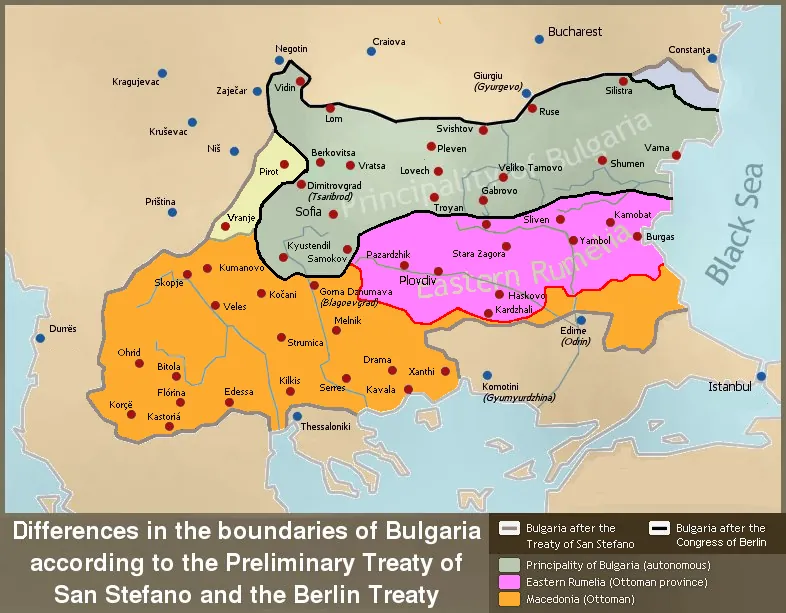
- 1878: Northern Dobruja is awarded to Romania, under San Stefano and Berlin.

The centrepiece · three dates
First the name. Then the master.
Three dates, three forms of the name, three source tags. This is how we read the row of names — an editorial reading, not a scholarly thesis.
~630 BC
EUXEINOS
The Greek shore gets its colony and its euphemism. Histria.
C09 · C15
1484
KARA DENIZ
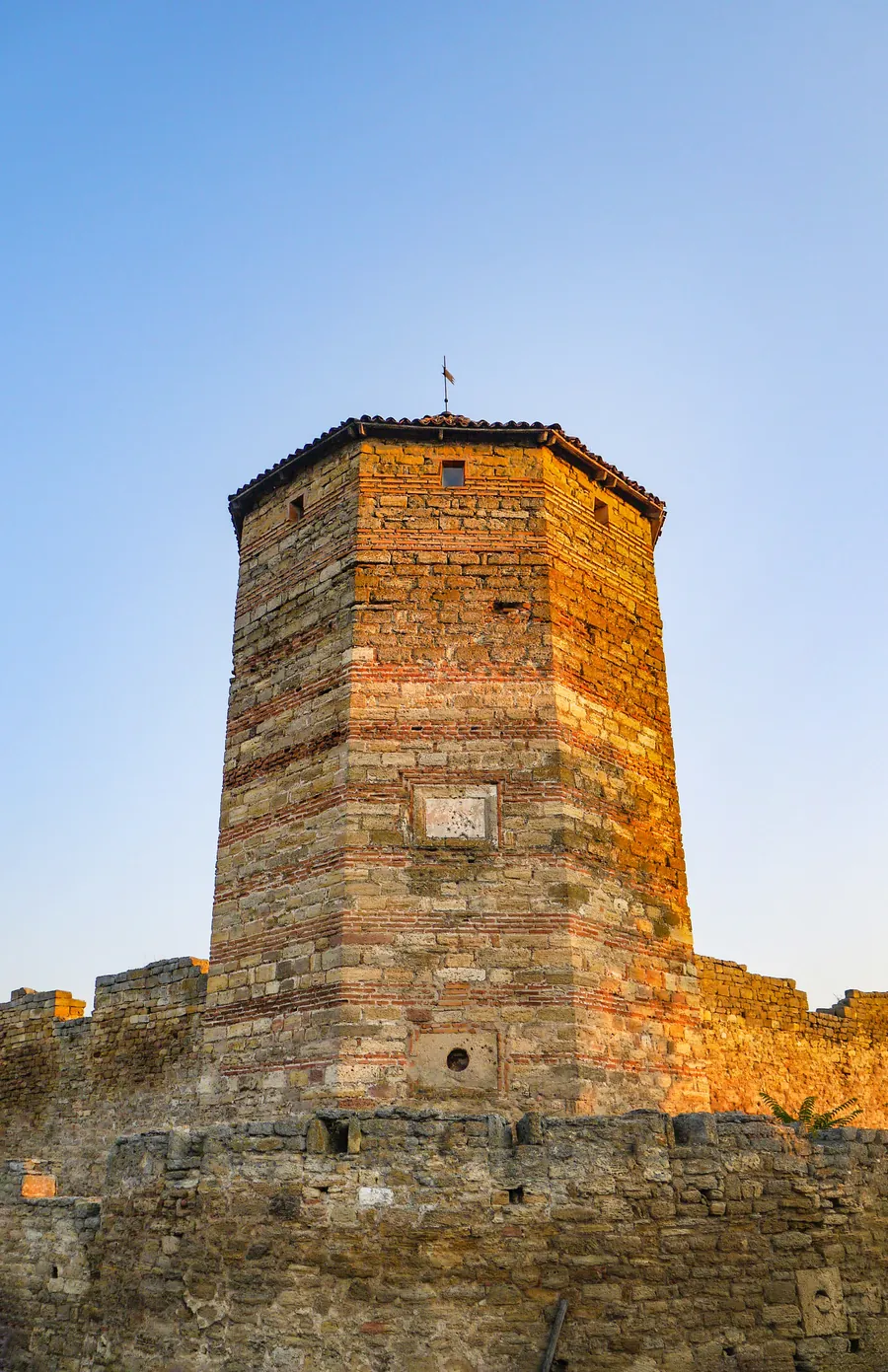
The Ottoman closure makes Kara Deniz the sea's working name. Cetatea Albă + Kiliia.
C16
1878
MAREA NEAGRĂ
The Romanian shore inherits Marea Neagră. Northern Dobruja.
C17




Explorer · the compass rose
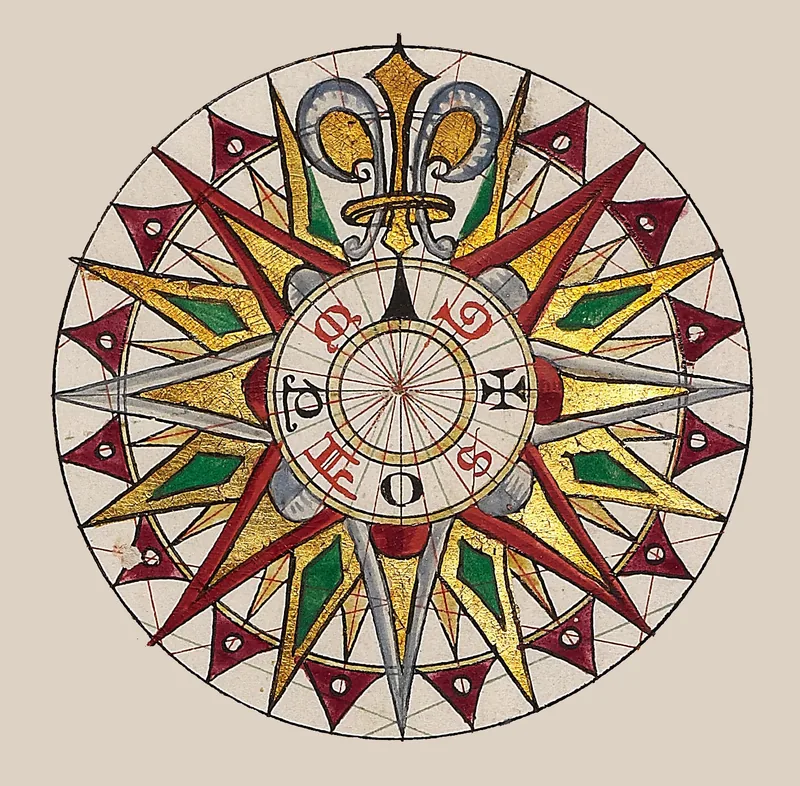
Kara's rose
Four points, four colour-words, three seas. Choose a cardinal point: the rose turns and the sea-name resolves.
Point N · 1 of 4462 BC → today
Karadeniz — the Black Sea
kara · blacknorth
C04
Proof from the wind
karayel
kara + yel · wind from the north-west
C02
The rose, in brief
| Point | Colour | Direction | Proof | Source |
|---|---|---|---|---|
| N | kara · black | north | Karadeniz — the Black Sea | C04 |
| S | kızıl · red | south — only inside the system | Kızıldeniz — the Red Sea | C04 |
| W | ak · white | west | Akdeniz — the Mediterranean | C03–C04 |
| E | green or light blue | east | no colour-sea carries this point | C04 |

Play · six rounds
Colour or compass?
Six forms, six senses. Choose each form's sense; the score stays here until you clear it.
Three moments · three numbers
The numbers
Three numbers hold the whole piece.
462
Pindar writes Axeinos
Pythian 4.263
1484
The last ports fall
Cetatea Albă + Kiliia
3 seas · 4 points
Three seas pinned to four points
computed from the rose
Four errors · four corrections
The myths
Four things often said about the sea's name. All four fall.
The sea is called black because its deep water is oxygen-free.
No. The name is a compass point: “The name Black Sea is not derived from the color of the water or from any climatic particulars, as previously had been supposed” (Schmitt). The name predates oceanography by millennia. The deep-water measurements live at their source: The Black Sea, two storeys →
The Scythians named it.
No. The Scythians lived north of it — a northern people cannot call its southern sea “northern” (Schmitt).
Euxeinos was the friendly name all along.
No. The friendly name is the cover-up: the euphemism replaced an ill-omened Axeinos (C08–C09).
“Kızıl” means south.
No. Red is south only inside the colour-compass system; the dictionary gives kızıl no cardinal sense (C05).
Sources
Dictionaries first, then syntheses and charts. Every risky claim points at its source.
| C01 | kara = black + north (archaic); the OT ← OAT ← PT *kara chain | Wiktionary: kara |
|---|---|---|
| C02 | karayel = kara + yel, wind from the north-west | tr.wiktionary: karayel |
| C03 | Akdeniz = ak (“west”) + deniz | Wiktionary: Akdeniz |
| C04 | the colour-direction system; “Black Sea” = “Northern Sea”; the Achaemenid hypothesis; Scythians excluded | Schmitt, Iranica |
| C05 | kızıl with no cardinal sense of its own; red = south only in-system | Schmitt, Iranica (framing) |
| C06 | Axeinos from Iranian *axšaina- “dark coloured” (Vasmer) | Schmitt, Iranica |
| C07 | Axeinos first in Pindar, Pythian 4.263, 462 BC | Schmitt, Iranica |
| C08 | popular etymology toward a-xeinos “inhospitable” | Schmitt, Iranica |
| C09 | the Euxeinos “hospitable” euphemism, first in Pindar, Nemean 4.49 | Schmitt, Iranica |
| C10 | Strabo: Axine → Euxine; the sea often simply “the Pontus” | Strabo 7.3.6, Perseus |
| C10b | Póntos Mélas in Euripides: “may be” a poetic metaphor | Schmitt, Iranica |
| C11 | modern forms reaching back only to the 13th century | Schmitt, Iranica |
| C12 | the old name surviving; the Turks spreading it anew | Schmitt, Iranica |
| C13 | the name not from the water's colour | Schmitt, Iranica (quoted) |
| C14 | the oxygen-free deep: modern measurements, at the sibling | the sibling piece |
| C15 | Histria: Milesians, Getae, oldest urban settlement; 630 / 657–6 BC | Wikipedia: Histria |
| C16 | 1484: Cetatea Albă + Kiliia, the last ports taken by the Ottomans | Wikipedia: Bilhorod |
| C17 | 1878: Northern Dobruja awarded to Romania, San Stefano + Berlin | Wikipedia: Northern Dobruja |
How this was documented: every row above ties one claim to one read source.
Type: Fraunces, Newsreader and Atkinson Hyperlegible, under the SIL Open Font Licence.