Before tomatoes, potatoes, peppers and maize
What Europeans ate before the discovery of America: the table of 1491
Tomatoes, potatoes, peppers, paprika, maize, common beans and sunflowers all came from the Americas, after 1492. Pick a dish you eat today and send it back to 1491: see what is left on the plate, and what a cook of the time used instead.
What is left on the plate
How much of today's cooking came from the Americas?
One plate is an example. For a bigger count there is the recipe set gathered in 2011 by the physicist Yong-Yeol Ahn and his colleagues: 56,498 recipes from three websites, two American and one Korean, each tagged with the cuisine it is said to come from. Every recipe was checked, ingredient by ingredient, against the list of plants and animals that came from the Americas.
Of the Southern European recipes (Italian, Greek, Spanish, Portuguese, Mediterranean), 65% use at least one ingredient from the Americas; tomatoes alone are in 38%. Counting only the vegetables and pulses (tomatoes, peppers, potatoes, maize, beans, squash) leaves 56%. For Eastern European recipes the share is 59%, led by the potato (19%), for Western European 49%, and for Scandinavian 36%, where vanilla in cakes (15%) and potatoes (11%) lead.
Beyond Europe, the chilli conquered even more: it is in 59% of the Indian, Pakistani and Bangladeshi recipes and in 46% of the Korean, Chinese and Japanese ones. Latin American recipes, naturally, reach 92%.
These are recipes posted on American and Korean websites, not what is cooked in homes in Italy or Romania: they show each cuisine as it appears to someone searching for it today. The Eastern European cuisine has only 381 recipes and the Scandinavian 250, so their shares are less certain. Words that can mean something else (pepper, vegetable oil, starch, plain “bean”) were counted as European, so the shares are more likely too low than too high.
The same question, put to old cookbooks
One of the oldest English cookbooks, the Forme of Cury, was written around 1390 by “the master cooks of King Richard the Second”. It has 195 recipes, and not one asks for an ingredient from the Americas. The test was run on it first: had it found anything American there, the test would have been wrong.
More than 470 years later, in 1861, Isabella Beeton published her Book of Household Management in London. Of its 1,300 recipes with an ingredient list, 418 (32%) ask for something from the Americas: cayenne or chilli in 167, potatoes in 78, turkey in 34, tomatoes in 32.
Today, among the Western European recipes in Ahn's set (French, English, German, Irish and others), the share is 49%. The counts are not made the same way: the old books were searched for words, the modern recipes for listed ingredients. The direction is the same.
Cabbage and turnips? What was in the pot in 1491
Yes, and it is written on the first pages of the 1390 book. The first recipe is hulled broad beans, boiled in broth and eaten with bacon. The fourth is cabbage boiled with onions and leeks, the fifth turnips boiled in broth, and parsnips, the book says, are cooked the same way. Samuel Pegge, who printed the manuscript in 1780, wrote that these were dishes “of the poorer householder”.
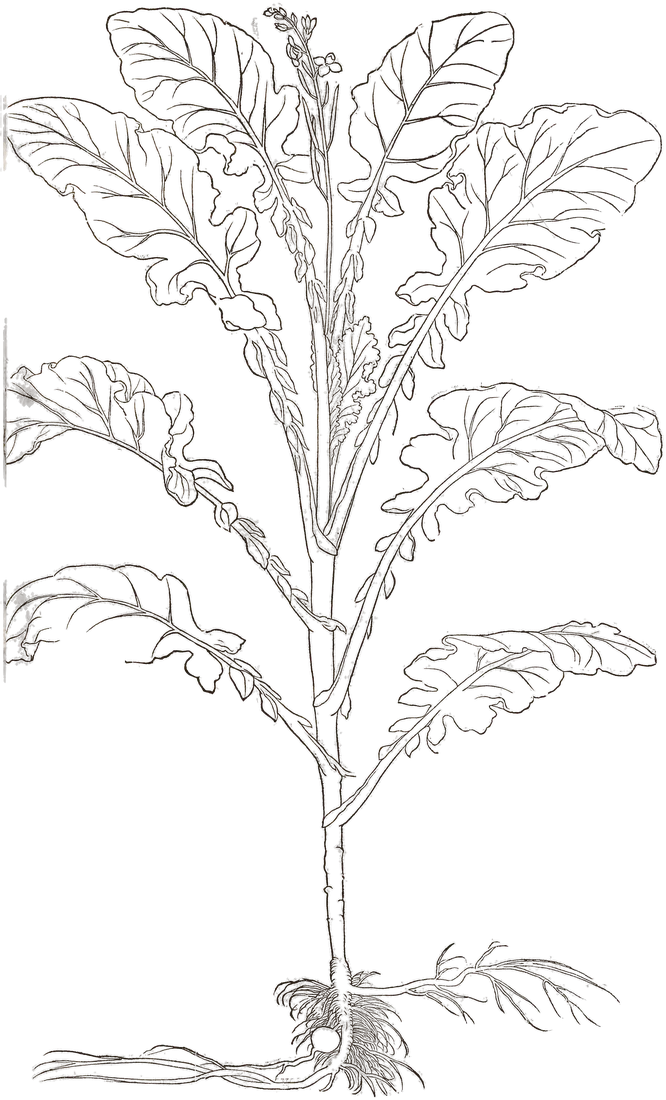
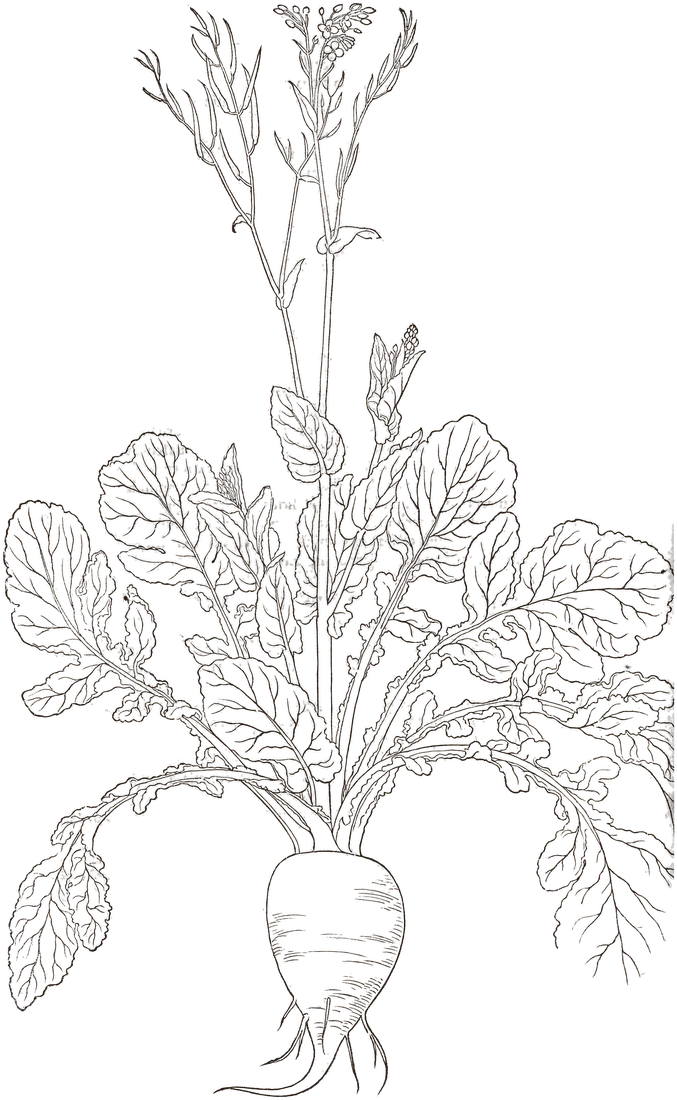
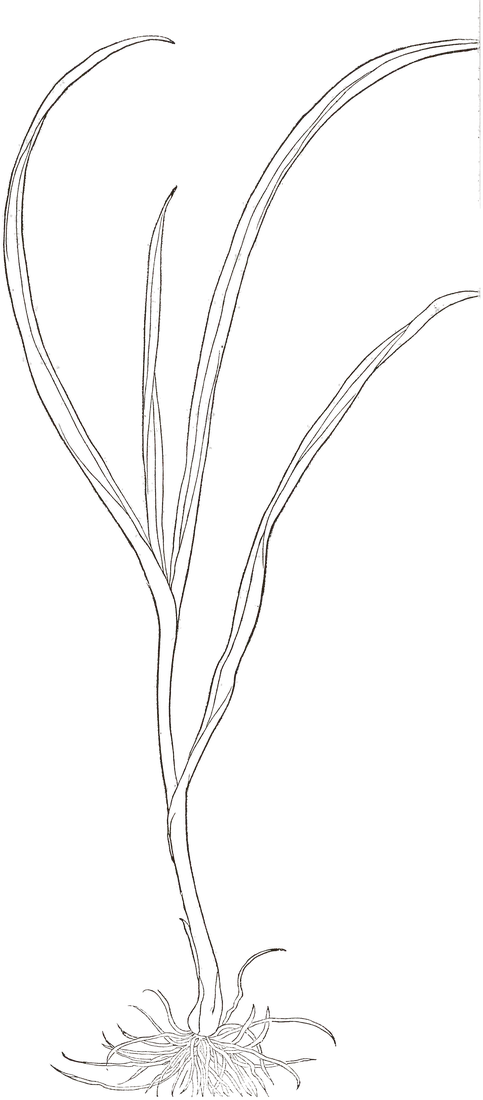
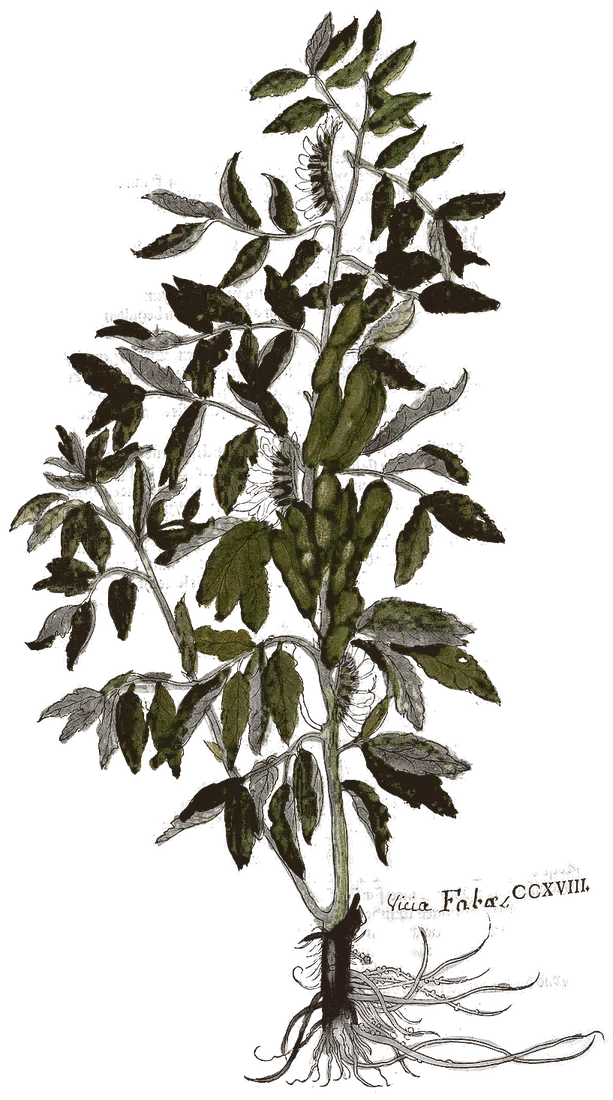
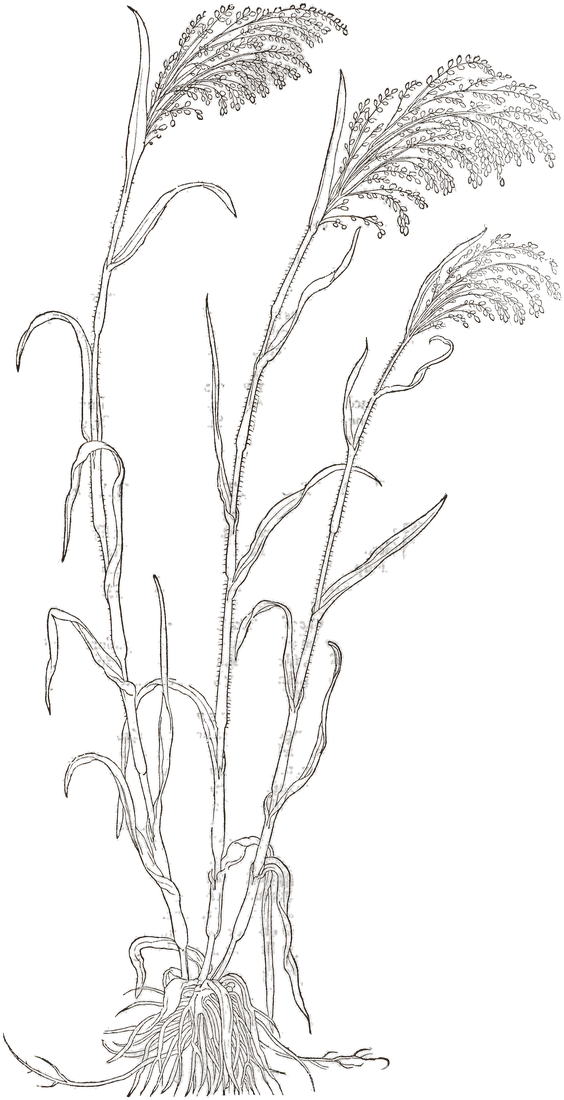
The rest of the book is court food, and its shopping list shows it: saffron in 72 of the 195 recipes, sugar in 58, wine in 57, ginger in 51, almonds in 50. Cabbage is in three, turnips also in three. What most people ate every day was rarely written down; cookbooks belonged to rich households.
- saffron72
- sugar58
- wine57
- ginger51
- almonds50
- bread42
- onions34
- vinegar32
- oil32
- pork29
- cinnamon22
- rice21
- honey16
- pepper14
- capon14
- garlic12
- verjuice8
- leeks6
- broad beans6
- cabbage3
- turnips3
- peas3
- parsnips2
And people fasted a lot. In early modern Christian Europe, fast days took up about 40% of the year, according to the Fitzwilliam Museum's Feast & Fast exhibition in Cambridge: no meat or animal products on most Wednesdays and Fridays and through all of Lent; fish was allowed. The seventh recipe of the 1390 book even has a version for fish days: with water and oil.
In the Romanian lands, the porridge in the pot was made of millet before maize arrived; the Romanian dictionary still gives “millet” as a sense of mălai, today's word for maize meal. At Gârlești, in southern Romania, archaeologists found a late medieval storage pit with preserved millet seed.
The story of millet replaced by maize, in full (in Romanian) →
Did the fall of Constantinople close the spice route?
The story is often told: in 1453 the Turks take Constantinople, block or tax the spice route from Asia, and Europeans set off by sea for the Indies and stumble on America. Historians checked it long ago, and the evidence does not support it.
Most spices did not pass through Constantinople. They came by sea from India to the Red Sea and the Persian Gulf, then by caravan to Alexandria and Beirut, in the Mamluk sultanate of Egypt and Syria. There Venice's galleys bought them. The Ottomans conquered the sultanate only in 1516–1517.
And Venice kept buying more. By the historian C. H. H. Wake's count, in 1495–1498 its pepper imports were 31% higher than around 1400, and its imports of other spices more than four times higher.
Nor do prices show a closed road. In England, pepper jumped in the 1410s, then fell back; after 1453 its price rose slowly, with no jump. The economists Kevin O’Rourke and Jeffrey Williamson found that after 1450 the real price of pepper rose in England, the Low Countries and Austria, which suggests the Portuguese had a growing reason to look for a sea route.
Except they had set out long before. The Portuguese took Ceuta in 1415, settled Madeira in 1419–1420 and the Azores from 1439. Dias rounded southern Africa in 1487–1488, Columbus sailed west in 1492, Vasco da Gama reached India in 1498. That route hit Venice hardest: in 1501–1502 its galleys brought back from Alexandria and Beirut just 15% of the usual pepper.
- 1415The Portuguese take Ceuta
- 1419–1420Madeira is settled
- 1439The Azores are settled
- 1453The Ottomans take Constantinople
- 1487–1488Dias rounds southern Africa
- 1492Columbus reaches the Caribbean
- 1498Vasco da Gama reaches India
- 1501–1502Venice gets just 15% of its usual pepper
- 1516–1517The Ottomans conquer the Mamluk sultanate
“The entire hypothesis seems to be a legend of recent date.”
“The entire hypothesis seems to be a legend of recent date,” wrote the American historian Albert Howe Lybyer in 1915. The true part of the story is the Black Sea: after 1453 the Ottomans held the Straits, and Mehmed II later took Kaffa, the Genoese colony in Crimea. To Lybyer, his conquests contributed “in some degree” to obstructing the northern routes, but those routes were of secondary importance.
Turkish corn, Calicut pepper
The irony comes later still. In 1542, fifty years after Columbus, the German botanist Leonhart Fuchs printed in Basel what seems to be the first picture of maize ever published. He called it Turcicum frumentum, “Turkish corn”, and explained why.
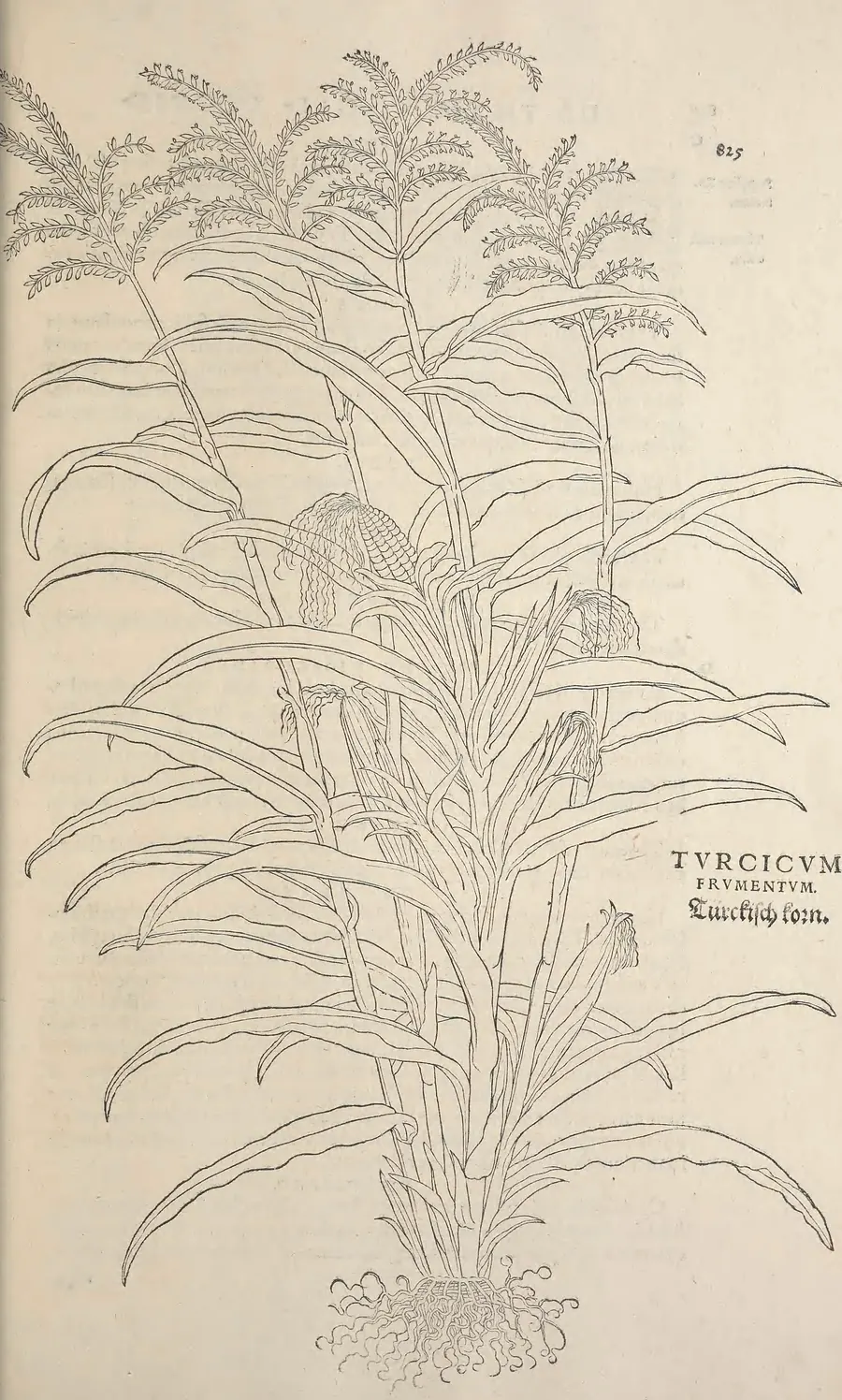
“It came into Germany from Greece and Asia, which is why it is called Turkish corn: for the savage Turk now holds all of Asia.”
He also wrote that maize “now grows everywhere, in all the gardens”. He called the peppers “Calicut pepper”, after the Indian port Vasco da Gama had reached, and “Indian pepper”; the American bean was Welsch Bonen, “foreign beans”. In 1557, in Antwerp, Rembert Dodoens wrote that the tomato was “a foreign plant” that “is not found in this country except in the gardens of a few herbalists”. Later he would publish the sunflower as a “Peruvian chrysanthemum”.
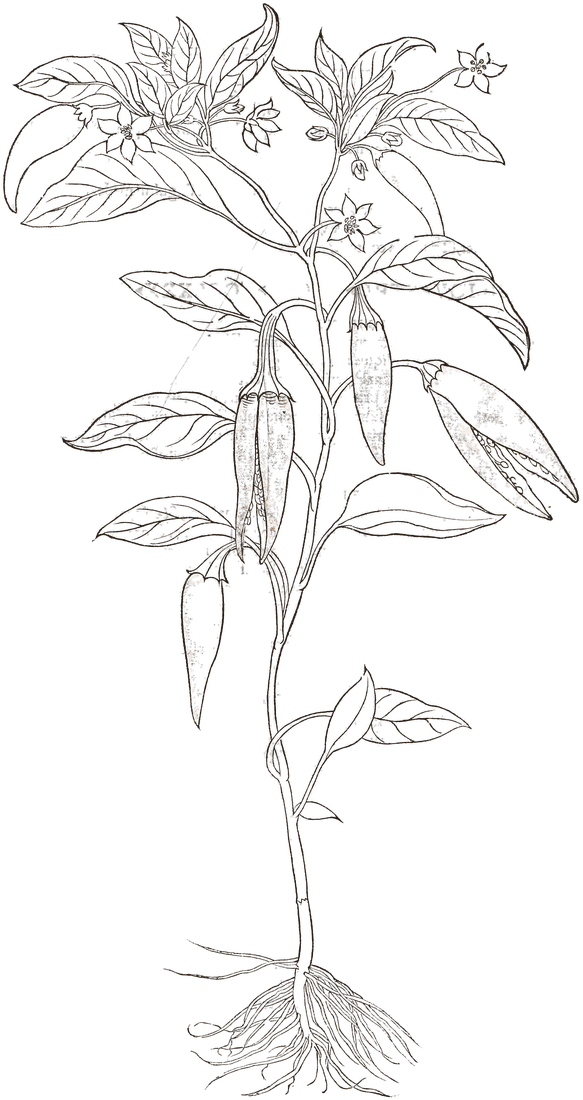
Fuchs 1542
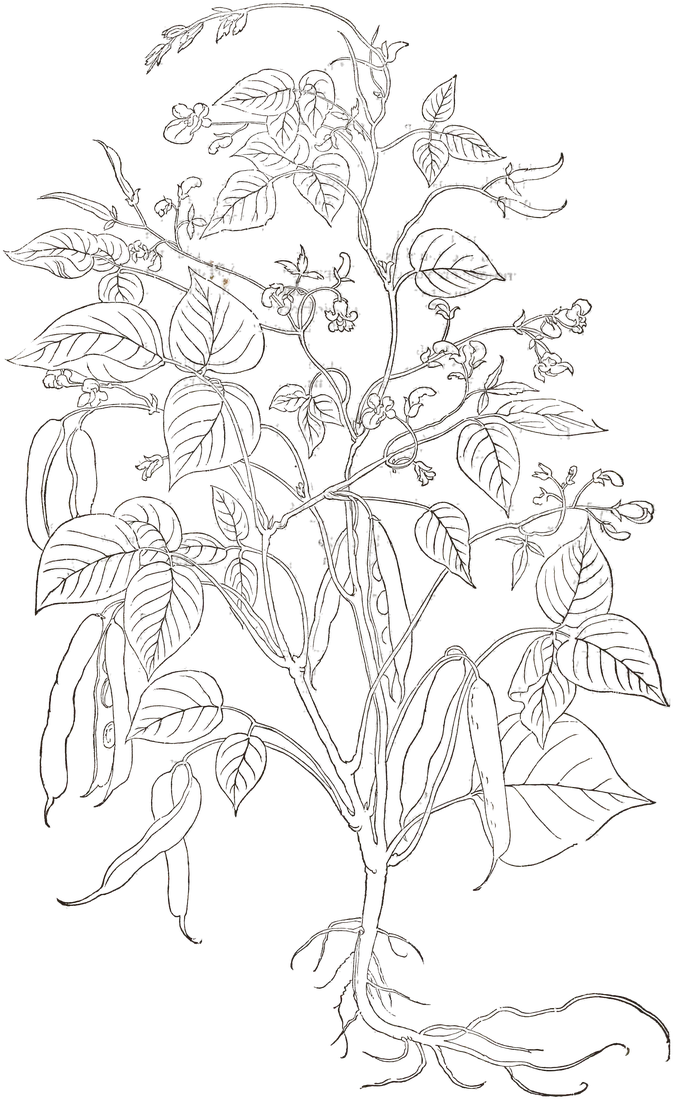
Fuchs 1542
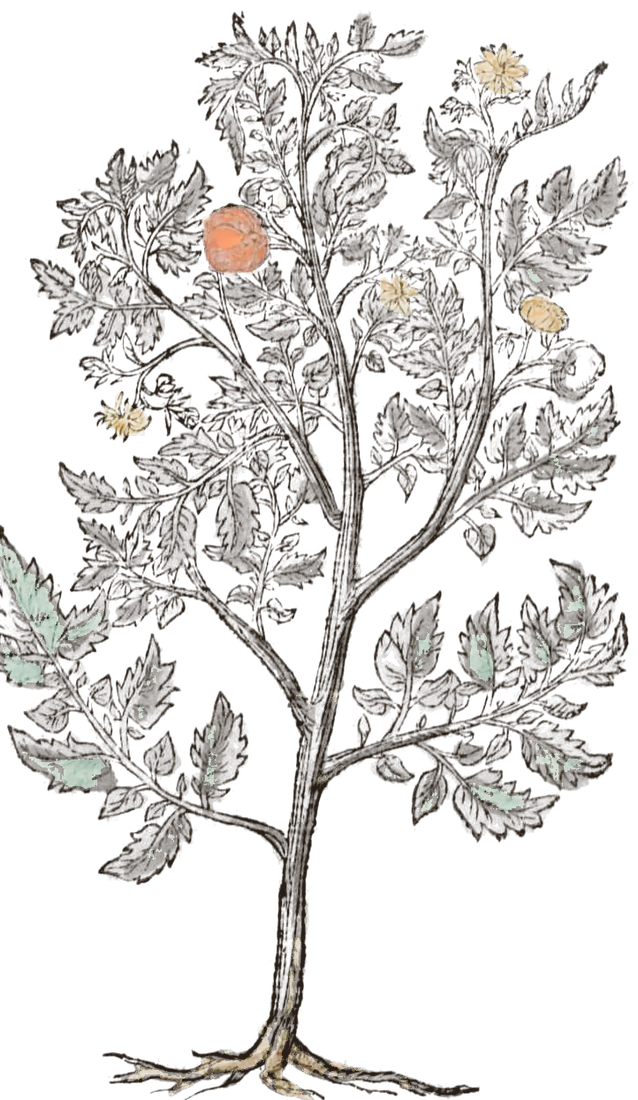
Dodoens 1557
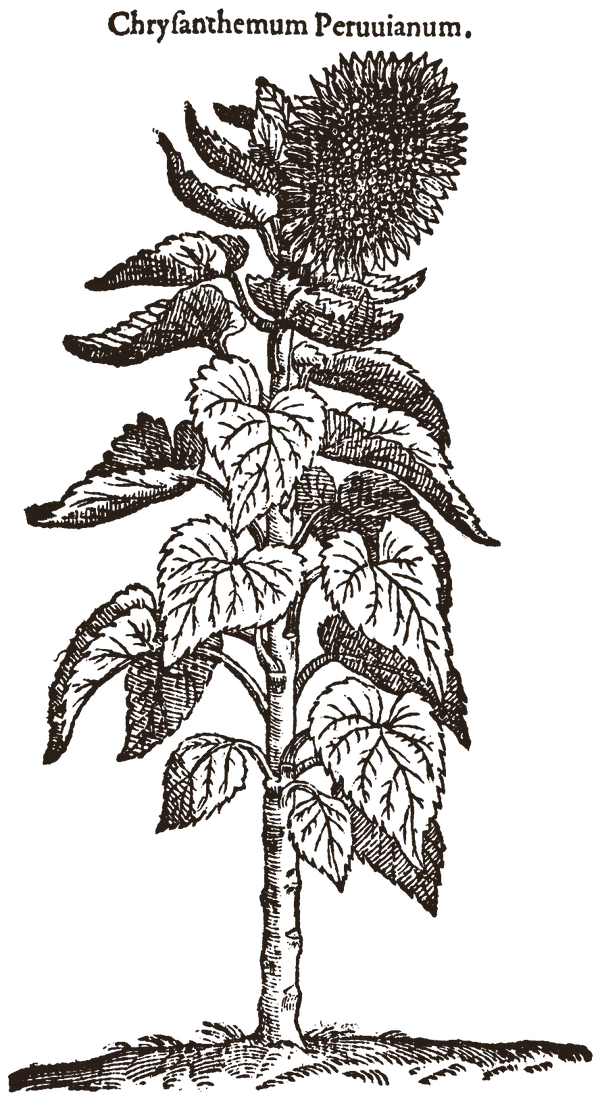
Dodoens 1583
Europeans named the plants of the Americas after the places they thought they came from, or had been trying to reach: Turkey, India, Calicut.
How the Americas reached the English and Romanian plate
In 1597 the London herbalist John Gerard printed a potato plant under the title “Potatoes of Virginia”. By 1861, Beeton asks for potatoes in 78 recipes and cayenne in 167. So a plate of fish and chips sent back to 1491 keeps its fish, peas and vinegar, and loses the chips. In Romania, maize spread in the 17th and 18th centuries and gradually took millet’s place in mămăligă, the national porridge, and the first Romanian pamphlet on potatoes was printed in Iași in 1818.
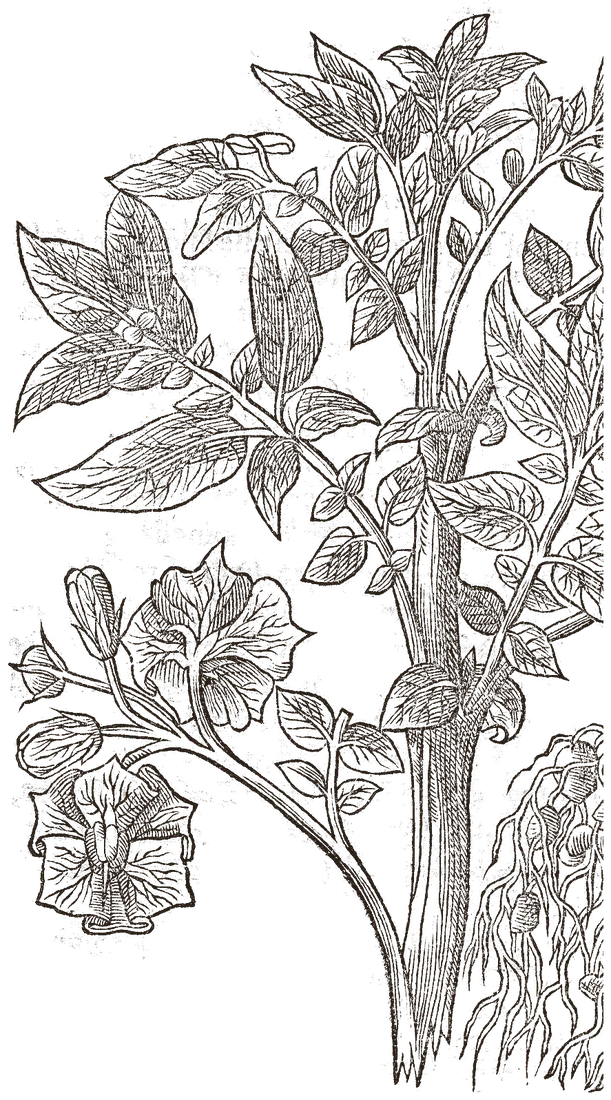
How it is calculated
An ingredient is “from the Americas” if it was domesticated or gathered in the Americas and unknown in Europe before 1492: maize, potatoes, tomatoes, peppers (paprika and chilli too), common beans, squash and courgettes, sunflowers, turkey, cocoa, vanilla, peanuts, pineapple, avocado and others. Broad beans, peas, lentils, cabbage, turnips, aubergines, rice, sugar and black pepper were in Europe in 1491, even if some were rare or dear.
The dishes on the table are described by an ordinary present-day recipe; households differ. What a cook of 1491 used instead appears only where a source of the time shows that ingredient doing the same job; where there is none, the place stays empty.
Today's recipes come from the set published by Ahn, Ahnert, Bagrow and Barabási in Scientific Reports (2011): 56,498 recipes from allrecipes.com, epicurious.com and menupan.com, grouped by the authors into 11 regional cuisines. American ingredients were grouped into 11 categories; ambiguous names were left out, and counting plain “bean” as American would change any share by at most 3.3 points.
The Forme of Cury is read from Samuel Pegge's 1780 edition, on Project Gutenberg: 195 recipes, numbered up to 196 (number 42 is missing from the manuscript itself). Words were searched in the text's Middle English (“safroun”, “caboches”, “rapes”); an ingredient spelled another way can be missed, so the counts are approximate. For Beeton, the recipes counted are those that begin with “INGREDIENTS”.
Pepper prices are J. E. Thorold Rogers' decade averages as Lybyer gives them in note 12 of his 1915 article: prices of the time, not adjusted for inflation. Lybyer warns that they rest on few figures, kept more or less by chance.
The drawings come from the herbals of the time: Leonhart Fuchs (Basel, 1542 and 1543), Rembert Dodoens (Antwerp, 1557 and 1583) and John Gerard (London, 1597). The paper was removed from the scans so the drawings sit on the page; the colours are those painted by hand in the scanned copies. The round medallions are scenes cut from the miniatures of a Tacuinum sanitatis, a health handbook painted in Italy in the late 14th century (Biblioteca Casanatense, Rome, MS 4182), and from other copies of the same handbook: the dairy, the butcher's, the kitchen, the wine cellar, the sugar seller. They show the scene where the food was made or sold, not always the food itself, and they were toned to the same ink as the woodcuts.
Sources
- Ahn, Y.-Y., Ahnert, S. E., Bagrow, J. P., Barabási, A.-L. (2011). Flavor network and the principles of food pairing. Scientific Reports 1, 196 (recipe data, supplementary file 3). doi.org
- The Forme of Cury, a roll of ancient English cookery compiled about A.D. 1390 by the master-cooks of King Richard II, ed. Samuel Pegge (1780). Project Gutenberg #8102. www.gutenberg.org
- Beeton, I. (1861). The Book of Household Management. Project Gutenberg #10136. www.gutenberg.org
- Lybyer, A. H. (1915). The Ottoman Turks and the Routes of Oriental Trade. English Historical Review 30, 577–588. Project Gutenberg #50860. www.gutenberg.org
- Wake, C. H. H. (1979). The changing pattern of Europe's pepper and spice imports, ca 1400–1700. Journal of European Economic History 8(2), 361–403. jeeh.it
- O’Rourke, K. H., Williamson, J. G. (2005). Did Vasco da Gama matter for European markets? Testing Frederick Lane's hypotheses fifty years later. NBER Working Paper 11884 (published in Economic History Review 62, 2009). www.nber.org
- Fuchs, L. (1542). De historia stirpium commentarii insignes. Basel: Isingrin. Smithsonian Libraries copy, Internet Archive. archive.org
- Weatherwax, P. The first printed picture of Indian corn. Proceedings of the Indiana Academy of Science. journals.indianapolis.iu.edu
- Fuchs, L. (1543). New Kreüterbuch. Basel: Isingrin. Broad bean, p. 393, hand-coloured copy, Wikimedia Commons. commons.wikimedia.org
- Dodoens, R. (1557). Histoire des plantes, trad. Charles de l'Écluse. Antwerp: Jean Loë. Pommes d'amours, p. 298, hand-coloured Wellcome copy, Internet Archive. archive.org
- Dodoens, R. Chrysanthemum Peruvianum (sunflower), 1583 edition, p. 264, Wikimedia Commons. commons.wikimedia.org
- Gerard, J. (1597). The Herball, or Generall Historie of Plantes, London: Potatoes of Virginia. Wellcome Collection, CC BY 4.0. commons.wikimedia.org
- Tacuinum sanitatis, Italy, late 14th century: Biblioteca Casanatense, Rome, MS 4182, and other copies; miniatures on Wikimedia Commons (public domain). commons.wikimedia.org
- Fitzwilliam Museum, Cambridge. Feast & Fast: the art of food in Europe, 1500–1800. Christian food. feast-and-fast.fitzmuseum.cam.ac.uk
- Dicționarul explicativ al limbii române (DEX '09), „mălai”, pe dexonline. dexonline.ro
- Ciută, B. (2025). Meiul (Panicum miliaceum L.) în economia și alimentația medievală din Oltenia. Acta Terrae Septemcastrensis 24, 93–110. doi.org
- Mămăliga din porumbul american, mariuscomper.uk. mariuscomper.uk
- Cartoful a fost o trufă, mariuscomper.uk. mariuscomper.uk