The Ottoman Balkans · the eighteenth century
Moscopole: the city that traded, taught and translated
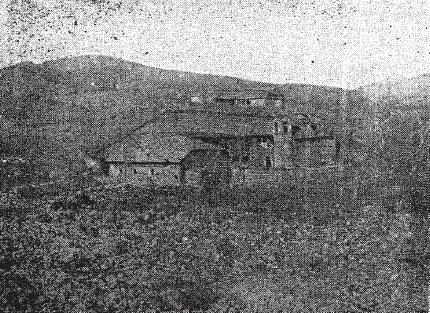
In the mountains of today's south-eastern Albania stands a village of a few hundred people. Three centuries ago the place was called Moscopole, and it ranked among the liveliest Christian towns of the Balkans: its merchants reached Venice and Vienna, its schools taught philosophy in Greek, and its press printed books for the whole region.

In short, in one minute
Moscopole — Moschopolis in Greek, Voskopoja in Albanian today — was an 18th-century commercial and educational centre in the Ottoman Balkans, inhabited overwhelmingly by Aromanians, speakers of a Romance language related to Romanian. Wealth came from livestock, wool and long-distance trade; the profits built churches, kept schools and paid for a printing press — the second in the empire after Constantinople. Greek was the language of schooling and print, the public culture of Orthodox Christians across the region. Here too appeared the first lexicons setting Aromanian beside Greek, Albanian and Bulgarian. After the assaults of 1769 and 1788 and the shifting of trade routes, the town declined, and its people, money and books scattered towards Vienna, Buda, Venice and the Romanian principalities. The later bond with Romania runs through these channels: merchants, teachers, books and schools, not through rule or a border.
A face from the town press
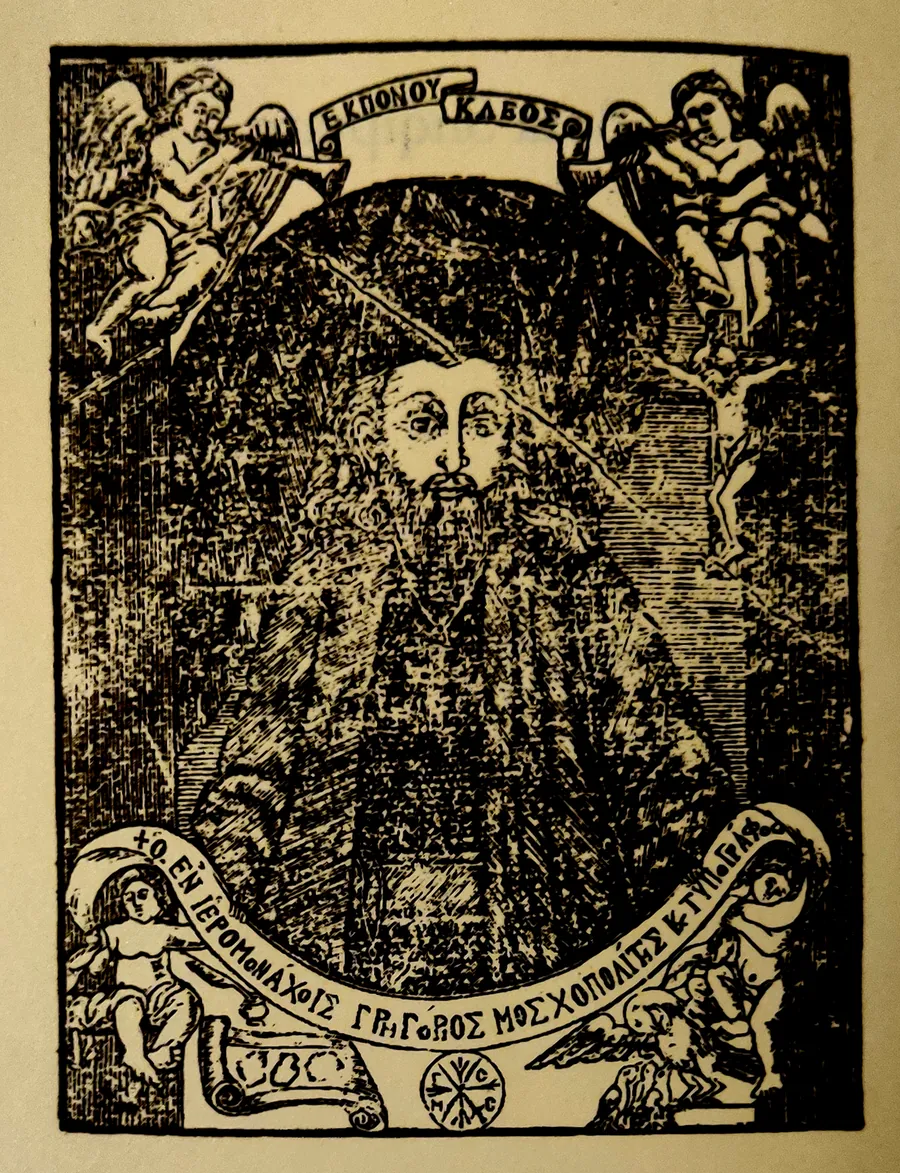
Look at the engraving below: a bearded cleric in liturgical dress, his gaze turned slightly aside. This is Gregory of Durrës, who supervised the Moscopole press in its early years. The portrait comes not from a painting gallery but from a book printed in the town itself, in 1742. A mountain community that prints its own books — and puts its teachers on the frontispieces — tells its own story: here school and press went together.

One city, three circuits
Moscopole grew because three things fed one another: trade paid for the schools, the schools needed books, and books and teachers tied the town to the wider world. The diagram shows the three circuits; dotted, the dispersal after 1769 and 1788, with the Bucharest connection marked separately, where the documents support it.
All circuits are highlighted.
The diagram reads without the buttons; the text below says the same thing:
- Trade tied the town to Venice (via Durrës, from the 17th century), to Central Europe (after 1718 and 1739) and to Constantinople and the surrounding fairs.
- Schooling meant the New Academy (from 1744), the press (from 1731, about 20 known titles) and a celebrated library.
- Languages met in the Greek of school and print, in the Aromanian, Albanian and Bulgarian of the streets, and in the lexicons of 1770, 1794 and 1797.
- Dispersal moved the network to Vienna and other cities; the Bucharest link — committee, schools, books — is documented after 1860.
The spine of the years
The chronology keeps only sourced dates. Where scholarship reports different figures, the page says so openly.
- The monastery of Saint John the Baptist shows the settlement growing in people and wealth a century before its peak.
- An organised Greek school was already at work, with notable teachers, some brought in from elsewhere.
- The town voted its statute of 22 articles: 12 elected representatives ran the community's affairs. The guilds, between 13 and 17 in number, paid bursaries for poor children.
- Nine new churches were built; those that survive are the stone witnesses of the boom.
- The press began work, brought by the cleric Gavriil (Gregory) Konstantinidis. Some accounts give 1720 or 1735; what is certain is that the press ran in the 1730s and issued about 20 known titles, mostly religious, before 1760.
- The school became the New Academy, with new subjects; in 1750 it moved into its own building as the Hellenic Phrontistery. The curriculum covered philosophy, theology and the sciences, and the library gathered ancient authors, theological books and contemporary thought.
- The first great assault on the town. The 1700–1769 heyday ended; sustained emigration to Habsburg lands began.
- Theodor Anastasie Kavalliotis printed his Protopiria, a reader with a trilingual Greek–Aromanian–Albanian lexicon of about 1,170 words. The place of printing is reported differently: Vienna or Venice.
- A second assault laid the town waste. Merchants moved their fortunes and networks to Vienna, Buda and other cities.
- The books of the Moscopolitans appeared in the diaspora: Daniil's Introductory Teaching, with a four-language lexicon (editions in 1794 and 1802); Constantin Ucuta's Nea Paidagogia, at Vienna in 1797, the first primer in Aromanian; Gheorghe Constantin Roja's Researches, at Pest in 1808; Mihail Boiagi's Grammar, at Vienna in 1813.
- In Bucharest, Aromanians of the colony founded the Macedo-Romanian committee (1863), and at Târnova, near Bitola, the first Romanian school in Macedonia opened (2 July 1864) through Dumitru Athanasescu. The school network grew after 1878.
- Voskopoja is a village in south-eastern Albania, with painted 18th-century churches, Aromanian festivals and a memory shared across several national histories.
Four names for the same people?
Readers may trip on the labels, because each comes from a different age. Aromanians are the speakers of the Romance language south of the Danube, related to Romanian; they often call themselves Armâni. Vlach is the old outward name under which they appear in medieval and Ottoman records; it can sound pejorative today, so this page uses it only in historical quotation. Moscopolitan simply means a person from Moscopole, of whatever tongue. And the bond with the Romanians north of the Danube tightened late, in the 19th century, through schools, books and cultural societies — it did not exist from the start as a national loyalty. To understand Moscopole is to keep these planes apart: the town was Aromanian in its people, Greek in school and print, and, from a point on, Romanian through some of its scattered descendants.
Schools, press and languages
The town's wealth came from afar: livestock and wool, worked up in its own workshops, then sold by itinerant merchants — pragmatefti — from the Adriatic to the Romanian principalities and Central Europe. The roads opened wide after the Ottoman–Habsburg treaties of 1718 and 1739, and Moscopolitan colonies reached Vienna, Buda, Timișoara, Novi Sad and Zemun. The money thus gathered built churches and kept schools, and the guilds paid bursaries for poor children, at home and in Europe.
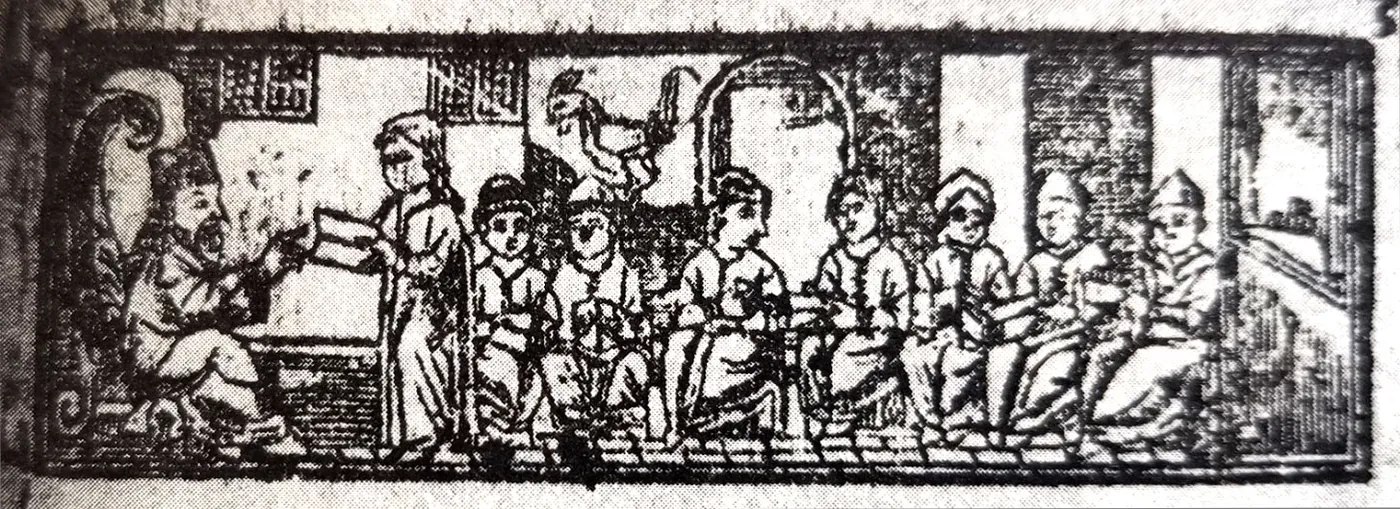
The school climbed step by step. Teachers of the standing of Theodor Kavalliotis taught here, and young men from across the Balkans came to study at the community's expense, lodged and fed by the town. From 1744 the New Academy offered one of the most advanced courses of study open to a Christian in the Balkans. The engraving below, from a Moscopolitan publication of 1750, shows how this world saw itself: the school at the centre, in good order.

The press deserves a pause. It was the second in the Ottoman Empire after Constantinople, and the first in the empire's European part. It issued about 20 known titles, mostly religious books for schools and churches. It was not “the first in the Balkans”, as shortcuts sometimes claim: the Constantinople precedence is documented from 1627. That makes the mountain town's achievement all the more striking.
As for languages, the picture is clear if viewed without the national spectacles of later ages. Aromanian, Greek, Albanian and Bulgarian were spoken in the streets. Greek ruled in school and in print. And the most telling gesture of the age lies in the two lexicons: Kavalliotis's Protopiria (1770), with about 1,170 words in Greek, Aromanian and Albanian, and Daniil's Introductory Teaching (editions in 1794 and 1802), in four languages — Greek, Aromanian, Bulgarian, Albanian. The verse preface of the latter calls on speakers of other tongues to rejoice and prepare “to become Romans”, that is, Greeks by culture. In other words, the diversity of tongues was recorded precisely to serve Greek schooling. The age of nations, with its separate schools per language, would only come in the following century.
The road to Romania
Moscopole's bond with Romania lies in people, books and money, on three counts.
First, the merchants. The Sina family, out of Moscopole after the assaults of 1769 and 1788, built a trading house and bank in Vienna that became the second in the empire after the Rothschilds; Simeon Sina (1753–1822) and his sons were ennobled for their part in the economy. Beside them, the Mocioni, Nako and Gojdu families became landowners, bankers and politicians in the Banat and Crișana, and after the mid-19th century joined the Romanian national movement there. Many of these Aromanians counted as “Greeks” in Buda and Pest: they spoke the Greek of business and church, and alliance with Greek merchants protected their interests.
Second, the books. The writings of the Moscopolitans travelled north and worked in both directions. Petru Maior knew Kavalliotis's lexicon through the German scholar Thunmann's reproduction (Leipzig, 1774) and could draw on Aromanian material when arguing for the unity and Latinity of Romanian. Gheorghe Constantin Roja printed his Researches at Pest in 1808, pleading for the Latin alphabet, and the book would appear in Romanian at Craiova in 1867. Boiagi's Grammar (Vienna, 1813) was likewise reprinted for readers in the Romanian lands.
Third, the schools. The Aromanian colony in Bucharest asked for and supported schools for the Aromanians of the empire: the Macedo-Romanian committee was founded in 1863, the first Romanian school in Macedonia opened at Târnova in 1864, and the network grew after 1878, when the Ottoman authorities recognised Romanian schools and worship in the mother tongue. The initiative met suspicion from Greeks, and at times from Aromanians themselves — a detail this page keeps, because it belongs to the story.
Dispersal and what stayed behind
The decline has no single cause and no single day. The assaults of 1769 and 1788 laid the town waste, trade routes moved on, and the wealthy families left for places where their capital was safe: the Habsburg empire. Those who stayed kept schools and churches going, but the town never regained its former size. Period accounts give widely different figures for the peak population — from about 20,000 to 60,000–70,000 souls — which is why this page chooses none: the scale is certain, the exact number is not.

Why it still matters
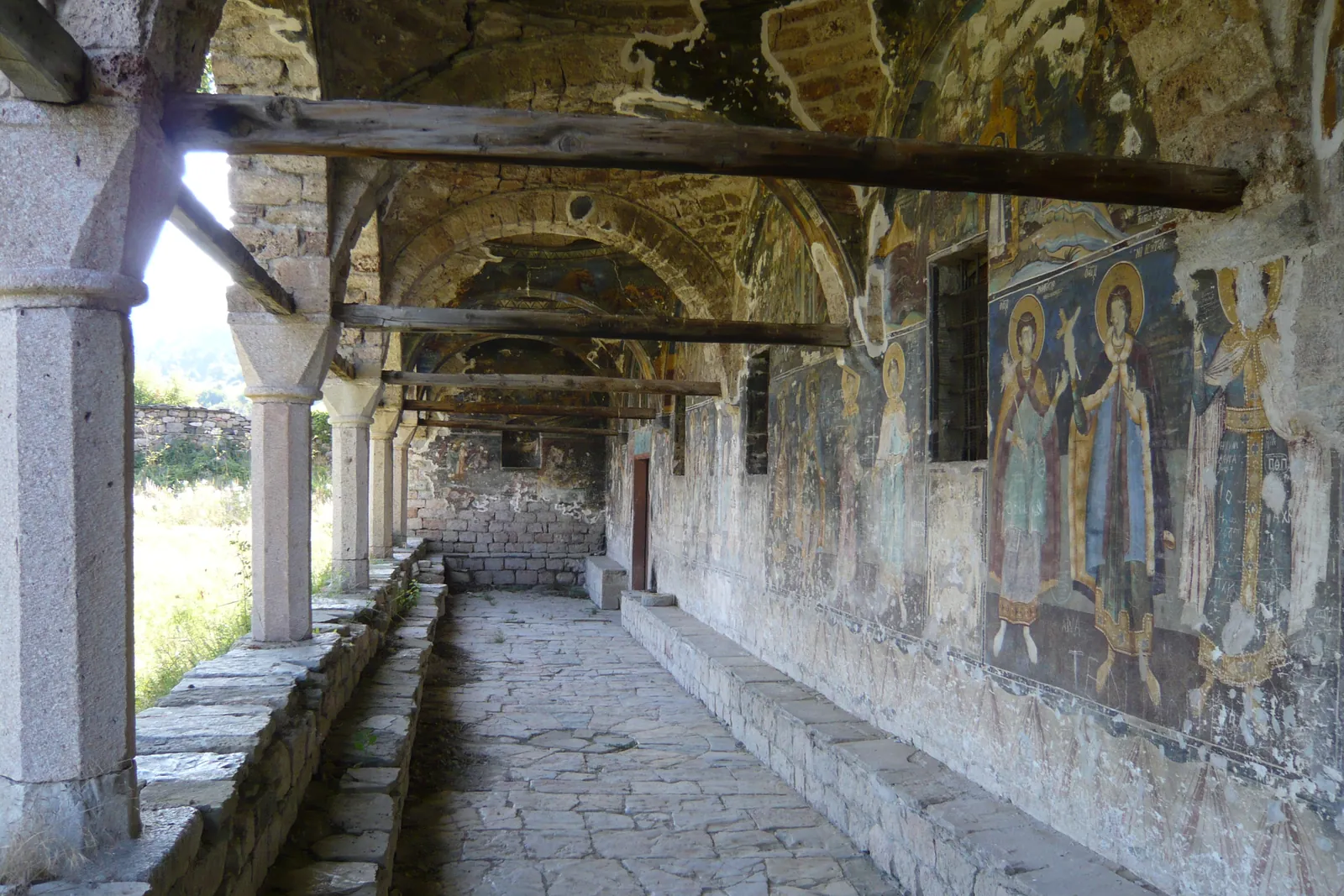
For Greek culture, Moscopole remains one of the peaks of the Enlightenment in the empire's European provinces: a celebrated school, a press, a library and a line of teachers who carried the century's ideas through to the movement of 1821. The great merchant-philanthropists from these lands — among them the Sinas of Moscopole — endowed schools, libraries and printing houses from Venice to Bucharest.
For Aromanians and Romanians, the town proves that a Romance-speaking community could keep pace with its century through school and print, even when the language of school differed from the speech of home. The books of the Moscopolitans — the Protopiria, the four-language lexicon, Ucuta's primer — rank among the oldest written records of Aromanian. And the roads of dispersal, from Vienna to Bucharest and Craiova, show how a local history became, without forcing the facts, part of several national histories.
What is established and what is debated
What is firmly established
- A Christian, majority-Aromanian town, flourishing in the 18th century, with long-distance trade and strong guilds.
- An old Greek school, the New Academy from 1744, a celebrated library and teachers sought across the Balkans.
- A press running from the 1730s, the second in the empire after Constantinople, with about 20 known titles.
- Greek as the language of school and print; Aromanian, Albanian and Bulgarian as spoken tongues recorded in lexicons.
- Assaults in 1769 and 1788, then the dispersal of the network towards Central Europe and the Romanian lands.
- Documented links with the Romanian lands: books, teachers, merchants, the Bucharest committee of 1863 and the schools begun in 1864.
What remains debated
- The peak population: accounts range from about 20,000 to 60,000–70,000 souls. This page gives no figure.
- The year of the press: 1731 is the most cited date, but 1720 and 1735 also circulate.
- Where the Protopiria (1770) was printed: Vienna in some authors, Venice in others.
- A version of the four-language lexicon may have existed at Moscopole as early as 1764; the documented editions are those of 1794 and 1802.
- Who struck the town and why: raids, imperial troops and shifting routes mingle in the accounts; this page names no single culprit.
Method note
This page rests on academic and institutional studies, cited openly below: an article in Cosmopolitan Civil Societies (2022) for schools, press and Enlightenment; research of the Academy of Romanian Scientists (2016) for the Aromanian scholars and lexicons; a study in Society and Politics (2023) for merchants and dispersed families; the Revue Roumaine d'Histoire (2017) for the schools begun in 1864; Council of Europe report Doc. 7728 (1997) for the modern Aromanian frame. A secondary synthesis of the glory years (1700–1769) served as a lead and was checked point by point against the scholarship. Contested figures are shown as such, and unsupported guesses — drawn routes on a map, exact populations, absolute firsts — were left out.
Sources in view
- Barka, Panajot, “Voskopoja and Ioannina, Two Advanced Centers of the European Enlightenment in the Ottoman West”, Cosmopolitan Civil Societies 13(3), 2022. Full text.
- Lascu, Stoica, “Aromanian Representatives of Enlightenment (the late 18th and early 19th centuries) – Cavalioti, Daniil, Ucuta, Roja, and Boiagi”, Annals of the Academy of Romanian Scientists, Series on History and Archaeology 8(2), 2016. PDF.
- Ciorogariu, Emilian-Alexandru, “Aromanians Between Empires in the 18th–19th Centuries”, Society and Politics 17(2), 2023. PDF.
- Lascu, Stoica, “From the Romanized Population to Vlachs/Aromanians/Balkan Romanians”, Revue Roumaine d'Histoire LVI, 2017. PDF.
- Council of Europe, Parliamentary Assembly, “Aromanians”, Doc. 7728, rapporteur Lluis Maria de Puig, 17 January 1997. Report.
- Koukoudis, Asterios, “Moschopolis, the glory days, 1700–1769”, The Vlachs: Metropolis and Diaspora (secondary lead, checked point by point). Chapter.
- Images: the Voskopojë category at Wikimedia Commons; each image file page names its author and licence.