
Rouen
In 911 King Charles the Simple grants Rollo the city of Rouen and its county. From that Viking river-town grows the Duchy of Normandy.
An atlas · 911–1185
36 places where the sources attest the Normans, from Hastings to Palermo and Antioch — each with its evidence grade. The farthest, Antioch, lies 3,177 km from Rouen. Type your town and see how close they came.
Your town and the map
Seville lies 1,454 km from Rouen. 13 of the 36 places lie farther.
The descendants of the Vikings settled on the lower Seine after 911 — French in speech, Christian in law — and the three branches that grew from them: the conquerors of England (1066), of southern Italy and Sicily (1030–1140), and Bohemond's crusaders, princes at Antioch (1098). The map follows them as people, not as a state: wherever someone the sources call Norman fought, built or ruled.
Each place carries a grade for the strength of the evidence. A · ground — a wall, grave, object or charter that can still be seen. B · record — a chronicle, letter or report written at the time or soon after. C · legend — a late tradition or a disputed site. On the map the three grades also have different shapes: circle, square, triangle.
Distances are straight lines from Rouen, not sailing distances. And “nearest place” means nearest among the 36 on the map — the places the consulted sources attest, not every place Normans ever passed through.
Four chapters, one map. As you read, the map follows: it closes in on the story's land, dims the foreign places, and draws the campaign's roads.
Choose any mark to hear its story; its card lights up below.
Chapter I · 911–1106
How a Viking camp became the duchy that would conquer kingdoms.
For a century and a half the dukes at Rouen gather their land: beating the barons at Val-ès-Dunes (1047), raising abbeys at Fécamp and Mont-Saint-Michel, growing a court of knights for whom the home soil runs short. Every other story starts here — toward England, Italy, the East.
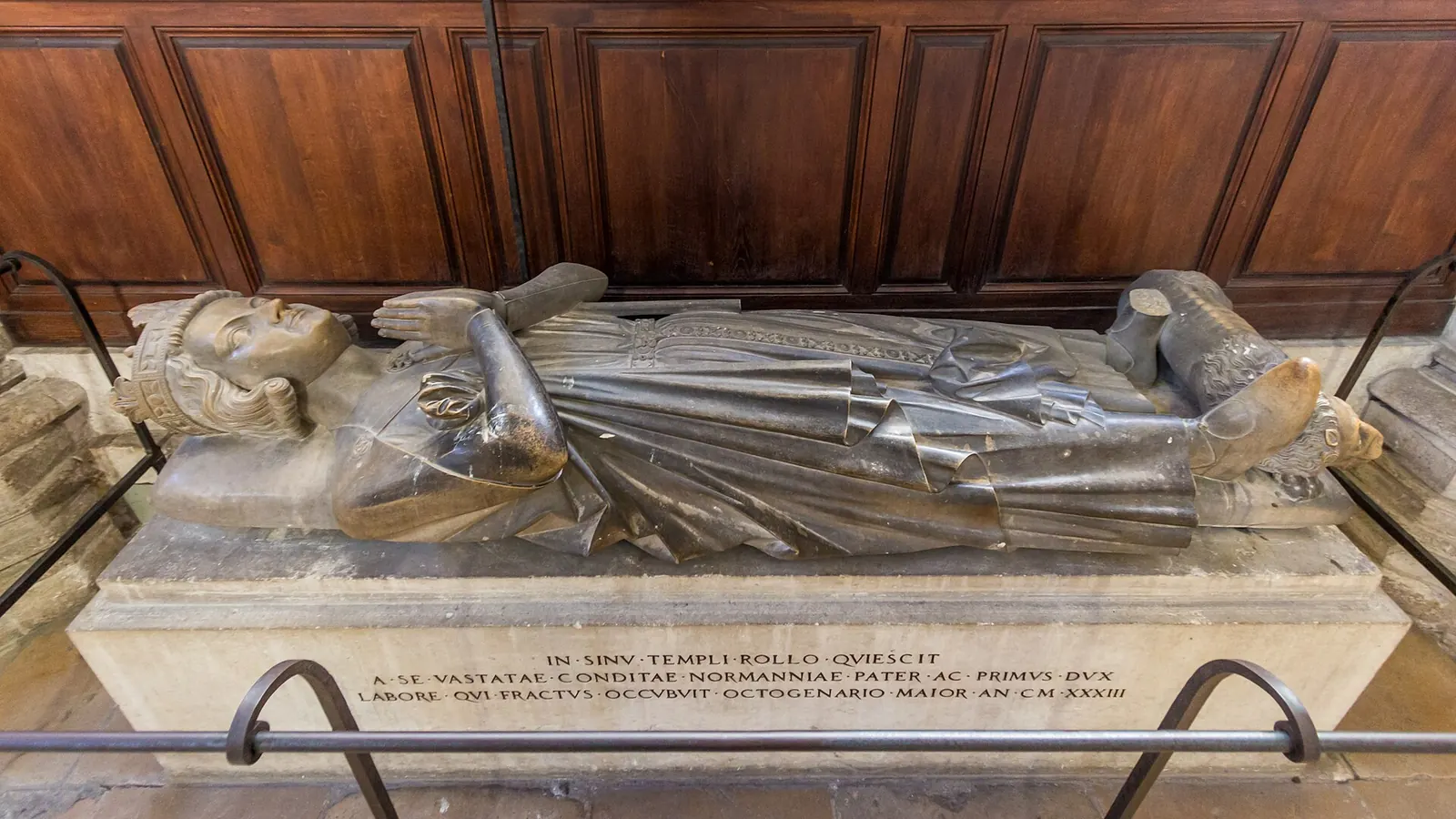
The gold star is Rouen: every distance is measured from here.
In 911 King Charles the Simple grants Rollo the city of Rouen and its county. From that Viking river-town grows the Duchy of Normandy.
Tradition names this village as the 911 treaty site. No contemporary source names the place; Rollo's homage comes from Dudo, a century later.
Duke Richard I settles Benedictines here in 966. The Romanesque abbey church rises over the rock in the 11th century and still stands.
Richard II builds a ducal palace and abbey (1001) at Fécamp, the dynasty's pantheon. Excavation and abbey fabric keep the dukes' trace.
Tradition sends Tancred of Hauteville's sons from this Cotentin village to Italy. From them spring two dynasties: Apulia and Sicily.
In 1047 the young William, aided by the King of France, crushes his rebel barons. From that day he is Normandy's undisputed master.
The Bayeux Tapestry (some 70 m of embroidered linen, 1070s) tells the conquest of England scene by scene. Ordered by Bishop Odo, it is kept here.
In 1106 Henry I of England defeats and captures his brother Robert, Duke of Normandy. Both shores of the Channel fall under one hand again.
Chapter II · 1066–1170
Hastings was day one; England fell castle by castle, then crossed the sea to Dublin.
Hastings was only the first day. After 1066 the Normans advance with spade and sword: castles at Chepstow, London and Durham, cathedrals at Canterbury, harrying in the north in 1069–70. A century later the same Anglo-Norman world crosses the sea to Dublin (1170).
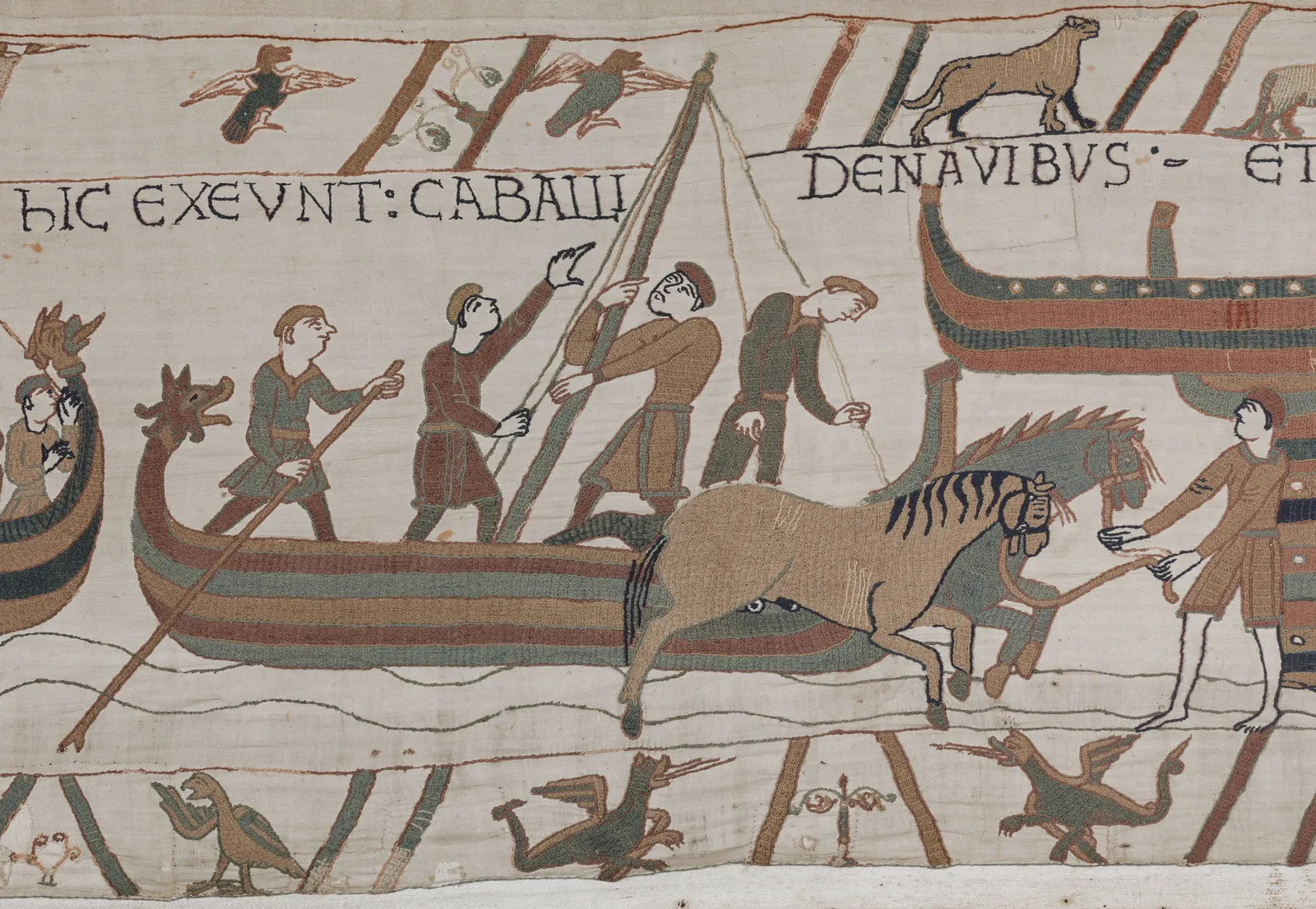
The road from Normandy and, a century later, the one to Ireland.
On 28 September 1066 William's fleet lands at Pevensey, inside the Roman fort's walls. No one waits for him: Harold is at York, fresh from beating the Norwegians.
On 14 October 1066 Harold's army falls on the hill at Battle, and the king dies in the fight. The conquest starts here, but England takes years of campaigning to subdue.
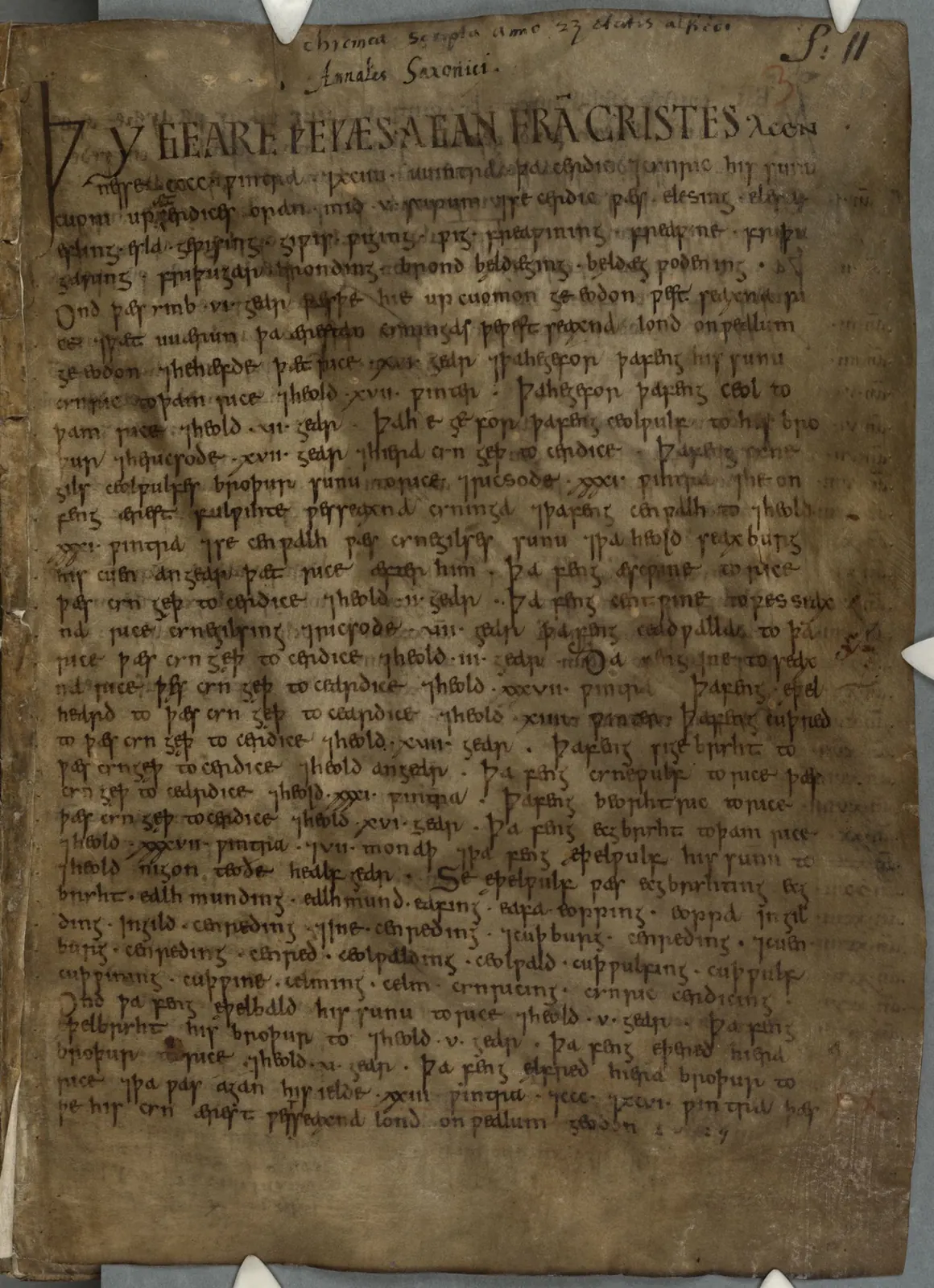
On Christmas Day 1066 William is crowned in Edward the Confessor's abbey. Outside, the Norman guards set houses alight at the cheering, mistaking it for revolt.
From 1067 William fitzOsbern builds at Chepstow, on the Wye, the oldest Norman stone castle in Wales. The Great Tower still stands.
After the northern revolt (1069) William harries the land between York and Durham: burnt villages, ruined harvests. Domesday Book (1086) still lists many manors as “waste”.
In 1070 Lanfranc, a Lombard jurist come by way of Normandy, becomes Archbishop of Canterbury. He rebuilds the cathedral and binds the English Church to Rome.
A castle from 1072, a cathedral begun in 1093: Durham guards the northern frontier. Its ribbed vaults are among the first in Europe.
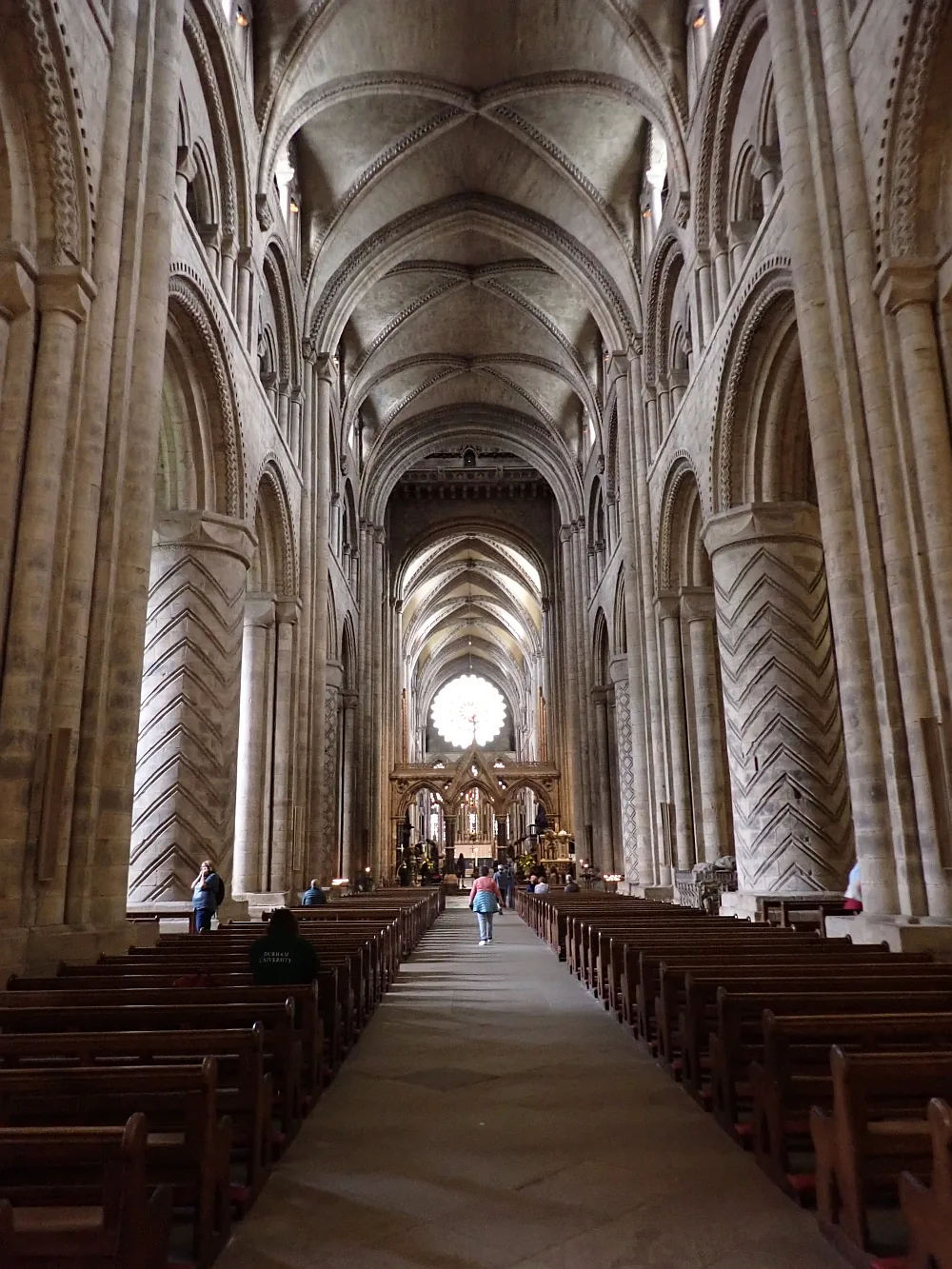
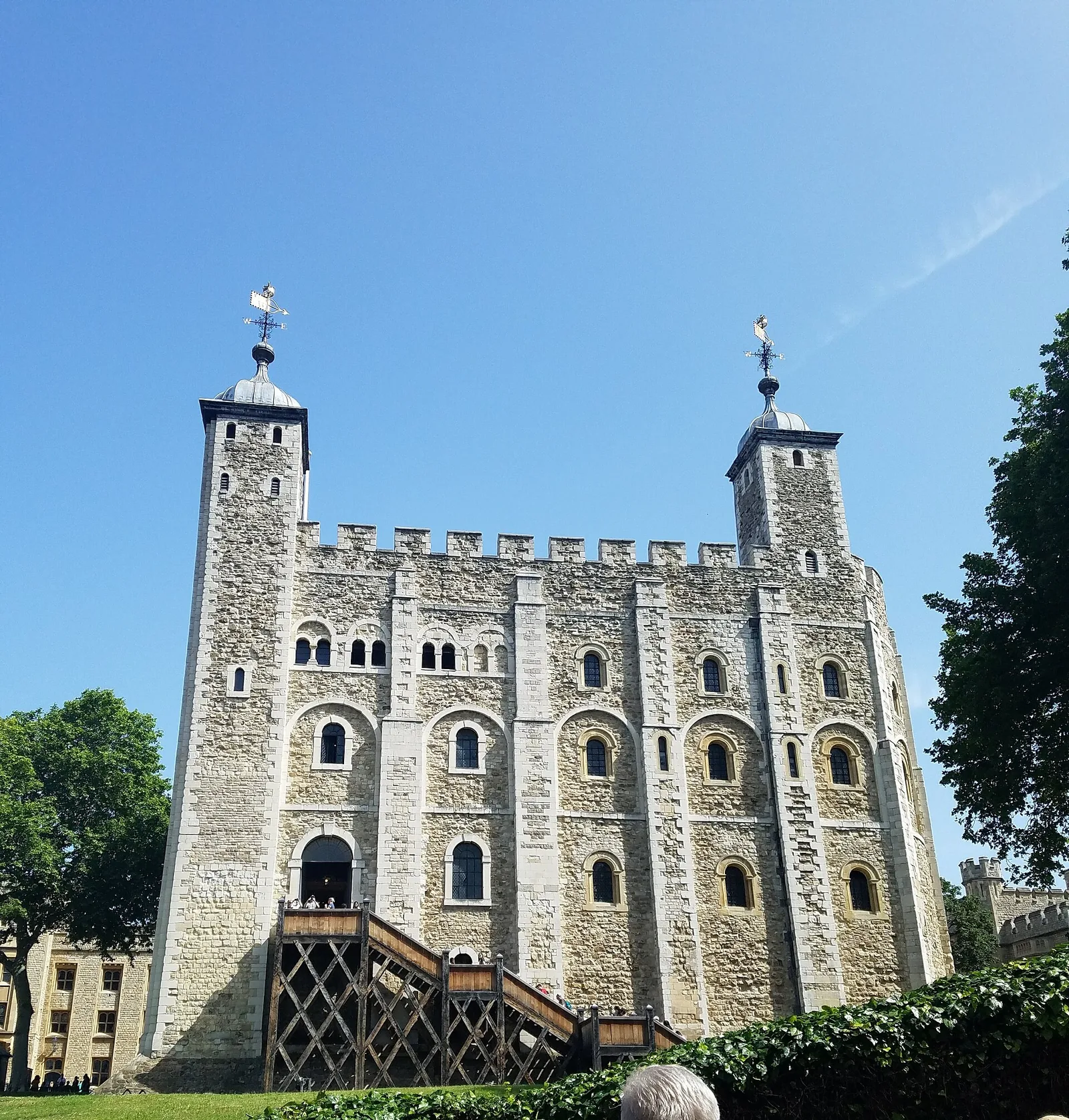
The White Tower, begun about 1078, is the conquest's stone seal: a Norman keep over 30 m tall, visible from across the city.
In 1170 Richard de Clare (Strongbow) takes Dublin for the Norman cause. From this Irish bridgehead grows Anglo-Norman lordship of the island.
Chapter III · 1030–1185
Mercenaries at Aversa, kings at Palermo: the Middle Ages' most improbable career.
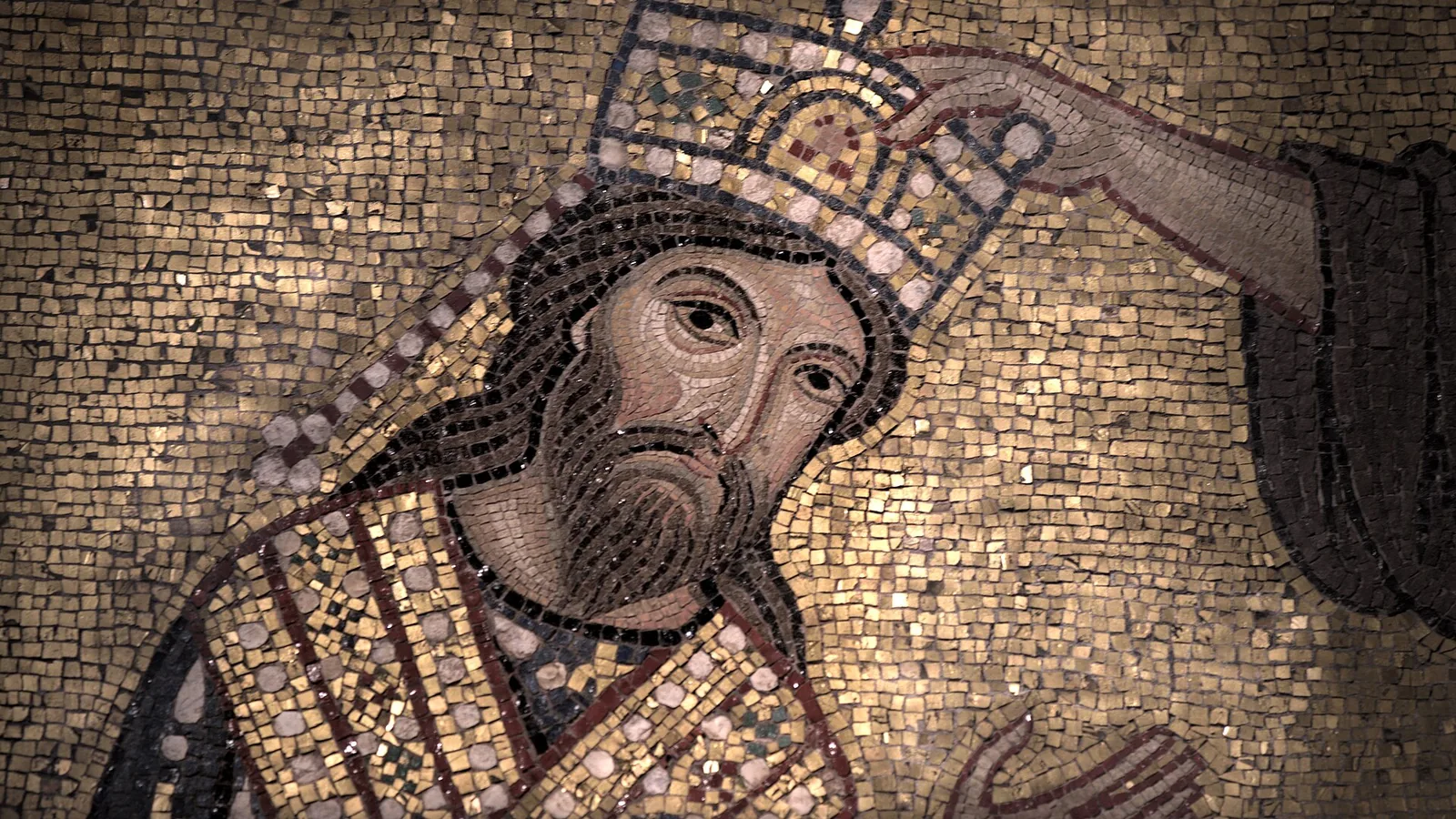
They come as pilgrims and stay as paid soldiers; in 1030 they hold their first county, at Aversa. Within a lifetime they beat popes (Civitate, 1053), expel the Byzantines (Bari, 1071) and take Arab Sicily town by town. Roger II is crowned king at Palermo in 1130, and his court speaks Latin, Greek and Arabic.
Sacked Rome in 1084 is not conquest: the Normans never ruled it.
In 1030 Rainulf Drengot receives Aversa and founds the first Norman county in Italy. Mercenaries become lords with charters.
Taken in 1041, Melfi becomes the Norman capital: here they divide the conquests (1043), and in 1059 Pope Nicholas II enfeoffs Robert Guiscard with Apulia and Calabria.
On 18 June 1053 a few thousand Normans crush Pope Leo IX's army, and the pope is taken prisoner. Defeat opens the road to the Melfi settlement (1059).
After a three-year siege Bari falls in April 1071. With it ends Byzantine rule in Italy, more than five centuries old.
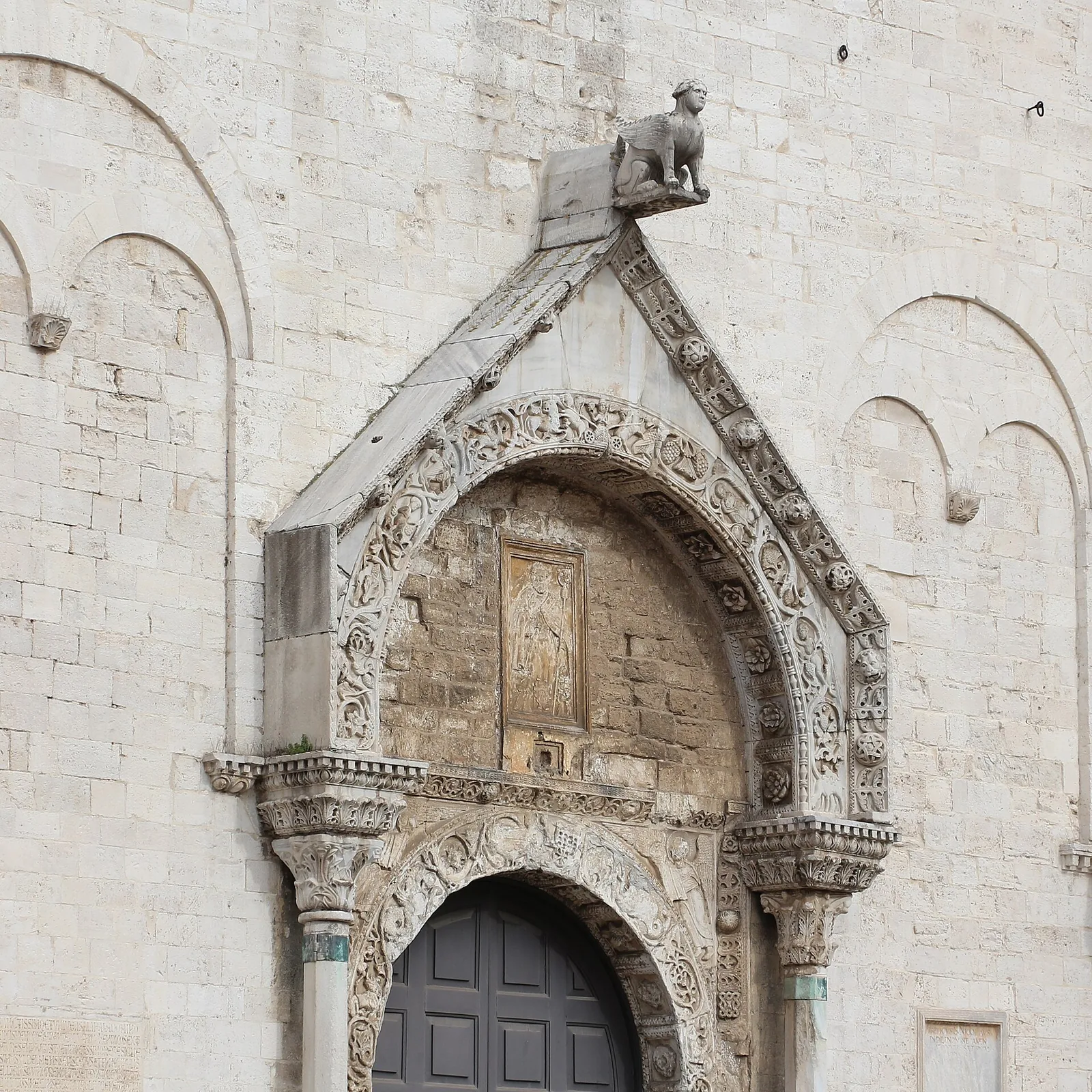
In January 1072 Robert Guiscard and his brother Roger enter Palermo. Sicily's conquest takes two more decades; the emirate's capital becomes the county's.
In December 1076 Salerno, the last Lombard principality, surrenders to Guiscard after a grinding siege. The mainland south is now Norman.
In May 1084 Guiscard comes to free Pope Gregory VII from the emperor — and his army sacks Rome for three days. The pope leaves under Norman guard and dies at Salerno.
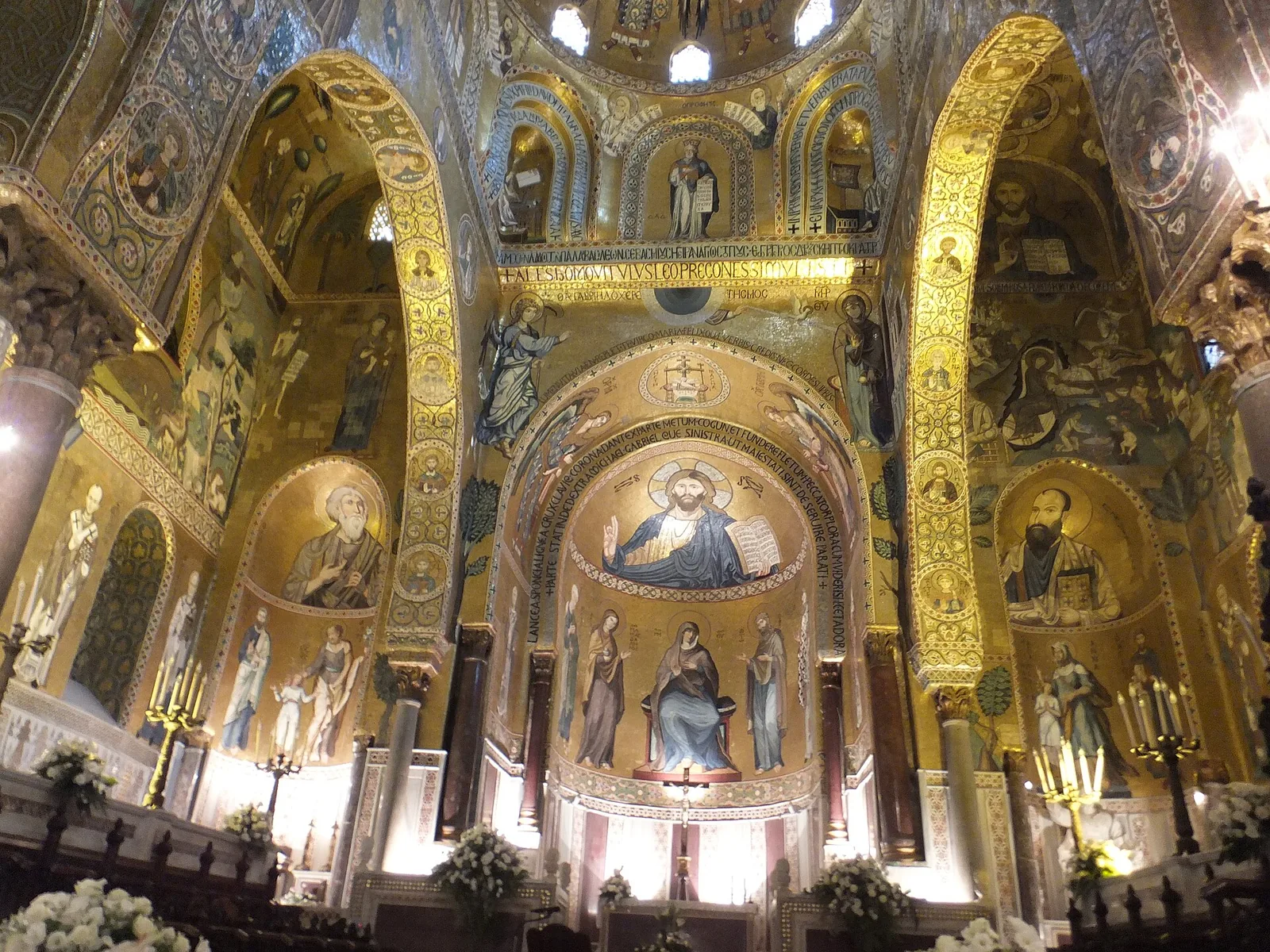
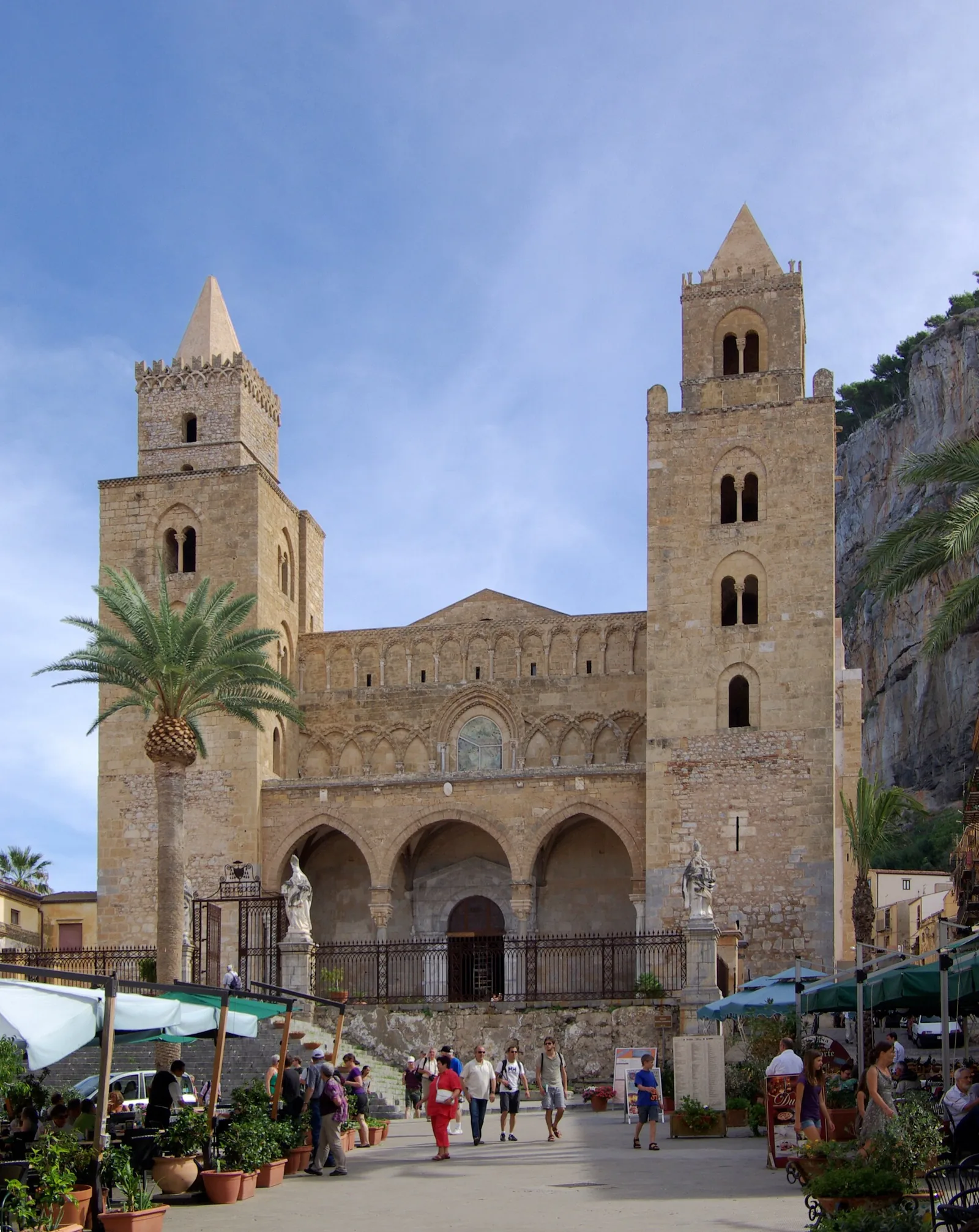
Roger II begins Cefalù cathedral in 1131, with Christ Pantocrator in Byzantine mosaic above the altar. Three worlds — Latin, Greek, Arab — in one church.
In 1139–1140 Naples, the last independent city of the south, submits to Roger II. All southern Italy stands under the Palermo crown.
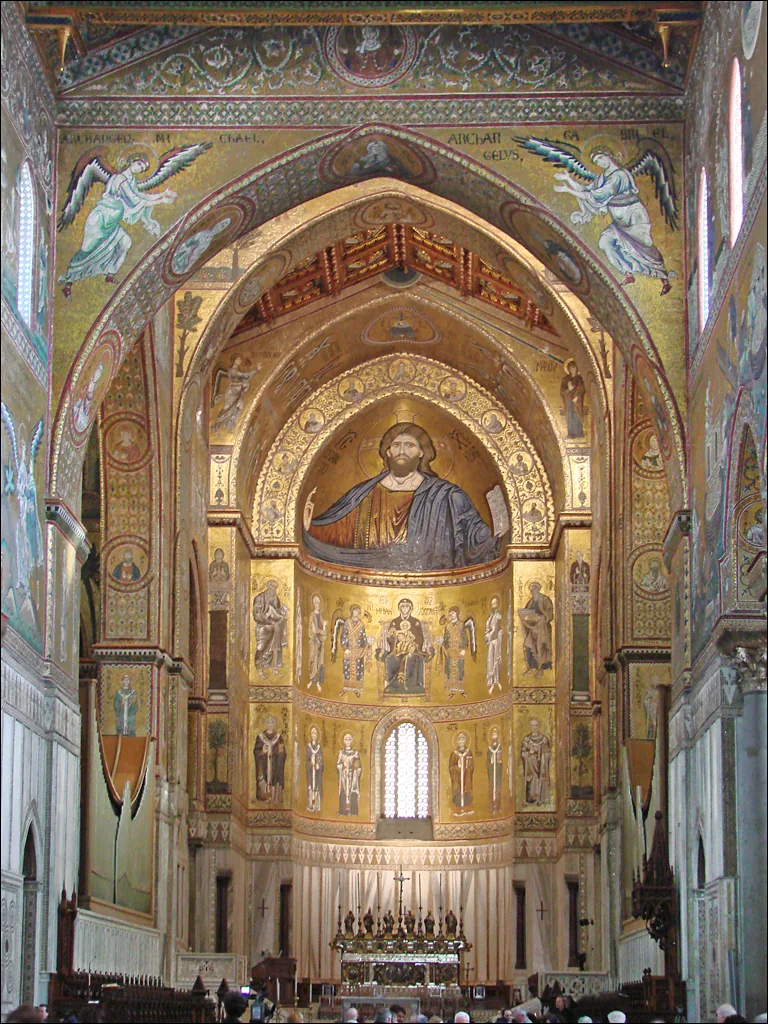
William II builds Monreale cathedral from 1174: 6,000 m² of mosaics on gold. The apogee and, unknowingly, the testament of Norman Sicily.
Chapter IV · 1081–1185
From the Balkans to Antioch and Mahdia: how far they could reach.
Robert Guiscard beats Byzantium's emperor at Durrës (1081); his son Bohemond takes Antioch on crusade (1098) and never gives it back. Roger II holds Africa's ports for a decade (Mahdia, 1148), and an Anglo-Norman fleet helps take Lisbon (1147). The last mark on the map is the sack of Thessalonica in 1185.
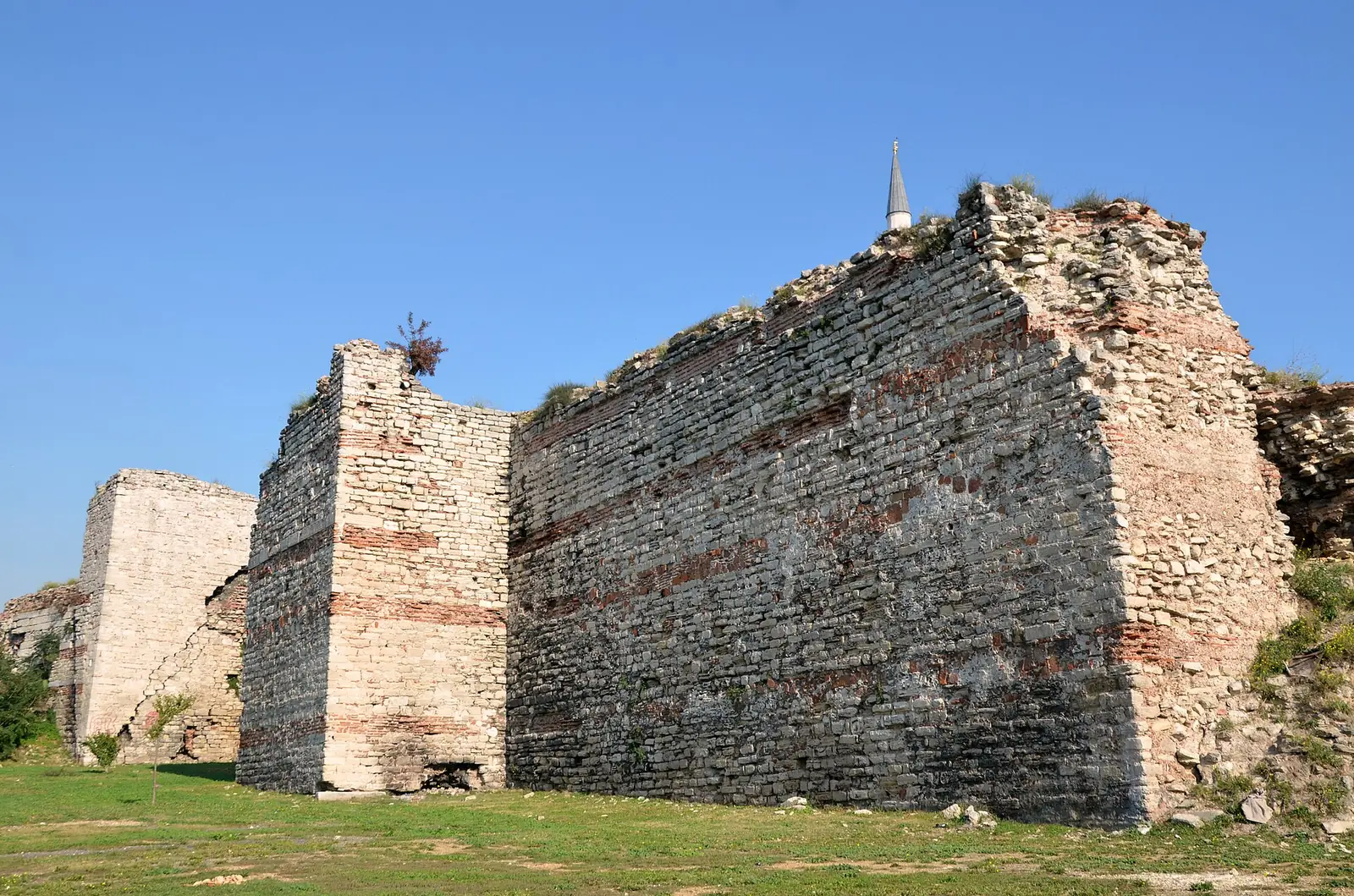
Guiscard's Balkans, Bohemond's crusade, Roger II's Africa.
On 18 October 1081 Guiscard crushes Emperor Alexios I beneath the walls of Durrës. Anna Komnene, the emperor's daughter, describes the Normans with fear and admiration.
In autumn 1084 Guiscard takes revenge at sea: his fleet crushes the Venetian-Byzantine squadron off Corfu and retakes the island. His last victory — he dies on Cephalonia in July 1085.
In 1091 Count Roger I lands on Malta and takes it from the Muslims. The island enters Norman Sicily's orbit, where it stays for centuries.
In spring 1097 Bohemond of Taranto, Guiscard's son, swears fealty to Emperor Alexios. The son of the man who beat the emperor at Durrës becomes his vassal — on paper.
In June 1097 the crusaders — Bohemond's Normans among them — take Nicaea. The crusade's first victory, and the last at which Byzantines and crusaders fight together.
On 3 June 1098 Bohemond enters Antioch by treachery and never hands it to the emperor. The Principality of Antioch lives 170 years — the farthest Norman state.
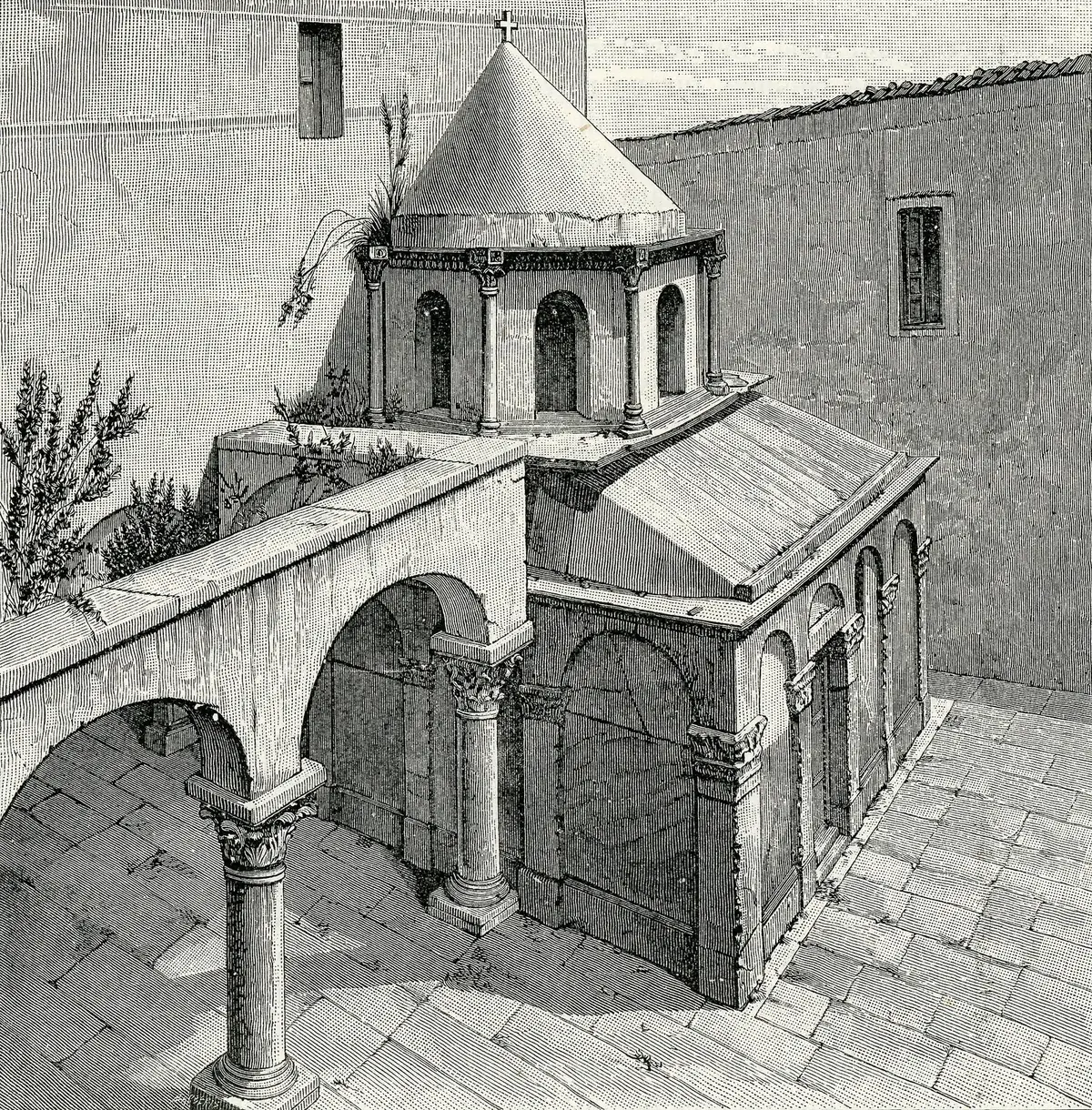
In 1147 an Anglo-Norman crusader fleet, bound for the Holy Land, helps King Afonso take Lisbon. Their chaplain left an account from inside the siege.
In 1148 Roger II's admiral George of Antioch takes Mahdia. A string of African ports follows: the Normans' “kingdom of Africa” lasts a decade.
In August 1185 William II of Sicily's army sacks Thessalonica, Byzantium's second city. Archbishop Eustathios describes the plundering as an eyewitness.
Every mark on the map, set by straight-line distance from Rouen, in three rows by evidence grade. Nothing that can be seen on the ground reaches past Sicily; Antioch, 3,177 km out, is known from chronicles alone.
The 8 farthest places, straight-line from Rouen.
Romania? No consulted source attests Normans on today's Romanian soil. The nearest place to Bucharest is Constantinople (448 km), where Bohemond swore fealty to the emperor in 1097.
Six questions the usual story gets wrong. Choose, then read the answer.
Did the Normans besiege Paris?
No. Vikings had besieged Paris in 885–886, before Normandy existed. As a Christian duchy, Normandy never attacked Paris; the nearest William the Conqueror came was burning Mantes in 1087, some 50 km away.
Was England decided at Hastings in a single day?
No. Hastings (14 October 1066) killed a king, but England submitted after years of campaigning: Exeter and York in 1068, the harrying of the north in 1069–70. As late as 1086, Domesday Book lists manors as “waste”.
Did the Normans rule Rome?
No — they sacked it. In May 1084 Robert Guiscard came to rescue Pope Gregory VII, and his army plundered Rome for three days. The pope left under Norman escort and died at Salerno.
Did the Normans hold ports in Africa?
Yes. In 1148 George of Antioch took Mahdia for Roger II of Sicily, and the Normans held a string of African ports — the “kingdom of Africa” — for about a decade.
Did Normans fight at Jerusalem in 1099?
Yes, through Tancred. Bohemond stayed at Antioch, but his nephew Tancred of Hauteville was among the first crusaders into Jerusalem. (Jerusalem lies outside the map's frame.)
Was Arabic spoken at the Norman court in Palermo?
Yes. Roger II's chancery worked in Latin, Greek and Arabic, and the mosaics of Cefalù and Monreale are the work of Byzantine and Muslim craftsmen. Norman Sicily was a country in three languages.
| Place | Year | Kind | Evidence | km | What happened |
|---|---|---|---|---|---|
| Rouen | 911 | settlement | A · ground | 0 | In 911 King Charles the Simple grants Rollo the city of Rouen and its county. From that Viking river-town grows the Duchy of Normandy. William of Jumièges · Dudo of Saint-Quentin |
| Saint-Clair-sur-Epte | 911 | treaty | C · legend | 49 | Tradition names this village as the 911 treaty site. No contemporary source names the place; Rollo's homage comes from Dudo, a century later. Dudo of Saint-Quentin |
| Mont-Saint-Michel | 966 | church | A · ground | 210 | Duke Richard I settles Benedictines here in 966. The Romanesque abbey church rises over the rock in the 11th century and still stands. Mont-Saint-Michel abbey history (foundation 966) |
| Fécamp | 1001 | church | A · ground | 63 | Richard II builds a ducal palace and abbey (1001) at Fécamp, the dynasty's pantheon. Excavation and abbey fabric keep the dukes' trace. William of Jumièges |
| Aversa | 1030 | county | B · record | 1,390 | In 1030 Rainulf Drengot receives Aversa and founds the first Norman county in Italy. Mercenaries become lords with charters. Amatus of Montecassino |
| Hauteville-la-Guichard | 1035 | settlement | C · legend | 177 | Tradition sends Tancred of Hauteville's sons from this Cotentin village to Italy. From them spring two dynasties: Apulia and Sicily. Geoffrey Malaterra |
| Melfi | 1041–1059 | county | B · record | 1,473 | Taken in 1041, Melfi becomes the Norman capital: here they divide the conquests (1043), and in 1059 Pope Nicholas II enfeoffs Robert Guiscard with Apulia and Calabria. William of Apulia |
| Val-ès-Dunes | 1047 | battle | B · record | 105 | In 1047 the young William, aided by the King of France, crushes his rebel barons. From that day he is Normandy's undisputed master. William of Poitiers |
| Civitate | 1053 | battle | B · record | 1,392 | On 18 June 1053 a few thousand Normans crush Pope Leo IX's army, and the pope is taken prisoner. Defeat opens the road to the Melfi settlement (1059). Amatus of Montecassino |
| Hastings | 1066 | battle | B · record | 170 | On 14 October 1066 Harold's army falls on the hill at Battle, and the king dies in the fight. The conquest starts here, but England takes years of campaigning to subdue. Anglo-Saxon Chronicle |
| Pevensey | 1066 | landing | B · record | 163 | On 28 September 1066 William's fleet lands at Pevensey, inside the Roman fort's walls. No one waits for him: Harold is at York, fresh from beating the Norwegians. William of Poitiers |
| Westminster | 1066 | coronation | B · record | 245 | On Christmas Day 1066 William is crowned in Edward the Confessor's abbey. Outside, the Norman guards set houses alight at the cheering, mistaking it for revolt. William of Poitiers |
| Chepstow | 1067 | castle | A · ground | 362 | From 1067 William fitzOsbern builds at Chepstow, on the Wye, the oldest Norman stone castle in Wales. The Great Tower still stands. Cadw |
| Bari | 1068–1071 | siege | B · record | 1,537 | After a three-year siege Bari falls in April 1071. With it ends Byzantine rule in Italy, more than five centuries old. William of Apulia |
| York | 1069–1070 | conquest | B · record | 525 | After the northern revolt (1069) William harries the land between York and Durham: burnt villages, ruined harvests. Domesday Book (1086) still lists many manors as “waste”. Domesday Book (1086) · Orderic Vitalis |
| Canterbury | 1070 | church | B · record | 205 | In 1070 Lanfranc, a Lombard jurist come by way of Normandy, becomes Archbishop of Canterbury. He rebuilds the cathedral and binds the English Church to Rome. Eadmer |
| Durham | 1072–1093 | church | A · ground | 621 | A castle from 1072, a cathedral begun in 1093: Durham guards the northern frontier. Its ribbed vaults are among the first in Europe. Durham World Heritage Site |
| Palermo | 1072 | conquest | B · record | 1,594 | In January 1072 Robert Guiscard and his brother Roger enter Palermo. Sicily's conquest takes two more decades; the emirate's capital becomes the county's. Geoffrey Malaterra |
| Salerno | 1076 | siege | B · record | 1,446 | In December 1076 Salerno, the last Lombard principality, surrenders to Guiscard after a grinding siege. The mainland south is now Norman. Geoffrey Malaterra |
| Bayeux | 1077 | artefact | A · ground | 132 | The Bayeux Tapestry (some 70 m of embroidered linen, 1070s) tells the conquest of England scene by scene. Ordered by Bishop Odo, it is kept here. Bayeux Museum |
| Tower of London | 1078 | castle | A · ground | 245 | The White Tower, begun about 1078, is the conquest's stone seal: a Norman keep over 30 m tall, visible from across the city. Historic Royal Palaces |
| Dyrrhachium (Durrës) | 1081 | battle | B · record | 1,686 | On 18 October 1081 Guiscard crushes Emperor Alexios I beneath the walls of Durrës. Anna Komnene, the emperor's daughter, describes the Normans with fear and admiration. Anna Komnene · William of Apulia |
| Corfu | 1084 | battle | B · record | 1,840 | In autumn 1084 Guiscard takes revenge at sea: his fleet crushes the Venetian-Byzantine squadron off Corfu and retakes the island. His last victory — he dies on Cephalonia in July 1085. Anna Komnene |
| Rome | 1084 | sack | B · record | 1,217 | In May 1084 Guiscard comes to free Pope Gregory VII from the emperor — and his army sacks Rome for three days. The pope leaves under Norman guard and dies at Salerno. Bonizo of Sutri |
| Malta | 1091 | conquest | B · record | 1,852 | In 1091 Count Roger I lands on Malta and takes it from the Muslims. The island enters Norman Sicily's orbit, where it stays for centuries. Geoffrey Malaterra |
| Constantinople | 1097 | oath | B · record | 2,359 | In spring 1097 Bohemond of Taranto, Guiscard's son, swears fealty to Emperor Alexios. The son of the man who beat the emperor at Durrës becomes his vassal — on paper. Anna Komnene · Gesta Francorum |
| Nicaea | 1097 | siege | B · record | 2,446 | In June 1097 the crusaders — Bohemond's Normans among them — take Nicaea. The crusade's first victory, and the last at which Byzantines and crusaders fight together. Gesta Francorum |
| Antioch | 1098 | conquest | B · record | 3,177 | On 3 June 1098 Bohemond enters Antioch by treachery and never hands it to the emperor. The Principality of Antioch lives 170 years — the farthest Norman state. Gesta Francorum · Raymond of Aguilers |
| Tinchebray | 1106 | battle | B · record | 153 | In 1106 Henry I of England defeats and captures his brother Robert, Duke of Normandy. Both shores of the Channel fall under one hand again. Orderic Vitalis |
| Cefalù | 1131 | church | A · ground | 1,634 | Roger II begins Cefalù cathedral in 1131, with Christ Pantocrator in Byzantine mosaic above the altar. Three worlds — Latin, Greek, Arab — in one church. UNESCO |
| Naples | 1139–1140 | conquest | B · record | 1,403 | In 1139–1140 Naples, the last independent city of the south, submits to Roger II. All southern Italy stands under the Palermo crown. Alexander of Telese |
| Lisbon | 1147 | siege | B · record | 1,443 | In 1147 an Anglo-Norman crusader fleet, bound for the Holy Land, helps King Afonso take Lisbon. Their chaplain left an account from inside the siege. De expugnatione Lyxbonensi (contemporary eyewitness account) |
| Mahdia | 1148 | conquest | B · record | 1,749 | In 1148 Roger II's admiral George of Antioch takes Mahdia. A string of African ports follows: the Normans' “kingdom of Africa” lasts a decade. Ibn al-Athir |
| Dublin | 1170 | conquest | B · record | 670 | In 1170 Richard de Clare (Strongbow) takes Dublin for the Norman cause. From this Irish bridgehead grows Anglo-Norman lordship of the island. Giraldus Cambrensis |
| Monreale | 1174 | church | A · ground | 1,597 | William II builds Monreale cathedral from 1174: 6,000 m² of mosaics on gold. The apogee and, unknowingly, the testament of Norman Sicily. UNESCO |
| Thessalonica | 1185 | sack | B · record | 1,965 | In August 1185 William II of Sicily's army sacks Thessalonica, Byzantium's second city. Archbishop Eustathios describes the plundering as an eyewitness. Eustathios of Thessalonica |
No place matches the search.
Norman deeds are told first by their own chroniclers: Dudo of Saint-Quentin and William of Jumièges for the duchy, William of Poitiers for 1066, Amatus of Montecassino and Geoffrey Malaterra for Italy, William of Apulia for Guiscard. Then enemies and witnesses speak: Anna Komnene at Constantinople, Eustathios at Thessalonica, Ibn al-Athir for Africa, the anonymous chaplain of the Lisbon fleet.
The second rank of evidence stands in stone and parchment: the Bayeux Tapestry, Domesday Book of 1086, London's White Tower, the cathedrals of Durham, Cefalù and Monreale, the dukes' charters from Rouen. Each row of the table above points to its source.
The chroniclers' numbers — army sizes, ransom sums — are theirs, not modern measurements, and this page reports them as such. Distances are straight lines computed from Rouen (49.44° N, 1.10° E). The base map uses Natural Earth coastlines in the same projection as the Viking atlas.
.png)


.jpg)
