The Romanian cities where trams still run
Eleven cities — Arad, Brăila, Bucharest, Cluj-Napoca, Craiova, Galați, Iași, Oradea, Ploiești, Reșița, Timișoara. The cities are documented through timetables, network maps and city hall records, all on a map where you can slide the years from 1990 to today, plus the explanation of the press error that counts ten.
Romania's tram map
- has trams
- closed
- heritage only
- opens in 1991
Schematic map: dots mark city centres, not stops. The Danube is drawn indicatively.
2026
11 cities with trams
Today: eleven active networks.
Pick a year and watch which cities switch their trams off.
Every event, year by year
| Year | Active networks | Event |
|---|---|---|
| 1990 | 14 | Botoșani is missing from the map: its tramway opens in September 1991. |
| 1991 | 15 | Botoșani opens line 101 on 6 September — the first opening after 1990. |
| 1992 | 15 | — |
| 1993 | 15 | — |
| 1994 | 15 | — |
| 1995 | 15 | — |
| 1996 | 15 | — |
| 1997 | 15 | — |
| 1998 | 15 | — |
| 1999 | 15 | — |
| 2000 | 15 | — |
| 2001 | 15 | — |
| 2002 | 15 | — |
| 2003 | 15 | — |
| 2004 | 15 | — |
| 2005 | 15 | — |
| 2006 | 14 | Brașov gives up: line 101 becomes trolleybus 8. |
| 2007 | 14 | — |
| 2008 | 13 | Constanța dismantles its network completely. |
| 2009 | 13 | — |
| 2010 | 13 | — |
| 2011 | 11 | Sibiu stops regular runs, and Reșița closes its tramway. |
| 2012 | 11 | — |
| 2013 | 11 | — |
| 2014 | 11 | — |
| 2015 | 11 | — |
| 2016 | 11 | — |
| 2017 | 11 | — |
| 2018 | 11 | Sibiu restarts a heritage line to Rășinari — not public transport. |
| 2019 | 11 | — |
| 2020 | 10 | Botoșani stops its trams on 31 July. |
| 2021 | 10 | — |
| 2022 | 10 | The end of trams in Botoșani is confirmed for good. |
| 2023 | 10 | — |
| 2024 | 11 | Reșița brings the tram back: revenue service from 20 December (first public rides on 1 December). |
| 2025 | 11 | Botoșani puts the decommissioned track up for auction: 449 slabs with 5,388 metres of rail. |
| 2026 | 11 | Today: eleven active networks. |
The map shows the state at the end of each year; the exact day is in the story.
The short answer
How many Romanian cities have trams?
Eleven. The full list, with each operator and its lines, is below; the map beside it shows them all in any year you pick.
- 11
- cities with trams today
- 15
- modern networks since 1990
- 5
- closed after 1990 — one reopened
The eleven: Arad, Brăila, Bucharest, Cluj-Napoca, Craiova, Galați, Iași, Oradea, Ploiești, Reșița and Timișoara. The cited sources identify the operators and lines; the documents' dates differ from city to city.
If you found ten elsewhere, the formula is a known one: a March 2025 industry survey, repeated by the whole press, counts ten. Its arithmetic loses a city along the way — the explanation is in the next chapter.
The ten error
Why does Google say 10?
Because the press formula starts from fourteen cities in 1990 and forgets that one of the fifteen modern systems did not exist yet.
At the end of March 2025, the president of the Romanian Public Transport Union presented a survey of the Romanian tramway: of fourteen cities in 1990, five later closures — Constanța, Brașov, Reșița, Sibiu and Botoșani — although Reșița had already reopened in December 2024. The articles cited below give the same remainder: ten.
“Din 14 orașe cu tramvai în România anului 1990, în prezent au mai rămas doar 10.” (“Of the 14 tram cities in 1990 Romania, only 10 remain today.”)
“Brașovul a renunțat la tramvai în 2006, Constanța în 2008, Sibiu în 2011 și Botoșani în 1991.” (“Brașov gave up its trams in 2006, Constanța in 2008, Sibiu in 2011 and Botoșani in 1991.”)
“Țara noastră avea 14 orașe cu transport prin tramvai, în anul 1990. În prezent, au mai rămas doar 10 localități care mai folosesc tramvaiul.” (“Our country had 14 tram cities in 1990. Today only 10 places still use trams.”)
The second list fails on its last name: Botoșani could not give up its trams in 1991, because that is when it opened them. The operator remembers the exact day:
“Pe data de 06 septembrie 1991 prima garnitură de tramvai a circulat în Botoșani pe linia 101.” (“On 6 September 1991 the first tram ran in Botoșani, on line 101.”)
Of the 15 systems tracked here, Botoșani is the only city where passenger trams started after 1990, on 6 September 1991. The full arithmetic looks like this:
| The count | Total |
|---|---|
| Cities with trams in 1990, per the 2025 survey | 14 |
| Botoșani, opened in 1991 | +1 |
| Modern networks, in total | 15 |
| Closed after 1990 | −5 |
| Reșița, reopened in 2024 | +1 |
| Active today | 11 |
Closed: Brașov, Constanța, Sibiu, Reșița (temporarily), Botoșani.
The definition used here: cities where passengers were riding trams.
And 14 − 5 + 1 gives 10 if Botoșani is subtracted for the 2020 closure without being added for the 1991 opening. Put it where it belongs and the answer is eleven.
The eleven
Which cities have trams in Romania?
Each city with its operator, lines checked against the source, and a street photo.
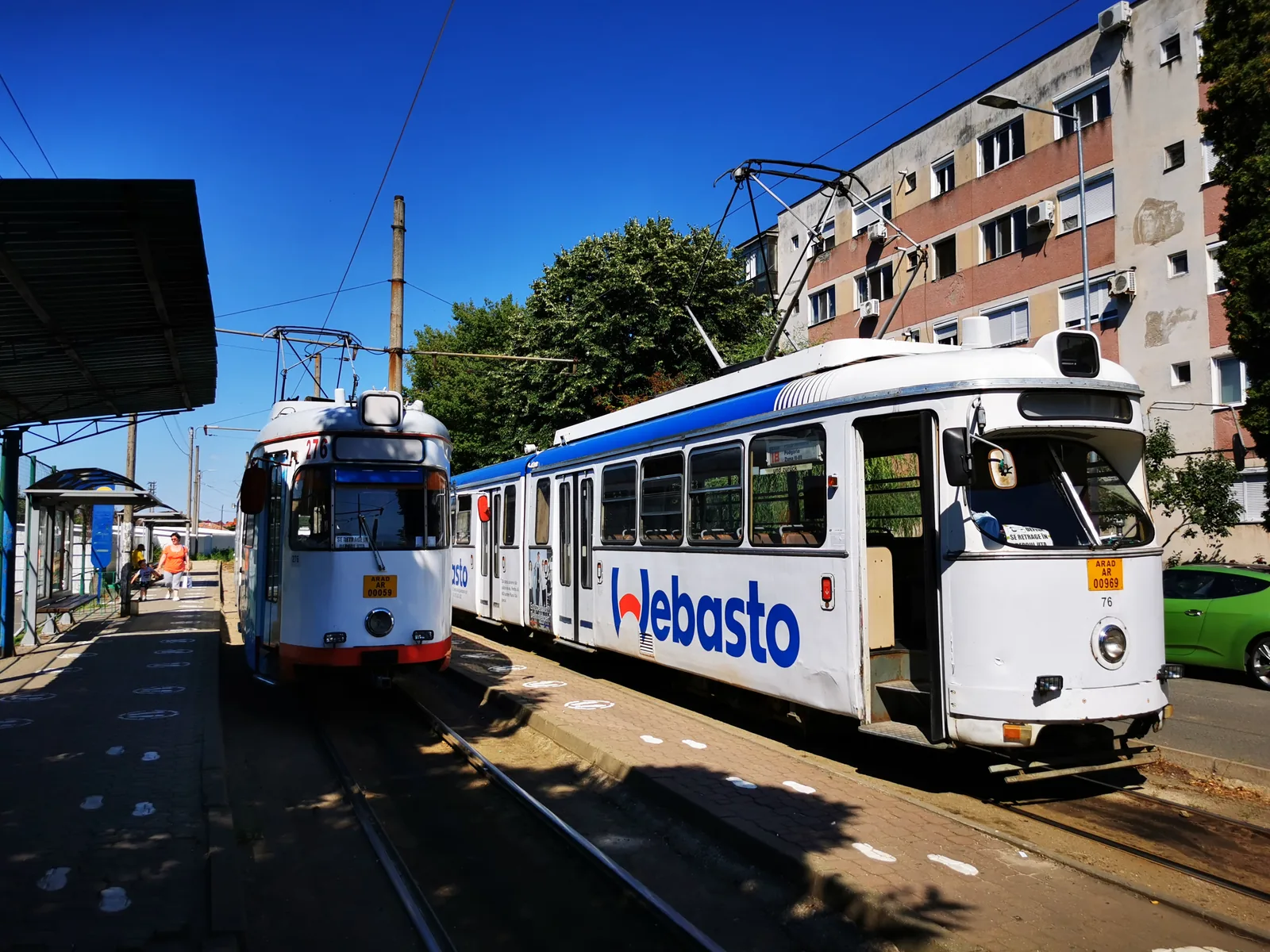
Arad
92 trams in the fleet: 17 GT6, 13 GT8 and M8S, 12 Tatra, 16 Imperio, 34 Imperio Civitas.
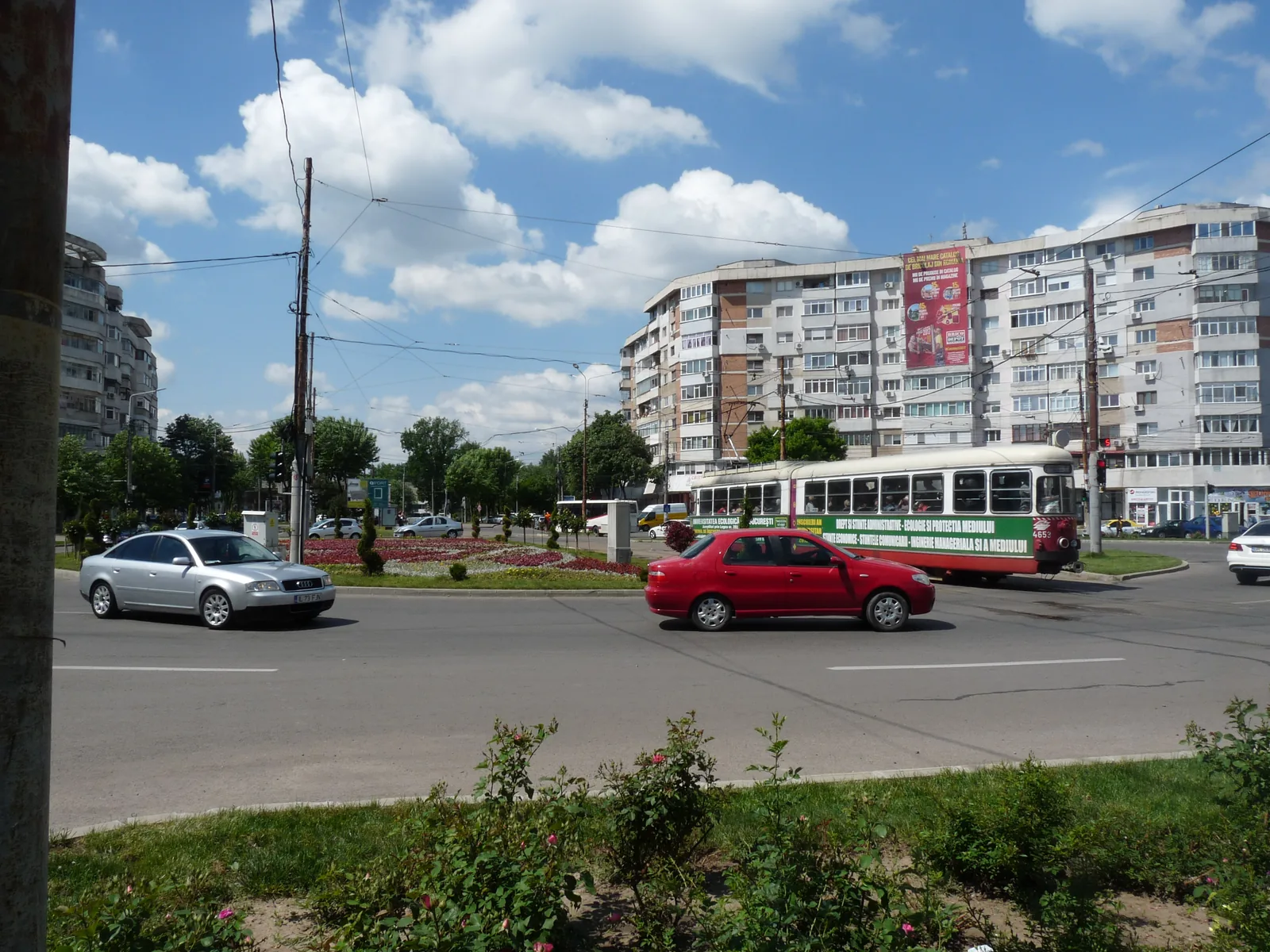
Brăila
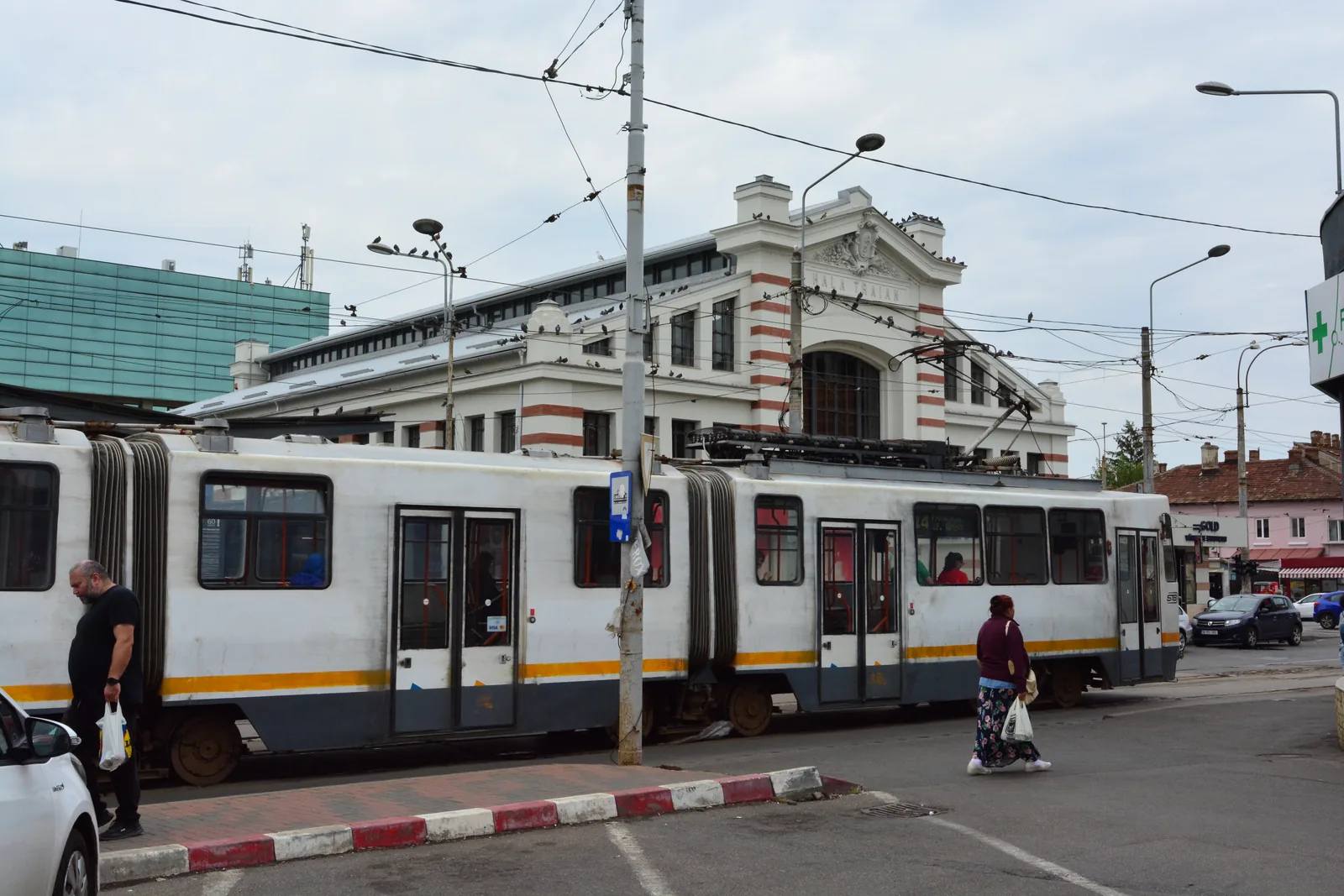
Bucharest
Read next: Caragiale's tram · the Bucharest metro
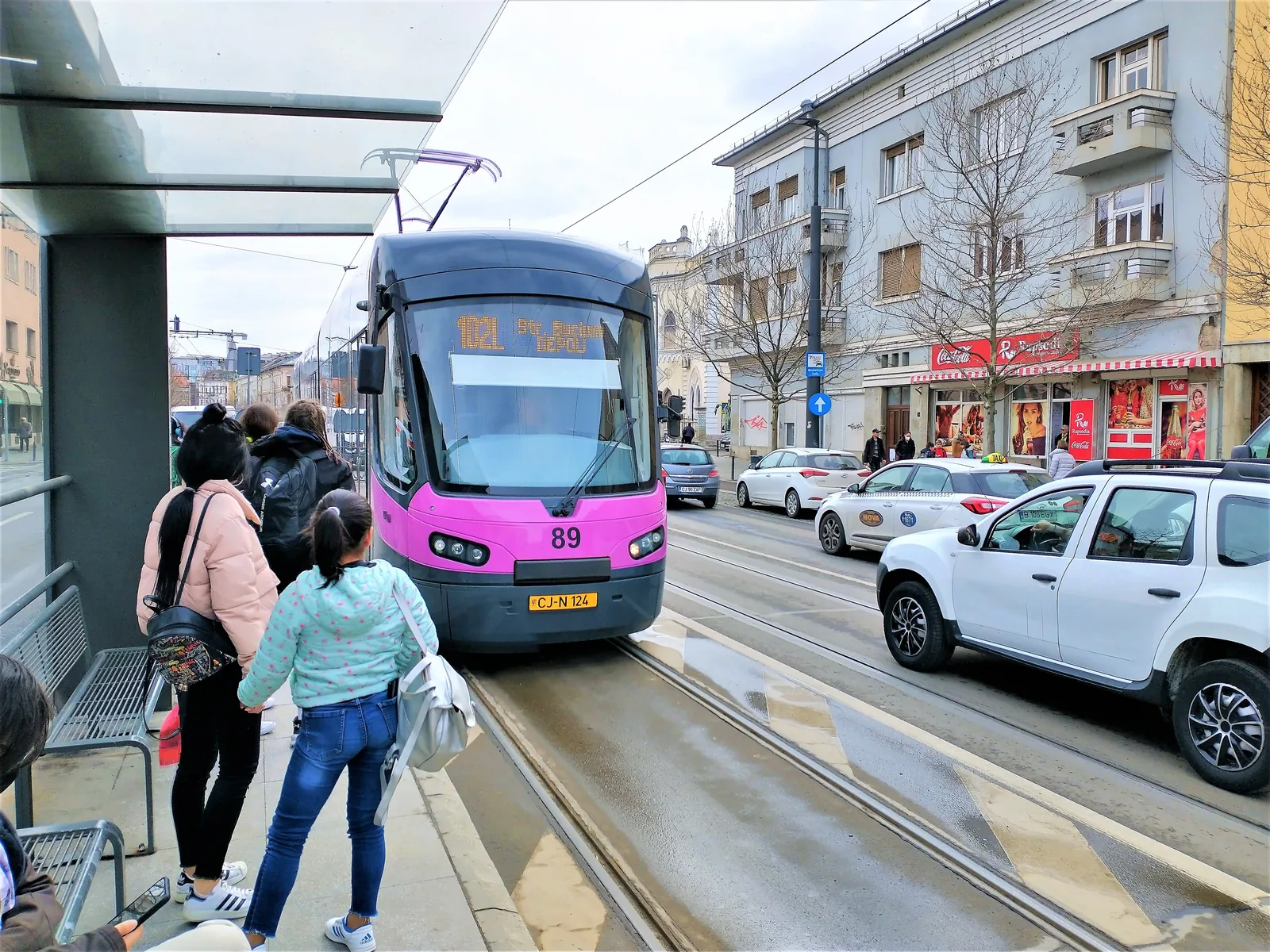
Cluj-Napoca
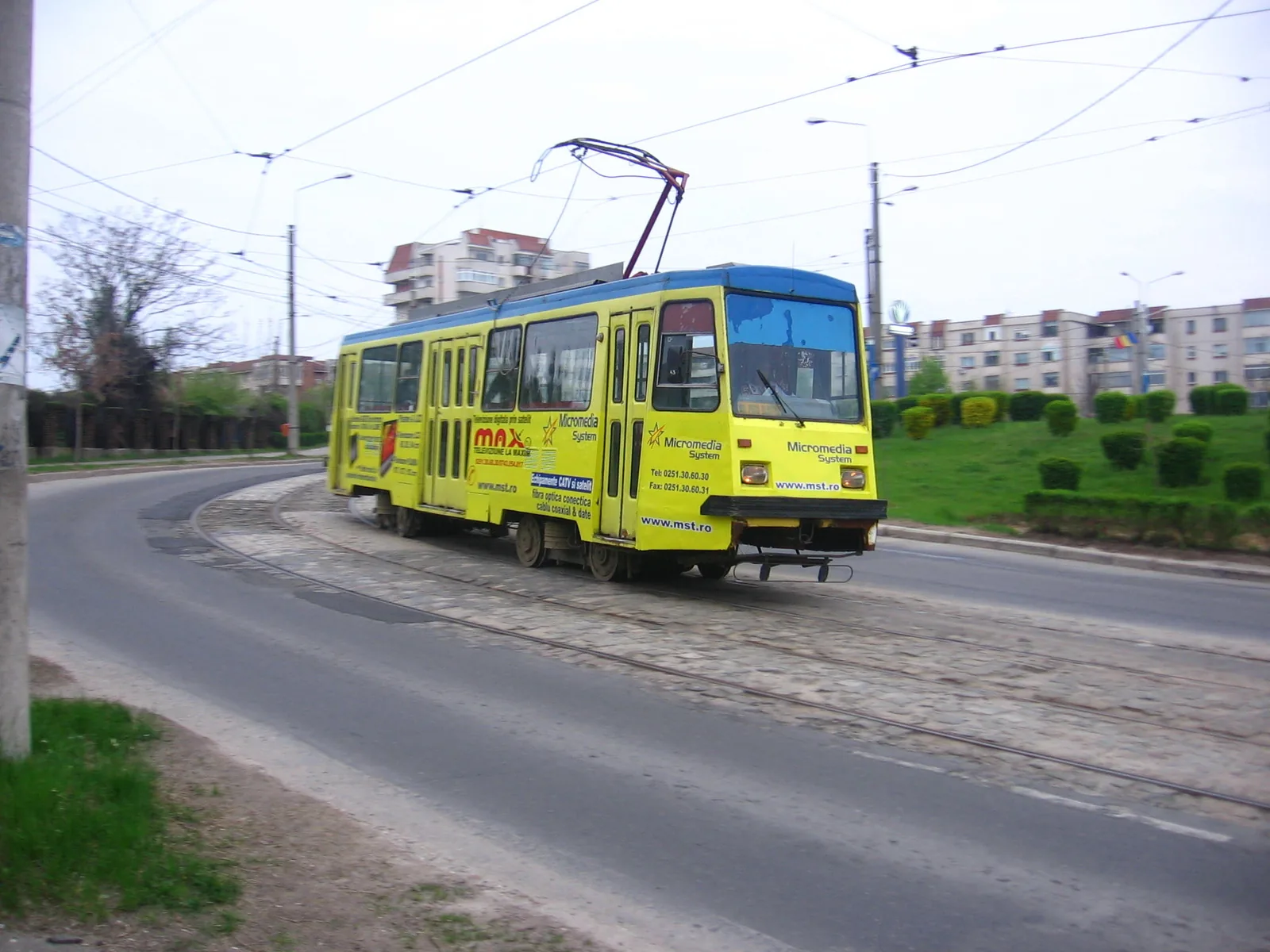
Craiova
5.166 km — the scope of the modernisation project on Calea Severinului.
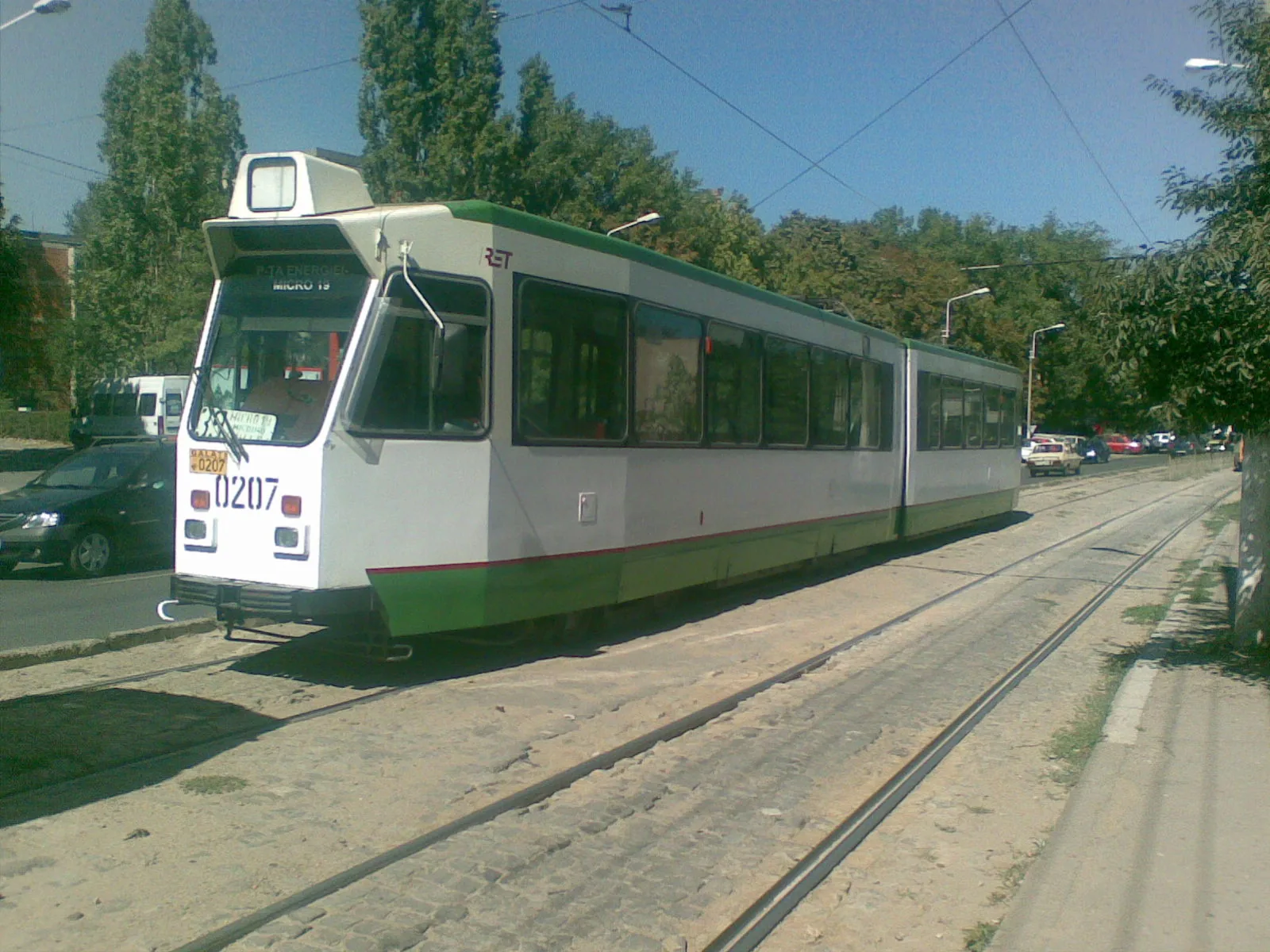
Galați
18 Astra Autentic trams. On the official map, 39B and 41 are buses.
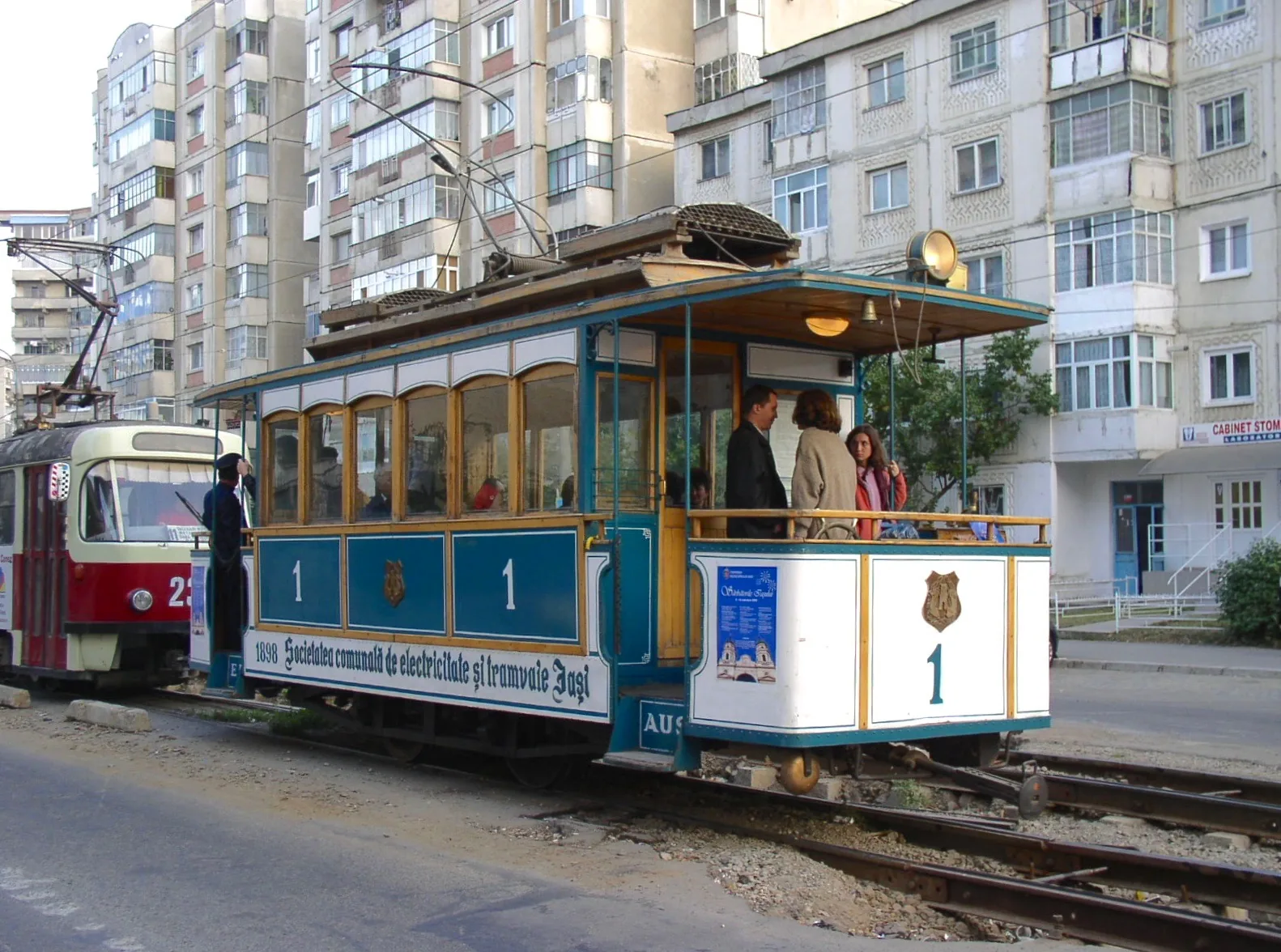
Iași
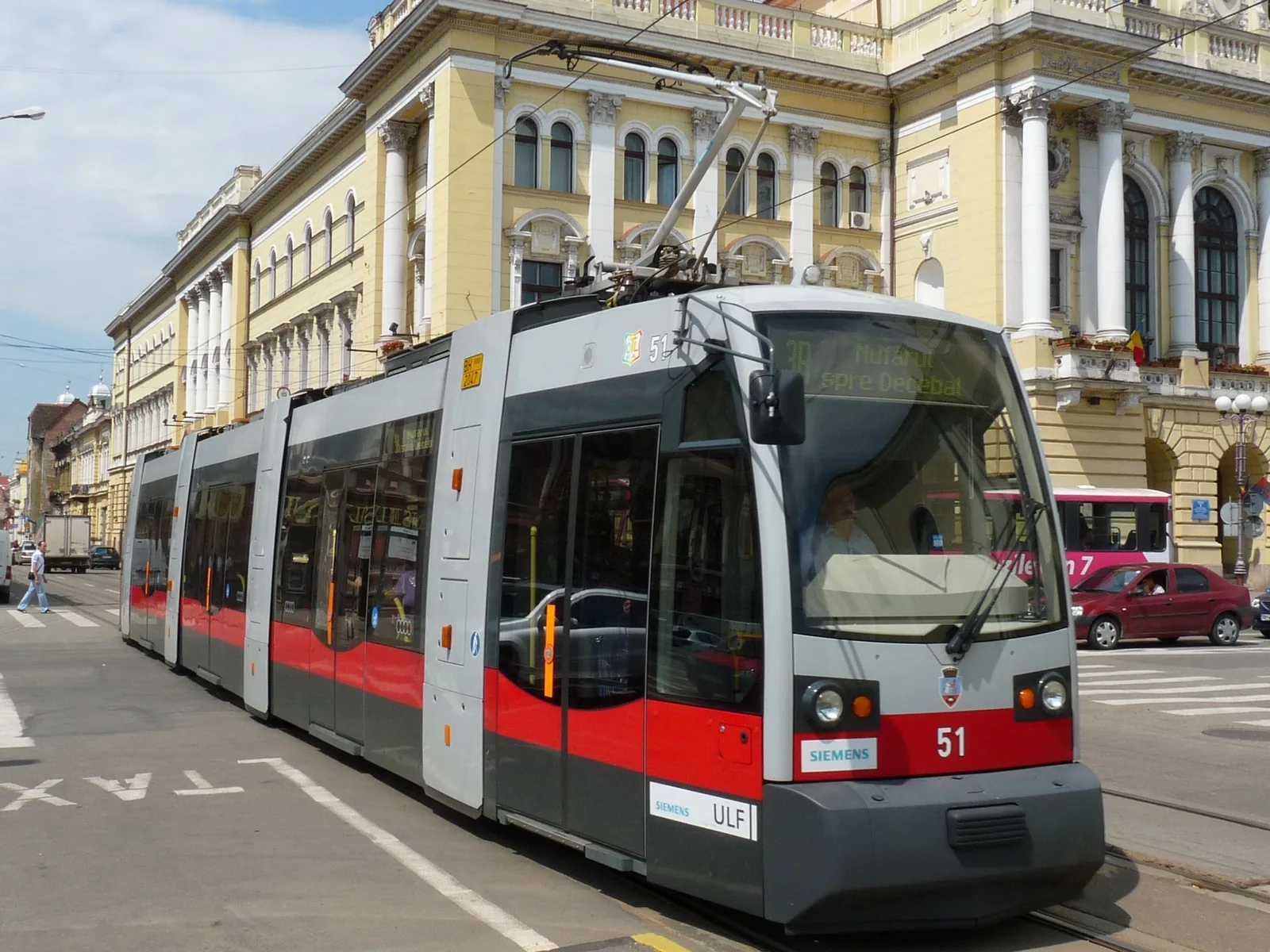
Oradea
A 2023 city hall notice planned the purchase of two trams through the PNRR, with a scheduled deadline of 15 February 2026; the city hall procurement portal lists running contracts for new trams and a new line in September 2026.
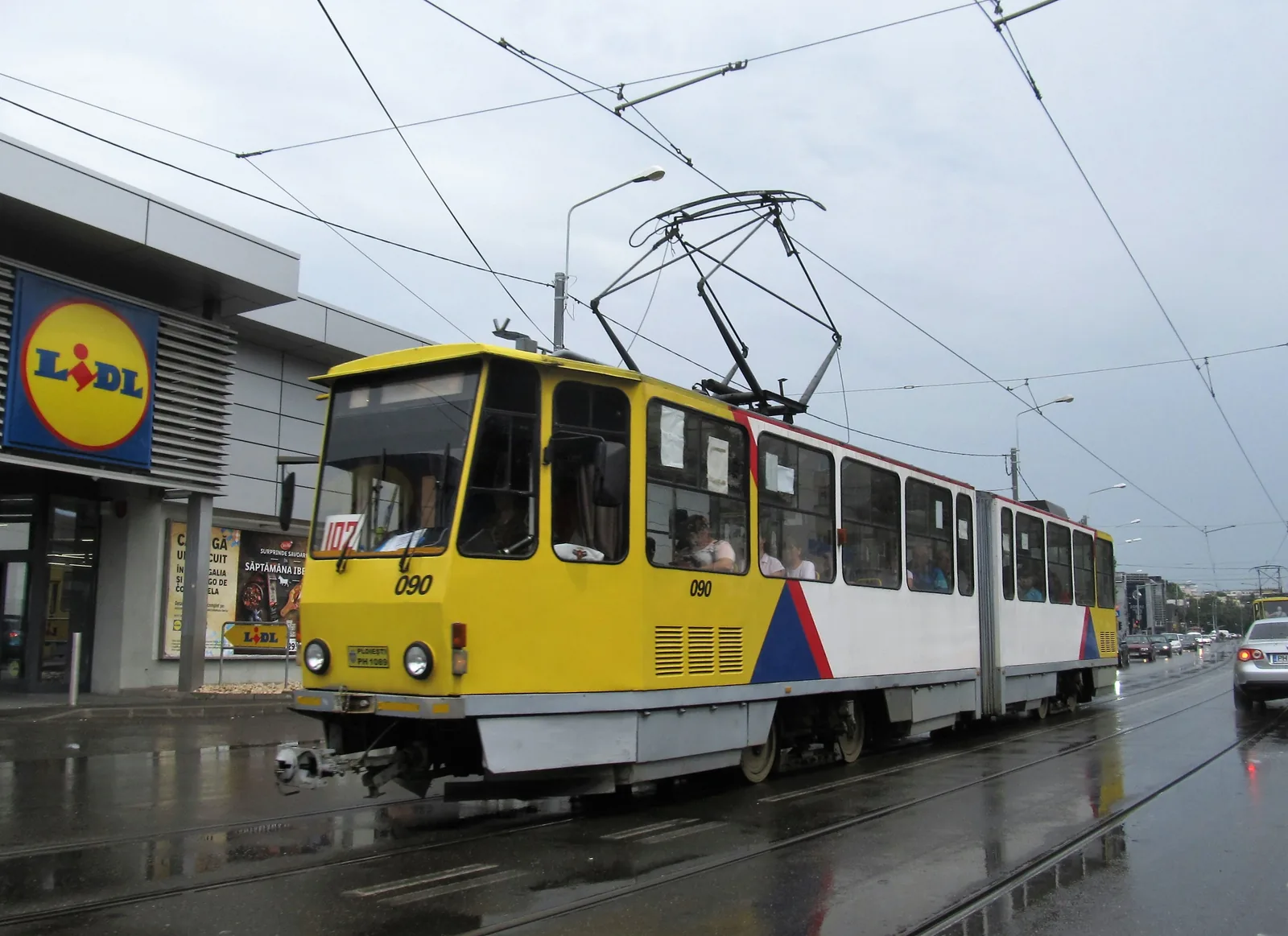
Ploiești
A new fleet through local council decision 695 of 19 December 2025.
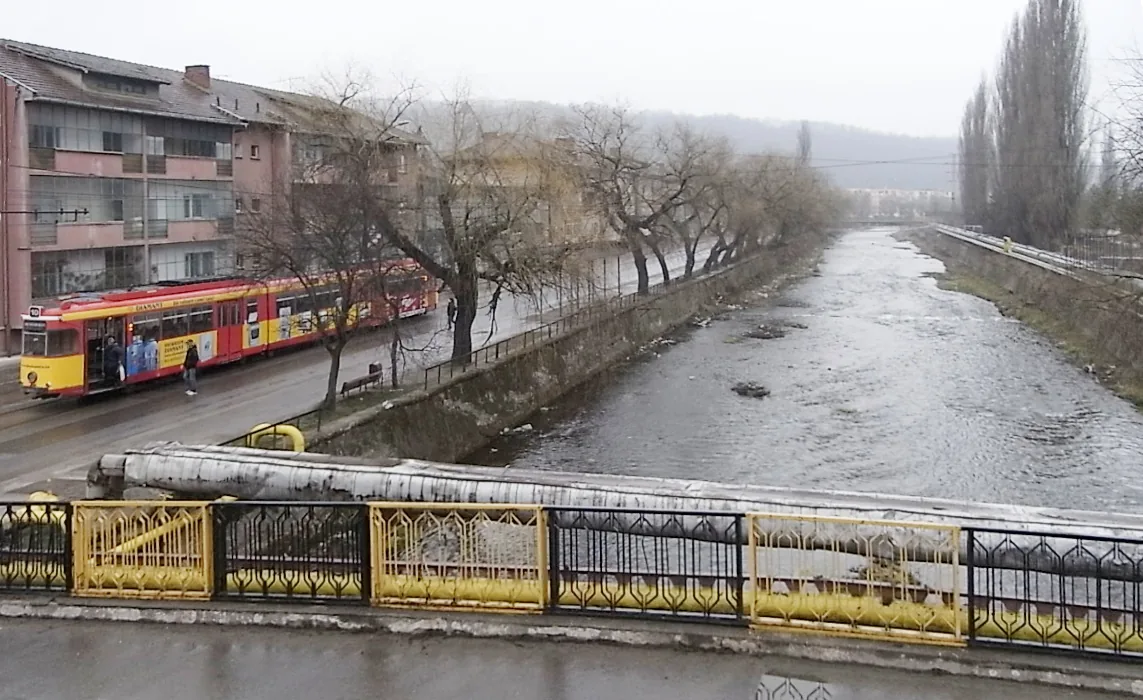
Reșița
Closed in August 2011, reopened on 20 December 2024; first public rides on 1 December 2024.
The closed networks
Which cities gave up their trams?
Five modern networks closed after 1990. Only one came back.
| City | The short story | Years |
|---|---|---|
| Brașov | Line 101 ran until 2006, when trolleybus 8 replaced it. | 2006 |
| Constanța | The lines fell one by one — 100 in 2004, 104 in 2006, 101 and 102 in 2008. | 2008 |
| Sibiu | Regular runs stopped in 2011; a heritage line to Rășinari reopened in January 2018. | 2011 |
| Reșița | Closed in August 2011, reopened on 20 December 2024. | 2011–2024 |
| Botoșani | Opened on 6 September 1991, stopped on 31 July 2020; the definitive end confirmed in 2022. | 1991–2020 |
Botoșani is the special case: of the 15 systems tracked here, it is the only one where passenger trams started after 1990 — and the only one closed for good afterwards. In May 2025 the city hall put the decommissioned track up for auction: 449 slabs with 5,388 metres of rail.
The exact closing days for Brașov and Constanța differ from list to list, so the page prints only the years. Reșița has its own row among today's eleven.
Frequent questions
Short answers
Five questions the page has already answered above, gathered in one place.
How many Romanian cities have trams?
Eleven: Arad, Brăila, Bucharest, Cluj-Napoca, Craiova, Galați, Iași, Oradea, Ploiești, Reșița and Timișoara. The sources for each city are cited below.
Why do some sites say 10 remain?
They start from fourteen cities in 1990, subtract five closed ones and add back reopened Reșița — and get ten. The mistake: Botoșani, opened in 1991, was never in the fourteen base. The full count: fifteen modern networks, minus five closed, plus reopened Reșița, equals eleven.
Which city opened its trams last?
Botoșani, on 6 September 1991, on line 101. Of the 15 systems tracked here, it is the only city where passenger trams started after 1990.
Which city closed and reopened its trams?
Reșița: closed in August 2011, reopened on 20 December 2024, on a new 9-kilometre line between Kaufland Nord and Reșița-Montana.
Do trams still run in Sibiu?
Regular runs stopped in 2011. A heritage line between the Zoo and Rășinari reopened in January 2018.
Behind the scenes
Sources and method
- The eleven operators
- CTP Arad — tram line data file (1B, 1, 3, 6, 7, 15, 16, 18b). [ctparad.ro]
- CTP Arad — vehicle fleet: 92 trams (page updated 21 January 2026). [ctparad.ro]
- Braicar Brăila — timetables for lines 21, 22, 24, 25. [www.braicar.ro]
- STB Bucharest — 2025 activity report: 19 tram lines out of 152 routes. [www.stb.ro]
- STB Bucharest — 2024 statistics: 136 km of double track, 527 vehicles in stock. [www.stb.ro]
- CTP Cluj-Napoca — line 101 timetable, valid from 7 September 2026. [ctpcj.ro]
- RAT Craiova — tram routes 100, 101, 102. [www.rat-craiova.ro]
- Transurb Galați — official map of 17 September 2025: trams 7, 39, 44. [transurbgalati.ro]
- Transurb Galați — vehicles: 18 Astra Autentic. [transurbgalati.ro]
- CTP Iași — the 9 tram routes. [sctpiasi.ro]
- Oradea city hall — November 2023 PNRR notice: 2 more trams, scheduled deadline 15 February 2026. [oradea.ro]
- Oradea city hall — procurement portal: running contracts for new trams and a new line (September 2026). [oradea.ro]
- Oradea city hall — May 2026 notice: “Linia 9 … (fosta linie 8) … liniile 1 şi 3 va fi suspendată pe durata desfășurării lucrărilor”. [oradea.ro]
- Ploiești city hall — 2020 notice: routes 101 (13.0 km) and 102 (10.8 km). [old.ploiesti.ro]
- Ploiești city hall — decision 695 of 19 December 2025: tram fleet renewal. [ploiesti.ro]
- Craiova city hall — Calea Severinului project: 5.166 km, the scope of the modernisation project. [www.primariacraiova.ro]
- SMTT Timișoara — tram line schedules 1–9. [smtt.ro]
- Reșița and Botoșani
- Railway Gazette, 24 January 2025 — trams returned to Reșița on 20 December 2024, after 13 years. [www.railwaygazette.com]
- Urban Transport Magazine — Reșița: first rides on 1 December 2024, revenue service from 20 December. [www.urban-transport-magazine.com]
- PORR — modernising the Reșița tramway (project sheet). [www.porr.ro]
- Eltrans Botoșani — company history: first consist on 6 September 1991, on line 101. [eltransbt.ro]
- Urban Transport Magazine — Botoșani decommissions its tramway: runs until 31 July 2020. [www.urban-transport-magazine.com]
- Railway Gazette — Eltrans Botoșani profile: the definitive end of the tramway confirmed in 2022. [www.railwaygazette.com]
- Botoșani city hall — May 2025 auction notice: 449 slabs with 5,388 metres of rail (archive). [web.archive.org]
- The ten formula in the press
- Club Feroviar, 27 March 2025 — “only 10 of the 14 tram cities remain”. [cfir.ro]
- Economica.net, 28 March 2025 — “only 10 remain” plus the “Botoșani in 1991” list. [www.economica.net]
- Bugetul.ro, 10 April 2025 — “only 10 places still use trams”. [www.bugetul.ro]
- Business24, 2025 — “of the 10 cities where trams still run” (after Profit.ro). [business24.ro]
- Lists and studies (cross-check)
- Club Feroviar, May 2025 — “În România sunt 11 orașe în care circulă tramvaie” (“There are 11 cities in Romania where trams run”: Bucharest, Ploiești, Craiova, Reșița, Timișoara, Arad, Oradea, Cluj-Napoca, Iași, Galați and Brăila). [cfir.ro]
- Wikipedia — List of tram networks in Romania: the same 11 urban networks marked “Prezent” (plus the Sibiu–Rășinari heritage line). [ro.wikipedia.org]
- Wikipedia — List of town tramway systems in Romania: 11 systems with open dates. [en.wikipedia.org]
- Iordache, 2009 — electric transport in Romania: 14 tram cities (2006 data). [forumgeografic.ro]
- Brașov tramway — line 101 until 2006, replaced by trolleybus 8. [ro.wikipedia.org]
- Constanța tramway — network fully dismantled in 2008. [ro.wikipedia.org]
- Tursib — regular Sibiu–Rășinari runs ended 28 February 2011. [en.wikipedia.org]
![[transurbgalati.ro]](https://transurbgalati.ro/includes/img/harti/17sept2025.png)
How this was made
Each of the eleven networks was checked against its operator or its city hall: timetables, network maps, activity reports and council decisions. No figure in the list comes from the press.
Club Feroviar also published the figure eleven, in May 2025, with the same list of cities; the page counted separately, network by network.
The definition: cities where passengers were riding trams. Botoșani, with works started in 1990 and the first tram in September 1991, belongs to the modern total (15), not to the 1990 base (14).
The map shows the state at the end of each year; for Brașov and Constanța only the closing years are printed, because the lists contradict each other on the days.
What is missing
- Network lengths and tram fleets are incomplete across the cities, so the page compares no network sizes.
- The Oradea line list follows the May 2026 city hall notice (line 9, with 1 and 3 suspended); the operator's site was down when checked.
- Whether the Sibiu–Rășinari heritage line runs in 2026 is unknown.
- The opening years of the eleven active networks were not researched for this edition and do not appear on the page.