Paris–Istanbul, 1883 – 2009
What was the Orient Express doing in Romania?
In 1882 a trial train ran 2,000 km from Paris to Vienna; in 1883 the Express pushed on to Giurgiu and the Danube ferries. For 126 years the name crossed Romania – until the timetables gave up in 2009.
The Express in four chapters
Representative route
From Paris to Istanbul, three ways
On 5 June 1883 the first Express d'Orient left Paris for Vienna; by October it reached Giurgiu, and by 1889 it ran direct to Constantinople. In 1919 the Simplon route redrew the map south of the Alps – and in 1977 Istanbul saw the last through train.
Below, the Express in four chapters – the first train, the direct, the Simplon, and what stayed. The routes on the map are representative, drawn through the verified places of the story.
Chapter I
The first
1882 – 1883 · 1882–1883, the trial
- Chapter
- 1882 – 1883
- The trial
- 10 October 1882, Paris–Vienna
- The premiere
- 5 June 1883
- Giurgiu
- 4 October 1883
Georges Nagelmackers, a Belgian banker's son, had seen Pullman cars in America and wanted them in Europe. On 10 October 1882, just after half past six in the evening, his Train Éclair de luxe left Paris for Vienna: 2,000 kilometres of trial run with invited guests, seven cars, 101 tons – and a first menu of oysters, turbot, game and chocolate pudding.
The trial worked. On 5 June 1883 the first Express d'Orient left Paris for Vienna via Munich; on 4 October it pushed on to Giurgiu, on the Danube. There the railway ended: passengers crossed by ferry to Ruse, took another train to Varna, and boarded an Austrian Lloyd packet for Constantinople – 83 hours and 30 minutes after leaving Paris.


The Romanian crossing alone ran 2,627 kilometres of rail: Szeged, Jimbolia, Timișoara, Caransebeș, Vârciorova, Craiova, Piatra Olt, Pitești, Bucharest, Giurgiu, Smârda. For two years Romania was not a stop on the Orient Express – it was the better part of the journey.
Meanwhile Vienna stayed the terminus for four months; the Romanian timetable only began in October.
Chapter II
The direct
1889 – 1914 · 1889–1914, no more ferries
- Chapter
- 1889 – 1914
- Belgrade
- from 1885, via Niš–Plovdiv
- The direct
- 1 June 1889, Paris–Constantinople
- The name
- Orient Express, from 1891
The ferries were slow, so in 1885 a new route opened south of the Danube: Vienna–Belgrade–Niš by rail, carriage to Plovdiv, rail again to Istanbul. Then the gaps closed one by one, and on 1 June 1889 the first direct train left the Gare de l'Est for Constantinople – no ferry, no carriage, one train. In 1891 it was officially renamed the Orient Express.
Romania stayed on the map another way. After Anghel Saligny's bridges over the Danube at Fetești–Cernavodă, the route was extended to Constanța, where Romanian Maritime Service ships waited – the sea leg moved from Varna to the Romanian port.


For a quarter-century the direct train ran unbroken, the red-and-gold Wagon-Lits cars becoming the symbol of the line. Then, in 1914, the war stopped everything; the Simplon tunnel, bored through the Alps in the meantime, was about to redraw the map.
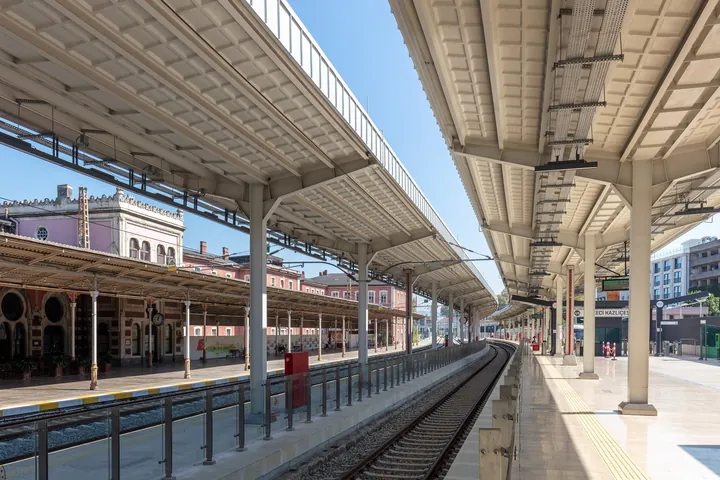
Meanwhile The eastern terminus was Sirkeci, by the Golden Horn; ferries beside it crossed to Haydarpaşa, terminus of the Asian lines.
Chapter III
The Simplon
1919 – 1977 · 1919–1977, the peak
- Chapter
- 1919 – 1977
- The detour
- Paris 1919: no Germany–Austria–Hungary
- The peak
- 1930s: three services
- Last Istanbul
- 19 May 1977
The 1919 Peace Conference drew the new route to bypass the defeated powers – no Germany, Austria or Hungary. Through the Simplon tunnel, Milan, Venice and Trieste, the Simplon Orient Express reached Istanbul; Austria had to accept it by the Treaty of Saint-Germain. Bucharest kept a group of sleeping cars, detached from the main train at Vinkovci.
The 1930s were the peak: three parallel services – the classic Orient Express, the Simplon, and the Arlberg via Zürich and Innsbruck to Budapest, with sleepers onward to Bucharest and Athens. Royalty, diplomats and businessmen filled the restaurant cars; Agatha Christie set her Murder on the Orient Express aboard the Simplon service.
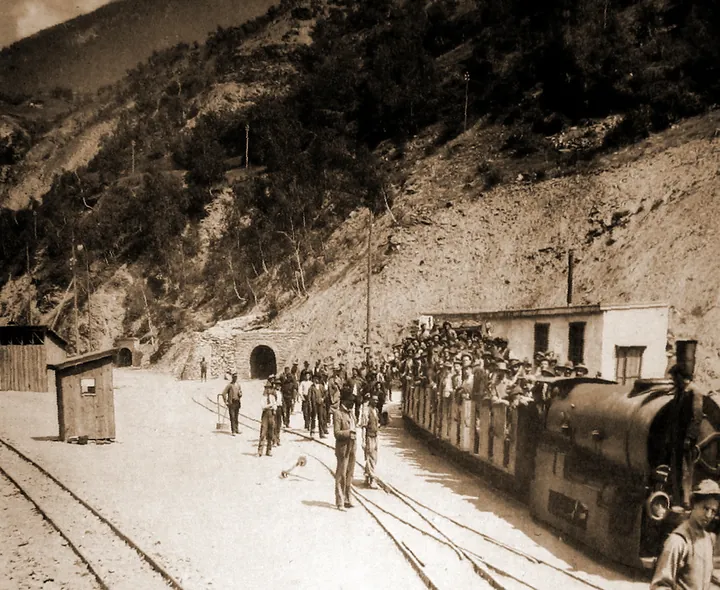

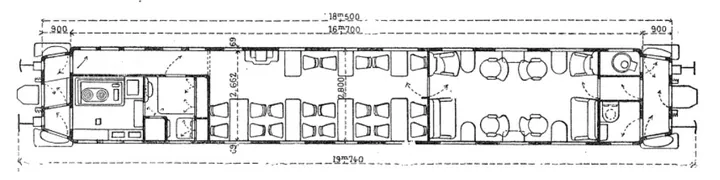

War broke the rhythm again – Munich–Bucharest ran until May 1940, Lausanne–Istanbul until April 1941 – and the Iron Curtain thinned it after 1945, communist railways replacing Wagon-Lits cars with their own. In 1962 the Direct Orient Express took over the name; the last Paris–Istanbul run left on 19 May 1977.
Meanwhile In 1940 the Bucharest sleeping-car group was dropped as the war closed in.
Chapter IV
The trace
1977 – 2026 · 1977–2026, what stayed
- Chapter
- 1977 – 2026
- Bucharest
- Paris–Bucharest until 1991
- Vienna
- only until 2001, Paris until 2007
- The end
- 10–11 December 2009
Istanbul lost the train in 1977, but Bucharest kept it: the Orient Express ran Paris–Bucharest via Vienna and Budapest until 1991, though the through sleeper only lasted until 1982, and seasonally at that. In the summers of 1999 and 2000 a CFR sleeper ran twice a week from Bucharest to Paris – the last Romanian chapter.
The retreat continued: Vienna in 2001, the last Paris departure on 8 June 2007, then Strasbourg–Vienna without the historic numbers 262/263. The last trains ran on 10 and 11 December 2009 – timetables dropped the name days later, a victim, as the obituaries said, of high-speed trains and cut-rate airlines.


The name refused to die. Since 1982 the Venice Simplon-Orient-Express has run restored 1920s cars from Paris to Istanbul – via the Brenner Pass, not the Simplon tunnel – and Accor, which bought half the brand in 2017, plans its own Paris–Istanbul runs for late 2026. The Giurgiu ferry of 1883 is long gone: since 20 June 1954 the Friendship Bridge carries the rails across the Danube.
Meanwhile Tickets on the revived luxury train start past $3,000 a person – nostalgia, priced accordingly.
The Express quiz
Four questions about the trial, the ferry, the detour and Bucharest. Choose, then check against the sources.
-
1
The trial
The October 1882 trial train ran:
What happened
Paris–Vienna: 2,000 km with invited guests. The 2,627 km came in 1883, with the Giurgiu extension.
-
2
The ferry
In 1883 passengers crossed Giurgiu–Ruse by:
What happened
Ferry: the bridge only opened on 20 June 1954. In 1883 the railway simply ended at the river.
-
3
The detour
The 1919 Simplon route bypassed:
What happened
The defeated powers: no Germany, Austria or Hungary – a condition written at the Paris Peace Conference.
-
4
Bucharest
The through Paris–Bucharest sleeping car ran until:
What happened
1982, and only seasonally: after that the Paris–Bucharest journey meant changing carriages until 1991.
Answer a card to begin.
Seven plates of the Express
Seven images, in the order of the story: the Paris terminus, the cars, Bucharest, the bridge, the tunnel, the staff, Sirkeci.
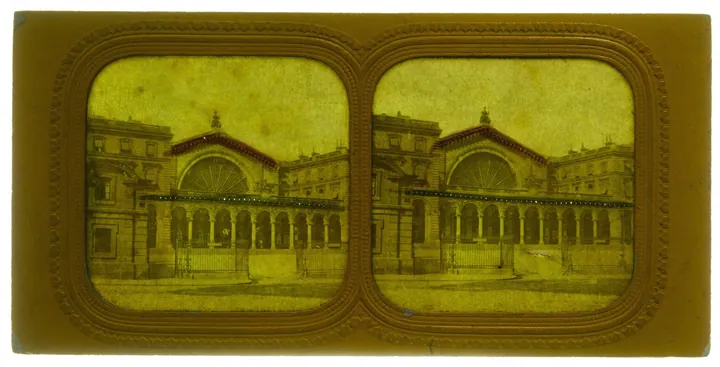
Plate c.1870The Paris terminus
The Paris terminus Anonymous, c.1870 · Wikimedia Commons - The Gare de l'Est in the late nineteenth century, in a stereoscopic plate.
- Every Orient Express left from here, the first on 5 June 1883.
- The trial train left on 10 October 1882, just after 18:30.
Plate 1902The dining car
The dining car Unknown photographer, 1902 · Wikimedia Commons - Wagon-Lits dining car no. 681, photographed in 1902.
- The 1882 trial menu: oysters, turbot, game, chocolate pudding.
- Restaurant cars made the line's reputation in the 1930s.
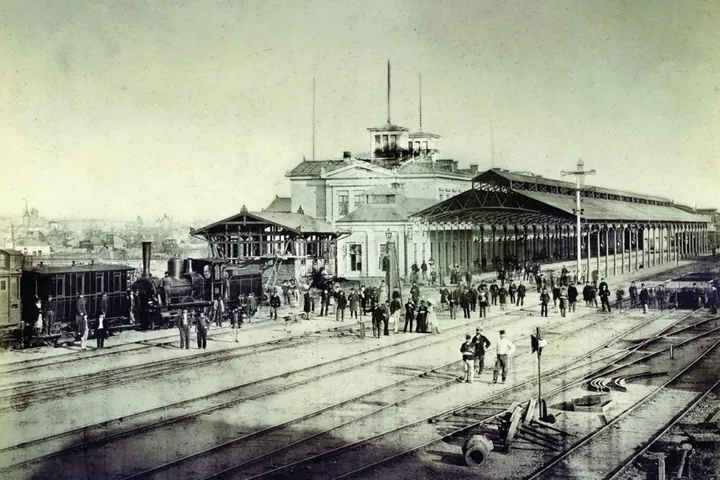
Plate 1872Bucharest's gate
Bucharest's gate Carol Szathmari, 1872 · Wikimedia Commons - Gara de Nord at its inauguration, 25 September 1872.
- Photographed by Carol Szathmari for the CFR Museum.
- The Express passed through from October 1883.
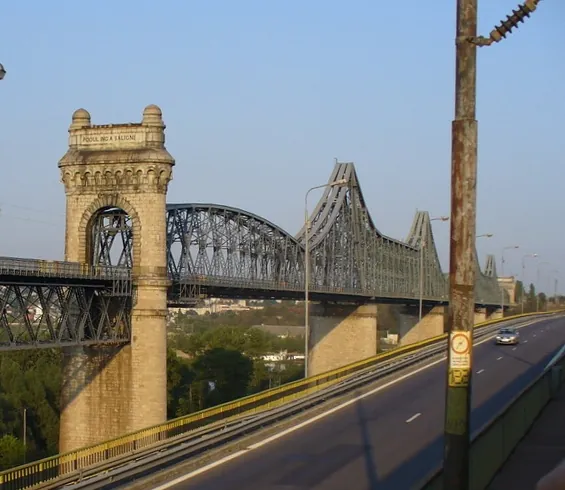
Plate 2007Saligny's bridge
Saligny's bridge jeffwarder, 2007 · Wikimedia Commons - The old Saligny bridge at Cernavodă, photographed in 2007.
- After Fetești–Cernavodă the route reached Constanța.
- Romanian Maritime Service ships waited there.
Plate c.1900Through the Alps
Through the Alps Unknown photographer, c.1900 · Wikimedia Commons - The Simplon tunnel's north portal at Brig, under construction around 1900.
- Some 20 km long; the southern route opened in 1919.
- The Peace Conference drew it past the defeated powers.
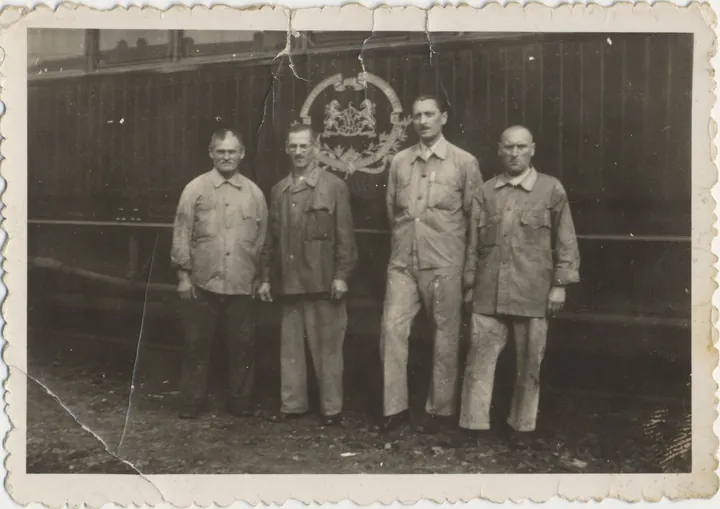
Plate 1938The staff
The staff Unknown photographer, 1938 · Wikimedia Commons - Wagon-Lits staff before a company car in 1938.
- The CIWL lions on the carriage behind them.
- Three services ran in parallel that decade.
Plate 2024The Golden Horn terminus
The Golden Horn terminus Diego Delso, 2024 · Wikimedia Commons - Sirkeci terminal in Istanbul, photographed in 2024.
- The eastern terminus since the first direct train of 1889.
- Ferries beside it crossed to Haydarpaşa, terminus of the Asian lines.
Photographs via Wikimedia Commons (public domain, CC0, or CC BY-SA with credit). Dates are plate references.
The Express in six numbers
Every figure below comes from the cited histories. The years are the line's spine, 1882 to 2009.
- 1,882
- the trial train runs
- 1,883
- the first Express d'Orient
- 1,889
- the first direct to Constantinople
- 1,919
- the Simplon route opens
- 1,977
- the last Paris–Istanbul run
- 2,009
- the last trains run
Three things people get wrong
The Orient Express was a single train
False: at the 1930s peak three services ran in parallel – the classic Orient Express, the Simplon Orient Express and the Arlberg Orient Express – plus Calais–Paris sleepers at the far end.
It ran to Istanbul until 2009
False: the last Paris–Istanbul run left on 19 May 1977. The name survived to December 2009, but on ever shorter legs – Bucharest, Budapest, Vienna, Strasbourg.
The revived train follows the Simplon route
False: the Venice Simplon-Orient-Express runs Paris–Istanbul via the Brenner Pass, not the Simplon tunnel – the name kept the romance, not the geography.
Sources and methods
The story follows the Orient Express histories (English and Romanian) and the Danube Bridge history; the 1977 and 2009 dates are the timetabled last runs. All eight images are public domain, CC0 or attribution-licensed CC BY-SA, via Wikimedia Commons.
Day-dates are New Style throughout; the line's own timetables supply the hours. City names follow the period – Constantinople before 1930, Istanbul after.
Menus, compositions and anecdotes beyond the cited histories are unverified here – so none is claimed. The 2026 Accor revival is a stated plan, not a fact.
The first
- The 10–14 October 1882 test train: Paris–Vienna, 2,000 km, the oyster-and-chocolate-pudding menu
- The first Express d'Orient, 5 June 1883, Paris–Vienna via Munich; extended 4 October 1883 to Giurgiu–Smârda
- The 1883 Romanian crossing: Timișoara–Craiova–Pitești–Bucharest–Giurgiu, 2,627 km; the Giurgiu–Ruse ferry, the Varna train, the Lloyd packet; 83 hours 30 minutes
The direct
The Simplon
- Simplon 1919: Paris–Milan–Venice–Trieste–Istanbul, set at the Peace Conference to bypass the defeated powers; the Bucharest group detached at Vinkovci
- The 1930s peak: three parallel services, Calais–Paris sleepers; Munich–Bucharest until May 1940
- Direct Orient Express 1962; the last Paris–Istanbul run 19 May 1977; the last Simplon 26 May 1962
- Agatha Christie set Murder on the Orient Express aboard the Simplon Orient Express
The trace
- Paris–Bucharest until 1991, the through sleeper only until 1982; CFR 1999–2000; Vienna 2001; the last Paris departure 8 June 2007
- Strasbourg–Vienna 2007–2009 (without numbers 262/263); the last trains 10–11 December 2009
- Venice Simplon-Orient-Express 1982 (Belmond, via the Brenner, not Simplon); Accor 2017, Paris–Istanbul in late 2026
- The Giurgiu–Ruse bridge, opened 20 June 1954 (the Friendship Bridge): the 1883 ferry crossing ended
Images
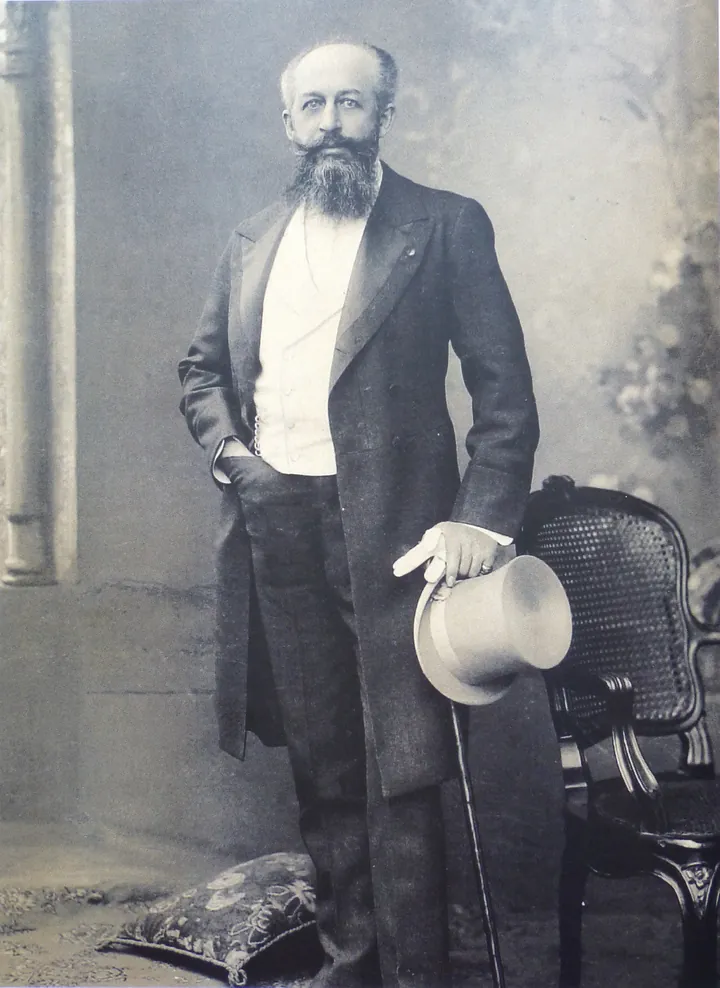
- Nadar · Wikimedia Commons
- Anonymous, c.1870 · Wikimedia Commons
- Carol Szathmari, 1872 · Wikimedia Commons
- jeffwarder, 2007 · Wikimedia Commons
- Unknown photographer, c.1900 · Wikimedia Commons
- Unknown photographer, 1902 · Wikimedia Commons
- Diego Delso, 2024 · Wikimedia Commons
- Unknown photographer, 1938 · Wikimedia Commons