A JOURNEY IN FIVE FORMS
You say Easter. Most of Europe says pascha.
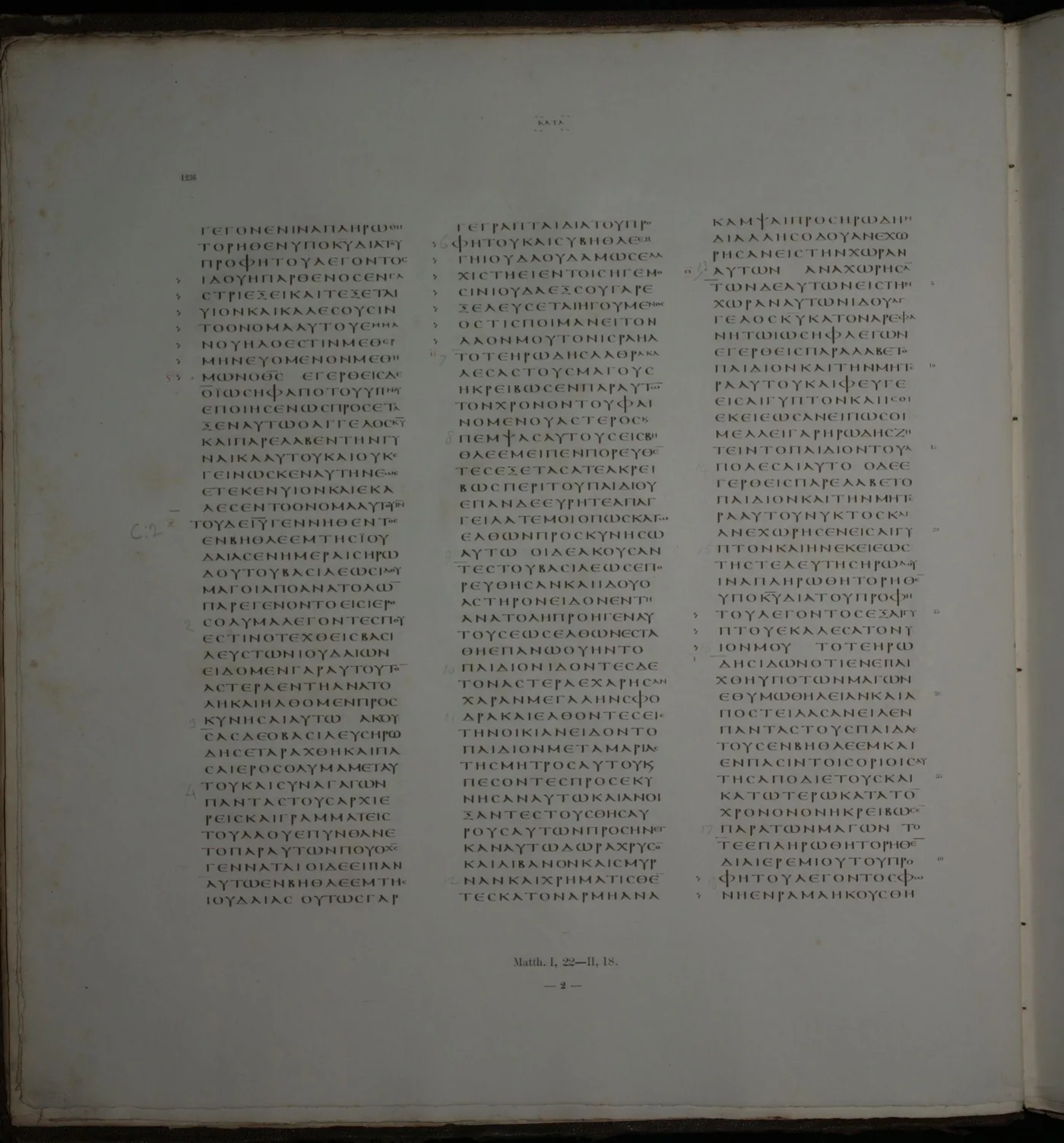

Romanian Paște comes from Hebrew pesach, through Aramaic, Greek and Latin — a three-millennium story, from the Exodus night to this year's Easter. The feast's date survived the Quartodeciman wars and the city of Nicaea, and the hinge is a monk from Dobruja, Dionysius Exiguus, who numbered the years of our era.
- pesach → Paște
- five forms, a single word
- 325
- Nicaea — the feast that lost its minutes
- 525
- a monk from Dobruja starts counting the years
The word in the five forms of its journey:
- פֶּסַח Hebrew
- פִּסְחָא Aramaic
- ΠΆΣΧΑ Greek
- PASCHA Latin
- PAȘTE Romanian
- THE EXODUS
- NICAEA · 325
- ROME · 525
- TODAY
CHAPTER 1 · EGYPT
A night in Egypt
The name begins as a hurried command: one lamb, one night, one mark on the door. What followed — the passing over — stayed in the word.
That night, every household takes a lamb — chosen on the tenth day of the month (Ex. 12:3), slaughtered on the fourteenth, at twilight (12:6). The blood marks the doorposts and lintel; the meat is eaten in haste, with unleavened bread and bitter herbs, sandals on and staff in hand (12:11).
The promise hangs on one verb: pasach — “to pass over, to spare”. “When I see the blood, I will pass over you” (12:13, our rendering). The feast remains “the LORD's Passover” (12:11), “a lasting ordinance” (12:14).
One word, three senses
- The sacrifice
- Ex. 12:27 the Passover sacrifice to the LORD
- The victim
- Ex. 12:21 the lamb slaughtered by each household
- The festival
- Lev. 23:5 the 14th day of the first month, at evening
The three senses follow Brown–Driver–Briggs (H6453).


CHAPTER 2 · THE ROAD
The word travels
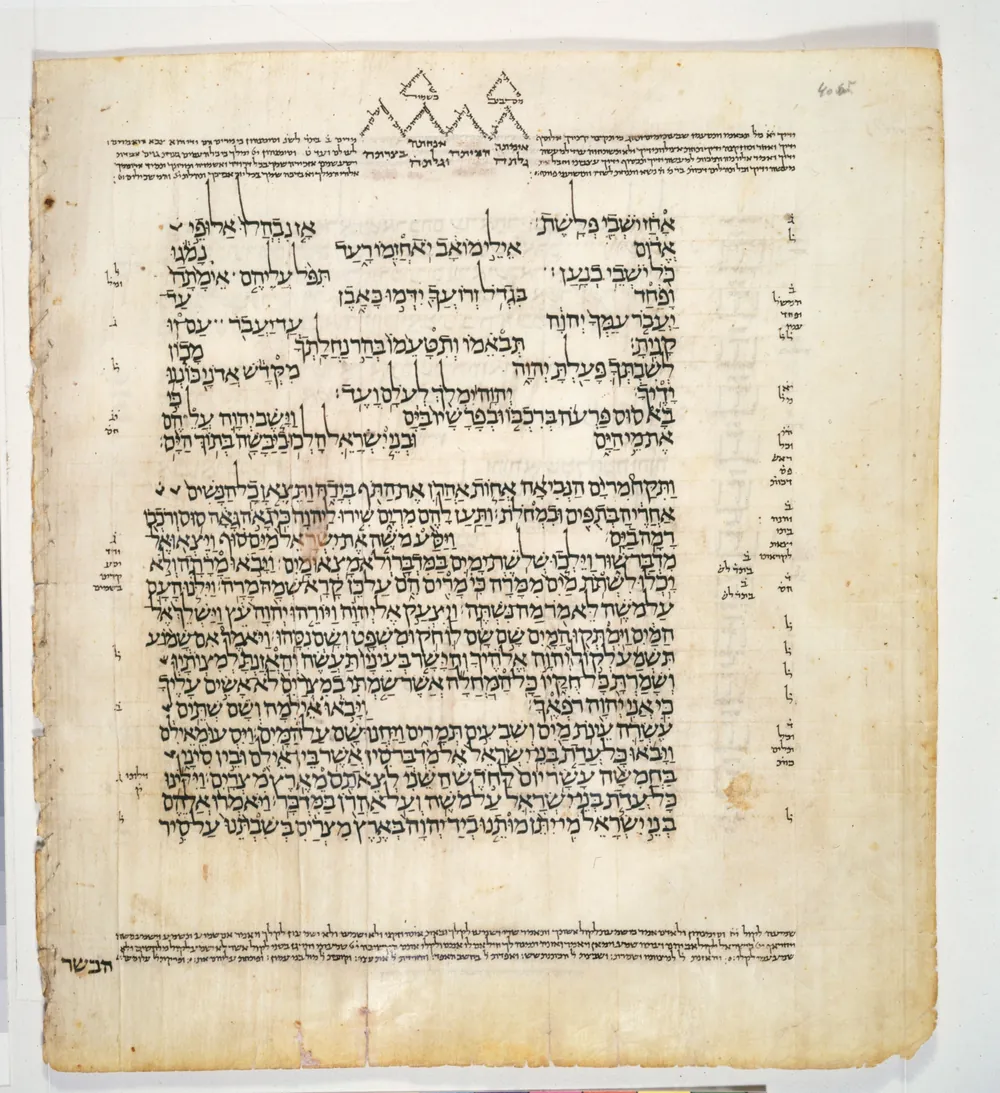
From Jerusalem to Alexandria, from Rome to the Romanian lands: five stops, five forms, no meaning lost on the way.
Jerusalem
Hebrew and Aramaic: pesach → pascha'
Alexandria
the Septuagint's Greek: πάσχα
Rome
the Vulgate's Latin: pascha
the Romanian lands
Romanian: Paște
The map is small because the story is a word, not an army: four stops, each in the dictionaries.
The chain, link by link
פֶּסַח
pesach · Hebrew
“passing over” — from the verb pasach
BDB H6453 ← H6452
פִּסְחָא
pascha' · Aramaic
the form that enters Greek
Strong G3957: “of Chaldee origin”
ΠΆΣΧΑ
pascha · Greek
the Septuagint “constantly uses the Chaldean form”
Thayer, G3957
PASCHA
pascha · Latin
“post biduum pascha fiet” (Mt. 26:2, Vulgate)
DEX: “Lat. pascha, -ae”
PAȘTE
Paște · Romanian
the regular outcome of Lat. Paschae
DER: Pușcariu 1283; REW 6264

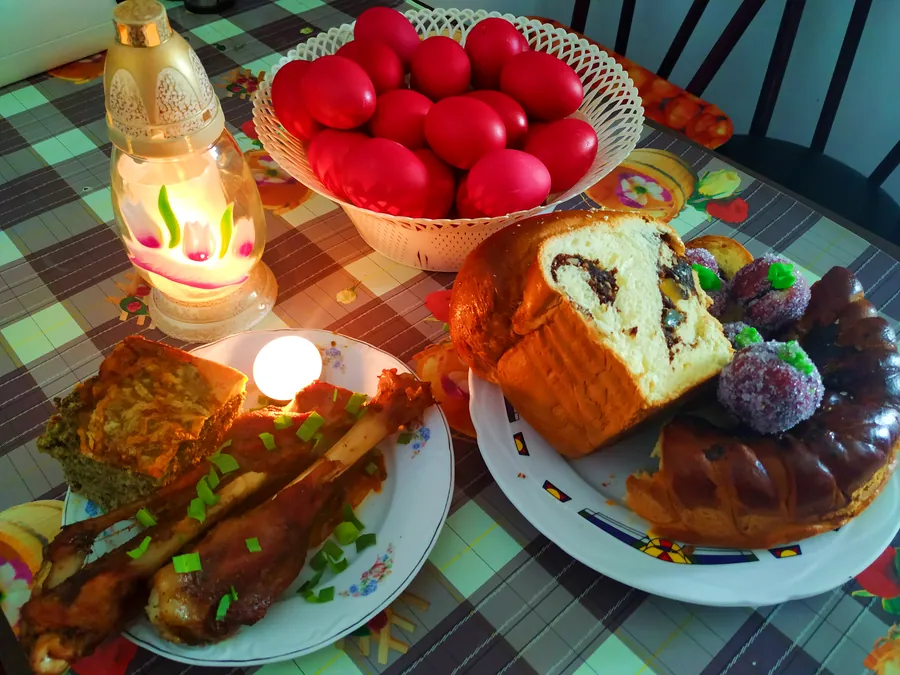

The dictionary siblings
“Lat. Paschae…, cf. it., cat. pasqua, logud. paska, prov. pasca, fr. pîques, port. páscoa, alb. paskë, ngr. πάσχα.” (DER, in the dictionary's spelling)
French now writes pâques — the sense is the same: the whole of Latin Europe, plus Greek and Albanian, keeps pascha.
The plural turned singular
“Rezultatul normal, Paște, a fost considerat ca un pl. f., de unde sing. n. Paște și de aici pl. Paști.” (DER) In short: the inherited form sounded like a plural, so the language rebuilt a singular — and from it, a new plural.
CHAPTER 3 · THE DATE WARS
The feast that lost its minutes
Some kept Easter on 14 Nisan, whatever the weekday; others, on Sunday. Two centuries of quarrel, one ecumenical council — and not one surviving line about the chosen day.
14 Nisan
whatever the weekday
The churches of Asia, after John's tradition: the exact day, neither adding nor taking away.
Sunday
the day of resurrection
Rome and most churches: Easter on the Sunday after the paschal full moon.
c. 155
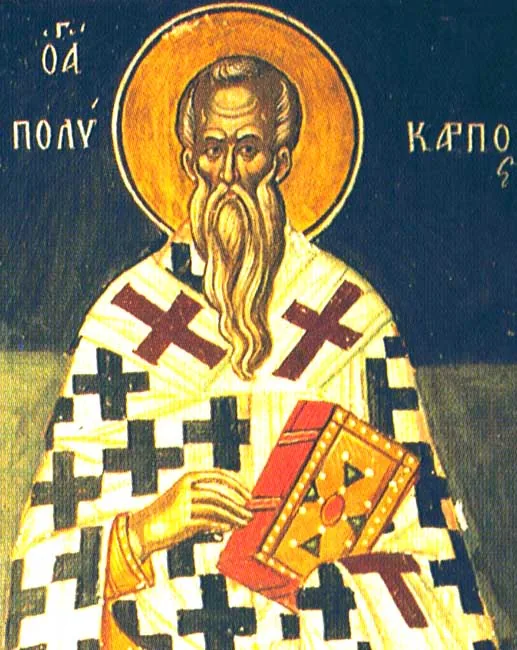
Polycarp and Anicetus: peace
“When the blessed Polycarp was at Rome in the time of Anicetus… they immediately made peace with one another, not caring to quarrel over this matter.” Anicetus yielded the Eucharist in church to Polycarp — “and they parted from each other in peace” (Eusebius, H.E. V.24).
c. 193
Victor and Polycrates: rupture
Polycrates of Ephesus: “We observe the exact day; neither adding, nor taking away.” Victor of Rome “immediately attempted to cut off from the common unity the parishes of all Asia… and declared all the brethren there wholly excommunicate.” Irenaeus — the peacemaker — rebuked him (Eusebius, V.24).
325
Nicaea: agreement without text
The council asks all for “one and the same day”, but the 20 surviving canons never say which. The agreement is known from letters, not from law.
The Eusebius passages are quoted from the NPNF translation.
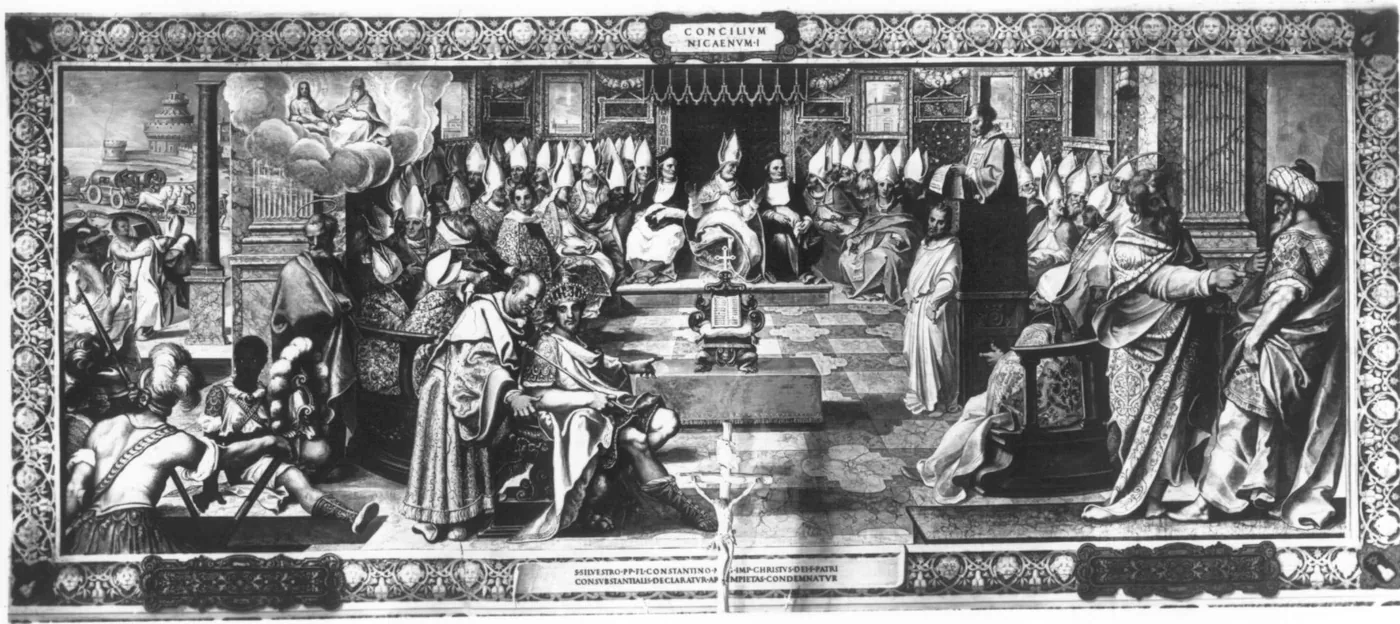


The 20 canons — with the hole showing
None says when Easter falls. Canon 20 mentions the feast a single time — for kneeling:
- The castrated and eunuchs in the clergy
- Neophytes hastily ordained
- Clergy living with women
- The election of bishops
- The excommunicated; synods twice a year
- The precedence of Alexandria, Rome, Antioch
- The honour of Jerusalem's bishop
- Receiving the Novatians
- Men ordained without examination
- Lapsed men ordained unknowingly
- Penance for those who lapsed under Licinius
- Men returned to the army
- The viaticum of the dying
- Lapsed catechumens
- Clergy moving from city to city
- Priests deserting their church
- Usurious clergy
- Deacons overstepping
- Rebaptizing Paulianists; deaconesses
- Standing prayer — the feast's only mention
“…there are certain persons who kneel on the Lord's Day and in the days of Pentecost… it seems good to the holy Synod that prayer be made to God standing.” (Canon 20, NPNF)
The letter that survived
“…this feast ought to be kept by all and in every place on one and the same day.” (Constantine, in Eusebius, Life of Constantine III.18, NPNF)
The letter lists the churches already united: Rome, Africa, Italy, Egypt, Spain, the Gauls, Britain, Libya, Greece, Asia, Pontus, Cilicia.
The rest of the letter holds harsh attacks on the Jews — recorded here as fact, never quoted.
The second proof: the synodal letter to the Egyptians. “…henceforth to celebrate the said most sacred feast of Easter at the same time with the Romans… and all those who have observed Easter from the beginning.” (NPNF)
No formula for the reckoning there either.
CHAPTER 4 · DOBRUJA → ROME
The monk from Dobruja
Born in Scythia Minor, at work in Rome — and in one row of a table he changed how you count the years, yours included.
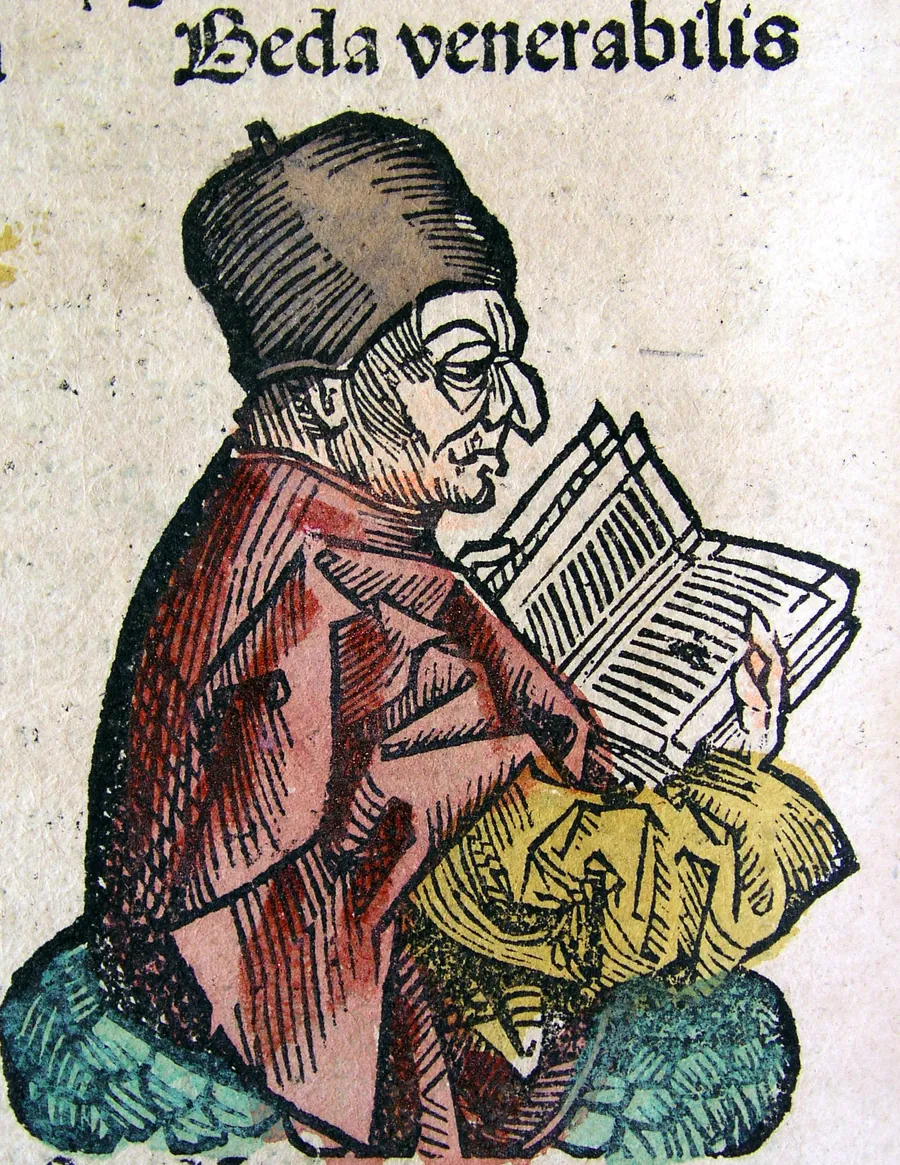
Dionysius Exiguus — Dennis the Small — was born in Scythia Minor (today's Dobruja) around 470 and reached Rome, where a continuator writing in 616 calls him “the most learned abbot of the city of Rome”, and Bede calls him abbas.
In 525, at Pope John I's request, he drew a table of 95 future Easters (532–626) with the reckoning rules (argumenta). He refused to count the years by Diocletian — “a tyrant who persecuted Christians” — and counted them from the incarnation instead: the year 525 “since the incarnation of our Lord Jesus Christ”. How he hit the number, nobody knows.
He dated table rows, not history: he never used the count for any past event, and his table was extended to 721 and carried to Britain and Ireland — the world Bede belongs to, with De temporum ratione (8th c.).
- 95
- future Easters in the 525 table (532–626)
- 532
- the years of the Victorian cycle he knew
- 525
- the year of the table — and of the first “years of the Lord”

CHAPTER 5 · THE EXCEPTION
The corner that renamed it
The strip below says pascha — in a dozen ways, from Lisbon to Reykjavík and Moscow. Two languages do not. Not “the Germanic ones”, as often heard: only English and German.
The map speaks for itself
- Pâques French
- Pasqua Italian
- Pascua Spanish
- Páscoa Portuguese
- Paște Romanian
- Πάσχα Greek
- Пасха Russian
- Pasen Dutch
- påske Danish and Norwegian
- påsk Swedish
- páskar Icelandic
- Pasg Welsh
- Easter English
- Ostern German
Every form above is dictionary-checked (DER for the Romance ones; Nordic, Russian and Welsh dictionaries for the rest). Even English once had Pasch — today only Scots Pace keeps it.
Not the Germanic languages — in our strip, only English and German. Dutch and Scandinavian keep pascha.
Bede, chapter 15
Eostur-monath, qui nunc Paschalis mensis interpretatur, quondam a Dea illorum quæ Eostre vocabatur… a cujus nomine nunc Paschale tempus cognominant.
Bede, De temporum ratione, ch. 15 (“The English months”), 8th c.
“Eosturmonath has a name which is now translated ‘Paschal month’… Now they designate that Paschal season by her name, calling the joys of the new rite by the time-honoured name of the old observance.” (Wallis translation)
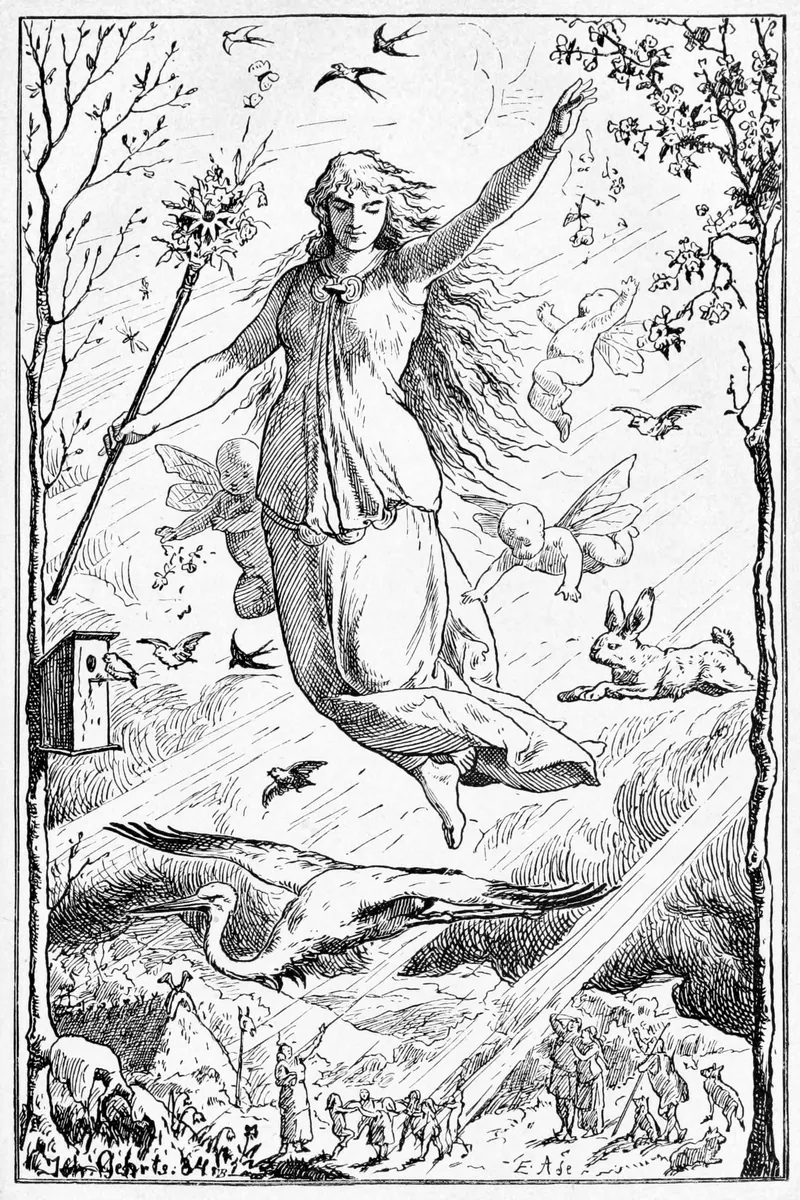
Who was Eostre? Bede is her only story — a goddess with April feasts. Since 1958, over 150 votive inscriptions of the 2nd–3rd centuries to the matronae Austriahenae, found in Germany, lend her a shadow of support: the name surely comes from the austri- stem, akin to Eostre — if Germanic. Beyond that, caution.
The German side fits in one asterisk: in Deutsche Mythologie (1835) Jacob Grimm reconstructs a possible continental goddess *Ostara — the asterisk means “reconstructed, not attested”. The Old High German Easter name, ôstarâ, survived mostly in the plural.


The Easter computer
Pick a year from 1900 to 2100. The engine does the Churches' own reckoning: the first Sunday after the paschal full moon — once in the Julian calendar (Orthodox Easter), once in the Gregorian (Western Easter).
Why do they part? One old rule, two calendars: the Orthodox reckoning runs on the Julian calendar, the Western on the Gregorian.
The civil switch from one to the other — our sibling story, the 1919 calendar.
The table of nearby years
| Year | Western | Orthodox | Gap |
|---|---|---|---|
| 2024 | 31 March 2024 | 5 May 2024 | 35 days |
| 2025 | 20 April 2025 | 20 April 2025 | the same day |
| 2026 | 5 April 2026 | 12 April 2026 | 7 days |
| 2027 | 28 March 2027 | 2 May 2027 | 35 days |
| 2028 | 16 April 2028 | 16 April 2028 | the same day |
2024–2028, reckoned from the same formulas as the engine above.
When do they meet?
Five years, three answers: together (the same day), close (7 days at most) or apart. The verdicts come from the computer above — never from luck.
Round 1 of 5 · 2026
Round 1: Close
Only 7 days: 5 April / 12 April. Nicaea asked for “one and the same day” — the calendars part them by a week.
Round 2 of 5 · 2024
Round 2: Apart
35 days: 31 March / 5 May. One old rule, two calendars — the widest parting.
Round 3 of 5 · 2025
Round 3: Together
20 April, both. Even the corner that renamed it — the English with Easter, the Germans with Ostern — kept it then.
Round 4 of 5 · 2027
Round 4: Apart
35 days: 28 March / 2 May. The tables of Dionysius roll on, and the parting with them.
Round 5 of 5 · 2028
Round 5: Together
16 April, both — the next meeting. The one after: not before 2031.
14
Nisan
The day two centuries quarrelled over: 14 Nisan, whatever the weekday.
525
Anno Domini
The year a monk from Dobruja started counting the world's years from the incarnation.
Three myths, briefly
What is often heard — and what the evidence says.
“Pascha” comes from “to suffer”
No. Greek pascha transliterates Aramaic pascha' — Thayer says so plainly. The likeness to paschein (“to suffer”) is coincidence — nothing more.
Nicaea fixed the Easter formula
No. The 20 surviving canons hold no reckoning rule — canon 20 speaks only of standing prayer. The “first Sunday after the paschal full moon after 21 March” rule is later practice, not a text from Nicaea.
Easter comes from Ishtar
No. Bede ties Easter to Eostre; the Ishtar link is an 1853 invention of the Scottish minister Alexander Hislop (The Two Babylons) — no linguistic foundation, rejected by scholars, reheated as an internet meme after 2000.
Sources: what stands behind each claim
Dictionaries first, old texts in the middle, reckoning last. Each row below is a page claim with its proof.
| ID | Claim | Evidence |
|---|---|---|
| C01 | pesach comes from the verb pasach, “to pass over” | BDB H6453 ← H6452 |
| C02 | three senses: sacrifice, victim, festival | BDB; Ex. 12:27; 12:21; Lev. 23:5 |
| C03–C04 | the lamb on day 10, slaughter on day 14, “the LORD's Passover” | Ex. 12:3–14, 21–27 |
| C05 | founding tradition, not reportage: consensus + historical core | Encyclopaedia Judaica; Faust |
| C06 | Greek pascha is an Aramaic transliteration, not “to suffer” | Strong + Thayer, G3957 |
| C07 | Paște < Lat. pascha; Scriban's Lat < Gk < Heb chain | DEX; Scriban, via dexonline |
| C08 | the DER chain + the Romance series + the rebuilt plural | DER, via dexonline |
| C09 | oldest attestation: “Coresi, 16th c.” (print unidentified) | MDA2: “CORESI, EV. 123” |
| C10 | pască < Mod. Gk. πάσχα; păscălie < Mod. Gk. πασχαλία | Scriban; DER |
| C11 | Polycarp/Anicetus c. 155 peace; Victor/Polycrates c. 193 rupture | Eusebius, H.E. V.24 (NPNF) |
| C12 | Nicaea: independence + uniformity, no reckoning details | First Council, reports (NPNF) |
| C13 | the 20 canons lack the Easter rule (20 = kneeling) | NPNF, the canon text |
| C14 | Constantine's letter: “one and the same day” + the regions | Eusebius, Life III.18–19 (NPNF) |
| C14b | the synodal letter to Egypt: “at the same time with the Romans” | NPNF, the synodal letter |
| C15 | Dionysius: 525, John I, 95 Easters (532–626), years of the Lord | the Dionysius Exiguus article |
| C16 | Easter/Ostern after Eostre; Bede, ch. 15 | Bede via the Ēostre article (Wallis transl.) |
| C17 | in the strip shown, only English and German renamed it; the rest keep pascha | one dictionary per form |
| C18 | the engine: Julian Meeus + Gregorian anonymous; 2028 checked | List of dates for Easter |
| C20 | “a three-millennium story” — cautious phrasing, not a record | from C01+C06–C08, with C05 |
Method, in one sentence: every claim was verified in its cited source before publication — what could not be verified appears only in the cautious form marked below.
Dictionaries
- dexonline: Paște (DEX, DER, MDA2, Scriban)
- BDB: pesach H6453
- Strong/Thayer: pascha G3957
- Exodus 12 (BibleHub)
Old texts
- Eusebius, H.E. V (NPNF)
- The Nicaean canons + synodal letter (NPNF)
- Constantine to the churches (NPNF)
- Vulgate: Mt. 26:2 “pascha”
History and reckoning
- Dionysius Exiguus (EN-wiki)
- Ēostre: Bede, Grimm, Austriahenae, Hislop (EN-wiki)
- The Easter coincidences list (EN-wiki)
- The Septuagint at Alexandria (EN-wiki)
- The 1919 calendar (sibling story)
Type: Fraunces, Newsreader and Atkinson Hyperlegible, under the SIL Open Font Licence; Hebrew, Greek and Cyrillic come from system fonts.