A journey in photographs · 1854–2026
Romania in photographs: 35 real frames, 1854–2026
Romania was photographed in wartime as early as 1854, among the first countries in the world, and the camera never stopped. This page runs 172 years through 35 real photographs: vanished streets, a drowned island, two wars, a revolution, and the same Bucharest square 152 years apart.
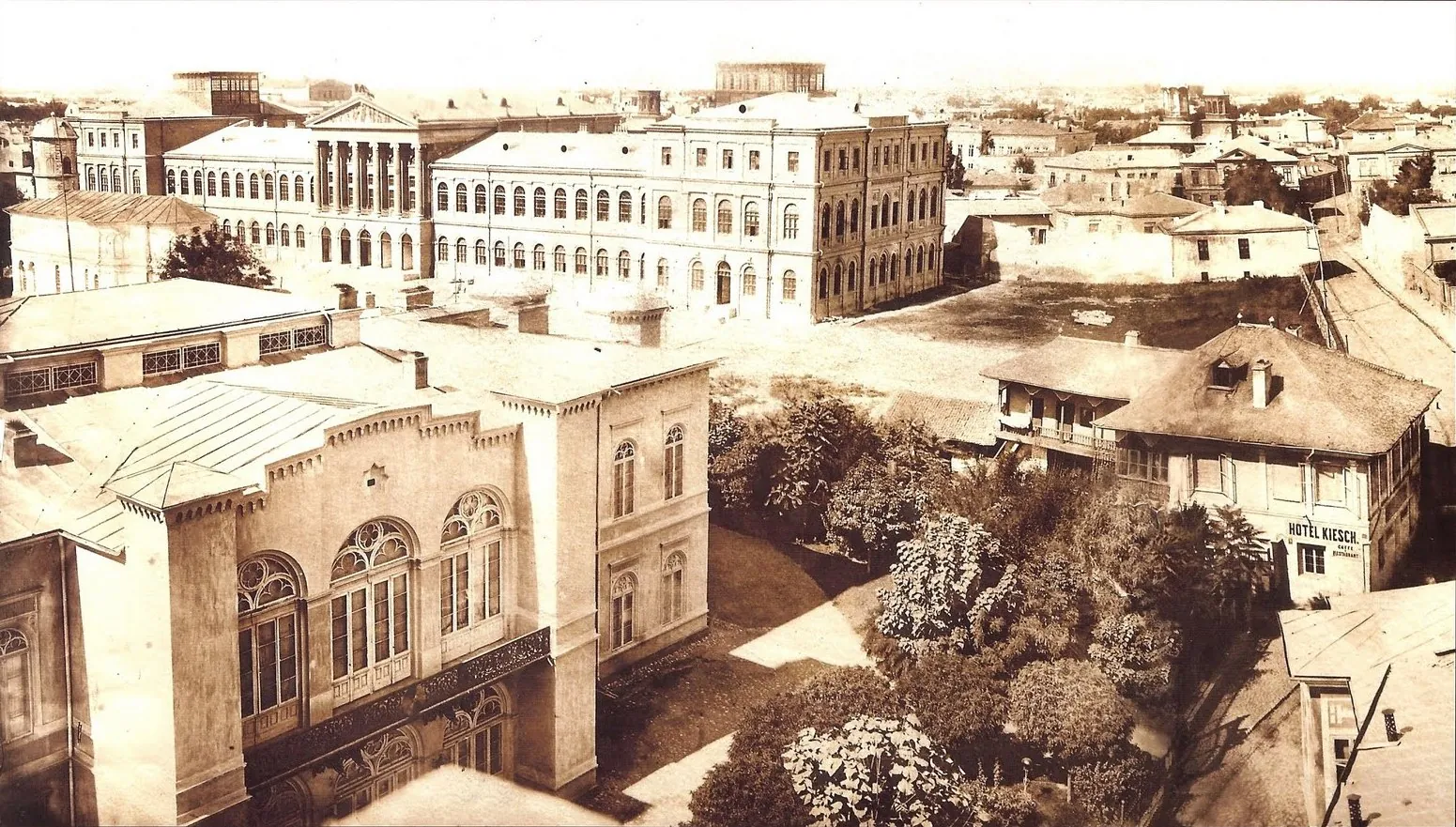
The University Palace in Bucharest, Romania's capital, photographed by Szathmári in 1864, the year the University was founded. The freshly raised building stands among the low houses of the old town; the square of today would later open on their site. This photograph opens the journey and closes it: at the end of the page the same place appears in 2016, face to face with this frame, a century and a half on.
Photograph: Carol Popp de Szathmári · Public domain · Image record (Wikimedia Commons)

Most of the photographs below have lived in archives and albums, far from textbooks. Some are famous without our knowing their makers; others have almost never been shown together. Set end to end, in year order, they show a country changing before our eyes: earthen roads become boulevards, villages stay almost untouched for a century, then vanish under water, mine waste or palaces.
Every photograph is real, carries its maker, year and licence beneath it, and may legally be reused by anyone, with attribution where the licence asks for it. The old frames sometimes survive small and faded; they are shown at their honest size, without beautification. Scroll slowly. Time does the rest.
The first photographs (1854–1871)
When Szathmári loaded his glass plates in 1854, photography was fifteen years old. The Romanian Principalities — Wallachia and Moldavia, soon to unite as Romania — were still two states, Bucharest was a town of lanes, inns and churches, and the Danube was an imperial border. The first frames are rare, faded and precious precisely because they were made when almost nobody thought a street worth photographing.
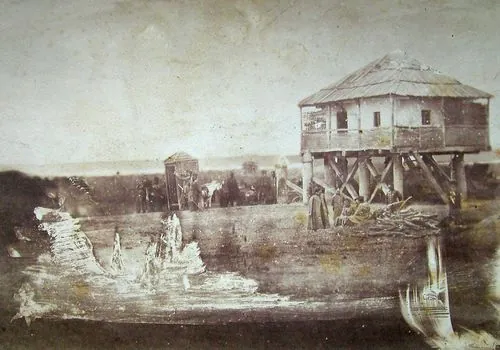
The quarantine station at Oltenița during the Crimean War. Carol Popp de Szathmári, a Bucharest painter and photographer, carried his camera and glass plates to the Danube bank and photographed the troops arriving there. His 1854 photographs are among the first war photographs ever made, a year before the famous Crimean series. The frame survives small and faded; it is shown here at its honest size.
Photograph: Carol Popp de Szathmári · Public domain · Image record (Wikimedia Commons)

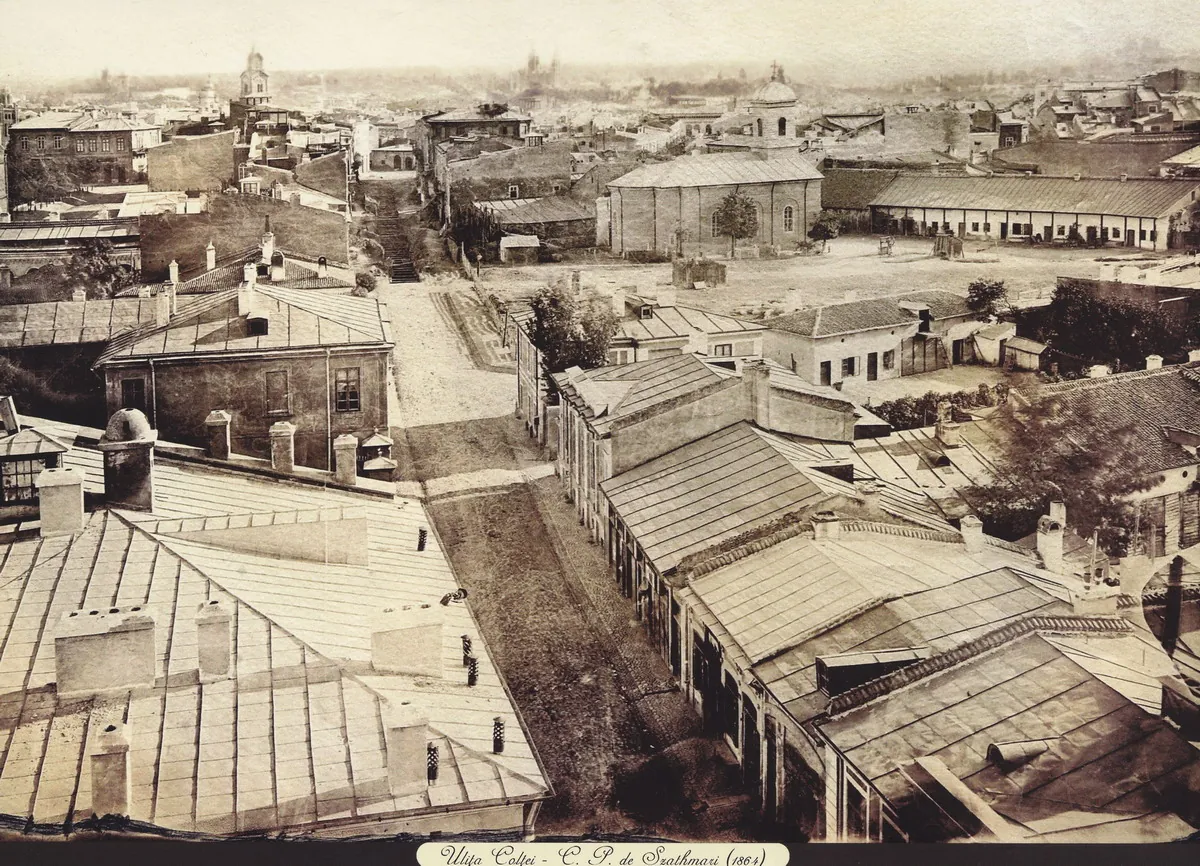
Over the roofs of Colței Street in 1864. Szathmári photographed the town piece by piece for the prince's albums, from rooftops and towers: tile, tin and narrow yards as far as the eye could see. Boulevard Bucharest did not exist yet; almost nothing of this street still stands.
Photograph: Carol Popp de Szathmári · Public domain · Image record (Wikimedia Commons)

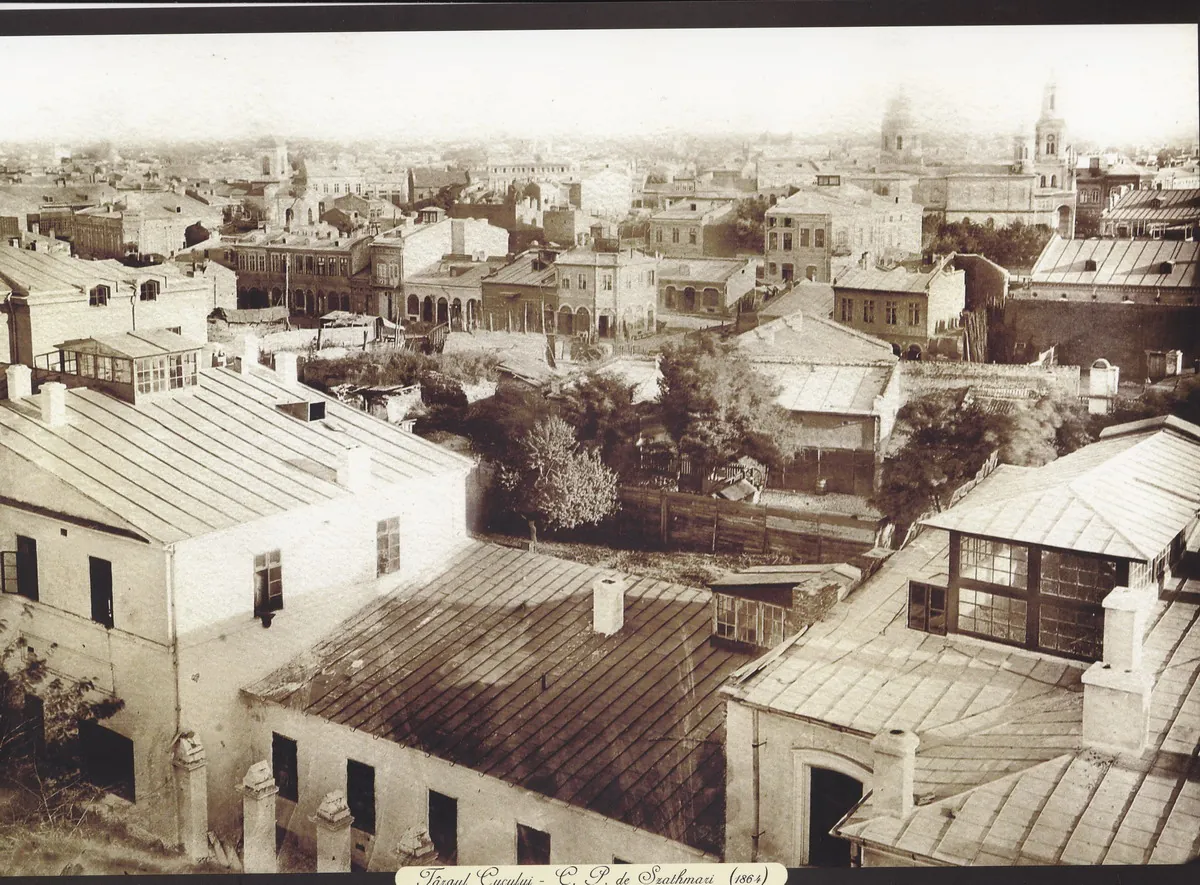
The roofs of Târgul Cucului, the fair quarter at what was then the edge of Bucharest, in 1864. Early photographs needed strong light and stillness, so the lanes look almost empty although the fair was among the busiest spots in town. People who moved during the long exposure vanished from the frame or stayed as shadows.
Photograph: Carol Popp de Szathmári · Public domain · Image record (Wikimedia Commons)

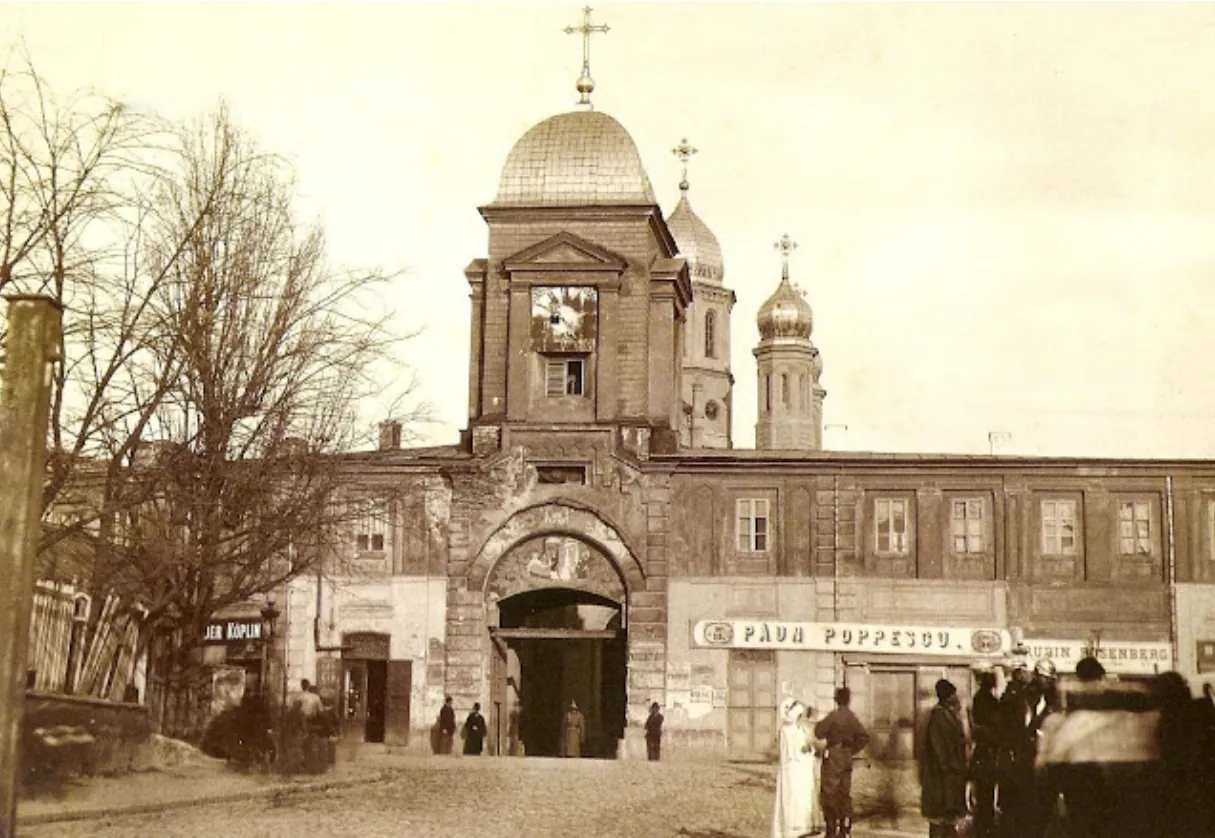
Zlătari Inn in 1871, photographed by Franz Duschek, another well-known studio in the capital. The inns were the hotels, warehouses and exchanges of the old town: goods on the ground floor, merchants' rooms above, carts and horses in the yard. The inn was demolished; Zlătari Church, built against it, still stands on Calea Victoriei, Bucharest's grand avenue.
Photograph: Franz Duschek · Public domain · Image record (Wikimedia Commons)

A new country, a great war (1890–1918)
Between the quiet island of 1900 and the crowd at Alba Iulia lie a new kingdom, a world war and the collapse of three empires. Romania entered the war in 1916, lost its capital, held the front in Moldavia in the north-east, and emerged in 1918 almost twice as large. The decisive day, 1 December 1918, was seen through one man's lens.
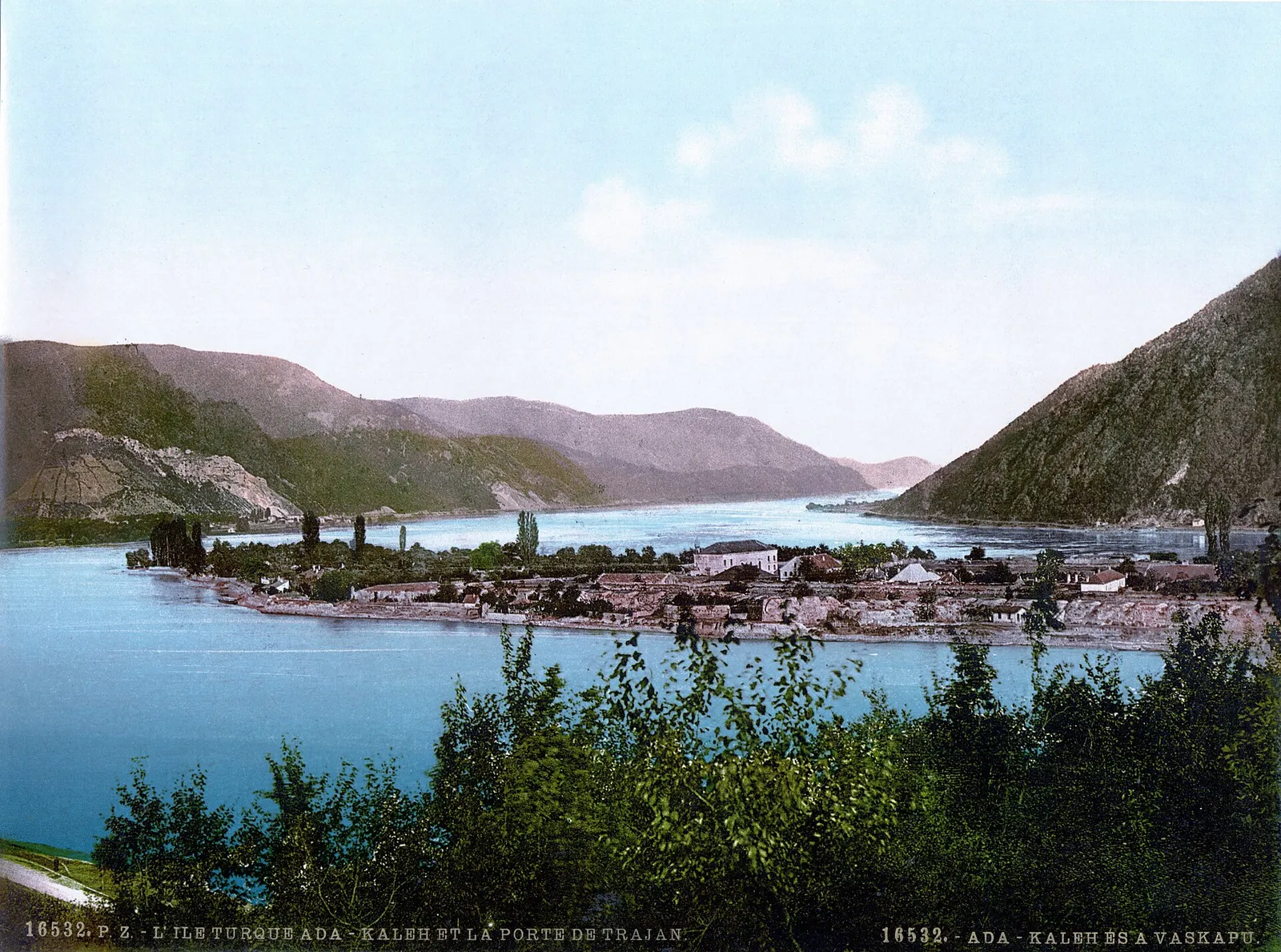
Ada Kaleh island, the Turkish fortress in the middle of the Danube near Orșova, in western Romania, in a photochrom colour print made from a photographic negative. It had narrow streets, a mosque, cafés and gardens famous for jam and tobacco. Keep this image in mind: the island appears again in this journey, photographed in 1968, and then never again, because in 1970 the Danube, raised by the Iron Gates dam, covered it completely.
Photograph: unknown author · Public domain · Image record (Wikimedia Commons)

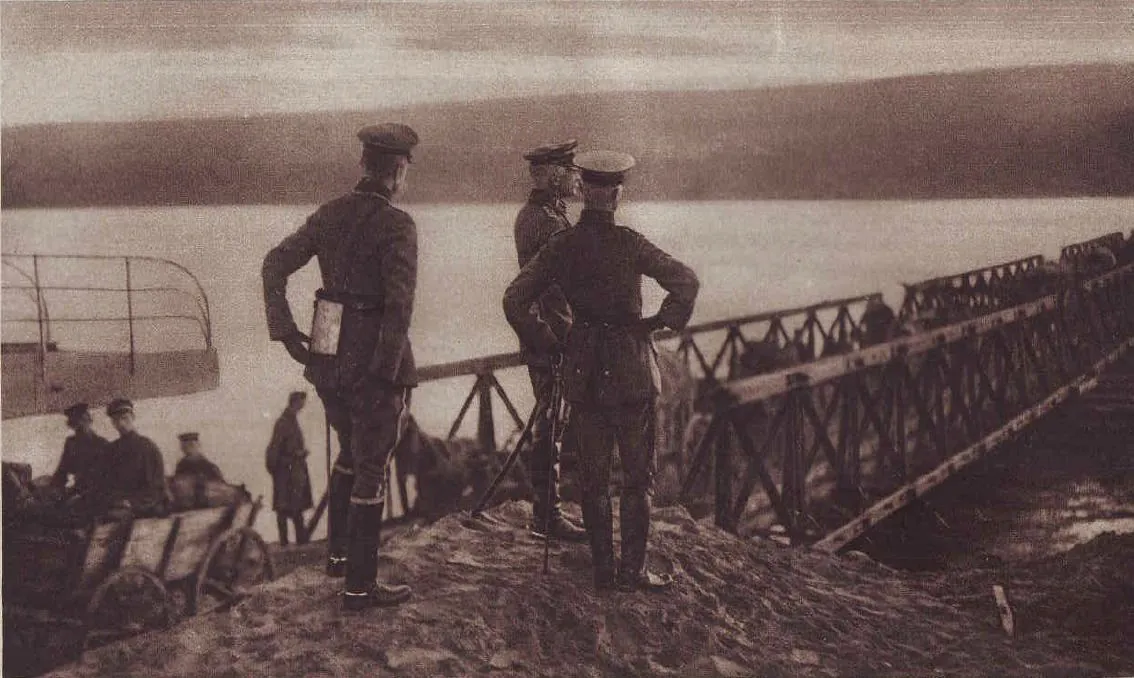
German field marshal August von Mackensen on Romanian soil in November 1916. Romania had joined the First World War that August, on the Entente side; by the end of the year Bucharest was occupied and the government and army had withdrawn to Moldavia, in the country's north-east. This victor's propaganda photograph shows the other face of 1916, the one Romanian postcards did not.
Photograph: unknown author · Public domain · Image record (Wikimedia Commons)

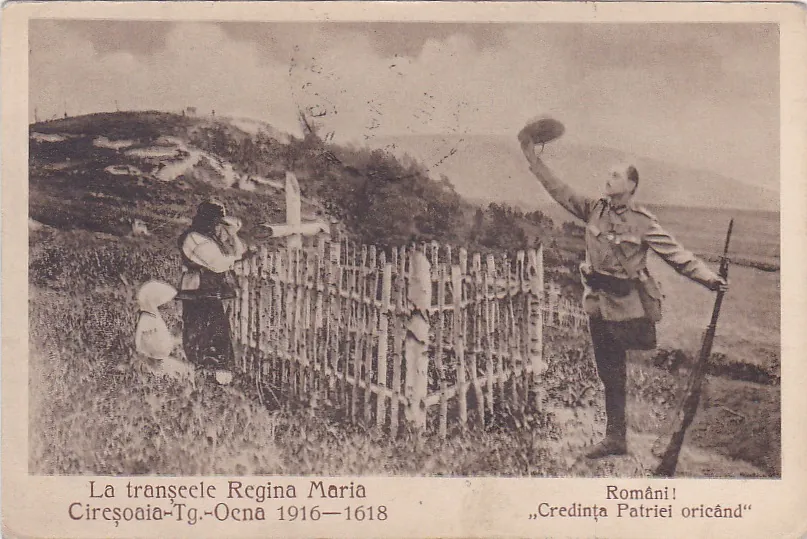
A Romanian wartime postcard: a soldier salutes at the war graves of Cireșoaia, near Târgu Ocna on the Moldavian front. The printed text reads “At the Queen Marie trenches, Cireșoaia–Târgu Ocna 1916–1918”. After the retreats of 1916 the Romanian army held the line of the Carpathians and the Siret through the hard fighting of 1917; postcards like this one carried the image of the front, and of its dead, home to families.
Photograph: unknown author · Public domain · Image record (Wikimedia Commons)

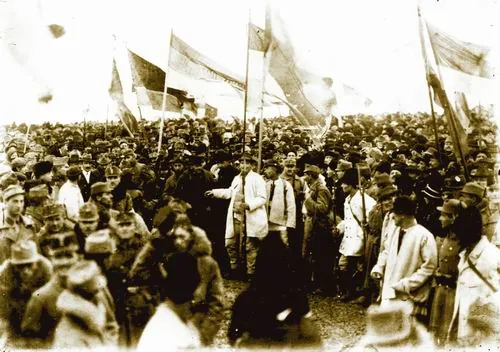
The crowd of the National Assembly at Alba Iulia, in Transylvania, on 1 December 1918, the day Transylvania voted to unite with Romania. Samoilă Mârza, a photographer from the village of Galtiu, was the assembly's only photographer; he arrived with his glass-plate camera although he had no accreditation and no certain money for the journey. Five of his photographs from that day survive, and they became the images through which the day is known.
Photograph: Samoilă Mârza · Public domain · Image record (Wikimedia Commons)

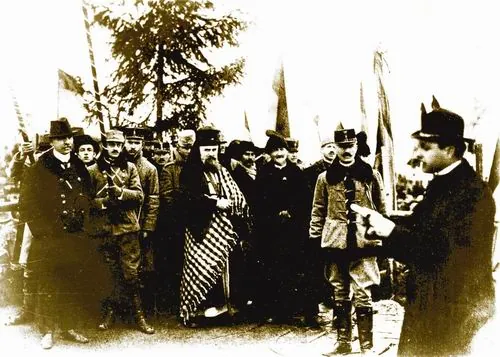
Another of Samoilă Mârza's frames from the same day. Glass plates were heavy, expensive and few, so each photograph had to be thought through before the shutter. Mârza sold his photographs to the delegates as souvenirs, on the spot. Without his stubborn journey, 1 December 1918 would have left no direct image at all.
Photograph: Samoilă Mârza · Public domain · Image record (Wikimedia Commons)

Greater Romania, day by day (1919–1939)
Greater Romania — the state formed in 1918 when Transylvania, Bessarabia and Bukovina united with the old kingdom — was photographed from two directions at once. Iosif Berman and Nicolae Ionescu followed the Bucharest street every day, with its sellers, musicians and puddles. The German Kurt Hielscher crossed the whole country for an album to show it to Europe. Together their frames tell the interwar truth: modernist boulevards a few streets from lanes without sewers, almost medieval villages a day's train ride from the capital.
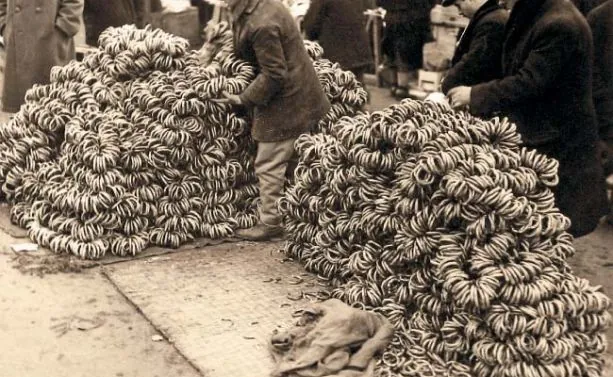
Piles of strung pretzels for sale in a Bucharest market in the 1930s, photographed by Iosif Berman. Berman was the press photographer who followed the capital of Greater Romania — the enlarged state formed after the First World War — day by day, from royal parades to street corners. The warm pretzel eaten on the move was the poor city's snack, and it is just as common a century later.
Photograph: Iosif Berman · Public domain · Image record (Wikimedia Commons)

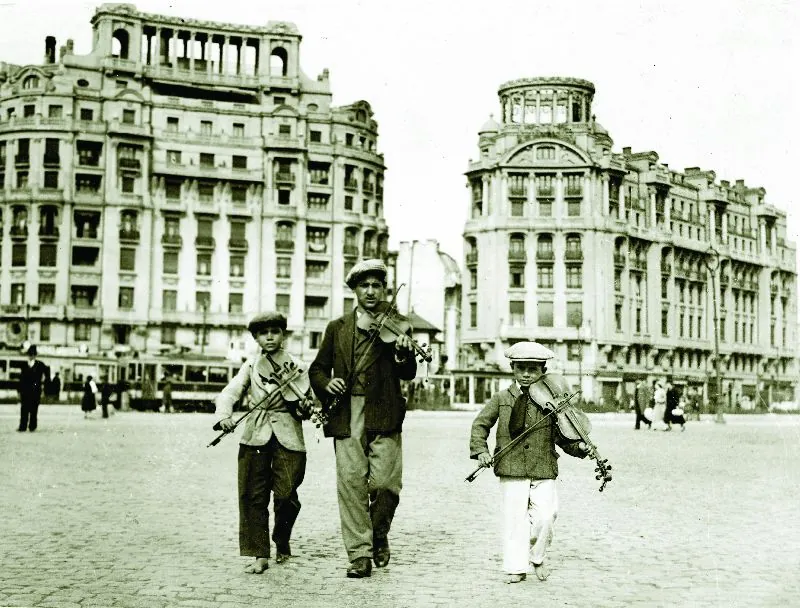
Children playing the violin in central Bucharest between the wars. Child street musicians earned money for their families on the town's busiest corners. Berman photographed them unposed, in the middle of their work, which is why his frames remain among the liveliest records of the interwar street.
Photograph: Iosif Berman · Public domain · Image record (Wikimedia Commons)

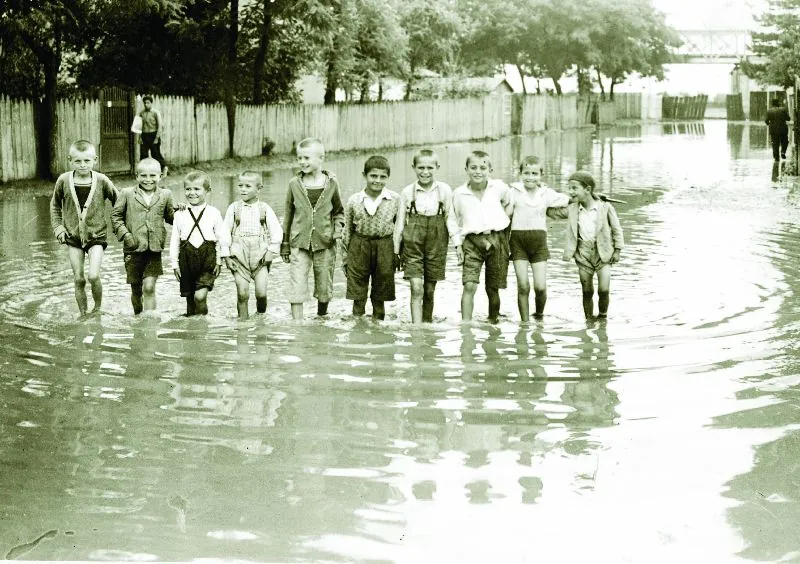
Children playing in flooded lanes in Bucharest in the 1930s. A few streets from the modern boulevards, the poor districts still had earthen roads without sewers, where rain made puddles the width of the street. Berman showed both cities in the same working week, for the same newspapers.
Photograph: Iosif Berman · Public domain · Image record (Wikimedia Commons)

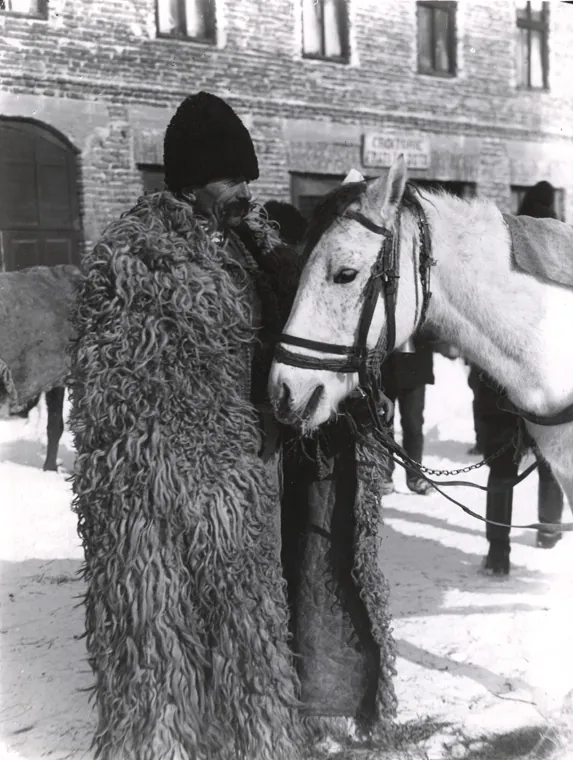
A moț — a Romanian highlander from the Apuseni Mountains, in western Transylvania — with his horse, arrived in Bucharest in the highlanders' long shaggy cloak. The moți came down to town with carts full of wooden pails, tubs and other things made at home, and sold their goods in the streets, crying them to passers-by. Nicolae Ionescu photographed these passing figures of the capital, people who tied the distant village to the city market.
Photograph: Nicolae Ionescu · Public domain · Image record (Wikimedia Commons)

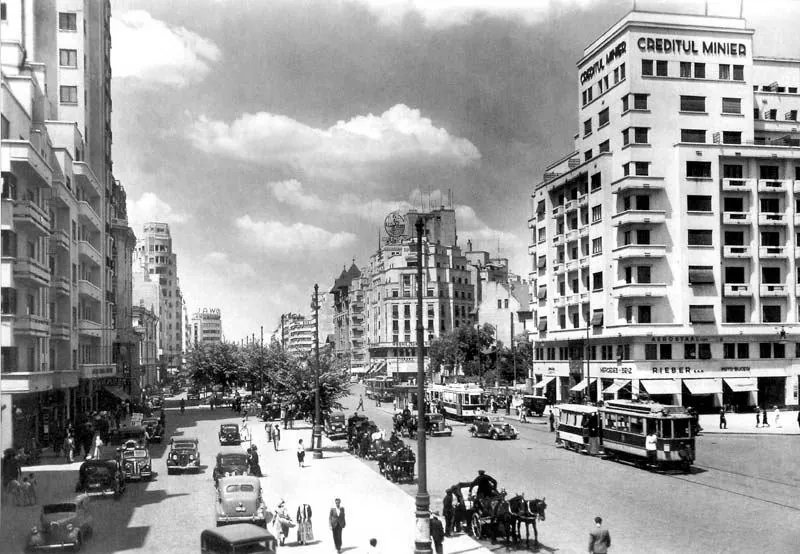
Brătianu and Magheru boulevards in the late 1930s: modernist blocks, motor cars, large advertisements on the facades. Twenty years after the Union, central Bucharest had been rebuilt almost from scratch. The contrast with Berman's flooded lanes, from the same years and the same city, is the whole story of interwar Romania in two frames.
Photograph: unknown author · Public domain · Image record (Wikimedia Commons)

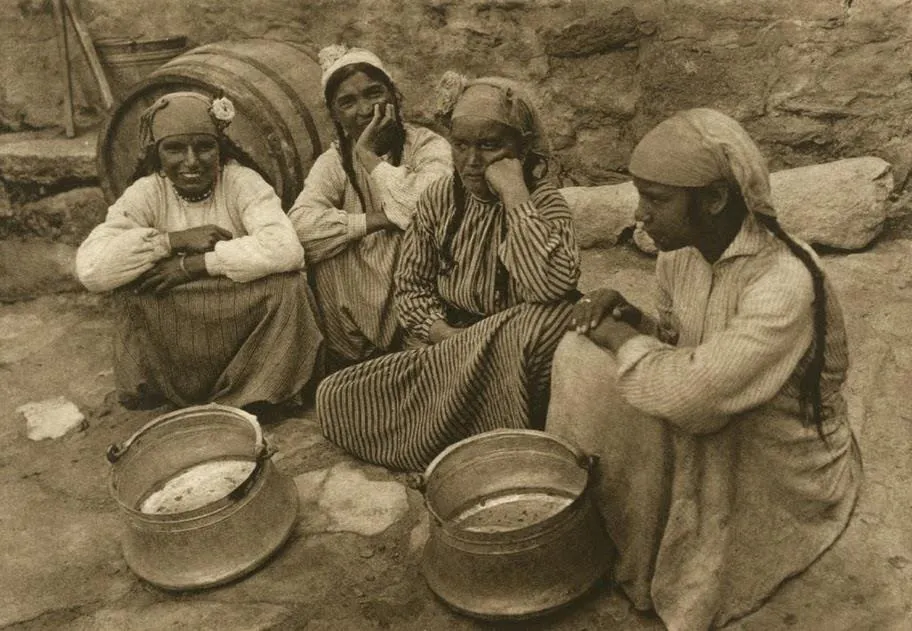
Turkish women in Dobruja, Romania's Black Sea province, at an outdoor meal, from German photographer Kurt Hielscher's 1933 album. Hielscher travelled the whole of Greater Romania and published in Leipzig an album that showed Europe a country it hardly knew. Turkish and Tatar Dobruja appears in the album beside Romanian, Saxon and Hungarian villages, each with its own dress and ways.
Photograph: Kurt Hielscher · Public domain · Image record (Wikimedia Commons)

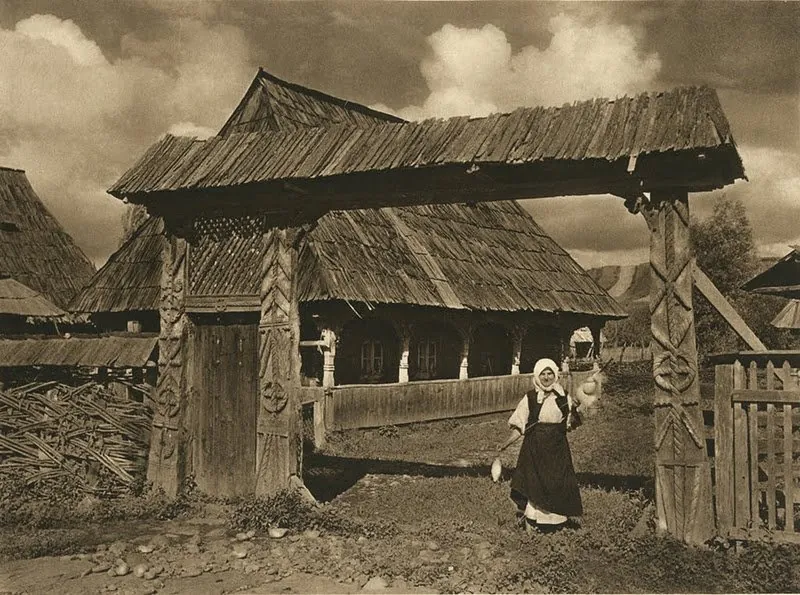
A Maramureș gate at Giulești, in northern Romania, in 1933. The tall oak gates, carved with the rope, the sun and the tree of life, showed the household's standing and were raised once in a generation. Hielscher photographed them while they were still part of daily life, together with the people who passed under them to work.
Photograph: Kurt Hielscher · Public domain · Image record (Wikimedia Commons)

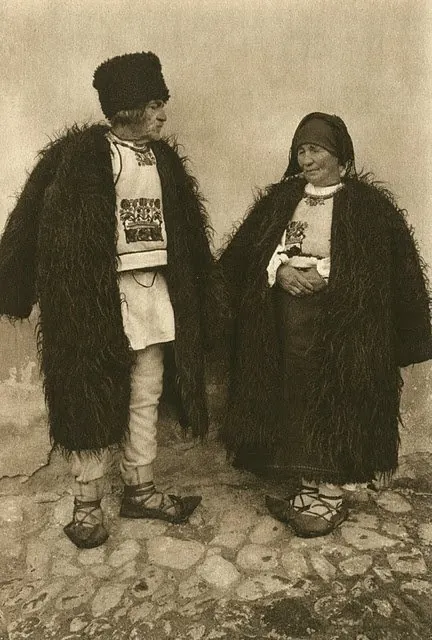
An elderly couple at Avrig, near Sibiu in Transylvania, in festive dress, for Hielscher's album. The costume was sewn at home, kept in a chest, and worn to church and for the photographer. These old people had been born in the Austro-Hungarian Empire, had lived through the Union in their fifties, and now posed for a photographer come from Germany to show the world their new country.
Photograph: Kurt Hielscher · Public domain · Image record (Wikimedia Commons)

The war seen from above (1943–1944)
The Second World War appears in Romanian photographs mostly from above, from the Allied bombers that came for Ploiești's oil. American crews photographed during their missions to assess the strikes; their frames remain the strongest image of the war on Romanian soil. On the ground, 1944 closes with a very young king in an American jeep and a country that had changed sides.
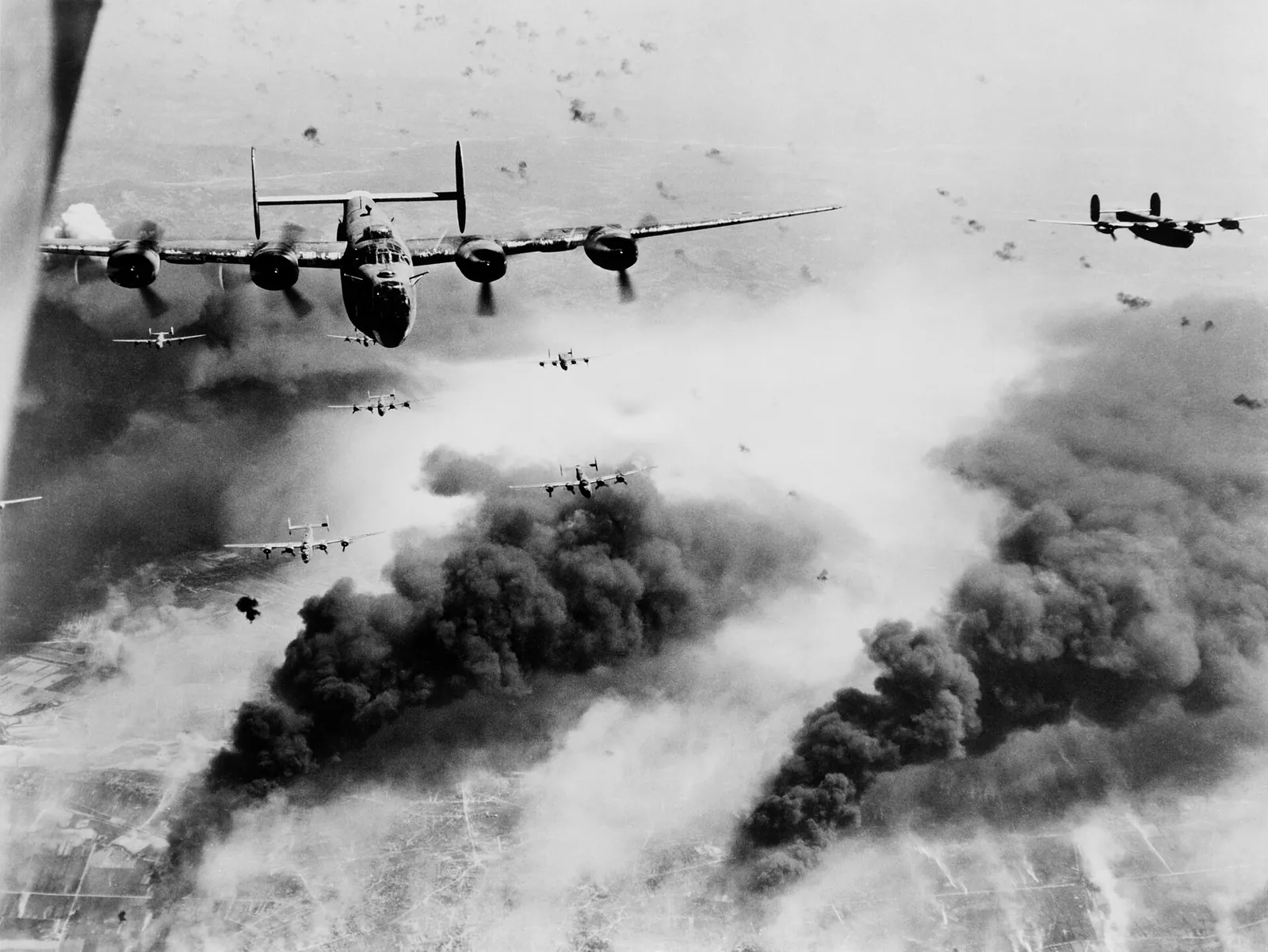
American B-24 bombers coming out through smoke and flak over the Concordia Vega refinery at Ploiești, Romania's oil city north of Bucharest, on 31 May 1944. Romanian oil fed the German war machine, so Ploiești was bombed again and again in 1943 and 1944. The photograph, taken from an aircraft of a following wave, shows the oil city as the crews saw it: a sea of smoke with explosions bursting through.
Photograph: Richard R. Ganczak (US Air Force) · Public domain · Image record (Wikimedia Commons)

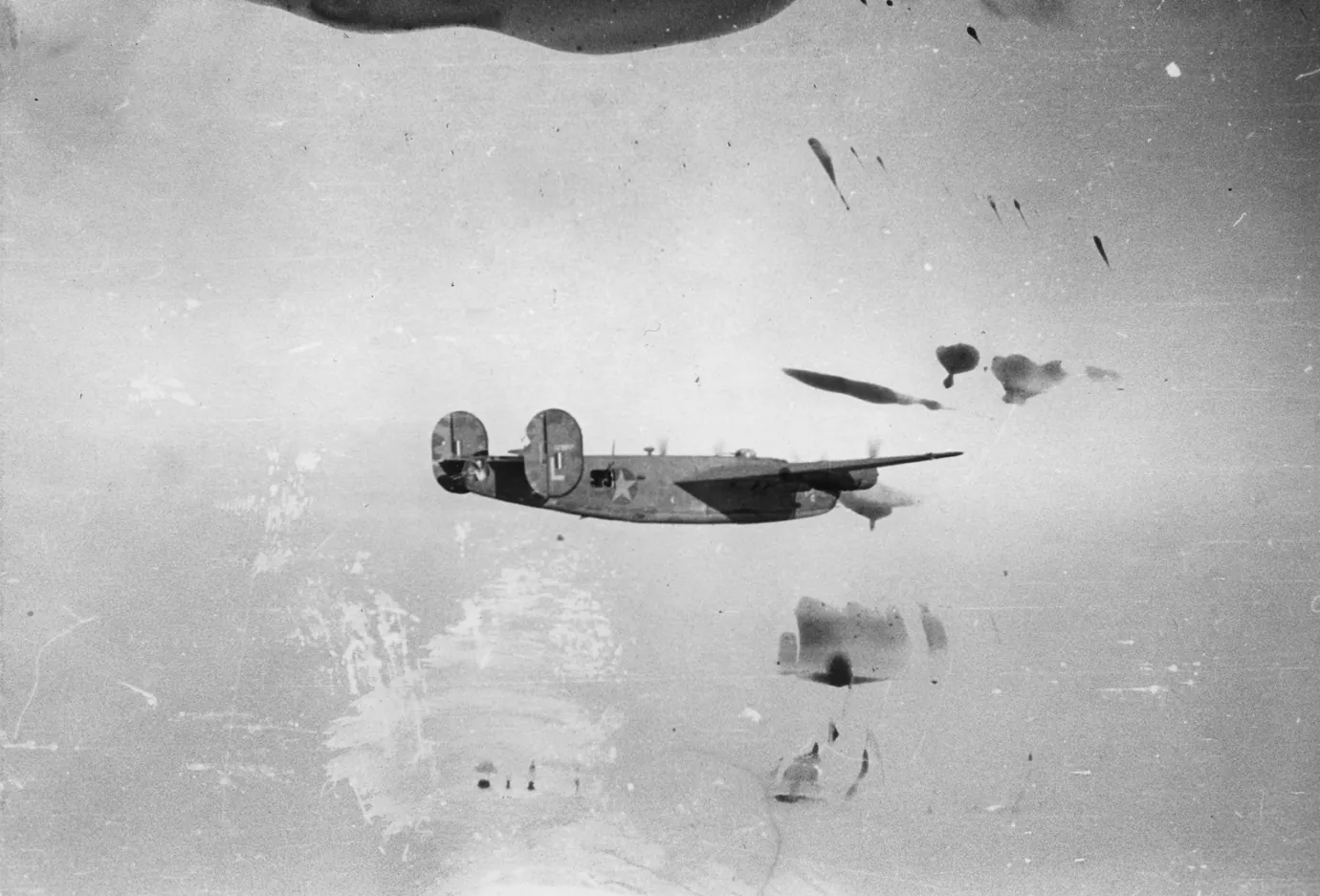
The B-24 bomber “Suzy Q” during the 1 August 1943 raid on Ploiești, the famous Operation Tidal Wave, flown at low level, almost at the height of the refinery roofs. The raid cost the Americans dozens of aircraft and hundreds of airmen. For the people of Ploiești, that day remained the day the world war arrived over their city all at once, a few metres up.
Photograph: US Air Force (via the Imperial War Museum) · Public domain · Image record (Wikimedia Commons)

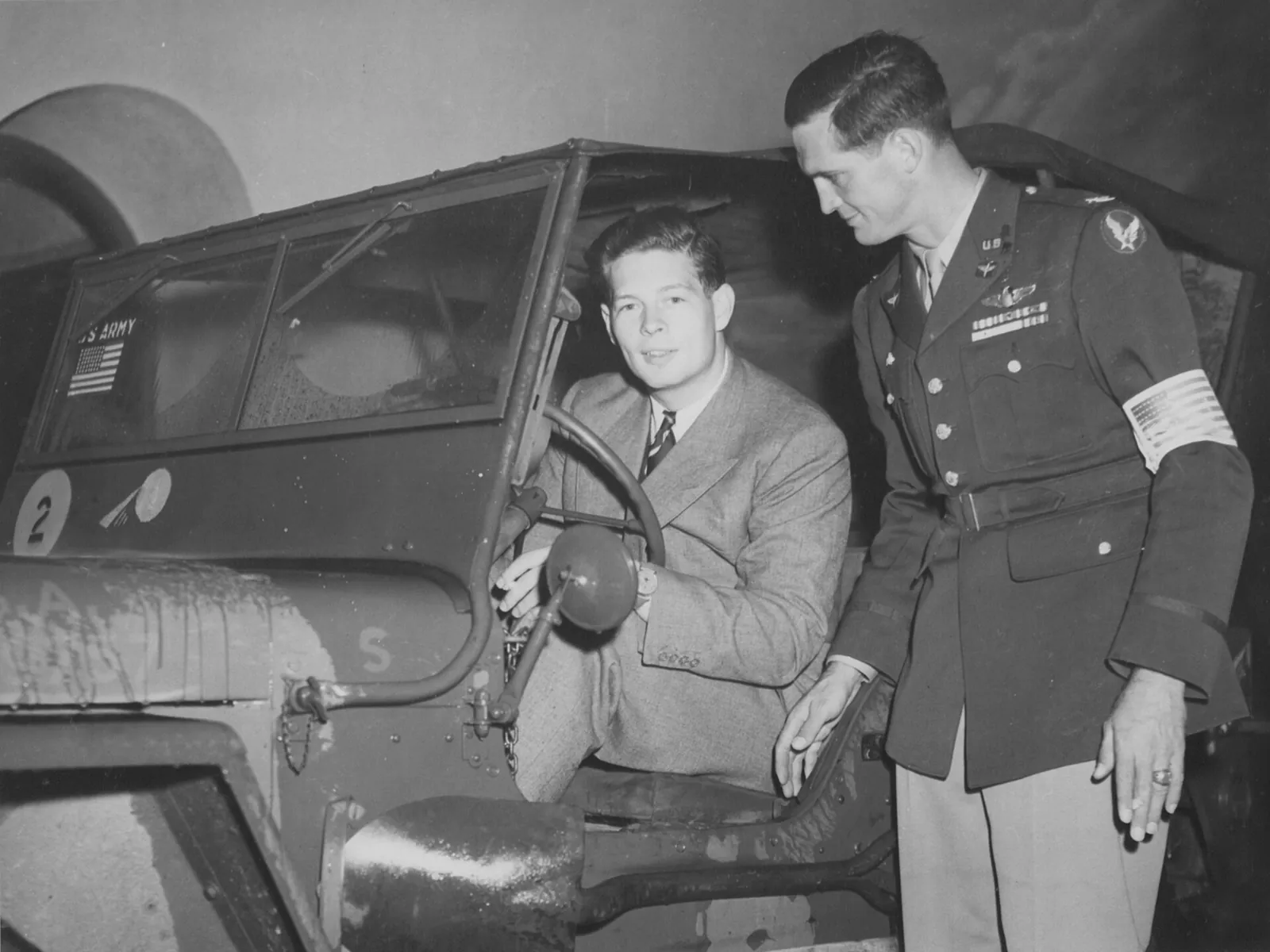
King Michael I of Romania at the wheel of an American jeep in 1944, after 23 August, when Romania left its alliance with Germany and joined the Allies. An American colonel shows him the controls of what the caption calls the doughfoot's family car. The king was in his early twenties. Three years later he was forced to abdicate and leave the country for nearly half a century.
Photograph: US Army (US National Archives) · Public domain · Image record (Wikimedia Commons)

Forty years (1948–1989)
For the communist decades, freely licensed photography is surprisingly scarce: the regime photographed for propaganda, and most official images remain under closed rights. The free frames that survive show something other than parades: an island in its last year, a fishing village in 1976, and the capital after the 1977 earthquake, photographed by foreign engineers. The 1980s demolitions that erased whole districts were photographed mostly by amateurs; few clear images reached open archives, and that gap is part of the story too.
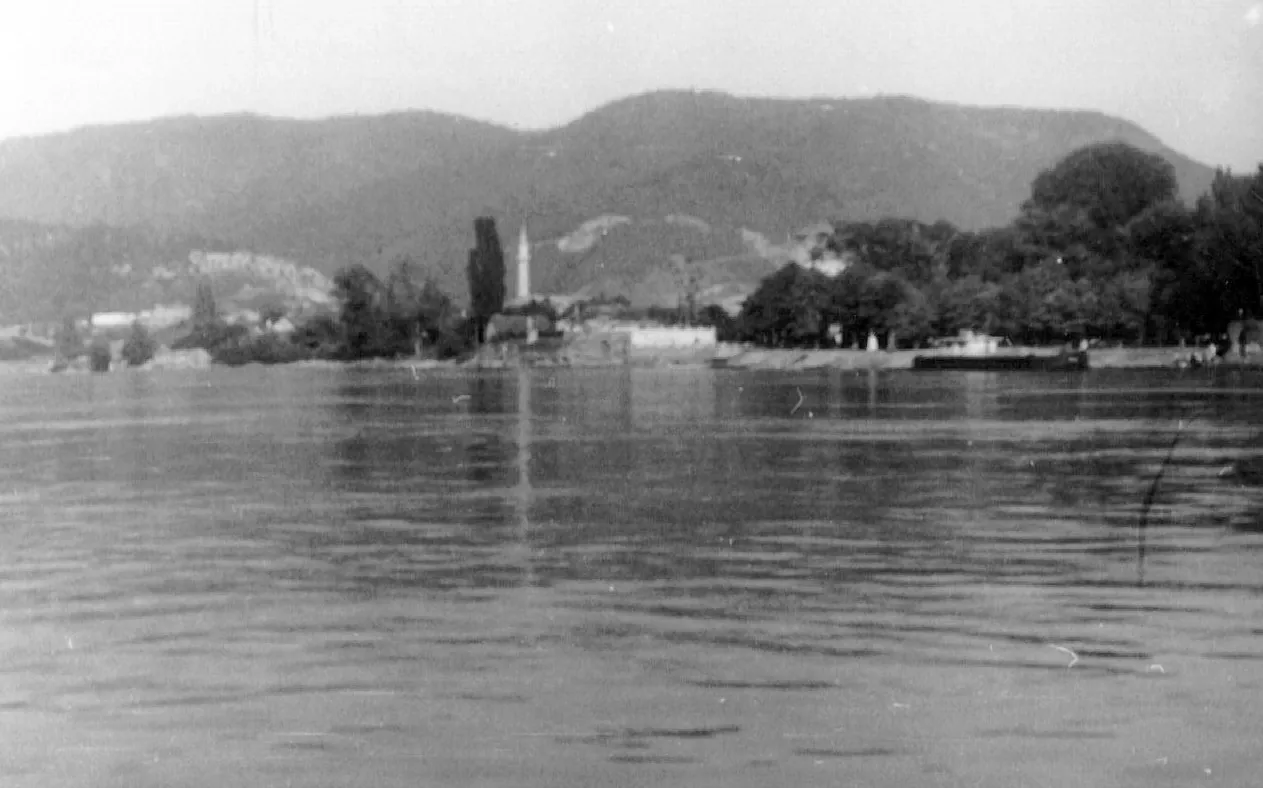
Ada Kaleh in 1968, the same island as in the frame from the start of the century, photographed shortly before the end. The inhabitants, most of them Turks, were moved out in 1967–1968, the houses were demolished, and in 1970 the waters of the Iron Gates reservoir covered the island. Today, on low-water days, the Danube sometimes lets the tops of the walls show again.
Photograph: Alex:D · Licence: CC BY-SA 3.0 · Image record (Wikimedia Commons)

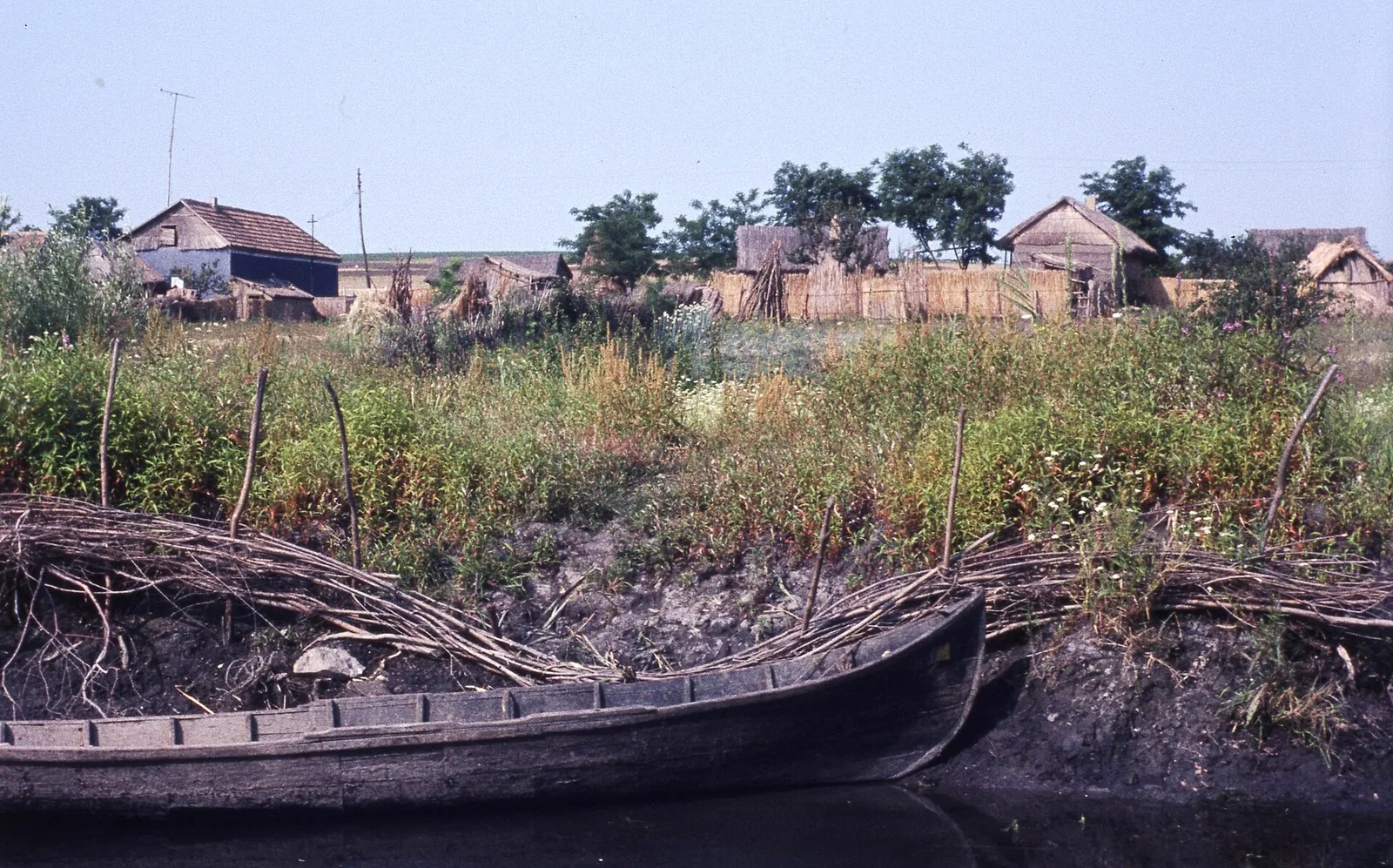
A fishing village in the Danube Delta, where the river meets the Black Sea, in 1976. In the villages between the channels the boat was the car, yard and road were water, and the fish delivered to the collecting point was almost the only tie to the country's economy. German photographer Rudolf Simon caught the Delta as it looked before today's tourism, with reed-thatched houses and wooden boats drawn up on the bank.
Photograph: Rudolf Simon · Licence: CC BY-SA 3.0 · Image record (Wikimedia Commons)

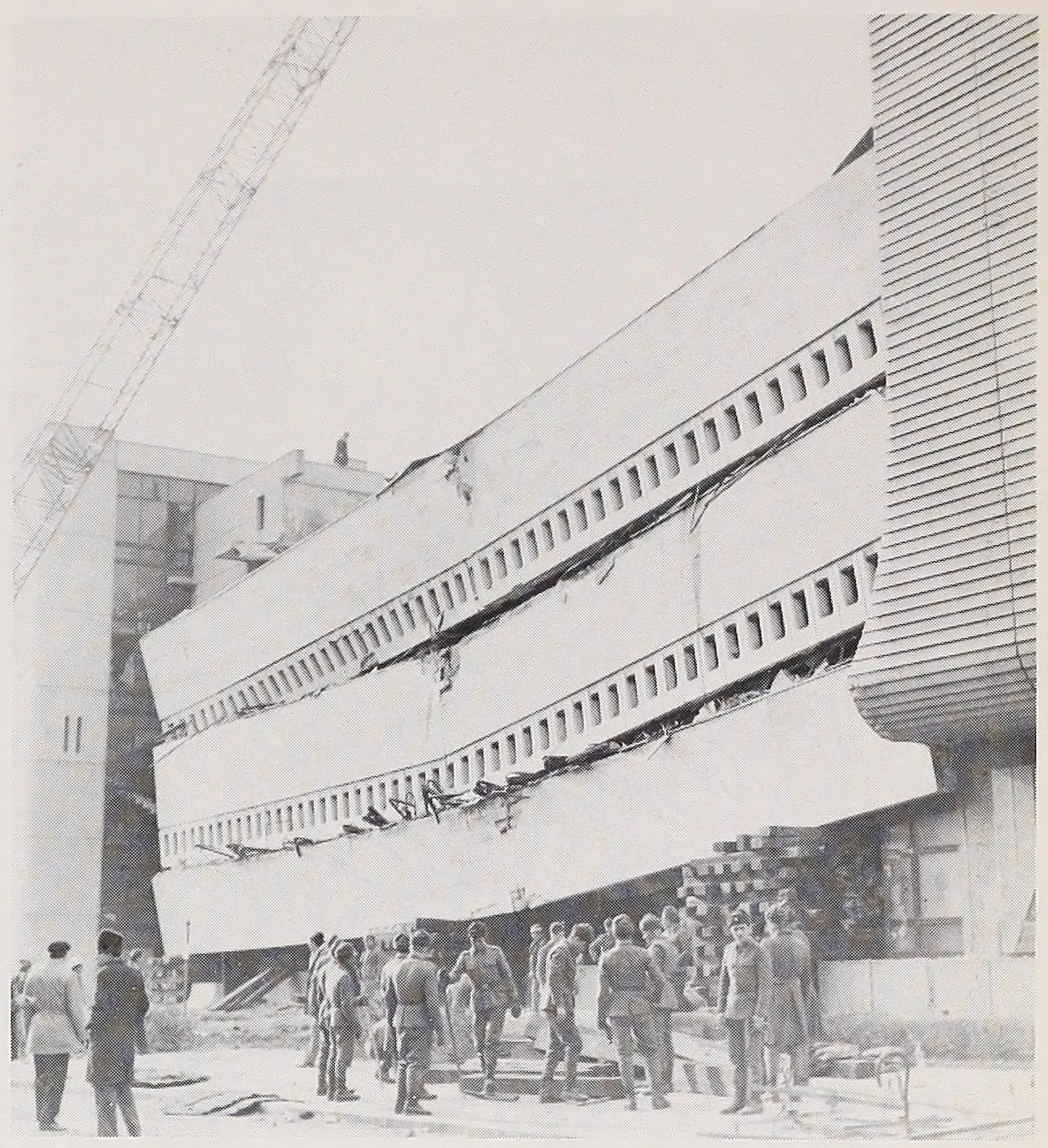
The Bucharest Computer Centre after the earthquake of 4 March 1977, photographed by the American engineering team that came to study the collapses. The earthquake brought down dozens of buildings in the capital and killed more than 1,500 people across the country. The Americans' technical photographs remain one of the fullest records of the disaster.
Photograph: National Bureau of Standards (USA) · Public domain · Image record (Wikimedia Commons)

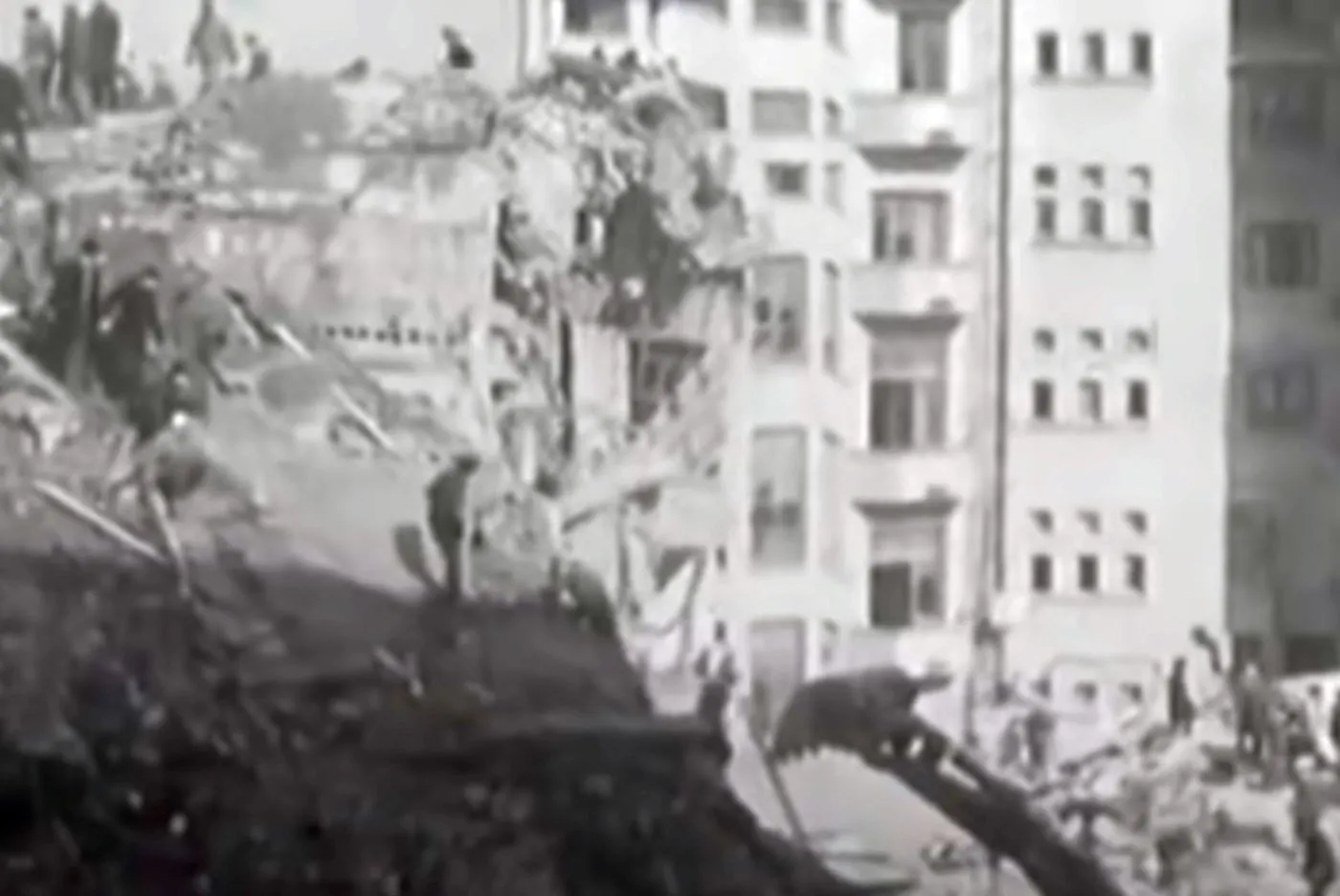
A Bucharest street in the days after the 1977 earthquake. After the disaster, the regime used the rebuilding as the occasion for demolitions far wider than the earthquake's own: in the 1980s whole old districts, Uranus among them, were razed for the new civic centre and the House of the People, Nicolae Ceaușescu's palace. Much of Berman's city disappeared then.
Photograph: unknown author; file uploaded to Wikimedia Commons in 2022 by Sorin Dek · Licence: CC0 (public domain) · Image record (Wikimedia Commons)

December 1989 (1989)
In December 1989 photography suddenly becomes free and urgent again. In Timișoara, where the revolution began, a Hungarian photographer who had crossed the border caught soldiers, identity checks and the holed flag with a clarity those days' television never had. In Bucharest the year ends with relief aircraft at the airport. Between the two frames fit the end of one regime and the beginning of another, not yet born.
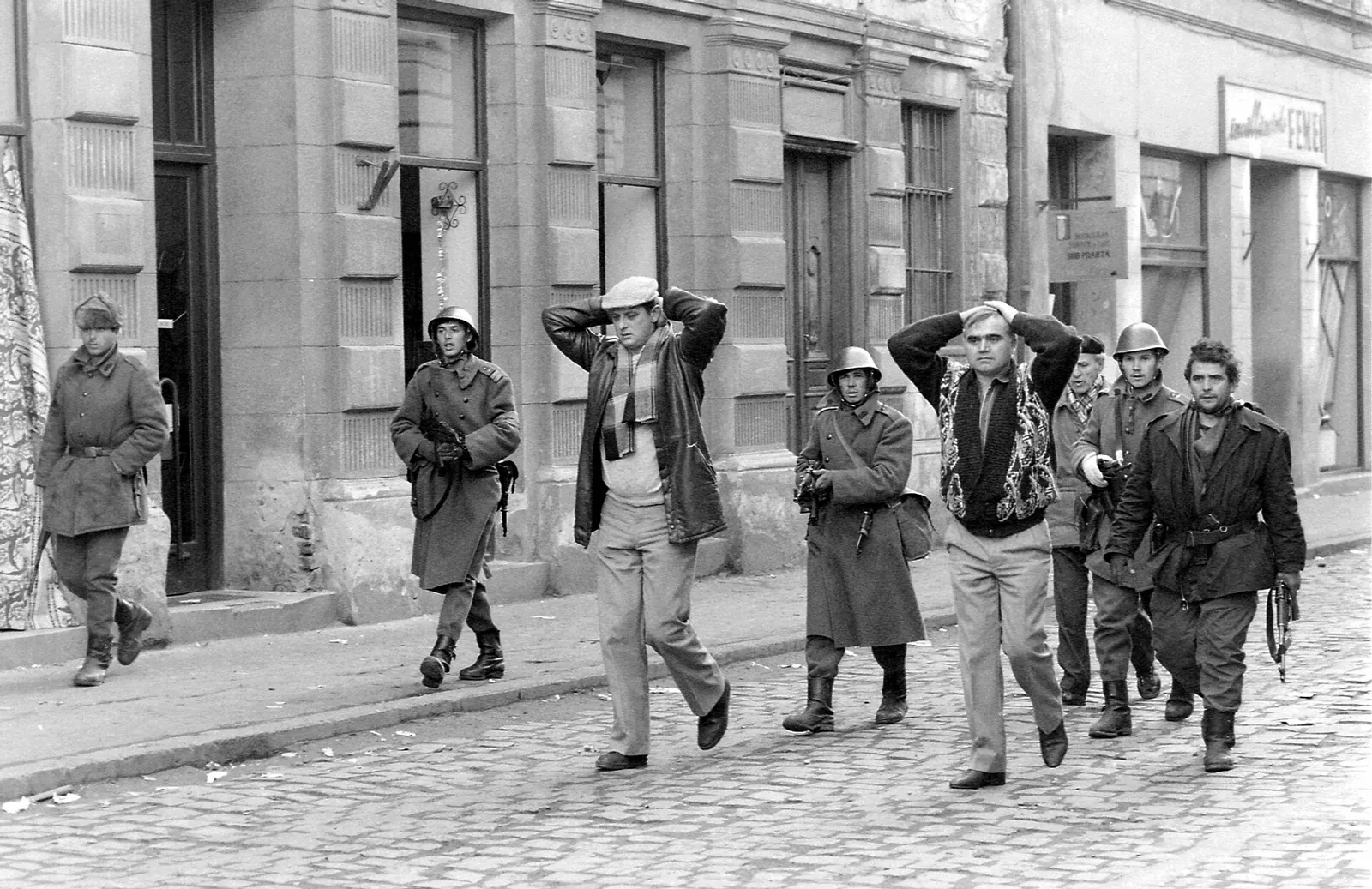
Civilians, some with their hands raised, passing under soldiers' eyes on a street in Timișoara, in western Romania, in December 1989. The revolution began in Timișoara on 16 December, around the house of pastor László Tőkés, and spread across the country within days. Hungarian photographer Urbán Tamás crossed the border and photographed the city in those days; his frames, kept in the open Fortepan archive, are among the clearest images of the beginning.
Photograph: Urbán Tamás (Fortepan archive) · Licence: CC BY-SA 3.0 · Image record (Wikimedia Commons)

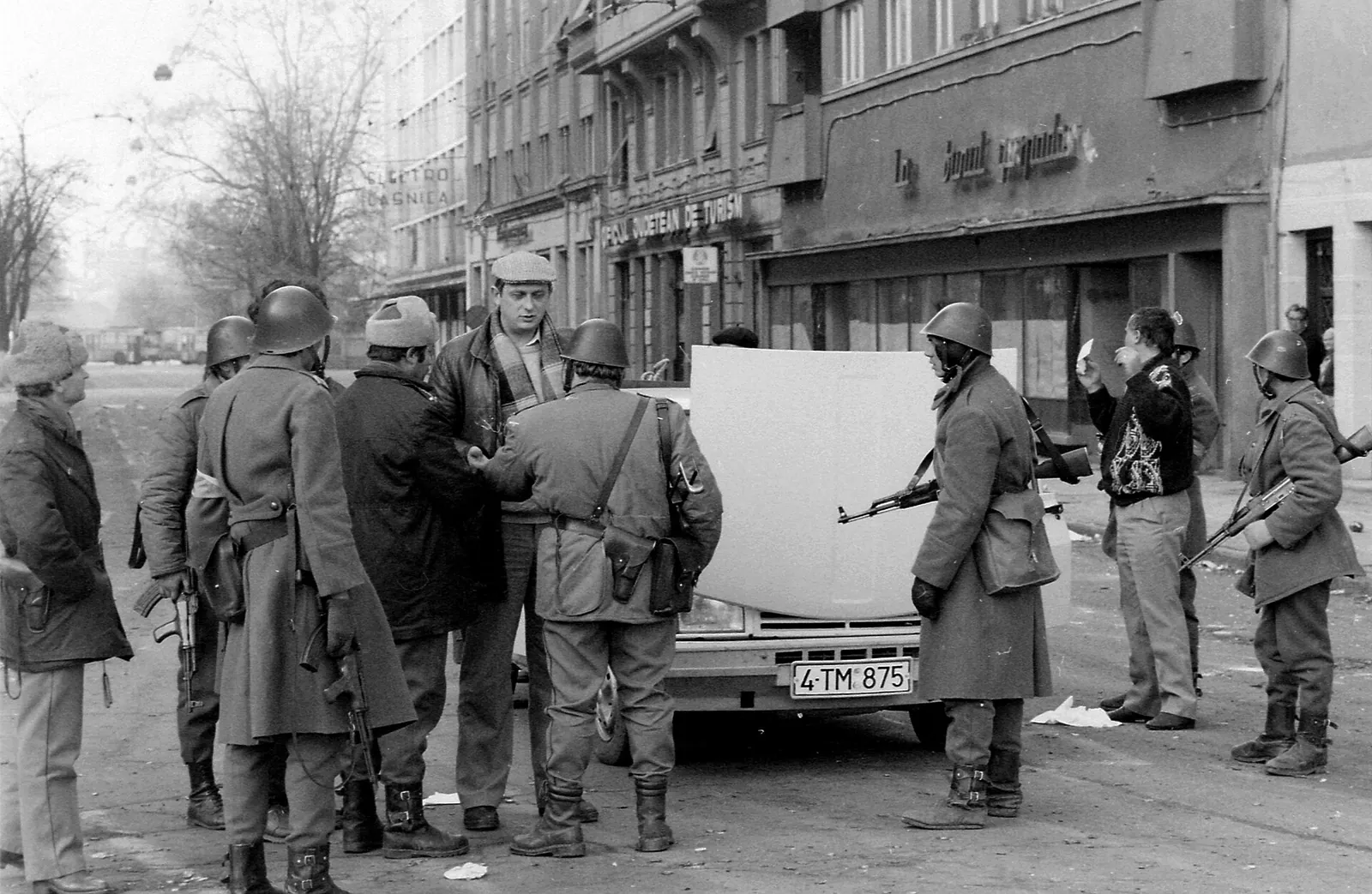
An identity check in Timișoara, beside a Dacia car, in the days of the revolution. After Ceaușescu fell on 22 December, fear of “terrorists” kept the cities under arms for days and caused many of the deaths that followed the victory. The photograph shows exactly that mixture of liberation and fear: young soldiers, stopped passers-by, shop windows behind.
Photograph: Urbán Tamás (Fortepan archive) · Licence: CC BY-SA 3.0 · Image record (Wikimedia Commons)

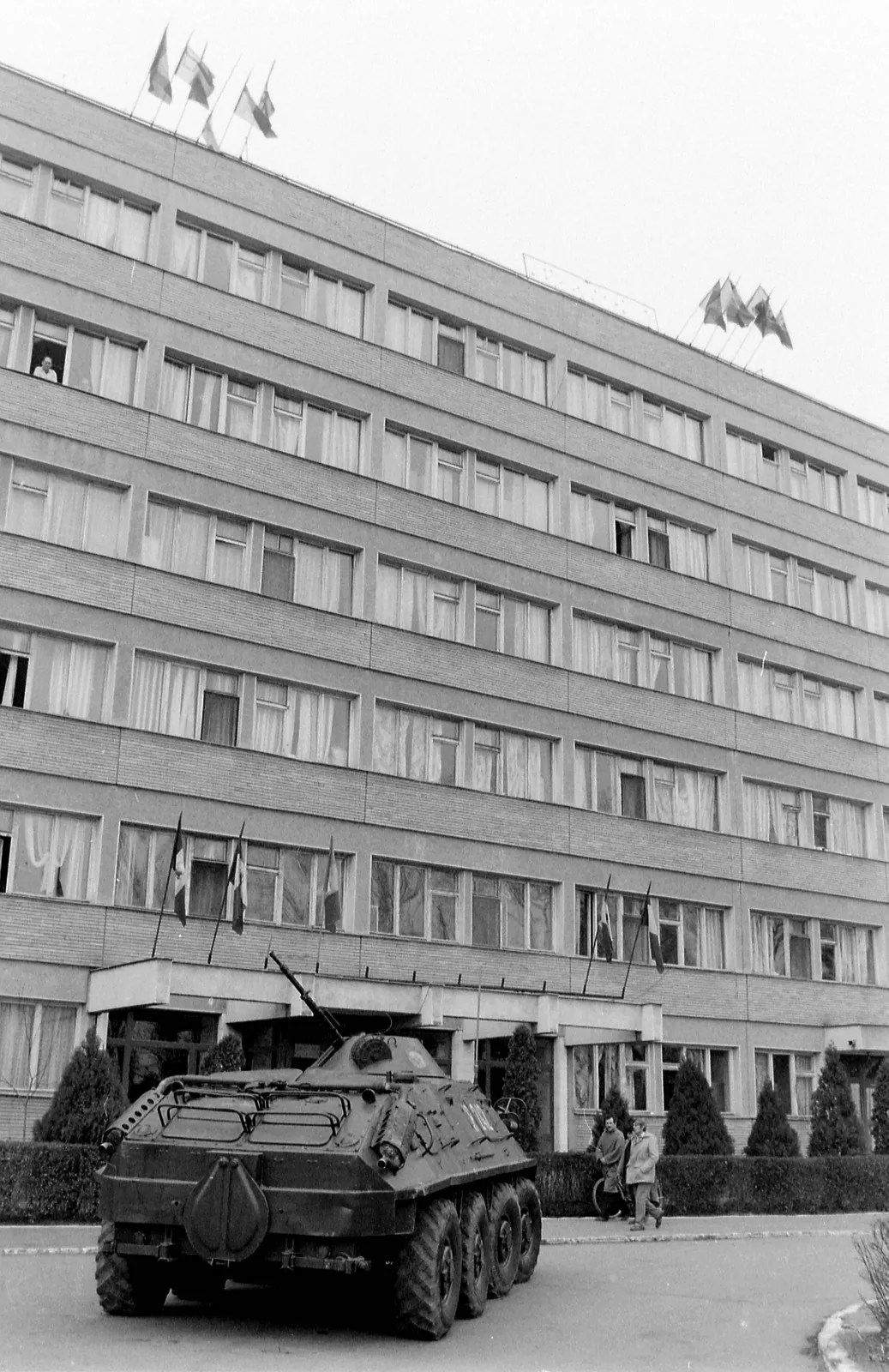
An armoured carrier in front of an official building in December 1989, from Urbán Tamás's same Timișoara series. In those days the revolution's best-known sign had become the holed flag, with the socialist emblem cut from the middle of the tricolour. The whole series was donated to the open Fortepan archive, where anyone may download and reuse it with attribution.
Photograph: Urbán Tamás (Fortepan archive) · Licence: CC BY-SA 3.0 · Image record (Wikimedia Commons)

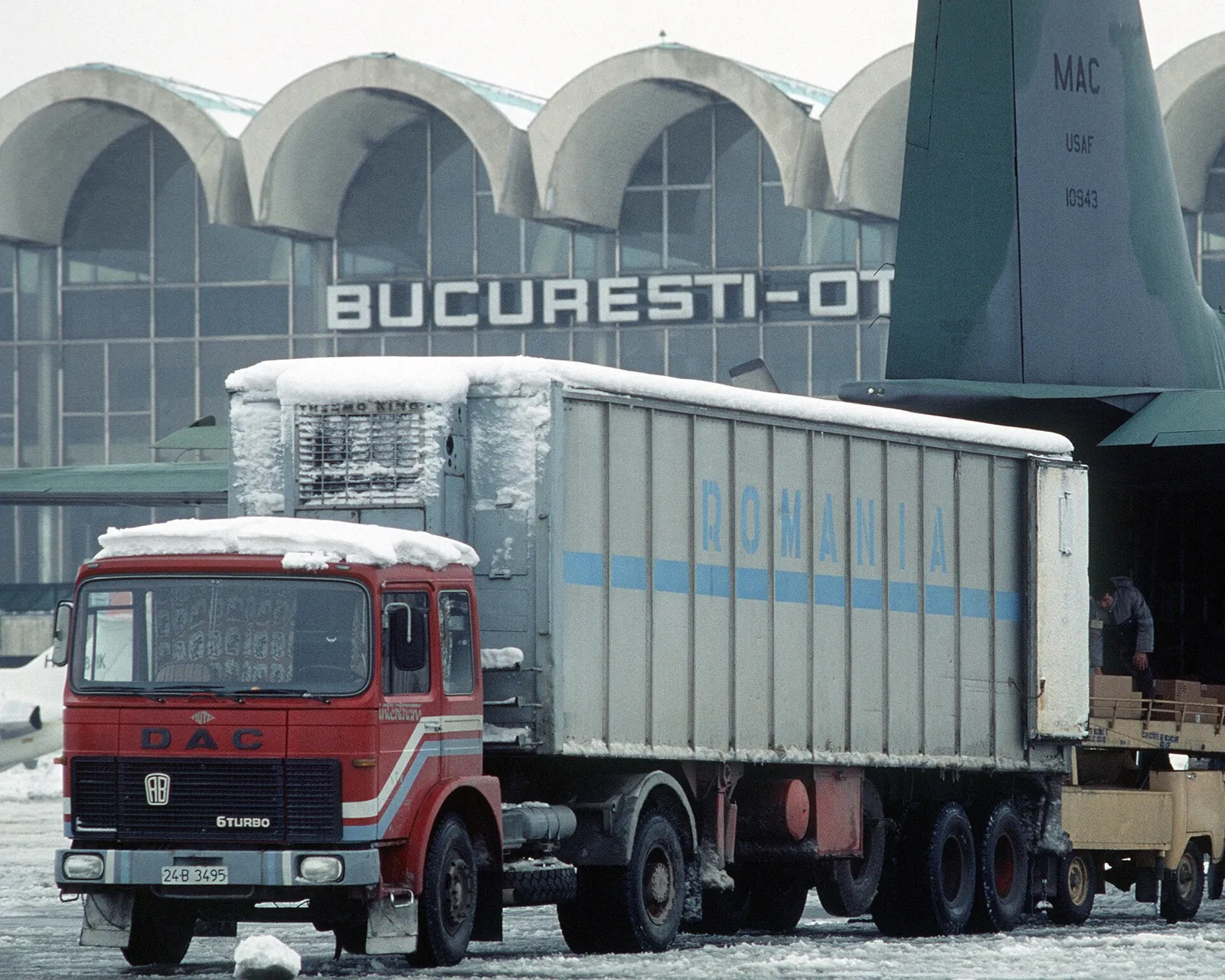
American medical supplies unloaded at Bucharest airport on 31 December 1989, for the wounded of the revolution. In the foreground a Romanian DAC truck waits for the load. The official American photograph closes the year 1989: nine days after the regime fell, the country was receiving help from the world that had been closed to it for half a century.
Photograph: SSGT Perry Heimer (US Air Force) · Public domain · Image record (Wikimedia Commons)

What remains, what returned (1990–2026)
After 1990 the camera reaches everyone's hands, and the country photographs itself every day. The closing frames look back toward the film's start: the dictator's empty palace turned parliament, the strategic road turned attraction, a vanished village's church rising from mine waste, Simon's Delta turned reserve, Hielscher's Maramureș building in wood again. At the end the film closes in a circle, in University Square, where it began in 1864.
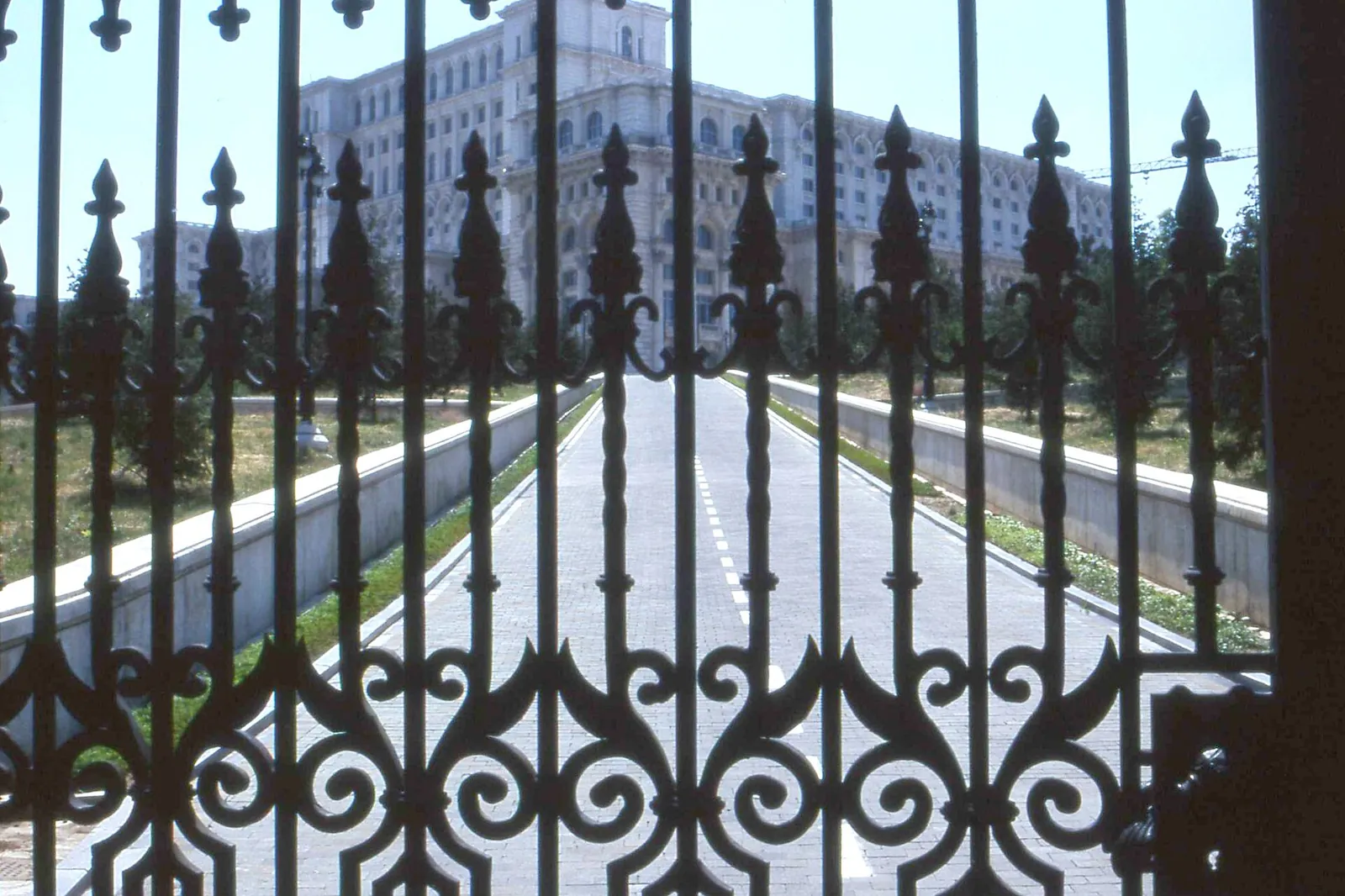
The gates of the House of the People, empty, in June 1996. Europe's largest administrative building, raised in the 1980s on the site of the demolished districts, stood almost unused for years after 1989, an object of shame, jokes and impossible projects. Today it houses Parliament and can be visited; the emptiness in this photograph is its transition face.
Photograph: David Holt · Licence: CC BY-SA 2.0 · Image record (Wikimedia Commons)

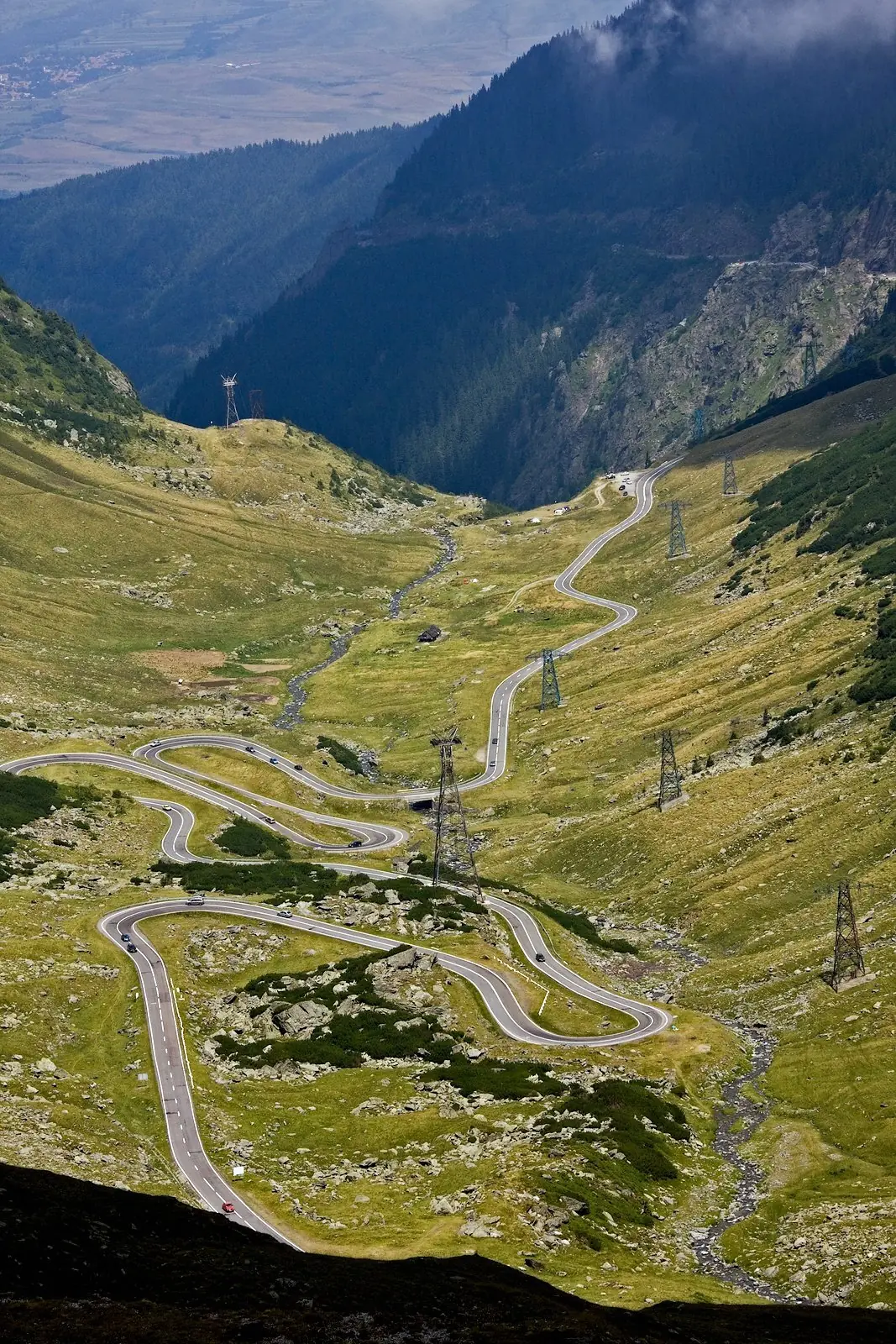
The hairpins of the Transfăgărășan descending from Bâlea Lake toward Transylvania, in 2008. The road was cut through the Făgăraș ridge, the highest range in Romania, between 1970 and 1974, with military labour, as a strategic road; the human cost of the works has never been fully established. Today it opens only in summer and has become one of Europe's most photographed roads.
Photograph: Horia Varlan · Licence: CC BY 2.0 · Image record (Wikimedia Commons)

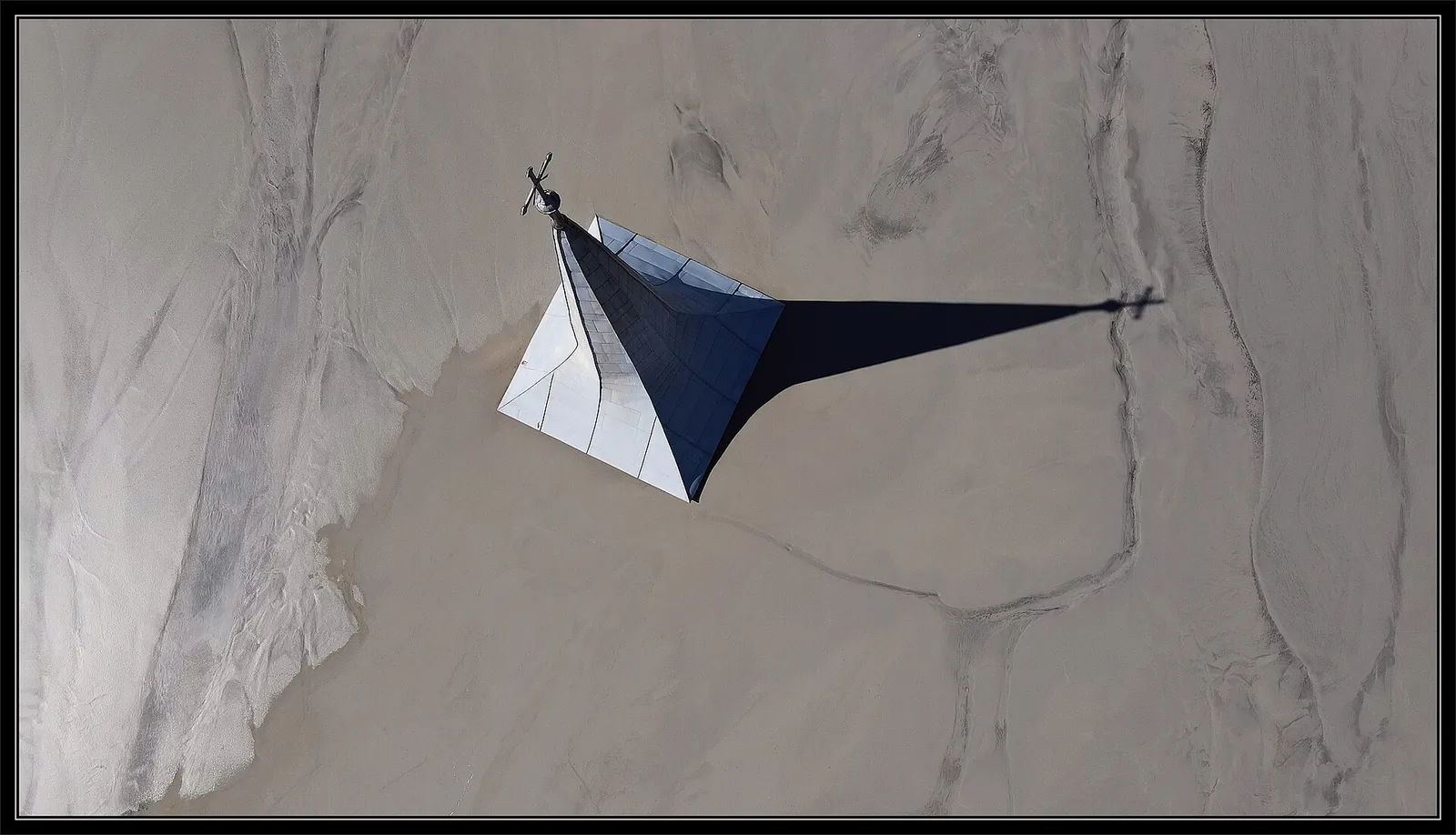
The spire roof of Geamăna's church seen from a drone, alone above the grey tailings of the Roșia Poieni copper mine in the Apuseni Mountains, in October 2020. The small crosses at its tips are the only sign that the blue triangle in the middle of the mud was once a village church's roof. The village began to be covered in 1978, when the valley was given over to mine waste, and the people were gradually moved to the surrounding hills. The spire remains the mark by which the village site can still be found, four decades into the slow flooding.
Photograph: Witold Waschut · Licence: CC BY-SA 2.0 · Image record (Wikimedia Commons)

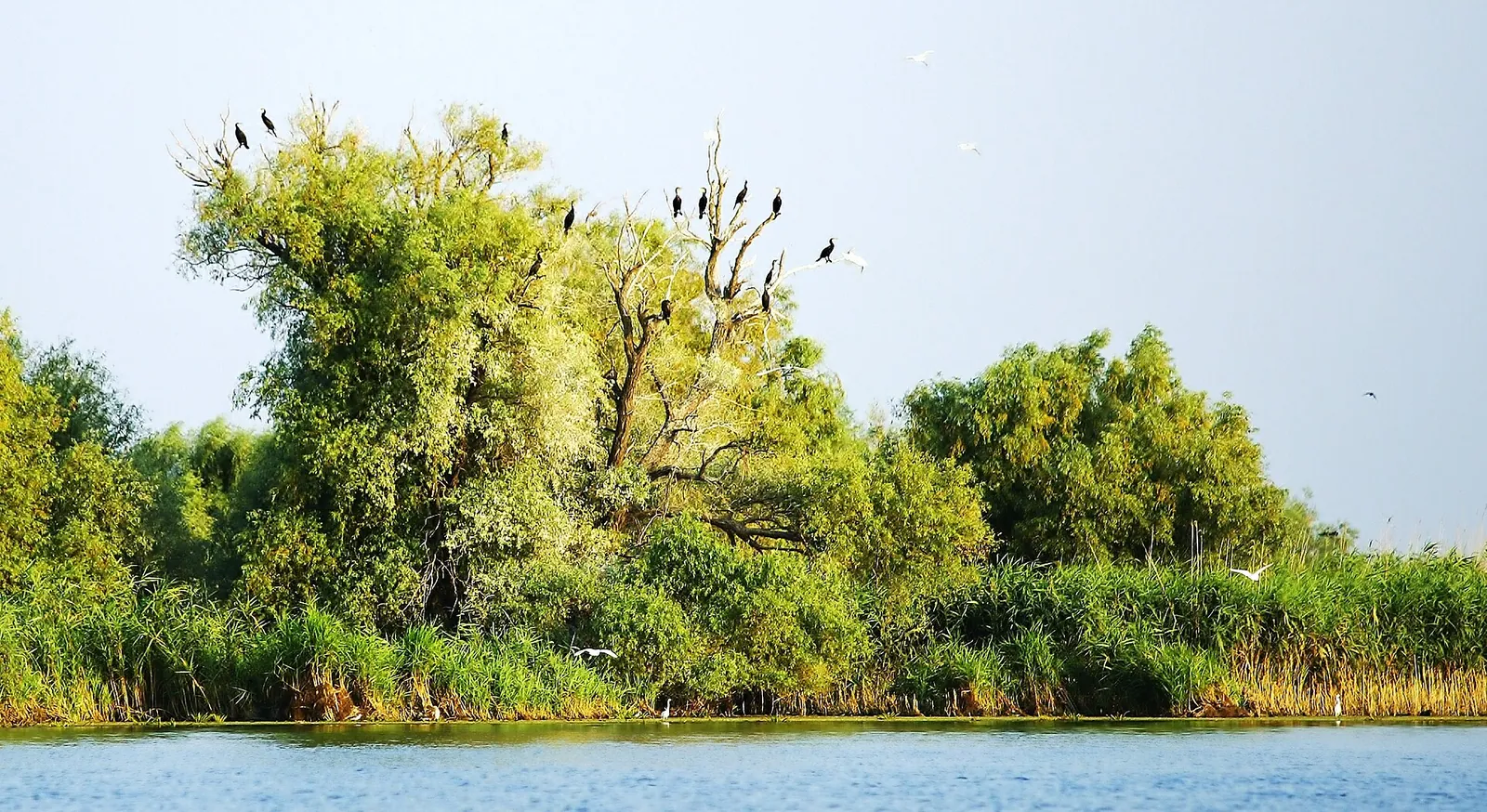
“The cormorants' hotel” in the Danube Delta in 2010: trees whose canopies are full of cormorants, on one of the Delta lakes. Thirty-four years after Rudolf Simon's fishing village, the Delta is a biosphere reserve and a place of pilgrimage for bird photographers from all over Europe. The water, reeds and birds stayed the same; the boats and their purpose changed.
Photograph: Ioan Cepaliga · Licence: CC BY 3.0 · Image record (Wikimedia Commons)

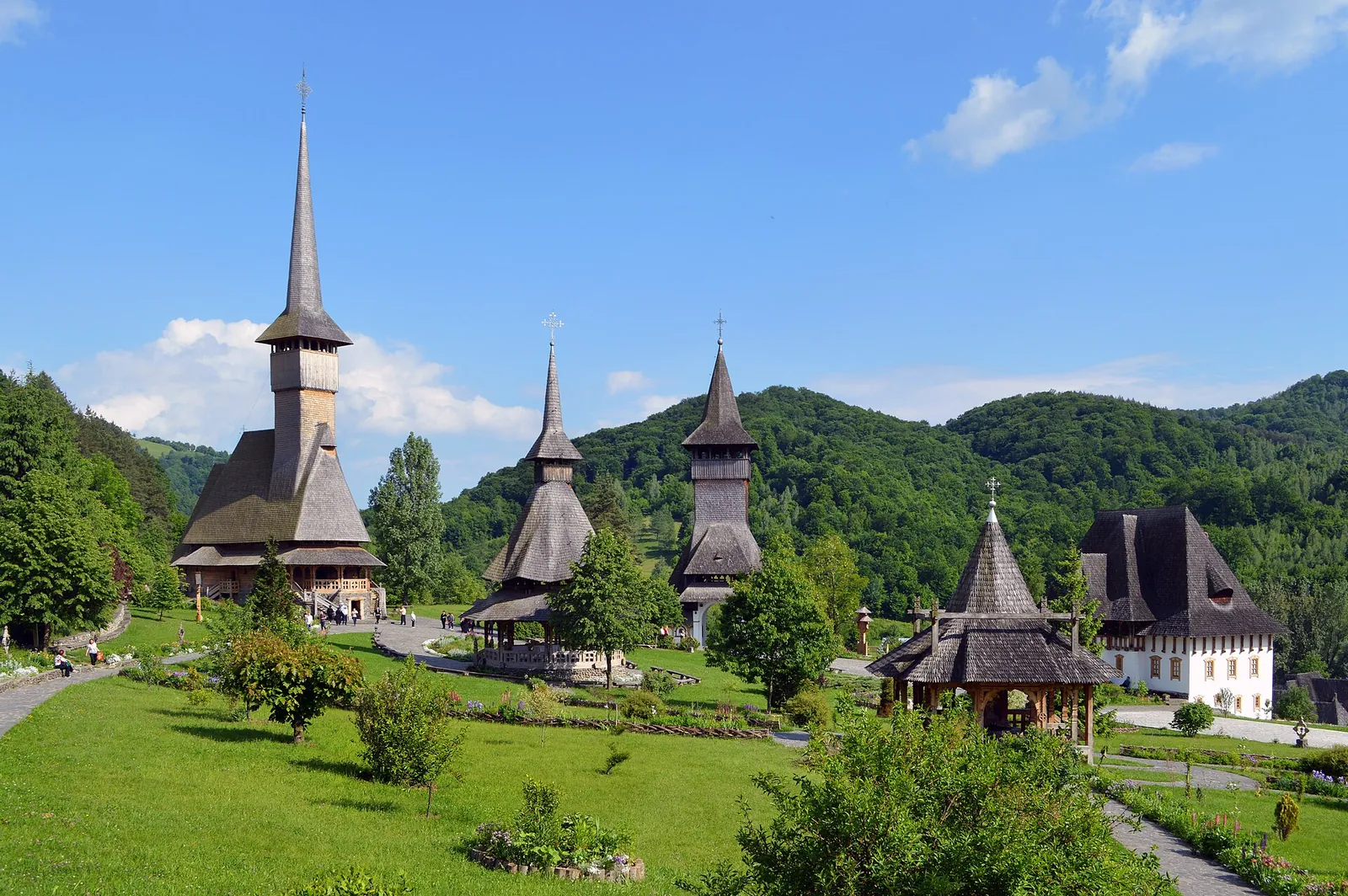
Bârsana Monastery in Maramureș, northern Romania, in 2017, built of wood after 1989 in the Iza valley, in the craft of the old churches and gates Hielscher photographed in 1933. After the decades when church building was stopped or squeezed, the villages of Maramureș took up building in wood again on a large scale. The frame shows that return: an old world, built new.
Photograph: DimiTalen · Licence: CC0 (public domain) · Image record (Wikimedia Commons)

 18642016
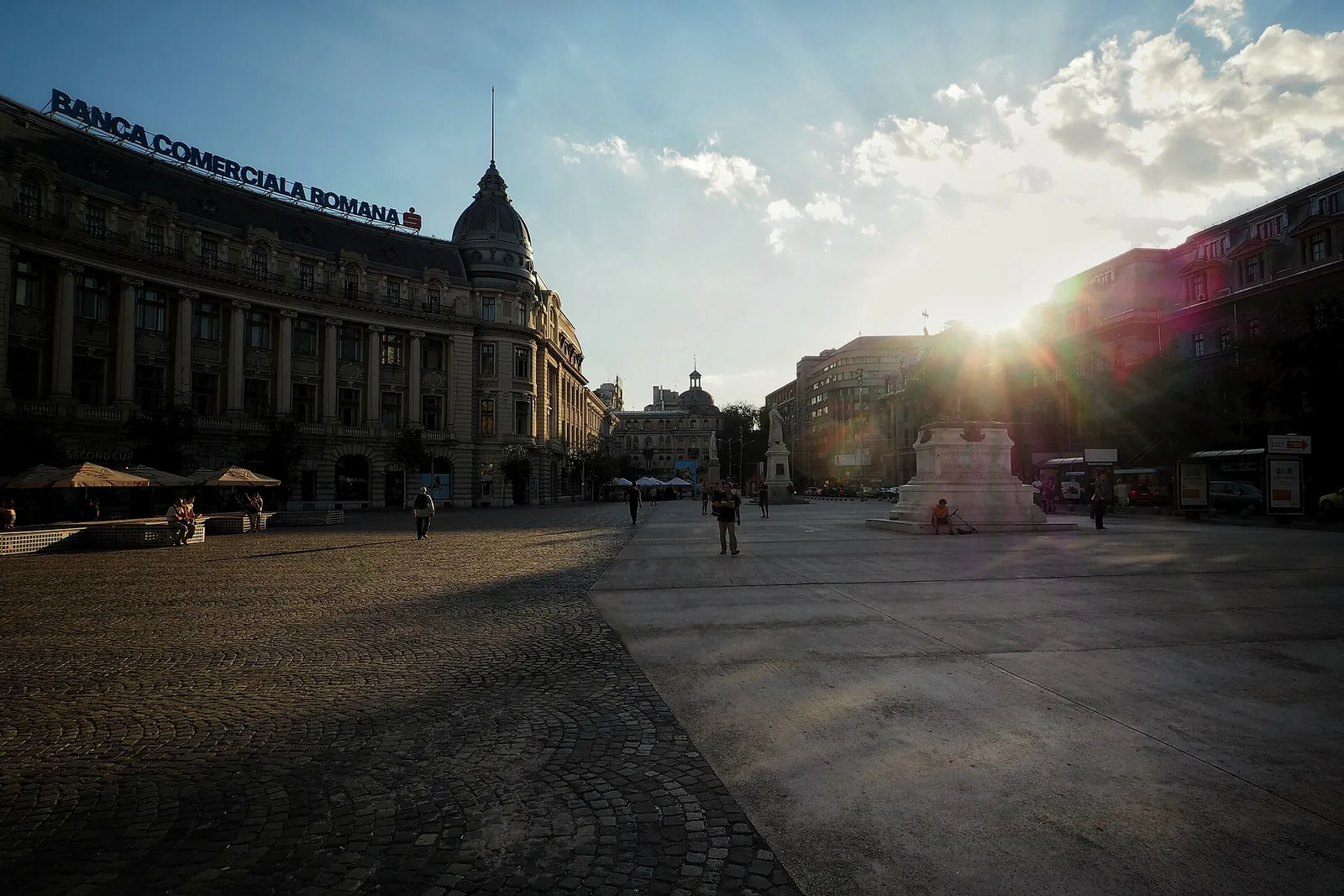
University Square at sunset in July 2016, photographed by Ștefan Jurcă. The building is the same one as in Szathmári's 1864 frame at the start of this page. Set face to face, the two photographs show the old town's houses replaced by a square with statues, trees and traffic, and today's roadway runs exactly over the vanished lanes. One hundred and fifty-two years fit between the two edges of the same frame.
Photograph: Ștefan Jurcă · Licence: CC BY 2.0 · Image record (Wikimedia Commons)

Contact sheet: all 35 frames
The whole film on a single sheet, in year order. Tap a frame to jump to it in the story. The numbers match the ones on the film's edge, beside each large photograph.
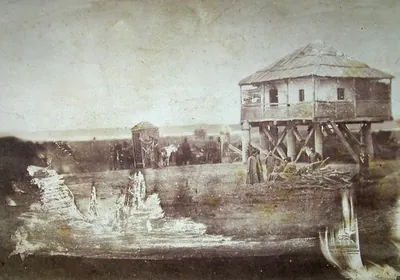 01 · 1854
Oltenița, on the Danube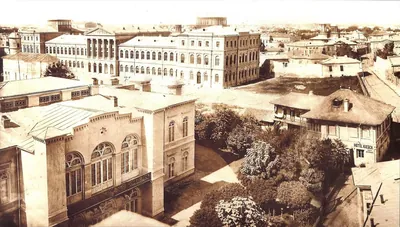 02 · 1864
Bucharest, the University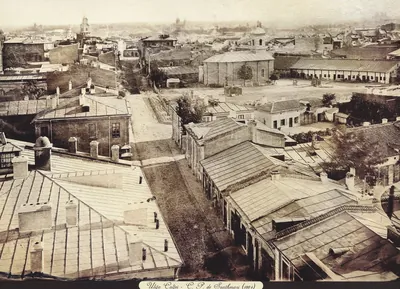 03 · 1864
Bucharest, Colței Street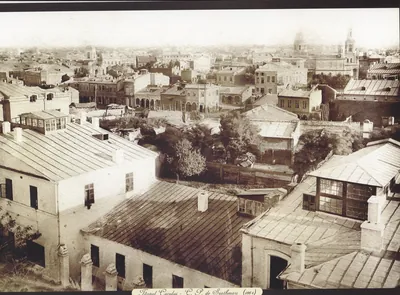 04 · 1864
Bucharest, Târgul Cucului market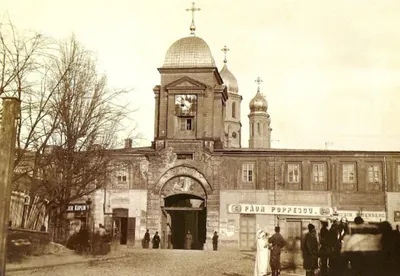 05 · 1871
Bucharest, Zlătari Inn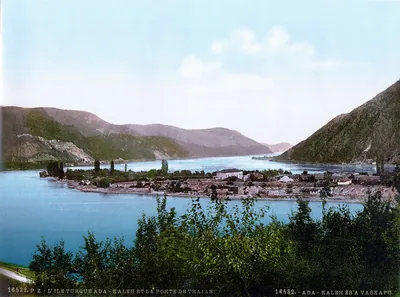 06 · between 1890 and 1905
Ada Kaleh, on the Danube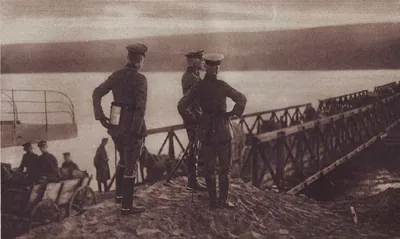 07 · November 1916
the Romanian front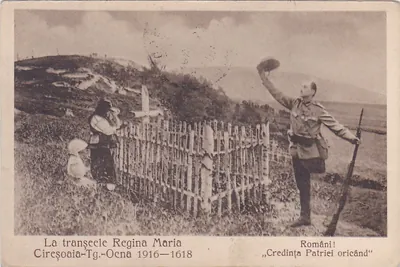 08 · 1918
Cireșoaia, the Moldavian front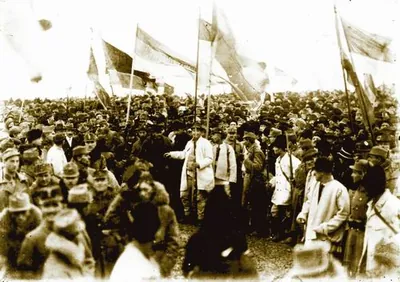 09 · 1 December 1918
Alba Iulia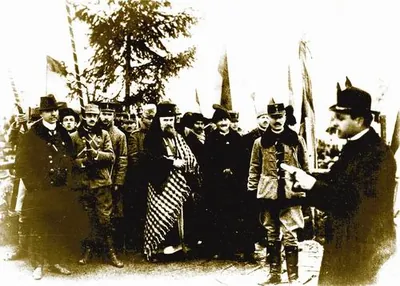 10 · 1 December 1918
Alba Iulia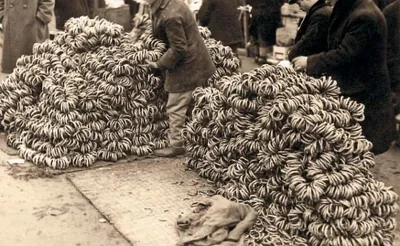 11 · 1930s
Bucharest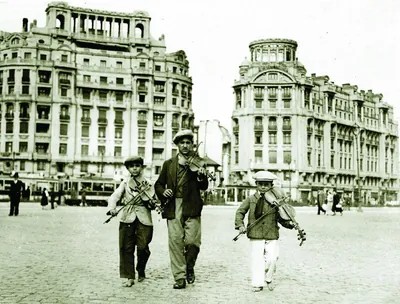 12 · 1930s
Bucharest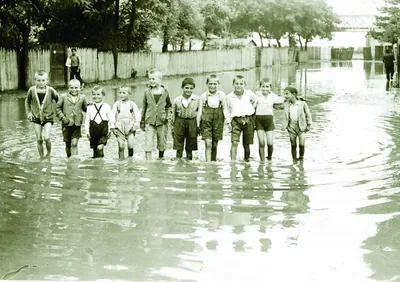 13 · 1930s
Bucharest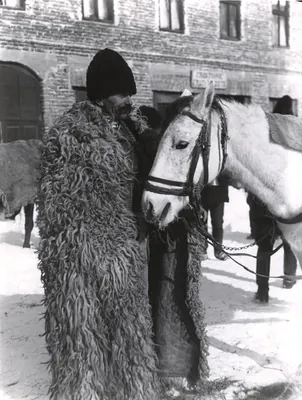 14 · between 1923 and 1935
Bucharest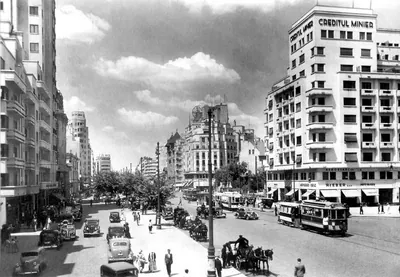 15 · late 1930s
Bucharest, Brătianu and Magheru boulevards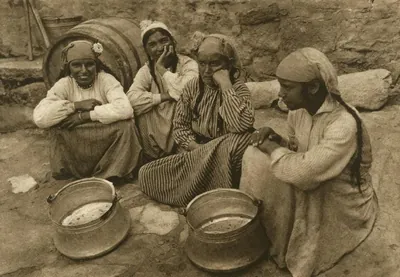 16 · 1933
Dobruja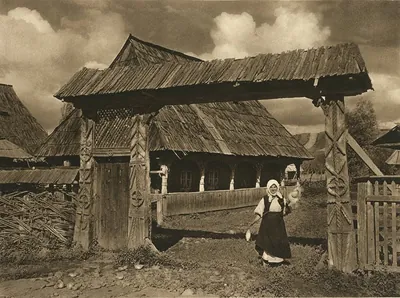 17 · 1933
Giulești, Maramureș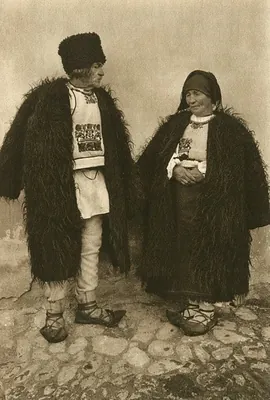 18 · 1933
Avrig, near Sibiu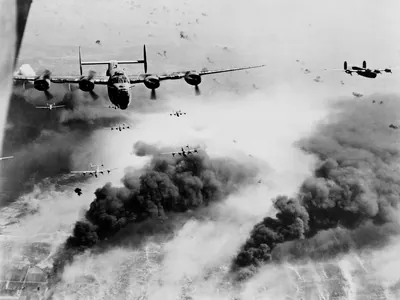 19 · 31 May 1944
Ploiești, Concordia Vega refinery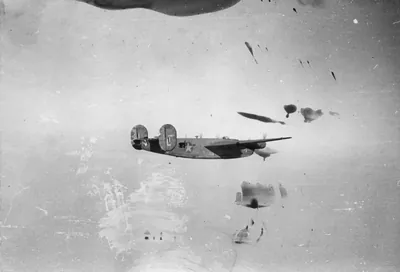 20 · 1 August 1943
over Ploiești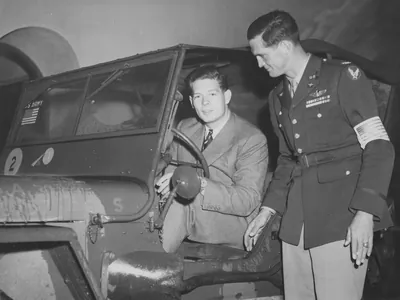 21 · 1944
Romania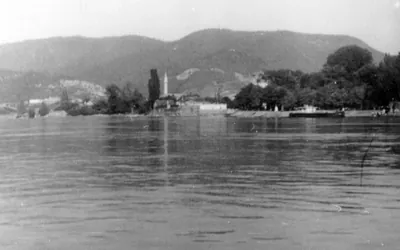 22 · 1968
Ada Kaleh, on the Danube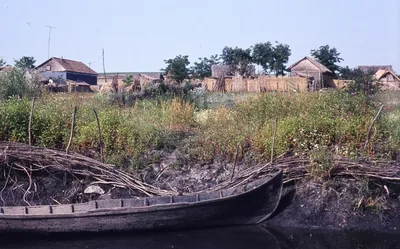 23 · 1976
the Danube Delta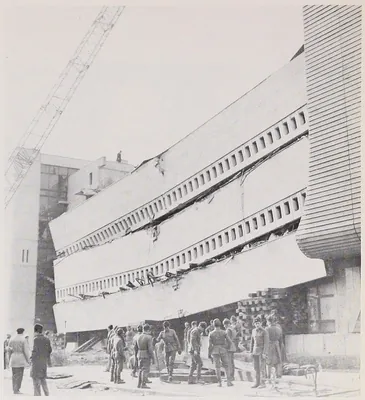 24 · March 1977
Bucharest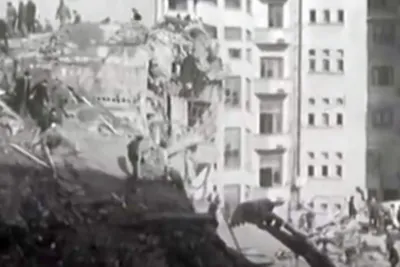 25 · March 1977
Bucharest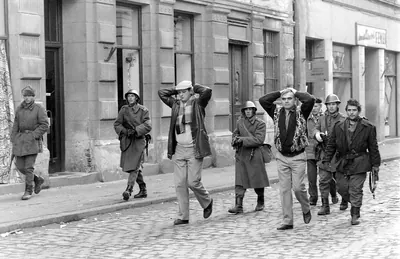 26 · December 1989
Timișoara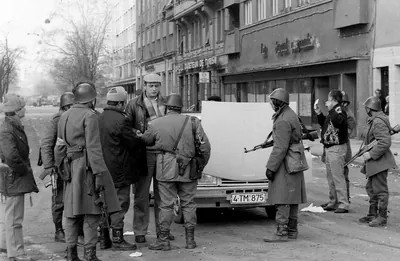 27 · December 1989
Timișoara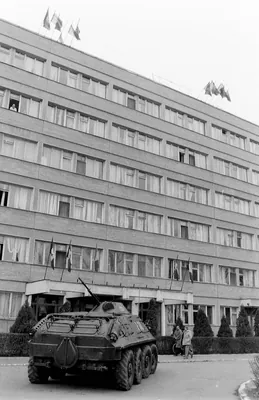 28 · 1989
Romania, December 1989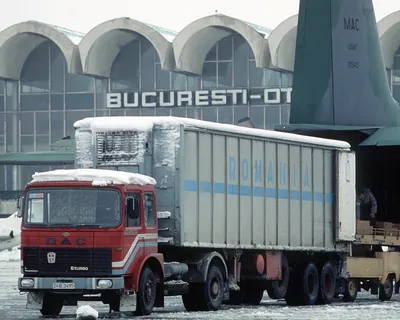 29 · 31 December 1989
Bucharest airport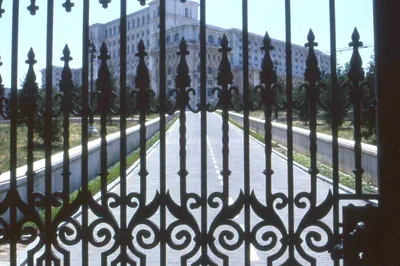 30 · June 1996
Bucharest, the House of the People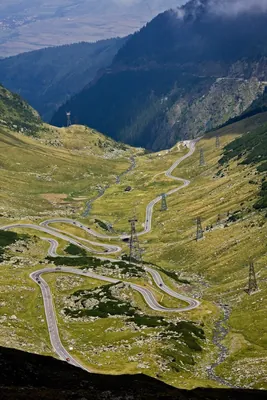 31 · 2008
the Transfăgărășan, Făgăraș Mountains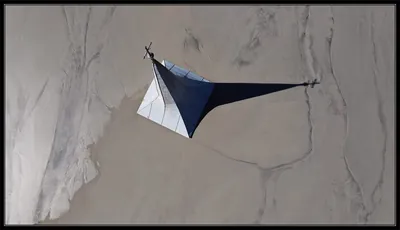 32 · October 2020
Geamăna, Apuseni Mountains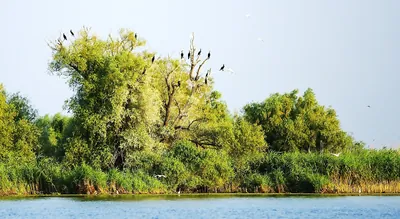 33 · 2010
the Danube Delta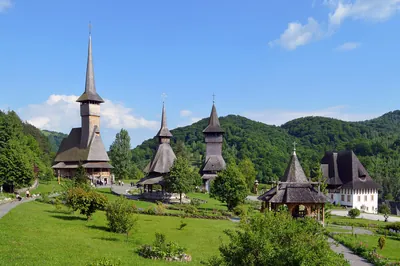 34 · 2017
Bârsana, Maramureș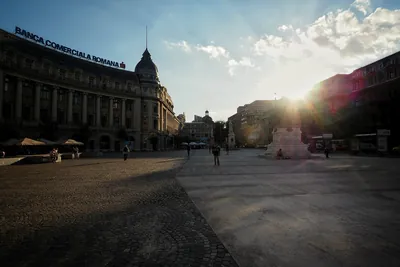 35 · 2016
Bucharest, University Square
About the photographs: where they come from and how they were chosen
What are the first photographs taken on Romanian territory?
Carol Popp de Szathmári's 1854 photographs, made on the Danube bank during the Crimean War, are among the world's first war photographs. Ten years later his Bucharest albums of 1864 show streets, markets and buildings of the capital of the newly united principalities under Alexandru Ioan Cuza, Romania's first ruler. This page opens with those frames, at the size at which they survive.
Who photographed the Great Union of 1 December 1918?
One man: Samoilă Mârza, a photographer from the village of Galtiu near Alba Iulia, in Transylvania. He reached the assembly without accreditation, carrying a glass-plate camera, and made the photographs through which the day is known. Five of his frames survive; two are on this page.
Where do the photographs come from, and may I reuse them?
All 35 photographs come from Wikimedia Commons, the free image archive, and were checked one by one on 21 October 2026: maker, year, dimensions and licence. They are in the public domain or under Creative Commons licences that allow reuse, with attribution and, where marked SA (share-alike), under the same licence for the new work. Beneath each photograph you will find the maker, the licence and a link to the image's full record. The copies here are reduced and converted to WebP for fast loading; the full-resolution originals are in the Commons records linked under each frame.
Why are familiar December 1989 photographs missing?
Two widely shared Bucharest images were deliberately left out: in their Commons records the licence field is empty, so their legal reuse is not established. They were replaced with Hungarian photographer Urbán Tamás's Timișoara series, donated to the open Fortepan archive under a clear free licence. Likewise, Szathmári's 1877 war engravings, often shown as “photographs”, were excluded: they are prints after drawings, and this page shows photographs only.
Why are there few photographs from the communist years?
Because few reached open archives with a clear licence. The era's official photography mostly remains under closed rights, and the demolitions and queues were photographed mainly by amateurs whose archives are not public. We chose the free frames that document the era without propaganda and said openly, in the act's text, that the gap is part of the story. If you hold photographs from the era that you can give to an open archive, this page will grow.
The selection, order and texts are the page editor's. Dating or attribution errors reported by readers are corrected on this page and, where relevant, in the image's Wikimedia Commons record.