ROSES → THE HOLY GHOST → THE WATER-FAIRIES
Rusalii: how roses came to name the Holy Ghost and the fairies
A word spoken in church today keeps the memory of the roses laid on graves in Rome's month of May. In between: a route through Slavic that the etymological dictionary calls debatable — and three living senses: feast, fairy, mayfly.
- 3 IN 1
- one word, three living senses in DEX: feast, fairy, mayfly
- 50 DAYS
- after Easter falls the Descent of the Holy Spirit — the Cincizecime
- 2008
- the Căluș ritual joins UNESCO, danced at Whitsun

How the word changes shape, from Rome's May to today:
- ROSALIA Latin
- ΡΟΥΣΑΛΙΑ Medieval Greek
- рѹсалиѩ Slavonic
- ROSALII Old Romanian
- RUSALII Romanian
DEX defines rusalie three ways: the feast of the Descent of the Holy Spirit, 50 days after Easter; a fantasy being like the iele, an evil fairy that raises storms; and a Danube water larva, the main food of the sterlet. Three fossils in a single word.
THE FEAST
The Descent of the Holy Spirit, 50 days after Easter. “Duminica mare.”
THE FAIRY
A fantasy being, like the iele: storms, crippled people, stolen minds.
THE MAYFLY
A Danube mayfly larva. As a complete insect it appears around Rusalii day.
You say all three when you say Rusalii.
The documentary half: Rome's month of May
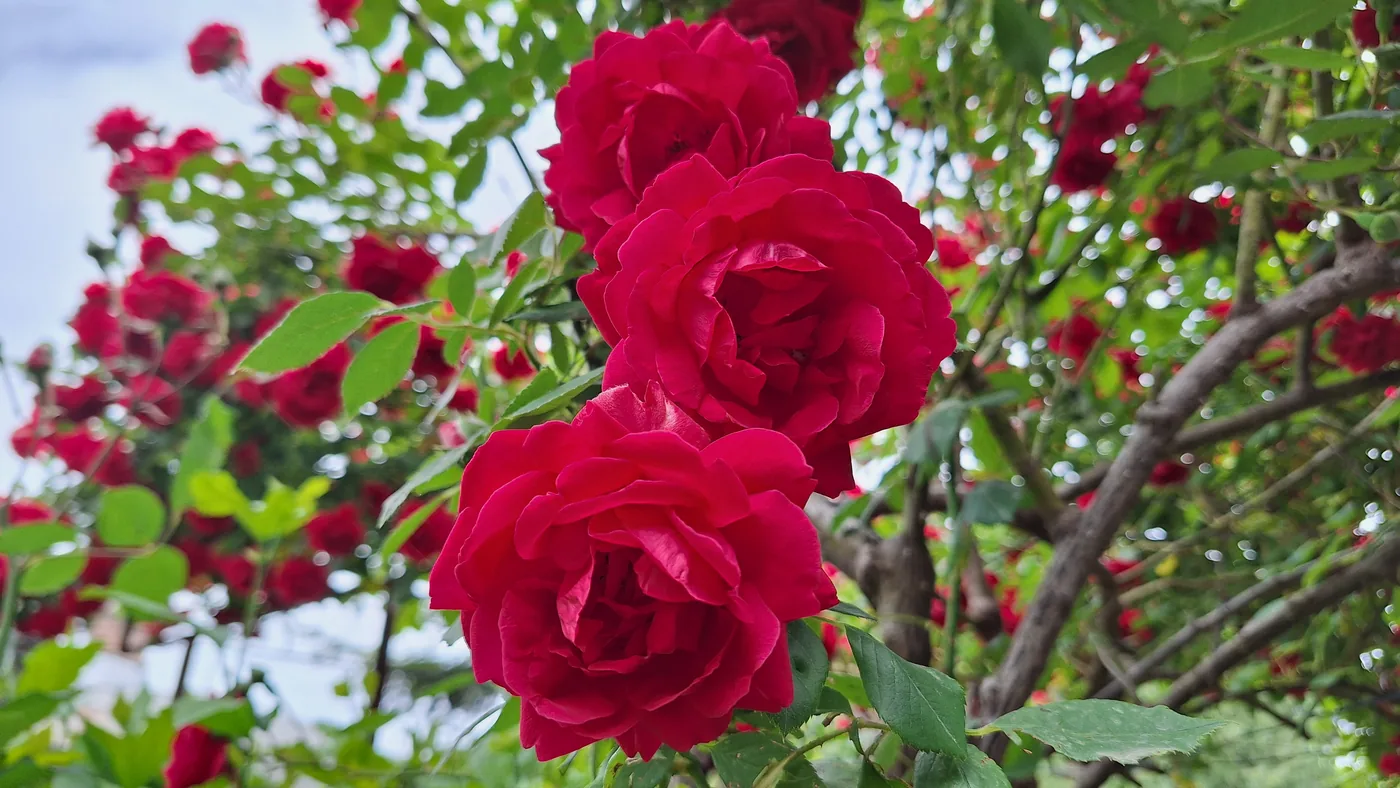
The roses on the graves
For the Romans, May was the month of roses: flowers and their garlands bound, in a single month, the remembrance of the dead to the festivals of the army. Two rites, one month — the page keeps them apart, because the sources keep them apart.
The first rite: flowers on graves
In May and June the Romans laid roses — and violets — on graves. The blooming season framed springtime, and roses adorned festive banquets and funerary ones alike.
The Greek name of the custom was rhodismos. The Calendar of Filocalus (354) lists the Rosalia on 23 May, and a calendar from Capua (387) notes a Rosaria at the amphitheatre on 13 May.
One stone, read by us line by line, we do not yet have: the panel below says openly what we do not know. The festival itself is documented, not guessed.
The second rite: garlands on standards
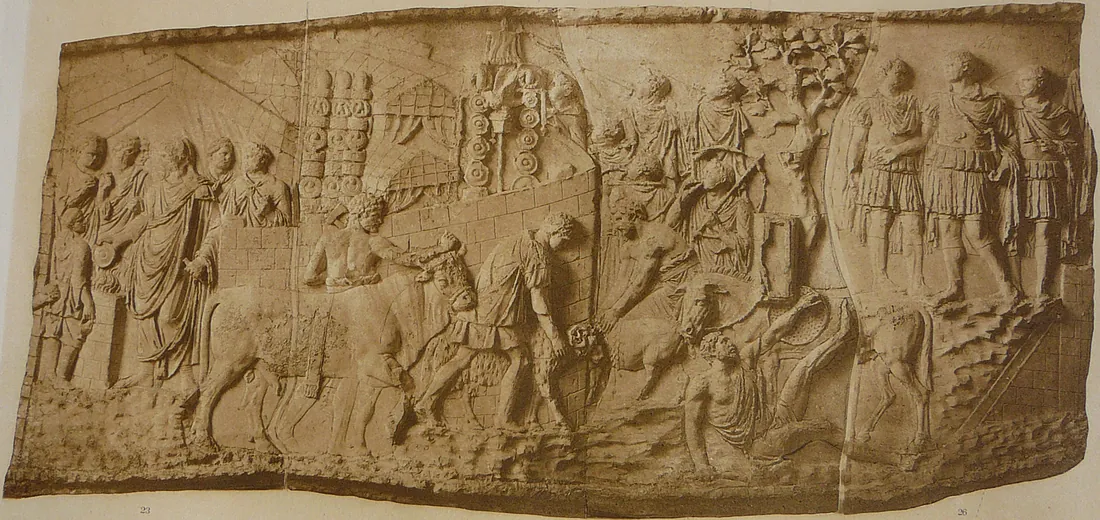
Also in May, the Roman army decked its standards (signa) with roses, in a public supplication (supplicatio): the Rosaliae signorum, the rose-feasts for the standards.
The feast appears in the Feriale Duranum, the papyrus calendar of a cohort stationed at Dura-Europos, from the reign of Severus Alexander (224–235).
Of the two May dates, the first is uncertain — the papyrus text is fragmentary; the second falls on 31 May. The historian Hooey reads them as spring festivals of vegetation, not as a commemoration in the modern sense.
MAY: roses on graves, garlands on standards — two rites, one month.


The etymological half: what the dictionaries say
The word travels
From Latin into Romanian the word passed — so the dictionaries say — through a Slavic staging-post. But the etymological dictionary adds at once that the route stays debatable. The chain below therefore wears its doubt badges.
The chain, doubts included
Each link shows its source and its firmness.
ROSALIA
Latin: the feast of the rosesATTESTED
(attested Latin form)
ρουσάλια
Medieval Greek: proposed staging-postHYPOTHESIS
HYPOTHESIS(debatable staging-post (DER))
рѹсалиѩ
Slavic: From Slav. rusalija (DEX)DISPUTED
HYPOTHESIS(debatable route (DER))
rosalii
Old Romanian: the oldest form, with oATTESTED
(attested form (MDA2))
Rusalii
Romanian: today's feastATTESTED
3 → 1 → 3: three old forms, one word, three living senses.
The word's variants
- rosalii the old form, with o (MDA2)
- rusale in the west, from Serb. Rusalje (Scriban, 1939)
- rusalii today's form
MDA2 also notes the strat de Rusalii (the Rusalii “stratum”): a feast 24 days before Rusalii. The word had, it seems, a before as well.
The dictionaries do not quarrel here: they complete each other. Their very disagreement — the debatable route — is the story.
The week between worlds
The Saturday of the dead, the Sunday, the week of the waters
At Rusalii the year grows thin: on Saturday alms are given for the dead, on Sunday walnut branches are shared at church, and through the surrounding week walk the fairies of the waters and the air. All three days sit in the dictionaries.
THE SATURDAY
the graves
On Rusalii Saturday, vessels full of wine and food crowned with flowers are shared for the dead — a very old custom, writes Șăineanu in 1929. Scriban adds: on the Saturday before Rusalii, memorial alms for the dead are given in places.
THE SUNDAY
the church
The feast lasts two days by the calendar, three in the countryside (Scriban). On Sunday, walnut branches are shared at church. Also on Sunday — Rusalii Sunday — the Călușari meet their dance, in UNESCO's words.
THE WEEK
the waters and the dance
The Rusalii are also fairies of waters and air, raising storms (DEX, MDA2: syn. iele, drăgaice). Șăineanu also notes the saying: l-au umflat Rusaliile — the Rusalii have swollen him. And the Russian name of the fairies — the rusalki, wood-and-water fairies — sits in the same 1929 dictionary.

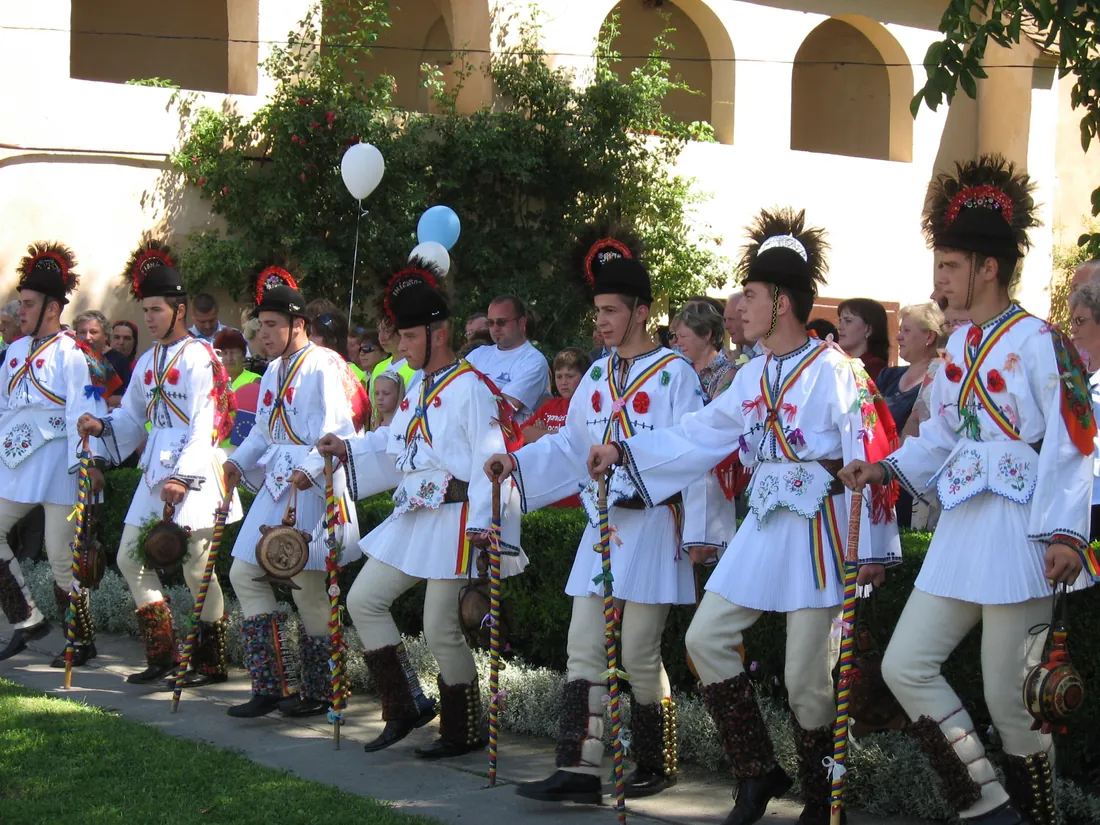

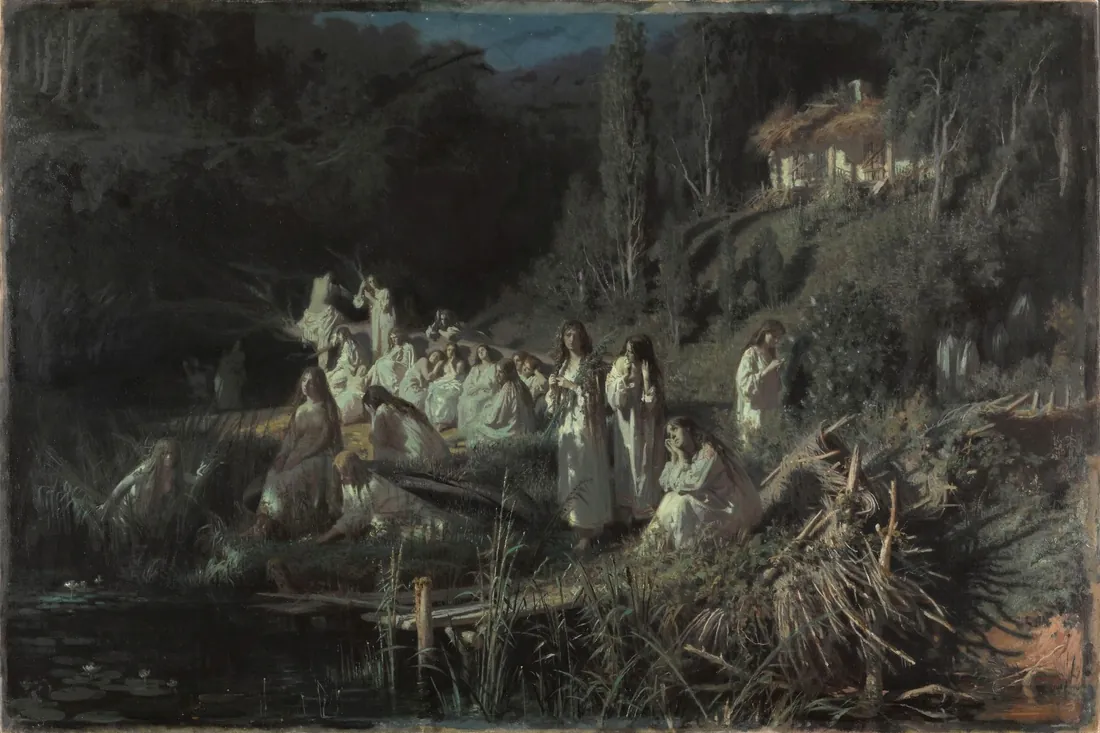

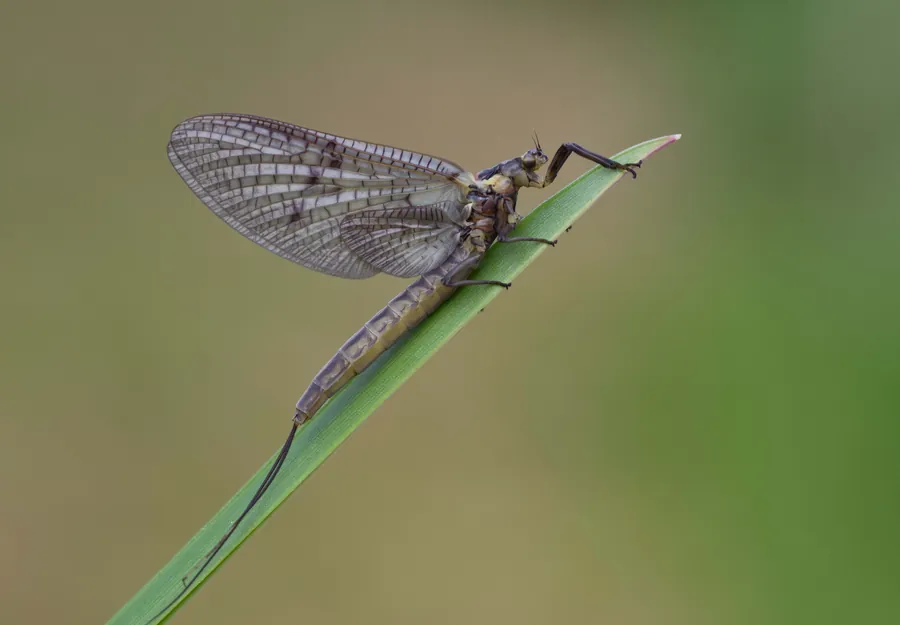

Today, in pink
Two names, two memories
Romanian has two names for the same feast: one that counts, one that remembers the roses. The page does not decide where the split comes from — it shows the two names only, as the dictionaries define them.
Cincizecimea · the name that counts
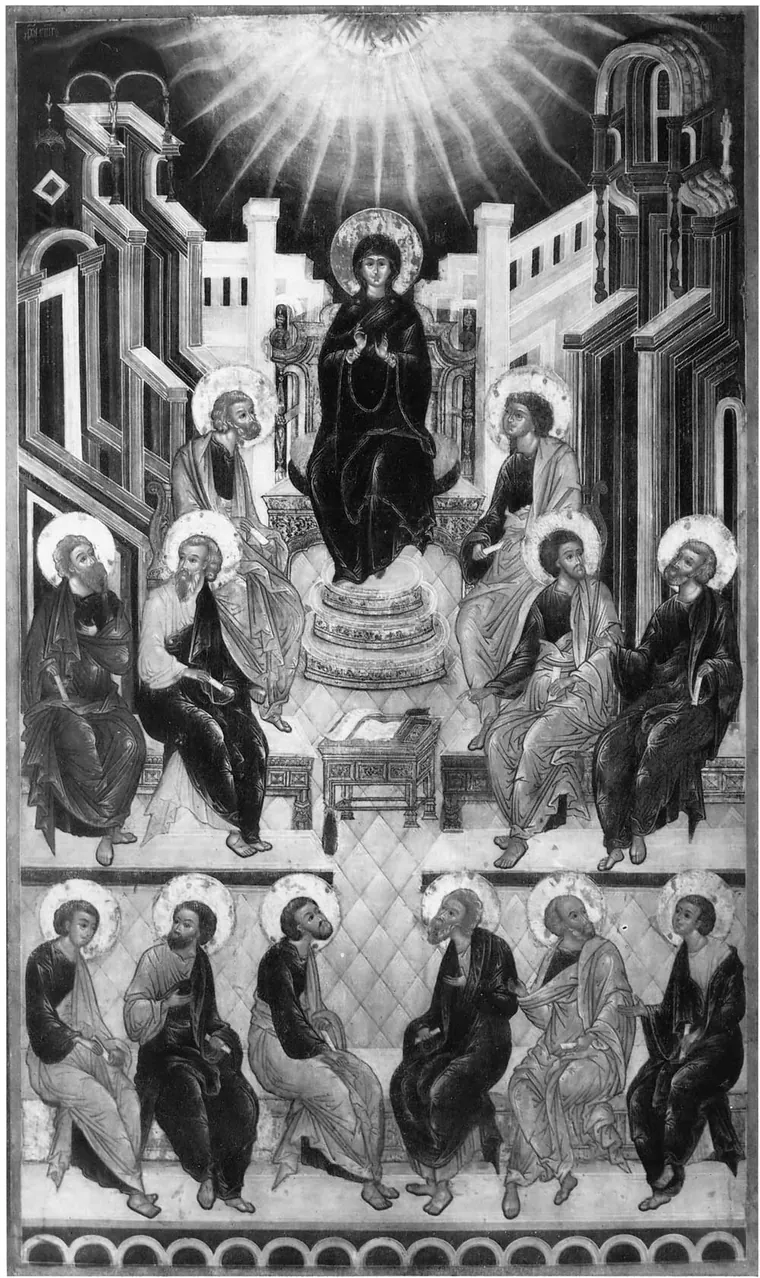
The event and feast of the Descent of the Holy Spirit, 50 days after Christ's Resurrection. The etymology, too, is the dictionary's: Cincizeci + suf. -ime (“suffix -ime”).
Rusalii · the name that remembers the roses
The feast of the Descent of the Holy Spirit, of most ancient mythological origins, from rites of remembrance of the dead — and, at once, fairy and mayfly. DEX again.
The 50-day count: paste-pesach →
“On Rusalii Saturday, vessels full of wine and food crowned with flowers are shared for the dead.”
We chose the fragment from the dictionary, not from the tale: Gogol's lines stay unquoted here — the whole story is not part of this page.
The closer: one word, three fossils
FEAST
The Descent of the Holy Spirit, 50 days after Easter.
FAIRY
A fantasy being, like the iele.
MAYFLY
A Danube water larva; by extension, the mayfly.
Three fossils: the Roman May feast, the water-fairy, the Danube fly.
Three things that are not true
Each denial stands on its source.
“Rusalii comes straight from Latin.” NO: direct derivation from Latin is improbable, and the route through Slavic stays debatable (DER). The clues — the l that should have vanished, rosalii with o — refuse explanation. The verdict: probably a cultural borrowing.
“The Călușari dance for rain.” NO: UNESCO's text describes a purification and fertility rite with healing powers — not one word about rain. Rain belongs to other rites, outside this page.
“The folk rusalka has a fish tail.” NO: the fish tail belongs to the stage and the literary page — Gogol (1831), the opera (1878–79). In DEX and MDA2 the Rusalii are water-and-air fairies, syn. iele, drăgaice — with no fish tail.
What we don't know (said aloud)
- The stone with roses: no Rosalia inscription has been read by us line by line. The hunt stays open; Lanuvium does not stand in for it.
- The exact Feriale Duranum dates: the first of the two feasts is uncertain, the text being fragmentary.
- The Voroneț Codex line: we know the reference (COD.VOR. 186), not the line itself.
- The ethnography of the waters: beyond the dictionaries, the rusalki week awaits a source read end to end.
- Gogol's lines: the title and year are known (1831); a quotation would need a checked translation.
- The medieval bridge from Rosalia to Rusalii stays off this page until a source carries it.
A good dictionary does not fill every gap. Sometimes the most exact etymology is: we do not know yet.
Sources
Dictionaries first, then records and studies, then the waters. Every high-risk claim points at its source.
Dictionaries
Records and studies
- Rosalia: the Roman festival (EN-wiki)
- Feriale Duranum: the Dura-Europos calendar (EN-wiki)
- Lanuvium, 9 June 136: the regulations translation (CIL XIV 2112)
- The Căluș ritual: UNESCO, inscribed 2008
The waters and the neighbours
- Gogol: May Night, or the Drowned Maiden, 1831 (EN-wiki, title and date)
- The Călușari dance: hora-lui-choros
- The 50-day count: paste-pesach
Type: Fraunces, Newsreader and Atkinson Hyperlegible, under the SIL Open Font Licence.