A DICTIONARY CRIME, IN THREE WORDS
The village was once a ditch
Three words Romanians say every day — sat, cetate, oraș — hide a swap: the Latin ditch fossatum became the village, the Latin city civitas narrowed into the fortress, and the city took its name from Hungarian. Per DEX; one etymologist dissents.
- fossatum → sat
- the ditch became the village; the old form fsat
- civitas → cetate
- the city narrowed into the fortress
- város → oraș
- borrowed from Hungarian; entry date unknown

One word, three lives:
- FOSSATVM Latin: ditched stronghold
- fsat Old Romanian, c. 1500–1520
- sat today: rural settlement
The ditch became the village, the city became the fortress — and the city had to be renamed. per DEX; one etymologist dissents
Every evening, the same ditch
The legion never slept without a ditch. Polybius describes the labour shared out by maniples, centurions supervising, and Vegetius gives the dimensions: the every-night ditch.
“The Romans on the contrary prefer to submit to the fatigue of entrenching and other defensive work for the sake of the convenience of having a single type of camp which never varies and is familiar to all.”
The division of labour is in 6.34 (the allies dig two sides, the Romans the other two); the contrast with the Greeks — who “shirk the labour of entrenching” — is in 6.42. Both quoted from the Loeb edition.
The dimensioned ditch
The hasty ditch: 9 × 7 feet
“tumultuaria fossa fit lata pedes nouem et alta pedes VII” — 9 feet wide, 7 deep. That is ≈2.7 × ≈2.1 m at the Roman foot of 29.6 cm.
The full ditch: 12 × 9 feet
“XII pedes lata sit et alta… pedes nouem” — 12 wide, 9 deep. That is ≈3.6 × ≈2.7 m at the same 29.6 cm foot.
Roman feet, not modern ones
The conversion uses the accepted modern value, 1 pes = 296 mm. Vegetius gives feet only; the metres are our computation, factor shown.
Method: archaeologists still classify these ditches by profile — “fossa fastigata”, V-sectioned. The Ermelo dig (Netherlands, 2024) cites Vegetius 1.24 and Pseudo-Hyginus §50 explicitly as the ancient authorities for the dimensions.

The ditch at continental scale
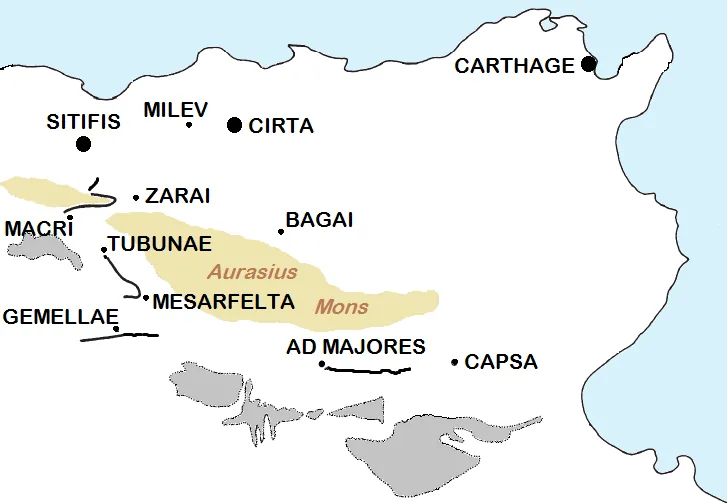
In North Africa the Romans scaled the ditch up to a frontier: the Fossatum Africae. It is claimed to extend over 750 km or more — a length to treat with care, since the source itself says “claimed”.
The reference is our own computation (haversine) from the two towns' coordinates; the upper bar renders the source's claim, with “claimed” glued to the number.
A single ancient mention
The Fossatum is mentioned only once in historical literature before the 20th century: the letter of emperors Honorius and Theodosius II to Gaudentius, vicarius Africae, in 409, preserved in the Codex Theodosianus — which says the fossatum had been established by “the ancients”.
Four segments, after Baradez
The full extent was only known after World War II, from aerial photography: Colonel Jean Baradez mapped at least four segments, and his book remains the standard work of reference.
Begun under Hadrian, probably
Construction probably began after Hadrian's first visit to Africa in 122 (and before or after his second, in 128) — Baradez's conclusion, unmoved since; abandonment around 430–440, after the Vandal invasion.

The rupture: 271
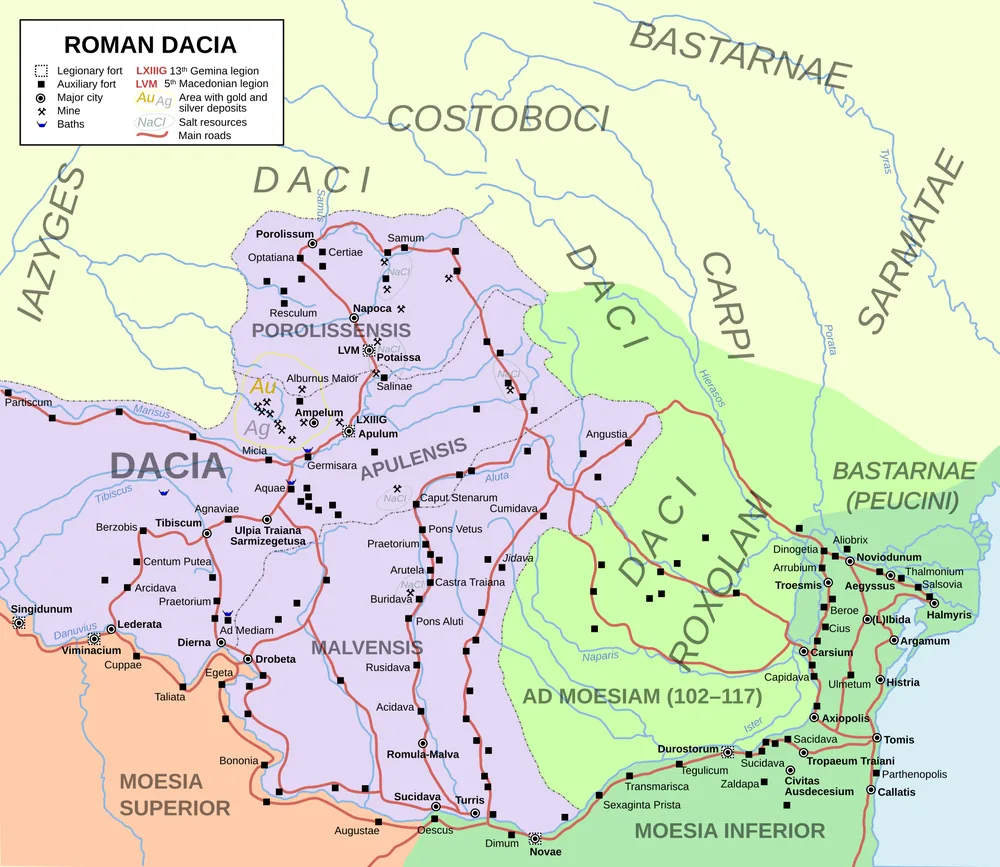
The traditional date for Dacia's official abandonment is 271 — but Aurelian decided the abandonment reluctantly and possibly only as a temporary measure, and the fate of the Romanized population became mired in controversy. All three hedges belong to the source; this page never separates them from the year.
“The province of Dacia, which Trajan had formed beyond the Danube, he gave up, despairing, after all Illyricum and Moesia had been depopulated, of being able to retain it. The Roman citizens, removed from the town and lands of Dacia, he settled in the interior of Moesia, calling that Dacia which now divides the two Moesiae.”
A new province, in the south
Aurelian established a new province of Dacia — Dacia Aureliana — with its capital at Serdica, previously belonging to Lower Moesia; a portion of the Romanized population settled south of the Danube.
The controversy stands
The “Controversy over the fate of the Daco-Romans” section sets two theories against each other — continuity of a Daco-Roman population north of the Danube, and a near-complete withdrawal. The camps stay face to face; the thread followed here is the words', not continuity's.
Why it matters for words
Between the camp that digs the ditch and the village that inherits its name lies this rupture. The link is one of senses kept in dictionaries, not of proven cause — dictionaries give senses, not causes.

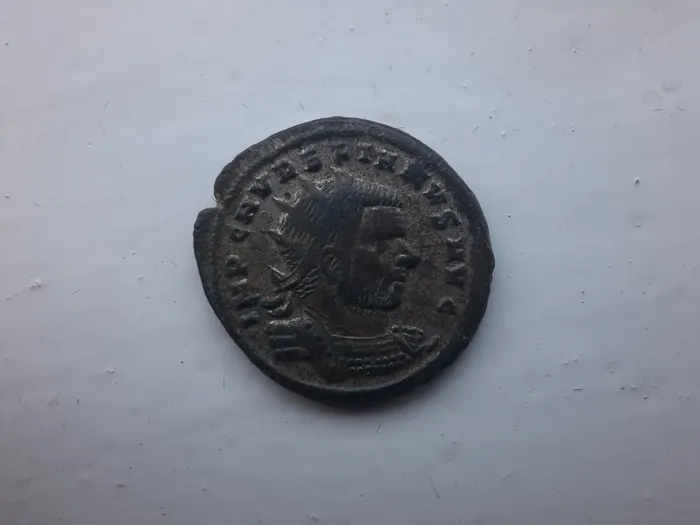

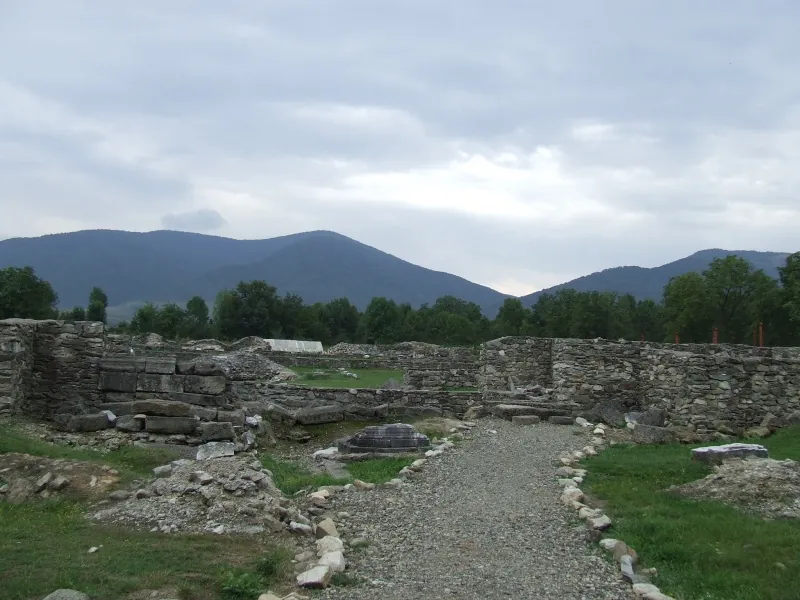

The Meaning Engine
From AD 100 to AD 1600, watch the four tracks: FOSSATUM slides from ditch to village, CIVITAS from city to fortress, VÁROS enters late, from outside — while FOSSA, the western control, never leaves the ditch. Each node opens its card: short quote, source, link.
Year 100 ·
FOSSATUM → sat
CIVITAS → cetate
VÁROS → oraș
FOSSA → fosse / foso (control)
civitas “city” (Latin)
civitas
“lat. civitas, civitátis, cetățenie, oraș, stat”
Card: C07 · https://dexonline.ro/definitie/cetate
fossa “ditch” (Latin)
fossa
“from Latin fossa “ditch, trench, furrow,” in full fossa terra, literally “dug earth,” from fem. past participle of fodere “to dig””
Card: C09 · https://www.etymonline.com/word/fosse
fossa “ditch” (Latin)
fossa
“from Latin fossa “ditch, trench, furrow,” in full fossa terra, literally “dug earth,” from fem. past participle of fodere “to dig””
Card: C09 · https://www.etymonline.com/word/fosse
fossatum in a law of 409 (Africa)
fossatum
“a letter written by the co-emperors Honorius and Theodosius II to Gaudentius, the vicarius Africae, in 409, and preserved in the Codex Theodosianus”
Card: C14 · https://en.wikipedia.org/wiki/Fossatum_Africae
Fosse-way (early 12th c.)
Fosse-way
“The Fosse-way (early 12c.), one of the four great Roman roads of Britain, probably was so named from the ditch on either side of it.”
Card: C09 · https://www.etymonline.com/word/fosse
fosse in English (early 14th c.)
fosse
““ditch, trench,” early 14c. (late 13c. in place names), from Old French fosse “ditch, grave, dungeon” (12c.), from Latin fossa “ditch, trench, furrow””
Card: C09 · https://www.etymonline.com/word/fosse
fsat in PSALT. HUR. 462/11 (c. 1500–1520)
fsat
“[At: PSALT. HUR. 462/11 / V: (înv) fsat / Pl: ~e, (înv) ~uri / E: ml fossatum „șanț” cf alb fshat]”
Card: C02 · https://dexonline.ro/definitie/sat
oraș in a 1521 document (borrowing; date of entry unknown)
oraș
“[At: (a. 1521) HURMUZAKI, XI, 843 / V: (înv) ur~ / Pl: ~e și (reg) ~uri / E: mg város]”
Card: C08 · https://dexonline.ro/definitie/ora%C8%99
cetate in COD. VOR. 20/1 (16th c.)
cetate
“[At: COD. VOR. 20/1 / V: ci~ / Pl: ~tăți / E: ml civitas, -tatem]”
Card: C06 · https://dexonline.ro/definitie/cetate
cetate today (DEX ’09)
cetate
“CETATE, cetăți, s. f. 1. Loc întărit printr-un sistem de fortificații; fortăreață. […] – Lat. civitas, -atis.”
Card: C06 · https://dexonline.ro/definitie/cetate
foso in Spanish (modern; via Italian)
foso
“Borrowed from Italian fosso. Cognate with English fosse. 1. ditch, trench 2. moat, fosse”
Card: C10 · https://en.wiktionary.org/wiki/foso
oraș today (DEX ’09)
oraș
“ORAȘ, orașe, s. n. 1. Formă complexă de așezare umană […] – Din magh. város.”
Card: C08 · https://dexonline.ro/definitie/ora%C8%99
sat today (DEX ’09)
sat
“SAT, sate, s. n. 1. Așezare rurală […] – Lat. fossatum.”
Card: C01 · https://dexonline.ro/definitie/sat
Pick a year on the centuries' scale; press a node to jump to its year.
Method: nodes are verified attestations, each with an identifier into the sources table. Undated modern forms sit at the right edge; century-wide datings sit mid-century — neither claims an exact year. The 271 tick on the year scale is an event, not an attestation: the abandonment of Dacia, decided reluctantly and possibly only as temporary.
The evidence, as museum pieces
Three dictionary entries, set side by side so the swap shows. Read them as fossils: each keeps one sense the others lost.
sat
DEX ’09 + MDA2
“SAT, sate, s. n. 1. Așezare rurală […] – Lat. fossatum.” MDA2 adds the full header: the cited attestation is PSALT. HUR. 462/11, the old form is fsat, and the etymology is “ml fossatum «șanț» cf alb fshat” — Medieval Latin fossatum, “ditch”, compare Albanian fshat.
cetate
DEX ’09 + CADE + Scriban + DER
“CETATE, cetăți, s. f. 1. Loc întărit […] fortăreață. […] – Lat. civitas, -atis.” But CADE still gave sense 1 as “Oraș”, Scriban wrote “oraș întărit cu ziduri, oraș în genere, azi numai în poezie” (“a walled town, a town in general, today only in poetry”), and DER lists “1. Fortăreață, citadelă, castel. 2. Oraș.” The narrowing shows inside the dictionaries — we assert nothing.
oraș
DEX ’09 + MDA2
“ORAȘ, orașe, s. n. 1. Formă complexă de așezare umană […] – Din magh. város.” MDA2 cites the 1521 attestation (HURMUZAKI, XI, 843) and the same etymology: “mg város”. DEX dates the borrowing nowhere — neither do we.
The old senses of sat, in MDA2 order
- 1(Înv) Cortfirst sense: the tent.
- 2(Înv) Locuință (rudimentară)then the dwelling.
- 3(Pex) Așezare umană compusă din corturithen the tent-settlement.
- 4(Sens curent) Așezare umană ruralăthen today's sense: the village.
- 9(Înv) Cetatethe fossil: once, sat could mean a citadel.
The numbering is the dictionary's; senses 5–8 and 10–15 exist and are deliberately skipped here (inhabitants, phrases, modern senses).
The one who doubts
The Dicționarul etimologic român (Cioranescu) calls the fossatum origin “Origine îndoielnică” (“doubtful origin”) and proposes Lat. sătum, from sero, “to plant, to sow”. He gets the floor at length — including the concession that keeps this page on the majority side.
For sătum (DER)
- “Mai degrabă trebuie să se pornească de la lat. sătum, de la sĕro «a planta, a semăna»” (“one should rather start from Lat. sătum, from sĕro ‘to plant, to sow’”) — an explanation DER says fits the first senses of sat in the 16th century.
- The starting idea would be “seniorie” or “moșie” (“seigneury”, “estate”), onto which the lord's subjects settled — at first “o simplă plantație, ca în vechile colonii” (“a mere plantation, as in the old colonies”); compare Slavic sadŭ “plant” → selo “village”.
- The explanation had already been given by Cipariu (Gram., 205).
Against sătum (also DER)
- “…ar fi suficientă, dacă n-ar exista dovada formei înv. fsat, dificil de explicat.” (“…would suffice, were it not for the evidence of the old form fsat, difficult to explain.”) The concession is Cioranescu's own — and it is the hinge of this panel.
- One might assume a confusion, already in Latin, between sătum and fossatum; “dar și așa se mențin dificultățile fonetice” (“but even so the phonetic difficulties stand”).
- The fossatum camp, listed by DER himself: Bogrea, Tiktin, Daicovici, Candrea, Scriban, Rosetti — plus today's dictionaries (DEX, MDA2). Hence this page keeps fossatum as the head etymology, with the dissent in view.
No verdict beyond that: most dictionaries give fossatum; one great etymologist dissents.
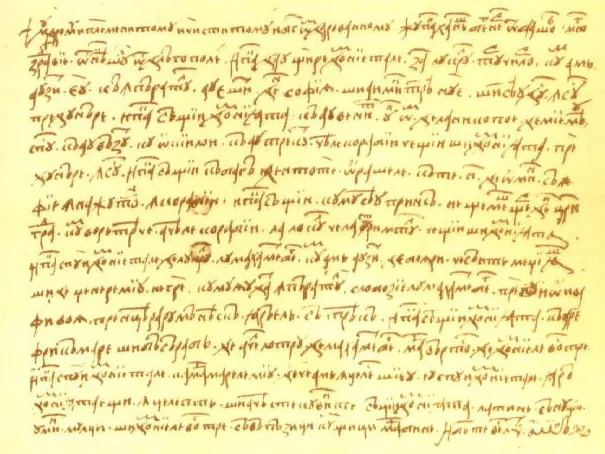

The West that never moved
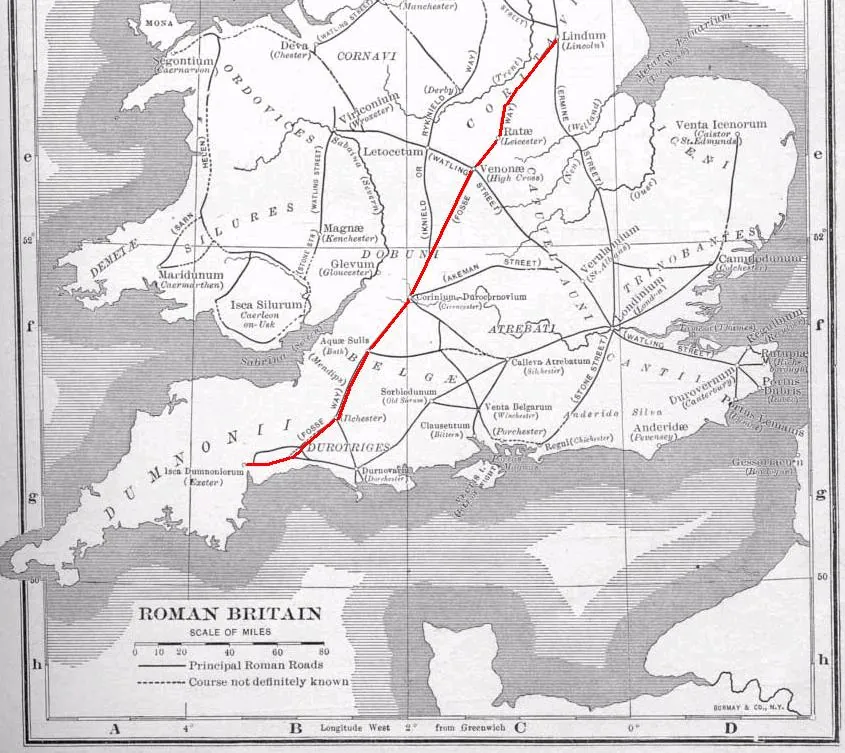
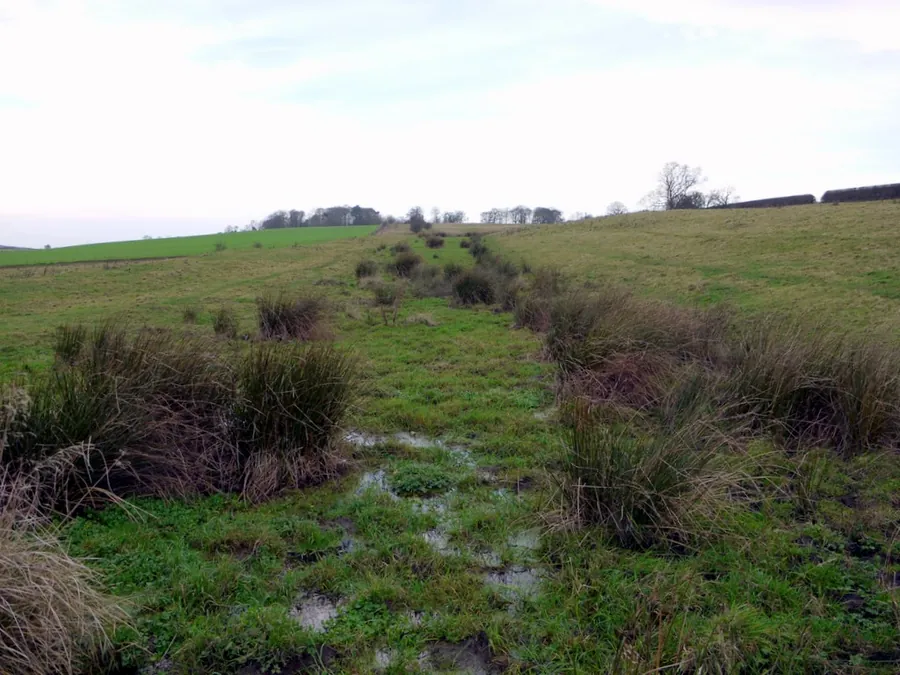
The control group: in the West, the heirs of fossa stayed ditches. English fosse, Spanish foso, French fossé — all still mean a dug hole. We call them cognates, never direct heirs: foso came via Italian fosso.
fosse (English)
“ditch, trench,” early 14c. (late 13c. in place names), from Old French fosse “ditch, grave, dungeon” (12c.), from Latin fossa. The Fosse-way — one of the four great Roman roads of Britain — probably was so named from the ditch on either side of it.
foso (Spanish)
“Borrowed from Italian fosso. Cognate with English fosse. 1. ditch, trench 2. moat, fosse.” A learned borrowing via Italian — hence “cognates”.
fossé (French)
Inherited from Middle French, from Old French, from Late Latin: “1. ditch; trench; moat”. No village on the horizon.
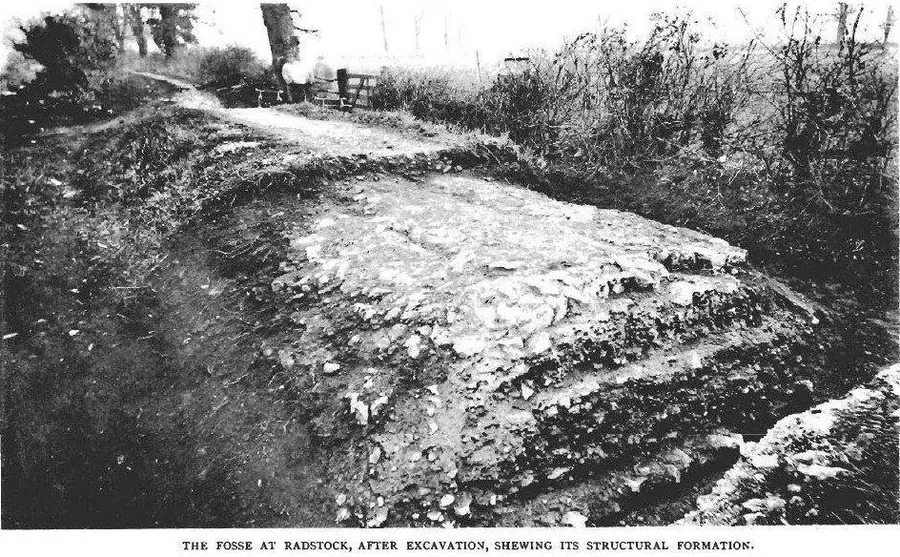



The borrowed word
With cetate occupied by the sense “fortress”, it seems natural that the city should have needed a new word — seemingly why Hungarian város entered. “Seemingly” is part of the sentence: no source states the cause; the dictionaries give only the borrowing (“Din magh. város”), undated.
What we know
MDA2 records the 1521 attestation and the etymology “mg város”; DEX confirms the borrowing. That is all.
What we don't
When the word entered Romanian, by which route, and whether a native rival existed. First attestations are not settled here.
Why it is no shame
The borrowing fills a gap left by cetate's narrowing — an ordinary mechanism, not an accident.
The vallum: the weighing section
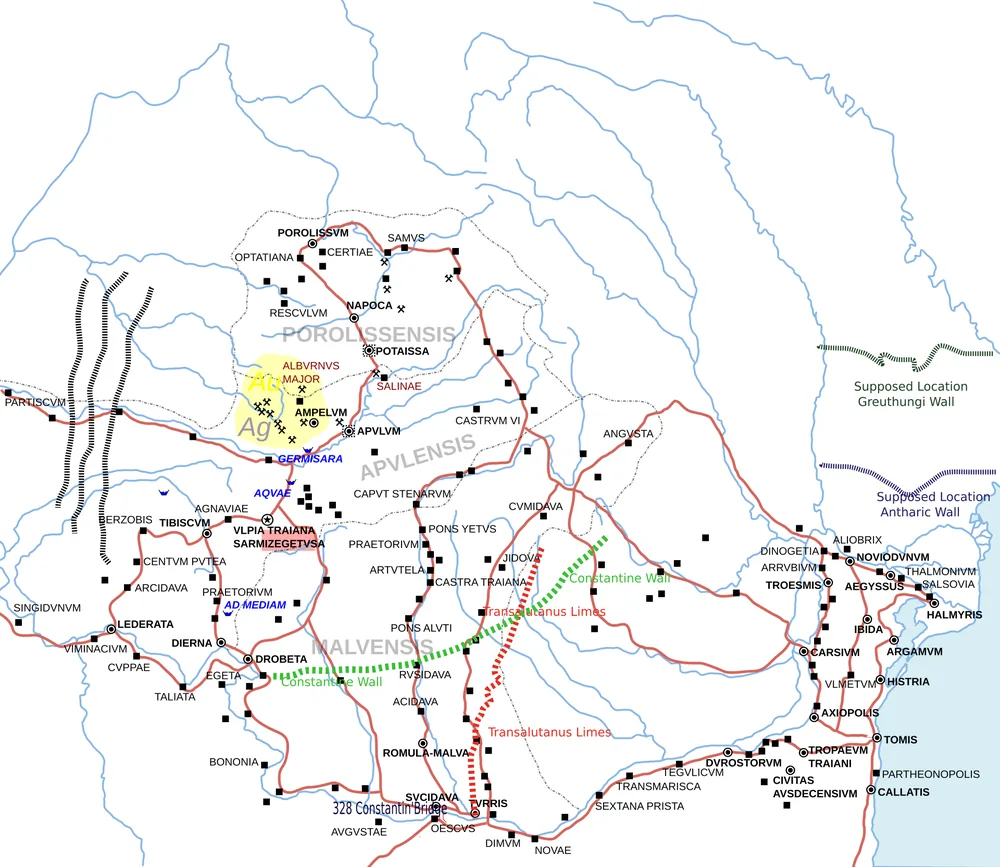
In Muntenia and Oltenia, ditched earth walls are still visible today — Brazda lui Novac. Here the page brakes itself: the dating is genuinely disputed, the sources disagree, and we draw no conclusion. We spread the fan and move on.
The Constantinian line
The northern Brazda: a 4th-century limes under Constantine the Great; the Pietroasele camp is fixed after the Romano-Visigothic peace of 333. (RO-wiki) The English version dates the wall to 322, under Constantine I.
The early line
Some historians (Ioan Donat) date the vallum to the 1st century; the southern Brazda — Troianul, as locals call it — was raised by the Romans in the 2nd–3rd centuries AD, by Augustus on some accounts, by Hadrian on others. (EN-wiki + RO-wiki)
The interim verdict
“Datarea valului de pământ Brazda lui Novac de sud este încă neclară și mult discutată.” (“The dating of the southern Brazda lui Novac earth wall is still unclear and much discussed.”) (RO-wiki) The dimensions differ by source too: 3 m high / 2 m ditch (EN) against at most 2 m / a 7–10 m wide, 1.5 m deep ditch (RO, south).


And today's village
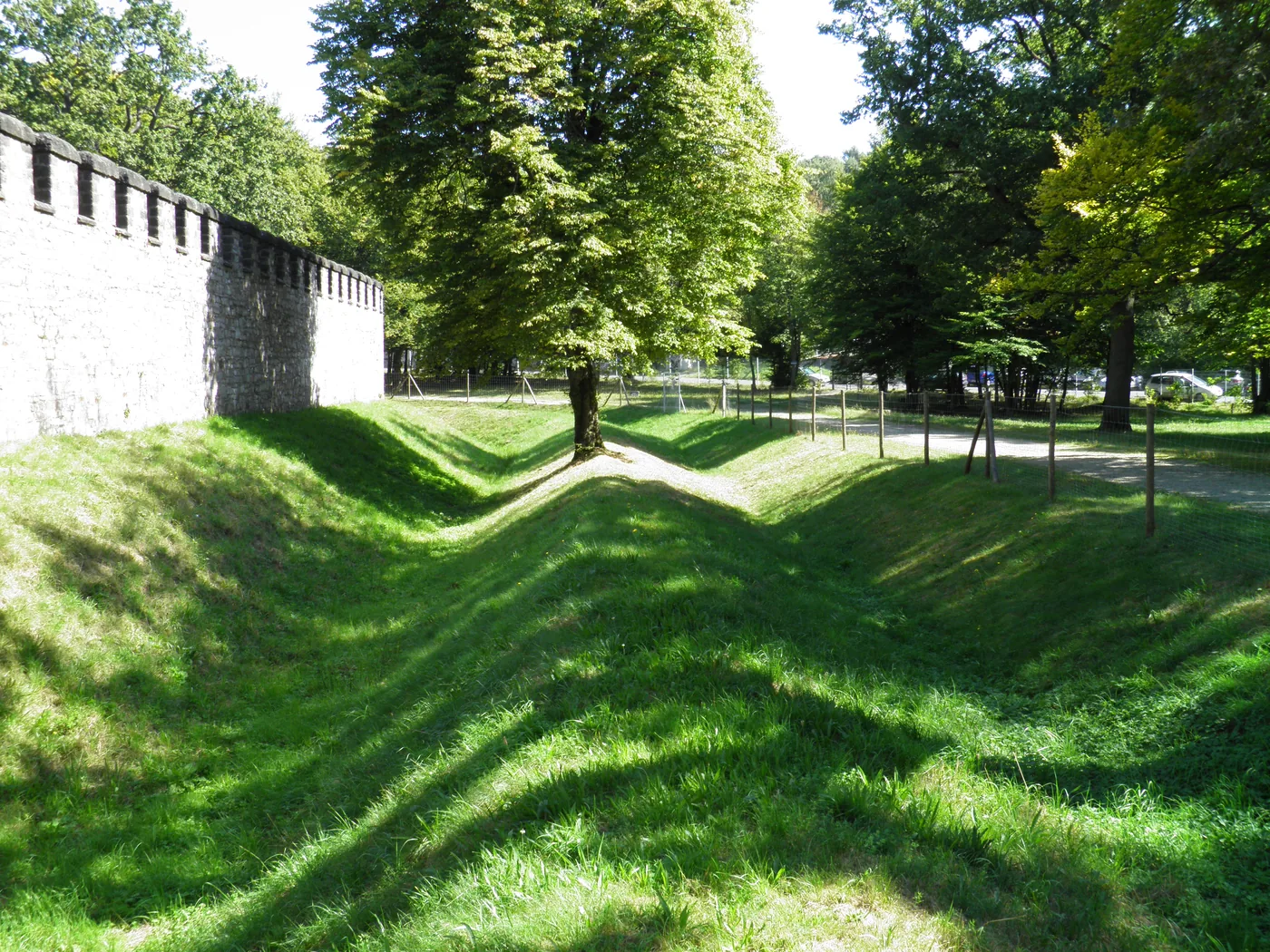
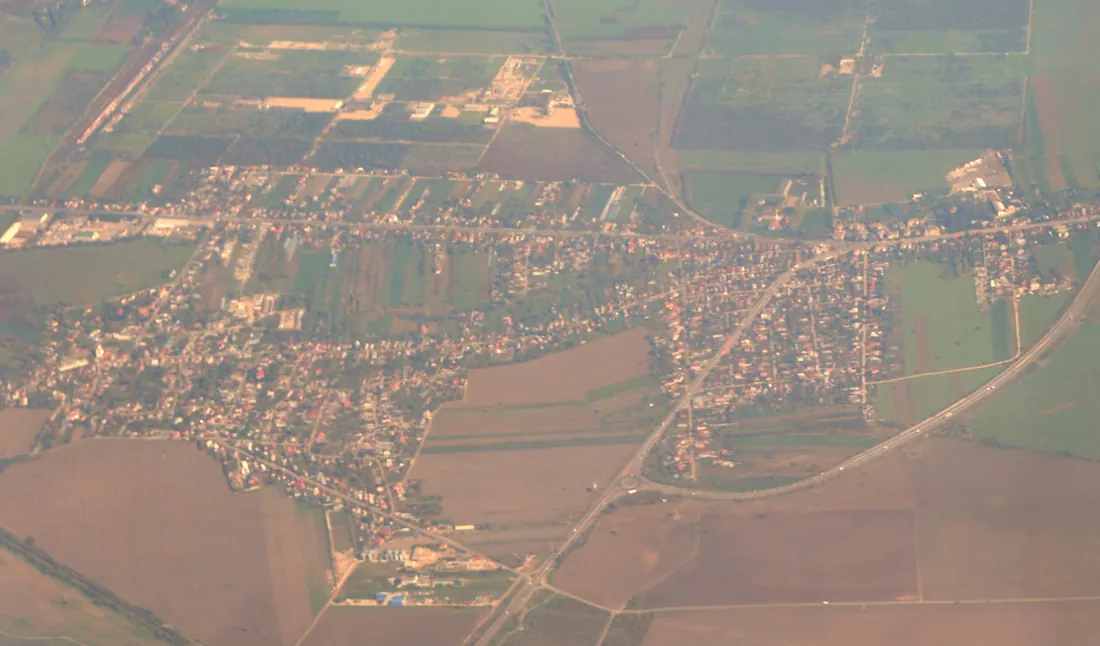
Above Saalburg's ditch you see grass today; above the sense of fossatum you see the village. Tell the story in one breath — the ditch became the village, the city became the fortress, the city was renamed from Hungarian — and add the hedge: per DEX; one etymologist dissents.

What we don't know (said aloud)
- The first Romanian attestations of cetate and oraș. This page cites only the attestations MDA2 records (COD. VOR., and 1521) — “first attestation” is not settled here.
- Which medieval charters might document the villa/oppidum/civitas vocabulary. Unverified leads: the Andreanum, the Diploma of the Joannites — no text quoted until verified.
- Whether villages ever dug their own defensive ditches (the obște). The claim stays out of this page until a primary or archaeological source exists.
- When város entered Romanian. DEX gives no date; this page invents none.
- Who is right about continuity. This page's sources disagree, and a word-journey has no standing to settle it.
Quiz: what does it mean here?
Six dated specimens, from Vegetius to DER. Pick the in-context sense; every verdict quotes the source.
specimen 1 of 6
Vegetius, 1.24: “tumultuaria fossa fit lata pedes nouem et alta pedes VII”. What is fossa here?
Ditch: the hasty kind, 9 feet wide and 7 deep (≈2.7 × ≈2.1 m). Vegetius 1.24 is, with Pseudo-Hyginus §50, the ancient authority for the dimensions — per the Ermelo dig (2024).
specimen 2 of 6
Fossatum Africae “claimed to extend over 750 km (470 mi) or more”. What does “claimed” say?
That it is the source's assertion, not our measurement — which is why this page glues “claimed” to every 750 km.
specimen 3 of 6
MDA2, sat, sense 9: “(Înv) Cetate (6)”. What could sat once mean?
Citadel: the fossil sense showing sat and cetate once crossed paths. The numbering is MDA2's.
specimen 4 of 6
Scriban, cetate: “oraș întărit cu ziduri, oraș în genere, azi numai în poezie”. Where does cetate still mean “city”?
In poetry — the trace of the civitas → fortress narrowing, kept as a literary exception. Eminescu: “ca ’n țintirim tăcere e ’n cetate” (= Venice).
specimen 5 of 6
DEX ’09, oraș: “– Din magh. város.” Where does oraș come from?
From Hungarian — a borrowing DEX leaves undated. With cetate occupied by “fortress”, the city seemingly needed a new word.
specimen 6 of 6
DER, sat: “Origine îndoielnică… lat. sătum, de la sĕro «a planta, a semăna»”. What does DER prefer?
Sătum < sero — but DER himself concedes that “dovada formei înv. fsat” is “dificil de explicat” (“difficult to explain”). Hence this page keeps fossatum, with the dissent in view.
Score: 0/6
Sources
Dictionaries first, then the ancient texts, then history, then measurements. Every Engine node and every figure points at the sources table below.
Dictionaries
- DEX online: sat (DEX ’09, MDA2, DER, Scriban)
- DEX online: cetate (DEX ’09, MDA2, CADE, Scriban, DER)
- DEX online: oraș (DEX ’09, MDA2, DER)
- Wiktionary: sat (Romanian section)
- Wiktionary: foso (Spanish section)
- Wiktionary: fossé (French section)
- Etymonline: fosse
Ancient texts and archaeology
- Polybius, Histories, book 6 (Loeb)
- Vegetius, Epitoma rei militaris, book 1 (Latin)
- Driessen et al., the Ermelo camp (2024, PDF)
History and datings
- Fossatum Africae (EN-wiki)
- Roman Dacia (EN-wiki)
- Brazda lui Novac (EN-wiki)
- Brazda lui Novac, limes (RO-wiki)
- Hurmuzaki Psalter — 1500–1520 dating (RO-wiki)
- Voroneț Codex — 16th century (RO-wiki)
- Ancient Roman units — the 296 mm foot (EN-wiki)
Type: Fraunces, Newsreader and Atkinson Hyperlegible, under the SIL Open Font Licence.