Neacșu's letter, Câmpulung–Brașov, 1521
The first Romanian sentence was a spy alert
In June 1521 a merchant of Câmpulung warned Brașov that the Sultan's ships were coming up the Danube. His letter is the oldest precisely dated Romanian text – and its first Romanian sentence is the alert itself. Read it phrase by phrase.
The letter in three chapters
Representative route
From Câmpulung to Brașov, June 1521
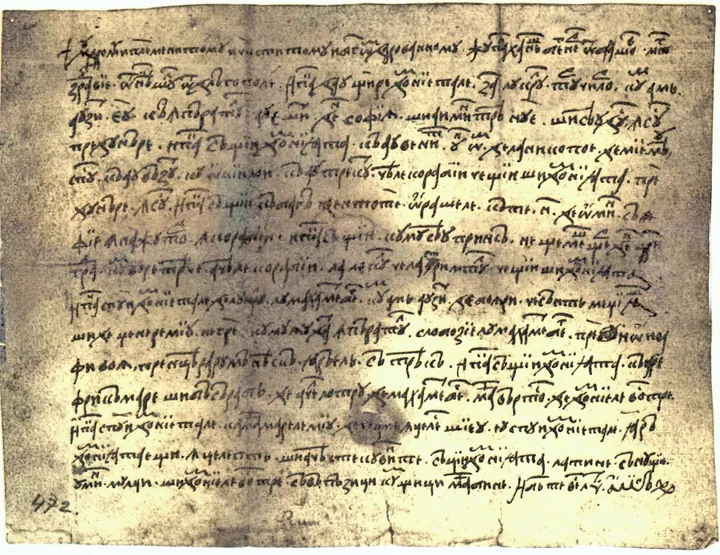
One page, written in Cyrillic: a merchant of Câmpulung warns the judge of Brașov that the Sultan's ships are coming up the Danube. The letter carries no date – 29–30 June 1521 is inferred from the events and people it names – and it is the oldest precisely datable Romanian text known.
Three short chapters follow the letter, the warning, and its echo. The routes on the map are representative: the courier road over the Carpathians and the Ottoman advance up the Danube.
Chapter I
The letter
1521 · one page, two languages
- Chapter
- 1521
- Date (inferred from events)
- 29–30 June 1521
- Sender
- Neacșul ot Dlăgopole
- Kept at
- Brașov archives, no. 472
Neacșu, a merchant of Câmpulung, writes to Johannes Benkner, the judge of Brașov: the Turks are moving, the Emperor is on the Danube, and Brașov should guard itself. He signs “Neacșul ot Dlăgopole” – Neacșu of Câmpulung.
The page is in Cyrillic throughout, but in two languages: the address and the closing are Slavonic, and the body – some 190 words – is Romanian. The famous opening line is Slavonic; the first Romanian sentence announces the Turks' deeds.

The original survived in Brașov: Council House shelf from 1521 to 1916, then the city archive, where Friedrich Wilhelm Stenner found it in 1894. Nicolae Iorga published it in 1900; today it is item 472 of the Stenner collection.
Meanwhile Two months later, on 29 August 1521, Belgrade fell.
Chapter II
The warning
1521 · the spy report
- Chapter
- 1521
- Ships up the Danube
- seen with his own eyes
- Men from every town
- 50
- Free passage through Wallachia
- Mahamet-beg
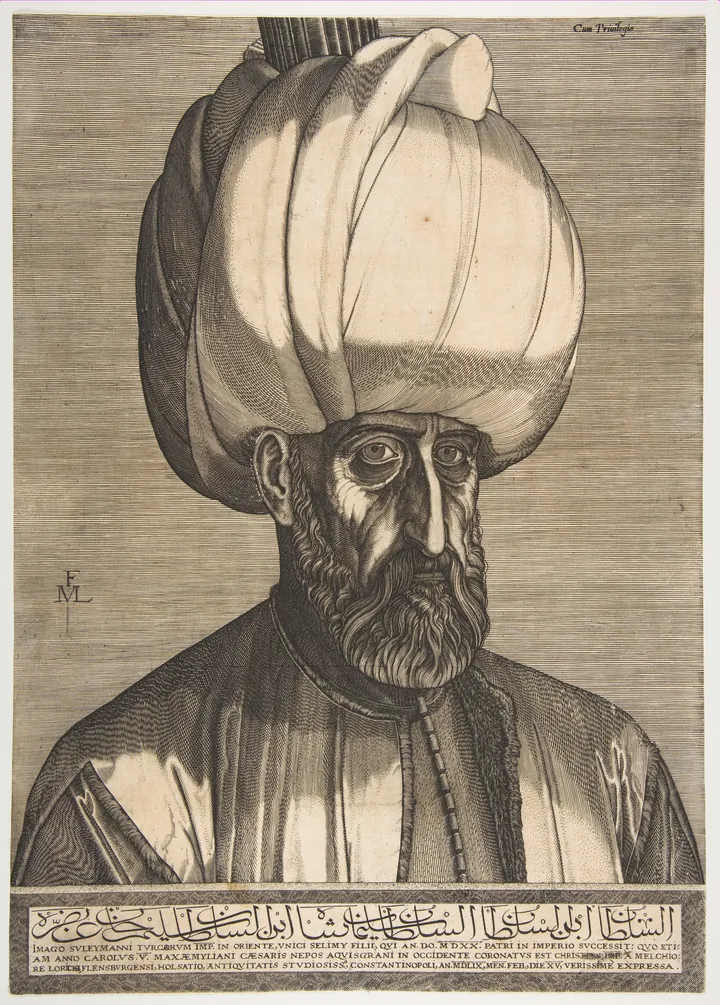
The summer of 1521 was the opening of Suleiman's first Hungarian campaign. The letter's first news is that the Emperor left Sofia and went up the Danube – and that a man from Nicopolis saw the ships pass with his own eyes.
Then come the details that make it a spy report, not a rumor: 50 men levied from every town for the ships, craftsmen brought from Constantinople to get them through the narrow place, and Mahamet-beg given leave to cross Wallachia at will – while even Basarab fears him.

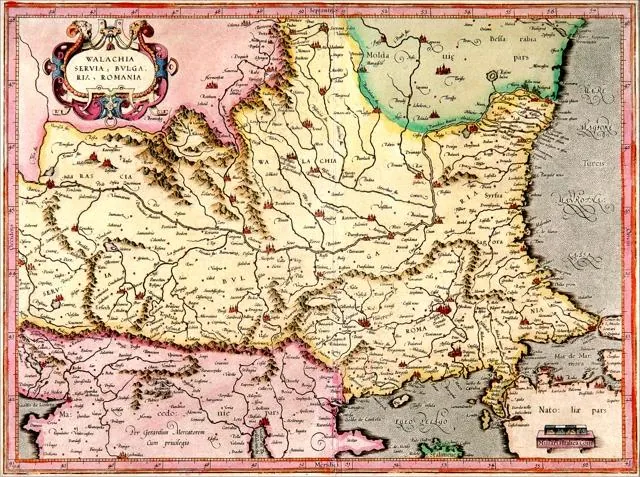

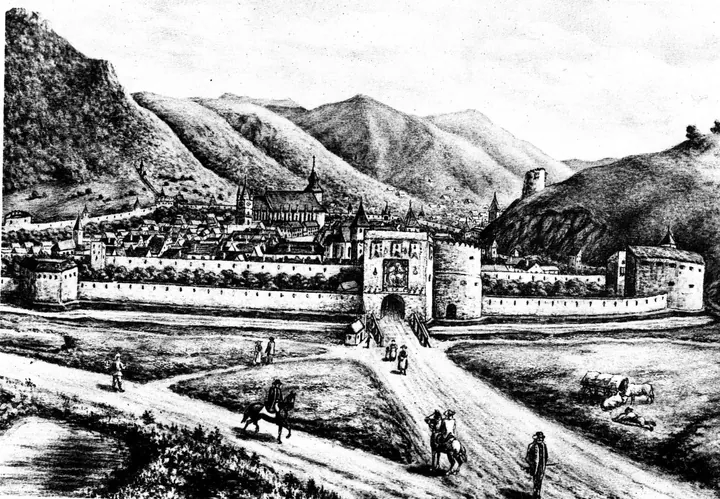
The warning travelled the Câmpulung–Rucăr–Bran–Brașov trade corridor over the Carpathians. No source names the courier, and no record says how long the crossing took – so this page states neither.
Meanwhile The man from Nicopolis had seen the ships “with his own eyes” – the only eyewitness named in the letter.
Chapter III
The echo
1521 – 2022 · what followed
- Chapter
- 1521 – 2022
- Belgrade falls
- 29 Aug 1521
- Discovery
- 1894, Stenner
- 500 years
- BNR coin, 2021
The warning's target fell two months later: after a siege from 25 June to 29 August 1521, Belgrade surrendered to Suleiman. The letter never names Belgrade – it reports the ships and the raiders coming its way.
For a long time the letter was called the oldest Romanian text. Watermark evidence has since given that title to the Hurmuzaki Psalter, written sometime in 1491–1504 – but a range is not a date, and Neacșu's letter remains the oldest precisely dated Romanian document.

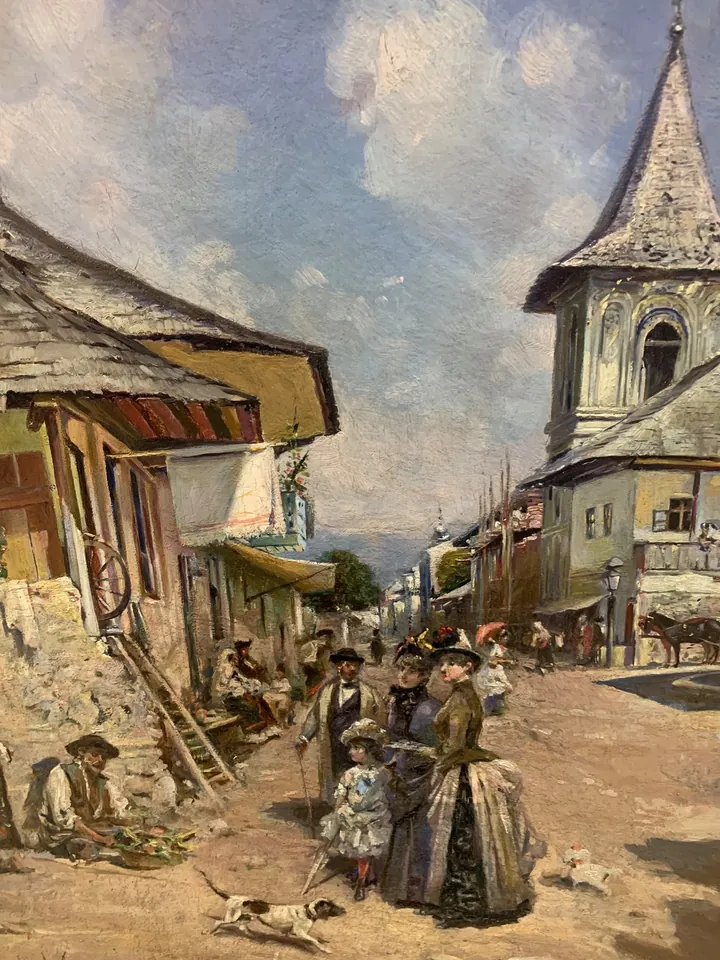

Five centuries later it is still commemorated: the National Bank issued a silver 500-years coin on 13 September 2021, and in 2022 the National Archives showed the original in Brașov under the title “Neacșu's letter comes home”.
Meanwhile The letter sat in Brașov's Council House from June 1521 to September 1916.
The 1521 quiz
Four questions about the letter, the warning, and its afterlife. Choose, then check against the sources.
-
1
The missing date
The letter carries no date. How do we know it is from June 1521?
What happened
From the events and people. The letter carries no date; 29–30 June 1521 is inferred from what it reports and whom it addresses.
-
2
The first line
The celebrated line “Mudromu i plemenitomu…” is written in:
What happened
Slavonic. The celebrated opening line is the Slavonic address; the Romanian body begins with the news of the Turks.
-
3
Belgrade's fate
Two months after the letter, Belgrade:
What happened
It fell. After a siege from 25 June to 29 August 1521, Belgrade surrendered – the target the letter's warnings were pointing at.
-
4
The finder
Who found the letter in the Brașov archives?
What happened
Stenner. Brașov's archivist Friedrich Wilhelm Stenner found the letter in 1894; Nicolae Iorga published it in 1900.
Answer a card to begin.
The letter, phrase by phrase
Ten phrases: the 1521 text above, our modern rendering below. Tap a phrase to reveal or hide its rendering – or read the whole letter straight through.
SlavonicMudromu i plemenitomu i čistitomu i bogom darovannomu jupan Haniș Begner ot Brașov mnogo zdraviie ot Neacșul ot Dlăgopole.
Modern renderingTo the most wise and honorable and God-gifted master Haniș Begner of Brașov, many greetings from Neacșu of Câmpulung.
RomanianI pak dau știre domniie tale za lucrul turcilor, cum am auzit eu că împăratul au eșit den Sofiia, și aimintrea nu e, și se-au dus în sus pre Dunăre.
Modern renderingAnd again I give your lordship news of the Turks' deeds, as I heard that the Emperor left Sofia – and it is no otherwise – and went up the Danube.
RomanianI pak să știi domniia ta că au venit un om de la Nicopoe de miie me-au spus că au văzut cu ochii loi că au trecut ceale corabii ce știi și domniia-ta pre Dunăre în sus.
Modern renderingAnd again, know that a man came from Nicopolis and told me he saw with his own eyes those ships – which you also know – pass up the Danube.
RomanianI pak să știi că bagă den toate orașele câte 50 de omini să fie în ajutor în corabii.
Modern renderingAnd again, know that they take 50 men from every town to serve on the ships.
RomanianI pak să știi cumu se-au prins nește meșter den Țarigrad cum vor treace aceale corabii la locul cela strimtul ce știi și domniia ta.
Modern renderingAnd again, know that craftsmen from Constantinople have been hired to get those ships through that narrow place, which you also know.
RomanianI pak spun domniie tale de lucrul lu Mahamet beg, cum am auzit de boiari ce sânt megiiaș și de genere-miiu Negre, cumu i-au dat împăratul sloboziie lui Mahamet beg, pre io-i va fi voia, pren Țeara Rumânească, iară el să treacă.
Modern renderingAnd again I tell you of Mahamet-beg's affair, as I heard from neighbouring boyars and from my son-in-law Negre: the Emperor gave Mahamet-beg leave to cross Wallachia wherever he pleases, so let him pass.
RomanianI pak să știi domniiata că are frică mare și Băsărab de acel lotru de Mahamet beg, mai vârtos de domniiele voastre.
Modern renderingAnd again, know that Basarab himself greatly fears that robber Mahamet-beg – even more than your lordships.
RomanianI pak spun domniietale ca mai marele miu de ce am înțeles și eu.
Modern renderingAnd again I tell you, as my superior, what I too have understood.
RomanianEu spun domniietale iară domniiata ești înțelept și aceste cuvinte să ții domniiata la tine, să nu știe umini mulți, și domniiele vostre să vă păziți cum știți mai bine.
Modern renderingI tell you: you are wise – keep these words to yourself, let not many men know, and guard yourselves as best you know.
SlavonicI bog te veselit. Amin.
Modern renderingAnd may God gladden you. Amen.
The 1521 text follows the modern transcription on Romanian Wikisource; the renderings are our own. Two phrases are Slavonic, eight Romanian.
The letter in six numbers
Every figure below comes from the letter or the cited histories. Dates the letter does not state are marked inferred.
- 1,521
- the year of the letter
- 50
- men taken from every town
- ≈190
- Romanian words in the letter, about
- 472
- its number in the Stenner collection
- 1,894
- Stenner finds it in the Brașov archives
- 29
- August 1521 – Belgrade falls
Three things people get wrong
It is the first Romanian text.
Not quite. The Hurmuzaki Psalter is older – 1491–1504 by watermark – but a range is not a date. The letter is the oldest precisely dated Romanian document.
Iorga discovered the letter.
No. Brașov's archivist Friedrich Wilhelm Stenner found it in 1894; Nicolae Iorga published it in 1900.
The letter is all Romanian.
No. The address and the closing are Slavonic; the Romanian body carries the news – and its first sentence announces the Turks' deeds.
Sources and methods
The 1521 text on this page follows the modern transcription on Romanian Wikisource; the scholarly reference is Iorga's 1900 publication (Hurmuzaki, vol. XI, p. 843, n. 1). The renderings beside each phrase are our own: the English Wikisource translation (CC BY-SA) was consulted, not quoted.
Dates the letter does not state are labeled inferred: 29–30 June 1521 from the events and persons named. Belgrade's fall (29 August 1521) and the Psalter's watermark range (1491–1504) come from the cited histories.
Map routes are representative paths through verified places, drawn dashed throughout. The courier's identity and travel time are unrecorded and unstated; no distances are given because the paths are illustrative.
The letter
- The letter's text (modern transcription) and shelfmark: Brașov Mayoralty fond, Stenner collection, series I Slavo-Romanian, no. 472 (Wikisource)
- Wikipedia, Neacșu's letter: the inferred date, the discovery (1894, Wilhelm Stenner), the merchant Neacșu and judge Benkner
- Nicolae Iorga, in E. Hurmuzaki, Documente privitoare la istoria românilor, vol. XI (Bucharest, 1900), p. 843, n. 1: the first publication
The warning
The echo
The ten phrases
Images
- The 1521 original, photographed · Wikimedia Commons
- 17th-century engraving · Wikimedia Commons
- Theodor Aman, oil on wood · Wikimedia Commons
- Melchior Lorck, 1559 (Met Museum, CC0) · Wikimedia Commons
- Gerardus Mercator, 1606 · Wikimedia Commons