Apulum, some 1,800 years ago
Five words on a Roman roof tile from Apulum
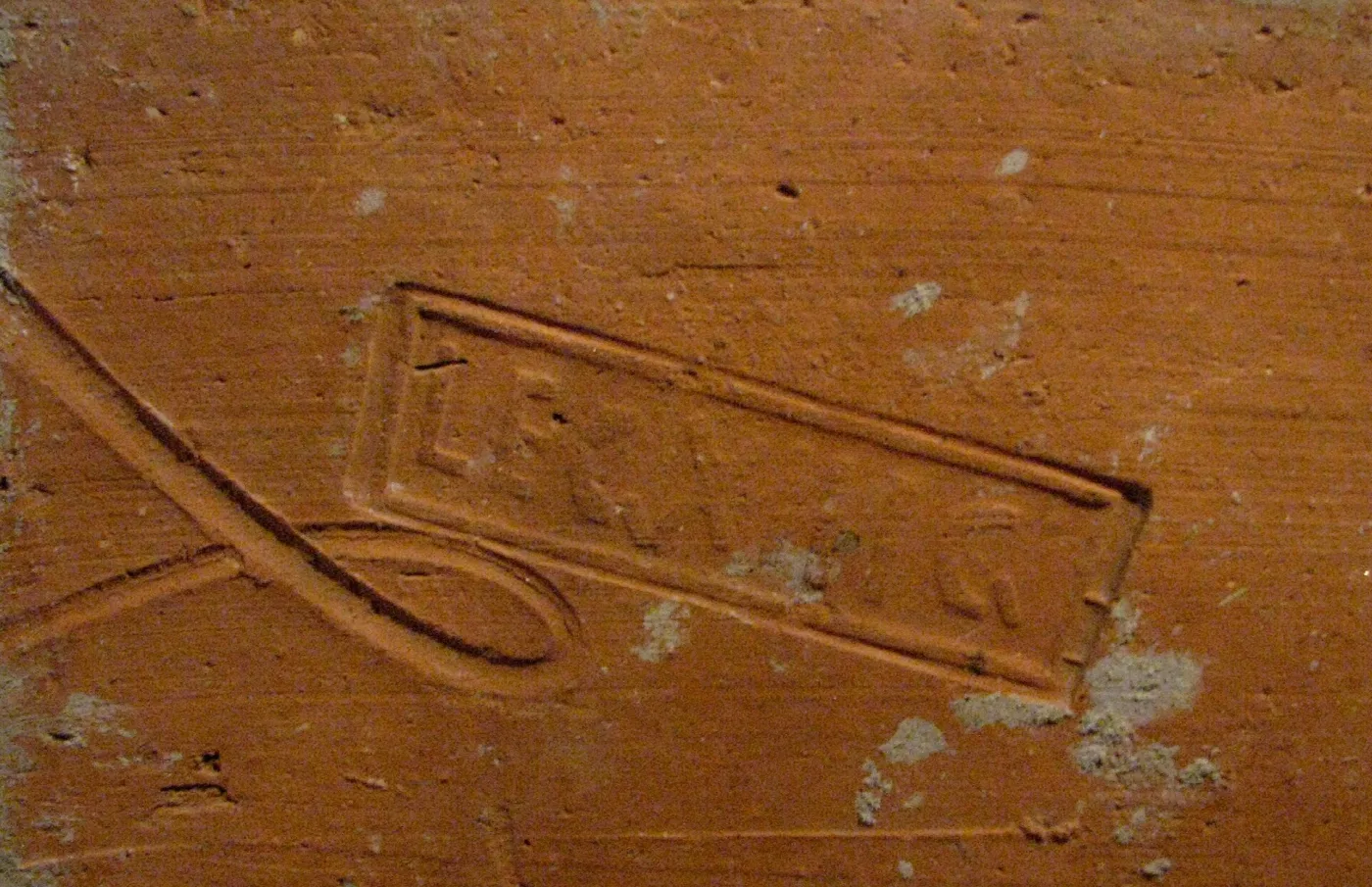
A museum in Alba Iulia keeps a roof tile stamped LEG XIII GEM — the mark of Legio XIII Gemina, stationed here from 106 until Rome's withdrawal from Dacia. I took each word on the stamp, plus the tile and Apulum, and traced what became of it in Romanian: one survived, two came back by another road, one was rebuilt, one vanished outright.
A signature pressed into wet clay
The tile now sits in a case at the National Museum of the Union in Alba Iulia, among other bricks and tiles dug out of the soil of Apulum. It is a fragment of fired-clay building ceramic, and its face carries a rectangular cartouche in three groups of letters: LEG XIII GEM.
Legions made their own building material in their own workshops — brickyards in the civilian settlement beside the fort, the canabae — and marked it with the name of the unit, pressed into the wet clay before firing. The Latin inscriptions catalogue lists several LEG XIII GEM stamps found at Apulum and kept at the Alba Iulia museum.
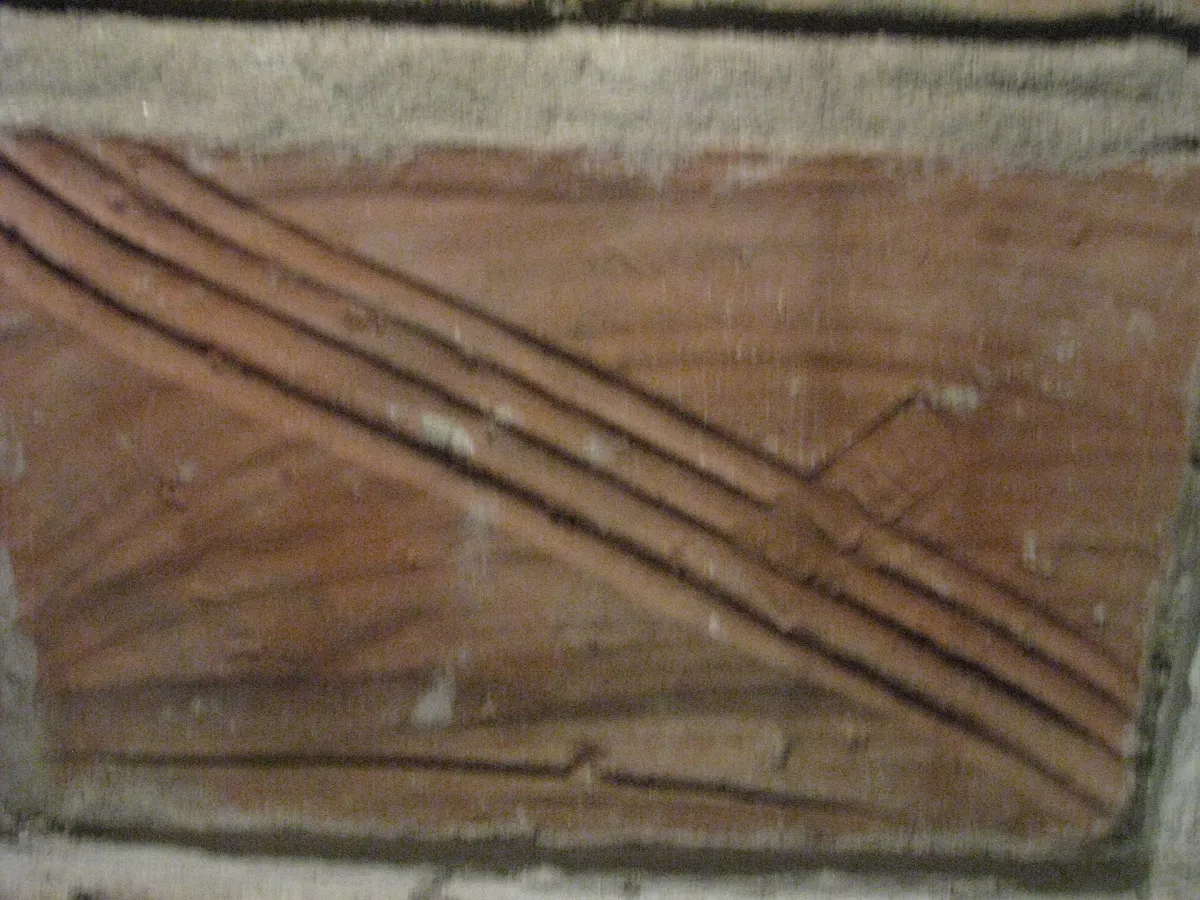
Some tiles also carry wavy lines, drawn with fingers through the wet clay: the trace of the hand that smoothed the slab. The name is unknown; the mark of the legion stands in its place.
- Where
- National Museum of the Union, Alba Iulia; object found at Apulum
- What it says
- LEG XIII GEM — legio XIII Gemina, “the Thirteenth Twin Legion”
- When
- From the Apulum garrison years, between 106 and Rome's withdrawal from Dacia
- Made of
- Fired clay, building ceramic
Three abbreviations, five words to trace: the three on the stamp, plus the name of the object and the name of the place.


Five words: one survived, two came back, one was rebuilt, one vanished
Pick a word on the stamp. The colour says what road it took into Romanian.
- survived into Romanian
- came back by another road
- rebuilt from Romanian parts
- vanished
one survived · two came back by another road · one was rebuilt · one vanished
-
LEGio
legiune, “legion”
came back through French
Latin legio did not survive directly into Romanian. Today's legiune is a learned borrowing that came through French légion (DEX: “Din fr. légion, lat. legio”). The Latin word died with the world that used it; the modern one is a scholarly re-borrowing that arrived by way of French.
-
XIII
treisprezece, “thirteen”
rebuilt from Romanian parts
Latin tredecim never reached Romanian. The number treisprezece is a Romanian-built compound: three plus spre (“toward”) plus ten (DEX). The pattern runs through the whole series: unsprezece, doisprezece, treisprezece — “three toward ten”. Romanian raised its own numerals between ten and twenty out of words it already knew.
-
GEMina
geamăn, “twin”
survived
Latin geminus, “twin”, reached Romanian directly: geamăn, with the feminine geamănă and the plural gemeni (DER, DEX). The only one of the five inherited without a break — and the only one alive in Aromanian too, as geamin.
-
TEGVLA
țiglă, “(roof) tile”
a detour through German and Serbian
The Latin word for tile, tegula, did not come straight into Romanian. It travelled through German Ziegel and Serbian cigla (DER, DEX; Scriban records the German word's Latin root). Latin took a detour through two foreign languages and came home wearing a disguise.
-
APVLVM
—
replaced outright
Nothing of Apulum survives in today's name. The Dacian settlement Apoulon, mentioned by Ptolemy, became Apulum under Rome; the Slavs called it Bălgrad, “the white fortress”, and the white motif produced the later Alba. The Roman name vanished without a trace.
Three abbreviations on a tile, five fates: one unbroken, two detours, one rebuilding, one disappearance. Only one took the straight road.
The legion that crossed the Rubicon and stayed at Apulum
The Thirteenth Legion was recruited by Caesar in 57 BC, in the Gallic war. In January 49, its men stood beside Caesar when he crossed the Rubicon — the legion with which, in Livy's phrase, Caesar set out to conquer the world.
After the civil wars the legion was disbanded and raised again, and after Actium, in 31 BC, it was reinforced with soldiers from disbanded legions. Hence the surname Gemina — “the twin”: a doubled legion, built from men drawn from two sides.
Under Trajan it fought in both Dacian wars, and in 106 it moved to Apulum as a garrison. It remained the most important unit in Dacia until the Roman withdrawal, although its detachments also campaigned in other provinces.
Beside the fort grew the civilian settlement, the canabae, with its workshops — the very brickyards that fired the tile in the case. Some of those who kneaded the clay and pressed the stamp may have descendants in today's city; the city rose over their hearths. None of it is proven — but the tile remains.
- 57 BCCaesar recruits the Thirteenth Legion in Gaul.
- January 49 BCThe legion crosses the Rubicon beside Caesar.
- 31 BCAfter Actium, the legion is reinforced and surnamed Gemina.
- 101–106Fighting in both Dacian wars.
- 106The garrison moves to Apulum.
- the garrison yearsTiles stamped LEG XIII GEM leave the brickyards beside the fort.
- the Roman withdrawalThe legion leaves Apulum with the evacuation of Dacia.
The city that changed its name three times
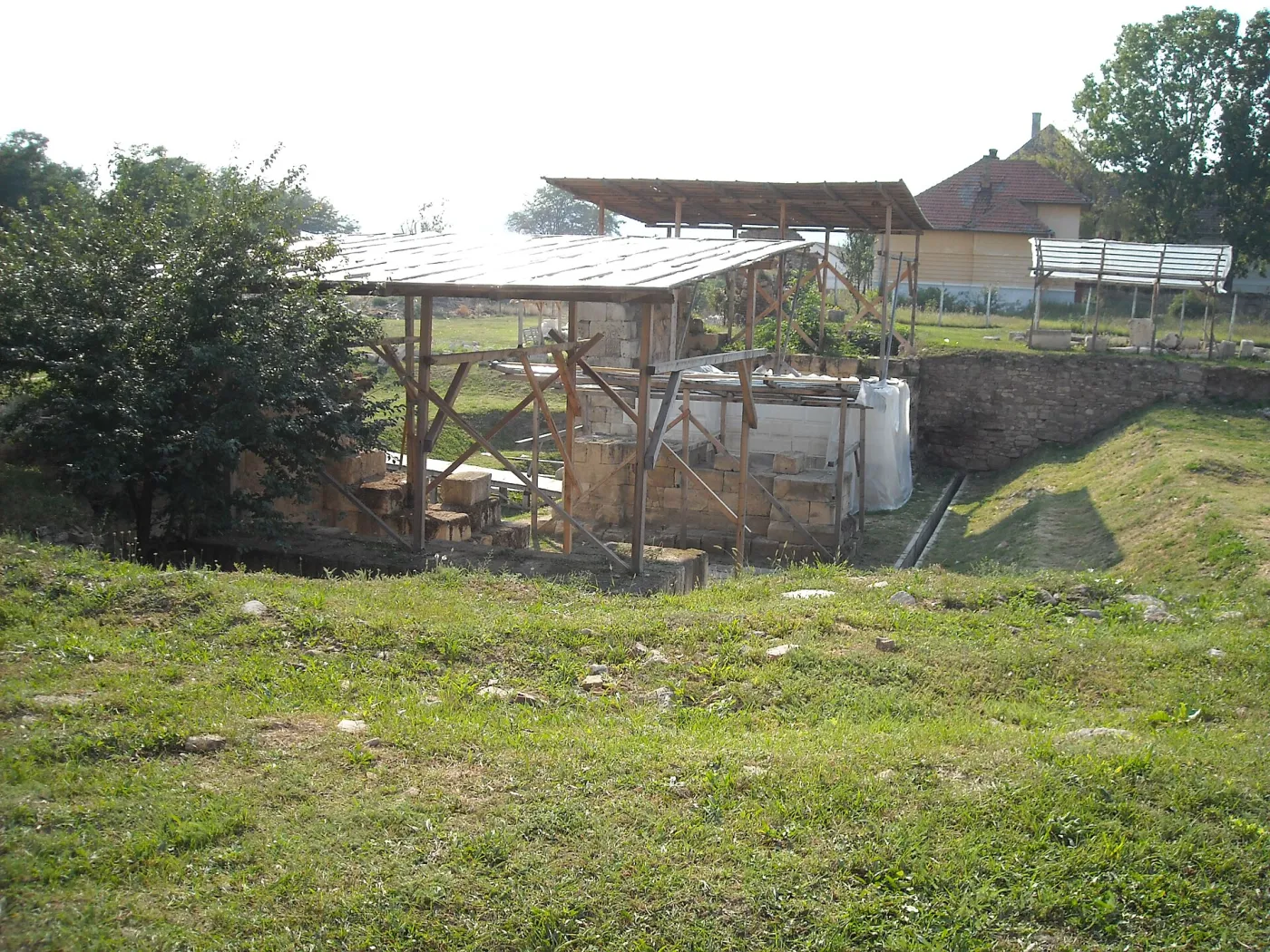
Before Rome, this was the Dacian settlement of Apoulon, mentioned by Ptolemy. Conquest renamed it Apulum, and the city grew into the largest urban centre of Roman Dacia and the seat of Legio XIII Gemina.
After the withdrawal, the Roman name fell silent. The Slavs called the place Bălgrad — “the white fortress” — a name it carried from the ninth to the eleventh century. The white motif caught on: it produced the later Alba, which became Alba Iulia.

Sources
Etymologies come from the dexonline dictionaries (DEX, DER, Scriban). Translations from Latin: Marius Comper.
- Epigraphic Database Heidelberg: HD044056, HD044061, HD044068 — LEG XIII GEM stamps from Apulum, kept at Alba Iulia, Muz. Unirii. edh.ub.uni-heidelberg.de
- “Cărămizile ștampilate ale Legiunii XIII Gemina”, Analele Banatului XVIII, 2010. biblioteca-digitala.ro
- “Atelierele de cărămidărie din canabele de la Apulum”, Banatica 28, 2018. biblioteca-digitala.ro
- Livius.org: “Legio XIII Gemina” (Jona Lendering). livius.org
- dexonline: DEX, DER, Scriban for legiune, treisprezece, geamăn and țiglă. dexonline.ro/definitie/geaman
- Wikipedia: “Legio XIII Gemina” (en), “Alba Iulia” (en, ro). en.wikipedia.org/wiki/Legio_XIII_Gemina