Vuia 1906 · Vlaicu 1910 · Coandă 1910
How did Romania learn to fly?
In March 1906 a Banat lawyer's machine hopped eleven metres at Montesson; in June 1910 a Transylvanian's aeroplane rose over Cotroceni; that autumn a Bucharest engineer's propeller-less wonder stunned the Paris Salon. Three lives, four years – and Romania on the map of flight.
The pioneers in four chapters
Representative route
From Surducu Mic to Paris
On 18 March 1906, at Montesson outside Paris, Traian Vuia's bat-winged machine ran on its own wheels and lifted – eleven or twelve metres, the first self-propelled take-off. Four years later Aurel Vlaicu flew over Cotroceni; that same autumn Henri Coandă showed Paris an aeroplane with no propeller at all.
Below, the three pioneers in four chapters – Vuia, Vlaicu, Coandă, and what stayed. The routes on the map are representative, drawn through the verified places of the story.
Chapter I
Vuia
1872 – 1906 · 1872–1906, the hop
- Chapter
- 1872 – 1906
- Born
- 17 August 1872, Surducu Mic
- The patent
- 15 May 1903, no. 332106
- The hop
- 18 March 1906, Montesson
Traian Vuia was born on 17 August 1872 at Surducu Mic, in the Banat – then Austria-Hungary, today the Timiș village that bears his name. He studied law, but his notebooks were full of a heavier-than-air machine that would take off under its own power, on wheels, with no rails and no catapult. In 1902 he carried the idea to Paris.
On 17 February 1903 he laid a memoir before the French Academy; the Academy turned it away – the exact wording of the refusal is disputed, and this page claims none of it. Undeterred, Vuia patented the machine: French patent 332106, filed 15 May 1903 in the name of 'Trajan Vuia'. He built the bat-winged Vuia I and took it to the field at Montesson, by the Seine.

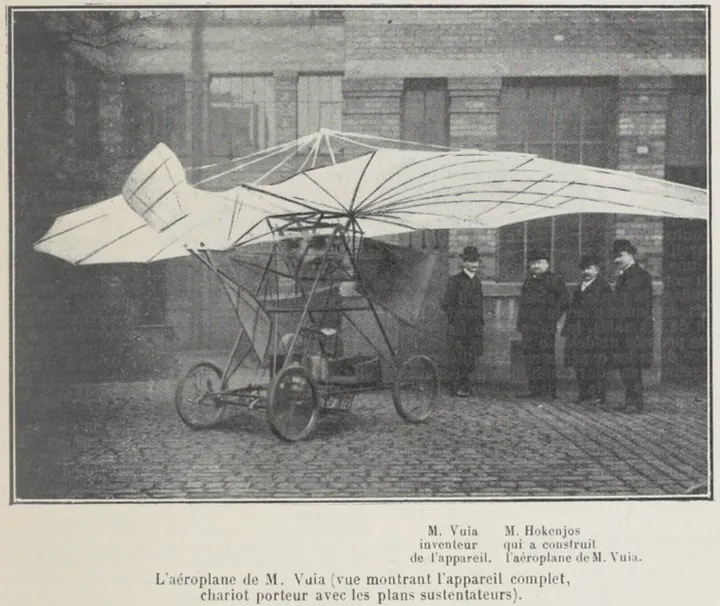

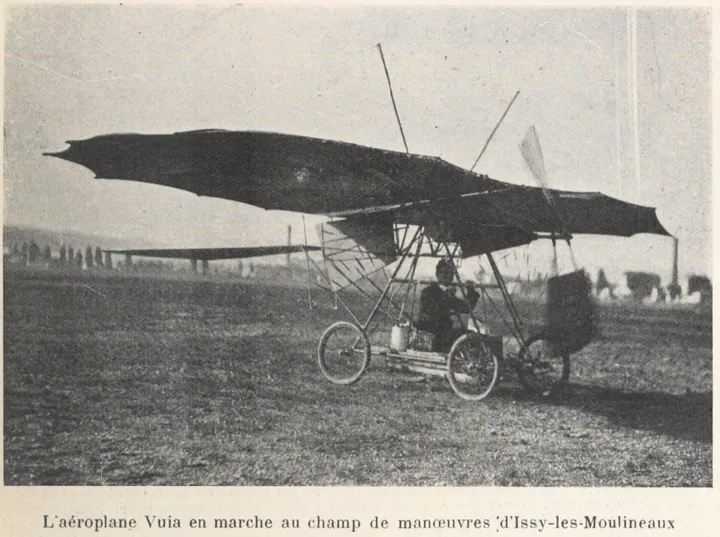
On 18 March 1906 the machine ran forward on its wheels and lifted: eleven metres by some accounts, twelve by others – the first take-off of a wheeled aeroplane under its own power. The Wright brothers had flown since December 1903, but from rails, with a catapult; Santos-Dumont's Paris flights came that autumn. L'Aérophile reported Vuia's trials in its October issue – the photographs on this page come from it.
Meanwhile The Academy memoir of 17 February 1903 was rejected – its exact wording is disputed.
Chapter II
Vlaicu
1882 – 1913 · 1882–1913, the flights
- Chapter
- 1882 – 1913
- Born
- 19 November 1882, Binținți
- Cotroceni
- 17 June 1910
- Bănești
- 13 September 1913
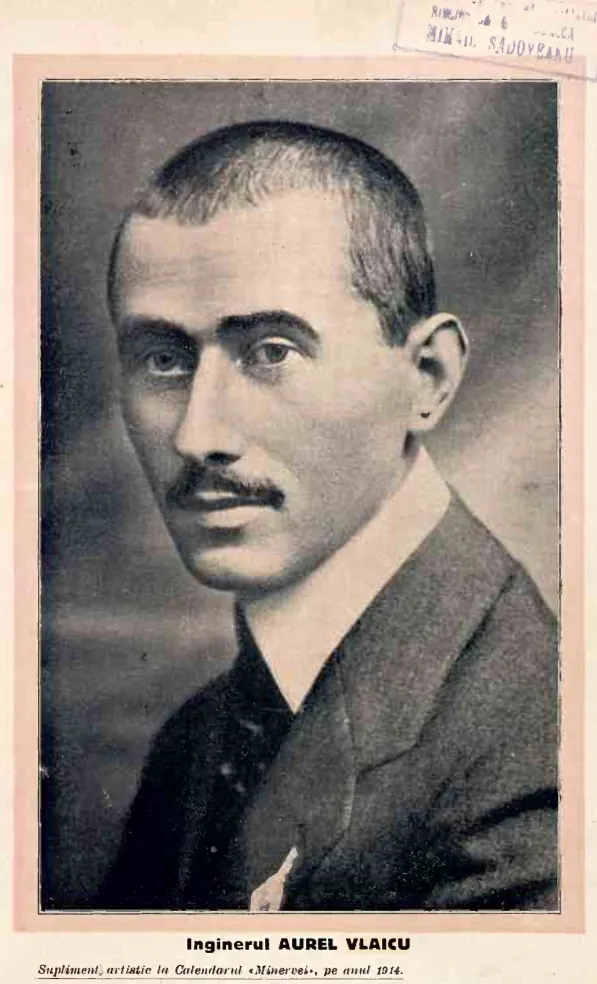
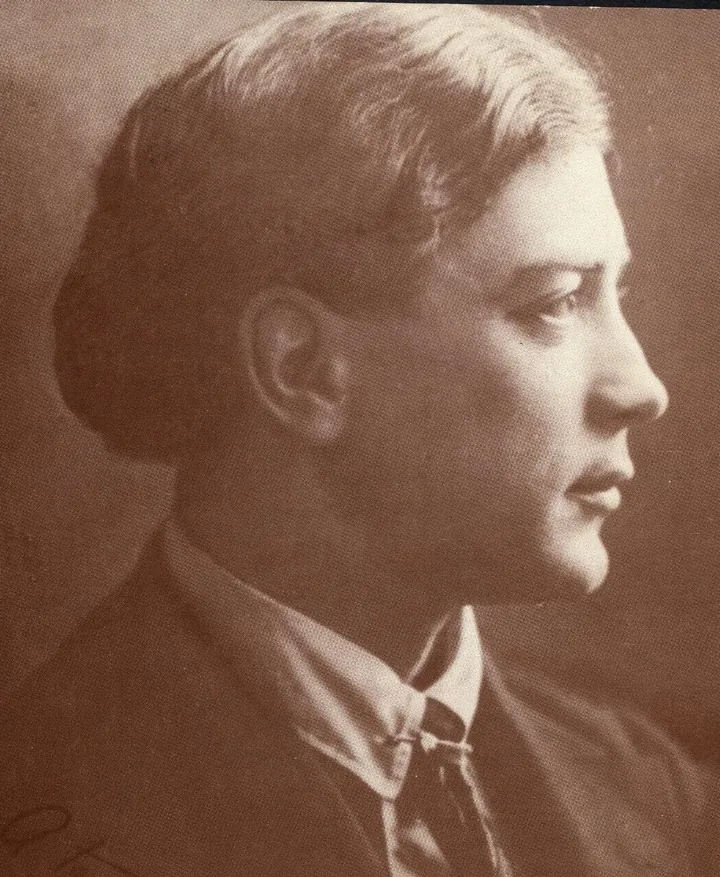
Aurel Vlaicu was born on 19 November 1882 at Binținți, in Transylvania – then Austria-Hungary; the village is now called Aurel Vlaicu. After engineering studies abroad he returned with his own design: an aeroplane with the propeller at the back and the tail at the front, light and strange. In 1909 the Army Arsenal in Bucharest agreed to build it.
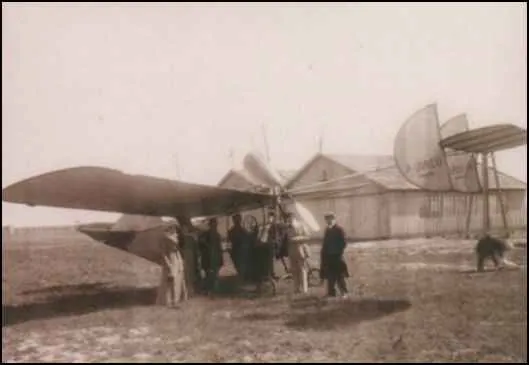
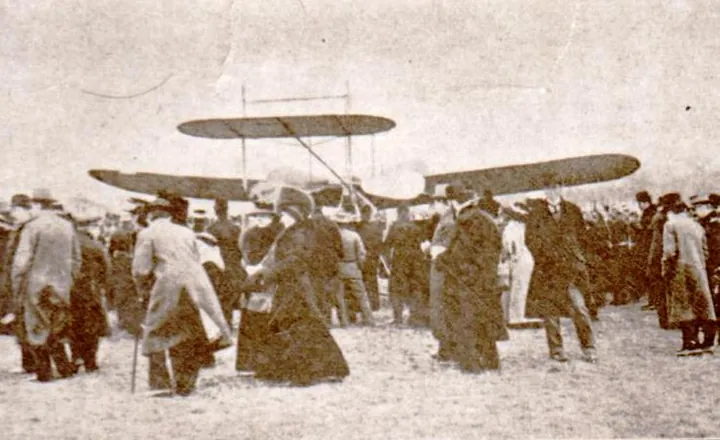
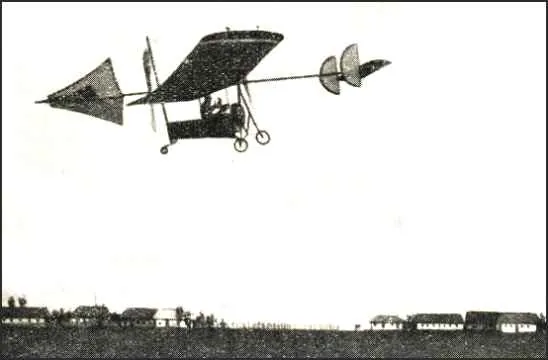
The Vlaicu I first left the ground at Cotroceni on 17 June 1910; that October he flew it at Băneasa too. Vlaicu II followed in 1911 – first flown that April – and in June 1912 Vlaicu carried it to the International Flight Week at Aspern, outside Vienna: against 42 other aviators, Roland Garros among them, he won 7,500 krone in prizes, for precision landing, projectile throwing and tight flying around a pole.


In September 1913 he set out to cross the Carpathians. Near Bănești, in Prahova county, his machine fell: 13 September 1913 – 31 August by the Old Style calendar. He was thirty. The Vlaicu III, built for the Marconi Company for aerial-radio experiments, was never finished.
Meanwhile 31 August Old Style is 13 September New Style – the crash in both calendars.
Chapter III
Coandă
1886 – 1934 · 1886–1934, the jet and the effect
- Chapter
- 1886 – 1934
- Born
- 7 June 1886, Bucharest
- The Salon
- October 1910, Paris
- The effect
- Patented 1934
Henri Coandă was born in Bucharest on 7 June 1886, the son of General Constantin Coandă. Artillery officer turned engineer, he reached Paris with an aeroplane unlike any other: the Coandă-1910, a sesquiplane with no propeller – a Clerget piston engine drove a multi-bladed centrifugal compressor, the 'turbo-propulseur', exhausting into a duct.
At the Second International Aeronautical Exhibition, in Paris in October 1910, it was the only exhibit without a propeller – and the sensation of the Salon. Coandă later claimed the machine had made an unscheduled hop at Issy in December 1910, ending in a crash; the historians Charles Gibbs-Smith and Frank Winter rejected the flight, and the Smithsonian's investigation sides with them. This page shows the Salon machine and marks the hop as disputed.
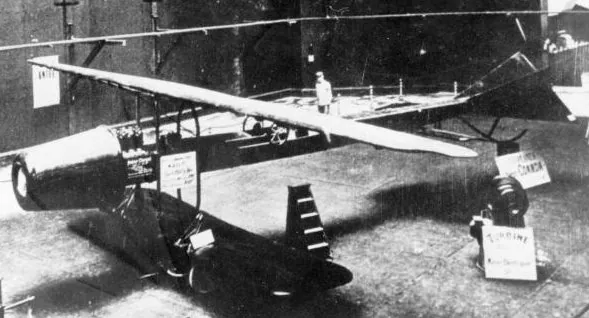


Coandă went on to build aeroplanes at Bristol from 1911 to 1914, then spent decades on the phenomenon he had noticed in the exhaust: a fluid jet clings to a curved surface. He patented the Coandă effect in 1934 – though Thomas Young had described it in 1800, 134 years before.
Meanwhile Thomas Young described the effect in 1800 – 134 years before the patent.
Chapter IV
The trace
1913 – 1972 · 1913–1972, what stayed
- Chapter
- 1913 – 1972
- The museum
- Geoagiu, since 1952
- The airports
- Băneasa, Otopeni, Timișoara
- Coandă dies
- 25 November 1972, Bucharest
The traces are visitable. At Geoagiu, in the village now called Aurel Vlaicu, the birth house became a memorial in 1952, with a museum beside it since 1982; a monument stands at Bănești, where the Carpathian attempt ended. Vuia's name is kept at Surducu Mic – the village is now Traian Vuia, with its own memorial exhibition.
The airports carry them too: Băneasa is Aurel Vlaicu Airport, Otopeni became Henri Coandă in 2004, Timișoara is Traian Vuia. In Bucharest's Aviației district, three streets – Traian Vuia, Aurel Vlaicu, Henri Coandă – meet the city that watched Vlaicu fly.


Vuia died in Bucharest on 3 September 1950; Coandă, the longest-lived of the three, died there on 25 November 1972. Eleven metres at Montesson, a summer over Cotroceni, a propeller-less machine at the Salon: within four years, three Romanians had put their country on the map of flight.
Meanwhile No Montesson or Issy plaque is claimed here – none was verified.
The aviators' quiz
Four questions about the hop, the fields, the crossing and the machine with no propeller. Choose, then check against the sources.
-
1
The hop
Vuia's machine left the ground at Montesson on:
What happened
1906 – eleven or twelve metres under its own power. February 1903 was the Academy memoir, rejected.
-
2
The field
Vlaicu I first flew in Romania at:
What happened
Cotroceni in June; Băneasa came that October. Both fields lie inside today's Bucharest.
-
3
The crossing
On 13 September 1913 Vlaicu was attempting:
What happened
The Carpathians. His machine fell near Bănești, in Prahova county.
-
4
The engine
The Coandă-1910 shown in Paris in October 1910 was:
What happened
A ducted fan: a Clerget engine drove the compressor. The December flight is disputed – Gibbs-Smith and Winter say it never happened.
Answer a card to begin.
Seven plates of the pioneers
Seven contemporary photographs, in the order of the story: Vuia's trials, Vlaicu's machines in the air, the Salon sensation.
Plate 1906The trials at Montesson
The trials at Montesson L'Aérophile, 1906 · Wikimedia Commons - The complete machine: Vuia the inventor beside Hokenjos the builder.
- The carrying cart with its sustaining planes, as L'Aérophile captioned it.
- Reported in the October issue; the hop was 18 March.
Plate 1906The machine
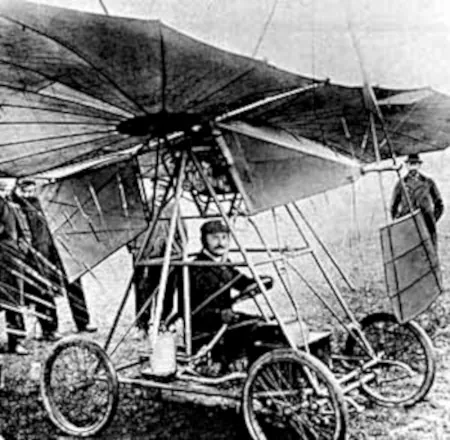
The machine Unknown photographer · Wikimedia Commons - The Vuia I: tractor propeller, bat wings, wheels.
- Patented in France as 332106, filed 15 May 1903.
- Eleven or twelve metres – under its own power.
Plate 1914The Transylvanian
The Transylvanian Unknown photographer · Wikimedia Commons - Aurel Vlaicu, from the Minerva Calendar's 1914 supplement.
- Born at Binținți on 19 November 1882.
- The Arsenal in Bucharest built his Vlaicu I in 1909.
Plate 1910The first machine
The first machine Unknown photographer, 1910 · Wikimedia Commons - The Vlaicu I in 1910, the Arsenal-built machine.
- Propeller at the back, tail at the front.
- First flown at Cotroceni, 17 June 1910.
Plate 1911Airborne
Airborne Unknown photographer, 1911 · Wikimedia Commons - Vlaicu II in flight, 1911.
- The machine he carried to Aspern in June 1912.
- Vlaicu III was never finished.
Plate 1910The Salon sensation
The Salon sensation Unknown photographer, 1910 · Wikimedia Commons - The Coandă-1910 at the Paris Salon, October 1910.
- The only exhibit with no propeller.
- A Clerget engine drove the 'turbo-propulseur'.
Plate 1910The machine without a propeller
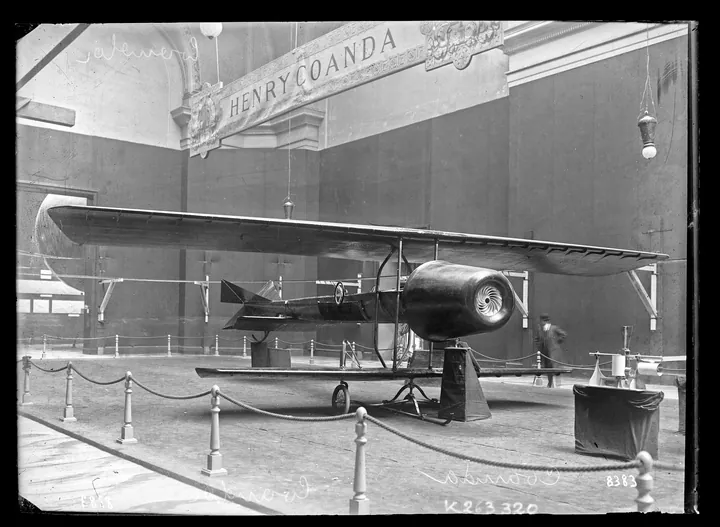
The machine without a propeller Agence Meurisse, 1910 (BnF) · Wikimedia Commons - The Coandă-1910, photographed by the Meurisse agency.
- Sesquiplane wings over the ducted fan.
- The December flight is disputed – see the chapter.

_Coanda_(%C3%A0_l%27exposition_internationale_de_l%27a%C3%A9ronautique,_15_octobre_-_2_novembre_1910)_-_btv1b53241281v.jpg)
Photographs via Wikimedia Commons (public domain, except the 1903 portrait: CC BY-SA). Dates are plate references.
The pioneers in six numbers
Every figure below comes from the cited histories and the patent record. The hop's metres are given as reported – eleven or twelve.
- 1,906
- the hop at Montesson
- 11
- metres at Montesson – some say 12
- 1,910
- Vlaicu lifts off at Cotroceni
- 1,912
- 7,500 krone in Aspern prizes
- 1,913
- the crash at Bănești
- 1,934
- the effect is patented
Three things people get wrong
Vuia flew before the Wright brothers
False as stated: the Wrights flew in December 1903; Vuia's verified first of 18 March 1906 was the self-propelled wheeled take-off – no rails, no catapult.
The Coandă-1910 was the first jet
False as stated: a ducted fan driven by a piston engine, shown in October 1910; the claimed December hop is rejected by Gibbs-Smith, Winter and the Smithsonian.
Vlaicu crossed the Carpathians
False: he died attempting it – his machine fell at Bănești on 13 September 1913, 31 August Old Style. Vlaicu III was never finished.
Sources and methods
Vuia's story follows his biographies and French patent 332106 (Google Patents); the Salon machine follows the Coandă-1910 histories and the Smithsonian's investigation of the December claim. The photographs come from L'Aérophile (1906) and the Meurisse agency (BnF) – public domain, except the 1903 portrait.
Day-dates are New Style; where the Old Style differs – Vlaicu's crash – both are given. Vlaicu's birth is 19 November 1882, the date both Wikipedias agree on.
The Academy's rejection wording and any French plaque to Vuia or Coandă are unverified here – so neither is claimed. Museum collections are not inventoried – the places are described only as memorials.
Vuia
Vlaicu
- Wikipedia, Aurel Vlaicu: the 1909 Arsenal, Cotroceni 17 June 1910, Aspern 23–30 June 1912 (7,500 krone, FAI licence 52), the 13 September 1913 crash
- Wikipedia, A Vlaicu I and A Vlaicu II: construction, flights, the unfinished Vlaicu III
- Wikipedia, Bănești, Prahova: the crash site; 31 August Old Style = 13 September New Style
Coandă
- Wikipedia, Coandă-1910: the 1910 Salon, the turbo-propulseur, the patents, the disputed December flight
- Smithsonian Air & Space: Coandă's claim, the Gibbs-Smith/Winter rebuttal (investigation)
- Wikipedia, Henri Coandă: Bristol 1911–1914, Jane's 1913, the 1934 effect patent
- Wikipedia, Coandă effect: the definition, the 1934/1936 patents, Young's 1800 precedence
The trace
- Wikipedia, Aurel Vlaicu: the home-village museum, the monument near Bănești; Băneasa – Aurel Vlaicu Airport
- The Aviației district: Traian Vuia, Aurel Vlaicu and Henri Coandă streets
- Wikipedia, Henri Coandă International Airport: Otopeni renamed in May 2004
- Wikipedia, Timișoara Traian Vuia International Airport: named for the Banat pioneer
- The Aurel Vlaicu memorial complex, Geoagiu: memorial house (1952), museum (1982), bust (1933) – the cIMeC database
- Romania Culture Directory 2005 (PDF): the Traian Vuia memorial exhibition, Timiș county
The seven plates
Images
- L'Aérophile, 1 October 1906 · Wikimedia Commons
- L'Aérophile, 1906 · Wikimedia Commons
- Unknown photographer · Wikimedia Commons
- Unknown photographer · Wikimedia Commons
- Unknown photographer, 1910 · Wikimedia Commons
- Unknown photographer, 1911 · Wikimedia Commons
- Unknown photographer, October 1910 · Wikimedia Commons
- Unknown photographer, 1910 · Wikimedia Commons
- Agence Meurisse, 1910 (BnF) · Wikimedia Commons
- Simiprof · Wikimedia Commons