Vikings reached Seville and Constantinople. Did they reach your town?
From Scandinavia they sailed to Dublin, went up the Seine, the Rhine and the Guadalquivir, and rowed down the Dnieper to Constantinople. I have mapped 120 places where the sources put them and marked how each one is known. Type your town to see how close the nearest one is.
Marius Comper · 20 September 2026
1066120 places
Found on the groundWritten at the timeLegend or disputedRoute in the sources
Your town on the map
The nearest place on this map
Seville is on the map: 844
2 kmSevilleWritten at the time844 · raid. Ibn Idhari says the Majus (the Arabic word for Magians, non-Muslim pagans) took Seville by force and held it seven days, killing or enslaving its people. Cordoba's cavalry and provincial levies gathered at the Aljarafe, and after several fights the raiders were beaten; Ibn Idhari counts 42 days from arrival to departure.
62 kmNieblaWritten at the time844 · stop on a route. Ibn Idhari says the survivors sailed to Niebla, then to Lisbon, 'and nothing more was heard of them'.
101 kmCadizWritten at the time844 · raid. After Lisbon the fleet stopped at Cadiz and moved on toward Sidona; nothing is recorded of what happened at Cadiz.
Seville is 2,513 km from the Kattegat. 13 of the 120 places on the map lie farther out.
What “Viking” means here
Nobody was born a Viking. The word names what some Scandinavians did: go abroad to raid, trade or settle. The people they met called them other things: Danes, Northmen and heathens in England and Francia, Majus in Arabic Spain, Rus and Varangians in the east.
This map follows Norwegians, Danes and Swedes abroad between 793 and 1066. It leaves out the Normans’ later conquests, and Greenland and North America, which have their own page. The Rus of the eastern rivers are included where the sources name Scandinavians among them; scholars still argue over how Scandinavian their armies were.
Every place carries one of three marks, the strongest kind of evidence that puts Scandinavians there. The mark says how we know, not how important the place was.
The three marks
Found on the groundAn object, a grave, a camp or an inscription of Scandinavians was dug up or is still standing at the place.33 places on this map
Written at the timeA chronicle, letter or geographer from within about a century of the event says they came, and could have known.78 places on this map
Legend, or disputedOnly a later saga or chronicle says so, or the place cannot be identified with confidence.9 places on this map
The map, region by region
Found on the groundWritten at the timeLegend or disputedRoute in the sources
The map, region by region
Scroll and the map follows. It zooms to each region, draws the routes the sources record and lights the place you are reading about. The dotted circles are 500 km apart, measured in a straight line from the Kattegat. Tap any dot for its record.
Before the first raid
Where they set out from
The first dots on the map are markets and ships.
12places on the map650–1090years11found on the ground
Ribe, on the west coast of Jutland, was laid out as a market about 705, roughly 80 years before the first recorded landing in England, and it sold glass, pottery and millstones brought from abroad. Birka in Sweden, Hedeby at the neck of Jutland and Kaupang in Norway belong to the same period.
The ships are the other half. A ship grave on Karmøy in Norway has been dated by tree rings to the summer of 779, fourteen years before Lindisfarne. In 2007 a copy of the warship Skuldelev 2, built in Dublin about 1042, sailed from Roskilde on 1 July and reached Dublin on 14 August by way of Norway, Orkney and Scotland. The museum estimates its average speed under sail at 6 to 8 knots.
Iron helmet from the Gjermundbu grave, Norway, made about 950–1000 and the best-preserved Viking-Age helmet known; rounded cap and eye guard, no horns. Museum of Cultural History, Oslo. Wolfmann · Wikimedia Commons · CC BY-SA 4.0A reconstructed timber-and-daub house of the Viking-Age trading town of Hedeby (Haithabu), now in Schleswig-Holstein, Germany, at the open-air museum beside the site. Västgöten · Wikimedia Commons · CC BY-SA 3.0
Found on the groundabout 750–980 · trade town
Birka
Birka was a trading town on an island in Lake Mälaren, run from a royal estate on the neighbouring island of Adelsö. UNESCO calls it the hub of a trading network set up by Scandinavians and one of the most complete Viking trading settlements; hill fort, town rampart, cemeteries and jetties are still visible.
Rimbert says Ansgar and his companion were robbed by pirates on the way to Birka and then “kindly received” by the Swedish king; a 1921 translator’s introduction calls the same pirates “Vikings”.
Reconstructed Viking-Age houses at Birka, the trading town on Björkö in Lake Mälaren, Sweden. Holger.Ellgaard · Wikimedia Commons · CC BY-SA 3.0
The 750 start is UNESCO’s “about” date. Rimbert’s account of the journey gives no year; UNESCO dates Ansgar’s congregation there to 831.
Two clinker-built ships on the coast of Saaremaa were used as graves for 41 young men who had died violently. Salme II held 34 skeletons stacked four deep with 40 swords, and Salme I held 7. Salme I was found in 2008 and Salme II excavated in 2010–2011.
DNA from 34 of the Salme men shows that four of them were brothers buried side by side, and a third-degree relative of one of them was also identified.
An 8th-century iron sword from the Salme ship burial on Saaremaa, Estonia, photographed where it was found; earlier construction earthworks had moved it from its original position. Rsaage · Wikimedia Commons · CC BY-SA 3.0
Isotopes point to the Mälaren region as the “most probable” homeland, which is not proof. The group may have been a diplomatic delegation with an elite escort, not necessarily a raid.
An Oseberg mound beside the Oslofjord held a ship burial that tree-ring dating puts in summer 834, with the ship built around 820, so the ship was about 14 years old when buried. The Gokstad ship burial, in the same region, dates to 900–905 and the ship is 24 m long.
summer 834Tree-ring dating puts a ship burial in a mound beside the Oslofjord in summer 834; the ship was built around 820.
900–905A 24 m ship burial in the same region, dated to 900–905; a copy named Viking sailed from Norway to the USA in 1893 under Magnus Andersen.
The ships in the Oseberg, Gokstad and Tune graves were all 10–15 years old at burial, “not old and redundant” in the words of Bonde and Stylegar.
The Oseberg ship, a 9th-century Norwegian clinker-built ship used as a ship burial around 834, displayed at the Viking Ship Museum on Bygdøy, Oslo. Petter Ulleland · Wikimedia Commons · CC BY-SA 4.0
834 dates the burial chamber timbers; about 820 for the ship is an estimate from other timbers. A royal burial is interpretation.
Found on the groundabout 1060–1090 · stop on a route
Skuldelev ships
Five worn-out ships were filled with stones and sunk across the channel on the sailing route to Roskilde, and posts were driven in to extend the barrier. Skuldelev 1 was an ocean-going cargo ship from Sognefjord in western Norway, and Skuldelev 2 a warship about 30 m long. The five were dug out in 1962.
The largest ship in the barrier, Skuldelev 2, was built of oak from near Dublin around 1042 (tree-ring dating), so part of Denmark’s sea defence was an Irish-built warship.
The Sea Stallion from Glendalough, a 2004 full-size reconstruction of Skuldelev 2, a warship built near Dublin around 1042, under sail on Roskilde Fjord; it sailed to Dublin and back in 2007–08. Toxophilus · Wikimedia Commons · CC BY-SA 4.0
The first phase is dated “around 1060–70” and the second “after twenty years”, so about 1080–90. About 25% of Skuldelev 2 survives, so its length is a reconstruction.
This region has the most places on the map because its chronicles record winters, battles and payments year by year.
31places on the map787–1299years9found on the ground
The Anglo-Saxon Chronicle enters three ships of Northmen under 787, the year a king's reeve was killed on the Dorset coast. Lindisfarne followed in 793. From 865 an army stayed: it took York in 866–867, wintered at Torksey and Repton, and by 878 had been beaten by Alfred at Edington.
The Chronicle also records payments to the Danes: 10,000 pounds in 991, 16,000 in 994, 24,000 in 1002, 30,000 in 1007, 48,000 in 1012 and 72,000 in 1018. Added together the six sums come to 200,000 pounds, not counting another 10,500 paid by London in 1018. The town of Dublin grew from a naval camp recorded in 841, beside an older Gaelic church site.
A page of the first section of the Parker Chronicle (Corpus Christi College, Cambridge, MS 173), the oldest surviving manuscript of the Anglo-Saxon Chronicle, showing the genealogical preface. Unknown author · Wikimedia Commons · Public domain (PD-Art, PD-old-100-expired)
Written at the time787 · landing
Dorset coast: the first ships
Three ships came ashore in Wessex in the reign of King Beorhtric. The king’s reeve rode out, took them for merchants, tried to take them to the royal town and was killed. The Anglo-Saxon Chronicle calls them the first ships of the Northmen; Æthelweard, writing in the 980s, calls them a fleet of Danes.
Æthelweard, writing about 200 years later, gives the dead man’s name as Beaduherd and says he was at Dorchester when the ships were reported.
The Chronicle entry is under 787; many works give 789. Neither it nor Æthelweard names Portland, so “Portland 789” is a later identification. Portland raids appear separately under 837 and 982.
Raiders plundered and killed at St Cuthbert’s monastery on Holy Island. Alcuin, then at Charlemagne’s court, wrote about it to the king of Northumbria and the bishop of Lindisfarne. It is the first attack on a great monastery that the sources record.
Alcuin wrote that nobody in Britain had thought such an attack from the sea was possible in the nearly 350 years the English had lived there.
Early 9th-century carved sandstone grave marker showing a file of armed warriors; owned by English Heritage, kept at Lindisfarne Priory museum. Shown for Lindisfarne, the monastery attacked in 793. Schillerwein (User:Schillerwein) · Wikimedia Commons · CC0
The Chronicle gives no number of ships or dead. The day is 8 January in one translation and 8 June in another. Ships had already come ashore in Dorset earlier.
Dublin began as a naval camp at Duiblinn, from which, the Annals of Ulster say, Leinster and the Uí Néill were plundered. It grew into a town. Kilmainham and Islandbridge hold the largest cemetery of its type in western Europe outside Scandinavia, and in 1014 the Dublin foreigners fought Brian’s army at Clontarf.
841–842The Annals of Ulster record a naval camp at Duiblinn in 841 and note in 842 that “the heathens” were still there; another camp stood at Linn Duachaill.
mostly 841–902At least 59 graves with swords, spearheads and other grave goods were recorded here between the late 18th century and 1934; most date between 841 and 902.
1014Brian’s army fought the Dublin foreigners and Leinster, and both sides lost heavily; Brian, his son Murchad and a grandson died, as did Leinster’s king and Dublin’s leaders.
Excavators of a group of Viking Age plough marks at Essex Street/Parliament Street think they show a single clearing event, the earliest dated archaeology linked to the camp so far.
A silver penny naming Sihtric Silkbeard and Dublin (c. 995–1036), a Wiltshire find recorded by the Portable Antiquities Scheme; evidence of Dublin's own coinage, not of a Dublin dig. The Portable Antiquities Scheme, Stuart Wyatt · Wikimedia Commons · CC BY 2.0
The Annals are the evidence for 841; the archaeology of the first camp is interpretive (“thought to have emerged”). Dublin already had a Gaelic name and a church site before 841.
Excavations at Coppergate in 1976–81 uncovered well-preserved houses and workshops of the 10th-century town. The army took York in 866–867, when both rival Northumbrian kings were killed, and the last Scandinavian king, “Eric the son of Harold”, was received in 952 and expelled in 954.
Three sources from three regions record the fall of York (English Chronicle, Irish Annals of Ulster, Welsh Annales Cambriae); the Chronicle never calls Eric “Bloodaxe”.
Anglo-Saxon iron and brass helmet of the 8th century, found in 1982 at Coppergate, York, bearing a Latin prayer and the name Oshere; Yorkshire Museum. It is Anglo-Saxon, not Viking. Photographed by York Museums Trust staff · Wikimedia Commons · CC BY-SA 4.0
The Coppergate remains are 10th-century, later than the conquest. Sources date the fall of York to 866 or 867, and Eric’s identity with the saga’s Bloodaxe is a modern identification.
Metal-detector finds and survey located a camp of about 55 hectares, with hack-silver, lead weights and 124 Arabic dirhams. The excavators estimate that several thousand people overwintered there, among them warriors, craftworkers and merchants. The Chronicle places the army’s winter quarters at Torksey in Lindsey.
Torksey has the largest concentration of Arabic dirhams found in Britain (124 pieces), mostly cut up as bullion.
“Several thousand” is the excavators’ estimate from the size of the camp and the finds, not a count. The link to the Great Army rests on the coins’ dates and the Chronicle.
Excavations by St Wystan’s church found a defensive ditch and burials with Scandinavian grave goods, among them a sword and a silver Thor’s hammer pendant. A charnel deposit held at least 264 people, mostly men aged 18–45.
The Chronicle says the army drove King Burhred of Mercia “over sea” from Repton; the excavators found the camp ditch using the church as a gateway.
The early 8th-century crypt of St Wystan's Church, Repton, Derbyshire, England; the Viking Great Army wintered at Repton in 873–874 and buried its dead beside this church. Michael Garlick (geograph.org.uk) · Wikimedia Commons · CC BY-SA 2.0
The 2018 radiocarbon dates fit a single late 9th-century deposit, but the charnel bones were disturbed in the 17th–19th centuries; identifying them all as Viking is an inference, supported by the dates.
Excavators found the bodies of roughly 50 decapitated men (47–52 individuals) in a re-used Roman quarry pit; heads were piled at the pit’s south edge. About 188 wounds were counted, mostly at the neck.
At least one man had filed grooves in his front teeth, a practice known in Scandinavia but not previously found in Britain; evidence of infection and physical impairment was frequent among them.
Excavators suggest Portland 982, later Dorset attacks, the 1002 St Brice’s Day order or a Cnut-era reprisal; the men may even have been English mercenaries executed by Vikings. None can be shown.
After plundering Ipswich, the raiders killed Ealdorman Byrhtnoth at Maldon. The Chronicle says it was then decided to pay tribute to the Danes for the first time: 10,000 pounds, on the advice of Archbishop Sigeric.
The Chronicle records the sums that followed: 16,000 pounds (994), 24,000 (1002), 30,000 (1007), 48,000 (1012) and 72,000 (1018).
The Chronicle gives no number for the raiding fleet in 991. The 10,000 pounds, like the later sums, is the chronicler’s figure.
Iceland and the Faroes were not empty when the Norse arrived.
3places on the map801–1100years2found on the ground
Barley grains from Sandoy in the Faroes are dated to the 4th–8th centuries, hundreds of years before the Norse. Ari the Learned writes that Irish Christians were in Iceland when the Norse came, and that they left books, bells and croziers.
Ari counts Iceland's settlement from the death of King Edmund in 870 and says the island was fully settled after sixty years; the Landnámabók dates Ingólfr's voyage to 874. In Reykjavík an excavation found a wall fragment older than the Landnám volcanic ash layer, and a 10th-century longhouse.
Found on the groundViking Age · settlement
Faroe Islands
A Norse farm at Kvívík on Streymoy was excavated in the 1940s by Sverri Dahl: a stone-and-turf longhouse with a long central hearth, a byre later enlarged with a barn, and small finds including a skin shoe. Tjørnuvík has the largest excavated Viking Age cemetery in the Faroes.
Viking AgeSverri Dahl excavated a Norse farm in the 1940s: a stone-and-turf longhouse with a long central hearth, a byre later enlarged with a barn, and a skin shoe.
May 1956Several graves were excavated in the largest Viking Age cemetery found in the Faroes; one was surrounded by stones in the shape of a ship.
saga tradition; possibly about 825Faereyinga saga says a man called Grim Kamban first settled the Faroes, and that many people fled Harald Fairhair’s oppression to settle there.
The lower parts of both houses at Kvívík have been eroded by the sea, because the islands are slowly sinking.
The source gives only “Viking Age” for the farm and no radiocarbon dates. The Faroes were already visited or settled before the Norse.
Found on the ground870 or 874, by tradition · settlement
Reykjavík
A 2001 excavation in Aðalstræti found a 10th-century longhouse, now preserved in place in the Settlement Exhibition, and to its north a wall fragment older than the volcanic Landnám tephra, described as one of Iceland’s oldest remains. Ari the Learned and the Landnámabók name Ingólfr Arnarson as the first settler at Reykjavík.
The two founding texts disagree: Ari counts from King Edmund’s death (870), the Landnámabók says 874. The Landnám tephra has been dated in ice cores to 871±2 and, more recently, 877±1.
Page 7 of a 1651 copy of Ari Þorgilsson's Íslendingabók, the early 12th-century account of Iceland's settlement, held by the Árni Magnússon Institute, Reykjavik; the copy is 17th-century, not the lost original. Jón Erlendsson (copyist) · Wikimedia Commons · Public domain (PD-Art, PD-old-100)
Ingólfr is known only from texts written from about 1130 onward, and the excavators’ 871±2 for the tephra layer predates its revision to 877±1.
Legend or disputed930, by calculation · settlement
Þingvellir
Ari the Learned says the Althing was established on the advice of Úlfljótr and all the people of the land, in the place where it remains. The land became common property, and an earlier assembly had met at Kjalarnes.
Ari says Iceland was fully settled “after sixty years”, which he counts from King Edmund’s death in 870.
The Almannagjá rift at Þingvellir, Iceland, where the Althing assembly met from about 930; Lögberg (Law Rock), the place of the lawspeaker, lies in this area. Diego Delso · Wikimedia Commons · CC BY-SA 4.0
Ari wrote about 200 years after the event. The often-quoted 930 is calculated from his 60 years after 870; his text does not print that year.
Their ships went up the Seine, the Loire, the Garonne, the Rhine and the Meuse, and stayed for winters.
29places on the map810–918years1found on the ground
The Annals of St-Bertin record 120 ships on the Seine in 845 and a fleet that left after Charles the Bald paid 7,000 pounds by weight. The army wintered at Ghent in 879–880 and at Elsloo or Asselt on the Meuse in 881–882, burned Cologne, Bonn and Trier, and used the king's chapel at Aachen as a stable. At Paris in 885–886 the eyewitness Abbo names Sigfred as the leader, and the Northmen left without taking the city.
The story ends with a grant of land. A royal charter of 918 speaks of “the Northmen of the Seine, namely Rollo”, already holding land, and the country came to be called the land of the Northmen: Normandy.
Written at the time826 and 839 · military service
Ingelheim
In June 826 Louis the Pious held an assembly at Ingelheim, where envoys of the sons of Godofrid, king of the Danes, sought peace. That year Harald, baptised at Mainz, was given a county in Frisia. In 839 Louis found that Rhos men who had come with Greek envoys belonged to the Swedes.
June 826Harald came to Louis the Pious with his wife and many Danes, was baptised at Mainz and received gifts and the county of Rustringen in Frisia.
839Emperor Louis found that Rhos men who came with Greek envoys belonged to the Swedes, thought they might be spies and kept them while writing to Theophilos.
On his way home through Frisia Harald was given the county of Rustringen (“Hriustri”), where he could take refuge with his goods if necessary.
The baptism took place at St Alban's in Mainz; Ingelheim is only where the assembly met. The annal calls him “Herioldus” and does not give the by-name Klak that historians use.
Dorestad, the great Rhine trading town, was attacked again and again: plundered and partly burned in 834, taken by force in 857 and ravaged in January 863, when many Frisian merchants were killed. In 850 the emperor Lothar, who could not drive Rorik out, gave him Dorestad.
The Annals of Fulda say Rorik, a Northman, had first held Dorestad with his brother Harald as a benefice under Louis the Pious, and later took it back by force.
The annals use “Danes”, “Northmen” and “pagans” interchangeably and never say where the raiders came from; no excavation report tying finds to Scandinavians has been found.
In 841 Danish pirates sailed up the Seine and ruined Rouen; other places along it were laid waste or spared after large payments. In 861–862 Weland came up the Seine with more than 200 ships, the annalist says, and in 862 came to Charles the Bald with his wife and sons and became a Christian.
841Danish pirates sailed up the Seine and ruined Rouen with plunder, sword and fire, killing or capturing its monks and people.
861–862Charles the Bald levied 5,000 pounds of silver to hire Weland, who with more than 200 ships besieged Danes in a fort on the Seine island of Oscellus.
Already in 841 the annalist records that monasteries and places along the Seine were either laid waste or left alone after large sums were paid.
The account is one annalist's, written within a few years of 841. He names no abbey and places the attack only after the battle of Fontenoy on 25 June.
In summer 843 pirates attacked Nantes, killed the bishop and many clergy and lay people, and plundered the city. Ermentarius of Noirmoutier puts the fleet at 67 ships. The raiders then made for lower Aquitaine.
They spent the winter on an island, bringing houses across from the mainland; the annal does not name the island.
The day is disputed: 24 June in a Nantes chronicle, Holy Saturday in Regino, no day in the Annals of St-Bertin. The 67 ships are one monk's count.
In March 845 a fleet of 120 ships, by the annalist's count, reached Paris and left after Charles the Bald paid it. In 885–886 a fleet of 700 ships under Sigfred, by Abbo's account, besieged the city without taking it; the Northmen dragged their ships overland past Paris and came back in 887 for payment.
March 845The annalist counts 120 ships coming up the Seine to Paris; Charles the Bald could not oppose them and paid 7,000 pounds by weight of unnamed metal.
856–861Danes burned Paris on 28 December, sparing the churches of St Vincent and St Denis for a large sum; in January 861 they burned St Vincent.
October 865 to June 866For about twenty days from 20 October 865 Northmen carried loot out of Saint-Denis; they left in June 866 when Charles agreed to pay 4,000 pounds of silver.
885–886Under Sigfred, not Rollo, Northmen besieged Paris from November 885; Bishop Gozlin refused them passage, the city held and they dragged their ships overland around it.
The Annals of Xanten call Reginheri “chief of the wicked” and say more than 600 of them fell in Gaul, yet Charles still paid them thousands of pounds of gold and silver.
The eastern tip of the Île de la Cité, Paris, the island town besieged by the Vikings in 885–886; photographed in 2014, before the 2019 cathedral fire. Daniel Vorndran / DXR · Wikimedia Commons · CC BY-SA 3.0
The Annals of St-Bertin give 7,000 pounds without naming the metal or a leader; Reginheri appears only in Xanten, and linking him to Ragnar Lodbrok is a guess.
In the winter of 881–882 the Northmen attacked the abbeys of Prüm, Inden, Stavelot and Malmedy and the palace of Aachen. The Annals of Vedast say the Danes burned the famous palace of Aachen and the monasteries.
The Annals of Fulda say the Northmen made a stable for their horses in the king's chapel at Aachen.
The stable is attested in one contemporary source, the Annals of Fulda, which says “the king's chapel” without naming Charlemagne; the Annals of Vedast say only that the palace was burned.
In 891 the Northmen, having devastated Lothar's kingdom, settled in a fortified camp on the Dyle at a place called Lovonnium (Leuven). King Arnulf came upon them unexpectedly, had the Franks fight on foot and won: many Northmen were driven into the river and drowned, and their two kings Sigifrid and Gotafrid were killed.
Fulda says the Danes in that camp were the strongest of the Northmen, a people never before heard of as captured or beaten in a fortification.
The annalist says the Northmen drowned “by hundreds and thousands”, which is rhetoric and gives no count. The battle is described by Fulda alone.
Dudo, writing shortly after 1015, places a meeting of the king and Rollo at Saint-Clair, granting Rollo and his successors the land from the Epte to the sea. Flodoard says only that Northmen received maritime districts with Rouen. No treaty text survives; the earliest document naming Rollo is a charter of 918.
traditionally 911Dudo, writing about a century later, places a meeting at Saint-Clair that gave Rollo the land from the Epte to the sea; no treaty text survives.
14 March 918Charles the Simple's charter, giving an abbey to Saint-Germain-des-Prés, leaves out the part granted to Rollo and his companions “for the defence of the kingdom”.
In Dudo, Rollo's envoy tells the king that the land offered is uncultivated, without cattle or people, so that Rollo could live on it only by plunder.
Recumbent tomb effigy of Rollo, first ruler of Normandy, in Notre-Dame cathedral, Rouen; a later memorial, not a portrait made in his lifetime. Raimond Spekking · Wikimedia Commons · CC BY-SA 4.0
The place, the terms and the setting come from Dudo, who wrote about a century later; Flodoard and the 918 charter give no place and no date for the grant.
Latin and Arabic chroniclers both record fleets off the coast of Spain.
21places on the map844–1024years0found on the ground
In 844 a fleet sailed from Asturias past Lisbon and Cádiz and up the Guadalquivir. Ibn Idhari writes that it took Seville by force and held it for about seven days, other accounts say thirteen, before the emir's army beat it. In 858–861 a fleet took Algeciras and burned its great mosque, took Nekor in Morocco, raided the Balearic Islands, wintered in the Rhône delta and reached Valence.
The Annals of St-Bertin add Pisa in 860. The famous story that Hastein took Luni believing it was Rome comes from Dudo, who wrote about 150 years later.
Written at the time844 · battle
A Coruña
According to the Chronicle of Alfonso III, King Ramiro I fought the raiders 'at the place called Farum Brecantium', killed many and burned their ships; the survivors put to sea and went south. The later Historia Silense (early 12th century) gives the number of ships burned as 60.
The Annals of St-Bertin (844) say that raiders who 'attacked Galicia' were destroyed partly by crossbowmen and partly by a storm.
The Roman-period lighthouse of A Coruña, Galicia, Spain, still standing on its headland; Viking ships are recorded off the Galician coast in 844. Luis Miguel Bugallo Sánchez (Lmbuga) · Wikimedia Commons · CC BY-SA 3.0
The ninth-century chronicle gives no ship count; the 60 comes from the later Historia Silense. That Farum Brecantium means the Tower of Hercules is the editor's identification.
Ibn Idhari says the Majus (the Arabic word for Magians, non-Muslim pagans) took Seville by force and held it seven days, killing or enslaving its people. Cordoba's cavalry and provincial levies gathered at the Aljarafe, and after several fights the raiders were beaten; Ibn Idhari counts 42 days from arrival to departure.
October 844Ibn Idhari says the raiders stayed three days on Captel island, then entered Koura (Coria del Río), 12 Arab miles from Seville, and killed many Muslims.
October 844Ibn Idhari says the Majus held Seville seven days; the Latin Chronicle of Alfonso III says the survivors of the Galician fighting entered Hispalis and killed many Muslims.
10 or 11 November 844Ibn Idhari says the raiders were beaten at Talyata, lost 30 ships to fire, and that many were hanged at Seville and on palm trunks.
According to Ibn al-Qutiyya, when gold and silver were offered for their Muslim prisoners, the Majus refused both and accepted only clothing and food.
The Torre del Oro (built about 1220, Almohad) on the Guadalquivir at Seville, Spain; the Viking fleet of 844 came up this river, when the city was Isbiliya. Benjamin Smith · Wikimedia Commons · CC BY-SA 4.0
The Arabic accounts date from the 10th century or later and disagree: 7 or 13 days, about 80 ships, 16,000 men in Ibn al-Qutiyya (not to be taken literally).
Al-Bakri says the Majus took Nekor, on the Rif coast of Morocco, plundered it, held it eight days and carried off inhabitants; two princesses of the ruling family were captured and later ransomed by the Umayyad emir Muhammad. The Chronicle of Alfonso III lists 'Nacchor, a city of Mauritania' among their targets.
The town appears both in an Arabic geographer and in a Latin chronicle from Christian Asturias, two traditions with no evident link.
Ibn al-Qutiyya dates the sack to 844 and says the prince was taken; Dozy shows it was 858 and two female relatives. The Arabic says Majus; 'Normands' is the translator's gloss.
Legend or disputedundated, placed about 860 · raid
Luni
Dudo of Saint-Quentin, writing about 150 years later, and William of Jumièges say Hastein sailed to conquer Rome, was driven by a storm to Luna (now Luni) and took the city by a feigned funeral; learning it was not Rome, he ravaged the district.
In Dudo, Hastein and his men boast that they have taken 'Rome, head of the world' and only afterwards discover the mistake.
The feigned funeral is a folk-tale motif and the link to the Pisa annal is inference; the Annals of St-Bertin place a sack of Luna by Moors and Saracens in 849.
The Annals of St-Bertin, in the entry for 860, say that the Danes who had been on the Rhône went to Italy and took Pisa and other cities, plundering and devastating them. The other cities are not named.
This one line is the only contemporary evidence for Scandinavians in Italy; the better-known Luni story is Dudo's, about 150 years later, and does not mention Pisa.
Only a Frankish annal written far from Italy says this; no Italian text of the period or excavation supports it. The same annals blame 'Moors and Saracens' for plundering Luni in 849.
Written at the timefrom 968, over three years · raid
Santiago de Compostela
According to Sampiro, 100 Norse ships under King Gunderedus entered Galicia in the second year of Ramiro III, killed Bishop Sisnando of Compostela near the town and ravaged the whole province. In the third year, he says, Count Gonzalo Sánchez killed the raiders and their king and burned their ships.
The later Chronicon Iriense says Sisnando, in full armour, ran after the raiders to a place called Fornelos and fell in the middle of their ranks.
Sisnando's death is dated 968 in one manuscript and 970 by Florez and Dozy, because he is named at a council in June 969. No text says Compostela was taken.
The road east ran along rivers, with boats carried overland between them.
8places on the map753–1100years7found on the ground
The oldest wooden buildings at Staraya Ladoga, on the Volkhov, are dated by tree rings to about 753 or earlier. From there the road ran south by Novgorod, Gnezdovo and Kyiv. Around 950 the emperor Constantine VII gave the names of the Dnieper rapids in two languages, Slavonic and Rus, and scholars read several of the Rus names as Old Norse. A Gotland runestone says of some men that “they came far and wide in Eifor”, the name of one of those rapids.
The Primary Chronicle, compiled about 1113, says Rurik came in 862. Its entries for the two years before are empty, and the tree rings at Ladoga are more than a century older, though they do not show when Scandinavians arrived.
Found on the ground753 or earlier · settlement
Staraya Ladoga
Port at the southern end of Lake Ladoga where ships from the Baltic entered the Volkhov. Its earliest wooden buildings are dated by tree rings to 753 or earlier, and finds include a spruce spindle carrying a runic verse.
The earliest wooden buildings at Ladoga are at least 109 years older than 862, the year the Primary Chronicle gives for the calling of the princes.
The stone fortress at Staraya Ladoga on the Volkhov river, Russia, beside the site of the trading settlement (Aldeigjuborg) occupied from the mid-8th century; the standing walls are later medieval. Alexxx1979 · Wikimedia Commons · CC BY-SA 4.0
753 dates the first wooden buildings, not the arrival of Scandinavians. No chamber graves like those at Birka, Hedeby, Gnezdovo or Kyiv have been found, possibly through loss or a local peculiarity.
Found on the groundfrom the later 9th century · settlement
Novgorod (Rurikovo Gorodishche)
Rurikovo Gorodishche, a fortified settlement a few kilometres from medieval Novgorod, is treated by Duczko as one of the two original centres of the Rus, with Staraya Ladoga. Its Norse finds include neck-rings with Thor’s hammers. At Novgorod itself a runic bone was found in 1958, and three Swedish runestones name Holmgardr.
from the later 9th centuryA fortified settlement that Duczko treats, with Staraya Ladoga, as one of the two original centres of the Rus; Norse finds include neck-rings with Thor’s hammers and brooches.
862, in the ChronicleThe Chronicle tells how northern tribes drive out the Varangians and invite three brothers from ‘the Varangian Rus’; Rurik settles in Novgorod, Sineus at Beloozero, Truvor at Izborsk.
bone about 1000–1050; runestones Viking ageA bone fragment with the futhark row was found at Novgorod in 1958; three Swedish runestones commemorate men who fell or died in Holmgardr, one ‘in Olaf’s church’.
Rurikovo Gorodishche lies a few kilometres from where medieval Novgorod stood, which is why scholars link it with the place where the Chronicle says Rurik ‘located himself in Novgorod’.
That the Chronicle’s ‘Novgorod’ of Rurik means this hillfort is a scholarly inference. The amulets dated about 1000 were read from a photograph and their signs are largely unreadable.
Found on the groundabout 950–990 · stop on a route
Kyiv
In the mid-10th century Constantine VII says boats from Novgorod, Smolensk, Teliutza, Chernigov and Vyshegrad ‘are collected together at the city of Kiev’, and lists the Rus and Slavonic names of the Dnieper rapids below it. Kyiv graves with Norse items date to about 950–990.
882, by the Chronicle’s chronologyThe Chronicle says Oleg took Smolensk and Lyubech, lured out Askold and Dir, the rulers of Kyiv, had them killed and made Kyiv the ‘mother of Rus’ cities’.
about 950–990Boats from Novgorod, Smolensk, Teliutza, Chernigov and Vyshegrad gather at Kiev, also called Sambatas; graves with Norse items date to about 950–990.
The Norse names of the Dnieper rapids and Kyiv’s Norse-type graves both date to the mid-10th century; Duczko finds nothing securely earlier, so the Chronicle’s 9th-century princes lack archaeological confirmation.
Norse items in Kyiv are few compared with Gnezdovo, and the graves also show steppe and Slavic features, so the graves alone would not show Norse political leadership.
Written at the timemid-10th century · stop on a route
Dnieper rapids
Constantine VII lists seven rapids, each with a ‘Russian’ name and a Slavonic name. At the fourth, the great one, the Rus land, post watchers against the Pechenegs and carry the slaves in chains six miles past it by land while they drag or carry the boats.
mid-10th centurySeven rapids have ‘Russian’ and Slavonic names; at the fourth the Rus land, post watchers against the Pechenegs and lead their slaves in chains six miles by land.
mid-10th centuryThe Rus reach an island called St Gregory (Khortytsia), where they sacrifice live cocks under a giant oak, peg arrows into the ground and cast lots.
mid-10th century; spring 972After the seventh rapid the Rus pass ‘the ford of Vrar’, where Pechenegs attack; the Chronicle says their prince Kurya killed Svyatoslav at the rapids in spring 972.
A runestone at Pilgards on Gotland, dated to about 1000, says of some brothers ‘They came far and wide in Eifor’, the Old Norse name of the rapid Constantine writes Aeifor.
The Dnieper at Khortytsia island, Ukraine, in the stretch where the river rapids ran before the 1930s dam; Constantine Porphyrogenitus described the Rus portaging past them around 950. Wikinymous · Wikimedia Commons · CC BY-SA 3.0
The ‘Russian’ names are in Greek spelling and scholars read several as Old Norse, for example Ulvorsi as Holmfors. Aifor is disputed, and which rapid each name matches is uncertain.
Constantine VII describes the Rus passing the mouth of the Danube and coasting south past Constantia, probably today's Constanța.
9places on the map818–1100years1found on the ground
After the Dnieper estuary, where a runestone on Berezan says Grani made a grave for Karl, his partner, the convoy came to the Selinas, generally identified with the Sulina branch of the Danube. Then follow the Konopas, a place scholars have not securely identified, Constantia, the river of Varna and Mesembria, where Constantine says the voyage ends.
No source consulted for this map places Scandinavians living or settled on land that is now Romanian; Constantine's text shows the Rus passing along its coast. In 971 the army of Svyatoslav was besieged at Dorostolon, today Silistra in Bulgaria, 99 km in a straight line from Bucharest. The site of Pereyaslavets, the town Svyatoslav preferred to Kyiv, is unknown, and Nufăru is one candidate.
Written at the timemid-10th century · stop on a route
Constanța (Constantia)
Constantine VII’s account of the yearly Rus convoy names Constantia as a stopping place on the coast, in Bulgarian territory; Jenkins identifies it with Constanța, on the Dobrudja coast. The text says the Rus pass by.
From the Danube, Constantine writes, the Rus ‘proceed to the Konopas, and from the Konopas to Constantia, and from Constantia to the river of Varna’.
The Black Sea coast at Constanța, Romania (ancient Tomis), in a modern view over the Tomis marina. Melange · Wikimedia Commons · CC BY-SA 4.0
The identification with Constanța is Jenkins’s. The text says the Rus pass by and gives no Scandinavian name for the place; nothing found at Constanța shows Scandinavians.
Written at the timemid-10th century · stop on a route
Sulina (Selinas)
In Constantine VII’s account of the yearly Rus voyage, the Rus ‘come to the Selinas, to the so-called branch of the Danube river’, while the Pechenegs keep pace with them along the shore until they are past it. The Selinas is generally identified as Sulina.
After the Selinas the Rus, in Constantine’s words, ‘fear nobody’: they are now in ‘the territory of Bulgaria’.
The waterfront of Sulina, Romania, on the Sulina arm of the Danube, near where the river reaches the Black Sea. Nenea hartia · Wikimedia Commons · CC BY-SA 4.0
The identification with Sulina is general but not proved. The Rus are shown following the coast past the Danube mouth and do not sail up the river.
A limestone end-stone of a grave cist found on the island of Berezan in 1905 reads ‘Grani made this vault in memory of Karl/Kall, his partner’. It is the only runestone known from Eastern Europe.
The treaty of 944 forbade the Rus from wintering on this island on the way back from Constantinople, and Constantine says the convoy rested on it ‘two or three days’ to refit.
Replica (SHM 32477) of the runestone found on Berezan island, Ukraine, near the mouth of the Dnieper; its inscription says Grane made this stone cist for Karl, his fellow. Swedish History Museum. The Swedish History Museum, Stockholm (Statens historiska museum) · Wikimedia Commons · CC BY 2.0
The date is loose (‘Viking age’ in Rundata, 11th century for Duczko and Jenkins). ‘Felagi’ means partner or comrade, which leaves open whether Grani and Karl were merchants or retainers.
Leo the Deacon, a Byzantine writer of the late 10th century, describes the siege of the Rus at Dorostolon, now Silistra in Bulgaria. He names Ikmor, killed in the fighting, and Sphengelos, third in rank after Svyatoslav, and says the Rus burned their dead and drowned infants and cocks in the Danube.
Leo says Svyatoslav met the emperor on the Danube rowing like a common oarsman, in a plain white garment and a gold earring with two pearls and a red stone.
Masonry of the old fortress in Silistra, Bulgaria (medieval Dristra, Byzantine Dorostolon), above the Danube; not necessarily the fabric of the 971 siege. Rosen76 · Wikimedia Commons · CC BY-SA 3.0
Leo’s figures, 60,000 Rus and 38,000 killed, are contradicted by the Chronicle and unreliable. He calls the Rus ‘Scythians’. The identification of Sphengelos with Sveneld is a later scholarly proposal.
Scandinavians carved their names inside Hagia Sophia.
2places on the map838–1150years2found on the ground
In 839 envoys who called themselves Rhos arrived at the court of Louis the Pious, and the Annals of St-Bertin record that they proved to be Swedes. Photius describes a Rus attack on Constantinople in 860; the Varangian Guard traces to 988; Rus fleets came again in 941 and 1043.
Three runic graffiti survive in the galleries of Hagia Sophia, among them Arinbarðr's inscription. The Piraeus Lion in Venice carries runes that Rundata reads as naming Haursi and Ásmundr; the reading that names Harald is from 1854.
A stretch of the 5th-century land walls of Constantinople, Istanbul, the defences of the city that Rus fleets raided in 860 and 941. Carole Raddato from FRANKFURT, Germany · Wikimedia Commons · CC BY-SA 2.0Miniature from the Madrid Skylitzes, Biblioteca Nacional de España: Byzantine ships projecting Greek fire at the fleet of the rebel Thomas the Slav, 821–823. It stands here for the weapon. Unknown author (Madrid Skylitzes, Biblioteca Nacional de España, Vitr. 26-2, fol. 34v) · Wikimedia Commons · Public domain (PD-Art, PD-old-100-1923)
Found on the ground838 to the 12th century · inscription
Constantinople
Rus reach Constantinople as a fleet in 860 and again in 941, and in 988 about six thousand Varangian soldiers arrive from Vladimir. Three runic graffiti survive in the galleries of Hagia Sophia, one reading ‘Arinbarðr carved these runes’.
838–839The Byzantine emperor Theophilos sent envoys on to the Frankish emperor Louis; the annals say they came to Constantinople by roads among wild and fierce peoples.
18 June 860A Rus fleet reached Constantinople while the emperor fought the Arabs; the Brussels Chronicle says two hundred ships came and were defeated, and Photios preached two sermons.
907, by the Chronicle’s datingThe Primary Chronicle says Oleg came with two thousand ships, sailed them overland on wheels, took tribute of twelve grivnas a man and signed a treaty.
941Igor’s fleet devastated coasts near Constantinople until Byzantine ships with Greek fire drove it off; Liudprand says a thousand ships or more, the Primary Chronicle ten thousand vessels.
944–945The Primary Chronicle says Igor turned back at the Danube after the emperor offered him gold and silks, and preserves a treaty naming its Rus envoys and merchants.
9 September, year disputed (946 or 957)Constantine VII’s ceremony book records a palace reception for Elga (Olga), ruler of the Rus; the Chronicle says she was baptised and refused the emperor’s offer of marriage.
spring 988Basil II, threatened by the rebel Bardas Phokas, received about six thousand Varangian soldiers from Vladimir; they are the usual starting point of the Varangian Guard.
1043The Chronicle says Yaroslav sent his son Vladimir against Greece; a storm broke up the ships, six thousand men were cast ashore and the Greeks blinded many captives.
late 11th or 12th centuryHagia Sophia has three runic graffiti: ‘Arinbarðr carved these runes’ (late 11th or 12th century), a worn ‘Halfdan ...’ and the name ‘Arni’.
Arinbarðr’s inscription was found in 2009 by two Russian scholars looking for Cyrillic graffiti; the same window sill also carries Greek and 12th- to 13th-century Cyrillic graffiti.
Only Arinbarðr’s inscription is fully readable, dated to the second half of the 11th or the 12th century. Nothing in the inscriptions shows the carvers were Varangian Guardsmen; that is an inference.
Found on the groundViking age, perhaps the later 11th century · inscription
Piraeus
A marble lion at Piraeus, the port of Athens, carries runic bands on its shoulders and flanks. In Rundata’s reading, men cut runes in this harbour in memory of Haursi, and Swedes ‘arranged this on the lion’.
The lion was taken to Venice in 1687 by the naval commander Francesco Morosini, so runes carved in Greece are now read in Italy.
Ancient Greek marble lion from Piraeus, moved to Venice in 1687 and set beside the Arsenal gate; 11th-century Scandinavian runic bands on its shoulder and flank are not visible here. Didier Descouens · Wikimedia Commons · CC BY-SA 4.0
The runes are badly weathered and readings differ widely. Older readings naming Harold Hafi, Hakon and ‘Romania and Armenia’ (Rafn 1854, Brate 1914) are not the current Rundata reading.
The farthest places on the map are known from Arabic texts.
5places on the map846–944years0found on the ground
Ibn Fadlan met Rus traders on the Volga in 922 and described a chief's funeral, in which his ship was burned with him and a slave girl. Al-Masudi describes a Rus raid across the Caspian about 913 with 500 ships, by his count, and Miskawayh the taking of Barda'a in 943–944.
Ibn Khordadbeh writes that Rus merchants sometimes carry goods by camel from the Caspian to Baghdad, and calls the Rus a kind of Slavs. Swedish runestones such as Gripsholm say that Ingvar's men “died in Serkland”, a Norse name for lands in the Muslim world whose exact location is uncertain. The sources consulted report no Scandinavian grave, camp or inscription from Baghdad or the Caspian coast.
Runestone Sö 179 at Gripsholm Castle, Sweden, raised in the 11th century for Haraldr, a member of Ingvar's eastern expedition; its text says the party died 'in the south, in Serkland'. Berig · Wikimedia Commons · CC BY-SA 3.0Small bronze Buddha figure, probably made in northern India in the 6th century, found at Helgö in Lake Mälaren, Sweden; Swedish History Museum, Stockholm. It predates the Viking Age. Ola Myrin, Statens historiska museum · Wikimedia Commons · CC BY 4.0
Legend or disputed846–886 · trade town
Baghdad
The geographer Ibn Khurradadhbih says the Rus sell beaver and black-fox skins and swords, and sometimes carry their goods by camel from Jurjan on the Caspian to Baghdad. There Slavic eunuchs interpret for them and they pass as Christians to pay the poll tax.
His book already mentioned Rus merchants in its first version of 846–847, which was revised in about 885–886.
Silver coins, mostly Islamic dirhams, cut and whole, from hoard 2 of the Spillings hoard, buried on Gotland, Sweden, in the 9th century; Gotland Museum (Fornsalen), Visby. W.carter · Wikimedia Commons · CC BY-SA 4.0
The text says ‘sometimes’ and gives no eyewitness. It classes the Rus as a kind of Slavs, which limits any reading of them as Scandinavians.
Al-Masudi says the Rus came down the Volga into the Caspian, sent cavalry against Gilan, Daylam and Tabaristan, and attacked Abaskun, a town on the Gorgan coast, and the naphtha country. He gives the fleet as about five hundred ships with a hundred men each.
Al-Masudi says the peoples of these coasts had never been attacked by sea; their shores had seen only merchant ships and fishermen.
The ship numbers are al-Masudi’s and unverifiable. He calls them Rus (Russes in the French translation), without saying Norse or Vikings.
Ibn Fadlan, an envoy of the Caliph in Baghdad, saw the Rusiyyah arrive on a trading expedition and land at the river Atil. He describes tall fair men with tattoos and Frankish-type swords, and women with neck rings and brooches. He also describes a ship funeral.
921–922Ibn Fadlan, the Caliph’s envoy, saw the Rusiyyah land at the river Atil on a trading expedition; he describes tall fair men with tattoos and Frankish-type swords.
921–922The dead man lay ten days in a temporary grave; his ship was hauled onto a scaffold and burned with him, a slave girl, food, drink and animals.
He says their swords are ‘of the Frankish variety, with broad, ridged blades’.
The Volga at Bolgar, Tatarstan, Russia, where Ibn Fadlan met the Volga Bulgars and, in his account, a group of Rus merchants in 921–922. Alexxx1979 · Wikimedia Commons · CC BY-SA 4.0
Montgomery argues that Ibn Fadlan’s Rusiyyah need not be Vikings or Russians and that the description mixes Varangian and Khazar traits. The manuscript and Yaqut’s longer quotation of it differ.
Miskawayh says the Russians sailed the Caspian, went up the river Kur, defeated a local force and took Barda’a, taking its inhabitants captive. About 5,000 volunteers and a few hundred Daylamite troops are named as its defenders; the Russians later embarked and left.
The Russians proclaimed that there was no quarrel over religion and that they wanted only sovereignty.
Miskawayh wrote after the event, citing named informants. He calls the invaders Russians and says they came from behind the Khazars; he does not call them Scandinavians. The defenders’ numbers are his.
Draw a circle 2,000 km around the Kattegat and it holds Paris, Dublin, Kyiv and Reykjavík. Seville lies 2,515 km away, Constantinople 2,195 km and the Caspian coast about 3,849 km.
Below, every place outside Scandinavia is a dot at its distance from the Kattegat, in three rows by kind of evidence. The row for finds on the ground stops at 2,314 km. Beyond that lie 15 places, and each is known only from written sources, some of them legends.
Each dot is a place at its distance from the Kattegat. The row for finds on the ground ends at Piraeus. Every place farther out is known only from texts. The trading towns of the homelands are left out.
The eight farthest places
3,849 kmAbaskunWritten at the time912–914. Al-Masudi says the Rus came down the Volga into the Caspian, sent cavalry against Gilan, Daylam and Tabaristan, and attacked Abaskun, a town on the Gorgan coast, and the naphtha country. He gives the fleet as about five hundred ships with a hundred men each.
3,645 kmBaghdadLegend or disputed846–886. The geographer Ibn Khurradadhbih says the Rus sell beaver and black-fox skins and swords, and sometimes carry their goods by camel from Jurjan on the Caspian to Baghdad. There Slavic eunuchs interpret for them and they pass as Christians to pay the poll tax.
3,329 kmBakuWritten at the time912–914. On the same raid, al-Masudi says, the Rus reached the naphtha coast of Baku and, returning, landed on islands offshore.
3,175 kmBarda’aWritten at the time943–944. Miskawayh says the Russians sailed the Caspian, went up the river Kur, defeated a local force and took Barda’a, taking its inhabitants captive. About 5,000 volunteers and a few hundred Daylamite troops are named as its defenders; the Russians later embarked and left.
2,713 kmArzilaLegend or disputed844. Al-Bakri says the Majus landed here twice, the second time after a storm wrecked several of their ships at the harbour mouth.
2,678 kmNekorWritten at the time858–859. Al-Bakri says the Majus took Nekor, on the Rif coast of Morocco, plundered it, held it eight days and carried off inhabitants; two princesses of the ruling family were captured and later ransomed by the Umayyad emir Muhammad. The Chronicle of Alfonso III lists 'Nacchor, a city of Mauritania' among their targets.
2,629 kmSilvesWritten at the time966. Ibn Idhari says the Seville fleet attacked the raiders in the river of Silves, destroyed several ships and freed Muslim prisoners.
2,624 kmAlgecirasWritten at the time858–859. Ibn Idhari says the fleet left the Guadalquivir for Algeciras, took the town, burned its great mosque and crossed to Africa.
Did they get there?
Answer from what you now know. Each answer says how we know it.
1
The Vikings took Seville by force in 844.
Show the answer
Yes. Ibn Idhari says they took Seville by force in autumn 844 and held it about seven days, until the emir's army defeated them; they left after about 42 days. It was a brief hold, not a conquest.
2
The Vikings sacked Rome.
Show the answer
No. The only source is Dudo's tale in which Hastein takes the city of Luna believing it to be Rome. Pisa is named in one line of the Annals of St-Bertin for 860, taken by Danes from the Rhône; that line is contemporary but stands alone.
3
Northmen stabled their horses in the king's chapel at Aachen.
Show the answer
Yes. The Annals of Fulda, in a continuation written within a few years, say the Northmen made a stable for their horses in the king's chapel at the Aachen palace. It is a single contemporary source; the Annals of Vedast say only that the palace was burned.
4
The Vikings captured Paris in the siege of 885–886.
Show the answer
No. In 885–886 the Northmen judged the town on the island too strong, dragged their ships overland past it and went up the Seine. Earlier they were paid to leave in 845 and burned its churches in 856–857 and 861; each time the town survived.
5
Lindisfarne in 793 was the first Viking raid on Britain.
Show the answer
No. The Anglo-Saxon Chronicle has an earlier landing of three ships in Wessex, entered under 787 (often given as 789), where the king's reeve was killed. Lindisfarne is the first recorded attack on a major monastery and the first to shock contemporaries such as Alcuin.
6
Nobody lived in Iceland before the Norse arrived.
Show the answer
No. Ari the Learned says Irish Christians ('papar') were in Iceland when the Norse arrived and left books, bells and croziers; Dicuil in 825 reports Irish hermits on northern islands. The radiocarbon dates from before the Norse are from the Faroes; for Iceland the evidence is written.
7
The Vikings reached North Africa.
Show the answer
Yes. Al-Bakri says the Majus took Nakur in the Rif in AH 244 (858–859) and held it eight days, and the Latin Chronicle of Alfonso III independently names 'Nacchor, a city of Mauritania'. Arzila is a weaker, later tale.
8
Scandinavians are known to have reached Baghdad.
Show the answer
No. Ibn Khurradadhbih says Rus merchants sometimes carry goods by camel from the Caspian to Baghdad, but he calls the Rus a Slavic people and names no eyewitness. No Scandinavian grave, camp or inscription is reported from Baghdad, Iran or Central Asia.
9
Scandinavians left runic graffiti in Hagia Sophia.
Show the answer
Yes. The graffiti are read in Rundata as the names Arinbarðr, Halfdan (a fragment) and Arni; the Halfdan graffito is usually dated to the 9th century or later. None of the names is Harald, so they do not point to Harald Hardrada.
10
Scandinavians are known to have sailed up the Danube into Romania.
Show the answer
No. No source consulted puts Scandinavians in Romanian territory. About 950 Constantine VII has the Rus convoy pass the Danube mouth and coast south past Constantia (probably Constanța), following the shore. Svyatoslav's Norse-led army held Dorostolon (Silistra, Bulgaria) in 967–971.
Things people believe about the Vikings, checked
Each answer says what the sources support and where they stop.
FalseThe Vikings first raided Britain at Lindisfarne in 793.
The Anglo-Saxon Chronicle has an earlier landing of three ships in Wessex, entered under 787 (often given as 789), where the king's reeve was killed; Aethelweard names him Beaduherd. Neither names Portland. Lindisfarne (793) is the first recorded attack on a major monastery and the first to shock contemporaries such as Alcuin.
The horned Viking is a 19th-century image. Roberta Frank traces it to cow-horn helmets designed by Carl Emil Doepler for the first full Ring des Nibelungen at Bayreuth in 1876; archaeologists say horned helmets were never connected with Vikings. The nearly complete helmet from Gjermundbu, Norway, found in 1943, has no horns.
PartlyThe Scandinavians called themselves Vikings, and so did their victims.
The word existed in both languages, but for a raid or a raider, not for a nation. On runestones víking means an expedition and víkingr a man who went on one; the victims' chronicles mostly say Northmen, Danes, heathens, Rhos or majus. Of the English sources consulted, only The Battle of Maldon (991) uses wicingas.
Vikings also traded: trading towns in the homelands date from about 705 (Ribe) to about 800 (Kaupang), with Birka about 750 and Hedeby about 770. Ibn Khurradadhbih describes Rus merchants selling furs and swords in the Byzantine world, and Ibn Fadlan met Rus who 'had come for trade' on the Volga.
In the texts searched, neither the Anglo-Saxon Chronicle nor Asser's Life of Alfred mentions a Ragnar; the Chronicle names Hingwar and Hubba as the leaders who killed King Edmund. In Ragnars saga, written centuries later, Ragnar lands with two ships, is beaten by King Ella and thrown into a snake pit; his sons return.
FalseThe Danelaw was a Viking country created by the treaty of Wedmore in 878.
No agreement from 878 is recorded; the surviving treaty, from after 880, covers only Wessex and Guthrum's East Anglia. The word Danelaw (Dena lagu, 'law of the Danes') first appears about 130 years later, in Wulfstan's lawcodes, naming a body of custom; the regions later so called were never a single state.
PartlyDublin was founded by the Vikings on empty ground.
The Annals of Ulster record a fight at Áth Cliath, the 'ford of hurdles' at Dublin, in 770 and the death of an abbot of Duiblinn ('black pool') in 790, so a Gaelic ford and church site predates the Vikings. Their naval camp at Duiblinn is recorded in 841; the medieval town grew from it.
FalseThe Vikings were the first people to settle the Faroe Islands and Iceland.
Barley grains from Sandoy in the Faroes date, by radiocarbon, to the 4th–6th and 6th–8th centuries, hundreds of years before the Norse. Ari the Learned says Irish Christians ('papar') were in Iceland when the Norse arrived, and Dicuil in 825 reports Irish hermits on northern islands who left because of Norse raiders.
The town on the island survived each time. Northmen reached Paris in 845 and were paid to leave, burned its churches in 856–857 and again in 861, and besieged it in 885–886, when they judged it too strong and dragged their ships overland past it up the Seine.
FalseRollo led the Northmen at the siege of Paris in 885–886.
The eyewitness Abbo names Sigefredus (Sigfred) as the leader who spoke to Bishop Gozlin, and calls him 'king only in word'. Rollo does not appear in Abbo or in the annals of St-Bertin, Fulda, Xanten and Vedast, or in Regino. Only Dudo of Saint-Quentin, writing about 1015, has Rollo besiege Paris.
No source found gives 1,000. Abbo puts the fleet at Paris in 885 at 'seven times a hundred' large ships plus smaller vessels beyond count; the chronicles give 120 ships on the Seine in 845 and more than 200 with Weland in 861. All are chroniclers' claims, not counts.
The only source for Rome is Dudo's tale in which Hastein takes the city of Luna believing it to be Rome. Pisa is named in one line of the Annals of St-Bertin for 860, as taken by Danes from the Rhône; that line is contemporary but stands alone.
Al-Bakri says the Majus took Nakur in the Rif in AH 244 (858–859) and held it eight days, and the Latin Chronicle of Alfonso III independently names 'Nacchor, a city of Mauritania'. Arzila is a weaker, later tale.
FalseThe Normans who conquered Sicily were Vikings.
They were descendants of Scandinavian settlers in Normandy, who by then spoke French and had a new religion, law and way of life. The duchy came from the settlement at Saint-Clair-sur-Epte with Rollo in the early 10th century, well over a century before the Sicilian conquests of the 1060s onward.
A 9th-century geographer, Ibn Khurradadhbih, says Rus merchants sometimes carry goods by camel from the Caspian to Baghdad, but he calls the Rus a Slavic people and names no eyewitness. No Scandinavian grave, camp or inscription is reported from Baghdad, Iran or Central Asia; Islamic silver, though, reached Scandinavia in very large amounts.
The first contingent came in 988 from Vladimir of Kyiv, and Psellos calls its men Scythians. Hagia Sophia carries Scandinavian runic graffiti, and Rundata has 30 inscriptions mentioning Greece or the Greeks. The men were Scandinavian in the mainstream view, but they are not shown to have been only Scandinavian.
FalseOleg nailed his shield to the gates of Constantinople.
The Primary Chronicle, the only account, says the Rus hung their shields on the gates as a sign of victory in 907; it does not say Oleg nailed his own. The historian Vasiliev notes that the event is known 'according to the Russian chronicles'.
FalseHarald Hardrada carved runes in Hagia Sophia and on the Piraeus Lion.
The Hagia Sophia graffiti read Arinbarðr, Halfdan (a fragment) and Arni, and the Piraeus Lion, in Rundata's reading, names Haursi and Asmundr. None of these is Harald. Some have tried to trace his name on the lion, but the time it was carved does not fit his service with the emperor.
What Ibn Fadlan describes is a ship cremation: a Rus chieftain's ship set on a wooden scaffold and burned with him and a slave girl. He does not name the place, the people he calls Rusiyyah may not be simply Vikings, and no grave matching the account has been found.
FalseA Buddha statuette found in Sweden shows Vikings travelled to India.
The 8.4 cm bronze Buddha from Helgö, probably made in north-west India around the 6th century, was found with objects from before about AD 800, that is before the Viking Age. It shows that Indian goods reached Sweden by some route; it does not show that Scandinavians went to India.
The year comes from a chronicle written about 1113, whose two preceding entries are empty. Tree rings date Ladoga's first wooden buildings to 753 or earlier, and in Kyiv no Norse objects are securely identified before about 950. So 862 is uncorroborated and looks like the chronicler's scheme; that does not show Rurik never existed.
No source consulted puts Scandinavians in Romanian territory. About 950 Constantine VII has the Rus convoy pass the Danube mouth and coast south past Constantia (probably Constanța), following the shore, not the river. Svyatoslav's Norse-led army held Dorostolon (Silistra, Bulgaria) in 967–971; whether its base Pereyaslavets lay in Romania is unresolved.
PartlyA Viking runestone shows Vikings lived among the Vlachs in Romania.
One Gotland runestone (G 134) says a man was betrayed by 'blakumenn' on a voyage, a word Rundata translates as 'Wallachians'. Heimskringla puts an emperor's campaign in Blokumannaland, with Varangians in his army. Neither names a place, and Pritsak reads the people as Cumans, so this cannot place Scandinavians in Romania.
PartlyThe Viking Age ended at Stamford Bridge on 25 September 1066.
The Anglo-Saxon Chronicle has Harald, King of Norway, killed at Stamford Bridge in 1066, but Danish fleets came again: it records three sons of King Sweyn with 240 ships in the Humber in 1069. Rundata labels 154 inscriptions 'Viking age' whose date range runs past 1100.
All 120 places in date order. The distance is a straight line from the Kattegat.
Places where Scandinavians are recorded, 793–1066
Place
Year
Kind
Evidence
km from home
What happened
Grobiņa
650–850
settlement
Found on the ground
621
A Scandinavian-type settlement and cemeteries beside the Curonians on the Latvian coast, now usually read as a centre of trade and crafts.
Ribe
705–1000
trade town
Found on the ground
232
A planned market place on the west coast of Jutland, laid out around 705, where imported glass, pottery and quernstones were sold.
Birka
750–980
trade town
Found on the ground
463
Birka was a trading town on an island in Lake Mälaren, run from a royal estate on the neighbouring island of Adelsö. UNESCO calls it the hub of a trading network set up by Scandinavians and one of the most complete Viking trading settlements; hill fort, town rampart, cemeteries and jetties are still visible.
Salme
750
grave
Found on the ground
682
Two clinker-built ships on the coast of Saaremaa were used as graves for 41 young men who had died violently. Salme II held 34 skeletons stacked four deep with 40 swords, and Salme I held 7. Salme I was found in 2008 and Salme II excavated in 2010–2011.
Staraya Ladoga
753–1100
settlement
Found on the ground
1,275
Port at the southern end of Lake Ladoga where ships from the Baltic entered the Volkhov. Its earliest wooden buildings are dated by tree rings to 753 or earlier, and finds include a spruce spindle carrying a runic verse.
Storhaug, Karmøy
779
grave
Found on the ground
425
A ship burial on Karmøy that tree-ring dating places in the summer of 779, fourteen years before the raid on Lindisfarne.
Dorset coast: the first ships
787
landing
Written at the time
1,121
Three ships came ashore in Wessex in the reign of King Beorhtric. The king’s reeve rode out, took them for merchants, tried to take them to the royal town and was killed. The Anglo-Saxon Chronicle calls them the first ships of the Northmen; Æthelweard, writing in the 980s, calls them a fleet of Danes.
Truso
790–1050
trade town
Found on the ground
600
A trading port on Lake Druzno in the Vistula delta, whose excavator concludes it was populated mostly by Scandinavians.
Lindisfarne
793
raid
Written at the time
801
Raiders plundered and killed at St Cuthbert’s monastery on Holy Island. Alcuin, then at Charlemagne’s court, wrote about it to the king of Northumbria and the bishop of Lindisfarne. It is the first attack on a great monastery that the sources record.
Monkwearmouth and Jarrow
794
raid
Written at the time
804
Raiders plundered the monastery at the mouth of the Wear, and some of their leaders were killed and ships wrecked by storm.
Kaupang
800–950
trade town
Found on the ground
232
A trading place on the Vestfold coast with Rhine-area glass and pottery and coins from Russia and the Arab world.
Brough of Birsay
801–1100
settlement
Found on the ground
874
Visible Norse houses, barns and a sauna of the 9th–11th centuries were built over Pictish remains; a small Romanesque church followed.
Cnip, Isle of Lewis
801–999
grave
Found on the ground
1,074
Erosion exposed burials on Cnip headland; a 1995 report calls it the first Viking Age cemetery confirmed in the Western Isles.
Jarlshof
801–1299
settlement
Found on the ground
782
A Norse farm at Jarlshof lasted 12 to 16 generations, from the 800s until a farmhouse replaced it in the late 1200s.
Faroe Islands
801–1100
settlement
Found on the ground
1,161
A Norse farm at Kvívík on Streymoy was excavated in the 1940s by Sverri Dahl: a stone-and-turf longhouse with a long central hearth, a byre later enlarged with a barn, and small finds including a skin shoe. Tjørnuvík has the largest excavated Viking Age cemetery in the Faroes.
Iona
802–806
raid
Written at the time
1,062
Iona was burned by the heathens in 802, and 68 members of its community were killed in 806 (Annals of Ulster).
Hedeby
804–1066
trade town
Found on the ground
293
A large Viking-Age trading town where Baltic goods were carried 16 km over land to rivers running to the North Sea.
Frisia
810
raid
Written at the time
536
In 810 Charlemagne heard that 200 ships from Nordmannia had ravaged the Frisian islands and that the Danes had imposed a tribute.
Amastris
818–870
raid
Legend or disputed
2,277
The Life of St George of Amastris tells of a Rus attack from the Sea of Marmara; its date is disputed.
Noirmoutier
819–846
raid
Written at the time
1,429
A charter of 819 says “barbarians” often devastated Noirmoutier's monastery; a later annal has the island burned in July 846.
Ingelheim
826–839
military service
Written at the time
799
In June 826 Louis the Pious held an assembly at Ingelheim, where envoys of the sons of Godofrid, king of the Danes, sought peace. That year Harald, baptised at Mainz, was given a county in Frisia. In 839 Louis found that Rhos men who had come with Greek envoys belonged to the Swedes.
Sarskoe Gorodishche
830–900
settlement
Found on the ground
1,699
A fortified Merya settlement at Lake Nero with the earliest Norse finds on the Upper Volga, among them iron neck-rings and arrowheads.
Dorestad
834–863
raid
Written at the time
667
Dorestad, the great Rhine trading town, was attacked again and again: plundered and partly burned in 834, taken by force in 857 and ravaged in January 863, when many Frisian merchants were killed. In 850 the emperor Lothar, who could not drive Rorik out, gave him Dorestad.
Oseberg and Gokstad
834–905
grave
Found on the ground
259
An Oseberg mound beside the Oslofjord held a ship burial that tree-ring dating puts in summer 834, with the ship built around 820, so the ship was about 14 years old when buried. The Gokstad ship burial, in the same region, dates to 900–905 and the ship is 24 m long.
Walcheren
837–841
raid
Written at the time
776
In 837 Northmen killed many defenders on Walcheren and took tribute; in 841 Lothar gave the island to the Danish chief Herioldus.
Constantinople
838–1150
inscription
Found on the ground
2,195
Rus reach Constantinople as a fleet in 860 and again in 941, and in 988 about six thousand Varangian soldiers arrive from Vladimir. Three runic graffiti survive in the galleries of Hagia Sophia, one reading ‘Arinbarðr carved these runes’.
Dublin
841–1014
winter camp
Found on the ground
1,165
Dublin began as a naval camp at Duiblinn, from which, the Annals of Ulster say, Leinster and the Uí Néill were plundered. It grew into a town. Kilmainham and Islandbridge hold the largest cemetery of its type in western Europe outside Scandinavia, and in 1014 the Dublin foreigners fought Brian’s army at Clontarf.
Rouen
841–862
raid
Written at the time
1,066
In 841 Danish pirates sailed up the Seine and ruined Rouen; other places along it were laid waste or spared after large payments. In 861–862 Weland came up the Seine with more than 200 ships, the annalist says, and in 862 came to Charles the Bald with his wife and sons and became a Christian.
Nantes
843
raid
Written at the time
1,380
In summer 843 pirates attacked Nantes, killed the bishop and many clergy and lay people, and plundered the city. Ermentarius of Noirmoutier puts the fleet at 67 ships. The raiders then made for lower Aquitaine.
Arzila
844
landing
Legend or disputed
2,713
Al-Bakri says the Majus landed here twice, the second time after a storm wrecked several of their ships at the harbour mouth.
Brittany
844–891
battle
Written at the time
1,355
In 847 Danes beat Nominoe three times, and he paid them to leave; in 891 Northmen lost two battles in Brittany.
Cadiz
844
raid
Written at the time
2,613
After Lisbon the fleet stopped at Cadiz and moved on toward Sidona; nothing is recorded of what happened at Cadiz.
A Coruña
844
battle
Written at the time
2,035
According to the Chronicle of Alfonso III, King Ramiro I fought the raiders 'at the place called Farum Brecantium', killed many and burned their ships; the survivors put to sea and went south. The later Historia Silense (early 12th century) gives the number of ships burned as 60.
Gijón
844
raid
Written at the time
1,898
Alfonso III's chronicle describes a pagan Norse fleet, 'unknown to us before', landing at Gijón and moving on to A Coruña.
Lisbon
844–966
raid
Written at the time
2,508
Al-Nuwayri dates the arrival of a Majus fleet (the Arabic word for Magians, non-Muslim pagans) off Lisbon between 20 August and 17 September 844 and says it stayed 13 days. In 966 Ibn Idhari reports raiders reaching the plain of Lisbon and a battle fought against them.
Medina Sidonia
844
raid
Written at the time
2,607
Ibn Idhari and al-Nuwayri place the Majus in the province of Sidona; al-Nuwayri dates a battle there to 17 November 844.
Niebla
844
stop on a route
Written at the time
2,542
Ibn Idhari says the survivors sailed to Niebla, then to Lisbon, 'and nothing more was heard of them'.
Seville
844
raid
Written at the time
2,515
Ibn Idhari says the Majus (the Arabic word for Magians, non-Muslim pagans) took Seville by force and held it seven days, killing or enslaving its people. Cordoba's cavalry and provincial levies gathered at the Aljarafe, and after several fights the raiders were beaten; Ibn Idhari counts 42 days from arrival to departure.
Toulouse
844
raid
Written at the time
1,634
In 844 Northmen went up the Garonne as far as Toulouse, plundering unchecked; the annal does not say they entered the city.
Hamburg
845
raid
Written at the time
389
In 845 pirates surrounded Hamburg by ship without warning and burned the church, the monastery and the library; Archbishop Ansgar escaped.
Paris
845–887
raid
Written at the time
1,074
In March 845 a fleet of 120 ships, by the annalist's count, reached Paris and left after Charles the Bald paid it. In 885–886 a fleet of 700 ships under Sigfred, by Abbo's account, besieged the city without taking it; the Northmen dragged their ships overland past Paris and came back in 887 for payment.
Baghdad
846–886
trade town
Legend or disputed
3,645
The geographer Ibn Khurradadhbih says the Rus sell beaver and black-fox skins and swords, and sometimes carry their goods by camel from Jurjan on the Caspian to Baghdad. There Slavic eunuchs interpret for them and they pass as Christians to pay the poll tax.
Bordeaux
847–855
siege
Written at the time
1,572
Danes besieged Bordeaux in 847, took and burned it in 848, and Northmen attacked it again in 855.
Balladoole, Isle of Man
850–950
grave
Found on the ground
1,036
A boat grave with shield boss, bridle and stirrups was dug into earlier Christian graves inside an Iron Age hillfort.
Île de Groix
850–910
grave
Found on the ground
1,425
A mound excavated in 1906 held a cremation burial with remains of an oak boat, swords, 21 shield bosses and forge tools.
Novgorod (Rurikovo Gorodishche)
850–1100
settlement
Found on the ground
1,210
Rurikovo Gorodishche, a fortified settlement a few kilometres from medieval Novgorod, is treated by Duczko as one of the two original centres of the Rus, with Staraya Ladoga. Its Norse finds include neck-rings with Thor’s hammers. At Novgorod itself a runic bone was found in 1958, and three Swedish runestones name Holmgardr.
London
851–994
raid
Written at the time
941
The Chronicle says 350 ships stormed Canterbury and London in 851, and that Olaf and Sweyn besieged London in 994 and failed.
Isle of Thanet
851–865
winter camp
Written at the time
885
The Chronicle says the heathens first wintered on Thanet in 851; in 865 an army there took money from Kent for peace.
Anglesey
853–878
raid
Written at the time
1,056
Anglesey was laid waste by “black gentiles” in 853; in 856 Rhodri of Wales killed Horm, chief of the “dark foreigners”.
Tours
853–854
raid
Written at the time
1,276
On 8 November 853 Danes burned Tours and St Martin's church, the relics having been removed beforehand; in 854 they burned Blois.
Angers
854–873
siege
Written at the time
1,316
Northmen burned Angers in 854; in 873 Charles the Bald besieged them there, and they gave hostages and agreed to leave.
Orléans
856–865
raid
Written at the time
1,183
Danes plundered Orléans in 856; in 865 they burned Fleury abbey and Orléans, except the church of the Holy Cross.
Chartres
857–911
raid
Written at the time
1,144
Bishop Frotbald died in a Danish attack on Chartres in 857 or 858. Dudo's later story has Rollo besiege it in 911.
Algeciras
858–859
raid
Written at the time
2,624
Ibn Idhari says the fleet left the Guadalquivir for Algeciras, took the town, burned its great mosque and crossed to Africa.
Balearic Islands
858–861
raid
Written at the time
2,018
The Chronicle of Alfonso III lists Mallorca and Minorca among the islands the Norse 'attacked and laid waste with the sword' in the second raid on Spain, after Nekor; one manuscript adds Formentera. It gives no date or landing place, and the same sentence sends the raiders on to 'Greece' and home after three years.
Nekor
858–859
raid
Written at the time
2,678
Al-Bakri says the Majus took Nekor, on the Rif coast of Morocco, plundered it, held it eight days and carried off inhabitants; two princesses of the ruling family were captured and later ransomed by the Umayyad emir Muhammad. The Chronicle of Alfonso III lists 'Nacchor, a city of Mauritania' among their targets.
Orihuela
858–859
raid
Written at the time
2,278
Ibn Idhari says the fleet reached the fort of Orihuela after landing on the Tudmir coast; al-Nuwayri says it took the fort.
Camargue
859–860
winter camp
Written at the time
1,566
The Annals of St-Bertin place Danish pirates on the Rhône island of Camarias; Ibn Idhari says they wintered in France.
Amiens
859–860
winter camp
Written at the time
977
In 859 Danes burned Amiens and the monastery of St-Valery; in 860 Danes on the Somme took hostages and sailed for England.
Luni
860
raid
Legend or disputed
1,438
Dudo of Saint-Quentin, writing about 150 years later, and William of Jumièges say Hastein sailed to conquer Rome, was driven by a storm to Luna (now Luni) and took the city by a feigned funeral; learning it was not Rome, he ravaged the district.
Pisa
860
raid
Written at the time
1,477
The Annals of St-Bertin, in the entry for 860, say that the Danes who had been on the Rhône went to Italy and took Pisa and other cities, plundering and devastating them. The other cities are not named.
Valence
860
raid
Written at the time
1,407
The Danes based on the Rhône island ravaged their way up to Valence and then returned to the island.
York
866–954
settlement
Found on the ground
831
Excavations at Coppergate in 1976–81 uncovered well-preserved houses and workshops of the 10th-century town. The army took York in 866–867, when both rival Northumbrian kings were killed, and the last Scandinavian king, “Eric the son of Harold”, was received in 952 and expelled in 954.
Nottingham
868
winter camp
Written at the time
894
The army wintered at Nottingham; a joint Mercian and Wessex army besieged the camp, and the Mercians then made peace with it.
Dumbarton Rock
870–871
siege
Written at the time
961
Amlaíb and Ímar besieged the fortress for four months, destroyed it and returned to Dublin with 200 ships, by the Annals’ count.
Thetford
870
winter camp
Written at the time
832
The army wintered at Thetford, King Edmund of East Anglia fought it and was killed, and the army burned monasteries including Peterborough.
Reading
871
battle
Written at the time
991
Æthelred and Alfred lost at Reading, won at Ashdown and lost at Basing and Marden; the Chronicle counts nine battles that year.
Reykjavík
871–1000
settlement
Found on the ground
1,939
A 2001 excavation in Aðalstræti found a 10th-century longhouse, now preserved in place in the Settlement Exhibition, and to its north a wall fragment older than the volcanic Landnám tephra, described as one of Iceland’s oldest remains. Ari the Learned and the Landnámabók name Ingólfr Arnarson as the first settler at Reykjavík.
Torksey
872–873
winter camp
Found on the ground
850
Metal-detector finds and survey located a camp of about 55 hectares, with hack-silver, lead weights and 124 Arabic dirhams. The excavators estimate that several thousand people overwintered there, among them warriors, craftworkers and merchants. The Chronicle places the army’s winter quarters at Torksey in Lindsey.
Repton
873–874
winter camp
Found on the ground
924
Excavations by St Wystan’s church found a defensive ditch and burials with Scandinavian grave goods, among them a sword and a silver Thor’s hammer pendant. A charnel deposit held at least 264 people, mostly men aged 18–45.
Exeter
876–877
siege
Written at the time
1,177
The army seized Wareham, swore oaths on the “holy bracelet” and slipped away to Exeter; the Chronicle says 120 ships were lost.
Edington
878
battle
Written at the time
1,062
Asser says Alfred beat the army that had taken Wessex from Chippenham, besieged it for 14 days and saw Guthrum accept baptism.
Ghent
879–881
winter camp
Written at the time
813
Northmen wintered in the monastery of Ghent from November 879. In November 880 they built a fort at Courtrai.
Arras
880–881
raid
Written at the time
921
In late December 880 the Northmen burned Arras and its abbey of Saint-Vaast except the churches, and went on to Cambrai.
Nijmegen
880–881
winter camp
Written at the time
662
In winter 880–881 Northmen made the palace at Nijmegen a fortified winter quarter; King Louis came against them but achieved little.
Aachen
881–882
raid
Written at the time
763
In the winter of 881–882 the Northmen attacked the abbeys of Prüm, Inden, Stavelot and Malmedy and the palace of Aachen. The Annals of Vedast say the Danes burned the famous palace of Aachen and the monasteries.
Cologne and Bonn
881–882
raid
Written at the time
723
In winter 881–882 the Northmen burned Cologne and Bonn with their churches; canons and nuns fled to Mainz with relics and treasures.
Elsloo
881–882
siege
Written at the time
754
Charles the Fat besieged the Northmen's winter fort Ascloha on the Meuse in 882, placed at Elsloo or Asselt, and made peace.
Saint-Riquier
881
raid
Written at the time
968
Around 2 February 881 Northmen went via Thérouanne to Saint-Riquier, ravaging monasteries and villages, then to Amiens and Corbie.
Saucourt-en-Vimeu
881
battle
Written at the time
987
Louis III beat the Northmen at Saucourt on 3 August 881, and is said to have killed 9,000 of their horsemen.
Kyiv
882–990
stop on a route
Found on the ground
1,469
In the mid-10th century Constantine VII says boats from Novgorod, Smolensk, Teliutza, Chernigov and Vyshegrad ‘are collected together at the city of Kiev’, and lists the Rus and Slavonic names of the Dnieper rapids below it. Kyiv graves with Norse items date to about 950–990.
Trier
882
raid
Written at the time
855
On 5 April 882 Northmen seized and burned Trier; Bishop Wala of Metz, who went against them with few men, was killed.
Leuven
891
battle
Written at the time
795
In 891 the Northmen, having devastated Lothar's kingdom, settled in a fortified camp on the Dyle at a place called Lovonnium (Leuven). King Arnulf came upon them unexpectedly, had the Franks fight on foot and won: many Northmen were driven into the river and drowned, and their two kings Sigifrid and Gotafrid were killed.
Gnezdovo
900–1000
grave
Found on the ground
1,320
Settlement and cemetery on the upper Dnieper: of over 1,200 excavated mounds, no more than about fifty are positively identified as Scandinavian.
Ladby
900–925
grave
Found on the ground
175
A ship burial on Funen with riding gear, dog harnesses, a chieftain’s baton and a board game, dated to about 900–925.
Shestovitsa
900–1000
grave
Found on the ground
1,447
Hilltop fort, settlement and cemetery near Chernihiv with 10th-century Norse finds, including a spindle whorl with a runic inscription and chamber graves.
Timerevo
900–1000
grave
Found on the ground
1,714
Settlement and cemetery on the Upper Volga with Norse-type graves; grave 282 held a whole hen in a pyre-layer pit.
Ridgeway Hill
901–1100
grave
Found on the ground
1,127
Excavators found the bodies of roughly 50 decapitated men (47–52 individuals) in a re-used Roman quarry pit; heads were piled at the pit’s south edge. About 188 wounds were counted, mostly at the neck.
Wirral
902–907
settlement
Legend or disputed
980
A late Irish text says Æthelflæd gave Ingimund’s people, driven from Ireland, land near Chester; they attacked the city and failed.
Saint-Clair-sur-Epte
911–918
settlement
Written at the time
1,064
Dudo, writing shortly after 1015, places a meeting of the king and Rollo at Saint-Clair, granting Rollo and his successors the land from the Epte to the sea. Flodoard says only that Northmen received maritime districts with Rouen. No treaty text survives; the earliest document naming Rollo is a charter of 918.
Abaskun
912–914
raid
Written at the time
3,849
Al-Masudi says the Rus came down the Volga into the Caspian, sent cavalry against Gilan, Daylam and Tabaristan, and attacked Abaskun, a town on the Gorgan coast, and the naphtha country. He gives the fleet as about five hundred ships with a hundred men each.
Baku
912–914
raid
Written at the time
3,329
On the same raid, al-Masudi says, the Rus reached the naphtha coast of Baku and, returning, landed on islands offshore.
Volga Bulgaria
921–922
trade town
Written at the time
2,347
Ibn Fadlan, an envoy of the Caliph in Baghdad, saw the Rusiyyah arrive on a trading expedition and land at the river Atil. He describes tall fair men with tattoos and Frankish-type swords, and women with neck rings and brooches. He also describes a ship funeral.
Limerick
922
raid
Written at the time
1,341
A fleet from Limerick plundered Clonmacnoise and the islands of Lough Ree on the Shannon, taking gold, silver and other treasure.
Þingvellir
930
settlement
Legend or disputed
1,902
Ari the Learned says the Althing was established on the advice of Úlfljótr and all the people of the land, in the place where it remains. The land became common property, and an earlier assembly had met at Kjalarnes.
Brunanburh
937
battle
Written at the time
974
Athelstan and his brother Edmund beat a coalition of Scots, Strathclyde Britons and Dublin Norsemen at Brunanburh, a site still disputed.
The Five Boroughs
942
conquest
Written at the time
889
The Chronicle poem says King Edmund took five towns, Leicester, Lincoln, Nottingham, Stamford and Derby, long in thraldom to the Northmen.
Barda’a
943–944
conquest
Written at the time
3,175
Miskawayh says the Russians sailed the Caspian, went up the river Kur, defeated a local force and took Barda’a, taking its inhabitants captive. About 5,000 volunteers and a few hundred Daylamite troops are named as its defenders; the Russians later embarked and left.
Constanța (Constantia)
945–959
stop on a route
Written at the time
1,882
Constantine VII’s account of the yearly Rus convoy names Constantia as a stopping place on the coast, in Bulgarian territory; Jenkins identifies it with Constanța, on the Dobrudja coast. The text says the Rus pass by.
Dnieper rapids
945–972
stop on a route
Written at the time
1,887
Constantine VII lists seven rapids, each with a ‘Russian’ name and a Slavonic name. At the fourth, the great one, the Rus land, post watchers against the Pechenegs and carry the slaves in chains six miles past it by land while they drag or carry the boats.
Konopas
945–959
stop on a route
Legend or disputed
1,848
In Constantine VII’s account the Rus proceed from the Danube to the Konopas, a place that has not been identified.
Nesebar (Mesembria)
945–959
stop on a route
Written at the time
1,984
Constantine VII says the Rus voyage ends at Mesembria (Nesebar), which Jenkins reads as the point where they are inside Byzantine waters.
Sulina (Selinas)
945–959
stop on a route
Written at the time
1,841
In Constantine VII’s account of the yearly Rus voyage, the Rus ‘come to the Selinas, to the so-called branch of the Danube river’, while the Pechenegs keep pace with them along the shore until they are past it. The Selinas is generally identified as Sulina.
Varna
945–959
stop on a route
Written at the time
1,939
After Constantia the Rus come ‘to the river of Varna’, then to the Ditzina (the Kamchiya), all in Bulgarian territory.
Berezan
950–1100
inscription
Found on the ground
1,806
A limestone end-stone of a grave cist found on the island of Berezan in 1905 reads ‘Grani made this vault in memory of Karl/Kall, his partner’. It is the only runestone known from Eastern Europe.
Tynwald Hill
950–1000
settlement
Legend or disputed
1,028
Tynwald, the Isle of Man’s parliament, is named from Old Norse thing-vollr, “assembly field”; the traditional 979 founding is undocumented.
Alcácer do Sal
966
landing
Written at the time
2,515
Ibn Idhari says a letter from the fort's governor, received on 23 June 966, reported 28 Majus ships off the Algarve.
Silves
966
battle
Written at the time
2,629
Ibn Idhari says the Seville fleet attacked the raiders in the river of Silves, destroyed several ships and freed Muslim prisoners.
Pereyaslavets
967–971
conquest
Legend or disputed
1,807
Svyatoslav took Pereyaslavets, a Danube town, from the Bulgarians in 967, the Chronicle says; its site is unknown, Nufăru being one candidate.
Santiago de Compostela
968–971
raid
Written at the time
2,087
According to Sampiro, 100 Norse ships under King Gunderedus entered Galicia in the second year of Ramiro III, killed Bishop Sisnando of Compostela near the town and ravaged the whole province. In the third year, he says, Count Gonzalo Sánchez killed the raiders and their king and burned their ships.
Silistra (Dorostolon)
971
siege
Written at the time
1,826
Leo the Deacon, a Byzantine writer of the late 10th century, describes the siege of the Rus at Dorostolon, now Silistra in Bulgaria. He names Ikmor, killed in the fighting, and Sphengelos, third in rank after Svyatoslav, and says the Rus burned their dead and drowned infants and cocks in the Danube.
Wolin
986–987
landing
Written at the time
419
Adam of Bremen calls Iumne, usually taken as Wolin, the largest city in Europe and says the Danish king Harald fled there.
Maldon
991
battle
Written at the time
887
After plundering Ipswich, the raiders killed Ealdorman Byrhtnoth at Maldon. The Chronicle says it was then decided to pay tribute to the Danes for the first time: 10,000 pounds, on the advice of Archbishop Sigeric.
Tui
1008–1024
raid
Written at the time
2,169
Alfonso V's charter says Norsemen ravaged the coast, carried off the bishop of Tui and left the city 'widowed' for many years.
Gainsborough
1013–1014
conquest
Written at the time
846
Sweyn sailed from Sandwich to Gainsborough on the Trent; Northumbria, Lindsey and the Five Boroughs submitted to him, then Oxford and Winchester.
Castellum Vermudii (Braga)
1014–1016
landing
Written at the time
2,206
Chronicon Lusitanum records the Norse arriving at Castellum Vermudii, in the province of Braga, on 6 September 1016; Dozy argues for 1014.
Assingdon
1016–1017
conquest
Written at the time
897
Cnut came with 160 ships, the Chronicle says, and won at Assingdon; in 1017 he ruled England in four parts.
Piraeus
1050–1100
inscription
Found on the ground
2,314
A marble lion at Piraeus, the port of Athens, carries runic bands on its shoulders and flanks. In Rundata’s reading, men cut runes in this harbour in memory of Haursi, and Swedes ‘arranged this on the lion’.
Skuldelev ships
1060–1090
stop on a route
Found on the ground
149
Five worn-out ships were filled with stones and sunk across the channel on the sailing route to Roskilde, and posts were driven in to extend the barrier. Skuldelev 1 was an ocean-going cargo ship from Sognefjord in western Norway, and Skuldelev 2 a warship about 30 m long. The five were dug out in 1962.
Stamford Bridge
1066
battle
Written at the time
820
The Chronicle says a Norwegian king with 300 ships took York and was killed at Stamford Bridge by King Harold of England.
The list is not the whole of Viking travel. It is the places where a source I could read and check puts Scandinavians.
How the map was made
The map is a ledger. Each place has a record with the strongest evidence I could open and read: a passage of a chronicle, a report of an excavation, an inscription. Where the text is a translation, the record says whose. Every quotation behind a claim was checked against the text it came from.
Distances are straight lines from the Kattegat (57° N, 11° E), the middle of the Scandinavian homelands, on a map that keeps distances from that point true. They are not sailing distances. Coordinates are those of the modern town or site; for a river reach or an area they are approximate, and the record says by how much.
A place gets the mark of the strongest evidence for it. A place with both an excavation and a chronicle is “found there”. Some places carry several events with different marks, and the card lists each one.
The map holds what the sources I could read say. A place that is missing may have been visited; the map does not say it was not.
Early 9th-century carved sandstone grave marker showing a file of armed warriors; owned by English Heritage, kept at Lindisfarne Priory museum. Shown for Lindisfarne, the monastery attacked in 793.: Schillerwein (User:Schillerwein) · Wikimedia Commons · CC0
The Oseberg ship, a 9th-century Norwegian clinker-built ship used as a ship burial around 834, displayed at the Viking Ship Museum on Bygdøy, Oslo.: Petter Ulleland · Wikimedia Commons · CC BY-SA 4.0
The Sea Stallion from Glendalough, a 2004 full-size reconstruction of Skuldelev 2, a warship built near Dublin around 1042, under sail on Roskilde Fjord; it sailed to Dublin and back in 2007–08.: Toxophilus · Wikimedia Commons · CC BY-SA 4.0
Ancient Greek marble lion from Piraeus, moved to Venice in 1687 and set beside the Arsenal gate; 11th-century Scandinavian runic bands on its shoulder and flank are not visible here.: Didier Descouens · Wikimedia Commons · CC BY-SA 4.0
Runestone Sö 179 at Gripsholm Castle, Sweden, raised in the 11th century for Haraldr, a member of Ingvar's eastern expedition; its text says the party died 'in the south, in Serkland'.: Berig · Wikimedia Commons · CC BY-SA 3.0
Replica (SHM 32477) of the runestone found on Berezan island, Ukraine, near the mouth of the Dnieper; its inscription says Grane made this stone cist for Karl, his fellow. Swedish History Museum.: The Swedish History Museum, Stockholm (Statens historiska museum) · Wikimedia Commons · CC BY 2.0
Miniature from the Madrid Skylitzes, Biblioteca Nacional de España: Byzantine ships projecting Greek fire at the fleet of the rebel Thomas the Slav, 821–823. It stands here for the weapon.: Unknown author (Madrid Skylitzes, Biblioteca Nacional de España, Vitr. 26-2, fol. 34v) · Wikimedia Commons · Public domain (PD-Art, PD-old-100-1923)
Recumbent tomb effigy of Rollo, first ruler of Normandy, in Notre-Dame cathedral, Rouen; a later memorial, not a portrait made in his lifetime.: Raimond Spekking · Wikimedia Commons · CC BY-SA 4.0
The Roman-period lighthouse of A Coruña, Galicia, Spain, still standing on its headland; Viking ships are recorded off the Galician coast in 844.: Luis Miguel Bugallo Sánchez (Lmbuga) · Wikimedia Commons · CC BY-SA 3.0
An 8th-century iron sword from the Salme ship burial on Saaremaa, Estonia, photographed where it was found; earlier construction earthworks had moved it from its original position.: Rsaage · Wikimedia Commons · CC BY-SA 3.0
The early 8th-century crypt of St Wystan's Church, Repton, Derbyshire, England; the Viking Great Army wintered at Repton in 873–874 and buried its dead beside this church.: Michael Garlick (geograph.org.uk) · Wikimedia Commons · CC BY-SA 2.0
Anglo-Saxon iron and brass helmet of the 8th century, found in 1982 at Coppergate, York, bearing a Latin prayer and the name Oshere; Yorkshire Museum. It is Anglo-Saxon, not Viking.: Photographed by York Museums Trust staff · Wikimedia Commons · CC BY-SA 4.0
A silver penny naming Sihtric Silkbeard and Dublin (c. 995–1036), a Wiltshire find recorded by the Portable Antiquities Scheme; evidence of Dublin's own coinage, not of a Dublin dig.: The Portable Antiquities Scheme, Stuart Wyatt · Wikimedia Commons · CC BY 2.0
A reconstructed timber-and-daub house of the Viking-Age trading town of Hedeby (Haithabu), now in Schleswig-Holstein, Germany, at the open-air museum beside the site.: Västgöten · Wikimedia Commons · CC BY-SA 3.0
Reconstructed Viking-Age houses at Birka, the trading town on Björkö in Lake Mälaren, Sweden.: Holger.Ellgaard · Wikimedia Commons · CC BY-SA 3.0
The Almannagjá rift at Þingvellir, Iceland, where the Althing assembly met from about 930; Lögberg (Law Rock), the place of the lawspeaker, lies in this area.: Diego Delso · Wikimedia Commons · CC BY-SA 4.0
Page 7 of a 1651 copy of Ari Þorgilsson's Íslendingabók, the early 12th-century account of Iceland's settlement, held by the Árni Magnússon Institute, Reykjavik; the copy is 17th-century, not the lost original.: Jón Erlendsson (copyist) · Wikimedia Commons · Public domain (PD-Art, PD-old-100)
Silver coins, mostly Islamic dirhams, cut and whole, from hoard 2 of the Spillings hoard, buried on Gotland, Sweden, in the 9th century; Gotland Museum (Fornsalen), Visby.: W.carter · Wikimedia Commons · CC BY-SA 4.0
Small bronze Buddha figure, probably made in northern India in the 6th century, found at Helgö in Lake Mälaren, Sweden; Swedish History Museum, Stockholm. It predates the Viking Age.: Ola Myrin, Statens historiska museum · Wikimedia Commons · CC BY 4.0
A page of the first section of the Parker Chronicle (Corpus Christi College, Cambridge, MS 173), the oldest surviving manuscript of the Anglo-Saxon Chronicle, showing the genealogical preface.: Unknown author · Wikimedia Commons · Public domain (PD-Art, PD-old-100-expired)
The stone fortress at Staraya Ladoga on the Volkhov river, Russia, beside the site of the trading settlement (Aldeigjuborg) occupied from the mid-8th century; the standing walls are later medieval.: Alexxx1979 · Wikimedia Commons · CC BY-SA 4.0
The Dnieper at Khortytsia island, Ukraine, in the stretch where the river rapids ran before the 1930s dam; Constantine Porphyrogenitus described the Rus portaging past them around 950.: Wikinymous · Wikimedia Commons · CC BY-SA 3.0
A stretch of the 5th-century land walls of Constantinople, Istanbul, the defences of the city that Rus fleets raided in 860 and 941.: Carole Raddato from FRANKFURT, Germany · Wikimedia Commons · CC BY-SA 2.0
The waterfront of Sulina, Romania, on the Sulina arm of the Danube, near where the river reaches the Black Sea.: Nenea hartia · Wikimedia Commons · CC BY-SA 4.0
The Black Sea coast at Constanța, Romania (ancient Tomis), in a modern view over the Tomis marina.: Melange · Wikimedia Commons · CC BY-SA 4.0
Masonry of the old fortress in Silistra, Bulgaria (medieval Dristra, Byzantine Dorostolon), above the Danube; not necessarily the fabric of the 971 siege.: Rosen76 · Wikimedia Commons · CC BY-SA 3.0
The Torre del Oro (built about 1220, Almohad) on the Guadalquivir at Seville, Spain; the Viking fleet of 844 came up this river, when the city was Isbiliya.: Benjamin Smith · Wikimedia Commons · CC BY-SA 4.0
The eastern tip of the Île de la Cité, Paris, the island town besieged by the Vikings in 885–886; photographed in 2014, before the 2019 cathedral fire.: Daniel Vorndran / DXR · Wikimedia Commons · CC BY-SA 3.0
Iron helmet from the Gjermundbu grave, Norway, made about 950–1000 and the best-preserved Viking-Age helmet known; rounded cap and eye guard, no horns. Museum of Cultural History, Oslo.: Wolfmann · Wikimedia Commons · CC BY-SA 4.0
The Volga at Bolgar, Tatarstan, Russia, where Ibn Fadlan met the Volga Bulgars and, in his account, a group of Rus merchants in 921–922.: Alexxx1979 · Wikimedia Commons · CC BY-SA 4.0
Map: Natural Earth (public domain) land, rivers and lakes, redrawn in an azimuthal equidistant projection centred on the Kattegat.
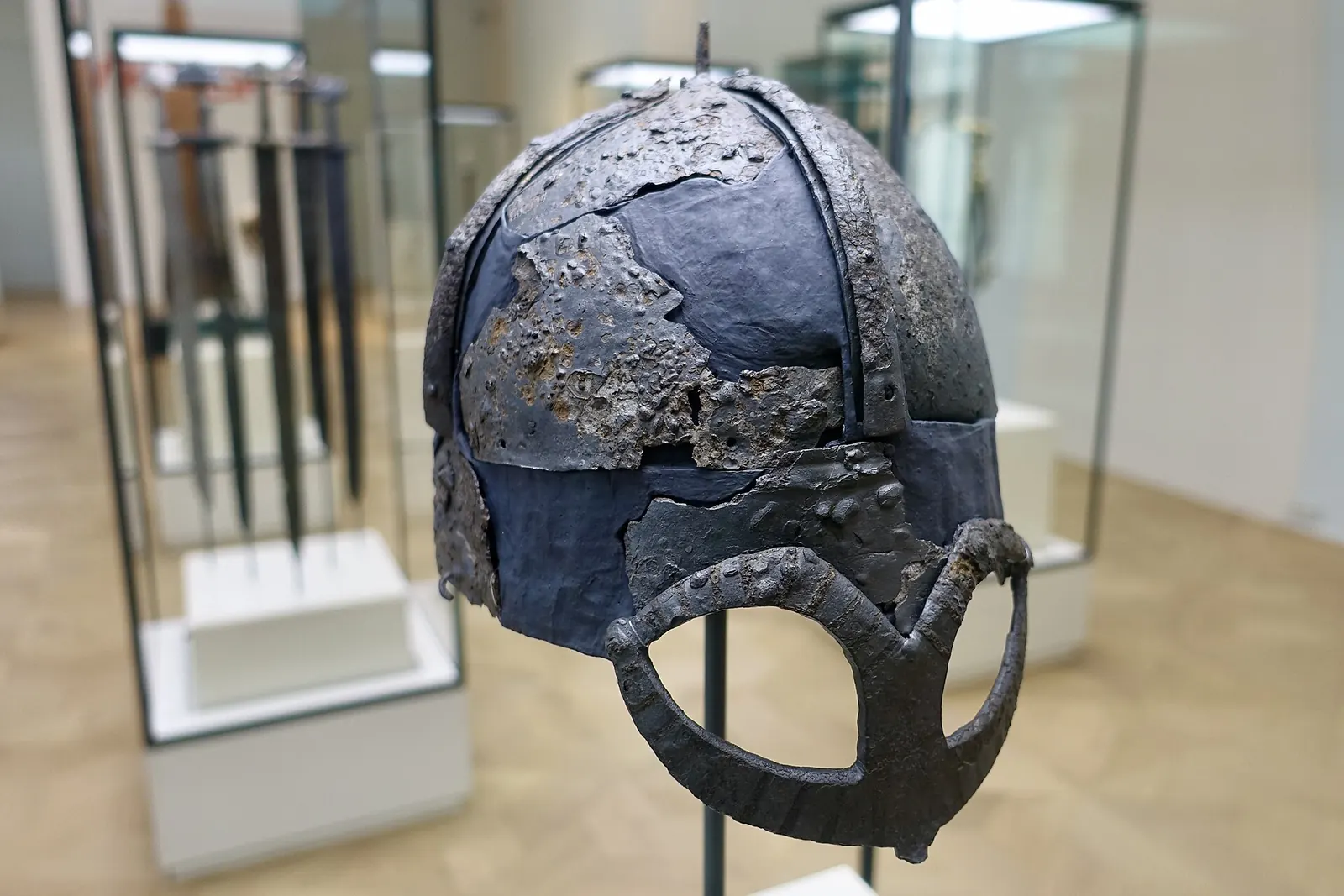
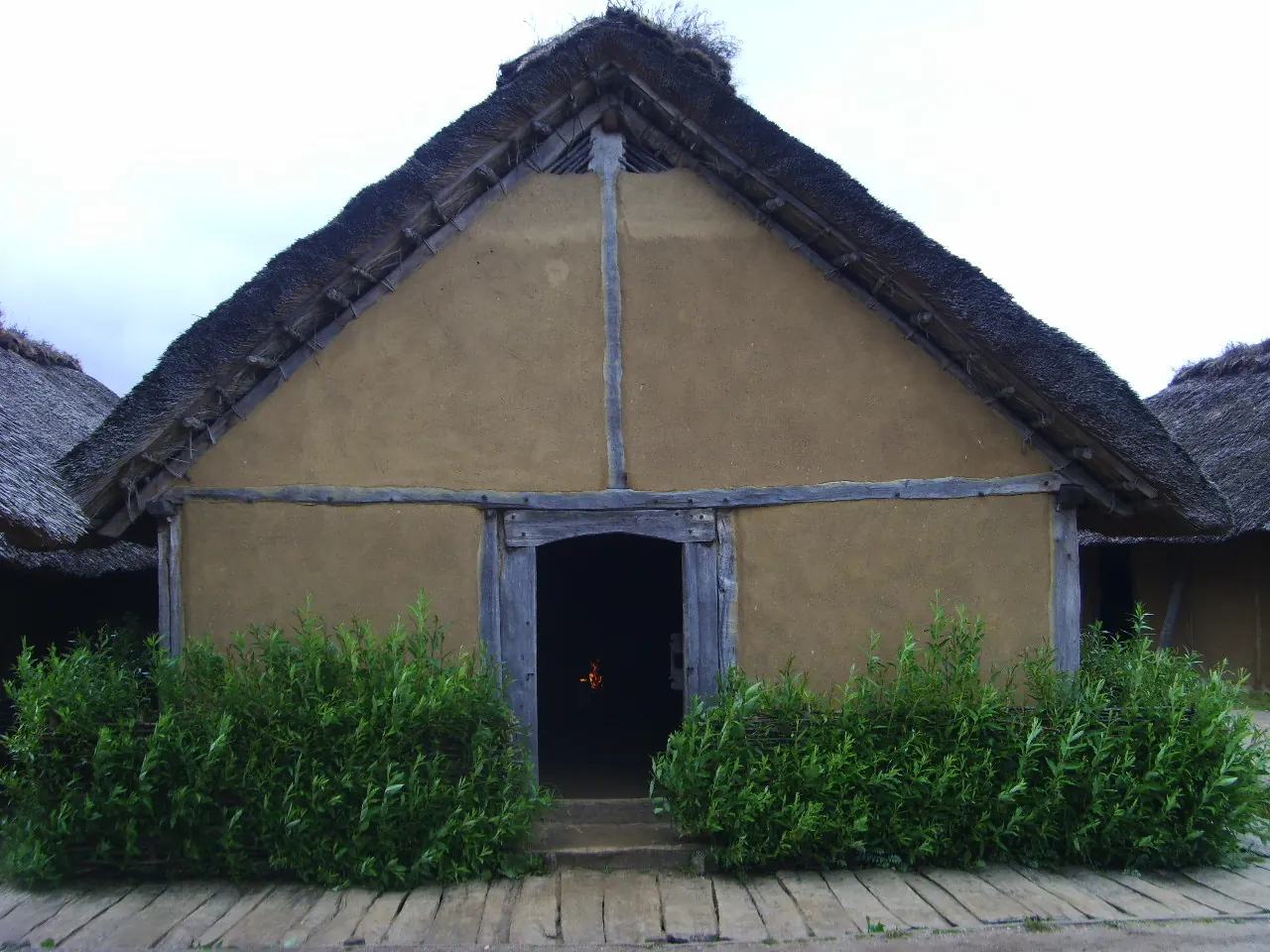
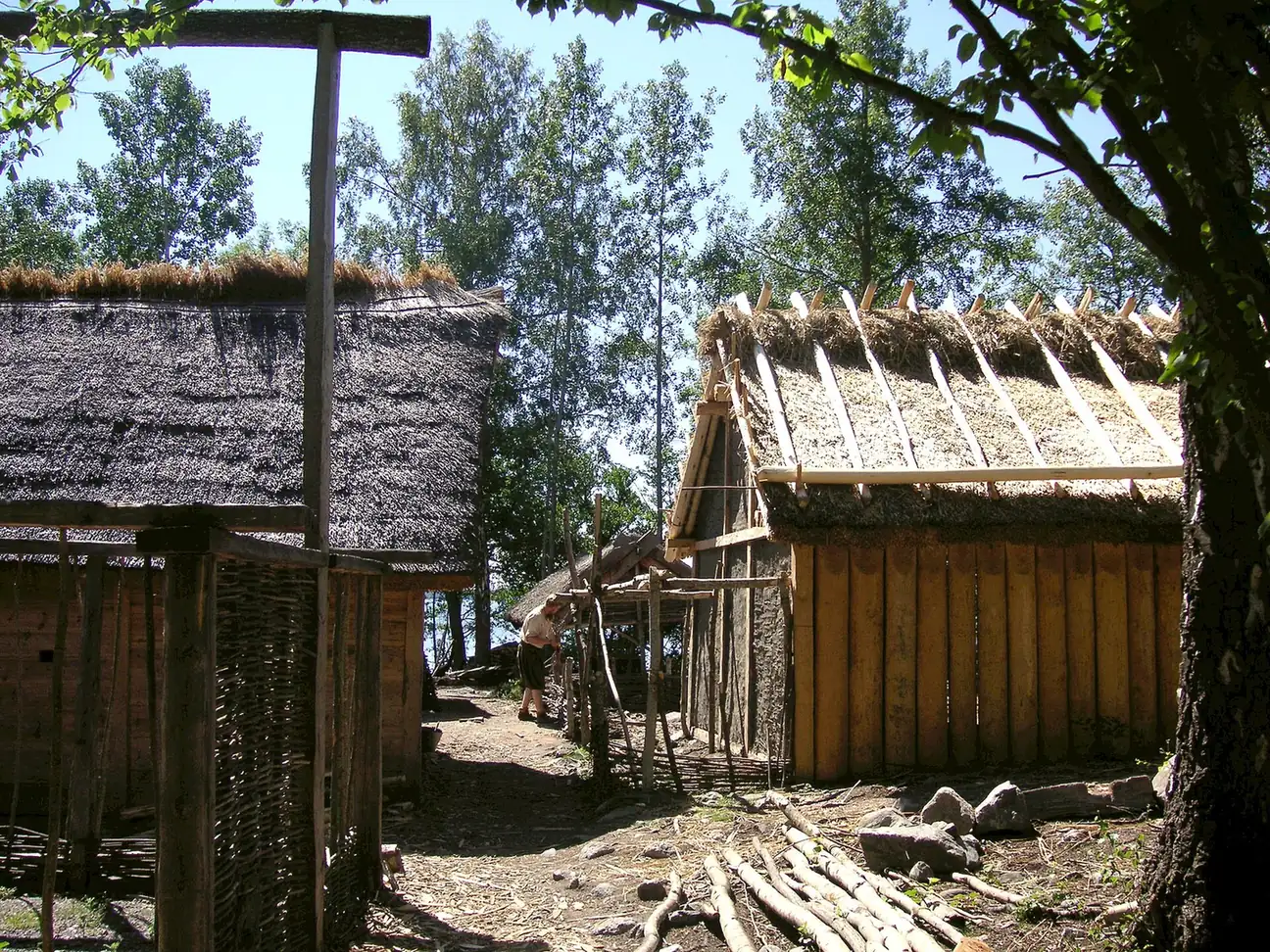
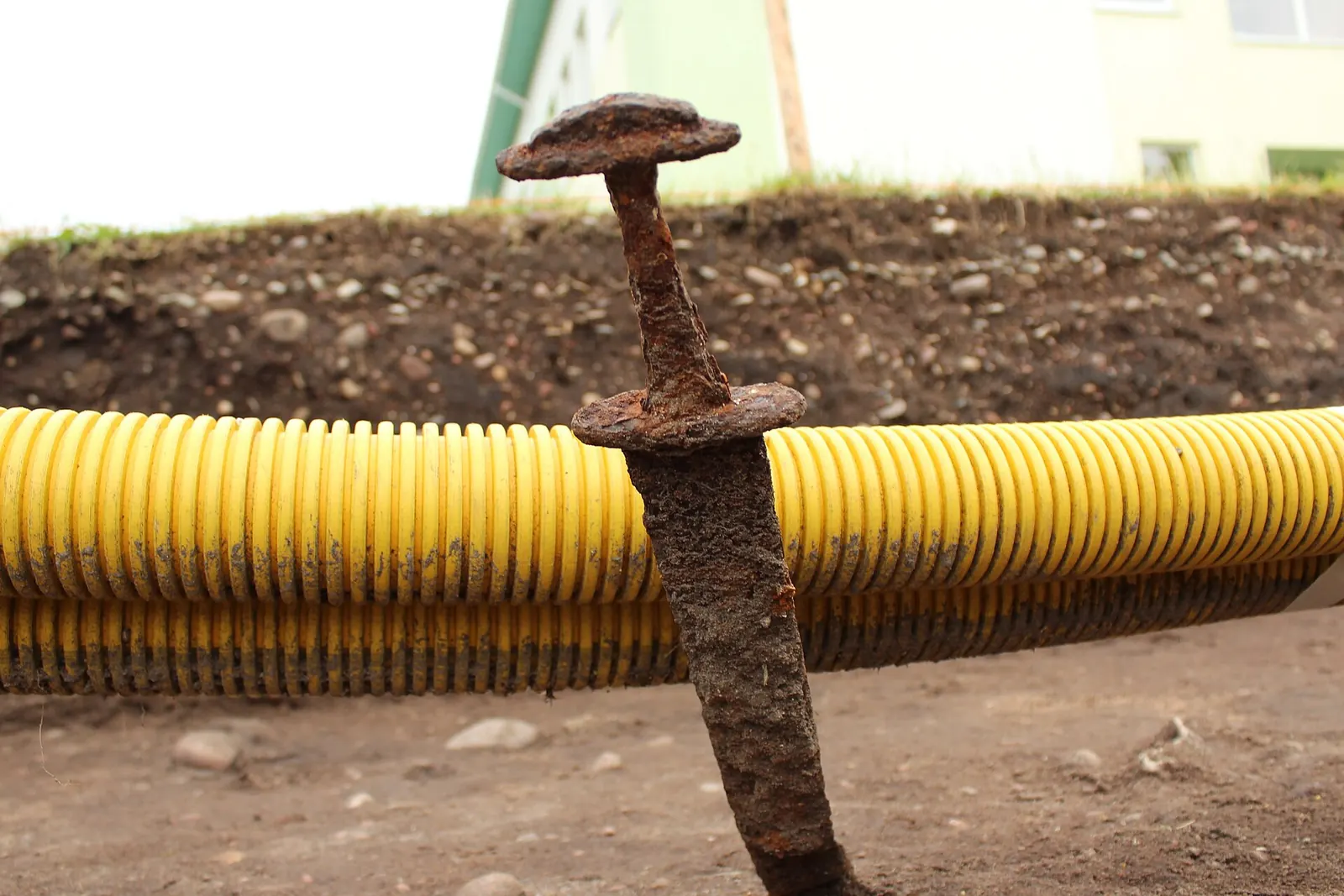
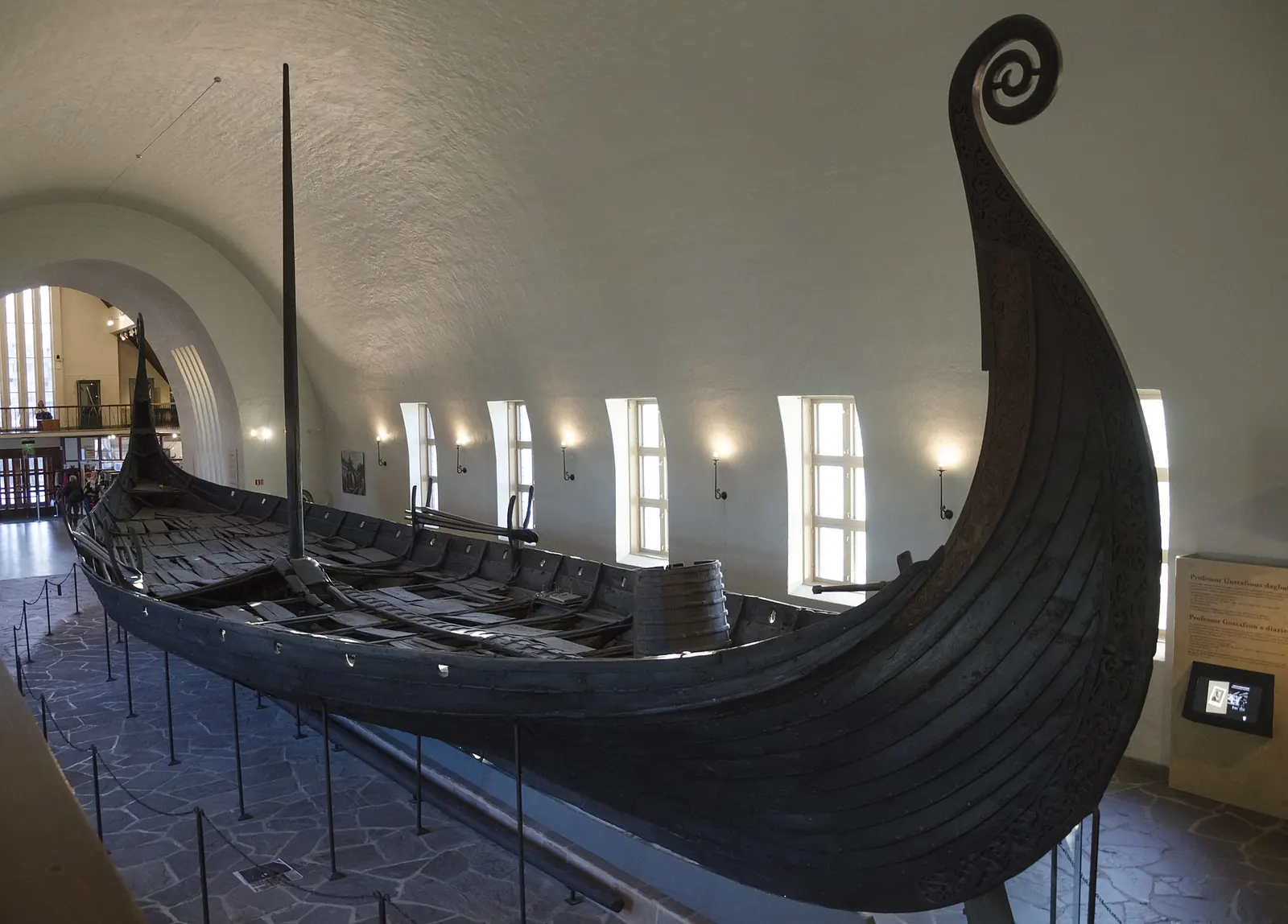
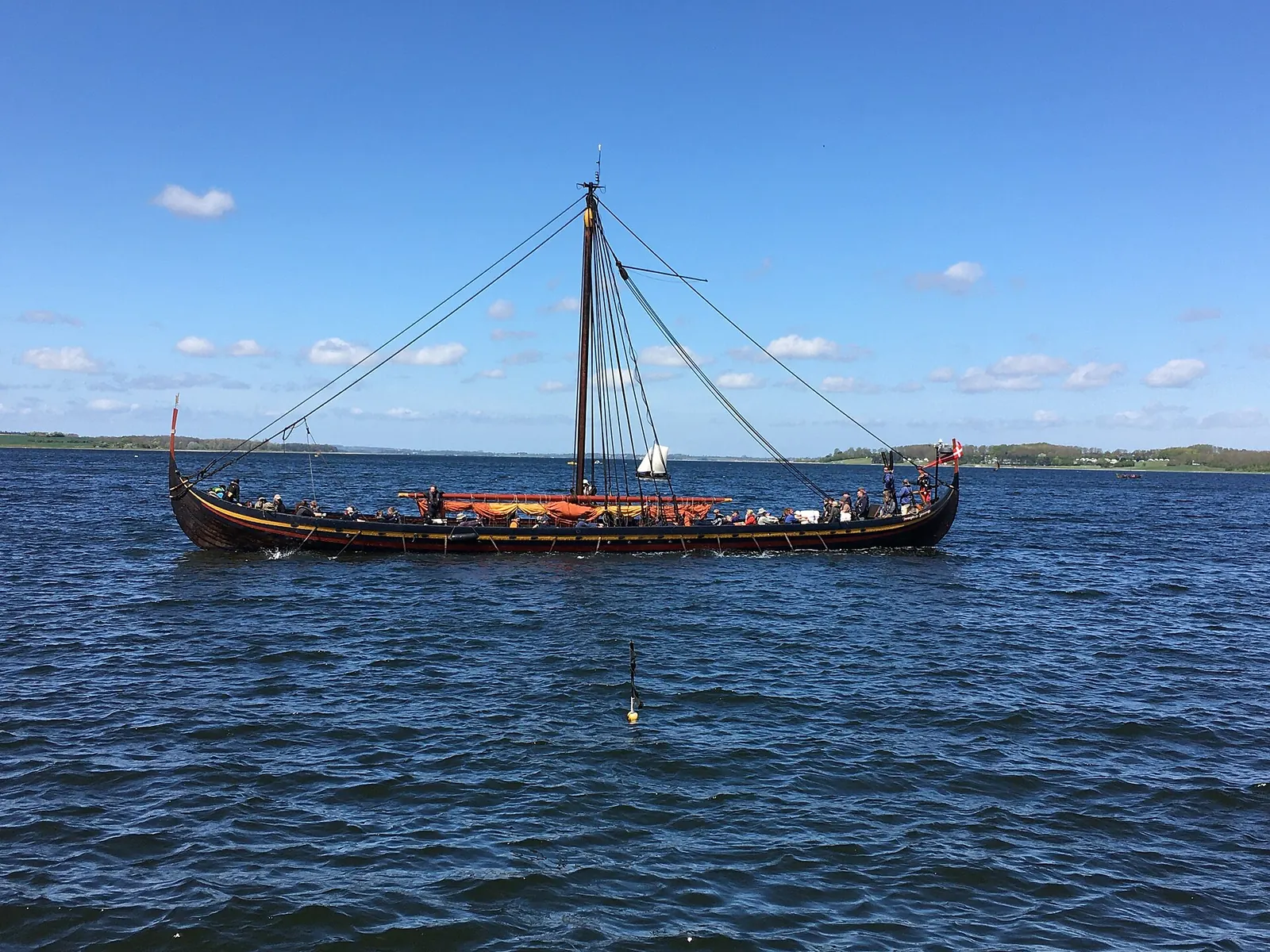
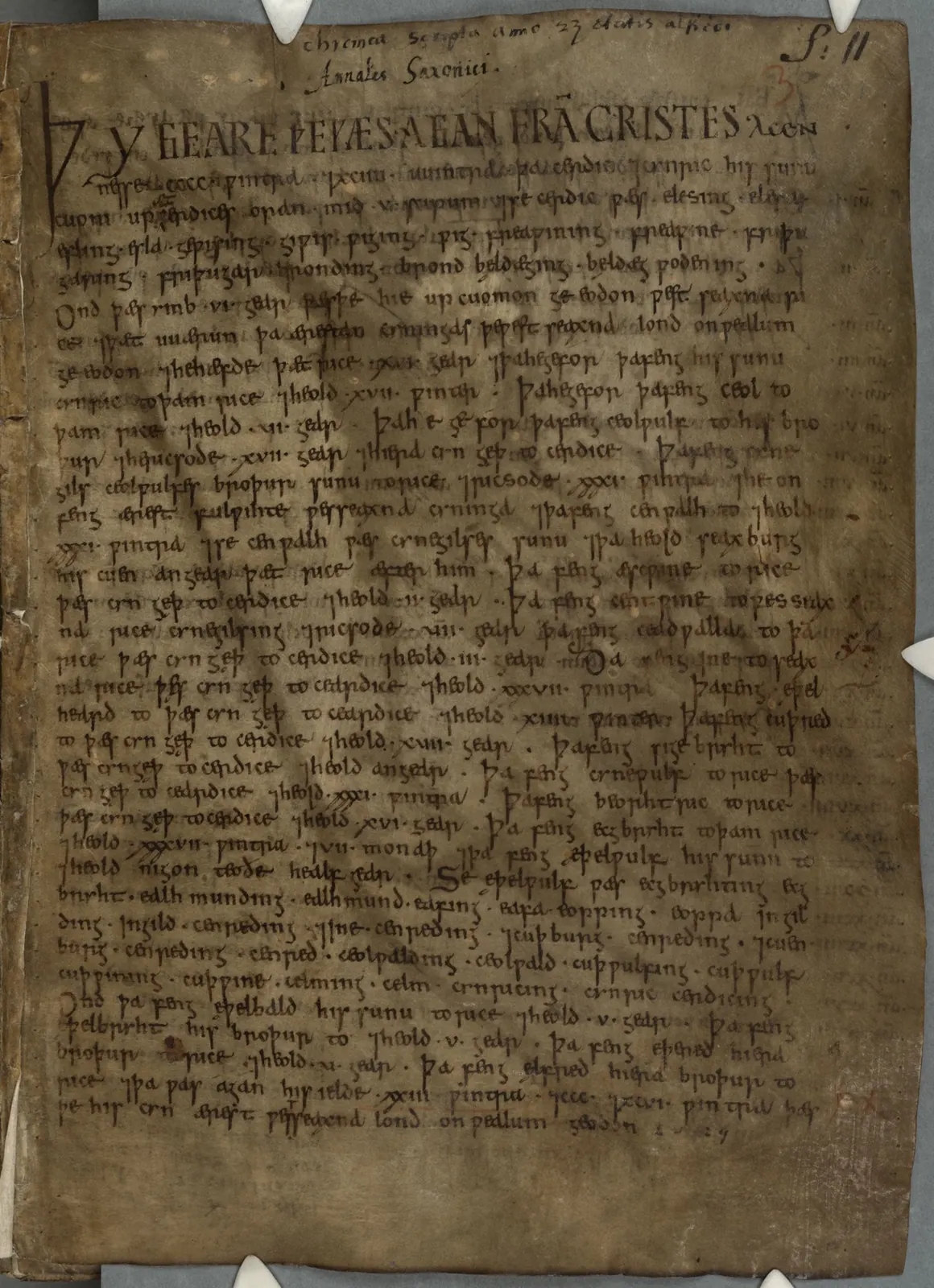
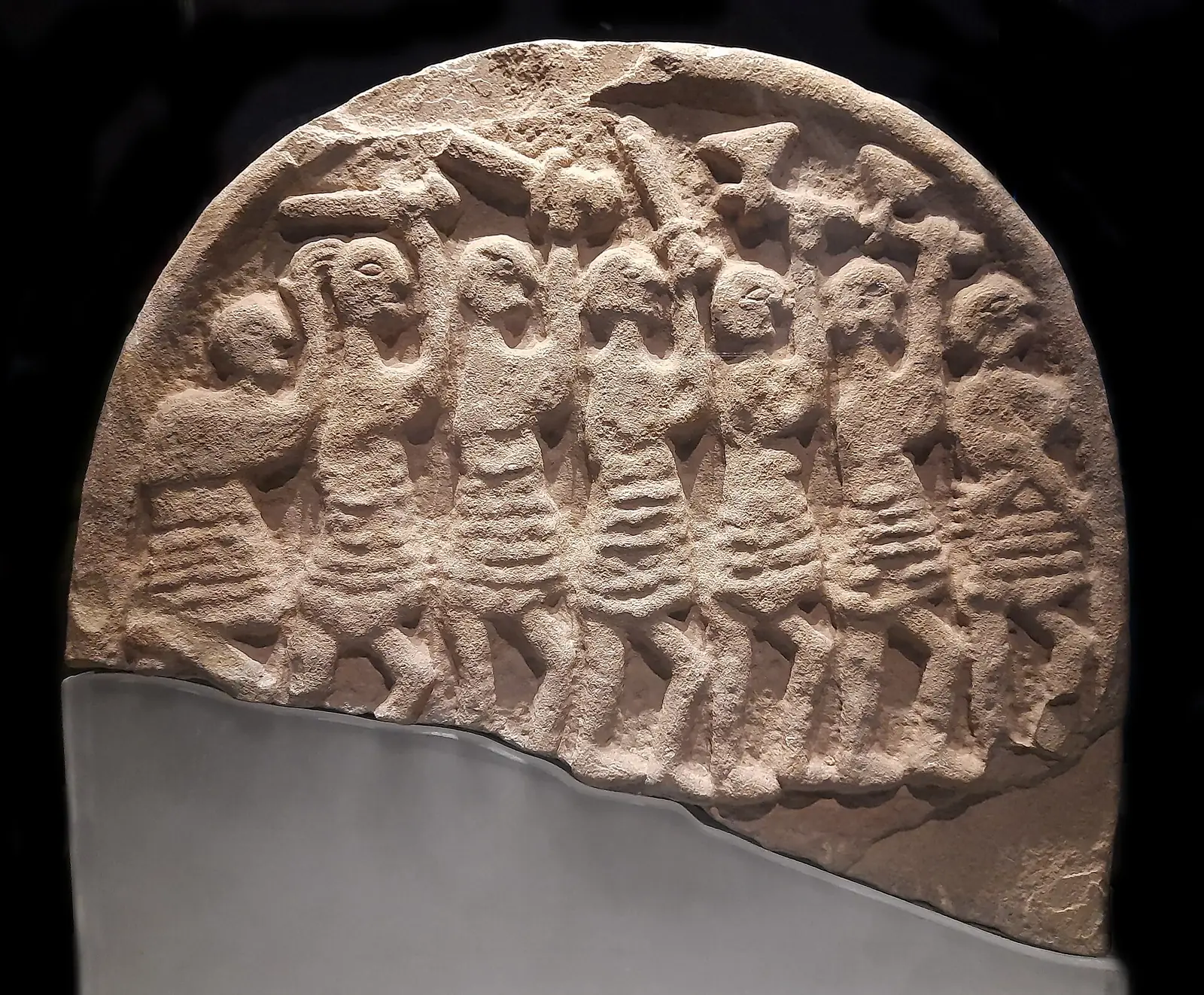
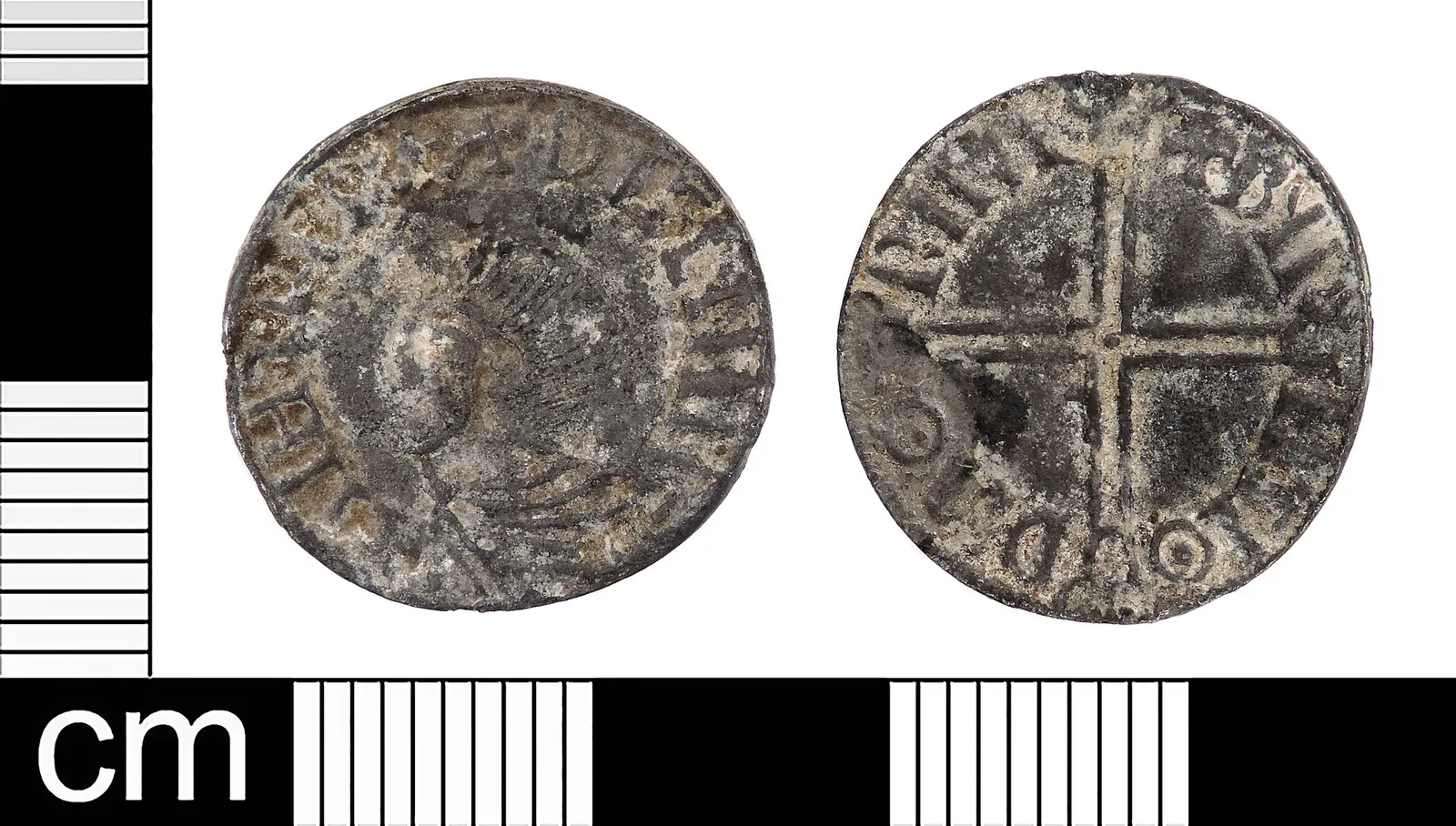
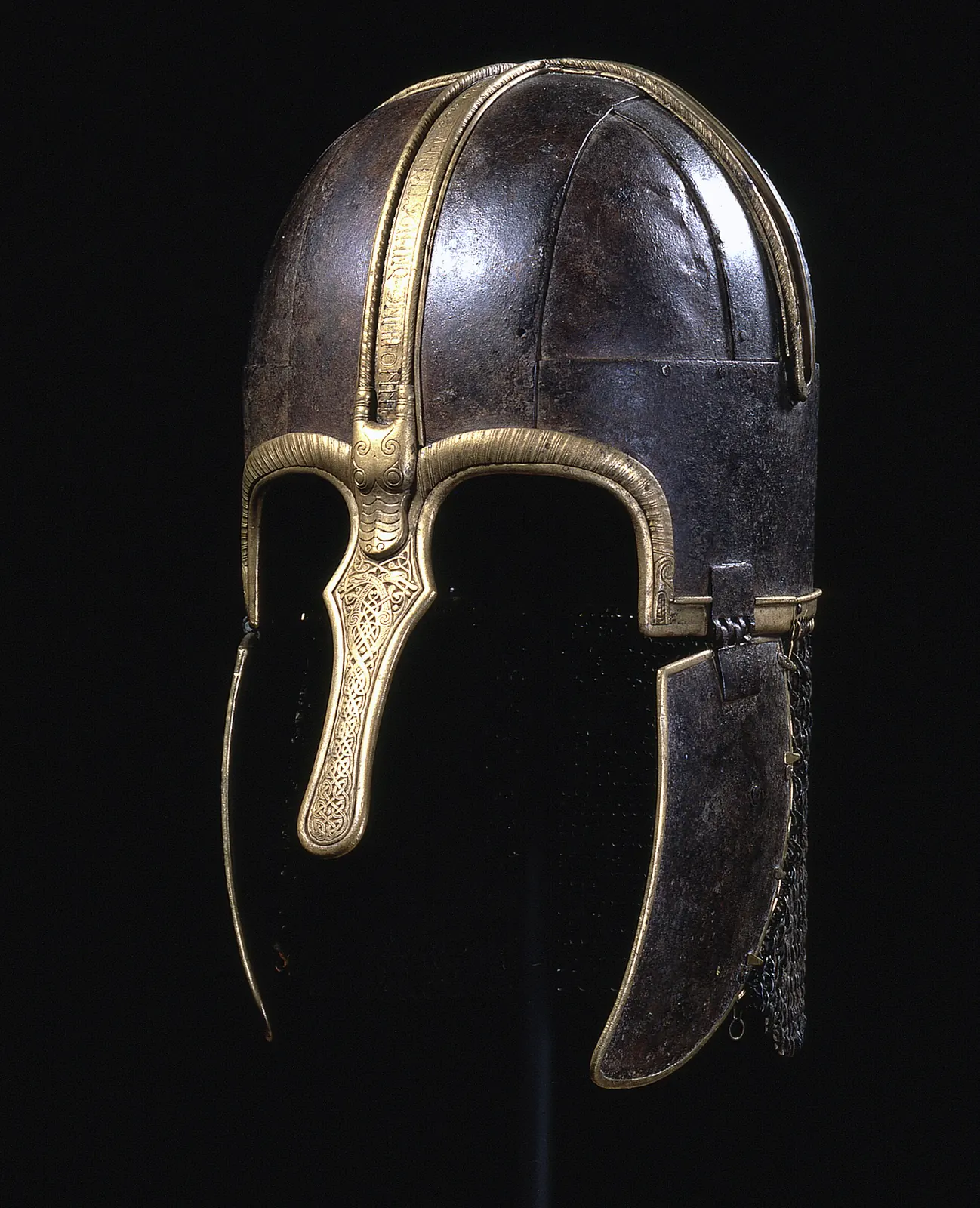
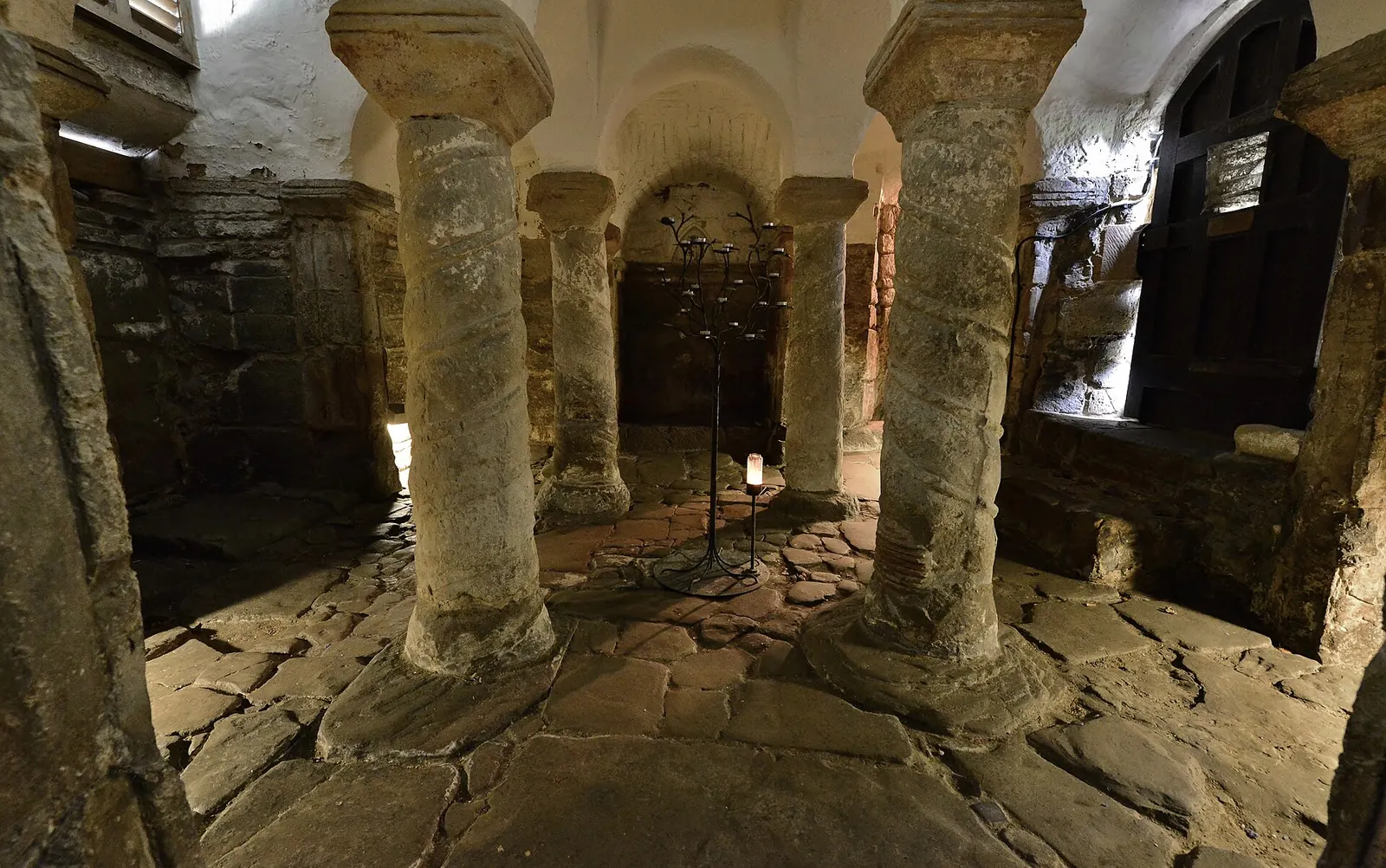
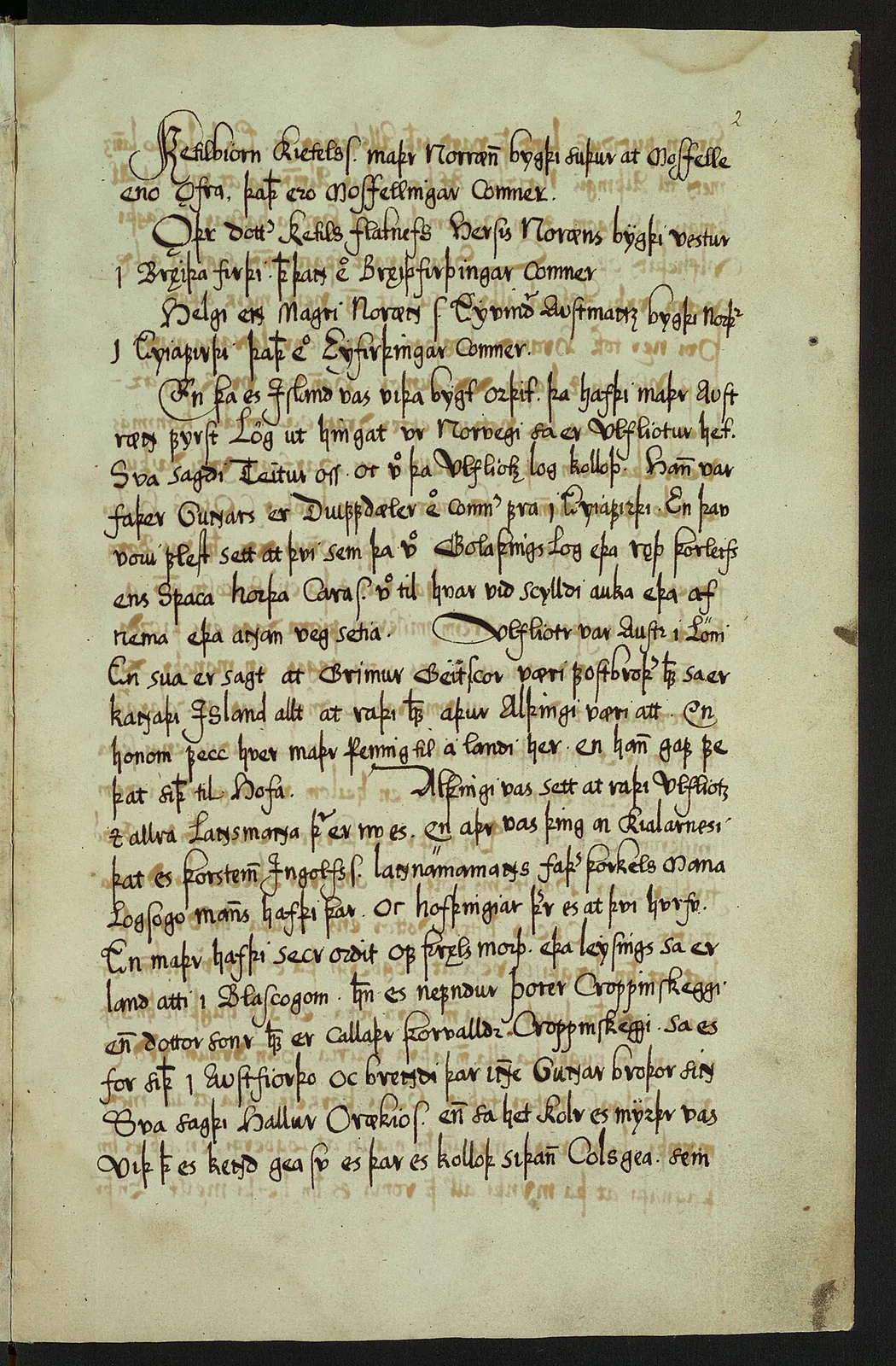
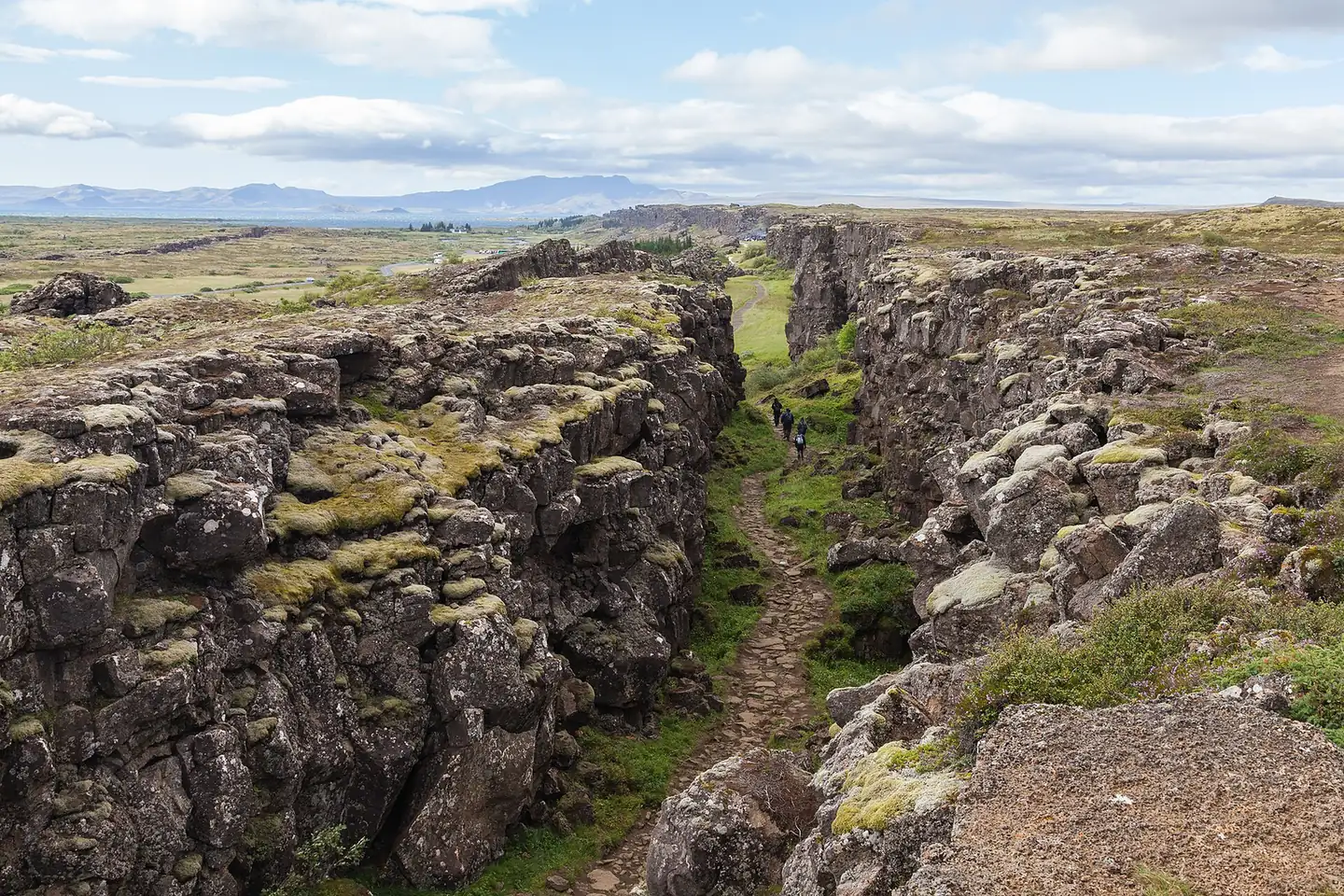
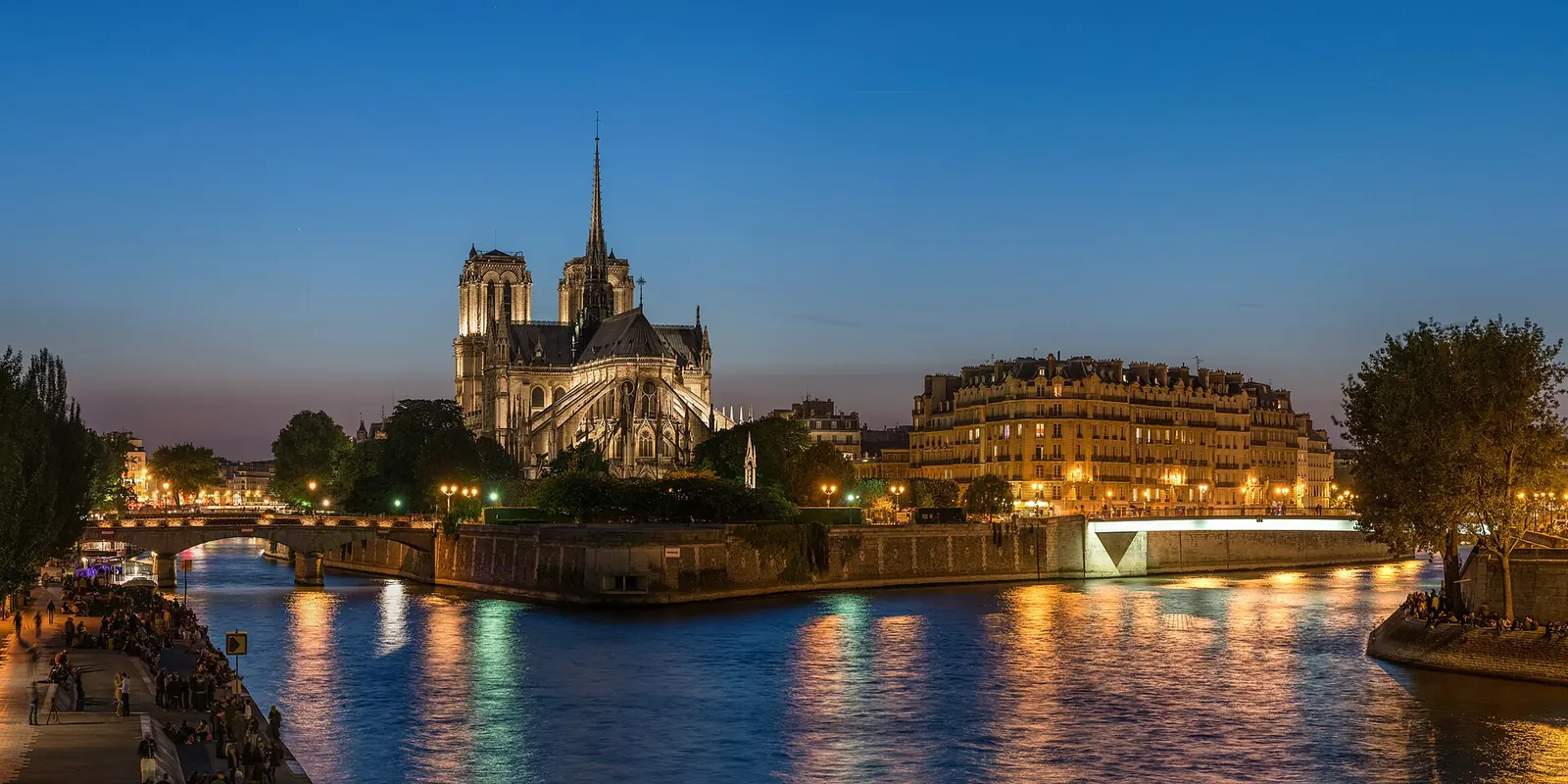
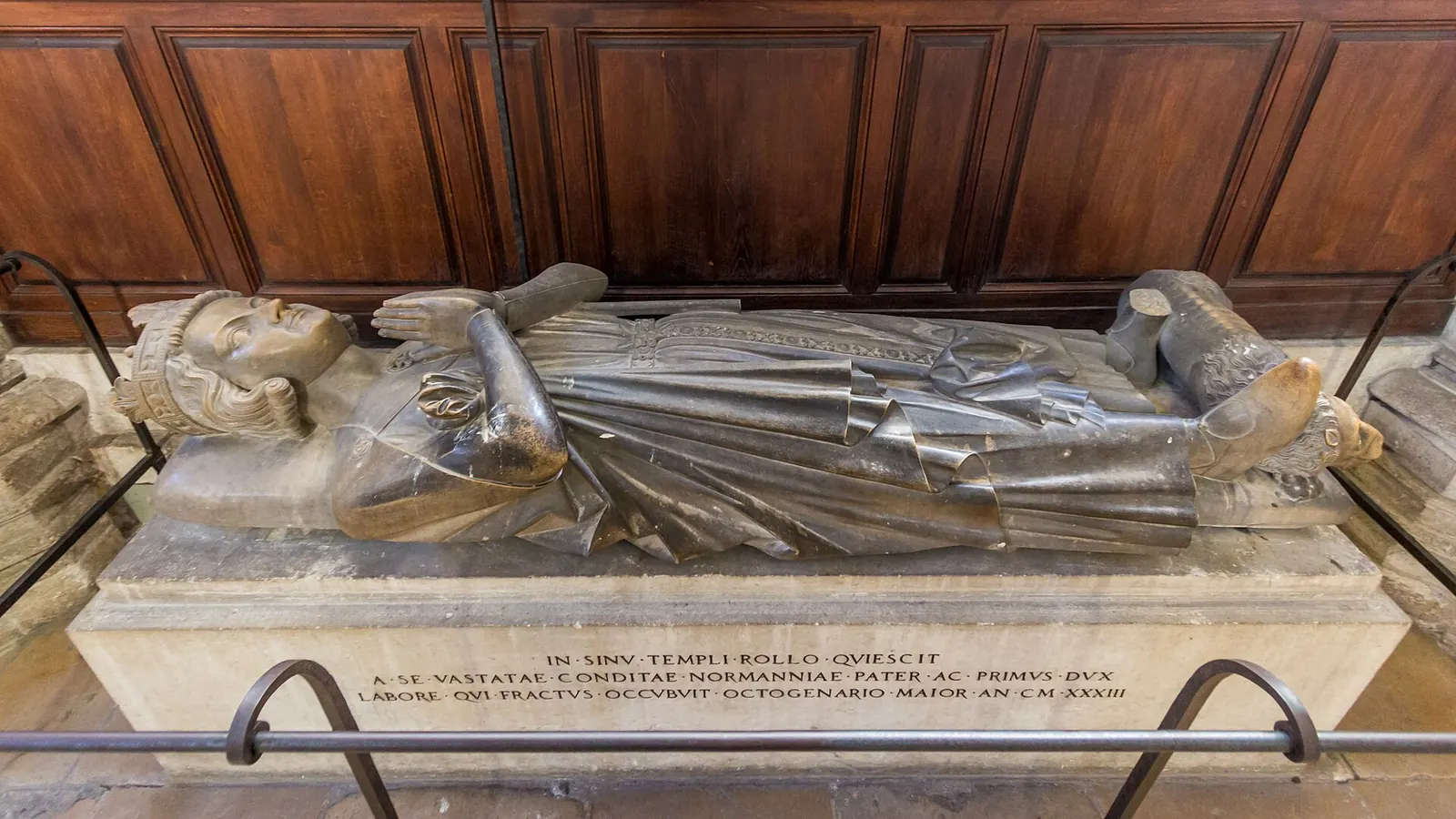
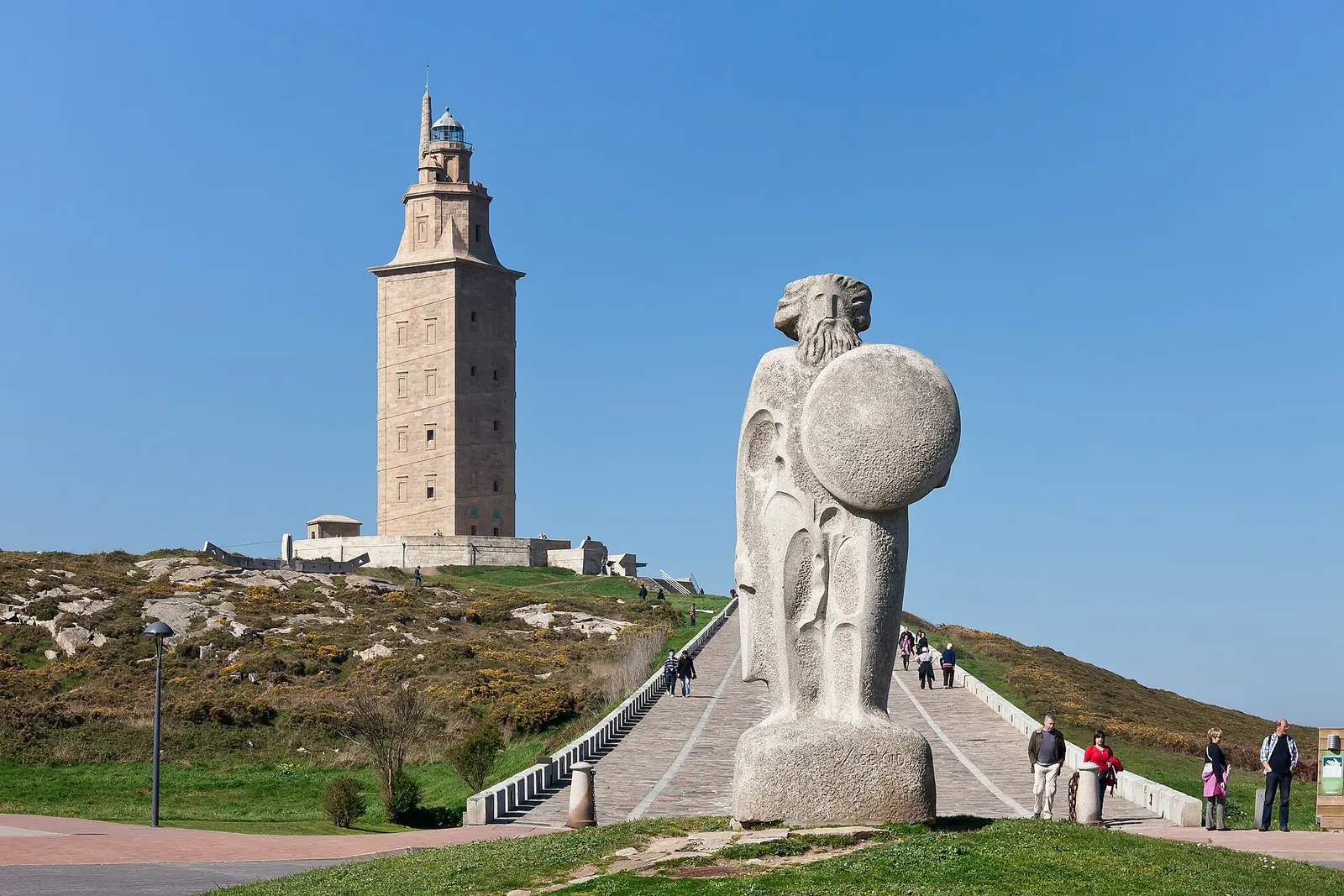
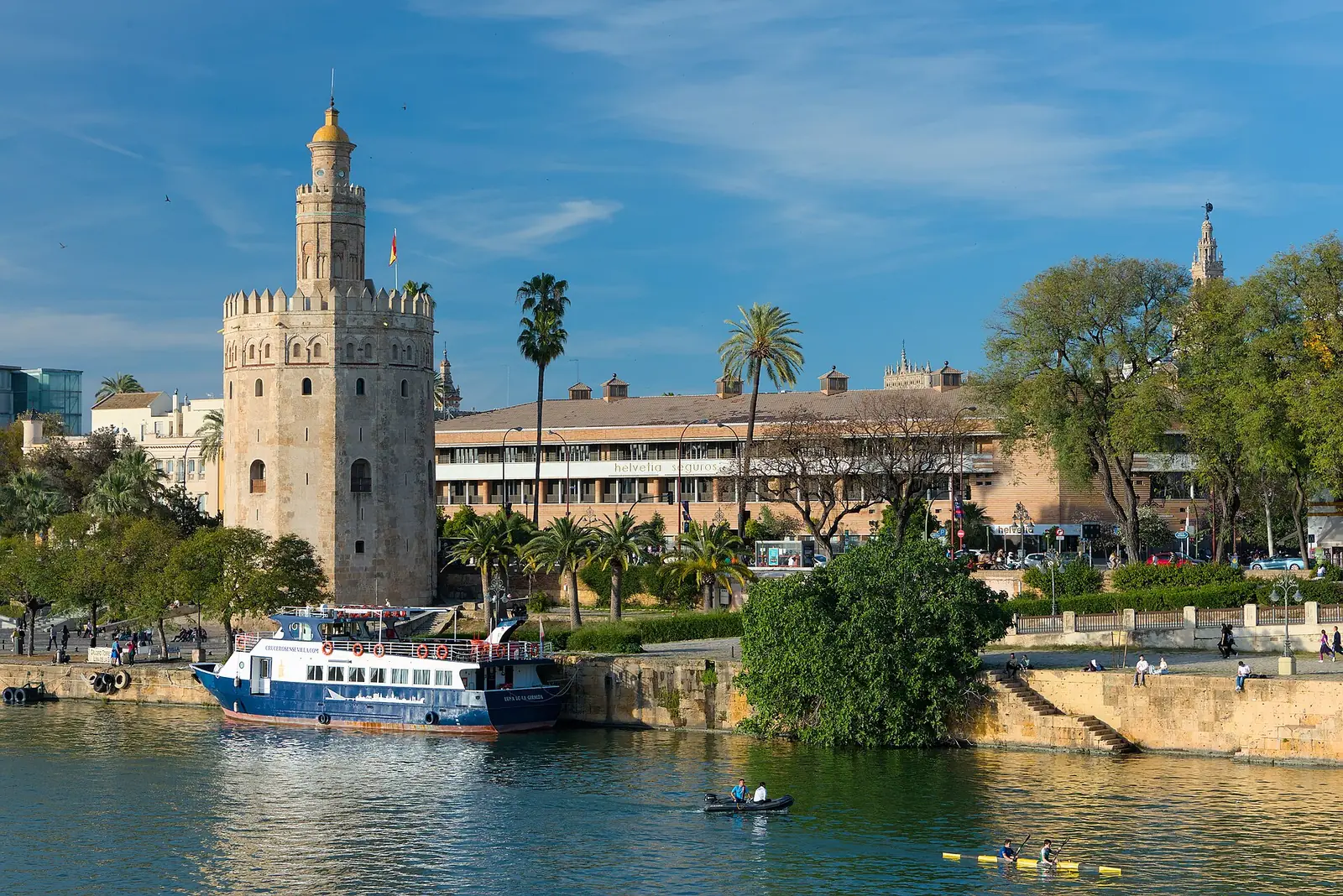
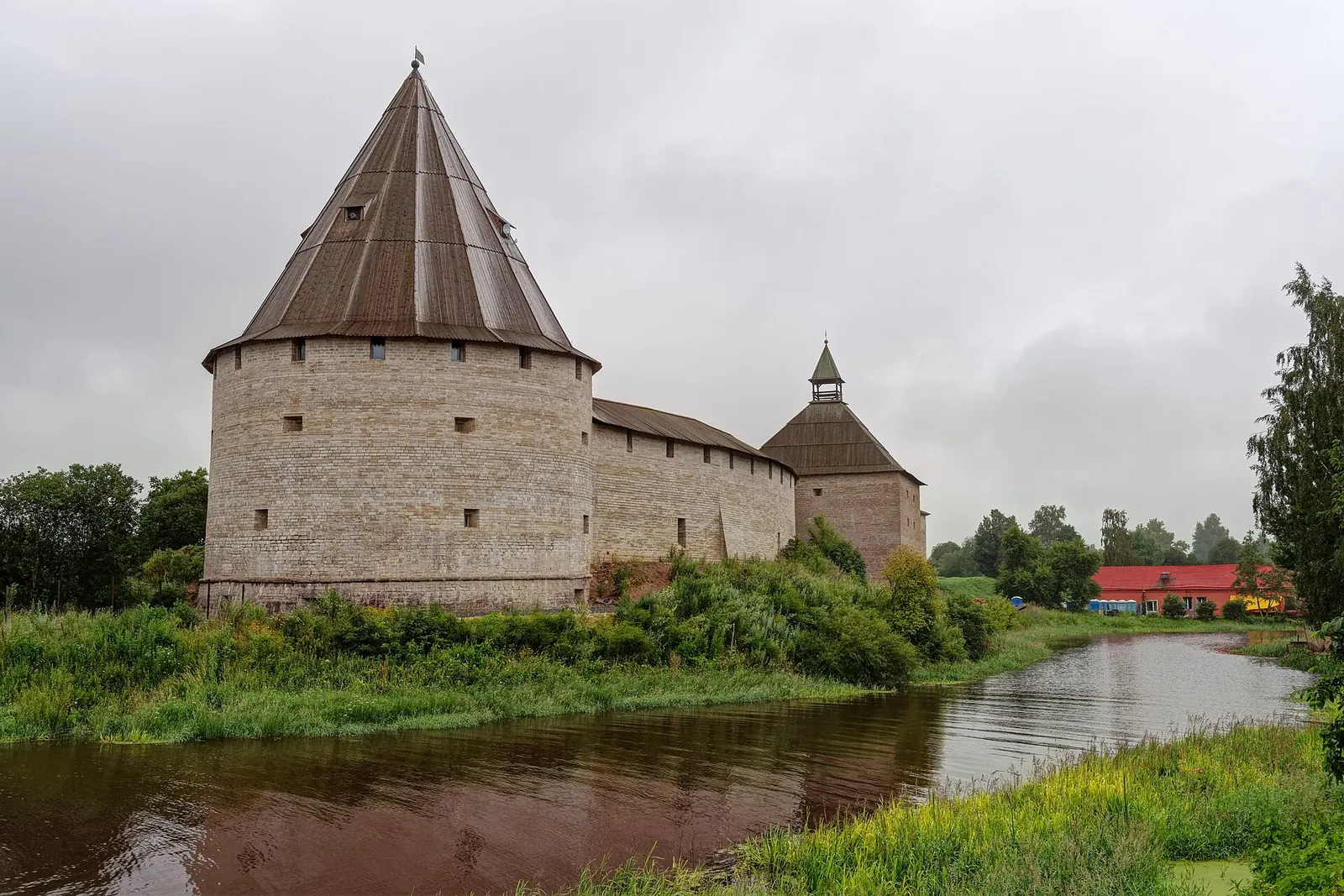
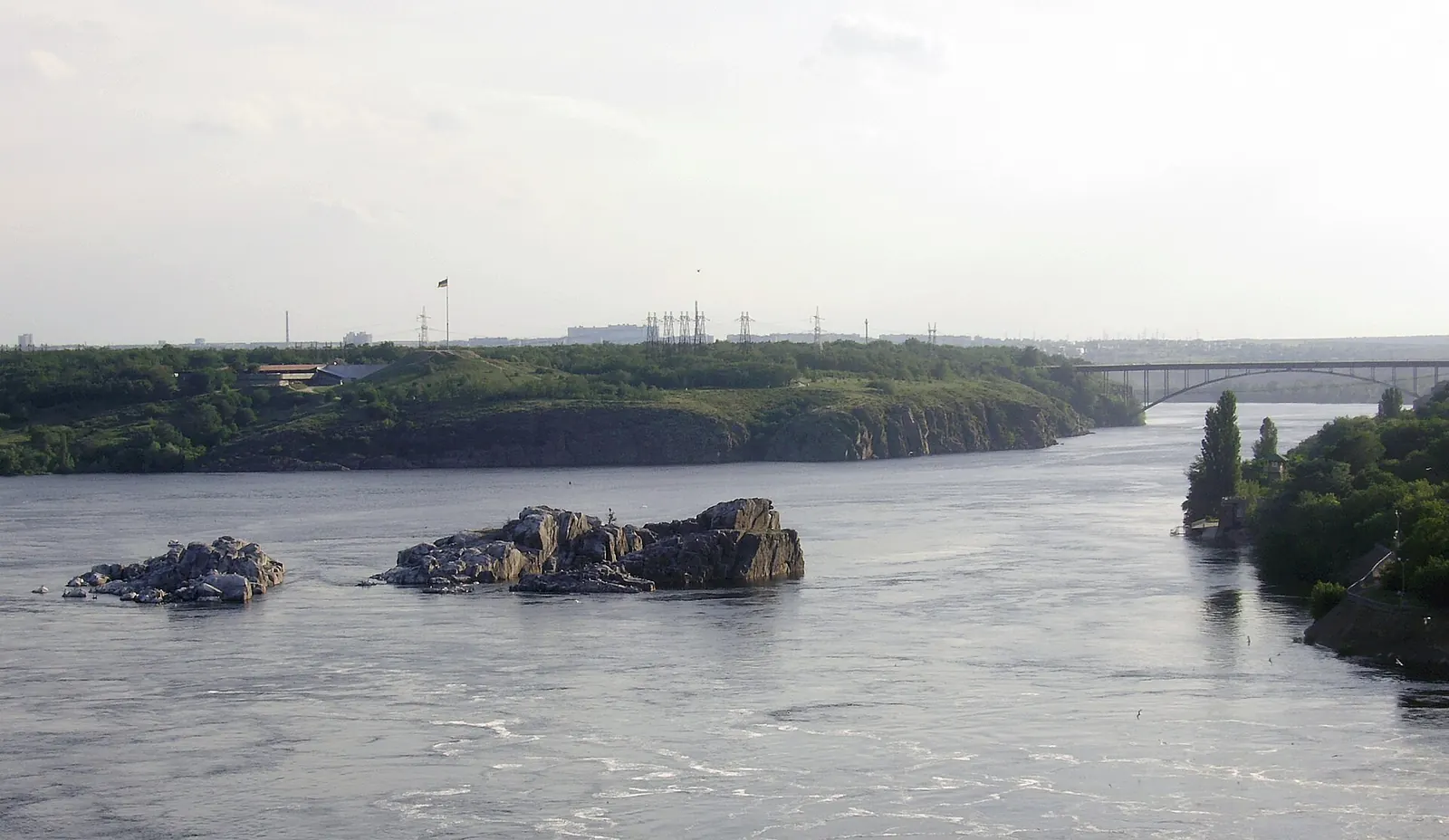
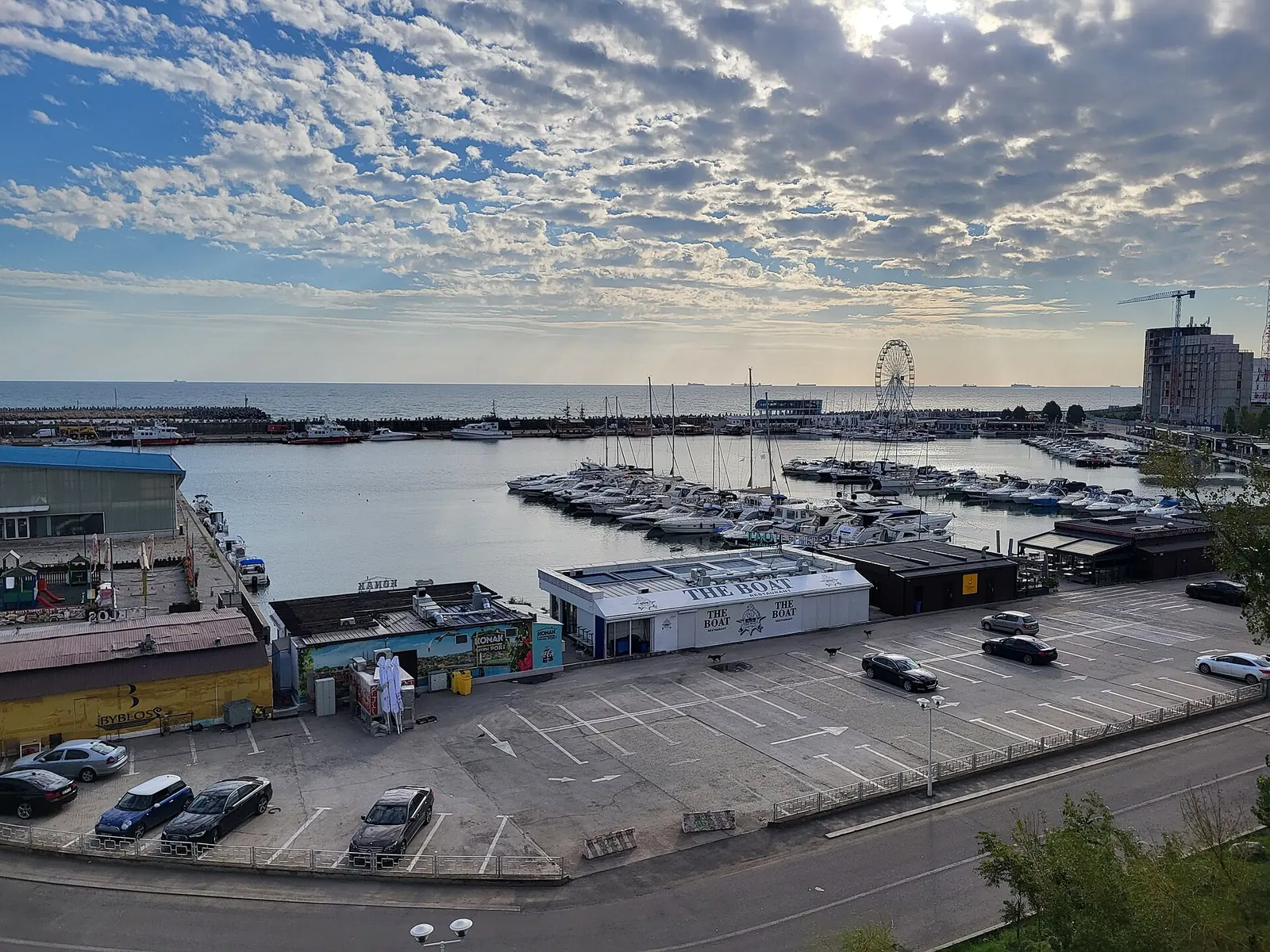
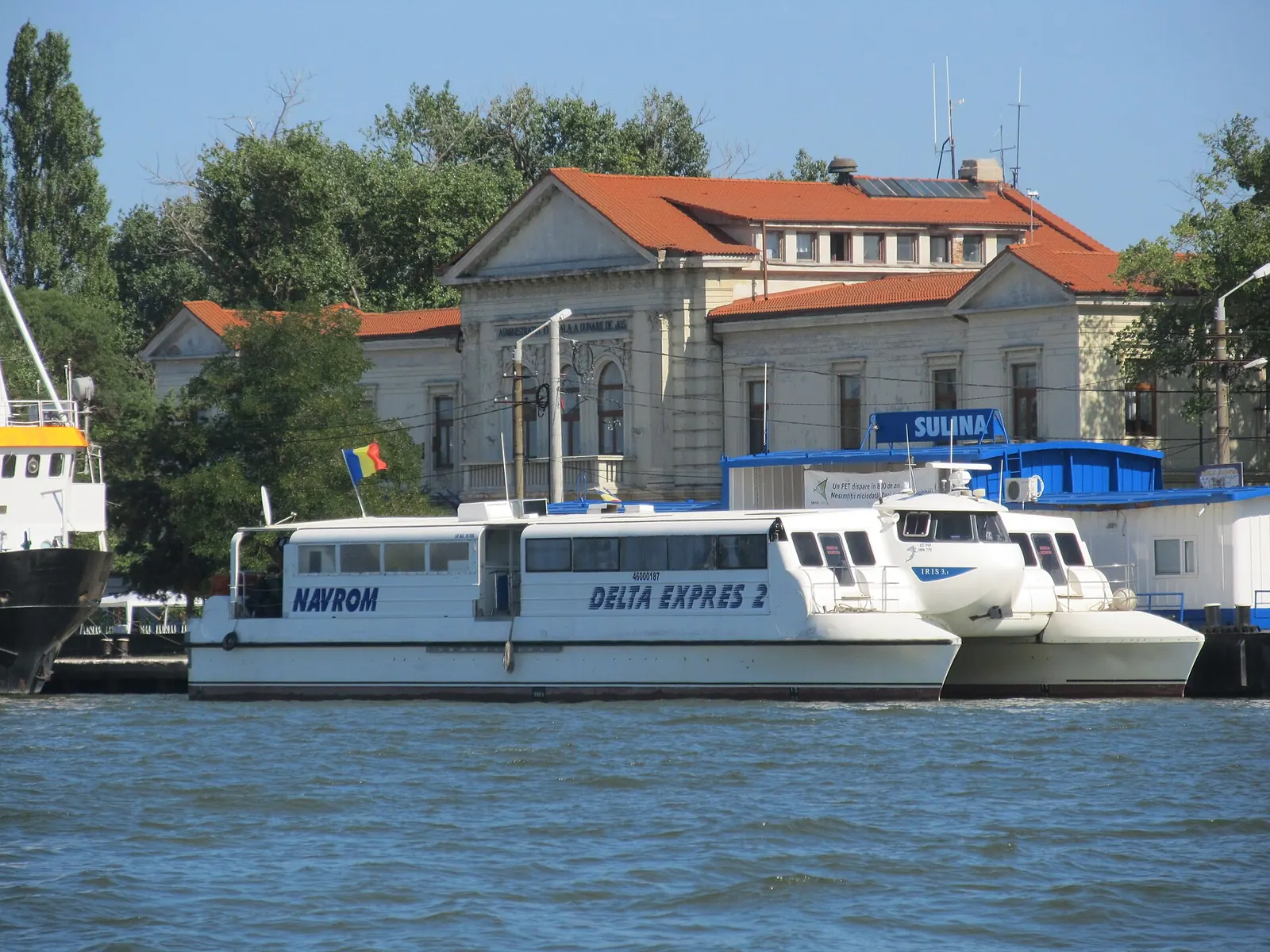
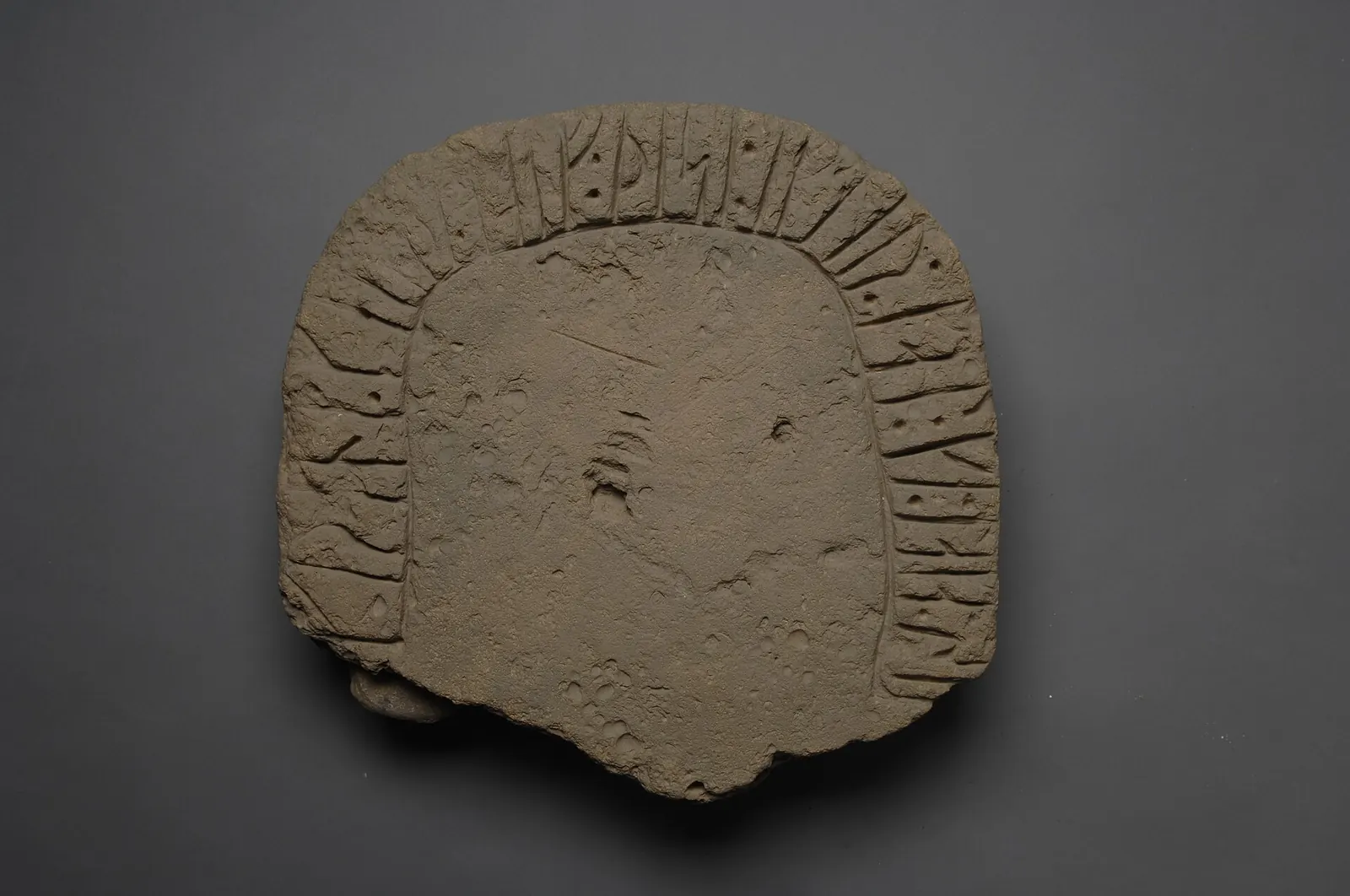
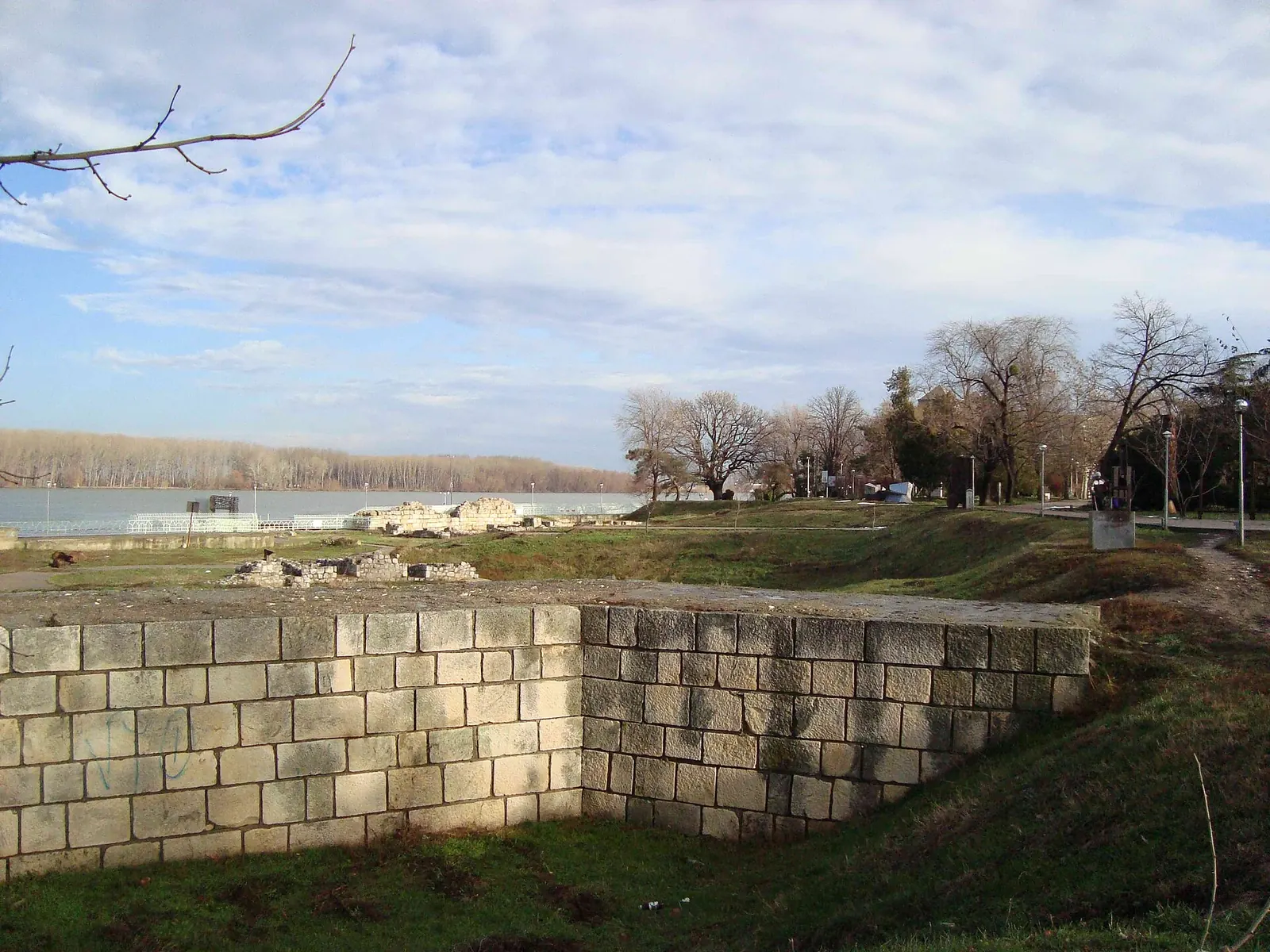
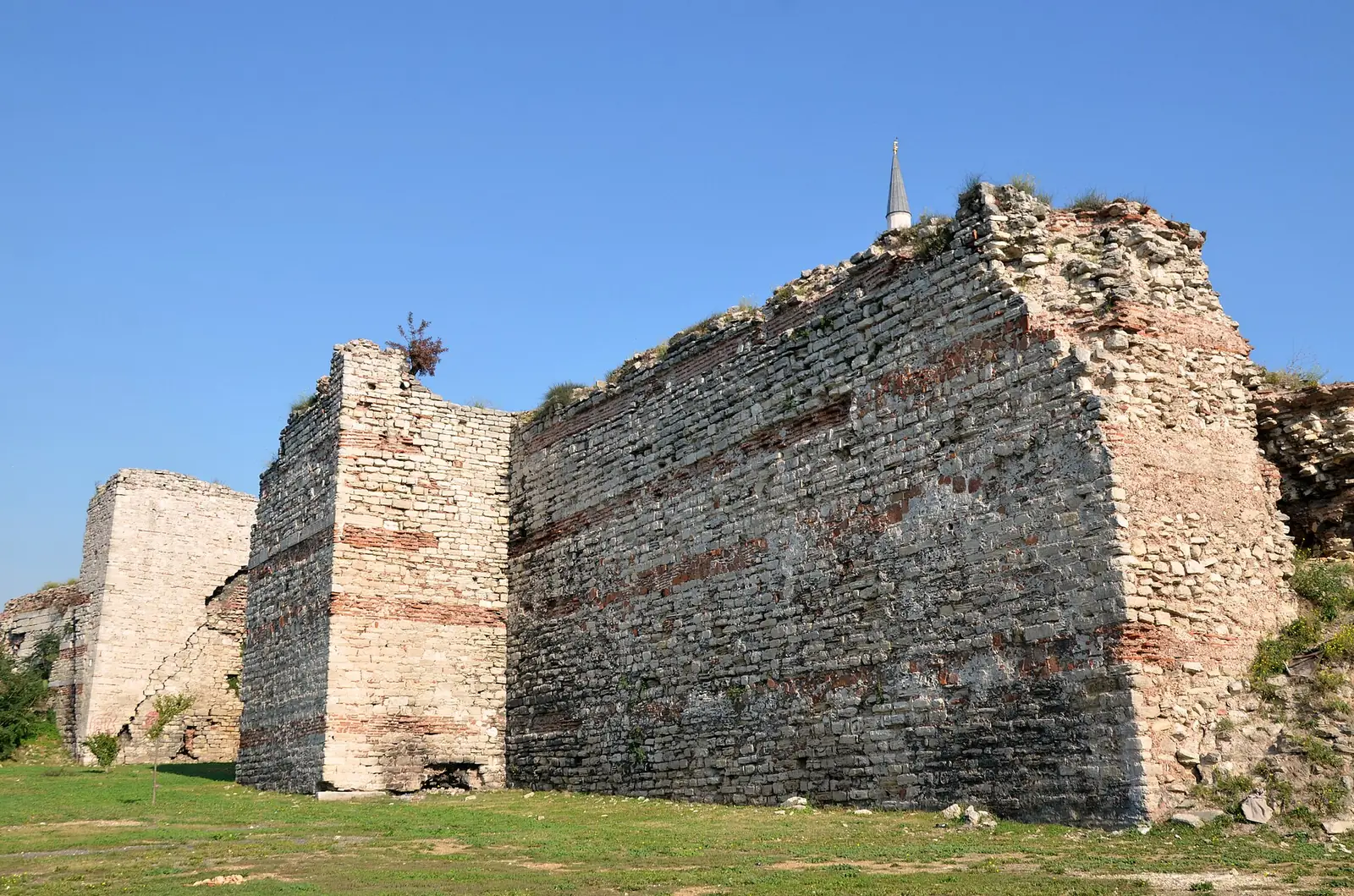
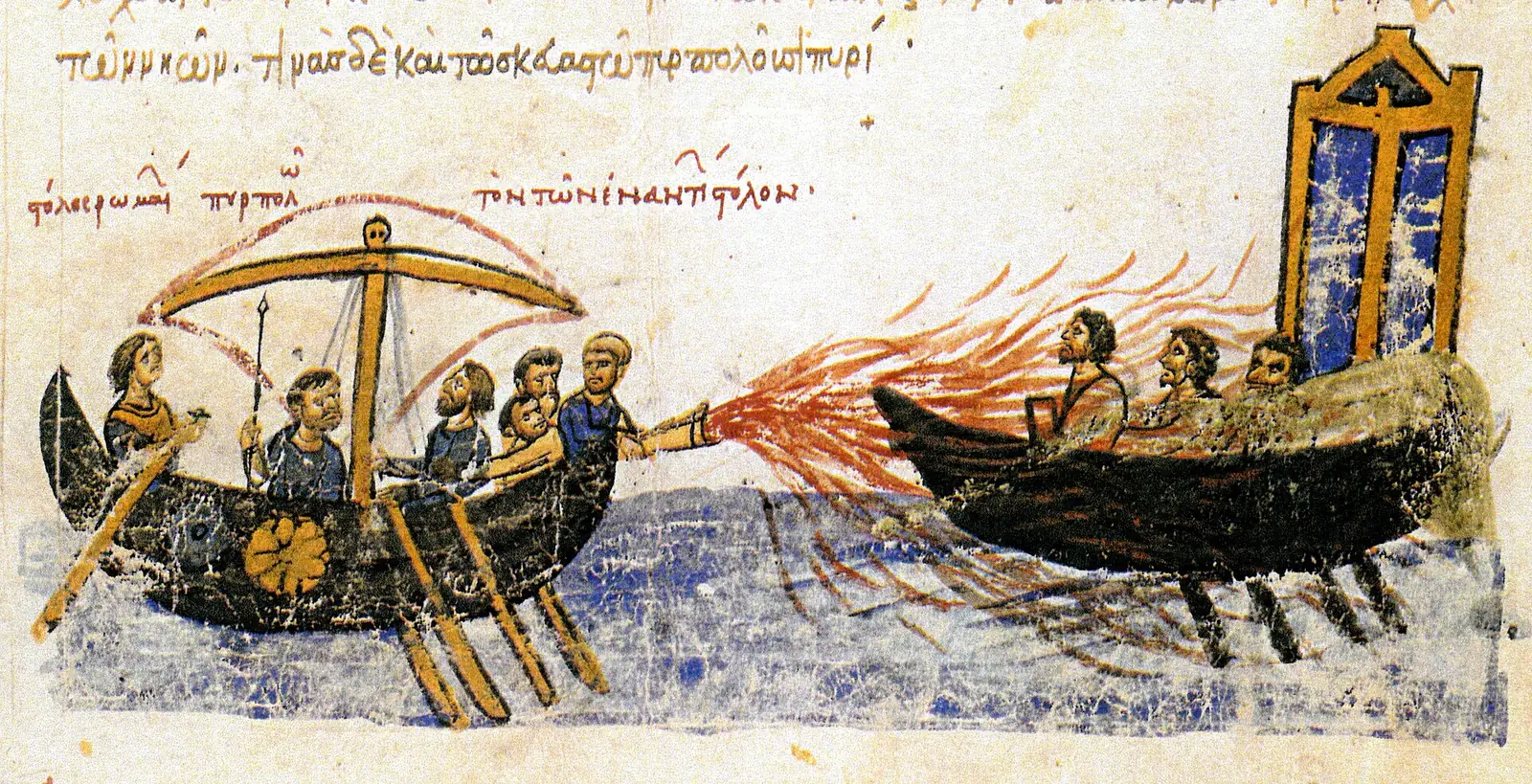
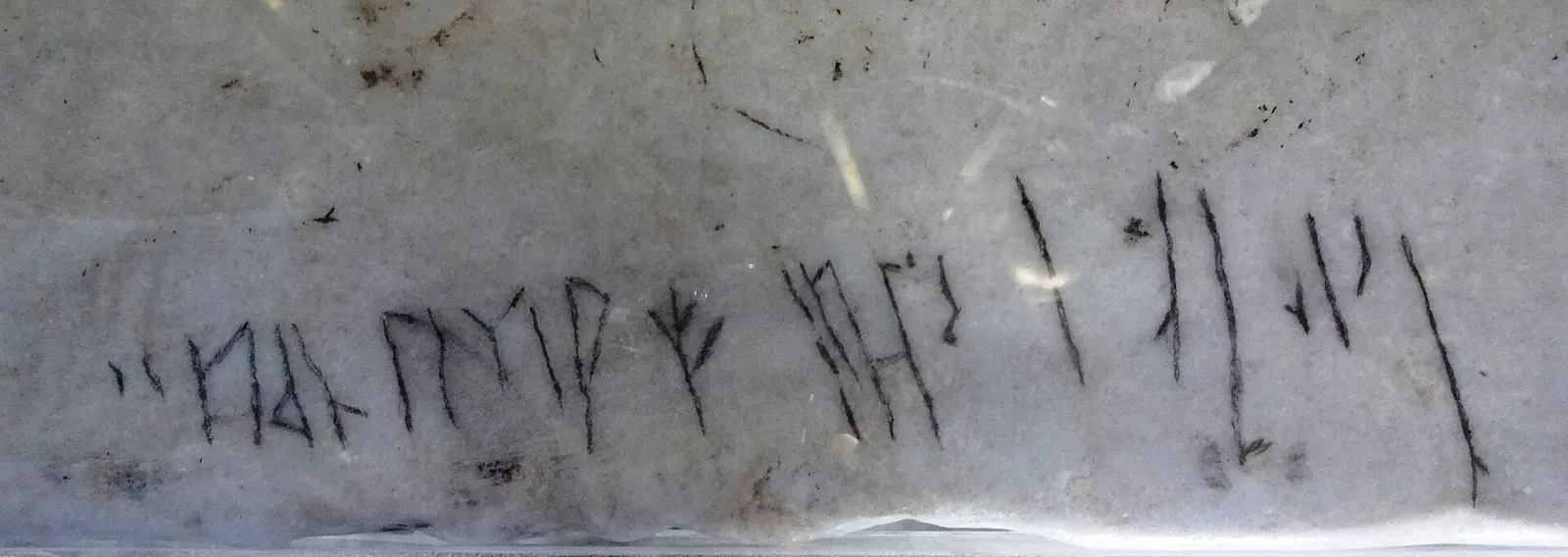
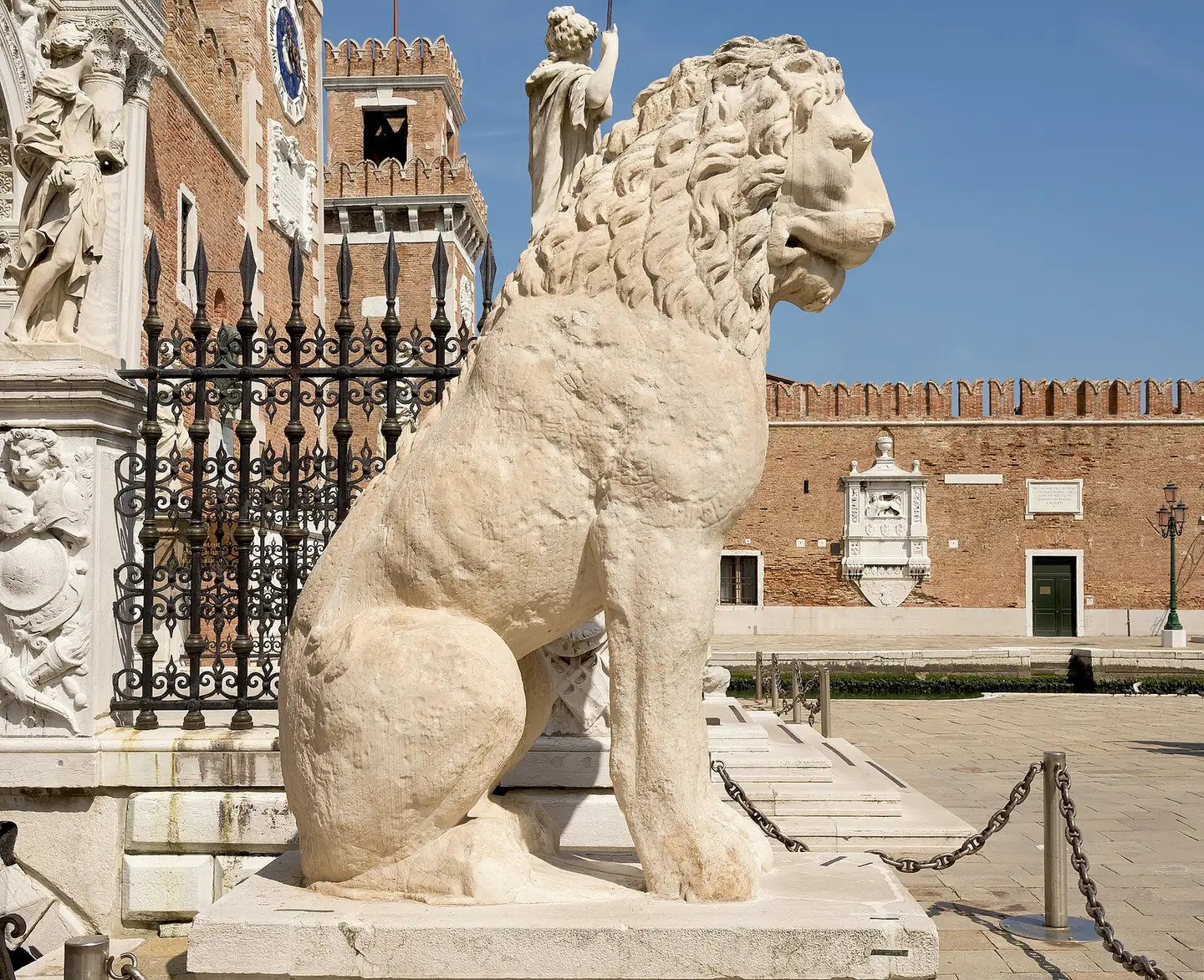
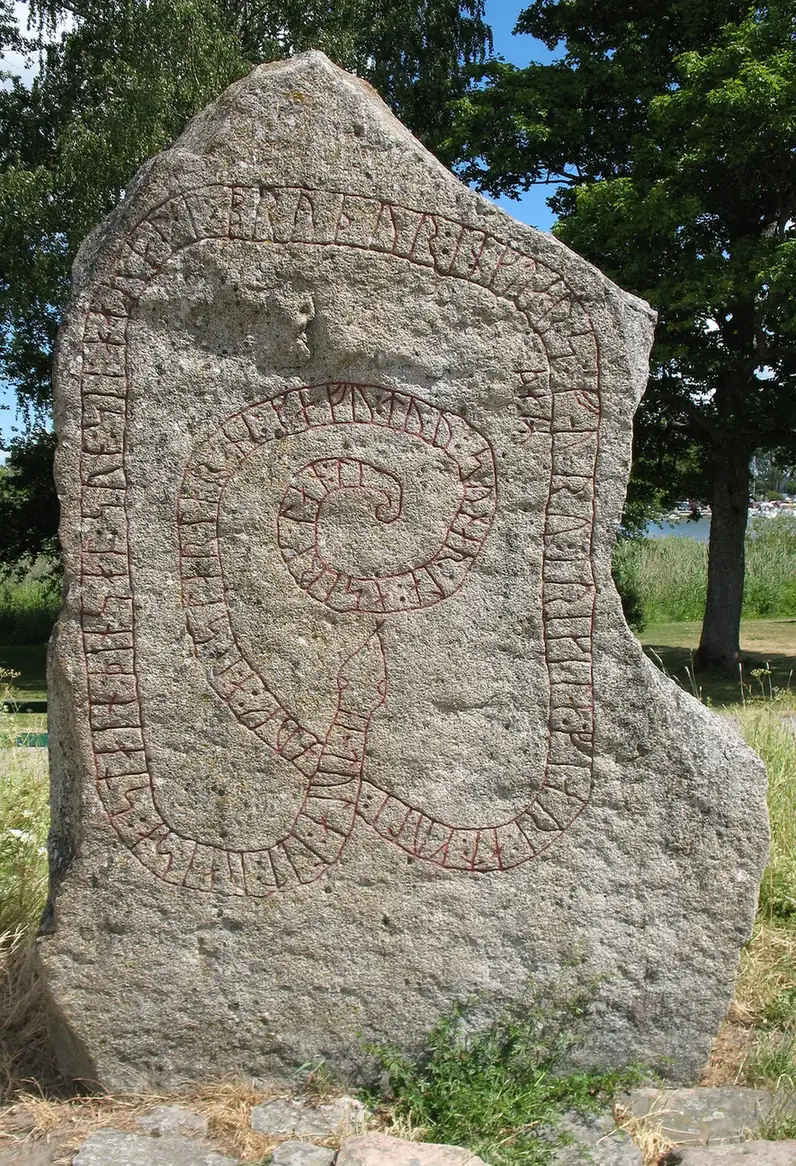
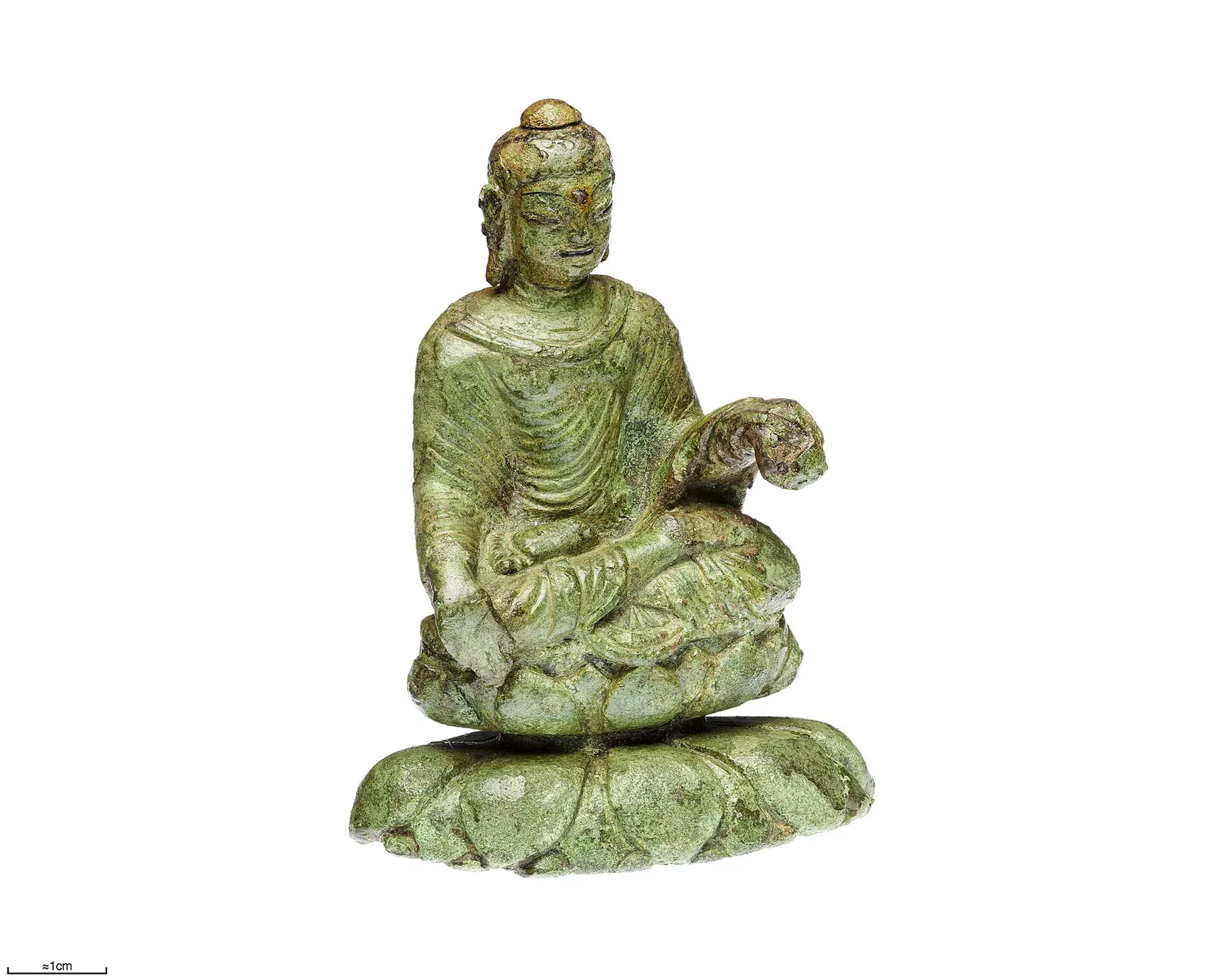
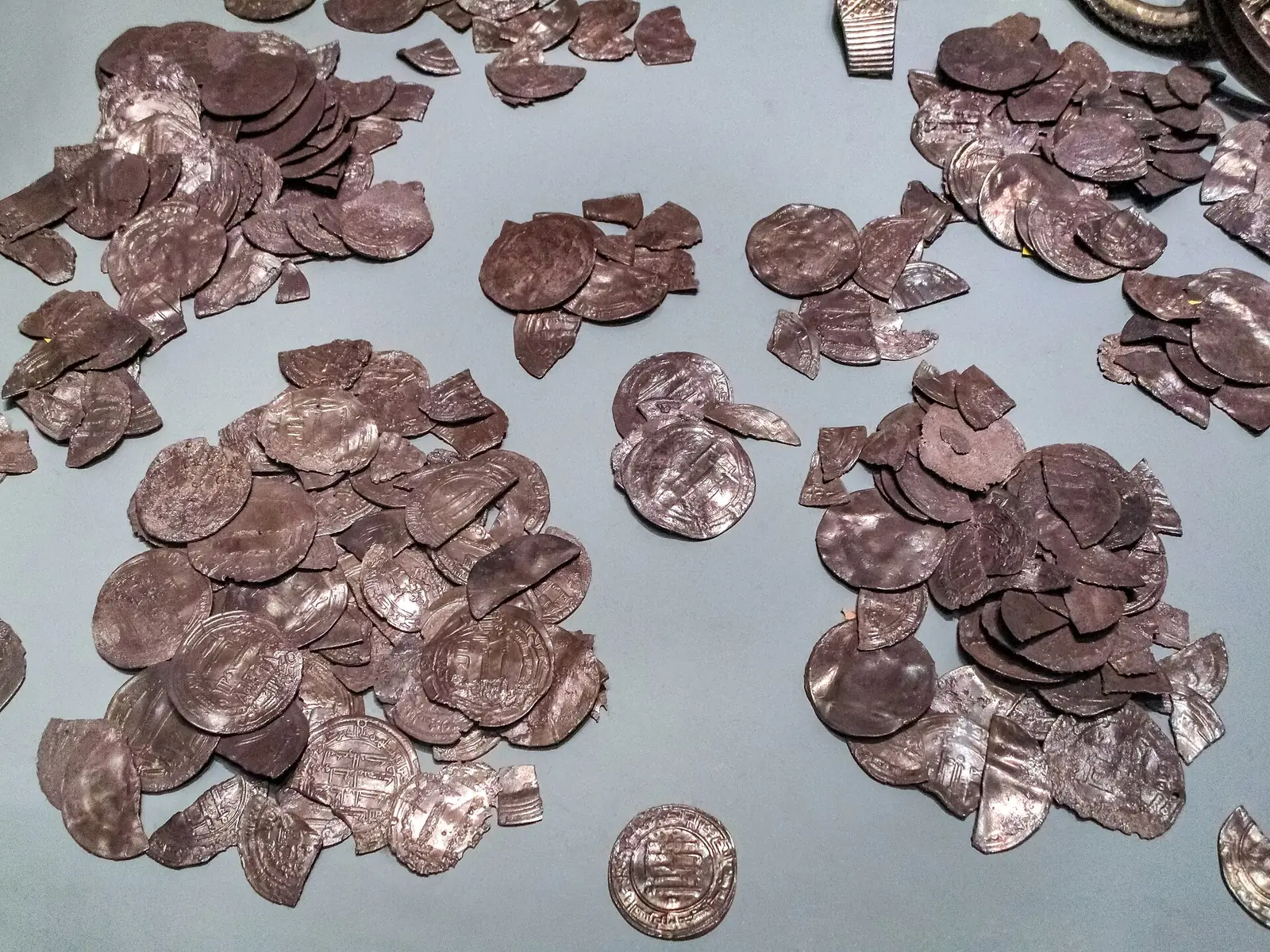
_Museum_Oslo._VIKINGR_Norwegian_Viking-Age_Exhibition_08_Iron_helmet_from_Gjermundbu_(Gjermundbuhjelmen)._Best-preserved_viking_helmet,_grave_find,_destroyed_in_funeral._Equestrian_warrior_950-1000._4654.jpg)


_II_Silkbeard_Olafsson_King_of_Dublin_dating_from_995-1036._(FindID_994486).jpg)


.jpg)

.jpg)


_-_First_Ancient_Greek_lion.jpg)


