At Alba Iulia, in 1918, the vote was promised to both sexes. Women received it in pieces: co-opted in 1925, at the local ballot boxes in 1930, on paper in 1938, whole only in 1946, after 10,215 days.
Research and text: Marius Comper · 20 September 2026
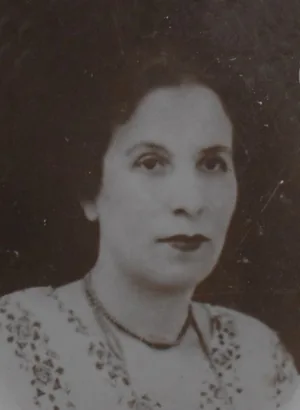
Luiza Zavloschi, the teacher from Buda who becomes mayor in 1930.Luiza Zavloschi, unknown photographer · Wikimedia Commons, Public domain (PD-RO-photo)
In 1917, in Iași, Ella Negruzzi puts her signature on the Romanian women's petition to the Senate of Romania. It asks civil and political rights for women. The Senate rejects it.
Negruzzi knows what a closed door looks like. She had finished law school in Iași in 1913, and the bar had refused her entry on the grounds that, being a woman, she had no vote. She won the right to plead after a string of lawsuits.
In July 1918, again in Iași, the Association for the Civil and Political Emancipation of Romanian Women is founded. Directors: Maria Baiulescu, Elena Meissner and Ella Negruzzi. The programme demands full rights, liberal professions and any public office.
On 1 December 1918, at Alba Iulia, the Great National Assembly votes the Union resolution. At point III, among the new state's principles, it stands in black and white: the common vote, for both sexes, from 21, in communes, counties or parliament.
The promise is clear and stays paper. Twelve years pass before the first ballot box; twenty-eight before the full vote.
II
The co-optation
The March 1923 Constitution · The June 1925 law
The postponing article
art. 6
Majority required
two thirds
Co-opted women
up to 7
In March 1923, the new Constitution of united Romania arrives with an article that postpones. Article 6 hands women's political rights to future special laws, voted by a two-thirds majority.
The effect is a freeze: the vote stays with men, and the electoral law keeps the male-sex condition. Civil rights, by contrast, rest on the full equality of the two sexes, in black and white in the same article.
In June 1925, the administrative unification law opens a door ajar: women enter communal and county councils by co-optation, mandatorily in county seats. They do not vote and are not elected; they are invited inside.
The co-optation scale is measured: at most seven women in cities of 250,000 people, five at 100,000, three at 50,000, two elsewhere. Their work shows in four places: welfare, sanitation, culture and schooling.
The backdrop is harsh: at the 1930 census, illiteracy reaches 44% in the Old Kingdom and 62% in Bessarabia. Any future law demanding literacy will first pass through these percentages.
III
The local ballot boxes
The 3 August 1929 law · 5 February 1930
Conditions for women
5 in all
Voting age
aged 21
Women councillors
over 100
In the spring of 1930, the farmers of Buda, a village in Vaslui county, ask their teacher to run for mayor against an unpopular incumbent. Luiza Zavloschi accepts, and wins.
The law allowing her candidacy dates from 3 August 1929, voted under the National Peasant government. Women from 21 vote in county, commune and village elections if they meet one of five conditions; they may stand for councils from 25, without distinction of sex.
On 5 February 1930, in the communal elections, women vote for the first time in Romania's history. Ella Negruzzi, a National Peasant Party member since 1929, stands and becomes a local councillor in Bucharest.
Across the country, over a hundred women become councillors; Cobia, in Dâmbovița, and Negrești get women mayors. Few register, though: one archive file records 3,000 registered out of some 15,000 entitled women, without naming the circumscription.
The traces still show in 1934: in Bucharest the women councillors divide the sectors by colour, from green sector 1 to yellow sector 4, while Brașov, Timișoara, Galați and Râmnicu Vâlcea keep women in their council seats.
IV
The whole vote
The 27 February 1938 constitution · 19 November 1946
Age in 1939
aged 30
Equality article
art. 3
Days since the promise
10,215
On 19 November 1946, in the rain, the queues include women of 70–80, with small chairs brought from home. They wait to vote for the first time in a national ballot.
The road here had passed through a paper right. The 27 February 1938 constitution had promised equality, and the 9 May 1939 electoral law had given the parliamentary vote from 30, only to literate people practising an occupation.
Article 4 of the 1939 law cut short: women are not eligible to the Assembly of Deputies. They could reach the Senate, from 40. Parliament was elected on 1–2 June 1939, and no exercised vote by women is documented.
Law 560 of 1946 changes everything: the vote from 21, and women equal to men at Article 3, for voting and standing alike. The decree dates from 13 July, the Official Gazette from 15 July.
The official result of the 19 November ballot gives the Bloc of Democratic Parties 69.8% and 347 of 414 mandates; the fraud is documented. The epilogue arrives in 1948: the vote from 18, eligibility from 23, equality of rights.
From promise to ballot box
10,215days
1 December 1918 – 19 November 1946
Whoever was born at Alba Iulia on the day of the promise turned 28 twelve days after the election.
The price of entry
1929: 5 conditions
5
lower secondary schooling
public employee
war widow
decorated in the war
running a society
1946: the same conditions
0
The 3 August 1929 law, art. 375 · Law 560/1946, art. 3
The first elected women
over100
women councillors across the country, in 1930
Two become mayors: at Cobia, in Dâmbovița, and at Negrești. In Bucharest, the 1934 women councillors divide the sectors by colour.
After Mihăilescu 2006 and ANIC files, via historia.ro
Where it happened
Ten documented places, from Iași to Timișoara. Each dot is a page from the file: an association, a promise, an election.
Borders are today's, shown for reference; interwar Romania was larger. Village positions are approximate. Turnout by county survives in none of the consulted sources.
The polling station
Three laws, three counters. Six people queue up, each with an age and a story. Say, for each year, whether the law lets them vote.
1929: local vote, from 21; women with one of five conditions. 1939: parliamentary vote, from 30, literate people with an occupation. 1946: vote from 21, women equal to men.
Two cases carry the first names of real women; four are imagined. Every verdict comes out of the law texts.
Luiza, 46
Teacher at Buda, Vaslui county. Born in 1883.
1929
Luiza, 46
May this person vote this year?
The grounds
She may vote: she is 46 and a state employee, one of Article 375's five conditions.
1939
Luiza, 46
May this person vote this year?
The grounds
She may vote: she is 56, literate and practising an occupation, as Article 5 demands.
1946
Luiza, 46
May this person vote this year?
The grounds
She may vote: she is 63, and Article 3 asks nothing extra of women.
Ella, 53
Lawyer in Bucharest. Born in 1876.
1929
Ella, 53
May this person vote this year?
The grounds
She may vote: she is 53, with higher studies and a seat on a society's board.
1939
Ella, 53
May this person vote this year?
The grounds
She may vote: she is 63, with an intellectual occupation. She may not stand for the Chamber, though: Article 4.
1946
Ella, 53
May this person vote this year?
The grounds
She may vote: she is 70, and the 1946 law puts her equal with men.
Maria, 34
Housewife in the countryside, illiterate. Born in 1895.
1929
Maria, 34
May this person vote this year?
The grounds
She may not vote: she is 34, illiterate, and meets none of the five conditions.
1939
Maria, 34
May this person vote this year?
The grounds
She may not vote: she is 44, and Article 5 demands literacy.
1946
Maria, 34
May this person vote this year?
The grounds
She may vote: she is 51, and the 1946 law asks only for age.
Ana, 39
War widow, works the land. Born in 1890.
1929
Ana, 39
May this person vote this year?
The grounds
She may vote: she is 39 and a war widow, one of the five conditions.
1939
Ana, 39
May this person vote this year?
The grounds
She may vote: she is 49, literate, and works the land, so she has an occupation.
1946
Ana, 39
May this person vote this year?
The grounds
She may vote: she is 56.
Ion, 17
Peasant, literate. Born in 1912.
1929
Ion, 17
May this person vote this year?
The grounds
He may not vote: he is 17, under 21.
1939
Ion, 17
May this person vote this year?
The grounds
He may not vote: he is 27, under the bar of 30. The 1939 law hits men too.
1946
Ion, 17
May this person vote this year?
The grounds
He may vote: he is 34.
Elena, 14
Future teacher. Born in 1915.
1929
Elena, 14
May this person vote this year?
The grounds
She may not vote: she is 14.
1939
Elena, 14
May this person vote this year?
The grounds
She may not vote: she is 24, under the bar of 30, though literate and teaching.
1946
Elena, 14
May this person vote this year?
The grounds
She may vote: she is 31.
0 of 18 right.
The numbers in short
1,918
the Alba Iulia promise
5
conditions for women, in 1929
1,930
the first ballot boxes with women
100
women councillors country-wide, at least, in 1930
30
the minimum age in 1939
1,946
the whole vote, for both sexes
Myths
Three shortcuts that tell the story wrong, each with its correction.
Women first voted in 1946.False
On 5 February 1930, in the communal elections, women vote for the first time in Romania's history, under the 1929 law. The year 1946 brings the first national ballot with women's suffrage and the full vote, equal to men's.
The 1938 constitution gave women the vote.On paper
The 1938 constitution and the 1939 law give the parliamentary vote from 30, only to literate people with an occupation, while women stay ineligible for the Chamber. No exercised vote is documented; one historian notes the right went unexercised under dictatorship.
The 1929 law gave all women the vote.Only some
The 1929 law demands 21 years and one of five conditions: schooling, a state job, war widowhood, a decoration, or running a society. One archive file records 3,000 registered out of some 15,000 entitled women.
Sources
Method
The days are counted between 1 December 1918 and 19 November 1946: 10,215. The game verdicts are computed from the three laws' articles, and the quoted statutes come from the Official Gazette, via transcriptions verified per article.
What the sources lacked never appears as fact: 1946 turnout, the number of women deputies elected in 1946, and the exercised 1939 vote are undocumented. The map marks verified places only, and village positions are approximate.