ILLE · -UL · -A · -I
Why does the article stand at the tail?
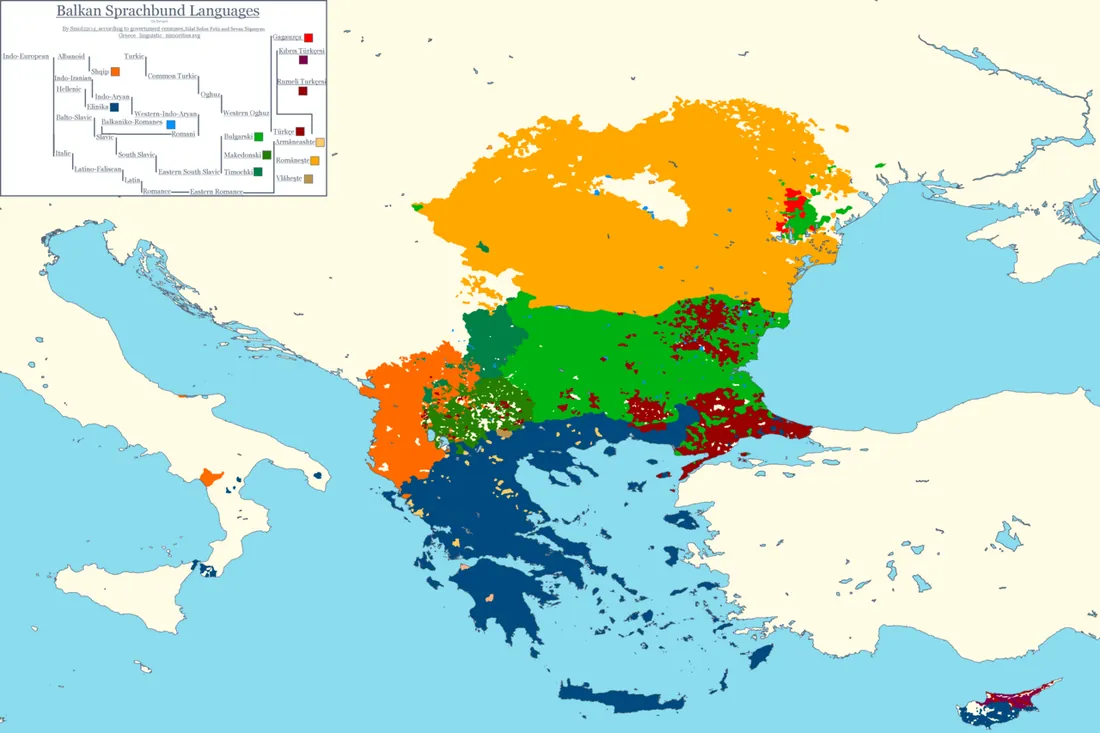
Le loup, el lobo, il lupo — the whole Romania keeps its article in front. Only Romanian glues it behind: lupul. Albanian and Bulgarian do the same; Greek, from the middle of the Balkans, does not. The tail comes from Latin ille — but why it landed at the tail is still disputed among linguists.
- ille
- the Latin demonstrative the tail comes from
- 1521
- the article fully formed in Neacșu's letter
- 3 against 1
- Romanian, Albanian, Bulgarian — Greek missing
Where the tail comes from
Ille, the demonstrative turned article
The material is Latin and nobody disputes it: the Romanian tail comes from the demonstrative ille. Grammaticalization starts around the 6th century.
“Starting with the 6th century, the Latin demonstrative/adjective pronouns ille and ipse underwent a series of complex changes that ultimately resulted in the appearance of the definite article”
Ivancu 2019 (after Kuteva, Heine 2008) ATTESTED
The chain, form by form
-ul, -l
from Lat. illum, via Rom. lu: omul, lupul, băiatul.
-i
from Lat. illi: băieții, ochii.
-a
from Lat. illa, via eua, eau: fata.
-le
from Lat. illae: fetele, tablourile.
-lui
from Lat. illui: băiatului; proclitic before proper nouns (lui Mahamet).
-lor
from Lat. illorum: băieților, turcilor.
-ei
from Lat. illaei: fetei.
Aldea 2004, table on p. 24 ATTESTED
Mind the -u-: on masculine nouns ending in a consonant, the article is preceded by the linking vowel -u- (băiat-u-l). The classic mistake is taking it for part of the article. (Ivancu 2019)
Romanian has one more definite article: proclitic cel, from the demonstrative acel, grammaticalized in Old Romanian. This page's tail is the other one: the enclitic morpheme -(u)l. (Cornilescu 2016)
The page's machine
Strip the article
Tap each word: it splits into stem, linking vowel and article. The -u- is NOT the article — it is the glue (Ivancu 2019).
omul = om + u + l (Lat. illum)
lupul = lup + u + l (Lat. illum)
băiatul = băiat + u + l (Lat. illum)
băieții = băieți + i (Lat. illi)
fetele = fete + le (Lat. illae)
tablourile = tablouri + le (Lat. illae)
Feminine singulars (fata) and genitive-datives (fetei, băiatului) fuse or shift the ending — they do not split cleanly, so they stay in the chain above.
Who else glues the tail
Three languages tail it, one does not
Albanian, Bulgarian (and Macedonian) put their article at the tail too, each from its own demonstratives. Greek, the neighbour in the middle, keeps it in front.
Albanian
mal → mali (the mountain), zog → zogu (the bird), veturë → vetura (the car). Suffixes: -i/-u masculine, -(i/j)a feminine.
Bulgarian
човек → човекът (the man), добър човек → добрият човек (the good man). Articles: -ът/-ят, -а/-я, -та, -то, -те in the plural.
Macedonian
Three articles by distance: човекот (the man), човеков (this man), човекон (that man). No parallel in any other standard Balkan language.
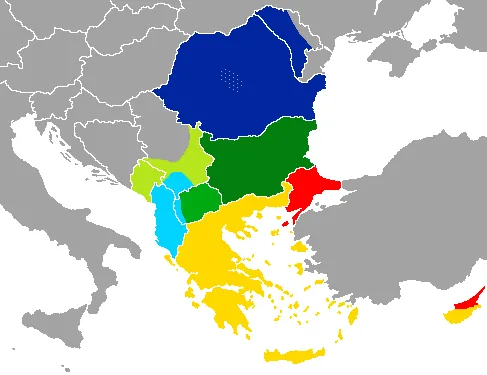


Greek is missing
Ο Αλέξανδρος — the article stands in front, as in Ancient Greek. Friedman: various linguists make much of the fact that the postposed article does not occur in Greek — and ask how it can be a Balkanism then, or how Greek can be Balkan.
Who saw the tail first
Four witnesses
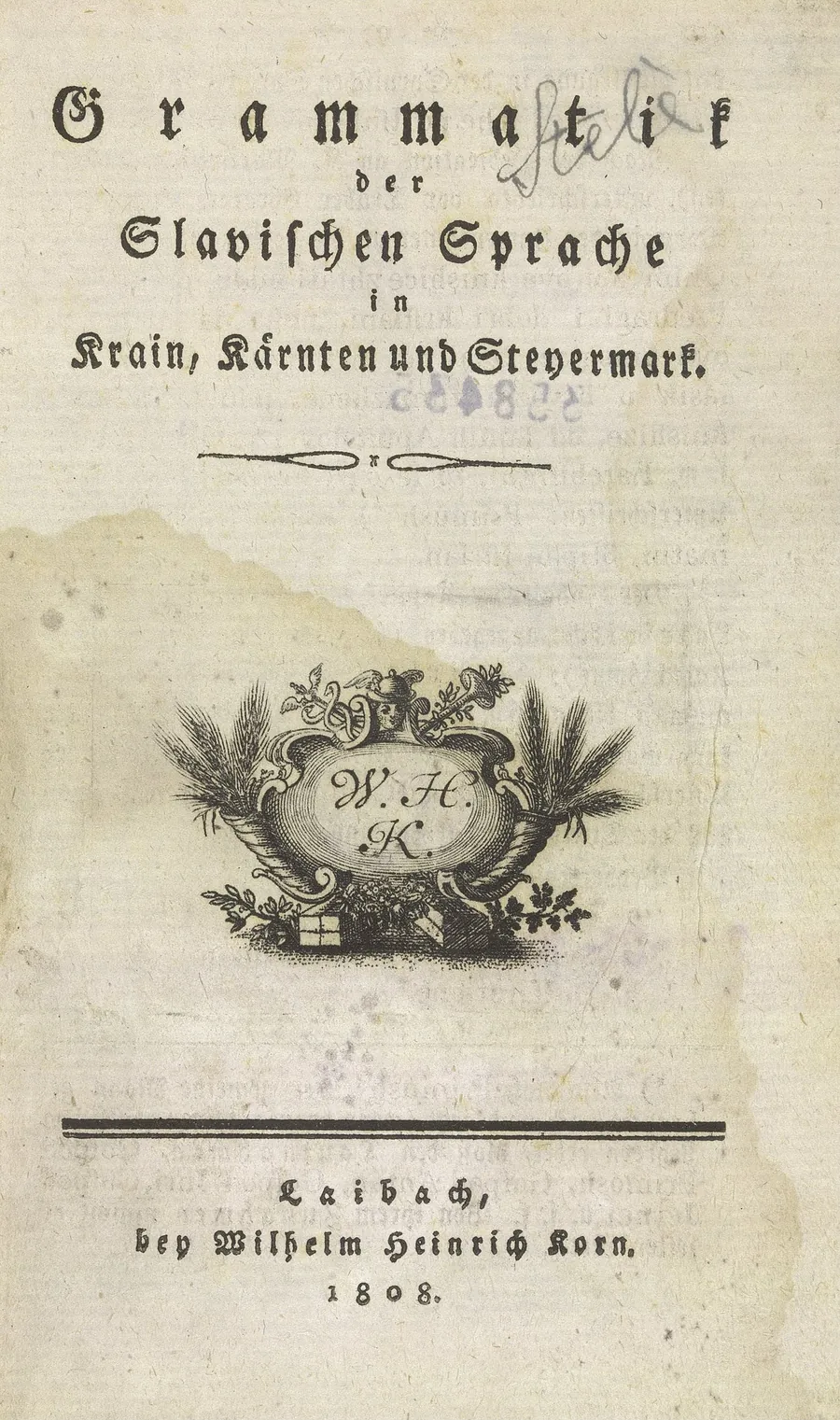
Two centuries pass from Kopitar to Friedman; the tail moves from curiosity to Balkanism number one.
Kopitar, 1829
“Romanian, Balkan Slavic and Albanian — three lexically different but grammatically identical languages — through a Thraco-Illyrian substratum.”
via Friedman 2006
The oldest formulation of the Balkan union; the postposed article impressed him most.
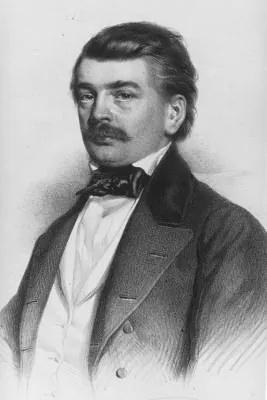
Miklosich, 1862
“The un-Romance postposing of the definite article: Bulgarian, Romanian, Albanian.”
Die slavischen Elemente im Rumunischen, via Joseph & Friedman
The first explicit list of Balkanisms; postposing is item 4. Sandfeld did not list it first.
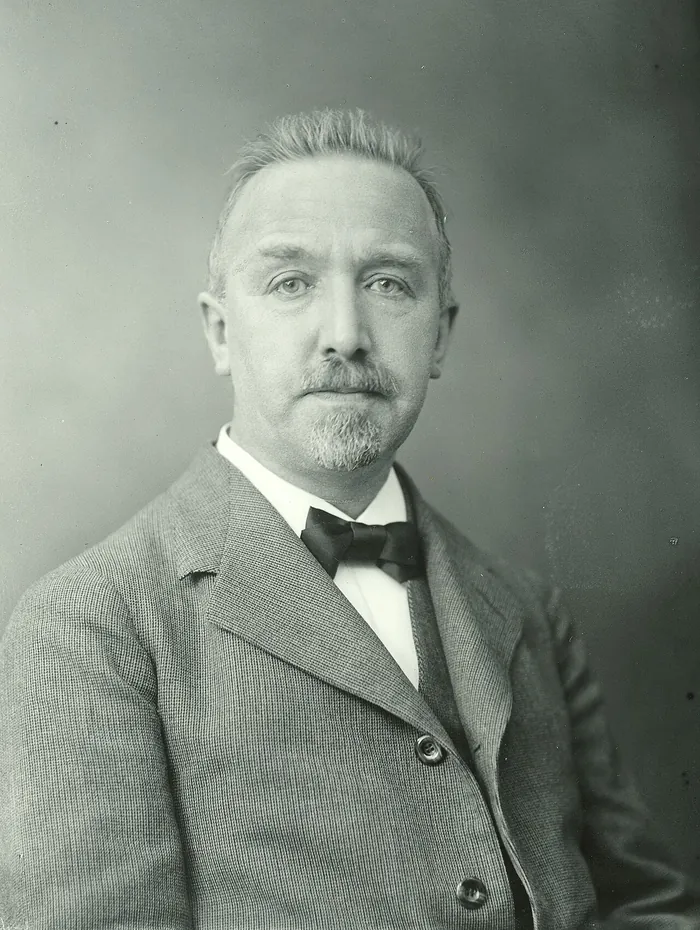
Sandfeld, 1930
“Postposed definite article — first among the canonical Balkanisms.”
Linguistique balkanique, via Joseph & Friedman
The canonization: the tail becomes Balkanism number one. Sandfeld himself credits Miklosich.
Friedman, today
“Chance parallelism is unlikely — Romanian and Balkan Slavic developed it in contact.”
Balkans as a Linguistic Area
The modern verdict: accidental parallelism is rejected; convergence in contact stands.



Where we stand
What we know and what we reconstruct
Four drawers for the whole page: the solid material, the mechanism, why it holds, and the hole in the middle.
What we know
The tail comes from ille (6th century); by 1521 it is fully formed (Neacșu); Albanian, Bulgarian and Macedonian have it; Greek does not.
What we reconstruct
The road of postposed ille to glued article: homo ille → omul, after Graur 1967.
Why it holds
The forms are alive: illum→-l, illae→-le, illorum→-lor. Three languages with the same tail, each from its own demonstratives.
What stays disputed
WHY it glued itself at the tail: calque on a native model, pure Latin, or mixed. The evidence is missing.
Three stops
Three dates
The whole road on one rail: the letter, the list, the canon.
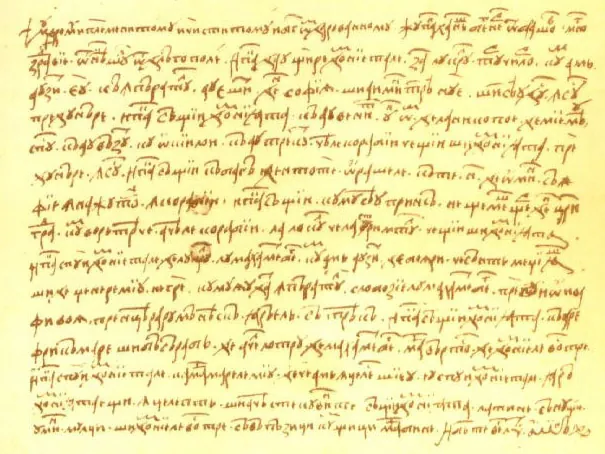
Neacșu
1521
The Câmpulung letter: lucrul, ochii, locul cela strimtul — the article fully formed.
stop 1 of 3
Miklosich
1862
The first explicit list of Balkanisms; article postposing is item 4.
stop 2 of 3
Sandfeld
1930
The canon: postposed definite article, Balkanism number one.
stop 3 of 3
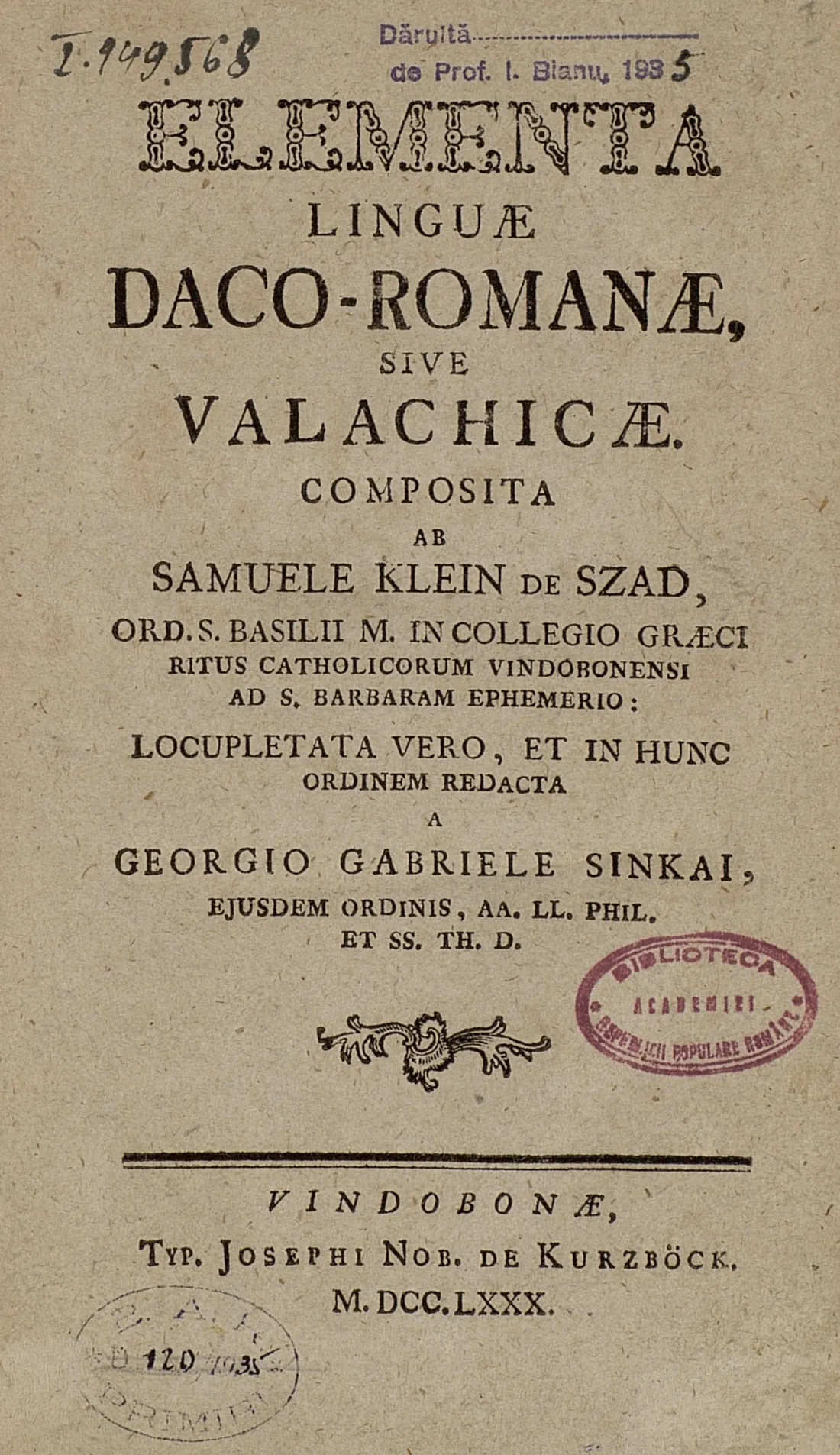
1780 Elementa at Vienna · 1829 Kopitar · 1967 Graur.
The road of the tail
ille
the Latin demonstrative
-l, -a, -i
the article glued at the tail
omul
the whole word
Why at the tail
Three answers, no winner
All three start from the same ille. They fight over WHY it glued itself behind. The page's verdict: DISPUTED
The calque
Kopitar 1829: the tail comes from a Thraco-Illyrian model. The only concrete evidence: Drobeta < *druwā-tā, a phrase with postposed article (Hamp 1982).
Pure Latin
Graur 1967: the article comes out of Latin postposed ille (homo ille), by reanalysis. Renzi 1993 proposes the preposed variant — the rival.
The mix
Brâncuș 2004: the Latin postposed construction, reinforced by contact with Dacian idioms, which preferred postposing.
Beyond Hamp 1982, no appeal to substratum rests on any concrete evidence (Joseph & Friedman). The dead languages of the Balkans, in the present state of knowledge, cannot tell us anything about convergences.
Nor is 'independent drift' a school: Friedman explicitly rejects chance parallelism. Pre-Latin non-Hellenic is too meagerly attested for serious speculation beyond the lexicon.
Test yourself
Which is older?
Six landmarks from the page, shuffled. Put them from oldest to newest.
Move each card to its position, 1 to 6. Keys 1–6 move the chosen card; cards drag with a finger too.
- 1930
Sandfeld: the canon
Position - 1521
Neacșu: the article fully formed
Position - 1967
Graur: postposed ille
Position - 1780
The Vienna grammar (Elementa)
Position - 1862
Miklosich: the first list
Position - 1829
Kopitar: the substratum
Position
Score: 0 of 6
The right order, oldest first:
- 1521 — Neacșu: the article fully formed
- 1780 — The Vienna grammar (Elementa)
- 1829 — Kopitar: the substratum
- 1862 — Miklosich: the first list
- 1930 — Sandfeld: the canon
- 1967 — Graur: postposed ille
The settled row: every landmark in its place.
Sources
Grammars and linguists first, then the texts, then the neighbours. Every risky claim points at its source.
Grammars and linguists
- Ivancu 2019: the Romanian article after GALR (redalyc)
- Aldea 2004: the ille→article table, p. 24 (PDF)
- Cornilescu 2016: Graur 1967, Brâncuș 2004 (PDF)
- Miklosich 1862 / Sandfeld 1930 via Joseph & Friedman, ch. 2 (PDF)
- Joseph & Friedman, Introduction: the first list (PDF)
- Joseph & Friedman, ch. 1: Hamp, the verdict (Cambridge)
- Friedman: the Balkans as a linguistic area (PDF)
- Friedman 2006: Kopitar, the state of knowledge (PDF)
The neighbours
- Albanian: the postposed article (grammar summary)
- Bulgarian: the postposed article (grammar)
- Macedonian: the three articles (grammar summary)
- Greek: the article stands in front (grammar summary)
- The Balkan union: the postposed article (survey)
The texts
Catalogue neighbours
Type: Fraunces and Source Serif 4, under the SIL Open Font Licence.