THE STORY OF A WORD
The Potato Used to Be a Truffle
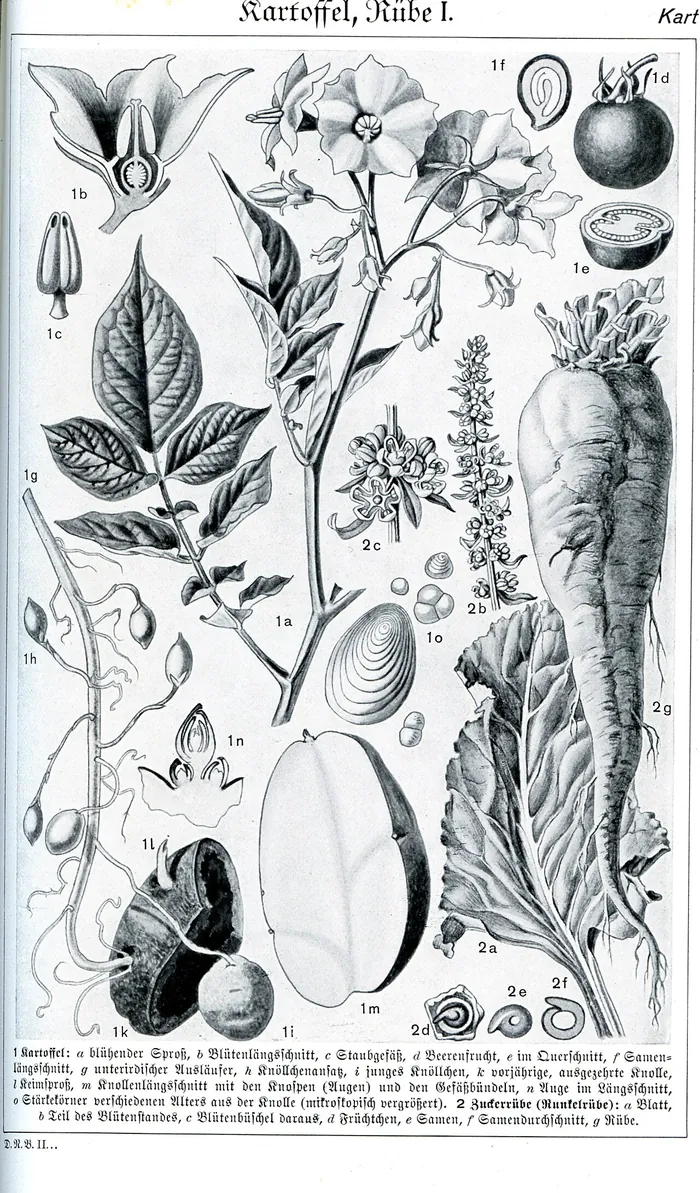
Cartof comes from German — Kartoffel —, and Kartoffel comes from Italian — tartufolo: truffle. Seven Romanian dictionaries give the first link; on the Italian link stands a single Romanian name: Scriban, confirmed by two German dictionaries. The first known Romanian brochure about potatoes was printed at Iași, in 1818, when “cartofle” was still a neologism.
- cartof comes from Germ. Kartoffel
- Seven dictionaries stop at it; Scriban goes further.
- Kartoffel comes from It. tartufolo
- “truffle” — Pfeifer, Duden and Scriban.
- on paper since 1818
- The first Romanian brochure, at Iași.


In short
From truffle to potato: the road in three strands
One word, three strands. Every form below comes from an identified source: a dictionary or a dated text. Dictionary quotations carry ETYMOLOGY; dated forms carry ATTESTED.
THE TRUFFLE
It. tartufo “truffle” ETYMOLOGY
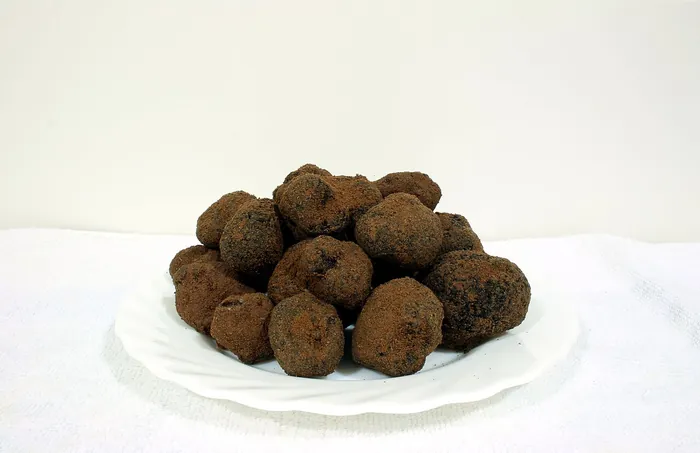
Treccani: “(tosc. tartùfolo) … [prob. lat. terrae *tufer]”. The edible black truffle; the Latin etymology is marked “probable”.
It. tartufolo ETYMOLOGY
Treccani, full article, one sentence: “Variante tosc. di tartufo¹, estesa a indicare anche il topinambur”. The Tuscan variant — extended to the Jerusalem artichoke, NOT to the potato in Italian dictionaries.
Germ. Tartuffel → Kartoffel ATTESTED
Pfeifer: Tartuffel (mid-17th c.) → Tartoffel → Tartüffel → Kartoffel (second half of the 18th c.), by dissimilation; in Switzerland, Cartoffel.
truffle → potato SOURCES DIFFER
The transfer of the name to the tuber is stated by the German dictionaries, not the Italian ones: Pfeifer speaks of underground resemblance, Duden of confusion (Verwechslung).
THE POTATO
Germ. Kartoffel → cartof ETYMOLOGY
DEX '09: “– Din germ. Kartoffel” (“from Germ. Kartoffel”). MDA2: “E: ger Kartoffel”. CADE, NODEX, Șăineanu, DER and DLRM agree. Only Scriban continues the chain toward Italian.
cartofle, 1818 ATTESTED
The Iași brochure: “Cartoflile sânt cele mai alese … a Americii daruri” (“potatoes are the choicest … gifts of America”) (p. 1, quoted after the Soare 2018 article). The first Romanian text about potatoes; “cartofle” was a neologism.
cartof, 1835 ATTESTED
MDA2: “At: DRĂGHICI, R. 84/10” — Vasile Drăghici's Robinson Crusoe, Iași, Albina press, 1835. A dictionary dating; the exact sentence was not recovered.
Russ. kartófelĭ? SOURCES DIFFER
Scriban inserts Russ. kartófelĭ between German and Romanian — his hypothesis alone, confirmed by no other dictionary.
THE COUSINS AT HOME
picioică ← Hung. pityóka ATTESTED
DEX '09: “– Din magh. pityóka.” MDA2 dates it in a 1774 document — older on paper than cartof. Șăineanu derives it differently: from Hungarian mushroom words.
crumpenă ← Serb. krumpir ATTESTED
DEX '09: “– Din sb. krumpir.” CADE and Scriban carry the chain to Germ. Grundbirne — “earth pear”, like Fr. pomme de terre.
barabulă ← Ukr. barabolja ATTESTED
DEX '09: “– Din ucr. barabolja.” Moldavian; NODEX restricts its sense to fodder potatoes.
bandraburcă ← Brandenburg ATTESTED
MDA2: “E: ger Brandenburg”. Missing from DEX; Scriban: the potatoes “came to us” from the German province.
The forms above were found in sources. The whole German-Italian chain rests on a single Romanian name — Scriban — plus the independent confirmation of the German dictionaries.
Where they meet
- 1939 — Scriban alone writes the whole chain: Russ. kartófelĭ ← Germ. kartoffel ← It. tartúfolo, truffle.
- Grundbirne — “Earth pear” — Scriban himself sets it beside Fr. pomme de terre, “earth apple”. Two parallel christenings.
- 1818 — “Cartofle” was a neologism when the Iași brochure was printed — the word was only just entering the language.
- 1774 — Picioică is older on paper than cartof: a 1774 document against 1818.
The centrepiece
How the name moved
The truffle's name reached the potato in 16th-century Italy, say the German dictionaries — and two and a half centuries later the word was entering Romanian as a neologism.
Resemblance, says Pfeifer.
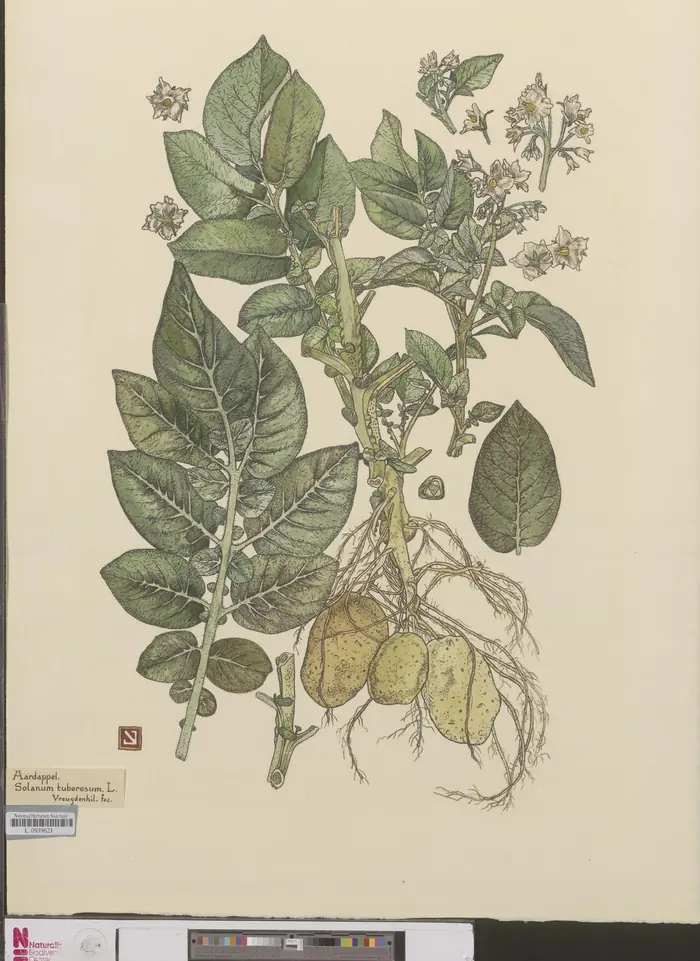
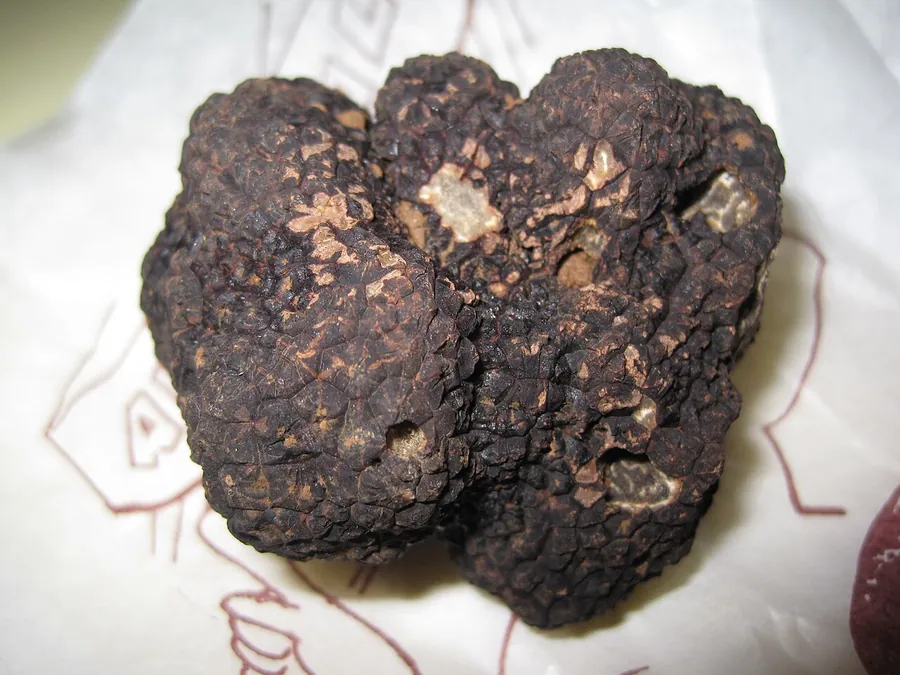
The potato's tubers “grow in the ground like truffles” (den Trüffeln ähnlich in der Erde wachsenden Knollen) — so the truffle's name transferred to the South-American plant grown in 16th-century Italy.
Confusion, says Duden.
“Durch eine Verwechslung” — through a confusion of the root tubers with the truffle's underground fruiting bodies. The same transfer, said louder.
Neologism, says Iași.
In 1818, “cartofle” was a new word: the brochure printed at Iași uses it for bread, brandy and flour — the first Romanian brochure about potatoes, after the Soare 2018 article.


The family
Cousins around the world
Each world christened the tuber differently. Four names, four worlds — each after its own dictionary.
Andes: papa.
RAE: “Del quechua papa”. The Andean word; the plant is “originaria de América”, grown for over 7000 years, per Britannica.
Spain: patata.
RAE: “Cruce de papa² y batata”. The Spaniards welded the Andean word to the Caribbean one for the sweet potato.
England: potato, 1565.
Merriam-Webster: “Spanish batata, from Taino. First Known Use: 1565”. At first it meant the sweet potato; only around 1590 did it move to the white one.
France: pomme de terre.
Littré: the plant “importée et cultivée en Europe depuis le XVIe siècle”; Parmentier spread its cultivation. Literally: “earth apple”. The phrase's first use is undated.

Witnesses
Six witnesses, quoted directly
No etymological statement presented as fact on this page rests on a single dictionary. Below, the exact wordings — the dictionaries' words, not ours.
DEX '09: cartof
“– Din germ. Kartoffel.”
DEX '09 (2009), under cartof
Three words that say it all: the potato is borrowed from German.
MDA2: cartof
“cartof sm [At: DRĂGHICI, R. 84/10 […] / E: ger Kartoffel]”
MDA2 (2010), under cartof
The only dictionary that dates the first attestation: 1835. Then comes a list of some fifty regional synonyms.
Scriban: the whole chain
“(rus. kartófelĭ, d. germ. kartoffel, care vine d. it. tartúfolo, trufă mică, tartúfo, trufă …)”
Scriban (1939), under cartof
The only Romanian dictionary that carries the chain to Italy. The Russian link is his hypothesis alone.
Pfeifer: Kartoffel
“… ist durch Dissimilation entstanden aus Tartuffel … die aus Formen wie ital. tartufolo … entlehnt sind.”
Pfeifer (DWDS), under Kartoffel
The independent German confirmation: dissimilation from Tartuffel, a loan from It. tartufolo.
Treccani: tartufolo
“tartùfolo s. m. – Variante tosc. di tartufo¹, estesa a indicare anche il topinambur.”
Treccani, under tartufolo
The full article, one sentence: the Tuscan variant of the truffle. The potato never appears — the transfer is stated by the Germans.
DEX '09: picioică
“PICIOICĂ … (Bot.; reg.) Cartof. […] – Din magh. pityóka.”
DEX '09 (2009), under picioică
The Moldavian cousin, from Hungarian, dated by MDA2 in a 1774 document.
Tally
What we know and what we don't
Four solid things and four edges. The edges stand written beside the statements they limit.
The potato is German.
Seven Romanian dictionaries stop at “from German”, with the same etymon: Kartoffel.
Kartoffel is an Italian truffle.
Pfeifer and Duden derive the German word from It. tartufolo = Trüffel, by dissimilation; Scriban says the same, alone among Romanian dictionaries.
The word is new in Romanian.
Documented from 1774 (picioică), 1818 (the brochure) and 1835 (Drăghici) — a newcomer beside the language's Latin words.
Everyone christened the tuber.
papa in the Andes, patata in Spain, potato in England since 1565, pomme de terre in France — each name with its dictionary.
We don't know the year of entry into Spain.
Scriban says around 1532, Șăineanu around 1580, CADE the late 16th century. Three dictionaries, three datings.
We don't know when it reached us.
The DE says the late 18th century; CADE and Șăineanu say the early 19th, from Austria; Scriban says around 1800. The page shows all three.
The Russian link is a hypothesis.
Russ. kartófelĭ between German and Romanian appears only in Scriban. No other dictionary confirms it.
The old texts are datings and second-hand quotes.
Drăghici's 1835 sentence was not recovered; the 1818 quotations come via the scholarly Soare 2018 article, not from a scan of the brochure.
Timeline
Seven landmarks
From Pizarro's landing to Scriban's dictionary, the tuber's road in seven stops. Each date says what it dates: event, work or edition.
the first Spaniards see the tuber
1532
Pizarro lands; his men see Indians eating “the strange round objects” (Smithsonian, after Mann).
Landmark 1 of 7.
potato in English
1565
Merriam-Webster: the first known use — back then it meant the sweet potato.
Landmark 2 of 7.
Tartuffel in German
17th c.
Pfeifer: Tartuffel mid-century, Cartoffel in Switzerland; modern Kartoffel only in the second half of the 18th century.
Landmark 3 of 7.
picioică in a document
1774
MDA2: “At: (a. 1774) IORGA, S. D. XIII, 75”. A dictionary dating; the document's text was not recovered.
Landmark 4 of 7.
the Iași brochure
1818
The first Romanian text about potatoes: “Cartoflile sânt cele mai alese … a Americii daruri” (p. 1, quoted after Soare 2018).
Landmark 5 of 7.
Drăghici's Robinson
1835
MDA2: “At: DRĂGHICI, R. 84/10”. A dictionary dating — the year of the Iași print, not a verified reading.
Landmark 6 of 7.
Scriban joins the chain
1939
Scriban's dictionary: the only one that writes the whole road, Russ. kartófelĭ ← Germ. kartoffel ← It. tartúfolo.
Landmark 7 of 7.
The years above date texts and editions, not the birth of the words: 1774 and 1835 are dictionary datings.
Nuances
Where the sources differ
The German etymon is not in dispute: Kartoffel is unanimous. What follows are real differences — and one link that appears a single time. SOURCES DIFFER
When did it enter Spain?
Scriban: around 1532. Șăineanu: around 1580. CADE: around the late 16th century. Three Romanian dictionaries, three datings — the page does not choose.
When did it reach us?
The Encyclopedic Dictionary: the late 18th century. CADE, Șăineanu: the early 19th century, from Austria; Scriban: around 1800. Three answers, all on the table.
Did the Russian link exist?
Only Scriban puts Russ. kartófelĭ between German and Romanian. No other dictionary — Romanian or German — mentions the Russian intermediary.
None of the differences above moves the etymon. The potato stays German, and the German stays an Italian truffle.
And the truffle→potato transfer stays attributed to the Germans: the Italian dictionaries never give the “potato” sense — Treccani carries tartufolo only as far as the Jerusalem artichoke.
Game
Match the names with the worlds
Four names, four worlds, one tuber. Tie each name to the world that carried it, then flip the pairs and see each one's dictionary receipt.
Press first a name, then a world. Pairs that match flip by themselves and show the receipt; wrong ones come undone.
Names
Worlds
Score: 0 of 4.
The answers
- before 1532 — papa — the Andean word + the Quechua Andes (RAE: “Del quechua papa”. The plant is “originaria de América”, grown for over 7000 years, per Britannica.)
- 1565 — potato — the first attestation + Elizabethan England (Merriam-Webster: “Spanish batata, from Taino. First Known Use: 1565” — back then it meant the sweet potato.)
- 18th c. — Kartoffel — the modern form + the German lands (Pfeifer: modern Kartoffel in the second half of the 18th century, by dissimilation from Tartuffel ← It. tartufolo.)
- 1818 — cartof — the first text + Iași, Moldavia (The 1818 Iași brochure: “Cartoflile sânt cele mai alese … a Americii daruri” (quoted after Soare 2018). MDA2 separately dates 1835.)
The pairs above are editorial matches by era and theme, from verified quotations — the dates show the first attestation or the reference moment, not the birth of the words.
Sources
All etymology quotations were verified on 27 September 2026 (dexonline, DWDS, Duden, Treccani, etymonline, Littré; RAE and Merriam-Webster via the research team, with corroborations). The 1818 quotations come via the Soare 2018 article. Transcriptions and datings are marked as such throughout the page.
Texts and editions
- Soare 2018: the first Romanian text about potatoes
- Littré: pomme (with Parmentier)
- Britannica: potato
- Smithsonian: how the potato changed the world
Dictionaries
- DEX '09: cartof
- MDA2: cartof
- Scriban: cartof
- CADE: cartof
- DEX '09: picioică
- DEX '09: crumpenă
- Pfeifer: Kartoffel (DWDS)
- Duden: Kartoffel
- Treccani: tartufolo
- Treccani: tartufo
- RAE: patata
- RAE: papa
- RAE: batata
- Merriam-Webster: potato
- etymonline: potato
From the same series
Type: Fraunces and Source Serif 4 (OFL). English translations of quotations by Marius Comper.