THE STORY OF TWO WORDS
The Padlock Unlocks the Key
The key to the door and the padlock on the gate sit in one hand together, yet come from two different worlds: the key from Latin — clavis —, the padlock from Hungarian — lakat. Every dictionary checked here says so, without exception. The old texts show when they met in Romanian: first in the same book, in 1688, then in the same sentence, in 1933.
- cheie comes from Lat. clavis
- Eight dictionaries give the same etymon.
- lacăt comes from Hung. lakat
- Six dictionaries, the same etymon.
- in the same book since 1688
- Both words appear in the Bucharest Bible.
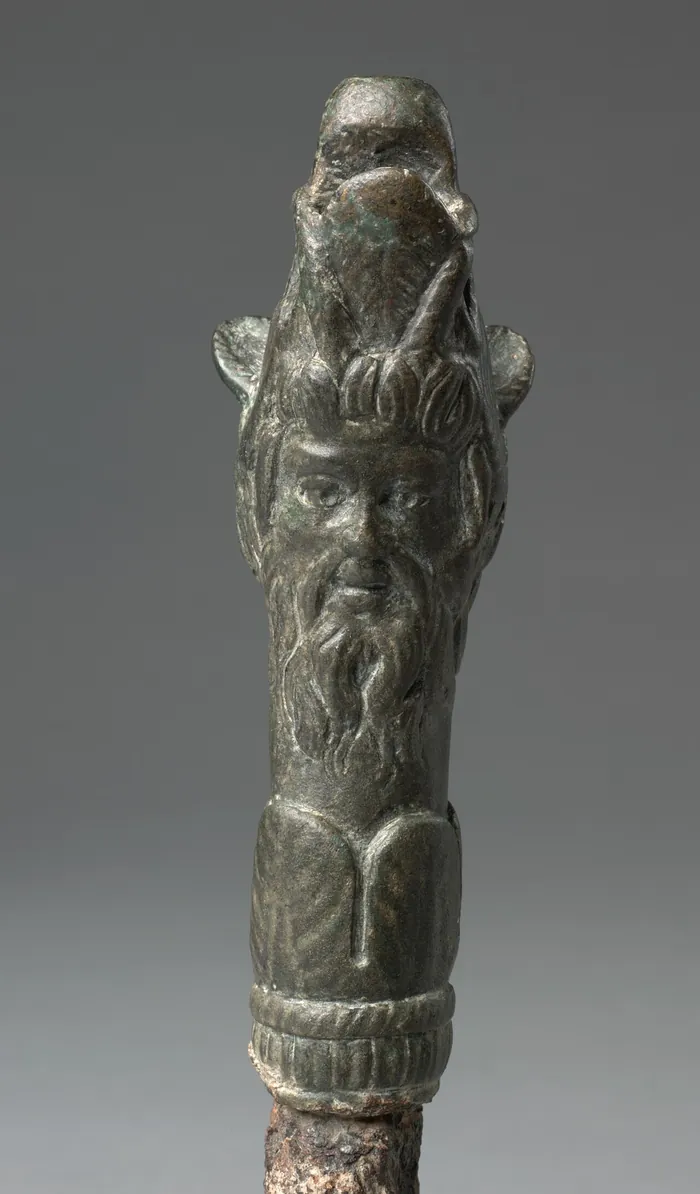
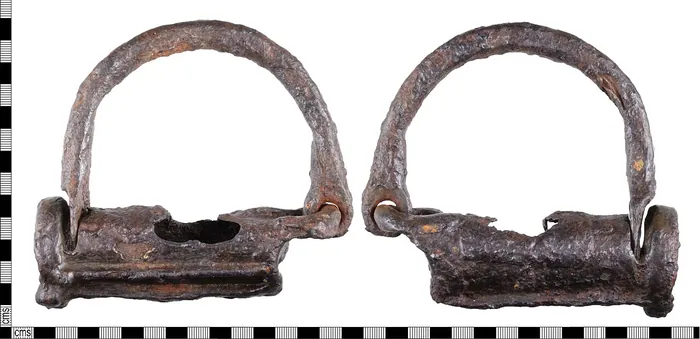
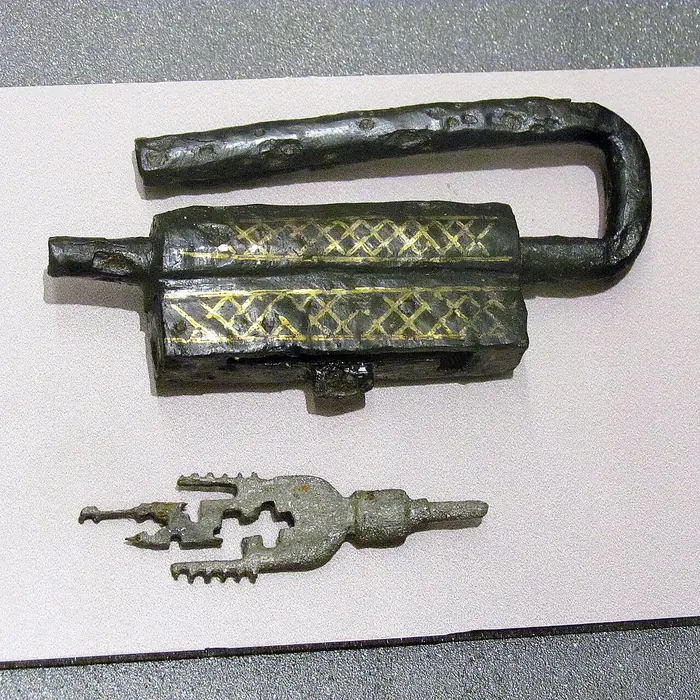


In short
The key comes from Rome, the padlock from Hungary
Two words, two roads. Every form below comes from an identified source: a dictionary or a dated text. Quotations from printed editions, with page numbers, carry the ATTESTED badge; quotations from transcriptions carry TRANSCRIPTION.
THE KEY
Lat. clavis ETYMOLOGY
DEX '09: “– Lat. clavis.” MDA2: “E: ml clavis, -em” (inherited from Latin). CADE, DER, Scriban and Șăineanu agree; only the cited case differs, nominative or accusative.
cheie, 1650 ATTESTED
MDA2: “At: HRONOGRAF (1650)”. A dictionary dating; the exact passage was not recovered, so this page quotes nothing from the Hronograf.
chei, c. 1735 TRANSCRIPTION
Neculce, Chronicle, ch. XIII, the 1699 surrender of Camenița: “trii chei a porților cetății Cameniții” (“three keys of the gates of the Camenița fortress”), after the Wikisource transcription. The year is the chronicle's composition (after 1732), not the narrated event.
cheile, 1688 TRANSCRIPTION
The Bucharest Bible, Matthew 16:19: “cheile împărăției ceriurilor” (“the keys of the kingdom of heaven”), after the transcription.
THE PADLOCK
Hung. lakat ETYMOLOGY
DEX '09: “– Din magh. lakat” (“from Hung. lakat”). MDA2: “E: mg lakat”. CADE, NODEX, Șăineanu, Scriban and DER agree. None of the dictionaries checked here proposes another route.
lacăt, 1643 ATTESTED
MDA2: “At: VARLAAM, C. 88”. A dictionary dating; the 1643 Cyrillic print was not inspected, so this page quotes nothing from Varlaam.
lăcăți, 1646 ATTESTED
CADE quotes the Pravila of Vasile Lupu: “de... vor fi spart ușa sau secriul au lăcăți...” (“if they break the door or the chest or the padlocks…”). We render CADE's citation, not a direct reading of the Pravila.
lăcată, c. 1735 ATTESTED
Neculce, the Staico episode: “cu o lăcată cît un șlic de maré la grumadzii” (“with a padlock as big as a cap at his neck”) — the Ștrempel edition, 1982, p. 342.
The forms above were found in sources; they are not a reconstruction of the sounds between them. For Hungarian the page stops at lakat: the deeper origin of the Hungarian word could not be verified in an inspectable Hungarian etymological dictionary.
Where they appear together
- 1643 / 1650 — The first attestations kept by MDA2, seven years apart: lacăt in Varlaam, cheie in the Hronograf. Both are dictionary datings.
- 1688 — Both words in the Bucharest Bible, in different books: cheile in Matthew, lacăte in Jeremiah and Job.
- 1933 — The first verified sentence with both: “Cheia și lacătul de la poarta Dunărei” (“the key and the padlock of the Danube gate”) (Europolis, after the transcription).
- 2009 — DEX '09 records the idiom: “Cheia și lacătul = totul; începutul și sfârșitul” (“the key and the padlock = everything; the beginning and the end”).
The centrepiece
Where they met
The pair was not born together. One word is inherited from Latin, the other borrowed from Hungarian; then the texts began placing them side by side: first in the same book, much later in the same sentence.
The same book, 1688.
The Bucharest Bible has both, after the transcription: “cheile împărăției ceriurilor” (“the keys of the kingdom of heaven”) in Matthew 16:19 and “cu uși și cu lacăte și zăvoară” (“with doors and padlocks and bolts”) in Jeremiah 18. The same year, the same print, different books.
The same sentence, 1933.
Jean Bart, Europolis: “Cheia și lacătul de la poarta Dunărei erau ținute de jumătate de secol în mâna lui de fier […]” (“the key and the padlock of the Danube gate had been kept for half a century in his iron hand […]”). The first verified sentence with both words, after the transcription; the exact-phrase search on Wikisource returns no other hit.
The same idiom, 2009.
DEX '09, under cheie: “Cheia și lacătul = totul; începutul și sfârșitul.” MDA2, under lacăt: “A fi cheia și lacătul”. The dictionary seals what the texts have said for three centuries: the two go together.

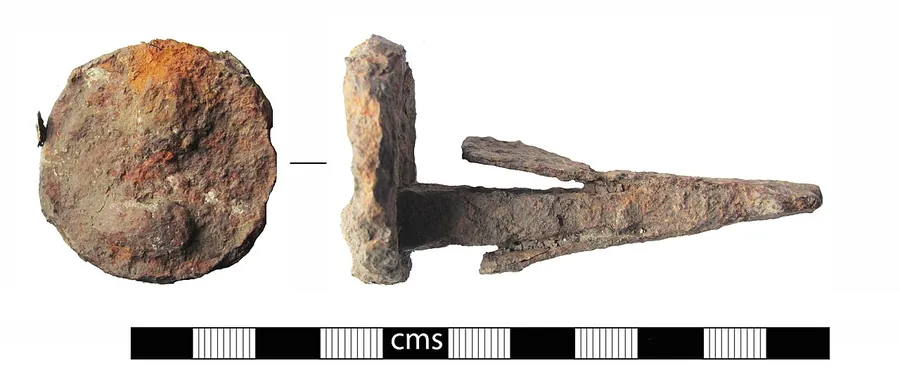

The family
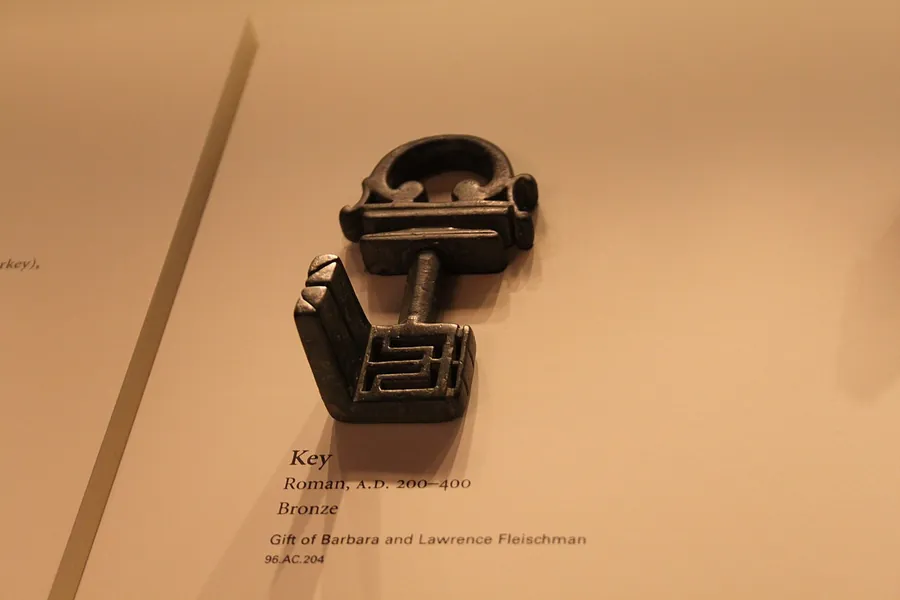
The Latin cousins of the key
The key is not clavis's only heir. Each Romance language below draws its word from the same Latin etymon, according to its own dictionary. Catalan is missing: there the evidence is only a wiki dictionary.
Italian: chiave.
Treccani: “[lat. clavis]”. The closest form to the etymon.
French: clé.
Larousse: “clé ou clef — (latin clavis)”. The same key with a double spelling.
Spanish: llave.
The Spanish Academy dictionary: “Del lat. clavis.” The instrument that, put in the lock, unlocks it.
Portuguese: chave.
Priberam: origin “latim clavis”. Four cousins, one Latin grandfather.
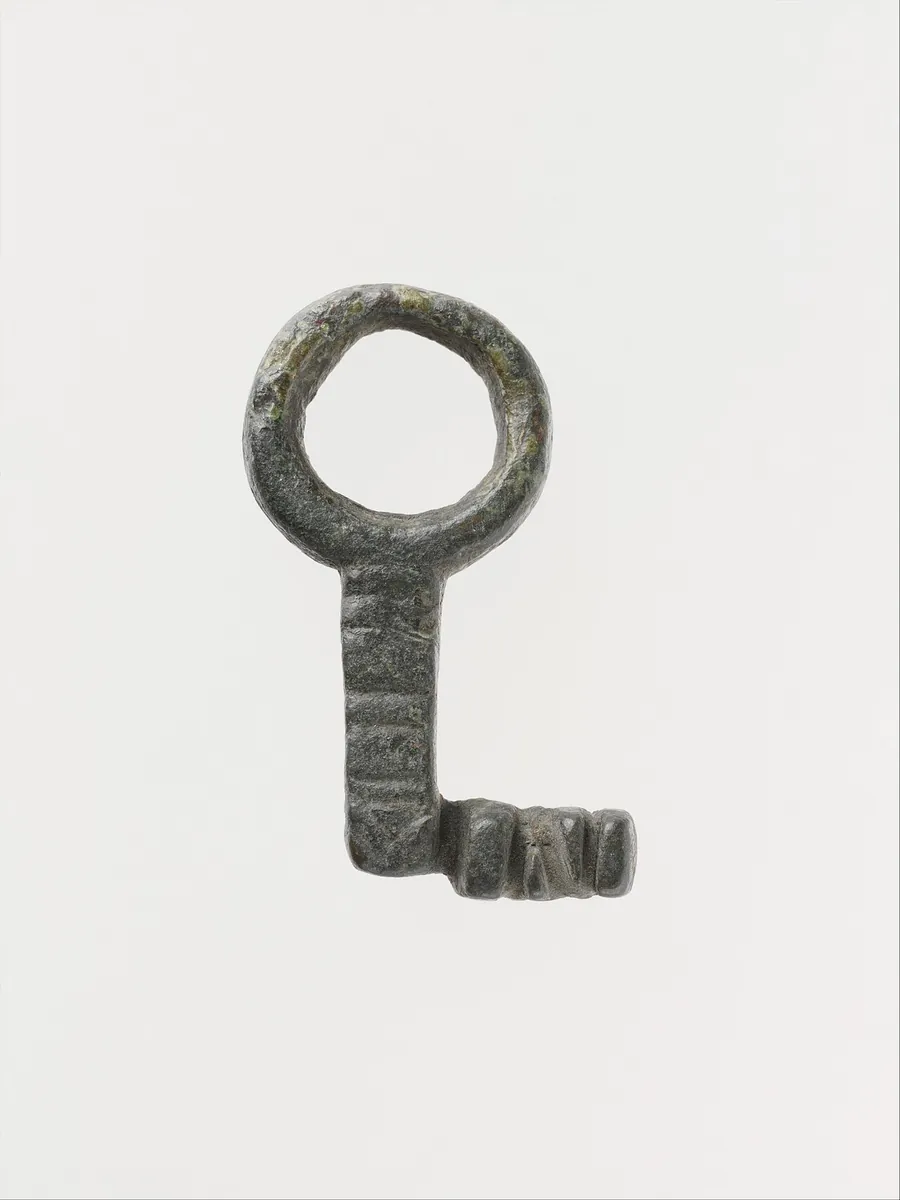

Witnesses
Six witnesses, quoted directly
No etymological statement on this page rests on a single dictionary. Below, the exact wordings — the dictionaries' words, not ours.
DEX '09: cheie
“– Lat. clavis.”
DEX '09 (2009), under cheie
Three words say it all: the key is inherited from Latin.
MDA2: cheie
“cheie sf [At: HRONOGRAF (1650) […] / E: ml clavis, -em]”
MDA2 (2010), under cheie
The only dictionary that dates the first attestation: 1650. “ml” means inherited from Latin.
DEX '09: lacăt
“– Din magh. lakat.”
DEX '09 (2009), under lacăt
A short formula that says it all: the padlock is borrowed from Hungarian.
MDA2: lacăt
“lacăt sn [At: VARLAAM, C. 88 […] / E: mg lakat]”
MDA2 (2010), under lacăt
The earliest kept attestation: Varlaam, C. 88 — the Cazania, Iași, 1643, by the siglum reading. “mg” means from Hungarian.
NSz: lakat
“LAKAT …: sera … [schloss].”
NSz, II (1891), p. 514
The Hungarian historical dictionary: lakat means a lock, with old attestations, the earliest cited from the Bécsi Codex (15th century). It gives no etymology — it is not an etymological dictionary.
CADE: the Pravila
“de... vor fi spart ușa sau secriul au lăcăți... să nu aibă certare (PRV.-LP)”
CADE (1926–1931), under lacăt, quoting the 1646 Pravila
A 17th-century dictionary attestation. The page renders CADE's citation, not a reading from the Pravila.
Tally
What we know and what we don't
Four solid things and four edges. The edges stand written beside the statements they limit.
The key is Latin.
Eight Romanian dictionaries plus DER converge on clavis/clavem, and four Romance dictionaries each draw their word from the same etymon.
The padlock is Hungarian.
Six dictionaries say “from Hungarian”, with the same etymon. NSz (1891) shows the Hungarian word attested since the 15th century.
Both are old in Romanian.
The dictionaries date them to 1643 (lacăt) and 1650 (cheie); the 1688 Bible has both; Neculce uses both words, and Cantemir the padlock, in texts from the first half of the 18th century.
The pair is sealed.
The idiom “Cheia și lacătul = totul” stands in DEX '09. First the texts placed them side by side, then the dictionary sealed the pair.
We don't know the old first sentence.
No sentence before 1933 with both words was found. The meeting is certain at book level (1688), not at passage level.
We don't know the 1643 and 1650 passages.
Varlaam and the Hronograf are dictionary datings; the exact texts were not recovered. The page cites them as such, never as readings.
We don't say where lakat comes from.
The deeper origin of the Hungarian word would need an inspectable Hungarian etymological dictionary — TESz and EWUng were not found online. Hypotheses exist, but they are not on this page.
The old texts are transcriptions.
The 1688, Neculce-key and Europolis quotations come from Wikisource transcriptions, unverified against the originals. The strong quotation — Neculce-lăcată — comes from an edition with a page number (Ștrempel, 1982, p. 342); the Cantemir passage (Istoria ieroglifică, BPT 1983, p. 135) is recorded in Sources.
Timeline
Seven landmarks
From classical Rome to DEX '09, the pair's road in seven stops. Each date says what it dates: a work, an edition or a print.
clavis at Rome
classical Latin
The Latin word for key, quoted in Livy and Cato. No year: it is an era, not an event.
Landmark 1 of 7.
lakat in Hungarian
c. 1450
The earliest attestation cited by NSz (1891) comes from the Bécsi Codex, from the mid-15th century.
Landmark 2 of 7.
lacăt in Varlaam
1643
MDA2: “At: VARLAAM, C. 88”. A dictionary dating — the year of the Iași print, not a verified reading.
Landmark 3 of 7.
cheie in the Hronograf
1650
MDA2: “At: HRONOGRAF (1650)”. A dictionary dating — the exact manuscript was not established.
Landmark 4 of 7.
both in the Bible
1688
The Bucharest Bible, the year of the print: cheile in Matthew, lacăte in Jeremiah and Job. After the transcription.
Landmark 5 of 7.
lacăt in Pann
1847
Povestea vorbii, first edition 1847: “Să aibi lacăt și măsură” (“keep a padlock and measure on your mouth”) — the quotation verified in the 1926 edition and in DLRLC. The proverb of the locked mouth.
Landmark 6 of 7.
the pair in DEX
2009
DEX '09 records the idiom “Cheia și lacătul = totul; începutul și sfârșitul.”
Landmark 7 of 7.
The years above date works and editions, not the birth of the words: 1643 and 1650 are first attestations kept by a dictionary.
Nuances
Where the sources differ
The etymons are not in dispute: clavis and lakat are unanimous. What follows are real, smaller differences — and one place where the page stops on purpose. SOURCES DIFFER
Lăcată or lacăt?
Neculce writes “o lăcată”, feminine; three manuscripts read “un lacat”, neuter (B, E; G: “un lacat mare cît un șlic”). CADE splits the forms by region: lăcat in Transylvania, lăcată in Moldavia, Bucovina and Maramureș. DEX normalises the neuter: lacăt.
Cheile Turzii stays out.
The geographical sense — chei, gorges — is another sense, recorded separately in DEX. DER notes that other origins were proposed for it, perhaps pre-Roman. This page is only about the key that unlocks.
Which word is older?
By MDA2, lacăt (1643) comes before cheie (1650). But both are dictionary datings with unrecovered passages — the order may be just the order of the surviving papers, not of the words.
None of the differences above moves the etymons. The key stays Latin, the padlock stays Hungarian.
And beyond lakat the page does not go: without an inspectable Hungarian etymological dictionary, the deeper origin of the Hungarian word stays unsaid here — not guessed.
Game
Match the pairs
Four keys, four padlocks, four true meetings. Pick a key and the padlock from the same story, then flip the pair and see where each half of the word comes from.
Press first a key, then a padlock. Pairs that match flip by themselves and show the empires; wrong ones come undone.
Keys
Padlocks
Score: 0 of 4.
The answers
- 1688 — “cheile împărăției ceriurilor” — Matthew 16:19 + “cu uși și cu lacăte și zăvoară” — Jeremiah 18 (The same book, 1688: the Bucharest Bible has both, in different books (after the transcription).)
- 1643 / 1650 — cheie in the Hronograf, 1650 + lacăt in Varlaam, 1643 (The first dictionary attestations, seven years apart — MDA2 datings, passages unrecovered.)
- c. 1735 — “trii chei a porților cetății” — Neculce + “cu o lăcată cît un șlic” — Neculce (The same chronicler, both words: the fortress keys after the transcription, the padlock from the Ștrempel edition, p. 342.)
- 1847 / 1921 — “cheile Împărăției cerurilor” — Cornilescu + “Să aibi lacăt și măsură” — Pann, 1847 (The people's saying and the Holy Book: Pann's proverb (1847) and the verse in Cornilescu's New Testament (1921).)
The pairs above are editorial matches by era and theme, from verified quotations — not historical objects that open one another.
Sources
All etymology quotations were verified on dexonline on 27 September 2026; the strong Neculce and Cantemir quotations were read in edition scans, with page numbers. Wikisource transcriptions are marked as such throughout the page.
Texts and editions
- The Bucharest Bible, Matthew (transcription)
- The Bucharest Bible, Jeremiah (transcription)
- Neculce, ch. XIII (transcription)
- Neculce, Ștrempel ed. 1982 (scan)
- Cantemir, Istoria ieroglifică, BPT 1983 (scan)
- Pann, Povestea vorbii, 1926 ed. (scan)
- Europolis (transcription)
Dictionaries
- DEX '09: cheie
- DEX '09: lacăt
- MDA2: cheie
- MDA2: lacăt
- NSz, the Hungarian historical dictionary, II (scan)
- Cihac, II, p. 511 (scan)
- Lewis & Short: clavis (Perseus)
- Treccani: chiave
- Larousse: clé
- RAE: llave
- Priberam: chave
From the same series
Type: Fraunces and Source Serif 4 (OFL). English translations of quotations by Marius Comper.