mariuscomper.uk ROEN中文

Bucharest to Beijing, November 1950

Five students on the train to Beijing: the first Romanians to learn Chinese, from 1950 to today

On 30 November 1950 five school-leavers from Romania stepped off a train in Beijing. They were the first students to arrive for the class in which the People's Republic of China began teaching Chinese to foreigners. One became an ambassador, one a trade counsellor, one a historian of China, one a translator of Chinese literature. Of the fifth, a classmate wrote decades later that she had gone too soon.

Drawing: a steam train at night on a snowy plain, with five lit windows in one carriage.
  1. 罗明Romulus Ioan Budura
  2. 萨安娜Anna Eva Szász
  3. 江冬妮Toni Radian
  4. 廖宁Leonin Vasilescu
  5. 郭玛丽Maria Comănescu
Five windows, five names. The Chinese names are the ones their teachers gave them at Tsinghua University; three of them appear in print in the People's Daily within months of the arrival.

Romulus Budura, an engine driver's son, had turned nineteen a week before the train left.Ding Chao, 2021 He boarded at Gara de Nord, the main station of Bucharest, Romania's capital, on the evening of 15 November 1950 with four other school-leavers.A. E. Budura, 2020 Forty years later he would return to Beijing as Romania's ambassador. None of the five knew Chinese; the People's Daily, the newspaper of the Chinese Communist Party, wrote in 2005 that when they were sent, not one Romanian could speak it.People's Daily

Three days after they arrived, on 3 December 1950, the front page of the People's Daily carried a dispatch of 153 Chinese characters from the Xinhua news agency: five Romanian exchange students had reached Beijing on the morning of 30 November, fifteen nights after leaving Bucharest, and about two hundred people had met them at the station. It gave five surnames, written by sound in Chinese characters: 瓦西列斯库, 萨斯, 康曼摄斯库, 布杜拉, 拉基安. Vasilescu, Szász, Comănescu, Budura, Radian.People's Daily

What follows is each of the five lives as far as published records allow: the People's Daily, which printed 87 items naming one of them or the group between 1950 and 2017; their own memoirs and interviews, the latest of 2026; and Chinese and Romanian scholarship.

Who were the five, and why were they sent?#

Romania and the People's Republic of China established diplomatic relations on 5 October 1949, four days after the republic was proclaimed. The two states had almost nobody who could speak to each other without passing through Russian, English or French. In January 1950 Czechoslovakia and Poland proposed to Beijing an exchange of students; on 25 June the premier, Zhou Enlai, chaired a meeting on the plan, and China offered the same exchange, five students each way, to Romania, Hungary and Bulgaria.Shenzhou Xueren, 2015 Romania's ambassador in Beijing, Teodor Rudenco, cabled home that the proposal was „bună și de mare folos politic și practic” (good, and of great political and practical use), and that Romania „fără îndoială” (without doubt) needed people who knew Chinese.Ding Chao, 2020

The Chinese foreign ministry had asked, in a memorandum to the Romanian embassy, for university graduates who knew English.Shenzhou Xueren, 2015 Romania sent five who had just finished secondary school, the only one of the five countries to do so.Li Min, 2024 Two were boys and three were girls.Kong Hanbing, 2021

The Chinese students came first. Five of them left Beijing by train on 6 September 1950, by Ding Chao's account (Anna Eva Budura's speech of 2025 gives that date for their arrival), and entered Romania at Ungheni, the border station on the river Prut: Li Xiling, Zhao Shengzhen, Qiu Zuti, Guo Junqing and Lu Jixin.Ding Chao, 2020 Several of the Romanians who were about to leave went to the station in Bucharest to welcome them. One of them, Romulus Budura, who ran the cultural activities of the youth organisation at his school, invited the Chinese students to a school performance and then to his home.Li Min, 2024

The fifth Romanian joined late. Anna Eva Szász, from Sibiu, a city in Transylvania, had been chosen for a scholarship in the Soviet Union and was learning Russian in a Bucharest hostel with two thousand other pupils. Around October, she said in 2026, the commission asked whether she would go to China in place of a girl whose parents thought it too far. Her passport was changed in a hurry.HotNews, 2026

Before they left, the Chinese ambassador, Wang Youping, gave a reception for the five at his embassy, and he came to the station with Romanian officials to see them off.Li Min, 2024

The five, as they were in November 1950

  • 罗明 Romulus Ioan Budura

    In the dispatch of 1950: 布杜拉

    Born on 8 November 1931 in Bihor county, in the north-west of Romania, the son of an engine driver, by the account of the Chinese scholar Ding Chao.Ding Chao, 2021 He had turned nineteen a week before the train left.

  • 萨安娜 Anna Eva Szász

    In the dispatch of 1950: 萨斯

    Born in Sibiu on 31 May 1931, by her own account.A. E. Budura, 2020 Nineteen. The last to join the group.

  • 江冬妮 Toni Radian

    In the dispatch of 1950: 拉基安

    A school-leaver, like the others. Nothing about her life before the journey was found in print.

  • 廖宁 Leonin Vasilescu

    In the dispatch of 1950: 瓦西列斯库

    A school-leaver. Most sources print his first name as Leonin; single texts print Leonid and Leontin. Nothing about his life before the journey was found in print.

  • 郭玛丽 Maria Comănescu

    In the dispatch of 1950: 康曼摄斯库

    A school-leaver. Nothing about her life before the journey was found in print.

How did five students get from Bucharest to Beijing in 1950?#

By train, in fifteen nights. Seven places on the way are named in their own accounts and in the Xinhua dispatch; the rest of the line is drawn for orientation.

BucharestIașiUngheniKievMoscowOmskNovosibirskIrkutskChitaManzhouliHarbinShenyangBeijingLake Baikal

a place named in their accounts or in the dispatchthe railway between them (their stops here are not recorded)

  1. 15 November 1950, evening

    Gara de Nord, Bucharest

    „Primii pași de pe calea de 10.000 de li”, Anna Eva Budura wrote seventy years later: the first steps on the road of ten thousand li were taken on an evening, 15 November 1950, in Gara de Nord.A. E. Budura, 2020 The nearest surviving timetable, valid from 3 October 1948, prints one evening express from Gara de Nord to Iași: the accelerat 601, leaving at 23:20 and arriving at 8:07 the next morning. Whether it still ran two years later, and whether the five were on it, is not recorded.CFR, 1948

  2. Date not recorded

    Iași and the border

    In the accounts of the route, Iași, the old capital of Moldavia, is the first city named.D. Tomozei, 2018 From there the line to the Soviet Union crossed the Prut at Ungheni, where the five Chinese students had entered Romania two months earlier.

  3. Date not recorded

    Kiev

    Named in two accounts of the journey; nothing else about the stop is in print.D. Tomozei, 2018Ding Chao, 2021

  4. Date not recorded

    Moscow

    The three girls bought headscarves here; the boys had fur caps from home. Whoever had outfitted them, Anna Eva Budura said, had probably looked at a map and concluded that China was warm.HotNews, 2026 They were travelling in cut-out shoes, knee socks and loden coats.

  5. Until 26 November

    Siberia

    The journey stayed with her, she wrote, as the memory of a dream „a lumii hibernale din Siberia”, of Siberia's wintry world.A. E. Budura, 2020 The first through train from Moscow to Beijing left only in January 1954,Xinhua, 2014 so the journey of 1950 could not be made on one train; which trains they took is not recorded.

  6. 26 November 1950

    Manzhouli, the Chinese border

    Minus thirty degrees. The official who met them, Zhang Lian, saw their clothes and telephoned Beijing. They were given a warm room, soft quilts and a banquet.Shenzhou Xueren, 2019HotNews, 2026

  7. Date not recorded

    Harbin

    The one city named between the border and Beijing.D. Tomozei, 2018

  8. 30 November 1950, morning

    The station at Qianmen, Beijing

    About two hundred people were on the platform: a representative of the Ministry of Education, the chairman and vice-chairman of the students' federation, the head of the youth league's student department, and pupils of Laodong Middle School.People's Daily A counsellor of the Romanian embassy was there too.Li Min, 2024

  9. The first days

    A courtyard house

    For the first three days, Budura recalled, they were lodged in a courtyard house where Cai Yuanpei, a former head of Peking University, had lived.CCTSS, 2021 They were dressed from head to foot in padded cotton, shown the Forbidden City and given a welcome dinner.HotNews, 2026A. E. Budura, 2020 At the dinner Budura said the five must become a pillar between Romania and China. The embassy counsellor who was helping him translate changed the word to bridge.Li Min, 2024

  10. 4 December 1950

    The gate of Tsinghua

    „Într-o zi cenușie de iarnă”, on a grey winter day, in Anna Eva Budura's words.A. E. Budura, 2020 Students at the gate sang „Unity is strength”, the Buduras wrote in 2015.R. and A. E. Budura, 2015 They pinned the university's badge on the newcomers, Toni Radian wrote in the People's Daily three years later.People's Daily A Chinese newspaper counts their registration, which it dates to 1 December, as the start of the teaching of Chinese to foreigners in the People's Republic.Guangming Daily, 2020

Measured in straight lines between the seven named places, the journey is at least 8,400 km. The railway is longer. By the calendar it took fifteen nights, from the evening of 15 November to the morning of 30 November.

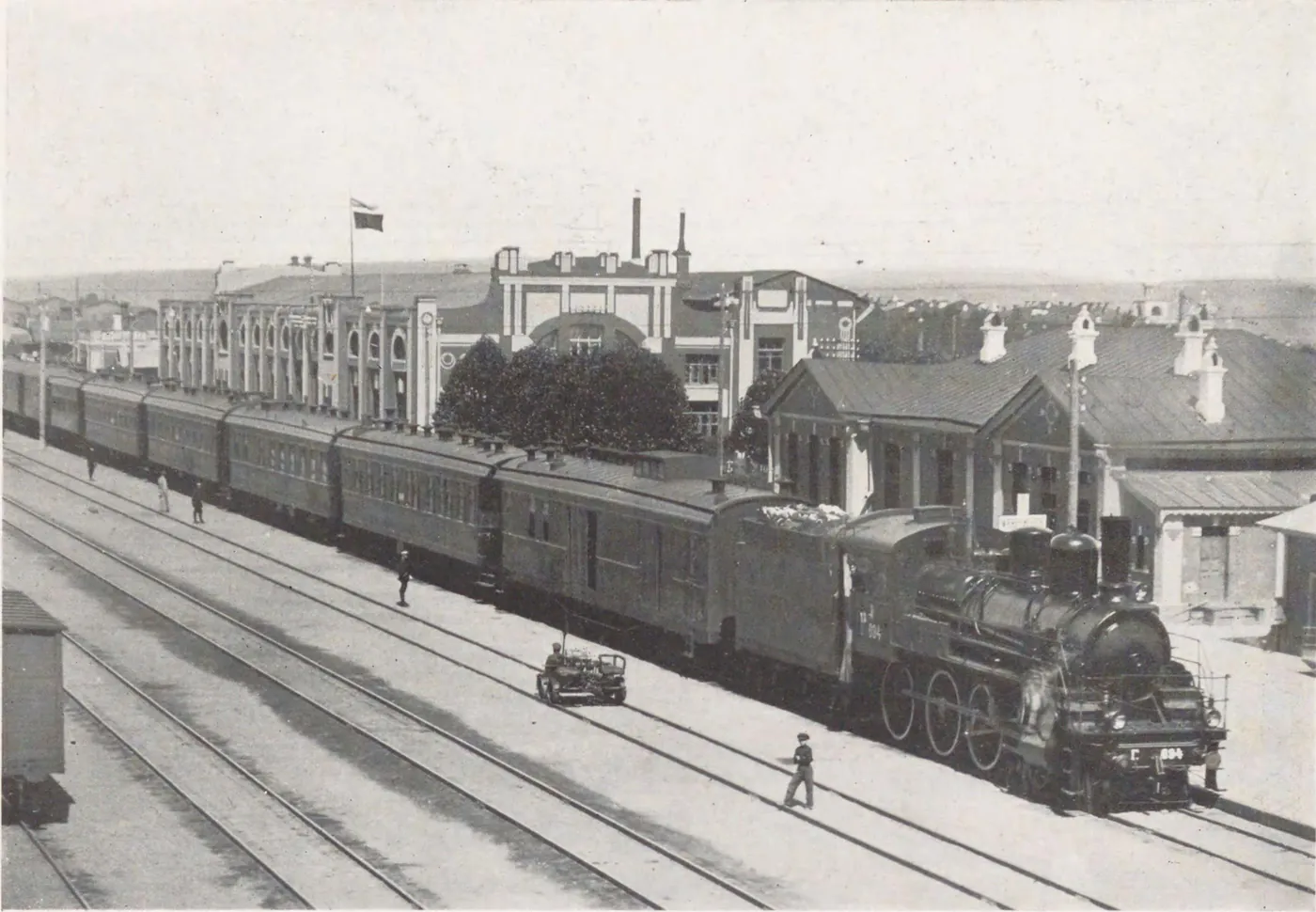
Black-and-white photograph: a steam train standing at Manzhouli station, the station buildings behind it.
Manzhouli station in a photograph printed in 1932, eighteen years before the five passed through. Photographer unknown; from Sekai chiri fūzoku taikei, Shinkōsha, 1932 (National Diet Library, Japan). Public domain, via Wikimedia Commons.

What did the People's Daily print about the arrival?#

One paragraph on the front page, three days later. It is the only published account from the time that was found.

罗马尼亚学生五名来京学习

【新华社三十日讯】罗马尼亚人民共和国和我国交换的留学生瓦西列斯库、萨斯、康曼摄斯库、布杜拉、拉基安等五名,于今日上午到达北京。前往车站欢迎者有中央人民政府教育部代表高等教育司留学生管理处处长黄新民、中华全国学生联合会主席谢邦定、副主席聂维庆、中国新民主主义青年团中央委员会学生部部长杨诚等和劳动中学学生共约二百余人。这五名留学生将入清华大学学习。

People's Daily, 3 December 1950, page 1: „Five Romanian students come to the capital to study”. The text is given here in today's characters, as transcribed; it is not a photograph of the page.

In English

Xinhua, 30th. Five exchange students sent by the Romanian People's Republic under its exchange with our country, Vasilescu, Szász, Comănescu, Budura and Radian, arrived in Beijing this morning. They were met at the station by Huang Xinmin, head of the office for exchange students in the higher-education department, representing the Ministry of Education of the Central People's Government; Xie Bangding, chairman of the All-China Students' Federation, and its vice-chairman Nie Weiqing; Yang Cheng, head of the student department of the central committee of the New Democratic Youth League of China; and pupils of Laodong Middle School, some two hundred people in all. The five students will enter Tsinghua University.

The paper wrote the names by ear. Within three months it was using other names for three of them: the Chinese names their teachers had given them. Budura became 罗明 (Luo Ming), a name chosen by his teacher Deng Yi.Ding Chao, 2021 Radian became 江冬妮 (Jiang Dongni), Vasilescu 廖宁 (Liao Ning), Szász 萨安娜 (Sa Anna) and Comănescu 郭玛丽 (Guo Mali).Li Min, 2024 These are the names under which the Chinese press recorded them for the rest of their lives, and under which Chinese readers know them.

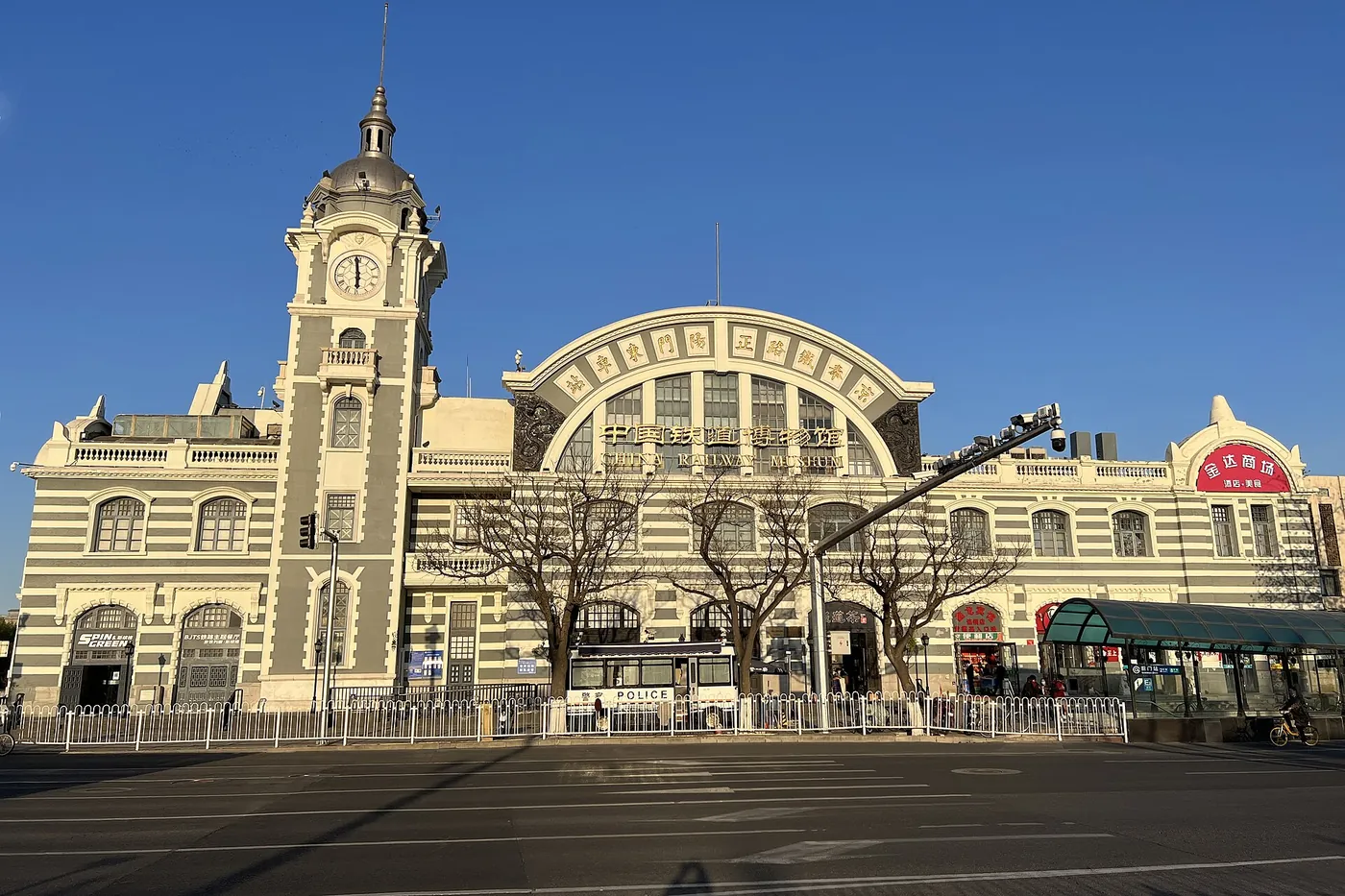
A station building in grey and white stripes with a clock tower and a large glazed arch; the façade reads China Railway Museum.
The station building by Qianmen in 2022. The arch still carries the old name, Zhengyangmen East Station of the Beijing–Fengtian Railway; it is now the China Railway Museum. Photograph: N509FZ, 15 April 2022, CC BY-SA 4.0, via Wikimedia Commons; resized.

How was Chinese taught to the first foreign students of the People's Republic?#

For the teachers in Beijing it was a new undertaking. Tsinghua University set up a special class for the exchange students from Eastern Europe and put it in the hands of Deng Yi, who had helped the linguist Yuen Ren Chao teach Chinese to American army officers at Harvard during the war.Li Min, 2024 The teachers wrote the lessons as the course went along. The introduction to the first handout, which Anna Eva Budura kept, told the students that teaching Chinese to foreigners was a very young science and that the course was a trial for teachers and students alike.R. and A. E. Budura, 2015

Lessons began in January 1951.Li Min, 2024 By March the class had 21 students from four countries, 7 women and 14 men, and the People's Daily printed a feature by Cheng Mo, of the university's correspondents' group. The youngest, he wrote, were the Romanians; „the youngest little brother, Luo Ming, is only nineteen”. The Bulgarians and Romanians were taught through Russian, the others through English. Class ran from nine to one, with an hour of writing in the evening. For the first two months pronunciation was the main subject, practised on short phrases chosen because they were clear and amusing to say, and each month a record was cut so that progress could be heard.People's Daily

The two phrases of 1951

The feature quotes two of the practice phrases: 清华园, the name of the Tsinghua campus, and 豆芽菜, bean sprouts. Mandarin gives every syllable one of four tones, and a wrong tone is a different word. Each curve below is the pitch of one syllable.

清qīng: first tone: high and level华huá: second tone: rising园yuán: second tone: rising

Qīnghuá Yuán · the Tsinghua campus

豆dòu: fourth tone: falling芽yá: second tone: rising菜cài: fourth tone: falling

dòuyácài · bean sprouts

The sound is synthesised from the pitch curves alone: a hum that rises and falls, with no words in it. No recording of the class was available for this page.

There were two worn tape recorders, which Deng Yi had brought back from the United States. „Luo Ming hugged that recorder all day”, the teaching assistant Zhong Qin recalled.Shenzhou Xueren, 2015 A Hungarian classmate, Józsa Sándor, remembered seventy years on that Budura was up at half past six every morning practising sounds on the dormitory stairs. The lights went out at ten, except in the lavatories, so that is where the Romanians read.Li Min, 2024 They wrote the day's characters on slips of paper, stuck them on the wall at night and checked them in the morning.R. and A. E. Budura, 2015

In the examinations of spring 1951 the Romanians were consistently near the top. Budura had the highest marks of the whole class for pronunciation, for the oral and for the written paper; Radian had the highest for composition.Li Min, 2024 Not everyone found it easy. „The Romanian student Liao Ning”, Cheng Mo noted, had trouble with pronunciation, and when the Polish students arrived late he asked to start again from the beginning with them.People's Daily By the summer of 1952 they knew more than two thousand characters, enough to follow university lectures.R. and A. E. Budura, 2015Li Min, 2024

The class of 33

  • Romania · 5
  • Bulgaria · 5
  • Hungary · 5
  • Poland · 10
  • Czechoslovakia · 8
One dot for each student of the Tsinghua class, by country. The five Romanians arrived first, on 30 November 1950; five Bulgarians followed on 14 December; the class was complete by the autumn of 1951.
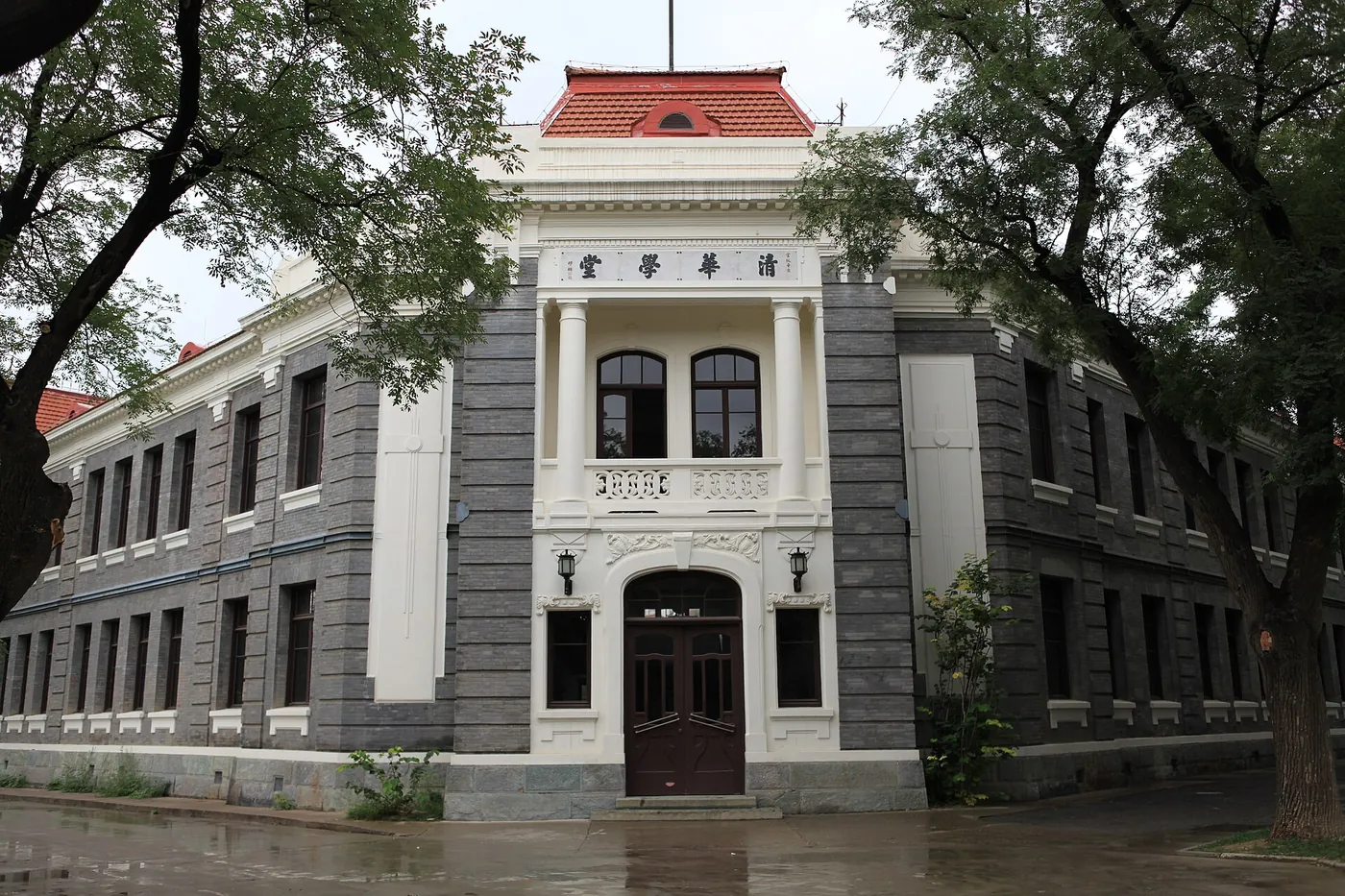
A two-storey grey-brick building with a mansard roof among trees: Tsinghua Xuetang.
Tsinghua Xuetang, the building where the women of the class were lodged; the men were put in the Mingzhai dormitory, by the sports ground. Photographed in 2011. Photograph: Jucember, 10 September 2011, CC BY-SA 3.0, via Wikimedia Commons; resized.

What Beijing was like for them

China had been at war for most of the previous twenty years and had just entered another, in Korea. An archive note of February 1951 sets out what the state gave each foreign student, counted in millet, the unit in which salaries were then reckoned: 500 jin a month for food, raised from 250, a clothing allowance of 2,500 jin and 200 jin a month in pocket money, which together came to about what a lecturer or professor received.Shenzhou Xueren, 2015 The dormitories were heated for half an hour in the evening. The women were given a stove; Budura, his wife said, ironed his bed before getting into it.HotNews, 2026 The bus into the city ran on wood gas.R. and A. E. Budura, 2015

They saw harsher things too. In 2026 Anna Eva Budura described a village trial of men she called „contrarevoluționari”, accused of crimes in the service of the Japanese. After lunch the class interpreter told the students it was happening in the next village: „Cine nu vrea, nu vine”, whoever does not want to need not come. They all went. Five or six condemned men in white knelt and were executed a few metres from graves already dug. She hardly slept that night, she said.HotNews, 2026

The feature in the paper shows other things: the students learning the yangge dance and calling out in Chinese „now let's dance the yangge!”, filling notebooks at the Summer Palace, and Jiang Dongni unable to walk away from a group of students singing.People's Daily In September 1951 she spoke for the Romanians at a meeting with soldiers back from Korea.People's Daily

What became of the first five Romanian students in China?#

After two years at Tsinghua they moved on to university departments, and their paths divided. Each station in the diagram is a dated record.

  • 郭玛丽 Maria Comănescu
  • 廖宁 Leonin Vasilescu
  • 江冬妮 Toni Radian
  • 罗明 Romulus Ioan Budura
  • 萨安娜 Anna Eva Budura
19511952195319541956195519601970198019902000201020201950Beijing, 30 November 19501951 starts again with the Poles5 March 1951: The People's Daily: „the Romanian student Liao Ning” asks to start again from the beginning with the Polish students.1951 „only nineteen”5 March 1951: The People's Daily: „the youngest little brother, Luo Ming, is only nineteen”.1951 speaks for the Romanians20 September 1951: Speaks for the Romanian students at a meeting with soldiers returned from Korea.1952 signs the women's article8 March 1952: Co-signs, as Guo Mali, an article by the eight women students of the class, printed in the People's Daily.1952 signs the women's article8 March 1952: Co-signs, as Sa Anna, the women students' article in the People's Daily.1952 history, Peking Universityautumn 1952: Enters the history department of Peking University.1952 economicsautumn 1952: Studies economics; at Renmin University, by Li Min's account.1953 her article in the paper15 November 1953: The People's Daily prints her article „Any difficulty can be overcome”.1954 does not return (one account)summer 1954: By Anna Eva Budura's account of 2025, cannot return to her studies after the holiday, because of her health.1954 with Petru Grozaautumn 1954: Accompanies Petru Groza through more than a month in China.1955 interprets for Zhu DeDecember 1955: Interprets for Zhu De in Romania.1956 cultural institute (Li Min)after 1956: By Li Min's account, works at the Institute for Cultural Relations Abroad; the 2020 text lists that institute among the five's first employers without naming her. She „left this world too soon”; no date is recorded.1956 degree in historyJuly 1956: Degree in history, Peking University.1956 Chinese in Bucharest1956: Begins the teaching of Chinese at the University of Bucharest.1963 first secretary, Beijing16 October 1963: First secretary at the Romanian embassy in Beijing, at the airport for a trade delegation.1963 chargé d'affaires26 October 1963: The People's Daily: chargé d'affaires of the Romanian embassy in Beijing.1964 the talks; MaoMarch 1964: In the talks with Liu Shaoqi and at the meeting with Mao Zedong.1965 the economic exhibition4 August 1965: Listed as a member of the government delegation arriving for the opening of the Romanian economic exhibition; Peng Zhen and Li Xiannian receive all its members that evening.1966 with Zhou EnlaiJune 1966: Accompanying interpreter for Zhou Enlai in Romania.1966 Pu Songling in Romanian1966: „Duhul crizantemei”, tales by Pu Songling: by Florentina Vișan's account the first translation made into Romanian directly from Chinese.1966 the history institute1966: Moves to the Institute of Historical and Social-Political Studies to found the study of Chinese history.1968 first articleOctober 1968: First article in Magazin istoric.1969 Sydney1969: Consul general in Sydney.1970 trade delegationMarch 1970: In Beijing with the Romanian government trade delegation, named beside its deputy head.1971 banquet with Zhou Enlai20–22 March 1971: At the talks with Li Xiannian and at the banquet attended by Zhou Enlai.1971 the loan is signed28 October 1971: Economic counsellor; present at the signing of China's long-term interest-free loan to Romania.1973 received by Zhou Enlai23 November 1973: Zhou Enlai receives the Romanian trade delegation; Liao Ning is among its members.1975 the industrial exhibition17 May – 15 June 1975: Deputy director of the Romanian industrial exhibition in Beijing. His last appearance in the paper.1980 minister-counsellor1979–1981: Minister-counsellor of the embassy in Beijing.1982 doctorate27 December 1982: Defends her doctorate on China's war of resistance against Japan.1983 more Pu Songling1983: A second volume of Pu Songling's strange tales.1989 „the sinologist Jiang Dongni”7 August 1989: Xinhua reports three volumes of old Chinese fiction translated by „the sinologist Jiang Dongni”.1989 interpreter againAugust 1989: Interpreter for a People's Daily delegation in Romania: „their Mandarin is more standard than ours” (printed 4 October).1990 ambassador27 August 1990: Presents his credentials as ambassador to President Yang Shangkun.1991 „doctor of history”6 January 1991: The People's Daily: the ambassador's wife, „a doctor of history trained at Peking University”.1995 takes his leave16 June 1995: Takes his leave of premier Li Peng.1999 first book1999: „Țara simbolurilor”, her first book.2005 the documents2005–2015: Edits four volumes of Romanian diplomatic documents on China.2017 China's book awardAugust 2017: Special Book Award of China.2021 diesJuly 2021: Dies, aged 89; buried in Bucharest on 27 July.2025 the exhibition29 October 2025: Opens an exhibition of her photographs and manuscripts in Bucharest: 75 years of student exchanges.
  • named in the People's Daily
  • the person's own account
  • another published account
  • a book is published
  • every other item in the People's Daily
  • the record stops; the date of death is not known

Choose a station to read the record.

萨安娜 Anna Eva Budura historian

She took her degree in history at Peking University in July 1956; on the last day she brought a fir sapling for the group to plant in front of their building.A. E. Budura, 2020 She married Romulus Budura; their two children were born in Beijing.Guangming Daily, 2015 For ten years she worked in the press section of the foreign ministry and at the embassy, reading the Chinese papers and translating for officials. The work, she writes, was often beyond her strength; the decade ended with eighteen months of sick leave.A. E. Budura, 2020

In 1966 she moved, at her own request, to the Institute of Historical and Social-Political Studies in Bucharest, to begin the study of Chinese history from Chinese sources. „Am pornit de la 0”, she said, “I started from zero”: no dictionaries and no basic works.A. E. Budura, 2025 Her first article in the monthly Magazin istoric, on the Great Wall and the Ming tombs, appeared in October 1968; she defended her doctorate, on China's war of resistance against Japan, on 27 December 1982.A. E. Budura, 2020 In between she was called away as an interpreter for delegations, in some years for more than a hundred days.

The books came after she retired in 1990: „Țara simbolurilor” (1999), a history of Chinese diplomacy that reached three editions, a book on tea.A. E. Budura, 2020 In January 1991 the People's Daily described her as the ambassador's wife, „a doctor of history trained at Peking University”; in August 2017 it printed her name among the winners of China's Special Book Award.People's Daily She turned 95 in May 2026.

  1. 8 March 1952 Co-signs, as Sa Anna, the women students' article in the People's Daily.People's DailyR. and A. E. Budura, 2015named in the People's Daily
  2. July 1956 Degree in history, Peking University.A. E. Budura, 2020the person's own account
  3. 1966 Moves to the Institute of Historical and Social-Political Studies to found the study of Chinese history.A. E. Budura, 2020A. E. Budura, 2025the person's own account
  4. October 1968 First article in Magazin istoric.A. E. Budura, 2020the person's own account
  5. 27 December 1982 Defends her doctorate on China's war of resistance against Japan.A. E. Budura, 2020Li Min, 2024the person's own account
  6. 6 January 1991 The People's Daily: the ambassador's wife, „a doctor of history trained at Peking University”.People's Dailynamed in the People's Daily
  7. 1999 „Țara simbolurilor”, her first book.A. E. Budura, 2020Li Min, 2024a book is published
  8. August 2017 Special Book Award of China.People's Dailynamed in the People's Daily
  9. 29 October 2025 Opens an exhibition of her photographs and manuscripts in Bucharest: 75 years of student exchanges.A. E. Budura, 2025the person's own account

罗明 Romulus Ioan Budura interpreter, ambassador, editor of the documents

The embassy took him on before he had finished: from August 1954 he worked there three days a week and studied the other three.Ding Chao, 2021A. E. Budura, 2025 What follows comes from his own account, set down in Kong Hanbing's oral history (2016), as Ding Chao and Dan Tomozei relay it: he accompanied Petru Groza, Romania's head of state, through more than a month in China that autumn; interpreted for Marshal Zhu De in Romania in December 1955; took part in the talks of the Romanian delegation in Beijing in March 1964; and was the accompanying interpreter for Zhou Enlai at the funeral of the Romanian leader Gheorghe Gheorghiu-Dej in March 1965 and on his visit of June 1966, and for Deng Xiaoping in July 1965. Ding Chao adds the Bucharest conference of June 1960.Ding Chao, 2021D. Tomozei, 2014 At Iași in 1955, his interviewer writes, he could not quite follow Zhu De's Sichuan accent, and a photograph shows him behind the marshal, craning to read the speech in his hand.Kong Hanbing, 2021

The People's Daily of those years does not name interpreters. It names him in 1963 as chargé d'affaires and second secretary of the embassy.People's Daily Of March 1964 he said in 1999, on Romanian radio, that he had translated the letter from Gheorghiu-Dej which the Chinese head of state Liu Shaoqi opened and read at the table, and he described the meeting with Mao Zedong that followed.Radio România, 1999 By Dan Tomozei's summary of the oral history, 1964 was the last time he saw Mao.D. Tomozei, 2014

In 1969 he was sent to Sydney as consul general.Ding Chao, 2021 He came back to Beijing as minister-counsellor from 1979 to 1981, and in October 1989 the paper printed a delegation's account of its tour of Romania that August, which says of its two interpreters, „comrade Luo Ming” and another former student in China of the 1950s, that their Mandarin was more standard than the delegation's own.People's Daily He arrived as ambassador on 30 July 1990, presented his credentials on 27 August and took his leave of premier Li Peng on 16 June 1995.People's Daily

Then he edited. With a team of diplomats, historians and editors he published the Romanian diplomatic documents on China: a volume for 1880–1974 in 2005, one for 1954–1975 in 2008, two for 1975–1981 in 2015; more than 1,500 documents on over 4,000 pages.Ding Chao, 2021 He died in July 2021, on the 25th by the Chinese accounts that cite his family, on the 24th by the Chinese embassy's notice.Ding Chao, 2021Chinese embassy, 2021

  1. 5 March 1951 The People's Daily: „the youngest little brother, Luo Ming, is only nineteen”.People's DailyShenzhou Xueren, 2015named in the People's Daily
  2. autumn 1954 Accompanies Petru Groza through more than a month in China.Ding Chao, 2021D. Tomozei, 2014the person's own account
  3. December 1955 Interprets for Zhu De in Romania.Kong Hanbing, 2021D. Tomozei, 2014the person's own account
  4. 26 October 1963 The People's Daily: chargé d'affaires of the Romanian embassy in Beijing.People's DailyRadio România, 1999named in the People's Daily
  5. March 1964 In the talks with Liu Shaoqi and at the meeting with Mao Zedong.Radio România, 1999Ding Chao, 2021the person's own account
  6. June 1966 Accompanying interpreter for Zhou Enlai in Romania.Ding Chao, 2021the person's own account
  7. 1969 Consul general in Sydney.Ding Chao, 2021the person's own account
  8. 1979–1981 Minister-counsellor of the embassy in Beijing.People's Dailysourcenamed in the People's Daily
  9. August 1989 Interpreter for a People's Daily delegation in Romania: „their Mandarin is more standard than ours” (printed 4 October).People's Dailynamed in the People's Daily
  10. 27 August 1990 Presents his credentials as ambassador to President Yang Shangkun.People's Dailynamed in the People's Daily
  11. 16 June 1995 Takes his leave of premier Li Peng.People's Dailynamed in the People's Daily
  12. 2005–2015 Edits four volumes of Romanian diplomatic documents on China.Ding Chao, 2021Guangming Daily, 2015a book is published
  13. July 2021 Dies, aged 89; buried in Bucharest on 27 July.Ding Chao, 2021Kong Hanbing, 2021Chinese embassy, 2021another published account

江冬妮 Toni Radian professor and translator

She and Budura went into the Chinese department of Peking University. In November 1953 the People's Daily printed a short piece under her Chinese name, „Any difficulty can be overcome”: some professors lectured in dialects that were hard to follow, the reference books and literary works were full of unknown characters, Lu Xun's hardest of all, classmates repeated the lectures for the foreigners after class, and the course she liked best was the history of the new literature since 1919.People's Daily

In 1956 she began the teaching of Chinese at the University of Bucharest, the first in Romania.F. Vișan, 2017Li Min, 2024Univ. of Bucharest Florentina Vișan, who was her student from 1966 and later taught the same courses, remembered a teacher the whole group was a little afraid of, who had built her course herself; the students had no books or dictionaries of their own, and the library held a single Chinese–Russian dictionary.F. Vișan, 2017

Her translation of Pu Songling's tales, „Duhul crizantemei” (1966), was the first made into Romanian directly from Chinese, Vișan writes. A second volume of Pu Songling followed in 1983 and an anthology of classical stories, „Nuvela chineză medievală”, in 1989; Li Min adds a volume of stories from the Jingu qiguan collection in 1982 and Yuan Ke's myths of ancient China in 1987.F. Vișan, 2017Li Min, 2024 She was ill when she worked on them, Vișan says, and left nothing unclear; whenever she met something hard to translate she questioned the university's Chinese lecturers. In August 1989 Xinhua reported from Bucharest that three volumes of old Chinese fiction had appeared, translated straight from the Chinese by „the sinologist Jiang Dongni” and an assistant at the university.People's Daily That is her last appearance in the paper.

  1. 20 September 1951 Speaks for the Romanian students at a meeting with soldiers returned from Korea.People's DailyLi Min, 2024named in the People's Daily
  2. 15 November 1953 The People's Daily prints her article „Any difficulty can be overcome”.People's Dailynamed in the People's Daily
  3. 1956 Begins the teaching of Chinese at the University of Bucharest.F. Vișan, 2017Li Min, 2024Ding Chao, 2020another published account
  4. 1966 „Duhul crizantemei”, tales by Pu Songling: by Florentina Vișan's account the first translation made into Romanian directly from Chinese.F. Vișan, 2017Li Min, 2024a book is published
  5. 1983 A second volume of Pu Songling's strange tales.F. Vișan, 2017Li Min, 2024a book is published
  6. 7 August 1989 Xinhua reports three volumes of old Chinese fiction translated by „the sinologist Jiang Dongni”.People's DailyF. Vișan, 2017named in the People's Daily

廖宁 Leonin Vasilescu trade counsellor

He studied economics, at Renmin University of China by Li Min's account, and was assigned to the Ministry of Foreign Trade, where, his classmate said, he worked until he died.Li Min, 2024A. E. Budura, 2025 That is all the memoirs say. The rest of what is known comes from the People's Daily, which almost never printed his surname: to the paper he was Liao Ning.

Under that name it records him 39 times after his student years. In October 1963 he is a first secretary at the Romanian embassy in Beijing, meeting a trade delegation at the airport; in August 1965 he is first secretary for commerce and is listed as a member of the government delegation arriving for the opening of a Romanian economic exhibition. In March 1970 a Liao Ning is in Beijing with the government trade delegation, named beside its deputy head, and from March 1971 he is at the embassy again, first secretary for economic affairs, then economic counsellor from October 1971 and commercial counsellor from October 1972 to November 1973. In May 1975 he returns for a month as deputy director of the Romanian industrial exhibition. In November 1971 and in 1975 the paper prints him in full, as 瓦西列斯库·廖宁, Vasilescu Leonin.People's Daily

These were the years of the Chinese loans to Romania. The paper places him at the talks of 20 March 1971 between the vice-premier Li Xiannian and the Romanian deputy prime minister Gheorghe Rădulescu, at the banquet two days later which Zhou Enlai attended, at the signing of the long-term interest-free loan on 28 October 1971, and in the room on 23 November 1973 when Zhou Enlai received the Romanian trade delegation.People's Daily After June 1975 his name does not appear again.

  1. 5 March 1951 The People's Daily: „the Romanian student Liao Ning” asks to start again from the beginning with the Polish students.People's Dailynamed in the People's Daily
  2. autumn 1952 Studies economics; at Renmin University, by Li Min's account.Li Min, 2024A. E. Budura, 2025another published account
  3. 16 October 1963 First secretary at the Romanian embassy in Beijing, at the airport for a trade delegation.People's Dailynamed in the People's Daily
  4. 4 August 1965 Listed as a member of the government delegation arriving for the opening of the Romanian economic exhibition; Peng Zhen and Li Xiannian receive all its members that evening.People's Dailynamed in the People's Daily
  5. March 1970 In Beijing with the Romanian government trade delegation, named beside its deputy head.People's Dailynamed in the People's Daily
  6. 20–22 March 1971 At the talks with Li Xiannian and at the banquet attended by Zhou Enlai.People's Dailynamed in the People's Daily
  7. 28 October 1971 Economic counsellor; present at the signing of China's long-term interest-free loan to Romania.People's Dailynamed in the People's Daily
  8. 23 November 1973 Zhou Enlai receives the Romanian trade delegation; Liao Ning is among its members.People's Dailynamed in the People's Daily
  9. 17 May – 15 June 1975 Deputy director of the Romanian industrial exhibition in Beijing. His last appearance in the paper.People's Dailynamed in the People's Daily

郭玛丽 Maria Comănescu history student

In the autumn of 1952 she entered the history department of Peking University with Anna Szász.A. E. Budura, 2025Li Min, 2024 Her Chinese name is in the People's Daily once, among the eight women students who signed an article for International Women's Day in March 1952; her surname is in the dispatch of 1950.People's Daily

The accounts of what followed differ. In 2025 Anna Eva Budura said that after the summer holiday of 1954 Maria Comănescu could not return to her studies because of health problems, „care s-au agravat în mod tragic și am pierdut-o”, “which grew tragically worse, and we lost her”.A. E. Budura, 2025 Her text of 2020 says that all five finished in July 1956 and started work in state institutions, one of them the Romanian Institute for Cultural Relations Abroad; Li Min, of Beijing Foreign Studies University, writes that this is where Guo Mali worked.A. E. Budura, 2020Li Min, 2024 Both accounts agree on the end. She was to have shared the work of founding the study of Chinese history in Romania, Anna Eva Budura wrote, „dar, din nefericire, ea a părăsit prea repede această lume”, “but, sadly, she left this world too soon”.A. E. Budura, 2020 No date is given anywhere.

  1. 8 March 1952 Co-signs, as Guo Mali, an article by the eight women students of the class, printed in the People's Daily.People's DailyLi Min, 2024named in the People's Daily
  2. autumn 1952 Enters the history department of Peking University.A. E. Budura, 2025Li Min, 2024another published account
  3. summer 1954 By Anna Eva Budura's account of 2025, cannot return to her studies after the holiday, because of her health.A. E. Budura, 2025another published account
  4. after 1956 By Li Min's account, works at the Institute for Cultural Relations Abroad; the 2020 text lists that institute among the five's first employers without naming her. She „left this world too soon”; no date is recorded.A. E. Budura, 2020Li Min, 2024another published account

Who interpreted when Romania's leaders met Mao Zedong and Zhou Enlai?#

It is often said that the students of 1950 became the voices through which the two countries spoke. The table sets out what places one of the five at each meeting, and of what kind the evidence is.

Who interpreted when Romania's leaders met Mao Zedong and Zhou Enlai?
WhenMeetingWhich of the fiveSource
autumn 1954Petru Groza's journey of more than a month through ChinaBudura, accompanyinghis own account, as relayedDing Chao, 2021D. Tomozei, 2014
December 1955Zhu De in RomaniaBudura, interpretinghis own account, as relayedKong Hanbing, 2021D. Tomozei, 2014
June 1960The Bucharest conference of the communist partiesBudura, taking part (Ding Chao)his own account, as relayedDing Chao, 2021
2–10 March 1964The Romanian delegation in Beijing; Liu Shaoqi, Deng Xiaoping; Mao Zedong on 10 MarchBudura; he had translated Gheorghiu-Dej's letterhis own account, as relayedRadio România, 1999Ding Chao, 2021
March 1965Zhou Enlai at Gheorghiu-Dej's funeralBudura, accompanying interpreterhis own account, as relayedDing Chao, 2021
4 August 1965Peng Zhen and Li Xiannian receive all the members of the Romanian government delegationVasilescu, listed as a memberthe People's Daily at the timePeople's Daily
June 1966Zhou Enlai in RomaniaBudura, accompanying interpreterhis own account, as relayedDing Chao, 2021
20–22 March 1971Talks with Li Xiannian; banquet attended by Zhou EnlaiVasilescu, first secretarythe People's Daily at the timePeople's Daily
3 June 1971Nicolae Ceaușescu and Mao ZedongNone found: Budura had gone to Sydney as consul general in 1969no mention foundDing Chao, 2021D. Tomozei, 2014
28 October 1971Signing of the long-term interest-free loanVasilescu, economic counsellorthe People's Daily at the timePeople's Daily
23 November 1973Zhou Enlai receives the trade delegationVasilescu, member of the delegationthe People's Daily at the timePeople's Daily
August 1978Hua Guofeng in RomaniaNoneno mention found
August 1989A People's Daily delegation in Romania (printed 4 October)Budura, interpreterthe People's Daily at the timePeople's Daily
27 August 1990Credentials presented to Yang ShangkunBudura, ambassadorthe People's Daily at the timePeople's Daily

Two things can be seen. Budura's presence at the meetings of the 1950s and 1960s is attested only by his own account: the English translations of the 1964 and 1966 transcripts that were consulted name no interpreter, and the Romanian minutes of September 1969 name another, Ion Dorobanțu.Wilson Center For 1971, when Ceaușescu met Mao, nothing places Budura in Beijing: he had gone to Sydney as consul general in 1969, and at a banquet for the Romanian delegation in 1971, the oral history says, Zhou Enlai asked what had become of him.Ding Chao, 2021

In the items found, the one of the five whom the newspaper of the day shows in the same room as Zhou Enlai is Leonin Vasilescu, of whom the memoirs say least.

Those rooms are read today from Budura's volumes. The Romanian minutes of the talks with Mao, Zhou and Deng that historians quote, and that the page on Romania in the People's Daily uses, were published under his editorship.Wilson Center

Every time the People's Daily named one of them#

87 items between 1950 and 2017: 38 for Budura, 41 for Vasilescu, 6 for Radian, 6 for Anna Eva Budura, 2 for Comănescu, and 3 about the Romanian students as a group. An item that names several of them is counted for each, and the dispatch of 1950 for all five, so the figures add up to more than the total.

Show:

Every time the People's Daily named one of them
PrintedPageWhoAsWhat the item records
3 December 19501all fivestudentThe arrival of the five in Beijing.罗马尼亚学生五名来京学习
23 February 19511the groupStudents from Poland, Romania, Bulgaria and Hungary attend a youth rally in Beijing.纪念“反对殖民制度斗争日” 全国各城市青年举行盛大集会 归国华侨示威游行反对美国武装日本 国际学联亚洲学生疗养院在京奠基
5 March 19511the groupSoldiers back from Korea report on their meetings in Beijing; the Romanian students at Tsinghua embraced one of them and gave over a hundred badges.志愿军归国代表函告前线指战员 祖国人民到处赞颂志愿军
5 March 19513罗明, 江冬妮, 廖宁studentsFeature on the East European students at Tsinghua: the youngest is Luo Ming; Liao Ning starts again; Jiang Dongni listens to the singing.东欧同学在清华大学
22 September 19511江冬妮studentJiang Dongni speaks for the Romanian students at a meeting with soldiers back from Korea.志愿军归国代表和东欧留华学生联欢
12 October 19514the groupThe East European students' letter to Mao Zedong on the national day.东欧人民民主国家留学我国的学生 写信向毛主席祝贺我国庆节
8 March 19523萨安娜, 江冬妮, 郭玛丽students, as authorsArticle for 8 March signed by the eight women students of the class.祝贺新中国女青年的伟大成就
15 November 19533江冬妮student, as authorJiang Dongni's own article: „Any difficulty can be overcome”.兄弟国家的留学生在北京大学
17 October 19633廖宁first secretaryAt the airport or station to meet a delegation.罗马尼亚政府贸易代表团到京
26 October 19633罗明chargé d'affairesBanquet or reception.庆祝罗马尼亚武装部队节 罗驻华使馆武官举行酒会
25 December 19633罗明second secretaryCommemorative meeting.纪念世界文化名人、罗马尼亚神经病学家 首都五团体联合举行集会
28 April 19643罗明second secretaryAt the airport or station to see off or meet a delegation.应邀去保匈德波罗捷等国参加“五一”节 我全总派出代表团分别启程
4 August 19654廖宁first secretary (commerce)At the airport or station to see off or meet a delegation.罗马尼亚经济展览会即将在北京开幕 罗政府代表团启程来我国参加展览会开幕式
5 August 19651廖宁first secretary, member of the delegationThe government delegation arrives for the opening of the Romanian economic exhibition; Peng Zhen and Li Xiannian receive it that evening.罗马尼亚政府代表团到达北京 彭真李先念同志接见贵宾 我国际贸易促进会设宴庆祝罗经济展览会即将开幕
23 December 19653廖宁first secretaryAt the airport or station to see off or meet a delegation.罗马尼亚政府贸易代表团长离京
26 March 19705廖宁with the trade delegation, beside its deputy headAt the airport or station to meet a delegation.罗马尼亚政府贸易代表团团长抵京
2 April 19705廖宁with the trade delegation, beside its deputy headAt the airport or station to see off or meet a delegation.罗马尼亚政府贸易代表团团长离京回国
21 March 19714廖宁first secretary (economic affairs)Talks between Li Xiannian and Gheorghe Rădulescu; Liao Ning among those taking part.李先念邱会作同志同勒杜列斯库同志会谈 会谈在亲切友好的气氛中进行
23 March 19711廖宁first secretaryThe ambassador's banquet for the Romanian delegation; Zhou Enlai attends.罗驻华大使为罗政府代表团访华举行宴会 周总理李先念邱会作同志应邀出席 勒杜列斯库和李先念同志讲话 宴会洋溢着中罗两党两国兄弟般的友谊和团结气氛
23 May 19712廖宁first secretaryA Chinese leader receives a Romanian delegation.李先念副总理会见罗马尼亚化学工业部代表团 宾主进行了亲切友好的谈话
27 May 19716廖宁first secretary (economic affairs)At the airport or station to see off or meet a delegation.罗马尼亚化学工业部代表团离京回国
10 June 19715廖宁first secretaryAt the airport or station to see off or meet a delegation.中国社会主义建设成就展览团团长离开北京前往罗马尼亚
16 October 19716廖宁economic counsellorBanquet or reception.为罗马尼亚政府代表团访华 阿夫拉姆部长举行宴会 阿夫拉姆部长和李水清部长讲话,共祝罗中两党、两国和两国人民友谊不断发展
17 October 19715廖宁economic counsellorAt the airport or station to see off or meet a delegation.在参加罗工业展览会开幕式和进行友好访问后 罗马尼亚政府代表团离京回国
23 October 19715廖宁economic counsellorRomanian exhibition.李先念副总理参观罗马尼亚工业展览会
30 October 19714廖宁embassy diplomatSigning of China's long-term interest-free loan to Romania.中罗两国政府关于中国给予罗马尼亚长期无息贷款协定在京签字 李先念副总理出席签字仪式
30 October 19716廖宁economic counsellorBanquet or reception.民航总局局长邝任农举行宴会 欢迎罗马尼亚运输邮电部代表团
30 October 19716廖宁economic counsellorAt the airport or station to meet a delegation.罗马尼亚旅行团到京
31 October 19716廖宁economic counsellorAt the airport or station to meet a delegation.罗马尼亚一专家组到京
3 November 19714廖宁economic counsellorHanding over of a gift.罗马尼亚同志向中罗友好公社赠送卡车 在北京展览馆举行交接仪式
21 November 19716廖宁economic counsellorAt the airport or station to see off or meet a delegation.罗马尼亚对内贸易部副部长离京回国
25 November 19716廖宁economic counsellorAt the airport or station to meet a delegation.罗马尼亚政府贸易代表团团长到京
27 November 19715廖宁member of the trade delegationSigning of the 1972 goods and payments protocol; printed in full as Vasilescu Leonin.中罗签订明年交换货物和付款议定书 李先念副总理出席签字仪式并会见罗政府贸易代表团
5 December 19716廖宁economic counsellorBanquet or reception.陈绍昆部长欢宴罗冶金工业部代表团
15 December 19714廖宁economic counsellorA Chinese leader receives a Romanian delegation.李先念副总理陈绍昆部长会见罗马尼亚冶金工业部代表团
7 May 19722廖宁economic counsellorAt the airport or station to meet a delegation.应邀来我国进行友好访问 罗马尼亚轻工业部代表团到京
8 May 19723廖宁economic counsellorBanquet or reception.方毅举行宴会欢迎罗轻工业部代表团
17 May 19723廖宁economic counsellorA Chinese leader receives a Romanian delegation.李先念方毅曹鲁陈维稷会见罗轻工业部代表团
20 May 19725廖宁economic counsellorAt the airport or station to see off or meet a delegation.罗轻工业部代表团离京回国
13 October 19725廖宁commercial counsellorAt the airport or station to see off or meet a delegation.我国际贸促会参观团离京去罗马尼亚
17 May 19734廖宁commercial counsellorAt the airport or station to see off or meet a delegation.参加中罗科技合作委员会第十五届会议 中国科技合作代表团前往罗马尼亚
7 June 19734廖宁commercial counsellorAt the airport or station to see off or meet a delegation.在参加中罗科技合作委员会第十五届会议后 中国科技合作代表团回到北京
21 June 19734廖宁commercial counsellorA Chinese leader receives a Romanian delegation.罗马尼亚军事代表团到京 国防部设宴热烈欢迎 叶剑英李德生肖劲光出席宴会并会见代表团全体成员 李德生和扬·格奥尔基在充满团结友好气氛的宴会上讲话
29 June 19734廖宁commercial counsellorBanquet or reception.罗马尼亚军事代表团团长举行告别宴会 叶剑英李德生等同志应邀出席扬·格奥尔基同志和李德生同志先后讲话
15 November 19731廖宁commercial counsellorAt the airport or station to meet a delegation.珀仓副主席率罗贸易代表团到京 李先念副总理、李强部长等前往机场欢迎
16 November 19734廖宁member of the trade delegationTalks.李强部长同珀仓团长达尔包斯副团长会谈
24 November 19731廖宁member of the trade delegationZhou Enlai receives the Romanian government trade delegation.周恩来总理、李强部长会见罗马尼亚政府贸易代表团
18 May 19754廖宁deputy director of the exhibitionArrival of the deputy director of the Romanian industrial exhibition; printed in full as Vasilescu Leonin.外事往来
26 May 19751廖宁deputy director of the exhibitionBanquet or reception.尼古列斯库副总理率代表团到达北京 李先念副总理设宴热烈欢迎罗马尼亚贵宾 李先念副总理和尼古列斯库副总理在宴会上先后讲了话
17 June 19754廖宁deputy director of the exhibitionDiplomatic news in brief.外事往来
22 December 19794罗明minister-counsellorAt the airport or station to see off or meet a delegation.政协代表团结束对罗访问回京
21 November 19804罗明minister-counsellorCommemorative meeting.首都各界人士集会 纪念罗两位伟大作家诞辰一百周年
28 November 19801罗明minister-counsellorCommemorative meeting.首都五个研究团体联合举办学术报告会 纪念恩格斯诞辰一百六十周年
1 August 19814罗明chargé d'affairesAt the airport or station to see off or meet a delegation.锻炼队伍 增进友谊 检验成果 我国大学生体育代表团载誉归来 蒋南翔等负责人和运动员代表到机场迎接
21 August 19814罗明chargé d'affairesPress conference.罗明临时代办举行记者招待会 庆祝罗马尼亚解放三十七周年
22 August 19814罗明chargé d'affairesBanquet or reception.对外友协、中罗友协举行招待会 庆祝罗马尼亚解放37周年
23 August 19814罗明chargé d'affairesRomanian film day.罗马尼亚电影日在京举行首映式
24 August 19814罗明chargé d'affairesCommemorative meeting.人民解放军北京卫戍区某师集会 庆祝罗马尼亚解放三十七周年
9 August 19893江冬妮translatorThree volumes of old Chinese fiction translated in Bucharest by „the sinologist Jiang Dongni”.罗选译出版中国古代小说
4 October 19897罗明interpreterA People's Daily delegation in Romania: one of its two interpreters is „comrade Luo Ming”.访罗见闻
28 August 19904罗明new ambassadorPresident Yang Shangkun receives his credentials; he had arrived on 30 July.杨主席接受罗新任大使国书
25 September 19904罗明ambassadorPremier Li Peng receives the arriving and departing ambassadors of six countries; Luo Ming is among the new arrivals.李鹏会见六国大使
24 November 19904罗明ambassadorPress conference for Romania's national day.罗马尼亚大使强调发展罗中关系
29 November 19904罗明ambassadorDiplomatic news in brief.外事简讯
6 December 19904罗明ambassadorDiplomatic news in brief.外事简讯
6 January 19914罗明, 萨安娜ambassador; doctor of history; the ambassador's wifeThe ambassador and his wife at a Peking opera evening for diplomats.过海无须凭仙术 沟通有径剧为桥 四十多驻华使节观《八仙过海》
14 January 19917罗明ambassadorAn article on Romanian foreign policy quotes him.罗马尼亚活跃的外交活动
15 September 19914罗明ambassadorAt the airport or station to see off or meet a delegation.钱其琛出访东欧两国
20 November 19914罗明ambassadorDiplomatic news in brief.外事简讯
14 March 19924罗明ambassadorDiplomatic news in brief.外事简讯
1 December 19924罗明ambassadorDiplomatic news in brief.外事简讯
30 November 19934罗明ambassadorDiplomatic news in brief.外事简讯
13 December 19934罗明ambassadorDiplomatic news in brief.外事简讯
17 June 19941罗明ambassadorAt the airport or station to see off or meet a delegation.李鹏总理谈出访欧洲三国增进了解 加强信任 扩大合作
13 July 19941罗明ambassadorTalks.中罗两国领导人举行会谈双方希望两国经贸合作稳步发展
14 July 19941罗明ambassadorAt the airport or station to see off or meet a delegation.圆满结束对欧洲三国的正式访问李鹏总理昨回到北京朱镕基副总理等到人民大会堂迎接离罗时,伊利埃斯库总统举行仪式欢送
13 October 19942罗明ambassadorA Chinese leader receives a Romanian delegation.傅全有会见罗马尼亚后勤代表团
21 October 19944罗明ambassadorDiplomatic news in brief.外事简讯
6 March 19953罗明ambassadorDiplomats at the National People's Congress: „the Romanian ambassador speaks very fluent, standard Chinese”.“祝你们成功!”——驻华使节旁听人代会
17 June 19952罗明departing ambassadorPremier Li Peng receives him as departing ambassador.李鹏会见五国离到任大使
19 April 19967罗明former ambassadorInterview at his home in Bucharest.情系中国——访罗马尼亚前驻华大使罗明
5 March 19986罗明former ambassadorCentenary of Zhou Enlai in Bucharest: he speaks in Chinese.俄罗分别举行学术研讨会和报告会 纪念周恩来诞辰100周年
16 June 2004–罗明former ambassadorPresident Hu Jintao meets ten Romanian friends of China in Bucharest.“流水逝去,石头留住”——胡锦涛会见罗马尼亚友好人士侧记
29 June 2005–萨安娜sinologistShe speaks at a symposium on Zheng He's voyages.罗马尼亚举行郑和下西洋研讨会
23 July 2005–罗明former ambassadorWorld Chinese Conference: „55 years ago, when Luo Ming and his wife were sent, not one Romanian could speak Chinese”.出席世界汉语大会的海外嘉宾谈起汉语来妙语连珠 汉语蕴涵巨大的魅力
19 November 2016–萨安娜researcherShe comments on a book about the Tokyo trials.“让全世界听到正义的声音”
23 August 2017–萨安娜prizewinnerThe 11th Special Book Award of China: „the Romanian writer Sa Anna”.第十一届中华图书特殊贡献奖颁发

Download the table (CSV)

Where does the story of the five end?#

For three of them it ends in silence. Maria Comănescu's last trace is a classmate's sentence. Leonin Vasilescu's is a line in the foreign-news column of 17 June 1975, saying that the deputy director of the exhibition had flown home. Toni Radian's is a Xinhua item about three volumes of translated stories. Their dates of death are not in any source seen for this page.

Romulus Budura was buried in Bucharest on 27 July 2021; the Chinese ambassador spoke at the funeral.Chinese embassy, 2021 The four volumes of documents remain.

The Chinese section which Toni Radian began at the University of Bucharest in 1956 still enrols students every year.Univ. of Bucharest

In May 2026, at 95, Anna Eva Budura said: „Din păcate, doar eu am mai rămas dintre cei cinci români și cinci chinezi care am deschis un drum important în iarna anului 1950.” “Sadly, I alone remain of the five Romanians and five Chinese who opened an important road in the winter of 1950.”D. Tomozei, 2026 Seven months earlier, opening an exhibition of her photographs and manuscripts, she had ended with a relay: she was ready, she said, to hand the baton to the new generation of sinologists.A. E. Budura, 2025

Sources, and what is not known#

The People's Daily was read in a full-text transcription of the paper for 1946–2025 (the corpus described on the page on Romania in the People's Daily); the articles naming Romania were searched for the five surnames of the dispatch and for the five Chinese names, and each hit was read. Namesakes were removed by hand: a Chinese deputy and a village teacher who share two of the names, other Romanians called Vasilescu, and the phrase „Romania next year”, which in Chinese begins with the same two characters as Luo Ming. Items about other members of the family were left out. Dates in the table are those of the corpus, with one correction: for the months in which China kept summer time, from 1986 to 1991, the corpus dates every issue a day early, so two items were moved forward one day, to 9 August 1989 and 28 August 1990.

Most of what is known about the group comes from one of its members. Anna Eva Budura's accounts of 2020, 2025 and 2026 agree with the dispatch and with one another on the main dates, with two exceptions in the 2026 interview, which prints 5 November for the departure and gives 4 December as the arrival in Beijing; her written texts and the dispatch give 15 and 30 November.

The identification of Liao Ning with Leonin Vasilescu rests on Li Min's article, which gives the two names side by side; on the feature of 1951 and a photograph caption in the 2015 history of the class, which call Liao Ning a Romanian student; and on four items that print the full name, one of 27 November 1971, two days after „economic counsellor Liao Ning” met the same delegation at the airport, and three of 1975. The items of 1970 give no post and rest on the name alone.

Not known

  • The dates of birth of Radian, Vasilescu and Comănescu, and the dates of their deaths.
  • Which trains the five took, and where they were on the eleven days between Bucharest and Manzhouli.
  • Whether Maria Comănescu completed her degree.
  • What Vasilescu did between 1956 and 1963, between 1965 and 1970, and after 1975.
  • Whether any of the five was present when Ceaușescu met Mao in 1971 or during Hua Guofeng's visit in 1978. Nothing found says so.

Photographs

Group photographs of the five exist in Anna Eva Budura's collection and have been printed with her interviews. They are in copyright and are not reproduced here.

Sources

Contemporary records

Their own accounts

Scholarship and memoirs by others

Press

Map data