DUŠ · MAN · DUȘMAN
Why do we call the enemy the ill-minded one?
The enemy is the ill-minded one — not metaphorically but etymologically: Turkish düşman comes from Persian duš-man, “ill” + “mind”. Latin built its enemy from “un-friend”, Greek from “hatred”; Persian, from “a mind turned wrong”. And the first Romanian attestation has no year — Neculce, yearless.
- 2 morphemes
- duš “ill” + man “mind”
- 3 languages
- Persian → Turkish → Romanian
- 0 years
- the first attestation has no year: Neculce, yearless
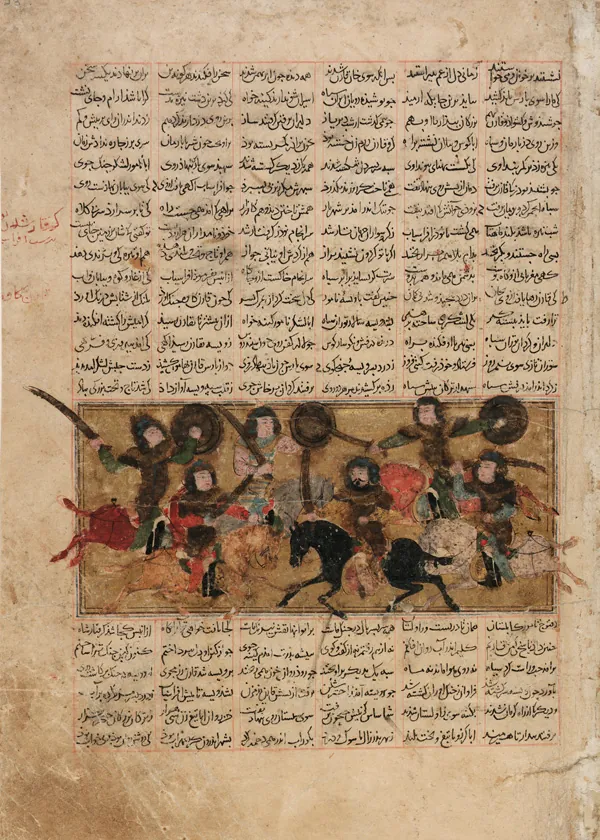
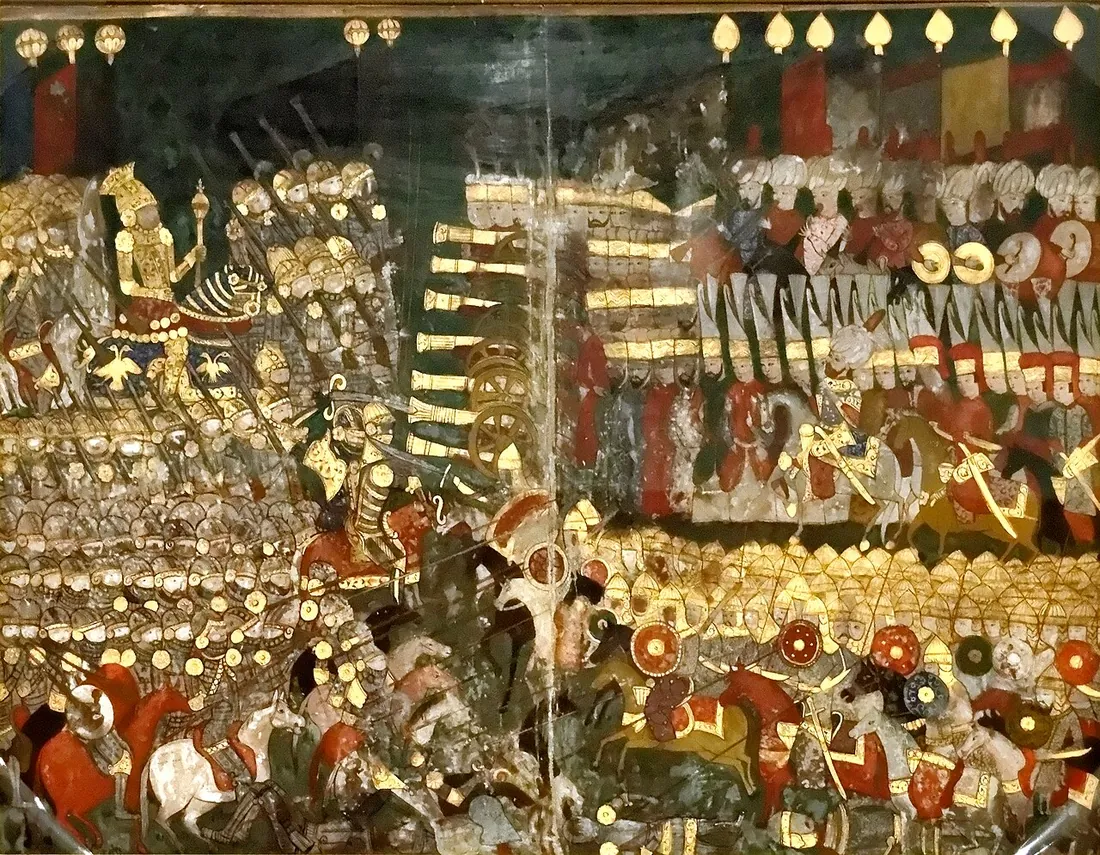
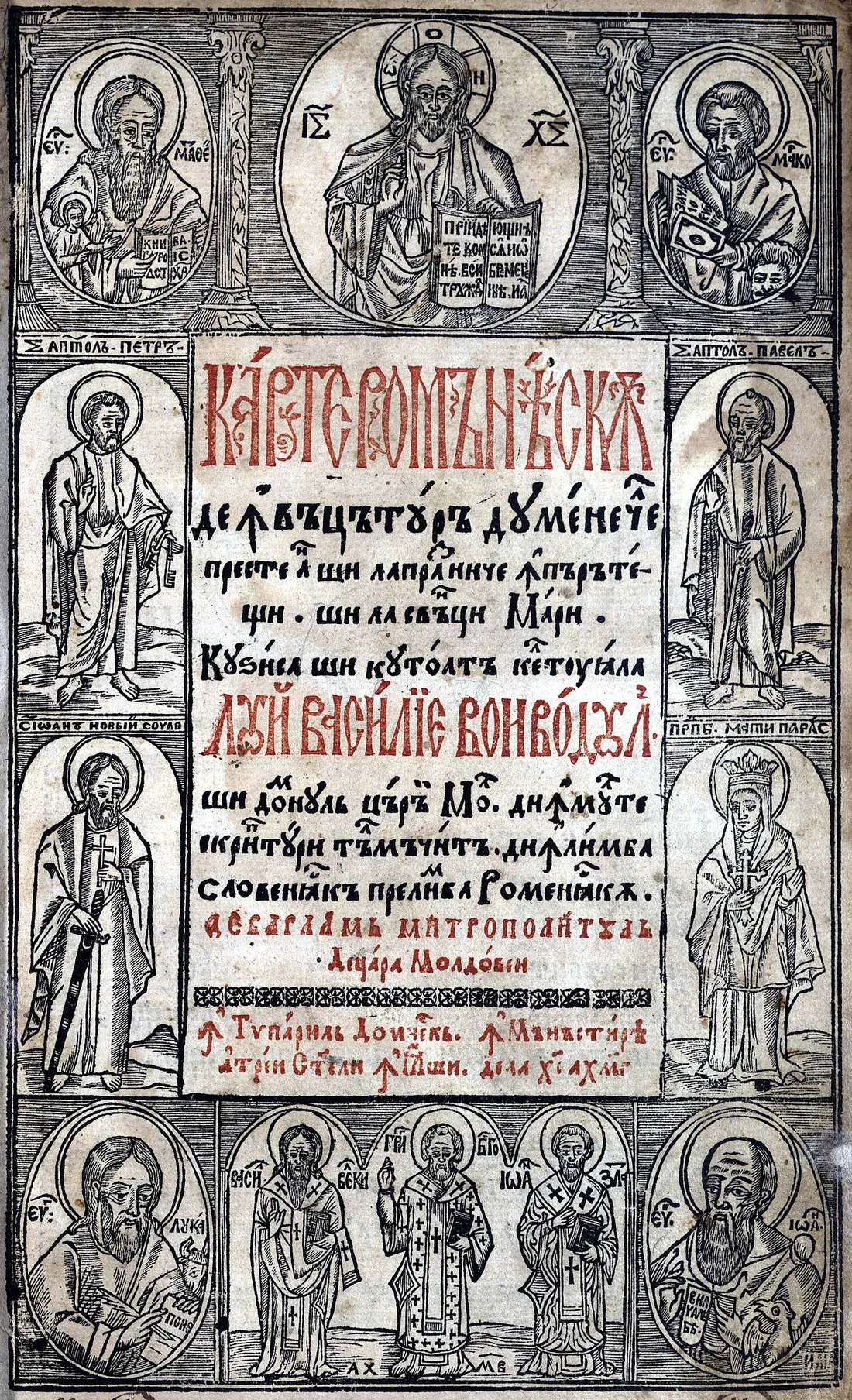
The page's machine
The autopsy, morpheme by morpheme
Tap each piece: see which language it comes from and which dictionary says so. The RO/TR/FA/AV tags name the language; where the link is disputed, the tag says so.
dușman today's Romanian RO
From tc. düșman — the DEX '09 seal, same as in '98. Plural dușmani, stress dușmán (reg. dúșman). (DEX)
düşman Turkish TR
TDK: Farsça duşmān — Turkish itself points at Persian. Sense 1: the one who wishes you ill, bears you a grudge.
دشمن dušman Persian FA
Steingass 1892: “An enemy, foe, adversary” — with the dušmān variant. The autopsy happens here.
duš- the ill FA
Steingass: “Evil, bad, ugly (in such words as dushman, dushnām)” — the prefix cites its own example.
man the mind FA
Steingass: “the heart, mind, soul” — mind, thought. Dușman = the one with an ill mind.
duš-nām the ill name FA
Steingass: “Ill name, abuse, reproach” — the same duš-, another target. Proof the prefix is alive.
dušmanah- Avestan AV
Nişanyan: “kötü düşünen” — the ill-thinking one — from duš “ill” + manah- “thought, mind”. The deepest root.
Gând does NOT enter the machine as an origin: Romanian gând comes from Hungarian gond — the “ill thought” of the title translates Persian man; it does not explain Romanian gând.
How it went native
At home with us
The word came with armies and trade, but behaved Romanian: stress, plural, derivatives — all documented.
Stress: dușmán or dúșman
The standard is dușmán; Moldavia also says dúșman — DEX lists the regional variant, DLRLC pins it on Moldavia. Two stresses, no war. (DEX)
Plural: dușmani
DOOM 3 (2021): dușmán, pl. dușmáni; feminine dușmánă, pl. dușmáne. Nothing spectacular — which is exactly the proof of nativization. (DEX)
Derivatives: a whole family
DER lines them up: dușmancă, dușmănesc, dușmănește, dușmănos, dușmăni, dușmănie, îndușmăni — from adjective to verb and back. (DER)
Neculce, yearless
MDA2 gives the first attestation as “NECULCE, L. 313” — with no year. This page prints no year: whoever wants the date can look it up in the chronicle. (MDA2)
Gând is not Persian
The title's trap, stated openly: Romanian gând comes from Hungarian gond. “Ill thought” translates Persian man — it is the mirror, not the source.
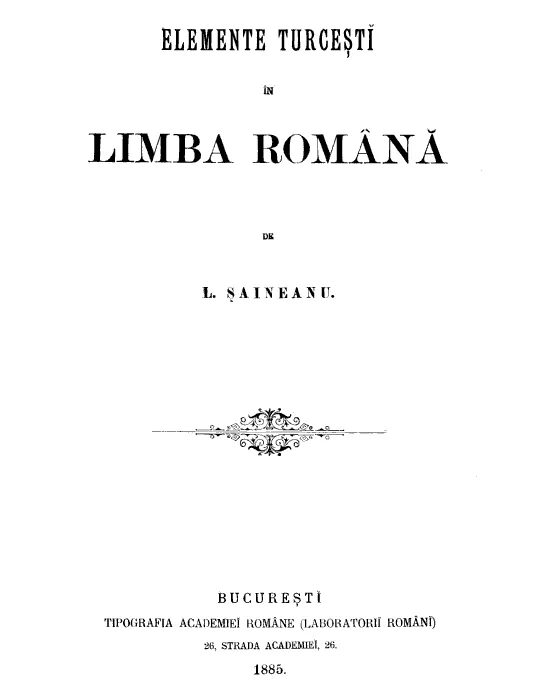

The same compound, other skies
Cousins: Bulgarian, Serbian — and the mirrors
Persian dušman travelled with Turkish across the Balkans; Latin and Greek had built their “enemy” differently.
Bulgarian: душман → душманин
From Ottoman Turkish + the -in suffix; today bookish or colloquial: “enemy, foe”. The Bulgarian Academy: “Остар., сега простонар”. (RBE; dictionary)
Serbo-Croatian: dušmanin
HJP: “tur. düşman ← perz. dušmen” — the same chain, sealed at Zagreb: “ljuti neprijatelj”, the bitter enemy. No separate Serbian academy entry found online.
Latin: in-amicus, the un-friend
Lewis & Short: in-amicus, “unfriendly, hostile” — the enemy as a negated friend, an insider turned. Another logic, same human.
Greek: echthros, hatred
LSJ: ἐχθρός, “enemy” — the enemy through hatred (ἔχθος), affect, not thought. Three logics: negation, affect, a mind turned wrong.

Who took the word apart
Four witnesses
From Steingass 1892 to DEX '09: two centuries of dictionaries telling the same chain.
Steingass, 1892
“— dush (S. dur, G. δυς), Evil, bad, ugly (in such words as dushman, dushnām, &c.).”
A Comprehensive Persian-English Dictionary, p. 526
The prefix cites its own example: dushman. Plus Sanskrit dur and Greek δυς as a bonus.
Nişanyan
“Avestaca dušmanah- «kötü düşünen» … din duš «kötü, uğursuz» ve manah- «düşünce, akıl, ruh».”
Nişanyan Sözlük, s.v. düşman
The full chain: Persian + Middle Persian, Avestan kinship, the duš + manah- split.
DEX '09
“DUȘMÁN … [Acc. și: (reg.) dúșman] – Din tc. düșman.”
The Explanatory Dictionary, s.v. dușman
The Romanian seal: from Turkish. Identical in DEX '98.
DER
“Tc. (per.) düșmen …, cf. alb., bg., sb. dušman.”
Ciorănescu, DER, s.v. dușman
Turkish (from Persian), nodding at Albanian, Bulgarian, Serbian — the cousins in one stroke.
Where we stand
What we know and what we reconstruct
Four drawers for the whole page: the solid chain, the deep link, why it holds, and what stays open.
What we know
Dușman ← Turk. düșman ← Pers. dušman = duš- “ill” + man “mind”; Bulgarian and Serbo-Croatian share the loan.
What we reconstruct
The Avestan link dušmanah- “the ill-thinking one” (Nişanyan) — dictionary-attested kinship, not a direct etymon.
Why it holds
Three academy dictionaries (Steingass, TDK, DEX) + Nişanyan tell the same chain, each on its own stretch.
What stays open
The year of first use as a common noun (Neculce, yearless); the Kipchak variant, academically unsupported.
Three stops
Three dates
The whole road on one rail: the name, the dictionary, the seal.
The name
1469
DUȘMAN in documents — 1469, 1542, 1604 — but from the onomastic dictionary: people's names, not proof of the common noun.
stop 1 of 3
Steingass
1892
The Persian-English dictionary prints the autopsy: dush “evil, bad, ugly (in such words as dushman)”.
stop 2 of 3
DEX '09
2009
The Romanian seal: “Din tc. düșman” — with the regional dúșman stress on record.
stop 3 of 3
1929 Șăineanu VI · 1958–1966 DER · 2021 DOOM 3.
The road of the enemy
duš-man
an ill mind, in Persian
düşman
the enemy, in Turkish
dušman
the enemy, with us
Where room for argument remains
Three question marks, no war
The chain is solid — the details are not. The page's verdict: DISPUTED
The dictionary Kipchak?
Wiktionary says “Borrowed from Kipchak… Later reinforced by Ottoman Turkish” — DEX, DER and MDA2 say “Din tc.”. Tertiary against academic: this page follows the dictionaries.
When does the noun enter?
Neculce is cited yearless; 1469 is a person's name, not a common noun. The clean year of entry is missing — the hole stays visible.
Scriban and the Greek?
Scriban (1939) took Persian back to Greek dys-menés. Today's philology (Nişanyan, TDK) no longer goes that way: an outdated hypothesis, kept in the stamp.
No disputed link gets a single truth on this page: mechanisms stand with their source beside them, and the alternatives stay on the table.
What is NOT disputed: dușman ← Turkish ← Persian, the duš- + man split, and the Balkan cousins — every source agrees on those.
Test yourself
Which is older?
Six landmarks from the page, shuffled. Put them from oldest to newest.
Move each card to its position, 1 to 6. Keys 1–6 move the chosen card; cards drag with a finger too.
- 1958
DER begins: Tc. (per.) düșmen
Position - 1469
The Dușman name in documents
Position - 2021
DOOM 3: pl. dușmáni
Position - 1892
Steingass: the printed autopsy
Position - 2009
DEX '09: “Din tc. düșman”
Position - 1929
Șăineanu VI: [Turc. DUȘMAN]
Position
Score: 0 of 6
The right order, oldest first:
- 1469 — The Dușman name in documents
- 1892 — Steingass: the printed autopsy
- 1929 — Șăineanu VI: [Turc. DUȘMAN]
- 1958 — DER begins: Tc. (per.) düșmen
- 2009 — DEX '09: “Din tc. düșman”
- 2021 — DOOM 3: pl. dușmáni
The settled row: every landmark in its place.
Sources
Dictionaries first, by language; neighbours last. Every risky claim points at its source.
Persian
- Steingass, p. 526: dush + dushman (dictionary)
- Steingass, p. 527: dush-nām (dictionary)
- Steingass, p. 1144: man (dictionary)
Turkish
- TDK: düşman ← Farsça duşmān (academy)
- Nişanyan: the Persian-Avestan chain (dictionary)
- Ottoman دشمن → Rom. dușman (dictionary)
Romanian
- DEX '09: “Din tc. düșman” (dictionary)
- DER: the derivatives + the cousins (dictionary)
- DOOM 3: the dușmáni plural (dictionary)
Cousins and mirrors
- RBE: душман (academy)
- HJP: dušman ← tur. ← perz. (dictionary)
- L&S: inimicus = in-amicus (dictionary)
- LSJ: echthros (dictionary)
- The Kipchak variant, unsupported (dictionary)
Catalogue neighbours
Type: Fraunces and Source Serif 4, under the SIL Open Font Licence.