ONE SERVICE, FOUR EMPIRES
What language do you pray in, when you pray in Romanian?
In four weighty words — Dumnezeu, icoană, veșnică pomenire, amin — stand four worlds: Rome, Byzantium arrived through the Slavonic channel, the Slavs, and Jerusalem arrived through the double channel. The service below lets all of them sound at once.
Dumnezeu — icoană, veșnică pomenire: amin, aleluia.
The line lights word by word, each in the colour of its world.
The four-colour key
- LATIN Dumnezeu
- GREEK VIA SLAVONIC icoană
- SLAVIC veșnică
- HEBREW VIA GREEK AND SLAVONIC amin

The short answer
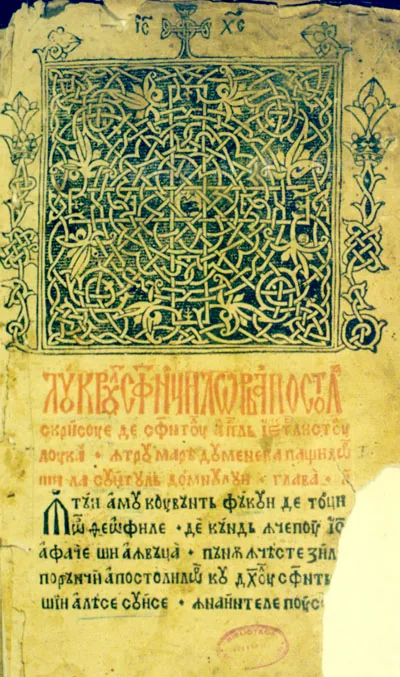
You pray in four languages at once. Latin gave the foundation — Dumnezeu, cruce, rugăciune, preot —, Greek arrived dressed in Slavonic — liturghie, icoană, iad —, Slavic gave the altar steps — rai, veșnic, popă, clopot — and Hebrew closed the service through Greek and Slavonic: amin, aleluia. The Slavonic centuries laid them side by side, and between 1559/1560 and 1688 Romanian took the altar back.
CHAPTER 1 · THE LATIN LAYER
What remained of Rome
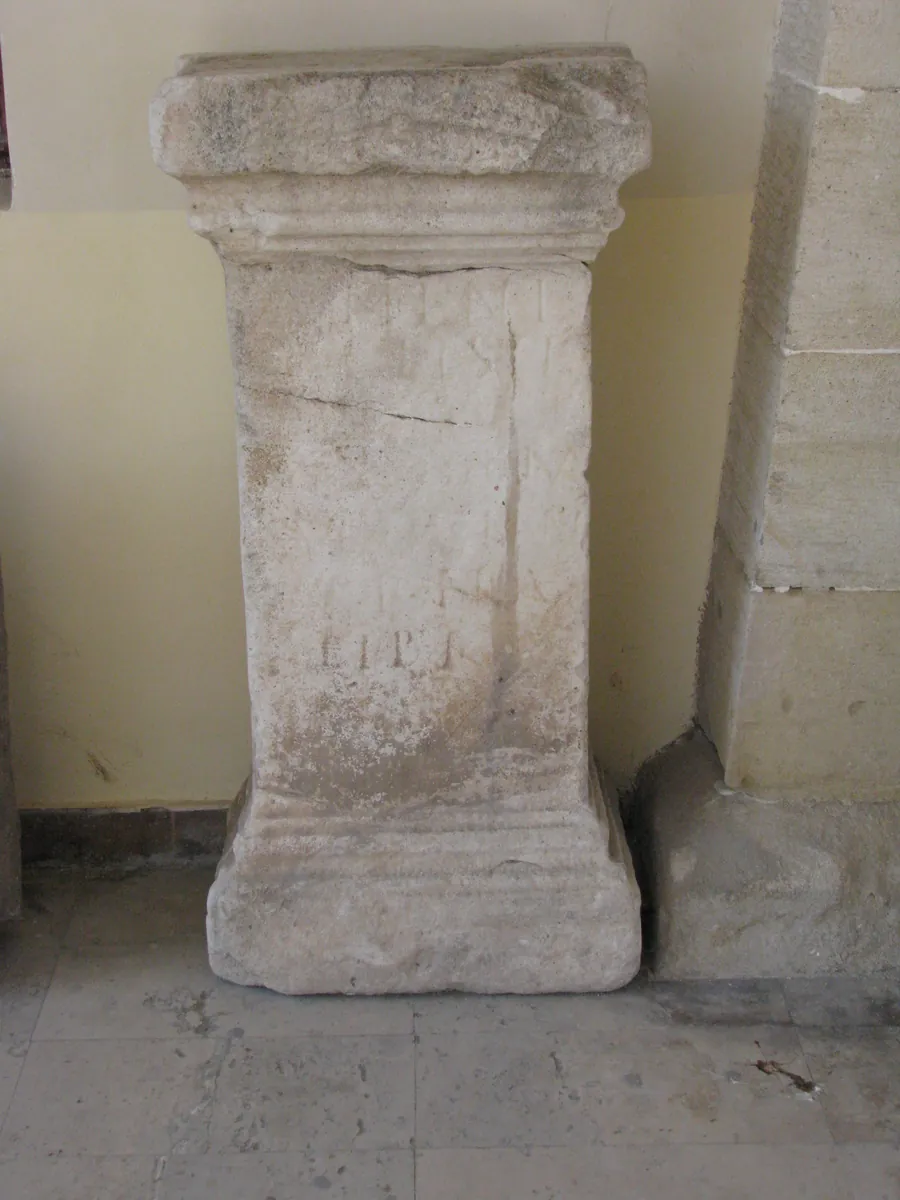
Four words with no middleman: from Latin, straight into Romanian. The first is the very name of God.
Dumnezeu
Lat. dom(i)ne deus
DEX: “Din lat. dom(i)ne deus”. Șăineanu unpacks the formula: DOMINE DEUS, i.e. “Doamne Dumnezeule!”. Our reading of the formula: a frozen vocative, an address turned into a name.
C01 · DEX '09, Șăineanu
cruce
Lat. crux, -cis
DEX: “Lat. crux, -cis”. MDA2 records it at TETRAEV. (1574), after DA: the cross was already in books when Coresi was setting up his presses.
C02 · DEX '09, MDA2
rugăciune
Lat. rogatio, -onis
DEX: “Lat. rogatio, -onis”. MDA2 records it in COD.VOR. 136/4: prayer stands in the oldest kept Romanian writing.
C03 · DEX '09, MDA2
preot
Lat. presbiterum ← Gk. presbyteros
We had been told Slavic — the dictionaries say Latin. DEX: “Lat. presbiterum”; Scriban carries the thread further, to Greek presbyteros, “elder”. The Slavic double, popă, stands in chapter 3, with its popular mark.
C04 · DEX '09, Scriban
4 words · 0 middlemen

CHAPTER 2 · THE GREEK-VIA-SLAVONIC LAYER
Greek dressed in Slavonic
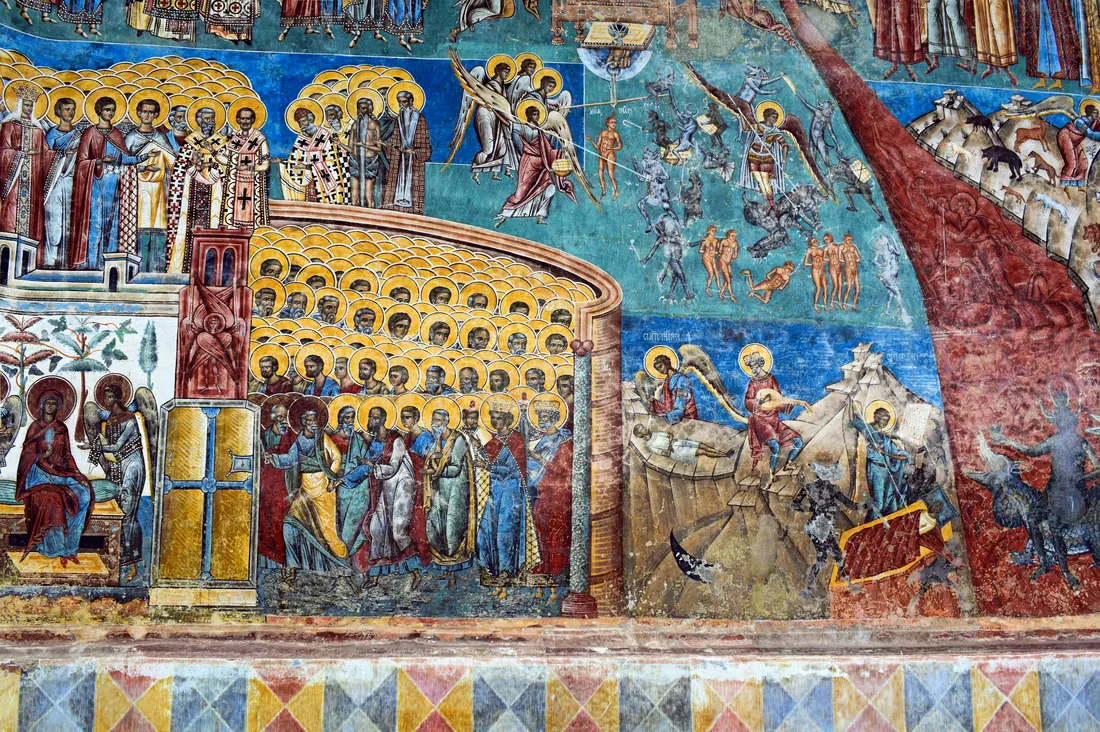
Three Greek words that learned Romanian at the Slavonic school. The dictionaries give all three as “Din sl.” — Slavonic is the parent, Greek the grandparent.
liturghie
Sl. liturgija ← Gk. leitourgia
The title word gives itself away: DEX derives it “Din sl. liturgija (< gr. leitourghia)”. The service itself bears the stamp of the double channel.
C05 · DEX '09, DER
icoană
Sl. ikona ← Gk. eikon “image”
DEX: “Din sl. ikona”. Greek eikon, “image, likeness”, reached us through Slavonic mediation — a direct route from Greek would be another story, which the dictionaries reject.
C06 · DEX '09, DER, DCR2
iad
Sl. jadŭ ← Gk. Hades
DEX: “Din sl. jadu”. Șăineanu: Slav. adu, from Gk. HADES. Like icoană, hell passes through the Slavonic link — the old form ad still surfaces in texts.
C07 · DEX '09, Șăineanu
The building itself tells its story next door: biserică carries the name of the basilica. Continue on the neighbouring page →

CHAPTER 3 · THE SLAVIC LAYER
The altar steps
Slavic holds the altar steps: heaven, eternity, the priest's second name, and the voice of the bell.
rai
Sl. raj
DEX: “Din sl. raj”. Short and unambiguous: the Romanian heaven is Slavic.
C08 · DEX '09
veșnic · Veșnica pomenire
Sl. vĕčinŭ · cf. Memory eternal
DEX: veșnic “Din sl. vĕčinŭ” (old variant: vecinic). The chant “Veșnica pomenire” is sung at the memorial service, three times, after the printed order — and pomană comes from Sl. pomĕnŭ. The English call it Memory eternal, the Slavs Večna pamjat: the same remembrance, in three garments.
C09–C11 · DEX '09, Stavropoleos
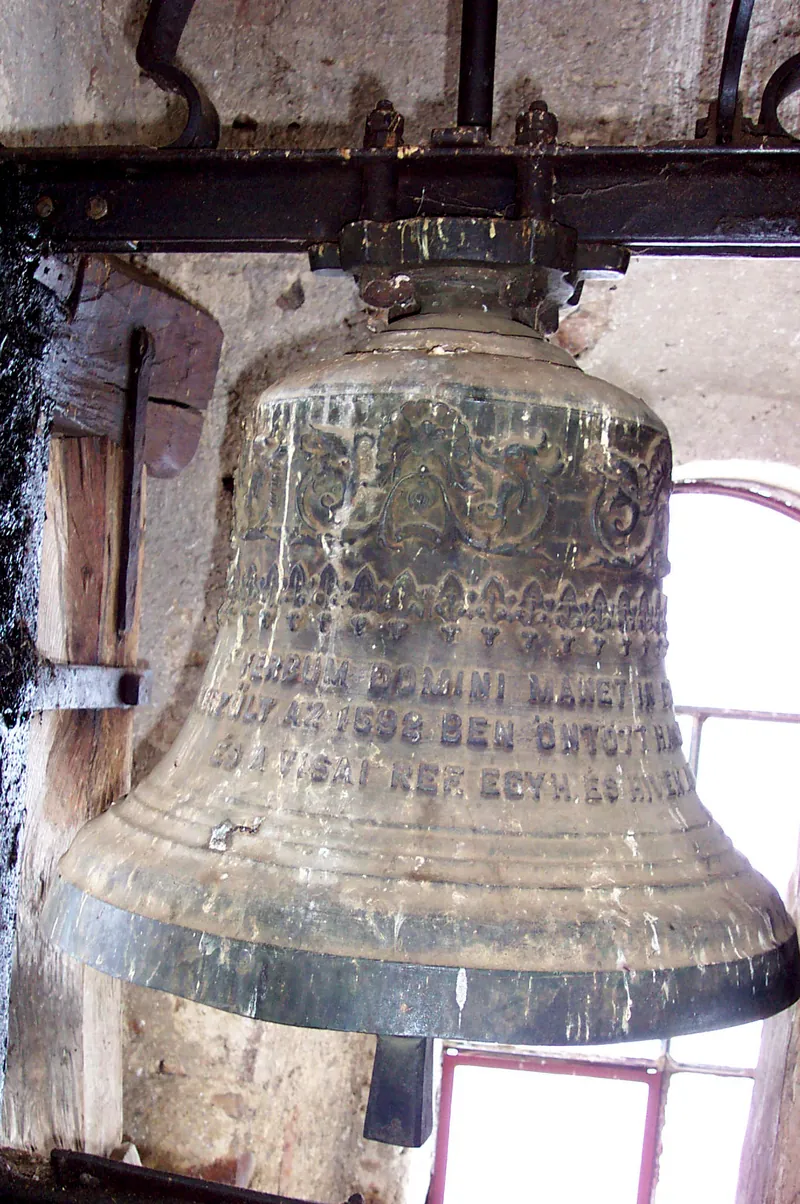
clopot
Sl. klopotŭ “noise”
DEX: “Din sl. klopotŭ”. Scriban explains the mechanism: “s'a luat efectul pentru cauză” — the noise became the object that makes it. With a required reservation: the “bell” sense is not certain for Slavonic (DER, after Bulg. klopot).
C13 · DEX '09, Scriban, DER
The Slavic prayer turned into thanks has its own house: the story of bogdaproste. Continue on the neighbouring page →

CHAPTER 4 · THE HEBREW-VIA-GREEK-AND-SLAVONIC LAYER
The end of the service comes from far away
The last words of the service travelled the longest road: from Hebrew, through Greek and Slavonic, into Romanian.
amin
Sl. aminŭ ← Gk. amin ← Hebr. amen
DEX: “Din sl. aminŭ (< gr. amin, ebr. amen)”. MDA2 records it in COD. VOR. 165/6: the amen stands in the oldest writings, beside prayer.
C14 · DEX '09, MDA2
aleluia
Sl. aleluija ← Gk. ← Hebr. hallelu Jah
Two roads, one shout. DEX: aleluia “Din sl. aleluija”; DER unpacks Hebrew hallelū Jah and shows the variant aliluia coming straight from Greek, while the form aleluia passed through Slavonic.
C15 · DEX '09, DER
The 3,000-year journey of Easter, from pesach to the spring table. Continue on the neighbouring page →


CHAPTER 5 · THE HINGE
The Slavonic centuries
Stone spoke Romanian before the Bible did.
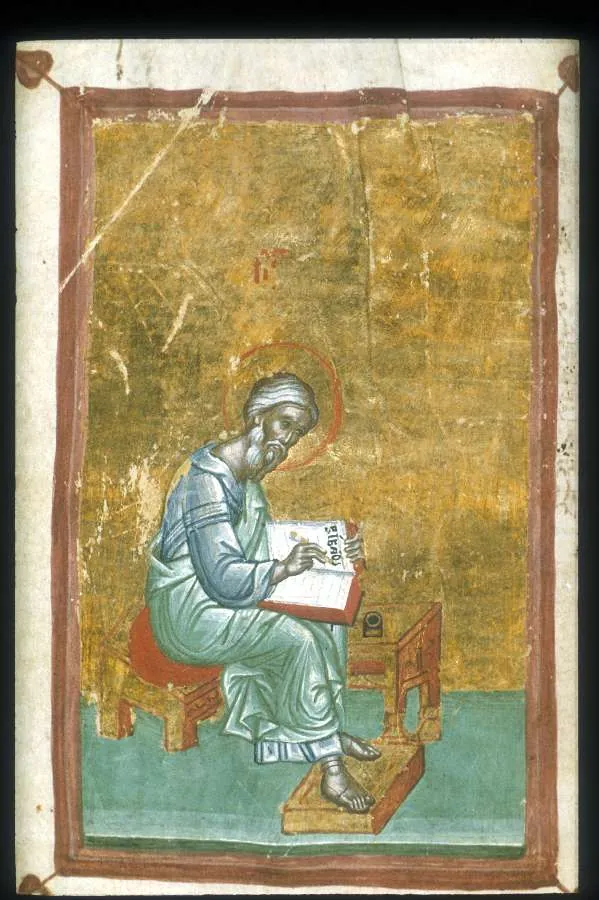
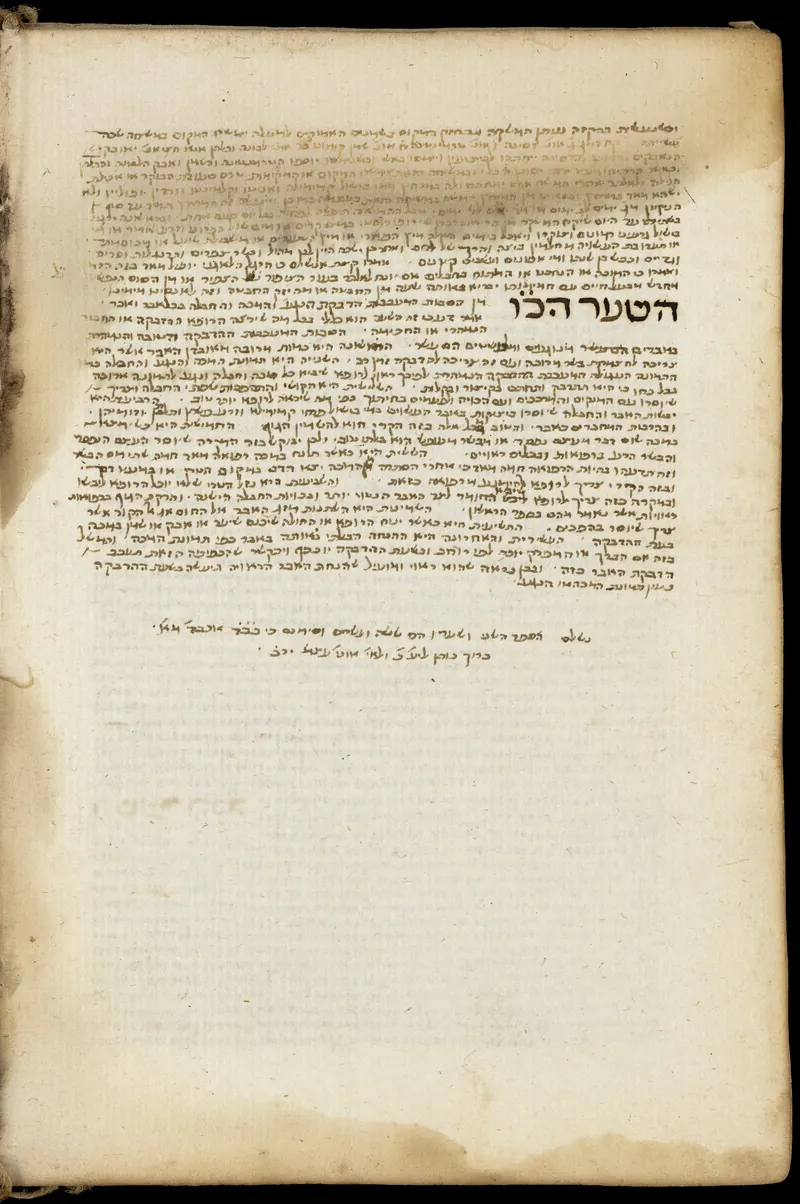
Church Slavonic was the language of the service and the chancery in medieval Wallachia and Moldavia: between the 14th and 16th centuries, nearly all charters, chronicles and service books were written in Slavonic, though people spoke Romanian in daily life. The way out was slow: the earliest Romanian deeds date from 1575–1590, the princely chanceries wrote only Romanian no earlier than about 1655–1660, and the metropolitan presses put out Slavonic books until 1731 in Moldavia and 1745 in Wallachia.
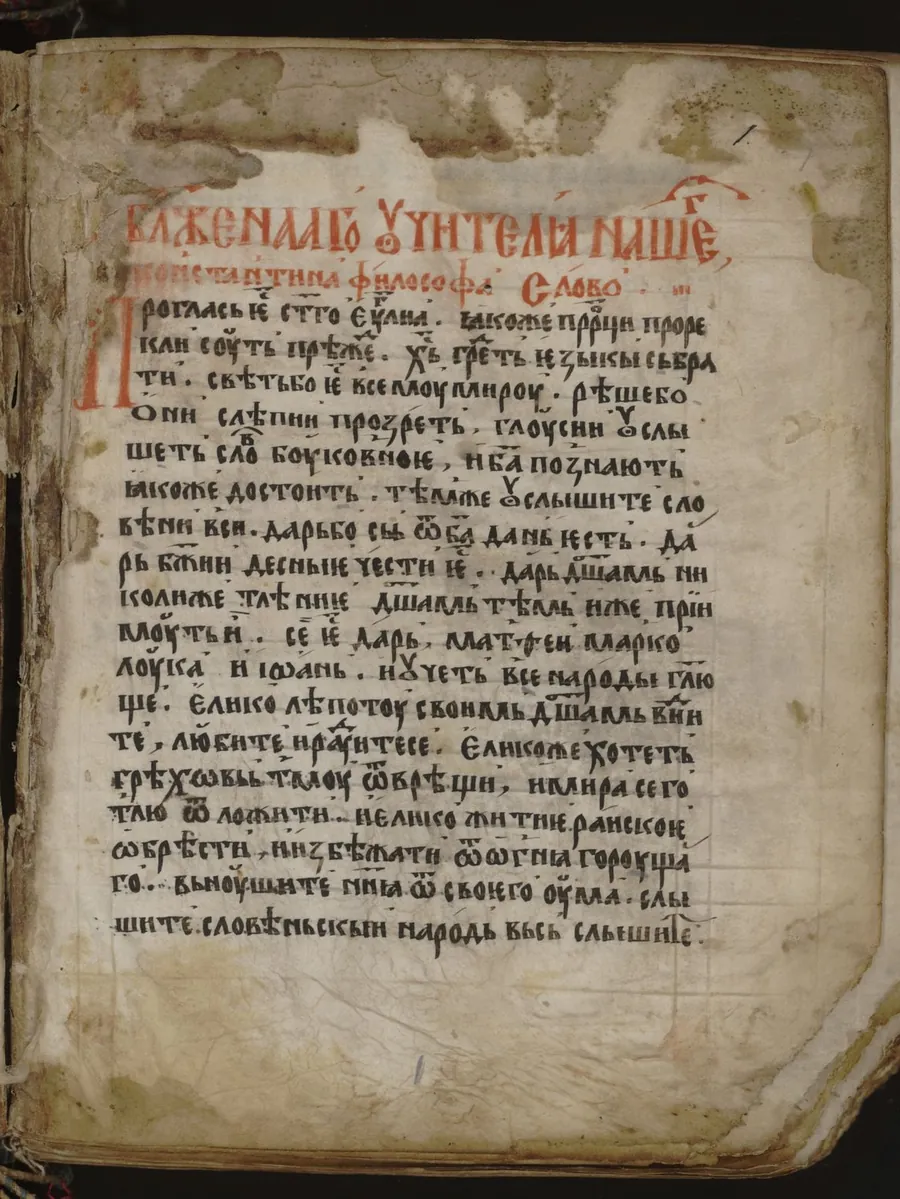
Brașov, 1559/1560
Coresi gives Romanian its first steady library: 10 Romanian books, among them Întrebare creștinească [1560], Tetraevanghel [1561] and Liturghierul [1570]. “The first book” has no place here: a Sibiu catechism of 1544 goes before it.
C22 · the year stays double until a print bibliography settles it
Câmpulung, 1635–1636
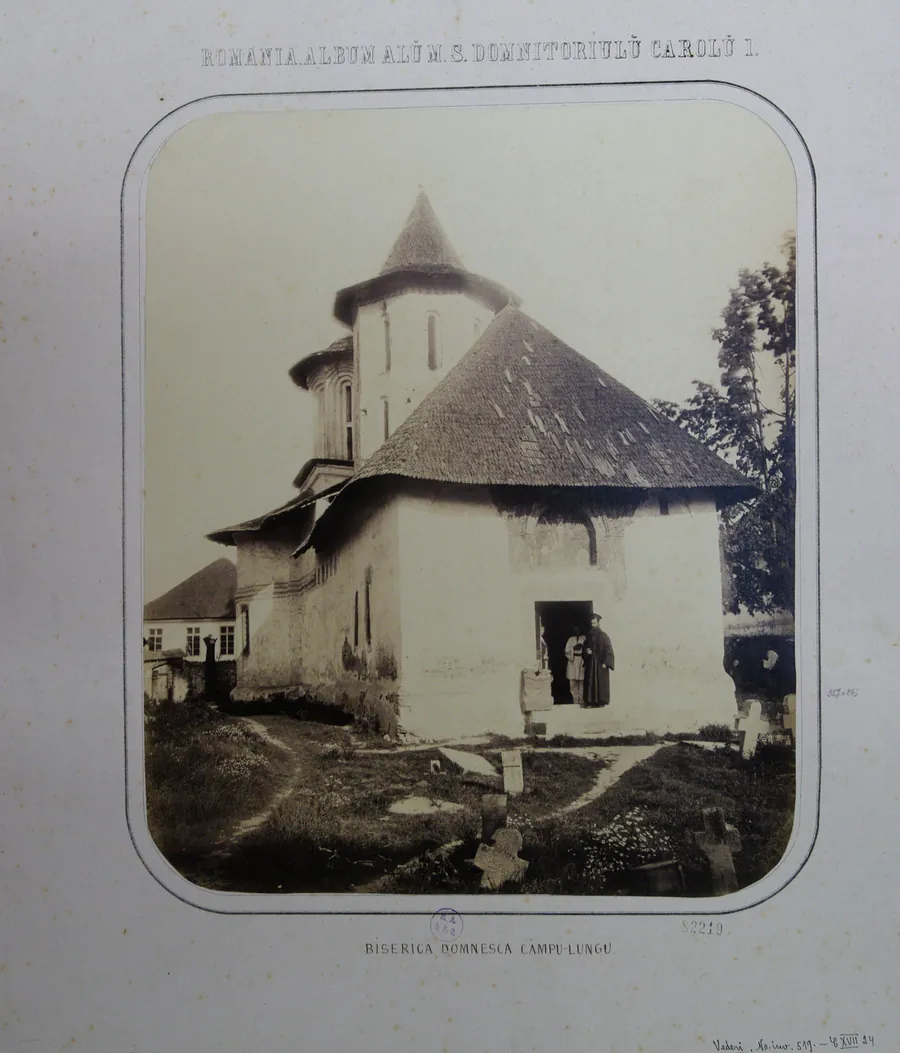
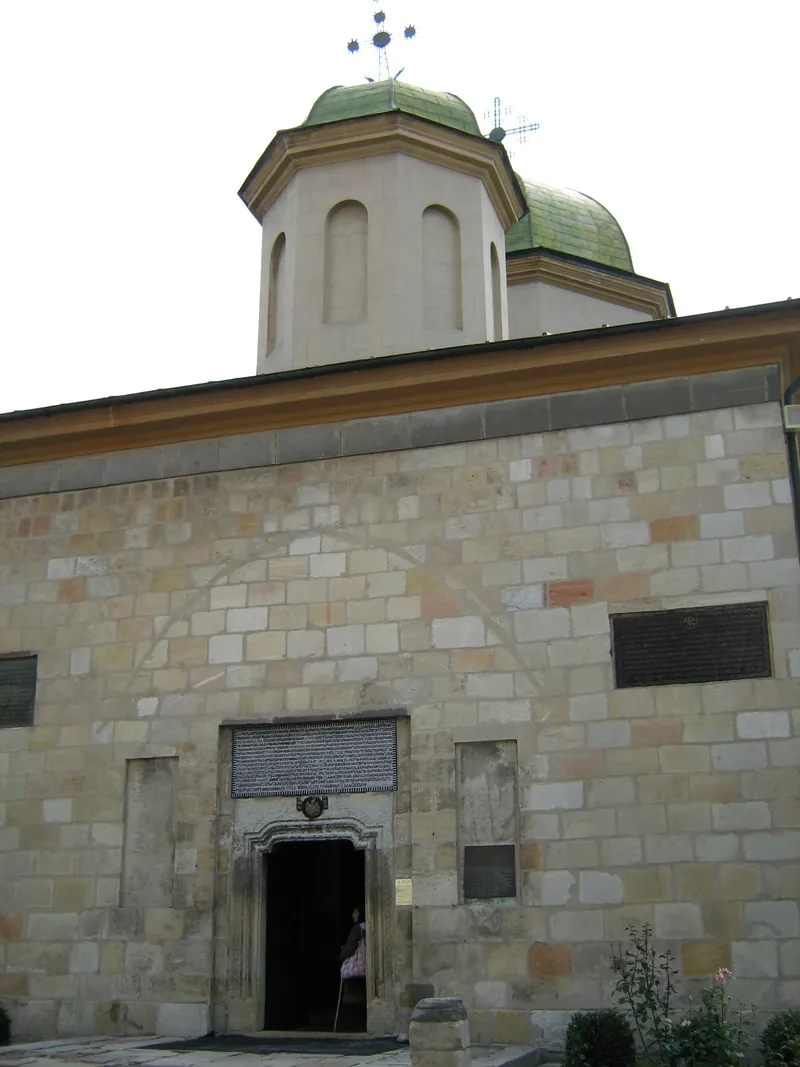
Stone speaks Romanian: the pisanie of the princely church, under Matei Basarab. The full reading of the stone has its own page.
C19 · the stone's page Continue on the neighbouring page →
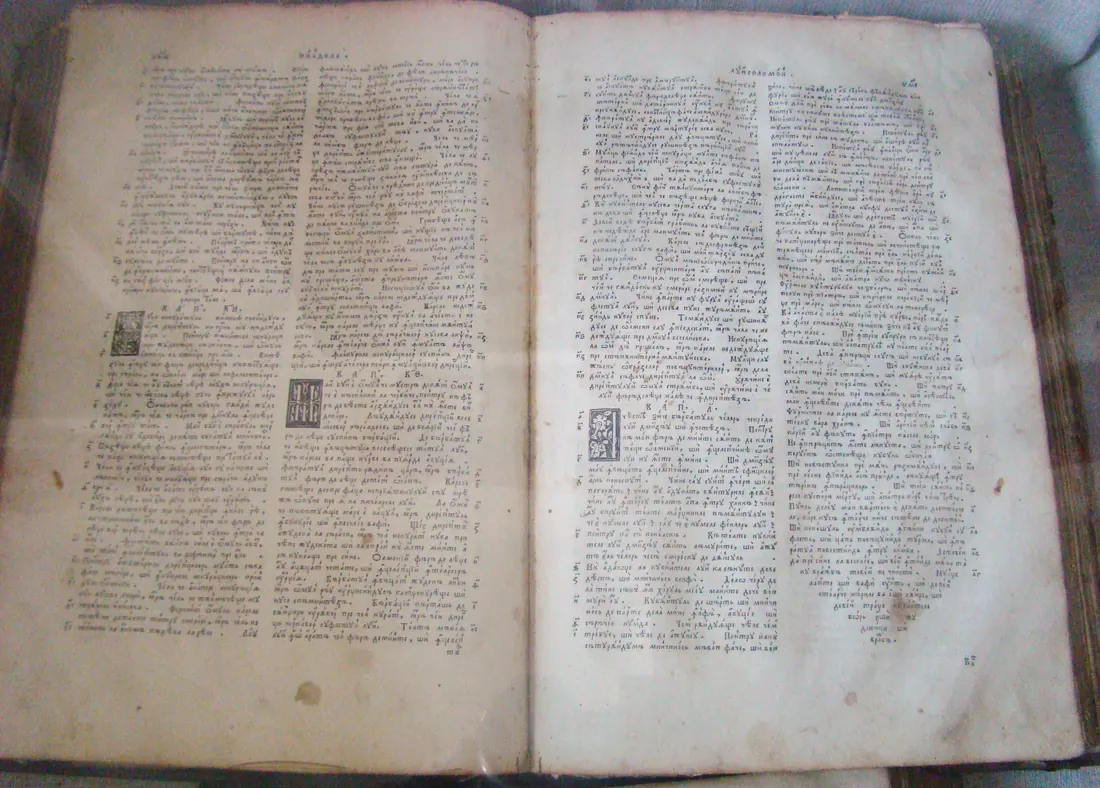
Bucharest, 1688
The first whole Bible in Romanian, ordered and patronized by Șerban Cantacuzino, overseen by the logothete Constantin Brâncoveanu.
C23 · the translators' names stay off the page until a facsimile check




THE SERVICE TO HEAR
The liturgy
Seven lines stitched only from the passported words above. Start the service and follow the colours, touch a word for its passport, or dim three empires to hear the fourth.
line 1/7 · Latin 4 · Greek via Slavonic 3 · Slavic 4 · Hebrew via Greek and Slavonic 2
line 1/7 · Latin 4 · Greek via Slavonic 3 · Slavic 4 · Hebrew via Greek and Slavonic 2
Rugăciunea noastră, Dumnezeule.
Our prayer, O God.
Icoana stă în fața altarului.
The icon before the altar.
Memory eternal.
Hear a single empire
The words' passports
Touch a coloured word in the service and its passport lights here.
Dumnezeu
Lat. dom(i)ne deus
DEX: “Din lat. dom(i)ne deus”. Șăineanu unpacks the formula: DOMINE DEUS, i.e. “Doamne Dumnezeule!”. Our reading of the formula: a frozen vocative, an address turned into a name.
C01 · DEX '09, Șăineanu · DEX
cruce
Lat. crux, -cis
DEX: “Lat. crux, -cis”. MDA2 records it at TETRAEV. (1574), after DA: the cross was already in books when Coresi was setting up his presses.
C02 · DEX '09, MDA2 · DEX
rugăciune
Lat. rogatio, -onis
DEX: “Lat. rogatio, -onis”. MDA2 records it in COD.VOR. 136/4: prayer stands in the oldest kept Romanian writing.
C03 · DEX '09, MDA2 · DEX
preot
Lat. presbiterum ← Gk. presbyteros
We had been told Slavic — the dictionaries say Latin. DEX: “Lat. presbiterum”; Scriban carries the thread further, to Greek presbyteros, “elder”. The Slavic double, popă, stands in chapter 3, with its popular mark.
C04 · DEX '09, Scriban · DEX
liturghie
Sl. liturgija ← Gk. leitourgia
The title word gives itself away: DEX derives it “Din sl. liturgija (< gr. leitourghia)”. The service itself bears the stamp of the double channel.
C05 · DEX '09, DER · DEX
icoană
Sl. ikona ← Gk. eikon “image”
DEX: “Din sl. ikona”. Greek eikon, “image, likeness”, reached us through Slavonic mediation — a direct route from Greek would be another story, which the dictionaries reject.
C06 · DEX '09, DER, DCR2 · DEX
iad
Sl. jadŭ ← Gk. Hades
DEX: “Din sl. jadu”. Șăineanu: Slav. adu, from Gk. HADES. Like icoană, hell passes through the Slavonic link — the old form ad still surfaces in texts.
C07 · DEX '09, Șăineanu · DEX
rai
Sl. raj
DEX: “Din sl. raj”. Short and unambiguous: the Romanian heaven is Slavic.
C08 · DEX '09 · DEX
veșnic · Veșnica pomenire
Sl. vĕčinŭ · cf. Memory eternal
DEX: veșnic “Din sl. vĕčinŭ” (old variant: vecinic). The chant “Veșnica pomenire” is sung at the memorial service, three times, after the printed order — and pomană comes from Sl. pomĕnŭ. The English call it Memory eternal, the Slavs Večna pamjat: the same remembrance, in three garments.
C09–C11 · DEX '09, Stavropoleos · DEX
popă
Sl. popŭ ← Lat. papa
DEX marks it (Pop.) and sends it to “Preot”; Șăineanu: Slav. POPŬ, from Lat. PAPA, “father”.
C12 · DEX
clopot
Sl. klopotŭ “noise”
DEX: “Din sl. klopotŭ”. Scriban explains the mechanism: “s'a luat efectul pentru cauză” — the noise became the object that makes it. With a required reservation: the “bell” sense is not certain for Slavonic (DER, after Bulg. klopot).
C13 · DEX '09, Scriban, DER · DEX
amin
Sl. aminŭ ← Gk. amin ← Hebr. amen
DEX: “Din sl. aminŭ (< gr. amin, ebr. amen)”. MDA2 records it in COD. VOR. 165/6: the amen stands in the oldest writings, beside prayer.
C14 · DEX '09, MDA2 · DEX
aleluia
Sl. aleluija ← Gk. ← Hebr. hallelu Jah
Two roads, one shout. DEX: aleluia “Din sl. aleluija”; DER unpacks Hebrew hallelū Jah and shows the variant aliluia coming straight from Greek, while the form aleluia passed through Slavonic.
C15 · DEX '09, DER · DEX
THE GAME
Unriddle the service
Eight rounds, two kinds: word → empire and chain → word. Each round teaches one row of the sources table.
Round 1 · A
Which world does the cross come from?
See the verdict
Latin, with no middleman: Lat. crux, recorded in 1574.
C02
Round 2 · A
Which world does the icon come from?
See the verdict
Greek via Slavonic: Sl. ikona ← Gk. eikon. The Slavonic link is required.
C06
Round 3 · A
Which world does heaven come from?
See the verdict
Slavic, short and unambiguous: Sl. raj.
C08
Round 4 · A
Which world does the amen come from?
See the verdict
Hebrew, through Greek and Slavonic: Sl. aminŭ ← Gk. amin ← Hebr. amen.
C14
Round 5 · A
Which world does the priest come from?
See the verdict
Latin: Lat. presbiterum. The Slavic one is popa, not preot.
C04
Round 6 · A
Which world does hell come from?
See the verdict
Greek via Slavonic: Sl. jadŭ ← Gk. Hades. Like the icon, it passes through Slavonic.
C07
Round 7 · B
Which word hides in Sl. klopotŭ “noise”?
See the verdict
The bell: the effect for the cause — the noise became the object. The “bell” sense stays uncertain for Slavonic.
C13
Round 8 · B
Which word hides in Lat. rogatio?
See the verdict
Prayer: Lat. rogatio, recorded in the Voroneț Codex, 136/4.
C03
The numbers of the service
Two sums worked from the service and the stops above.
4 in one
four empires in a single service
FROM THE SERVICE DATA
≈ 129 years
between Coresi's presses, 1559/1560, and the whole Bible, 1688
FROM THE HINGE STOPS
Latin 4 · Greek via Slavonic 3 · Slavic 4 · Hebrew via Greek and Slavonic 2
Three sayings that do not hold
All three are about words, none about belief.
“Preot is Slavic.”
The dictionaries give it as Latin: Lat. presbiterum, from Gk. presbyteros. The Slavic one is the other priest, popa — Sl. popŭ, marked (Pop.) in DEX.
C04 · C12
“Icoană and iad come straight from Greek.”
DEX gives both as “Din sl.”: ikona and jadu pass through the Slavonic link. Greek is the grandparent, Slavonic the parent.
C06 · C07
“Church Romanian was always Romanian.”
For whole centuries, the service and the chancery were written in Slavonic. The way out runs through the Câmpulung stone, 1636, and the whole Bible, 1688.
C19 · C20 · C23
Sources
The dictionaries first, then the hinge stops, then the neighbours. Each etymology is checked directly in the dictionaries, with a link to the entry.
The claims table
| ID | Claim | Source |
|---|---|---|
| C01 | Dumnezeu < Lat. dom(i)ne deus, “Doamne Dumnezeule!” | DEX '09, Șăineanu DEX |
| C02 | cruce < Lat. crux, recorded 1574 | DEX '09, MDA2 DEX |
| C03 | rugăciune < Lat. rogatio, COD.VOR. 136/4 | DEX '09, MDA2 DEX |
| C04 | preot < Lat. presbiterum (corrected from Slavic) | DEX '09, Scriban DEX |
| C05 | liturghie < Sl. liturgija < Gk. leitourgia | DEX '09, DER DEX |
| C06 | icoană < Sl. ikona < Gk. eikon | DEX '09, DER, DCR2 DEX |
| C07 | iad < Sl. jadu < Gk. Hades | DEX '09, Șăineanu DEX |
| C08 | rai < Sl. raj | DEX '09 DEX |
| C09 | veșnic < Sl. vĕčinŭ | DEX '09 DEX |
| C10 | “Veșnica pomenire”, cf. Memory eternal | Stavropoleos, Memory Eternal |
| C11 | pomană < Sl. pomĕnŭ | DEX, Șăineanu, Scriban DEX |
| C12 | popă < Sl. popŭ; (Pop.) vs neutral preot | DEX '09, Șăineanu DEX |
| C13 | clopot < Sl. klopotŭ “noise”, with reservation | DEX '09, Scriban, DER DEX |
| C14 | amin < Sl. aminŭ < Gk. < Hebr., COD.VOR. 165/6 | DEX '09, MDA2 DEX |
| C15 | aleluia via Slavonic; aliluia straight from Greek | DEX '09, DER DEX |
| C16–C18 | biserică · Paște · bogdaproste: one sentence and a link | the neighbouring pages |
| C19 | the Câmpulung pisanie, 1635–1636, in Romanian | the stone's page |
| C20–C21 | Slavonic as the service language; deeds 1575–1590, chanceries 1655–1660 | Church Slavonic in Romania |
| C22 | Coresi, Brașov 1559/1560, 10 Romanian books | Coresi |
| C23 | the Bucharest Bible, 1688, the first whole one | Bucharest Bible |
Dictionaries
- Dumnezeu · DEX, Șăineanu
- cruce · DEX, MDA2
- rugăciune · DEX, MDA2
- preot · DEX, Scriban
- liturghie · DEX, DER
- icoană · DEX, DER, DCR2
- iad · DEX, Șăineanu
- rai · DEX
- veșnic · DEX
- pomană · DEX, Șăineanu, Scriban
- popă · DEX, Șăineanu
- clopot · DEX, Scriban, DER
- amin · DEX, MDA2
- aleluia · DEX, DER
The hinge
- Slavonic in Wallachia and Moldavia
- Coresi, Brașov
- The Bucharest Bible, 1688
- “Veșnica pomenire” at the memorial (score)
- Memory Eternal
The neighbours
- Biserica-basilica: the building
- Paște-pesach: the 3,000-year journey
- Bogdaproste: the prayer turned into thanks
- Prima pisanie română: the Câmpulung stone
Type: Fraunces, Newsreader and Atkinson Hyperlegible, under the SIL Open Font Licence.