ONE RIVER, ONE MAN, TWO VOICES
How did a country end up named after a man?
1359, traditional → 1859 · one river, one man, two voices
The land itself is named after a river whose name nobody can explain — Moldova — while strangers long called it Bogdan, after a 14th-century founder. Eflak and Bogdan: the pair that stopped naming two separate states in 1859.
- 4 HYPOTHESES
- for the river's name · none picked
- 1359, TRADITIONAL
- Bogdan's crossing · the deed is from 1365
- EFLAK VE BOGDAN
- the Ottoman pair · until 1859
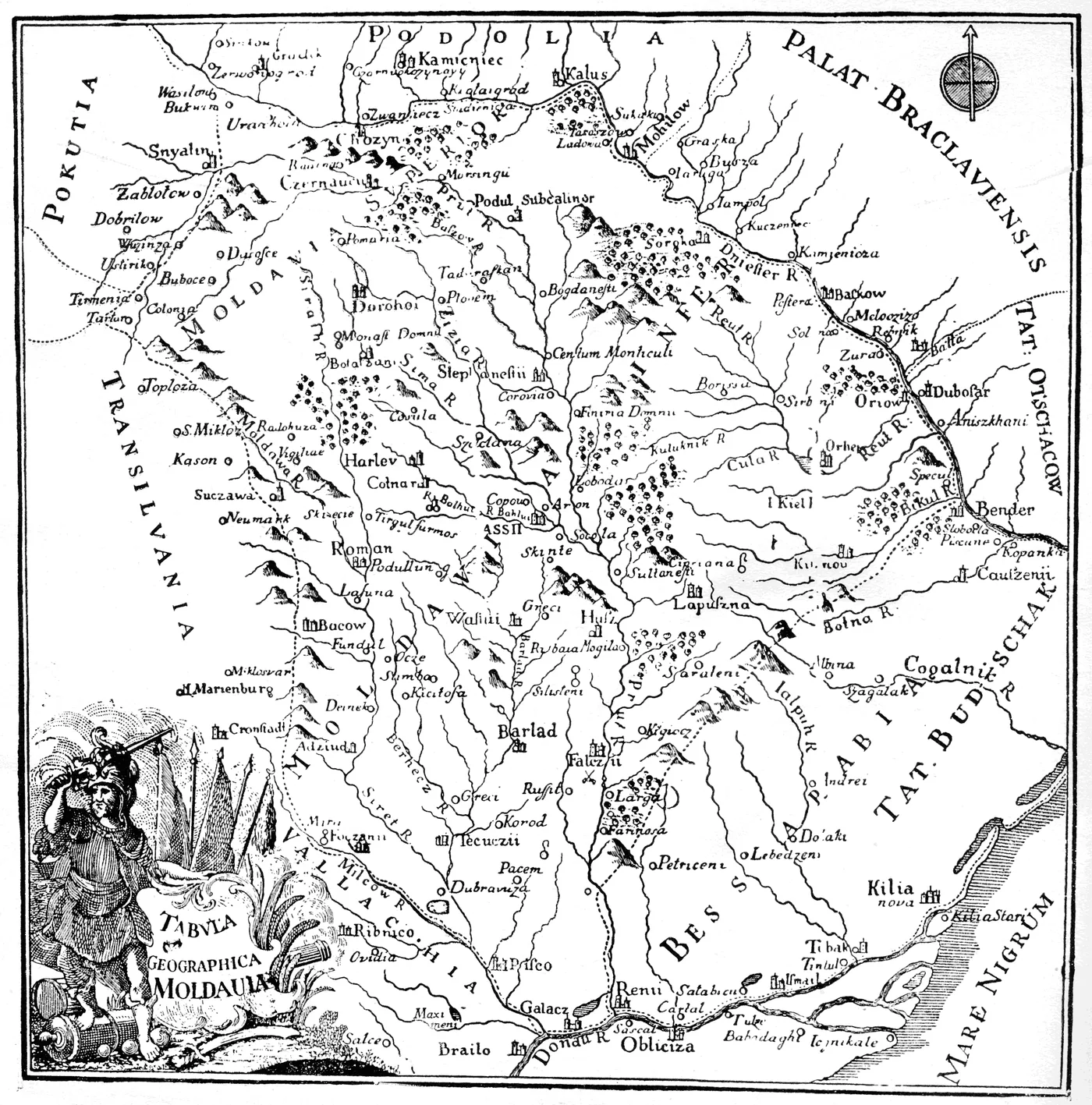

On the river's line, two voices dispute the land:
- MOLDOVA the land's voice · the river
- BOGDANIA a stranger's voice · Tatars, then westerners
- KARA-BOGDAN a stranger's voice · the Ottoman chancery
- BOGDAN-EFLAK a stranger's voice · “Bogdan's Wallachia”
The answer, in one paragraph
The principality took its name from the Moldova river, and the river's name stays disputed: four hypotheses with named supporters, none picked here. The man is Bogdan I, crossed from Maramureș in 1359, traditional — the hard deed is from 1365. Strangers — Tatars, Ottomans, Englishmen — named the land after him: Bogdania, Kara-Bogdan, Bogdan-Eflak, in the pair Eflak ve Bogdan, until the double election of 1859 united the two states the pair had named.
The land's voice: what the river says
The river
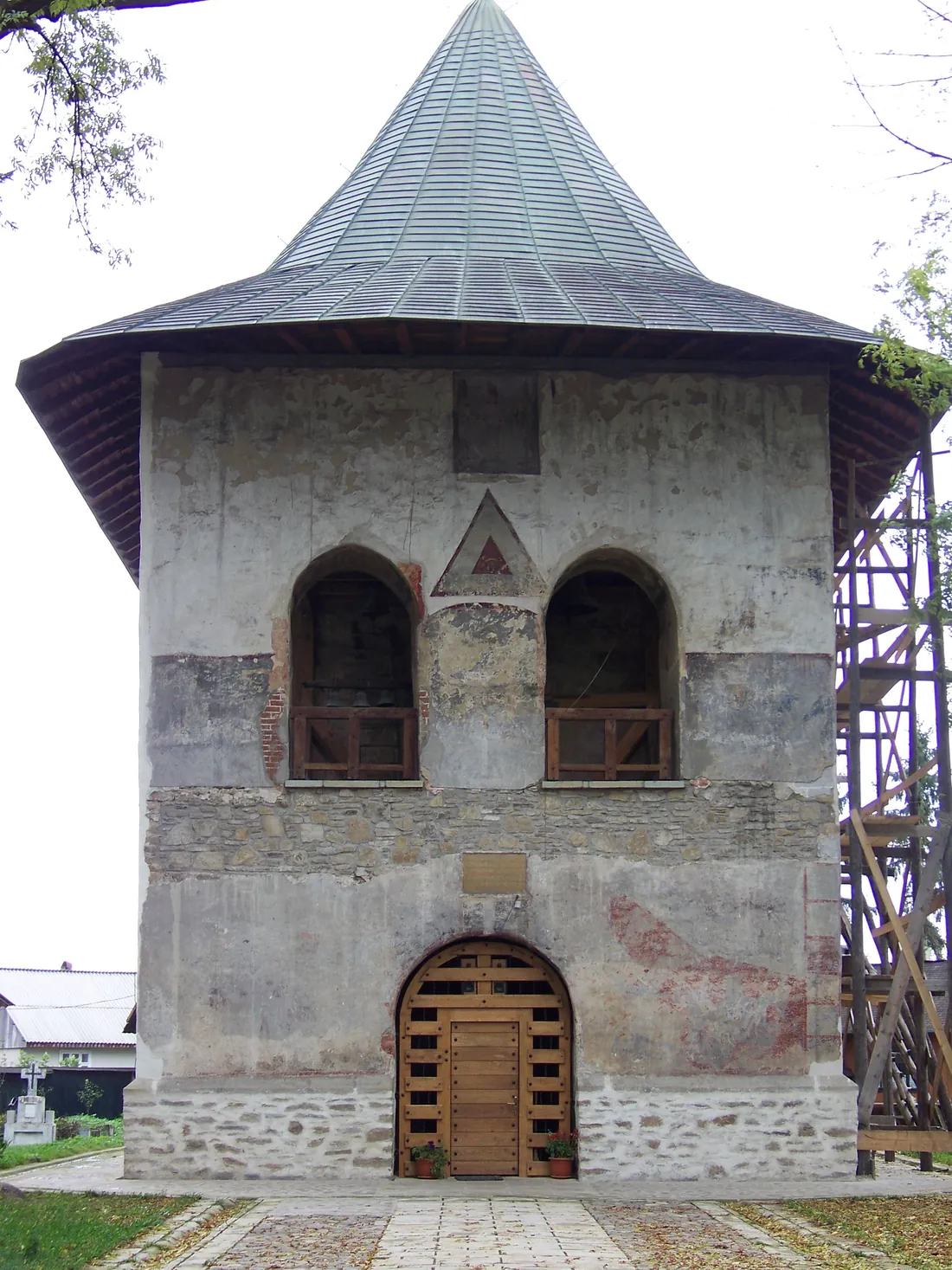
The principality took its name from the Moldova river. Its first capital stood on that river: Târgul Moldovei, today's Baia.
In a German deed of 1421, Baia appears as Stadt Molde. The deed itself stays unread at first hand; the form travels with its label. SECONDHAND
DISPUTED Disputed origin · no hypothesis picked
Four hypotheses, with named supporters
Slavic *mold-
“spruce, fir” + the *-ov(a)* suffix of ownership
Boia; Du Nay; Illyés; Nandriș 1968, via encyclopedia
ATTRIBUTED
The *moldu* variant
“tender, soft, young”
Sobolevskij
ATTRIBUTED
Germanic *Muldenah/Muldah*
“river with soft banks” — the only one a 2014 analysis finds convincing
linguistic analysis, 2014
ATTRIBUTED
*Molde* and *Mulda*
“open-pit mine” (Old German) and “dust, dirt” (Gothic)
the dictionaries show them uncited
UNCITED
4 hypotheses · 0 picks

The story the chroniclers tell each other
The hound
LEGEND, NOT ETYMOLOGY
Dragoș was running the aurochs; the hound Molda drowned in the river, and the river kept her name. So the chroniclers say. Their story is no etymology.
Three chroniclers, three measures of belief
Grigore Ureche
1590–1647
tells it among facts
Miron Costin
1633–1691
tells it with reservations
Dimitrie Cantemir
1673–1723
tells it while weighing it
The endings part ways
- Molda drowns in the river, after the aurochs chase.
- Molda is killed by the beast.
- The name would join Molda with water.
Legend and linguistics keep separate accounts.


The man behind the foreign name
The man
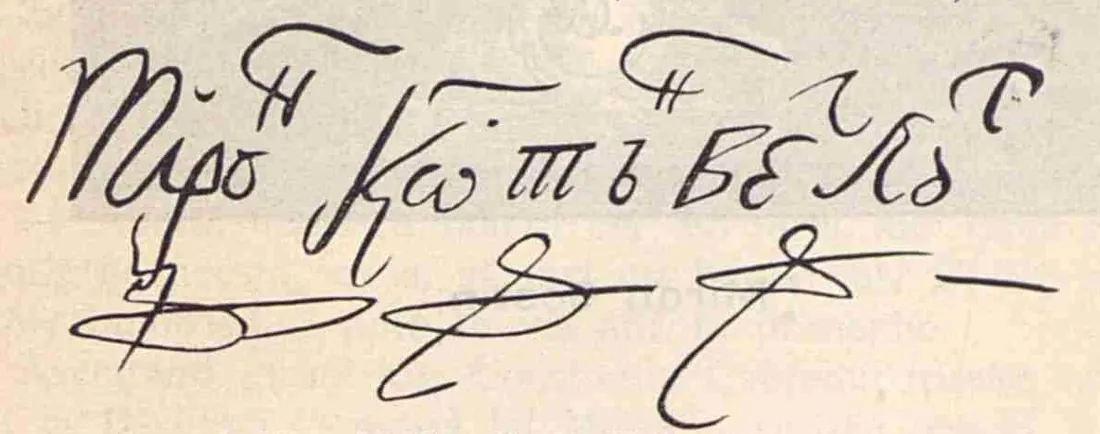
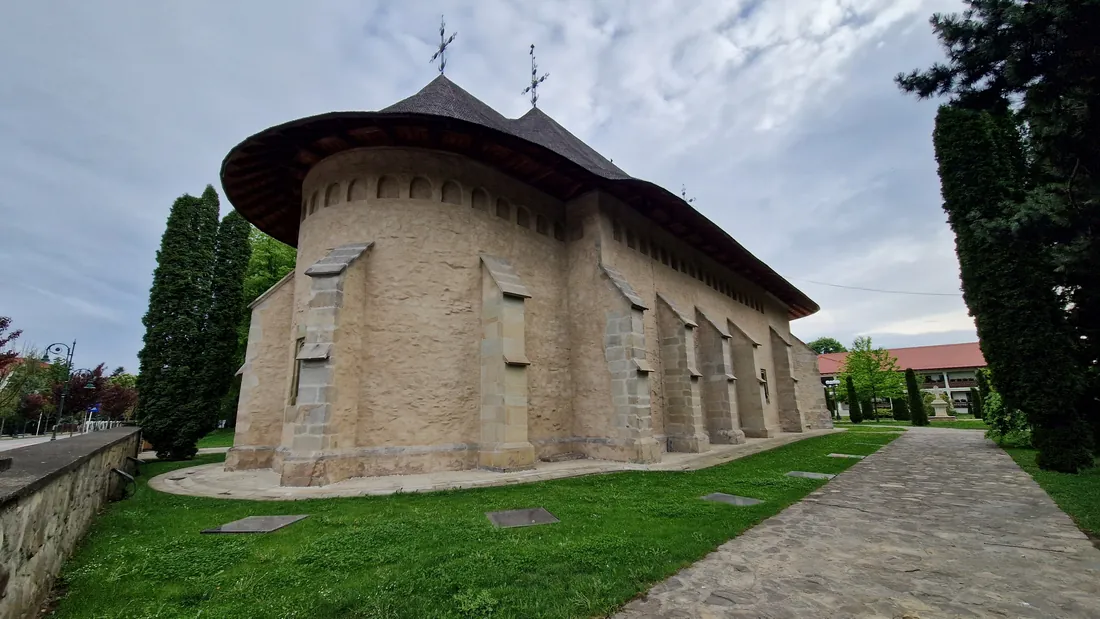
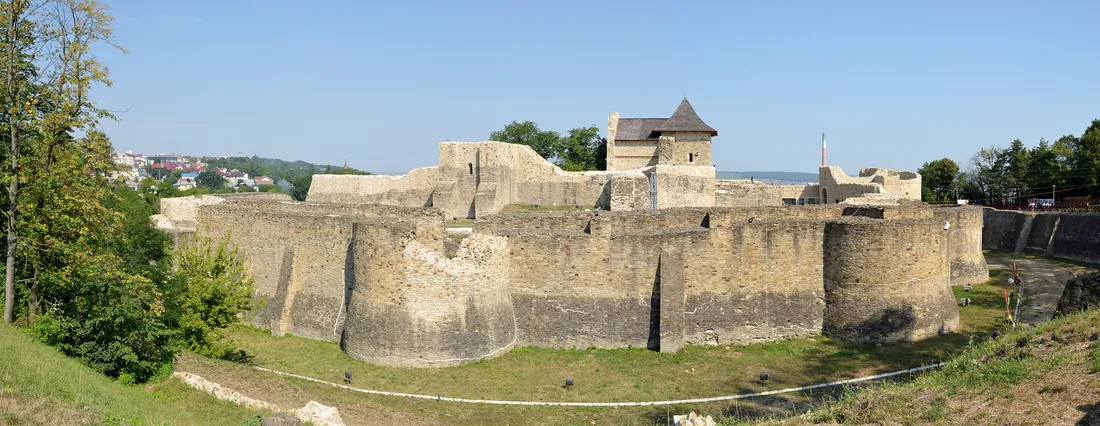
Bogdan I crossed from Maramureș and drove out Balc, Sas's son, refusing obedience to Louis I.
The crossing is dated, traditionally, 1359: the historian Pál Engel ties it to the power vacuum after Berdi Beg's death. The evidence places it between 1359, the traditional date, and 1365, and the hard edge is the diploma of 2 February 1365, confiscating his Maramureș estates. TRADITIONAL
1359 is the tradition; 1365 is the deed.
Worth keeping: what is dated here is the name's anchor, not the founding story.


The strangers' voice: what the chanceries say
The strangers
From outside, the land was called after the man. Tatars, Ottomans and westerners called it, in turn, by his name.
Bogdania, of Tatar origin
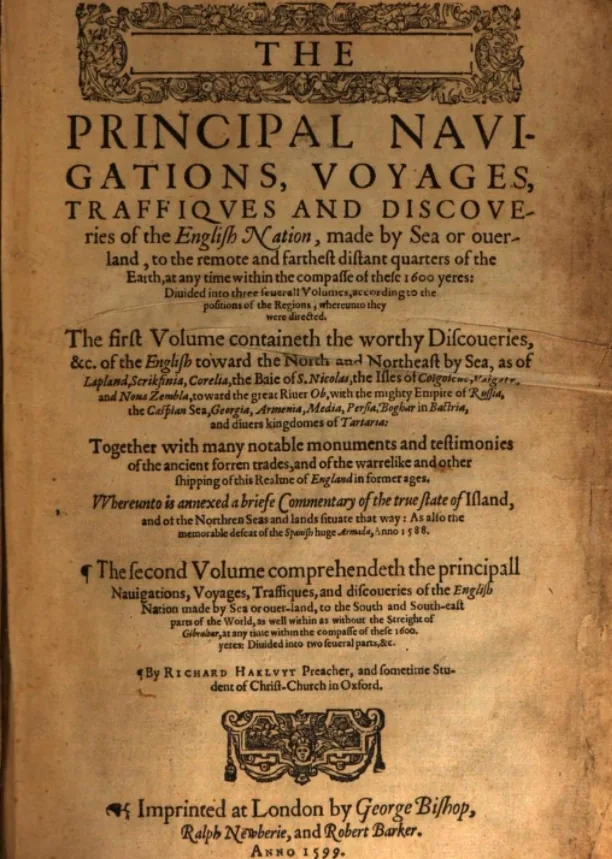
The name Bogdania is of Tatar origin and was used long before Bogdan III was born; the scholar Czamańska ties it unhesitatingly to Bogdan I. The traveller Richard Hakluyt called Moldavia Bogdania in his late-16th-century writings.
ATTRIBUTED
Kara-Bogdan and Bogdan-Eflak
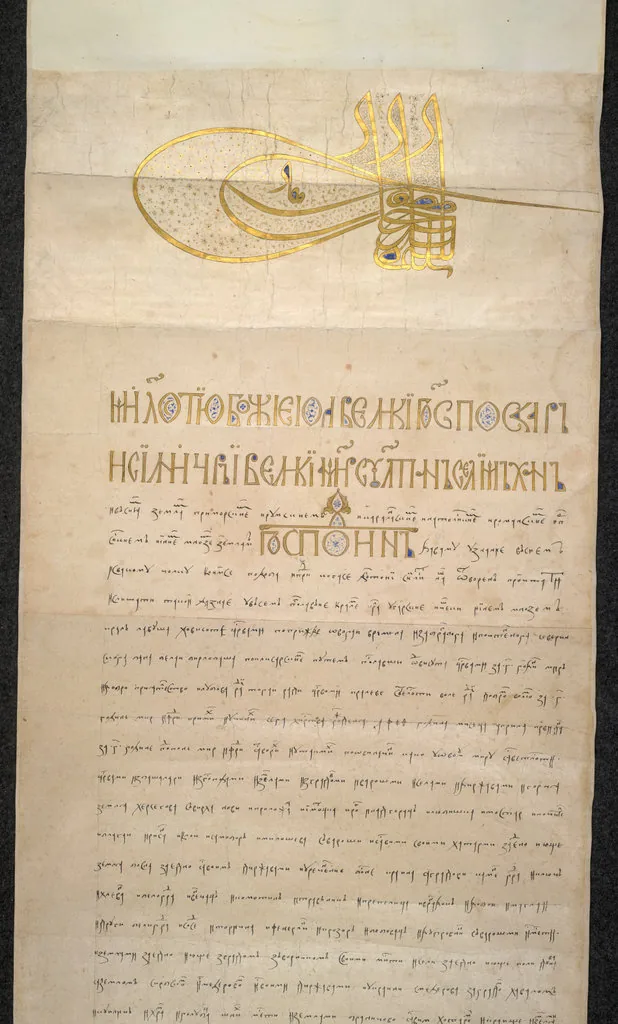
In Ottoman usage, Bogdan's state was Kara-Bogdan and Bogdan-Eflak, that is “Bogdan's Wallachia”; Moldavia was also called Kara-Eflak. An older tradition, from the Encyclopaedia Britannica, ties the name Kara Bogdan to Bogdan III, “their first vassal”: the fork stays open.
FORK STAYS OPEN
The pair: Eflak ve Bogdan
In Ottoman usage, Wallachia and Moldavia were Eflak ve Bogdan, and with Transylvania beside them, Eflak ve Bogdan ve Erdel. The third name, Transylvania's, belongs to the neighbouring story.
On the third name, Transylvania's →
1514: the Tăutu mission
In 1514, Bogdan III sends chancellor Tăutu to arrange Moldavia's submission to Selim I: the submission that opens the vassalage era. An older tribute, from 1456 under Petru Aron, had been paid before; and a tradition dated 1513 speaks of the agreement itself, apart from the 1514 mission.


Names put by others
The habit
The Turks gave lands the name of one of their early rulers. Moldavia is not the only proof.
Bessarabia, after the Basarab dynasty
TRADITIONAL, CONTESTED
- The traditional explanation ties the name to the Basarab dynasty, said to have ruled the south in the 14th century.
- Some scholars contest it: the name would be an exonym from western maps.
- At first it covered only the south, the Budjak; Russia stretched it after 1812.
- The Ottomans were the first to call it Besarabya, in 1484 and 1538.
Dobruja, after despot Dobrotitsa
MOST WIDESPREAD OPINION
The most widespread opinion among scholars sees in Dobruja the Turkish rendition of the name of despot Dobrotitsa, a 14th-century Bulgarian ruler. Ubicini separately proposed “good lands”.
“It was common for the Turks to name countries after one of their early rulers (for example, nearby Moldavia was known as Bogdan Iflak by the Turks, named after Bogdan I)”
First the river. Then the man. Then the union.
Three dates when the name changed hands
Our reading of the line of voices: three dates when the land's name changed hands or retired.
1359 · traditional
The crossing
Bogdan crosses from Maramureș, traditionally in 1359; the evidence holds between 1359 and 1365.
The river gives the name; the man enters the chanceries.
1514 · the Tăutu mission
The submission
Tăutu arranges the submission to Selim I, after the older tribute of 1456.
The era opens in which the Ottoman chancery calls the land Bogdan.
1859 · 5/24 January
The union
Cuza's double election unites the two states; Ottoman suzerainty formally runs to 1878.
The pair Eflak ve Bogdan stops naming two separate states.
The engine: two voices on one line
Who calls it how
Twelve attestations, from traditional 1359 to 1859. The land's voice above the line; the strangers' voice below it.
1359 · traditional · Moldova · ours · 1/12 attestations
1359 · traditional Moldova ours
the river; the traditional year of the crossing
The name the country takes from the river.
C01 TRADITIONAL
1365 Bogdan strangers
royal diploma, 2 February 1365
The Hungarian chancery confiscates Bogdan's estates: the hard edge of the date.
C06
1421 Stadt Molde strangers
German deed about Baia
The first capital, on the river, in a German scribe's hand.
C02 SECONDHAND
1484 Besarabya strangers
first Ottoman naming
The Ottomans name the south after the Basarab dynasty.
C15
1504–1517 Bogdan III · the prince ours
the reign of Bogdan III
The man an older tradition ties to the name Kara Bogdan: the fork stays open.
C08+C11 FORK
1538 Besarabya strangers
second Ottoman naming
The foreign name persists: the same hand, the same land.
C15
1599 Bogdania strangers
Hakluyt, Principal Navigations
An Englishman calls Moldavia Bogdania, late in the 16th century.
C09 EDITION UNPINNED
1714–1716 Moldaviae ours
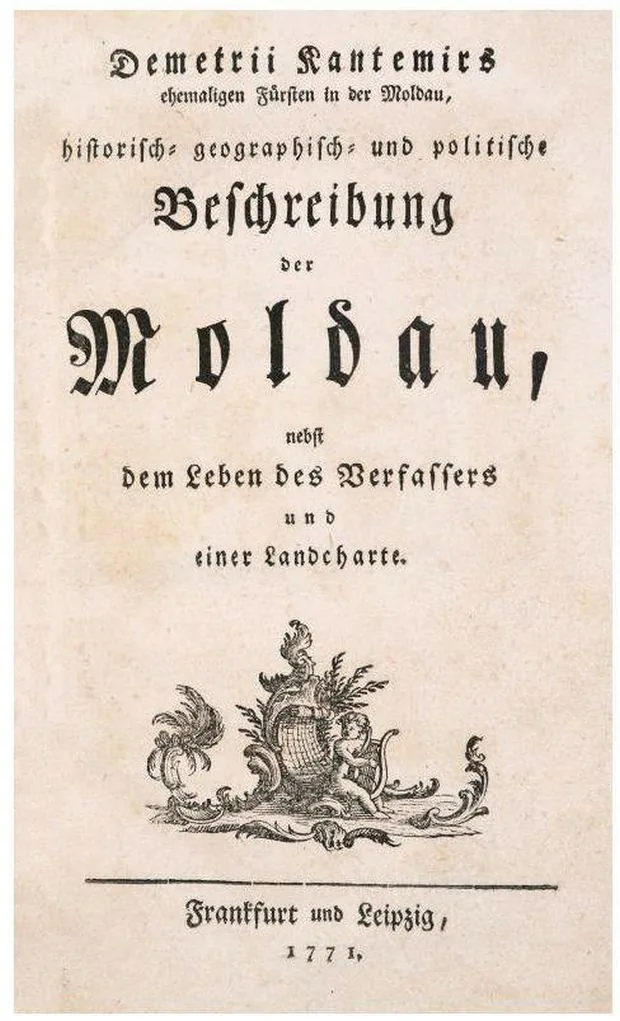
Cantemir writes his Description
The prince names his land in Latin, for Europe.
C05
1771 Moldaviae · printed ours
the Description, printed
The land's voice reaches print, still in Latin.
C05
1812 Bessarabia strangers
the name, extended after 1812
A southern name grows to cover the whole land between Prut and Dniester.
C15
5/24 January 1859 United Principalities ours
Cuza's double election
Two states become one; Ottoman suzerainty formally runs to 1878.
C14 1878 BESIDE IT
until 1859 Eflak ve Bogdan strangers
Ottoman usage (Brill)
The pair that named two states retires with them: our reading of the line of voices.
C12 OUR READING
| Year | Form | Voice | Document |
|---|---|---|---|
| 1359 · traditional | Moldova | ours | the river; the traditional year of the crossing |
| 1365 | Bogdan | strangers | royal diploma, 2 February 1365 |
| 1421 | Stadt Molde | strangers | German deed about Baia |
| 1484 | Besarabya | strangers | first Ottoman naming |
| 1504–1517 | Bogdan III · the prince | ours | the reign of Bogdan III |
| 1538 | Besarabya | strangers | second Ottoman naming |
| 1599 | Bogdania | strangers | Hakluyt, Principal Navigations |
| 1714–1716 | Moldaviae | ours | Cantemir writes his Description |
| 1771 | Moldaviae · printed | ours | the Description, printed |
| 1812 | Bessarabia | strangers | the name, extended after 1812 |
| 5/24 January 1859 | United Principalities | ours | Cuza's double election |
| until 1859 | Eflak ve Bogdan | strangers | Ottoman usage (Brill) |
The game: whose voice is it?
Whose voice is it?
Six forms, three voices. Every round teaches one row of the sources.
Score: 0 of 6
Round 1 of 6 Stadt Molde
Answer
Western strangers: A German scribe, in 1421, about Baia: a western voice.
Round 2 of 6 Bogdania
Answer
Western strangers: Hakluyt, the Englishman of the late 16th century; the origin, Tatar.
Round 3 of 6 Kara-Bogdan
Answer
Ottoman strangers: The Ottoman chancery: Bogdan's state.
Round 4 of 6 Bogdan-Eflak
Answer
Ottoman strangers: The same Ottoman chancery: “Bogdan's Wallachia”.
Round 5 of 6 Eflak ve Bogdan
Answer
Ottoman strangers: The Ottoman pair for the two states.
Round 6 of 6 Besarabya
Answer
Ottoman strangers: The Ottomans, in 1484 and 1538, about the south.
What is not asked
- Picking between the river hypotheses: none picked.
- The Bogdan I – Bogdan III fork: stays open.
- The meaning of the Kara/Ak colours: the sources contradict each other.
- The tribute sum: the unit was never pinned down.
The numbers
Four moments, reckoned from the sources.
1359
traditional · Bogdan's crossing
The evidence holds between 1359 and 1365.
1514
the Tăutu mission to Selim I
After the older tribute, of 1456.
1859
the double election · 5/24 January
Ottoman suzerainty: formally to 1878.
12 · 2
forms · voices
Reckoned from the attestations table.
The myths
Four things people believe, corrected.
People say: The river's name is settled Slavic
The correction: Not settled: four hypotheses, a 2014 analysis keeps the Germanic one, two travel uncited.
C03–C04
People say: The hound Molda is the name's origin
The correction: A legend: three chroniclers, three measures of belief, two different endings.
C05
People say: The Bogdan in the name is certainly Bogdan I
The correction: Czamańska points to Bogdan I, an older tradition points to Bogdan III, the first tributary: the fork stays open.
C08+C11
People say: Eflak and Bogdan died in 1859
The correction: The two states united; Ottoman suzerainty formally ran to 1878. The pair stopped naming two separate states; the empire kept calling them to account.
C12+C14
Sources
Every risky claim shows its row: the source first, the measure after.
The claims table
| Row | Claim | Source | Measure |
|---|---|---|---|
| C01 | The principality took its name from the Moldova river. | Names of Moldavia and Moldova | uncontested in the sources read |
| C02 | Baia appears as Stadt Molde in a 1421 German deed. | same article | secondhand |
| C03 | The Slavic hypotheses: *mold-* + *-ov(a)*; the *moldu* variant. | Boia; Du Nay; Illyés; Nandriș; Sobolevskij, via encyclopedia | attributed |
| C04 | The Germanic hypotheses, with the 2014 pick. | linguistic analysis, 2014; the dictionaries | attributed; two uncited |
| C05 | The hound Molda legend, in three chroniclers. | Ureche; Costin; Cantemir | legend |
| C06 | Bogdan's crossing: traditional 1359, evidence 1359–1365, the 1365 diploma. | Founding of Moldavia; Engel | traditional |
| C07 | Bogdan drives out Balc and refuses obedience. | Bogdan the Founder | one clause |
| C08 | Bogdania, of Tatar origin, tied to Bogdan I. | Czamańska, via encyclopedia | attributed |
| C09 | Hakluyt calls it Bogdania, late 16th century. | same article | edition unpinned |
| C10 | Kara-Bogdan; Bogdan-Eflak; Kara-Eflak. | Filstich 1979; Rădvan 2010, via encyclopedia | the forms, not the colours |
| C11 | The fork: EB ties Kara Bogdan to Bogdan III. | EB, 9th ed. | open |
| C12 | The pair Eflak ve Bogdan (ve Erdel). | Brill, chapter 9 | Ottoman usage |
| C13 | 1514: the Tăutu mission to Selim I. | Bogdan III | with 1456 beside it |
| C14 | 1859: the double election; suzerainty to 1878. | Cuza; United Principalities | with 1878 beside it |
| C15 | Bessarabia, from the Basarabs; traditional, contested. | Bessarabia; Besarabya | contested |
| C16 | Dobruja, from Dobrotitsa; most widespread opinion. | Dobruja | majority |
| C17 | The habit: lands after their early rulers. | Dobruja, etymology | quoted |
How the work was done
- The core read here: the Names of Moldavia and Moldova article, whole, plus passages from the Founding of Moldavia, Bogdan III, Bessarabia, Dobruja, Cuza and United Principalities articles, the Brill chapter on Eflak ve Bogdan, and the old editions of the Encyclopaedia Britannica.
- Everything is tertiary at release time; the load-bearing rows point toward Nandriș 1968, the 2014 analysis, Czamańska, and citable charter editions.
- Earlier research arrived here truncated: details coming only from there read as leads, not evidence, and never reach the page without direct reading.
The names
The stranger's voice
- Bogdan III (EN-wiki)
- Eflak ve Bogdan ve Erdel (Brill, open chapter)
- Kara Bogdan (EB, 9th ed., on Wikisource)
The habit and the pair's end
Type: Fraunces, Newsreader and Atkinson Hyperlegible, under the SIL Open Font Licence.