COLD CASE · 25 DECEMBER
Two words, zero certain parents
2 WORDS · 0 CERTAIN PARENTS
Moș Crăciun is Santa Claus's Romanian name — and neither of its two words has a known origin. DEX shrugs (“Probably…”), while the etymological dictionary lines up suspect after suspect and convicts none.
CASE FILE 25 DEC
BIRTH CERTIFICATE: MOȘ
Born: into the language, long ago
Father: unknown
UNKNOWN
BIRTH CERTIFICATE: CRĂCIUN
Born: into the language, long ago
Father: unknown
UNKNOWN
Chapter 1 · The first orphan
Moș: three letters, zero parents
The shortest word in the file has the shortest DEX entry too: “Din moașă (derivat regresiv)”. That is: moș is said to be born of moașă, by reversed derivation. But the paper trail goes one step further — and ends there.
The paper trail
moș
DEX '09: “Din moașă (derivat regresiv)”
a pointer
moașă
DEX '09 + MDA2: “Cf. alb. moshë «vârstă»”
a comparison
?
“Cf.” is not a derivation. The paper ends here.
end of the trail
The DER file
Ciorănescu prefers Latin annōsus, “încărcat de ani”: “Este probabil annōsus…, cu consoana finală modificată prin analogie cu pl., ca în cossus › coș”. He also admits the weak joint: “Schimbul *noș › moș este mai greu de explicat”. Alongside, he records the general view — an autochthonous word, after Miklosich and Hasdeu, identical with Albanian mošë (Philippide, Pascu, P. Papahagi, Iordan, Rosetti) — and rejects the mamă + -oș hypothesis, “care nu se susține”.
MDA2 gives the first record: PSALT. HUR 41v/26 — the shelfmark, no more; this page assigns it no century.
The word is old and rooted
DER notes loans FROM Romanian into the neighbouring languages: Ruth. mošul “bunic”, moša; Bulg. moš, mošija; Hung. mósuly “bătrîn”. A word others borrow is a word already standing firmly on its feet.
3 letters, 0 parents
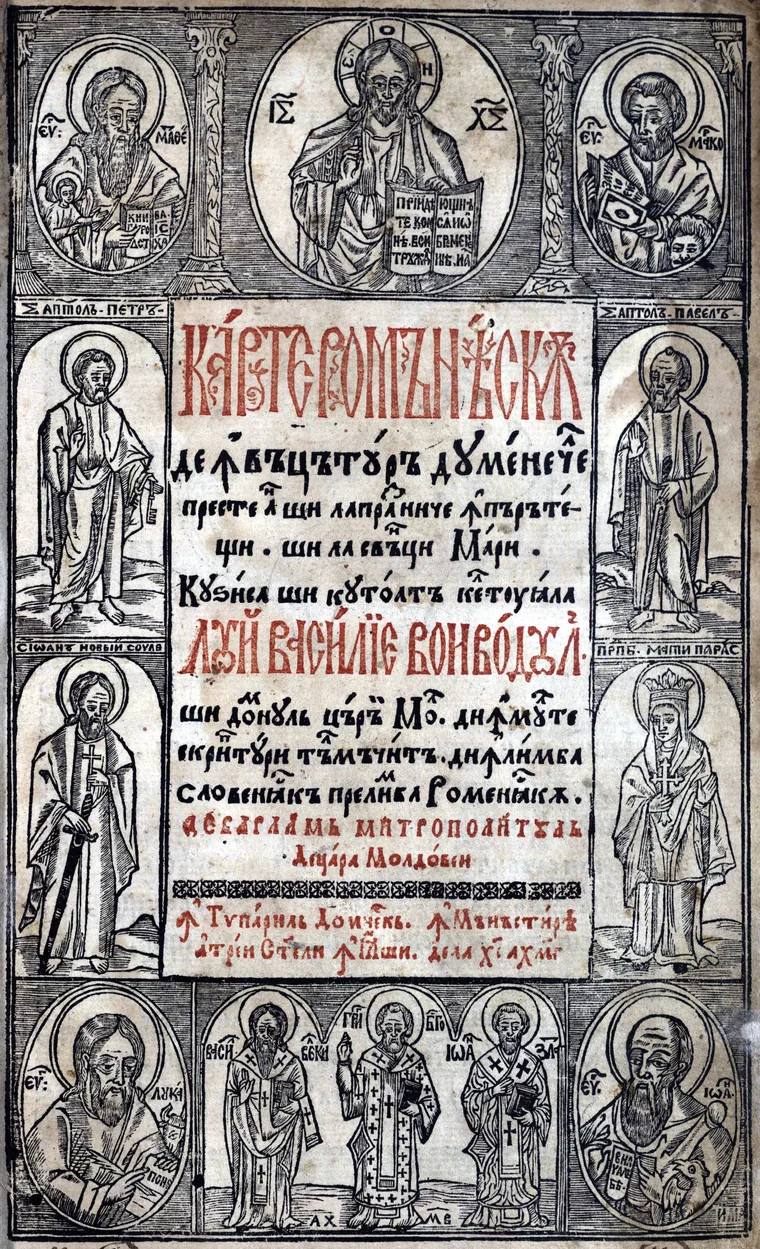

Chapter 2 · The second orphan
Crăciun: three witnesses, three statements
On Crăciun the dictionaries do not contradict each other — they complement each other in not knowing. Three witnesses, three statements, no conviction.
DEX '09
“Probabil lat. creatio, -onis «naștere»”
the cautious witness
MDA2
“ml creationem” · first record: ANON. CAR. · variant creciun
the archival witness
Șăineanu, 1929
“Origină necunoscută”
the honest witness
The DER file
Ciorănescu prefers creātiōnem — but only “dacă se pleacă de la semnificația de «copil»”: the outcome “este fonetic normal și logic, din punct de vedere semantic”. Why “child”, not “creation”? Because the “creation” reading would be “negarea directă a dogmei creștinești a Întrupării (născut, iar nu făcut)”. Then he rejects all the rest: (in)carnatiōnem (Lexiconul de la Buda), crastĭnum (Hasdeu), Christi iēiūnium (Schuchardt), Christi- with an unclear element (Meyer), călātiōnem (Papahagi, Pușcariu, Capidan, T. Papahagi; against: Iorga), Slavic kratŭkŭ (“der. ar fi imposibilă”, Berneker), Slavic kračati (“simplă consonanță, fără legătură semantică”) and Rosetti's Slavic intermediary.
The folk coda
DER closes the file with the verb crăciuni — “a vărsa sânge, a ucide”, from the pig-killing — and the saying: “ți-a venit Crăciunul”, that is, “ți-a sosit ceasul de pe urmă”. The feast and the final hour, in one saying.
8 rejected suspects on this page
Chapter 3 · The 25 December question
The date both orphans orbit
The Nativity of the Lord is a feast of the Church; the mystery on this page is the WORDS, never the faith. And the date — 25 December — is the only thing in the file that has papers.
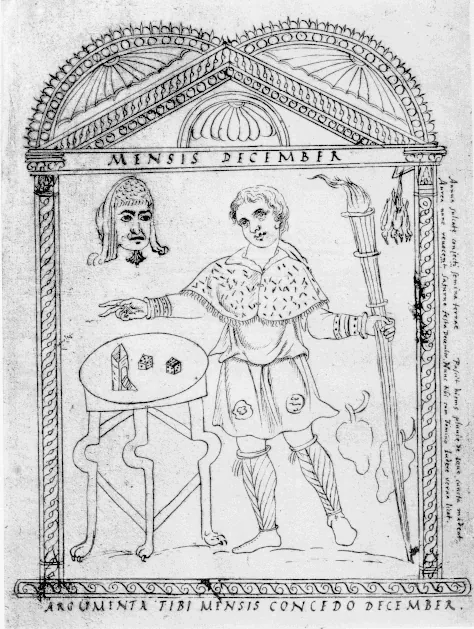
The same document, both entries
The Philocalian Calendar, compiled in 354: its civil part marks 25 December as “Natalis Invicti”, and the Depositio Martyrum writes, under the same day: “VIII kal. ian. natus Christus in Betleem Iudeae”. The same paper, two worlds. The martyr list is probably from 336 — but the Catholic Encyclopedia itself cautions that it is unclear there is any evidence earlier than Philocalus himself, that is, 354.

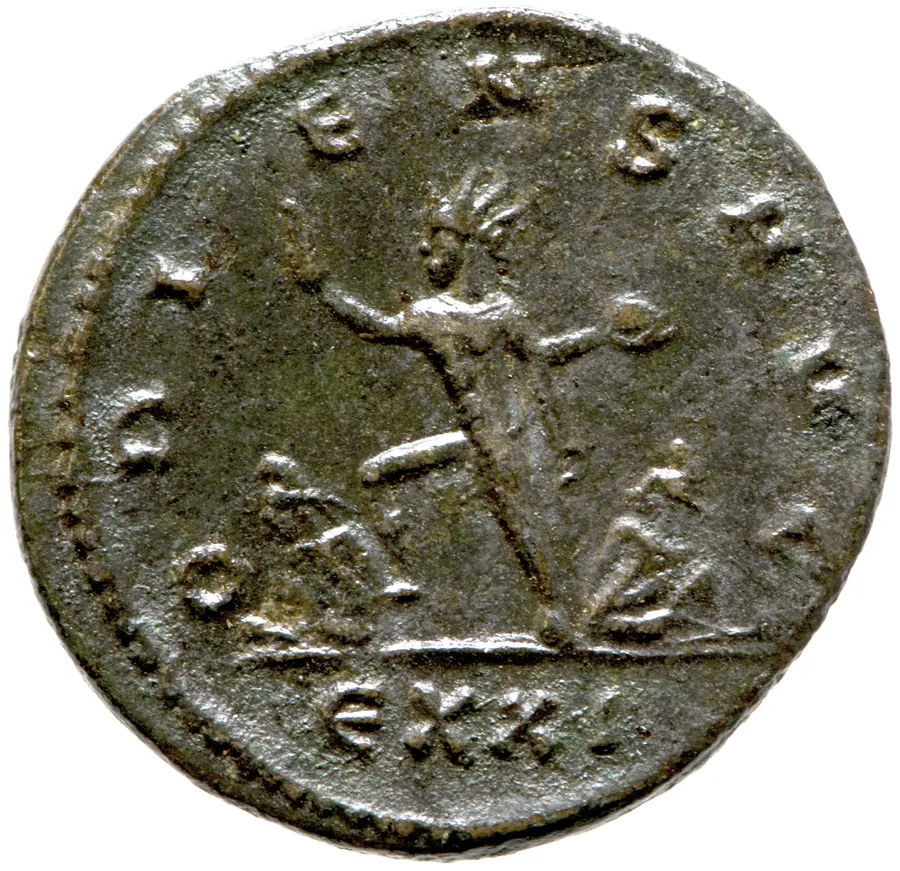
The sun of 274
The feast of the Sun had reached its peak of popularity under Aurelian, in 274 (Mommsen, via the Catholic Encyclopedia). That much we know for sure — and that much we say: no causal link from Aurelian to the pope fits on this page.

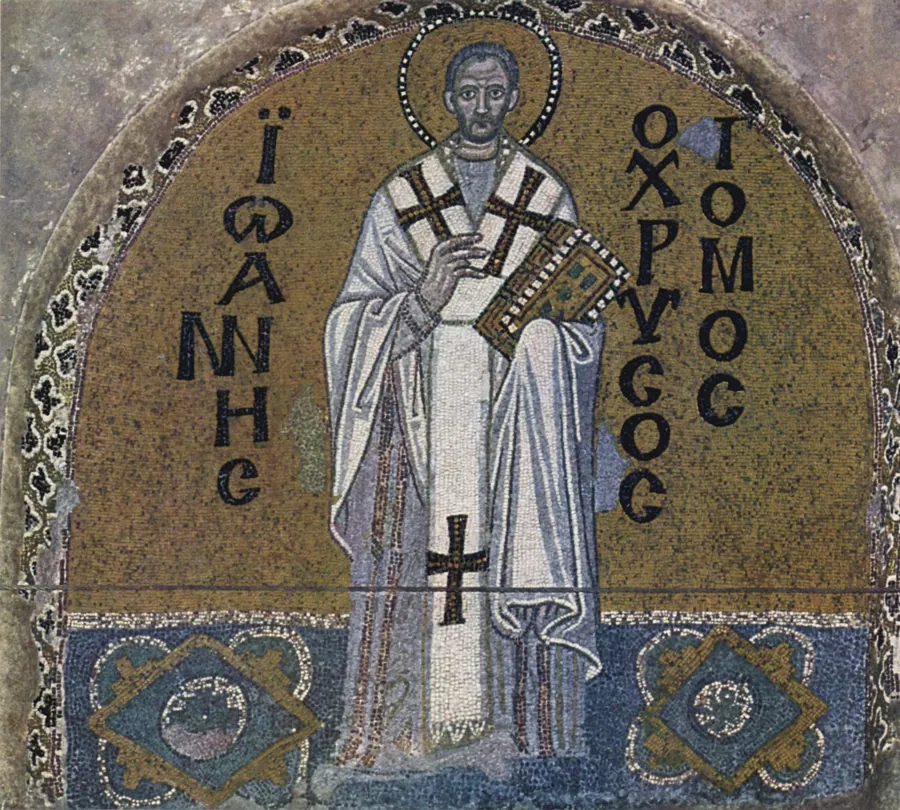
Antioch, around 386
John Chrysostom defends the new custom at Antioch: part of the community had already kept 25 December “for at least ten years”, while in the West it was kept “anothen” — from long ago. The sermon is dated, almost certainly, to 386: “almost” is part of the sentence.

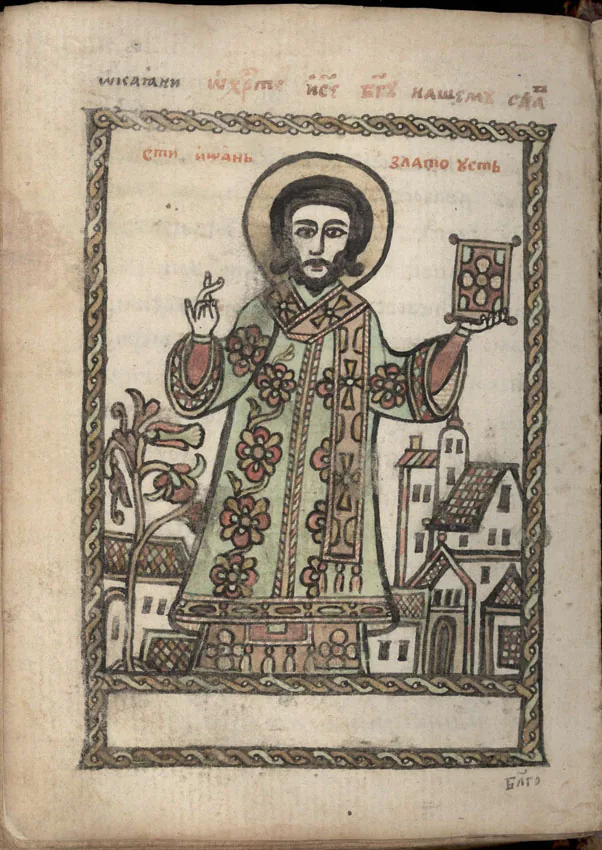

And the link is best put by the Encyclopedia itself: “the same instinct which set Natalis Invicti at the winter solstice will have sufficed, apart from deliberate adaptation or curious calculation, to set the Christian feast there too”. That is this page's reservation: sufficiency, not conspiracy.
Footnote: Scriban's synthesis (1939) placed the adoption of 25 December in 354 in the West and 386 in the East — “după hotărîrea sfîntului Ion Gură-de-Aur”. It is Scriban's synthesis, from 1939; the weight of proof stays with the Catholic Encyclopedia.
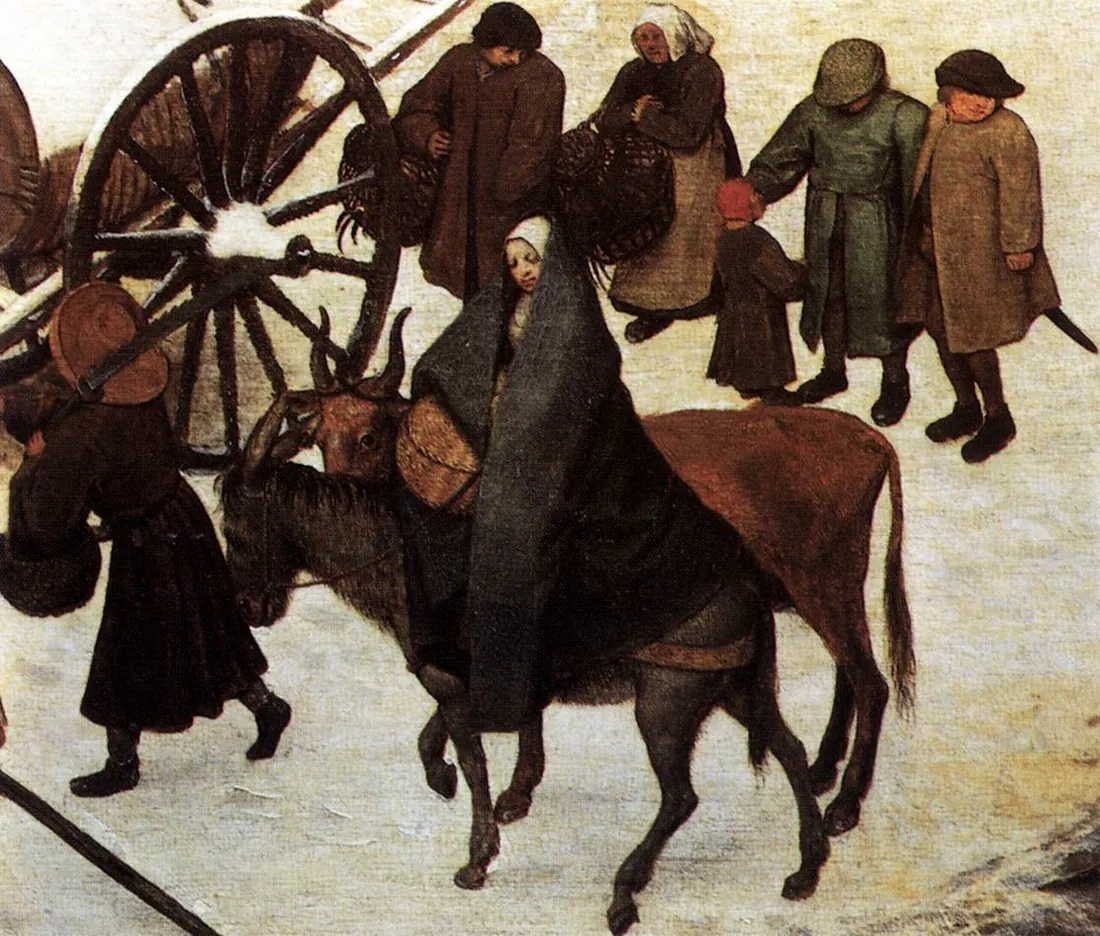

Chapter 4 · The gift-bringing Moș is young
The orphans are old. The Moș is young.
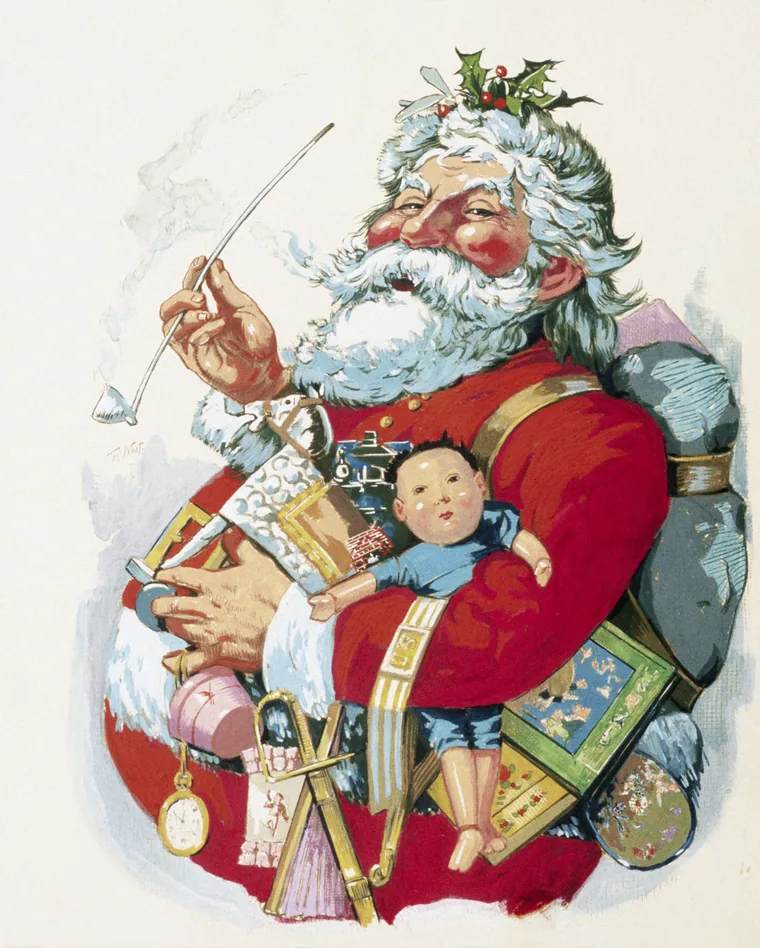
The words are old and parentless. But the old man who hands out gifts to children is a new figure — barely a century old.
19th century
Jarník-Bârseanu collects the verse: “E ziua lui Crăciun, / Lui Moș Crăciun cel bătrîn” (D. 513). A folk Moș — not yet a gift-bringer.
1926–1931
CADE fixes him in print: “Moș ~, figură de om bătrîn… care simbolizează Crăciunul aducător de daruri pentru copii”. The oldest gift-bearing line we have verified.
DEX '09
The red mantle: “cu o mantie lungă roșie, care vine să împartă copiilor… jucării și dulciuri”. Where the red comes from — we do not say; we have not verified it.
DLR pairs them: “Moș Crăciun, Moș Gerilă = personaje legendare despre care se spune că aduc daruri la copii de Crăciun, respectiv de Anul Nou”. The pairing, no more — Moș Gerilă's political history does not fit here.
And MDA2 places them in time: Moș Nicolae and Moș Crăciun are “Personaje imaginare de după creștinare”.


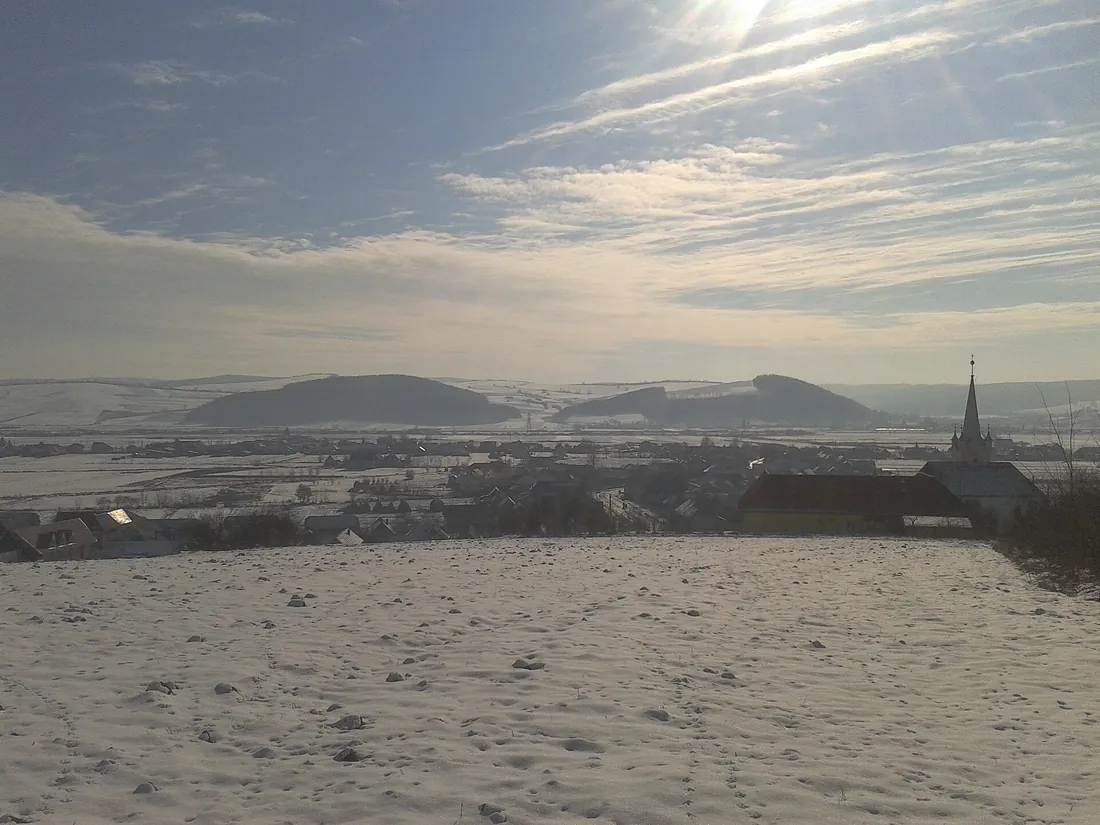

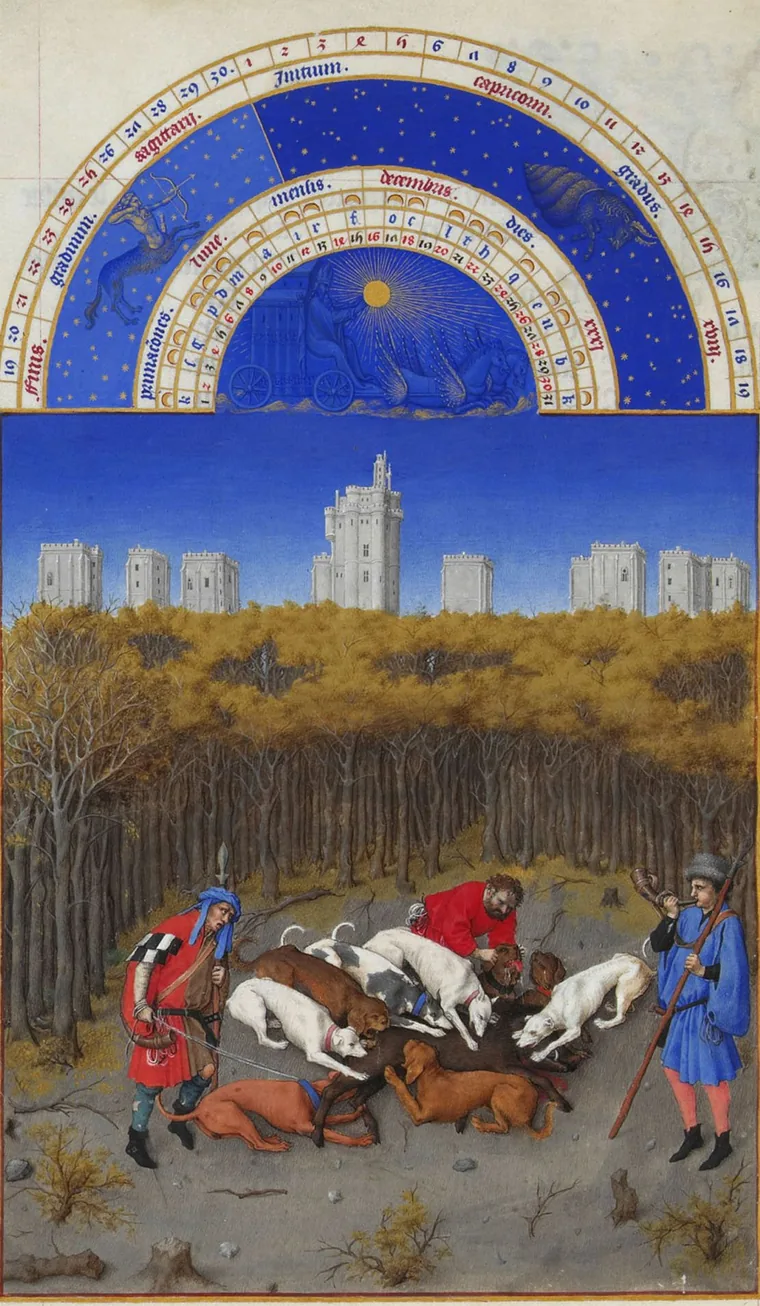
The December word we DID solve
Calendae → kolenda → colindă: the solved file, with a whole chain and the Trullo ban.
Another word with a fuller file than its birth certificate
Brânza: three Et. nec. in DEX and a shepherds' road through the whole Carpathians.
The engine of the piece
Suspect board
Every hypothesis DER ever recorded for either word, plus the dictionaries' verdicts — each with an exact quote, a named proponent and a stamp. Filter, search, count. Nobody gets convicted on this page.
18 suspects · 8 rejected
M1 · MOȘ
annōsus
Ciorănescu, DER (preference)
„Este probabil annōsus «încărcat de ani», cu consoana finală modificată prin analogie cu pl., ca în cossus › coș”
The weak joint, admitted by DER itself: “Schimbul *noș › moș este mai greu de explicat”.
UPHELD
M2 · MOȘ
autohton ≈ alb. mošë
Miklosich, Hasdeu; Philippide, Pascu, P. Papahagi, Iordan, Rosetti
„În general este considerat drept cuvînt autohton (Miklosich…; Hasdeu…), identic cu alb. mošë «vîrstă» (Philippide…; Pascu…; P. Papahagi…; cf. Iordan…; Rosetti…)”
The general view, according to DER — but still a view, not proof.
OPEN
M3 · MOȘ
mamă + -oș
P. Papahagi, rejected by DER
„După P. Papahagi, Notițe etim., 38, din mamă, cu suf. -oș, ipoteză care nu se susține”
Rejected by DER, not by us — the verdict is Ciorănescu's.
REJECTED
M4 · MOȘ
moașă › moș
DEX '09 (descriptive, not etymological)
„Din moașă (derivat regresiv)”
A pointer, not an answer: moașă itself gets only “Cf. alb. moshë «vârstă»”.
OPEN
C1 · CRĂCIUN
creātiōnem = „copil”
Ciorănescu, DER (preference)
„credem că rezultatul creātiōnem › Crăciun este fonetic normal și logic, din punct de vedere semantic, dacă se pleacă de la semnificația de «copil»”
The “dacă” (“if”) condition is part of the verdict — and the “creation” sense would be, says DER, “negarea directă a dogmei… (născut, iar nu făcut)”.
UPHELD
C2 · CRĂCIUN
(in)carnatiōnem
Lexiconul de la Buda; “mai puțin convingătoare”, DER
„Celelalte etimoane lat. … sînt mai puțin convingătoare: lat. (in)carnatiōnem (Lexiconul de la Buda)…”
First on Ciorănescu's list of rejected Latin etima.
REJECTED
C3 · CRĂCIUN
crastĭnum
Hasdeu 615; “mai puțin convingătoare”, DER
„…lat. crastĭnum (Hasdeu 615)…”
Hasdeu's hypothesis does not convince Ciorănescu.
REJECTED
C4 · CRĂCIUN
Christi iēiūnium
Schuchardt; “mai puțin convingătoare”, DER
„…lat. Christi iēiūnium (Schuchardt…)…”
No Christi- etimon survives DER's rejection.
REJECTED
C5 · CRĂCIUN
Christi- + ?
Meyer 189 (cf. Alb. Kèrsendeljë); “mai puțin convingătoare”, DER
„…lat. Christi- cu un al doilea element neclar, cf. alb. Kèrsendeljë › lat. Christi natalia (Meyer 189)…”
The second element stays unclear — for Meyer and for DER alike.
REJECTED
C6 · CRĂCIUN
călātiōnem
P. Papahagi, Pușcariu, Capidan, T. Papahagi; against: Iorga
„…lat. călātiōnem… (P. Papahagi…; Pușcariu 407; Capidan…; T. Papahagi…; cf. împotrivă Iorga…)”
Four supporters, one opponent — and DER's verdict: “mai puțin convingătoare”.
REJECTED
C7 · CRĂCIUN
kratŭkŭ
Cihac, Philippide, Domaschke, Weigand, Rosetti, Vasmer; against: Berneker, DER
„der. ar fi imposibilă în această formă (Berneker 604)”
Six names for the Slavic hypothesis — and the derivation “impossible”, per Berneker and DER.
REJECTED
C8 · CRĂCIUN
kračati (+ Rosetti)
the same Slavists; Rosetti rejected separately by DER
„simplă consonanță, fără legătură semantică”
And Rosetti's Slavic intermediary “nu suprimă dificultățile, căci este imposibil de admis… că «la langue de l'église a également employé creatio»”.
REJECTED
D1 · MOȘ
verdict DEX: moș
DEX '09 (all editions)
„Din moașă (derivat regresiv)”
The file closes with a pointer: see suspect M4.
OPEN
D2 · MOȘ
atestare MDA2: moș
MDA2: PSALT. HUR 41v/26
„[At: PSALT. HUR 41v/26 … E: moașă drr]”
The shelfmark, no more: no century claimed on this page.
OPEN
D3 · CRĂCIUN
verdict DEX: Crăciun
DEX '09
„Probabil lat. creatio, -onis «naștere»”
“Probabil” is part of the verdict — we quote it with it, every time.
OPEN
D4 · CRĂCIUN
atestare MDA2: Crăciun
MDA2: ANON. CAR.; variant creciun
„[At: ANON. CAR. / V: ~e, creciun … E: ml creationem]”
The siglum, no more: dating hangs on Chivu's studies, not examined here.
OPEN
D5 · MOȘ
verdict Șăineanu: moș
Șăineanu, 6th ed. (1929)
„[Albanez MOŠĂ, bătrân]”
A witness statement from 1929, not today's consensus.
OPEN
D6 · CRĂCIUN
verdict Șăineanu: Crăciun
Șăineanu, 6th ed. (1929)
„[Origină necunoscută]”
The shortest and most honest statement in the file — from 1929.
OPEN
No suspect answers to these filters.
The contrast
Glass abroad, stone at home.
The words of the West are transparent — with a single exception, which shakes our hand.
Christmas
Cristes Maesse — “the Mass of Christ”, first found in 1038; Cristes-messe, 1131.
1038
Kerstmis
The Dutch say the same: Christ's Mass, with no detours.
—
Noël · Il natale
From Latin Dies Natalis — “the day of the Birth”. Clean glass.
—
Weihnachtsfest
The German: the feast “from the preceding sacred vigil”.
—
Yule
“Of disputed origin… unconnected with any word meaning wheel”. Even English has one orphan.
common ground
Source of the row: the Catholic Encyclopedia, “Origin of the word” (1908).

The numbers
0
certain parents for two words
18
suspects on the board · 8 rejected
3
false sayings, debunked below
Myths
Three things that are not true
“Moș comes straight from Latin *moșu.”
No such Latin word exists. DER's hypothesis is “Este probabil annōsus” — and it comes with the hard *noș › moș step confessed in the text.
“Crăciun obviously comes from Christ.”
DER rejects the rival Latin etima one by one: (in)carnatiōnem, crastĭnum, Christi iēiūnium, Christi- + unclear element, călātiōnem. The closest Latin is creātiōnem in the sense “child” — and even that is conditioned on “dacă” (“if”).
“Romanians always had a gift-bringing Santa.”
The folk Moș is attested in the 19th century (Jarník-Bârseanu), and the children's gift-bringer is fixed in print only with CADE, 1926–1931.
Sources
We picked no winner — here is every file. Each risky claim points at its row in the table below.
| ID | Claim | Source |
|---|---|---|
| C01 | DEX: moș = “Din moașă (derivat regresiv)” | dexonline.ro |
| C02 | moașă = “Cf. alb. moshë «vârstă»” | dexonline.ro |
| C03–C04 | DER: “Este probabil annōsus”; *noș › moș “mai greu de explicat” | dexonline.ro |
| C05 | DER: autochthonous, the general view (6 names) | dexonline.ro |
| C06 | DER rejects mamă + -oș: “nu se susține” | dexonline.ro |
| C07–C08 | Șăineanu 1929 + Scriban 1939 on moș | dexonline.ro |
| C09–C10 | MDA2: PSALT. HUR; loans FROM Romanian | dexonline.ro |
| C11–C12 | DEX “Probabil creatio”; Șăineanu “Origină necunoscută” | dexonline.ro |
| C13–C14 | DER: creātiōnem = “child”, with the dogma argument | dexonline.ro |
| C15 | DER rejects 5 Latin etima | dexonline.ro |
| C16–C17 | DER rejects the Slavic etima + Rosetti's intermediary | dexonline.ro |
| C18–C19 | MDA2: ANON. CAR., creciun; the verb crăciuni | dexonline.ro |
| C20–C21 | The transparent West + Yule “of disputed origin” | www.newadvent.org |
| C22–C23 | Philocalian 354: both entries + the caution | www.newadvent.org |
| C24–C26 | Aurelian 274 · Chrysostom ~386 · the CE hedge | www.newadvent.org |
| C27 | Scriban 1939: 354 in the West, 386 in the East (synthesis) | dexonline.ro |
| C28–C32 | The gift coda: verse, CADE, mantle, Gerilă, MDA2 | dexonline.ro |
Method: the urda-card pattern from branza-calatoare — per-dictionary verdicts, every DER hypothesis quoted, none picked.
Type: Fraunces, Newsreader and Atkinson Hyperlegible, under the SIL Open Font Licence.