mariuscomper.uk RO中文

64 squares, 90 points

Chess and xiangqi (Chinese chess): one army on two boards, compared piece by piece

Rook, knight, bishop, queen, king: xiangqi calls them chariot, horse, elephant, advisor and general, and sets them out in the same order from the corner. Choose a piece and watch it move on three boards at once: shatranj, the chess of a thousand years ago; chess today; and xiangqi. Europe's bishop and queen once moved almost exactly as the xiangqi elephant and advisor do now.

chariothorseelephantcounsellorkingcounsellorelephanthorsechariotShatranjChessXiangqi俥傌相仕帥仕相傌俥
The back rows, corner to corner: shatranj (the game medieval Europe received from the Arabic world), chess and xiangqi. Xiangqi has one more column and a second counsellor.

How does each piece move in chess and in xiangqi?

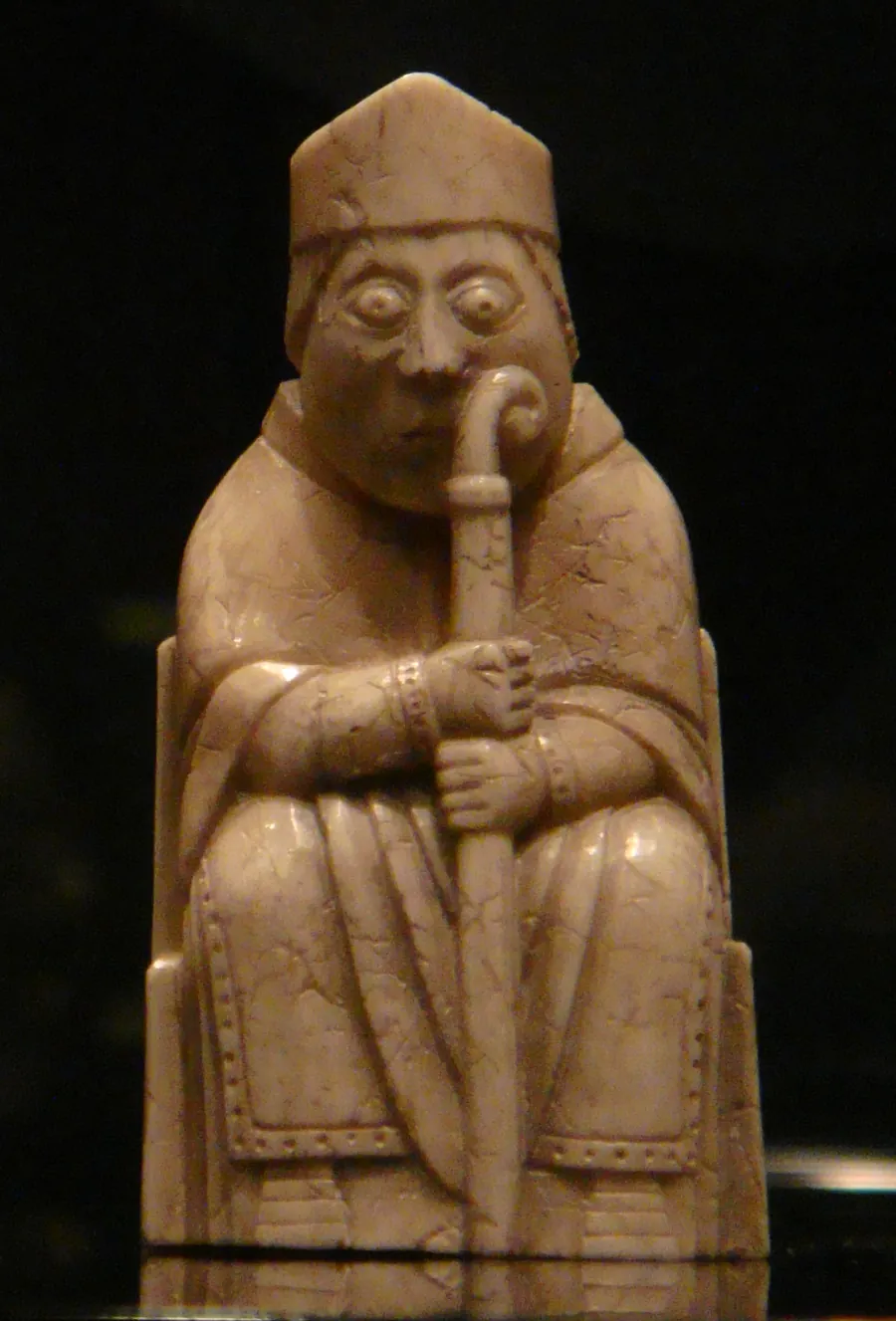
Among the walrus-ivory chessmen found on the Isle of Lewis, carved between 1150 and 1200, sit bishops in mitres, each holding a crozier. On the board they could not do what a bishop does today. Their move was a jump of exactly two squares along a diagonal. It was the move of the piece they had replaced, which the Arabic world called al-fīl, the elephant.

Xiangqi, the chess played across China and Vietnam, has an elephant in the same place in the line. It still moves exactly two points along a diagonal.

The boards below show one piece at a time. Start with the elephant, then try the counsellor.

A walrus-ivory chess piece: a seated bishop in a mitre holding a crozier with both hands.
A bishop from the Lewis chessmen, 1150–1200, photographed at the National Museum of Scotland, Edinburgh, in 2010. In its day this piece moved two squares diagonally and jumped. Photo: Nachosan, Wikimedia Commons, CC BY-SA 3.0.

The chariot: rook, 車

Shatranj, about 1000 rukhon a1: 14 moves
Chess today rookon a1: 14 moves
俥
Xiangqi today 車 jū, charioton a1: 17 moves

The one piece on which all three boards agree. It runs any distance along a row or a column until something stands in its way, and it captures the first enemy it meets.

From a corner of an empty board it has 14 moves in shatranj and in chess and 17 in xiangqi. The move is the same; the xiangqi board is one line wider and two lines longer.

The horse: knight, 馬

Shatranj, about 1000 faras, horseon b1: 3 moves
Chess today knighton b1: 3 moves
傌
Xiangqi today 馬 mǎ, horseon b1: 3 moves

One step straight, then one step diagonally outward: the same eight targets in all three games.

The chess knight and the shatranj horse jump. The xiangqi horse walks. If a piece stands on the point right next to it, in the direction it sets off, both moves that begin that way are closed. Chinese players call this 蹩马腿, hobbling the horse's leg. Put a piece in its way and compare the three boards.

The elephant: bishop, 象

Shatranj, about 1000 fil, elephanton c1: 2 moves
Chess today bishopon c1: 7 moves
相
Xiangqi today 相 / 象 xiàng, elephanton c1: 2 moves

In shatranj the elephant leapt exactly two squares along a diagonal, over whatever stood between. That was all it could do. Starting from its home square it could reach only 8 squares of the 64 in an entire game, and the four elephants on the board moved on four separate sets of squares, so no elephant could ever capture another.

The xiangqi elephant makes the same step: exactly two points along a diagonal. Two things differ. It cannot leap: a piece on the point in between stops it, which players call 塞象眼, blocking the elephant's eye. And it never crosses the river, so it can reach only 7 points.

The chess bishop slides as far as the diagonal is open and can stand on 32 squares. That move is recorded in Europe from the late 15th century.
The counsellor: queen, 士

Shatranj, about 1000 firzan, counselloron d1: 2 moves
Chess today queenon d1: 21 moves
仕
Xiangqi today 仕 / 士 shì, advisoron d1: 1 move

The piece beside the king was a counsellor before it was a queen. In shatranj the firzan moved one square diagonally and nothing more.

The xiangqi advisor moves the same single diagonal step, and only inside the palace, the 3 × 3 box around the general: 5 points in all.

The chess queen moves any distance in eight directions: up to 27 moves from one square, where the firzan had at most 4. The oldest recorded game played with this queen is in a Valencian poem, Scachs d'amor, usually dated to about 1475.

The king: 將, 帥

Shatranj, about 1000 shah, kingon e1: 5 moves
Chess today kingon e1: 5 moves
帥
Xiangqi today 帥 shuài / 將 jiàng, generalon e1: 3 moves

In shatranj and in chess the king steps one square in any direction. Chess later added castling.

The xiangqi general steps one point along the lines, never diagonally, and never leaves the palace: 9 points. The two generals may not face each other along an open column, so a general can pin a piece from the far side of the board.

The foot soldier: pawn, 兵

Shatranj, about 1000 baidaq, foot soldieron e2: 1 move
Chess today pawnon e2: 2 moves
兵
Xiangqi today 兵 bīng / 卒 zú, soldieron e4: 1 move

One step forward in all three games, and never back.

The shatranj and chess pawns capture one square diagonally forward. The xiangqi soldier captures the way it moves, straight ahead. Once it has crossed the river it may also step sideways: move it across and see.

Chess added the double first step. A shatranj pawn that reached the last row became a firzan; a chess pawn becomes a queen, rook, bishop or knight; the xiangqi soldier never changes.

The cannon, 炮: only in xiangqi

No such piece. Nothing in shatranj needed another piece to jump over.

Shatranj, about 1000

No such piece. Chess has nothing that captures by jumping over a screen.

Chess today
炮
Xiangqi today 炮 / 砲 pào, cannonon b3: 17 moves

The cannon moves like the chariot. To capture, it must jump over exactly one piece of either colour, the screen, and it takes the first piece beyond the screen if that piece is an enemy. Put a piece in its way and it gains a target.

A cannon with this rule is described in the 11th century, in a seven-player variant attributed to the historian Sima Guang (1019–1086). When it joined the two-player game is not known.

What is the bishop called in other languages?

Europe received the pieces with Arabic names. Its languages kept, borrowed or replaced those names in different ways. Some follow the look of the carved piece, some its move, and the reasons are sometimes disputed. The bishop is an elephant in Russian, a runner in German, a fool in French and Romanian, a shooter in Czech, a camel in Hindi. The lists below group 31 languages by what the word means to its speakers today; where it means nothing but the piece, the list says so.

Chinese went the other way. Its names for the pieces of Western chess are 车, 马, 象, 兵: chariot, horse, elephant, soldier, the same words xiangqi uses.

The bishop

A runner or messenger 8
German LäuferDutch loperSwedish löpareDanish løberNorwegian løperPolish goniecHungarian futóFinnish lähetti
An elephant 7
Russian слон slonUkrainian слон slonTurkish filArabic فيل fīlPersian فیل filBengali গজ gôjChinese 象 xiàng
A bishop 3
English bishopPortuguese bispoIcelandic biskup
A shooter or hunter 3
Czech střelecSlovak strelecSerbian and Croatian lovac
Alfil, the old elephant name kept 2
Spanish alfilCatalan alfil
A camel 2
Hindi ऊँट ū̃ṭMongolian тэмээ temee
A fool 2
French fouRomanian nebun
An officer 2
Bulgarian офицер ofitserGreek αξιωματικός axiomatikós
A standard-bearer 1
Italian alfiere
A spear 1
Estonian oda

Medieval French called the piece alfin or aufin, from Arabic al-fīl, the elephant. Fol, later fou, replaced it; the piece is called fol in the Roman de la Rose, about 1275–1280. Etymologists disagree on how the change happened. Spanish and Catalan alfil keep the Arabic word and mean nothing else today. Italian alfiere means standard-bearer today. English bishop is recorded as a chess name from 1562.

The queen

A lady 13
Romanian damăFrench dameSpanish damaPortuguese damaItalian donnaCatalan damaGerman DameDutch dameSwedish damCzech dámaSlovak dámaBulgarian дама damaSerbian and Croatian dama
A queen 7
English queenDanish dronningNorwegian dronningIcelandic drottningFinnish kuningatarGreek βασίλισσα vasílissaChinese 后 hòu
A vizier or minister 5
Turkish vezirArabic وزير wazīrPersian وزیر vazirHindi वज़ीर vazīrBengali মন্ত্রী montri
A commander 2
Polish hetmanHungarian vezér
Ferz, the old counsellor name kept 2
Russian ферзь ferz'Ukrainian ферзь ferz'
A flag 1
Estonian lipp

Russian ferz' comes through Turkish from the Persian name of the counsellor; in Russian today it means only the chess piece. The lady and the queen are European.

The rook

A tower or fortress 18
Romanian turnFrench tourSpanish torrePortuguese torreItalian torreCatalan torreGerman TurmDutch torenSwedish tornDanish tårnNorwegian tårnPolish wieżaCzech věžSlovak vežaHungarian bástyaFinnish torniGreek πύργος pýrgosTurkish kale
Rukh, the old name kept 4
English rookIcelandic hrókurArabic رخ rukhkhPersian رخ rokh
A chariot or cart 3
Chinese 车 jūMongolian тэрэг teregEstonian vanker
A boat 2
Russian ладья ladyaBengali নৌকা nouka
A cannon 2
Bulgarian топ topSerbian and Croatian top
A word used only for the piece 1
Ukrainian тура tura
An elephant 1
Hindi हाथी hāthī

English rook is the Persian rukh. The piece is usually traced to the Indian chariot, Sanskrit ratha, but what rukh itself meant is disputed. In Hindi the corner piece is the elephant and the bishop is a camel.

The knight

A horse 19
Romanian calSpanish caballoPortuguese cavaloItalian cavalloCatalan cavallDutch paardRussian конь kon'Ukrainian кінь kin'Bulgarian кон konGreek ίππος ípposTurkish atArabic حصان ḥiṣānPersian اسب asbHindi घोड़ा ghoṛāBengali ঘোড়া ghoṛaMongolian морь mor'Chinese 马 mǎEstonian ratsuFinnish ratsu
A jumper 6
German SpringerSwedish springareDanish springerNorwegian springerPolish skoczekSerbian and Croatian skakač
A rider 6
English knightFrench cavalierIcelandic riddariCzech jezdecSlovak jazdecHungarian huszár

The king is a king or a shah nearly everywhere, and the pawn is a foot soldier in most languages and a farmer in German and the Scandinavian languages.

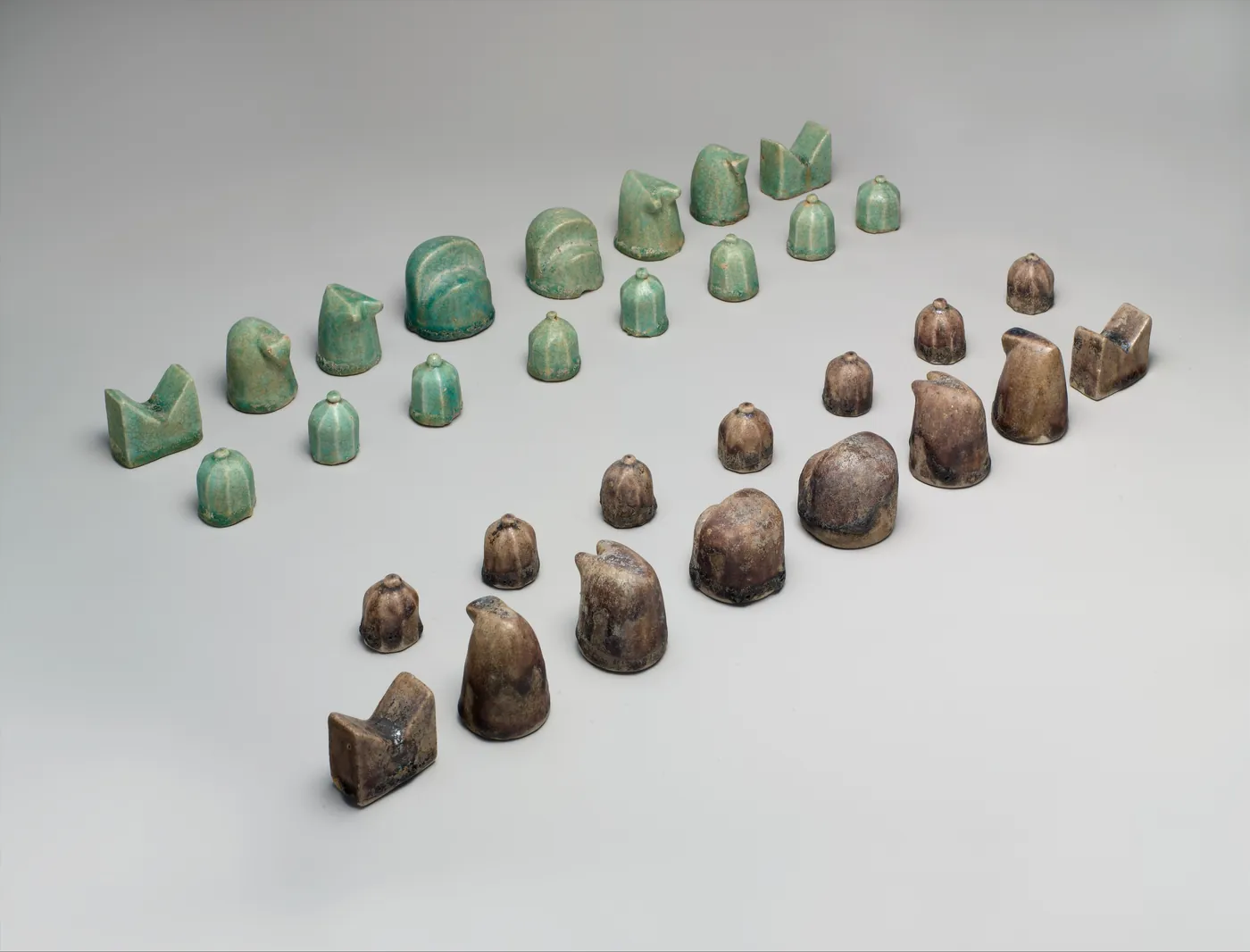
A chess set of small glazed pieces in abstract shapes, one side turquoise and one side dark purple.
A shatranj set attributed to Nishapur, Iran, 12th century, one of the earliest nearly complete sets to survive. The elephants have two tusk-like points; the chariots are rectangular with a wedge cut in the top. The Metropolitan Museum of Art, New York. Photo: The Metropolitan Museum of Art, Wikimedia Commons, CC0.

What does xiangqi have that chess does not?

A river across the middle, a palace at each end, and a piece that shoots over others. Chess has castling, the pawn's double step and a pawn that can become a queen. Each rule below exists on one board only.

炮兵馬

Xiangqi today

The cannon needs a screen

It slides like a chariot but captures only across exactly one piece, friend or enemy, and only an enemy piece. Here it can take the horse beyond its own soldier and nothing else.

傌炮

Xiangqi today

A horse can be hobbled

The cannon stands on the point in front of the horse, so the two forward moves are closed. A chess knight in the same spot would jump.

帥俥將

Xiangqi today

The generals may not see each other

With nothing between them on an open column the two generals would face each other, which is forbidden. The chariot here may move only along the column.

相仕帥仕相

Xiangqi today

A river and two palaces

The general and the advisors stay inside the palace. The elephants stay on their own side of the river. Together the defenders can stand on the 15 tinted points: 9 in the palace and 7 for the elephants, one of them shared.

Chess today

Castling

Each player may castle once in a game: the king moves two squares towards a rook and the rook crosses to its other side. Neither piece may have moved before, the squares between them must be empty, and the king may not castle out of, through or into check. Shatranj and xiangqi have no such move.

Chess today

The double step and en passant

A chess pawn may advance two squares on its first move. An enemy pawn beside it may then capture it as if it had advanced only one, but only on the very next move. Both rules exist only in chess.

Chess today

Promotion

A chess pawn on the last row becomes a queen, rook, bishop or knight. In shatranj it became a firzan, which moved only one square diagonally. A xiangqi soldier is never promoted.

Shatranj, about 1000

The bare king

In shatranj, losing every piece except the king normally meant defeat, even without checkmate. If the bare king could at once capture the opponent's last piece, the game was drawn. Chess and xiangqi have no such rule.

How a game ends
ShatranjChessXiangqi
Checkmatewinswinswins
A player has no legal move and is not in check (stalemate)that player losesdrawthat player loses
A king left with no other piecenormally losesno such ruleno such rule

The same move on three boards: where is it legal?

Ten moves, each tried in shatranj, in chess and in xiangqi. Decide for each board, then check.

  1. 1/10 The elephant moves two steps diagonally, and a piece of its own side stands on the square in between.

    Shatranj, about 1000: Legal. The elephant leaps over the piece in between.
    Chess today: Not legal. A piece stands in the way, and the bishop cannot jump.
    相傌
    Xiangqi today: Not legal. The piece in between blocks the elephant's eye.
  2. 2/10 The elephant moves far along an open diagonal: five steps on the 8 × 8 boards, four in xiangqi.

    Shatranj, about 1000: Not legal. The elephant moves exactly two squares, never more.
    Chess today: Legal. The piece moves this way.
    相
    Xiangqi today: Not legal. The elephant moves exactly two points, never more.
  3. 3/10 The elephant moves two steps diagonally across the middle of the board. Nothing is in the way.

    Shatranj, about 1000: Legal. The piece moves this way.
    Chess today: Legal. The piece moves this way.
    相
    Xiangqi today: Not legal. The elephant may not cross the river.
  4. 4/10 The counsellor moves one step diagonally.

    Shatranj, about 1000: Legal. The piece moves this way.
    Chess today: Legal. The piece moves this way.
    仕
    Xiangqi today: Legal. The piece moves this way.
  5. 5/10 The counsellor moves three steps straight ahead.

    Shatranj, about 1000: Not legal. The firzan moves one square, and only diagonally.
    Chess today: Legal. The piece moves this way.
    仕
    Xiangqi today: Not legal. The advisor moves one point, and only diagonally.
  6. 6/10 The horse moves two steps forward and one to the side, and a piece of its own side stands directly in front of it.

    Shatranj, about 1000: Legal. The piece moves this way.
    Chess today: Legal. The piece moves this way.
    傌炮
    Xiangqi today: Not legal. The piece in front hobbles the horse.
  7. 7/10 The chariot moves four steps along an open column.

    Shatranj, about 1000: Legal. The piece moves this way.
    Chess today: Legal. The piece moves this way.
    俥
    Xiangqi today: Legal. The piece moves this way.
  8. 8/10 The king moves one step diagonally.

    Shatranj, about 1000: Legal. The piece moves this way.
    Chess today: Legal. The piece moves this way.
    帥
    Xiangqi today: Not legal. The general moves only along the lines.
  9. 9/10 The foot soldier advances two steps from its starting place.

    Shatranj, about 1000: Not legal. The pawn moves one square straight ahead.
    Chess today: Legal. The piece moves this way.
    兵
    Xiangqi today: Not legal. The soldier moves one point at a time.
  10. 10/10 A foot soldier in the far half of the board moves one step sideways.

    Shatranj, about 1000: Not legal. The pawn moves one square straight ahead.
    Chess today: Not legal. A pawn never moves sideways.
    兵
    Xiangqi today: Legal. The piece moves this way.

Which is older, chess or xiangqi?

The two games are generally regarded as related. The armies match too closely, in name and in order, for most historians to think otherwise. How they are related is a harder question, and the surviving evidence does not settle it.

The best-documented path runs from India to Persia and on to the Arabic world and Europe. That part is not in serious dispute. What is missing is a document that shows how, when and in which direction an early form of the game passed between India and China.

From India to China

H. J. R. Murray (1913) held that the game was invented in India and that xiangqi derives from it, adapted to Chinese terms and older Chinese games. This remains the prevailing account.

From Chinese divination

Joseph Needham (1962) argued that a Chinese astronomical and divinatory "image game" supplied the ancestor, which became a war game in India in the 7th century.

A meeting of two traditions

Jean-Louis Cazaux (2001) proposed a hybrid: an eastern game contributed features to the Indian and Persian one. He presents it as a hypothesis.

A Chinese invention

David H. Li (1998) credited the general Han Xin, about 203 BCE. Critics, among them Peter Banaschak, point out that no early source supports the story.

The dated evidence, in order. None of it shows a direction of travel between India and China.

  1. 569

    Chinaidentification disputed

    Emperor Wu of Northern Zhou writes the Xiangjing

    The dynastic history records that the emperor composed a book on a game called 象戏 xiangxi and explained it to his court. The book is lost. Surviving descriptions speak of the sun, the moon and the stars, and scholars disagree on whether this game has anything to do with today's xiangqi.

  2. 7th century

    Indiatext

    Bāṇa's Harṣacarita mentions chaturanga

    A Sanskrit court biography from northern India puns on an eight-by-eight board and the four-part army, caturaṅga: elephants, horses, chariots, foot soldiers. It is the strongest early Indian reference. It gives no rules.

  3. Between the 6th and 9th centuries

    Persia and the Arabic worldtext

    The Persian Explanation of Chess

    A Middle Persian text tells how an Indian king sent the game to the Persian court as a riddle. It names the pieces and plainly describes chess. The story is set in the 6th century; the text as it survives was put together later, and scholars date it anywhere from the late Sasanian period to the 9th century.

  4. Early 9th century

    Chinatext

    The night battle of Cen Shun

    In a tale by Niu Sengru (779–847), set in the year 762, a man watches two miniature armies fight by rule at night. Their adviser recites the order of battle: the horse flies aslant and stops at the third step, the commander ranges across in the four directions, the wagon drives straight in and does not turn back, the armoured soldiers keep their order. Later a game board with metal pieces is dug out of an old tomb under the room, and the tale says the verse described how the pieces of xiangxi move. It is the earliest Chinese description usually read as a game of this family.

  5. 9th and 10th centuries

    Persia and the Arabic worldtext

    Arabic books of shatranj

    Players at the Abbasid court in Baghdad, among them al-ʿAdlī (about 850) and aṣ-Ṣūlī (died 946), write treatises with openings and problems. Later manuscripts that copy them are the source for the shatranj moves shown on this page.

  6. About 1000

    Europetext

    The Einsiedeln verses

    A Latin poem kept at a Swiss monastery describes the game and its pieces. Dated to the late 10th or the 11th century, it is among the earliest European texts on chess and already mentions a board in two colours as a useful novelty.

  7. 1019–1086

    Chinatext

    A cannon in Sima Guang's game

    A seven-player variant attributed to the historian Sima Guang gives each side a cannon that captures across one piece. A preface by Chao Buzhi, dated 1079, describes another form played on eleven lines. Several related games existed side by side.

  8. 960–1127

    Chinaobject

    Xiangqi sets in Northern Song tombs

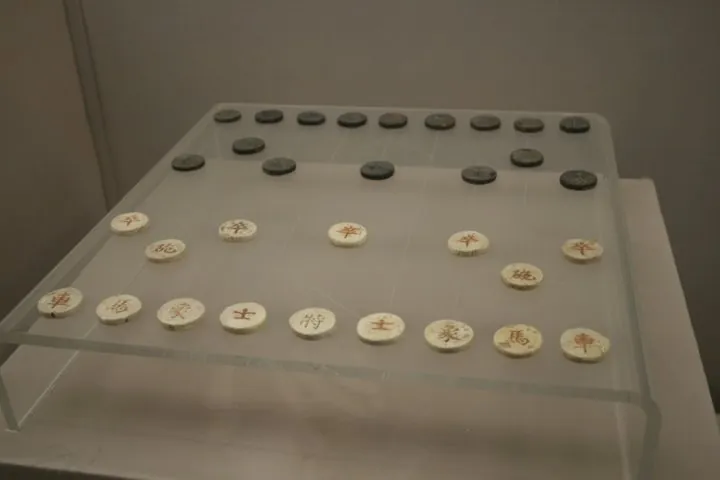
    The earliest excavated xiangqi sets that can be securely identified date from this period. A porcelain set of 32 pieces from a Song tomb at Luoyang was excavated in 1997.

  9. 1150–1200

    Europeobject

    The Lewis chessmen

    Walrus-ivory pieces found on the Isle of Lewis in Scotland, dated 1150–1200 by the British Museum. Their bishops are among the earliest surviving chess bishops shown as churchmen. On the board they still moved as elephants.

  10. 1283

    Europetext

    Alfonso X's Book of Games

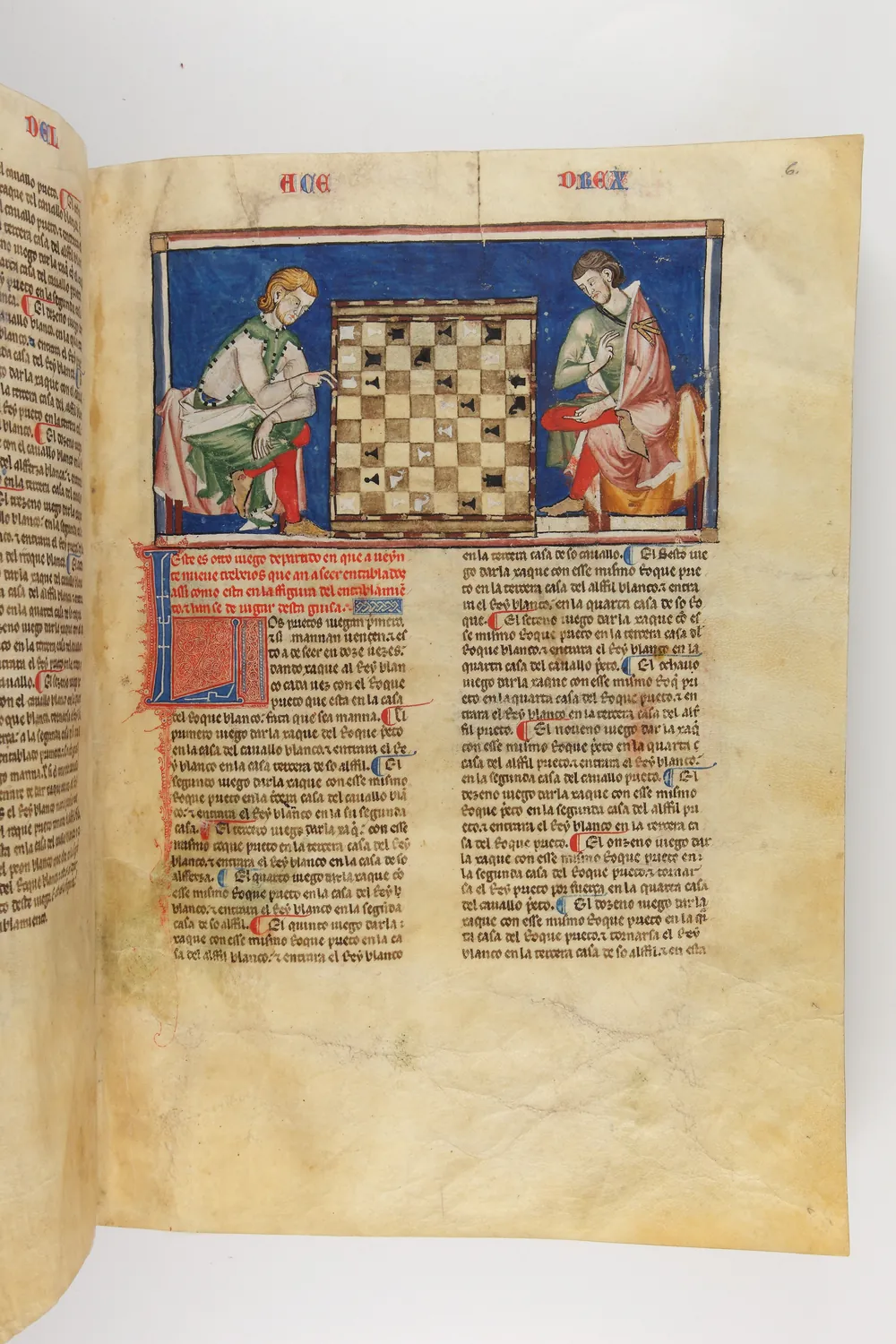
    A Castilian manuscript made for King Alfonso X describes the pieces and their moves, and 103 chess problems, most of them taken from Arabic sources. The elephant is still alfil and still jumps.

  11. 13th century

    Chinatext

    Xiangqi in an encyclopedia

    The Shilin guangji, a household encyclopedia compiled in the 13th century, includes xiangqi play in a form a player today would recognise.

  12. About 1475 to 1497

    Europetext

    The new queen and bishop

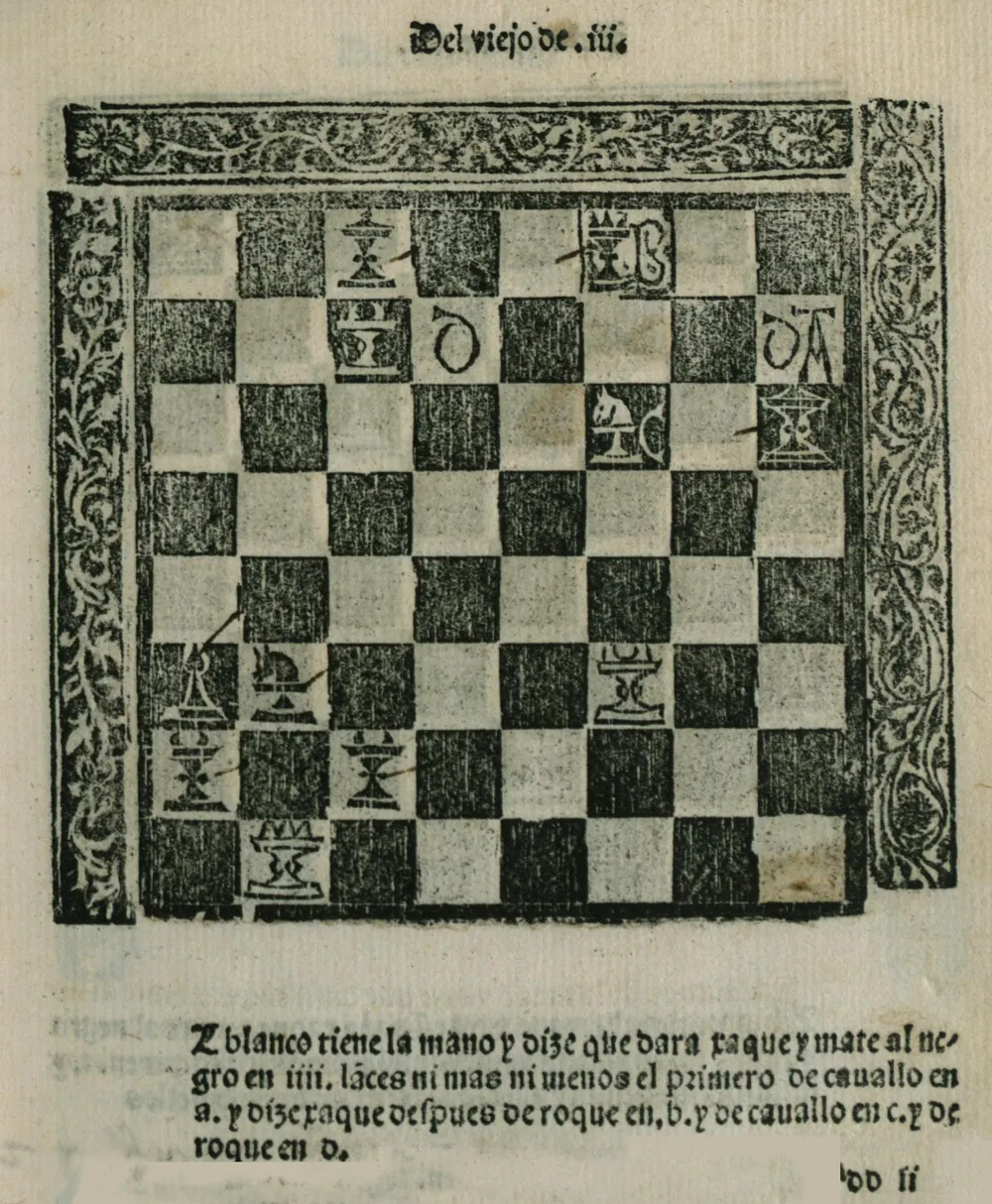
    The Valencian poem Scachs d'amor, usually dated about 1475, contains the oldest recorded game with the long-range queen and bishop. Luis Ramírez de Lucena's printed book, Salamanca, about 1496–1497, teaches both the old game and the new.

  13. Late 16th century

    Europetext

    Xiangqi sets reach Europe

    According to the historian H. J. R. Murray, Jesuit missionaries brought the first accounts of the Chinese game, and actual sets, to Europe.

  14. 1632

    Chinatext

    The Secret in the Tangerine

    橘中秘, a manual of openings and endgames, is printed. It is still studied.

Round game pieces with Chinese characters laid out on a clear stand in a museum case.
A xiangqi set in the Luoyang Museum, described as Song dynasty (960–1279). Photo: Gary Lee Todd, Wikimedia Commons, CC BY-SA 4.0.
A manuscript page with a painted miniature of two men seated at a chessboard.
Two players in the Book of Games made for Alfonso X of Castile, 1283. Photo: Real Biblioteca del Monasterio de El Escorial, Wikimedia Commons, public domain.
A printed chessboard diagram from an early book, with pieces drawn on the squares and Spanish text below.
A problem from Lucena's book, Salamanca, about 1496–1497, printed two decades after the first recorded game with the new queen. Photo: Luis Ramírez de Lucena, c. 1496–1497, Wikimedia Commons, public domain.

What can be said today: xiangqi took its own form in China, with the river, the palaces and the cannon, and is clearly recognisable by the Song period. In Europe the long-range queen and bishop are recorded from the late 15th century, and other rules of chess went on changing after that. Before those dates the two lines grow faint, and they have not been traced to a single dated starting point.

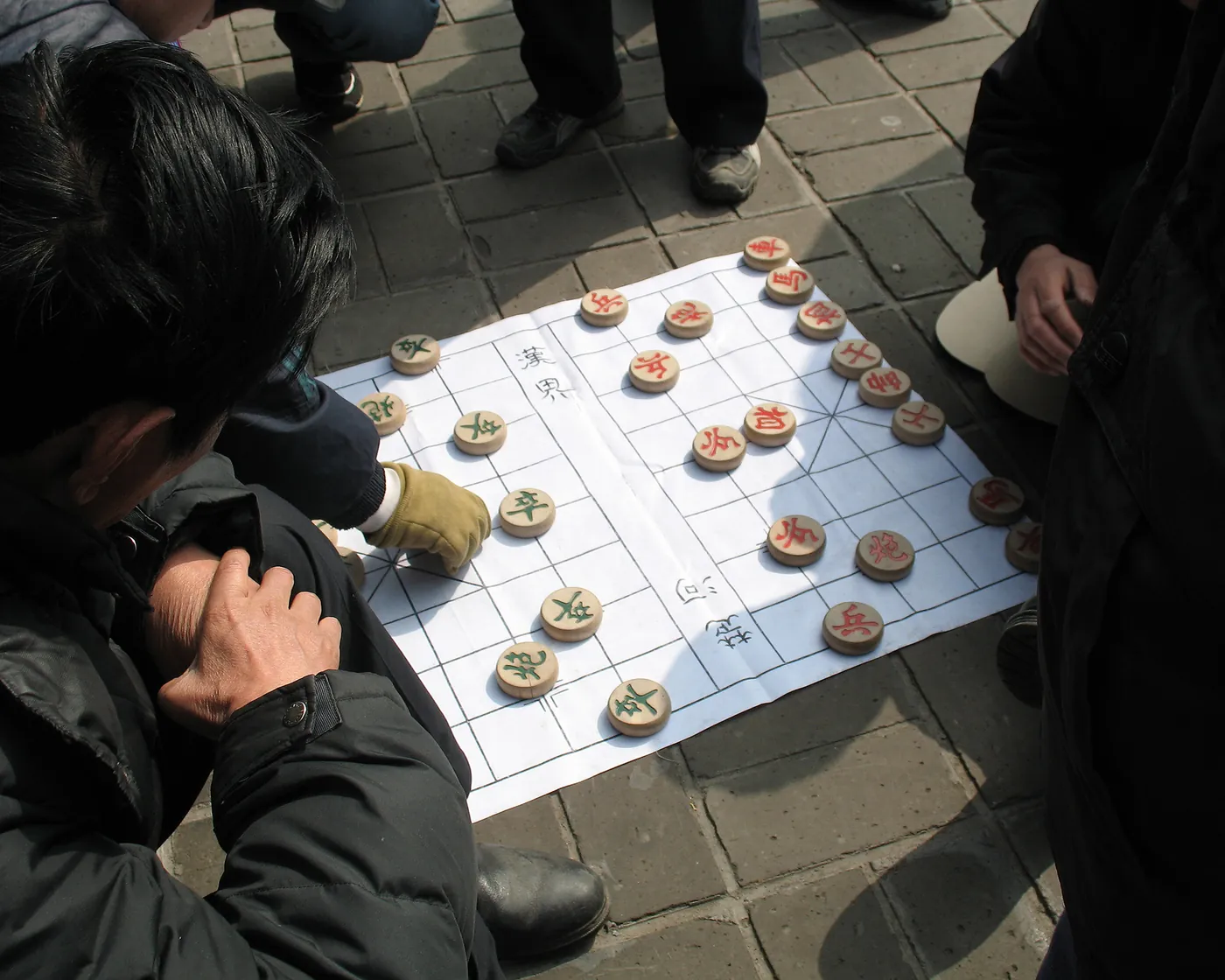
Men crouching around a xiangqi board laid on the pavement, one of them reaching to move a piece.
Xiangqi on a Beijing pavement, 2007. Photo: Vaido Otsar, Wikimedia Commons, CC BY-SA 4.0.

More on this site

Sources

The moves on every board are produced by one set of rules, checked against published counts of legal move sequences from the starting position: 20, 400, 8,902 and 197,281 at depths of one to four half-moves in chess, and 44, 1,920 and 79,666 at depths of one to three in xiangqi. The numbers of squares a piece can reach are counted from those rules.

  • H. J. R. Murray, A History of Chess, Oxford, 1913: the moves and endings of shatranj (Part I, ch. XIII), chess in China (ch. VII), the medieval European names of the pieces (Part II), the Alfonso manuscript and Lucena.
  • Niu Sengru, Xuanguai lu, the tale of Cen Shun, as preserved in Taiping guangji, chapter 369. Chao Buzhi, preface of 1079; Sima Guang's seven-player game in the Gujin tushu jicheng.
  • World Xiangqi Federation, introduction to xiangqi: the moves, the river, the palace, the facing generals, stalemate.
  • Chess Programming Wiki, Perft results and Chinese chess perft results.
  • Michael Mark, "The Beginnings of Chess", in I. Finkel (ed.), Ancient Board Games in Perspective, British Museum Press, 2007: the early Indian and Persian references.
  • Antonio Panaino, "Wizārišn ī čatrang", Encyclopaedia Iranica, 2017.
  • Peter Banaschak, "Facts on the Origin of Chinese Chess", 1997: the 569 Xiangjing and the tale of Cen Shun.
  • Joseph Needham, "Thoughts on the Origin of Chess", 1962; Jean-Louis Cazaux, "Is Chess a Hybrid Game?", 2001; David H. Li, The Genealogy of Chess, 1998.
  • Govert Westerveld on Scachs d'amor; Biblioteca Nacional de España, record of Lucena's book.
  • British Museum, the Lewis chessmen.
  • Names of the pieces: Trésor de la langue française and Französisches Etymologisches Wörterbuch (fou); Oxford English Dictionary (rook, bishop); Vasmer's etymological dictionary (слон, ферзь, ладья); Grimm's dictionary (Läufer); FIDE Laws of Chess in Chinese, 2023.
  • Chess piece drawings by Colin M. L. Burnett, Wikimedia Commons, CC BY-SA 3.0. The two shatranj pieces without a modern counterpart are drawn for this page after the abstract sets of the period. Xiangqi characters set in Noto Serif SC, SIL Open Font License.