JOHN THE BAPTIST → THE FLOWER → THE FAIRY
Why do the fairies of Midsummer Night answer to the name of John the Baptist?
Because Sânziene is his name: sanctus dies Johannis, Saint John's day, worn down by the centuries until it fit inside a yellow flower. The dictionaries show the road — and one question mark.
- 19→8
- letters: from the feast's Latin to today's Romanian
- 24 JUNE
- the day of the Nativity of Saint John the Baptist
- 4 NAMES
- of saints on the year's wheel: Sânziene, Sânpetru, Sântilie, Sâmedru

The name shrinks at every step:
- sanctus dies Johannis the feast's Latin · DEX '09
- sanctus Joannes the heard form · Scriban
- *sînt Joane reconstruction · Scriban
- *sînjuene m. sg. · Scriban
- sînziene f. pl. · Scriban
- sânziana today's form
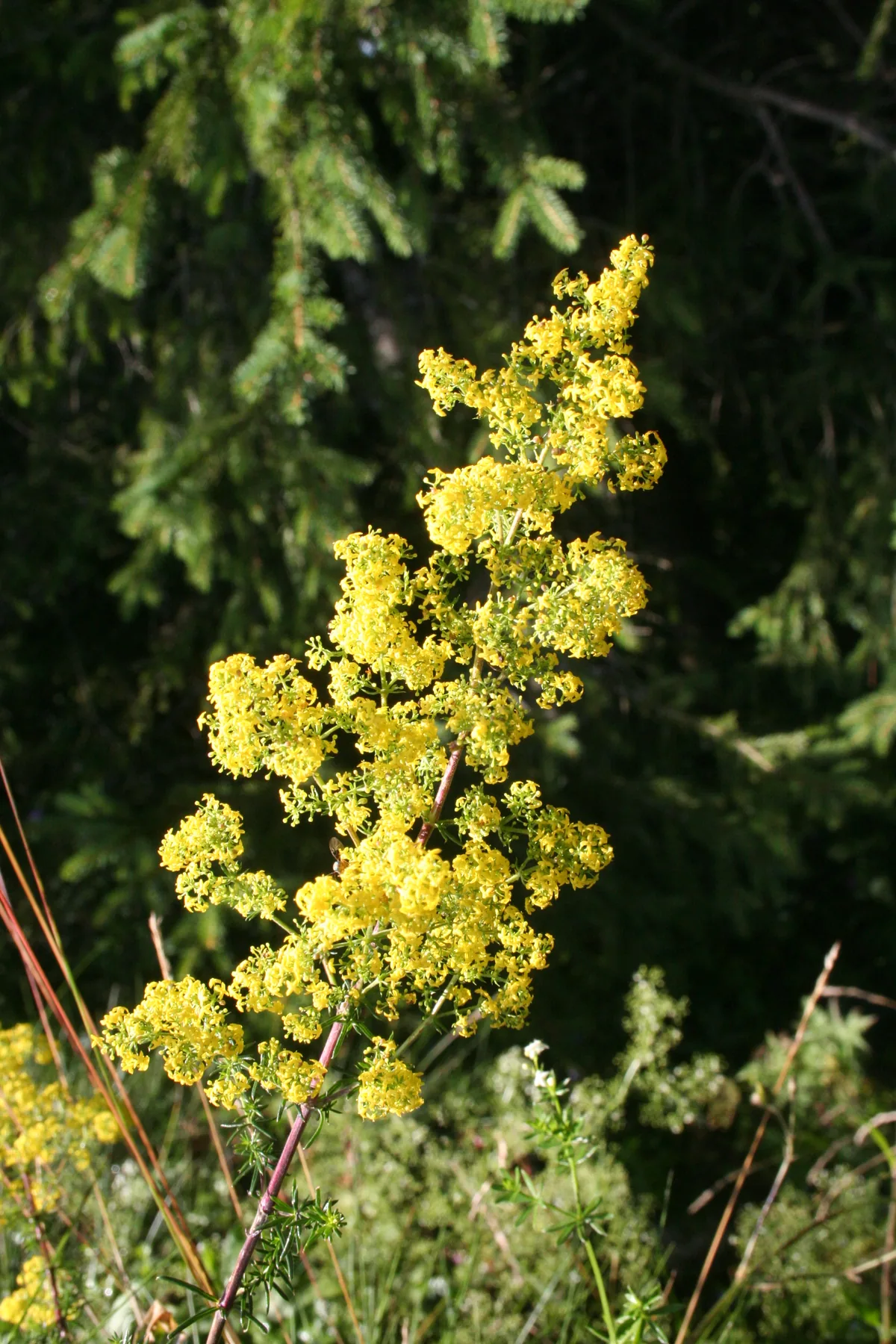
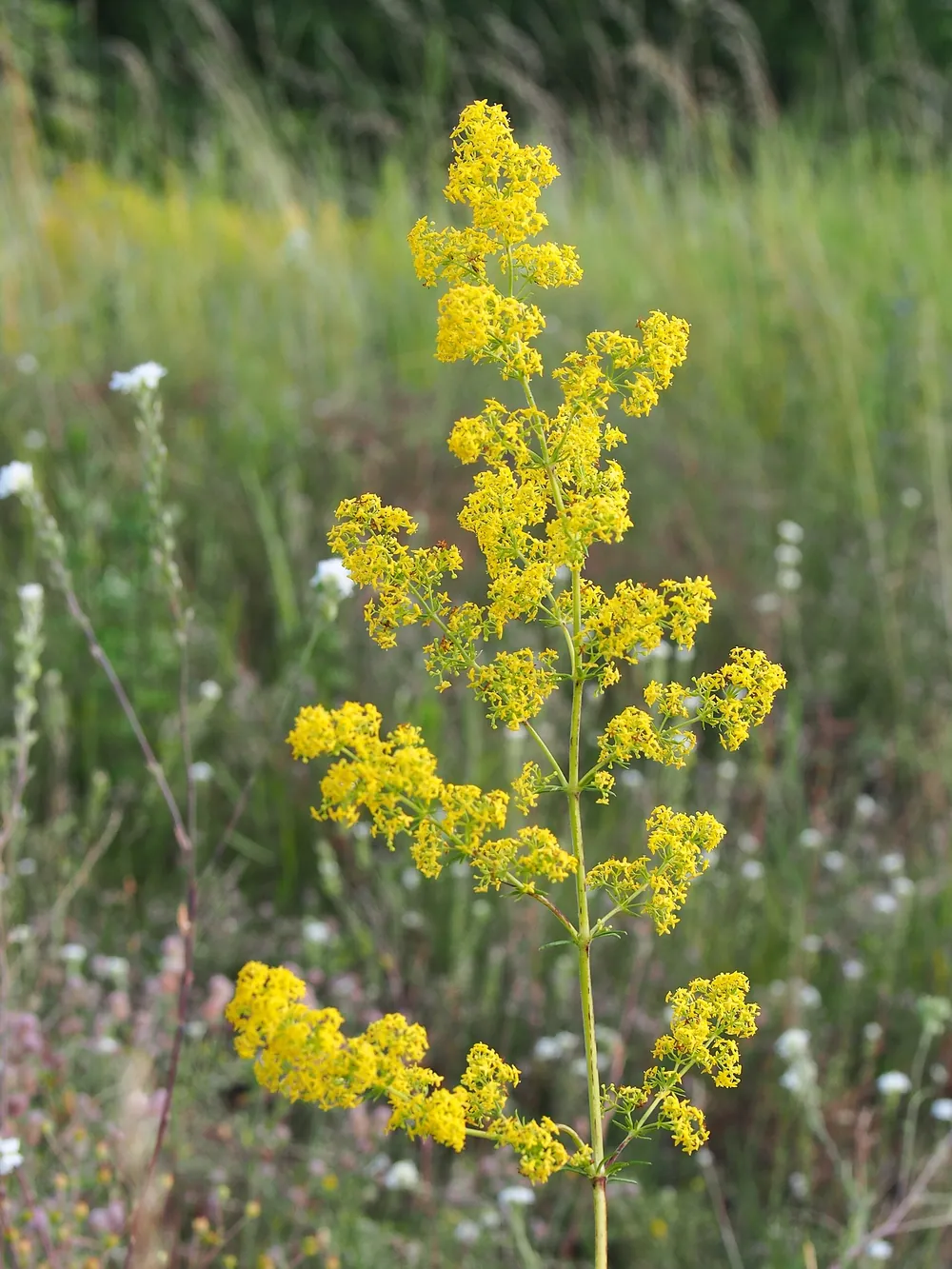
On 24 June Romanians keep the Sânzienele: the day of the Nativity of Saint John the Baptist. The feast's name comes from Latin sanctus dies Johannis — Saint John's day — through *sînt Joane and *sînjuene to today's sânziana. The same word names the yellow flower gathered then, Galium verum, and the iele of the night. DER raises one question: sânziana may blend John's day with *sanctae Dianae. The page keeps the question beside every link of the chain.
The dictionaries on the table
The name that shrank
Three dictionaries give the same basic verdict: sânziana is Saint John's day. A fourth complicates the verdict — and the page lays it on the table with the rest.
DEX '09
sânziană, three living senses
- a herb with yellow flowers
- the popular name of the Christian feast kept on 24 June; Drăgaică
- (in the plural) the iele
Lat. sanctus dies Johannis. ATTESTED
MDA2
sânziană, the long entry
- the 24 June feast = drăgaica = the Nativity of Saint John the Baptist
- the Sânziene night: in folk belief, a perfect silence settles over nature
- plants, among them Galium verum; (in the plural) iele
Medieval Latin sanctus dies Johannis. ATTESTED
The variant tail: sâm-…, sânzâi-…, sin-…
Scriban
the road Scriban heard
- sanctus Joannes the heard form · Scriban
- *sînt Joane reconstruction · Scriban
- *sînjuene m. sg. · Scriban
- sînziene f. pl. · Scriban
- sânziana today's form
- the days around the feast are the flower days in Muntenia and southern Moldova
Latin sanctus Joannes. RECONSTRUCTED
Șăineanu
Sâmziana, the fairy
- at once Saint John's day
- the loveliest peasant girl, chosen at the feast
- in tales, the golden-haired fairy, Cosânzeana
“a creation of Christian origin”. ATTESTED
FROM 19 LATIN LETTERS TO 8 ROMANIAN ONES — the same John

A whole year of saints
The Sânzienele are one bead on a string: the folk calendar shortens the saints' names until they sound like neighbours.
Sânziene
24 June
sanctus dies Johannis · DEX '09
Sânpetru
29 June
sân + Petru · MDA2 · the day of apostles Peter and Paul
Sântilie
20 July
sânt + Ilie · MDA2
Sâmedru
26 October
Sân + Medru · MDA2 · the Sâmedru fire
The string follows the calendar dates; no claim that tradition strings them so.
The Sân- wheel
Five stops in one year: from Sânziene to Sânziene, the wheel passes four short-named saints and returns with the fair.
SUMMER
THE SÂNZIENE
24 June
DEX '09 · sanctus dies Johannis
The stops, in turn
THE SÂNZIENE
24 June
DEX '09 · sanctus dies Johannis
The shrunken name lands on John's day.
stop 1 of 5
SÂNPETRU
29 June
MDA2 · sân + Petru
The day of apostles Peter and Paul.
stop 2 of 5
SÂNTILIE
20 July
MDA2 · sânt + Ilie
Saint Elijah with a short name.
stop 3 of 5
SÂMEDRU
26 October
MDA2 · Sân + Medru
With the Sâmedru fire and the autumn ancestors.
stop 4 of 5
THE RETURN
24 June
Șăineanu 1929 · the Drăgaica fair
The wheel closes: Buzău, Mizil — the fairs of old.
stop 5 of 5
23 June evening → 24 June morning
The night between the fires
24 June is the day, but the story burns the night before: the fires of the 23rd, the midnight silence, the morning wreaths.
The voice and the Word
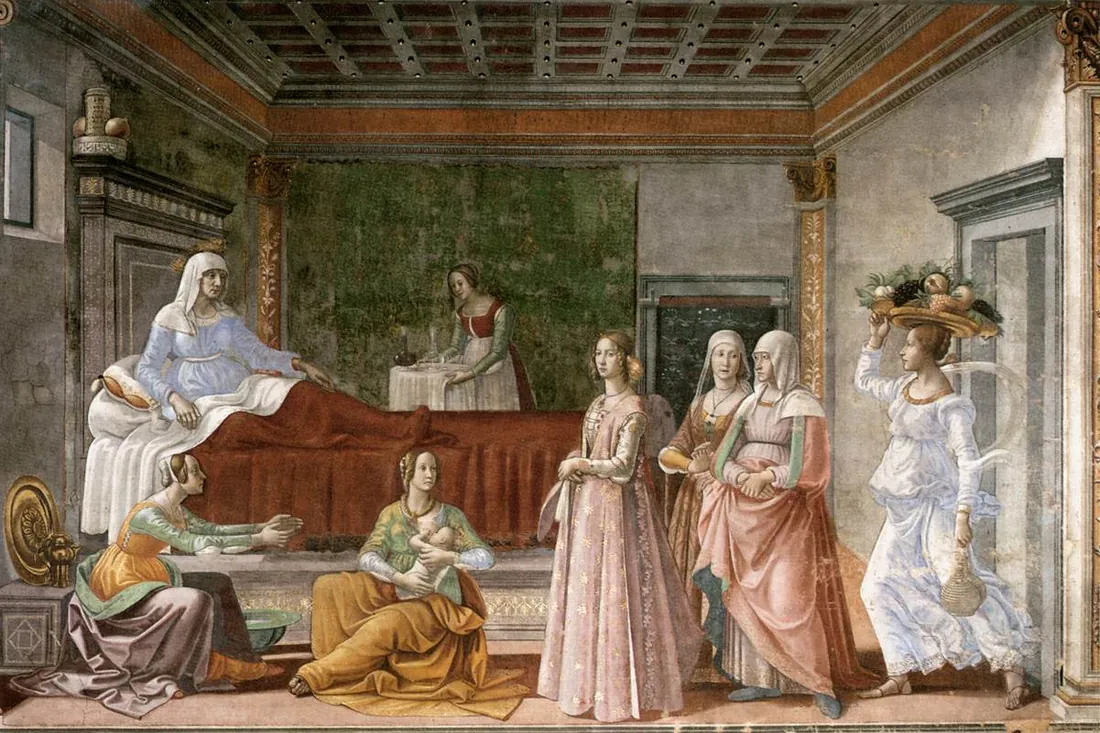
The Church has kept the Nativity of Saint John on 24 June since the early fourth century, six months before Christmas.
“John is the voice, but the Lord ‘in the beginning was the Word’”
Augustine, Sermon 293 on the Baptist's birth, as quoted by the feast page; the passage is still read in the Office of Readings for 24 June.

The fires that never enter the church
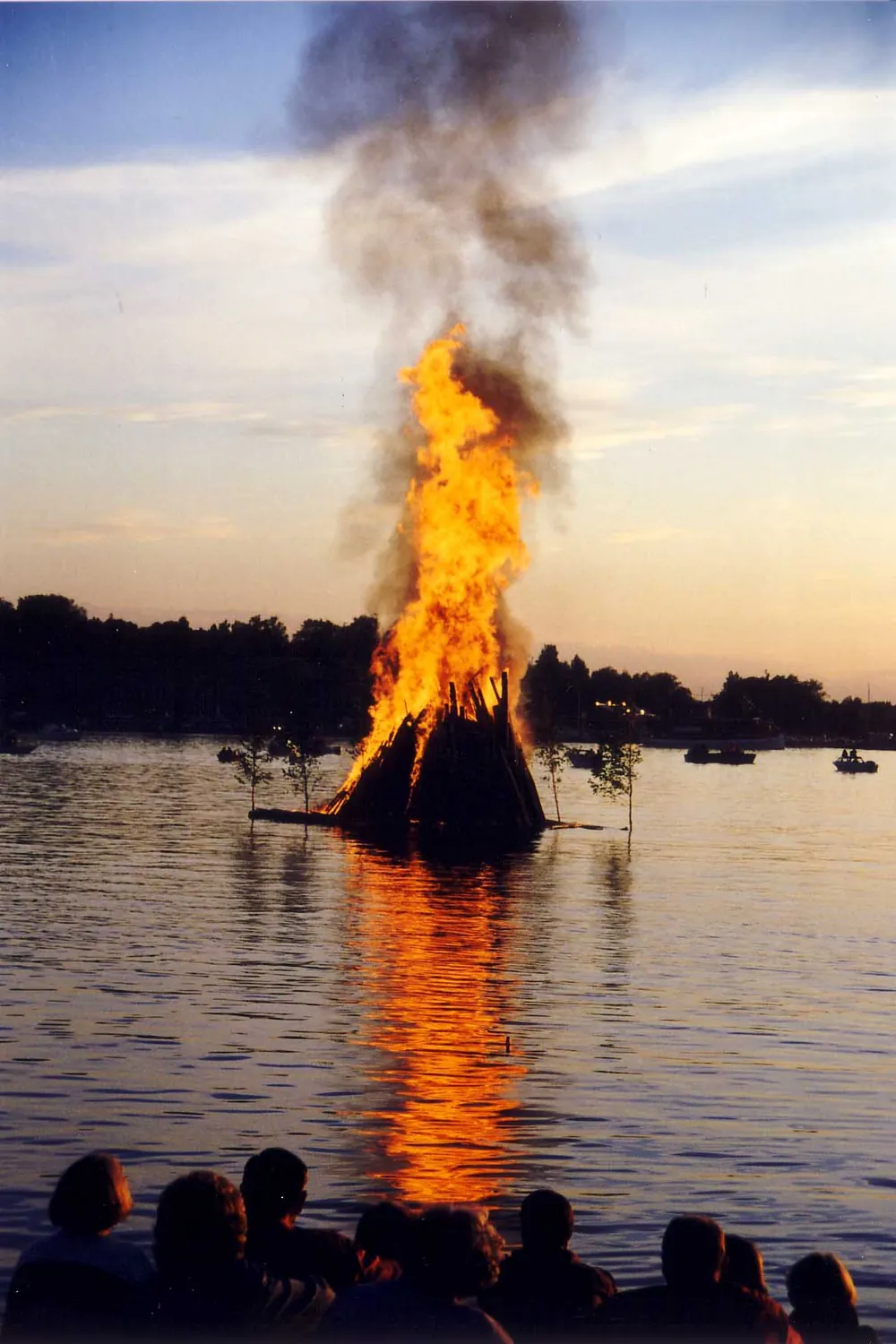
In historian Ronald Hutton's account, the bonfires lit on 23 June are one of the most widespread folk customs in Europe: from Ireland to Siberia, from Norway to Algeria. Ancient fire rites were absorbed into Christian culture, and the end of the solstice period, 24 June, was dedicated to John the Baptist as the counterpart of Christmas at the winter solstice. The fires never entered the formal liturgy: they burn beside the feast, never inside it.

What the dictionaries say about the night
The wreaths
“Bouquets are made and wreaths woven on 24 June, then set on windows and gates … to keep the household from evil and bring it luck” (CADE).
The silence
On the Sânziene night, in folk belief, a perfect silence settles over nature (MDA2).
The flower days
The days around the feast are the flower days in Muntenia and southern Moldova (Scriban).
23 EVENING
the fires
MIDNIGHT
the silence
24 MORNING
wreaths and fair
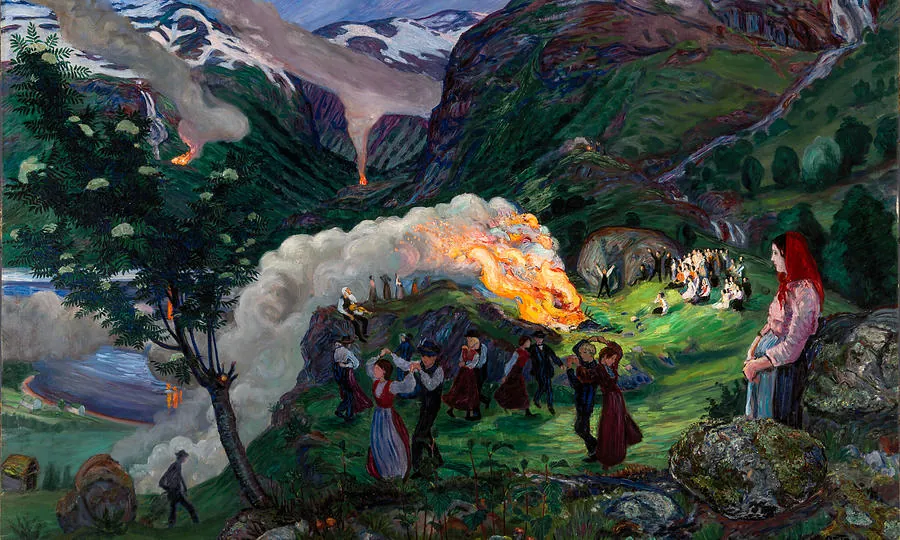

The neighbours of the same night
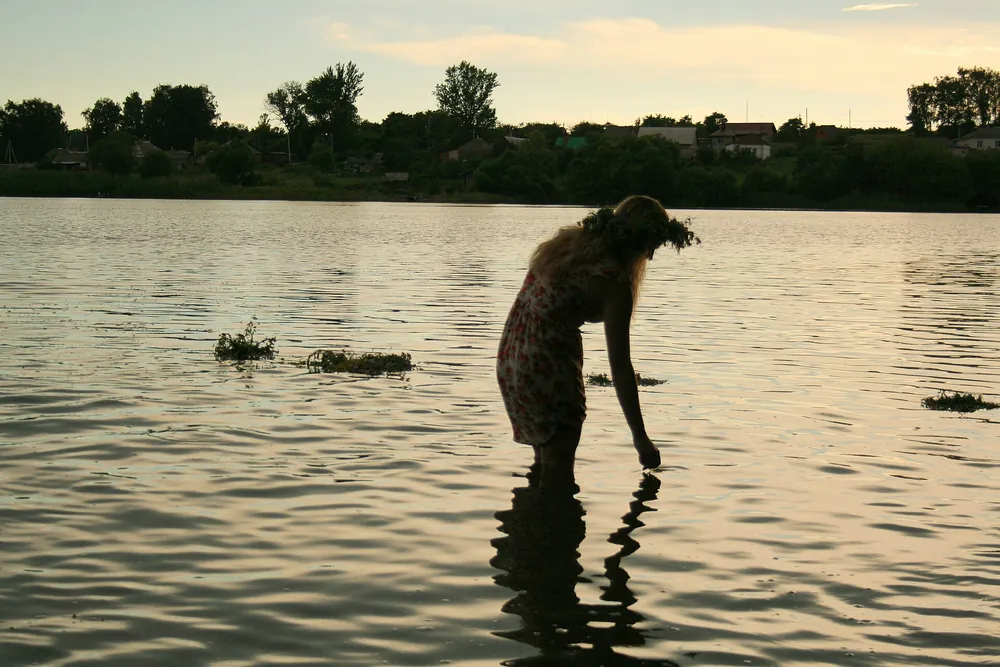
Kupala
Kupala Night falls on the feast of the Nativity of Saint John. After Vasmer, apud Wikipedia, the name (Ivan) Kupala is a variant of the name (John the) Baptist. The signs of the night: bonfires, floating wreaths, the fern flower. Hutton notes that Russians call the night “Ivana Kupala”.

Shakespeare
In Shakespeare's England, 24 June was Midsummer Day, the feast of Saint John the Baptist, and on Midsummer Night the fairies and witches were believed to hold their festival.
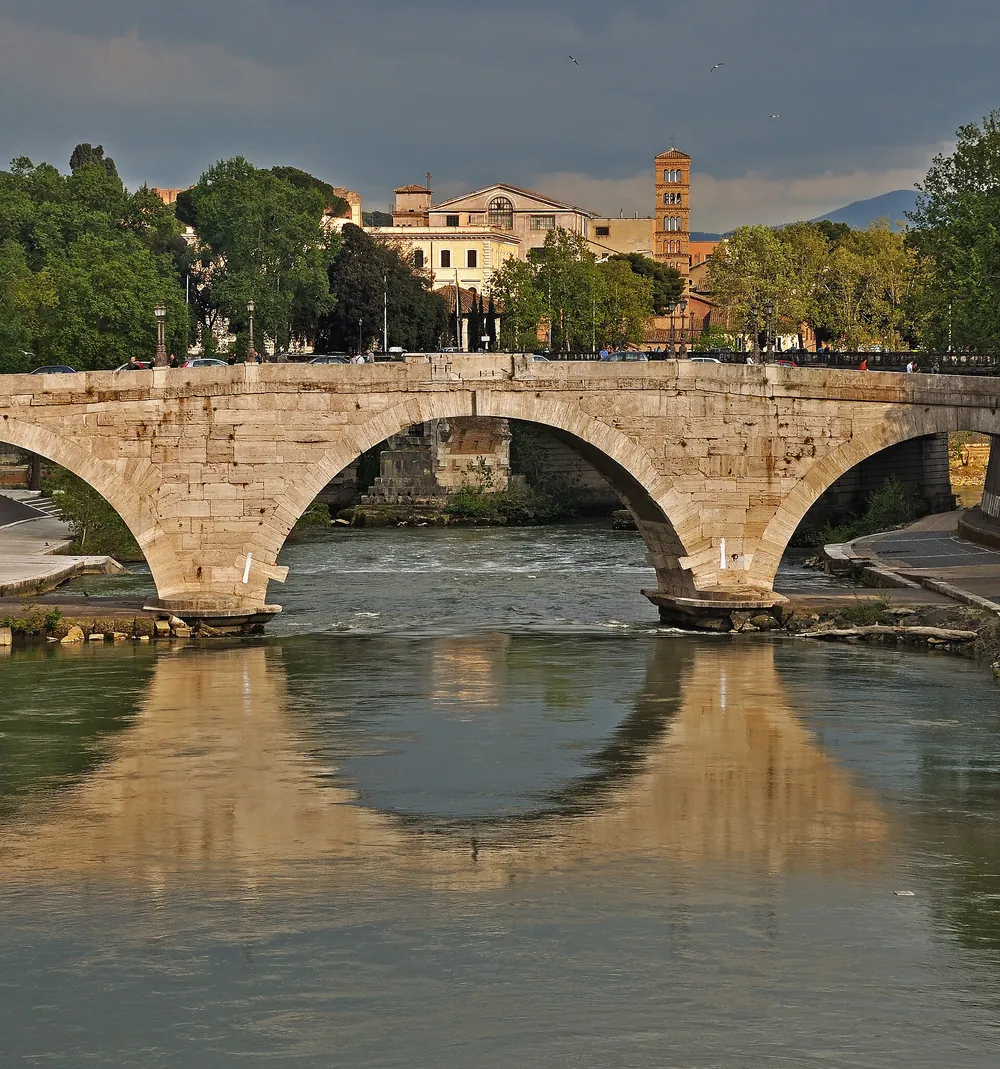

Morning, at the fair
24 June morning: wreaths on the gates and, once, the Drăgaica fair.
The fairs of old
Șăineanu (1929): “at Drăgaica the fairs of Buzău and Mizil are held”. Scriban (1939) adds “and elsewhere”. Both witnesses are nearly a century old; the page keeps them in the past.
Two words, two lands
In Muntenia: drăgaică; in Moldova: sânziene. The map is Șăineanu's.
Two dictionaries, two mothers
DEX '09, MDA2 and Scriban: from Bulgarian dragaika. Șăineanu: derived from dragă. The disagreement stays open, with both views on the table.
MDA2 lists the fair on 20 July too; noted, never explained.
The maidens' dance
DEX '09 knows drăgaica as a dance and a dance tune, danced by girls. The steps belong to the page that owns the dance:
“Bouquets are made and wreaths woven on 24 June, then set on windows and gates … to keep the household from evil and bring it luck”
One name, three fossils
FEAST
24 June, John's Nativity
FLOWER
Galium verum, yellow
FAIRY
the iele of the night
You say all three when you say Sânziene.
Tie the names
Six rounds, three kinds: senses to dictionaries, names to saints, customs to days. Every round teaches one row of the sources table.
Score: 0 / 6
Three numbers
- 19→8
- letters: from sanctus dies Johannis to sânziana
- 24
- June: John's day, six months before Christmas
- 4
- saints' names on the wheel: Sânziene, Sânpetru, Sântilie, Sâmedru
Three wrong sayings
“The Sânzienele are pagan fairies older than Christianity.”
The name is Sanctus Johannes — DEX '09 and MDA2. DER adds a probable crossing with *sanctae Dianae: a hypothesis, never a pure pagan survival.
“Drăgaica comes from dragă, from love.”
DEX '09, MDA2 and Scriban give Bulgarian dragaika; the dragă derivation is Șăineanu's view, shown beside it.
“The Sânziene fires belong to the church service.”
After Hutton, the 23 June fires never entered the formal liturgy: they burn beside the feast, never inside it.
Sources
The dictionaries first, then the feast and the fires, then the neighbours of the night. Every risky claim points at its source.
| ID | Claim | Source |
|---|---|---|
| C01 | sânziana = the 24 June feast / plants / iele; Latin sanctus dies Johannis | DEX '09 |
| C02 | the feast = drăgaica = John's Nativity; the Night of ~; Medieval Latin sanctus dies Johannis | MDA2 |
| C03 | *sînt Joane → *sînjuene → sînziene → sînziana, from sanctus Joannes | Scriban |
| C04 | a probable crossing with *sanctae Dianae | DER |
| C05 | John's day + the loveliest girl + Cosânzeana | Șăineanu |
| C06 | drăgaica: feast, dance, maidens, 24 June fair; from Bulgarian dragaika | DEX '09 |
| C07 | from Bulgarian драгайка; fair on 24 June or 20 July; syn. iele, rusalii, șoimane | MDA2 |
| C08 | derived from dragă; Muntenia/Moldova; the Buzău and Mizil fairs | Șăineanu |
| C09 | Bulgarian dragaĭka; fair “at Buzău, at Mizil and elsewhere” | Scriban |
| C10 | Sân + Medru, 26 October; the Sâmedru fire | MDA2, Șăineanu, D.Religios |
| C11 | sânt + Ilie, 20 July | MDA2 |
| C12 | sân + Petru, 29 June, Peter and Paul | MDA2, D.Religios |
| C13 | 24 June since the early fourth century; six months before Christmas | the feast page (Agape) |
| C14 | Augustine's Sermon 293; read in the Office of Readings | Agape |
| C15 | the 23 June fires; dedicated to John as Christmas's counterpart; never in the liturgy | Hutton |
| C16 | Fors Fortuna on 24 June too; Ovid, Fasti VI.773–786 | Platner & Ashby |
| C17 | Kupala falls on John's Nativity; Vasmer: Kupala a variant of the Baptist | Wikipedia, apud Vasmer |
| C18 | 24 June = Midsummer Day, John's feast; the fairies' festival | a Shakespeare note |
| C19 | 24 June wreaths on windows and gates, against evil, for luck | CADE |
| C20 | Sanctus dies Iohannis | NODEX |
Dictionaries, on dexonline
The feast and the fires
The neighbours of the night
Sister pages
Method: every table row was read in its source before reaching the page; the Latin quotations carry the editors' paraphrases, marked as such. The questions left open stand on the page as questions: the Diana crossing, Drăgaica's mother, Rome as a bare coincidence of date, the fairs kept in the past.
Type: Fraunces, Newsreader and Atkinson Hyperlegible, under the SIL Open Font Licence.