Chapter 9 · Health and biodiversityLesson 9.4
Conserving biodiversity: protected areas, protected species and observations that can be checked
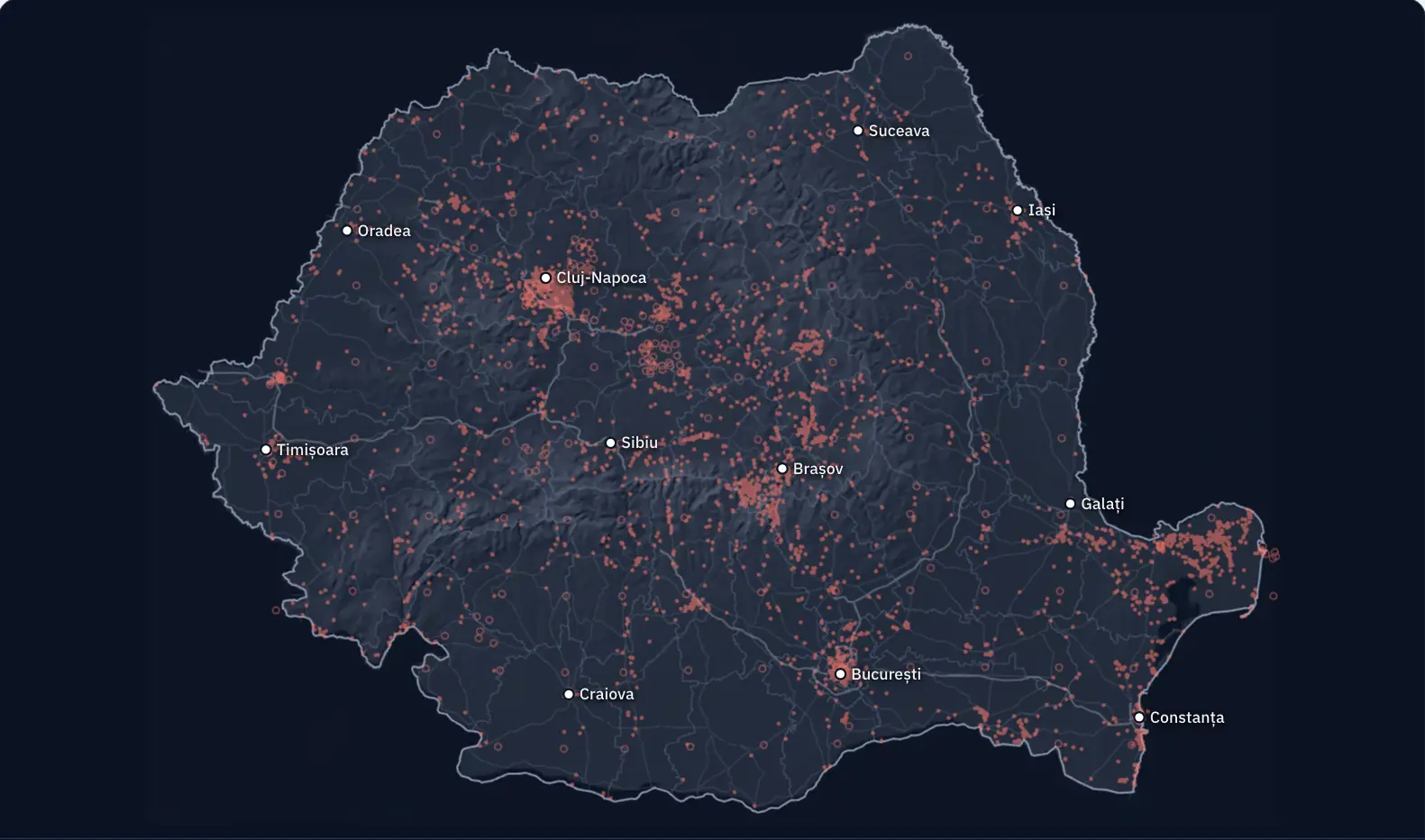
On the GBIF map of brown bear records, some areas are empty. Does that mean no bears live there?
- Size
- from 19.5 km to 744 km
- Level
- population and ecosystem
- Time
- a decade of observations
Before you read: what do you think?
According to the 2025 genetic study, Romania has between 10,657 and 12,787 brown bears. How many brown bear records from Romania does the global GBIF database hold?
See the answer
About 1,400 (1,420 with a location given by coordinates, as of 16 November 2026). A record shows that someone saw or documented a bear in a place, usually with the date of the observation. It does not count bears: one bear can be photographed many times, and most never make it into GBIF at all.
In February 1933, the botanist Alexandru Borza wrote that, across the whole country, the law protected only two species of flower. The first was the edelweiss, which until then had been uprooted and sold to tourists at the railway stations of the Prahova Valley; the second, the thermal water lily of the spa at Băile Episcopiei. From two protected flowers, conservation has grown to hundreds of protected areas and entire lists of species.
In situ and ex situ conservation
In situ conservation means keeping ecosystems, habitats and populations of species where they naturally live. It works through protected areas and through laws that protect species.
Ex situ conservation means keeping species outside their natural habitat: in botanic gardens, seed banks, zoos and breeding centres. It is a backup; it does not replace the habitat. The bison raised in enclosures could be released into the mountains only because suitable forests for them still existed. Releasing a species into a region from which it had disappeared is called reintroduction.
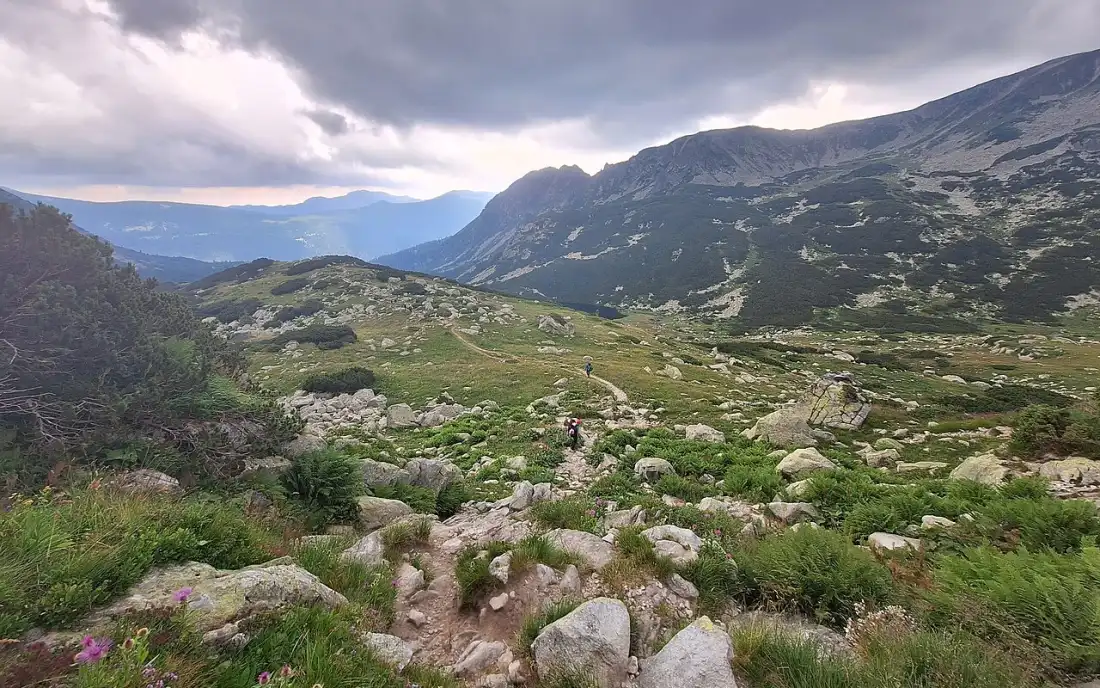
Photo: Gugalcrom123, CC BY-SA 4.0, source. Cropped and resized.

The categories of protected area in Romania
A protected area is a territory marked out by law and managed to preserve nature. Romania’s protected areas law (Government Emergency Ordinance, OUG, no. 57/2007) sorts them into three groups.
Areas of national interest are scientific reserves, national parks, natural monuments, nature reserves and nature parks. In a scientific reserve, all human activity except research is banned. A national park covers a large area with ecosystems little changed by people; visitors keep to marked trails. A natural monument is a rare species, tree, cave or geological formation, protected in its own right. A nature reserve protects a particular habitat or species. A nature park protects a landscape in which people live and work, and grazing and haymaking carry on.
Areas of international interest are natural World Heritage sites, geoparks, wetlands of international importance and biosphere reserves, recognised by UNESCO. Areas of Community interest make up the European Union’s Natura 2000 network, the largest network of protected areas in the world. It has two kinds of site: Sites of Community Importance, for rare habitats and species, and Special Protection Areas, for birds.
Protected species: the Red List, red data books and the law
The IUCN Red List shows a species’ risk of extinction at world level. A red data book does the same for a single country or region: a species that is not threatened worldwide can be rare in a particular country.
The list and the red data book show the risk, but protection comes from the law. In the annexes of OUG no. 57/2007, the brown bear, the wolf and the lynx are species that require strict protection. The great white pelican and the Dalmatian pelican are on the list of birds for which Special Protection Areas are designated. The chamois is in a different annex: species that may be taken from the wild only under management measures. Each species, then, has its own legal status.
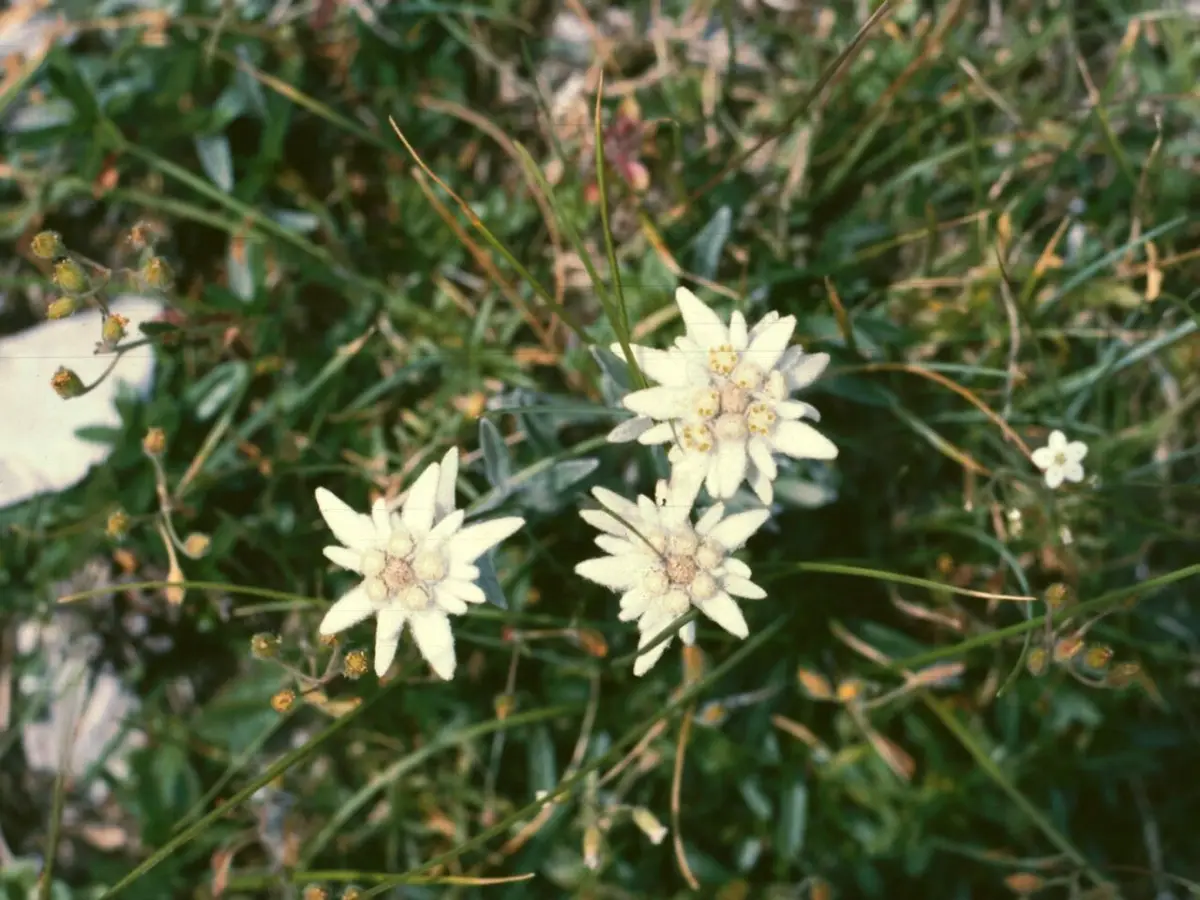
Photo: Franz Xaver, CC BY-SA 3.0, source. Resized.

What an observation proves and what it does not
The global GBIF network collects data on where and when species have been found: museum specimens, phone photos taken by amateur naturalists, DNA samples. Each occurrence record says that a species was found in a particular place on a particular date. The identification, the place or the date can be wrong, which is why records are checked before they are used as evidence. For Romania, GBIF holds more than two million records.
Records are not spread evenly. People observe mostly where they can get to easily, near towns, roads and airports; a study of the mammals of Borneo found a strong effect of towns and a moderate effect of roads and airports. So an area with no dots on the map may simply be an area where nobody has looked.
After a search with a known method (the same area, the same observation time, every species noted) you can say that the species was not found with that effort. The GBIF guide to survey data puts it plainly: greater effort generally means a higher probability of finding the species. A class can make valuable observations if, for each one, it notes the species, the exact place, the date, a photo and how long it searched.
GBIF records from Romania, accessed on 16 November 2026. A record shows that the species was reported in a place, usually on a particular date: an observation, a photograph, a museum specimen or a record made by a machine. It is not a count of animals or plants.
| Species | Records with coordinates | Years | Observations by people | Cells with at least one record (of 3,941) | Licences |
|---|---|---|---|---|---|
| Brown bear (Ursus arctos) | 1,420 | 1999–2026 | 99.6% | 81 squares of ~30 km | CC BY-NC 4.0: 1,243; CC BY 4.0: 140; CC0 1.0: 37 |
| White stork (Ciconia ciconia) | 9,366 | 1906–2026 | 99.9% | 1,322 | CC BY 4.0: 5,424; CC BY-NC 4.0: 3,859; CC0 1.0: 83 |
| Great tit (Parus major) | 17,376 | 1898–2026 | 99.9% | 1,287 | CC BY 4.0: 14,020; CC BY-NC 4.0: 3,308; CC0 1.0: 48 |
| Edelweiss (Leontopodium nivale) | 181 | 1900–2026 | 95% | 42 | CC BY-NC 4.0: 118; CC BY 4.0: 61; CC0 1.0: 2 |
| Ragweed (Ambrosia artemisiifolia) | 9,936 | 1907–2026 | 99.9% | 2,106 | CC BY 4.0: 6,769; CC0 1.0: 2,927; CC BY-NC 4.0: 240 |
| Rapa whelk (Rapana venosa) | 259 | 1973–2026 | 76% | 14 | CC BY 4.0: 135; CC BY-NC 4.0: 117; CC0 1.0: 7 |
| Cell centre | Near | Records |
|---|---|---|
| 44.45° N, 28.75° E | 31 km from Constanța | 36,442 |
| 46.75° N, 23.55° E | Cluj-Napoca | 31,176 |
| 44.02° N, 28.65° E | 17 km from Constanța | 30,969 |
| 44.45° N, 26.05° E | București | 30,554 |
| 44.80° N, 24.85° E | 6 km from Pitești | 27,809 |
| 44.38° N, 26.15° E | 7 km from București | 22,097 |
| 44.23° N, 27.25° E | 38 km from Slobozia | 18,232 |
| 45.07° N, 29.15° E | 29 km from Tulcea | 16,404 |
Of Romania’s 3,941 cells, 250 have fewer than ten records of all species and 12 have none. Half of all the records come from 112 cells. Bear positions are shown in squares of about 30 km, edelweiss positions in cells of about 8 km.
Measurements. Each dot is a real occurrence record from GBIF (38,538 records for the six species, from 43 datasets); the coloured cells count the records of all species (1,528,446 records in the cells of Romania). Data accessed on 16 November 2026. For protected species the position is rounded: the bear in squares of about 30 km, edelweiss in cells of about 8 km. Approximate positions (over 10 km) are empty circles.
Sources and credits. Records: GBIF.org (16 November 2026), 43 datasets, each cited on the sources page. The licence is that of each record, and a dataset can mix them: CC BY 4.0 (26,549), CC BY-NC 4.0 (8,885), CC0 1.0 (3,104). The CC BY-NC 4.0 records are used non-commercially, in a free book. Counties: geo-spatial.org (ANCPI). Roads and parks: © OpenStreetMap contributors (ODbL). Relief: Copernicus GLO-30. Places: GeoNames (CC BY 4.0).
Worked example
The brown bear on the map
The data: on 16 November 2026, GBIF had 1,420 brown bear records from Romania with the location given by coordinates. For 2020 there were 20, and for 2025, 305. The Ministry of the Environment’s genetic study, based on about 24,000 samples, estimates between 10,657 and 12,787 bears.
Step 1: 305 ÷ 20 ≈ 15. There are about 15 times as many records from 2025 as from 2020.
Step 2: a bear population cannot grow 15-fold in five years. In both years, all the records come from two platforms to which people send photos and observations, iNaturalist and Observation.org. The rise shows that more observations were sent in; it says nothing about the number of bears.
Step 3: there are 7 to 9 times as many estimated bears as records, yet the records cannot serve as a count, because the same bear can be recorded several times and most bears are never recorded. Counting the bears took a specific method: genetic samples collected according to a plan.
Step 4: on 10 and 12 November 2026, the press reported bears sighted in the commune of Dobrovăț (Iași county) and in Vaslui county, where one article quotes “ten animals” reported by the authorities, without saying who counted them or how. GBIF has no bear record located in Vaslui or in Iași, even though the two counties have 14,524 and 36,022 records of other species. The map says only that no bear record has been sent in from there; it says nothing about the bears in the two counties.
Conclusion: a verified record proves presence, a map of records also shows where the observers were, and the size of a population calls for a counting method.
In Romania
From Retezat in 1935 to 606 Natura 2000 sites
Romania’s first national park, Retezat National Park, was set up in 1935 with 13,000 ha; today it covers more than 38,000 ha. Romania has 13 national parks and 16 nature parks. Its UNESCO-recognised biosphere reserves are the Danube Delta and the Rodna mountains. Retezat also held this status, from 1979 until 2021, when UNESCO withdrew it.
In Romania, the Natura 2000 network has 606 sites: 435 Sites of Community Importance and 171 Special Protection Areas for birds. Together they cover about 24% of the country’s land area. In a Natura 2000 site people can go on living, haymaking and grazing, as long as they do not harm the species and habitats for which the site was designated.
In short
- In situ conservation keeps species in their natural habitat, through protected areas and laws; ex situ conservation keeps them outside it, in botanic gardens, seed banks, zoos and breeding centres.
- The categories of protected area in Romania: scientific reserve, national park, natural monument, nature reserve, nature park (national interest); biosphere reserve and others (international interest); Natura 2000 sites (Community interest).
- The IUCN Red List shows the risk of extinction at world level, a red data book at the level of one country; actual protection comes from the law, for example the strict protection of the brown bear, the wolf and the lynx.
- Romania’s first national park is Retezat (1935); in Romania, the Natura 2000 network has 606 sites, covering about 24% of the land area.
- A verified occurrence record proves that a species was present in a place on a date; an area without records does not prove that the species is absent, because observations pile up where people go.
Common mistakes
WrongThere are no dots on the map in that area, so the species doesn’t live there.
RightMissing dots may simply mean that nobody has looked there. Only after a search with a known effort and method can you say that the species was not found with that effort.
WrongIf a species lives in a zoo, it is saved and the habitat no longer matters.
RightEx situ conservation is a backup. The bison bred in captivity could be released only because suitable forests for them still existed.
WrongNobody is allowed into a Natura 2000 site.
RightScientific reserves are the ones with strictly limited access. In a Natura 2000 site people can go on living and working, as long as they do not harm the species and habitats for which the site was designated.
Check yourself
Seven questions. For the first six you see the explanation at once, with the paragraph of the lesson that supports it; for the written ones you compare with a good answer.
Which of the following is an example of ex situ conservation?
Answer
b) Keeping the seeds of a rare plant in a seed bank. A seed bank keeps the species outside its natural habitat. The other measures protect species where they live, that is, in situ.
Which category of protected area is recognised by UNESCO?
Answer
b) The biosphere reserve. Biosphere reserves are areas of international interest, recognised by UNESCO; in Romania they are the Danube Delta and the Rodna mountains. Sites of Community Importance are part of the European Natura 2000 network.
In an atlas built from observations sent in by the public, a mountain massif with no roads has no bear records. What can you conclude?
Answer
c) You cannot conclude absence: nobody may have looked there. Observations pile up where people go. Only after a search with a known method and effort can you say that the species was not found with that effort.
What is the difference between the IUCN Red List and a national red data book?
Answer
b) The Red List shows the risk at world level, the red data book in a single country or region. Both show the risk of extinction, at different scales. Actual protection comes from the law, not from the lists.
In Romania, Natura 2000 has 606 sites, of which 171 are Special Protection Areas for birds. How many are Sites of Community Importance?
sitesAnswer
435 sites. 606 − 171 = 435 Sites of Community Importance, for rare habitats and species other than birds.
Is it in situ or ex situ conservation?
Answer
In situ: Retezat National Park; A Natura 2000 site for pelicans; Strict legal protection of the lynx.
Ex situ: A seed bank; The bison in the Slivuț enclosure, near Hațeg; Rare plants grown in a botanic garden.
Protected areas and laws protect species where they live. Seed banks, enclosures and botanic gardens keep them outside their natural habitat.
Your class wants to find out whether hedgehogs live in the nearby park. Describe what should be noted for each observation and what the group should do to be able to say, at the end, “no hedgehogs found, despite searching”.
A good answer
For each observation, note the species, the exact place (coordinates), the date and time, a photo and who made the observation. To talk about absence, the group has to search by a fixed rule: the same routes or areas, the same search time and at times of day that suit the species, several times over. The correct conclusion is still “not found with this effort”, which is different from “not there”.
A complete answer asks for the species, the place, the date and a piece of evidence for every observation, and ties the conclusion about absence to a known, repeated search effort.
Terms
- in situ conservation
- Keeping species and ecosystems where they naturally live.
- ex situ conservation
- Keeping species outside their natural habitat: botanic gardens, seed banks, zoos, breeding centres.
- protected area
- A territory marked out by law and managed to preserve nature.
- Natura 2000
- The European Union’s network of protected areas, for habitats and species that are rare at European level.
- biosphere reserve
- A protected area recognised by UNESCO, with strictly protected zones and zones in which local people carry on their activities.
- reintroduction
- Releasing a species into a region from which it had disappeared.
- occurrence record
- The information that a species was found in a particular place on a particular date (museum specimen, photo, DNA sample); it is checked before being used as evidence.
Sources and link to the programme
- Al. Borza – Monumentele naturii în România, Boabe de grâu magazine, year IV, no. 2, February 1933 (Biblioteca Centrală Universitară Cluj, Restitutio collection) – until 1933 only two species of flower were protected by law across the whole country, the edelweiss and the thermal water lily of Băile Episcopiei; the end of edelweiss sales at the stations between Predeal and Sinaia
- Convention on Biological Diversity – Article 2. Use of Terms – definitions of in situ and ex situ conservation and of a protected area
- OUG nr. 57/2007 privind regimul ariilor naturale protejate (text published on the e-guvernare portal) – the categories of protected area of national, international and Community interest; annex 3 (great white and Dalmatian pelicans), annex 4A (strict protection: brown bear, wolf, lynx), annex 5A (chamois, taking from the wild under management measures)
- European Commission – Natura 2000 – the largest network of protected areas in the world; the Birds and Habitats Directives
- Guvernul României – draft of the Strategia națională pentru conservarea biodiversității (2026) – 13 national parks, 16 nature parks, 606 Natura 2000 sites (171 SPAs and 435 SCIs), about 24% of the land area; the Danube Delta and Rodna mountains biosphere reserves
- Administrația Parcului Național Retezat – Scurt istoric – the first national park, set up in 1935 with 13,000 ha; more than 38,000 ha today
- GBIF – Introduction to GBIF: Primary biodiversity data – primary data show where and when species were recorded; the occurrence record as information on the presence of a species in a place on a date; museum specimens, amateur photos, DNA
- GBIF – Guide to publishing survey data – “greater effort generally equals a higher probability of detection”; a non-detection can be interpreted only when method and effort are reported
- Zizka, Antonelli, Silvestro – sampbias, a method for quantifying geographic sampling biases in species distribution data, Ecography, 2020 – records depend on accessibility (roads, rivers, airports, towns); in Borneo, a strong effect of towns and a moderate effect of roads and airports
- GBIF – brown bear records in Romania – 1,425 records on 16 November 2026, of which 1,420 with coordinates and no flagged issues; 20 in 2020 and 305 in 2025, all from iNaturalist and Observation.org (13 + 7 in 2020, 112 + 193 in 2025); more than two million records for Romania, all species (2,018,399, same date)
- GBIF – records of bears and of all species by county (GADM level-1 units; queried on 16 November 2026) – Vaslui: 0 bear records, 14,524 for all species; likewise for Iași (gadmGid=ROU.24_1): 0 and 36,022; 24 of 42 units (41 counties and Bucharest) have bear records
- Ziarul de Iași – Un urs a fost semnalat în comuna Dobrovăț, județul Iași (10 November 2026; opened by a reviewer on 16 November 2026) – a bear sighted at Dobrovăț; the mayor supposed it might be the bear seen at Negrești (Vaslui), unconfirmed
- Ziarul de Interes – Urșii se apropie de Iași: zece exemplare în Vaslui (12 November 2026; opened by a reviewer on 16 November 2026) – the press claim “Numai în Vaslui, autoritățile au raportat zece exemplare” (in Vaslui alone, the authorities reported ten animals); the article does not name the authority or say how they were counted (reported as such, not as a verified count)
- Ministerul Mediului, Apelor și Pădurilor – press release on the genetic study of the brown bear population (December 2025) – about 24,000 genetic samples; between 10,657 and 12,787 bears
- UNESCO – Man and the Biosphere: Designation and review process (withdrawn reserves) – Retezat (Romania): designated a biosphere reserve in 1979, withdrawn in 2021
- GBIF – Occurrence issues and flags – more than 60 flags for record quality problems (coordinates, dates, identification); users check the data before using them
From the programme: “The diversity of life on Earth: value, vulnerabilities and the responsibility of conservation” (common core). Specific competences addressed: 1.2, 2.1, 3.1, 5.1.